
Replacement-pod availability has become a commercial question for UK and European vape buyers after the UK single-use vape ban. Many wholesalers and retailers need an alternative that customers can understand, reorder, and use correctly. If a replacement product cannot be replenished consistently, an apparently attractive first order can create stock gaps, complaints, and unnecessary working-capital risk.
Quick Answer
Replacement-pod availability matters because it determines whether a Reusable Vape product can support repeat sales after the UK single-use vape ban. Buyers should assess pod compatibility, consistent reorder routes, realistic lead times, minimum order quantities, after-sales support, and applicable UK requirements before purchasing. Smaller buyers may prefer low-MOQ European stock, while larger importers may benefit from direct bulk supply or OEM/ODM planning.
- Check whether the replacement pod fits the exact device model.
- Confirm whether the same pod can be reordered, not only whether it is available today.
- Match the supply route to your business size and cash-flow needs.
- Review UK and European regulatory requirements independently before committing stock.
- Treat availability as one part of product suitability, not proof of demand or compliance.
The ban changed the purchasing conversation. Buyers are no longer asking only which disposable product can replace an old bestseller. They are asking whether a reusable system can remain commercially practical over several replenishment cycles. In my experience supporting European sourcing discussions from Shenzhen, that shift affects product choice, inventory planning, and supplier evaluation.
What Changed After the UK Single-Use Vape Ban?
The UK single-use vape ban moved many buyers away from a simple “buy, sell, discard” model. Retailers now need to understand how a device is used, how its pod is replaced, and how the product can be replenished. That creates more decisions at the procurement stage.
The UK government states that the sale and supply of single-use vapes has been banned across the UK since 1 June 2025.[1] Buyers should verify the current scope, definitions, exemptions, and enforcement position through official UK sources and qualified advisers. The government’s guidance is available at GOV.UK: single-use vapes ban.
The commercial difference between disposable and reusable systems
| Purchasing question | Single-use model | Reusable device with replacement pods |
|---|---|---|
| Main repeat purchase | Complete device | Replacement pod and sometimes device |
| Customer education | Relatively limited | More important |
| Stock planning | Finished-unit demand | Device-to-pod ecosystem demand |
| Compatibility risk | Usually contained within the unit | Higher if pods and devices do not match |
| Replenishment question | Can the finished item be reordered? | Can the exact pod be reordered consistently? |
| After-sales exposure | Device faults and battery issues | Device, pod, leakage, fit, and usage questions |
A reusable alternative is not automatically suitable merely because it is not disposable. The product still needs to fit the buyer’s market, customer habits, price position, and applicable requirements. A supplier can help with product information and sourcing, but the importer or seller remains responsible for conducting the appropriate checks for its market.
Why the ban makes continuity more important
A retailer may sell the first device successfully and still lose the customer later if replacement pods are unavailable.[2] That customer may move to another shop, another brand, or another product format. The initial sale then creates no dependable repeat business.
The question covers more than warehouse quantity. It includes manufacturing continuity, model stability, shipping routes, MOQ, documentation, and communication. It also includes whether the replacement pod remains compatible with the device already in the customer’s hands.
Why Does Replacement-Pod Availability Matter for Repeat Sales?
Replacement-pod availability matters because reusable vape sales depend on an ongoing product relationship. A device creates the first transaction, but replacement pods often support later transactions.[3] If the pod supply stops, the business may carry devices that no longer generate repeat demand.
A reliable replacement-pod program supports repeat sales when the pod remains compatible, can be reordered through a clear supply route, and reaches the buyer within a commercially acceptable lead time. Availability should therefore be measured across future replenishment cycles, not judged by one current stock position.
The first order is only the beginning
- Which pod fits this device?
- Is the pod a standard model or a dedicated design?
- Can the same specification be produced again?
- What is the normal reorder quantity?
- What happens if demand is higher than forecast?
- How will the buyer handle a delayed shipment?
- Can the buyer purchase a smaller quantity while demand is being tested?
Repeat sales depend on an ecosystem
- Device availability: The retailer needs enough compatible devices to introduce the system.
- Pod availability: Existing customers need a practical way to replenish.
- Compatibility information: Staff and customers need clear model references.
- Product education: Users need to understand charging, installation, storage, and replacement.
- Quality control: Inconsistent fit or performance can increase returns.[5]
- Regulatory review: The product must be assessed for the relevant destination market.
- Supply communication: Buyers need reliable information about production and dispatch.
A low-priced pod with uncertain supply can be more expensive in practice than a slightly higher-priced pod with stable replenishment.[6] The hidden cost may appear as lost sales, emergency freight, customer complaints, dead device stock, and time spent resolving compatibility questions.
A simple replenishment calculation
For example, if a retailer sells 200 pods per week and the expected replenishment cycle is three weeks, the basic requirement before safety stock is 600 pods. The buyer may then add a buffer based on demand volatility and the supplier’s delivery record.
How Should Buyers Evaluate Replacement-Pod Compatibility?
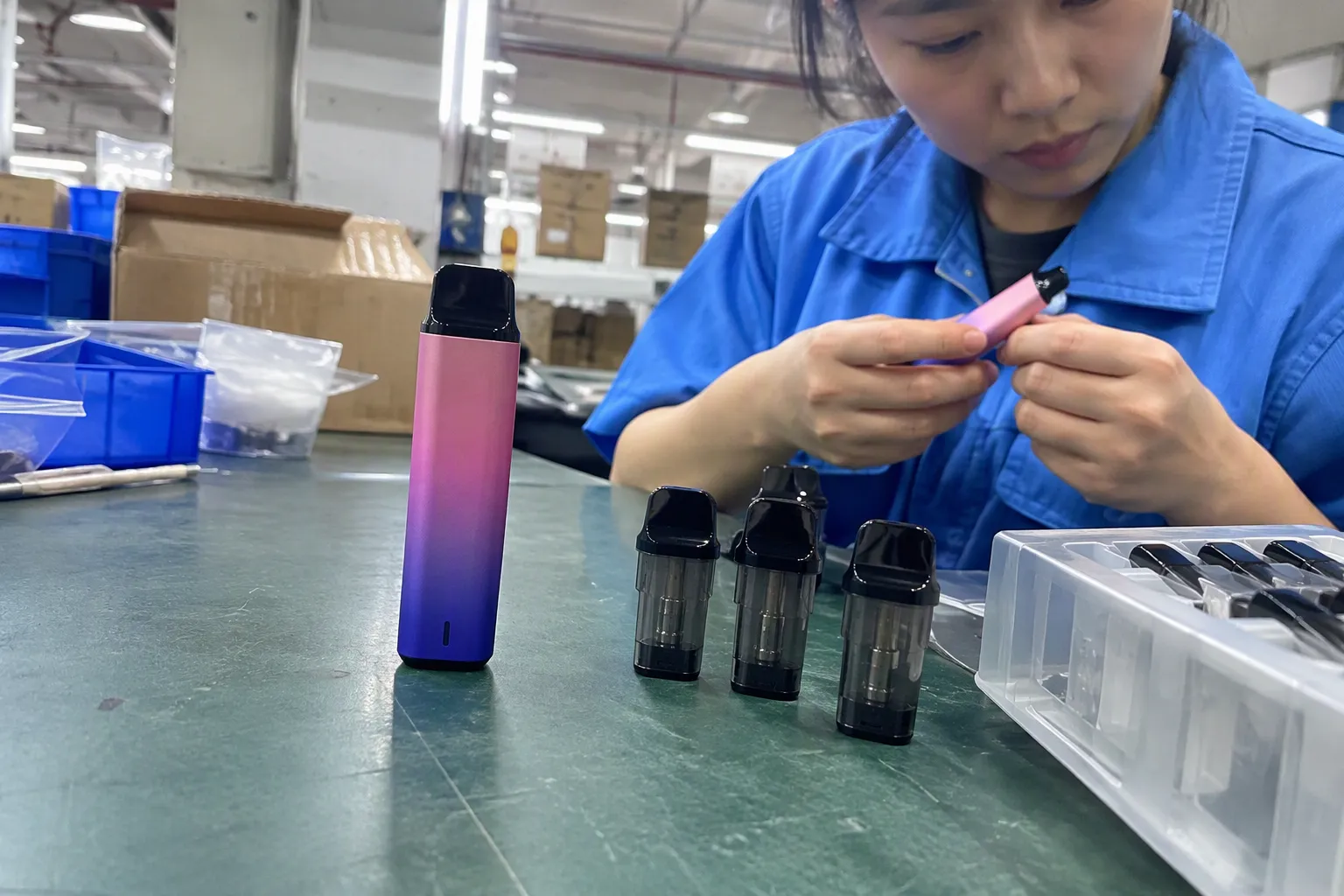
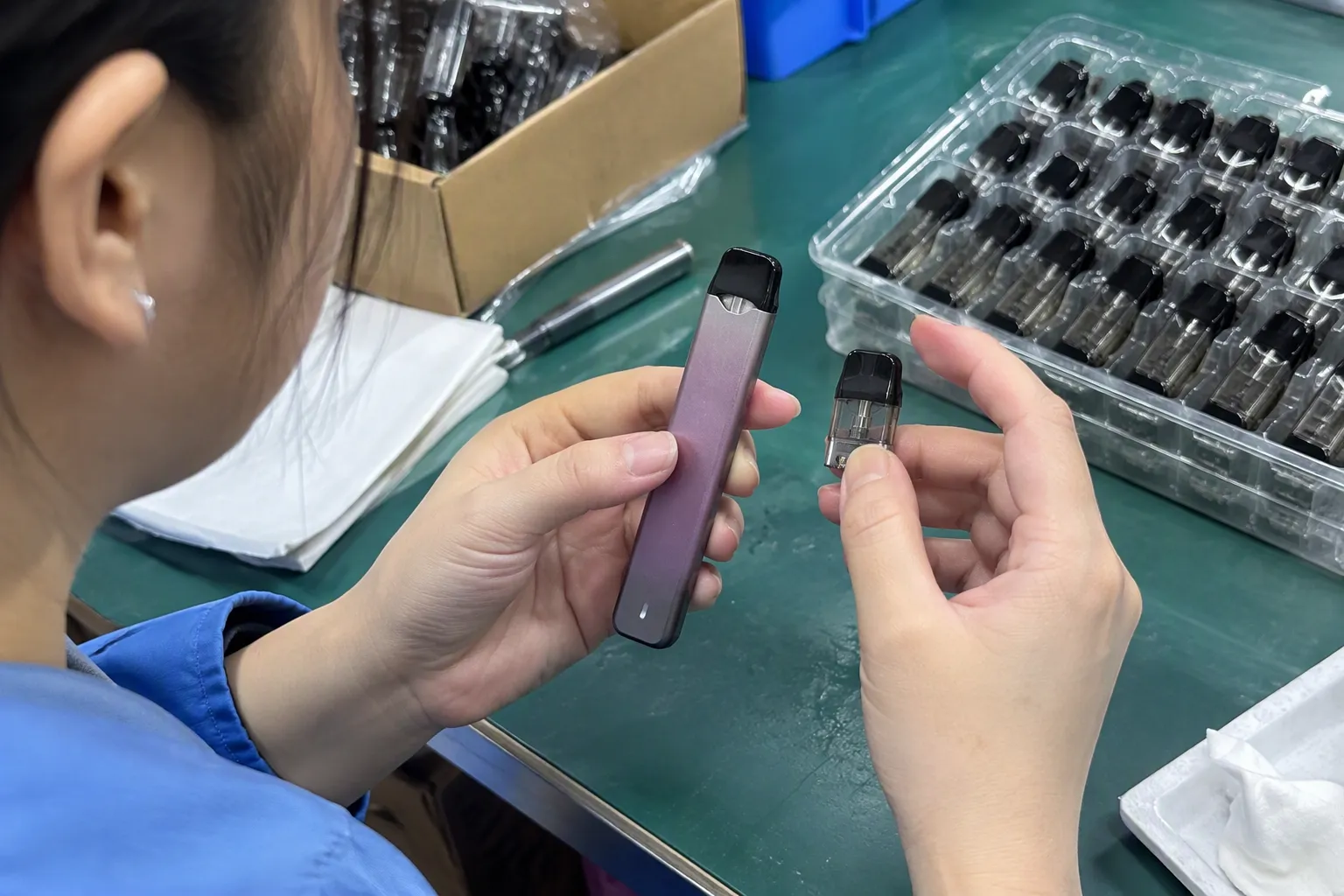
Before ordering, the buyer should document the device model, pod reference, physical fit, electrical or magnetic connection where relevant, liquid capacity, installation method, and user-facing instructions. The buyer should also test samples and confirm that the same specification can be produced and reordered.
Compatibility is a procurement specification
In a catalogue, two pods can look almost identical. In use, a small difference can matter. The difference may involve the shape, contact position, magnet arrangement, airflow path, seal, resistance, or filling method.[4] I do not treat a visual match as proof of functional compatibility.
| Item to record | Why it matters |
|---|---|
| Device model and version | Different production versions may not share the same fit |
| Pod model or SKU | Prevents warehouse picking errors |
| Connection and locking method | Helps identify incorrect installation |
| Filling or prefilled format | Affects customer instructions and inventory planning |
| Intended replacement procedure | Reduces user confusion |
| Sample test result | Confirms physical and practical fit |
| Packaging reference | Helps staff and customers identify the correct item |
| Change-control process | Shows how future specification changes will be communicated |
Compatibility problems create avoidable costs
- Returned products that cannot be resold easily.
- Staff time spent identifying the correct pod.
- Negative feedback caused by poor fit or incorrect installation.
- Retailers holding several similar-looking SKUs.
- Customers abandoning the system because replenishment feels complicated.
- Disputes between the importer, supplier, and end retailer.
For this reason, I recommend that buyers test the device and replacement pod as a complete system. A sample review should include packaging, fit, installation, removal, storage, and the clarity of the instructions. Application-specific technical questions should be reviewed by a qualified professional where necessary.
Do not assume cross-brand compatibility
The best option depends on the buyer’s distribution model. A small retailer may prefer a simple dedicated system that is easy to explain. A larger distributor may prefer a broader portfolio, provided the warehouse and sales teams can manage the references accurately.
What Does Reliable Replenishment Actually Mean?
A reliable replenishment plan should identify the supplier, production route, stock location, MOQ, normal lead time, transport option, specification-control process, and response plan for shortages. Buyers should ask for evidence and written confirmation instead of relying on vague promises.
Four parts of Supply Continuity
1. Product continuity
The supplier should explain whether the pod is an ongoing model, a seasonal item, a limited batch, or a product that may be replaced frequently. A fast-moving catalogue can be useful for market testing, but frequent model changes can create problems for customers who already own the device.
2. Production continuity
The buyer should understand whether the item comes from regular manufacturing capacity, held stock, or a sourcing arrangement. A distributor may provide convenient access to branded products, while a factory may offer stronger control over a private-label specification. Neither route is automatically better. The right choice depends on volume, brand strategy, and required flexibility.
3. Logistics continuity
Our business context includes European warehouse locations and direct supply from China. European stock can help smaller buyers reduce waiting time and order in lower quantities[7], subject to actual stock confirmation and applicable selling requirements. Larger buyers may plan direct imports when the volume justifies the longer supply cycle and additional logistics coordination.
4. Communication continuity
Questions that expose weak supply planning
- What is the normal reorder lead time?
- What quantity is normally available from the European warehouse, if applicable?
- What is the MOQ for a repeat order?
- Can the supplier reserve or plan production for the buyer?
- How will the supplier identify a specification change?
- What happens if the exact model is temporarily unavailable?
- Is an alternative approved, or would it require a new compatibility test?
- Which party handles after-sales communication?
- What shipment options are available for urgent and planned orders?
- Which documents must the buyer verify before selling in the destination market?
Which Inventory Strategy Fits Smaller and Larger Buyers?
Smaller buyers may reduce inventory exposure by using nearby warehouse stock with lower MOQs and faster dispatch. Larger importers and distributors may lower unit costs through planned direct imports[8] and may consider OEM/ODM development. Each buyer should choose a route based on demand evidence, cash flow, storage, compliance responsibilities, and replenishment requirements.
Strategy for smaller retailers and regional buyers
For this group, European warehouse fulfilment can be useful when the stock is genuinely available and the product has been checked for the destination market. In our business model, European warehouse supply can support smaller orders, with some products available at a stated low MOQ. The exact quantity, stock status, delivery time, and destination coverage must be confirmed for each order.
Strategy for larger importers and distributors
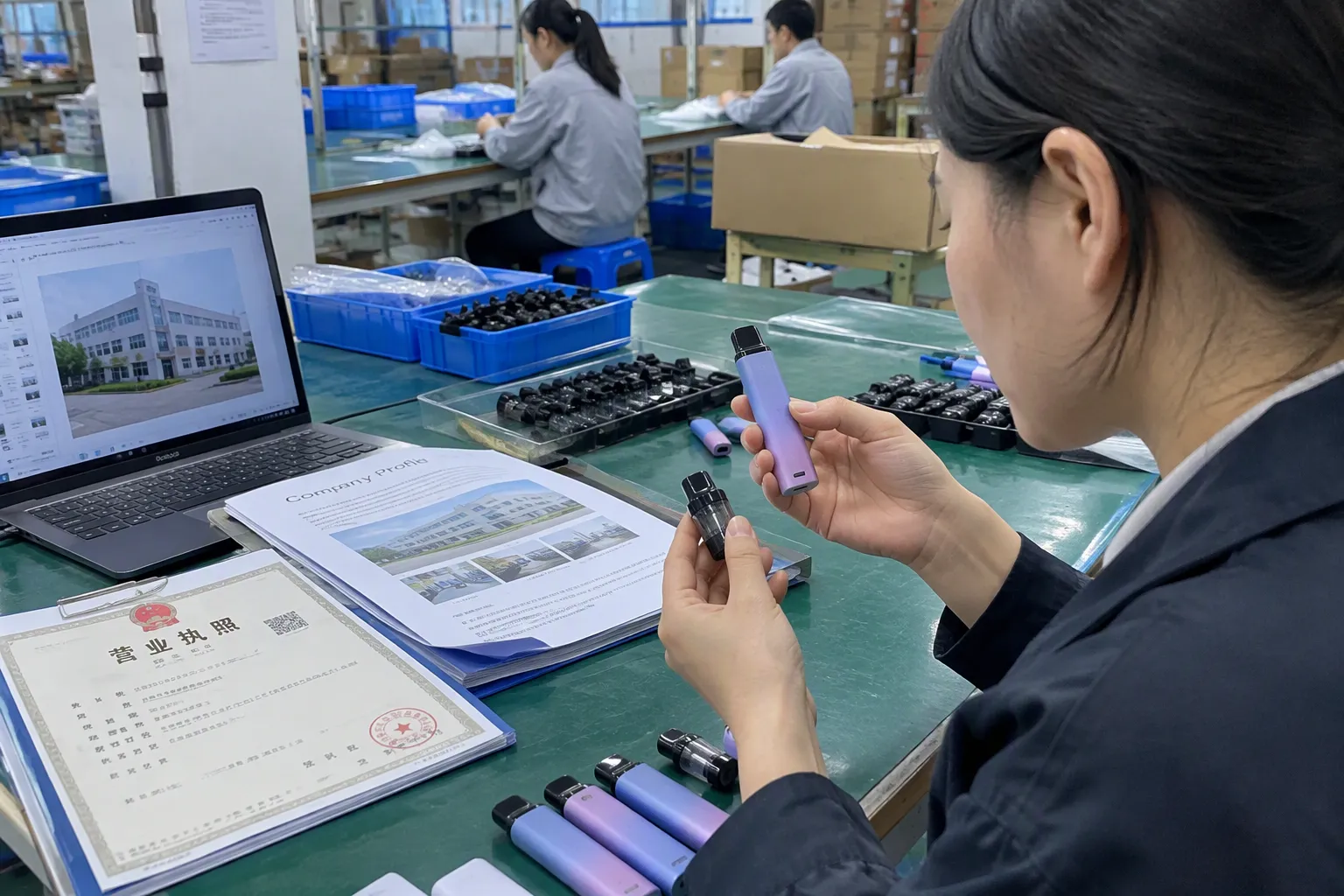
Our Shenzhen operation combines product sourcing, manufacturing capability, and OEM/ODM experience. The company has a 5,000-square-metre factory and states a maximum monthly capacity of up to 5 million units. These figures describe available business capacity, not a promise that every product or order will run at that volume. Buyers should request product-specific production, inspection, and delivery information.
- Planned bulk purchase schedules.
- Private-label packaging.
- OEM/ODM product development.
- A dedicated device and pod ecosystem.
- Forecast-based production.
- Direct shipment to the buyer’s nominated freight agent.
- A mixed model using European stock for urgent demand.
Comparing the two approaches
| Buyer profile | European warehouse strategy | Direct China import strategy |
|---|---|---|
| Small retailer | Often more flexible for testing | May create excessive stock exposure |
| Regional wholesaler | Useful for urgent replenishment | Useful for planned volume |
| Large importer | Useful as a short-term buffer | Often better for structured bulk planning |
| Main advantage | Lower MOQ and potentially faster dispatch | Pricing, volume, and OEM/ODM flexibility |
| Main risk | Stock may vary by model and location | Longer planning cycle and import responsibility |
| Best first question | Is the exact pod in stock now? | Can production and shipment meet the forecast? |
A mixed strategy can reduce some risk. The buyer might test with warehouse stock, monitor reorder behaviour, and then plan a larger direct import after demand becomes clearer. This approach still requires disciplined records. The warehouse product and direct-import product should remain demonstrably compatible.
How Can Buyers Control Compliance and Inventory Risk?
Buyers can control risk by separating three decisions: whether customers want the product, whether the device and pod work together, and whether the product can be lawfully placed on the intended market. A positive answer to one question does not answer the other two.
Before purchase, buyers should independently verify the applicable UK or European rules, product classification, labelling, packaging, notification, environmental, transport, and importer obligations. They should also document product testing, supplier information, and replenishment assumptions. A replacement pod is not automatically compliant because it is reusable or available from stock.
Verify official requirements
The UK regulatory position can involve several areas, including product requirements, notification, packaging, labelling, advertising, environmental responsibilities, and restrictions on single-use products. The correct obligations can depend on the product design, liquid format, nicotine content, business role, and destination.
- GOV.UK guidance on the single-use vapes ban
- GOV.UK: regulating tobacco and related products
- UK Medicines and Healthcare products Regulatory Agency guidance
- EUR-Lex: Tobacco Products Directive 2014/40/EU
Build a procurement evidence file
- Exact device and pod model references.
- Product drawings or technical descriptions where relevant.
- Sample evaluation records.
- Compatibility test results.
- Packaging and labelling files.
- Supplier declarations and available technical documents.
- Purchase order and specification version.
- Inspection records.
- Batch or production references.
- Shipping and customs documents.
- After-sales communication procedures.
Control inventory exposure
- Screen the product: Review the device, pod, customer use case, and intended market.
- Test samples: Confirm fit, installation, packaging, and practical use.
- Run a limited market test: Use a quantity that matches the buyer’s cash flow and sales channel.
- Track replenishment: Measure reorder requests, complaints, returns, and stock-out frequency.
- Plan the next order: Use actual demand rather than optimistic assumptions.
- Review changes: Confirm that repeat goods match the approved specification.
How Can a Supplier Support a More Reliable Replacement-Pod Program?
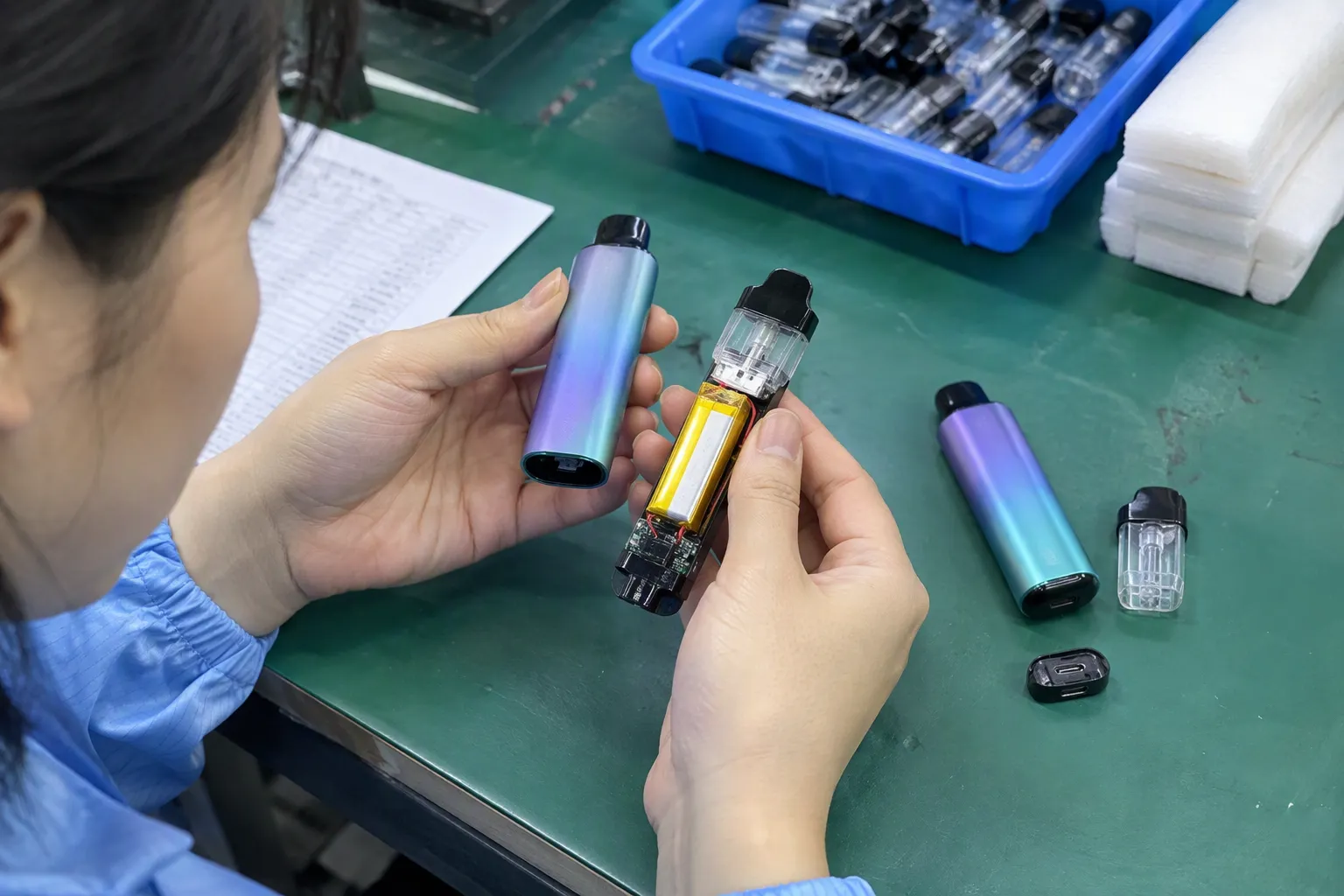
A supplier creates value when the buyer can make better purchasing decisions, reduce avoidable coordination, and maintain a clear replenishment route. The supplier’s role is not to decide whether a product is lawful or suitable for every market. The supplier should provide accurate information and practical support so the buyer can complete its own evaluation.
A useful supplier should help buyers compare products, confirm device-pod compatibility, plan warehouse or direct-import supply, support OEM/ODM discussions where appropriate, and provide one clear after-sales contact. The buyer should still verify all claims, documents, and market requirements independently.
One purchasing contact can reduce coordination work
Many European buyers purchase several categories at once, such as disposable alternatives, reusable devices, atomizers, 510 batteries, CBD batteries, vaporizers, grinders, and glass pipes. When each product comes from a different supplier, the buyer must manage separate quotations, payments, shipments, documents, and after-sales cases.
Our one-stop supply model is designed to reduce that workload. We work with branded products through agency and distribution arrangements, and we also support product sourcing and new-product development when a suitable catalogue item is not available. For a buyer, the benefit is not simply convenience. A single purchasing contact can make it easier to coordinate:
Product development should begin with the commercial problem
- What customer problem should the device and pod system solve?
- Which replacement behaviour is realistic for the target user?
- How will the retailer explain compatibility?
- What volume can the buyer reasonably forecast?
- Which markets will receive the product?
- What documentation and testing will those markets require?
- How will the buyer manage future replacement-pod demand?
- What happens if the design needs a revision?
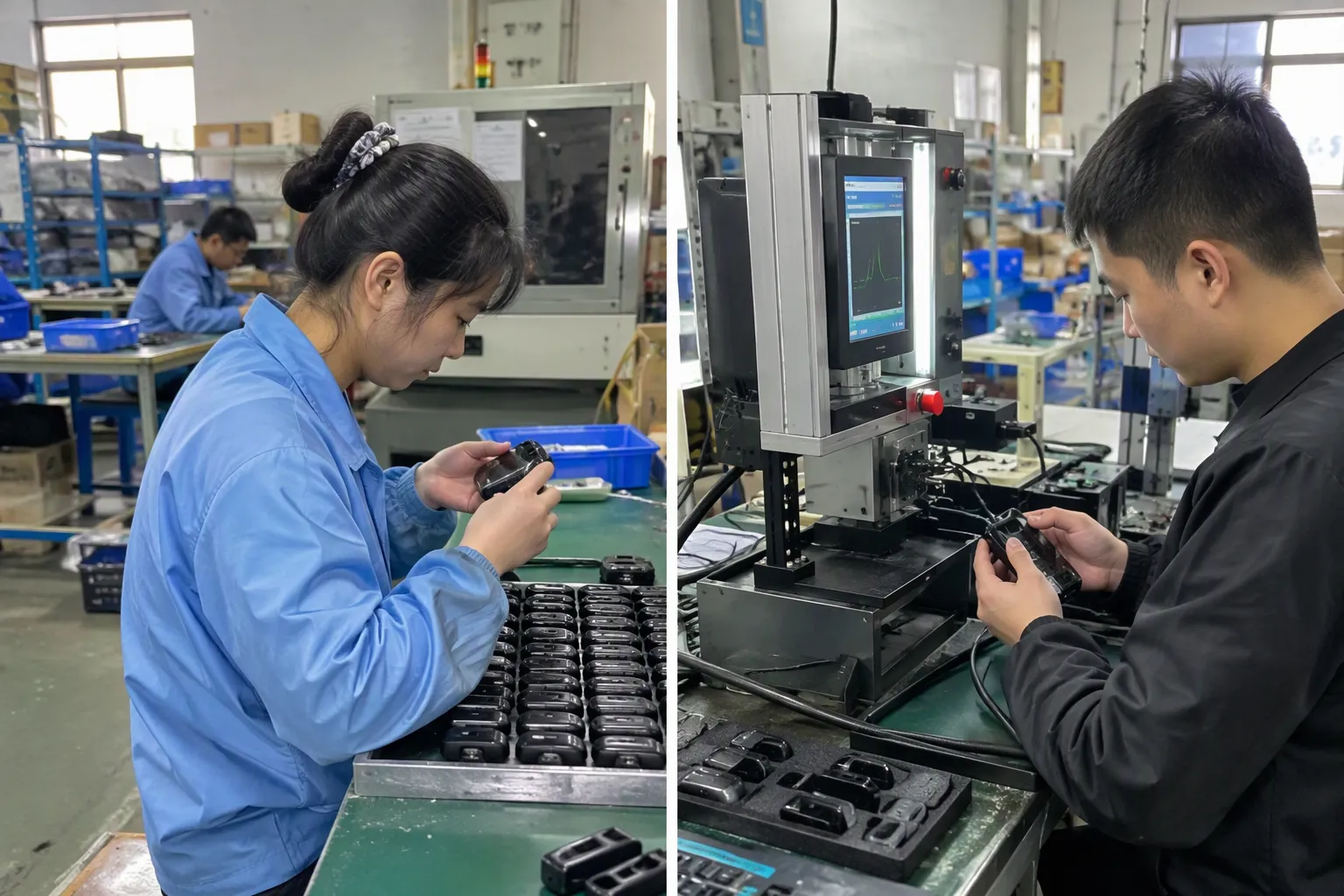
Our factory and OEM/ODM team can support product-development discussions, including cases where a suitable market product is not already available. The buyer should still approve the specifications, conduct the required checks, and obtain qualified advice for application-specific decisions.
After-sales support affects the product’s commercial life
- Route product questions to one support contact.
- Separate compatibility errors from possible defects.
- Record recurring issues.
- Improve retailer instructions.
- Identify whether a model should be reordered.
- Reduce repeated communication with several factories.
Our business model includes unified after-sales handling for goods purchased through us. Any compensation, replacement, or delivery arrangement should be confirmed in the specific order terms. Buyers should not rely on a general statement without reviewing the agreed commercial conditions.
What Should Buyers Ask Before Ordering Replacement Pods?
Buyers should ask for exact model references, compatibility evidence, current stock information, reorder conditions, production lead times, documentation, packaging details, and after-sales procedures. They should record the answers in the purchase file and compare them with the samples received.
Product questions
- Which exact device does the pod fit?
- Is the pod dedicated to one device or compatible with several approved models?
- What prevents incorrect installation?
- Are the device and pod specifications controlled under identifiable versions?
- Can the buyer receive samples for testing?
- Are the user instructions clear for the target market?
- Does the product require special storage or transport arrangements?
Supply questions
- Is the stock in the UK, Europe, or China?
- What quantity is available now?
- What is the normal reorder MOQ?
- What is the normal production lead time?
- What is the expected shipping time by route?
- Can the supplier support urgent replenishment?
- Can the supplier combine this product with other purchased goods?
- What is the process if the exact model is temporarily unavailable?
Commercial questions
- What is the price at different quantities?
- What are the payment and delivery terms?
- Can the buyer use its own freight forwarder?
- What support is included after delivery?
- How are defective or incorrect items handled?
- Does the supplier provide one contact for multiple product categories?
- What happens if the buyer requests OEM/ODM development?
Compliance questions
- Which documents are available for the exact product?
- Which party is responsible for market-specific verification?
- Has the buyer checked the current rules for the intended destination?
- Are the package, label, and product references consistent?
- Does the product classification change because of its design or contents?
- Has a qualified adviser reviewed any uncertain point?
Frequently Asked Questions
Are replacement pods automatically allowed after the UK single-use vape ban?
No. A reusable device or replacement pod is not automatically compliant or lawful simply because it is not described as a disposable vape. The buyer must verify the current UK requirements for the exact product, configuration, contents, packaging, and business role using official guidance and qualified professional advice.
Does replacement-pod availability prove that a product will sell?
No. Availability only shows that a supply route may exist. The buyer must also assess customer demand, price position, device usability, pod compatibility, retailer education, and applicable requirements. A product can be easy to source and still create slow-moving inventory.
Should a small UK retailer import replacement pods directly from China?
Not necessarily. A smaller retailer may prefer European warehouse stock and a lower MOQ while testing demand. Direct importing may become appropriate when the buyer has reliable sales, sufficient storage, and the experience to manage import and compliance responsibilities. The best route depends on the individual business.
What is the most important compatibility question?
The most important question is: Which exact device model does this replacement pod fit, and how has that fit been verified? The buyer should record the device and pod references, test samples, review installation, and confirm that repeat orders will follow the same approved specification.
Can OEM/ODM solve replacement-pod supply problems?
OEM/ODM can provide greater control over a product system, but it does not remove demand, compliance, or replenishment risk. The buyer should first define the customer need, forecast realistic volume, validate the design, and plan future pod production before committing to a private-label development project.
Conclusion
Replacement-pod availability is now a central procurement issue for buyers adjusting to the UK single-use vape ban. A practical alternative must do more than replace a discontinued format. It must support repeat sales through dependable compatibility, clear replenishment routes, manageable MOQs, sensible inventory planning, and verified market suitability. Smaller buyers may benefit from European warehouse fulfilment, while larger importers can consider direct supply and OEM/ODM planning after validation. I help UK and European buyers compare these options through Shenzhen-based sourcing, manufacturing, warehouse, and after-sales support. Contact Kingfuji Tech. to discuss your product and replenishment requirements.
Sources
- Single-use vapes: why it's time to ditch them for good", UK government guidance and implementing legislation identify 1 June 2025 as the commencement date for the prohibition on the sale and supply of single-use vapes across the United Kingdom
- Brand loyalty in the face of stockouts - PMC - NIH", Research on retail stockouts reports that product unavailability can prompt substitution, store switching, and adverse evaluations, providing contextual support for the risk that unavailable replacement pods may weaken repeat purchasing
- Prevalence of disposable pod use and consumer preference ...", Market research on reusable electronic-cigarette systems indicates that devices and refill or replacement consumables can form a recurring-purchase relationship after the initial hardware transaction
- Effects of Manufacturing Variation in Electronic Cigarette Coil ...", Technical studies of electronic-cigarette systems show that electrical, geometric, airflow, and sealing characteristics influence device activation, liquid delivery, and aerosol generation, supporting the need to verify compatibility beyond visual similarity
- Shopping for others: how does inconsistency in online reviews ...", Studies of product quality and consumer response associate perceived defects and unreliable performance with complaint behaviour, dissatisfaction, and increased return intentions, providing general support for the stated procurement risk
- Navigating Stockout Costs: A Guide for Ecommerce", Inventory-management research treats stockout losses, expediting expenses, and service effects as components of total supply cost, supporting the proposition that unit price alone may not identify the lower-cost replenishment option
- A continuous approximation location-inventory model with ...", Distribution research indicates that positioning inventory nearer to customers can shorten replenishment lead times, while order-size requirements remain dependent on the supplier's stocking and fulfilment policy
- Global Sourcing and Logistics - PDXScholar", Operations research commonly identifies purchasing-volume and production-scale economies that can lower unit costs, providing contextual support for planned direct imports by sufficiently large buyers
Related reading: