
When I compare EXW vs FOB for vape orders, I see buyers focus too quickly on the supplier’s unit price. That can create a problem: a lower quotation may hide pickup, export, freight, or destination costs. I recommend comparing the complete landed-cost structure first, then choosing the shipping term that matches your logistics experience and cash-flow needs.
Quick Answer
- EXW usually gives the buyer more control and more responsibility[1] from the supplier’s premises, including pickup and export arrangements.
- FOB usually includes delivery to the named Chinese port and export handling by the seller[2], but it does not normally include overseas freight, import clearance, taxes, or final delivery.
- Neither term is automatically cheaper, safer, or better for every vape buyer.
- I recommend requesting a written cost and responsibility breakdown before comparing EXW and FOB quotations.
- Small and mid-sized buyers may prefer a managed shipping solution, while experienced importers may benefit from controlling freight directly.
EXW vs FOB for vape orders is mainly a decision about total landed cost, control, and responsibility. EXW may show a lower product price but can leave the buyer responsible for pickup, export procedures, and coordination from the supplier’s location.[4] FOB generally includes delivery to the named Chinese port and export handling, but the buyer still manages overseas freight, import procedures, taxes, and destination delivery.[3]
The practical difference becomes clearer when I separate the quotation into each stage of the shipment. A buyer should know who arranges the truck, who handles export documentation, who books the main freight, and who pays destination charges. That simple checklist often reveals why two apparently similar offers are not actually comparable.
EXW vs FOB: What Changes for the Buyer
When buyers compare EXW and FOB, the main difficulty is not understanding two abbreviations. The difficulty is identifying where the buyer’s obligations begin. If that boundary remains unclear, a buyer can accept a low quote without knowing the operational work and extra charges that follow.
In practical terms, EXW normally places more responsibility on the buyer from the supplier’s premises, while FOB normally places more responsibility on the seller until the goods are loaded on board the nominated vessel at the named port. The exact contract wording and named place still matter.
What EXW normally means
- Pickup from the supplier’s premises
- Export-related logistics and coordination
- Loading arrangements, depending on the actual situation
- Export clearance and documentation
- Main international freight
- Insurance, if required
- Import clearance, duties, taxes, and destination charges
- Delivery to the buyer’s warehouse
I use the word “normally” carefully. Incoterms® rules describe responsibilities, but the commercial quotation, local procedures, carrier requirements, and contract terms also influence how the shipment works. Buyers should not assume that a supplier will perform an activity simply because the supplier has done it for another order.
What FOB normally means
The International Chamber of Commerce provides the official commercial framework for Incoterms® rules. Buyers can review the ICC’s explanation of the rules at ICC Incoterms® 2020. I treat that source as a useful reference, but I do not present this article as legal, customs, or tax advice.
A simple responsibility comparison
| Shipment stage | EXW buyer | FOB seller | FOB buyer |
|---|---|---|---|
| Product preparation | Usually seller | Seller | — |
| Pickup from factory | Buyer | Seller arranges delivery to named port | — |
| Export procedures | Usually buyer | Seller | — |
| Delivery to named Chinese port | Buyer | Seller | — |
| Loading on vessel | Buyer-side responsibility under the rule | Seller | — |
| Main international freight | Buyer | — | Buyer |
| Import clearance and taxes | Buyer | — | Buyer |
| Destination delivery | Buyer | — | Buyer |
This table is a starting point rather than a substitute for contract review. I always encourage buyers to write the named place in full. “FOB China” is less useful than “FOB Yantian Port, Shenzhen, Incoterms® 2020,” because the named location affects the cost and responsibility boundary.
Is EXW Cheaper Than FOB for Vape Orders?
EXW can appear cheaper because the seller is not including certain origin services in the product quotation. However, the buyer must add pickup, export coordination, documentation, and other origin charges before making a fair comparison. FOB can be more convenient at origin, but the buyer still needs to calculate international freight, destination charges, customs, taxes, and final delivery.
The landed-cost formula
| Cost category | EXW quotation | FOB quotation |
|---|---|---|
| Product price | Usually included | Usually included |
| Factory pickup | Buyer adds | Usually included to named port |
| Export handling | Buyer normally checks and arranges | Usually seller handles under the rule |
| Origin terminal charges | Buyer confirms | Buyer should confirm with forwarder |
| Main freight | Buyer adds | Buyer adds |
| Insurance | Buyer decides | Buyer decides |
| Import clearance | Buyer adds | Buyer adds |
| Duties and taxes | Buyer adds | Buyer adds |
| Destination handling | Buyer adds | Buyer adds |
| Final delivery | Buyer adds | Buyer adds |
The table shows why neither term can be judged from the product price alone. A seller may quote competitive FOB pricing because the seller has regular export activity and port relationships. An experienced importer may obtain a lower main-freight rate independently under EXW. A small buyer may have the opposite result because a forwarder charges more for fragmented origin coordination.
A practical anonymized pattern
In my experience communicating vape quotations and shipping arrangements, I have encountered a common pattern: a buyer sees a lower EXW unit price, compares it with a higher FOB unit price, and assumes the EXW offer creates an immediate saving. Later, the buyer notices separate pickup, export, documentation, or destination-related charges.
I am not presenting that pattern as a statistical result, and I am not assigning it to a named customer, route, shipment value, or final outcome. The lesson is simply that a quotation is not complete until the buyer understands which services are included and which services remain outside the price.
When EXW may make commercial sense
- Has an established freight forwarder in China.
- Can coordinate pickups from multiple suppliers.
- Understands export documentation and local shipping procedures.
- Can consolidate several orders efficiently.
- Wants direct control of the main freight booking.
- Can manage responsibility for delays or origin problems.
For example, a larger importer purchasing several product categories from China may already have a consolidation process. That buyer may prefer to collect products from different factories and control the export movement through a nominated logistics partner.
When FOB may be easier to manage
- Purchases from one main supplier.
- Does not have a reliable China-based logistics team.
- Wants the supplier to manage delivery to the named port.
- Needs a clearer origin responsibility boundary.
- Wants to compare freight separately with a trusted forwarder.
- Is still building an import process.
What Does the Buyer Pay Under EXW and FOB?
Buyers often ask me for a single answer, but the correct answer depends on the shipment route, cargo size, transport method, port, destination, and service provider. I therefore encourage buyers to request an itemized quote rather than rely on a general statement such as “shipping included.”
Under EXW, the buyer normally pays for more origin activities because the buyer takes responsibility at the supplier’s premises.[5] Under FOB, the seller normally covers the agreed movement to the named port and export handling, while the buyer pays the main freight and all relevant import and destination costs. The buyer should confirm every charge in writing.
Origin costs that buyers may overlook
- Truck collection from the factory
- Waiting time and loading coordination
- Export documentation
- Customs broker or export agent fees
- Consolidation charges
- Warehouse receiving fees
- Port delivery
- Terminal handling
- Documentation and electronic filing fees
- Additional charges caused by incomplete or delayed paperwork
Under FOB, some of these activities may be included in the seller’s responsibility, but the buyer should still confirm the actual quotation. “FOB” does not always mean every possible origin fee has disappeared. The named port, forwarder’s tariff, cargo condition, and agreement between the parties can affect the final invoice.
Destination costs that apply to both terms
- Ocean or air freight
- Cargo insurance
- Destination terminal handling
- Customs clearance
- Duties and taxes
- Security or examination charges
- Storage or demurrage
- Delivery appointment fees
- Inland transport
- Local warehousing
- Any country-specific product requirements
I do not provide a universal tax or customs conclusion for the United States, the European Union, or another market. Buyers should confirm those matters with a qualified customs broker, tax adviser, and local regulatory professional. The U.S. Customs and Border Protection importing guidance can help U.S. buyers identify questions for their broker. European buyers can consult the European Commission Access2Markets portal, while still verifying product-specific requirements locally.
Why shipment size changes the comparison
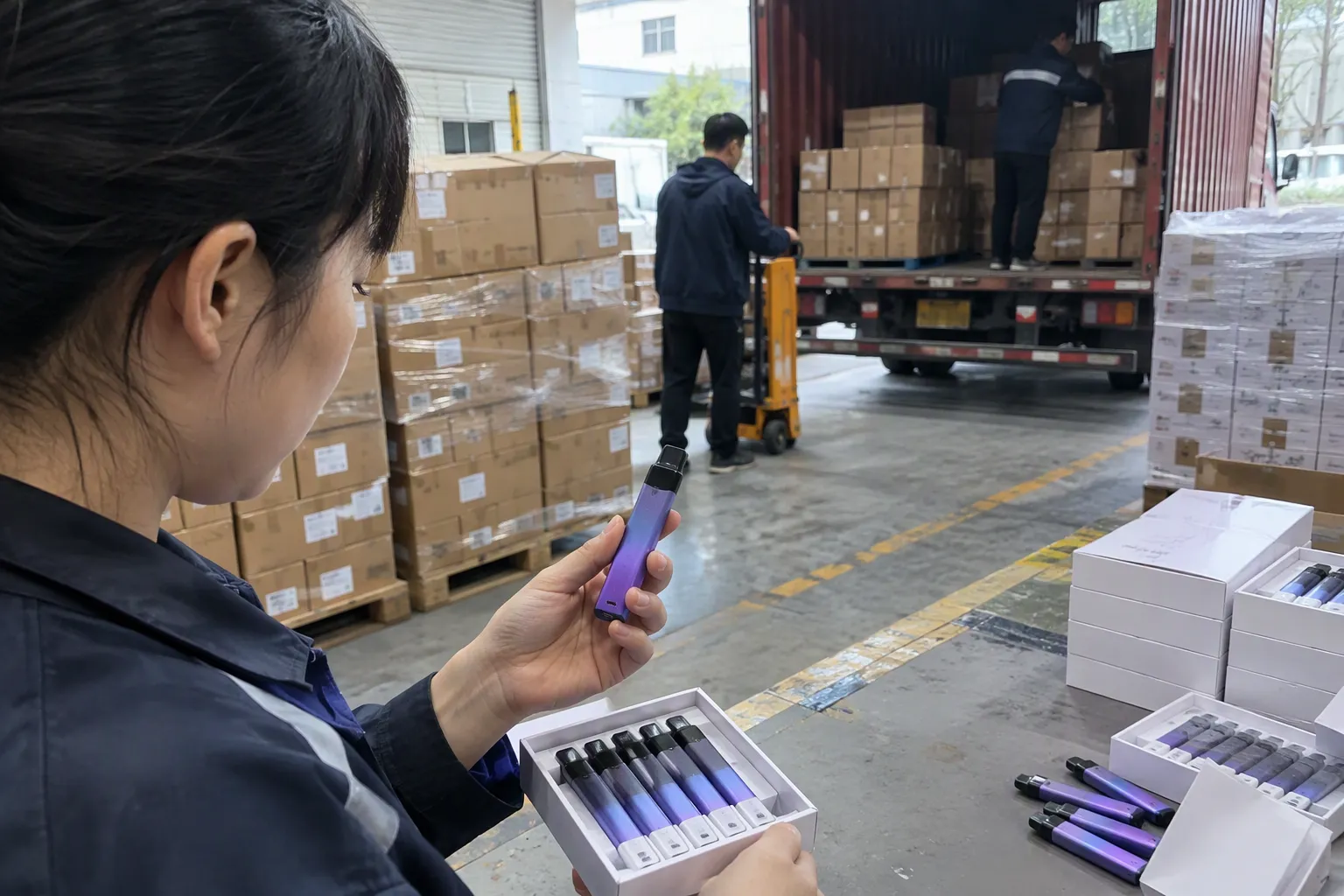
| Buyer situation | Potential EXW consideration | Potential FOB consideration |
|---|---|---|
| Small mixed order | More coordination per supplier | Easier origin handoff may help |
| Full-container order | Direct control may be valuable | Seller-managed port delivery may simplify origin |
| Multiple factories | Consolidation can be efficient | Separate FOB shipments may complicate coordination |
| Regular importer | Existing forwarder may reduce costs | Seller’s export process may still save time |
| New importer | Origin responsibilities may be difficult | Clearer port handoff may be easier |
I recommend calculating the cost per sellable unit, not only the invoice total. If a shipment includes products with different wholesale values, allocate freight and import-related costs using a method that supports your purchasing decisions. A low price on paper may become less attractive when the buyer includes all required logistics work.
How Do Risk and Responsibility Change Under EXW vs FOB?
Price is only one part of the decision. I also ask buyers to examine who can act when something goes wrong. A missed pickup, incomplete export document, port delay, or change in freight schedule can create costs that are larger than the original unit-price difference.[7]
EXW generally transfers operational responsibility to the buyer earlier than FOB. Under FOB, the seller normally remains responsible for the goods and export process until the agreed loading point at the named port, while the buyer takes responsibility for the main carriage and later stages. The contract and actual facts should control the final assessment.
Questions I ask before accepting a term
- Where exactly are the goods made available?
- Who loads the goods onto the collection vehicle?
- Who arranges export clearance?
- Who prepares and checks commercial documents?
- Which port is named in the FOB term?
- Who books the main freight?
- When does risk transfer under the agreed rule?
- Who handles a missing document or delayed pickup?
- Which charges are excluded from the quote?
- What happens if the goods require inspection or additional handling?
These questions are particularly useful for buyers who purchase disposable vapes, atomizers, 510 batteries, CBD batteries, vaporizers, grinders, glass pipes, or related products from several suppliers. Different products may have different transport and documentation considerations.[6] I would not assume that one process applies to every product category.
Risk transfer is not the same as payment responsibility
Product quality and shipping terms are separate issues
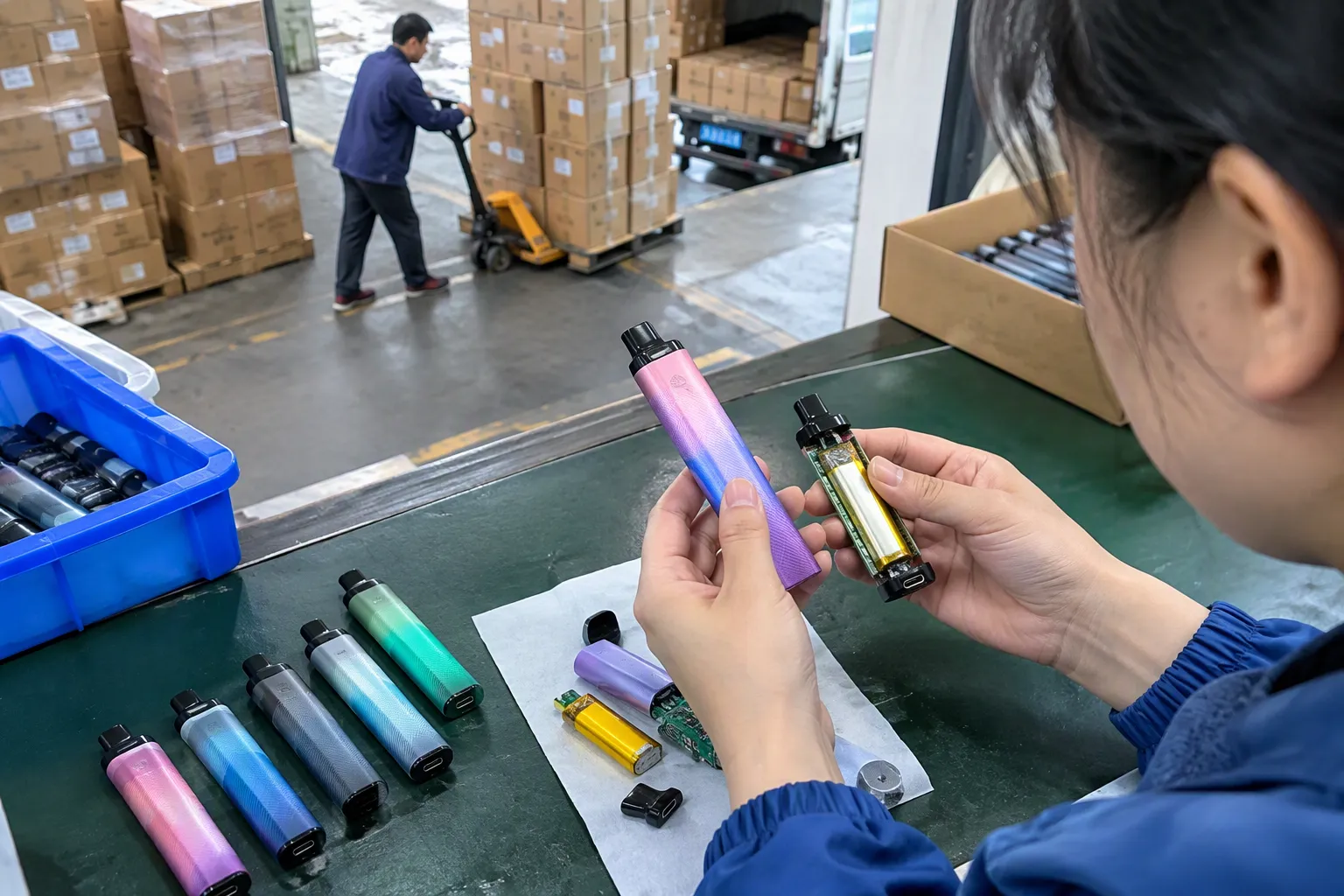
- Product specifications
- Battery and charging information where relevant
- Packaging and labeling
- Sampling and inspection procedures
- Defect handling
- Warranty or after-sales terms
- Production lead time
- Replacement or compensation arrangements
- Destination-market requirements
At Kingfuji, I explain product and shipping responsibilities separately because buyers need to know which issue is being solved. I can support product sourcing, OEM/ODM discussions, order coordination, and shipping communication, but I do not replace a buyer’s customs broker, lawyer, tax adviser, or qualified regulatory professional.
Which Shipping Term Fits Small and Large Vape Buyers?
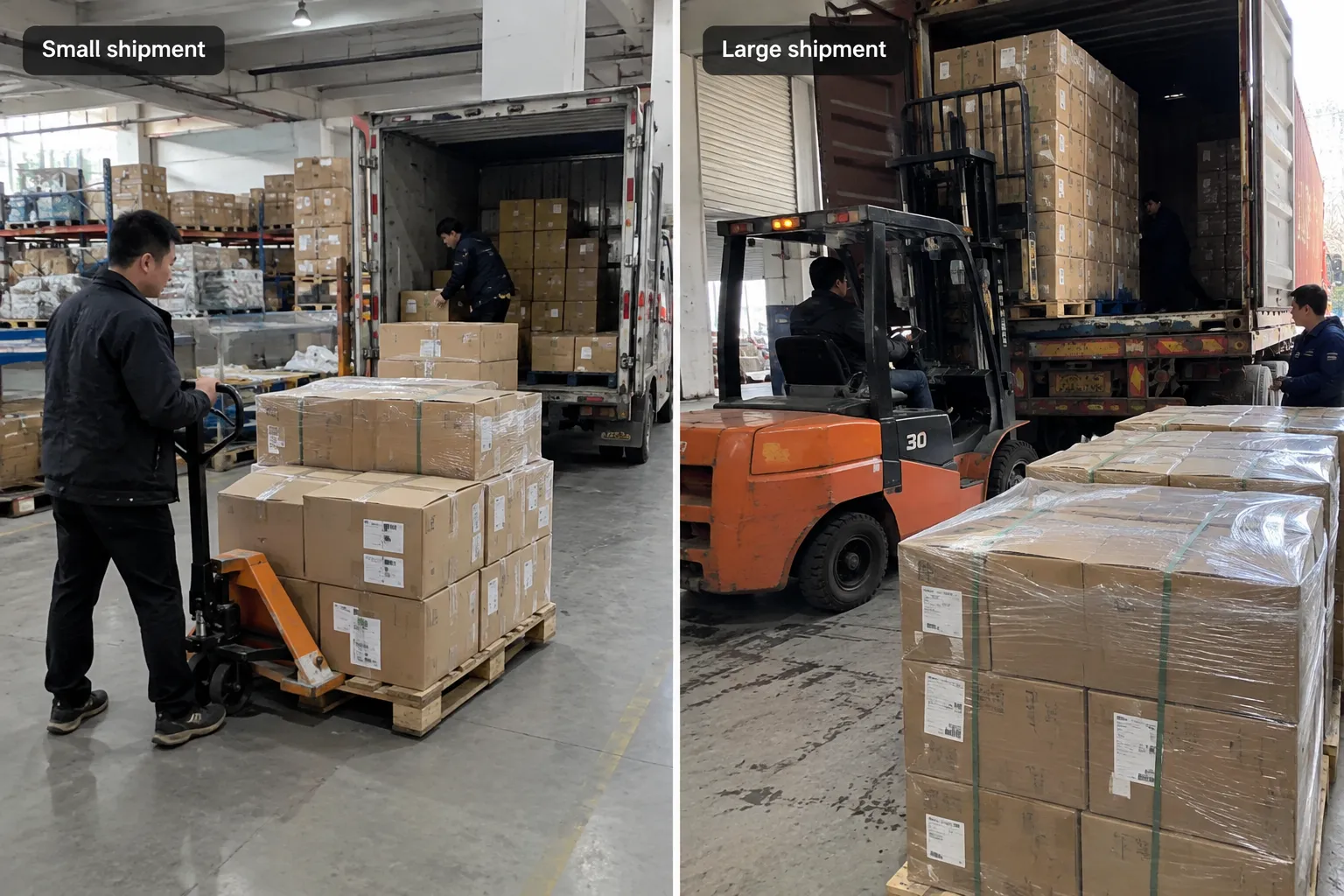
Small and mid-sized buyers often benefit from a simple, managed process[8] because they may not have China-based logistics staff or enough volume to negotiate every origin charge. Larger importers may prefer EXW or FOB depending on their consolidation network, freight contracts, and ability to manage export operations. The best term matches the buyer’s actual capability.
Small and mid-sized buyers
In this situation, the buyer should compare EXW and FOB with a fully explained logistics option. The buyer may also consider stock held in a suitable overseas warehouse when legally and commercially appropriate. Our business context includes European warehouse inventory in several locations, including Germany, Austria, Poland, and Belgium, with delivery services through carriers such as DHL, DPD, UPS, and FedEx. Availability, product eligibility, delivery time, and local requirements must be confirmed for each order.
For some European small-business buyers, overseas stock can reduce the need to manage a new China shipment for every replenishment. It can also support lower order quantities, such as the stated starting quantity of 50 units per model for available products. I ask buyers to verify current stock, applicable terms, and delivery conditions before relying on those figures.
Larger importers and wholesalers
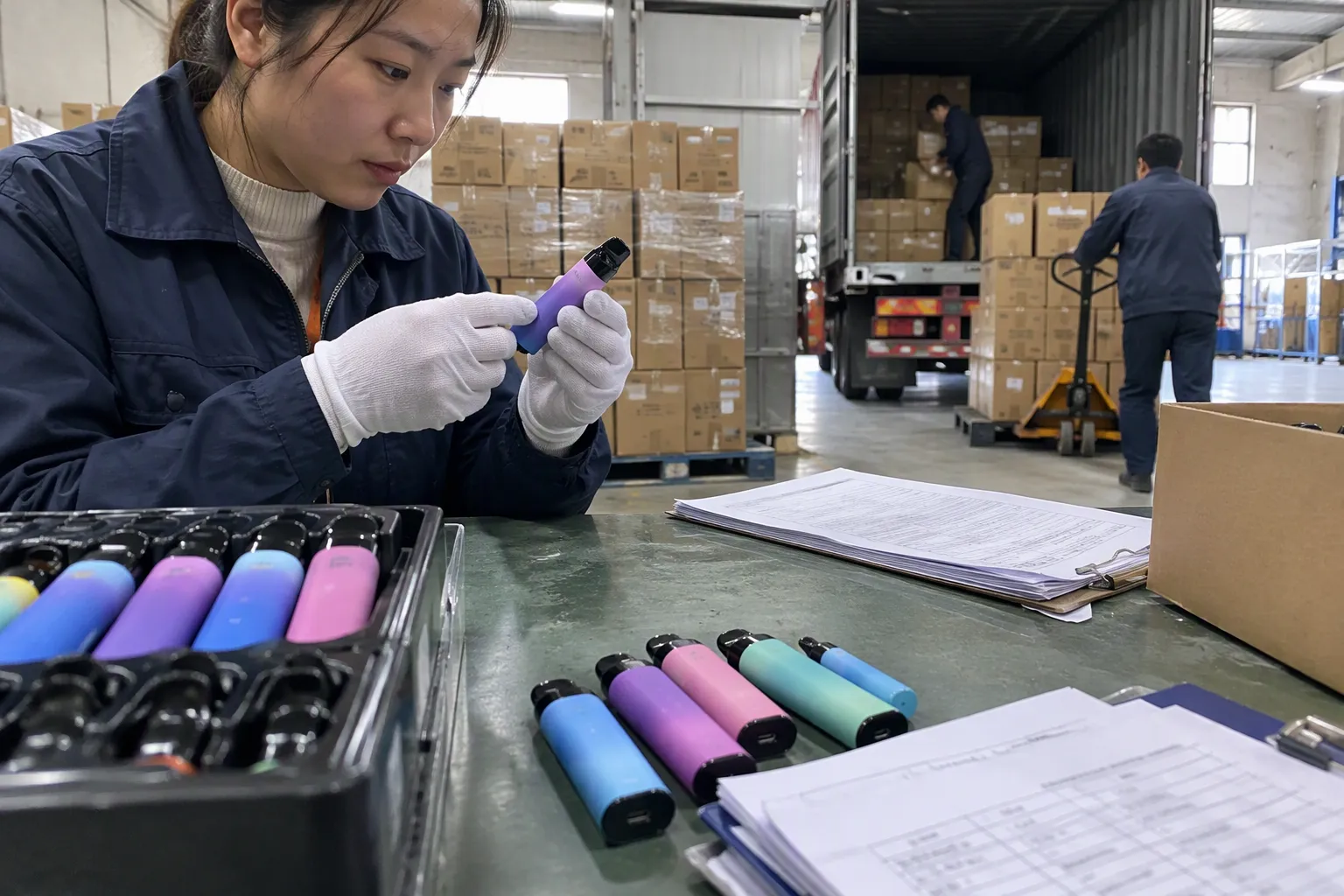
Our factory has approximately 5,000 square meters, maintains its own brands, and operates as a combined trading and manufacturing business. The stated maximum production capacity is up to 5 million units per month, subject to product type, production planning, materials, and order conditions. I present capacity as a planning point, not as a guarantee for every product or schedule.
A practical buyer-fit table
| Buyer profile | Likely priority | Questions to ask |
|---|---|---|
| Independent vape shop | Simple replenishment | Can I understand the full delivered cost? |
| Regional wholesaler | Margin and stock rotation | Which term protects cash flow without adding hidden work? |
| Multi-category importer | Consolidation | Can I coordinate several factories efficiently? |
| Private-label buyer | Quality and production control | Who manages inspection, documents, and export timing? |
| New China importer | Risk reduction | Who can explain each shipping responsibility clearly? |
What Should Buyers Request Before Comparing EXW and FOB Quotes?
Before comparing EXW and FOB quotations, the buyer should request the product price, exact named location, pickup or port-delivery scope, export responsibility, freight exclusions, destination charges, payment terms, lead time, and document requirements. The buyer should then compare the estimated landed cost and operational workload rather than the unit price alone.
My recommended quotation checklist
Product and order information
EXW-specific information
- Exact pickup address
- Whether the goods are packed and ready for collection
- Loading responsibility
- Export documentation responsibility
- Export agent fees
- Local trucking estimate
- Warehouse or consolidation charges
- Any restrictions on the buyer’s nominated forwarder
FOB-specific information
- Exact named port
- Incoterms® version
- What delivery to the port includes
- Export clearance responsibility
- Port and terminal charges included or excluded
- Loading point and transfer point
- Required shipment notice
- Which party nominates the vessel or forwarder
Destination and commercial information
- Main freight estimate
- Insurance option
- Destination terminal charges
- Customs-broker estimate
- Duties and taxes, subject to professional confirmation
- Final delivery estimate
- Storage and delay conditions
- Currency and payment method
- Validity period of the quotation
How I compare two quotations
| Comparison item | Supplier A | Supplier B |
|---|---|---|
| Product total | ||
| Pickup and origin handling | ||
| Export documentation | ||
| Port delivery | ||
| Main freight | ||
| Insurance | ||
| Destination handling | ||
| Customs and taxes | ||
| Final delivery | ||
| Estimated landed total | ||
| Buyer coordination required |
What I provide during a buying discussion
As a China-based supplier, I can help buyers clarify product availability, order quantities, packaging, production timing, export communication, and available shipping arrangements. Kingfuji also offers one-stop sourcing across electronic cigarettes, disposable vapes, atomizers, 510 batteries, CBD batteries, vaporizers, grinders, glass pipes, and traditional smoking accessories.
If a requested product is not in the current catalogue, I can help identify an existing product or discuss a new development. For suitable projects, our team can discuss mould development and OEM/ODM requirements. I ask buyers to provide target specifications, quantity expectations, packaging needs, and destination information before I give a commercial recommendation.
I also explain that our after-sales communication covers products purchased through us, so the buyer does not need to coordinate separately with several factories for every issue. The exact remedy, evidence required, and compensation terms should be agreed in writing before payment.
How Can Buyers Reduce Unexpected Vape Shipping Costs?
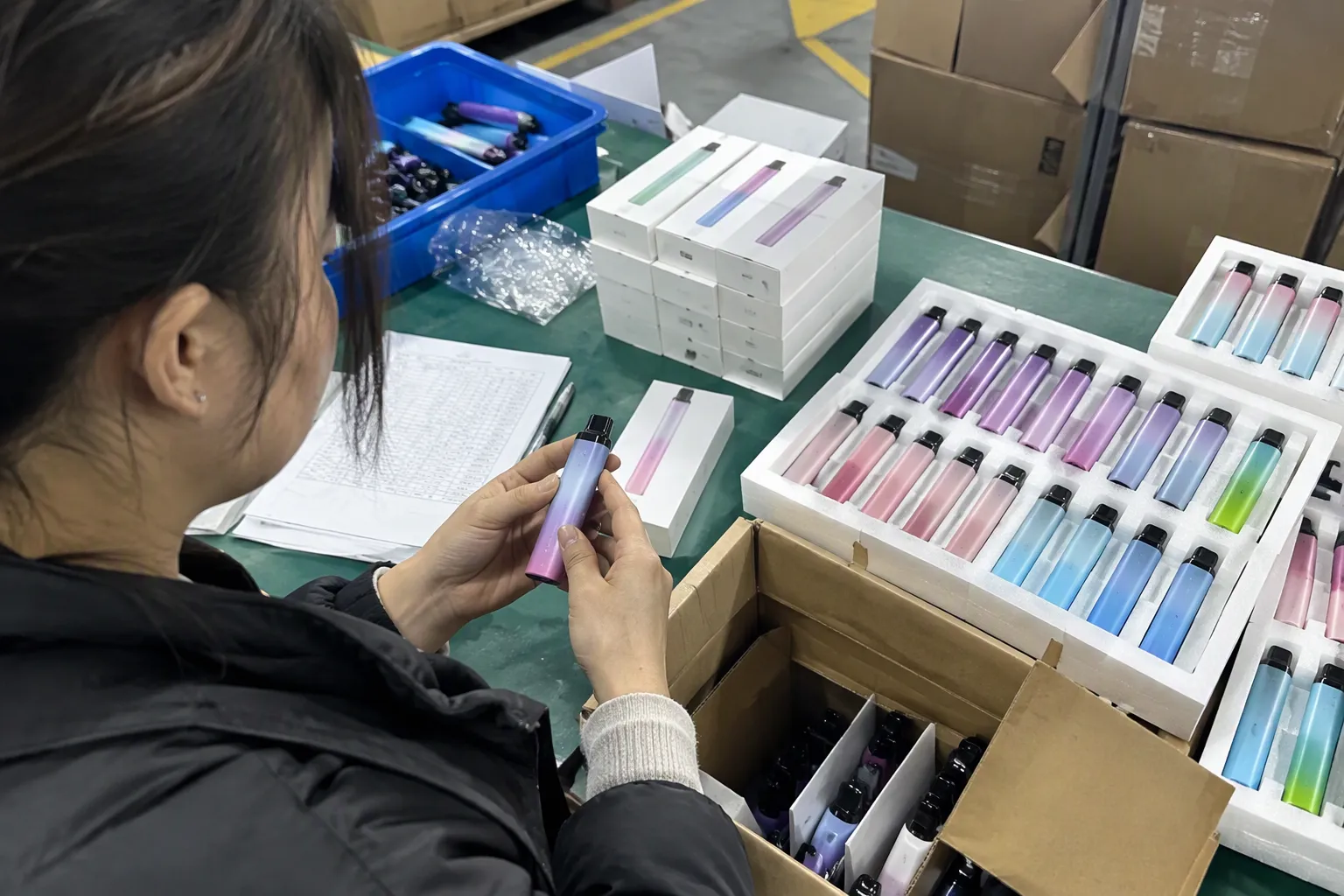
Unexpected costs are not always caused by bad faith. Sometimes the buyer and supplier simply use different assumptions about what “shipping” means. I reduce that risk by encouraging buyers to define the shipment, document the exclusions, and confirm the responsible party before production starts.
Buyers can reduce unexpected costs by using a named Incoterms® rule, requesting an itemized quotation, confirming cargo information, using a qualified freight forwarder, checking destination requirements, and keeping all shipping instructions in writing. Buyers should also plan for possible inspection, storage, documentation, and delivery delays rather than assuming a standard quote covers every event.
Use one written shipping instruction
- Commercial invoice details
- Packing list requirements
- Consignee and notify-party information
- Product descriptions
- Carton and pallet information
- Shipping term and named place
- Forwarder contact
- Required shipment date
- Document submission deadline
- Inspection instructions
- Escalation contact
Confirm product and destination requirements
Electronic cigarettes, batteries, e-liquids, vaporizers, and related accessories can raise different transport, customs, labeling, or market-access questions. I do not assume that a product acceptable in one market is automatically acceptable in another. I recommend that buyers confirm requirements with local professionals before placing a commercial order.
Buyers can use our electronic cigarette and vape product catalogue as a starting point for product discussions, but a catalogue is not a substitute for destination-country legal review. The buyer remains responsible for confirming whether the selected product may be imported and sold in the intended market.
Protect cash flow
For some small European wholesalers and retailers, available overseas inventory may support faster replenishment and lower purchase quantities. For larger importers, direct production and container planning may offer better unit economics. Neither method is automatically superior. The buyer should match the purchasing method to actual sales demand.
Use professional support for uncertain points
I can explain how I normally structure quotations and communicate with logistics partners. However, I am not a customs lawyer or tax adviser. For questions involving tariff classification, import tax, dangerous-goods transport, product registration, labeling, age restrictions, or market-specific vape rules, I recommend using a qualified professional in the destination country.
Frequently Asked Questions
Is EXW or FOB better for a first vape order?
Neither term is universally better. A first-time importer may find FOB easier because the seller normally manages delivery to the named Chinese port and export handling. However, a buyer with a trusted China-based forwarder may prefer EXW. I recommend comparing the complete landed cost and the buyer’s ability to manage each stage.
Does FOB include international freight?
FOB generally does not include the main international freight paid after the goods are loaded on board at the named port. The buyer normally nominates or works with the carrier for the main carriage. The buyer should confirm the freight quotation, insurance, destination handling, customs, taxes, and final delivery separately.
Does EXW include export clearance?
Under the normal EXW structure, the buyer takes responsibility for export arrangements from the seller’s premises. Local practice and the commercial agreement can affect how the shipment is handled, so I recommend confirming who will prepare documents, complete export procedures, and pay related charges before ordering.
Are EXW and FOB door-to-door shipping terms?
No. EXW and FOB are not automatically tax-paid delivery, door-to-door service, or guaranteed customs clearance. Both terms normally leave the buyer responsible for important international, import, destination, and final-delivery stages. A buyer seeking door delivery should request a separately defined service and verify what it includes.
Can a supplier recommend a shipping method?
Yes. I can explain the practical differences between available arrangements and communicate with logistics partners. However, the buyer should make the final decision after checking destination customs, tax, product requirements, freight terms, and local legal obligations with qualified professionals.
Conclusion
When I explain EXW vs FOB for vape orders, I focus on the buyer’s complete landed cost rather than the supplier’s unit price. EXW may provide control, but it can transfer origin responsibilities to the buyer earlier. FOB may simplify the China-side process, but it still leaves the buyer responsible for main freight, import procedures, destination costs, and final delivery. I recommend requesting an itemized quotation, confirming the named place, and checking every responsibility in writing. Contact Kingfuji at info@kingvapecig.com or +86 13928420527 to discuss vape products, OEM/ODM projects, stock availability, and a shipping arrangement that fits your order.
Sources
- Know Your Incoterms", The International Chamber of Commerce defines EXW as a rule under which the seller makes the goods available at the named place, leaving the buyer responsible for subsequent transport and related obligations
- Know Your Incoterms", Under the ICC’s FOB rule, the seller is generally responsible for delivering the goods on board the vessel at the named port of shipment and completing export formalities
- Know Your Incoterms", The ICC’s FOB allocation places delivery on board and export clearance with the seller, while the buyer generally arranges or pays for the main carriage and assumes import-related and destination obligations
- Ex Works (EXW) Incoterm 2026: Meaning, Price & Risks", Research on international purchasing and total landed cost indicates that quotations under different delivery terms may exclude different transport and handling components, so a lower EXW goods price does not by itself establish a lower delivered cost
- Know Your Incoterms", A comparison of the ICC rules shows that EXW places delivery at the seller’s premises, whereas FOB requires the seller to deliver the goods on board at the named port, generally moving more origin obligations to the buyer under EXW
- Interpretation Response #22-0032 - PHMSA", International air-transport guidance classifies certain lithium batteries and electronic smoking devices as regulated articles, making transport documentation and handling dependent on the product’s composition, battery configuration, and mode of transport
- Demurrage and detention: from operational challenges ... - PMC", Research on maritime logistics reports that port delays and related storage, demurrage, and detention charges can materially increase shipment costs beyond the initial freight quotation
- Strategies for Small and Medium-Sized Enterprises to Engage ...", Studies of small and medium-sized enterprises commonly identify limited logistics expertise, staffing, and purchasing scale as factors associated with reliance on external logistics providers
Related reading: Disposable Rechargeable Vape Wholesale Changes Market
Related reading: Leak Tests Useful Vape Wholesale Orders
Related reading: Shelf Appeal Changes Product Choice Vape
Looking for a reliable supplier? Request a quote or contact us with your drawing, target market, and volume — our export team will reply with a like-for-like quotation.
Related reading: MOQ Changes Branded Stock Private Label