
Quick Answer
Germany's 2026 vape tax and single-use rules[1] can create a serious problem for wholesalers that price products only from the factory quotation. When tax, logistics, documentation, returns, and inventory timing change, a product that looks profitable may become difficult to sell. I recommend turning every verified rule into a product-level pricing and stock decision before placing the next order.
Germany's 2026 vape tax and single-use rules should be managed through a revised landed-cost model, a careful review of existing stock, and verified product documentation. Wholesalers should confirm the exact tax rates, effective dates, product definitions, and saleability requirements with current German official or qualified professional sources. They should then classify affected SKUs, recalculate wholesale prices, assess stranded-inventory risk, and choose whether to replenish, reduce, delay, or replace each product line.

I regularly speak with importers and distributors about quotations, delivery dates, product availability, and landed cost. The same question often appears in different forms: “Can I still make a reasonable margin on this product after it arrives in Germany?” In 2026, that question needs a more complete answer than the supplier price alone.
How Should Wholesalers Interpret Germany's 2026 Vape Tax and Single-Use Rules?
A regulatory update becomes a commercial issue when it changes the cost, timing, documentation, or selling risk attached to a product.[2] I do not treat a legal announcement as a simple yes-or-no purchasing signal. I first ask which SKUs are affected, when the rule applies, and what evidence the buyer needs.
Wholesalers should separate four questions: what the rule says, when it takes effect, which products it covers, and how it changes the commercial model. A product may remain technically available while becoming less attractive because of higher tax exposure, slower sell-through, extra compliance work, customer resistance, or increased return risk.

Start with verified facts, not supplier assumptions
I recommend creating two columns in the planning file:
| Verified regulatory information | Commercial interpretation |
|---|---|
| Official tax rate or calculation method | Revised tax-inclusive landed cost |
| Confirmed effective date | Last acceptable arrival or sale period |
| Official product definition | SKU classification |
| Confirmed transitional arrangement, if any | Stock exposure and sell-through plan |
| Required documents or markings | Supplier documentation request |
| Official disposal or environmental obligation | Cost, process, and responsibility review |
This separation matters because supply-chain experience cannot replace German legal advice. I can help buyers understand how a change may affect quotations, stock, and cash flow, but I should not present myself as a German tax lawyer, regulator, laboratory, or certification authority.
I also advise buyers to be careful with statements such as:
- “This product is not affected.”
- “The old stock can definitely be sold.”
- “The tax is already included.”
- “The factory certificate is enough.”
- “The new rule starts on this exact date.”
- “The same product is treated identically in every sales channel.”
These statements may be correct in a specific case, but buyers should verify them against current German official sources and, where needed, a German tax or regulatory professional. A supplier quotation is not a legal opinion.
Why wholesalers need SKU-level analysis
A distributor may have several products that look similar but differ in liquid capacity, battery design, packaging, intended use, labeling, or date of import. Those details can affect the commercial review.[3] I would not put all “disposable vapes” into one planning category without checking the definition used by the relevant authority.
A practical SKU file can include:
- Product name and internal SKU.
- Product type and intended market.
- Device and liquid configuration.
- Batch number and purchase date.
- Quantity in China, in transit, in a warehouse, and with customers.
- Supplier quotation and current selling price.
- Documents already available.
- Expected tax, freight, duty, compliance, and after-sales costs.
- Estimated sell-through period.
- Regulatory status marked as verified, pending, or needs professional review.
This process helps me avoid a common purchasing mistake: ordering more inventory because the factory price appears attractive before the existing stock has been fully evaluated.
How Does Germany's 2026 Vape Tax Change the Landed-Cost Calculation?
A low factory quotation does not prove that a product will produce a healthy wholesale margin. I calculate landed cost as a business model rather than a single invoice number. The calculation must show what the wholesaler actually spends before the product reaches a saleable customer position.
A wholesaler should calculate the product’s total landed cost by adding the verified tax treatment, transport, insurance, import-related charges, compliance work, warehouse handling, payment costs, expected returns, and after-sales exposure to the purchase price.[5] The wholesaler should then compare that total with realistic downstream pricing and sell-through speed.

A practical landed-cost formula
I use a structure similar to this:
Real landed cost = purchase cost + verified tax + freight and insurance + import charges + warehouse handling + compliance cost + payment cost + expected returns and after-sales cost
The exact tax calculation must come from current German sources. I do not insert an assumed rate into a quotation merely because another buyer used it previously. The product category, transaction structure, timing, and documentation can affect the final result.[4]
A simple example can show the method without pretending to provide a legal calculation:
| Cost item | Before review | After 2026 planning review |
|---|---|---|
| Supplier purchase cost | €X | €X |
| Freight and insurance | €Y | €Y or revised amount |
| Verified tax treatment | Pending | Confirmed amount |
| Documentation and compliance handling | Estimated | Confirmed or budgeted |
| Returns and after-sales reserve | Not included | Budgeted |
| Total landed cost | Incomplete | Decision-ready |
The important point is that the factory price may remain unchanged while the real cost rises. The wholesaler then faces several choices:
- Increase the selling price.
- Accept a lower margin.
- Change the product mix.
- Move to a different product format.
- Reduce order volume.
- Delay replenishment until the rule and documentation are clearer.
- Offer the product only to customers who understand the revised price.
Include cash flow, not only margin
I have seen buyers focus on gross margin while overlooking how long their money remains tied up. A product that earns a theoretical margin after six months may be less useful than a product with a smaller margin that sells quickly and has fewer disputes.
I suggest reviewing these indicators together:
- Unit margin: selling price minus complete unit cost.
- Margin percentage: unit margin divided by selling price.
- Inventory days: expected time from payment to customer sale.
- Cash conversion risk: amount of capital tied up in slow stock.
- Return exposure: estimated cost of defective or disputed products.
- Price sensitivity: likely response from vape shops, smoke shops, convenience stores, and regional distributors.
- Replenishment flexibility: whether the supplier can provide smaller or staged orders.
For a small European customer, an overseas warehouse may reduce the waiting time and customs uncertainty associated with a shipment from China.[6] At Kingfuji, I can discuss available products in European warehouse locations and smaller order quantities where stock is available. However, warehouse location does not remove the buyer’s responsibility to confirm German saleability, tax treatment, labeling, and downstream obligations.
For larger importers, direct bulk import may offer a stronger purchase price and OEM/ODM flexibility. That advantage only matters when the buyer has completed the full cost and compliance review. A low unit cost can become a poor decision if the shipment arrives too early, cannot be sold within the expected period, or creates documentation problems for retail customers.
How Should Wholesalers Manage Existing Single-Use Inventory?
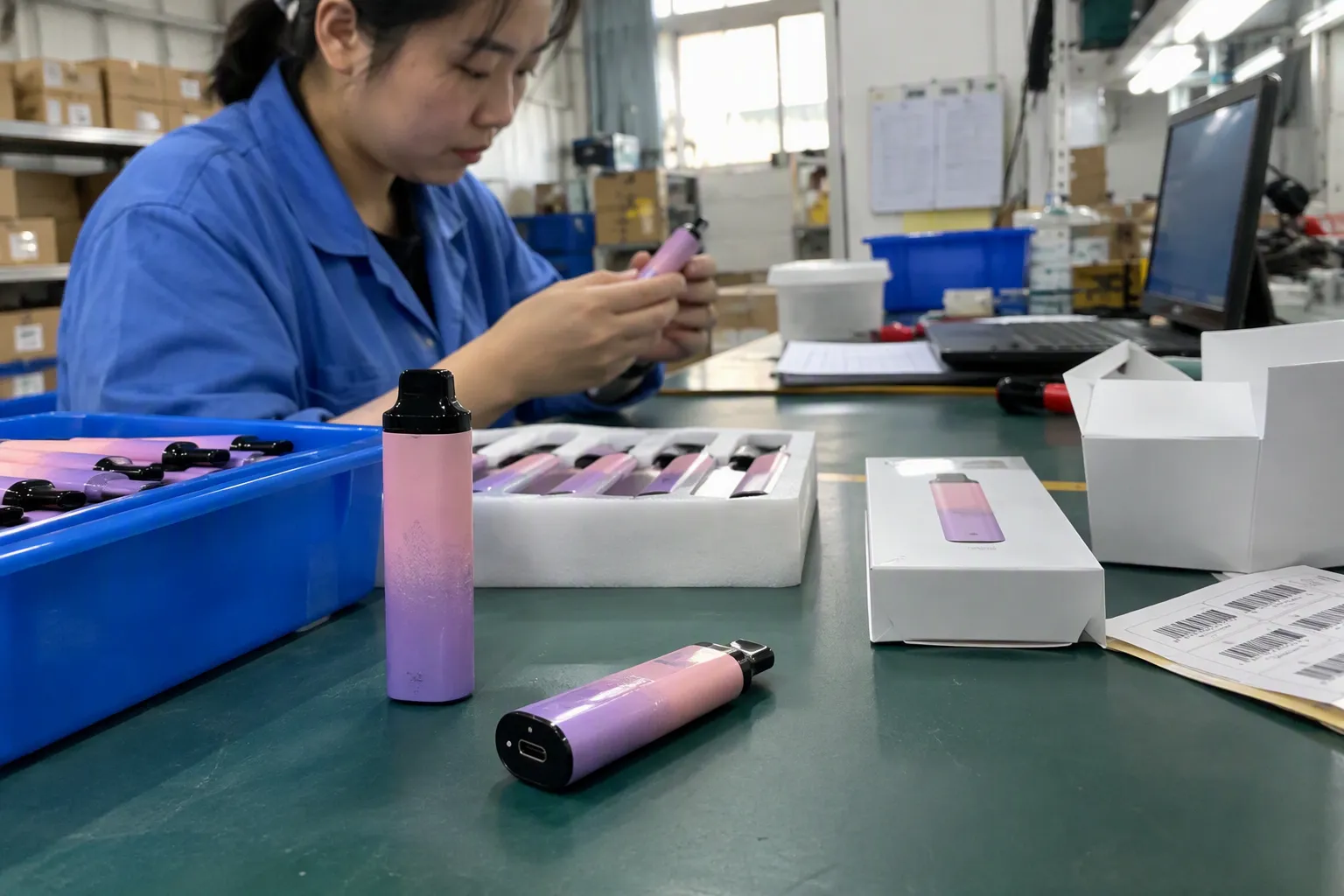
Existing single-use inventory is not automatically safe simply because it was purchased before a new rule.[7] I recommend reviewing stock by batch, date, product definition, location, and expected selling period. This approach gives the wholesaler a clearer view of what is saleable, what needs verification, and what may become stranded.
Wholesalers should create a time-sensitive inventory register, stop automatic replenishment for uncertain SKUs, and obtain written guidance from qualified German professionals where the selling position is unclear. They should not assume that a product bought before an effective date can always be sold afterward without additional conditions.
Build an inventory exposure table
I would divide stock into at least five groups:
| Stock group | Planning action |
|---|---|
| Verified and expected to remain saleable | Maintain controlled replenishment |
| Saleability appears possible but documents are incomplete | Pause new orders and verify |
| Affected by a confirmed future restriction | Set a documented sell-through or exit plan |
| In transit with uncertain timing | Review arrival, customs, and customer commitments |
| At customer or regional distributor level | Communicate carefully and review returns exposure |
The purpose is not to create panic. The purpose is to prevent a wholesaler from treating every unit as equally valuable.
I also recommend recording the following for every affected product:
- Quantity available.
- Quantity already committed to customers.
- Location of the goods.
- Date of purchase.
- Date of import or expected arrival.
- Supplier and batch reference.
- Product and packaging documents.
- Customer segment.
- Normal weekly or monthly sell-through.
- Remaining time needed to sell the stock.
- Estimated value if the product must be discounted or returned.
Avoid rushed liquidation without checking the rules
When a wholesaler hears about a possible restriction, the first reaction may be to sell quickly at any price. That action can create additional problems if the product’s legal status, labeling, tax position, or documentation has not been verified.
I prefer a controlled process:
- Freeze uncertain replenishment. Do not automatically reorder because the product has sold well in the past.
- Verify the rule and date. Use current German official sources and qualified advice.
- Check the stock position. Include goods in transit and goods held by customers.
- Estimate normal sell-through. Compare the remaining quantity with realistic demand.
- Prepare customer communication. Use accurate wording and avoid unverified legal promises.
- Choose the commercial action. Continue, reduce, replace, return, or stop, depending on the verified result.
I have learned from procurement conversations that customers value clear information more than optimistic promises. If I do not have a confirmed answer, I should say that the answer needs verification. A distributor’s reputation can suffer when a rushed sale leaves retail customers with products that they cannot confidently sell.
Review after-sales risk separately
Single-use products can also create a different after-sales profile from reusable devices.[8] A buyer may need to plan for battery, charging, leakage, activation, flavor, packaging, or performance complaints. I do not use a general “low defect rate” statement as a substitute for a written quality process.
For each supplier, I would ask:
- How does the supplier inspect finished goods?
- What batch information is available?
- How are defects reported?
- What evidence is required for a claim?
- What replacement or refund process applies?
- Who pays for defective units and local handling?
- Does the supplier provide product instructions that support correct end-user use?
At Kingfuji, I offer centralized after-sales coordination for products purchased through our supply service, but buyers should still agree the commercial terms before ordering. A buyer should understand what is covered, what evidence is needed, and how a claim will be resolved.
Should Wholesalers Replenish, Replace, or Delay Products in 2026?
The best response will differ between a small retailer-supplier, a regional wholesaler, and a large importer. I use the buyer’s sales speed, capital position, documentation status, and route to market to decide whether an order should move forward.
Wholesalers should replenish only after they verify the product’s German status and revised landed cost. Small buyers may prefer lower-MOQ stock from a European warehouse, while larger importers may use direct China imports and OEM/ODM projects after completing a deeper compliance and cost review.
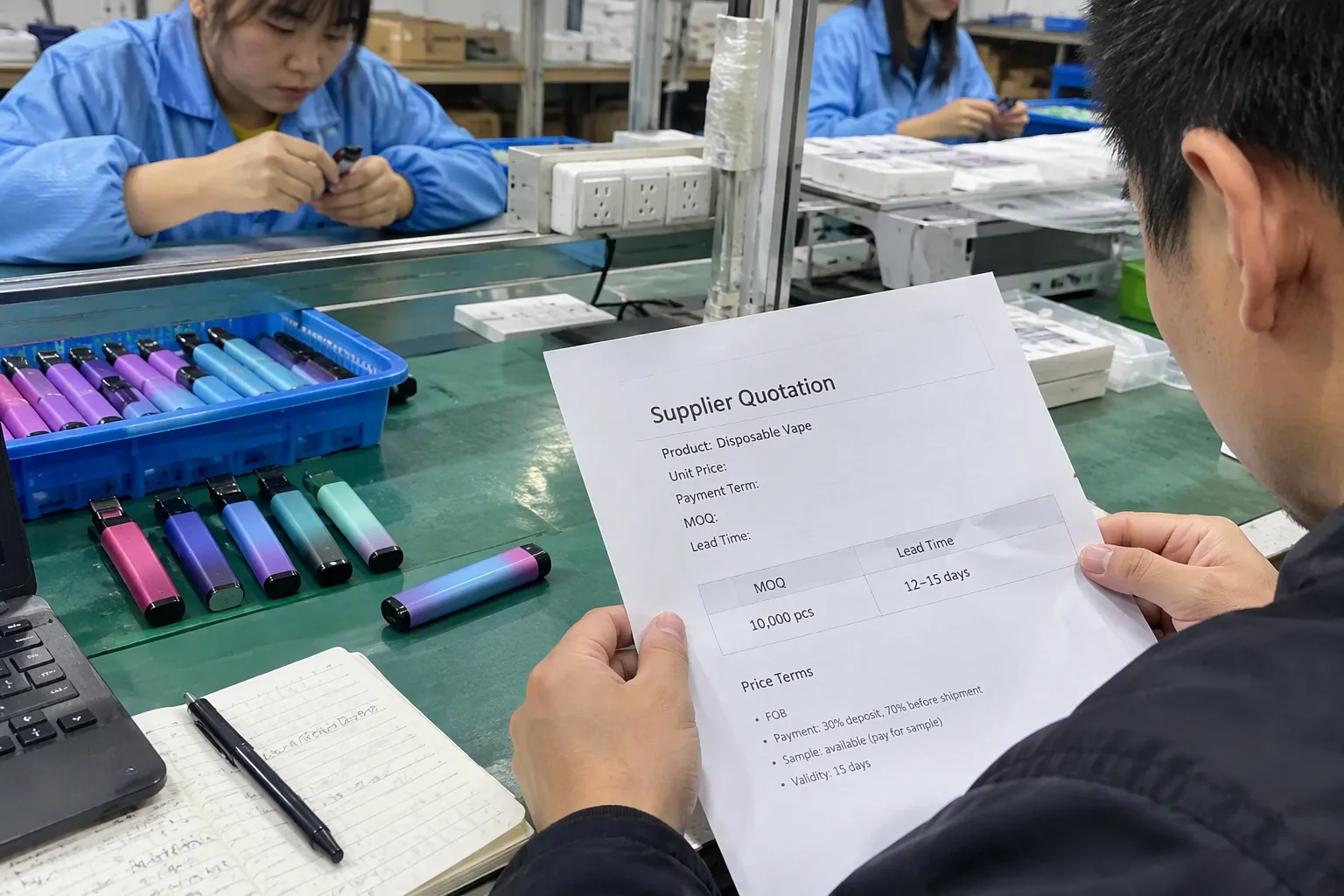
A decision matrix for procurement
| Situation | More cautious decision |
|---|---|
| Fast-moving SKU, verified status, complete documents | Replenish according to measured demand |
| Fast-moving SKU, unclear tax or product classification | Verify before placing a larger order |
| Slow-moving single-use stock | Reduce exposure and avoid automatic reorder |
| New product with strong marketing claims but limited documents | Request evidence and professional review |
| Small order with urgent delivery need | Check European warehouse availability |
| Large-volume import with planned private label | Complete product, packaging, tax, and documentation review first |
I do not recommend replacing every single-use product with a reusable product automatically. The replacement must fit the buyer’s customers, price point, retail channel, operational ability, and applicable rules. A different product can introduce its own requirements for batteries, charging, packaging, instructions, returns, and consumer use.
Use warehouse choice as a cash-flow tool
For small and medium buyers in Europe, a European warehouse can sometimes reduce the capital and timing pressure of direct import. Kingfuji has European warehouse resources in locations including Germany, Austria, Poland, and Belgium, with delivery options through carriers such as DHL, DPD, UPS, and FedEx. Actual availability, delivery time, product status, and shipping terms must be confirmed for each order.
This model may suit a buyer who:
- Wants a lower minimum order quantity.
- Needs to test demand before committing to a container-scale purchase.
- Wants faster replenishment for local shops.
- Has limited warehouse capital.
- Wants to avoid managing every China-to-Europe shipping step.
It does not mean that every product is available in every location, or that every regulatory question is solved by local stock. I still ask the buyer to confirm whether the intended German sale is permitted and properly documented.
Use direct import and OEM/ODM selectively
A larger importer or distributor may prefer direct China supply because bulk volume can provide better pricing, packaging control, and private-label opportunities. Kingfuji operates as an integrated trade and manufacturing business, with a 5,000-square-meter factory, OEM/ODM experience, and a stated monthly production capacity of up to 5 million units. We also continue developing new products, with approximately 5–10 new models introduced monthly according to our business plan.
These capabilities can support a structured project, but they do not replace product-specific evaluation. Before an OEM/ODM order, I would recommend confirming:
- Target market and sales channel.
- Product category and intended use.
- Packaging and labeling requirements.
- Required technical and commercial documents.
- Tax and environmental cost assumptions.
- Minimum order quantity and production lead time.
- Inspection and acceptance standard.
- Warranty and after-sales terms.
- Shipping route and delivery responsibility.
I can help an importer compare options, prepare a quotation, coordinate samples, and discuss delivery. I would still ask the buyer to obtain qualified advice for application-specific regulatory decisions in Germany.
What Should a German Vape Wholesaler Ask a Supplier Before Ordering?
A supplier’s answer should help the buyer make a documented procurement decision. I recommend asking direct questions about product identity, stock location, cost components, delivery, and after-sales support rather than asking only for the lowest price.
A German wholesaler should request a complete SKU information pack, a transparent quotation, batch and inventory details, relevant product documents, clear delivery terms, and written after-sales conditions. The buyer should then compare the supplier’s information with current German requirements before committing funds.
Supplier questionnaire
I would use the following checklist:
- What is the exact product model and configuration?
- Which documents are available for this specific SKU and batch?
- What product and packaging information will be supplied?
- Where is the inventory located?
- What is the available quantity and batch age?
- What is the expected lead time for replenishment?
- Which costs are included in the quotation?
- Which costs remain the buyer’s responsibility?
- How will defective goods be handled?
- What evidence is required for an after-sales claim?
- Can the supplier support a smaller trial order?
- Can the supplier support private labeling or product development?
- Can the supplier provide updated information if German rules change?
- Can the supplier separate verified facts from commercial estimates?
Beware of incomplete compliance language
I treat words such as “compliant,” “legal,” “certified,” and “approved” carefully. The buyer should ask what each word means and which document supports it. A document may apply to a different model, a different batch, a different market, or a different legal obligation.
I also recommend checking:
- Issuing organization.
- Product name and model.
- Test or document date.
- Scope of the document.
- Manufacturer details.
- Matching technical specifications.
- Whether the document is current.
- Whether a German professional accepts it for the intended use.
Kingfuji can provide available commercial and product information for products we supply, and we can help coordinate documentation requests with factories and brand partners. Buyers should verify whether that information meets their own German import, tax, environmental, and retail obligations.
How I can support different buyer sizes
I structure procurement discussions differently for different customers.
Small and medium European wholesalers may need:
- Low-MOQ stock where available.
- Fast European warehouse dispatch.
- Product comparison before testing demand.
- One supplier for multiple vape and smoking-accessory categories.
- Centralized after-sales communication.
- Clear landed-cost assumptions.
Large importers and distributors may need:
- Direct China bulk quotation.
- Product development and OEM/ODM coordination.
- Factory production planning.
- Batch inspection and shipment scheduling.
- Consolidated sourcing across electronic cigarettes, atomizers, 510 batteries, CBD batteries, vaporizers, grinders, glass pipes, and related products.
- A documented process for regulatory and cost review.
My role is to help simplify sourcing and coordination. The buyer remains responsible for confirming that the selected products can be imported and sold through the intended German channel.
Frequently Asked Questions
Is every single-use vape order automatically prohibited in Germany in 2026?
I would not make that conclusion without checking the current German rule, product definition, effective date, and transitional provisions. Wholesalers should review each affected SKU and obtain qualified German advice before changing sales or disposal decisions.
Does a lower factory price protect a wholesaler’s margin?
No. The factory price is only one part of the commercial calculation. Tax, freight, import charges, compliance work, warehouse handling, payment costs, returns, defects, and slow sell-through can materially reduce the actual margin.
Can existing inventory be sold after a new rule takes effect?
The answer depends on the verified rule, product definition, purchase and import timing, transitional provisions, and required conditions. A wholesaler should not rely only on the purchase date or a supplier’s informal statement.
Should a small German buyer import directly from China?
Direct import may suit a buyer with sufficient volume, working capital, and compliance capability. A smaller buyer may prefer available European warehouse stock and a lower-MOQ test order, but the buyer must still verify German saleability and documentation.
What should I do before placing a 2026 replenishment order?
I recommend confirming the rule and effective date, mapping affected SKUs, calculating complete landed cost, reviewing stock exposure, checking supplier documents, confirming customer pricing, and deciding whether to replenish, reduce, delay, or replace the product.
Conclusion
Germany's 2026 vape tax and single-use rules require more than a quick reading of a regulatory headline. I recommend that wholesalers verify every rate, date, definition, and saleability condition, then connect those facts to landed cost, cash flow, stock age, customer pricing, and after-sales exposure. Small buyers can explore lower-MOQ European warehouse supply, while larger importers can consider direct bulk sourcing and OEM/ODM after proper review. Contact Kingfuji at info@kingvapecig.com or +86 13928420527 to discuss product availability, quotations, warehouse options, and procurement planning.
Sources
- About E-Cigarettes (Vapes) | Smoking and Tobacco Use", German customs and legislative guidance identifies the applicable excise-tax provisions and effective dates for covered e-cigarette products, while separate official materials establish the scope of any single-use-product restrictions
- The Impact of Compliance on Supply Chain Management", Research on regulatory compliance in supply chains describes how new requirements can increase administrative and verification costs, extend processing times, and introduce uncertainty into sourcing and market access
- Emerging Electronic Cigarette Policies in European Member ...", European and national product regulations distinguish electronic-cigarette categories by characteristics such as liquid capacity, device configuration, labeling, and intended use, which can affect the applicable compliance requirements
- Customs online - Travellers' allowances - Zoll", German and European customs guidance links import and excise assessments to product classification, customs valuation, transaction circumstances, applicable dates, and supporting documentation
- [PDF] Total Landed Cost Model - DSpace@MIT", Procurement and supply-chain accounting literature defines landed cost as the acquisition cost of goods together with applicable transportation, insurance, duties, handling, and related costs required to bring them to the point of sale or use
- Is your cross-border model becoming more complex than ...", Research on regional fulfillment finds that inventory positioned near the destination market can reduce transport lead time, while customs guidance shows that the resulting obligations depend on the shipment structure and responsible importing party
- 1_EN_ACT_part1_v6.docx - EUR-Lex", Transitional provisions in product regulation determine whether goods already manufactured, imported, or placed on the market may continue to be supplied after a new requirement takes effect
- Disposable E-Cigarette Use and Subsequent Use Patterns in ...", Studies of electronic-cigarette devices report failure modes including leakage, battery or charging problems, activation faults, and packaging or performance complaints, providing a basis for distinguishing after-sales risks by device design