Quick Answer
Factory leak tests are an important quality-control step, but they do not automatically prove that every vape will remain leak-free through warehousing, international shipping, customs handling, and final delivery[1]. If buyers treat a routine factory test as a complete transport guarantee, they can create avoidable disputes when leakage appears after arrival. **A vape can pass factory leak tests because the product met the defined conditions of that test at the time of inspection.
It may still leak later if other variables affect the device after testing, such as sealing variation, packaging pressure, carton compression, product orientation, temperature changes, handling, or transport vibration[2]. I recommend that buyers evaluate the scope of factory leak tests, sampling method, packaging design, and risks not covered by the test before assigning responsibility for an arrival leak.**
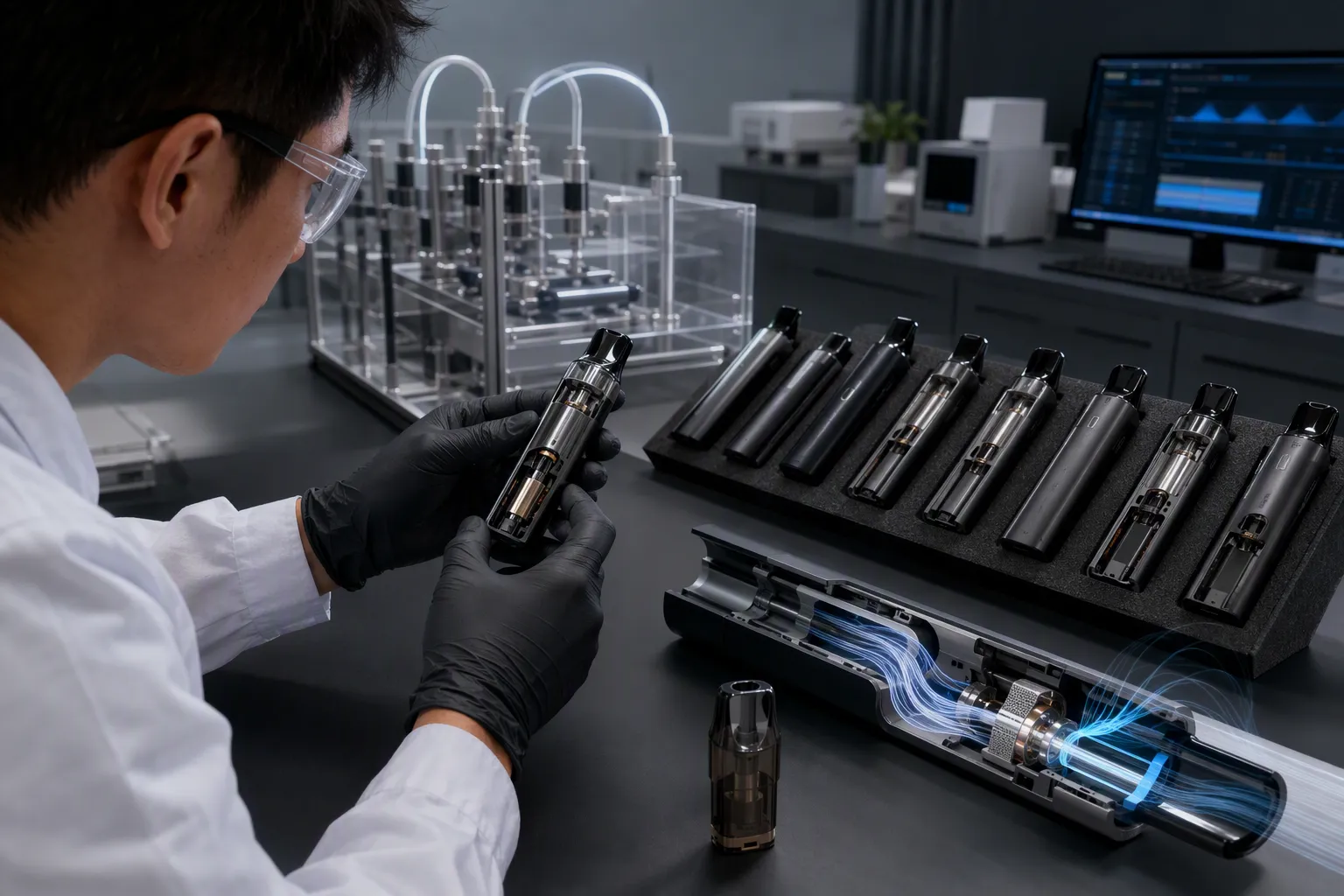
In my experience with vape production, filling, assembly, packaging, and after-sales discussions, the most productive question is rarely “Did this vape pass a leak test?” I find that the better question is: “What exactly did the test cover, and what could still happen after the product left the factory?”
Is a Vape Passing Factory Leak Tests a Meaningful Quality-Control Checkpoint?
When a buyer receives leaking vapes, the immediate concern is understandable. Leakage can damage outer boxes, create a poor retail experience, lead to returns, and weaken trust with vape shops, smoke shops, distributors, or convenience-store customers. However, I have learned that a vape passing factory leak tests is still meaningful evidence of production control, even when it is not a final verdict on the entire supply chain.
Yes, a vape passing factory leak tests is a meaningful quality-control checkpoint because it can confirm that a defined sample or production process met the factory’s inspection conditions[3]. However, buyers should not treat it as proof that every unit underwent full transport simulation or that no leakage can occur after shipment. The value of the test depends on its scope, sampling logic, timing, and documented limitations.
What a Routine Leak Test Can Actually Show
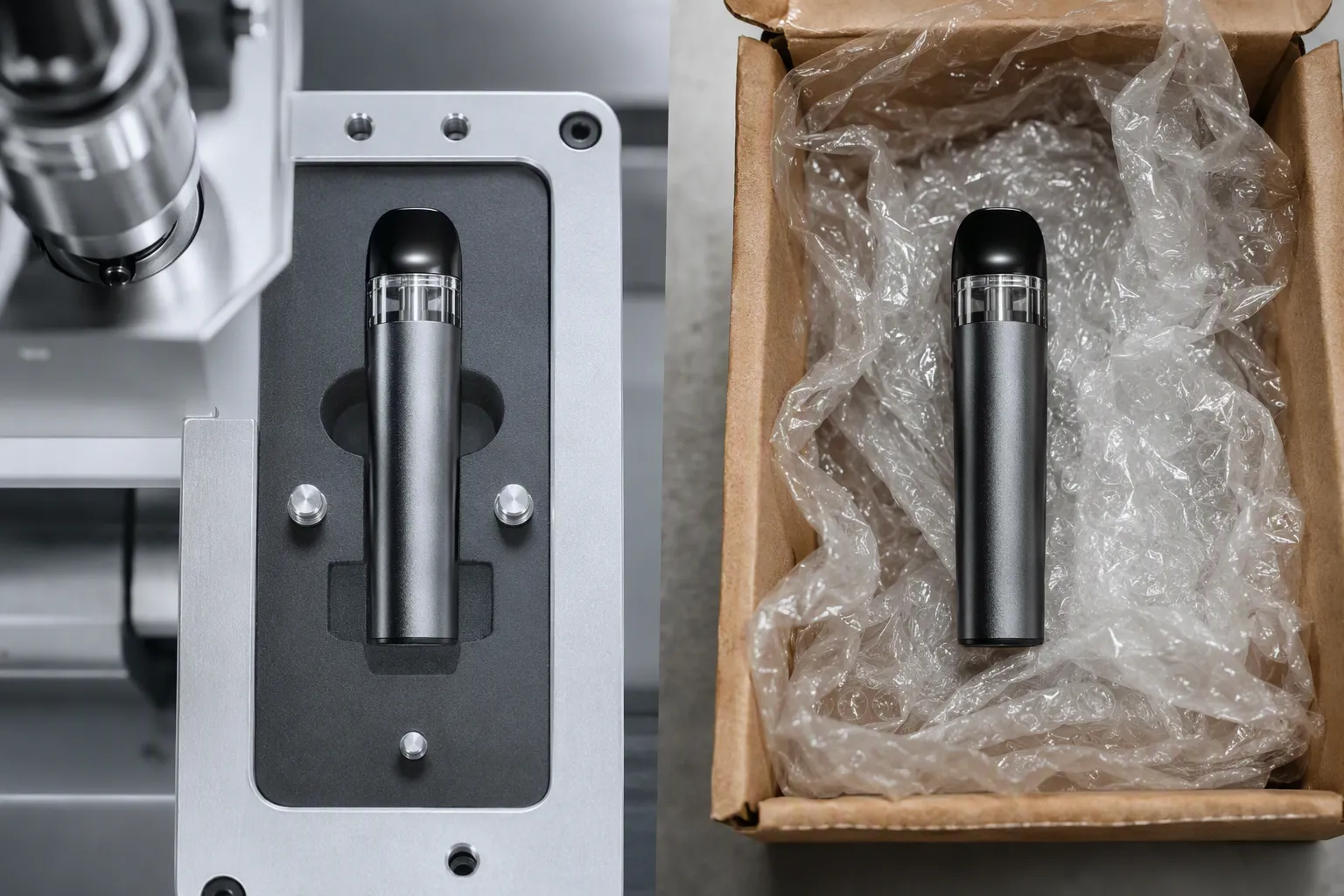
I view factory leak tests as one part of a broader manufacturing-control process. Depending on the product structure and factory procedure, a routine test may help identify obvious issues involving:
- Improper filling volume
- Incomplete seals
- Misaligned silicone plugs
- Poorly seated mouthpieces
- Cracked pods or tanks
- Incorrect assembly of internal components
- Visible e-liquid seepage around joints
- Immediate leakage after filling or sealing
This is valuable because it gives a production team an opportunity to detect certain defects before products enter retail packaging. If a factory has no defined inspection process at all, buyers have much less visibility into how filling, sealing, and assembly are controlled.
Still, I encourage importers and OEM buyers to avoid assuming that the words “leak-tested” always mean the same thing. One supplier may perform a visual inspection after filling. Another may inspect a sample after a holding period. A third may use a more specific test process for a particular component or production stage. Without a written explanation, the phrase can be too general to support a fair quality claim[4].
Why Test Scope Matters More Than a Simple “Passed” Statement
A pass result only has meaning when the buyer understands the conditions behind it. I recommend asking suppliers to clarify the test scope in practical language.
For example, buyers can ask:
- Was the test performed on every unit or on sampled units?
- Was the product tested before or after final packaging?
- Was the vape inspected immediately after filling, after a holding period, or both?
- What was the inspection method?
- What types of leakage was the inspection intended to identify?
- Did the test include any packaging, orientation, compression, or handling review?
- Which risks were outside the test scope?
These questions do not require a buyer to become a manufacturing engineer. They simply turn a vague promise into a procurement requirement that both sides can understand.
| Procurement question | Why it matters to the buyer | What it may not prove |
|---|---|---|
| Were factory leak tests performed? | Confirms that some inspection process existed | It does not prove full transport resistance |
| What was the sampling method? | Helps buyers understand coverage and confidence | It does not mean every unit received the same test |
| When was the inspection completed? | Shows whether the product was checked before shipment | It may not reveal later changes during transit |
| Was the finished package inspected? | Helps evaluate protection after assembly | It does not duplicate all logistics conditions |
| What packaging was used? | Supports discussion of carton and unit protection | It cannot guarantee no damage in handling |
I have seen quality discussions become difficult when a buyer expects a generic statement to cover all possible outcomes. I believe that a supplier should explain the limits of the inspection honestly. At the same time, I believe that a buyer should define the level of quality assurance needed before placing an order, especially for private-label vapes, high-volume imports, or products with a history of customer complaints.
Sampling Does Not Mean Every Vape Received a Full Transport Simulation
Sampling is common in production control because it helps a factory monitor whether a process is operating consistently[5]. However, a sampled inspection is not the same as testing every individual vape under every possible condition[6].
I recommend that buyers separate three different ideas:
- Routine production inspection: Checks whether filling, sealing, assembly, and visible product condition meet the defined process.
- Sampling inspection: Reviews a selected quantity from a batch according to an agreed approach.
- Transport-oriented evaluation: Looks at risks that may arise after packing, stacking, loading, shipping, unloading, and delivery.
These activities can overlap, but they are not identical.
For example, a disposable vape might be checked after filling and show no visible leakage. The device may then be packed correctly at the factory. Later, the carton can experience a different orientation, pressure from stacking, repeated handling, or environmental changes during transport. If a leak is found after delivery, the arrival condition alone does not prove which stage caused it[7].
I do not think buyers should automatically blame logistics. I also do not think suppliers should use transport as a blanket excuse for manufacturing defects. A fair review should consider the full chain: product design, material condition, assembly, filling, seals, inspection records, retail packaging, master-carton protection, shipment handling, and evidence from the affected batch.
The Difference Between Production Control and Transport Exposure
The word “transport” covers many possible conditions, but I avoid treating any single factor as the confirmed cause of leakage unless batch-specific evidence supports that conclusion.
A shipment may involve:
- Changes in product orientation
- Carton stacking and compression[8]
- Repeated loading and unloading
- Road vibration
- Warehouse storage time
- Temperature variation
- Pressure variation
- Rough handling
- Delays at customs or transit hubs
- Damage to pallets, master cartons, or inner boxes
Each variable can be relevant to an investigation. Yet none should be treated as the automatic answer without evidence.
In my experience, the investigation should begin with facts. I would ask whether the leakage appeared in a small number of units or across many cartons. I would ask whether it was concentrated in one SKU, one flavor, one carton position, or one production batch. I would also compare the condition of the outer cartons, inner packaging, and individual devices.
That evidence can help buyers and suppliers avoid emotional conclusions. It also helps protect the buyer’s downstream relationships because the buyer can explain to retail customers that the issue is being reviewed in a structured way.
I believe that a quality dispute becomes easier to resolve when both sides document the product condition before deciding who is responsible.
A Practical Example of How I Would Review an Arrival Leak Claim
I have handled after-sales discussions where the first report was simply: “The products leaked after delivery.” That report is important, but it is only the starting point.
I would normally ask for clear photos or videos showing:
- The affected vape device
- The bottom and sides of the device
- The mouthpiece or pod area
- The individual retail box
- The inner tray or inner carton
- The master carton
- Any visible crushing, wet marks, or carton damage
- Batch identifiers, production dates, or carton labels when available
- The quantity received and the quantity affected
I would then compare this information with the available production and shipment records. I would not promise that every case can be solved from photos alone. However, the more complete the evidence is, the easier it becomes to distinguish between an isolated product issue, a packaging concern, a handling issue, or a broader batch-level pattern that needs further review.
For importers, this process matters because vague claims can delay solutions. If a buyer only says “many units leaked,” the supplier may not be able to identify whether the issue involves a specific carton, shipment section, or production lot. If the buyer provides organized evidence, the supplier has a better basis for reviewing the matter and discussing a reasonable after-sales response.
How Buyers Can Build Better Factory Leak Test Requirements
I recommend that buyers include more than the phrase “100% leak-tested” in a purchase order or product specification. That phrase can sound reassuring, but it often lacks the detail needed to manage a real dispute.
Instead, I suggest that buyers build a written checklist around four areas:
1. Test Scope
The buyer should ask what the factory leak tests are designed to detect.
Possible questions include:
- Is the inspection focused on filling, seals, assembly, or visible leakage?
- Is there a holding period after filling?
- Is the product checked before final packaging, after final packaging, or both?
- Is the test routine quality control or a special buyer-requested procedure?
- Is the test method documented in the quality-control process?
2. Sampling and Inspection Logic
The buyer should understand how the inspection is applied.
Questions may include:
- What quantity is sampled from each batch?
- Are samples taken at different times during production?
- Are samples taken from different filling or assembly positions?
- What happens when a sample does not meet the internal requirement?
- Is reinspection or additional checking part of the process?
I do not recommend assuming that one sampling method is suitable for every order. A small mixed-SKU order from an overseas warehouse may need a different approach from a container-level OEM order. The buyer’s sales channel, product value, expected turnover, and tolerance for returns should influence the requirement.
3. Packaging Protection
Packaging is not just a marketing issue. It is part of product protection.
Buyers should review:
- Individual device packaging
- Internal trays or separators
- Inner cartons
- Master-carton strength and configuration
- Palletizing method, if applicable
- Carton markings and orientation instructions
- Whether the packaging design supports the intended transport route
I recommend that buyers request packing photos before shipment, especially for larger import orders. Photos do not replace a full inspection, but they create a practical record of how goods were packed before dispatch.
4. Risks Outside the Test Scope
A transparent supplier should be willing to explain what is not covered by routine factory leak tests.
For example, a routine factory inspection may not represent:
- Extended storage in unknown conditions
- Every possible shipping orientation
- Severe compression during third-party handling
- Damage after the goods leave the factory
- Retail-store handling after final delivery
- Improper consumer use or post-sale damage
This does not remove the supplier’s responsibility for manufacturing quality. It simply helps both parties define where the factory’s controlled process ends and where other risks begin.
Why This Matters for Wholesalers, Importers, and Private-Label Buyers
For a vape wholesaler, a leaking shipment can create more than a product problem. It can create a cash-flow problem, a customer-service problem, and a reputation problem.
A distributor may have already sold the goods to vape shops. A smoke-shop wholesaler may have retailers waiting for stock. A private-label buyer may have invested in custom packaging, branding, compliance work, and local marketing. If leakage appears after arrival, that buyer needs facts quickly.
I understand why many B2B buyers prefer suppliers that can coordinate product sourcing, quality discussions, packaging, and delivery support through one contact point. It reduces the burden of contacting different factories, brands, freight agents, and after-sales teams.
For smaller wholesalers and retailers in Europe, lower-MOQ stock from an overseas warehouse can reduce inventory pressure and shorten replenishment time. Buyers should still inspect the relevant product condition, batch information, and delivery terms before ordering. For larger importers and established distributors, direct China purchasing may offer stronger pricing flexibility, more OEM/ODM options, and greater control over packaging requirements, but it also requires clearer specifications before production starts.
In both cases, I believe the buyer benefits from treating leakage prevention as a supply-chain requirement rather than a single factory promise.
A Procurement Checklist Before You Approve a Vape Order
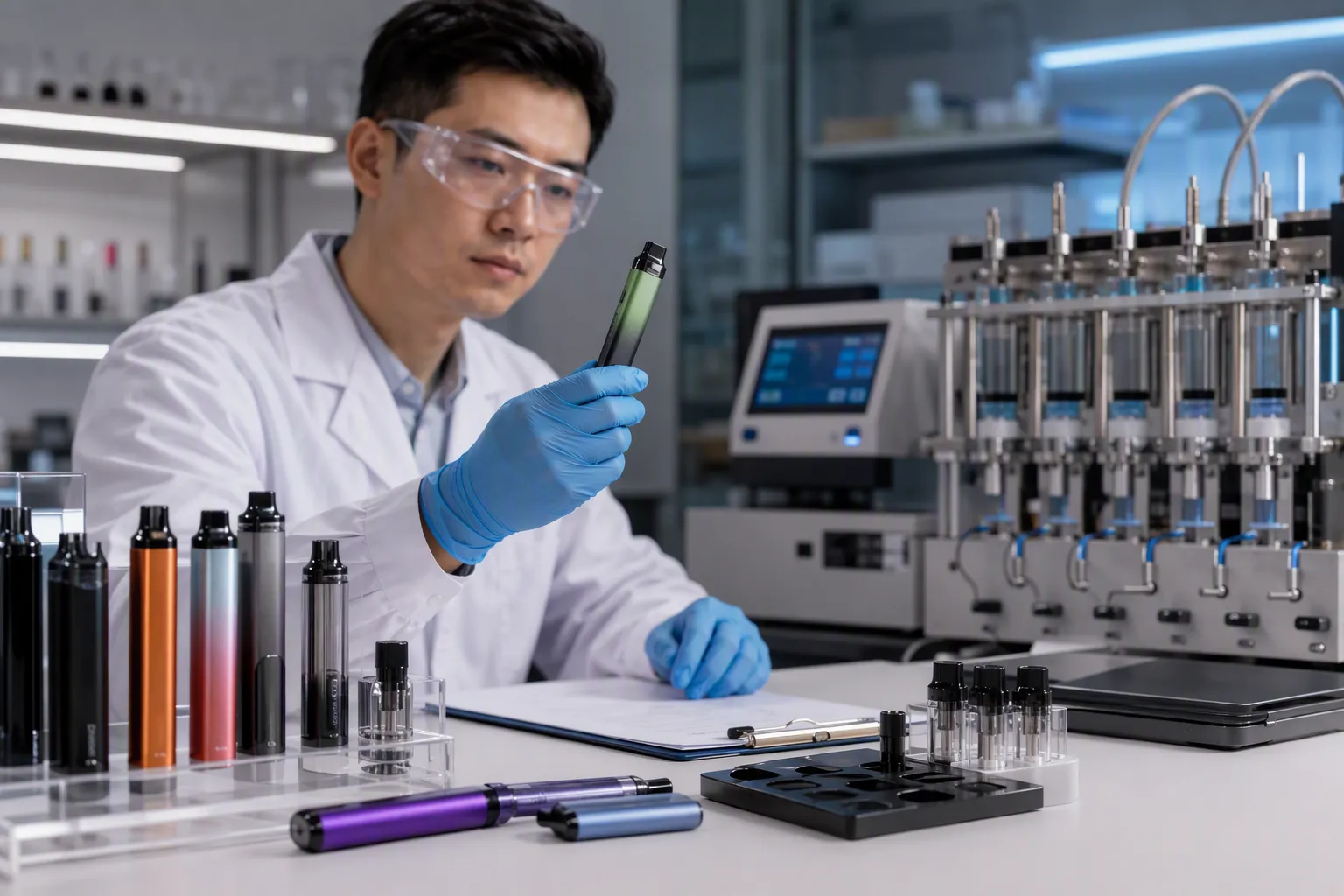
Before I approve a vape order for a buyer, I would encourage the buyer to confirm the following points in writing:
| Area | Buyer requirement to clarify |
|---|---|
| Product structure | What are the main sealing points and possible leakage areas? |
| Filling process | How is filling controlled and checked? |
| Factory leak tests | What conditions do the tests cover? |
| Inspection method | Is the inspection visual, sampled, held for observation, or another agreed process? |
| Sampling | What is the sampling logic for the order or batch? |
| Packaging | How are individual units, inner boxes, and master cartons protected? |
| Shipment | What shipping route, delivery method, and handling stages are expected? |
| Evidence | What photos, videos, records, or labels will be available if an issue occurs? |
| After-sales process | What information must the buyer provide for a quality review? |
| Commercial terms | How will confirmed quality issues be handled under the agreed terms? |
I also recommend that buyers avoid making application-specific decisions based only on marketing claims. A qualified quality professional, packaging specialist, or relevant compliance adviser may be needed when an order has unusual transport conditions, specialized product requirements, or high commercial exposure.
The goal is not to make procurement unnecessarily complicated. The goal is to avoid preventable misunderstandings. A buyer who understands the boundaries of factory leak tests can negotiate more clearly, inspect more effectively, and handle downstream customer concerns with greater confidence.
Frequently Asked Questions
Do factory leak tests guarantee that vapes will not leak during shipping?
No. Factory leak tests can confirm performance under defined factory conditions, but they do not automatically reproduce every condition that may occur during storage, loading, transport, customs inspection, unloading, and local delivery. Buyers should ask what the test covered and what risks remained outside its scope.
Can a leaking vape after delivery prove that the factory caused the problem?
No. An arrival leak alone is not enough to identify the responsible stage. The issue may relate to product structure, assembly, filling, sealing, packaging, handling, or transport exposure. Buyers should collect photos, videos, carton details, batch information, and affected quantities before reaching a conclusion.
Should buyers require 100% factory leak tests for every vape order?
Buyers can request specific inspection requirements, but they should define what “100% leak-tested” means in practice. I recommend clarifying the method, timing, acceptance standard, documentation, and limitations. A broad phrase without a defined scope can create confusion when an after-sales claim occurs.
What evidence should a buyer provide when reporting vape leakage?

A buyer should provide photos or videos of affected devices, retail packaging, inner cartons, master cartons, carton damage, batch labels, and the total affected quantity. Clear evidence helps the supplier review whether the issue appears isolated, carton-specific, shipment-related, or potentially connected to a production batch.
How can private-label vape buyers reduce leakage disputes before production?
Private-label buyers should agree on product specifications, factory leak tests, sampling logic, packaging protection, carton configuration, shipment expectations, and after-sales procedures before production begins. I also recommend requesting pre-shipment packing records and keeping batch-level information for future quality review.
Conclusion
Factory leak tests are a meaningful part of vape quality control, but they should be evaluated as a defined checkpoint rather than a universal zero-leakage guarantee. I recommend that importers, wholesalers, and OEM/ODM buyers review test scope, sampling logic, assembly controls, packaging protection, shipment risks, and evidence requirements before placing an order. Clear procurement terms can reduce disputes, protect retail relationships, and make after-sales discussions more practical. If you are sourcing vapes, atomizers, 510 batteries, or private-label products, contact Shenzhen Kingfuji Tech. Co., Ltd. to discuss product selection, packaging expectations, OEM/ODM options, and a clearer quality-control brief before your next order.
Sources
- Metrological Traceability: Frequently Asked Questions and ...", Conformity-assessment guidance distinguishes evidence that an item met specified test or inspection requirements from a guarantee of performance under all conditions encountered after assessment
- ASTM Package Integrity and Transportation Testing", Transport-packaging test guidance identifies vibration, compression, handling shocks, and environmental exposure as distribution hazards that can affect the integrity of packaged products
- What kinds of Lot Acceptance Sampling Plans (LASPs) are ...", Acceptance-sampling methods assess selected units against predefined procedures and acceptance criteria, so an accepted result is evidence about the stated inspection plan rather than an unrestricted claim about every unit
- ISO 9001 and 9002 Requirements by Section", Quality-management guidance calls for defined monitoring and measurement activities and documented results, supporting the need to specify a test method, scope, and acceptance basis rather than rely on an undefined test label
- 6.2.1. What is Acceptance Sampling?", Statistical quality-control references describe acceptance sampling as an established means of evaluating lot conformance from inspected samples under a defined sampling plan
- 6.2.1. What is Acceptance Sampling?", Sampling inspection examines a subset of units according to a defined plan, whereas 100% inspection examines all units; neither form of inspection alone represents every possible future-use or distribution condition
- The problem with root cause analysis - PMC - NIH", Root-cause-analysis guidance treats an observed failure as the starting point for investigation and requires examination of evidence and contributing conditions before assigning cause
- Do you comply with the ASTM D642 standard?", Package-testing standards address compressive loading of shipping containers, including loads associated with stacking during storage and distribution