
Quick Answer
Measured Coil Resistance can create a difficult question for importers and wholesalers. When a meter shows a different value from the number printed on a coil or atomizer, I understand why buyers may worry about quality, safety, or a possible batch problem. However, I first check the measurement method, product documentation, batch information, and agreed acceptance criteria before recommending rejection or escalation.
Measured coil resistance may differ from the printed specification because the printed value is usually a nominal reference[1], while the reading can be influenced by the instrument, contact method, temperature, manufacturing variation, and batch consistency[2]. I recommend repeating the measurement consistently, confirming the supplier’s stated tolerance, identifying the production batch, and checking whether the difference affects compatibility, performance, safety, or the agreed purchasing standard.
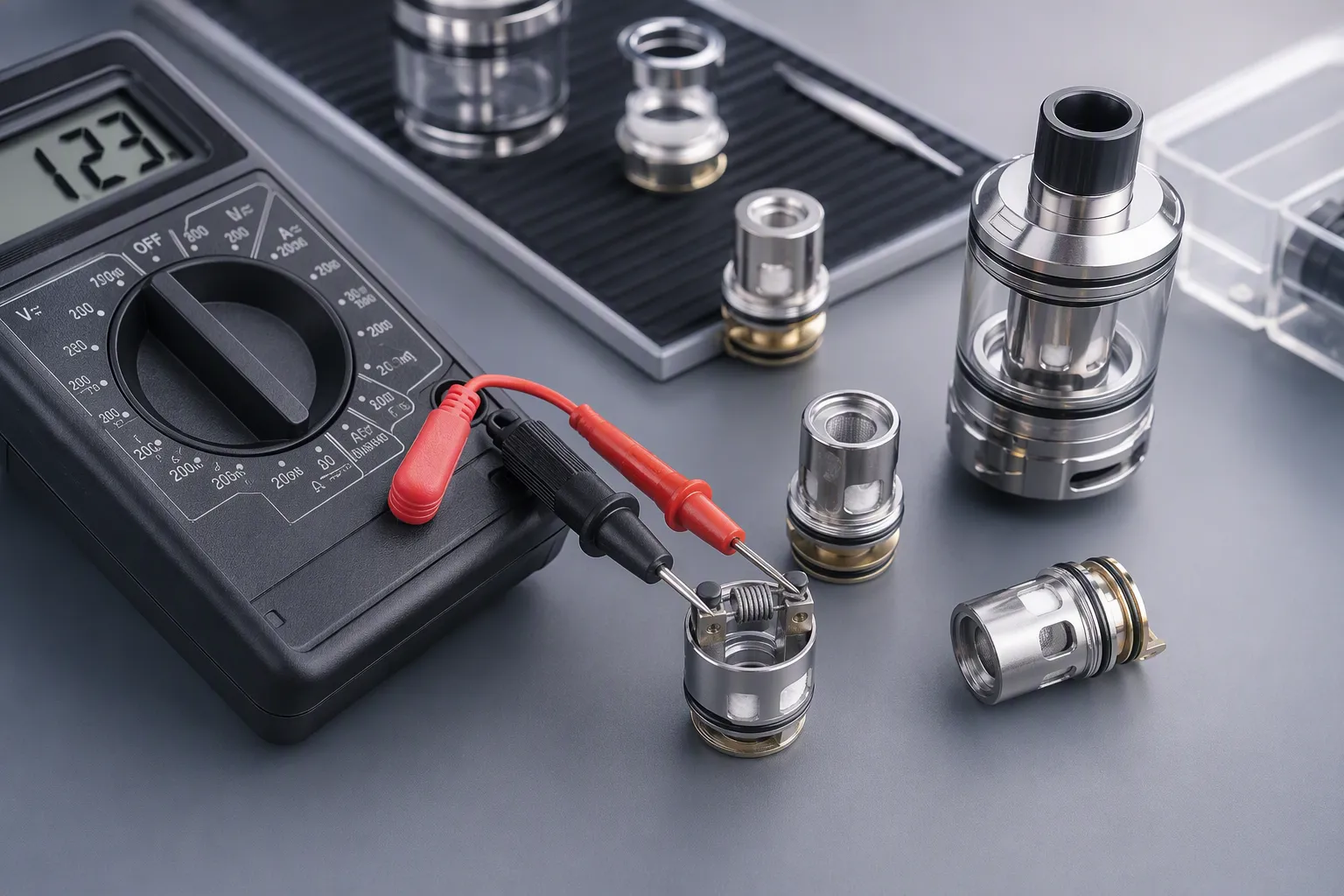
In my experience with coil and atomizer procurement, supplier technical information, and customer after-sales questions, many disputes begin with one isolated reading and no agreed test procedure. I find that a more useful question is not simply whether the number matches exactly. The better question is whether the measured difference changes the commercial or technical result for the buyer.
Why Can Measured Coil Resistance Differ from the Printed Specification?
A resistance discrepancy can create pressure for a purchasing team because every rejected carton affects cash flow, delivery schedules, and customer confidence. At the same time, accepting a genuinely inconsistent batch can create after-sales problems. I therefore treat the reading as evidence that needs context, not as an automatic pass or fail decision.
What does the printed coil resistance actually represent?
The printed coil resistance normally represents a nominal or reference value for the product. It helps the buyer identify the intended coil type, compare compatible products, and understand the expected specification. It does not automatically prove that every individual unit will display exactly the same number on every meter.
The printed specification can support product selection, but I still ask the supplier to confirm:
- Whether the number is nominal or guaranteed.
- Whether a resistance tolerance is documented.
- Which test conditions were used.
- Whether the stated value applies to the complete coil, the heating element, or another measured part.
- Whether the specification changes between models, batches, or production revisions.
- What evidence the supplier requires for a quality claim.
I avoid inventing a universal acceptable range because the correct limit depends on the product design, supplier documentation, purchasing agreement, and intended application. If a buyer needs a specific pass/fail threshold, I recommend putting that threshold in writing before production or shipment.
Why can the measuring method change the result?
I often see buyers compare a factory specification with a reading taken under completely different conditions. That comparison may not be reliable. The instrument, cable, connector, probe pressure, contact cleanliness, and test sequence can all influence the result.
For example, a buyer may measure a coil through a device connection while the supplier records a component under a controlled production process. These are not necessarily equivalent measurements. A small contact issue, unstable connection, or unsuitable meter resolution can make the displayed value appear different[3].
I recommend that buyers record the following information for every verification:
| Checkpoint | Information to record |
|---|---|
| Instrument | Meter or testing device used |
| Test method | Direct contact, device connection, or another method |
| Contact condition | Cleanliness, stability, and connector condition |
| Temperature | Approximate condition during testing |
| Sample size | Number of units tested |
| Product identity | Model, resistance version, and packaging |
| Batch details | Production date, lot number, or shipment reference |
| Result | Individual readings and overall pattern |
This record turns a general complaint into a useful technical inquiry. “The resistance is wrong” gives a supplier little information. “We measured 20 units from batch ABC using the same meter and method, and the readings showed this pattern” gives both sides a basis for investigation.
Can temperature and product condition affect coil resistance?
I treat temperature and product condition as relevant measurement factors, but I do not present a specific numerical effect without verified product documentation or controlled testing. A coil may not be in the same condition when it is measured at the factory, during incoming inspection, or after storage and handling[4].
The following conditions should be considered:
- The product may have been stored in a different environment.
- The coil may have been handled repeatedly before testing.
- The electrical contacts may not be equally clean or firmly connected.
- The product may be new, installed, or connected to another component.
- The measurement may have been taken immediately after transport or exposure to different temperatures.
- The meter may require a stable connection before the reading settles[5].
I do not assume that any one of these factors explains every discrepancy. I use them as questions for the supplier and as part of a repeatable inspection process.
What role does manufacturing and batch variation play?
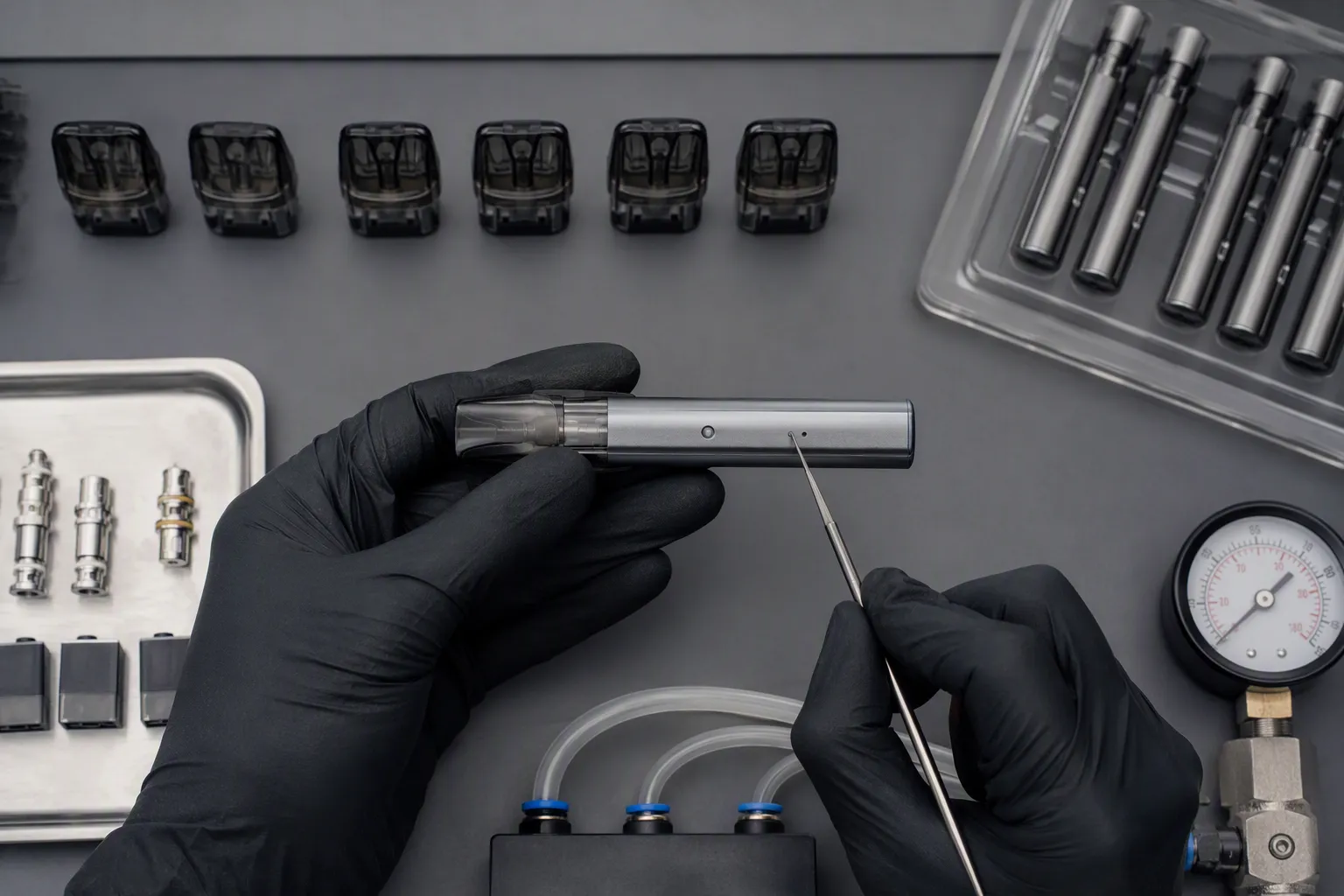
Manufacturing processes can produce variation between individual units[6]. The important procurement question is whether the variation is documented, controlled, and consistent with the agreed specification. A single different reading is not enough for me to conclude that the entire batch is defective[7].
I look for the pattern across samples:
-
One isolated reading differs.
I first repeat the measurement and check the connection, instrument, and sample identity. -
Several units show similar readings.
I ask whether the batch has a documented nominal value, tolerance, or production change. -
Readings vary widely within the same batch.
I ask the supplier to review process control, component matching, records, and retained samples. -
Different batches show different patterns.
I request batch-specific information and compare the result with the purchase order and approved sample.
I cannot determine the cause from a number alone. I can, however, help the buyer define what information is needed before making a rejection decision.
Does a resistance difference always mean poor quality?
No. I do not treat every difference from the printed value as proof of poor quality or supplier negligence. A discrepancy may result from measurement conditions, nominal specification interpretation, production variation, or a genuine product issue. The buyer needs evidence that separates these possibilities.
I focus on the commercial and technical effect:
- Does the coil remain compatible with the intended atomizer or device?
- Does the difference change product selection or customer instructions?
- Does it produce inconsistent performance within the same batch?
- Does it create a safety concern identified in the product documentation?
- Does it violate the written purchase agreement?
- Does it increase returns or customer complaints?
- Does the supplier’s inspection evidence support acceptance?
I recommend qualified technical evaluation for application-specific safety or performance decisions. My experience comes from procurement, supplier communication, and customer questions rather than systematic laboratory testing. I can help organize the inquiry, but I do not replace an independent laboratory or qualified professional.
How should importers verify measured coil resistance?
I use a simple verification process before I recommend acceptance, rejection, or supplier escalation.
1. Confirm the exact product identity
I first check the model, coil type, resistance version, packaging, and connector. Buyers sometimes compare different versions that look similar but are not the same product. I also check whether the tested units came from the shipment being discussed.
2. Repeat the test consistently
I ask the buyer to use one method and one suitable instrument for the initial comparison. The buyer should check the connector and contact points, repeat the reading, and record the results instead of relying on a single display.
3. Test more than one unit
A single sample cannot show whether the issue is isolated or widespread[8]. The buyer should select a reasonable sample according to the company’s incoming inspection plan and record individual values. I do not prescribe a universal sample size because order volume, product risk, contract terms, and customer requirements differ.
4. Ask for the documented tolerance
I ask the supplier directly: “What resistance tolerance applies to this model and batch, and where is it documented?” If the supplier has no stated tolerance, I ask the supplier to clarify the nominal value and agree on a future acceptance method.
5. Identify the production batch
I request the lot number, production date, shipment reference, or other traceable information available for the order. Without batch information, it is harder to determine whether the result relates to one shipment, one production period, or a wider product issue.
6. Compare the effect, not only the number
I ask whether the measured result changes compatibility, expected use, customer instructions, performance, or safety. If the number differs but the product remains within the documented and agreed requirements, rejection may not be commercially justified. If the difference causes inconsistent operation or violates the agreement, escalation is more appropriate.
7. Preserve evidence for a claim
For a supplier review, I suggest keeping:
- Photos of packaging and labels.
- Photos or video of the measurement setup.
- The instrument identification.
- A list of readings from each tested unit.
- Batch and order information.
- A comparison with the approved sample or technical sheet.
- Any related customer complaint or performance evidence.
I have found that clear evidence usually produces a faster and more useful discussion than an emotional message based on one unusual reading.
What should a buyer ask a coil supplier?
I recommend using direct questions that the supplier can answer with documents or specific information:
“Please confirm whether the printed resistance is nominal or guaranteed, state the applicable tolerance if documented, identify the batch, and explain the recommended inspection method for this product.”
A purchasing team can also ask:
- What is the approved reference sample?
- Does the supplier test resistance for every unit, by sampling, or by another process?
- What instrument or method is used for internal inspection?
- Are there different resistance versions under the same product family?
- What result would trigger a batch review?
- What evidence is required for replacement, credit, or return?
- Can the supplier provide batch inspection records?
- Has the design or production process changed since the last order?
- How should the product be stored and inspected after arrival?
I do not promise a conclusion before reviewing the answers. A responsible supplier conversation should leave a written record of the method, specification, batch, and agreed next action.
How should small and large buyers manage this issue?
The right procurement process depends partly on the buyer’s order model. A small vape shop or regional wholesaler may need a fast, low-risk replenishment process. A large importer may need deeper inspection, private labeling, and formal acceptance criteria.
| Buyer type | Practical priority | Recommended approach |
|---|---|---|
| Small wholesaler | Low investment and fast replenishment | Use verified stock, inspect samples on arrival, and confirm the supplier’s basic documentation |
| Vape or smoke shop supplier | Consistent customer experience | Match coil versions carefully and keep product instructions clear |
| Regional importer | Batch consistency and after-sales control | Record lot information and agree on a repeatable incoming inspection |
| Large distributor | Contractual acceptance and traceability | Define specifications, evidence, inspection, and corrective action before production |
| OEM/ODM buyer | Brand protection and repeatability | Approve samples, document the product version, and review every design or process change |
At Shenzhen Kingfuji Tech. Co., Ltd., I work with buyers who have different purchasing needs. Some customers need a small quantity of regular stock for quick local sales. Others need larger imports, OEM labeling, or ODM development. In both cases, I believe the buyer benefits when technical expectations are discussed before shipment rather than after a customer complaint.
For European customers, our business context includes warehouse stock in several European locations, including Germany, Austria, Poland, and Belgium. Where stock is available and the destination is suitable, the stated delivery model can support fast replenishment, with some products available at a minimum order quantity of 50 units per model and delivery commonly described as 1–5 working days. I still ask buyers to confirm current stock, destination, product availability, and shipping terms before placing an order.
For larger importers and distributors, direct shipment from China can provide more product choices, larger-volume purchasing, and OEM/ODM options. Our factory and trading operation includes a 5,000-square-meter facility, an indicated maximum capacity of up to 5 million units per month, and experience supporting electronic cigarette and related smoking-accessory projects. I present these as business capabilities that buyers should verify through samples, documents, factory communication, and an appropriate audit process.
How can supplier selection reduce resistance disputes?
I believe the best time to prevent a resistance dispute is before the purchase order. Buyers can reduce confusion by selecting suppliers that answer technical questions clearly and provide a consistent process for quality claims.
I suggest comparing suppliers on the following points:
- Specification clarity: Does the supplier distinguish nominal values from guaranteed limits?
- Sample control: Can the supplier identify the approved sample and product version?
- Batch traceability: Can the supplier link goods to a production or shipment batch?
- Inspection communication: Can the supplier explain how buyers should verify the product?
- After-sales responsibility: Does one supplier coordinate the issue instead of sending the buyer to several factories?
- Documentation: Can the supplier provide relevant product information for the buyer’s review?
- Commercial flexibility: Can the supplier support small replenishment orders or larger OEM/ODM projects?
- Response quality: Does the supplier answer the actual technical question rather than simply saying the product is good?
My company provides one-stop sourcing for electronic cigarettes, disposable vapes, atomizers, 510 batteries, CBD batteries, vaporizers, grinders, glass pipes, and related products. Buyers can purchase multiple brands and product categories through one supplier, subject to product availability, market requirements, and applicable local rules. This model can reduce the number of supplier conversations, but I still encourage buyers to review each product’s documentation and acceptance requirements.
I also understand why after-sales support matters to importers and wholesalers. A coil issue can affect a distributor’s reputation with vape shops, smoke shops, convenience stores, gas stations, and other local retailers. When one supplier coordinates the order and after-sales process, the buyer may spend less time contacting several factories. Our stated business service includes after-sales handling for goods purchased through us, and buyers should confirm the exact replacement, compensation, delivery, and claim terms in writing before ordering.
When should a buyer reject or escalate a batch?
I would consider escalation when the evidence shows a meaningful and repeatable problem. Examples include:
- The measured results fall outside a documented or agreed acceptance requirement.
- The same discrepancy appears across a representative group of units.
- The product is incompatible with the approved device or atomizer.
- Performance is inconsistent in a way that affects customers.
- The batch differs materially from the approved sample.
- The supplier cannot explain the result or provide reasonable inspection evidence.
- The product creates a documented safety concern requiring professional review.
I would not recommend immediate rejection solely because one reading does not exactly match the printed number. I would first repeat the test, verify the product identity, compare several samples, and ask the supplier for the applicable documentation.
This approach protects both sides. Buyers avoid unnecessary returns and delays. Suppliers receive usable evidence instead of an unclear accusation. If the problem is genuine, the documented process also gives the buyer a stronger basis for replacement, credit, corrective action, or a future purchase-order revision.
Frequently Asked Questions
Is the printed coil resistance supposed to match every measured reading exactly?
Not automatically. The printed figure may be a nominal or reference value rather than a promise of identical readings for every unit. I recommend confirming the supplier’s documented tolerance, test method, and acceptance standard before deciding whether a difference represents a defect.
What should I do if my meter shows a different coil resistance?
I would first verify the exact model and batch, check the connector and contact condition, repeat the measurement consistently, and test additional units. I would then send the supplier the instrument details, method, photos or video, readings, and batch information for review.
Can a resistance discrepancy justify rejecting an entire shipment?

It can justify escalation, but not necessarily immediate rejection. The decision should consider the number of affected units, the consistency of the readings, the agreed specification, product compatibility, performance, safety, and the supplier’s documented response. I recommend following the inspection and claim terms in the purchase agreement.
What information should I request from a coil supplier?

I suggest requesting the nominal or guaranteed resistance definition, documented tolerance if available, recommended test method, batch identification, inspection records where available, approved sample information, and the evidence required for a replacement or return claim.
Can a supplier help prevent future coil resistance disputes?
Yes. I believe the supplier and buyer should agree on the product version, reference sample, measurement method, tolerance, sampling approach, batch records, and claim procedure before production or shipment. Clear written requirements are more useful than relying only on the number printed on the package.
Conclusion
Measured Coil Resistance should be evaluated as part of a complete procurement and quality-control process. I do not treat a different reading as an automatic defect, and I do not treat the printed value as proof that every unit must measure identically. I recommend checking the instrument, contact method, temperature and product condition, sample pattern, batch information, documentation, and real effect on compatibility or performance. At Kingfuji, I help importers, wholesalers, and distributors coordinate product sourcing, technical questions, and after-sales communication. Contact King at info@kingvapecig.com or +86 13928420527 to discuss your coil, atomizer, OEM, ODM, or one-stop sourcing requirements.
Sources
- 7.2.6.3. Tolerance intervals for a normal distribution", Metrology guidance distinguishes a nominal or reference value from the result obtained for an individual specimen and from the permitted tolerance around a specification
- Realization of a Test Tool for Diagnosis of Contact Resistance ...", Experimental and metrology literature identifies instrument uncertainty, contact resistance, temperature, and specimen variation as factors that can affect measured electrical resistance
- [PDF] Test structure implementation document", Government metrology guidance describes contact resistance, connection quality, and instrument resolution as contributors to uncertainty in low-resistance electrical measurements
- [PDF] NIST Special Publication 260-131, 2006 Ed.", Measurement-quality guidance requires relevant environmental and specimen conditions to be controlled or recorded when results from different test stages are compared
- [PDF] Fabrication of High Value Standard Resistors for ICE-LMVE", Electrical measurement guidance notes that stable test connections and instrument settling can be required before a resistance result is considered repeatable
- Application of statistical process control in healthcare ... - PMC", Quality-control literature treats unit-to-unit variation as an inherent feature of manufacturing processes and evaluates it through process monitoring and specification limits
- 6.2.2.2. Choosing a Sampling Plan with a given OC Curve", Acceptance-sampling literature indicates that conclusions about a lot require a defined sampling plan and decision rule; an isolated observation does not by itself establish the quality of the whole lot
- [PDF] Automatic Localization of Casting Defects with Convolutional Neural ...", Statistical sampling guidance explains that multiple observations are required to infer a population pattern or estimate a defect rate with specified uncertainty