
Stuck with vape inventory that just won't sell? You're not alone. It’s a cash flow killer. But knowing the exact moment to cut your losses is the real challenge.
The best time to stop reordering a slow-moving vape brand is when its sales velocity drops below your inventory turnover target for two consecutive cycles, and customer complaint rates exceed 1-2%. This indicates the brand is tying up cash and may be damaging your reputation.
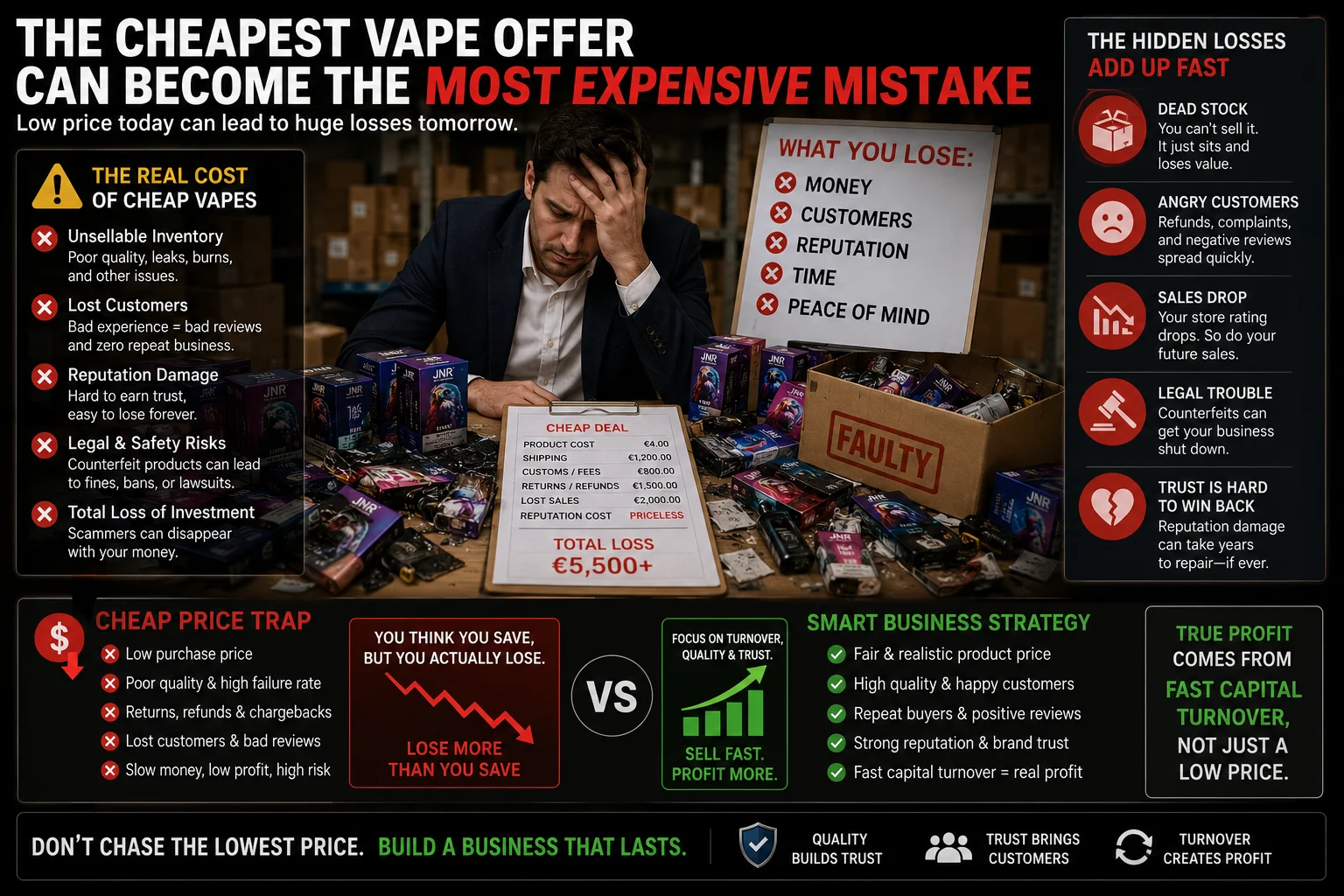
I've been in the export business for 15 years, and I've seen countless wholesalers struggle with this exact problem. They hold on to a weak brand for too long, hoping for a turnaround that never comes. They tie up capital in dusty boxes on a shelf, money that could be used to invest in products that actually sell. This isn't just a small mistake; it's a fundamental error that can cripple a growing business. The key isn't just to identify the slow-movers, but to have a clear, data-driven system for when to say "enough is enough." In this article, I'll walk you through the exact framework we use to advise our B2B clients, helping you protect your cash flow and keep your inventory fresh.
Why Do Slow-Moving Brands Hurt Your Cash Flow?
Struggling with products that gather dust on your shelves? This isn't just an inventory problem; it's a direct attack on the cash you need to grow your business.
Slow-moving brands are "cash traps." Every unit that doesn't sell is money you cannot reinvest in fast-selling products, marketing, or operational growth. This dramatically slows down your business's financial engine and reduces overall profitability, even if the margins look good on paper.
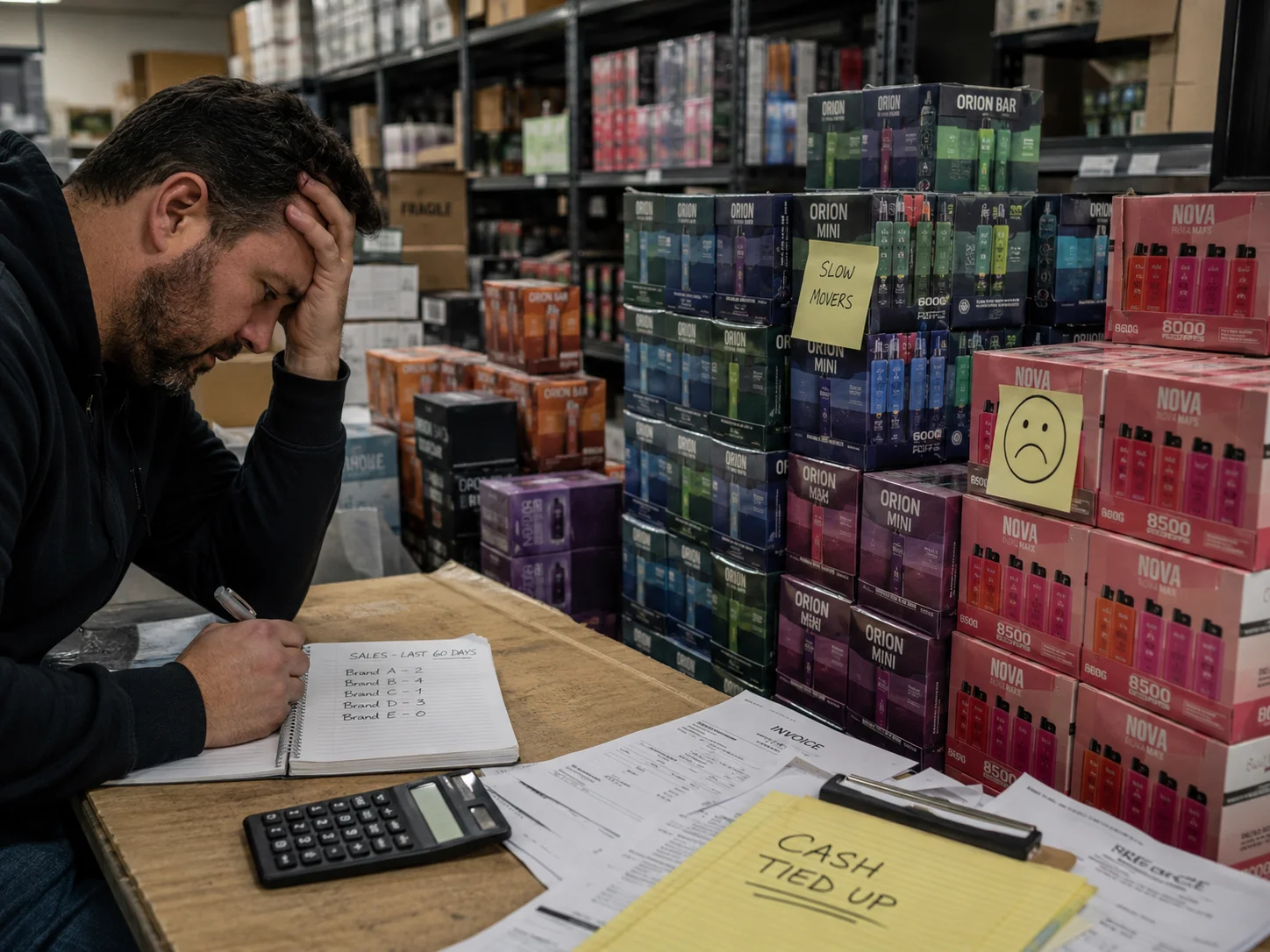
I often tell my clients that the true nature of business is the speed of your money's circulation. It’s a simple but powerful concept. Imagine you have a set amount of capital. If you can use that money to buy and sell products once a month, you get to earn a profit 12 times a year. If a product is a fast-seller, maybe you can turn that money over twice a month. That’s 24 profit cycles a year.
Now, consider a slow-moving brand. You buy it, and it sits there. And sits there. It might take you three, four, or even six months to sell it. In that time, your competitor who chose a fast-moving product has already earned a profit multiple times over with the same initial investment. Even if you have a 50% margin on the slow item, it's useless if you can't sell it. A 20% margin on a product that sells weekly is infinitely more valuable. Slow-moving stock doesn't just occupy space; it freezes your most critical asset: cash.
How Long Should You Wait Before Calling a Brand “Slow-Moving”?
You know a product isn't flying off the shelves, but how long is too long? Waiting might mean a sale, but acting too late means lost capital and missed opportunities.
A brand should be flagged as "slow-moving" if it fails to meet 50% of its sales forecast within a single reordering cycle (e.g., one month). If it doesn't show significant improvement in the second cycle, it officially becomes a slow-moving problem that requires action.
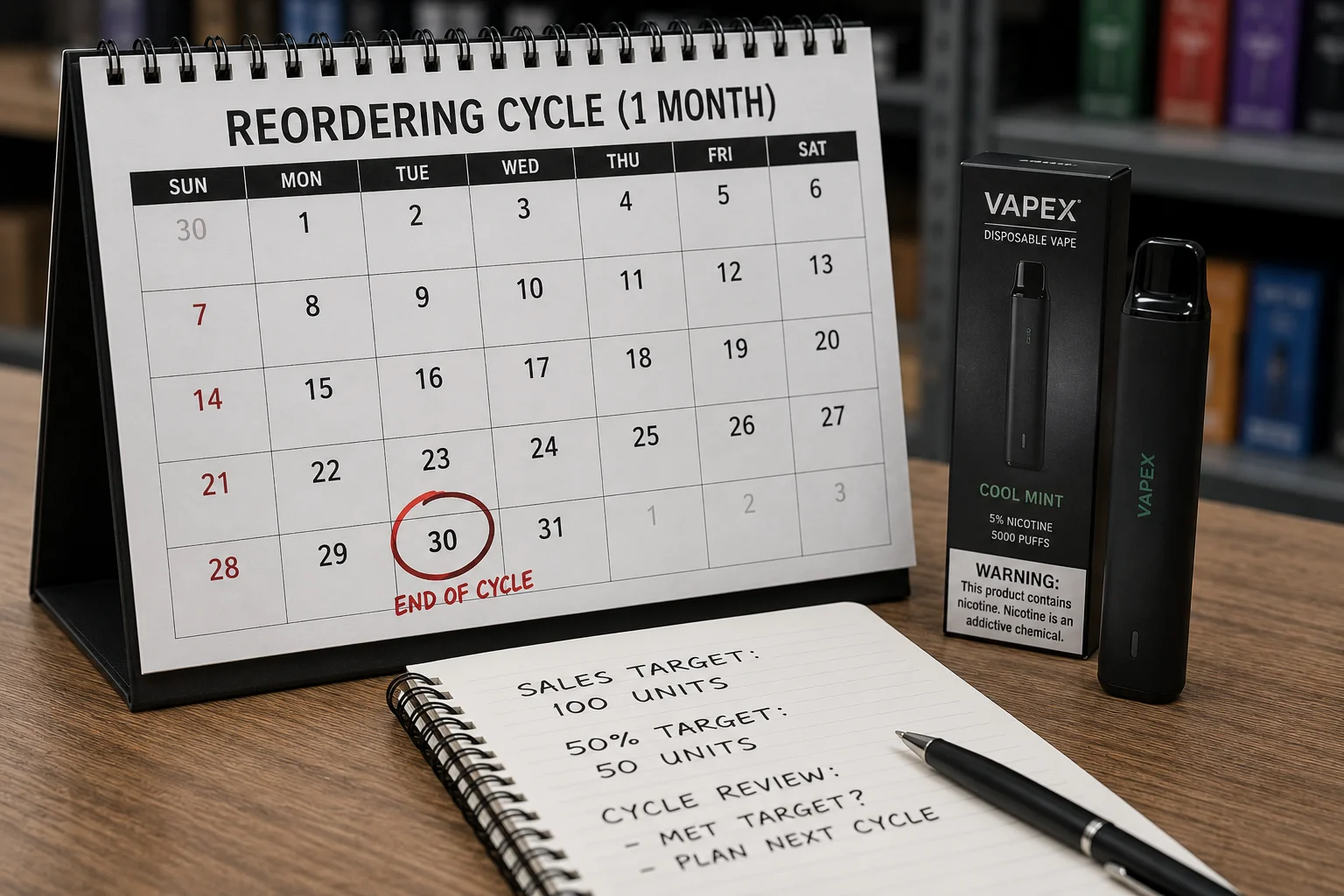
The exact timeframe depends on your business model, but here is a practical rule I share with my wholesale customers. Your "judgement period" should be tied to your inventory turnover goal. If you aim to turn over your stock every 30-45 days, then that's your window.
Here's how to break it down:
- First 30 Days (The Watch Period): You've just stocked a new brand or restocked an existing one. In this first month, you should be tracking its sales velocity against your initial forecast. Is it selling daily? Weekly? Is it hitting the targets you expected? If it's falling significantly behind, it goes on a "watchlist."
- Next 30 Days (The Action Period): If the brand is on the watchlist, the second month is for intervention. Maybe you move it to a more prominent spot on your website or tell your sales team to push it. If, after these efforts and 60 days of sitting in your warehouse, the inventory is still largely untouched, it's officially "slow-moving." You've given it a fair chance. Holding on longer is just wishful thinking. At this point, you stop thinking about "if" it will sell and start planning "how" to liquidate it.
What Sales Data Should You Check First?
You have a feeling a brand is underperforming, but feelings don't pay the bills. You need hard data to make a smart decision without killing a brand that just needs time.
Before anything else, check the sales data at the SKU level—specifically, sales by flavor and model. A brand's overall poor performance might be hiding one or two hero products that are selling exceptionally well. Don't cut the whole brand if only 80% of it is the problem.
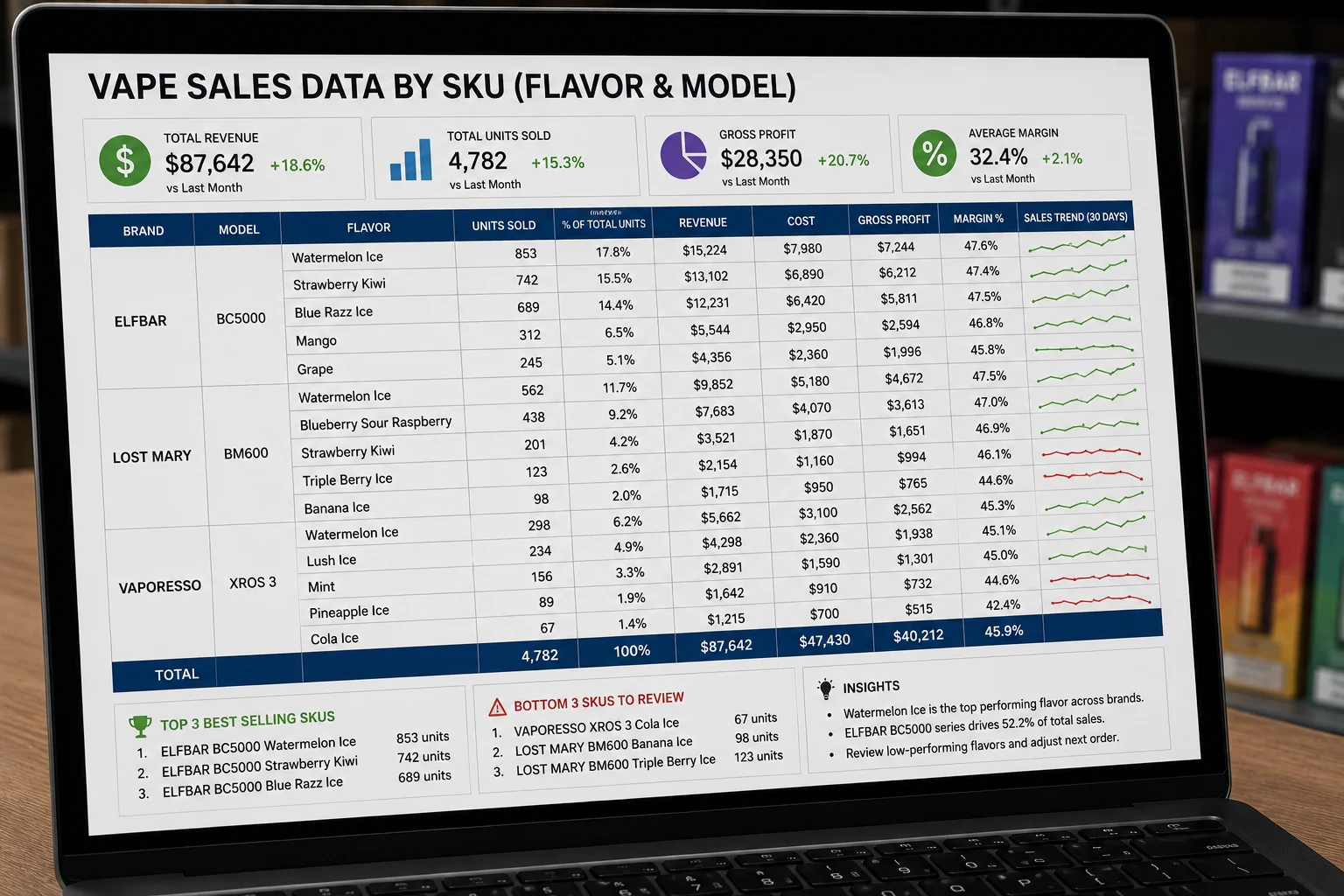
When a client tells me "this brand isn't selling," my first question is always, "Which part of it isn't selling?" A brand isn't a single entity; it's a collection of individual products (Stock Keeping Units, or SKUs). A common mistake is to look at the total sales for "Brand X" and make a decision. This is a huge error.
You need to dive deeper. Export your sales report and sort it. Look at:
- Sales by Flavor: It's incredibly common for a brand to have 10 flavors, but only two are responsible for 90% of the sales. The other eight are the ones dragging the brand down.
- Sales by Model/Puff Count: Maybe the 10,000-puff model is a dud, but the 5,000-puff version is a steady seller. Or maybe the rechargeable model is preferred over the purely disposable one.
- Sales by Customer: Is it selling to a wide range of your customers or just one or two? If only one customer is buying it, what happens if they stop?
By analyzing the data this way, you move from a vague feeling to a precise diagnosis. The problem might not be the brand itself, but your assortment of its products. This allows for a surgical solution, like delisting the unpopular flavors, rather than amputating the entire brand.
When Are Low Sales Just a Temporary Problem?
Sales for a usually reliable brand have suddenly dropped. Is this the end for the brand, or is it just a temporary dip that you should ride out to avoid panic decisions?
Low sales are often temporary if they are caused by external factors you can identify. These include seasonal trends, a major competitor's sale, a temporary stockout from the manufacturer, or negative press that is quickly resolved. If there's no clear external cause, the problem is likely internal to the product.
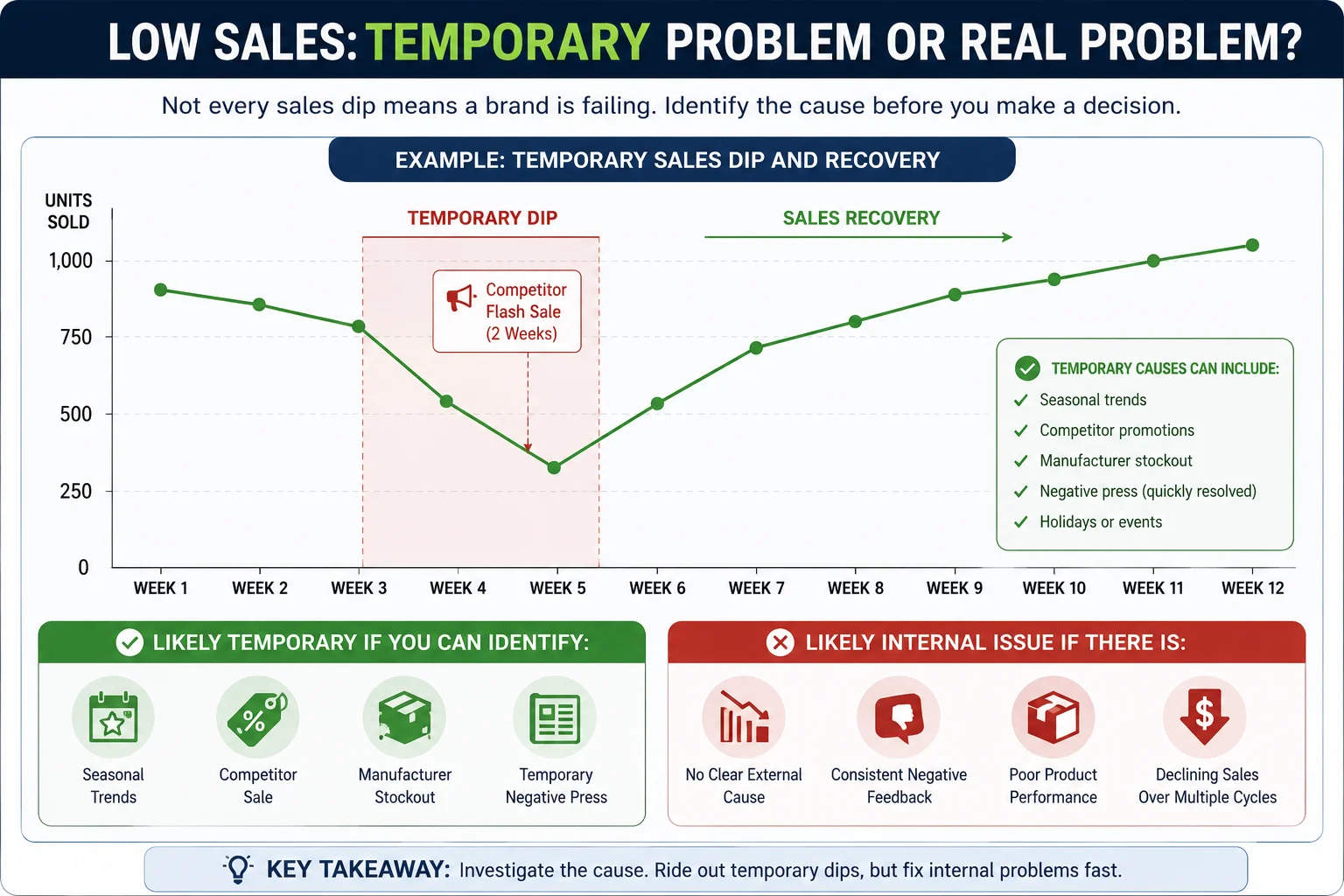
Before you label a brand as a "loser," take a moment to play detective. Not all sales slumps are created equal. Some are temporary blips, while others are the beginning of the end. Over my years of experience, I've seen several situations where a panic-drop would have been a mistake.
Ask yourself these questions to distinguish a temporary dip from a terminal decline:
- Is it Seasonal? Do certain flavors (like fruity ones) sell better in the summer and worse in the winter? Review last year's data for patterns.
- Did a Competitor Run a Huge Promotion? If your main competitor just did a "buy one, get one free" on a similar product, your sales will naturally dip. Wait to see if they rebound after their promotion ends.
- Is the Manufacturer Out of Stock? A common issue we see is with major brands like Elf Bar or Geek Bar. Sometimes, their supply chain has a hiccup. This can create a temporary vacuum in the market, making it seem like demand has fallen when really it's a supply issue. When the stock returns, sales often bounce back.
- Was There a Recent Market Shock? Did a news story or a new regulation scare customers away? Often, these effects are short-lived as the market adjusts and gets clarity.
If you can point to a specific, external, and temporary reason for the sales drop, it's often wise to hold your position and wait. If you can't find any reason, the problem is likely the product itself.
When Do Customer Complaints Mean You Should Stop Reordering?
A few complaints are normal, but when does customer feedback become a red flag so big that you need to drop a brand, even if it sells moderately well?
You should stop reordering immediately when customer complaints are about core product quality—like bad taste, inconsistent flavor, poor battery life, or糊芯 (hú xīn - burnt taste). These aren't minor issues; they signal a fundamental product failure that will destroy your reputation.
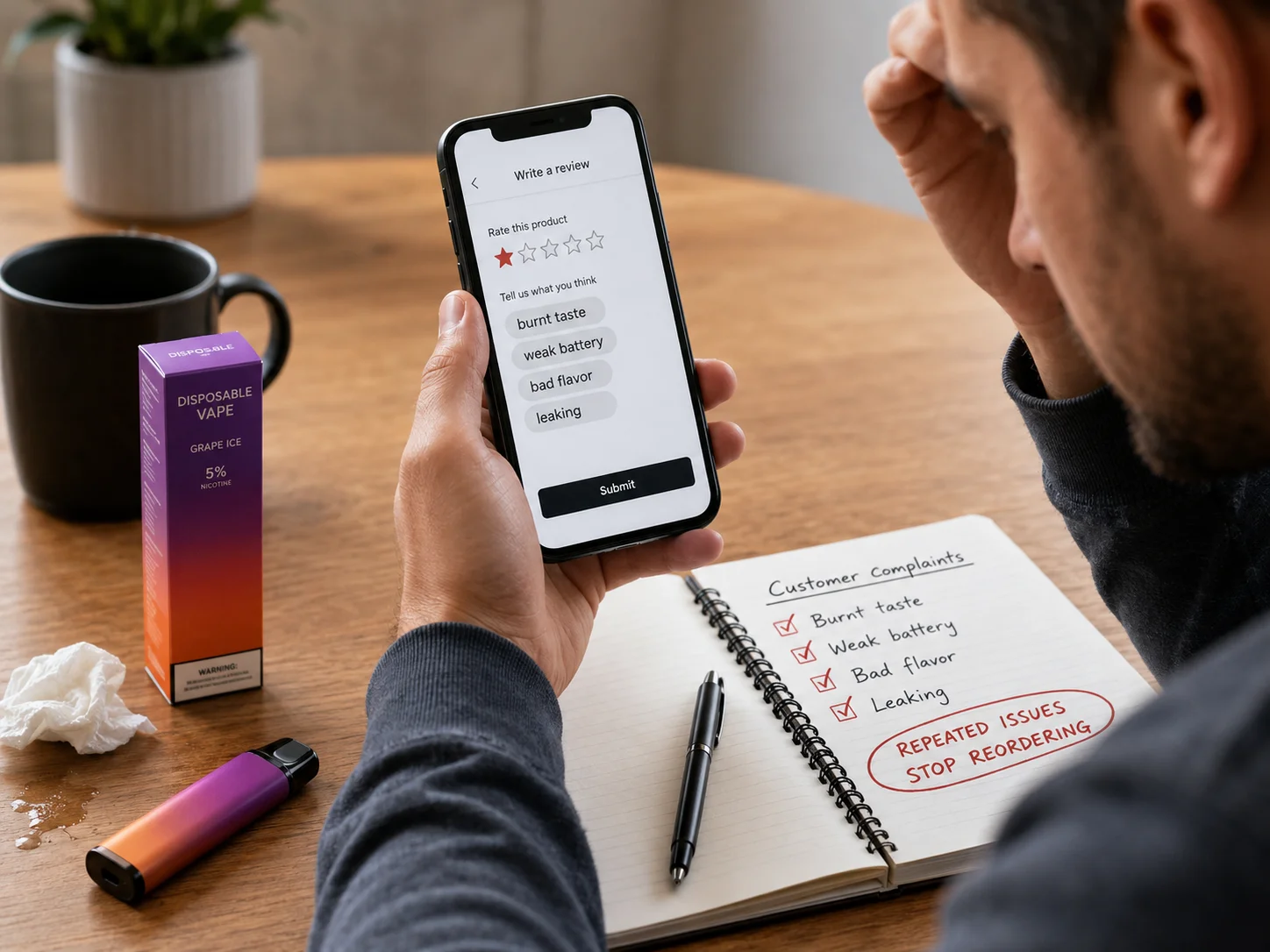
Over the years, I've learned that not all complaints are equal. A complaint about a damaged box is a logistics issue. A complaint that the product tastes like burnt cotton after a day is a crisis. The latter is a sign of a bad product, often a counterfeit or a low-quality item.
I see this constantly with clients who are tempted by extremely low prices. They buy a batch of what they think are JNR or Elf Bar products for 2 euros a piece, when the genuine factory price isn't even that low. What they receive is a counterfeit product. The battery isn't a stable lithium cell; it's a cheap manganese cell that dies in five minutes or won't work in the cold. The e-liquid is mixed in some unknown workshop, not a proper lab. It tastes harsh, the flavor is wrong, and it's a health risk.
When you start getting these types of complaints, you have a massive problem. You might think you're making money on the sale, but you're losing in the long run.
- You lose the customer.
- You lose your reputation.
- You have to spend time and money on the return.
Don't wait. When the feedback turns from "I don't like this flavor" to "this product is garbage," it's time to cut the brand loose immediately, no matter the sales volume.
How Do Returns and After-Sales Issues Affect the Decision?
Sales numbers look okay, but you're constantly dealing with returns and angry emails for a specific brand. How much should this after-sales headache factor into your reordering decision?
Returns and after-sales issues should be treated as a direct cost against a brand's profitability. If the time and money spent handling complaints, processing returns, and replacing units eat up more than 20-30% of the brand's gross margin, it's a losing product, even if it sells.
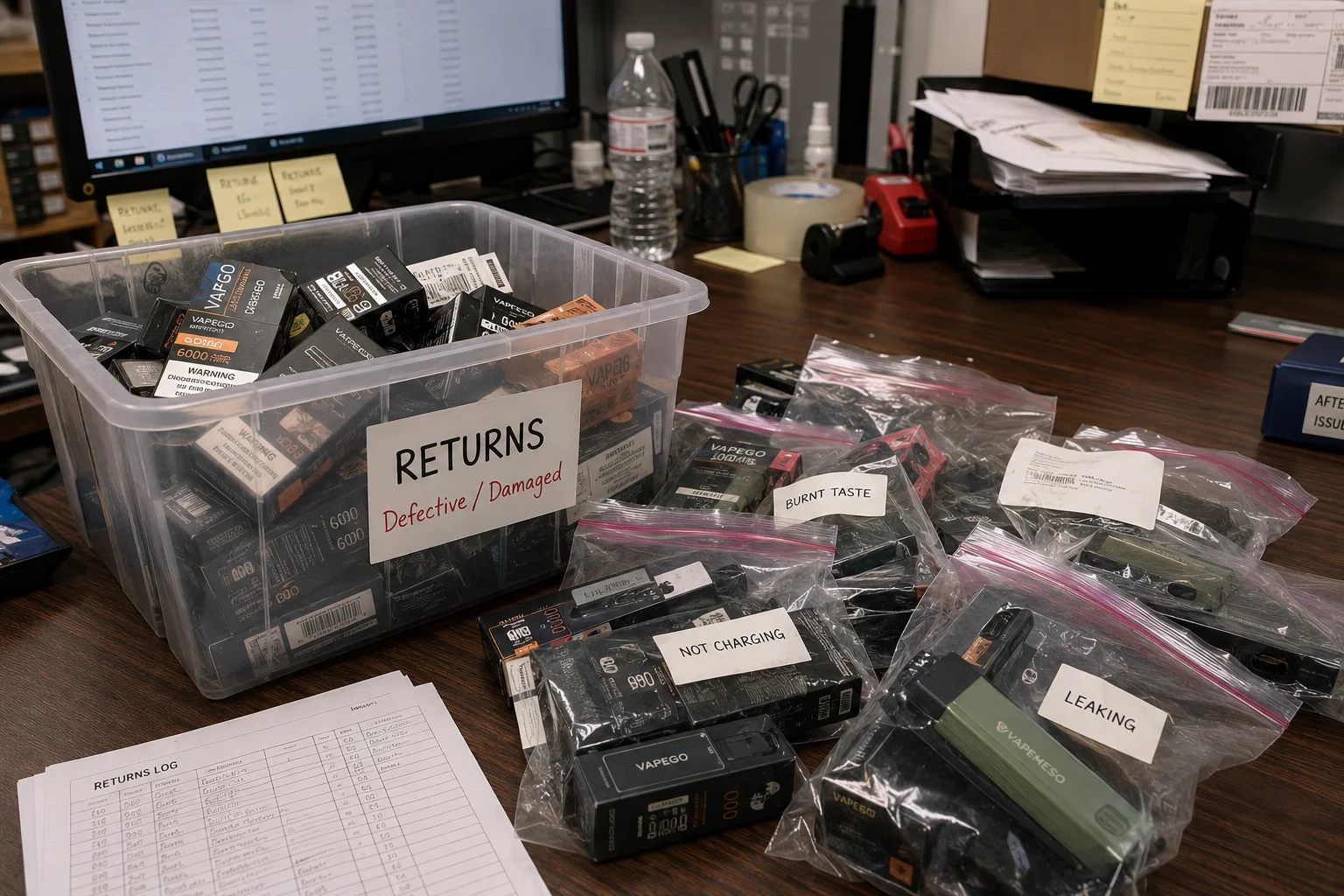
Many wholesalers only look at the initial profit margin. They think, "I buy for $4, sell for $8, that's a great margin!" But they forget to calculate the hidden costs that come after the sale. This is a critical mistake, especially in the vape industry, where quality can vary wildly.
Let's do some simple math. Imagine you sell 100 units of a vape at a $4 profit each, for a total of $400 in gross profit. But, the product is low quality and has a 10% failure rate.
- 10 units are returned.
- You spend 15 minutes per return on emails, logistics, and processing (2.5 hours of your or your staff's time).
- You pay for return shipping on those 10 units.
- You issue 10 replacements, costing you $40 in product cost and another $40 in potential profit.
Suddenly, your $400 profit is significantly lower after you factor in the cost of goods for replacements, shipping fees, and labor costs. More importantly, your reputation takes a hit with every single one of those 10 unhappy customers. If a brand's after-sales problems require a calculator to figure out if you're still making money, it's time to stop reordering. A good product sells and stays sold.
Should You Discount Slow-Moving Stock Before Giving Up?
You're sitting on a pile of a slow-moving vape brand. Should you just write it off as a loss, or is it worth trying to sell it at a discount first?
Yes, you should absolutely discount slow-moving stock aggressively. The goal is no longer to make a profit on it; the goal is to convert dead inventory back into cash as quickly as possible. That cash is far more valuable for reinvesting in products that actually sell.
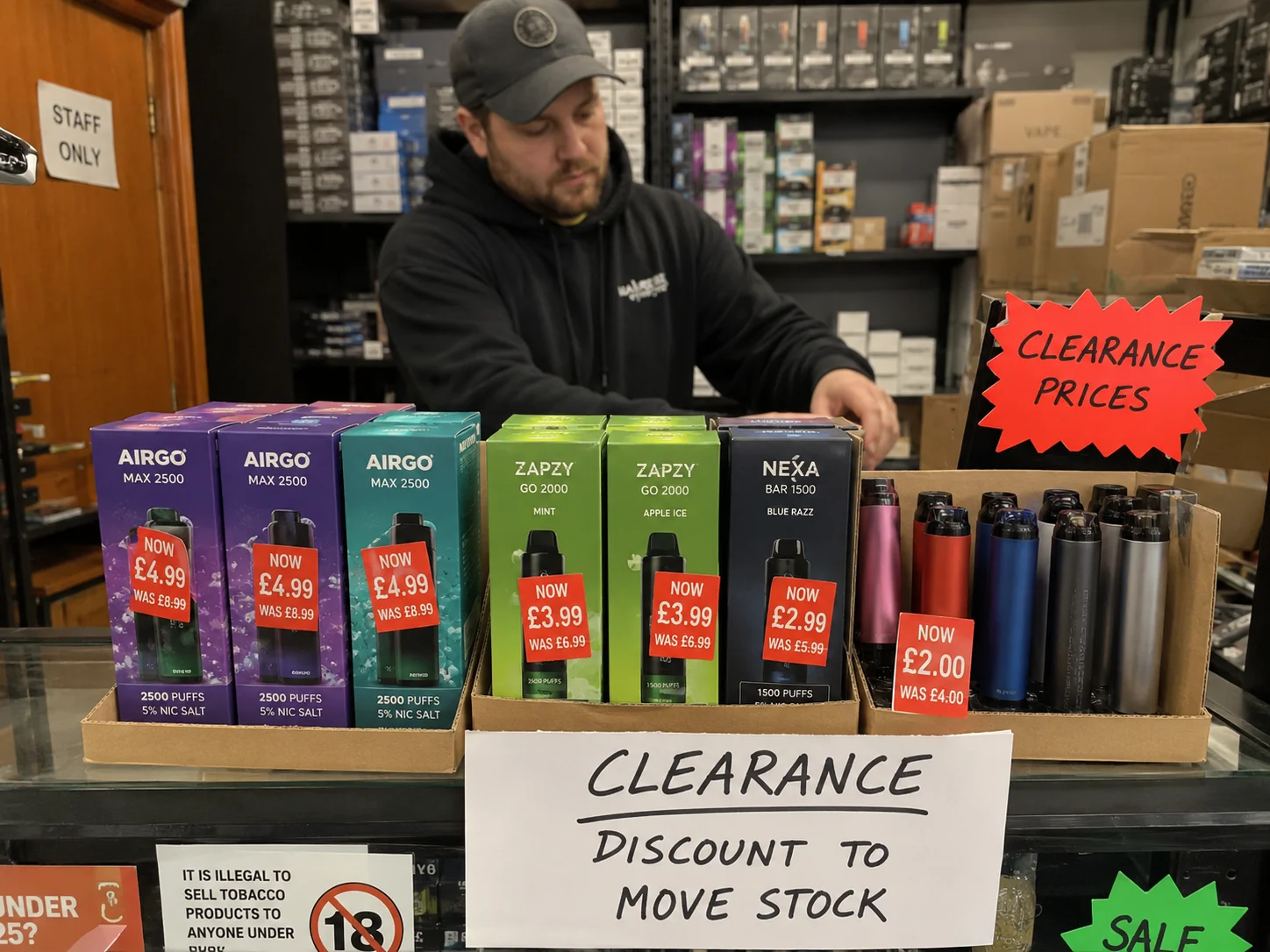
I see many business owners fall into an emotional trap here. They think, "I paid $5 for this, so I can't sell it for less than $5." This is a classic example of the "sunk cost fallacy." The money is already spent. It's gone. Your choice now is not between making a profit or breaking even; it's between getting some money back or getting zero money back.
Here's the strategy we recommend to our partners:
- First Markdown (20-30% off): As soon as you identify a product as slow-moving, apply a moderate discount. This might be enough to attract bargain hunters and clear some units without a major loss.
- Second Markdown (50% off or Break-Even): If the first markdown doesn't work within a few weeks, get more aggressive. Price it at your cost. The goal now is pure cash recovery.
- Final Liquidation (Below Cost or Bundle Deal): If it's still sitting there, it's time for drastic measures. Sell it below cost or bundle it for free with a popular item ("Buy Brand A, Get Brand B Free"). This clears the shelf space and gives you the last bit of cash you'll ever see from that product.
Remember, cash flow is the lifeblood of your business. A product sitting on a shelf for six months is a clogged artery. Even if you sell it at a loss, you've turned a useless asset back into liquid cash you can use to make real money.
How Much Inventory Is Too Much for a Weak Brand?
You suspect a brand is losing momentum, but you still have some on your shelves. What's the tipping point where your current inventory level becomes a serious liability?
For a weak or unproven brand, any inventory that exceeds what you can realistically sell in 30-45 days is too much. Holding more than one sales cycle's worth of stock for a weak performer is a direct risk to your cash flow and storage space.
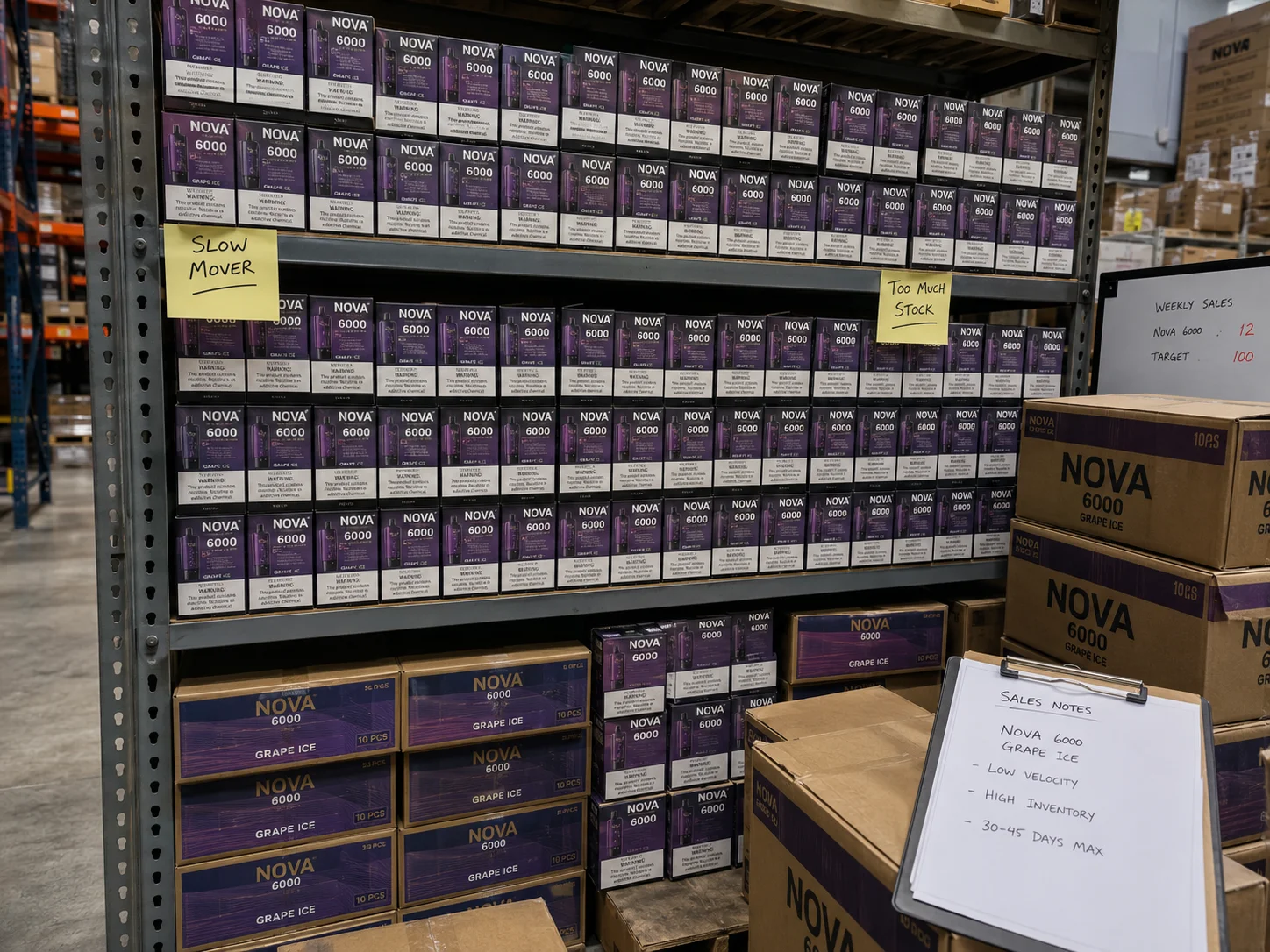
For a star-performing brand, it might make sense to hold 60 or even 90 days of inventory to ensure you never run out. But applying that same logic to a weak brand is a recipe for disaster. The risk is just too high.
| Here’s a simple framework to think about it: | Brand Performance | Ideal Inventory Level (Days of Supply) | Risk of Overstocking |
|---|---|---|---|
| Top Seller | 45-60 days | Low (will sell eventually) | |
| Steady Performer | 30-45 days | Medium (ties up some cash) | |
| Weak Brand / New Brand | < 30 days | High (ties up cash, risks obsolescence) |
When I talk to new wholesalers, especially those wanting to test a new product, I always give them this advice: start small. This is why we created our overseas warehouse in Germany. It allows a client to order as few as 50 pieces. They can test the market with less than 400 euros. There is no need to commit to a huge order from China and tie up thousands of dollars for months.
If you have a brand where you're holding more than a month's worth of stock and sales are slow, you already have too much. Your immediate priority should be to sell through what you have, not to think about reordering. For weak brands, the best inventory level is as close to zero as possible.
What If the Brand Sells Well but Only in One Flavor?
You have a brand where nine flavors are duds, but one specific flavor sells like crazy. Do you keep reordering the whole line just to get the one winner?
If only one flavor is a strong seller, you are not selling a "brand"; you are selling a "product." Your strategy should be to treat that single successful flavor as its own SKU and stop ordering the other flavors that are holding it back.
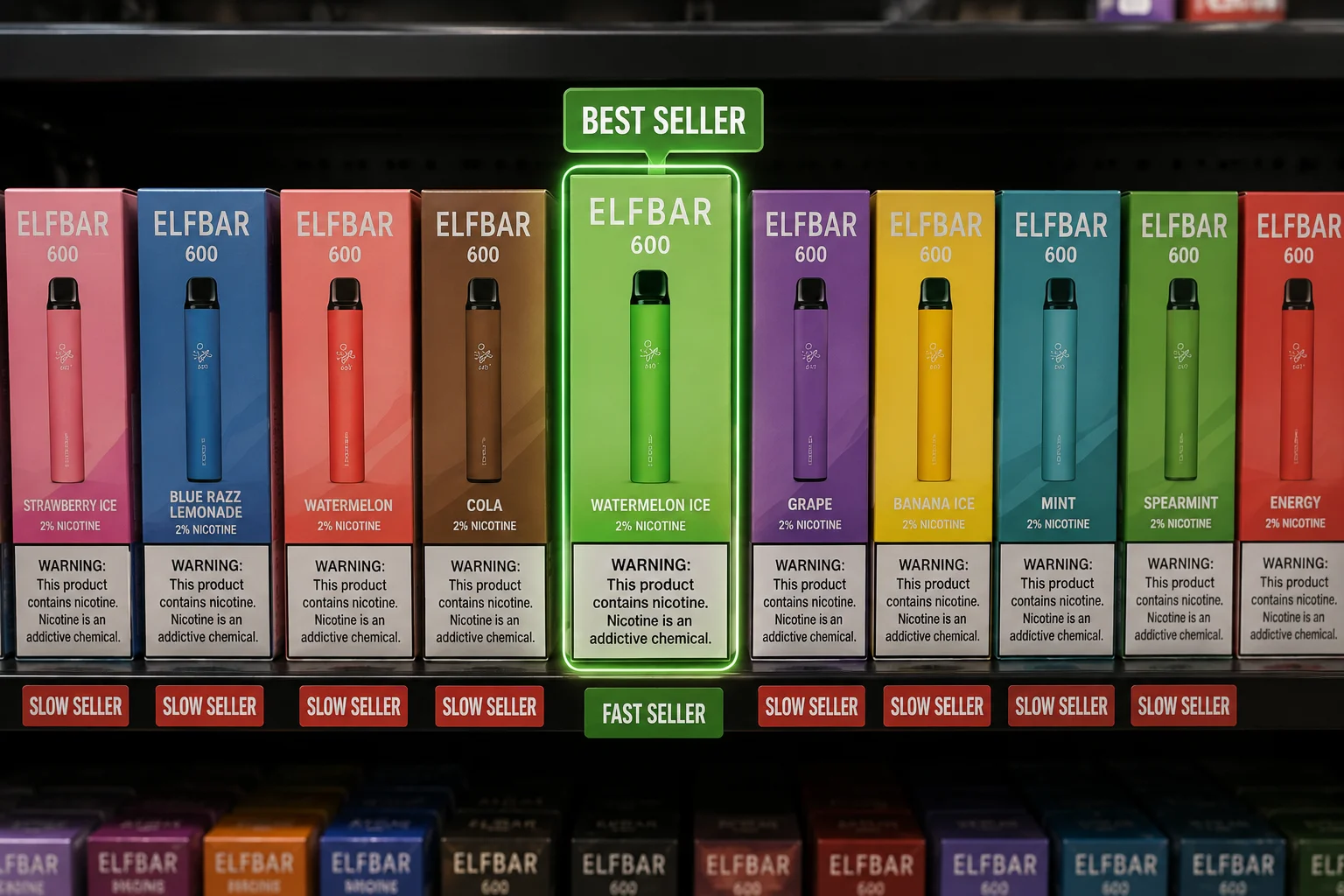
This is a very common scenario, and many wholesalers handle it incorrectly. They feel obligated to carry the full range of flavors offered by a brand to appear as a "complete" distributor. This is a mistake that costs them money. Your customers are voting with their wallets, and they are telling you very clearly what they want. It is your job to listen.
Think about it from a purely financial perspective. Let's say you have to order a master case that includes 10 different flavors.
- The Winner: "Blue Razz Ice" sells out in one week.
- The Losers: The other nine flavors (like "Coffee Cream" or "Havana Tobacco") sit on the shelf for three months.
To restock the one flavor you actually need, you are forced to buy more of the nine flavors you don't. This is an incredibly inefficient way to manage your inventory and cash. You are essentially paying a "loser tax" every time you reorder. The solution is to work with a supplier who can provide you with what you actually need, not what they want to sell you.
When Should You Keep the Best Flavor and Drop the Rest?
You've identified the one "hero" flavor that carries an entire brand. What's the right moment to make the call to drop the underperforming flavors from your inventory?
You should drop the underperforming flavors as soon as you have two consecutive reorder cycles of data showing a clear 80/20 split in sales. Keep the 20% of flavors that generate 80% of the sales, and liquidate the rest immediately.
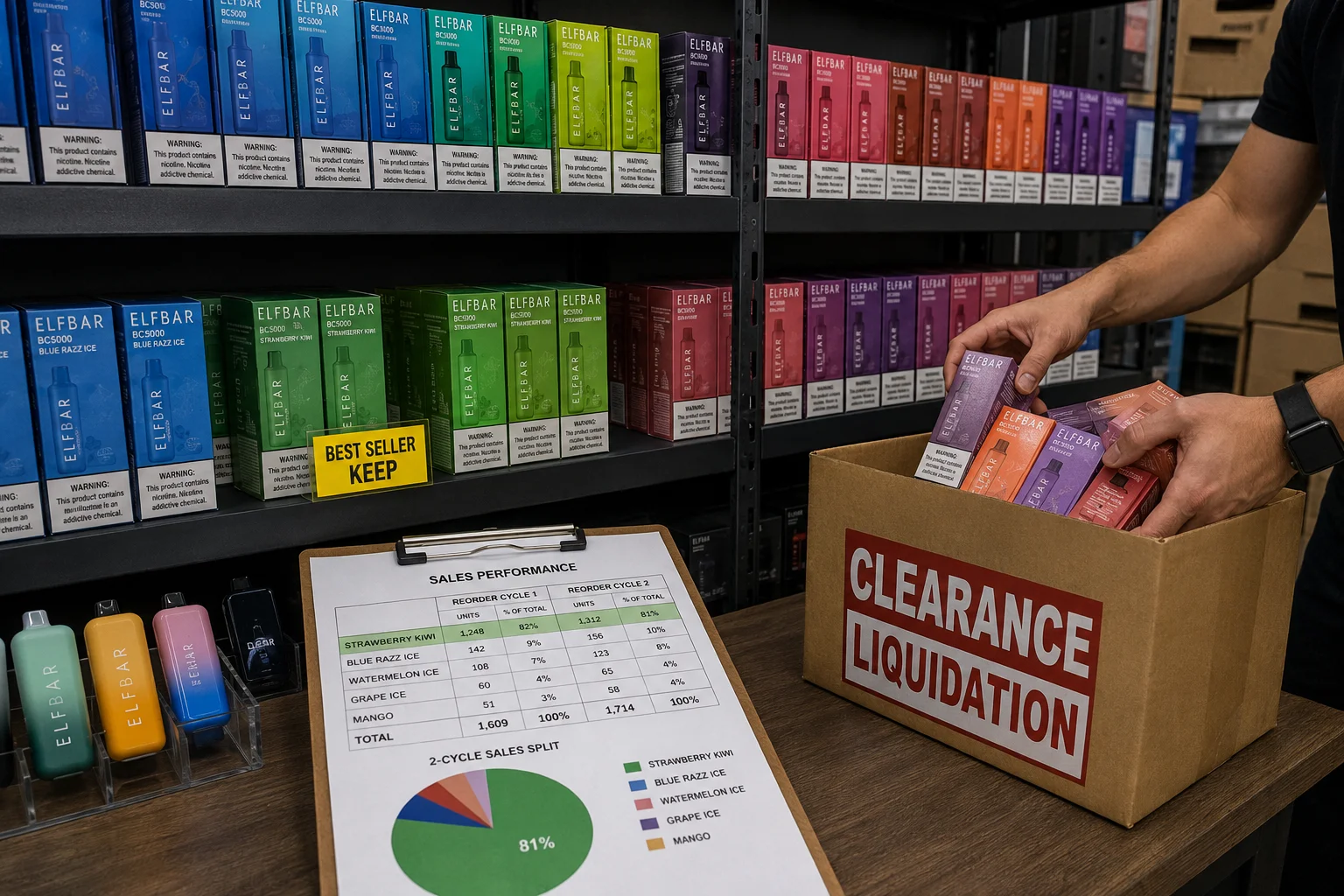
Making this decision requires a data-driven, unemotional approach. It's not about what flavors you think should sell well; it's about what your customers are actually buying. Waiting too long to make this change is a common mistake.
Here is the process:
- Analyze the Data: After 60 days of sales data for a brand, run a report. Identify the top-selling 1-3 flavors that make up the vast majority of your sales for that brand.
- Make the Decision: Acknowledge that the other flavors are "shelf warmers." They are not contributing to your profit; they are draining it by tying up cash and space.
- Talk to Your Supplier: This is a key step. Contact your supplier and say, "I no longer want to order the master case with 10 flavors. I only want to order 'Blue Razz Ice' and 'Watermelon Chill'. Can you supply me with only these SKUs?"
A flexible, customer-focused supplier will say "yes." We do this for our clients all the time. A rigid supplier might say "no, you have to buy the whole case." If they say no, you have another decision to make. Is this one winning flavor so profitable that it's worth the hassle of buying the junk that comes with it? Usually, the answer is no. It's often better to find a similar flavor from a more flexible supplier.
How Can You Replace a Slow Brand Without Increasing Risk?
You've made the smart decision to drop a slow-moving brand. Now, how do you fill that shelf space with something new without repeating the same mistake and getting stuck with another dud?
Replace a slow brand by testing a potential new brand with a small, low-risk order from a local or overseas warehouse. Avoid committing to a large factory order from China until you have validated the new brand's sales performance with your own customers.
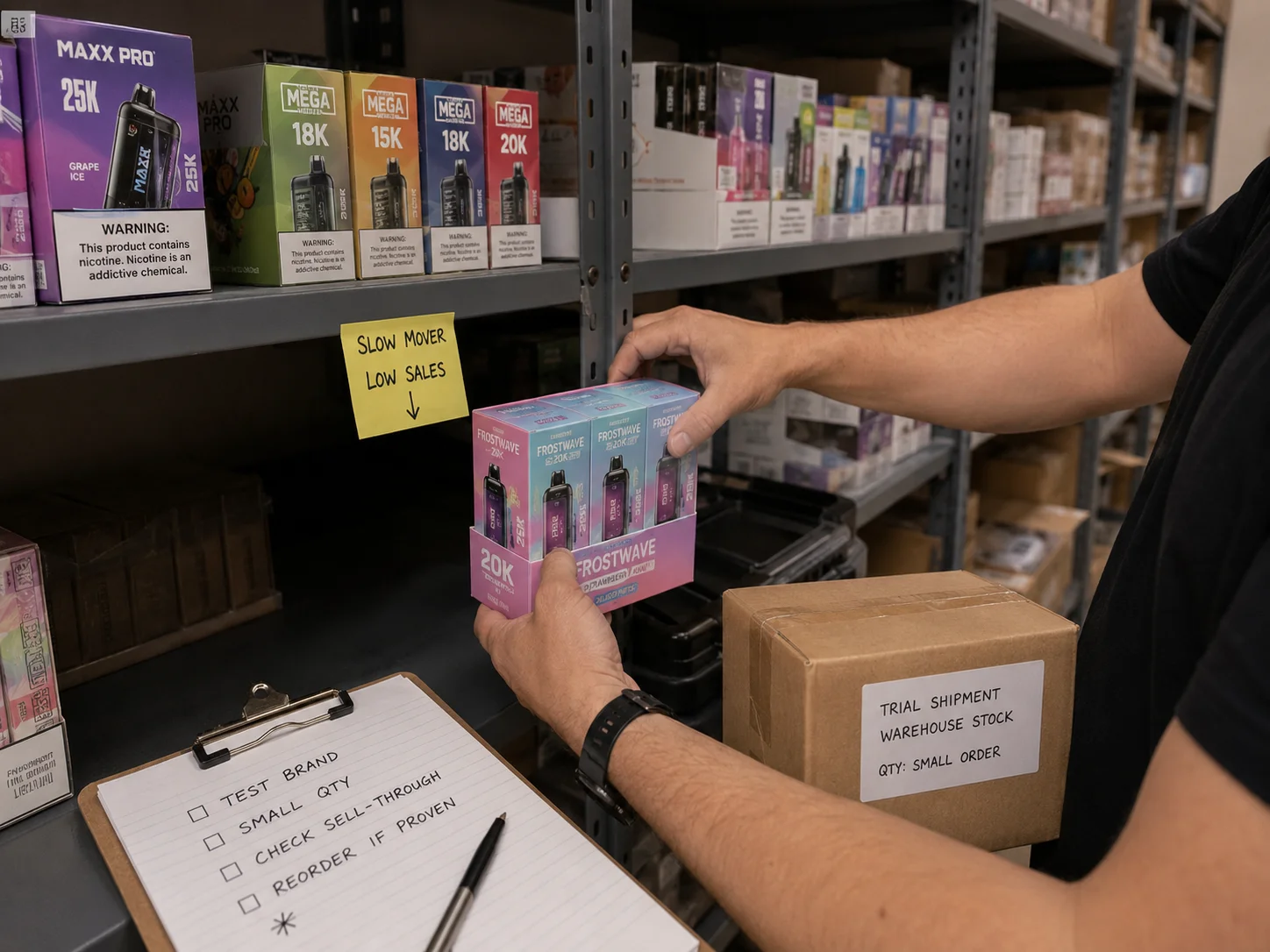
The biggest mistake you can make after dropping a loser is to immediately bet big on another unknown. The goal is to minimize risk and validate demand quickly. This is precisely why we invested heavily in setting up our overseas warehouse in Germany. We saw our clients struggling with this exact problem.
Here’s the smart way to replace a brand:
- Don't Go Big: Do not place a 2,000-piece OEM order from a factory in China for a product you've never sold before. The minimum order quantities (MOQs), production time, and shipping time create a huge financial and time risk.
- Use an Overseas Warehouse: Find a supplier with local stock. For our European clients, our German warehouse is a game-changer. They can order just 50-100 units of a new brand like VOZOL or RAZZ BAR.
- Test and Measure: The shipment arrives in 1-5 days, not 1-2 months. You can immediately put the product in front of your customers. Watch the sales data for a few weeks. Do people buy it? Do they come back for more?
- Scale Up or Swap Out: If it sells well, you can confidently place a larger order. If it doesn't sell, you've only risked a small amount of capital (maybe a few hundred euros), and you can quickly move on to testing the next potential winner.
This method transforms sourcing from a high-stakes gamble into a calculated process of rapid, low-cost experimentation.
What Is the Smart Reorder Rule for Small Wholesalers?
As a small or new wholesaler, you don't have a huge budget for mistakes. What is the single most important rule you should follow to protect your capital and grow safely?
The smart reorder rule for small wholesalers is: prioritize speed and turnover over the lowest unit price. Use a local or overseas warehouse for small, frequent orders (under 2,000 units) to keep your cash flowing and your inventory risk low.
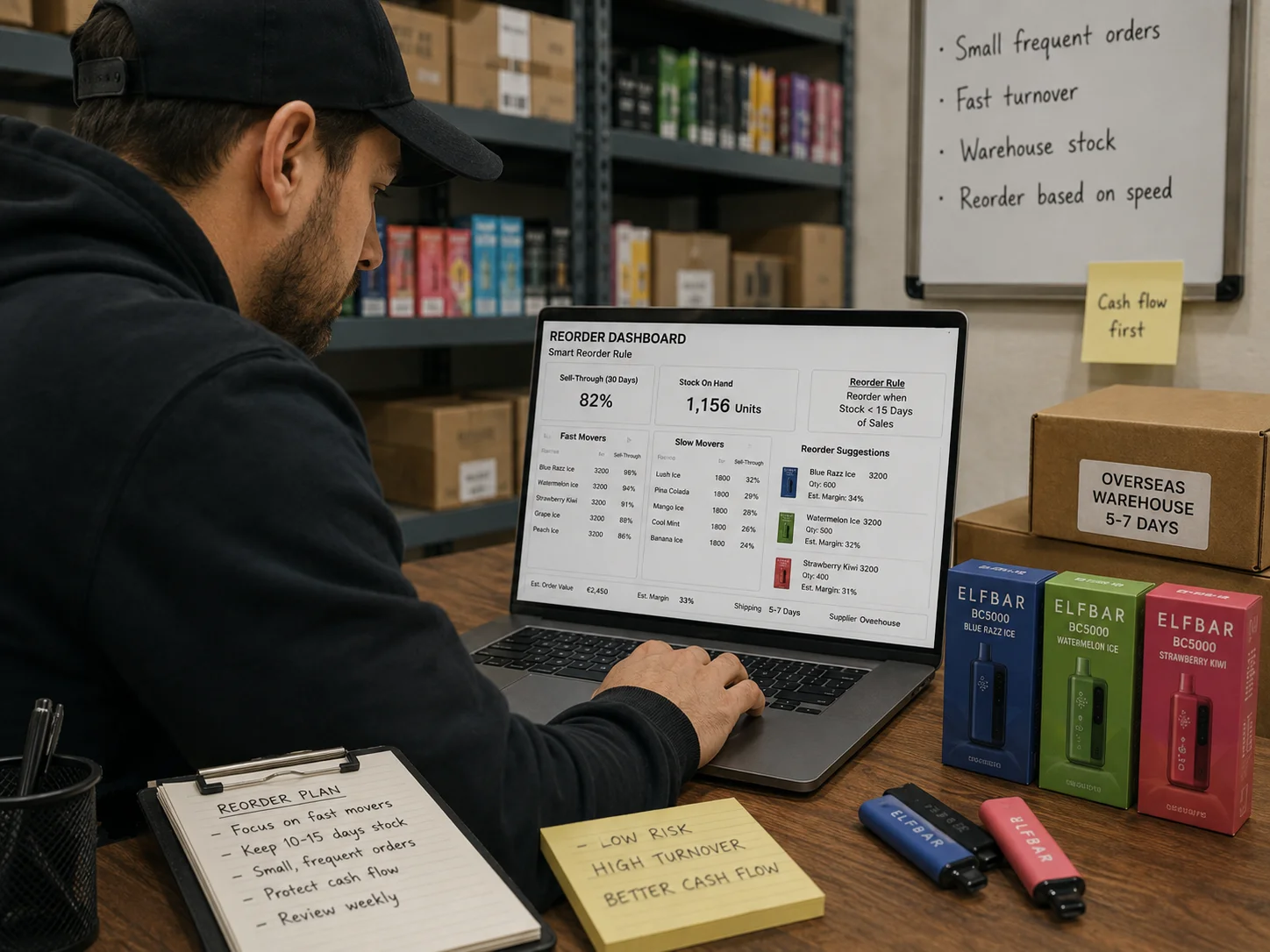
If you are just starting or your orders are small, chasing the absolute lowest price by ordering directly from a factory in China is a trap. It seems cheaper on paper, but it's more expensive in reality.
Here's why ordering from our German warehouse is the smartest move for wholesalers with orders under 2,000 units:
- Low Starting Capital: You don't need to invest thousands of euros. An order can be as low as 300-400 euros. This dramatically lowers your risk.
- Fast Delivery: Instead of waiting 1-2 months for sea freight, you get your products in 1-5 days via DHL within the EU.
- Rapid Turnover: Because you get the product fast, you can sell it fast and reinvest your money fast. You can potentially turn your capital over multiple times in the same period it would take for one shipment from China to even arrive.
- No Customs Risk: We have already handled the importation, the risks, the duties, and the storage costs. For you, it's as simple as placing a domestic order.
Your goal as a small wholesaler is to get results and learn quickly. By using a local warehouse, you take the most difficult and risky parts of international trade off the table and focus on the one thing that makes you money: selling.
How Do You Avoid Emotional Reordering?
You got a great deal on a brand, or you personally love the flavor, so you keep reordering it despite poor sales. How do you stop making business decisions with your heart?
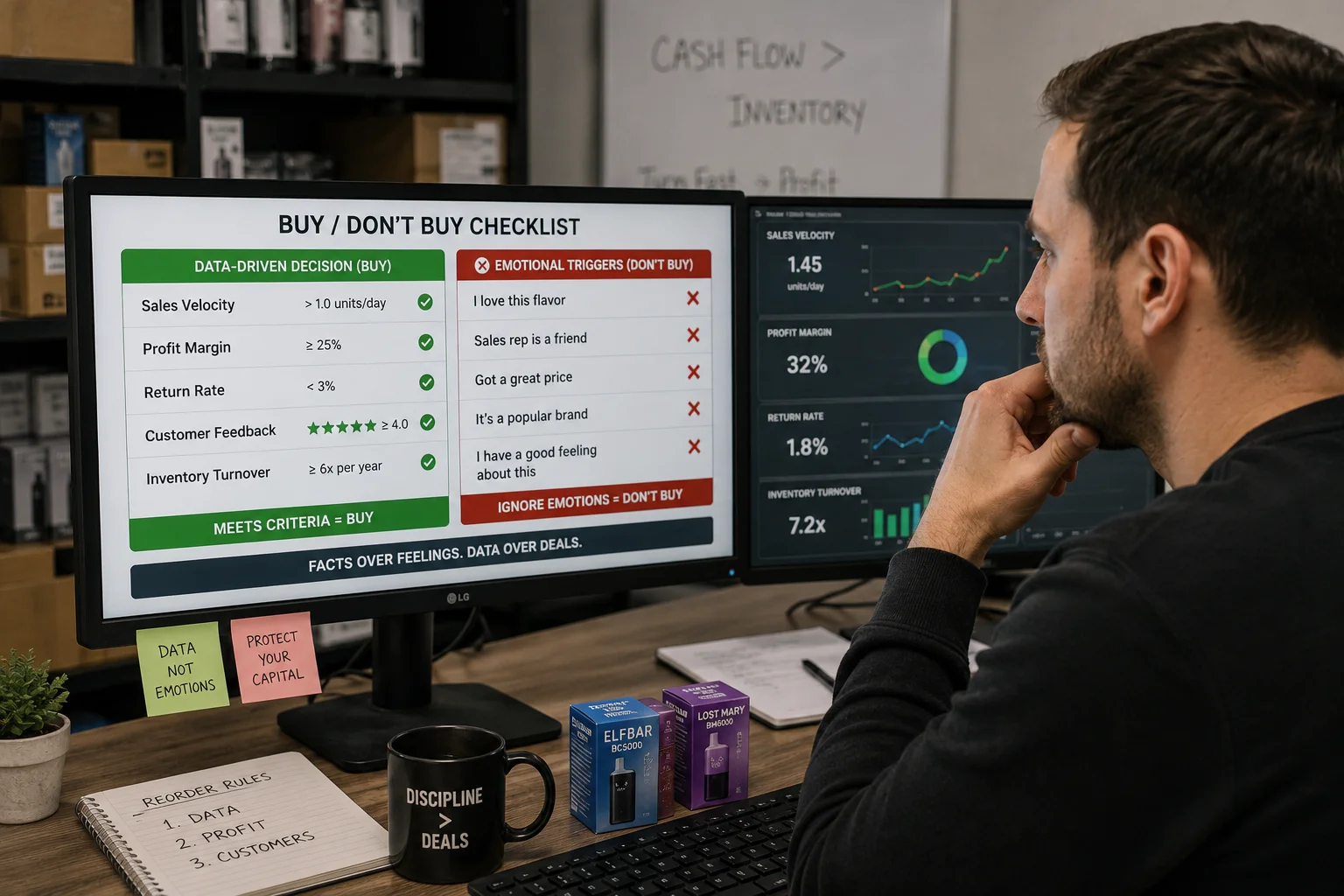
Avoid emotional reordering by creating a strict, data-based "Buy/Don't Buy" checklist. The decision to reorder must be based on sales velocity, profit margin, and customer feedback—not on your personal preferences, your relationship with the sales rep, or the "great price" you got.
Emotion is the enemy of good inventory management. I've seen wholesalers continue to stock a failing brand for all the wrong reasons. The most common emotional trap is the pursuit of a cheap price. A supplier offers you a vape for 2 euros, and your greed kicks in. You feel like you've found a secret source. You get excited.
This is how people get scammed. You become so focused on the "deal" that you ignore all the red flags. You ignore that the price is too good to be true. You ignore that the supplier is pushy. You ignore that they can't provide proof of authenticity. As I often say in our team meetings, "If you are not greedy, you cannot be deceived." Scammers love buyers who are driven by emotion and the fantasy of an unbelievable deal.
To avoid this, make your reordering process cold and logical. Use a simple scoring system:
- Sales Velocity (1-5 points): How fast does it sell?
- Profit Margin (1-5 points): How much do you make per unit?
- Customer Feedback/Return Rate (1-5 points): Are customers happy?
A product needs a high score across the board to earn your reorder. A great price (high margin) on a product that doesn't sell (low velocity) is still a bad product. Let the data make the decision for you.
Final Advice: Stop Feeding Losers and Protect Your Cash Flow?
You've analyzed the data and faced the hard truth about your slow-moving stock. What's the final, critical mindset you need to adopt to ensure your business thrives?
You must adopt the mindset of a portfolio manager: constantly review your "investments" (your products), cut your losers without hesitation, and reallocate that capital to your winners. Your job is not to save failing brands; it's to build a profitable business.

Every product in your warehouse is an investment. Some are star performers, and some are duds. A successful business owner acts like a sharp investor. They don't get emotionally attached to a losing stock. They sell it, take the small loss, and immediately move that money into a stock that is growing.
This is the core philosophy you must embrace. Your capital is finite. Your shelf space is finite. Your time is finite. Every dollar, every square foot, and every minute you spend on a slow-moving brand is a resource you are stealing from a potential winner.
The most successful wholesalers I have worked with over the last 15 years are ruthless in this regard. They are constantly testing, measuring, and cutting. They understand that a product that sells quickly with a decent margin is the key to everything. It allows them to grow, to take on more staff, and to weather any market changes. Stop feeding the losers. Your future success depends on it.
Conclusion
Stop letting slow-moving brands kill your cash flow. Use data to identify losers quickly, liquidate them without emotion, and reinvest that capital into proven winners and fast, low-risk market tests.