
Struggling to balance high-profit premium brands with fast-selling budget vapes? It feels like a choice between reputation and cash flow. You need a strategy that gives you both.
The best wholesale strategy is a smart mix. Use well-known premium brands like Vozol to build customer trust and offer higher margins, while using reliable, fast-moving brands to generate consistent cash flow and attract a wider customer base. This balanced approach minimizes risk and maximizes profit.
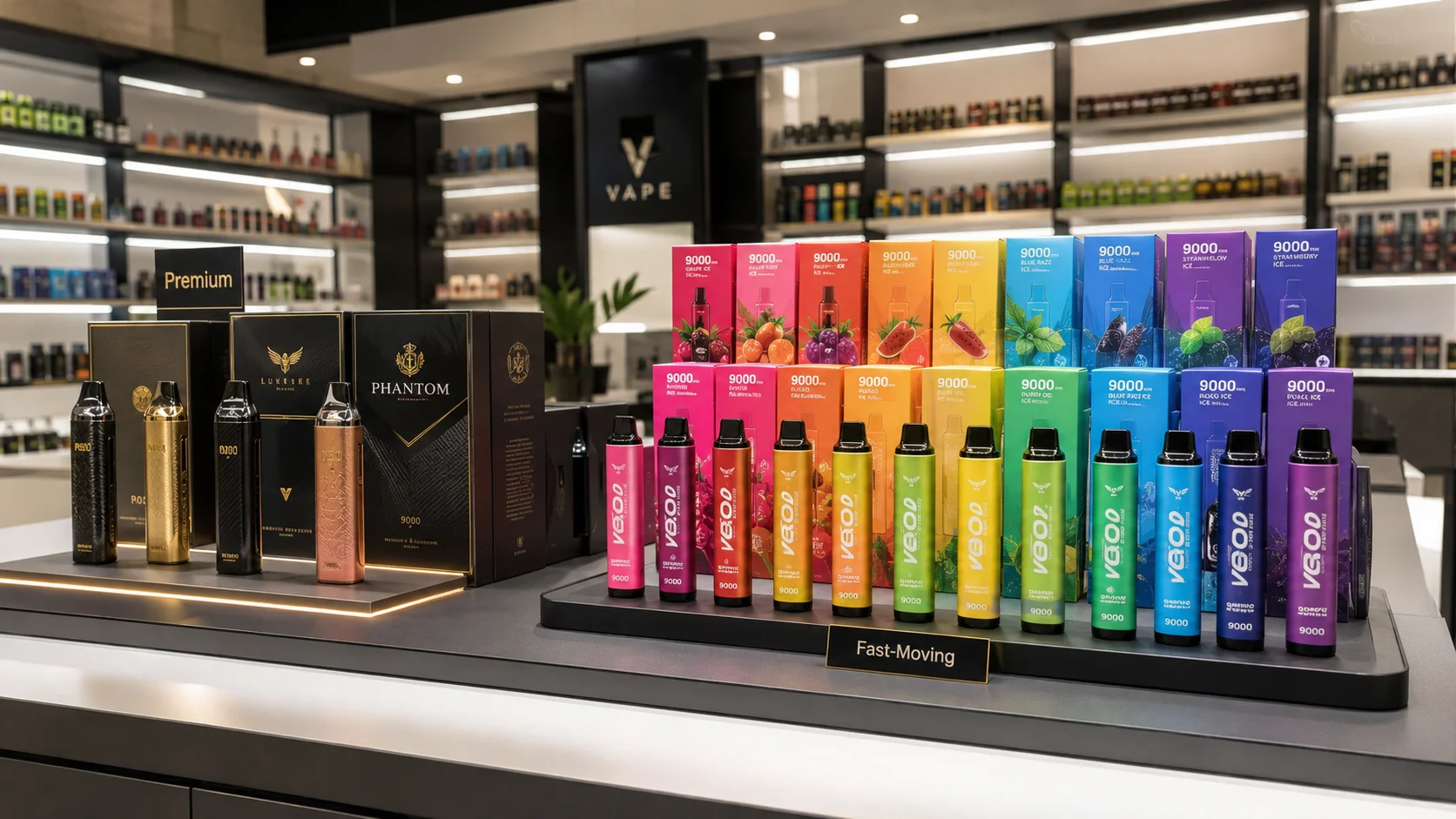
Building a successful vape wholesale business feels complicated. You see some sellers focusing only on big names, while others push the cheapest products possible. It’s tough to know which path to take, especially when you're starting out. I've been in this industry for over 15 years, and I'm going to walk you through the exact method we use to build a profitable and sustainable vape portfolio. This is the blueprint for balancing quality with quantity, and trust with turnover. Let's get started.
Why Should Wholesalers Mix Premium and Fast-Moving Vape Brands?
You see a cheap vape brand selling like crazy, but you hear complaints. Then you see a premium brand everyone loves, but the price is high. It feels impossible to choose.
Mixing brands allows you to capture two different types of customers. Premium brands build your reputation and offer higher profit margins. Fast-moving brands attract price-sensitive buyers and ensure quick, consistent cash flow. Together, they create a stable, profitable business.
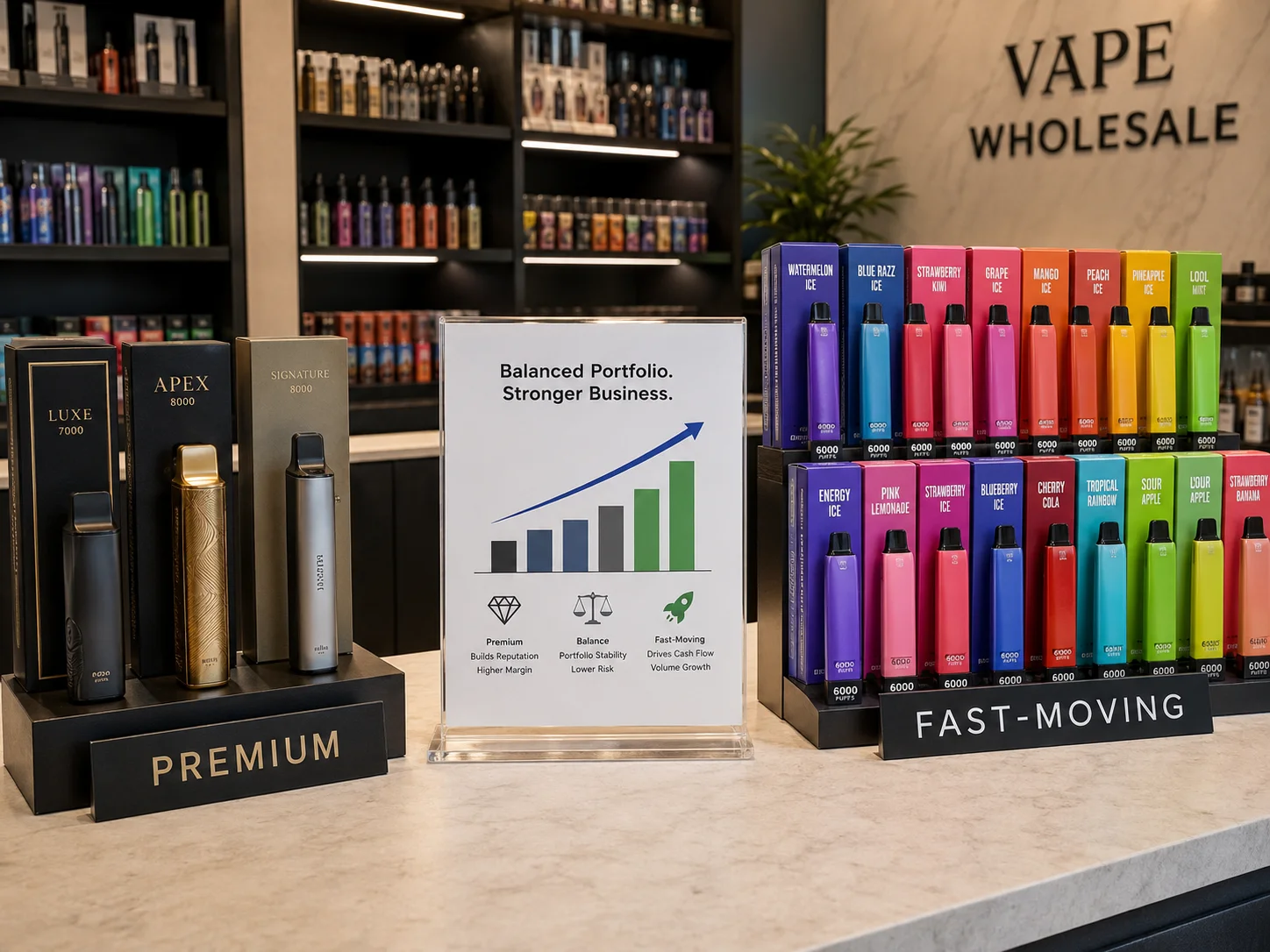
In my 15 years of exporting electronics, I’ve learned one crucial lesson: never put all your eggs in one basket. This is especially true in the vape market. Relying only on premium brands can mean slow sales and high upfront costs. Some top brands like ELF BAR or GEEK BAR operate on an exclusive national agent model. To become an agent, you need to commit to moving millions of units a month. That's not realistic for most wholesalers. On the other hand, focusing only on the cheapest, fast-moving brands is a race to the bottom. You compete on price, quality suffers, and your reputation can be ruined by customer complaints and returns. The smart approach is a hybrid model. Use the premium brands to signal quality and trustworthiness. Use the fast-moving brands as your workhorses to keep the money coming in. This balance is the key to long-term survival and growth.
What Is the Difference Between Premium Brands and Fast-Moving Brands?
You hear "premium" and "fast-moving" thrown around, but what do they really mean? It’s hard to build a strategy when the terms are not clear. This confusion can cost you money.
Premium brands invest in quality materials, branding, and stable performance, leading to higher prices and customer loyalty. Fast-moving brands prioritize low cost over everything else, leading to lower prices but often inconsistent quality and higher after-sales issues.
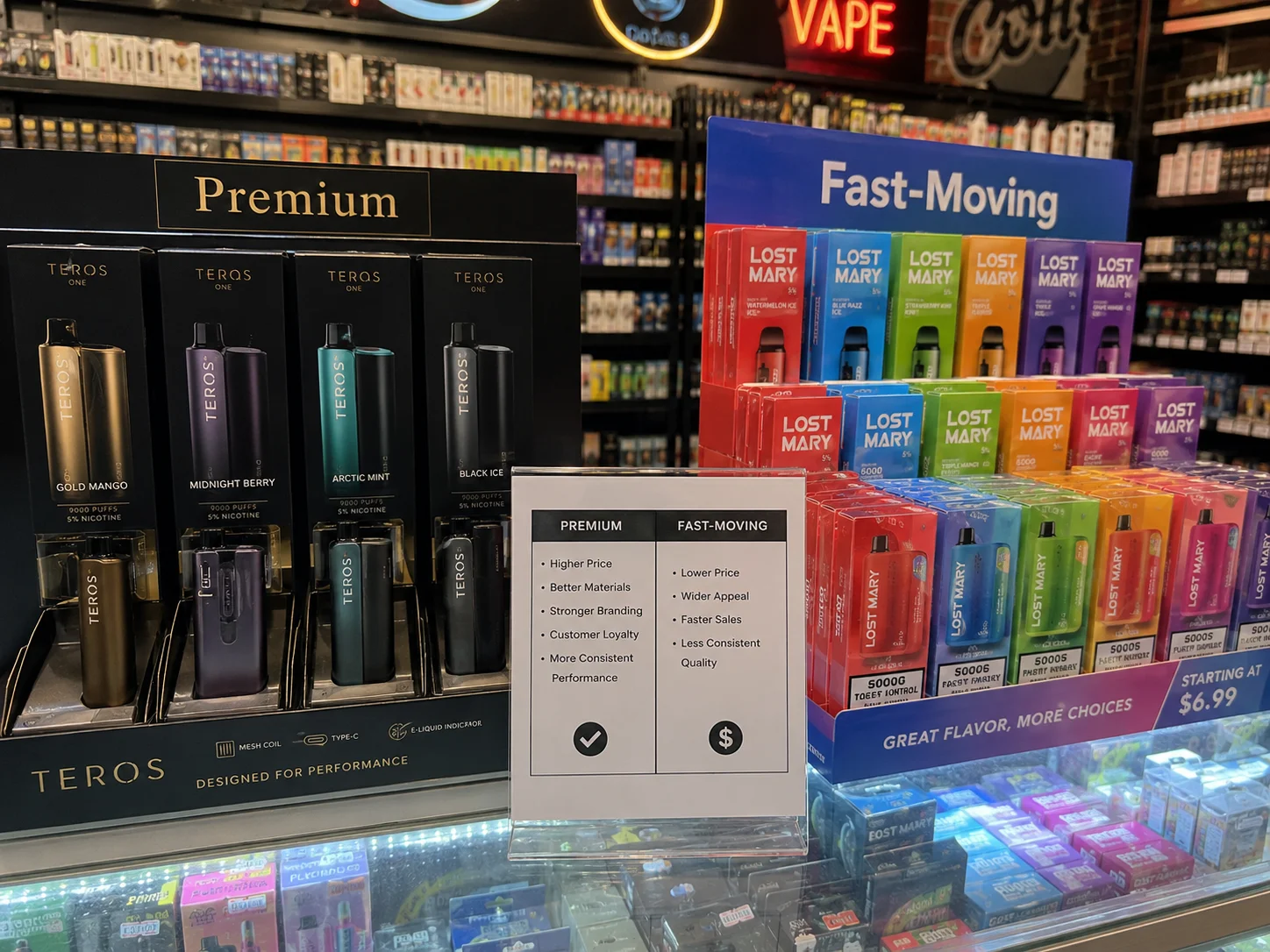
The difference isn't just the logo on the box; it's everything inside. I've seen it all, from high-end devices to the cheapest things imaginable. A premium brand like Vozol or a genuine FUMOT uses quality lithium batteries that work in the cold and hold a charge. Their e-liquid is consistent and sourced from reputable suppliers. A fast-moving brand, like some of the "Bang" series, might use a cheaper manganese battery that dies quickly. Their e-liquid can be inconsistent. You're trading reliability for a lower entry price. It's not that one is "good" and one is "bad" for business; they just serve different purposes. Understanding this difference is the first step to using them correctly in your strategy.
Here is a simple breakdown:
| Feature | Premium Brands (e.g., Vozol, Razz Bar) | Fast-Moving Brands (e.g., Bang King) |
|---|---|---|
| Main Goal | Brand reputation, consistent quality | Low price, high sales volume |
| Materials | High-quality lithium battery, stable e-liquid | Cheaper manganese battery, inconsistent e-liquid |
| Price | Higher, offers better profit margin per unit | Lower, relies on volume for profit |
| Customer | Seeks quality, flavor, and reliability | Highly price-sensitive, seeks a good deal |
| After-Sales | Lower complaint rate, better support | Potentially higher complaint and return rate |
| Business Role | Builds trust, anchor for your business | Generates quick cash flow, attracts traffic |
Why Do Premium Brands Build Trust but Not Always Move Fast?
You've stocked a well-known premium vape brand, expecting it to fly off the shelves. But it’s selling slower than you hoped. You start to wonder if the high investment was worth it.
Premium brands carry strong name recognition and quality assurance, which builds customer trust and justifies a higher price. However, this higher price and controlled distribution can slow down sales velocity compared to cheaper, more accessible alternatives.
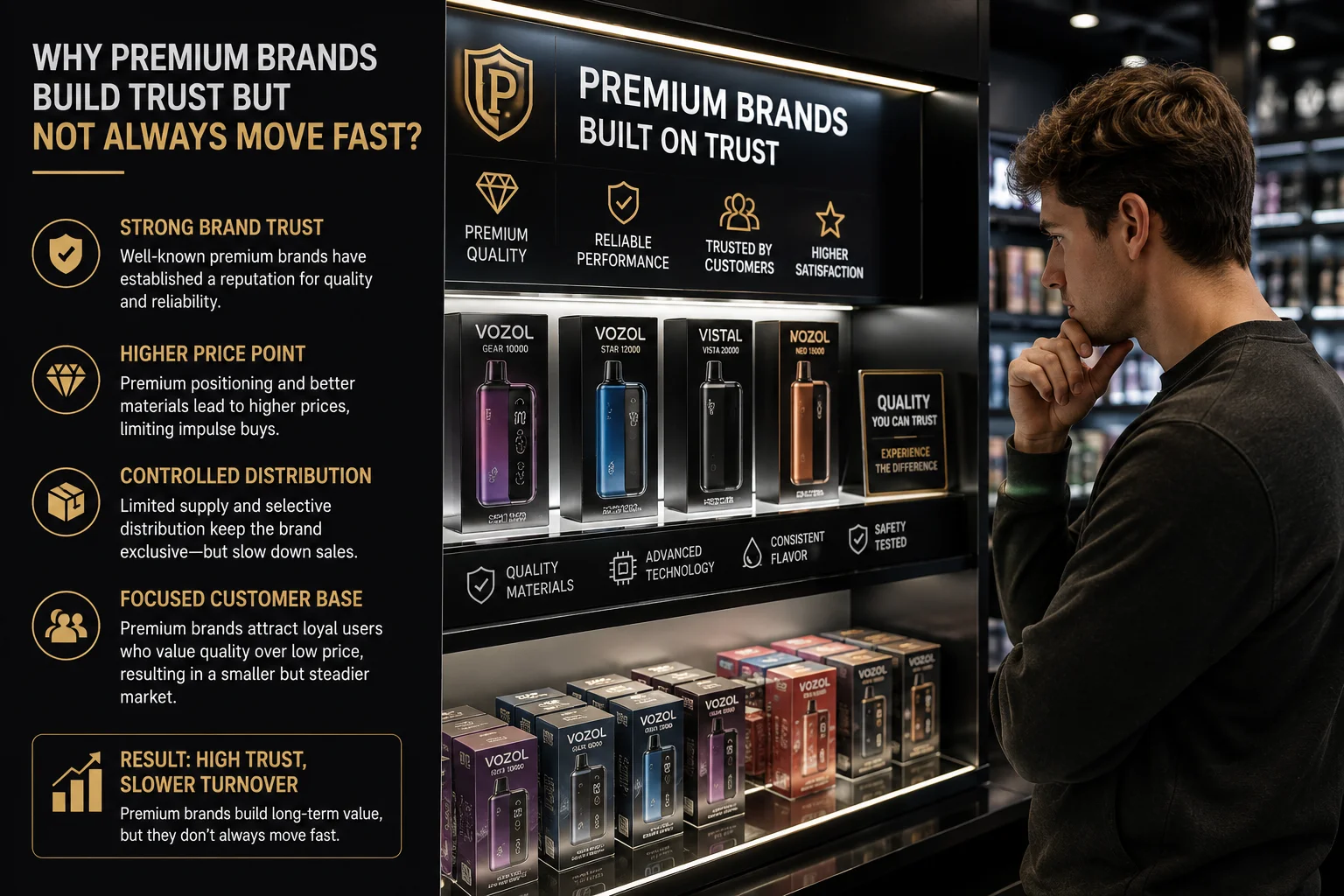
Think about Apple. Why do people pay so much for an iPhone when cheaper phones exist? It's about trust, quality, and brand identity. The same applies to top-tier vape brands like ELF BAR or VAPSOLO. These companies have invested billions in R&D and marketing. Their products are generally reliable, and customers know what to expect. Having these brands in your catalog tells your customers that you are a serious, quality-conscious seller. However, this comes at a cost. The price is higher, which naturally limits the number of buyers. Also, as I mentioned, many of these brands have incredibly strict distribution networks. You often can't buy from them directly unless you're a massive player. This means your supply might be less stable or more expensive. So, while they are essential for your reputation, they aren't always the engine for your daily cash flow. They are your flagship, not your entire fleet.
Why Do Fast-Moving Brands Bring Cash Flow but Need Careful Selection?
You see a vape brand for a very low price and think you've hit the jackpot. The low cost means high volume and great cash flow, right? But then the complaints start rolling in.
Fast-moving brands sell quickly due to their low price, generating immediate cash flow. However, this low price often comes from cheaper materials, leading to inconsistent quality, high return rates, and potential damage to your reputation if not selected carefully.
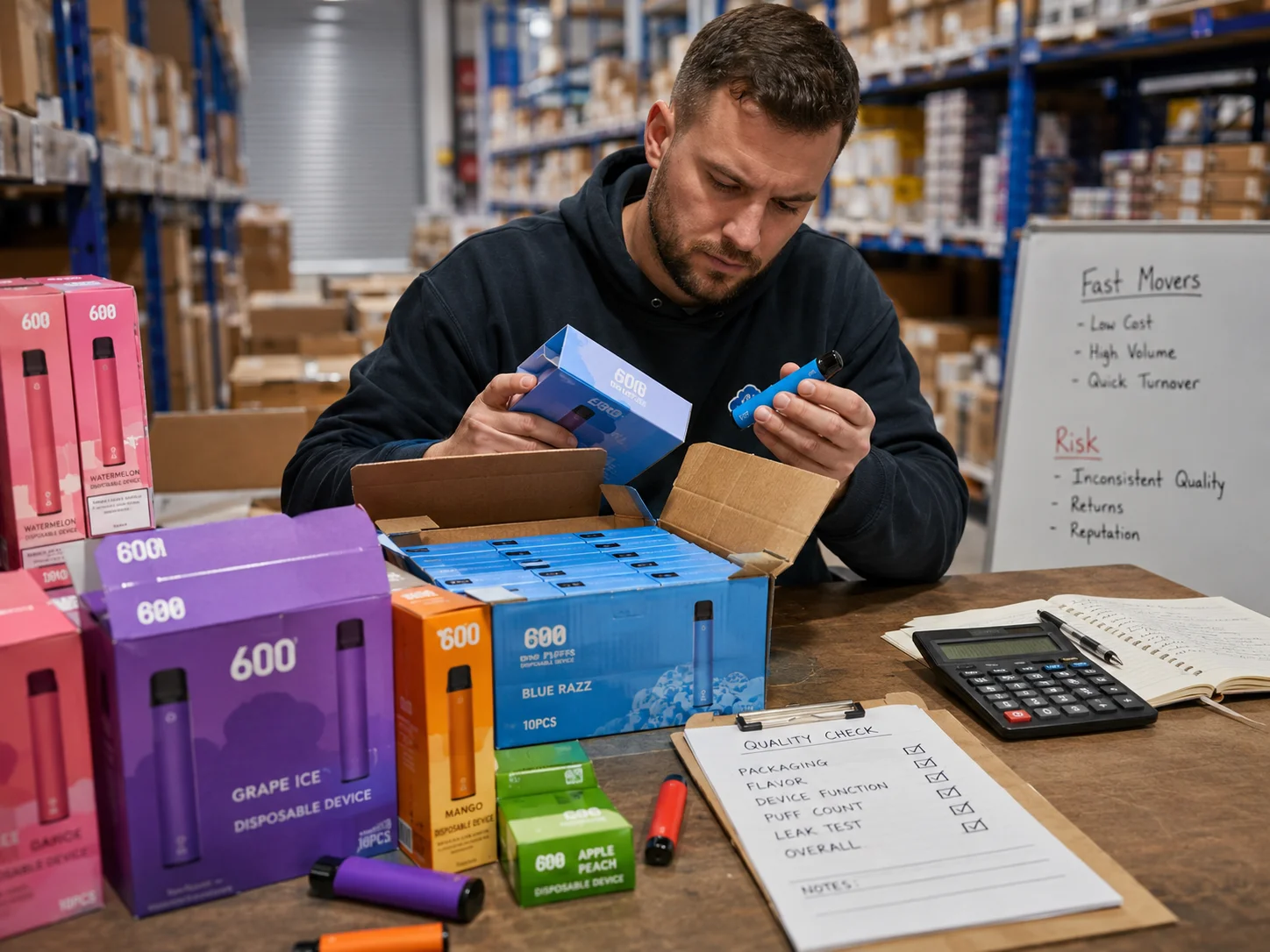
The biggest mistake I see new wholesalers make is believing that "cheaper is better." If the cheapest products were the most profitable, we’d all be selling rubber bands. The reality of business, especially wholesale, is about the speed of your money. It's about cash flow. A cheap product that sells fast is great for cash flow. You buy for €2, sell for €3, and get your money back quickly to reinvest. This is the appeal of fast-moving brands. But there's a huge risk. I've seen so many wholesalers get burned. They buy a batch of super-cheap vapes, only to find out 30% of them are defective. The batteries don't work, they leak, or the flavor is terrible. Now, your profit is wiped out by returns and angry customers. You have to be smart. There are legitimate, certified low-cost brands in China, like Bang King. They are the cheapest legal products you can find. They have a market, but you must understand you're getting what you pay for. Careful selection means finding the most reliable of the low-cost options, not just the absolute cheapest.
What Is the Best Brand Mix for a New Vape Wholesaler?
Starting out is overwhelming. Should you buy ten different brands to see what sticks? Or go all-in on one? One wrong move can tie up all your cash in dead stock.
For a new wholesaler, the best mix is simple and low-risk. Start with just 1-2 proven fast-moving brands and only 1 well-known premium brand. This focuses your capital, minimizes unsold inventory, and lets you test the market effectively.
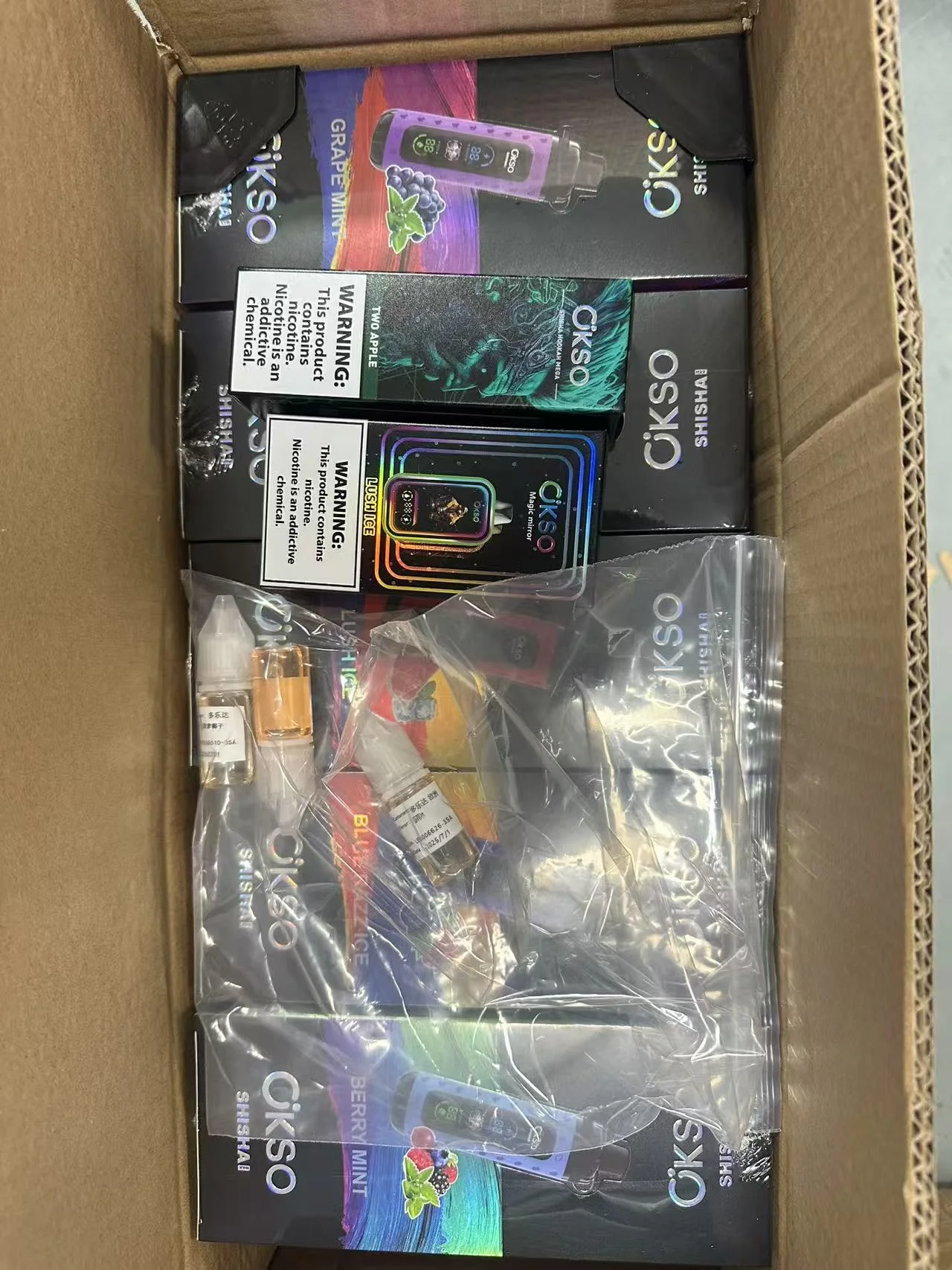
When you're new, your biggest enemy is complexity. More brands mean more SKUs, more inventory to manage, and more cash tied up. Keep it simple. I always advise new partners to follow the 80/20 rule for their inventory. Dedicate about 70-80% of your initial budget to 1-2 fast-moving brands that are known to sell in your region. This will be your cash flow engine. It gets product moving and money coming back to you. Then, invest the remaining 20-30% in one, and only one, solid premium brand. This product isn't for massive volume initially. It's there to be your "halo" product. It shows you sell quality goods, attracts customers looking for the best, and gives you a higher-margin item. This simple structure—one workhorse for cash, one show horse for reputation—is the safest and most effective way to start. You can test the market without getting buried in stock.
How Many Premium Brands Should You Start With?
You want your business to look credible, so you're tempted to stock several big-name brands. But your budget is limited, and this feels like a huge financial gamble. It's a classic startup dilemma.
You should start with only one premium brand. This allows you to invest deeply enough to have sufficient stock of its popular flavors, making a real impact without spreading your limited starting capital too thin across multiple high-cost products.
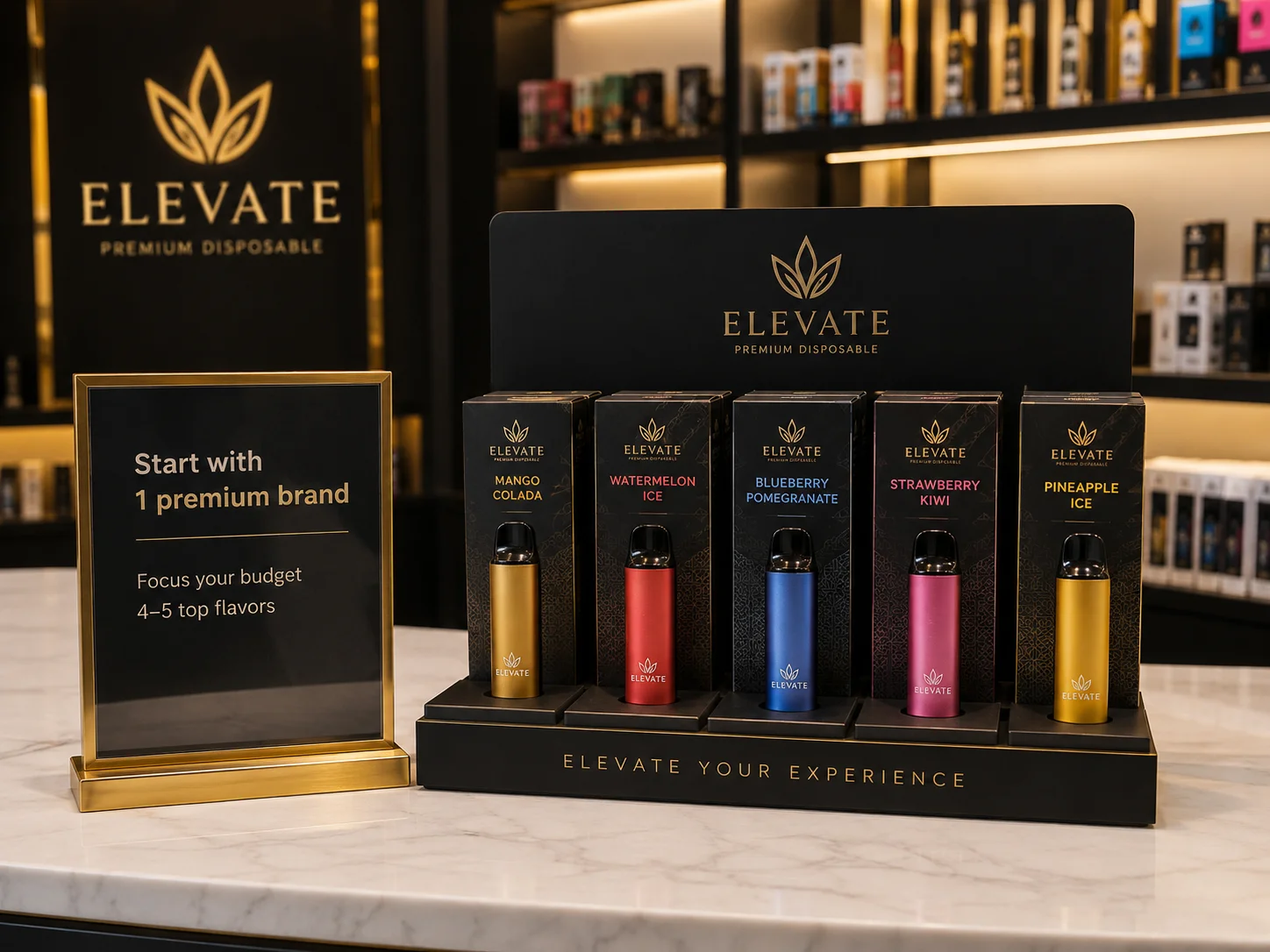
Focus is your superpower when you're starting out. Instead of buying a few units of three different premium brands, pick one and go deeper. Let's say you choose a popular brand like Razz Bar or Fumot. By dedicating your "premium budget" to this single brand, you can afford to stock its top 5-8 flavors. This makes your offering look serious and complete for that brand. A customer looking for Razz Bar will find what they want with you. If you had spread that same budget across three brands, you might only have 1-2 flavors for each. This looks weak and incomplete. You'll end up being out of stock on the one flavor a customer wants. Choosing just one premium brand demonstrates confidence, simplifies your inventory, and gives you the best chance of actually selling through the stock you've invested in. Once that one brand is selling consistently, you can think about adding another.
How Many Fast-Moving Brands Should You Carry?
The market is flooded with cheap, fast-moving brands, and it's tempting to offer a wide variety to capture every possible customer. But this quickly leads to chaos and a warehouse full of unsold goods.
Start with one or, at most, two fast-moving brands. This prevents inventory chaos and allows you to learn which products are reliable cash generators versus which ones are just low-quality headaches. Focus on depth, not breadth.
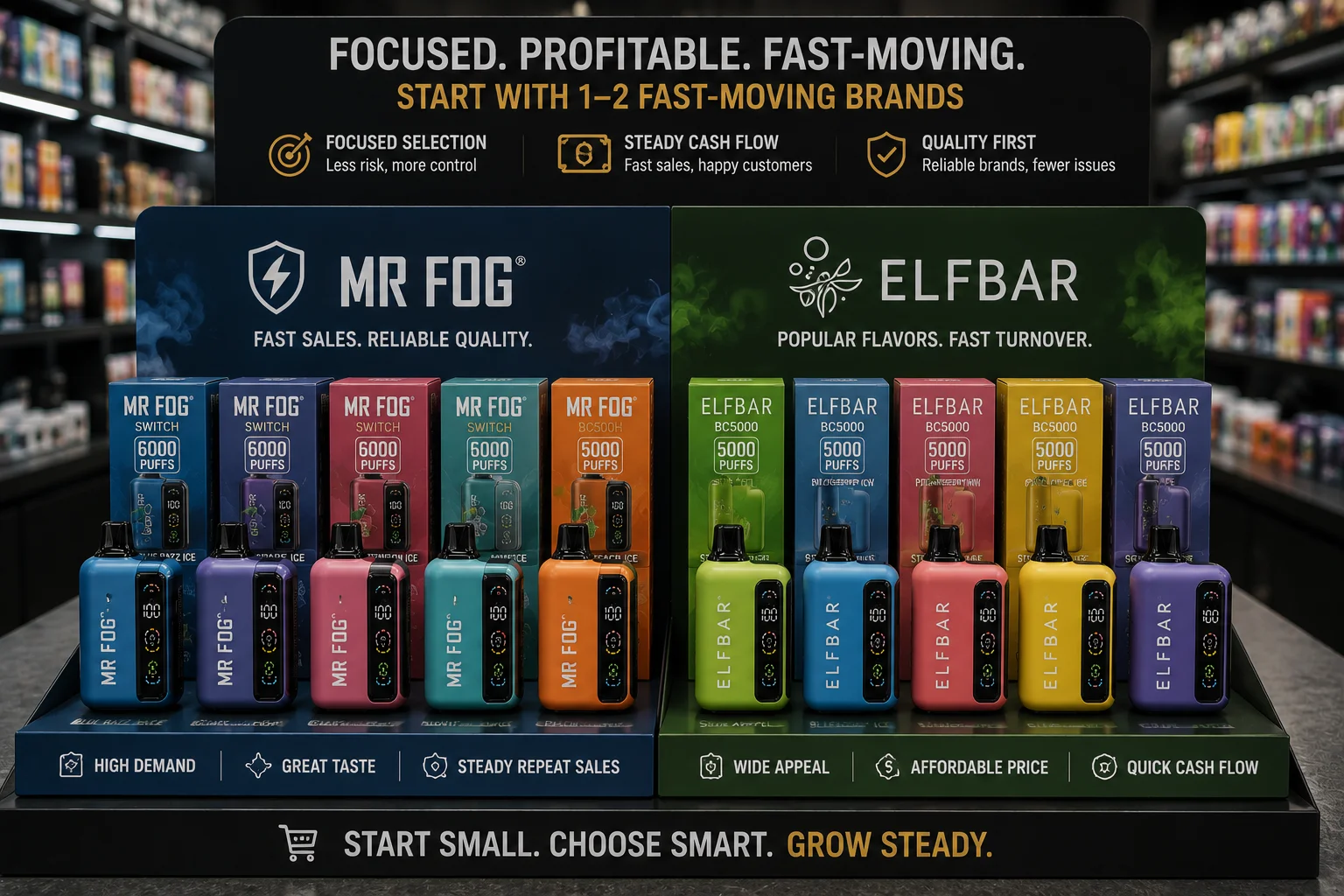
This is where discipline is crucial. The goal with fast-moving brands is quick turnover. The more brands you add, the slower your overall turnover becomes because your money is split across too many different products. My advice is to pick one primary fast-moving brand. Do your research. Find one that has a reputation for being a "reliable cheapie." Then, maybe add a second one if it offers a significantly different style or puff count that is popular in your market. For example, you might carry one standard bar-style vape and one with a more unique design. But that's it. Don't carry five different brands that are all basically the same. You'll end up with a mess of similar products, confuse your customers, and have cash stuck in the slow-sellers. Master one or two workhorses first. Make them profitable. Then, and only then, consider expanding.
Which Flavors Should You Choose First?
You're ready to place your first order, but you're staring at a list of 50 different flavors. Tropical Rainbow Blast? Arctic Polar Bear Kiss? Picking the wrong ones means your money sits on the shelf.
Choose the top 5-10 universally popular flavors for each brand you carry. Start with the essentials like Blue Razz Ice, Watermelon Ice, Mint, Strawberry Kiwi, and a grape or mango flavor. These are proven sellers and minimize your risk.
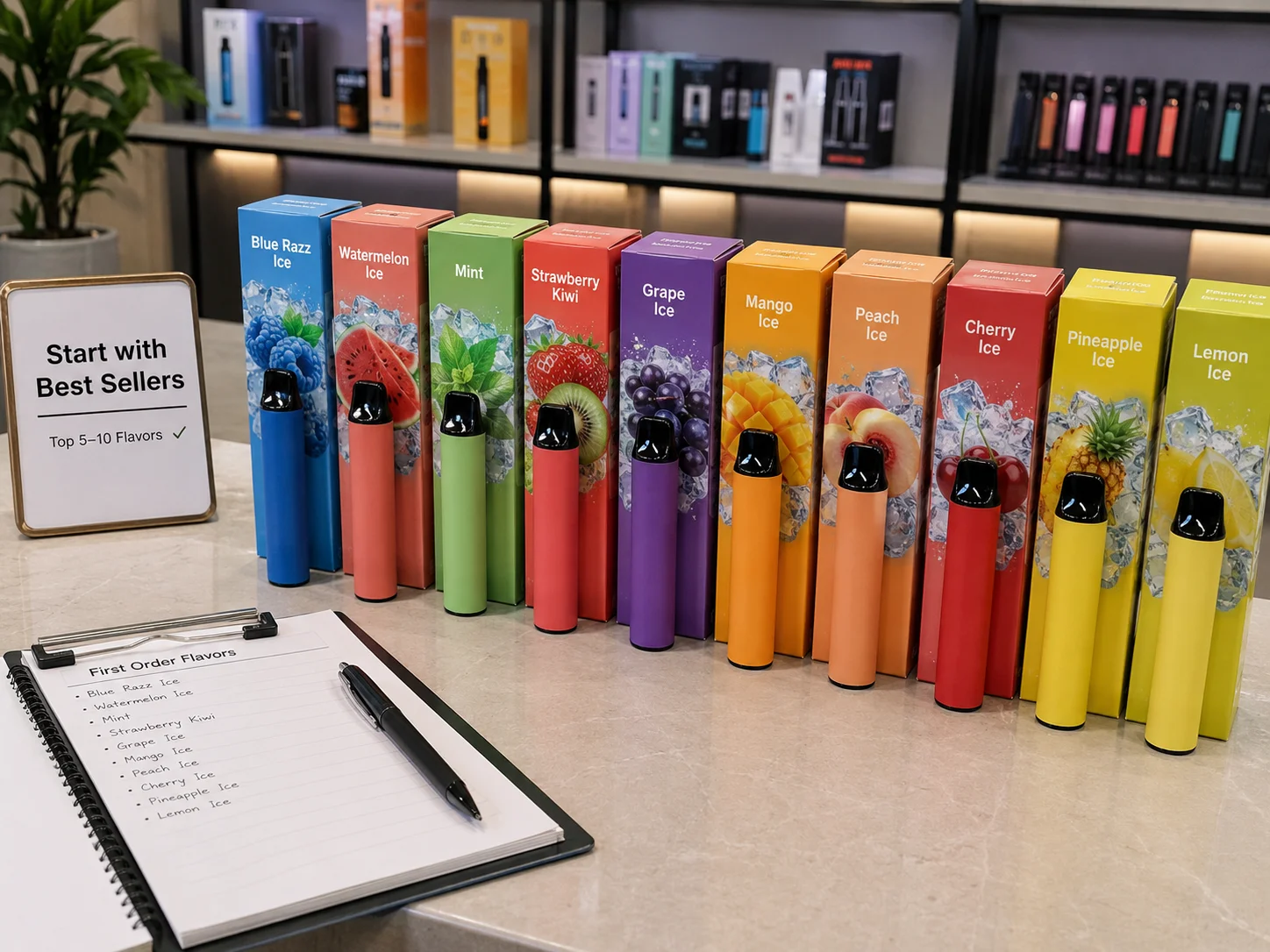
Every wholesaler learns this lesson, sometimes the hard way. Exotic and creative flavor names are fun, but they are not where you make your consistent money, especially at the beginning. The bulk of sales, for almost any brand, comes from a core group of about 10 flavors. Your job is not to guess what the next hit flavor will be. Your job is to stock what is already proven to sell. Before you order, ask your supplier for a sales data sheet. Any good supplier, like us, can tell you exactly which flavors are the top sellers for each product.
Here’s a safe starter list for almost any market:
- Blue Razz Ice / Blue Sour Raspberry
- Watermelon Ice
- Spearmint / Cool Mint
- Strawberry Kiwi
- Grape Ice
- Mango Ice
- Pink Lemonade
- Strawberry Banana
By sticking to these proven winners for your initial order, you drastically reduce the chance of getting stuck with dead stock. You can get creative and test more niche flavors later, once you have steady cash flow and data from your own customers.
How Can You Avoid Too Many SKUs?
Your inventory list is growing longer and longer. You have dozens of brands and flavors, but your sales aren't increasing, and your cash is tied up. This is SKU bloat, and it can kill a new business.
Avoid too many SKUs by limiting your brand selection (1-2 fast, 1 premium), restricting your flavor selection to the top 5-10 sellers per brand, and focusing on stocking more units of your winners (depth) instead of a few units of everything (breadth).
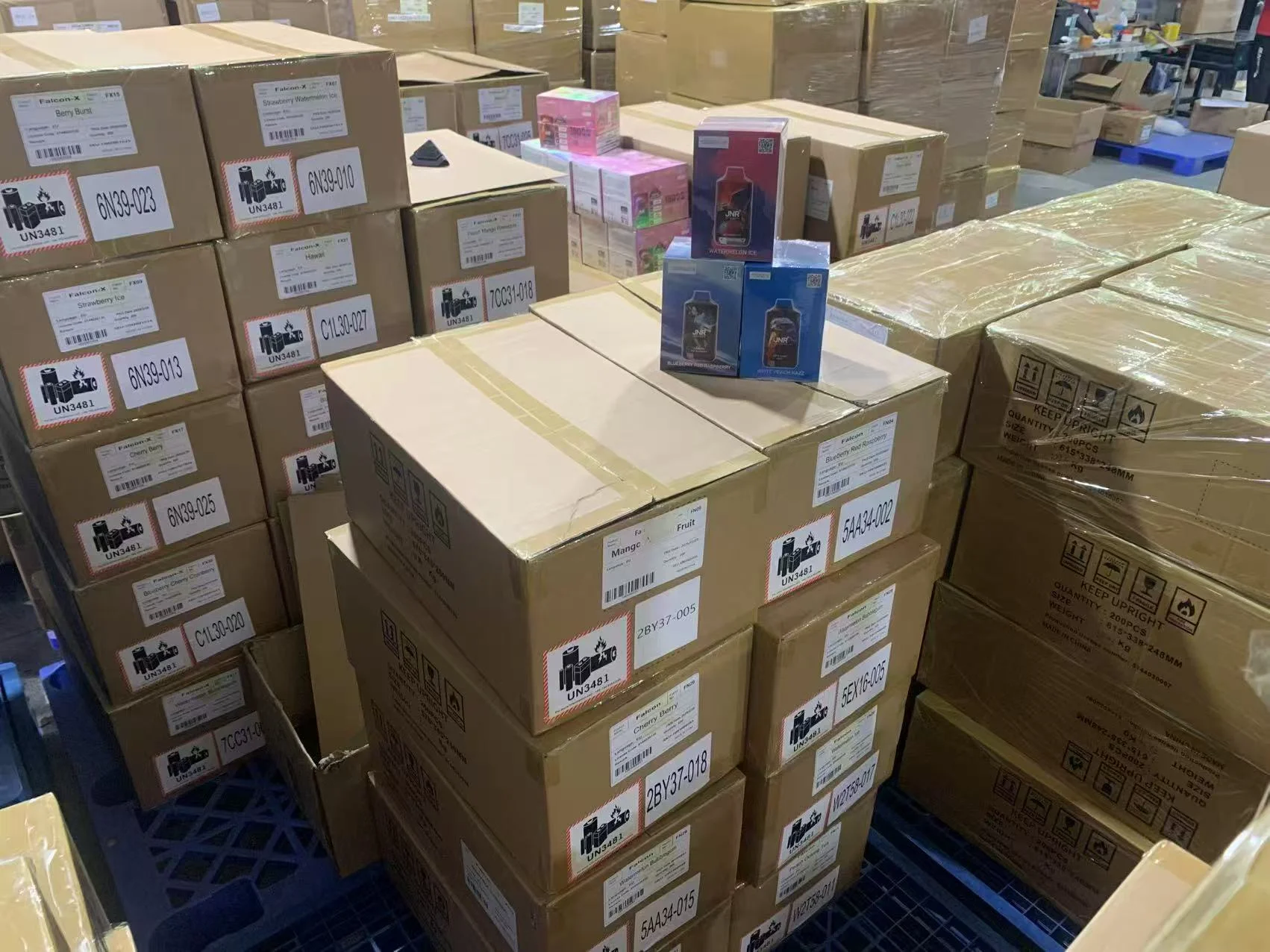
SKU stands for Stock Keeping Unit. Every unique product (e.g., Vozol Star 12000 in Blue Razz Ice) is one SKU. The more SKUs you have, the more complex and expensive your inventory management becomes. The secret is to be a curator, not a collector. Your job is to offer the best options, not all the options. Let's imagine you have a €5,000 budget.
Here is a look at a bad vs. a good strategy:
Bad Strategy (Too Many SKUs):
- Brands: 4 different fast-moving brands, 2 premium brands.
- Flavors: 15 flavors for each brand.
- Result: You buy maybe 10-20 units of each flavor. Your best-sellers are constantly out of stock, while dozens of other flavors sit unsold. Your cash is spread thin and stuck.
Good Strategy (Focused SKUs):
- Brands: 1 fast-moving brand, 1 premium brand.
- Flavors: Top 8 flavors for each.
- Result: You can buy 100+ units of each of your 16 chosen SKUs. You are a reliable source for these specific products. You sell through your stock quickly, get your cash back, and can reinvest in what works.
Simplicity is profit. By limiting your SKUs, you make ordering easier, tracking easier, and you ensure your money is working for you, not gathering dust on a shelf.
How Should You Split Your First Wholesale Budget?
You have your starting capital, say €3,000. How do you divide it? If you spend too much on premium, you'll have no cash flow. If you spend it all on budget brands, you risk your reputation.
Split your first budget with a 70/30 or 80/20 rule. Allocate 70-80% of your funds to your chosen fast-moving brands to secure volume and cash flow. Allocate the remaining 20-30% to your single premium brand to build trust and test higher margins.
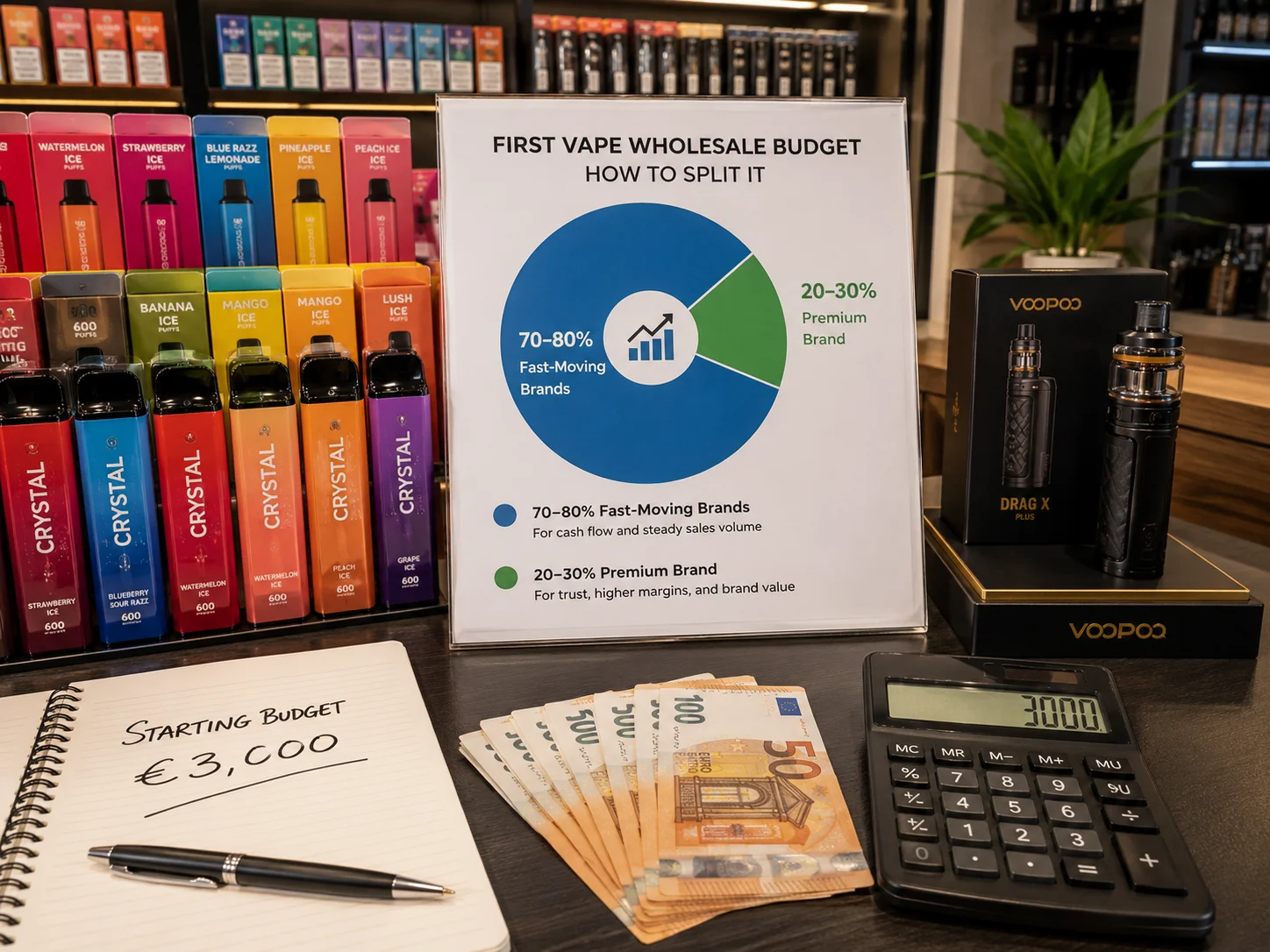
Let’s make this practical. Imagine you have a €3,000 starting budget.
Here’s how you would apply the 80/20 rule:
- Fast-Mover Investment (80%): €2,400
- This money goes toward buying your 1-2 chosen fast-moving brands in their top 5-8 flavors. This is your engine. This large portion ensures you have enough stock of the products that will sell quickly and bring your money back.
- Premium Brand Investment (20%): €600
- This money is for your single premium brand. You'll buy smaller quantities of its top flavors. This is your "tester" batch. Its purpose is to gauge customer interest, offer a high-quality option, and see what kind of profit margins you can achieve.
The beauty of this approach is its safety. The fast-moving products should generate enough cash to cover your expenses and provide a profit. The premium brand is a low-risk bet on higher future earnings. And with options like our Germany warehouse, where the MOQ is only 50 units (around €300-€400), you can execute this strategy with even a very small amount of capital. You don’t have to risk thousands.
Why Should Best Sellers Get More Stock?
You notice one flavor is selling out in two days while another has been sitting for two weeks. It seems obvious to reorder the popular one, but you feel like you should keep the other one in stock "just in case."
You must stock more of your best sellers because they are your primary source of profit and cash flow. The 80/20 rule applies: roughly 80% of your revenue will come from 20% of your products. Starving your winners to feed your losers is a direct path to failure.
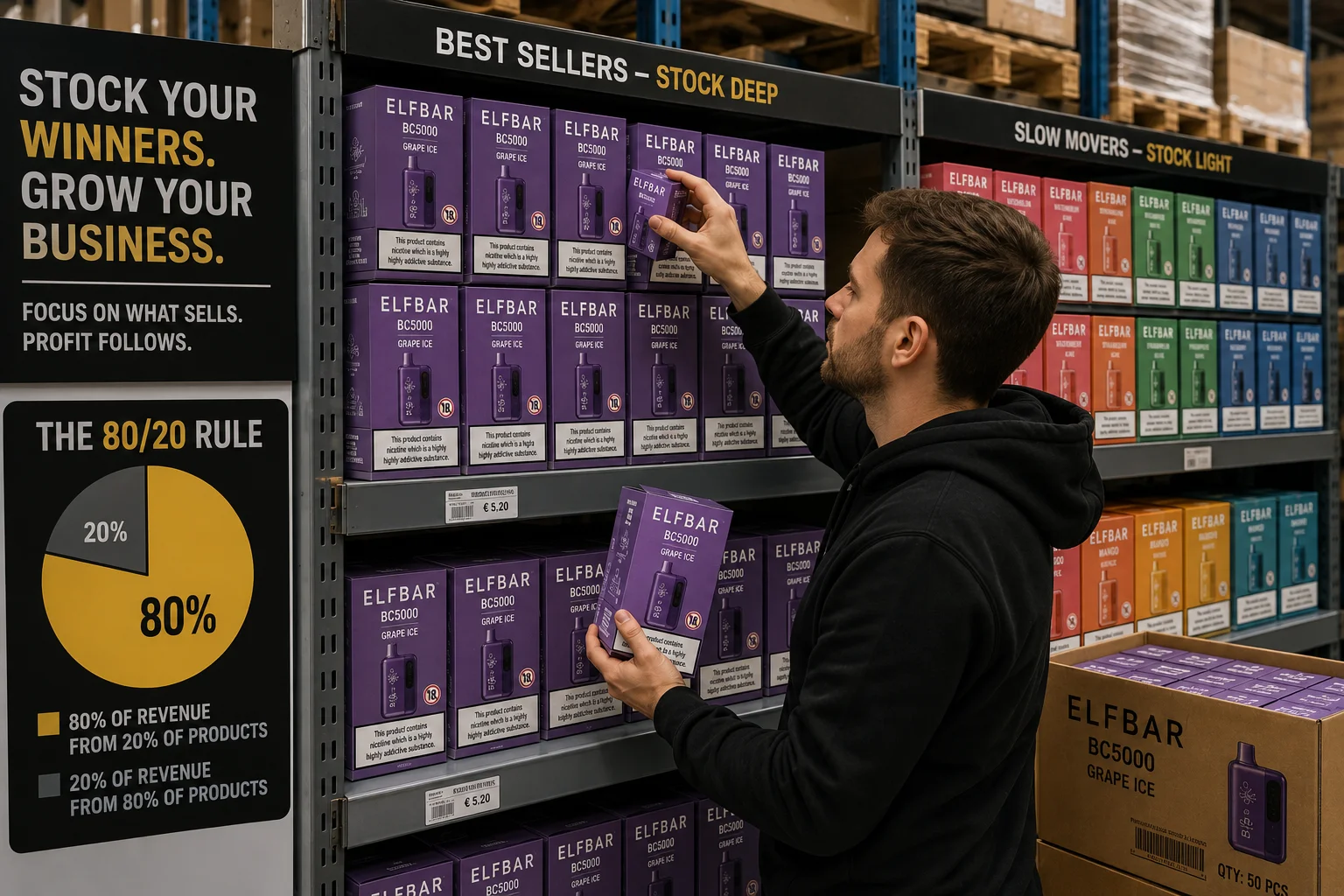
This is the most critical concept in retail and wholesale: feed your winners. When you identify a product that sells consistently and quickly, your number one job is to keep it in stock. Every day that your best-seller is sold out is a day you are losing guaranteed money. It’s far better to be out of stock on your 10th most popular flavor than your 1st. In this business, the speed of capital is everything. A product that you can sell in 3-5 days with a 20% margin is infinitely better than a product that takes two months to sell with a 40% margin. In the time it takes to sell the slow product once, you could have sold the fast product over a dozen times, compounding your profit each time. Don't get sentimental about your products. Look at the data. If something is selling, buy more of it. If something is sitting, stop buying it. It’s that simple.
When Should You Add a Second Brand?
Your initial brand mix is working well, and sales are steady. You're feeling confident and thinking about expanding your catalog. But adding a new brand too soon can disrupt your momentum.
Add a second premium brand or a new fast-moving brand only when you have stable, predictable cash flow from your current lineup and clear data showing customer demand for something new. Don't add brands for the sake of variety; add them to meet a proven need.
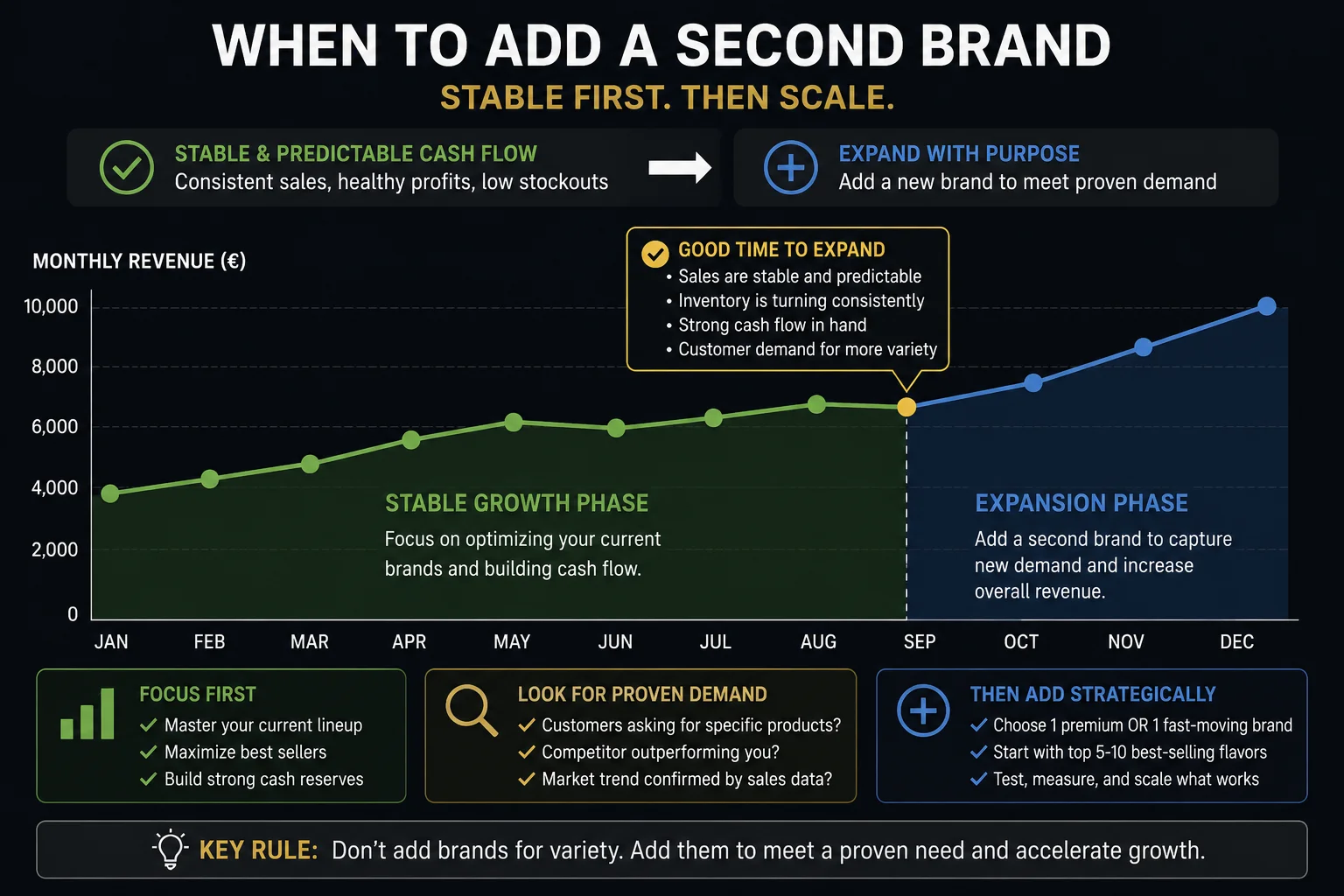
Adding a new brand is like taking on a new employee. It requires investment, attention, and has to serve a purpose. Here’s a checklist to run through before you even think about adding a new brand:
- Is your current inventory profitable? Are your core products selling through consistently, and is your business making money? If you're still struggling, a new brand will only add to the problems.
- Do you have excess capital? You need money to invest in the new brand's stock without taking away from the budget for your proven best-sellers. Never starve your winners to fund a test.
- Is there clear customer demand? Are customers repeatedly asking you for a specific brand or type of product you don't carry? This is the strongest signal.
- Does the new brand fill a gap? Does it offer something your current brands don't? Maybe it's a different puff count, a unique technology, or it targets a different price point. Don't add another brand that's identical to what you already have.
If you can confidently say "yes" to these questions, then you are ready. Start the process over again: test the new brand with a small order, focusing on its top flavors, and track the data carefully.
What Are the Warning Signs of a Bad Brand Mix?
You feel busy, and you have a lot of inventory, but your bank account isn't growing. You might be suffering from a bad brand mix without even realizing it. The signs are often subtle at first.
The warning signs of a bad brand mix include slow-moving inventory, tight cash flow despite high stock levels, frequent customer complaints about specific products, and consistently selling out of premium items while budget items sit on the shelf.
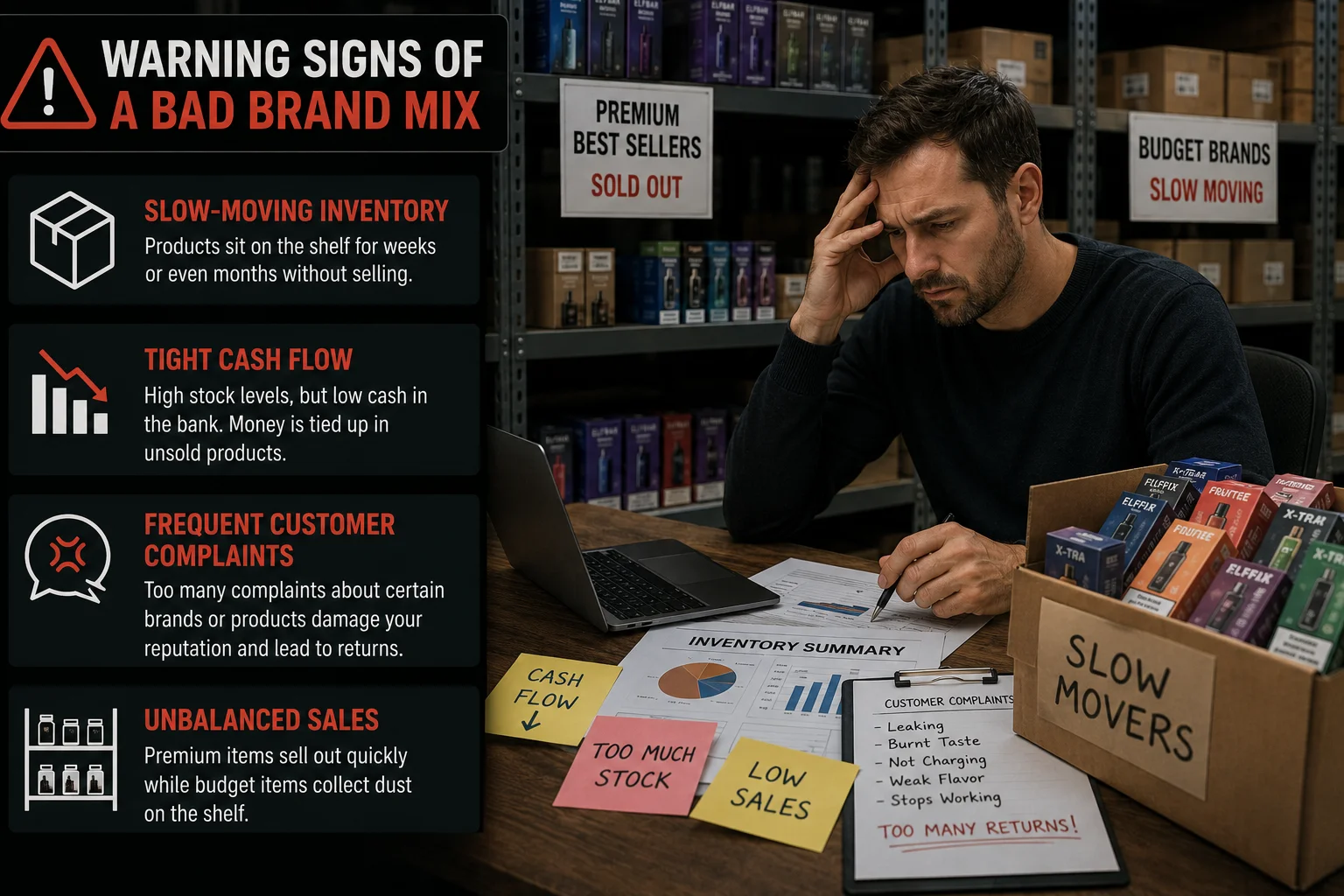
It’s crucial to be honest with yourself and look for these red flags. I’ve seen many businesses fail because they ignored them for too long. Here are the key warning signs you need to watch for:
- The Dust Test: Walk through your storage area. Do you see boxes that haven't moved in over 30 days? A significant amount of aging stock is a major red flag. Your money is sitting there, losing value.
- "Inventory Rich, Cash Poor": You look at your inventory value and think you're doing well, but you struggle to pay for new orders. This means your cash is trapped in products that aren't selling fast enough.
- The Complaint Department: You find yourself spending more time handling returns, refunds, and angry customer emails than making sales. This usually points to a poor-quality, fast-moving brand that is destroying your reputation and profits.
- The "We Don't Have That" Problem: Customers keep asking for your premium brand, but you're always sold out because you invested too heavily in cheap stock that isn't moving. You're missing out on high-margin sales.
- The Clearance Sale Cycle: You're constantly having to mark down products just to get rid of them. A small, planned clearance is normal. A constant cycle of discounting is a sign your buying strategy is wrong.
If you see these signs, it's time to act. Don't wait. You need to analyze your sales data, ruthlessly cut the losing products, and reinvest that capital into your winners.
How Can Overseas Warehouses Reduce Your Risk?
You want to start wholesaling vapes, but the thought of investing thousands of euros in a shipment from China is terrifying. What if it gets seized by customs? What if the products don't sell?
Using an overseas warehouse, like our facility in Germany, allows you to buy small quantities (as low as 50 units) that are already in your market. This eliminates customs risk, reduces your initial investment to a few hundred euros, and allows for rapid delivery (1-5 days).
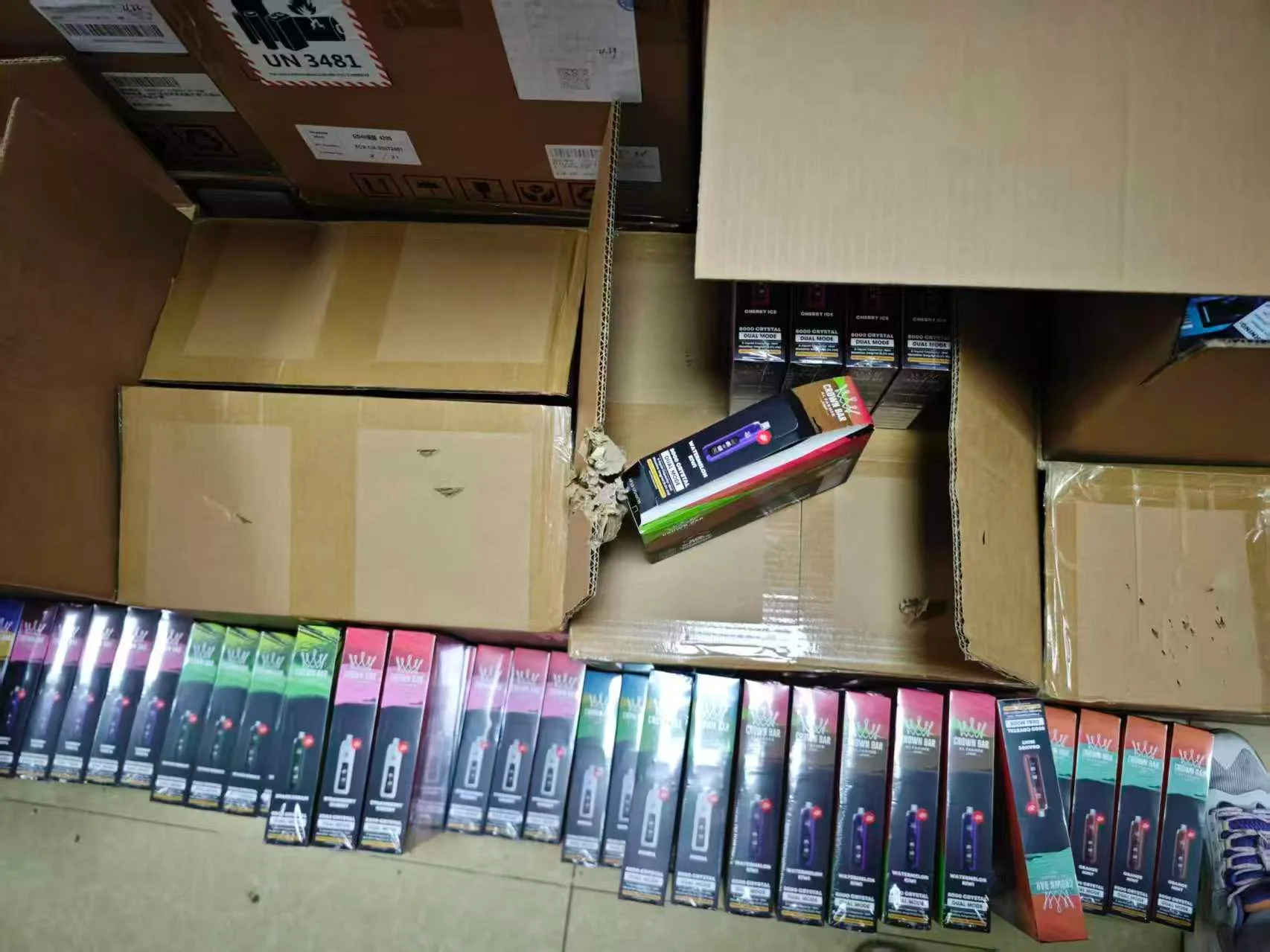
This is the single biggest game-changer for new and small wholesalers. Frankly, it's why we set up our overseas warehouses in the first place. We saw so many aspiring entrepreneurs get wiped out by one bad shipment. So, we decided to take on the risk ourselves. We use our 15+ years of experience and massive purchasing power to order huge container shipments (often 200,000+ units at a time) to get the best possible price. We handle the stressful and expensive parts: the international shipping, the customs clearance, and the risk of seizure. The product is then sitting safely in our warehouse in Germany or the US. For you, the process becomes incredibly simple and low-risk. You can order just 50 pieces to test a new brand or flavor. Your total investment might be less than €400. We ship it to you via DHL, and it arrives at your door in a few days. You get to test the market, see what sells, and use your profits to reorder, all without tying up thousands in capital or worrying about a customs letter. It’s the easiest part of the business, left for you.
What Should You Test Before Reordering?
Your first batch of vapes sold well, and you're ready to reorder a larger quantity. You feel confident, but placing a big order based on a feeling is a recipe for disaster.
Before placing a large reorder, you must analyze your sales data. Test which brands, models, and flavors sold the fastest and had the highest profit margins. Also, review any customer feedback or complaints. Reorder based on hard data, not just general impressions.

Data is your best friend in the wholesale business. Your memory and feelings can be misleading. Before you send that big order to your supplier, sit down and answer these questions with actual numbers from your sales records:
- Velocity Test: Which specific SKUs (brand + flavor) sold out the fastest? How many units did you sell per week?
- Profitability Test: Which products gave you the best profit margin? Don't just look at the percentage; look at the total profit generated. A lower-margin item that sells 100 units is better than a high-margin item that sells 5.
- The "80/20" Test: Identify the top 20% of your products that generated 80% of your sales. These are your confirmed winners.
- Customer Feedback Test: Did you get any complaints about a specific product? Even if it sold well, a high complaint rate is a warning sign. It might not be a good long-term product.
- The "Dud" Test: Which products are still sitting on the shelf? Be ruthless. If something didn't sell in the first few weeks, it's unlikely to become a best-seller. Cut it from your next order.
Reordering is not just about refilling your stock. It's your chance to optimize. Use the capital from the sold products to double down on your winners and cut your losers. This is how you build a stronger, more profitable inventory with each cycle.
How Do You Build a Long-Term Winning Vape Portfolio?
You've made your first sales, and you've started to figure out what works. But how do you turn this initial success into a sustainable, long-term business that grows year after year?
Build a winning portfolio through a continuous cycle of testing, analyzing, and optimizing. Start small with a balanced mix, use low-risk options like an overseas warehouse, double down on data-proven winners, and slowly expand based on real customer demand.
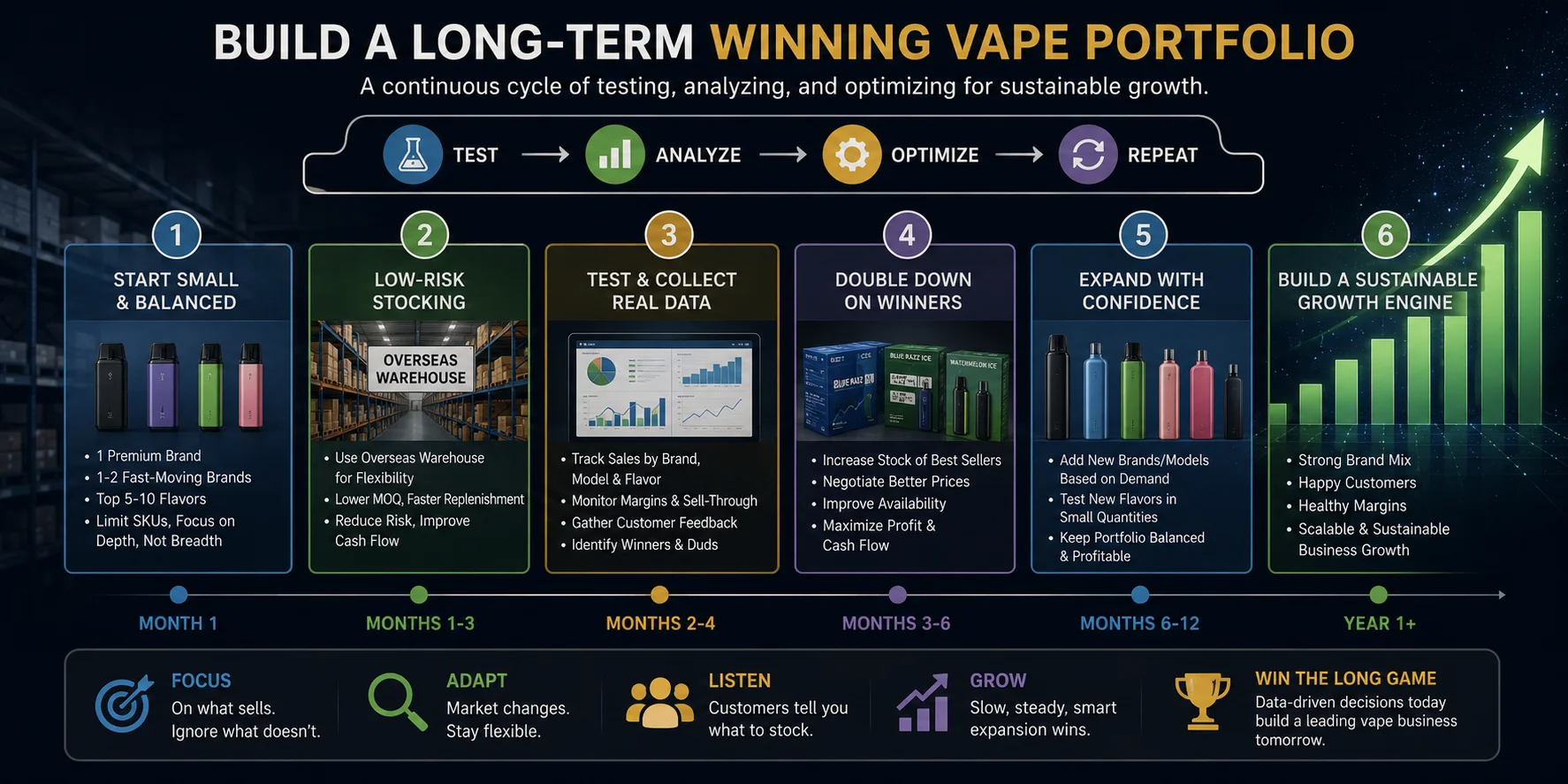
Building a winning portfolio isn't a one-time event; it's a process. It's like being a good gardener. You plant some seeds, see which ones sprout, give more water and sunlight to the strong ones, and pull out the weeds.
Here is the long-term cycle for success:
- Start Small & Balanced: Begin with your simple mix: 1-2 fast-movers for cash flow, 1 premium brand for trust.
- Test with Low Risk: Use an overseas warehouse to place small initial orders. This minimizes your financial exposure while you learn your market.
- Analyze the Data: Track everything. Sales velocity, profit margins, customer feedback. Identify your winners and your losers. Data is not emotional; it tells you the truth.
- Optimize and Reinvest: Be decisive. Cut the products that aren't selling. Use that freed-up capital to order more of what is selling.
- Listen to Your Customers: When they start asking for something new, that's your cue to research and potentially test another brand.
- Expand Methodically: Add new brands or flavors one at a time. Treat each new addition as a new test. Verify it's a winner before committing significant capital.
- Build Supplier Relationships: Work with reliable suppliers who are honest, professional, and invested in your long-term success. A good partner is worth more than a cheap price.
This cycle of Test -> Analyze -> Optimize -> Expand is the engine of sustainable growth. It ensures you are always adapting to the market and that your money is always working as hard as possible.
Final Advice: Use Premium Brands for Trust and Fast Movers for Cash Flow?
The key is a balanced portfolio. Use premium brands to build your reputation and earn higher margins, and use reliable fast-movers to generate the cash flow that fuels your growth.