
Tired of vague shipping promises and endless delays? Those delays are killing your profits and leaving you with empty shelves. Let's talk about real timelines you can actually count on.
A reasonable lead time for vape wholesale depends entirely on the source. You should expect 1-5 business days[^1] for ready stock from a local warehouse in the EU or US. For a custom order direct from China, a realistic timeline is 4 to 8 weeks, including production and shipping[^2].
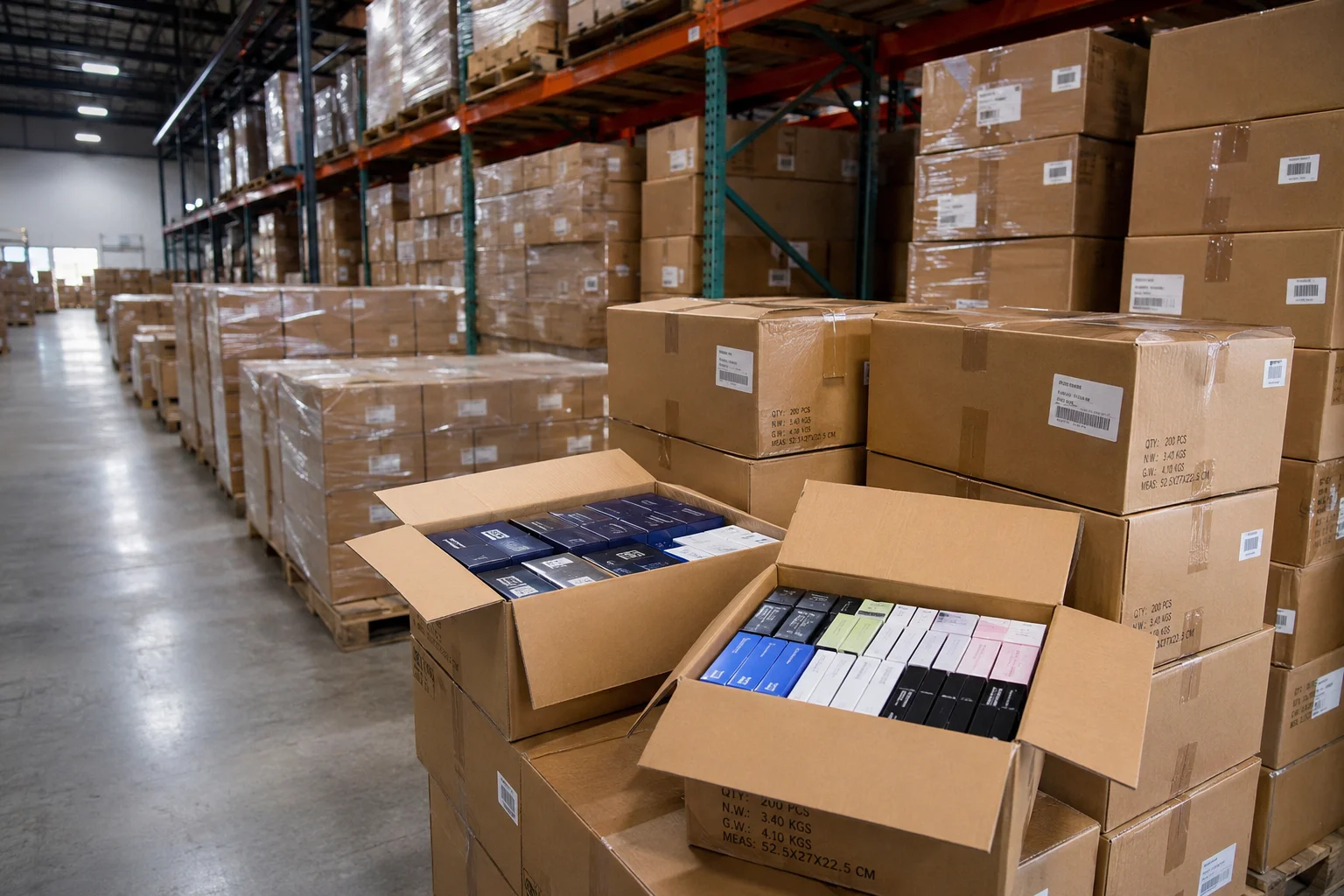
I've been exporting electronics from Shenzhen for over 15 years, and the most common point of confusion for buyers is lead time. A supplier tells you one thing, but reality is often completely different. Understanding the real timeline isn't just about patience; it's about planning your cash flow and keeping your customers happy. If you don't know when your products will arrive, you can't run a successful business. Let's break down the different scenarios so you can plan properly and avoid costly surprises.
What Lead Time Should Vape Wholesalers Expect for Ready Stock?
Need vapes on your shelves right now but worried about the long wait from overseas? Every day you wait for stock is a day you're losing sales to a competitor.
For ready stock held in a local warehouse, like our facilities in Germany or the US, you should expect delivery in just 1-5 business days. This is the fastest and safest way to test the market or restock your best-sellers quickly.
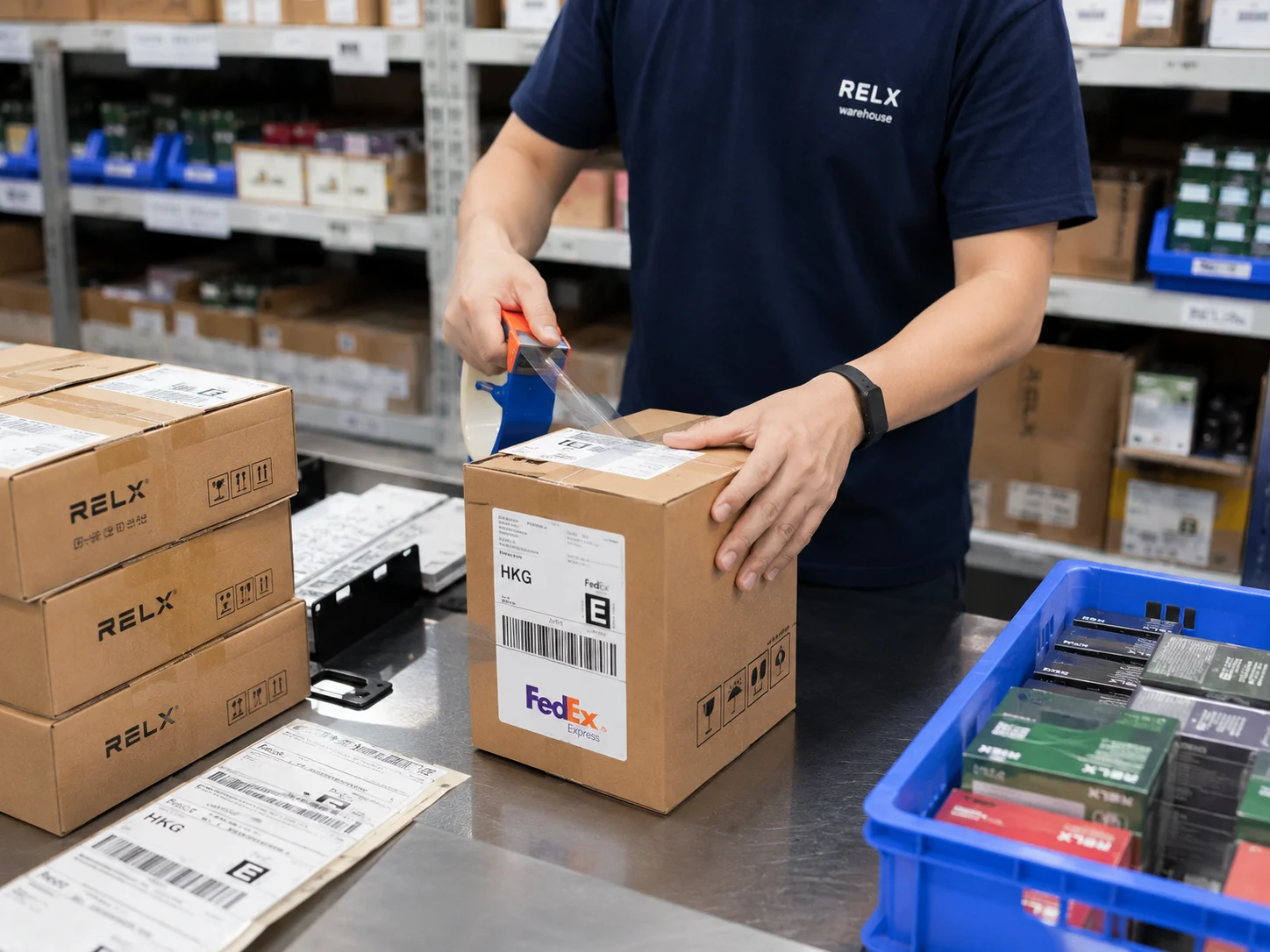
Here’s a look behind the curtain at how this works. We take on the biggest risks for you. We invest huge amounts of capital to order massive quantities from factories in China—often over 200,000 units at a time. This is how we get the best possible price. Then, we manage the complicated and expensive process of shipping it all to our warehouses in Europe and the US, handling all the customs paperwork and risks along the way. For you, the process is simple. You place a small order, maybe just 50 units, and it arrives at your door in a few days. This model is perfect for new sellers who want to start small or for established sellers who need to fill an inventory gap fast without tying up a lot of cash.
| Feature | Local Warehouse (e.g., Germany/US) | Direct from China Factory |
|---|---|---|
| Lead Time | 1-5 Business Days | 4-8 Weeks |
| Minimum Order (MOQ) | Very Low (e.g., 50 units) | High (e.g., 2,000+ units) |
| Customs Risk | We handle it | You handle it |
| Upfront Cost | Low (under €400 to start) | High |
| Best For | New sellers, testing products, urgent restocks | Large wholesalers, maximizing profit margins |
How Long Does Private Label Vape Production Usually Take?
Want to build your own vape brand but feel intimidated by the timeline? The thought of creating your own branded product can seem like a process that could take forever.
A standard private label order, which means putting your logo on an existing vape model, typically adds 2-3 weeks to the production schedule[^3]. This gives time for design confirmation, printing custom boxes, and assembly. Your total lead time from order to delivery is often 6-9 weeks.
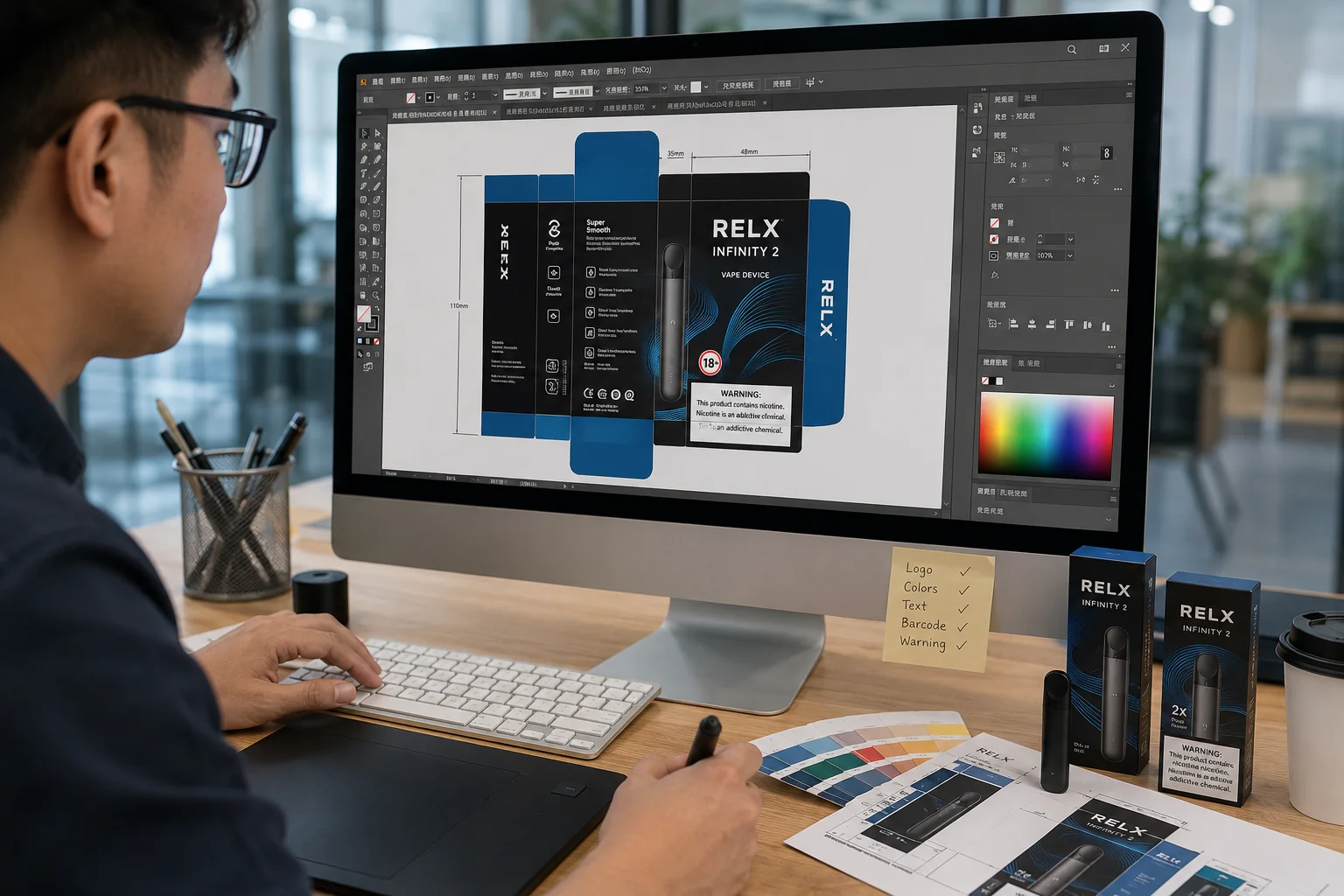
When clients ask me about building their own brand, I first make sure they understand the difference between private label and full OEM. Private label is the smart first step. You're not reinventing the wheel; you're just putting your brand on a product that's already proven. The extra time comes from coordinating the packaging. A full OEM project, where you design a vape from scratch, is a much bigger deal. It requires huge MOQs (like 2,000 units per flavor, so 20,000 units for ten flavors), a 3-4 week production time, plus shipping. That's a massive investment of time and money, best left for experienced players with established distribution. For most sellers, private label is the right move.
Private Label Timeline Breakdown
- Design & Approval (1 Week): You provide your logo and packaging design. We create mockups and wait for your final approval.
- Packaging Production (1-2 Weeks): Once you approve, we send the files to a specialized printing factory to produce your custom boxes and manuals.
- Product Assembly (1-2 Weeks): The finished packaging arrives at our assembly factory, where we put the vapes into your branded boxes.
Why Do Custom Packaging Orders Add Extra Time?
Do you think getting custom boxes is just a quick and simple change? This "small detail" can cause major delays if you don't understand the process and plan for it.
Custom packaging adds extra time because the vape factory doesn't print boxes. They have to order them from a separate printing supplier.[^4] This sub-process, including your design approval and the actual print run, easily adds 1-2 weeks before your vapes are even assembled.
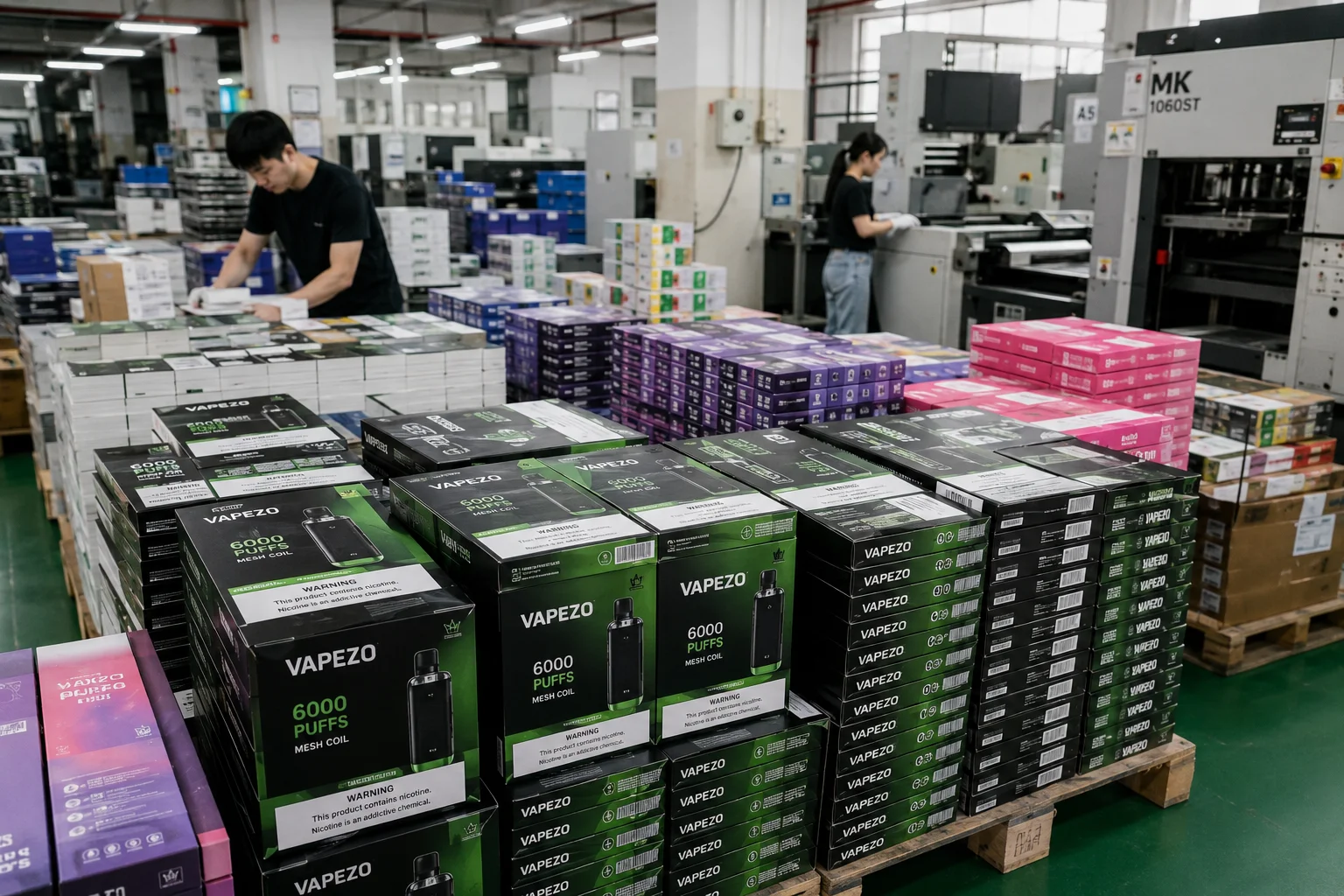
Many buyers don't realize that manufacturing is a supply chain. The factory that makes your vapes is an expert in electronics and assembly, not in paper printing. When you request custom packaging, a whole separate process kicks off in the background. We have to communicate your design to the printing factory, get a physical sample made, and send it to you for approval. Any changes or mistakes here can cause a week of delay. Only after you give the green light can the printer start the mass production run. Then, those thousands of flat-packed boxes have to be shipped from the printer to our assembly line. It's a chain of events, and each link takes time.
| Packaging Step | Typical Duration | Potential Delay Factor |
|---|---|---|
| 1. Design Finalization | 1-3 days | You are slow to provide or approve designs. |
| 2. Sample Printing | 3-5 days | The printer is busy with other orders. |
| 3. Sample Approval | 1-7 days | Shipping samples internationally takes time. |
| 4. Mass Printing | 5-7 days | Large quantity orders take longer. |
| 5. Delivery to Assembly Plant | 1-2 days | Local logistics delays. |
How Much Time Should You Leave for Quality Checking?
Are you worried about receiving an entire shipment of defective vapes? Trying to save a few days by skipping a proper quality check is a huge gamble that can cost you everything.
You must always budget an extra 2-3 days for quality control (QC)[^5] before your order ships from China. A real QC process involves inspecting a sample of the products for function, battery life, flavor, and packaging accuracy. Rushing this is not a risk worth taking.
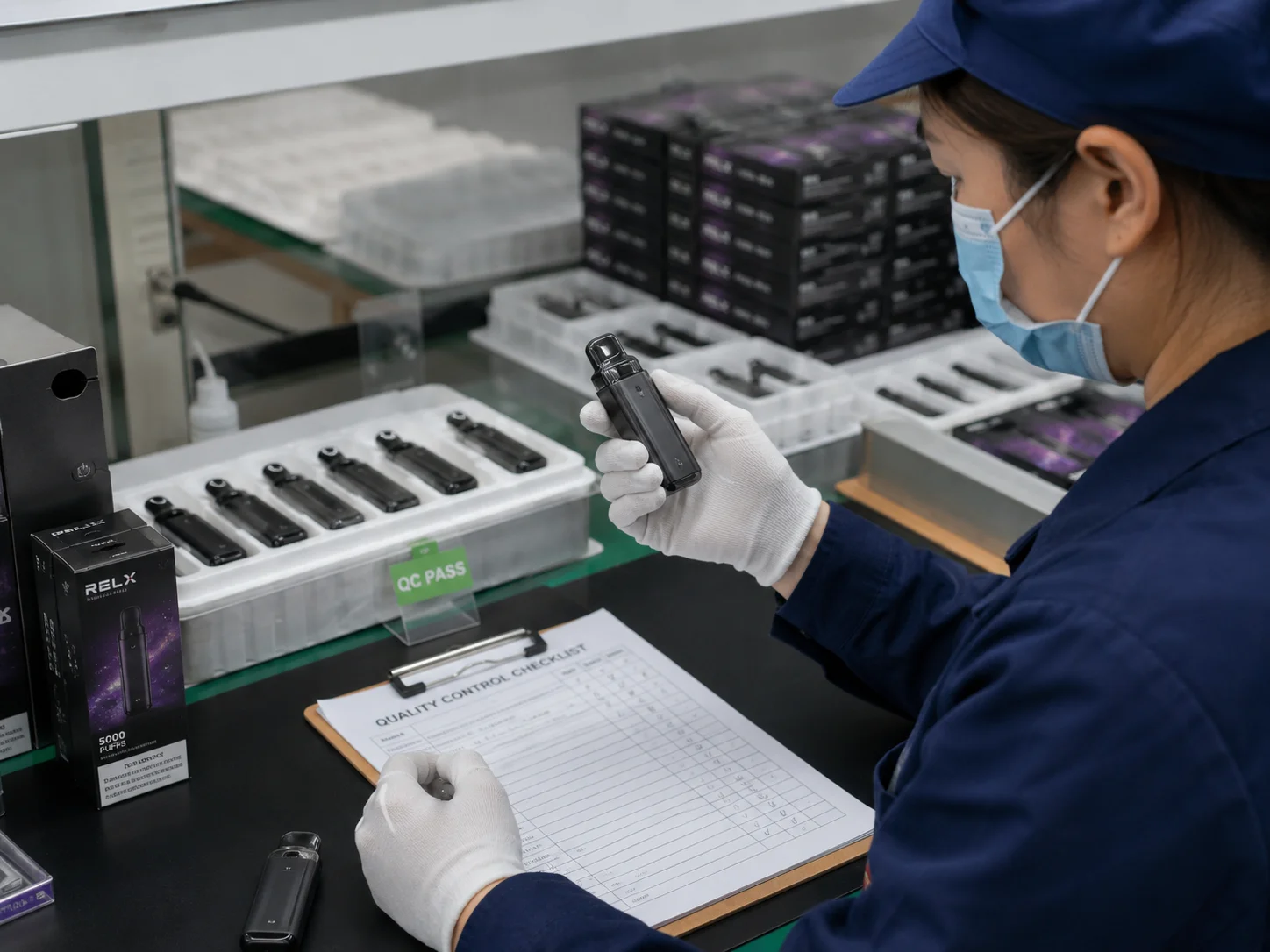
In my experience, this is where you separate the serious business owners from the gamblers. Chasing a cheap price often leads you to suppliers who make fake products. Those suppliers don't do QC. They don't care if the battery is a cheap manganese cell that dies in the cold[^6] or if the e-liquid tastes burnt. They just want your money. A real partner, however, wants your repeat business. We build QC into the timeline. We check that the battery holds a charge, the flavor is consistent with the standard, there are no leaks, and the packaging is perfect. For large orders, we always recommend the client hire their own third-party inspector for total peace of mind. Those extra two days can save you from a disaster that costs you thousands of dollars and your reputation.
What Shipping Method Changes the Total Lead Time Most?
Is your choice of shipping making or breaking your entire schedule? Choosing the wrong method can easily turn a quick order into a months-long waiting game.
The shipping method is the single biggest variable in your total lead time. Air freight from China to the US or Europe typically takes about 7-15 days[^7]. Sea freight is much cheaper for bulk orders but takes a much longer 30-45 days[^8].

The right choice depends completely on your business needs. Do you need the product fast to catch a market trend, or are you stocking up and want to maximize your profit margin? It's a classic trade-off between speed and cost. I've seen many new buyers make the mistake of only looking at the price per unit and choosing sea freight to save a few dollars, not realizing that their money will be tied up for an extra month. During that month, their competitor who chose air freight has already sold their stock and reordered twice. Business is about the speed of money. Sometimes, paying more for air freight is the more profitable decision because you can turn your inventory over faster.
| Shipping Method | Transit Time (China to EU/US) | Cost | Best For |
|---|---|---|---|
| Air Freight | 7-15 Days | High | Urgent orders, high-value goods, testing new products. |
| Sea Freight | 30-45 Days | Low | Large bulk orders, planned inventory stocking, low-urgency. |
| Rail Freight (to EU) | 20-25 Days[^9] | Medium | A good balance between the speed of air and the cost of sea. |
How Can Holidays and Peak Season Delay Vape Orders?
Has your order ever been mysteriously delayed by a holiday in China you didn't even know existed? Not planning around major Chinese holidays can bring your entire supply chain to a halt.
Major holidays like Chinese New Year (usually late January to mid-February) and National Day Golden Week (October 1-7) can easily add 2-4 weeks to your total lead time[^10]. Factories close, and ports and airports become extremely congested before and after.
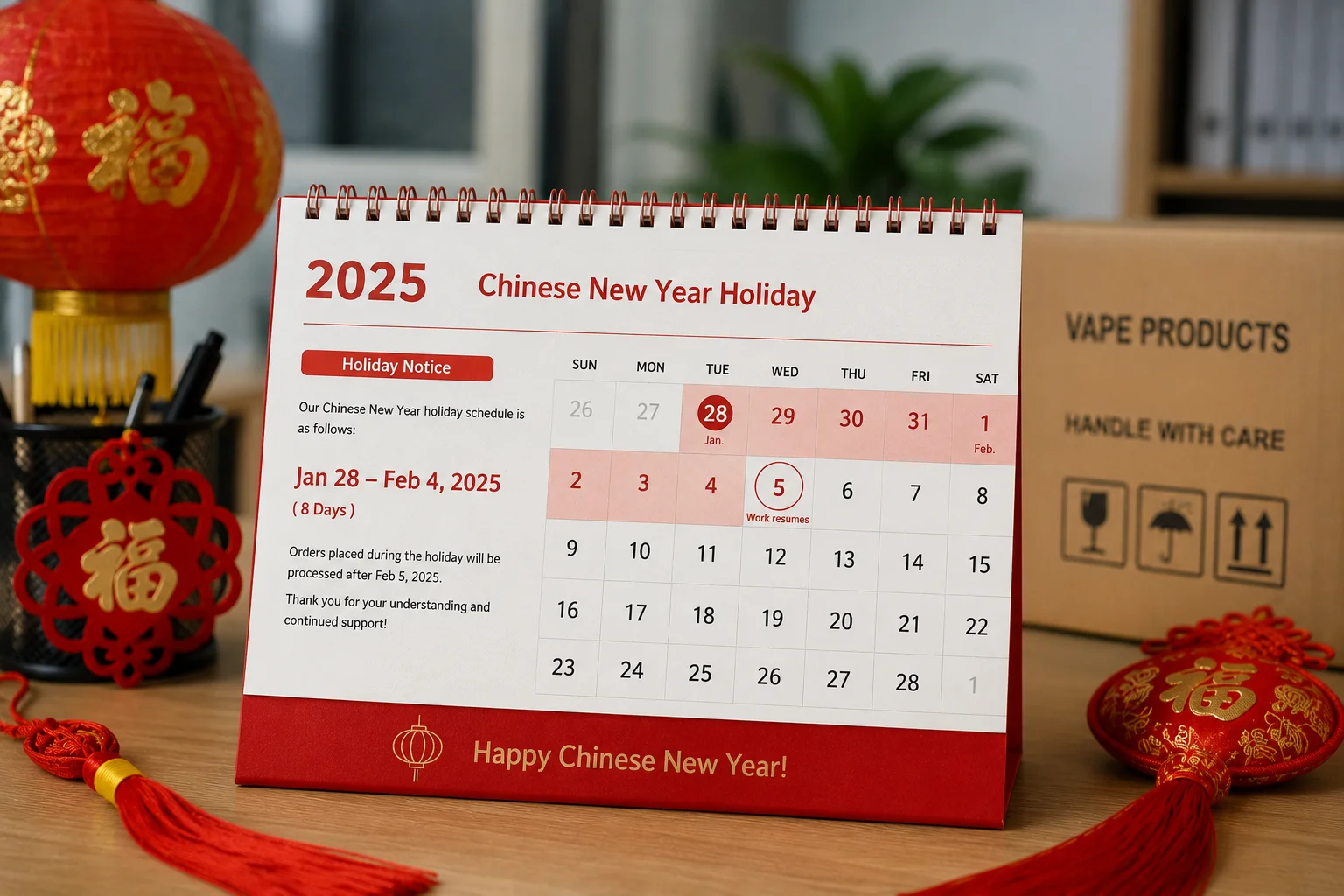
After 15 years, I can tell you this: you cannot ignore the holiday schedule. Chinese New Year is the big one. It's not just a day or two off; it's a multi-week event where the entire country shuts down. Factories close for at least two weeks, sometimes longer. Workers travel back to their hometowns. Nothing gets produced. Nothing gets shipped. In the weeks leading up to the holiday, there's a mad rush to get orders out, which causes huge backlogs at ports. After the holiday, it takes another week or two for factories to get back to full capacity. If you don't plan for this, your order can be stuck for a month. My advice is always the same: if you need stock for the first quarter of the year, you need to place that order by early December at the latest.
What Lead Time Promises Are Red Flags from Suppliers?
Have you ever been promised an unbelievably fast delivery time from a supplier in China? If a timeline sounds way too good to be true, I promise you, it is.
Be extremely wary of any supplier who promises to produce and ship a custom vape order from China in under 3 weeks[^11]. This is virtually impossible. They are either lying to get your deposit, or they are cutting critical corners on production and quality control.

I see this all the time in our industry chat groups. A buyer gets scammed after being promised a fantasy timeline. A reliable production process takes time. If someone tells you they can finish a custom order in just a few days, that's a huge red flag. They're not a super-efficient factory; they are likely a scammer or a supplier of terrible-quality fakes. A real partner will be honest with you about the timeline, including potential delays. They will talk to you about customs risks, not just say "don't worry." A supplier who lies about the lead time is a supplier who will lie about the authenticity and quality of the product. They aren't interested in a long-term relationship; they are interested in your first payment, and that's it.
How Can Buyers Plan Reorders to Avoid Running Out of Stock?
Are you constantly running out of your best-selling vapes and leaving money on the table? Poor reorder planning is a silent profit killer that frustrates you and your customers.
To avoid stockouts, you need to track how fast you sell a product (your sales velocity) and place a new order when you still have enough inventory to last through the entire lead time, plus a buffer. For a 6-week lead time, you should reorder when you have 7-8 weeks of stock left.[^12]
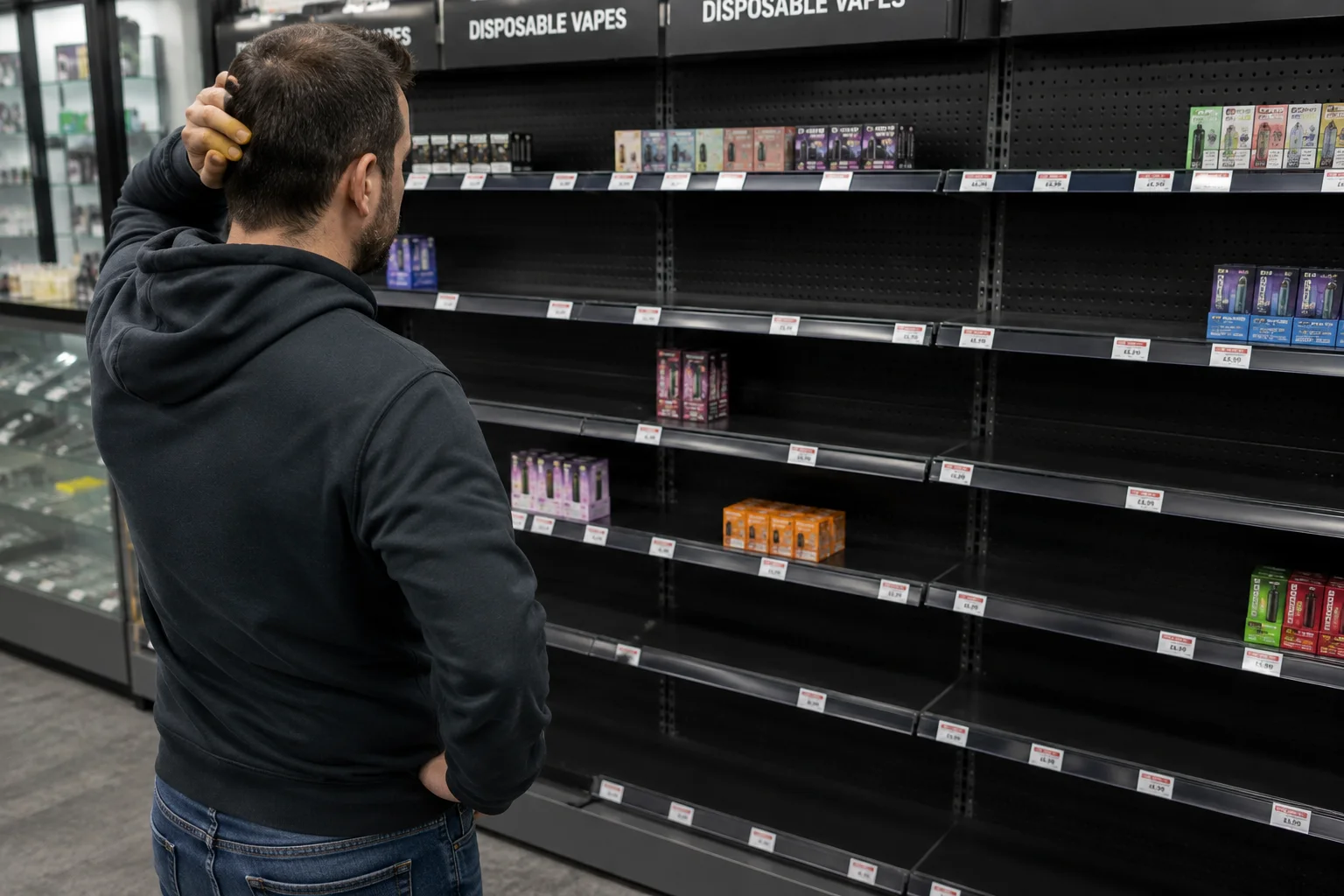
This is simple business math that many people overlook. You have to know your numbers. Look at your sales data. How many units of ELF BAR 5000 do you sell per week? Let's say it's 100 units. If the lead time from China is 6 weeks, you need to place your next order when you still have at least 600 units on hand. I always advise adding a "safety stock" of 1-2 extra weeks to cover unexpected shipping delays or a sudden spike in sales. So, you should reorder when you have 700-800 units left. This is where our warehouse model becomes so powerful. If you're selling a new product and demand is unpredictable, you can't use this formula. Instead, you order small batches from our German warehouse with a 3-day lead time. This way, you never tie up cash in slow-moving inventory and can respond to the market instantly.
Conclusion
Understanding lead times means understanding your business. It's not just a date on a calendar; it's about choosing the right sourcing model and managing your risk to keep cash flowing.
[^1]: "FedEx Ground", https://www.fedex.com/en-us/shipping/ground.html. Major carriers and third-party logistics (3PL) providers in the US and EU typically offer ground shipping services that deliver within 1 to 5 business days for domestic or intra-regional shipments. Evidence role: statistic; source type: institution. Supports: Standard domestic shipping times for business-to-business orders from a local warehouse are typically within a few business days.. Scope note: The source would confirm general domestic shipping times, not specifically for the vape wholesale industry. [^2]: "A Breakdown of China to USA Shipping Time - Dimerco", https://dimerco.com/blog-post/a-breakdown-of-china-to-usa-shipping-time/. Reports from logistics and supply chain management firms often cite total lead times of several weeks to months for goods manufactured in China and shipped to Western markets, encompassing production, transit, and customs clearance. Evidence role: general_support; source type: institution. Supports: The total lead time for sourcing manufactured goods from China, including production and shipping, typically falls within a multi-week range.. Scope note: The source would provide general manufacturing and shipping timelines from China, not specific data for the vape industry. [^3]: "The Private Label Manufacturing Timeline - Innacos Labs", https://www.innacos.com/blog/private-label-cosmetic-skincare-manufacturing-guide. Guides on private label manufacturing explain that the process involves additional steps beyond standard production, including design finalization, sample approval, and the production of custom packaging, which collectively can add several weeks to the total lead time. Evidence role: mechanism; source type: education. Supports: The private labeling process involves several steps, such as design approval and custom packaging production, which add a few weeks to the standard manufacturing timeline.. Scope note: The source would describe the general private label process, which may not perfectly match the 2-3 week timeframe for every product category. [^4]: "Supply Chains for Manufacturing: Inventory Analytics | MIT Learn", https://learn.mit.edu/search?q=electronics&resource=3131. Studies on modern supply chains note that manufacturers, particularly in the electronics sector, often focus on core competencies like assembly and testing, while outsourcing non-core processes such as the printing and production of packaging to specialized third-party suppliers. Evidence role: mechanism; source type: education. Supports: Modern manufacturing often involves a high degree of specialization, where assembly factories rely on a network of external suppliers for components and packaging.. Scope note: The source would describe a general manufacturing trend rather than confirming it is universally true for all vape factories. [^5]: "Pre-shipment inspection - Wikipedia", https://en.wikipedia.org/wiki/Pre-shipment_inspection. Third-party quality control services explain that a standard pre-shipment inspection, which includes scheduling, on-site checks, and report generation, typically requires a lead time of 2-3 business days to be properly executed. Evidence role: general_support; source type: institution. Supports: A pre-shipment quality control inspection is a multi-day process that needs to be factored into the overall production timeline.. Scope note: The exact time can vary based on the complexity of the product and the size of the order. [^6]: "Lithium-Ion Batteries under Low-Temperature Environment - PMC", https://pmc.ncbi.nlm.nih.gov/articles/PMC9698970/. Research on battery electrochemistry shows that different chemistries have distinct performance characteristics. The performance of alkaline and some lithium-manganese dioxide (Li-MnO2) cells can degrade significantly at low temperatures due to increased internal resistance and slowed chemical reactions. Evidence role: mechanism; source type: research. Supports: The chemical composition of a battery affects its performance, with certain types, like those using manganese dioxide, showing reduced efficiency in cold temperatures.. [^7]: "A Breakdown of China to USA Shipping Time - Dimerco", https://dimerco.com/blog-post/a-breakdown-of-china-to-usa-shipping-time/. Logistics providers and freight forwarders generally state that door-to-door air freight transit times from China to North America or Europe range from approximately 7 to 15 days, accounting for cargo handling, customs clearance, and final delivery. Evidence role: statistic; source type: institution. Supports: The typical transit time for air freight from China to the US or Europe, including ground handling and customs, is in the range of one to two weeks.. [^8]: "A Breakdown of China to USA Shipping Time - Dimerco", https://dimerco.com/blog-post/a-breakdown-of-china-to-usa-shipping-time/. Maritime shipping analysts and freight forwarders report that while port-to-port transit times for sea freight from China can be 20-30 days, the total door-to-door time often reaches 30-45 days after accounting for ground transport, port congestion, and customs. Evidence role: statistic; source type: institution. Supports: The typical total transit time for sea freight from China to the US or Europe is approximately one month or longer.. [^9]: "Silk Road - Wikipedia", https://en.wikipedia.org/wiki/Silk_Road. Reports on the China-Europe rail link, part of the Belt and Road Initiative, confirm transit times of approximately 20-25 days, positioning it as a middle-ground option between slower sea freight and more expensive air freight. Evidence role: statistic; source type: institution. Supports: Rail freight is an established option for shipping goods from China to Europe with a transit time that is faster than sea and cheaper than air.. [^10]: "Chinese New Year and its Impact on Global Supply Chain", https://ctl.mit.edu/news/chinese-new-year-and-its-impact-global-supply-chain. Supply chain advisories regularly warn that the Chinese New Year holiday period leads to factory closures for two or more weeks and significant congestion at ports and airports before and after, effectively adding up to a month to total lead times for orders placed around this time. Evidence role: general_support; source type: institution. Supports: The Chinese New Year holiday period causes significant disruptions to manufacturing and logistics, adding several weeks to production and shipping lead times.. [^11]: "How Long Does It Take to Build a Consumer Tech Product in China ...", https://worldsourcingltd.com/consumer-tech-product-in-china/. Sourcing and manufacturing experts advise that a typical production run for custom electronics in China, including tooling, material sourcing, assembly, and QC, requires a minimum of several weeks. Promises of significantly shorter timelines are often cited as a red flag for potential scams or severe quality compromises. Evidence role: general_support; source type: institution. Supports: The manufacturing process for custom electronics involves multiple stages that collectively take several weeks, making extremely short timeline promises unrealistic.. Scope note: The source would provide general guidelines for electronics, not a specific 'under 3 weeks' rule for the vape industry. [^12]: "[PDF] Understanding safety stock and mastering its equations", https://web.mit.edu/2.810/www/files/readings/King_SafetyStock.pdf. In inventory management theory, the reorder point is calculated as (Lead Time x Demand Rate) + Safety Stock. The safety stock component is designed to buffer against variability in demand or lead time, preventing stockouts from unexpected delays or sales spikes. Evidence role: definition; source type: education. Supports: The reorder point is a standard inventory management metric calculated by considering demand during the lead time plus an additional quantity known as safety stock..