
Struggling to decide between a small order and a bulk purchase? This choice feels like a gamble, with your cash and profits on the line. You need a clear path.
The best choice depends on your business stage. For new or small businesses, a low MOQ (Minimum Order Quantity) is better because it protects your cash flow[^1]. For larger, established businesses with predictable sales, a better unit price from a bulk order can increase margins[^2].
I’ve been in the export business for 15 years, dealing with 3C electronics and, more recently, a huge volume of disposable vapes. Every day, I talk to buyers from Europe and the US. They all ask the same fundamental question, just in different ways: "Should I buy a little bit now, or go big to get a better price?" It's not just about the numbers on an invoice. It's a strategic decision that defines your risk, your speed, and ultimately, your ability to stay in business. Let's break this down, so you can make the right call for your company.
Does a Low MOQ Really Reduce Cash Pressure for Small Wholesalers?
You want to start a business, but your funds are limited. Ordering a huge container of products feels impossible, tying up cash you don't have. It’s a huge barrier.
Yes, a low MOQ is the single best way to reduce cash pressure. It lets you start with a small investment, test the market, and get your business moving without risking all your capital on one big bet. It keeps your cash free for other needs.

I see this constantly with new sellers entering the disposable vape market. They might be a student selling to classmates, a small shop owner, or someone starting an e-commerce store. They don't have tens of thousands of dollars to invest. For them, the idea of ordering thousands of units from China is terrifying. That's why we set up our overseas warehouse in Germany. A new seller can start with an order as small as 50 units. This often means their initial investment is less than 400 euros.
The Power of a Small Start
Think about what this means. For a small amount of money, you can have products in hand in just a few days.
- Low Upfront Cost: You aren't draining your bank account. The money you save can be used for marketing or other business expenses.
- Fast Turnaround: With our German warehouse, delivery within Germany is 1-2 days. For the rest of the EU, it's 3-5 days. You can get an order from a customer today and have it delivered to them this week.
- Real-World Testing: You get to see what your customers actually want to buy before you commit to a large inventory.
We basically take on the biggest risks for our clients. We invest the huge capital to buy in bulk (often 200,000+ units at a time), and we handle the shipping, the customs headaches, and the warehousing costs. The client gets to focus on the most important part: selling. This low-MOQ model isn't just a transaction; it's a partnership to help small businesses grow.
Can a Better Unit Price Improve Your Margin If Stock Sells Slowly?
Seeing a low unit price for a bulk order is tempting. You calculate the potential profit per item and it looks fantastic. But what if that stock just sits on your shelf?
No, a better unit price only helps if the products sell quickly. If stock moves slowly, your cash is trapped. This "dead money" eats into your real-world margin because you can't reinvest it. Fast cash flow is often more profitable than a high theoretical margin.[^3]

The biggest mistake I see new business owners make is chasing the lowest possible price. They think cheaper means more profit. But let me ask you this: if the cheapest things were the most profitable, everyone would be selling rubber bands and plastic bags. Why does Apple, with its expensive phones, make so much money while some cheap phone brands fail? It’s about demand and cash flow, not just the purchase price.
The Real Math of Business
Business is about how many times you can spin your money in a year. Let's look at two scenarios:
| Metric | Scenario A: Fast Turnover | Scenario B: "High Margin" Bulk Buy |
|---|---|---|
| Strategy | Buy from our EU warehouse, low MOQ, slightly higher price | Buy in bulk from China, lowest unit price |
| Initial Investment | €1,000 | €1,000 |
| Profit Per Turnover | 20% (€200) | 50% (€500) |
| Time Per Turnover | 2 weeks (order, sell, repeat) | 4 months (find supplier, order, sea freight, sell) |
| Turnovers Per Year | 26 times | 3 times |
| Total Annual Profit | €200 x 26 = €5,200 | €500 x 3 = €1,500 |
As you can see, the business with the faster cash flow makes over three times more profit on the same initial capital. You spent weeks, maybe months, finding that "cheap" supplier and waiting for a sea shipment just to make less money. The business that can turn its money around 26 times a year will always beat the one that turns it around 3 times. Don't let a "good price" fool you into running a bad business.
Should You Calculate Total Landed Cost, Not Just Product Price?
You get a quote from a supplier for $2 per unit. Amazing! You compare it to another supplier's $2.50 price and think you've found a winner. But is that $2 the real price?
Absolutely. The product price is just one piece of the puzzle. You must always calculate the Total Landed Cost, which includes the product cost, shipping, insurance, customs duties, and any other fees to get the goods to your door.[^4]
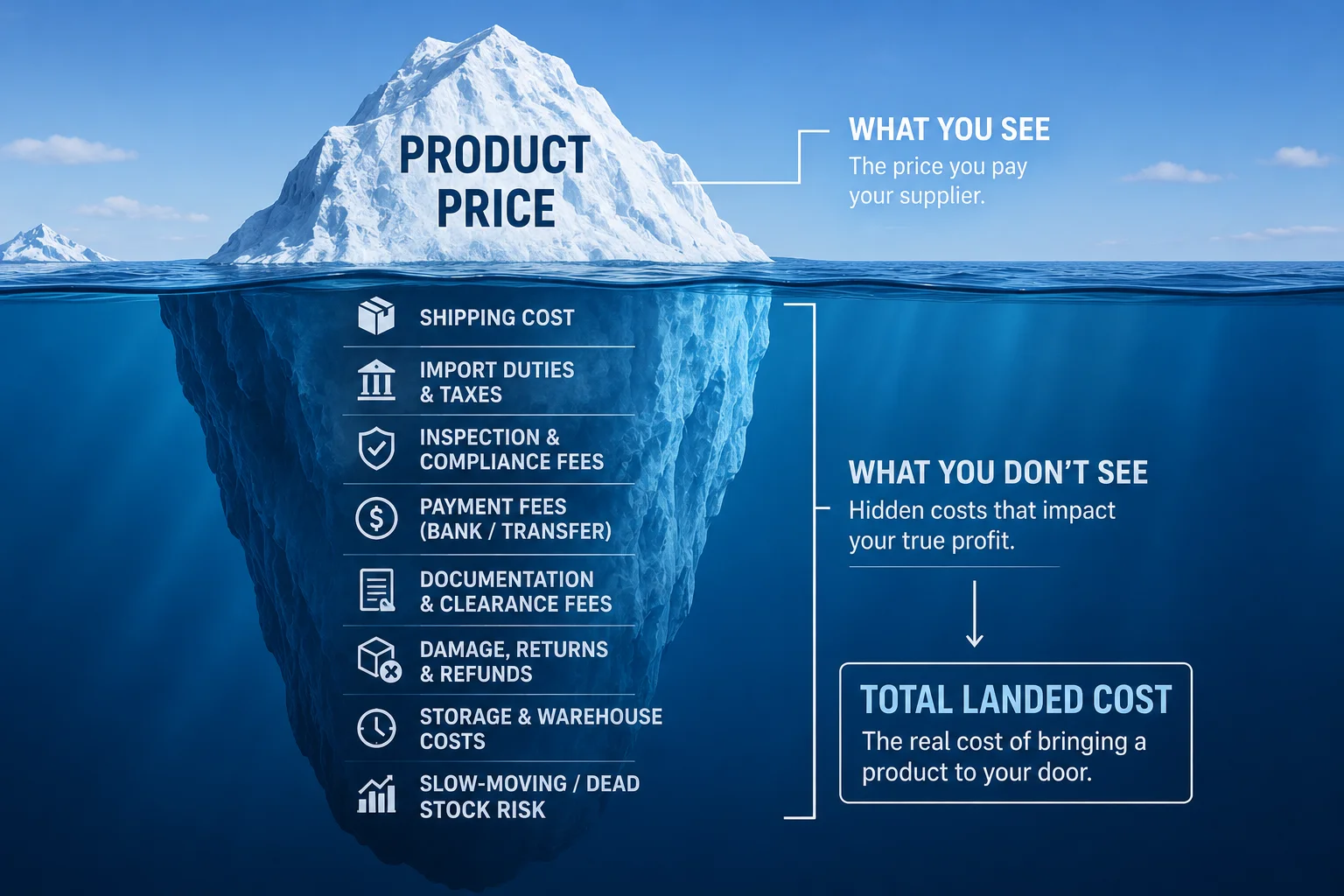
When you buy directly from China, the factory's price is just the beginning. I always tell my clients, especially those ordering in bulk, to think about the entire journey of the product. That "cheap" price can quickly become expensive.
Uncovering the Hidden Costs
Here’s a simple breakdown of what goes into your Total Landed Cost when you import yourself:
- Product Cost: The price per unit from the factory (e.g., FOB price).
- International Shipping: This can be by air (fast, expensive) or sea (slow, cheaper). Costs fluctuate wildly.
- Customs Duties & Taxes: Every country has its own import taxes (VAT, tariffs) that you must pay.
- Customs Brokerage Fees: You'll likely need to pay a broker to handle the customs paperwork.
- Insurance: This is critical. What if your container falls off the ship or gets seized by customs? Without insurance, your entire investment is gone. For high-value goods like electronics or vapes, I always insist clients get full "customs seizure" insurance. It costs a bit more per kilo, but if the goods are confiscated, the shipping agent will send you a brand-new shipment for free[^5].
- Local Delivery: Once the goods clear customs at the port, you still have to pay to get them trucked to your warehouse.
When you buy from an overseas warehouse like ours, the price you see is the landed cost. All those other headaches are already handled.
How Do You Compare Cash Flow Risk vs. Unit Profit?
You're at a crossroads. One path offers a low-risk, small-profit-per-unit option. The other offers a high-risk, high-profit-per-unit option. How do you choose which risk is right for you?
You compare them by honestly assessing your financial buffer and sales confidence.[^6] If you have limited cash and are unsure of sales volume, prioritize low cash flow risk. If you have ample cash and proven sales data, you can take on more risk for higher unit profit.
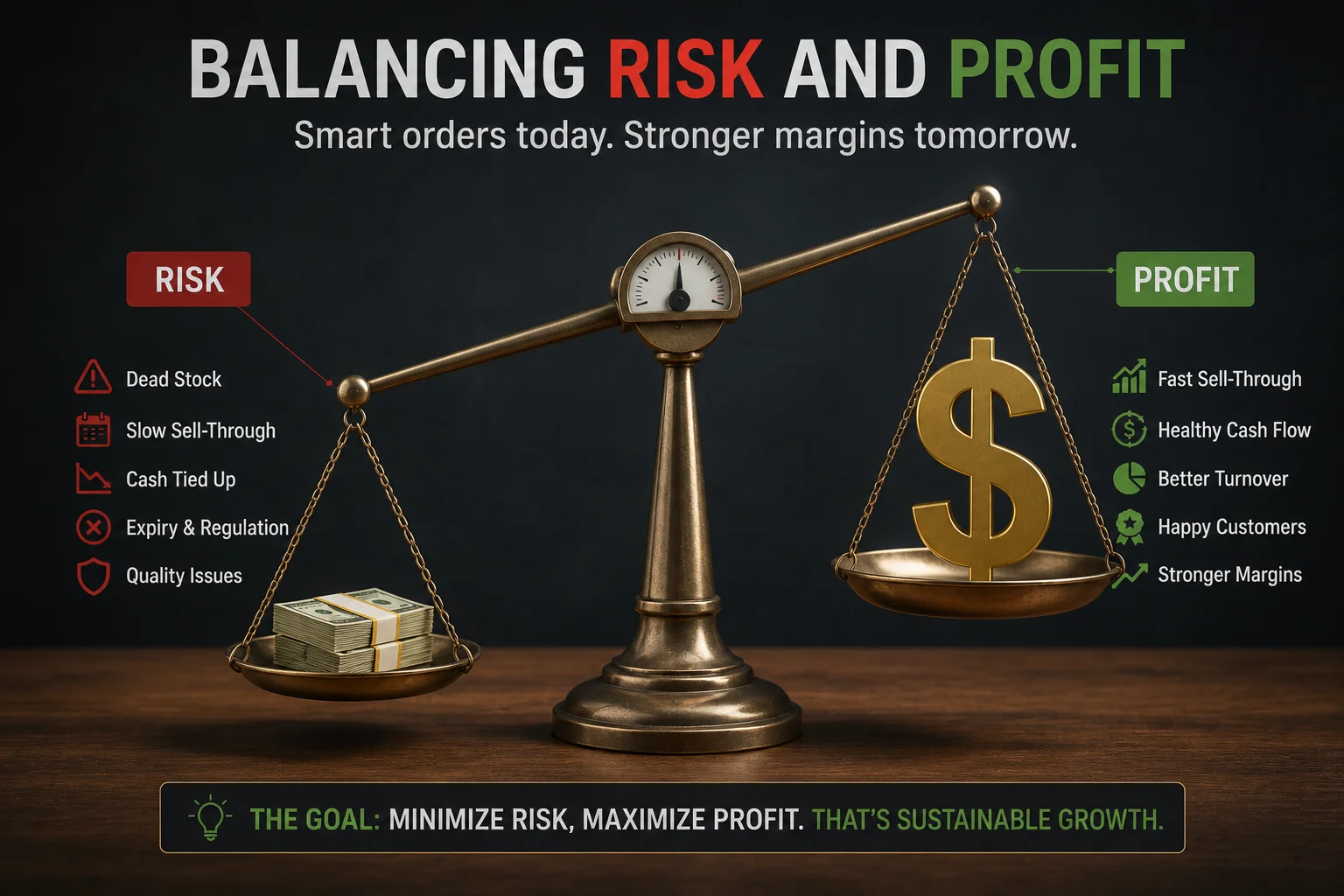
This is the core strategic decision every importer faces. There is no single "best" answer, only the best answer for your specific situation. I walk clients through this thought process every day. It's about matching the sourcing model to your business reality.
A Framework for Your Decision
Ask yourself these questions to find your answer:
| Factor | Prioritize LOW CASH FLOW RISK If... | Prioritize HIGHER UNIT PROFIT If... |
|---|---|---|
| Your Business Stage | You are a new business, a sole trader, or just starting out. | You are an established wholesaler or retailer with a steady customer base. |
| Your Capital | Your starting budget is small (e.g., under €5,000). | You have significant capital to invest in inventory. |
| Sales Predictability | You are testing a new product, brand, or flavor. Sales are unknown. | You have historical sales data and know exactly what will sell. |
| Risk Tolerance | You cannot afford to lose your initial investment. | You can afford to absorb potential losses from dead stock. |
| Speed to Market | You need to get products to customers within days, not months. | Your sales cycle is longer, and you can wait 2-3 months for stock. |
Thinking about it this way changes the question from "Which is cheaper?" to "Which risk can my business afford to take right now?" For most people starting out, the answer is clear: protect your cash. For seasoned veterans with deep pockets and distribution, the calculation shifts towards optimizing unit cost.
When Is a Low MOQ Actually the Safer Choice for Your Business?
You might think a small order is just for beginners. But even established businesses sometimes need to think small. When does playing it safe with a low MOQ make the most sense?
A low MOQ is the safer choice whenever uncertainty is high.[^7] This includes launching a new business, testing a new product line or flavor, entering a new market, or when your available cash for inventory is limited. It minimizes potential losses.

Let me give you a real-world example. We work with many convenience store chains and general merchandise wholesalers. They might sell thousands of USB cables a month, but they've never sold disposable vapes before. Their customers are young, but will they buy vapes in their store? They don't know.
Scenarios Where Low MOQ Wins
Here are the most common situations where I advise clients to start small, even if they have the money to buy big:
- You're a New Seller: This is the most obvious one. If you're just starting, you have no sales data. Your first goal isn't to maximize profit; it's to prove you can sell the product at all. Starting with 50 units for €400 is a smart, low-risk experiment.
- Testing New Flavors/Products: The vape market is driven by flavors. You might think "Blue Razz Ice" will be a hit, but what if your customers are all asking for "Watermelon Chill"? Ordering 2,000 units of ten different flavors is a €20,000+ gamble. It's much safer to order 50 of each, see what sells out in a week, and then double down on the winners.
- Uncertain Market Regulations: The laws around these products can be tricky and change fast. Tying up a huge amount of capital in a large shipment that might face new legal hurdles is a massive risk. Smaller, faster shipments reduce this exposure.
In all these cases, the goal is to gather information cheaply. A low MOQ order is not just a purchase; it's market research. You're paying a small premium to learn what works before you bet the farm.
So, When Does Bulk Ordering Actually Make Sense?
I've talked a lot about the benefits of starting small. But my company wouldn't be shipping huge containers from China if there wasn't a good reason for it. So, when should you make that leap?
Bulk ordering from China makes sense when you are an established, high-volume seller with predictable demand.[^8] If your orders are consistently over 2,000 units per model and you need a better price to stay competitive, it's time to consider direct sourcing.

Once you've moved beyond the testing phase, your business needs change. You aren't just trying to survive; you're trying to scale and maximize profitability. This is where direct sourcing from China becomes a powerful tool.
The Tipping Point for Going Big
Here’s the checklist I use with clients to see if they're ready for bulk orders:
- You Have Proven Sales Data: You are no longer guessing what will sell. You know that you sell 1,000 units of Brand A's "Mint" flavor and 800 units of Brand B's "Mango" flavor every single month. You can forecast your needs accurately.
- Your Order Volume is High: To get the best pricing and make the shipping costs worthwhile, you need to order in volume. Generally, if you're ordering fewer than 2,000 units at a time, the cost savings might not outweigh the risks and hassle.
- You Need Better Margins: As your business grows, you'll face more competition. Squeezing out an extra 10-20% on your unit cost can be the difference between a profitable month and a loss. This is the primary reason to order in bulk.
- You Understand the Risks: You know you need to budget for shipping, customs, and full insurance. You understand that there's a 2-3 month lead time and you have enough cash to handle it. You know which countries in Europe have "secondary customs clearance" risks and plan accordingly.
When you reach this stage, you're no longer just a retailer; you're a serious importer. The lower unit price you get is your reward for managing greater complexity and taking on more risk.
How Do You Avoid Dead Stock and Slow-Moving Flavors?
You got a great deal on a bulk order of 10,000 vapes. But six months later, you're staring at 3,000 units of "Peanut Butter Surprise" flavor that no one wants. This is dead stock, and it's a profit killer.[^9]
You avoid dead stock by using low-MOQ orders to test new products and flavors before committing to a large purchase. Start with a wide variety in small quantities, identify the top 2-3 sellers, and then place larger orders only for those proven winners.
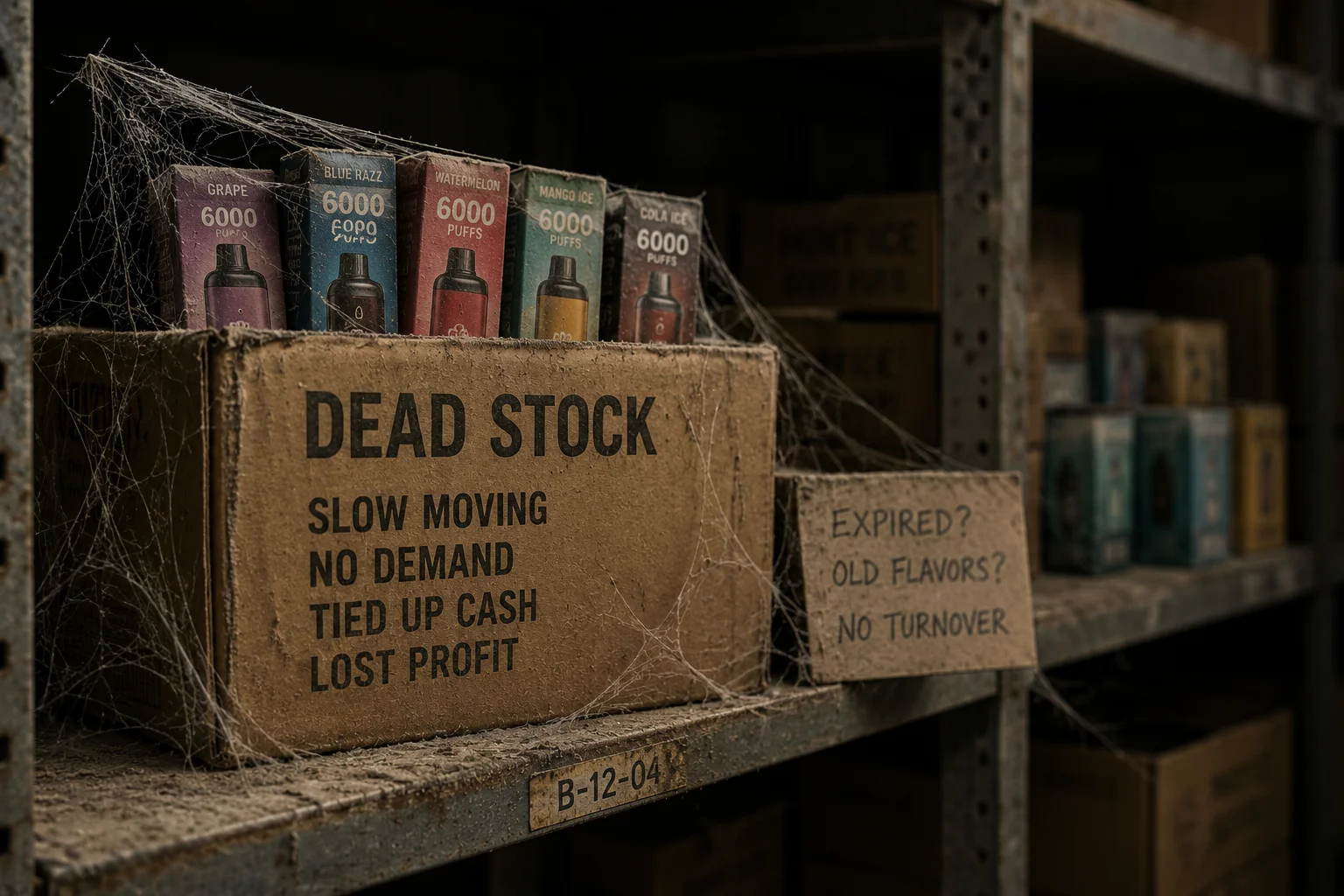
That cheap unit price you negotiated feels pretty expensive when the product is gathering dust in your warehouse. A $2 item that never sells is a $2 loss. A $3 item that sells for $6 in a week is a $3 profit. I'd take the profit any day. Dead stock doesn't just tie up your cash; it costs you money in storage space and eventually has to be written off as a loss.
A Smart Strategy for Managing Flavors
The vape market is a perfect example. There are hundreds of flavors, and trends change quickly. Here's the simple, effective strategy we recommend:
- Test Broadly, Order Small: Place a small order from an overseas warehouse with 10-15 different flavors. Maybe just 20-50 units of each.
- Identify the Winners: Watch what sells out first. Don't listen to what you think will be popular. Listen to what your customers' wallets are telling you. Usually, 20% of the flavors will generate 80% of the sales.[^10] These are your winners.
- Eliminate the Losers: The flavors that barely sell after a few weeks? Don't reorder them. It's that simple. Don't get emotionally attached to a product that doesn't move.
- Scale Up the Winners: Now that you have real data, you can confidently place a larger bulk order from China for your top 2-3 best-selling flavors to get a better unit price.
This method replaces guessing with data. It protects your cash and ensures that when you do decide to order in bulk, you're buying inventory that you know will sell.
Why Must You Protect Cash Flow to Protect Your Margin?
We've talked about unit price, MOQ, and dead stock. But it all comes down to one final, critical rule for any import business. What is the ultimate principle for protecting your profits?
You must protect your cash flow first because margin is meaningless without it. Profit is only real when a sale is complete and the cash is back in your bank account, ready to be used again.[^11] Trapped cash means a dead business.
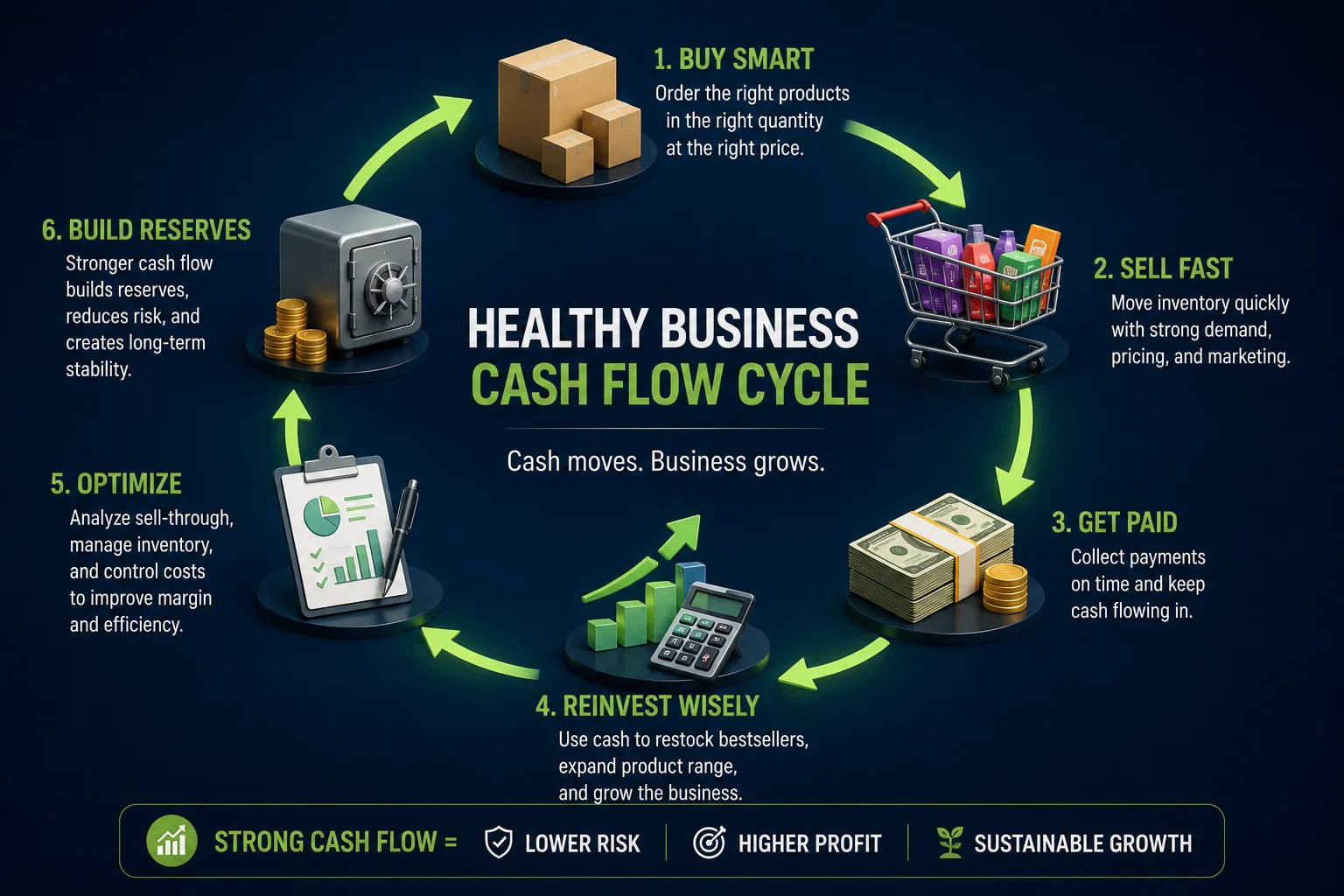
Think of cash flow as the blood in your business's veins. If it stops moving, the business dies. It doesn't matter how high your "on-paper" margin is. If your money is stuck in a warehouse full of products you can't sell, you can't pay your bills, you can't buy new inventory, and you can't grow.
The Golden Rule of Importing
Over my 15 years in this business, I've seen countless companies go under. It's almost never because their products had a low margin. It's because they ran out of cash.[^12] They made a bad bet on a large inventory purchase and couldn't recover when it didn't sell as expected.
Here's the final takeaway:
- Low MOQ protects your cash flow. It keeps your risk low and your money moving.
- A Better Unit Price increases your theoretical margin. It's a tool for scaling once you have a stable, predictable business.
So, when you face the choice between a low MOQ and a better unit price, don't just ask, "Which one makes me more money per item?" Instead, ask, "Which one keeps my business safe and my cash flowing?" Especially when you're starting out, the answer is always to protect your cash.
Conclusion
Choosing between low MOQ and a better unit price is about matching your strategy to your business reality. Protect your cash flow first, and your margins will follow.
[^1]: "Improve your cash flow through better inventory management - Pipe", https://pipe.com/resources/articles/how-optimizing-inventory-management-can-improve-your-cash-flow. Sources on small business finance and inventory management confirm that maintaining a low Minimum Order Quantity (MOQ) is a crucial strategy for startups to conserve cash flow, minimize the risk of overstocking, and maintain liquidity for other operational needs. Evidence role: general_support; source type: education. Supports: The claim that low MOQ is a key strategy for new businesses to manage limited capital and reduce financial risk.. [^2]: "Economies of scale - Wikipedia", https://en.wikipedia.org/wiki/Economies_of_scale. This statement is supported by the economic principle of economies of scale, where the cost per unit of production or purchasing decreases as the volume increases, which can lead to higher profit margins for the buyer. Evidence role: definition; source type: encyclopedia. Supports: The claim that buying in bulk leads to a better unit price, which can increase profit margins.. [^3]: "Cash Flow vs. Profit: What's the Difference? | HBS Online", https://online.hbs.edu/blog/post/cash-flow-vs-profit. Financial management principles illustrate that a shorter cash conversion cycle allows capital to be reinvested more frequently, potentially generating higher annual returns even with lower per-unit profit margins compared to a model with high margins but slow-moving inventory. Evidence role: mechanism; source type: education. Supports: The claim that a business with faster cash flow (and more inventory turns) can be more profitable annually than a business with a higher margin but slower turnover.. [^4]: "Landed Cost: Meaning, Formula & Examples for You | DHL Global", https://www.dhl.com/discover/en-global/logistics-advice/essential-guides/landed-cost-meaning-formula-calculation. International trade and logistics sources define the Total Landed Cost as the complete price of a product once it has arrived at the buyer's doorstep, encompassing the original product cost, transportation fees, customs, duties, taxes, insurance, and any other charges incurred during shipment. Evidence role: definition; source type: institution. Supports: The definition of Total Landed Cost and its primary components.. [^5]: "Seized property - Status and returns - help.CBP.gov", https://www.help.cbp.gov/s/article/Article-1112?language=en_US. While standard cargo insurance often excludes losses from customs seizure, specialized policies or agreements with freight forwarders may exist, particularly for high-risk goods, offering replacement or financial compensation in the event of confiscation. Policy terms and availability can vary significantly. Evidence role: general_support; source type: other. Supports: The existence of specialized insurance policies that cover the risk of customs seizure for imported goods.. Scope note: The source would confirm the existence of such insurance products but may not confirm the specific claim that a shipping agent will always send a new shipment for free, as this depends on the policy. [^6]: "[PDF] NIST Risk Management Framework (RMF) Small Enterprise Quick ...", https://nvlpubs.nist.gov/nistpubs/SpecialPublications/NIST.SP.1314.pdf. Business management theories support this approach, advising that strategic decisions, such as inventory investment, should be aligned with the company's specific context, including its financial resources, risk tolerance, and the predictability of its sales forecasts. Evidence role: general_support; source type: education. Supports: The idea that inventory purchasing decisions should be based on a risk assessment of the business's financial stability, stage, and market predictability.. [^7]: "Lean startup - Wikipedia", https://en.wikipedia.org/wiki/Lean_startup. This strategy is consistent with lean and agile business principles, which advocate for making small, incremental investments to test hypotheses and gather market data, thereby minimizing financial exposure in conditions of high uncertainty. Evidence role: general_support; source type: paper. Supports: The principle that smaller initial orders are a key risk mitigation strategy when faced with market or product uncertainty.. [^8]: "Economic Order Quantity (EOQ): Key Insights for Efficient Inventory ...", https://www.investopedia.com/terms/e/economicorderquantity.asp. Supply chain management principles, such as the Economic Order Quantity (EOQ) model, support this transition. Once demand becomes stable and predictable, businesses can calculate an optimal order size that minimizes total inventory costs, including ordering and holding costs, justifying the shift to bulk purchasing. Evidence role: mechanism; source type: education. Supports: The idea that bulk ordering is a suitable strategy once a business has stable, predictable demand and high sales volume.. [^9]: "Excess and Obsolete Inventory: An Outcome of a Series of ...", https://scm.ncsu.edu/scm-articles/article/excess-and-obsolete-inventory-an-outcome-of-a-series-of-unfortunate-events. Research in inventory management confirms that obsolete or 'dead' stock significantly erodes profits by incurring carrying costs (storage, insurance), tying up working capital that could be used elsewhere (opportunity cost), and often requiring markdowns or write-offs at a substantial loss. Evidence role: statistic; source type: paper. Supports: The claim that dead stock has a significant negative impact on profitability.. [^10]: "ABC analysis - Wikipedia", https://en.wikipedia.org/wiki/ABC_analysis. This observation reflects the Pareto Principle, or the 80/20 rule, a common phenomenon in business where a large portion of outcomes (e.g., sales revenue) is driven by a small portion of inputs (e.g., products). This principle is the basis for ABC analysis in inventory management. Evidence role: definition; source type: encyclopedia. Supports: The observation that a small percentage of items often accounts for a large percentage of sales.. [^11]: "Cash Flow vs. Profit: What's the Difference? | HBS Online", https://online.hbs.edu/blog/post/cash-flow-vs-profit. This statement highlights a core principle of financial management: the difference between accrual-based profit and cash flow. While a sale may be recorded as profit, the value is not fully realized for reinvestment until the cash is collected, a process tracked by the cash conversion cycle. Evidence role: definition; source type: education. Supports: The distinction between profit on paper and realized cash.. [^12]: "Why Do Businesses Close? - SBA Office of Advocacy", https://advocacy.sba.gov/2018/05/01/why-do-businesses-close/. Studies on business failures consistently identify poor cash flow management or running out of cash as a leading cause of collapse, often ranking higher than other issues like low profitability. For example, a frequently cited analysis by CB Insights found that over a third of failed startups cited running out of cash as a reason for their failure. Evidence role: statistic; source type: research. Supports: The claim that cash flow problems are a primary driver of business failure..