Bad after-sales support turns a profitable vape order into stress. I have seen buyers lose time, cash, and customers because one problem had no owner.
The after-sales support that matters in vape wholesale includes clear defect rules, fair warranty terms, fast replacement or credit solutions, shipping damage help, customs risk guidance, and responsible communication. I care most about who takes action when something goes wrong, not only what the supplier promises before payment.
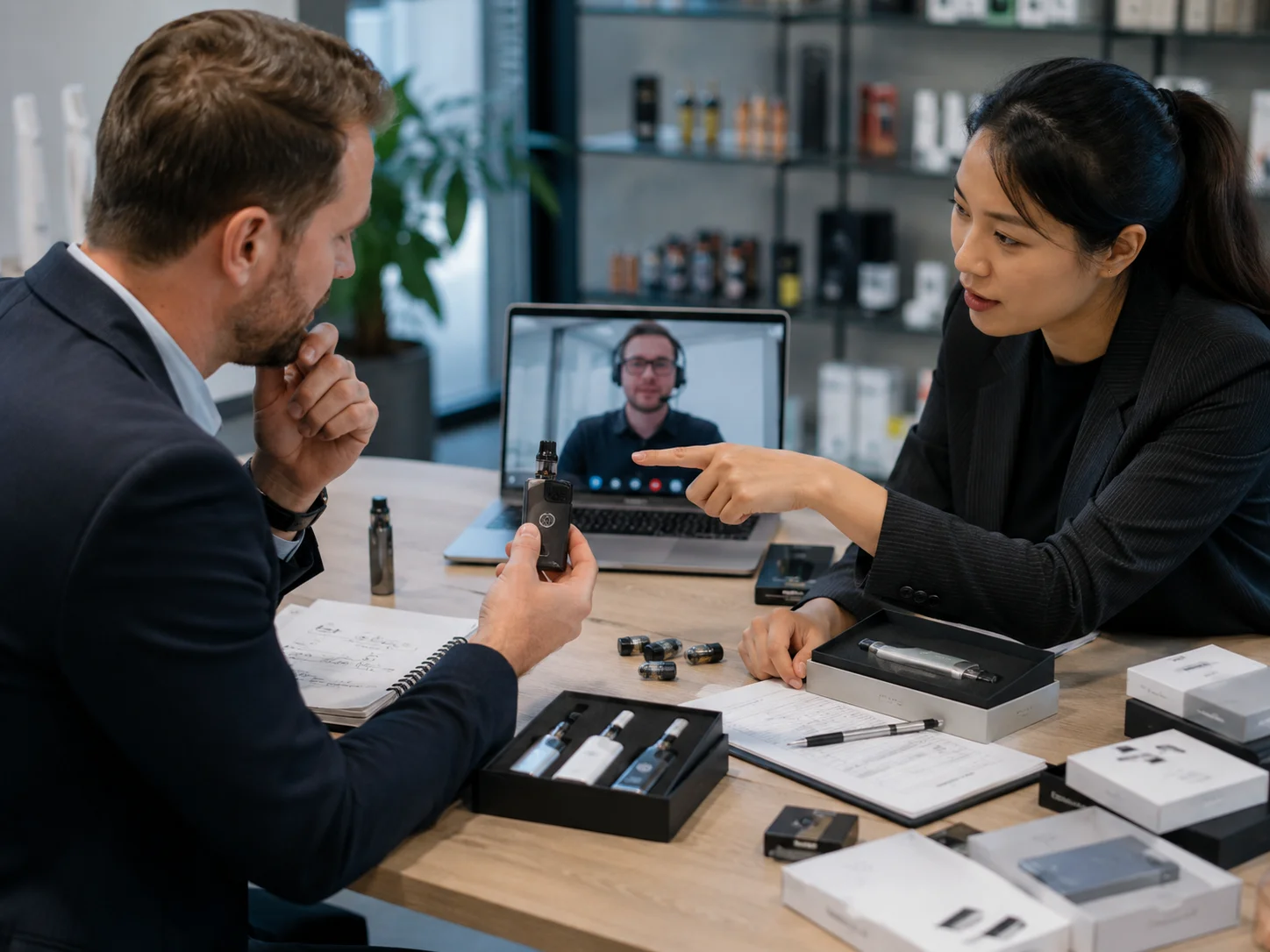
I always tell new buyers one simple thing. The order is not finished when the payment is made[^1]. The order is finished when the goods arrive, sell well, and customer complaints are handled in a fair way. If you only compare price, you may miss the real cost behind defects, leakage, weak batteries, missing cartons, and slow replies. I want to break down what support really protects your money.
Why After-Sales Support Matters More Than Many Buyers Think?
Many buyers fight for the lowest price first. I understand that. But a cheap order becomes expensive when nobody handles defects, delays, or customer complaints.
After-sales support matters because wholesale vape orders carry product, logistics, compliance, and reputation risks. A good supplier helps buyers reduce loss after delivery through clear defect rules, fast communication, proof-based claims, and realistic solutions like replacement, credit, or refund.
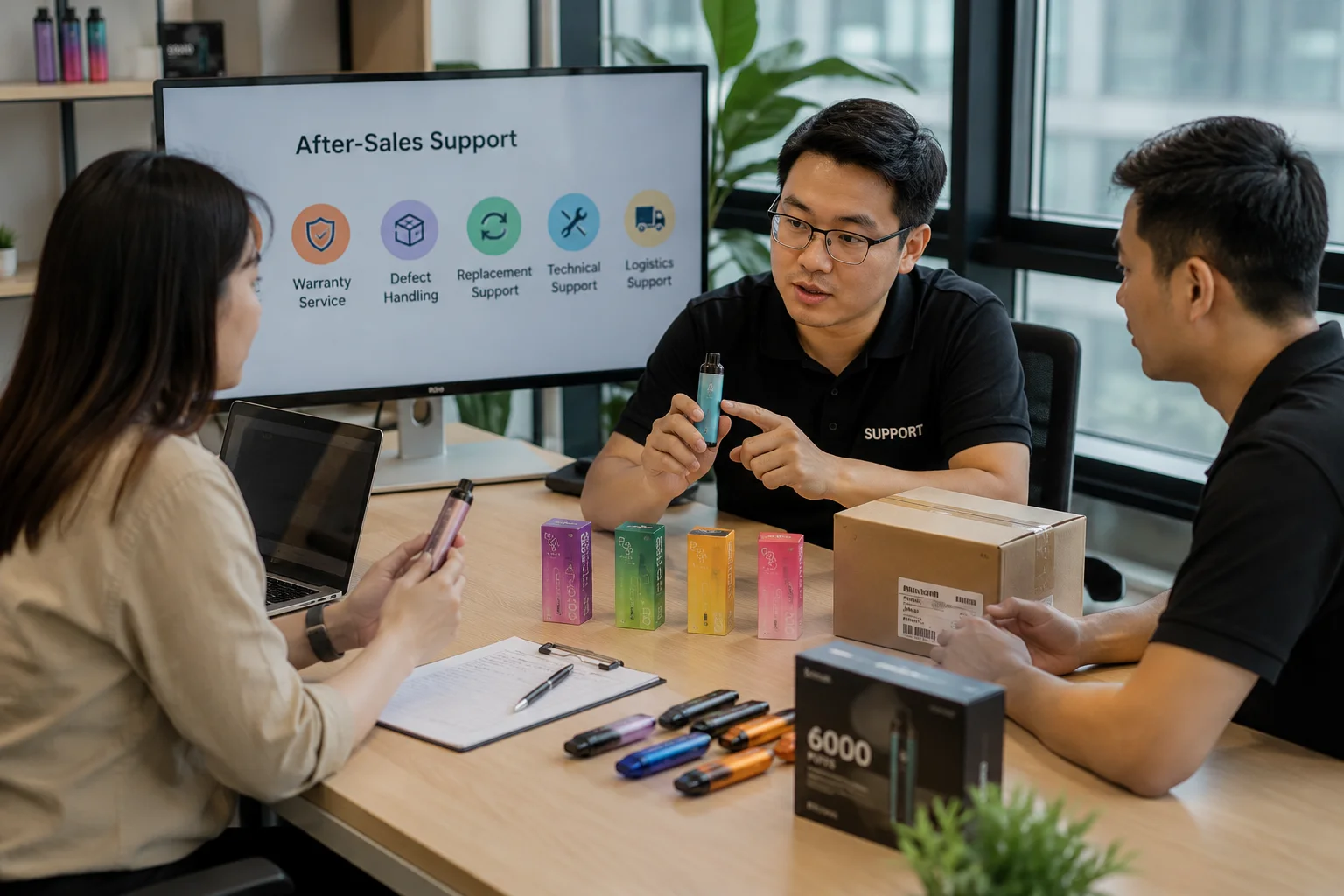
I have worked with many international buyers who were not new to business, but they were new to vape wholesale. A common question I get is, “What is your best price?” I answer the question, but I also ask another one. “What happens if 3% of the goods have problems?” This question is not small. It decides your real profit.
If you sell USB cables or chargers, the after-sales logic is already important. For vape products, it is even more serious because the product includes battery, e-liquid, coil, airflow, packaging, and local rules[^2]. One small issue can become a customer complaint very fast.
| Buyer Focus | What Buyers Often Think | What I Check Instead |
|---|---|---|
| Unit price | Lower price means higher profit | Lower price may hide weak support |
| Brand name | Famous product means no issue | Even good products need claim rules |
| Shipping | Door-to-door means problem-free | Damage, delay, and inspection still happen |
| Warranty | Supplier says “no problem” | Written terms matter more |
| MOQ | Small MOQ is safe | Small orders still need clear support |
I do not think after-sales support means the supplier pays for every problem. That is not realistic. I think good support means the supplier tells you what is covered, what is not covered, what proof is needed, and how fast they will act. This makes the business clean. It also helps both sides stay long term.
Defect Handling: What Happens When Products Fail After Delivery?
Defects hurt more than the product cost. I see buyers lose repeat customers because they cannot explain what happened or offer a fair solution.
Defect handling should include a clear claim period, defect types, proof requirements, sample checks, batch tracking, and a solution method. Buyers should confirm how the supplier handles dead units, leakage, weak battery, burnt taste, charging failure, and wrong flavor before ordering.
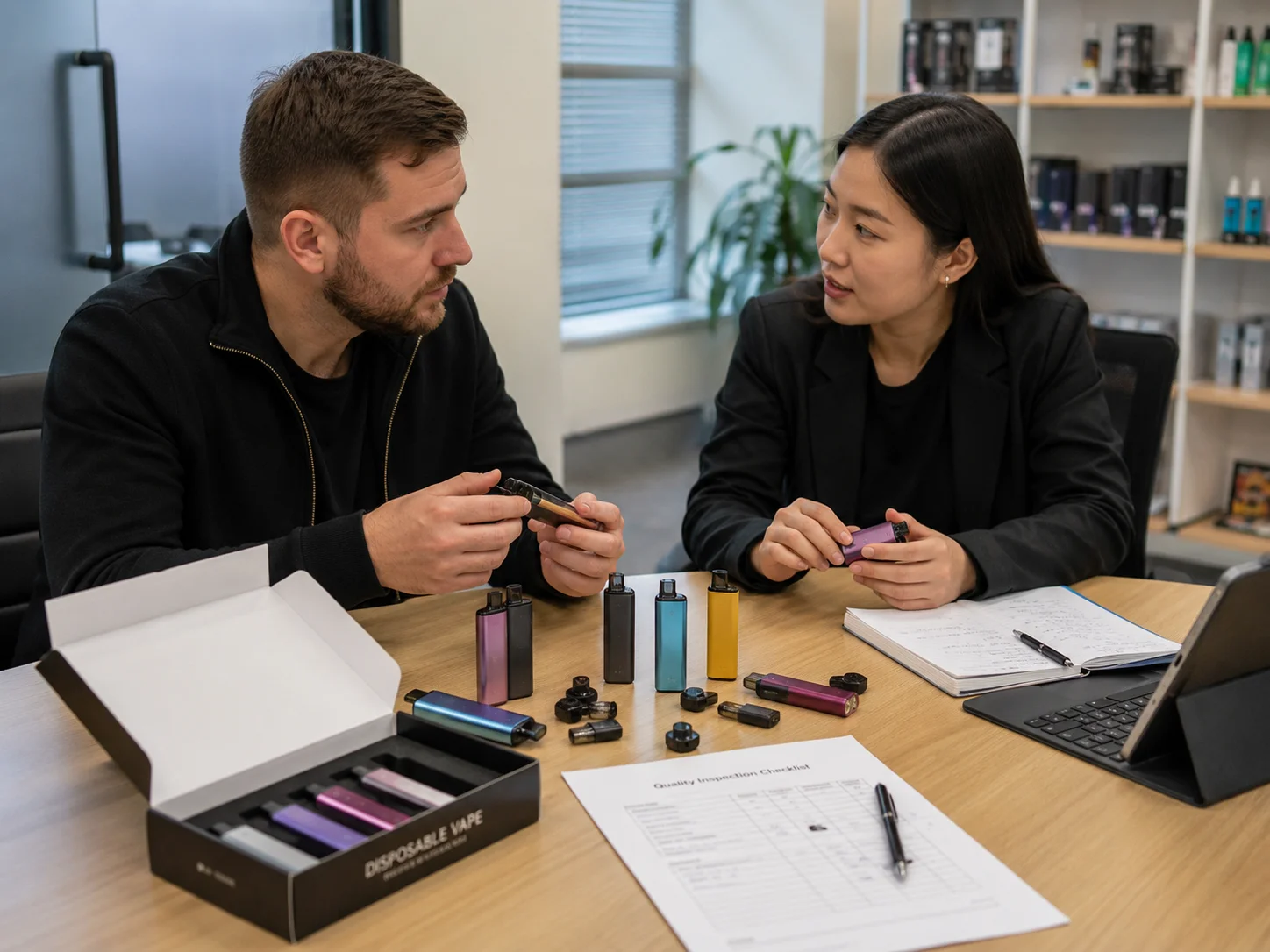
I always ask buyers to separate normal market complaints from real product defects. This is important. Some users say a flavor is too sweet. That is not always a defect. Some users say the device does not charge, leaks oil, or tastes burnt after a few puffs. That is a defect claim, and it needs to be handled.
Good suppliers usually ask for proof. This is not because they do not trust you. It is because factories also need proof to check the batch. I usually suggest buyers collect videos, photos, carton labels, batch codes, and the number of affected units. A clear claim saves time.
| Defect Type | Proof I Usually Ask For | Common Solution |
|---|---|---|
| Dead on arrival | Video showing no activation | Replacement or credit |
| Charging failure | Video with cable and charger shown | Replacement or credit |
| Leakage | Photos of sealed pack and leakage | Batch review and credit |
| Burnt taste | Video plus batch and flavor info | Sample testing and possible credit |
| Wrong flavor | Carton label and product photo | Replacement if confirmed |
| Damaged packaging | Outer carton photos before opening | Shipping claim or partial credit |
I also tell buyers to test a small quantity right after receiving goods. Do not wait three months. A reasonable claim window is needed because storage, heat, cold, and handling can all affect vape products[^3]. If a buyer reports problems quickly, the supplier can trace the issue better. If the buyer waits too long, the claim becomes difficult for both sides.
Warranty Terms: What Should Be Covered and What Should Not?
Warranty terms sound simple until a real problem appears. Then every unclear sentence becomes an argument, and the buyer loses valuable selling time.
Wholesale vape warranty should cover confirmed manufacturing defects, wrong goods, serious leakage, dead units, and charging failure within an agreed period. It should not cover misuse, illegal resale issues, poor storage, opened goods after long delays, or damage caused by buyer-side handling.
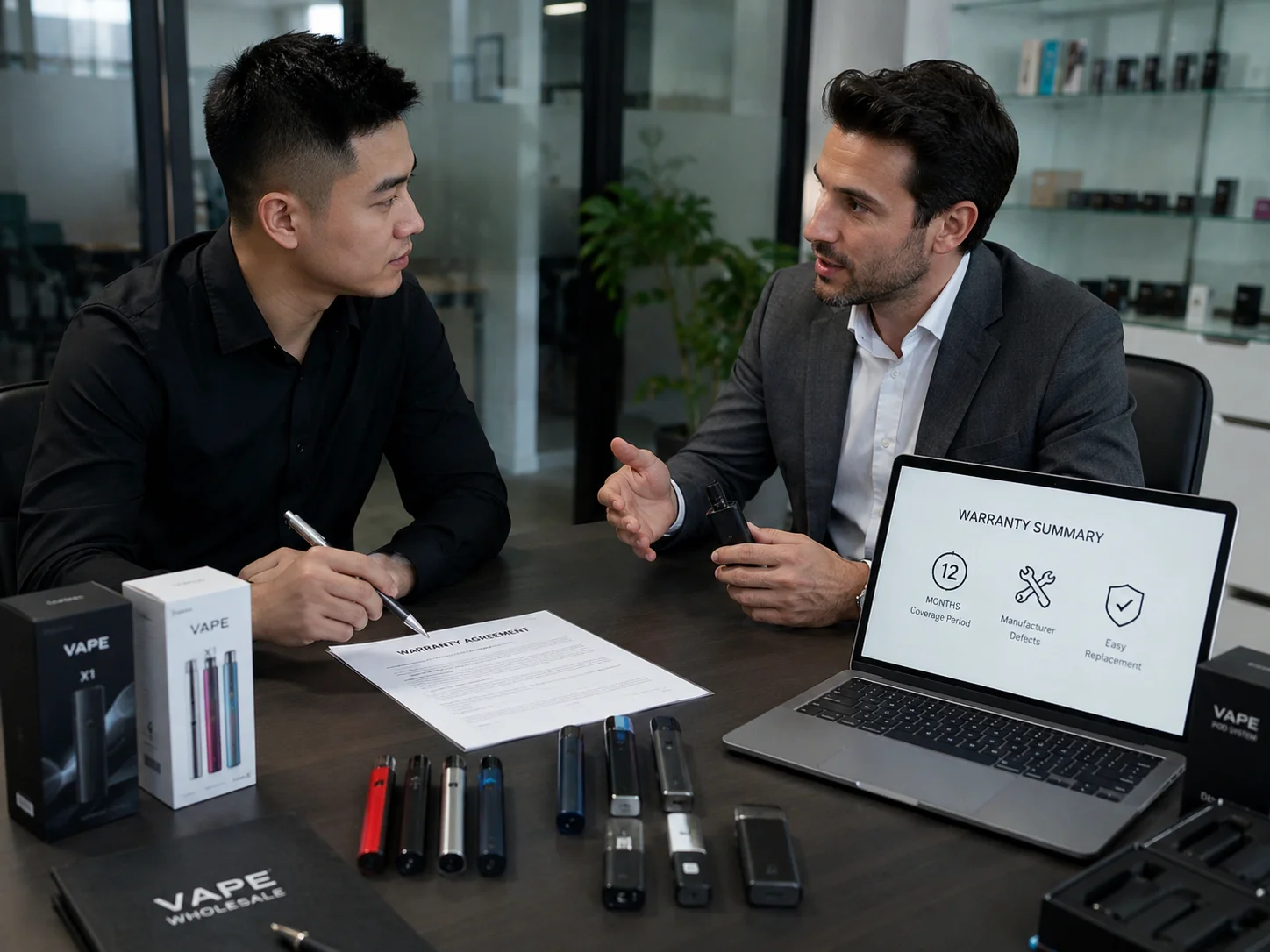
I do not like vague warranty words. “We support after-sales” sounds nice, but it does not tell you anything. I prefer simple written rules. I want to know the claim period, acceptable defect rate, proof needed, and settlement method. This is how real wholesale business works.
A vape product is not a normal dry product. Storage matters. Heat can affect leakage. Cold can affect battery performance.[^4] Rough handling can damage internal parts. So the supplier cannot cover every issue forever. But the supplier should cover problems that are clearly linked to production, packing, or wrong shipment.
| Should Be Covered | Should Not Be Covered |
|---|---|
| Dead units found soon after delivery | Devices damaged by user misuse |
| Wrong model or wrong flavor | Goods stored in extreme heat |
| Serious leakage before selling | Claims made too late without proof |
| Charging failure in normal use | Products opened and repacked by buyer |
| Batch-level abnormal defect rate | Illegal sales or local rule violations |
| Missing accessories if included | Damage from buyer’s own transport |
I tell buyers to avoid suppliers who promise “100% no problem.” That is not honest. No mass product has zero issue[^5]. I trust a supplier more when they tell me the possible defect range and how they handle it. A real after-sales policy does not need to sound perfect. It needs to be clear and usable.
Replacement, Refund, or Credit: Which Solution Is Best for Wholesale Buyers?
Every buyer wants a refund when a problem happens. I understand that feeling. But in wholesale, the best solution is not always cash back.
Replacement, refund, and credit serve different needs. Replacement fits stock shortage, refund fits serious confirmed failure, and credit fits long-term buyers who reorder often. For wholesale buyers, credit is often the fastest and cleanest solution[^6] when defect quantity is confirmed.
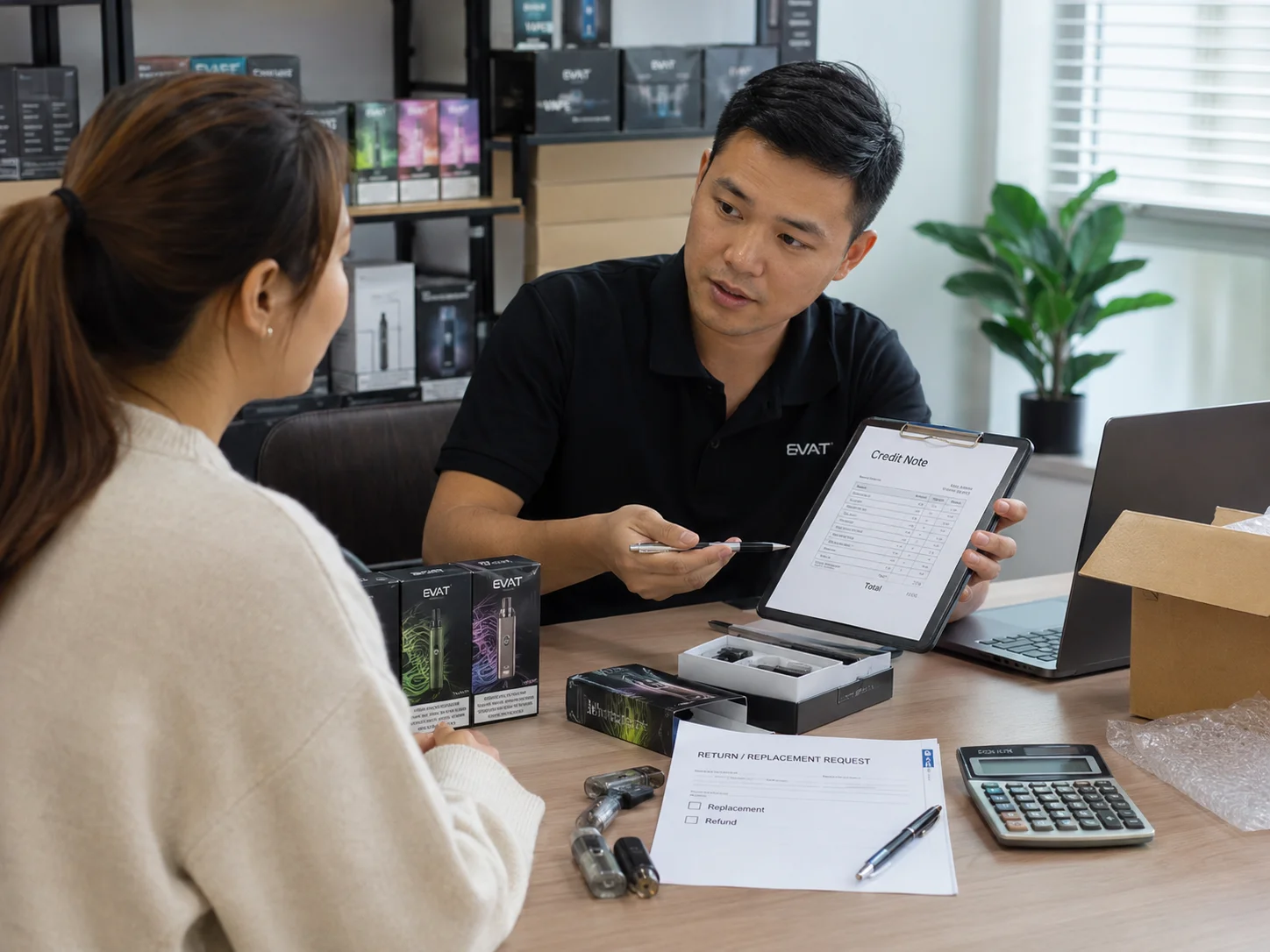
I often discuss this with e-commerce sellers and small wholesalers. If you need goods fast, replacement may be better than refund. If you will place another order soon, credit may be easier. If the whole batch has a serious issue, refund or full replacement should be discussed.
The choice depends on the size of the issue and the buyer’s business model. A retail shop may need immediate replacement because customers are waiting. A wholesaler may prefer credit because they can deduct it from the next order. A new buyer may want a refund because trust is not fully built yet.
| Solution | Best For | Weak Point |
|---|---|---|
| Replacement | Goods still need to be sold | Takes shipping time |
| Refund | Serious confirmed quality issue | Harder to process in cross-border trade |
| Credit | Repeat buyers with next orders | Not ideal if buyer stops ordering |
| Discount on next order | Small claim amount | Buyer must trust future cooperation |
| Spare units included | Regular replenishment orders | Needs agreement before shipment |
I prefer credit for normal small defect claims because it is fast. The buyer sends proof. Both sides confirm quantity. The amount is deducted from the next order. This keeps the business moving. But I do not think credit should be used to hide a major batch problem. If a batch has serious issues, the supplier must take real responsibility.
Technical Support for Battery, Charging, Leakage, and Performance Issues?
Some buyers think technical support is only for electronics factories. I disagree. In vape wholesale, basic technical support saves many complaints before they become losses.
Technical support should explain common battery, charging, leakage, airflow, burnt taste, and performance problems. A good supplier helps buyers identify whether the issue comes from product defects, wrong charging tools, poor storage, transport pressure, or user operation.
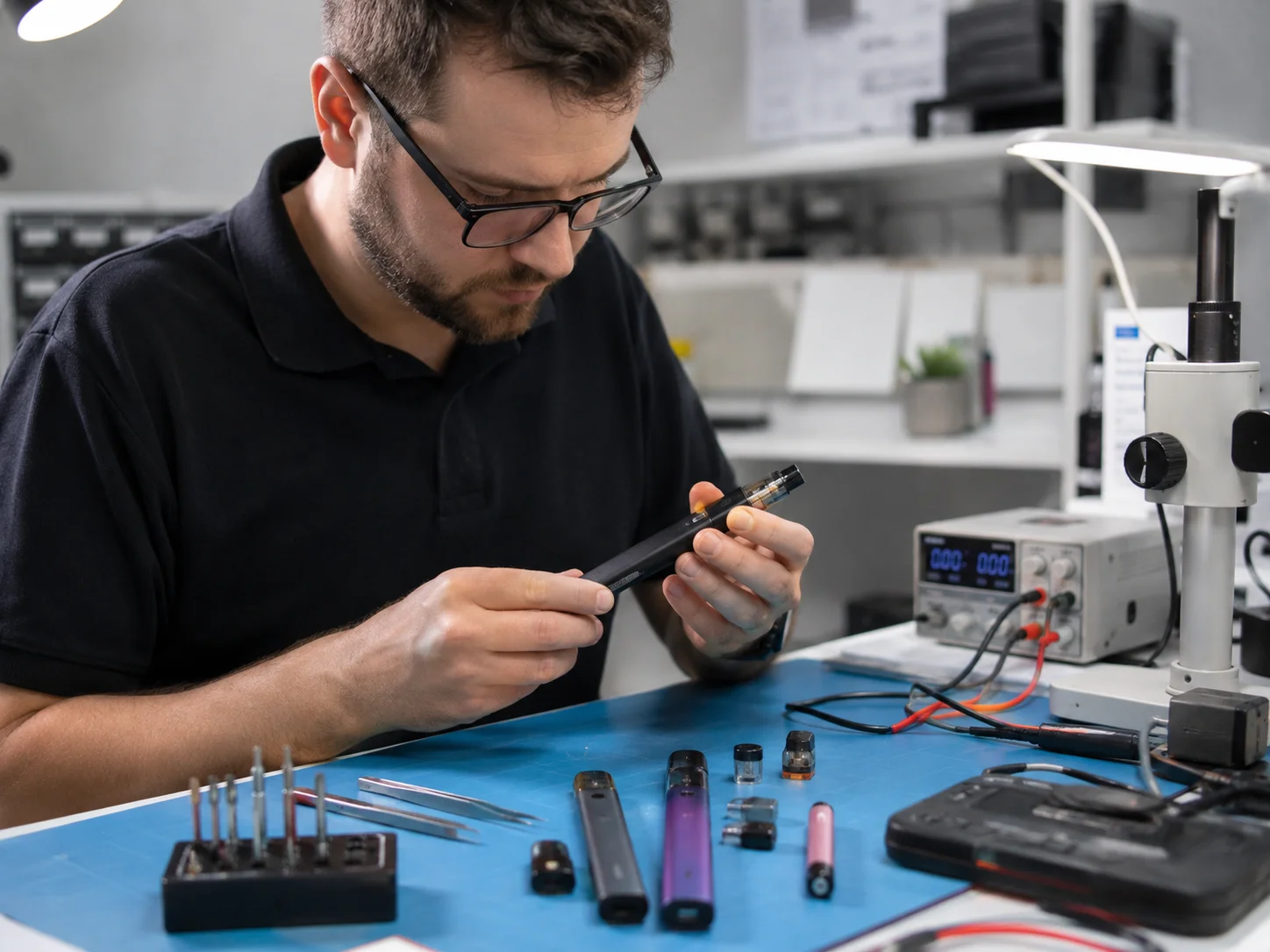
I have seen many cases where the problem was not only the product. For example, some users charge with a very high-power charger[^7]. Some stores keep stock near heat. Some goods travel through cold weather, then they are opened too soon. Some devices leak because cartons were pressed during transport. A supplier with experience can help the buyer judge the real reason.
This does not mean the supplier avoids responsibility. It means the supplier helps find the truth. If the device has a weak battery because the product used bad cells, that is a supplier-side issue. If the product was stored in a hot warehouse for weeks, the situation is different.
| Issue | Possible Cause | What I Ask Buyers To Check |
|---|---|---|
| Battery drains fast | Low-quality cell or wrong charging habit | Test several units from same batch |
| Does not charge | Port issue, cable issue, charger issue | Try another cable and normal adapter |
| Leakage | Seal issue, pressure, heat, rough shipping | Check unopened packs and carton damage |
| Burnt taste | Coil issue, dry hit, long storage | Check flavor, batch, and use pattern |
| Low vapor | Battery, airflow, oil viscosity | Compare several units |
| Device not working in cold | Battery chemistry and temperature | Warm to room temperature and test again |
I also warn buyers about chasing only the lowest price. In vape products, the big costs are battery and e-liquid. If two products look the same but one is much cheaper, the cost is often saved from these parts[^8]. Then after-sales problems become normal. I do not think that is a good deal.
Shipping Damage, Missing Goods, and Customs-Related Support?
Many buyers think after-sales only means product defects. I think shipping support is just as important because goods can be damaged, delayed, inspected, or short shipped.
Shipping support should cover carton damage, missing goods, tracking follow-up, insurance rules, customs document help, and clear risk limits. Buyers should confirm what happens if goods are damaged in transit, delayed, inspected, refused, or lost before they place a bulk order.
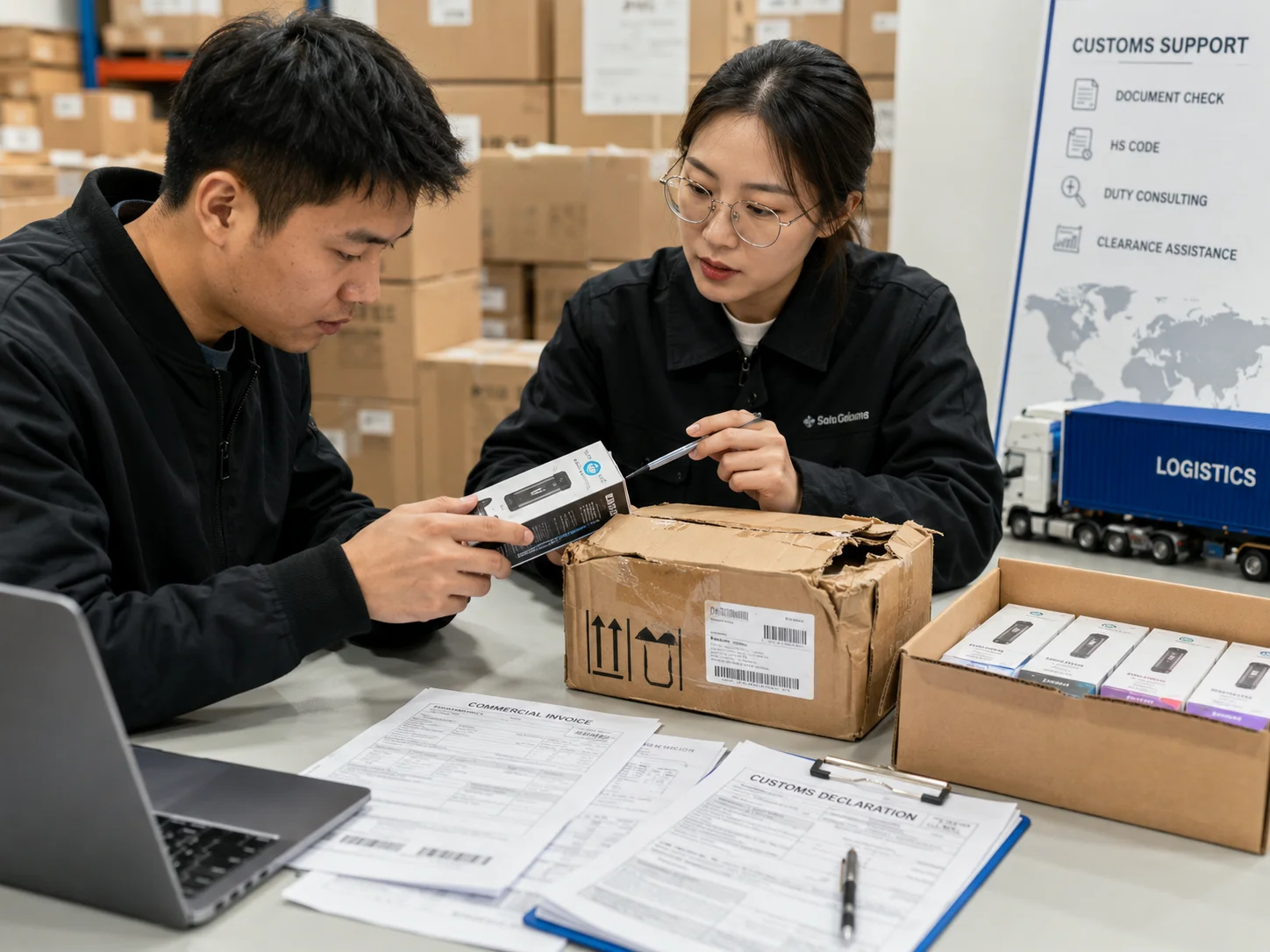
I always tell buyers that logistics must be discussed before payment. Vape products are regulated in many markets[^9]. Each country and even each state may have different rules. I cannot give legal advice, but I always tell buyers to check local laws, tax labels, registration needs, and allowed product standards before buying.
For shipping damage, proof must be fast. If the carton arrives broken, take photos before opening it[^10]. If goods are missing, weigh the carton, count the units, keep the packing list, and take videos. If a carrier claim is needed, timing matters.
| Problem | What Buyer Should Keep | What Supplier Should Do |
|---|---|---|
| Damaged carton | Photos before opening | Help file carrier claim |
| Missing quantity | Unboxing video and weight | Check packing record |
| Tracking delay | Tracking screenshot | Push freight agent for update |
| Customs inspection | Notice from carrier | Help provide documents if lawful |
| Lost parcel | Carrier confirmation | Claim based on shipping terms |
| Restricted destination | Local rule information | Warn before shipment |
Customs-related support must be honest. I do not support hiding risks or telling buyers everything is safe when it is not. Some regions have stricter checks[^11]. Some insurance only covers certain routes or certain stages. Some claims are not covered after the first import clearance. A reliable supplier should explain the limits clearly. If a market requires tax stamps, licenses, or product registration, the buyer should handle it properly. Long-term business cannot be built on unclear rules.
Communication Speed and Problem-Solving Responsibility?
Slow replies destroy trust. I have seen small issues become big fights because nobody answered for two days after delivery.
Good after-sales communication should include fast first response, clear problem owner, proof checklist, update schedule, and final settlement time. Buyers should avoid suppliers who only reply fast before payment but disappear when a claim appears.

I judge suppliers by how they act after a problem appears. Before payment, everyone can be friendly. After payment, the real service begins. A professional supplier should not panic, blame, or disappear. They should ask for proof, check the batch, talk with the warehouse or factory, and give a timeline.
A buyer also has responsibility. If you only say “many are bad” without proof, the supplier cannot process the claim. I always suggest making a simple claim sheet. It saves both sides time.
| Step | Buyer Action | Supplier Action |
|---|---|---|
| Report issue | Send order number and issue type | Confirm receipt quickly |
| Collect proof | Send videos, photos, batch codes | Check if proof is enough |
| Count quantity | List affected units by model/flavor | Compare with shipment record |
| Review cause | Share storage and sales timeline | Check batch and similar claims |
| Offer solution | Choose replacement, credit, or refund | Confirm settlement in writing |
| Close claim | Keep record for next order | Improve future batch control |
I also care about tone. A supplier who truly wants long-term business will not only push payment. They will ask about your country, your sales channel, your order size, and your risk level. If a person only says “pay now, best price, no problem,” I become careful. Real business people know problems can happen. They are ready to solve them.
How to Confirm After-Sales Policy Before Placing a Bulk Order?
Many buyers ask about after-sales only after something goes wrong. I think that is too late because the strongest position is before payment.
Buyers should confirm after-sales policy before bulk orders by asking for written defect rules, warranty period, proof requirements, claim process, compensation method, shipping damage terms, customs risk limits, and response time. These points should appear in the PI, agreement, or chat record.

I suggest buyers use a checklist before they place any serious order. This is not because I want to make the order slow. It is because I want the business to be stable. If the supplier is professional, they will not be afraid of clear questions.
For new buyers, I usually suggest starting small. If you are testing a market, you do not need to take huge inventory first. You can buy from available stock, test flavors, test customer feedback, and then scale. If your order is larger, then China direct purchase may give better price and more choices. But larger orders need stronger written rules, because the risk is also larger.
| Question To Ask | Why It Matters |
|---|---|
| What defect rate is considered normal? | It avoids argument later |
| What is the claim period after delivery? | It creates a clear deadline |
| What proof do you need? | It speeds up processing |
| Do you offer replacement, refund, or credit? | It defines the real solution |
| Who pays shipping for replacements? | It affects real cost |
| What shipping damage is covered? | It separates product and logistics issues |
| What customs support can you provide? | It confirms legal and document help |
| What is not covered? | It prevents false expectations |
| How fast do you reply to claims? | It protects customer trust |
| Can the terms be written on PI? | It makes the promise traceable |
I also recommend checking whether the products are authentic and traceable. For popular vape brands, fake goods are common in some markets[^12]. A very low price may look exciting, but it can bring quality risk, legal risk, and no after-sales at all. I prefer original products from reliable channels because the complaint rate is lower and the business can last longer. In wholesale, the cheapest product is not always the most profitable product. The product that sells fast, causes fewer complaints, and brings repeat buyers is usually the better choice.
Conclusion
I treat after-sales support as risk control. Good support protects product quality, cash flow, customer trust, and long-term wholesale profit.
[^1]: "Total Cost of Ownership (TCO) in Procurement - CADDi", https://us.caddi.com/resources/insights/total-cost-ownership. Explains the business principle of Total Cost of Ownership (TCO), which posits that the true cost of a purchase includes not only the upfront price but also all subsequent costs associated with defects, support, and end-customer satisfaction, thus reframing the concept of a 'finished' order. Evidence role: definition; source type: education. Supports: The source should define the concept of Total Cost of Ownership (TCO) in a procurement or supply chain context.. [^2]: "Health Effects of Vaping | Smoking and Tobacco Use - CDC", https://www.cdc.gov/tobacco/e-cigarettes/health-effects.html. Provides a technical overview of electronic cigarette design, detailing how components like the battery, atomizer (coil), and e-liquid reservoir can be sources of malfunction, supporting the claim that these products are inherently complex. Evidence role: mechanism; source type: research. Supports: The source should describe the various components of a vape device and explain how each can contribute to product failure, such as battery degradation, coil burnout, or e-liquid leakage.. [^3]: "Stability of Flavoring Chemicals in e-Cigarette Liquids - PMC - NIH", https://pmc.ncbi.nlm.nih.gov/articles/PMC12019726/. Details research on the stability of e-liquids and the performance of lithium-ion batteries under various temperature conditions, showing how exposure to heat can alter liquid viscosity and increase leakage risk, while cold can temporarily reduce battery output. Evidence role: mechanism; source type: paper. Supports: The source should explain the physical or chemical changes that occur in vape components (e-liquid, battery) when exposed to heat, cold, or improper handling.. [^4]: "Boiling points of the propylene glycol + glycerol system at 1 ... - PMC", https://pmc.ncbi.nlm.nih.gov/articles/PMC6377204/. Explains the physical properties of materials used in vape products, noting that the viscosity of e-liquids (PG/VG) decreases with heat, increasing leakage potential, and that the electrochemical reactions in lithium-ion batteries are less efficient at cold temperatures, resulting in reduced performance. Evidence role: mechanism; source type: education. Supports: The source should explain how heat lowers the viscosity of e-liquid, making it more prone to leaking, and how cold temperatures slow the chemical reactions inside a lithium-ion battery, reducing its power output.. [^5]: "Defects per million opportunities - Wikipedia", https://en.wikipedia.org/wiki/Defects_per_million_opportunities. Provides a definition of manufacturing quality standards such as Acceptable Quality Level (AQL), which codifies the principle that mass production inherently involves a statistically predictable, non-zero defect rate that is agreed upon by producer and consumer. Evidence role: definition; source type: encyclopedia. Supports: The source should define a standard quality control concept like AQL, explaining that manufacturers and buyers typically agree on a tolerable level of defects in a batch rather than expecting zero defects.. [^6]: "How To Return Goods - UCSF Supply Chain Management", https://supplychain.ucsf.edu/purchasing/procurement-policies-and-guidelines/how-return-goods. Discusses various methods for resolving small-scale disputes in ongoing B2B relationships, noting that issuing credit against future orders is a common and efficient practice that preserves the relationship and minimizes transactional friction compared to refunds. Evidence role: general_support; source type: research. Supports: The source should discuss different methods for handling returns and defects in a B2B context, noting that credits can be an efficient tool for maintaining business continuity with trusted partners.. Scope note: The source may discuss this in a general B2B context, not specifically for the vape industry. [^7]: "Tips for extending the lifetime of lithium-ion batteries", https://news.umich.edu/tips-for-extending-the-lifetime-of-lithium-ion-batteries/. Provides safety guidelines for charging lithium-ion batteries, explaining that while a device's internal circuitry regulates the power drawn, using a charger with an incorrect voltage or a malfunctioning high-power charger can risk damaging the charging port or the battery itself. Evidence role: mechanism; source type: institution. Supports: The source should explain that using a charger that delivers voltage or amperage beyond a device's design specifications can potentially damage its charging circuit or battery.. [^8]: "Disposable E-Cigarettes More Toxic Than Traditional ... - UC Davis", https://www.ucdavis.edu/news/disposable-e-cigarettes-more-toxic-traditional-cigarettes. Presents a bill-of-materials analysis for disposable e-cigarettes, indicating that the lithium-ion battery and the e-liquid are among the most significant cost drivers, supporting the inference that price competition often leads to compromises in the quality of these specific components. Evidence role: statistic; source type: research. Supports: The source should provide a cost breakdown of a typical vape device, showing that the battery and e-liquid represent a significant portion of the bill of materials.. Scope note: The exact cost breakdown can vary significantly by device type and manufacturer. [^9]: "Tobacco: E-cigarettes - World Health Organization (WHO)", https://www.who.int/news-room/questions-and-answers/item/tobacco-e-cigarettes. Provides a global overview of regulatory approaches to electronic nicotine delivery systems (ENDS), documenting the wide range of policies on sales, marketing, taxation, and product standards implemented by various countries. Evidence role: general_support; source type: institution. Supports: The source should provide a summary or database of e-cigarette regulations across different countries, demonstrating the wide and varied nature of legal controls on these products.. Scope note: Regulations are subject to frequent change, so the source should be checked for its publication date. [^10]: "Freight claim - Wikipedia", https://en.wikipedia.org/wiki/Freight_claim. Outlines the standard operating procedure for filing a freight damage claim, which includes documenting the condition of the package upon arrival with photographs before opening, and noting the damage on the bill of lading if possible. Evidence role: general_support; source type: other. Supports: The source, such as a guide from a major shipping carrier, should outline the steps for documenting and reporting shipping damage, emphasizing the need for photographic evidence of the damaged packaging.. [^11]: "Operation Red Mist: CBP, federal partners seize millions of illegal e ...", https://www.cbp.gov/newsroom/national-media-release/operation-red-mist-cbp-federal-partners-seize-millions-illegal-e. Provides examples of varying customs enforcement, such as U.S. Customs and Border Protection's focus on illicit disposable vapes or Australia's prescription-only model, demonstrating that import scrutiny for these products differs significantly between countries. Evidence role: case_reference; source type: government. Supports: The source should provide information from a customs agency or trade commission that details specific import requirements or enforcement priorities for vape products in a particular jurisdiction.. Scope note: Customs priorities can change, so the information reflects the situation at the time of publication. [^12]: "$81.5 Million in Unapproved Electronic Nicotine Delivery Systems ...", https://www.cbp.gov/newsroom/local-media-release/815-million-unapproved-electronic-nicotine-delivery-systems-seized. Reports on the widespread issue of counterfeit e-cigarettes, citing data on seizures by law enforcement and highlighting the public health risks associated with unregulated and potentially contaminated products. Evidence role: statistic; source type: institution. Supports: The source should report on law enforcement actions, public health warnings, or industry studies concerning the prevalence of counterfeit vape products..