Small wholesalers lose money when suppliers make simple orders feel hard. Delays grow. Questions stay open. One bad batch can hurt cash flow fast[^1].
An easy-to-work-with supplier gives clear replies, flexible MOQ, real product details, stable quality, fast problem solving, simple shipping, and support for reorders. I do not judge only by price. I judge by how much risk the supplier removes from my daily business.

I have worked with many small wholesalers, retailers, and e-commerce sellers from Europe and the United States. I often see the same pattern. A buyer does not fail because the product is bad only. The buyer fails because the supplier makes the work too heavy. The real question is not “Who has the lowest price?” The better question is “Who helps me move faster with less risk?”
Why Do I Say Small Wholesalers Need an Easy-to-Work-With Supplier?
Small wholesalers do not have time to chase answers all day. One slow supplier can block sales, cash flow, and customer trust.
A small wholesaler needs an easy supplier because every order uses limited cash, limited time, and limited storage space[^2]. I need a supplier who lowers order risk, not one who only offers a low price and then disappears when work starts.

I look at risk before I look at price
When a client asks me for the “best supplier,” I usually ask about the sales channel first. I ask if the buyer sells in a store, on Amazon, on Shopify, through local dealers, or through a wholesale network. Each channel has a different risk[^3]. A store cares about fast restock. An online seller cares about reviews. A wholesaler cares about stable packing and repeat supply.
For small wholesalers, every wrong choice hurts more. A large buyer may test ten models and accept some slow sellers. A small buyer may only test two or three models. So I think a good supplier must help the buyer test the market in a safe way.
| Supplier behavior | What I feel as a buyer | Business result |
|---|---|---|
| Fast and clear replies | I can make decisions | Faster sales work |
| Low trial MOQ | I can test without fear | Lower cash pressure |
| Stable quality | I get fewer complaints | Better repeat orders |
| Honest risk advice | I avoid bad routes | Less hidden loss |
| Clear reorder plan | I can scale slowly | Better long-term growth |
I have seen small buyers grow step by step. They did not start with huge orders. They started with small trials, learned what sold, and reordered fast. That is why I value a supplier who supports the process, not only the first payment.
Why Is Clear Communication Before and After the Order So Important?
Bad communication creates bad orders[^4]. If basic details are unclear, mistakes happen in models, plugs, labels, colors, quantities, and delivery dates.
Clear communication means the supplier confirms the product, price, MOQ, lead time, packing, payment terms, shipping method, and after-sales rules before payment. After the order, the supplier should update production, inspection, tracking, and any problem in time.

I need answers before I send money
A common question I get from first-time importers is, “Can I trust this supplier?” My answer is simple. I do not start with trust. I start with clear facts. If the supplier cannot explain the product and order process clearly, I slow down. If the supplier only says “don’t worry,” I worry more.
For 3C products like USB cables, GaN chargers, TWS earbuds, smartwatches, and power adapters, small details matter[^5]. A USB-C cable may look simple, but the chip, current, jacket, connector, length, and packing all change the result. A charger may look normal, but the plug type, certification, power protocol, and safety test are serious details.
| Detail I confirm | Why I confirm it | What can go wrong |
|---|---|---|
| Exact model | I avoid mixed goods | Wrong product shipped |
| Certification | I protect sales channels | Goods blocked or rejected |
| Packing | I match retail needs | Bad shelf display |
| Lead time | I plan promotion dates | Stockout or late launch |
| After-sales rule | I know who pays cost | Disputes after delivery |
I also need updates after payment
I do not like silence after payment. A supplier should share order progress. It can be simple. A production photo, packing photo, inspection video, or tracking number is enough. I do not need fancy words. I need useful updates. A small buyer often has customers waiting. If I know the real status, I can explain to my own customers. If I know nothing, I lose control.
How Does Flexible MOQ Help Trial Orders and Small Batch Testing?
High MOQ can trap small wholesalers[^6]. Flexible MOQ helps me test real demand before I put too much money into one model.
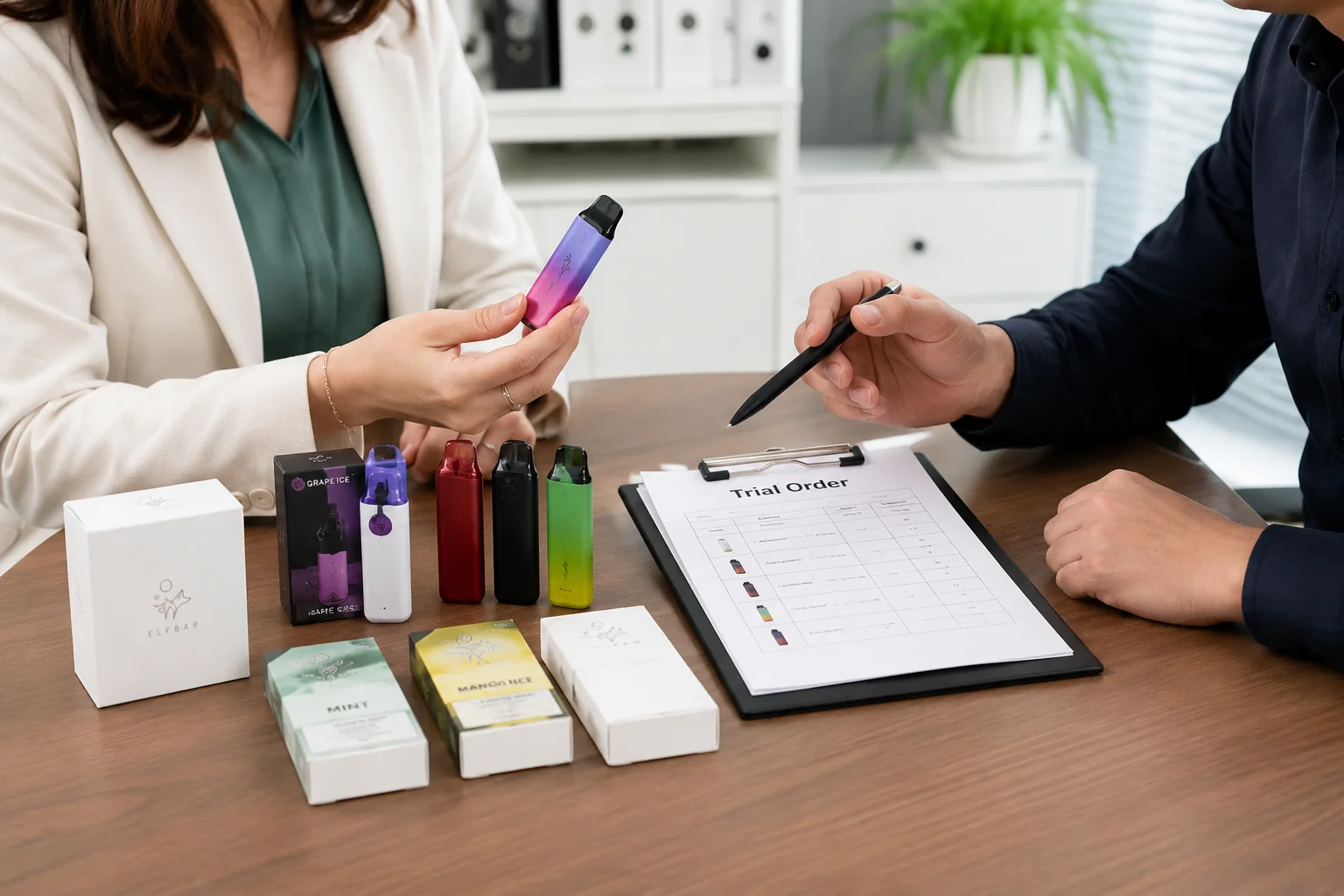
Flexible MOQ lets a small wholesaler buy small quantities first, test sales, collect feedback, and reorder the winning models. It reduces dead stock[^7] and helps the buyer use cash faster. It is very useful for new products and new markets.
I see MOQ as a risk tool
Many new buyers think MOQ is only about price. I see MOQ as a risk control tool. If I must buy 3,000 pieces of a smartwatch before I know the market, I carry too much pressure. If I can test 100 or 300 pieces first, I learn faster. The unit price may be higher, but the total risk is lower.
This is very similar to how I think about wholesale, private label, and OEM. Wholesale is not just the cheap option. It is the market-testing option. Private label is not just logo printing. It needs packaging and marketing work. OEM is not only control. It needs money, time, testing, tooling, and strong project follow-up.
| Sourcing model | What I gain | What I give up | Best for |
|---|---|---|---|
| Wholesale stock | Speed and low MOQ | Less customization | Market testing |
| Private label | Brand look | More planning work | Growing sellers |
| OEM | More product control | More cost and time | Mature buyers |
I prefer a supplier who lets me grow
When I work with small wholesalers, I like to offer a path. Start with ready goods. Test models. Check which color, plug, chipset, or package sells better. Then increase quantity. Then add logo or custom packaging. Then consider deeper customization if the order volume supports it.
A flexible supplier does not force every small buyer into a big order. A good supplier knows that a small buyer can become a large buyer later. I have seen this many times. The buyer who starts with a small trial can become stable if the product sells and the process feels safe.
Why Do Transparent Pricing, Product Details, and Real Photos Matter?
Unclear pricing looks cheap at first. Later, hidden fees, wrong specs, and fake photos can make the order much more expensive.
Transparent pricing means the supplier explains unit price, MOQ, packing cost, logo cost, sample cost, shipping cost, payment fee, and any possible extra charge. Real photos and real product details help me judge quality before I order.
I do not buy only from a catalog picture
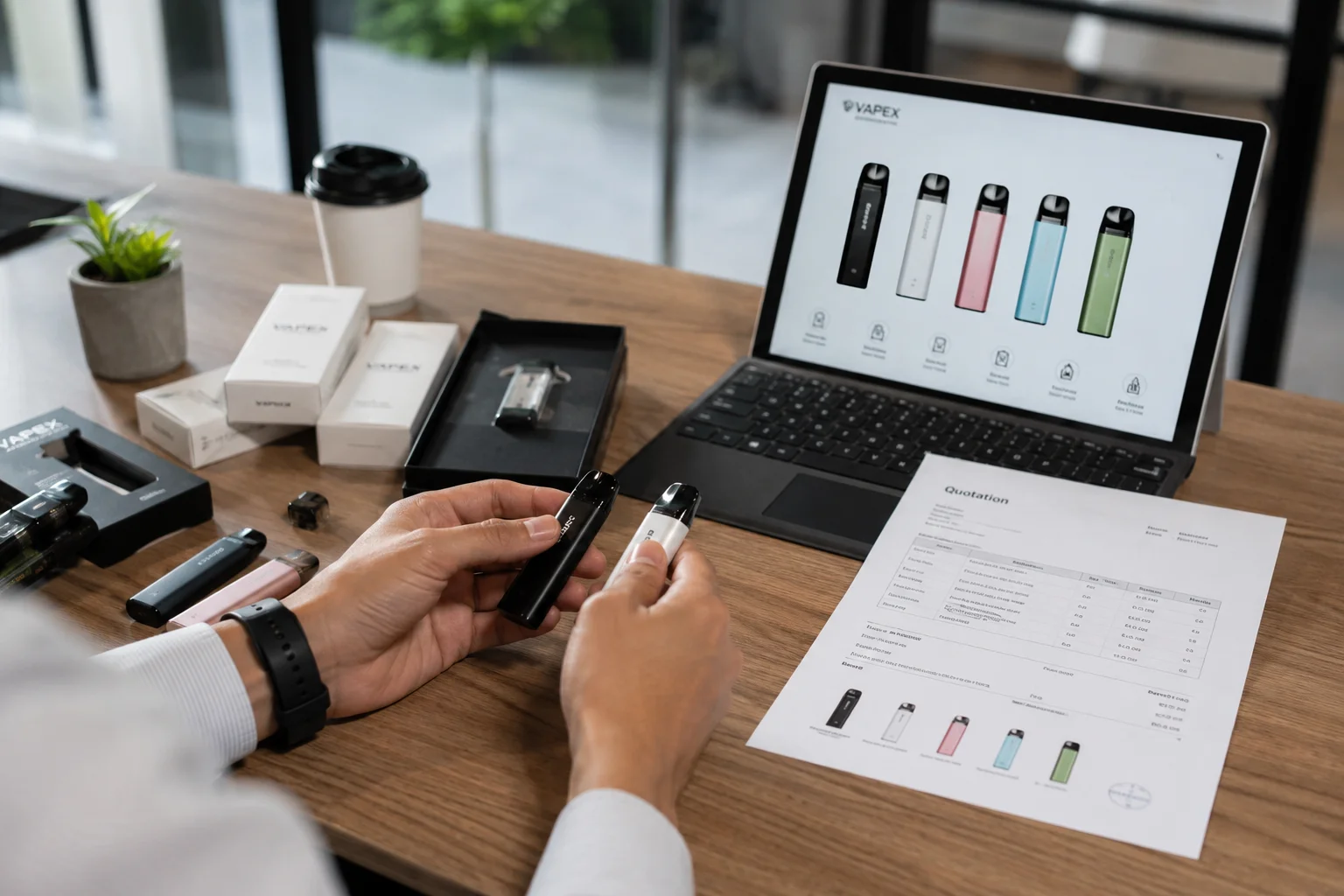
Product pictures can be beautiful. I still ask for real photos or videos. I want to see the real stock, real packaging, real label, and real accessories. For chargers, I want to see the plug, certification marks, and output details. For cables, I want to see the connector, cable body, length, and packing. For smartwatches or earbuds, I want to see the interface, app, charging method, and color.
I also want the price to be complete. A low product price means little if the logo fee, packaging fee, and shipping cost are hidden. I prefer a supplier who gives a clear price table.
| Cost item | I want it shown clearly | Why it matters |
|---|---|---|
| Unit price | Yes | I compare models fairly |
| MOQ | Yes | I plan cash needs |
| Logo cost | Yes | I judge private label cost |
| Packaging cost | Yes | I know retail cost |
| Shipping cost | Yes | I calculate landed cost[^8] |
| Sample cost | Yes | I test before bulk order |
I compare the full landed cost
I always remind buyers to look at landed cost, not only unit price. A charger that costs less at the factory may cost more after shipping, duty, certification gaps, or high defect rates. A cable with a cheaper connector may lead to more returns. Cheap can be good only when the quality and service still support the business.
Real suppliers do not hide basic information. They may not always have the lowest price. But they should explain why the price is what it is. If the material, chip, certification, and inspection are better, the price difference should make sense.
Why Are Stable Product Quality and Pre-Shipment Inspection Necessary?
Small wholesalers cannot afford random quality. One unstable batch can create refunds, bad reviews, and lost customers[^9].
Stable quality means the product matches the confirmed sample and order details. Pre-shipment inspection[^10] checks appearance, quantity, function, labels, packing, accessories, and cartons before goods leave the supplier. It helps catch problems before shipping cost is spent.

I trust checks more than promises
I have heard many suppliers say, “Quality is no problem.” I do not dislike this sentence, but I do not rely on it. I rely on checks. For 3C products, a small defect can create a big complaint. A charger that overheats is a serious issue. A cable that does not support the promised fast charge will hurt the seller’s reviews. A TWS earbud with unstable Bluetooth will come back as a return.
A simple inspection is not hard. It just needs discipline. The supplier should compare goods with the confirmed sample and order sheet. The inspection should happen before shipping. Once goods are shipped overseas, every small problem becomes expensive.
| Inspection point | What I check | Why I check it |
|---|---|---|
| Appearance | Scratches, color, finish | Retail customers notice it |
| Function | Charging, pairing, screen, buttons | Product must work |
| Quantity | Pieces and carton count | Shortage causes disputes |
| Labels | Model, barcode, warning, CE/FCC marks | Sales channel may require it |
| Packaging | Box, manual, insert, carton | Damage and presentation matter |
I also care about batch consistency
A sample can be good. The bulk order must also be good. This is where many buyers get hurt. I have seen buyers approve one sample, then receive bulk goods with a different cable thickness or different accessory. This is why I like clear sample sealing and order confirmation. The supplier should keep a reference sample. I should keep one too.
Stable quality is not only about factories. It is also about process. A supplier who has a clear process is easier to work with. I can accept a problem if it is found early and fixed honestly. I cannot accept surprise problems after the goods arrive.
What Does Fast Response Mean When Problems Happen?
Problems are normal in trade. A good supplier is not problem-free. A good supplier responds fast and solves problems fairly.
Fast response means the supplier listens, asks for proof, checks the cause, gives a clear solution, and follows up until the issue closes. I value a supplier who solves defects, shortages, wrong labels, shipping delays, and warranty issues without hiding.

I judge suppliers by their bad days
Every supplier looks good when the order is smooth. I judge a supplier when something goes wrong. Maybe a carton is damaged. Maybe the product has a higher defect rate than normal. Maybe customs asks for extra documents. Maybe the customer wants a certificate copy. At that moment, I do not need excuses. I need action.
For small wholesalers, problem response matters a lot. The buyer may not have a big team. The buyer may be facing angry retail customers. A slow supplier makes the pressure worse.
| Problem type | Good supplier action | Bad supplier action |
|---|---|---|
| Defective goods | Check proof and offer credit or replacement | Ignore messages |
| Wrong packing | Admit mistake and fix next batch | Blame the buyer |
| Shipping delay | Update tracking and reason | Stay silent |
| Missing documents | Send files quickly | Say “later” for days |
| Short shipment | Check records and compensate | Deny without checking |
I like simple after-sales rules
I prefer after-sales terms that are written before the order. For example, the supplier can state how defect proof should be provided, how many days the buyer has to report, and how compensation works. This does not need to be complicated. It only needs to be clear.
A professional supplier does not promise impossible things. They do not say every product will be perfect forever. They explain the realistic warranty and support. That is easier for me to trust. I can plan my own customer policy based on clear supplier support.
Why Are Simple Shipping Options and Clear Delivery Timelines Important?
A good product still fails if shipping is unclear. Small wholesalers need delivery plans they can explain to customers.
Simple shipping means the supplier offers clear options such as express, air freight, sea freight, DDP where suitable, and local warehouse stock if available. Clear timelines help me plan launch dates, promotions, and reorder point[^11]s.

I need shipping choices that match order size
Shipping is not only a cost. It is part of the business model. A small trial order may need express delivery because speed matters more than freight cost. A larger reorder may use air or sea freight because the buyer has more time and wants a better landed cost. A supplier who understands this can guide the buyer well.
In my work with international buyers, I often explain that the best route depends on volume, product type, battery rules, destination, and urgency. For 3C products with batteries, like TWS earbuds and smartwatches, shipping rules are stricter[^12]. The supplier must understand battery documents, carton labels, and airline limits.
| Shipping option | Best use | Main trade-off |
|---|---|---|
| Express | Samples and urgent small orders | Fast but costly |
| Air freight | Medium orders | Balanced speed and cost |
| Sea freight | Large stable orders | Slow but cheaper |
| DDP service | Buyers who need simple delivery | Higher price but easier |
| Local stock | Fast reorder in target market | Less model choice |
I plan reorder points from real timelines
A delivery timeline must include production time and shipping time. Some buyers only ask, “How many days to ship?” I think that is not enough. I ask how many days to prepare goods, how many days for inspection, how many days for export, how many days in transit, and how many days for final delivery.
This helps me set a reorder point. If a smartwatch takes 20 days from order to arrival, I should not reorder when stock is almost zero. I should reorder earlier. A good supplier helps me think this way. They protect my stock flow, not only their own shipment.
How Does Long-Term Support Help Reorders, Packaging, and Product Updates?
A small wholesaler grows through repeat orders. Long-term supplier support makes reorders smoother and brand work easier.
Long-term support means the supplier keeps order records, product photos, packaging files, barcode details, color history, test reports, and update notices. This helps the buyer reorder correctly, improve packaging, and follow new product trends without starting from zero every time.

I want a supplier who remembers my order
A small wholesaler should not need to explain everything again each time. The supplier should keep clear records. If I ordered a 65W GaN charger with EU plug, white color, retail box, EAN barcode, and CE mark position, the next reorder should match it. If I ordered a USB-C cable with a certain length and packing, the supplier should not change it without telling me.
Long-term support is also important for packaging. Many buyers start with neutral packaging. Later, they add a logo. Later, they improve the box design. Later, they add display stands or bundle sets. A good supplier supports this step by step.
| Growth stage | Supplier support I need | Why it helps |
|---|---|---|
| First trial | Low MOQ and ready stock | I test demand |
| First reorder | Same product and packing | I keep consistency |
| Private label | Logo and box design support | I build brand memory |
| Channel growth | Barcode and carton rules | I enter more stores |
| Product update | New models and old model notice | I avoid dead stock |
I also need honest product update advice
3C products change fast. Charging protocols change. Cable demand changes. Earbud design changes. Smartwatch features change. A supplier should tell me when a model is stable, when a model is old, and when a new version is worth testing.
I do not want a supplier who only pushes slow stock. I want a supplier who says, “This model is cheap, but it is old,” or “This new model is popular, but test it first.” That kind of advice saves money. It also shows that the supplier wants a long relationship.
Long-term cooperation is not built by one perfect order. It is built by many clear, honest, and steady orders. This is why I think an easy-to-work-with supplier is not just a vendor. It is a working partner who helps me reduce mistakes.
Conclusion
I choose easy suppliers because they protect cash flow, reduce risk, solve problems fast, and help small wholesalers grow step by step.
[^1]: "How much are supply chain disruptions costing your organization?", https://haslam.utk.edu/gsci/news/how-much-are-supply-chain-disruptions-costing-your-organization/. Research on small and medium-sized enterprises (SMEs) indicates that supply chain disruptions, including supplier delays and quality defects, have a direct negative impact on cash flow by increasing operational costs, tying up capital in unsaleable inventory, and requiring funds for returns or rework. Evidence role: mechanism; source type: paper. Supports: The source should explain how supplier-related issues like delays and quality defects negatively affect a small business's cash flow by increasing costs and tying up capital.. [^2]: "Short-term financial constraints and SMEs' investment decision - PMC", https://pmc.ncbi.nlm.nih.gov/articles/PMC8096609/. Studies and reports from government bodies and business organizations consistently identify resource constraints, including limited access to financing, smaller staff, and less infrastructure, as defining characteristics and primary challenges for small and medium-sized enterprises (SMEs). Evidence role: general_support; source type: government. Supports: The source should describe the typical resource limitations faced by small businesses, such as access to capital, manpower, and physical infrastructure.. [^3]: "Omnichannel vs. Multichannel Supply Chain: Understanding the ...", https://www.wgu.edu/blog/omnichannel-multichannel-supply-chain-understanding-key-differences2307.html. Supply chain management theory supports the idea that different sales channels have distinct operational priorities; for example, physical retail often prioritizes in-store availability and rapid restocking, while e-commerce focuses on order fulfillment accuracy and managing customer reviews. Evidence role: mechanism; source type: education. Supports: The source should explain how different sales channels (e.g., brick-and-mortar, online, wholesale) necessitate different supply chain strategies and present unique risks.. [^4]: "Absence of personal relationship in a buyer-supplier relationship", https://pmc.ncbi.nlm.nih.gov/articles/PMC6558269/. Academic research in supply chain management identifies poor or unclear communication between buyers and suppliers as a significant contributor to operational failures, including order inaccuracies, production mistakes, and shipment delays. Evidence role: mechanism; source type: paper. Supports: The source should demonstrate the link between poor communication among supply chain partners and the occurrence of operational errors like incorrect specifications or delivery times.. [^5]: "CE marking - Wikipedia", https://en.wikipedia.org/wiki/CE_marking. Technical specifications are critical for 3C electronics; for example, Gallium Nitride (GaN) technology allows for smaller, more efficient chargers, while certifications like CE and FCC are mandatory legal requirements for market access in Europe and the United States, respectively, ensuring the product meets safety and electromagnetic compatibility standards. Evidence role: mechanism; source type: research. Supports: The source should explain the technical or regulatory importance of a specific detail mentioned, such as GaN technology or CE certification.. Scope note: This note provides examples; a source would likely focus on one specific technical detail, such as GaN technology or a particular certification. [^6]: "Innovations in Inventory Management to Improve the Profitability of ...", https://pmc.ncbi.nlm.nih.gov/articles/PMC12754351/. Business and supply chain literature explains that while Minimum Order Quantities (MOQs) allow suppliers to achieve economies of scale, they can impose significant risks on small buyers by forcing them to hold excess inventory, which ties up working capital and increases exposure to demand uncertainty. Evidence role: mechanism; source type: education. Supports: The source should explain how high MOQs, while beneficial for supplier production efficiency, can create significant inventory risk and capital strain for small buyers.. [^7]: "Preventing Dead Stock: A Smart Guide for Fashion Retailers", https://www.nedap-retail.com/rfid-knowledge-hub/inventory-accuracy/dead-stock/. Dead stock, also known as obsolete inventory, refers to items that have been in a company's inventory for an extended period without being sold. It represents a financial loss as it ties up capital, incurs storage costs, and is unlikely to be sold at full price. Evidence role: definition; source type: encyclopedia. Supports: The source should define 'dead stock' and explain why it is a financial liability for a business.. [^8]: "Landed Cost: Meaning, Formula & Examples for You | DHL Global", https://www.dhl.com/discover/en-global/logistics-advice/essential-guides/landed-cost-meaning-formula-calculation. Landed cost is the total price of a product once it has arrived at the buyer's door, including the original product price, transportation fees, customs, duties, taxes, insurance, and any other charges incurred during shipment. Evidence role: definition; source type: encyclopedia. Supports: The source should define 'landed cost' and list its typical components, such as shipping, duties, and insurance.. [^9]: "How Online Reviews Influence Sales - Spiegel Research Center", https://spiegel.medill.northwestern.edu/how-online-reviews-influence-sales/. Market research and academic studies consistently show a strong correlation between product quality and business performance, indicating that negative customer reviews and high return rates directly harm sales and reduce customer loyalty and lifetime value. Evidence role: statistic; source type: research. Supports: The source should provide data or analysis showing the negative correlation between poor product quality (leading to bad reviews) and business outcomes like sales and customer retention.. [^10]: "[PDF] ISO 2859-1 - UNT Chemistry", https://chemistry.unt.edu/~tgolden/courses/iso2859-1.pdf. Pre-shipment inspection (PSI) is a standard quality control process in international trade where products are checked for conformity to specifications before they are dispatched. This inspection typically verifies quantity, quality, packing, marking, and functionality against the buyer's order. Evidence role: definition; source type: institution. Supports: The source should define pre-shipment inspection (PSI) as a quality control step and outline the typical checks involved, such as quantity, function, and packaging.. [^11]: "Reorder point - Wikipedia", https://en.wikipedia.org/wiki/Reorder_point. In inventory management, the reorder point (ROP) is the level of inventory which triggers an action to replenish that particular stock item. It is typically calculated as the sum of the lead time demand and safety stock. Evidence role: definition; source type: encyclopedia. Supports: The source should define the term 'reorder point' and explain its purpose and basic calculation in inventory management.. [^12]: "Lithium Battery Test Summaries (TS) | PHMSA", https://www.phmsa.dot.gov/training/hazmat/new-un-requirement-test-summaries. International and national transportation authorities, such as the International Air Transport Association (IATA), enforce strict regulations for shipping lithium-ion and lithium-metal batteries, classifying them as dangerous goods that require specific testing, packaging, and labeling to ensure safety during transit. Evidence role: general_support; source type: government. Supports: The source should confirm that shipping lithium batteries is regulated and requires special handling, documentation, and labeling..