Cheap quotes look good at first. Then bad quality, customs issues, and no warranty can turn one “good deal” into a painful loss.
To compare vape suppliers, I look beyond price, MOQ, and puff count. I check authentic product source, battery, e-liquid, coil, chip, factory capacity, certificates, packaging, shipping route, payment safety, warranty, and after-sales responsibility before I place a real order.
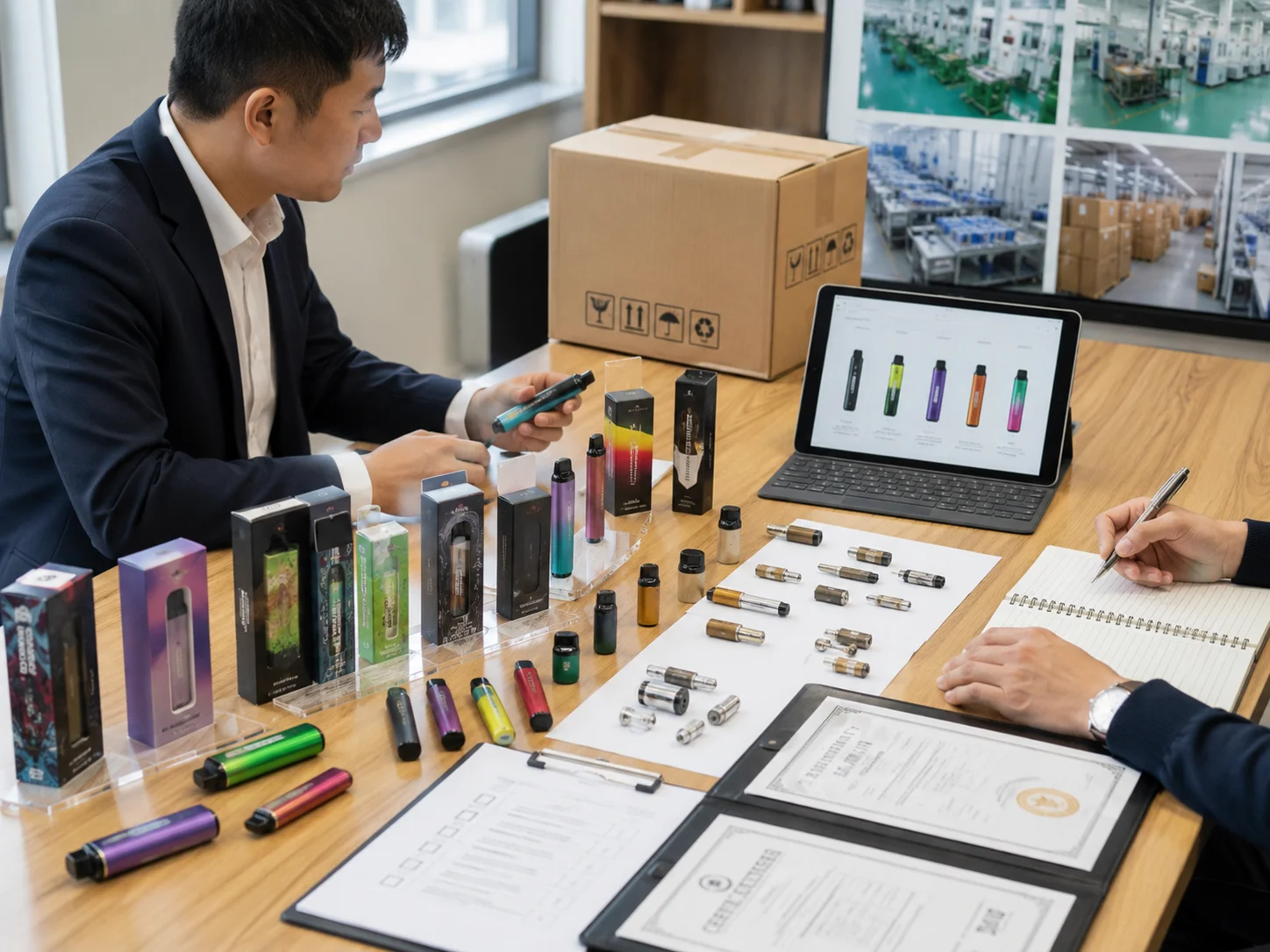
I have worked in export from Shenzhen for many years, and I see the same mistake again and again. A buyer asks me, “What is your cheapest price?” I understand this question. Every buyer needs profit. But in vape sourcing, the cheapest supplier can become the most expensive supplier if the goods are fake, unstable, non-compliant, or impossible to deliver safely.
Why Are Price, MOQ and Puff Count Not Enough?
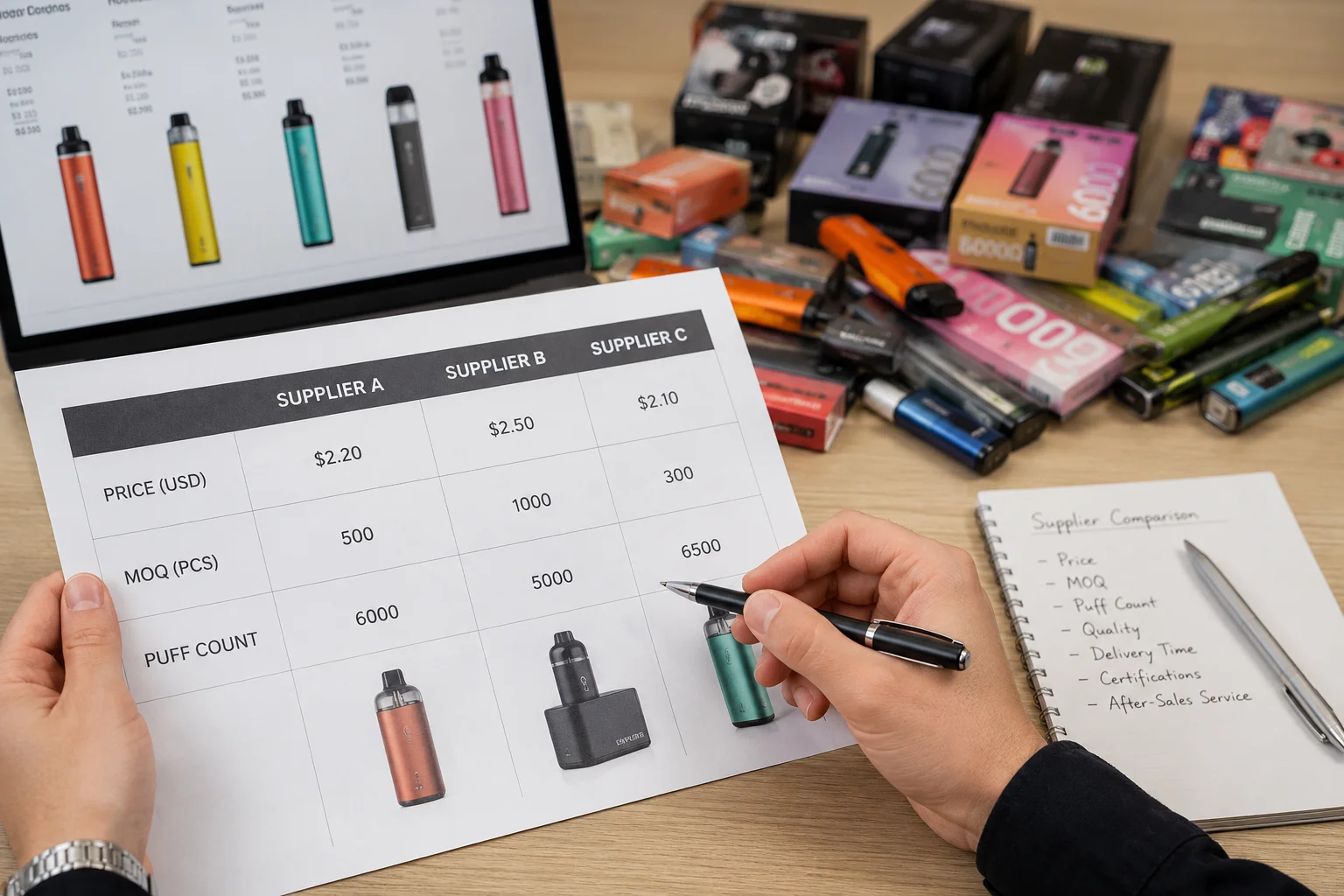
Many buyers compare only three numbers. They compare price, MOQ, and puff count. This looks simple, but it hides the real risk.
Price, MOQ, and puff count are not enough because they do not show product authenticity, material quality, legal risk, shipping safety, warranty responsibility, or supply stability. A low price can hide fake goods, weak batteries, bad e-liquid, poor coils, and no after-sales support.
The real comparison is risk
A common question I get from first-time importers is, “Why is your price higher than another supplier?” My first answer is simple. I ask what the other supplier is really selling. Is it original? Is it licensed? Is the battery stable? Is the e-liquid tested? Is there a real warranty? Is the shipping route clear?
For example, a product can claim 100,000 puffs. But the real e-liquid volume may not support that number[^1]. A product can claim a very low MOQ. But the supplier may have no stable stock. A supplier can quote a very low price. But the goods may be fake, or the shipment may carry high customs risk.
| What buyers often compare | What I also check |
|---|---|
| Unit price | Product source and authenticity |
| MOQ | Stock depth and reorder ability |
| Puff count | Real e-liquid volume and coil life |
| Product photo | Real sample and batch consistency |
| Fast promise | Real logistics route and risk terms |
I do not say price is not important. Price is very important. But price must be compared after the product and supplier are real. If I compare fake goods with original goods only by price, the fake goods will always look better. That is not sourcing. That is gambling.
How Do I Compare Real Product Quality, Not Just Product Claims?
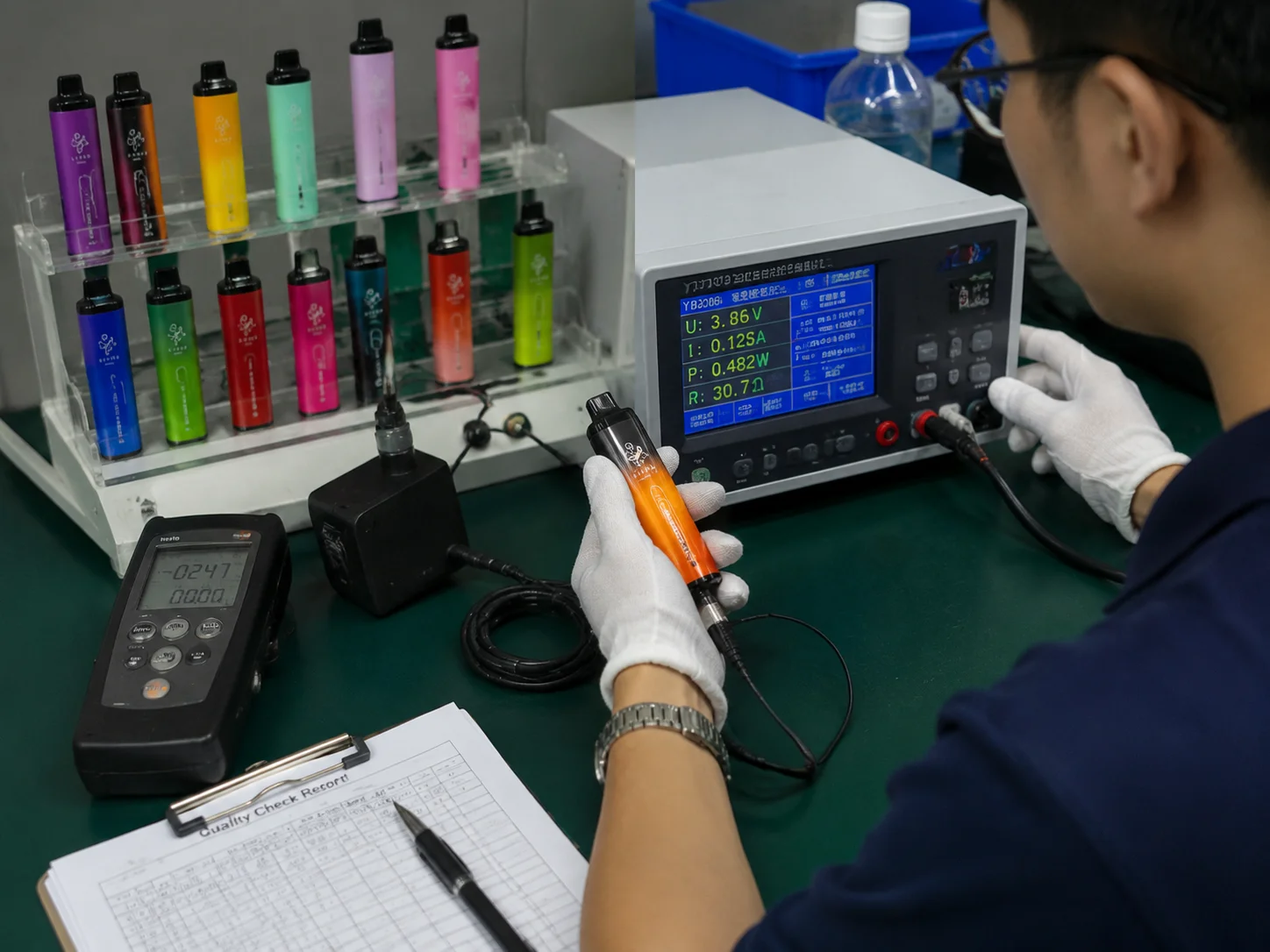
Product claims are easy to print. Real quality is harder to keep stable. I always test the product, the batch, and the supplier’s answers.
To compare real vape product quality, I check samples, weight, packaging details, taste stability, leakage, anti-counterfeit code, production batch, and real customer feedback. I do not trust only photos, puff numbers, or supplier promises.
I start from proof, not words
In this market, some products look almost the same outside. The box looks similar. The device shape looks similar. The brand name may also look similar. But the inside can be completely different. This is why I never judge only by photos.
When I compare quality, I first ask for a sample. I check the weight because poor fake products often feel too light. I check the printing because fake boxes often have color difference, unclear fonts, wrong warning labels, or strange QR codes. I also test the taste for several days. I do not only take one puff and decide.
| Quality point | What I look for | Risk if ignored |
|---|---|---|
| Packaging | Clear printing, correct warning, batch code | Fake or low-grade goods |
| Device body | Good weight, clean joints, no oil smell | Poor material or leakage |
| Taste | Stable flavor from start to middle | Bad e-liquid or weak coil |
| Anti-counterfeit | Checked on official website | Fake QR verification |
| Batch quality | Same performance in several units | Unstable production |
One important point is the anti-counterfeit code. Some fake goods also have QR codes. The code may open a fake website and show “genuine.”[^2] I tell buyers to go to the official brand website by themselves and enter the code there. Do not trust a random page that opens after scanning.
How Should I Check Battery, E-Liquid, Coil and Chip Quality?
A vape product is not just a shell with a flavor name. The real experience comes from battery, e-liquid, coil, airflow, and chip control.
I check battery, e-liquid, coil, and chip quality by testing charging time, use time, flavor stability, leakage, burnt taste, airflow, safety protection, and low-temperature performance. These parts decide user experience, complaint rate, and repeat orders.

The inside decides the complaints
Many new buyers focus on puff count. I understand why. Puff count is easy to sell. But the real limit is physical. The device size limits battery size and e-liquid volume. The coil also has a life limit. If the coil works too long, the taste can drop, and burnt flavor can appear[^3].
Battery quality is a big point. A good battery gives stable output. It works better after charging. It also works better in cold weather.[^4] A poor battery may charge for a long time and then die after a short time. It may also fail in winter. Customers do not care about your supplier excuse. They complain to you.
| Part | Good product behavior | Bad product behavior |
|---|---|---|
| Battery | Stable use time, safer charging, better cold performance | Fast power drop, poor charging, possible safety risk |
| E-liquid | Clean taste, stable flavor, better consistency | Strange smell, harsh throat, unstable nicotine |
| Coil | Smooth vapor, less burnt taste, good oil feed | Burnt taste, leakage, fast flavor drop |
| Chip | Stable output, basic protection, clear display | Random failure, wrong display, unstable power |
| Airflow | Smooth and consistent draw | Too tight, too loose, or leaking |
I also tell buyers this simple idea. If two products have similar size and oil volume, but one price is much lower, the savings usually come from battery, e-liquid, coil, or inspection. The cost does not disappear. It is only moved into your after-sales problem.
How Can I Evaluate Factory Strength, Production Capacity and Consistency?
A good sample does not always mean a good bulk order. I need to know if the supplier can repeat the same quality again and again.
To evaluate factory strength, I check production lines, monthly capacity, license status, QC process, batch records, worker stability, stock level, and reorder history. A strong supplier should deliver stable quality, not just one good sample.
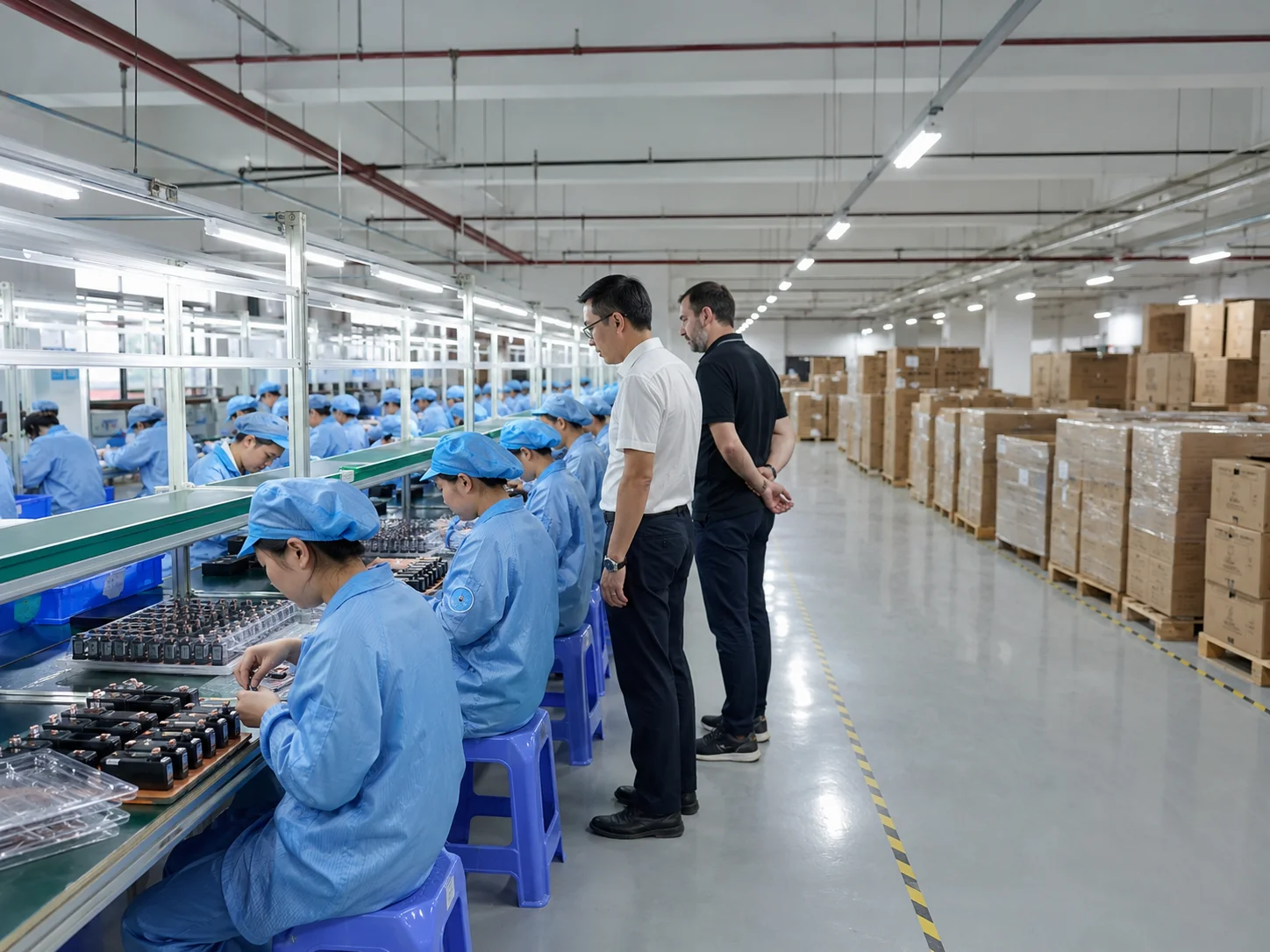
Stable supply is part of product quality
When a client asks for the “best option,” I first ask about their sales channel and order size. A small e-commerce seller needs fast testing. A big wholesaler needs stable repeat supply. A chain store needs consistency across stores. These buyers do not need the same supplier model.
Factory strength matters because vape orders can change fast. If a model becomes popular, everyone wants it. Some brands also control distribution very strictly. Brands like ELF BAR, GEEK BAR, VOZOL, AL FAKHER, RAZZ BAR, FUMOT, and VAPSOLO may use strong agency systems in many markets.[^5] Some suppliers cannot get stable stock even if they show photos.
| Buyer need | Supplier strength I check |
|---|---|
| Small test order | Real overseas stock and fast dispatch |
| Repeat orders | Stable inventory and reorder plan |
| Large wholesale | Production capacity and batch control |
| Private label | Packaging line and project management |
| Long-term brand work | Compliance support and QC records |
I do not only ask, “Can you produce?” Everyone says yes. I ask how many units they ship monthly, how they control defective rate, what they do when a batch has a problem, and whether they can show real recent shipment proof. A serious supplier can talk about process. A weak supplier only says, “Don’t worry.”
How Should I Review Certifications, Compliance and Market Suitability?
Compliance is not a decoration. It decides if the product can enter, sell, and stay in the market.
To review vape compliance, I check the target country rules, TPD or local nicotine limits, tax stamps, packaging warnings, age rules, PMTA or state rules in the US, test reports, and whether the product is suitable for legal sale.
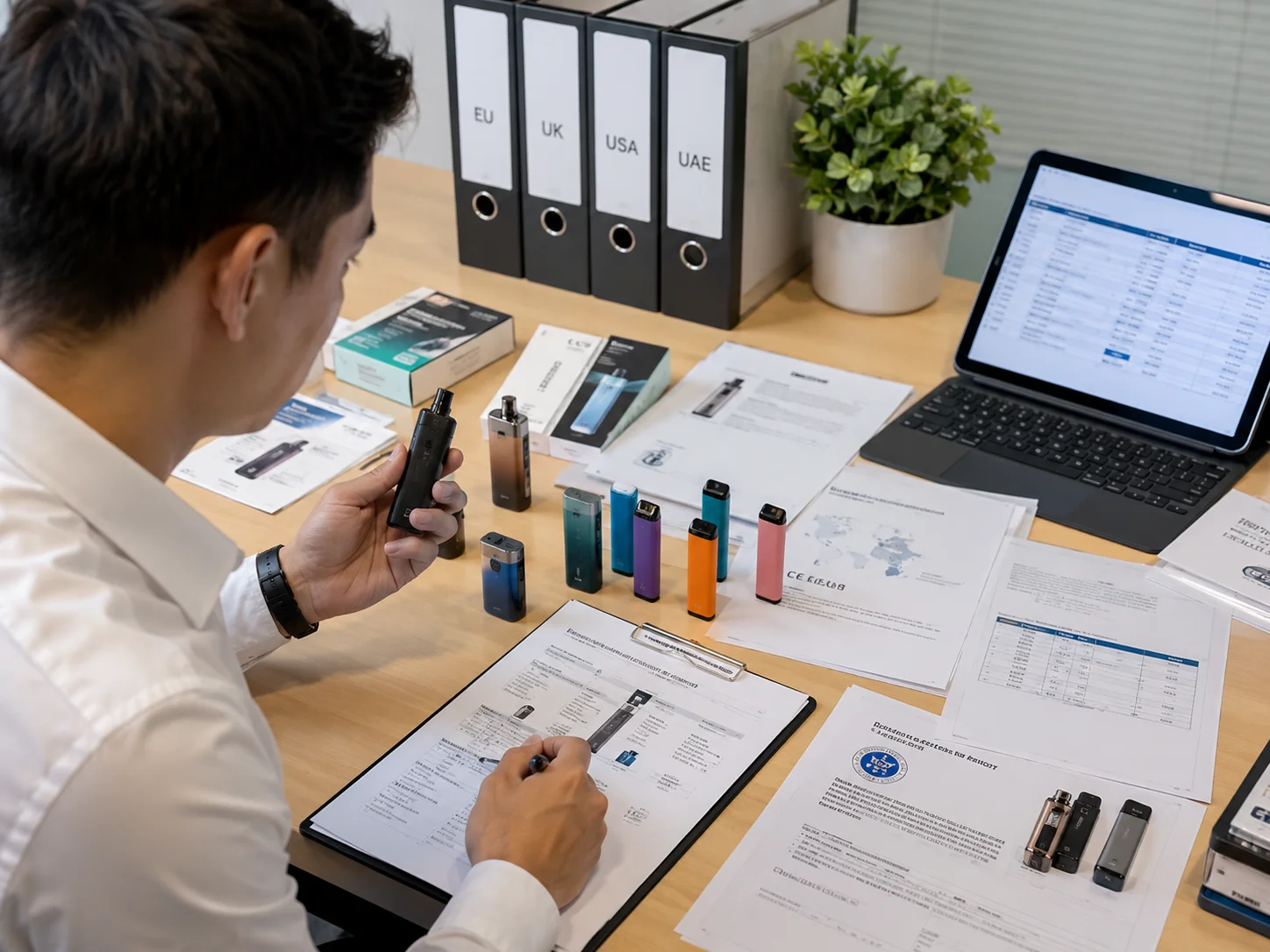
The right product depends on the market
I have seen buyers lose money because they copied another market. One product may sell in one country, but it may not fit another country’s rule. The UK and EU may care about TPD, e-liquid volume, nicotine strength, warnings, registration, and tax rules.[^6] The US can be more complex because federal rules and state rules both matter. Some states have their own restrictions. PMTA and white-list issues can also matter.[^7]
| Market question | Why I ask it |
|---|---|
| What country or state will sell it? | Rules are different by location |
| Is it for retail shelf or private sales channel? | Packaging and tax needs may change |
| Is tax stamp required? | Legal retail may need tax control |
| Is e-liquid volume allowed? | Large puff products may not fit open retail |
| Are flavors restricted? | Some markets ban or limit flavors[^8] |
| Who is importer of record? | Legal responsibility must be clear |
If a buyer wants to do long-term business, I always suggest checking local law first. If tax stamps are needed, the buyer may need to register locally and send stamp requirements to the supplier before production. If packaging needs special warnings, that must be planned before goods are made.
This part is not exciting, but it protects the business. A product that cannot be sold legally is not cheap. It is only a future problem waiting to happen.
How Can I Compare Packaging, Branding and Private Label Support?
Packaging is not only a box. It affects trust, shelf value, compliance, and repeat purchase.
To compare packaging and private label support, I check design ability, printing quality, warning label accuracy, barcode support, language versions, MOQ, lead time, brand protection, and whether the supplier understands local retail needs.
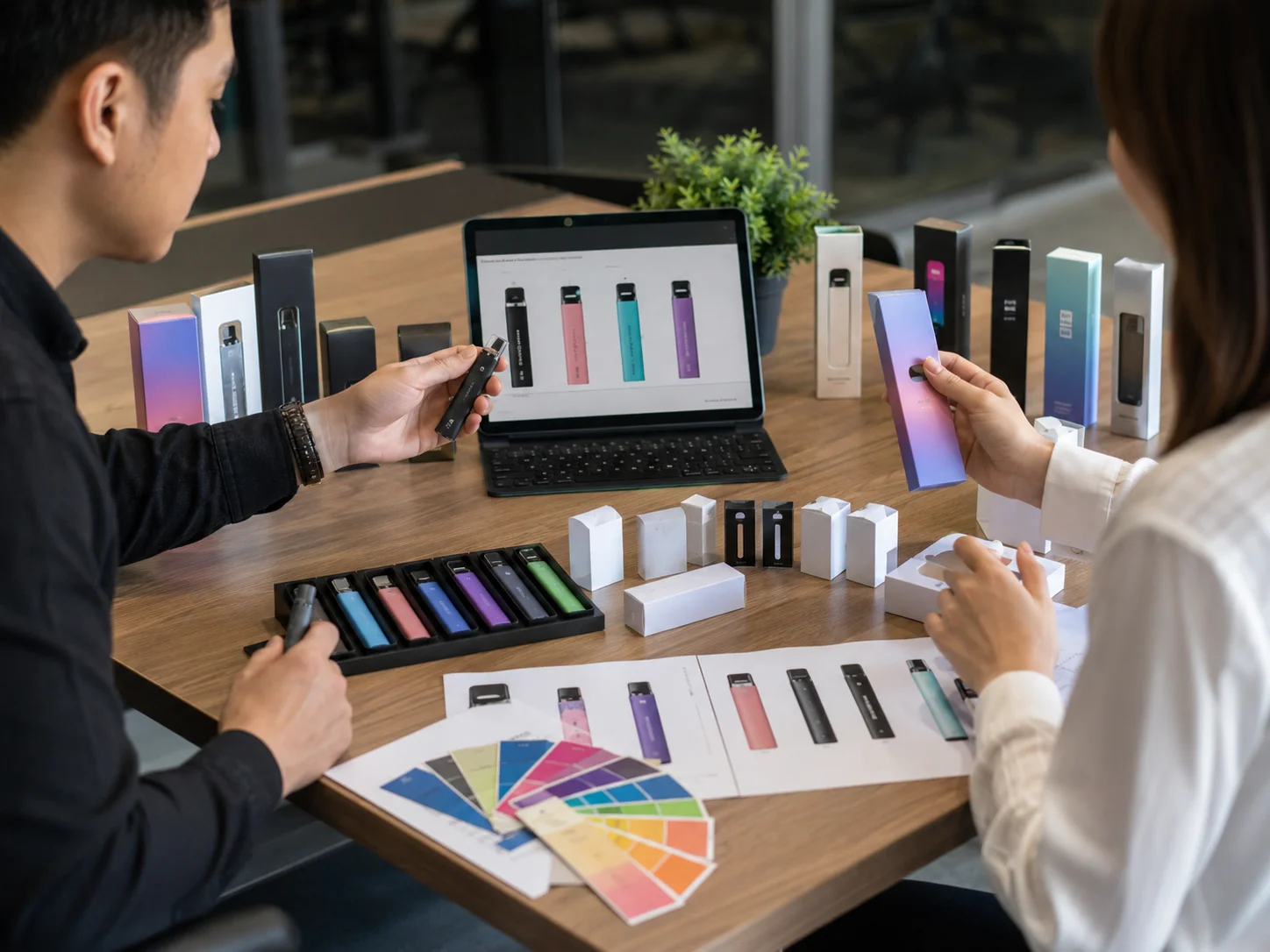
Private label is a commitment, not only a logo
Many buyers think private label means printing a logo. I think this is too simple. A logo is only the start. If you put your brand on a vape product, your name carries the complaint, the legal risk, and the customer trust. This is good if you want to build value. But it also means you need more responsibility.
OEM or private label usually needs higher MOQ, longer lead time, and more planning.[^9] For disposable vapes, one flavor may need a set MOQ. If you choose ten flavors, the total order can become large very fast. Production may take weeks. Shipping may take more weeks. This is not suitable for every new buyer.
| Branding option | Good side | Trade-off |
|---|---|---|
| Wholesale ready stock | Fast start, low MOQ, quick test | Little control over brand |
| Private label | Better brand value and repeat sales | Needs design, MOQ, and compliance |
| OEM | More product control | Higher cost, longer cycle, more risk |
| Licensed brand goods | Strong consumer trust | Harder to access and stricter channels |
Here’s a scenario I often discuss with e-commerce sellers. If you are still testing which flavor sells, do not rush into OEM. Start with stable stock. Learn your customer. Build your sales channel. After you know the real demand, then consider packaging and branding. This is slower in theory, but safer in real business.
How Should I Check Shipping Ability, Delivery Time and Risk Protection?
Shipping is where many good-looking deals fail. A supplier is not good if the goods cannot arrive safely and on time.
To check shipping ability, I ask for route details, delivery time, insurance terms, customs responsibility, tracking proof, warehouse location, local delivery ability, payment method, and what happens if customs holds the shipment.

Fast delivery and clear risk terms matter
For small buyers, overseas warehouse stock can reduce pressure if the product is legal to sell in that market. It can lower starting cost, shorten delivery time, and help test demand quickly. In some cases, local delivery can arrive in a few days. This helps cash flow because money turns faster.
For larger buyers, China direct shipping can give better price and more model choices. But the buyer must understand the route and risk. I always ask buyers to confirm insurance terms in writing. If a logistics agent says there is customs seizure insurance[^10], I ask what it covers, what it does not cover, and whether it applies only to first entry customs.
| Shipping point | What I confirm before order |
|---|---|
| Warehouse location | Is stock really local or still in China? |
| Delivery time | Is it realistic or just a sales promise? |
| Tracking proof | Can I see recent delivered records? |
| Customs terms | Who takes which risk? |
| Insurance | What event is covered and what is excluded? |
| Payment | Does account name match the company? |
I do not advise buyers to avoid local law or bypass customs rules. That is not a long-term business. If a country has strict inspection, the better answer is to work with a licensed importer, proper broker, tax process, and compliant product route. If the risk is too high, do not force the order.
How Do I Evaluate Communication, Warranty and After-Sales Responsibility?
A supplier’s words before payment are easy. Their behavior after problems shows their real value.
To evaluate communication and after-sales, I check response speed, professional questions, honesty about risk, warranty policy, defective handling, proof support, payment safety, and whether the supplier cares about long-term cooperation instead of only pushing payment.

The chat already shows the supplier type
I pay close attention to how a supplier talks. A reliable supplier usually asks about your market, sales channel, quantity, compliance need, and delivery plan. They may even tell you not to buy a certain product if it does not fit your market. This is a good sign. It means they want repeat business.
A high-risk supplier often does the opposite. They push for payment. They offer a price far below the normal market. They avoid video proof. They cannot explain product source. They say “original, original” but give no real proof. They may use a PI with one company name and a payment account with another name[^11].
| Supplier behavior | My reading |
|---|---|
| Asks about market and risk | More professional |
| Shares recent tracking proof | More real |
| Gives clear warranty terms | More responsible |
| Warns about compliance limits | More long-term minded |
| Pushes only low price | Higher risk |
| Pushes urgent payment | Possible scam signal |
| Uses mismatched account | Serious warning sign |
Warranty also needs clear wording. What defective rate is accepted? How do I prove the defect? Will the supplier replace in the next order? Will they refund? How fast will they respond? These details matter because vape products have real after-sales risk[^12].
In my experience, the best supplier is not the one who says every problem is impossible. The best supplier is the one who tells you how they handle problems when they happen.
Conclusion
I compare vape suppliers by total business risk, not only price. A real supplier helps me protect quality, delivery, compliance, cash flow, and long-term trust.
[^1]: "Puff Counts vs. Liquid Capacity: Unmasking the Truth - Cloud Barista", https://cloudbarista.com/blogs/news/puff-counts-vs-liquid-capacity-unmasking-the-truth. Provides a technical explanation of how factors like e-liquid volume, coil resistance, and battery power determine the achievable puff count of a vaping device, supporting the claim that advertised puff counts can be physically unrealistic. Evidence role: mechanism; source type: research. Supports: The relationship between e-liquid volume, battery capacity, coil type, and the resulting number of puffs.. Scope note: The exact number of puffs per milliliter can vary based on device settings and user behavior, so any calculation is an estimate. [^2]: "Innovative QR Code System for Tamper-Proof Generation and Fraud ...", https://pmc.ncbi.nlm.nih.gov/articles/PMC12252379/. Describes the tactic where counterfeiters use QR codes that direct consumers to a fraudulent website designed to mimic the legitimate brand's verification page, thereby falsely confirming a fake product as 'genuine'. Evidence role: case_reference; source type: other. Supports: The use of fraudulent QR codes and spoofed verification websites as a tactic in product counterfeiting.. [^3]: "Does 'Dry Hit' vaping of vitamin E acetate contribute to EVALI ... - PMC", https://pmc.ncbi.nlm.nih.gov/articles/PMC7470376/. Details the causes of a 'burnt hit,' which include the degradation of the wicking material (often cotton) when it is not sufficiently saturated with e-liquid, or the buildup of residue ('gunk') on the coil itself, which then overheats and imparts a burnt flavor. Evidence role: mechanism; source type: other. Supports: The mechanism behind a vape coil producing a burnt taste.. [^4]: "Lithium-Ion Batteries under Low-Temperature Environment - PMC", https://pmc.ncbi.nlm.nih.gov/articles/PMC9698970/. Explains that cold temperatures increase the internal resistance of lithium-ion batteries, reducing their capacity and ability to deliver stable voltage. Higher-quality cells may be engineered with electrolytes that mitigate this effect compared to lower-grade cells. Evidence role: mechanism; source type: education. Supports: The effect of low temperatures on the performance of lithium-ion batteries, which are commonly used in vape devices.. Scope note: The source discusses lithium-ion batteries in general, not specifically those used in vapes, but the principles are directly applicable. [^5]: "Elf Bar - Wikipedia", https://en.wikipedia.org/wiki/Elf_Bar. Reports on the market strategy of major vape brands, noting that many establish exclusive or semi-exclusive distribution networks and agency agreements in key markets to control supply, pricing, and brand image. Evidence role: general_support; source type: other. Supports: The distribution and market control strategies employed by major disposable vape brands.. Scope note: The specific strategies can vary by brand and region and may change over time. [^6]: "Emerging Electronic Cigarette Policies in European Member States ...", https://pmc.ncbi.nlm.nih.gov/articles/PMC8025686/. Outlines the requirements for electronic cigarettes under the EU Tobacco Products Directive (TPD), including limits on e-liquid container size (10ml for refill containers) and tank volume (2ml), a maximum nicotine strength of 20 mg/ml, and specific packaging and warning label requirements. Evidence role: definition; source type: government. Supports: The specific rules for vaping products under the EU's Tobacco Products Directive (TPD) and its implementation in member states and the UK.. [^7]: "Premarket Tobacco Product Applications - FDA", https://www.fda.gov/tobacco-products/market-and-distribute-tobacco-product/premarket-tobacco-product-applications. Explains the U.S. Food and Drug Administration (FDA) requirement for manufacturers of new tobacco products, including vaping products, to submit a Premarket Tobacco Product Application (PMTA) demonstrating that the product is appropriate for the protection of public health. Products without a marketing grant order from the FDA are considered to be on the market illegally. Evidence role: definition; source type: government. Supports: The regulatory framework for vaping products in the United States, particularly the Premarket Tobacco Product Application (PMTA) process.. Scope note: The regulatory landscape is subject to ongoing litigation and changes. [^8]: "Regulation of electronic cigarettes - Wikipedia", https://en.wikipedia.org/wiki/Regulation_of_electronic_cigarettes. Provides data and analysis on global tobacco control policies, including a list of jurisdictions that have implemented bans or restrictions on characterizing flavors in electronic nicotine delivery systems (ENDS) as a public health measure. Evidence role: statistic; source type: institution. Supports: The existence and prevalence of national or sub-national bans on flavored vaping products.. Scope note: The list of jurisdictions and the specifics of their regulations are constantly evolving. [^9]: "Original equipment manufacturer - Wikipedia", https://en.wikipedia.org/wiki/Original_equipment_manufacturer. Defines Original Equipment Manufacturer (OEM), where a product is made to a buyer's unique specifications, and private labeling, where a manufacturer's existing product is branded for a buyer. Both models typically involve higher minimum order quantities (MOQs) and longer lead times than purchasing wholesale stock due to the need for custom production runs and design work. Evidence role: definition; source type: encyclopedia. Supports: The definitions and typical business requirements of different manufacturing arrangements like OEM, ODM, and private labeling.. [^10]: "19 CFR Part 10 -- Articles Conditionally Free, Subject to a ... - eCFR", https://www.ecfr.gov/current/title-19/chapter-I/part-10. Discusses the complexities of insuring shipments of regulated products. While general cargo insurance often excludes losses from customs seizure due to non-compliance, some specialized logistics providers may offer limited-risk protection or 'shipping guarantees' for certain routes, though these are not traditional insurance policies and have strict terms and conditions. Evidence role: general_support; source type: other. Supports: The nature of shipping insurance and its application to high-risk or regulated goods like vapes.. Scope note: The availability and terms of such protection are highly dependent on the provider, route, and product legality, and may not constitute formal insurance. [^11]: "7 Red Flags: Protecting Against Fraud in Trade Finance", https://grow.exim.gov/blog/seven-red-flags-protecting-against-fraud-in-trade-finance. Identifies common tactics used in business-to-business payment fraud, listing a mismatch between the beneficiary name on an invoice and the name on the requested bank account as a significant warning sign that could indicate a scam or account takeover. Evidence role: expert_consensus; source type: institution. Supports: The identification of common red flags in international trade and payment fraud.. [^12]: "Health Effects of Vaping | Smoking and Tobacco Use", https://www.cdc.gov/tobacco/e-cigarettes/health-effects.html. Presents research on the reliability and failure modes of disposable electronic cigarettes, noting common issues such as battery failure, leakage, and inconsistent performance, which contribute to a significant defect rate and create after-sales challenges for retailers. Evidence role: statistic; source type: research. Supports: The failure rates and common defects found in disposable electronic cigarettes.. Scope note: Specific defect rates can vary widely by manufacturer, model, and production batch.