
Choosing the right vapes feels overwhelming. Picking the wrong products means dead stock and lost money. I will show you how to select winners and avoid these expensive mistakes.
To build a bestseller assortment, start with small batches of globally recognized brands like Elf Bar[^1] from an overseas warehouse. This minimizes risk and lets you test your market. Focus on product turnover speed and supplier reliability, not just the lowest price, to build a profitable business.
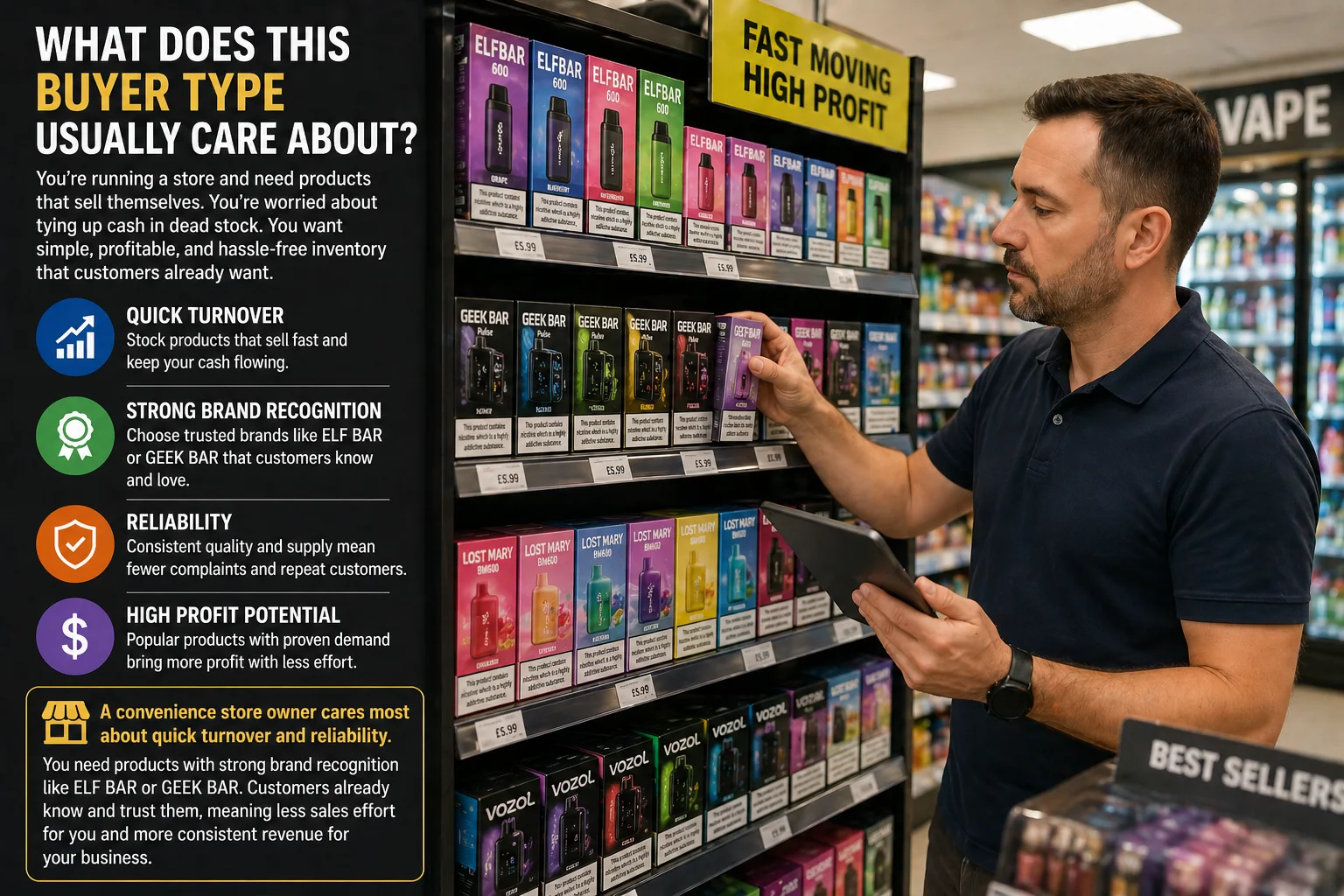
That is the quick answer. But building a real, lasting business needs a deeper understanding. I have been in this export business since 2011. I have seen countless new retailers make the same mistakes over and over. They chase low prices, get stuck with bad products, and lose their money. Let's break down how you can avoid this and build a successful vape business from day one.
Which product lines are safer for a first wholesale order?
Are you worried about buying a thousand vapes that just sit on your shelf? This fear stops many new retailers before they even start. Let's look at the safer choices to get you started with confidence.
For a first order, stick to well-known brands with proven market demand, like Elf Bar, Vozol, or Fumot. If direct access is difficult, find a supplier with overseas stock of these brands. Your goal is not massive profit on day one, but to test the market with a product you know can sell.
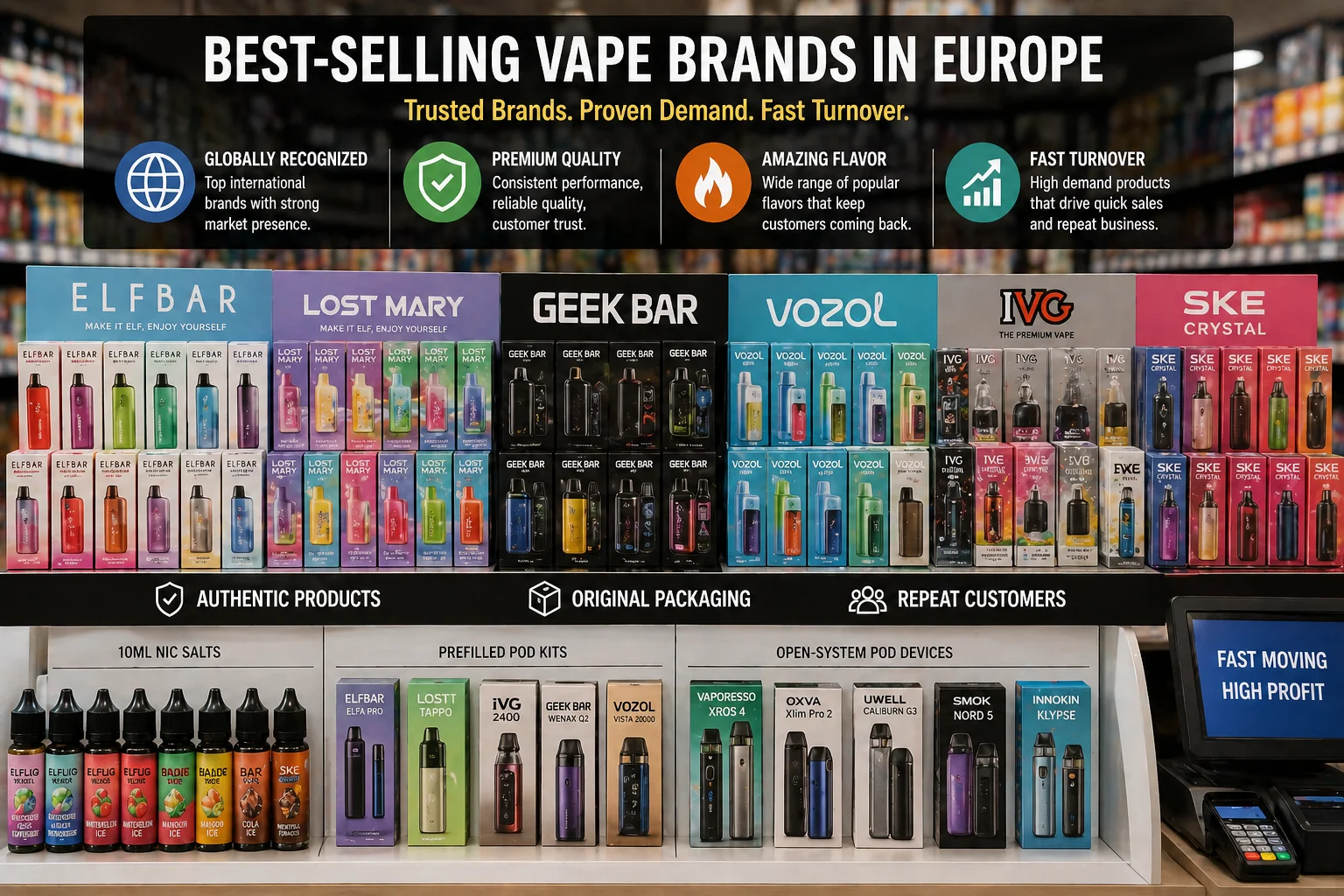
Choosing the right brand is your first big decision. The market has clear tiers, and understanding them is key.
Tier 1: The Global Giants
Brands like ELF BAR are global leaders for a reason. They have massive brand recognition, and customers trust their quality and taste. GEEK BAR is also a top brand, owned by the same company as Elf Bar[^2]. These are always a safe bet because people are already looking for them. However, many of these giants, like RAZZ BAR, VAPSOLO, and MR FOG, operate on a strict national distributor model. They only work with one agent per country who must order huge volumes, sometimes over a million units a month[^3]. For a small retailer, it's almost impossible to buy from them directly. You would have to buy from the national agent at a much higher price.
Tier 2: Reliable and Popular Alternatives
Brands like VOZOL and FUMOT are also top-tier choices. They offer excellent quality and have a strong following. Like the giants, they often have strict distribution channels, but finding them through a reliable wholesaler with stock is possible. These brands provide a great balance of quality, demand, and accessibility. They are a fantastic starting point.
Tier 3: The Budget Entry
For markets where price is the most important factor, you might see brands like Bang King or Bang Leader. These are among the cheapest legitimate brands from China that hold the proper licenses[^4]. But you must understand the trade-off. The lowest price means the quality and consistency will not match the top-tier brands. You may face more customer complaints or defects. They can be a good choice if your customers demand the lowest price possible, but be prepared for the headaches.
My advice? Start with a Tier 1 or Tier 2 brand from a supplier with a low minimum order quantity (MOQ). This lets you enter the market with a quality product without betting your entire budget.
How can I compare two brands without relying only on price?
All vapes look similar. One is €2, another is €4. Is the cheaper one a bargain? It's often a trap that will cost you much more in the long run.
Look past the price tag. Compare the core components: the battery type, the e-liquid quality, and the coil technology. A good product ensures consistent performance and customer satisfaction, which are far more valuable than a low initial cost. Cheap vapes cut corners on these essential parts.
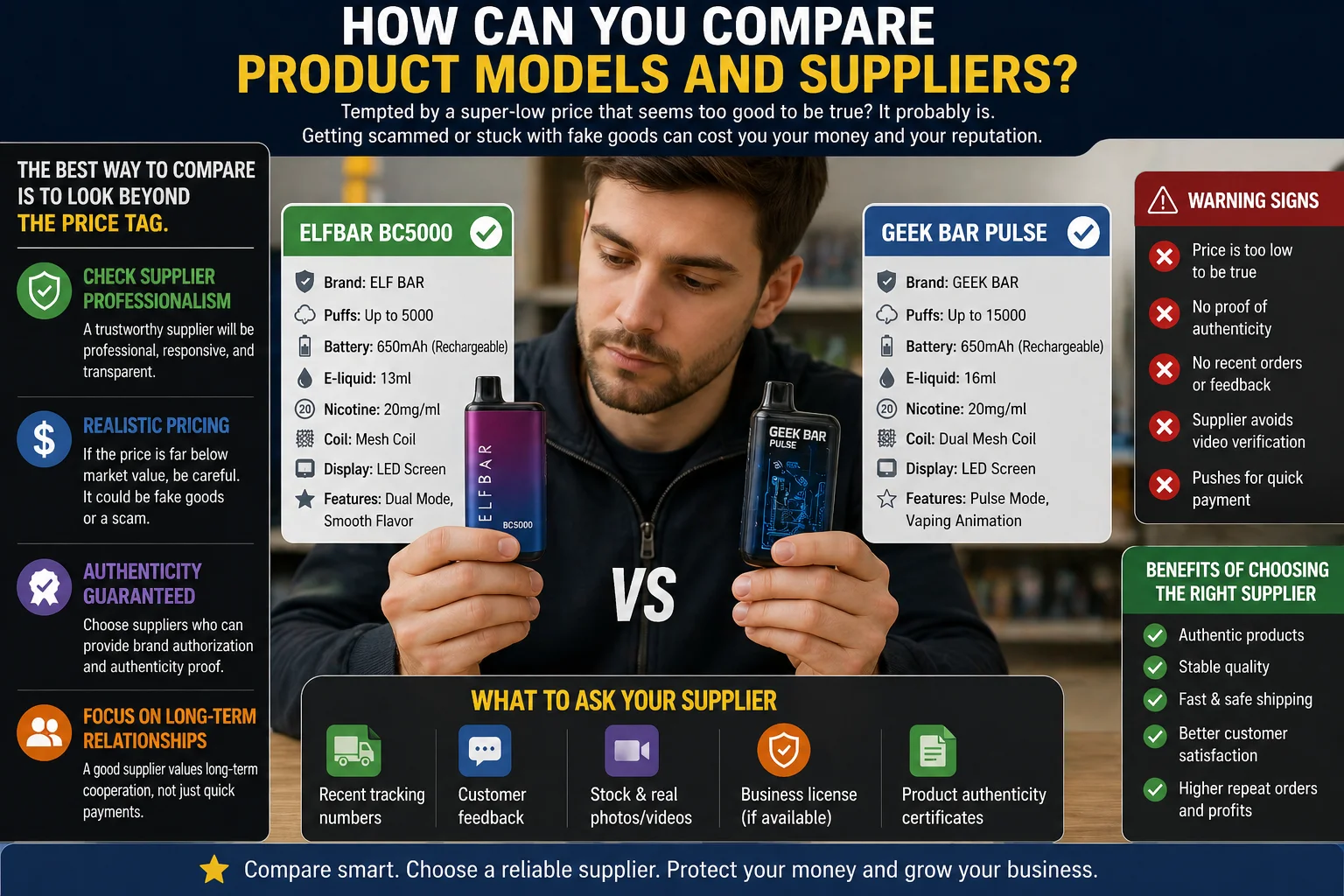
The saying "you get what you pay for" is a fundamental truth in this business. An authentic, quality vape and a cheap counterfeit might look the same on the outside, but they are completely different inside. I have seen too many new sellers fall into the trap of cheap fakes, especially with popular brands like JNR in France, where fakes are everywhere[^5]. They lose their money and their reputation. Here is a breakdown of what you are really paying for.
| Feature | High-Quality Brand (e.g., Elf Bar) | Cheap/Fake Brand |
|---|---|---|
| E-liquid | Stable formula, pure taste, accurate nicotine. | Unknown source, chemical taste, risk of being unhealthy[^6]. |
| Battery | A-grade Lithium-ion. Long life, stable output, works in the cold. | Cheap Manganese. Dies fast, inconsistent power, fails in cold weather[^7]. |
| Coil & Wick | Quality mesh coil. Consistent flavor from first to last puff. | Poorly made coil. Burns easily, tastes bad after a short time. |
| Puff Count | More realistic, based on e-liquid volume. | Highly inflated numbers (e.g., 300,000 puffs) that are physically impossible[^8]. |
| Build & Feel | Solid construction, good weight, feels like a quality product. | Flimsy plastic, feels light and cheap, leaks easily. |
| Customer Experience | Happy customers, good reviews, repeat purchases. | Complaints, returns, bad reviews, lost customers. |
| Your Business | Fast sales, good cash flow, long-term growth. | Dead stock, refund costs, reputation damage. |
That €2 "bargain" vape is cheap because the maker used a terrible battery, mystery e-liquid, and a coil that will burn out quickly. It's not a business model; it's a trap. Your customers will not come back, and you will be left with a pile of junk you cannot sell.
Should I mix brands or start with one stronger line?
You want to offer variety to your customers, but a wide selection ties up your cash. Starting too broad can be a financial disaster for a new business. Let's find the smart balance.
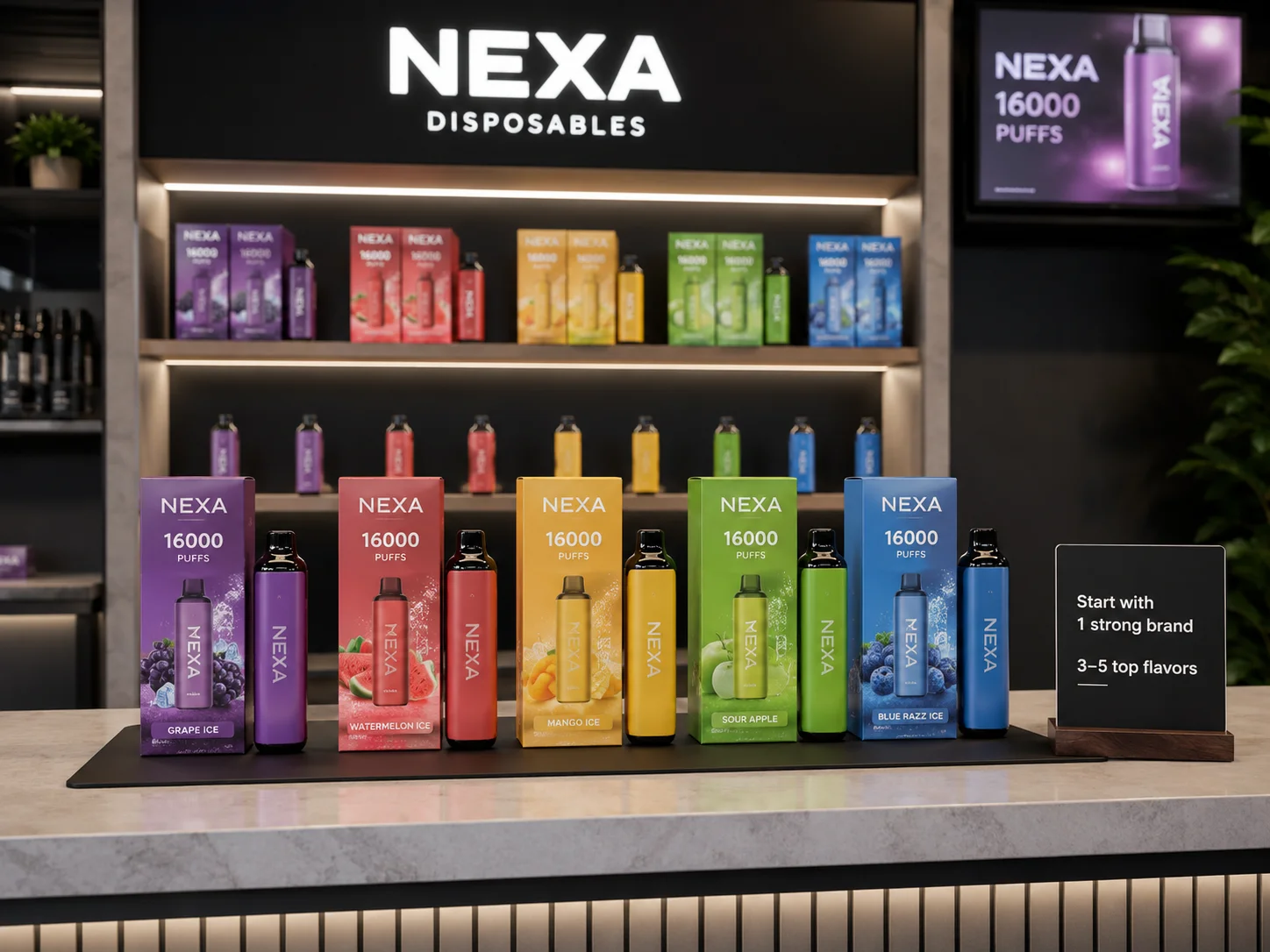
For your first order, absolutely start with one strong, well-known brand. Pick 3-5 of its most popular flavors. This minimizes your initial investment and simplifies your marketing. You can add more brands once you have steady cash flow and understand what your customers really want.
I see new sellers make this mistake all the time. They want to look like a big store, so they buy a little bit of everything. This is the wrong way to think.
The "One Strong Line" Strategy
This is the best way for any new retailer to start. Here is why:
- Focuses Your Money: Instead of spending €1000 on ten different products that might not sell, you spend €400 on one proven winner. Your cash is working efficiently.
- Simplifies Your Marketing: It's much easier to become known as the local spot for Elf Bar than the store with "some vapes." You can build a reputation around a product people already want.
- Easier Inventory Management: Tracking a few SKUs is simple. Tracking dozens is a headache and makes it hard to see what's actually selling.
I remember a customer from Germany who first contacted me. He wanted to buy 10 units of 10 different brands. I told him, "No, that's a mistake. Start with 50 units of Elf Bar in the top 3 flavors from our German warehouse." He was hesitant but trusted me. He sold out in one week. Now, his shop stocks five different brands, but he grew to that point intelligently. He started smart, proved his market, and then expanded.
How do I reduce the risk of choosing the wrong product mix?
The biggest fear for any retailer is a shelf full of unsold products. Every wrong product is cash that you cannot use. Here is how we help you avoid this and ensure fast sales.
The best way to reduce risk is to minimize your order size and delivery time. Use a supplier with an overseas warehouse. You can place a small trial order of 50 units and get it in days. This allows for rapid market testing without tying up thousands of euros for months.
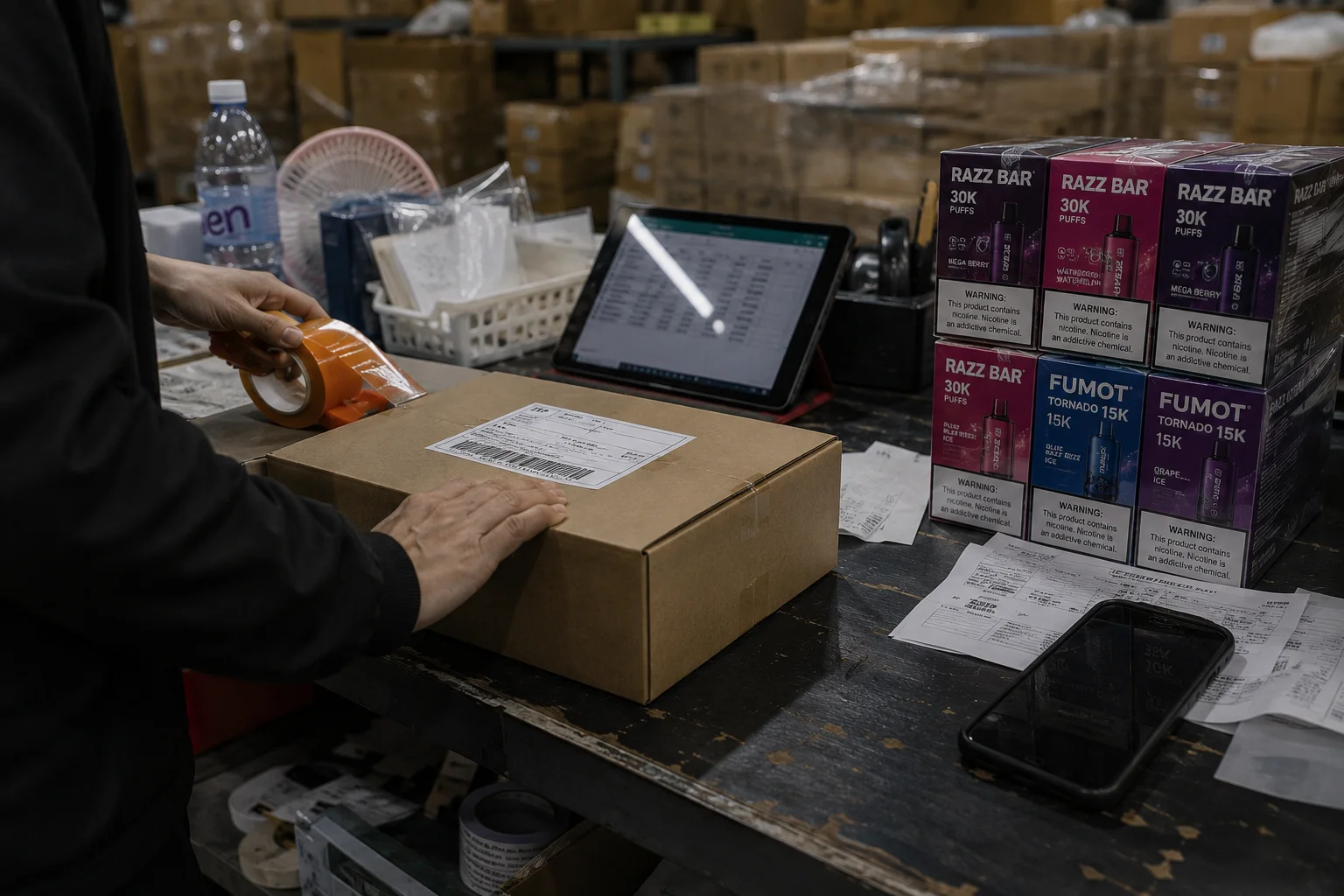
The secret to making money in wholesale is not the profit margin on one item. It is the speed of your capital turnover.[^9] Think about it. Would you rather make 50% profit once a year, or 20% profit 12 times a year? The answer is obvious. Fast turnover is everything. This is why our overseas warehouse model is so powerful for smaller retailers.
Here is how it solves your biggest risks:
- Capital Risk: A traditional order from China might require a minimum of 2,000 units. That can be a huge investment that ties up all your cash. Our warehouse model lets you start with as few as 50 units for under €400. This is a tiny, low-risk cost to start your business.
- Time Risk: A sea shipment from China can take two months.[^10] By the time your products arrive, the market may have changed. With our warehouses in Germany and the US, we can deliver to your door in 1-5 days. You can react to the market instantly.
- Customs Risk: International shipping is risky. We've heard horror stories of shipments being seized by customs[^11], resulting in a total loss for the buyer. When you order from our local warehouse, we have already handled the difficult import process. The risk is on us, not you. For larger orders from China, we always insist on full customs seizure insurance, but this does not cover "secondary clearance" in some EU countries like Denmark or Sweden[^12]. For those places, ordering from the German warehouse is the only truly safe option.
We take on all the hard parts: the huge upfront investment, the shipping logistics, the customs risks, and the warehousing costs. We let you, the customer, do the easiest part: selling. This allows you to focus 100% of your energy on growing your sales.
Conclusion
Focus on authentic products from reliable suppliers, and prioritize fast turnover. Start small with a proven brand from a local warehouse to test your market, then scale up intelligently. This is how you win.
[^1]: "Online Interest in Elf Bar in the United States: Google Health Trends ...", https://pmc.ncbi.nlm.nih.gov/articles/PMC11576596/. Market research reports and industry sales data from recent years consistently place Elf Bar among the top-selling disposable vape brands globally, often holding a dominant market share in key regions like the US and UK. Evidence role: statistic; source type: other. Supports: The source should provide market analysis or sales data demonstrating the significant global market share held by the Elf Bar brand in the disposable vape category.. [^2]: "Elf Bar - Wikipedia", https://en.wikipedia.org/wiki/Elf_Bar. Both the Elf Bar and Geek Bar brands are owned by the Shenzhen-based company iMiracle Technology Co., Ltd., a fact reported by numerous business and industry news outlets. Evidence role: general_support; source type: other. Supports: The source should confirm the corporate relationship between the Elf Bar and Geek Bar brands, tracing them to a common parent company.. [^3]: "Exclusive Distribution Agreement between the Registrant ... - SEC.gov", https://www.sec.gov/Archives/edgar/data/1376231/000121390024001269/ea191186ex10-1_vprbrands.htm. Industry analyses describe the distribution model for top-tier vape brands as often relying on exclusive national or regional agents who are required to commit to substantial minimum order quantities, which can reach hundreds of thousands or millions of units to maintain exclusivity. Evidence role: general_support; source type: other. Supports: The source should provide insight into the business models of major vape manufacturers, specifically regarding the high-volume purchase commitments required for exclusive national distribution rights.. Scope note: Specific contractual details like an exact 'million unit' figure are often confidential and may not be publicly available; the source would support the general principle of very high volume requirements. [^4]: "An overview of the China National Tobacco Corporation and State ...", https://pmc.ncbi.nlm.nih.gov/articles/PMC3541807/. China's State Tobacco Monopoly Administration (STMA) maintains a list of approved e-cigarette manufacturers that have been granted production licenses under the country's 2022 regulations. The legitimacy of a brand can be checked by verifying if its manufacturer appears on this official list. Evidence role: general_support; source type: government. Supports: The source should be an official registry or announcement from China's tobacco regulatory authority that lists licensed e-cigarette manufacturers.. Scope note: The source would confirm the licensing status of the manufacturer, not necessarily the 'Bang King' brand itself, as branding and manufacturing can be separate entities. [^5]: "JNR Official on Instagram: " Say NO to Fakes. Say YES to the REAL ...", https://www.instagram.com/p/DKdUC_QqflC/. Reports from French media and public health bodies have highlighted the widespread circulation of counterfeit disposable vapes, with specific brands like JNR being frequently mentioned as targets for imitation, posing risks to consumers and legitimate businesses. Evidence role: case_reference; source type: other. Supports: The source should provide evidence, such as news reports or official warnings, of the significant problem of counterfeit JNR brand vapes circulating in the French market.. [^6]: "Chemical Constituents Involved in E-Cigarette, or Vaping Product ...", https://pmc.ncbi.nlm.nih.gov/articles/PMC7355865/. Chemical analyses of counterfeit and unregulated vaping products have found that they can contain harmful substances not present in regulated products, including heavy metals, pesticides, and incorrect levels of nicotine, posing significant health risks to users. Evidence role: mechanism; source type: paper. Supports: The source should be a scientific study or public health report that analyzes the contents of illicit or counterfeit e-cigarettes and identifies harmful or unlisted substances.. [^7]: "DOE Explains...Batteries - Department of Energy", https://www.energy.gov/science/doe-explainsbatteries. The performance of electrochemical cells is temperature-dependent. Battery chemistries often used in low-cost electronics, such as zinc-manganese, experience a significant increase in internal resistance and a drop in capacity in cold conditions, leading to poor performance or failure, whereas lithium-ion cells are generally more robust at lower temperatures. Evidence role: mechanism; source type: education. Supports: The source should explain the electrochemical principles demonstrating why certain battery chemistries, like alkaline or zinc-manganese, have significantly reduced performance and voltage output at low temperatures compared to lithium-ion cells.. [^8]: "Measurement of Electronic Cigarette Frequency of Use Among ...", https://pmc.ncbi.nlm.nih.gov/articles/PMC7171268/. Investigations by consumer groups and industry media have shown that the puff counts advertised on many disposable vapes are often exaggerated. Based on the typical e-liquid volume and battery life, the actual number of puffs is frequently a fraction of the number claimed on the packaging. Evidence role: statistic; source type: other. Supports: The source should provide an analysis or investigation demonstrating that the advertised puff counts on many disposable vapes are highly inflated and not achievable given the device's e-liquid volume and battery capacity.. [^9]: "Working Capital Turnover Ratio - Wikipedia", https://en.wikipedia.org/wiki/Working_Capital_Turnover_Ratio. In business management and finance, the capital turnover ratio is a key metric for measuring a company's efficiency in using its capital to generate sales. A higher turnover rate allows a business to compound its profits more frequently, making it a critical driver of profitability, especially in wholesale and retail industries. Evidence role: definition; source type: education. Supports: The source should define the concept of capital turnover (or inventory turnover) and explain its critical role in determining a company's efficiency and overall profitability.. [^10]: "Shipping from China to Germany [Updated May 2026 ] | Freightos", https://www.freightos.com/shipping-routes/shipping-from-china-to-germany/. Standard sea freight transit times from major ports in China to Northern Europe or the US West Coast typically range from 30 to 40 days. When factoring in port congestion, customs clearance, and inland transport, the total door-to-door time can extend to 60 days or more. Evidence role: statistic; source type: other. Supports: The source should provide recent data on average port-to-port transit times for sea freight from major Chinese ports to destinations in Europe and North America.. Scope note: Shipping times are subject to constant change based on global logistics conditions, carrier routes, and port efficiency. [^11]: "CBP, HHS Seize $86.5 Million Worth of Illegal E-Cigarettes in ...", https://www.cbp.gov/newsroom/local-media-release/cbp-hhs-seize-865-million-worth-illegal-e-cigarettes-largest-ever. Customs agencies in the US, UK, and EU regularly report on the seizure of millions of illicit vaping products at the border. These seizures are often due to non-compliance with local regulations, such as flavor bans, excessive nicotine content, or improper tax documentation, representing a substantial financial risk for importers. Evidence role: statistic; source type: government. Supports: The source should be an official report from a national or international customs agency detailing seizures of non-compliant or illicit vaping products.. [^12]: "Denmark - Customs Regulations - International Trade Administration", https://www.trade.gov/country-commercial-guides/denmark-customs-regulations. In some EU member states, such as Sweden, customs authorities may subject certain goods like e-cigarettes to intensive secondary inspection to verify compliance with national laws, which can be more stringent than the EU's TPD. Logistics and insurance experts note that some shipping insurance policies may classify seizures or delays during this phase as an administrative or regulatory risk, which may be excluded from standard coverage. Evidence role: mechanism; source type: other. Supports: The source should explain the nature of intensive secondary customs inspections in certain EU countries and why standard insurance policies might exclude losses resulting from such administrative actions.. Scope note: The specifics of insurance coverage depend entirely on the individual policy's terms and conditions.