
Your shelves are full, but your bank account is not. Slow-moving vape stock is tying up your cash. You need a strategy to sell it without losing your shirt.
The best way to handle slow-moving vape inventory is to identify it early, use targeted promotions like small discounts or bundles, and stop reordering poor performers. This strategy helps you turn aging stock back into cash quickly, protecting your overall business health.
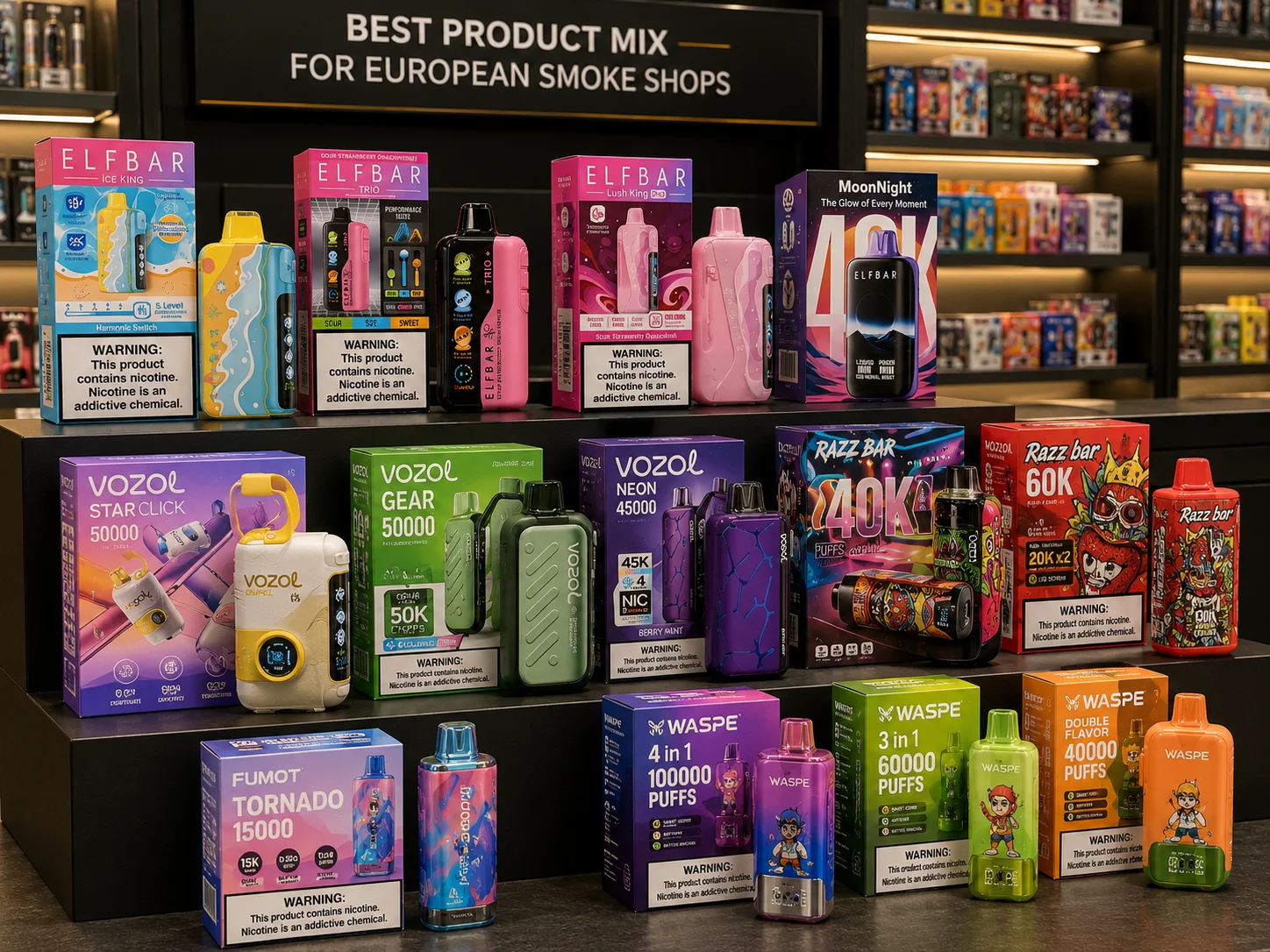
I've been in the export business for over 15 years. I've seen many clients, from small shops to large chains, struggle with this. They order exciting new products but get stuck with old ones. The key isn't just about selling more; it's about selling smarter. You need to free up your cash so you can invest in what actually sells. Let's look at some practical steps I've shared with my partners over the years. These methods will help you clear out old inventory and keep your cash flow healthy.
Why Slow-Moving Vape Inventory Hurts Cash Flow?
You see boxes of vapes sitting there, not selling. It's more than just a storage problem; it's a cash problem. Every unsold item is cash you cannot use.
Slow-moving inventory hurts cash flow because it ties up your money in products that aren't selling.[^1] This prevents you from paying bills, making payroll, or buying new, profitable stock. It also adds costs for storage and increases the risk of loss through expiry or damage.
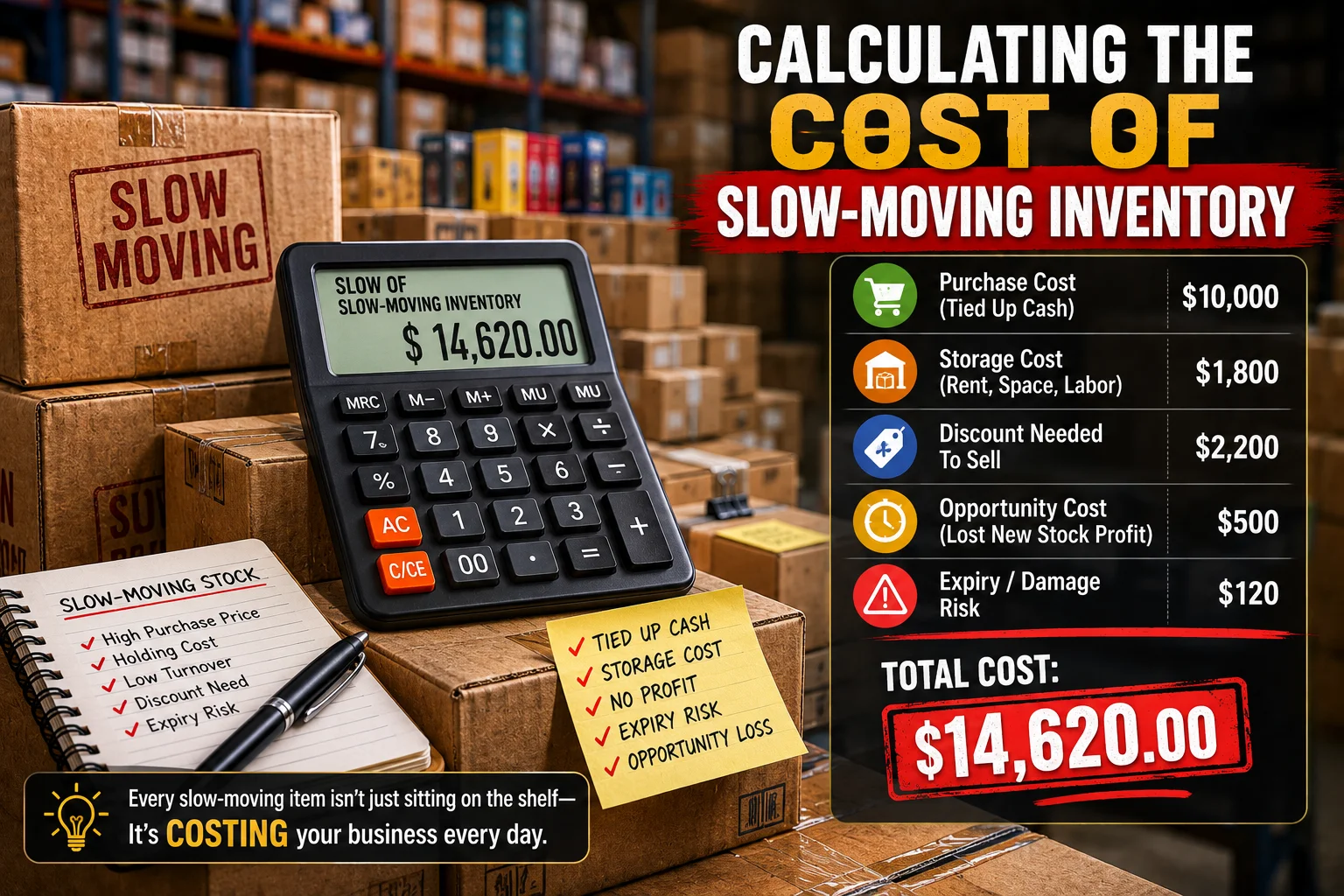
When we ship products to our clients in Europe or the US, we know they need to sell them. If they don't, they can't reorder from us. So, we often talk about inventory health. The problem is bigger than just the initial purchase price. Your money is stuck. You can't use it to buy a new, hot-selling flavor that customers are asking for. This is called opportunity cost.[^2] You're losing potential sales because your cash is frozen. On top of that, you are paying for the space to store these items. Warehousing isn't free. Over time, these small costs add up. The real danger is when the products get close to their expiry date, making them worthless.
Here is a simple breakdown of the hidden costs:
| Hidden Cost | Description | Impact on Your Business |
|---|---|---|
| Capital Cost[^3] | The money you spent to buy the inventory. | Cash is tied up, reducing liquidity. |
| Storage Cost | Rent for warehouse space, insurance, and security. | Reduces your net profit margin. |
| Opportunity Cost | Lost profits from not investing in fast-selling items. | Limits your growth potential. |
| Risk of Obsolescence | Products expiring, becoming outdated, or getting damaged. | Can lead to a total loss on the inventory. |
Identify Slow Movers Before They Become Dead Stock?
Your inventory looks fine at a glance. But hidden within are products that haven't moved in months. Not knowing which ones they are is a recipe for financial trouble.
To identify slow movers, you must regularly analyze your sales data. Use your inventory management system to filter products by sales volume over the last 60-90 days[^4]. Flag any SKU that falls far below the average sales rate for its category for immediate review.
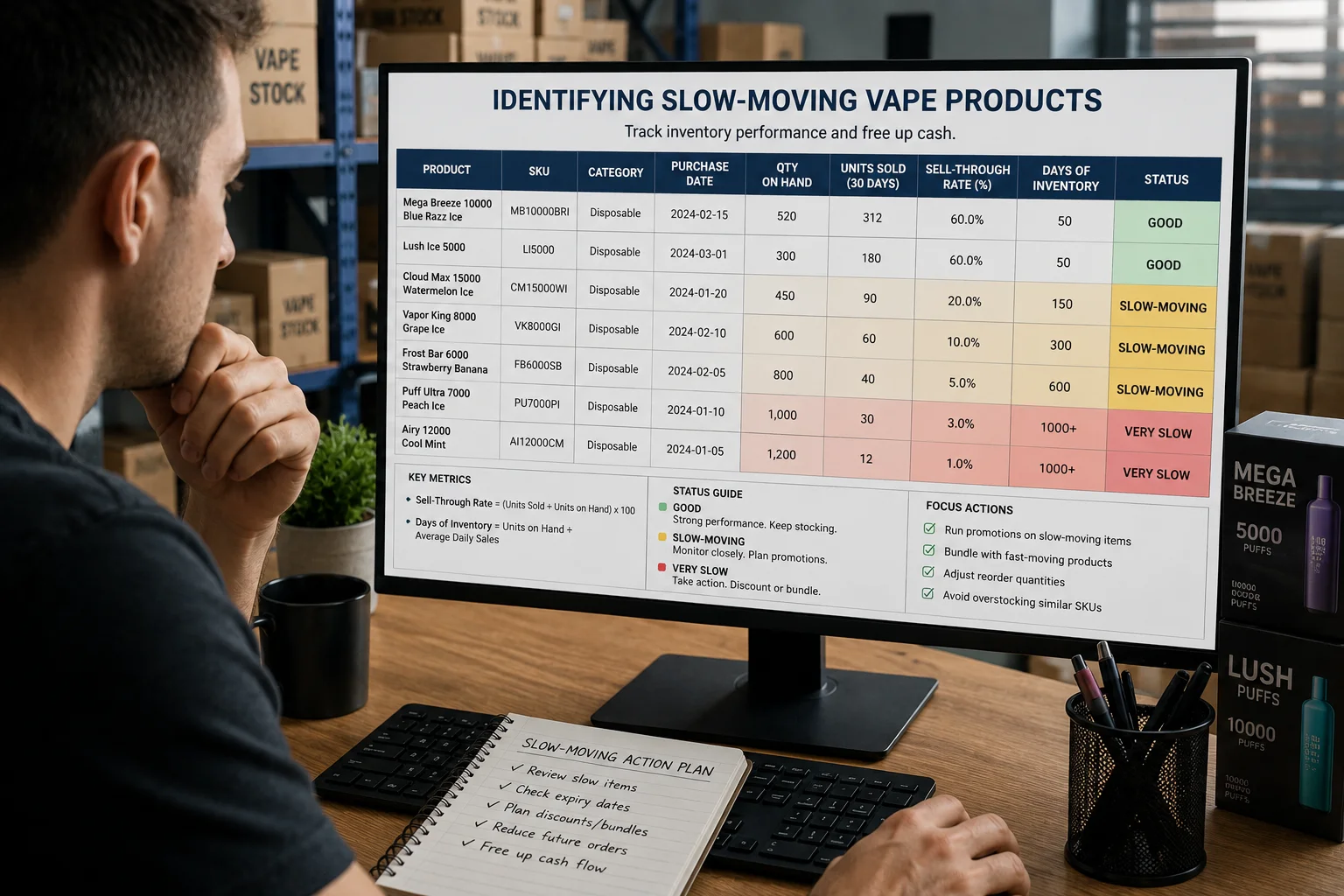
I always tell my clients, "Your sales data tells a story." You have to listen to it. Don't rely on feelings or which product you personally like. The numbers don't lie. Most point-of-sale (POS) or e-commerce platforms have basic reporting tools. Set a recurring calendar reminder for the first day of every month to run an inventory velocity report. This report shows you how fast your products are selling. Create a simple rule for your business, for example, a "90-Day Rule." If a product hasn't sold a single unit in 90 days, it's a slow mover. If it's been over 180 days, it's dead stock.[^5]
Here's a simple checklist to get started:
- Run a Sales Report: Filter by product or SKU for the last 90 days.
- Sort by Quantity Sold: Put the lowest sellers at the top.
- Check Inventory Levels: Compare the quantity on hand to the sales rate. A product with 100 units in stock that sold only 2 is a problem.
- Tag the Problems: Mark these items in your system as "Slow-Moving" for the next step.
Separate Low Demand from Bad Product Quality?
You found a slow-moving vape. Don't just assume people don't want it. The problem could be something else, like a quality issue that is turning customers away.
To separate low demand from bad quality, first check for customer feedback. Look at online reviews, returns, and support tickets. High return rates or complaints about leaking or poor battery life point to a quality problem. If there are no complaints, it's likely a demand issue.
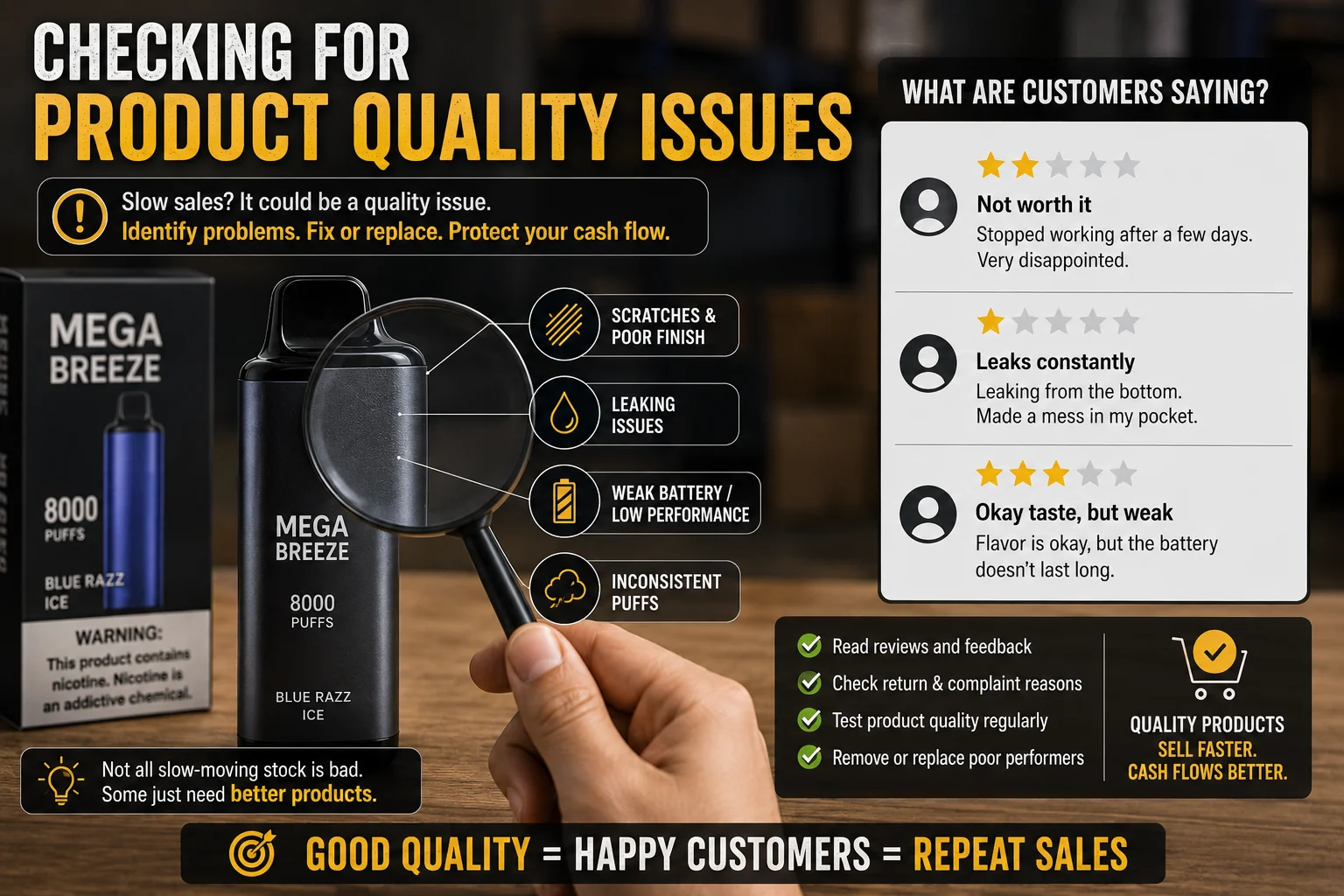
A partner of mine in Germany was struggling with a specific brand of disposable vapes. Sales started strong then dropped to almost zero. He thought the flavor was just a fad. Before he liquidated the stock, I asked him to check his return data. It turned out, nearly 30% of those vapes were being returned for not working out of the box. It wasn't a demand problem; it was a quality problem. He was able to go back to his supplier with this data. It saved him from just marking down a defective product. On the other hand, if you have a perfectly good product with zero returns and zero complaints, but it's just not selling, then you have a demand or marketing issue. Maybe the price is wrong, or it's a flavor nobody in your market has heard of.
| Symptom | Likely Cause: Low Demand | Likely Cause: Bad Quality |
|---|---|---|
| Sales Pattern | Sales were never strong from the beginning. | Sales started well, then fell sharply. |
| Return Rate | Very low, close to zero. | High or increasing. |
| Customer Feedback | "Never heard of it," "Too expensive." | "It leaks," "The battery died fast." |
| Online Reviews | Few or no reviews. | Negative reviews dominate. |
Use Small Discounts Without Destroying Your Margin?
You need to sell this slow-moving stock, but you don't want to lose money. A huge "50% Off" sign can destroy your brand's image[^6] and your profit margin.
Start with small, strategic discounts, like 10-15% off. This can create urgency without giving away the product. Frame it as a limited-time offer or a "last chance" deal. The goal is to recover your cost and free up cash, not to make a large profit.
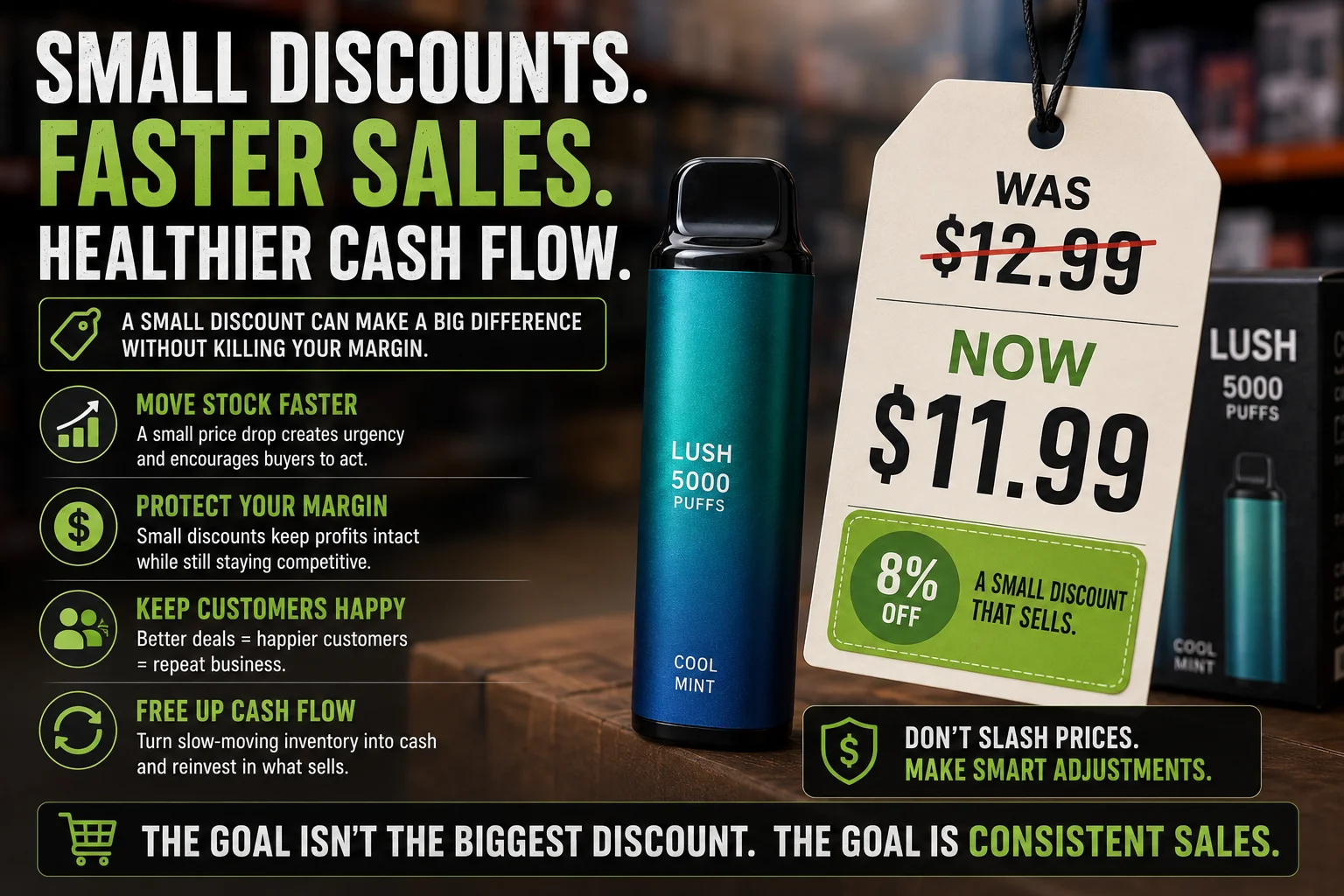
When talking to e-commerce sellers, I always advise against deep, across-the-board discounts as a first step. It trains your customers to wait for sales. Instead, be more tactical. A small discount can be surprisingly effective. Psychology plays a big role here. An offer like "Save $3" can sometimes work better than "15% off," even if the discount is the same.[^7] Another strategy is tiered pricing. For example, "Buy 1 for $15, or 2 for $25." This encourages a larger purchase while helping you move twice as much slow stock. The main goal is to get your initial investment back. If you bought a vape for $5 and sell it for $5.50, you've made a small profit, but more importantly, you've turned a non-performing asset back into usable cash.
Bundle Slow-Moving Vapes with Fast Sellers?
You have a vape flavor nobody wants. You also have a device that flies off the shelves. Putting them together could solve your problem and offer customers a great deal.
Bundle a slow-moving vape with a popular, fast-selling product. Create a "value pack" or "starter kit." The high demand for the popular item will help pull the slow mover along with it.[^8] You can sell the bundle for slightly more than the fast seller's price alone.
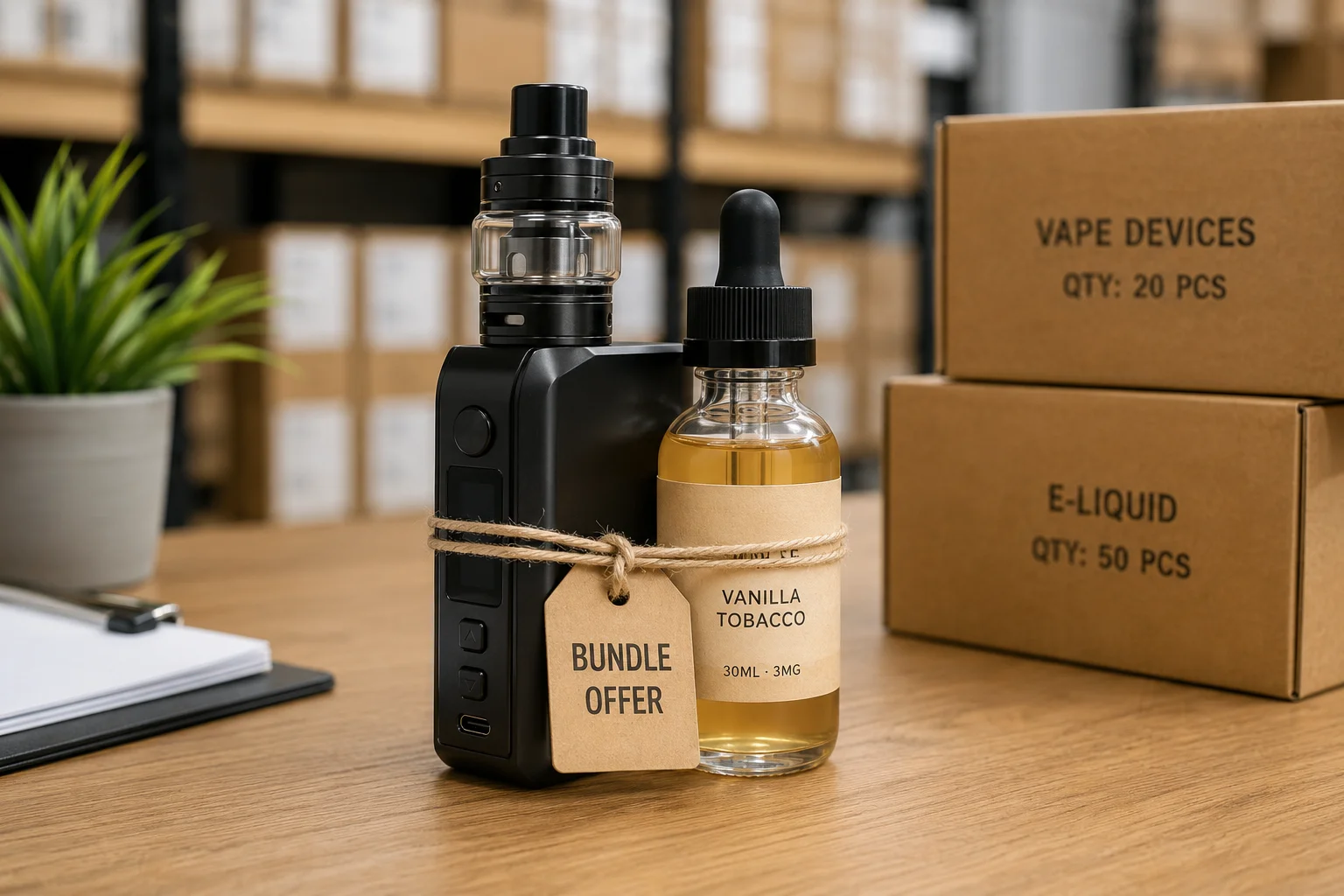
This is one of my favorite strategies to share. It works because it changes the customer's perception. They are no longer buying an unpopular item; they are getting a great deal on a bundle. I had a client stuck with thousands of units of a guava-flavored disposable. Nobody wanted it. At the same time, a certain pod system was selling out every week. I suggested he create a "Tropical Starter Kit." The kit included the popular pod system and one "free" guava disposable. He priced the bundle just a few dollars above the price of the pod system alone. The kits sold out. He cleared his dead stock, and customers felt like they got a fantastic value. You can get creative with this.
Bundle Ideas:
- Device + Slow-Moving Pod: Pair a popular device with a less popular flavor pod.
- Bestseller + Slow Mover: "Buy our most popular vape, get this one 50% off."
- Flavor Pack: Bundle one popular flavor with two slow-moving ones and call it a "Discovery Pack."
Stop Reordering Weak Flavors or Unknown Brands?
You finally cleared that weird-tasting vape or that brand no one has heard of. Now a supplier is offering you another "great deal" on something similar. This is a trap.
After identifying and clearing a slow-moving product, you must make a firm rule: do not reorder it. Use your sales data to create a "never again" list. Be disciplined and focus your purchasing power on proven winners and small, controlled tests of new products.
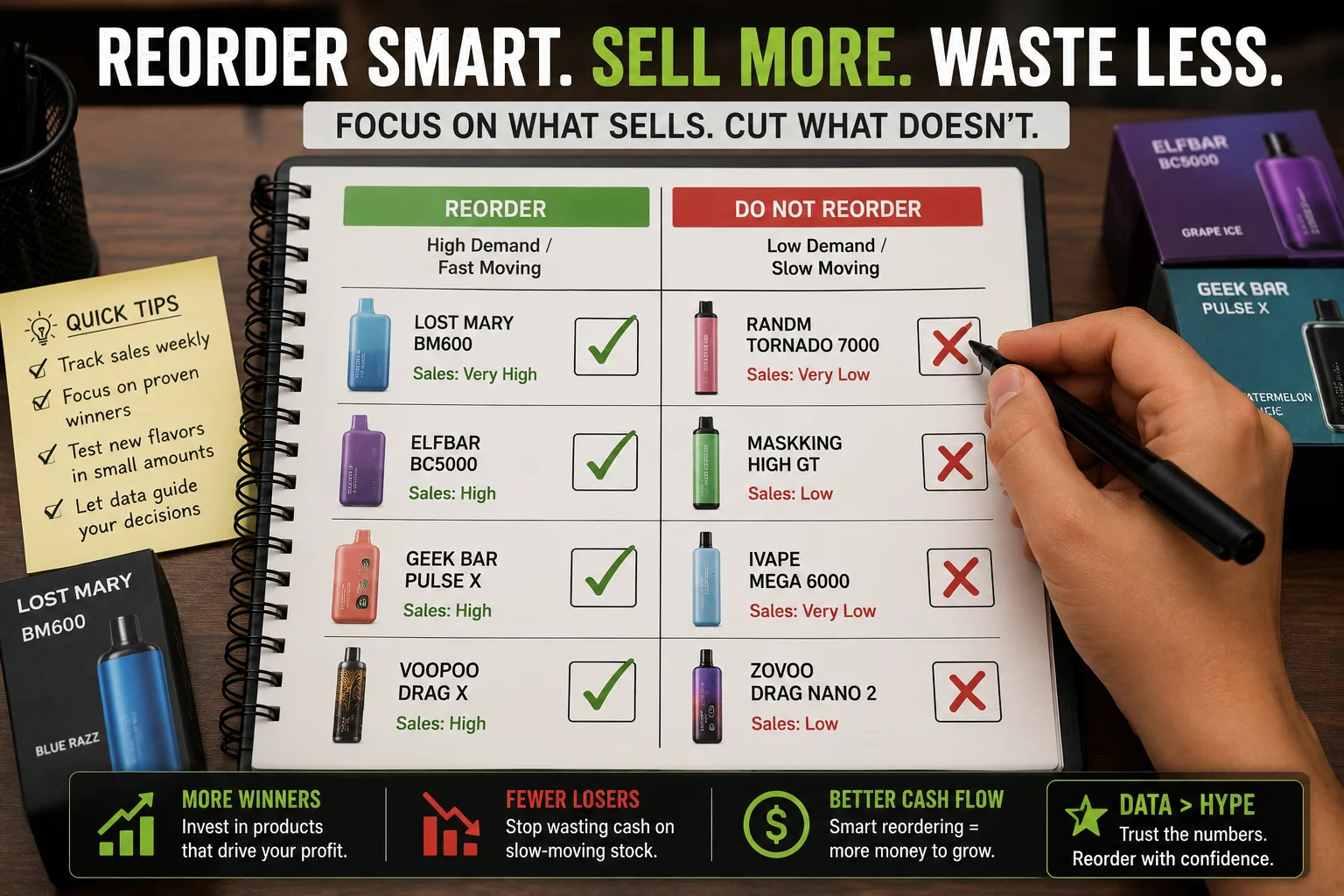
The definition of insanity is doing the same thing over and over and expecting a different result. This is especially true for inventory management. If a flavor or brand didn't sell, there's a reason. Don't let a persuasive salesperson or a low price convince you to try again. The risk is too high. In our business, we see trends come and go. But we also have a core list of products that are consistent bestsellers for our clients. These are the foundation of their business. New products should be treated as experiments. I advise my partners to dedicate only a small portion of their purchasing budget, maybe 10-15%, to new items[^9]. They should buy these in the smallest possible quantity (MOQ) to test the market. If it sells well, great. You can order more next time. If it doesn't, the loss is small and manageable. Don't let a bad bet turn into a warehouse full of regret.
Turn Old Stock into Cash Before Expiry Risk Increases?
You've tried discounts and bundles, but some stock still won't move. Now you see the expiry dates approaching. It's time for more aggressive action before they become completely worthless.
To turn old stock into cash quickly, launch a clearance or flash sale with a deep discount (50% or more). You can also sell it in bulk to a liquidation company. The goal is no longer profit, but to recover any amount of cash and free up space.
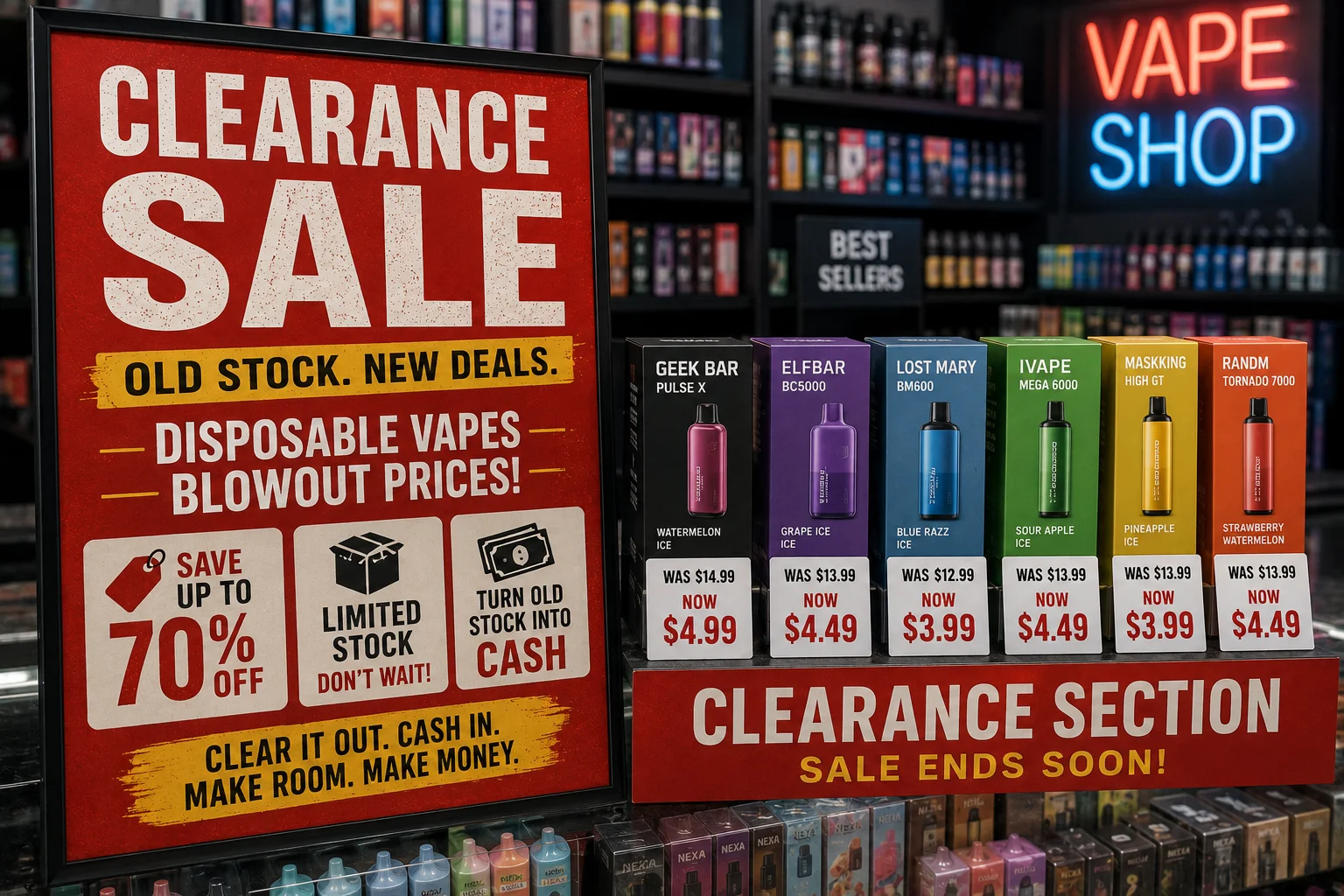
This is the last resort, but it's better than throwing the products in the trash. At this stage, your priority shifts from profit to recovery. A "blowout" sale can create excitement and attract bargain hunters. Market it heavily on social media and through your email list. Be honest with customers; call it a "Warehouse Clearance" or "Final Sale." Another option is to contact a liquidation business. These companies buy old inventory in bulk for pennies on the dollar.[^10] You won't get much money, but you'll get something, and the product will be gone instantly. For some items, you can even use them as a "free gift with purchase" on large orders from your best customers. This builds goodwill while solving your inventory problem. Whatever you do, don't hold on to it. Expired vape products are a liability.[^11]
Final Rule: Free Up Cash Before Chasing New Inventory?
You see a new, exciting product you know will sell. The temptation is to order it right away. But if your cash is tied up in old stock, you can't.
The most important rule is to prioritize converting existing inventory into cash before you invest heavily in new products. Healthy cash flow is the lifeblood of your business.[^12] A disciplined approach to clearing old stock ensures you always have capital ready for the next big thing.
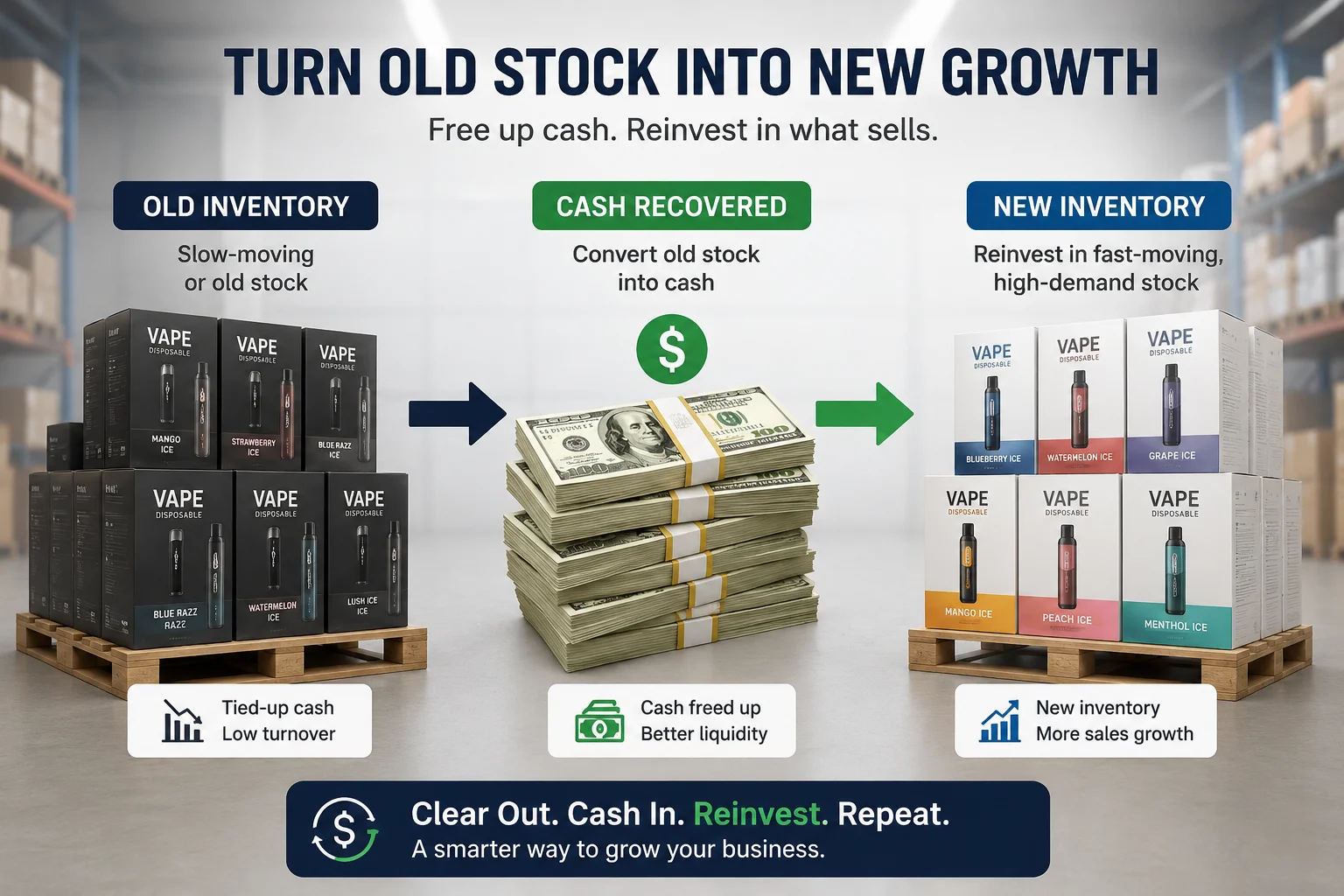
I've seen this scenario play out dozens of times. A business owner gets excited about a new trend and wants to go all-in. But their warehouse is full of last year's trend, and their bank account is empty. You can't move forward if your feet are stuck in concrete. Clearing out slow-moving inventory is not just about cleaning house; it's about funding your future. Every dollar you recover from a slow mover is a dollar you can invest in a fast mover. Think of your inventory as an investment portfolio. You want to sell your underperforming assets to buy more of the high-growth ones. This isn't just a one-time fix; it's an ongoing process. Regularly review your inventory, be decisive with slow movers, and always protect your cash. It's the key to staying agile and profitable in this fast-paced market.
Conclusion
Effectively managing slow-moving vape stock is about protecting your cash flow. By identifying, discounting, bundling, and liquidating these items, you turn dead assets back into valuable, usable cash.
[^1]: "The Relationship Between Cashflow and Inventory Control", https://www.unleashedsoftware.com/blog/relationship-cashflow-inventory-control/. Sources in accounting and supply chain management explain that slow-moving or obsolete inventory is a non-earning asset that consumes cash, thereby reducing a company's working capital and liquidity. Evidence role: definition; source type: education. Supports: The claim that slow-moving inventory ties up cash and restricts a business's ability to pay for other expenses or investments.. [^2]: "Carrying cost - Wikipedia", https://en.wikipedia.org/wiki/Carrying_cost. Economic principles define opportunity cost as the value of the next-best alternative that is forgone when making a decision. In inventory management, this refers to the lost profits from not being able to invest in faster-selling products because capital is tied up in stagnant stock. Evidence role: definition; source type: encyclopedia. Supports: The definition of opportunity cost as the potential benefits a business misses out on when choosing one alternative (holding onto old stock) over another (investing in new, profitable stock).. [^3]: "Inventory Accounting Guidelines - Division of Financial Services", https://finance.cornell.edu/accounting/topics/inventories. Research in supply chain and operations management identifies inventory carrying (or holding) costs as a significant expense, typically comprising capital costs, storage space costs, service costs (like insurance), and inventory risk costs (such as obsolescence, damage, or shrinkage). Evidence role: general_support; source type: education. Supports: The claim that holding inventory incurs multiple 'hidden' costs beyond the initial purchase price.. [^4]: "What is Inventory Velocity? Why it Matters in Ecommerce", https://dclcorp.com/blog/inventory/inventory-velocity/. Industry best practices for retail and e-commerce often recommend analyzing inventory turnover and sales velocity on a monthly or quarterly (90-day) basis to identify underperforming products before they become obsolete. Evidence role: general_support; source type: other. Supports: The claim that analyzing sales data over a 60 to 90-day period is a standard practice for identifying slow-moving stock.. Scope note: The optimal review period can vary by industry and product lifecycle, but 60-90 days is a widely cited benchmark. [^5]: "What is Dead Stock? Meaning and How to Avoid Excess Inventory", https://www.fidelitone.com/blog/what-is-dead-stock-meaning-and-how-to-avoid-excess-inventory/. In inventory management, 'dead stock' refers to items that have not sold for a prolonged period and are not expected to sell in the future. While the exact timeframe varies, it is common to classify items with no sales activity for six months to a year as dead stock. Evidence role: definition; source type: education. Supports: The claim that products with no sales over an extended period (such as 180 days) are commonly categorized as dead stock.. [^6]: "No Sales, No Problem: How Luxury Brands Keep Their Prestige", https://www.isu.edu/cob/blog/articles/no-sales-no-problem-how-luxury-brands-keep-their-prestige.html. Marketing research indicates that frequent and deep price promotions can erode brand equity by training consumers to devalue the product, diminishing brand loyalty, and lowering perceptions of quality. Evidence role: expert_consensus; source type: paper. Supports: The claim that deep discounting can negatively affect how consumers perceive a brand's quality and value.. [^7]: "Psychological pricing", https://en.wikipedia.org/wiki/Psychological_pricing. Studies in consumer psychology, such as research on the 'Rule of 100,' have shown that for products priced under $100, a discount presented in absolute monetary terms (e.g., '$3 off') is often perceived as more significant than the equivalent percentage discount (e.g., '15% off'). Evidence role: mechanism; source type: paper. Supports: The claim that the framing of a discount (absolute vs. percentage) influences consumer perception and effectiveness.. [^8]: "[PDF] The Dynamic Effects of Bundling as a Product Strategy", https://www.hbs.edu/ris/Publication%20Files/dynamicbundling_2013_06_20_13def9fb-1904-479a-8a37-fa64eff9663a.pdf. Marketing literature on product bundling demonstrates that this strategy can increase the perceived value of an offer and leverage the demand for a popular 'carrier' product to facilitate the sale of a less popular, bundled item. Evidence role: mechanism; source type: paper. Supports: The claim that bundling a less desirable product with a highly desirable one can drive sales of the former.. [^9]: "Portfolio approaches to improving procurement and supply chain ...", https://www.ncbi.nlm.nih.gov/books/NBK286071/. Retail financial planning principles advocate for a portfolio approach to inventory purchasing, where the majority of capital is spent on proven sellers while a smaller, defined percentage (often 10-20%) is allocated for testing new or experimental products to minimize risk. Evidence role: general_support; source type: education. Supports: The claim that dedicating a small, controlled portion of the inventory budget to new products is a prudent strategy.. [^10]: "Everything Must Go: A Strategy for Store Liquidation", https://www.library.hbs.edu/working-knowledge/everything-must-go-a-strategy-for-store-liquidation. Business models for inventory liquidators and the secondary market involve purchasing overstock, closeout, or obsolete goods from retailers and manufacturers at a significant discount to the original cost, often for cents on the dollar, and then reselling them through alternative channels. Evidence role: definition; source type: other. Supports: The claim that liquidation businesses purchase bulk inventory for a low price.. [^11]: "E-Cigarettes, Vapes, and other Electronic Nicotine Delivery ...", https://www.fda.gov/tobacco-products/products-ingredients-components/e-cigarettes-vapes-and-other-electronic-nicotine-delivery-systems-ends. Regulatory bodies and public health institutions advise on the proper handling of e-liquids and vaping devices, as the chemical components, such as nicotine and flavorings, can degrade over time, potentially altering their effects and safety profile. Selling expired products may also violate local or federal consumer protection laws. Evidence role: general_support; source type: government. Supports: The claim that expired vape products represent a liability.. Scope note: Specific regulations regarding expiry dates on vape products may vary by jurisdiction. [^12]: "Impact of Cash Flow on Business Stability", https://online.ysu.edu/degrees/business/mba/general/cash-flow-on-business-stability/. Foundational texts in business finance and entrepreneurship emphasize that positive cash flow is essential for a company's survival, as it is required to meet operational obligations like payroll, rent, and inventory purchases, regardless of reported profitability. Evidence role: expert_consensus; source type: education. Supports: The claim that maintaining healthy cash flow is critical to a business's operations and viability..