
Starting a vape wholesale business is exciting, but that first order is scary. Order too much and you burn cash. Order too little and you can’t really test the market.
The best trial order is one that minimizes financial risk while gathering maximum market data. For most new wholesalers, this means starting with a small, diverse order of 50 to 200 units per product style, focusing on a few promising SKUs to test their actual sales performance.
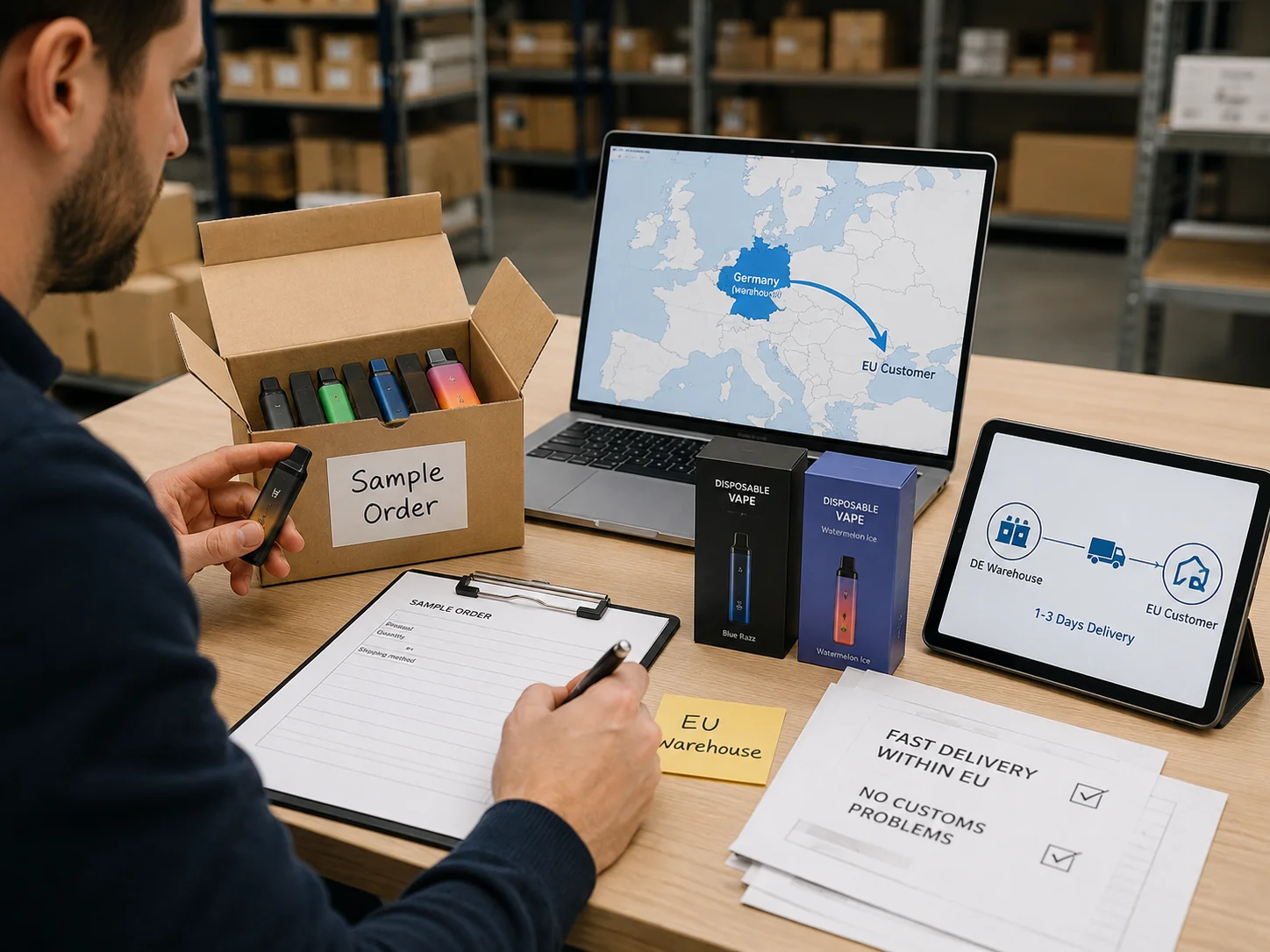
I've been in the export business for 15 years, and I talk to new buyers every single day. A common question I get from first-time vape wholesalers is, "How many should I order to start?" They are looking for a magic number. But the right answer isn't a number. It's a strategy. Your first order is not about stocking your warehouse. It's about buying data. You are paying to learn what your customers actually want to buy, and a smart trial order is the cheapest way to get that information. Let's break down how to think about this.
How Do You Understand Your Market Demand?
You see certain vape brands everywhere and think they will be easy to sell. But this assumption can lead to a garage full of products nobody wants. The solution is to get real sales data.
You can start by researching online trends and local competitors. But your trial order is the only true test. It replaces guesswork with real sales figures from your specific customer base, telling you exactly what they want.
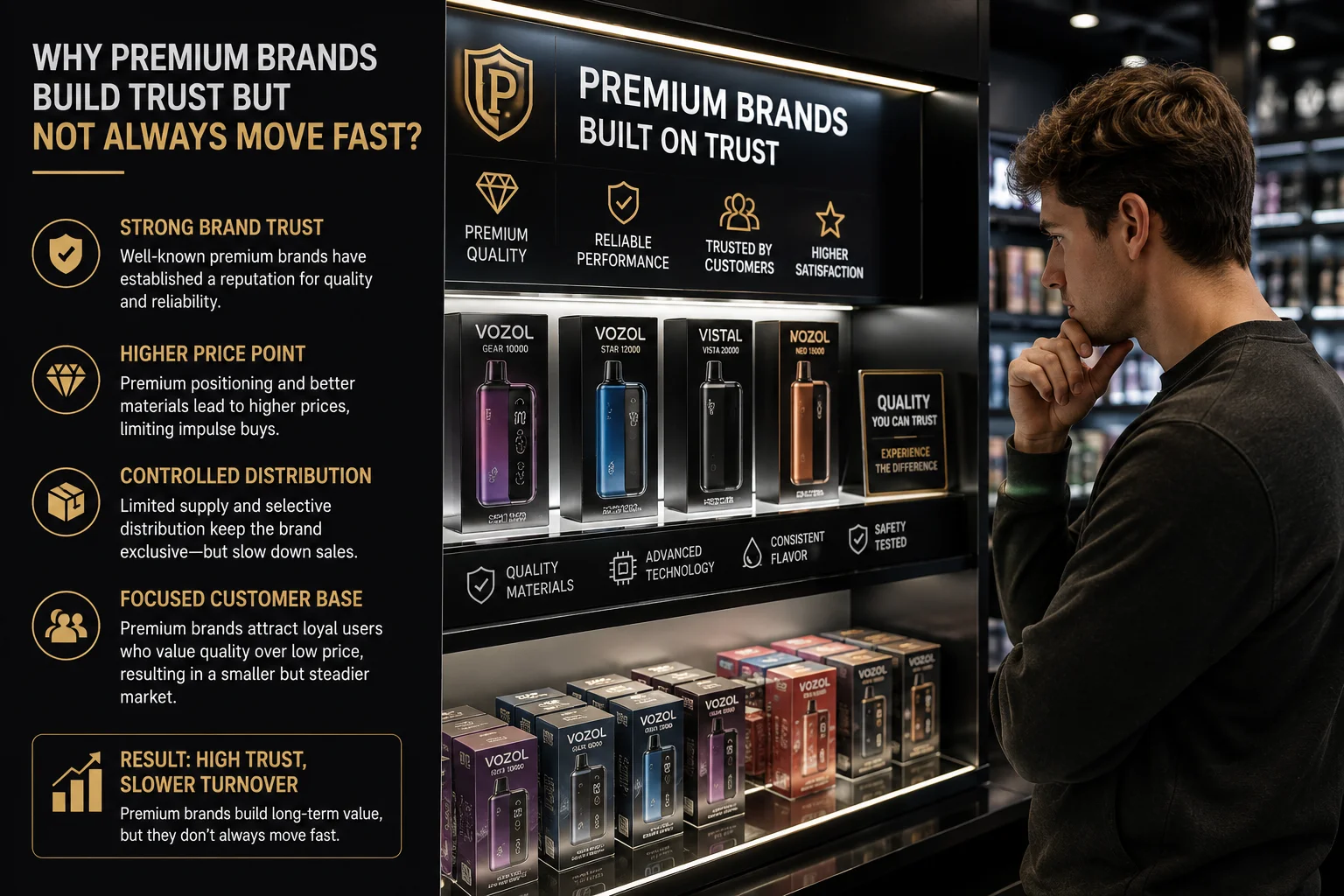
When a new client asks for my advice, I always tell them to do their homework first. But I also warn them not to trust it 100%. Look at what’s popular on social media in your country. Walk into local vape shops and see what’s on their shelves and what customers are buying. This gives you a starting point. Maybe you find that fruity flavors and disposable vapes with high puff counts are trending[^1]. Based on this, you might decide to test three different fruit-flavored disposable models. But the real test begins when you put those products up for sale. Your trial order is designed to answer one question: "Will my customers buy this from me?" The sales data you get, even from a small batch, is more valuable than any market report.
From Educated Guess to Hard Data
The goal is to move from assumptions to facts as cheaply as possible. Your trial order validates your initial research.
| Your Research (Assumption) | Your Trial Order (Validation) | The Outcome (Data) |
|---|---|---|
| "Blue Razz flavor is popular." | Order 50 units of Blue Razz and 50 of a less common flavor like Mango. | Blue Razz sells out in 1 week. Mango takes 4 weeks. |
| "Customers want 5000+ puffs." | Test a 5000-puff model against a 3000-puff model. | The 3000-puff model sells faster due to a lower price point.[^2] |
| "Brand X is a must-have." | Stock Brand X and a lesser-known but high-quality alternative. | The alternative brand gets better customer feedback and repeat buys. |
This process shows you what works for your business, not just what works for others.
How Do You Assess Supplier Minimum Order Quantities (MOQ)?
You found a great-looking product, but the factory wants you to order 3,000 pieces. For a new business, that's a huge risk that can tie up all your capital in one bet.
Don't let high factory MOQs stop you. Many experienced suppliers have flexible options. For example, we offer trial orders as low as 50 units from our overseas warehouses, costing only around €300. This is a tiny cost to test a new product.
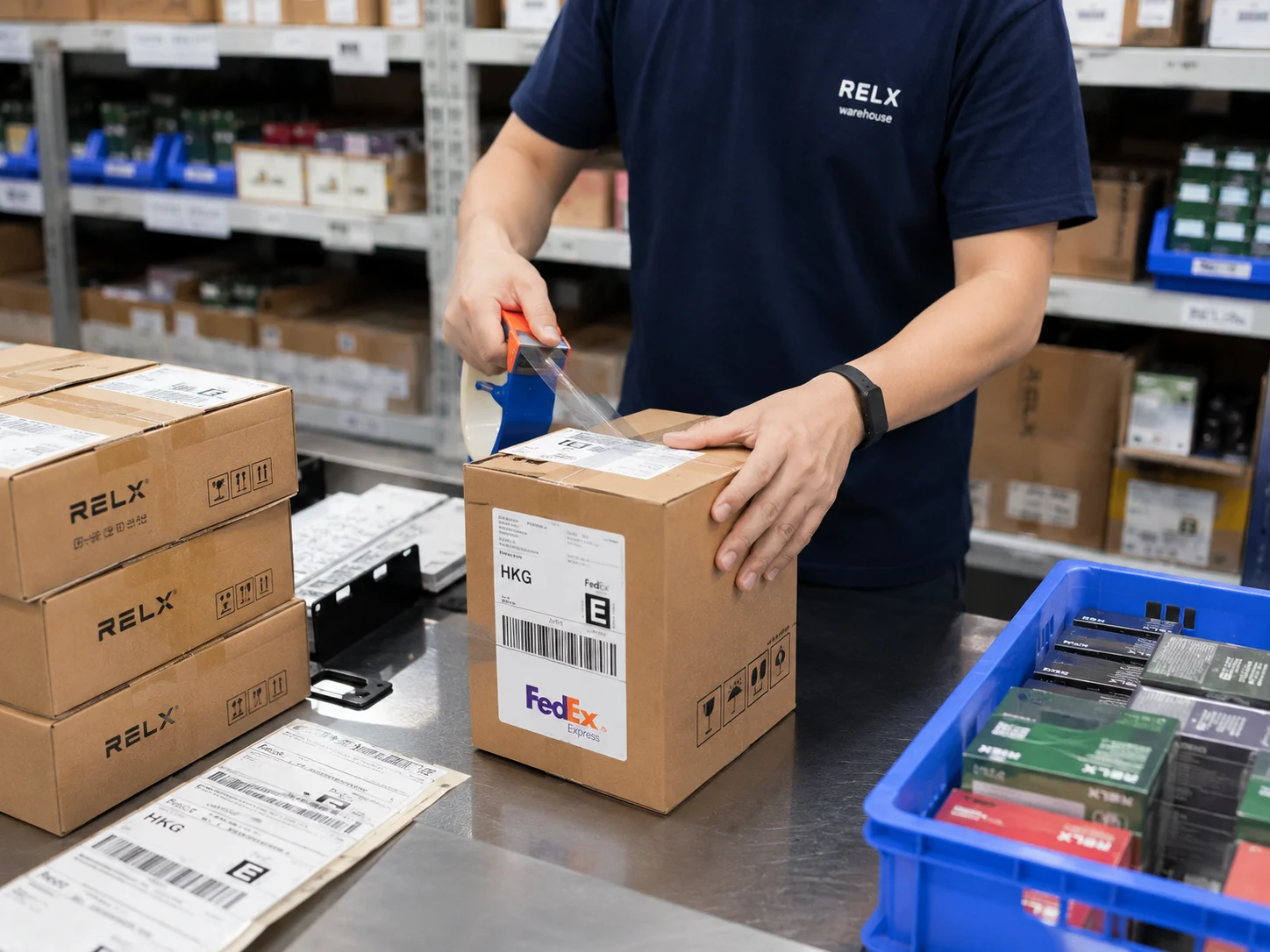
I often explain to clients that there are different kinds of MOQs. The high MOQ, like 2,000 or 3,000 units, is usually for orders shipping directly from the factory in China.[^3] This is because a production line has to be set up, and making a small number is not efficient. But many of us also have warehouses in Europe or the US. From these warehouses, we can ship much smaller quantities. For a new wholesaler, this is the perfect solution. You get to test the product without the huge financial commitment. It allows you to buy a little bit of everything to see what sticks. Once you have sales data and know what sells, you can confidently place a larger factory order to get a better price. The small trial order is your key to unlocking this process safely.
Factory MOQ vs. Warehouse MOQ
Understanding the difference helps you choose the right path for your business stage.
| Feature | Factory Direct Order | Overseas Warehouse Order |
|---|---|---|
| Typical MOQ | 1,000 - 3,000+ units | 50 - 100 units |
| Unit Price | Lowest | Slightly Higher |
| Best For | Scaling proven products | Testing new products, market entry |
| Risk Level | High | Low |
| Lead Time | 3-5 weeks (including sea freight) | 3-5 days (local shipping) |
Choosing the warehouse option for your first order is almost always the smarter move. You trade a slightly higher unit cost for speed and massive risk reduction.
What Are the Budget Considerations for Trial Orders?
You have a startup budget, and it feels like every dollar needs to go into buying products. This thinking can get you into trouble if you don't plan for other essential costs.
Your total budget must cover more than just the product cost. A smart trial order keeps the inventory expense low, freeing up cash for critical costs like shipping, import taxes, and initial marketing efforts.
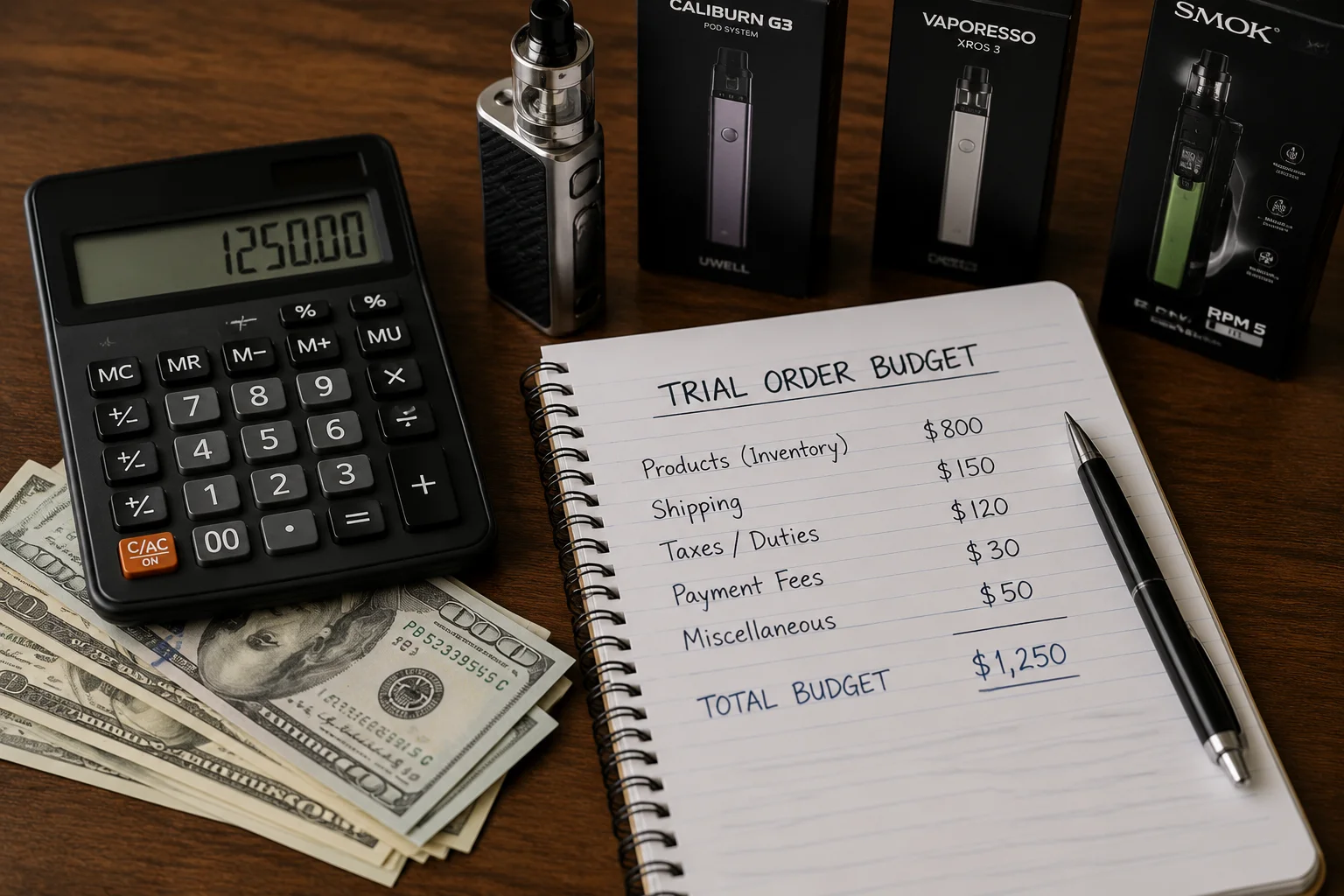
When a new partner tells me their total budget, the first thing we do is break it down. Buying the vapes is just one piece of the puzzle. Let's say you have a €2,000 budget. If you spend €1,800 on inventory, you have almost nothing left for everything else. Shipping costs money. Your country will charge import duties and taxes.[^4] And how will people know you have products to sell? You need a small budget for marketing, even if it's just some simple online ads. By starting with a small trial order—say, €300-€500 for a few different products—you leave plenty of room in your budget. This approach prevents a cash flow crisis before you even make your first sale. It's the professional way to manage your startup capital.
Sample Trial Order Budget Breakdown (€2,000 Total)
| Expense Category | Allocation | Why It's Important |
|---|---|---|
| Product Inventory | €500 | Your core asset, but keep it lean to start. This could get you 4 different SKUs (50 units each) to test. |
| Shipping & Logistics | €300 | Covers getting the goods from the warehouse to your location. |
| Import Duties & Taxes | €400 | A non-negotiable government cost. Varies by country, so research this! |
| Initial Marketing Test | €300 | To drive your first sales and gather data on customer acquisition cost. |
| Contingency Fund | €500 | For unexpected problems. A broken shipment, a surprise fee, etc. This is your safety net. |
This balanced budget gives you a much higher chance of success than one that is 90% inventory.
How Do You Test Product Quality and Consistency?
You received samples and they were perfect. But you worry the bulk order won't be the same quality. This is a valid fear, and it happens more than you think.
A single sample proves nothing about consistency.[^5] A trial order of 50-100 units is a much better test. It allows you to check for variations in performance, flavor, and defects across a real batch.
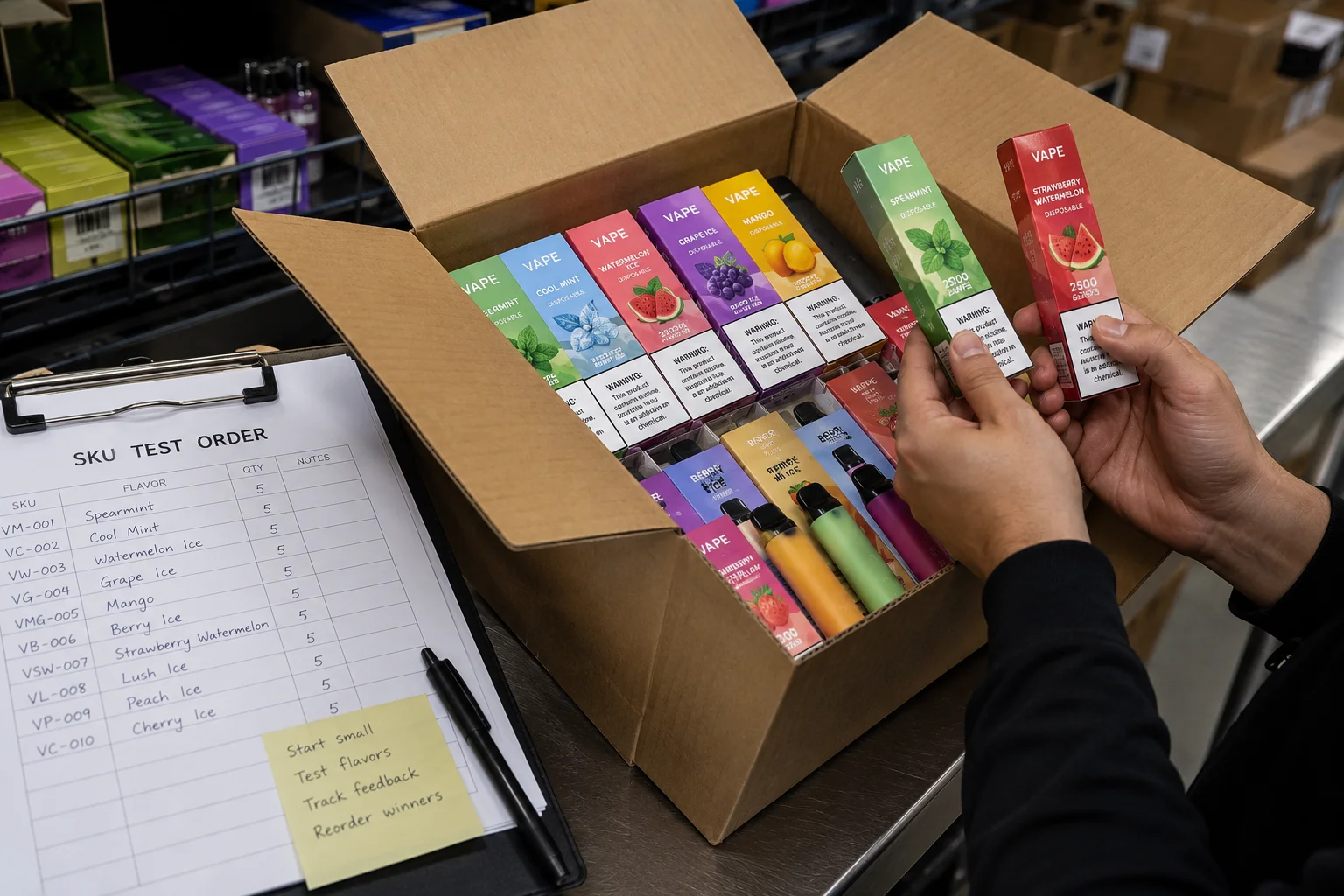
A story I often share with buyers is about a client who loved a sample. He immediately wanted to order 5,000 units. I convinced him to start with 100. When the 100 arrived, he found that about 5% of them had a slightly weaker battery life[^6] than the original sample. It wasn't a disaster, but it was an inconsistency we needed to address with the production team. Imagine if he had found that issue in an order of 5,000 units! That would have been a massive headache. Your trial order is a quality control test. Use a few yourself. Give some to friends for feedback. Check the packaging on all of them. Test for leaks. This small-batch test gives you confidence that the product is not just good, but consistently good.
Your Simple Quality Control Checklist
Use your trial order to go through this checklist. This gives you a true quality score for the product.
- Functionality Test: Unbox and use at least 10% of the units.
- Does the battery last as advertised?
- Is the vapor production consistent?
- Are there any charging or activation issues?
- Flavor Consistency: If you ordered multiple units of the same flavor, test at least 3-4 of them.
- Does "Strawberry Ice" taste the same across all units?
- Is the flavor strong from the first puff to the last?
- Physical Inspection: Visually inspect every single unit.
- Are there any scratches, dents, or printing errors?
- Do any of the pods or tanks show signs of leakage?
- Is the packaging intact and professional?
Finding a small issue in a trial order is a good thing. It lets you and your supplier fix it before you scale.
How Do You Calculate Expected Turnover and Cash Flow?
You need to know how fast you can sell your inventory to make money. Guessing is dangerous and can leave you with no cash to reorder popular items.
Your trial order is the best tool for this. Measure exactly how long it takes to sell through your initial stock. This real-world data allows you to accurately forecast future orders and manage your cash flow.
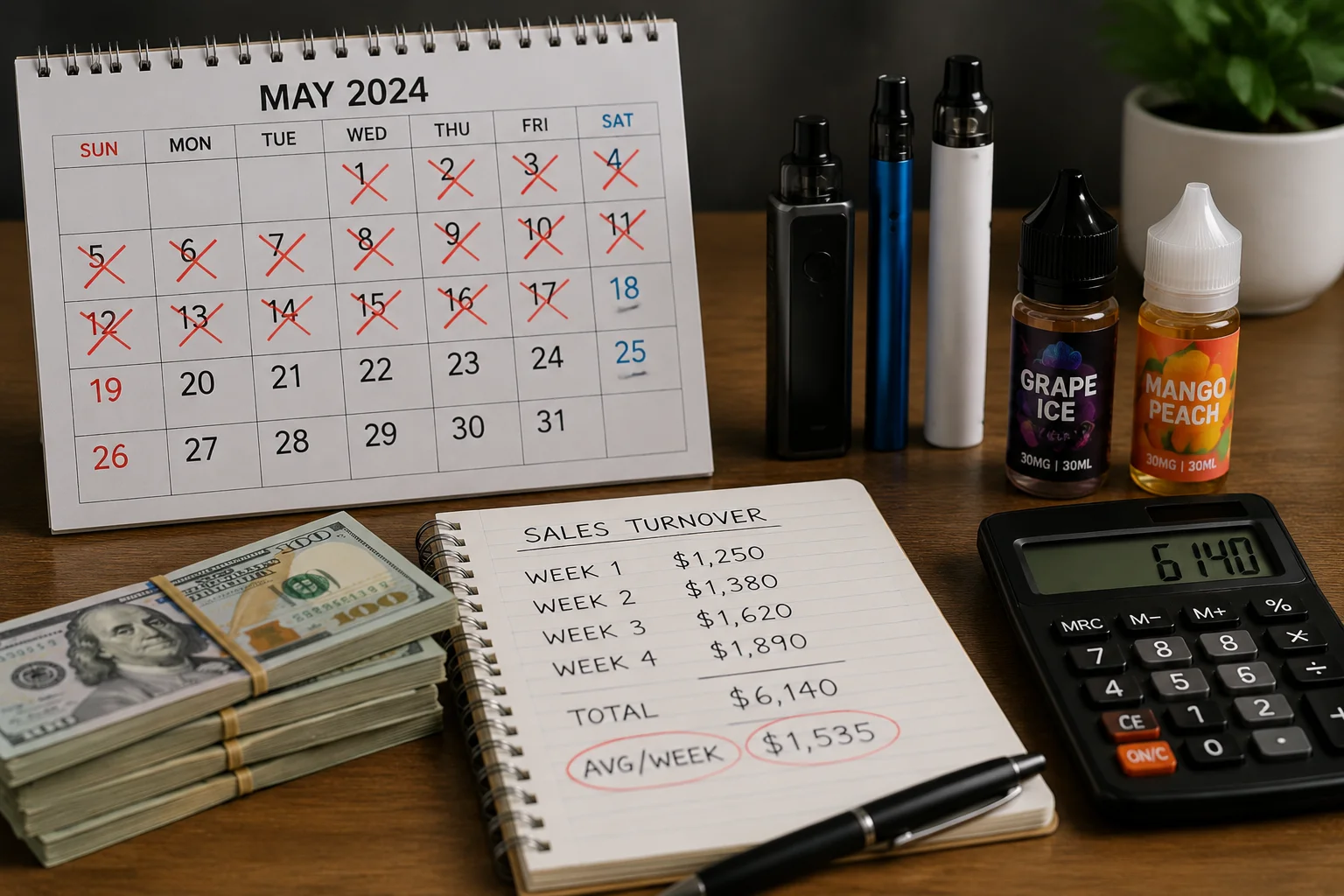
Cash flow is the lifeblood of any wholesale business.[^7] It’s not just about profit; it’s about how quickly you can turn your inventory back into cash that you can use to buy more inventory. Here's a simple scenario I walk my clients through. Let's say you buy 100 units of a vape. You sell all of them in 20 days. Your turnover rate for that product is 100 units per 20 days, or 5 units per day. Now you have critical information. You know that to have enough stock for a full month, you need at least 150 units (5 units/day x 30 days). Without this trial order data, you would just be guessing. You might order 500 and have them sit for months, or order 50 and sell out in a week, losing potential sales. The trial order moves you from guessing to knowing.
Simple Turnover Calculation
Use this simple method to forecast your needs after the trial.
-
Step 1: Track Your Sales.
- Trial Order Quantity: 100 units
- Days to Sell Out: 20 days
-
Step 2: Calculate Daily Sales Velocity.
Total Units Sold / Days to Sell = Daily Sales100 / 20 = 5 units per day
-
Step 3: Forecast Your Next Order.
Daily Sales x 30 Days = Estimated Monthly Need5 x 30 = 150 units
Now you can place your next order for 150-200 units with confidence, knowing it's based on real customer behavior, not a wild guess.
How Do You Manage Inventory Risks?
Dead stock is the silent killer of small businesses.[^8] You buy a product you're sure will sell, but it just sits on the shelf, trapping your cash and taking up space.
A small and diverse trial order is your best insurance against dead stock. It lets you identify which products are 'duds' with a very small financial loss, so you don't make a big, expensive mistake.
In my 15 years of experience, I've seen a pattern that holds true for almost every market: the 80/20 rule. About 80% of your sales will come from just 20% of your products.[^9] The main job of your trial order is to discover that winning 20%. Let's say you test five different vape models. You might find that two of them sell out almost instantly, two sell slowly, and one doesn't sell at all. With a trial order of 50 units each, your "dud" product only cost you a small amount. You can bundle it with a popular item or sell it at a discount to get your money back. Now imagine you had ordered 1,000 units of that dud. That's a disaster. Starting small protects your capital and allows you to quickly focus your money on the products that are proven winners for your business.
Strategies for Slow-Moving Trial Stock
Even with a small order, you might have some non-sellers. Here's how to handle them:
| Strategy | How It Works | Goal |
|---|---|---|
| Bundling | Pair a slow-mover with a best-seller (e.g., "Buy Vape A, get Vape B 50% off"). | Increase the perceived value and move the slow unit. |
| Discounting | Offer a clear, steep discount on the slow-moving product. | Liquidate the stock quickly to recover your initial capital. |
| Giveaway / BOGO | Use it as a freebie for large orders or in a "Buy One, Get One" promotion. | Build customer goodwill and clear out old inventory. |
The key is to act fast. Don't let unsold trial stock sit for more than a month. Liquidate it and reinvest the cash into proven sellers.
How Do you Build Relationships with Reliable Suppliers?
Finding a good product is only half the battle. Your business's success also depends on having a supplier who is a true partner, not just a vendor. A bad supplier can cause endless problems.
Your trial order is a test of the supplier relationship.[^10] Pay close attention to their communication, honesty, and problem-solving skills during this first small transaction. It tells you everything you need to know.

I always tell my customers: this first small order is like a first date. You are seeing if you are compatible. Did the supplier answer your questions quickly and clearly? Was the shipping process smooth? What happened when you had a question or a small issue? A good supplier will treat your 50-unit trial order with the same professionalism as a 5,000-unit order. They see it as the start of a long-term partnership. A bad supplier might be slow to respond or dismissive because the order is small. This is a huge red flag. The way a supplier handles your small trial order is the best indicator of how they will handle a much larger, more important order down the road when the stakes are higher. Use this opportunity to find a partner you can trust.
Supplier Report Card: Grading Their Performance
During your trial order process, mentally score your supplier on these key points.
| Area | What to Look For | Red Flag | Green Flag |
|---|---|---|---|
| Communication | Are their replies fast, clear, and in good English? | Slow replies, vague answers. | Quick, helpful, and clear responses. |
| Problem Solving | How do they react if one unit is defective or shipping is delayed? | They blame you or ignore the problem. | They take ownership and offer a solution. |
| Accuracy | Did you receive exactly what you ordered? Correct models, flavors, and quantities? | Items are missing or incorrect. | The order is 100% accurate. |
| Transparency | Were all costs (shipping, fees) clear from the beginning? | Surprise fees appear on the final invoice. | They provide a clear, all-inclusive quote. |
If a supplier gets all green flags on a small order, you can be much more confident giving them a big one.
How Do You Scale Up After a Successful Trial?
Your trial order was a huge success and you sold everything quickly. The temptation is to immediately place a massive order. This can be just as risky as ordering too much the first time.
Use the sales data from your successful trial to scale intelligently. Double down on the products that sold best, and either drop the losers or re-test them later. Scaling should be a measured step, not a giant leap.

After a client has a successful trial, we celebrate for a minute, and then we get back to the strategy. The data is clear: Product A and B were big hits, but C was a dud. The smart next step is not to order 1,000 of everything. It's to place a more confident second order. For example, order 200 units of Product A, 200 of Product B, and use a small part of your budget to test one or two new products (Product D and E) with a small trial order of 50 units each. This creates a growth loop.[^11] You are using your profits to scale up your proven winners while simultaneously continuing to test and find new winners. This is how you build a diverse, resilient, and profitable product catalog over time without taking wild risks. Each order is informed by the data from the last one.
Your 4-Step Scaling Cycle
This is a sustainable loop for growing your wholesale business.
- Analyze Data: Look at your sales report. Identify your top 2-3 best-sellers from the trial. Note how fast they sold.
- Re-Order Winners: Place a second, larger order for your best-sellers. Use your turnover calculation to decide the quantity (e.g., if you sold 50 in 10 days, order 150 for a month's supply).
- Introduce New Testers: Dedicate 10-20% of your new inventory budget to ordering small trial quantities (e.g., 50 units) of 1-2 new products that your research suggests might be popular.
- Communicate with Supplier: Share your success. Tell them, "Product A sold out fast, I'm ready for a bigger order." This builds the relationship and can be a good time to ask about better pricing for higher volumes.
Repeat this cycle every month. This is how you grow from a small startup to a major player.
Conclusion
Your first vape order isn't just about buying stock. It's a strategic investment in data. Start small, test diverse products, and use the results to make smarter, more profitable decisions.
[^1]: "Consumer Preferences for E-cigarette Flavor, Nicotine Strength, and ...", https://pubmed.ncbi.nlm.nih.gov/33245356/. Market research reports and public health surveys can provide data on prevailing consumer preferences in the vaping market, often indicating the popularity of specific flavor categories like fruit and device characteristics such as puff count. Evidence role: statistic; source type: research. Supports: The claim that fruity flavors and high puff count disposables are popular market trends.. Scope note: Market trends can be region-specific and may change rapidly. The source would support the general trend at the time of its publication. [^2]: "Food Consumption & Demand - Food Demand Analysis", http://www.ers.usda.gov/topics/food-choices-health/food-consumption-demand/food-demand-analysis. Studies on consumer behavior and the economic principle of price elasticity of demand show that for many goods, a lower price point can be a more significant driver of purchase decisions than superior features, leading to faster sales. Evidence role: mechanism; source type: education. Supports: The claim that a lower price can lead to higher sales velocity, even for a product with lower specifications.. Scope note: This is a general economic principle; its specific effect in the vape market would depend on the target demographic and the perceived value of the additional features. [^3]: "Economies of scale - Wikipedia", https://en.wikipedia.org/wiki/Economies_of_scale. Manufacturing principles explain that high MOQs are often necessary for factory orders to offset the fixed costs of production setup, such as tooling and machine configuration, making small-batch production economically inefficient. Evidence role: mechanism; source type: education. Supports: The claim that high MOQs for factory orders are linked to the economics of setting up a production run.. [^4]: "Frequently Asked Questions - Tobacco General | TTB", https://www.ttb.gov/tobacco/faqs-general/print. National and international customs databases, such as the EU's TARIC or the US's HTS, provide detailed schedules of tariffs, duties, and taxes applicable to specific product categories, including electronic cigarettes and related nicotine products. Evidence role: general_support; source type: government. Supports: The claim that import duties and taxes are a mandatory cost for importing vape products.. Scope note: The exact rates vary significantly by country and can change based on trade policy. [^5]: "6.2.1. What is Acceptance Sampling?", https://www.itl.nist.gov/div898/handbook/pmc/section2/pmc21.htm. Principles of statistical quality control (SQC) and acceptance sampling demonstrate that evaluating a small batch, rather than a single unit, is necessary to make a statistically meaningful inference about the quality and consistency of an entire production lot. Evidence role: mechanism; source type: paper. Supports: The claim that a single sample cannot prove batch consistency.. [^6]: "Cause and Mitigation of Lithium-Ion Battery Failure—A Review - PMC", https://pmc.ncbi.nlm.nih.gov/articles/PMC8510069/. Industry standards for quality management, such as Acceptable Quality Limits (AQL), and research on consumer electronics manufacturing show that defect rates can range from under 1% to over 5%, depending on the product's complexity and the manufacturer's quality control processes. Evidence role: statistic; source type: research. Supports: The claim that a 5% defect rate is a plausible scenario in a batch of consumer electronics.. Scope note: The specific defect rate for vape products can vary widely between manufacturers. [^7]: "8 Ways for Wholesale Distributors to Preserve Cash Flow - Versapay", https://www.versapay.com/resources/8-ways-for-distributors-to-preserve-cash-flow-in-a-slowing-economy. Business management and finance literature identifies positive cash flow as essential for covering operational expenses, investing in inventory, and maintaining solvency, making it a primary indicator of a company's financial health, particularly in inventory-heavy sectors like wholesale. Evidence role: definition; source type: education. Supports: The claim that cash flow is fundamentally important to a wholesale business's survival.. [^8]: "Excess and Obsolete Inventory: An Outcome of a Series of ...", https://scm.ncsu.edu/scm-articles/article/excess-and-obsolete-inventory-an-outcome-of-a-series-of-unfortunate-events. Financial and operations management research indicates that dead stock, or obsolete inventory, contributes to business failure by tying up working capital, incurring carrying costs (storage, insurance), and ultimately leading to write-offs that directly reduce profitability. Evidence role: mechanism; source type: research. Supports: The claim that dead stock poses a significant financial threat to small businesses.. [^9]: "ABC analysis", https://en.wikipedia.org/wiki/ABC_analysis. The Pareto principle, or 80/20 rule, is an observation that for many events, roughly 80% of the effects come from 20% of the causes. In business, it is widely applied to sales and inventory management, where a large share of revenue or profit often comes from a small percentage of products. Evidence role: definition; source type: encyclopedia. Supports: The claim that the 80/20 rule is a relevant principle for product sales distribution.. Scope note: The 80/20 ratio is an approximation and the actual distribution can vary. [^10]: "The Importance of Purchase Orders - Finance Division", https://www.cmu.edu/finance/news/archve/fy23/po-importance.html. Supply chain management best practices emphasize the use of pilot or trial orders as a critical step in the supplier qualification process, allowing a buyer to assess a supplier's performance on key metrics like communication, quality, and reliability before committing to larger volumes. Evidence role: general_support; source type: education. Supports: The claim that a trial order is a crucial step in evaluating a supplier relationship.. [^11]: "The Lean Startup - Wikipedia", https://en.wikipedia.org/wiki/The_Lean_Startup. This iterative process of testing, analyzing results, and scaling successes aligns with established business frameworks such as the Build-Measure-Learn feedback loop, popularized by the Lean Startup methodology, which advocates for data-driven, incremental growth. Evidence role: mechanism; source type: education. Supports: The claim that the described cycle of testing and scaling is a recognized growth strategy..