I have seen buyers lose money fast when a “factory” online turns out to be a weak supplier with good photos and poor control.
To evaluate a vape factory online, I check its legal identity, export history, factory proof, certifications, product details, communication, samples, payment terms, and shipping plan before I place a large order. This process helps me reduce risk before I ever visit China.
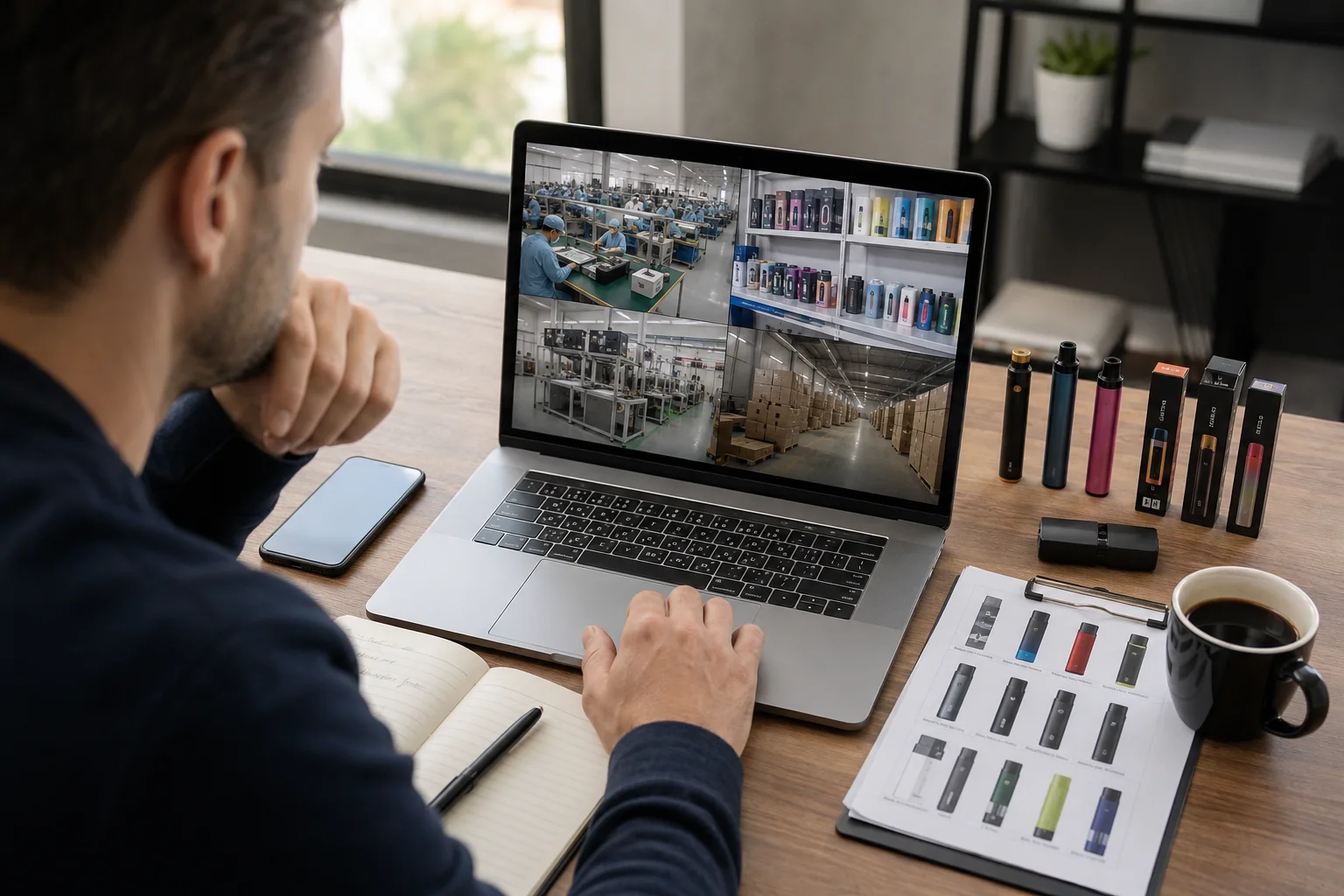
When a client asks me if a vape factory in China is “good,” I do not start with price. I start with risk. I ask what market they sell to, what volume they can handle, what certifications they need, and how much product risk they can accept. I have worked with many overseas buyers from Europe and the United States, and I see the same pattern again and again. The first supplier who answers fast is not always the safest one. The lowest price is not always the real cost. The best-looking website is not always connected to a real production site. I use a simple online checking process before I spend time, money, and trust on any supplier. If you source vape products from China, this process can help you stay calm and make better decisions before you book a flight or send a big deposit.
Check Whether the Vape Factory Is Real or Just a Trading Middleman?
I have seen buyers trust a supplier too fast, then later learn that the “factory” only forwards orders to another company.
I check whether a vape supplier is a real factory by asking for production proof, staff details, factory address, business license, and matching company records. I also compare their product range, photos, videos, and communication answers to see if they truly control production.
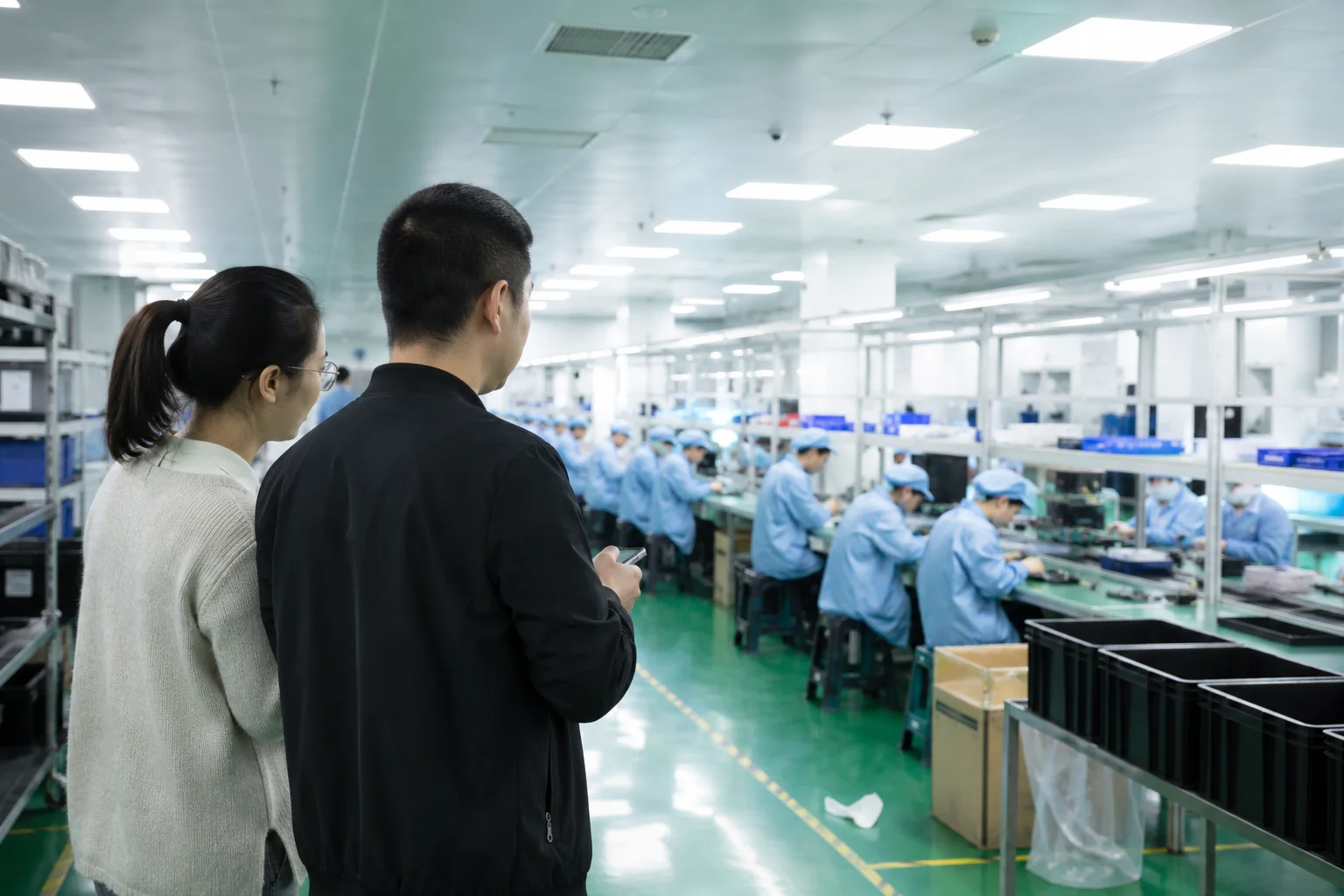
I do not think every trading company is bad. I run an export business myself, so I understand the value of service, sourcing, and communication. The real problem is not whether a company is a factory or trader. The real problem is whether they tell me the truth. A trader can be useful if they manage quality well. A factory can also be risky if they have weak export service. So I always look at transparency first.
What I check first
| Check Point | What I Ask | What I Want to See |
|---|---|---|
| Company identity | Are you a factory or trading company? | A clear answer, not a vague reply |
| Factory address | Can you send the exact location? | A real industrial address |
| Production proof | Can you show production videos? | Current videos, not stock clips |
| Staff role | Who handles QC and export documents? | Named staff or clear departments |
| Product control | Which items do you produce directly? | Clear product ownership |
A common trick is that a middleman says, “We are factory direct,” but they cannot explain production steps. I ask simple questions like battery capacity control, e-liquid filling process, aging test time, and packaging flow. If the salesperson cannot answer basic production questions, I slow down. I may still work with them, but I treat the order as higher risk. In my view, online evaluation is not about finding a perfect supplier. It is about knowing what risk I am taking before I pay.
Review Business License, Export Experience, and Company Background?
I have seen buyers focus only on product photos, while the supplier’s company history already showed clear warning signs.
I review a vape supplier’s business license, registered company name, address, start date, export experience, market focus, and past shipment background. I want the legal records and sales story to match before I trust their quotation.
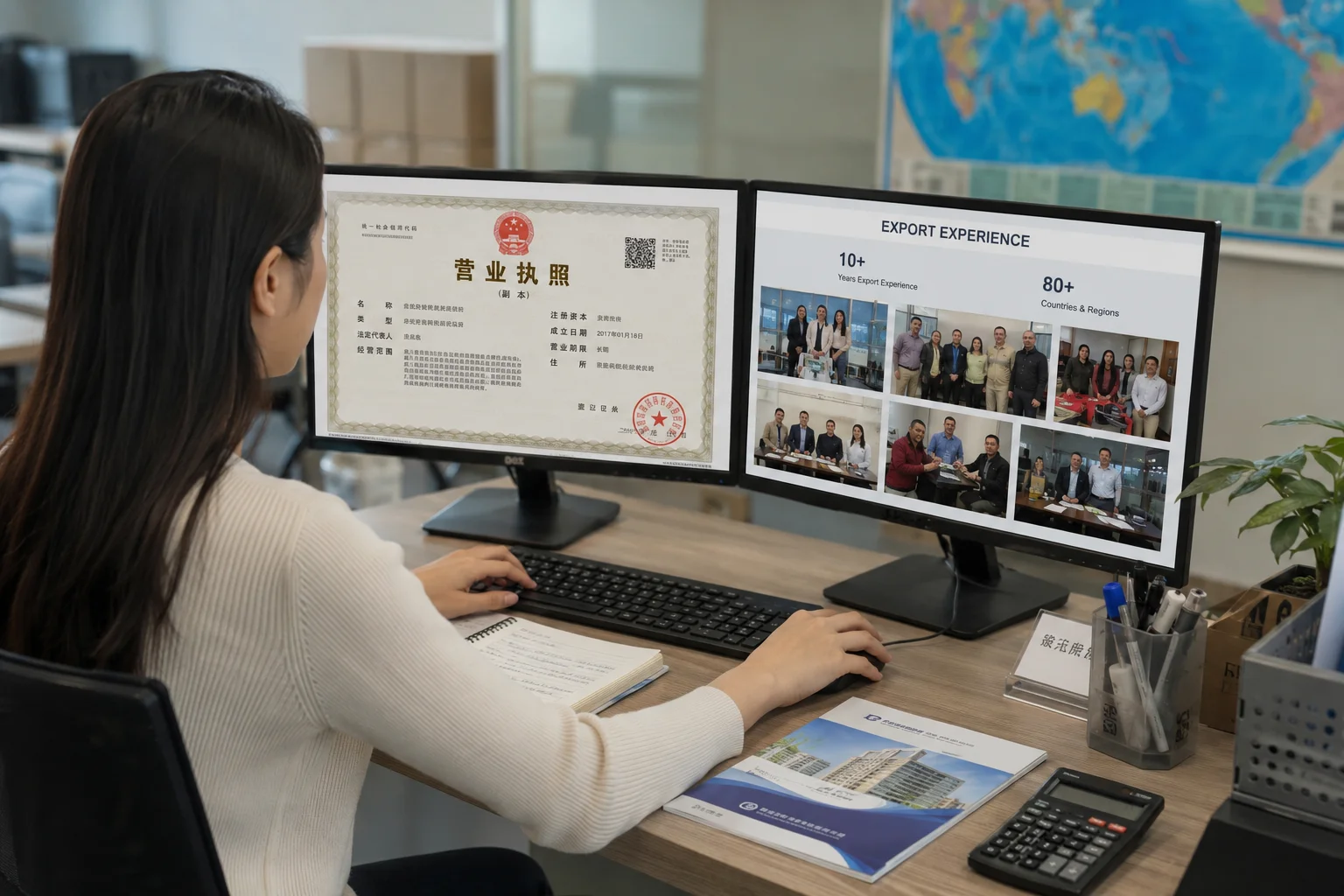
When I ask for a business license, I do not treat it as a formality. I compare the license name with the bank account name, invoice name, email signature, website footer, and product certificate holder. If these details do not match, I ask why. Sometimes there is a simple reason. A company may use one export company and one factory company. That can be normal in China.[^1] But the supplier must explain it clearly.
My background check table
| Item | Why I Check It | Risk If It Looks Wrong |
|---|---|---|
| Registered company name | I need to know who I pay | Payment may go to the wrong party |
| Establishment date | I want to see business stability | Very new firms may lack control |
| Business scope | I check if vape products fit | The company may not be relevant |
| Export market | I need experience with my region | Documents may not match my needs |
| Certificate holder | I check product ownership | Certificates may belong to others |
I also ask about export experience. I do not just ask, “Do you export to Europe?” Almost everyone says yes. I ask what documents they normally prepare, what shipping channels they use, and what problems they have met in customs. A real export team usually answers in practical detail. They may mention MSDS[^2], UN38.3[^3], battery transport rules, CE[^4], RoHS[^5], UKCA[^6], TPD-related needs[^7], or country-specific labeling. I do not expect one salesperson to know everything. But I do expect them to know where the responsibility sits. A supplier with real export experience talks about process. A weak supplier talks only about price.
Ask for Real Factory Videos, Production Lines, and Warehouse Proof?
I have received beautiful factory photos that looked perfect, but later I found the same photos on other supplier websites.
I ask for recent factory videos with date proof, production line views, warehouse stock, packing area, QC area, and a short custom video that includes my company name or requested detail. This helps me confirm the factory is real and active.
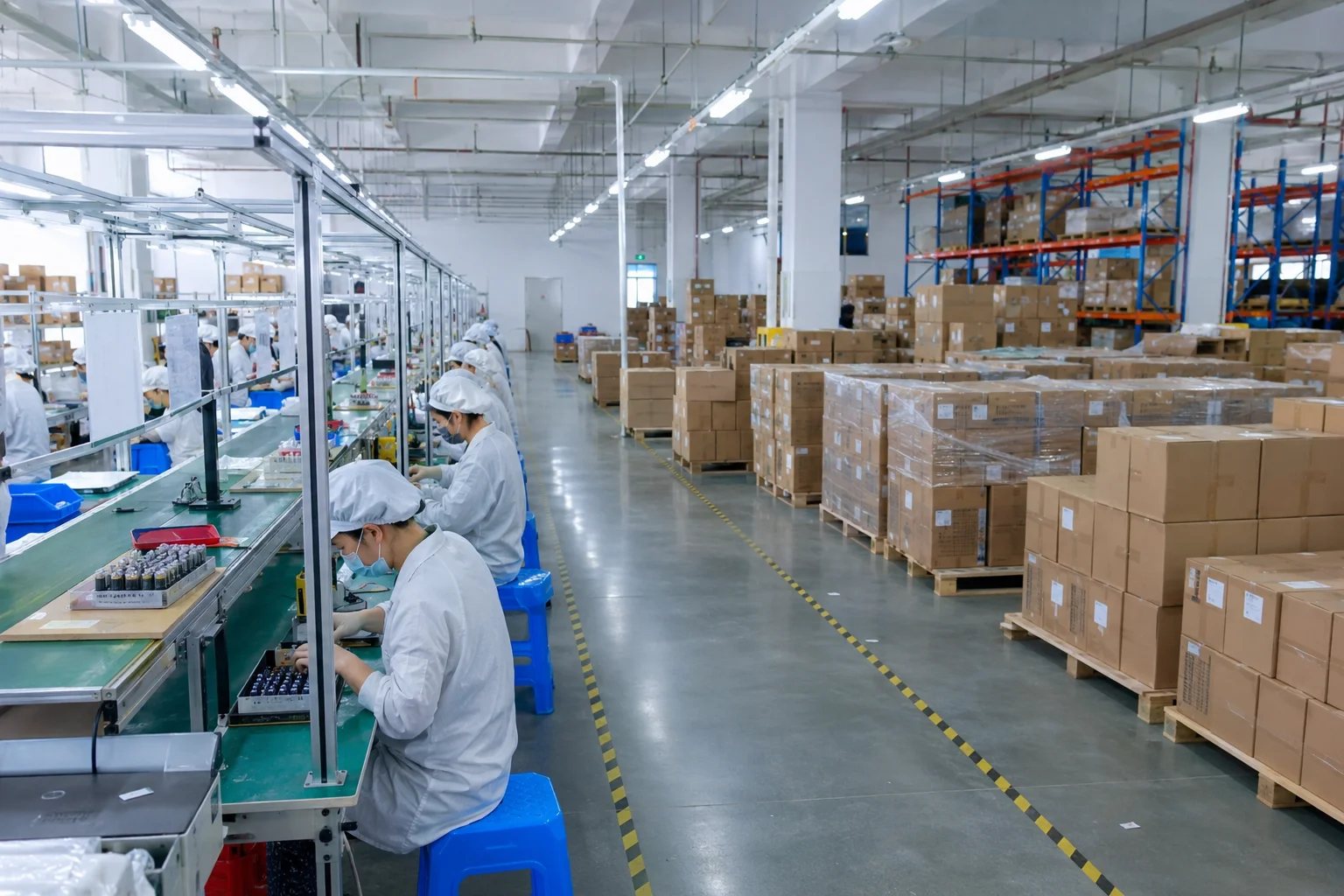
I like video proof because it is harder to fake than photos. I usually ask for a simple video, not a polished marketing clip. I may ask the supplier to walk from the front door to the production line, then show the warehouse, then show the packing table. I may also ask them to hold a paper with my company name and the date. This sounds basic, but it filters many weak suppliers quickly.
What I want to see in a factory video
| Area | What I Look For | Why It Matters |
|---|---|---|
| Entrance | Company sign and address | I match it with license details |
| Production line | Workers, machines, workflow | I see if production is active |
| QC area | Testing tools and records | I check if quality is controlled |
| Warehouse | Stock, cartons, labels | I see order volume and storage |
| Packing area | Packaging process | I check final product control |
I also pay attention to small details. I look at whether the workers wear proper protection where needed. I look at whether components are placed in order or mixed carelessly. I check whether finished goods are separated from semi-finished goods. I ask about aging tests, leakage checks, battery tests, and final inspection steps. I do not need to become a factory engineer. But I need enough detail to judge if the supplier has a working system. In my experience, a real factory is usually not afraid to show normal work. A fake supplier often sends only perfect videos with music and no real details. That is when I ask more questions.
Verify Product Certifications for Your Target Market?
I have seen importers assume one certificate works everywhere, then face customs delays, platform blocks, or buyer complaints.
I verify vape product certifications based on the target market, product type, battery, charger, e-liquid, packaging, and local rules. I check certificate holder, model number, test report date, lab name, and whether the certificate matches the exact product I plan to buy.
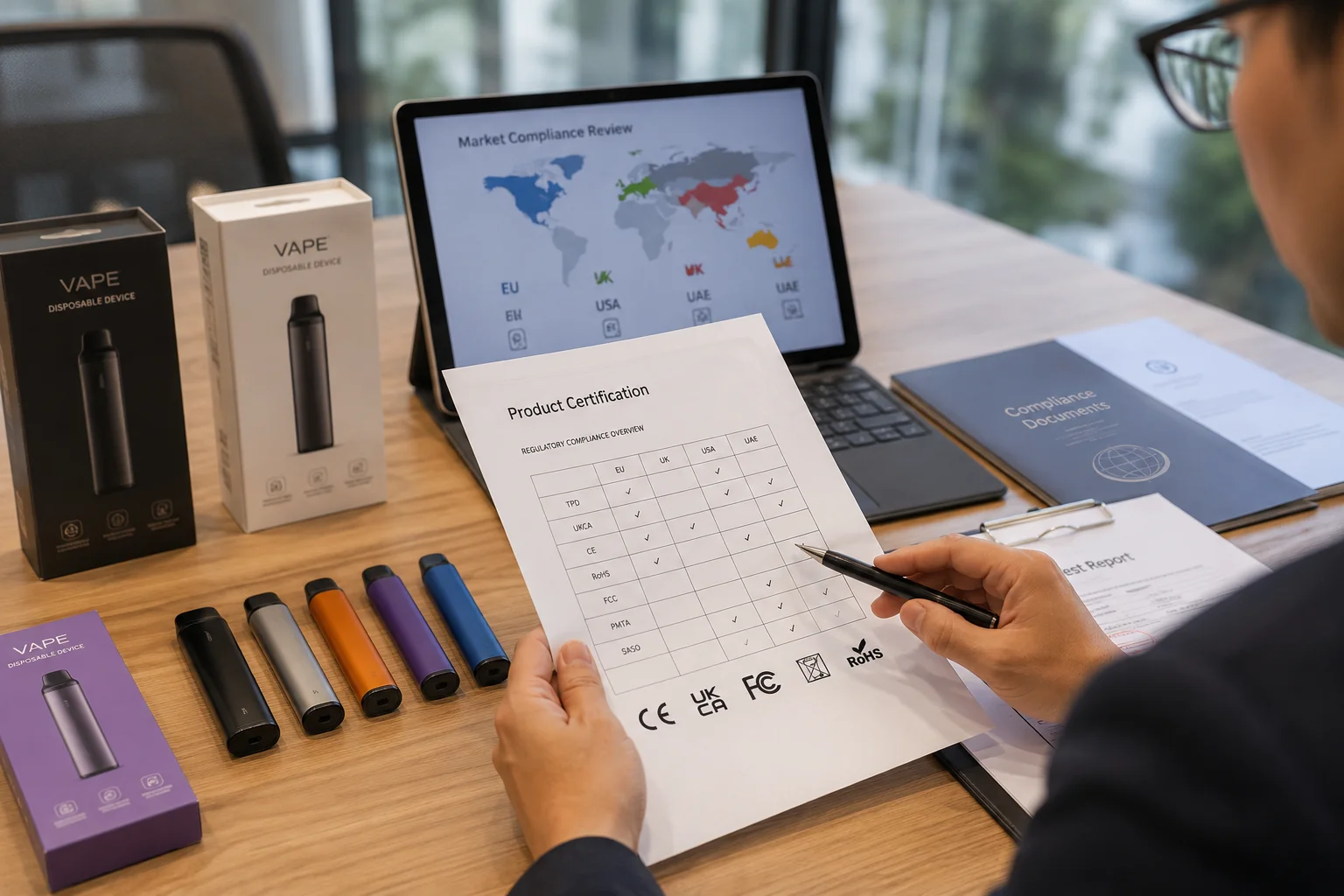
Certification is one of the most misunderstood parts of sourcing vape products. Many first-time buyers ask, “Do you have CE?” But that question is too broad. I need to know the exact market and sales channel. A product for a European distributor may need different checks from a product sold on a US online platform. A disposable vape, refillable pod, battery device, and charger set may also need different documents.
My certification check list
| Document | What I Compare | Why I Care |
|---|---|---|
| CE / UKCA related files | Model, product name, test standard | I need market fit |
| RoHS | Material and model scope | I need restricted substance control |
| MSDS | Battery or e-liquid details | I need shipping support |
| UN38.3 | Battery model and capacity | I need safe battery transport |
| TPD-related files | Nicotine rules and market needs | I need EU compliance support |
| Lab report | Lab name and report date | I need valid proof |
I do not accept a certificate only because it has a logo. I compare the model number on the certificate with the model in the quotation and sample. I check whether the certificate belongs to the supplier or another company. If it belongs to another company, I ask for a clear authorization or explanation. I also ask whether packaging, warning labels, and user manuals can be adjusted for my market. This is important because compliance is not only a test report. It also includes the way the product is labeled and sold. I am not a lawyer, so I still advise buyers to check local rules with their own compliance expert. But as a sourcing step, I never treat certificates as decoration. I treat them as risk control.
Compare Vape Product Quality, Battery, E-Liquid, and Component Details?
I compare vape quality by checking battery cell, puff consistency, e-liquid source, coil, leakage control, shell material, charging port, airflow, packaging, and test standards. I also test samples over time, not only on the first day.
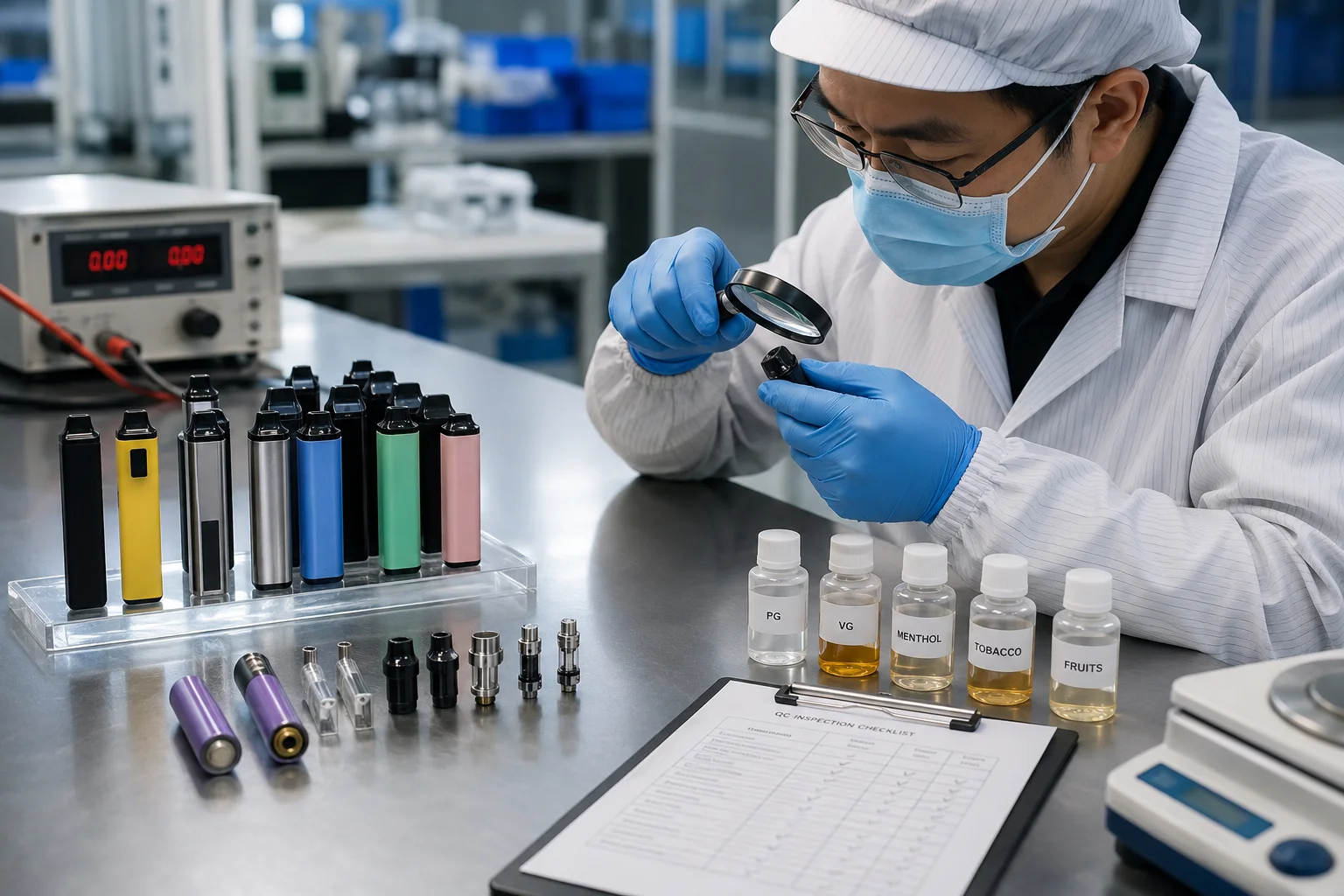
Price differences usually come from somewhere. Sometimes the supplier uses a lower-grade battery.[^8] Sometimes the e-liquid formula is less stable. Sometimes the shell material feels light. Sometimes the factory saves cost on QC time. I do not say low price is always bad. Many buyers need competitive pricing. But I always ask what is being sacrificed for that price.
Quality details I compare
| Part | What I Ask | What I Test |
|---|---|---|
| Battery | Capacity, supplier, cycle test | Real use time and charging |
| E-liquid | Source, flavor stability, nicotine level | Taste, leakage, consistency |
| Coil | Material and resistance | Heating and burnt taste risk |
| Shell | Material and finish | Hand feel and drop risk |
| Airflow | Design and tolerance | Smoothness and blockage |
| Packaging | Box strength and labeling | Retail display and shipping damage |
I also ask about the factory’s normal defect rate and after-sales handling. A serious supplier will not say “zero defect.” That answer sounds nice, but it is not real. Every production has a possible defect rate.[^9] I prefer a supplier who explains their test process and how they handle problems. For example, they may test battery charging, leakage, puff count, and appearance before packing. They may also keep batch records. This matters when a buyer gets complaints from stores or online customers. Without batch records, every issue becomes a fight. With records, both sides can trace the problem. In my own export work, I have learned that stable quality is not one big promise. It is many small controls done every day.
Evaluate Communication Speed, Professionalism, and After-Sales Policy?
I have seen buyers ignore slow replies at the start, then suffer even slower help when an order problem appeared.
I evaluate communication by checking reply speed, answer quality, product knowledge, document accuracy, problem-solving attitude, and after-sales policy. Good communication does not guarantee perfect production, but poor communication often creates bigger losses.
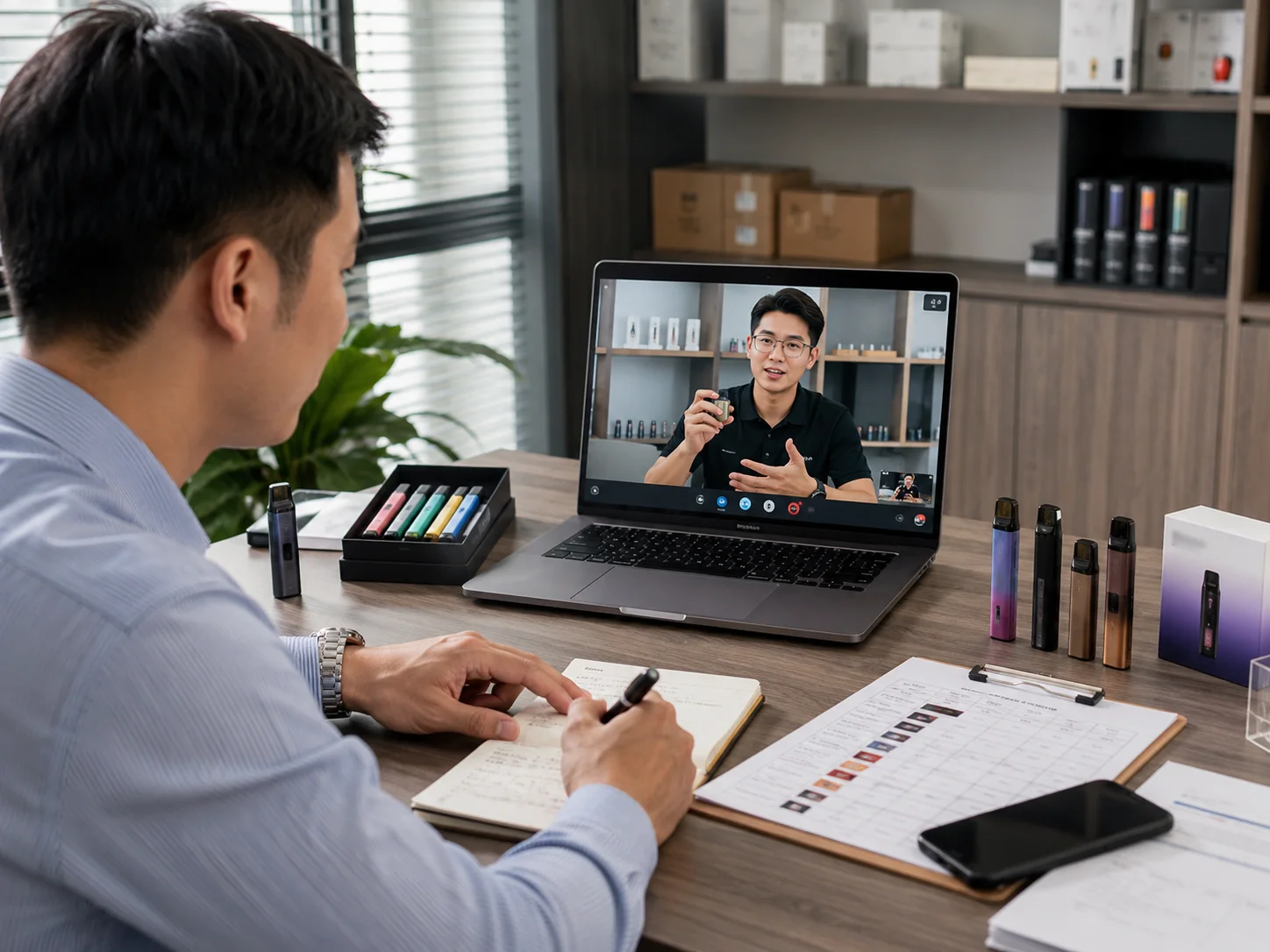
Communication is not just politeness. It is a business tool. When I talk with a vape supplier online, I watch how they handle questions. If I ask five clear questions and they answer only one, I know future work may be hard. If they avoid certification questions, I know compliance may become a problem. If they push me to pay before they explain details, I slow down.
How I score communication
| Area | Good Sign | Warning Sign |
|---|---|---|
| Reply speed | Replies within a reasonable time | Disappears for days |
| Answer quality | Gives direct and clear answers | Sends only catalog and price |
| Product knowledge | Explains components and tests | Cannot answer basic questions |
| Document control | Sends correct files | Sends mixed or old files |
| Problem attitude | Discusses solutions | Blames buyer or shipping first |
| After-sales | Has written policy | Makes only verbal promises |
I always ask for the after-sales policy before the order. I want to know how the supplier handles dead-on-arrival products, battery issues, leakage claims, wrong packaging, and shipment damage. I also ask what proof they need for claims. Do they need photos, videos, batch numbers, or return samples? This may feel uncomfortable before cooperation starts, but it is much better than arguing later. A professional supplier understands this. They know that B2B buyers must protect their own customers too. In retail and wholesale, one quality issue can move through many layers. A store may complain to a distributor. The distributor may complain to the importer. The importer then comes back to the supplier. If the supplier has no after-sales process, everyone loses time.
Request Sample Orders Before Placing a Large Wholesale Order?
I have seen buyers skip samples because they trusted a catalog, then their first bulk order became their first real test.
I always request sample orders before a large wholesale order. Samples help me check product quality, packaging, taste, charging, leakage, documents, supplier response, and shipping process before I risk more money.
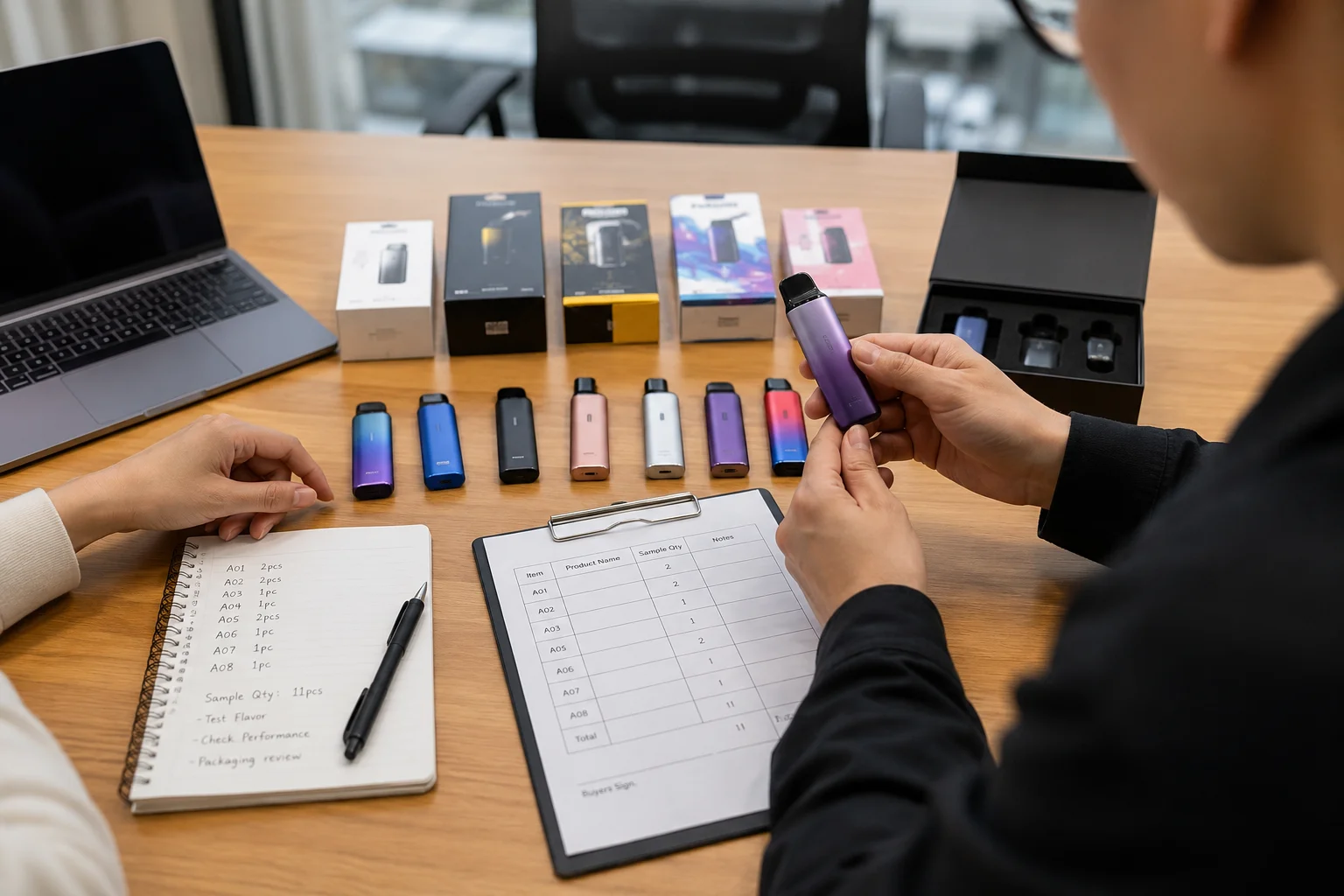
A sample order is not only about the product in my hand. It is a small test of the whole supplier. I check how fast they prepare the sample. I check whether they send the correct model and color. I check whether the packaging matches the discussion. I check whether the tracking number is sent on time. I also check whether they follow up after delivery.
What I test with samples
| Test Area | My Action | My Reason |
|---|---|---|
| Product function | I use the product in a normal way | I need real user experience |
| Battery | I charge and discharge it | I check capacity and safety signs |
| Leakage | I store and move samples | I check transport risk |
| Packaging | I inspect box and label | I check retail readiness |
| Consistency | I compare several units | I check batch stability |
| Supplier service | I ask follow-up questions | I test cooperation quality |
I also suggest that buyers test samples with their sales channel in mind. If you sell online, you may care more about product photos, packaging, reviews, and return risk. If you sell to retail stores, you may care more about shelf display, barcode, carton strength, and local labeling. If you sell through wholesale, you may care about stable supply, fast reorder, and low complaint rate. I often tell buyers that samples are not the final proof of mass production quality. A factory can make good samples and still have weak bulk control. But samples are still necessary. They help me decide if the supplier deserves a trial order. After samples, I usually move to a small batch first. I do not jump from sample to huge order unless the buyer has strong experience and strong risk control.
Check Payment Terms, Shipping Options, and Risk Protection?
I have seen buyers accept unsafe payment and vague shipping terms, then lose control when the order was delayed or disputed.
I check payment terms, bank account name, trade terms, shipping method, battery transport rules, insurance, inspection options, and dispute protection before I pay. Clear terms help me reduce financial and delivery risk.
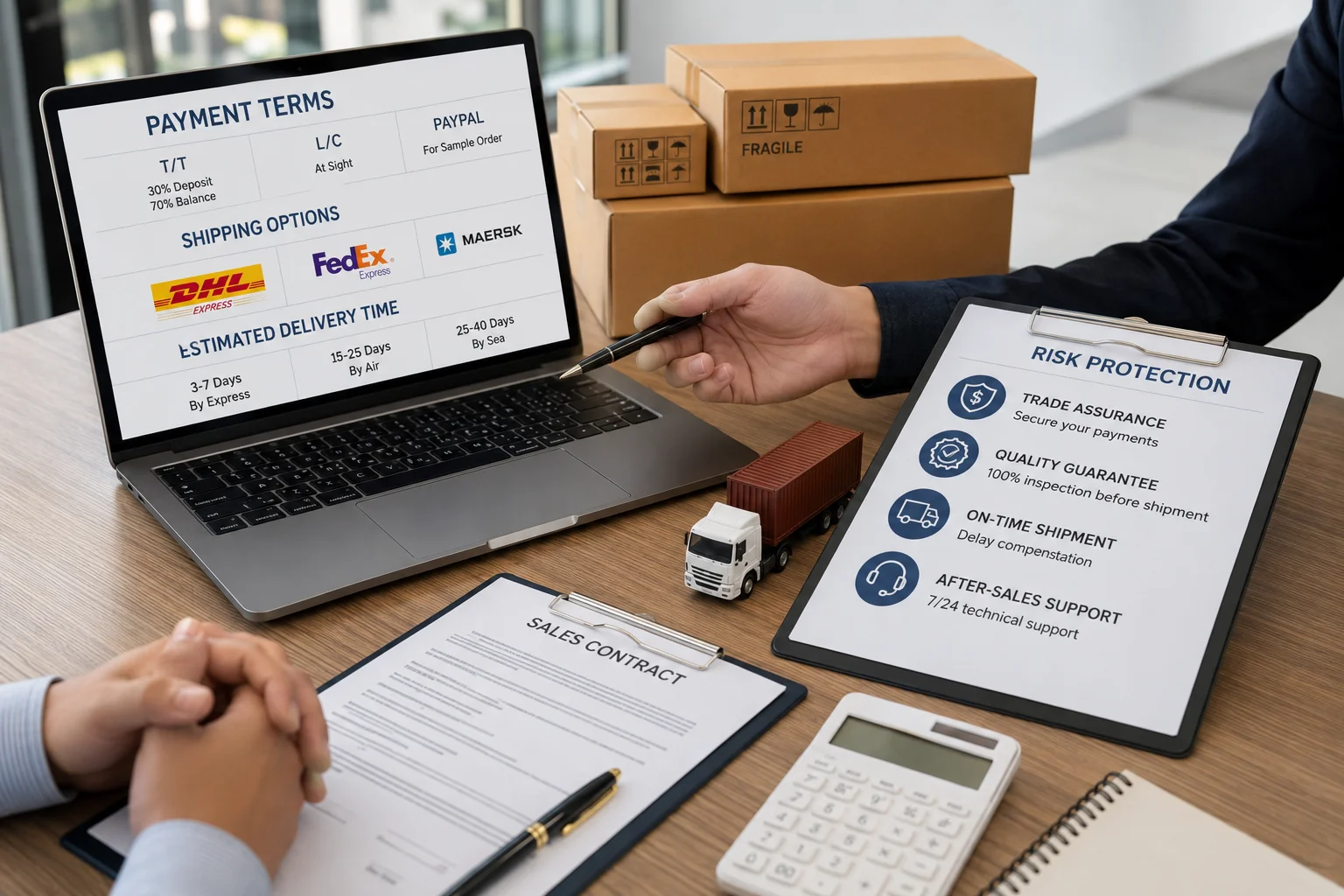
Payment and shipping are where many hidden risks appear. A supplier may have a good product, but if the payment account does not match the company name, I ask questions. If the shipping plan is vague, I ask for details. Vape products often involve batteries and sometimes e-liquid, so shipping is not the same as simple plastic goods[^10]. I need to know whether the forwarder can handle the product type legally and safely.
Terms I confirm before payment
| Item | What I Confirm | Why It Matters |
|---|---|---|
| Payment account | Company name and bank details | I avoid wrong-party payment |
| Deposit and balance | Payment schedule | I control cash flow risk |
| Trade term[^11] | EXW, FOB, CIF, DDP, or others | I know who handles each step |
| Shipping method | Air, sea, express, or special line | I match speed and cost |
| Battery documents | MSDS, UN38.3, transport files | I avoid shipment blocks |
| Inspection | Before shipment or during production | I reduce quality surprises |
| Insurance | Coverage and claim process | I protect higher-value orders |
I also think about risk protection by order stage. For a first order, I prefer smaller volume, clear written terms, and inspection before balance payment. For repeat orders, I may adjust terms if the supplier has proven performance. I do not believe every supplier who asks for a deposit is risky. Deposits are normal in manufacturing and export.[^12] The key is whether the supplier, documents, production proof, and payment account all match. I also ask for a proforma invoice with full details. It should include model, quantity, unit price, packaging, lead time, shipping term, payment term, and after-sales agreement. Simple written records prevent many future arguments. In my experience, the safest order is not the one with the cheapest price. It is the one where both sides know exactly what must happen next.
Conclusion
I evaluate a vape factory online by checking proof, documents, products, communication, samples, and terms before I trust price or promises.
[^1]: "Hong Kong Stock Exchange - Wikipedia", https://en.wikipedia.org/wiki/Hong_Kong_Stock_Exchange. Sources on Chinese business practices note that it is common for a manufacturing group to operate through multiple legal entities, including a domestic factory and a separate company (sometimes based in Hong Kong) dedicated to handling exports, foreign currency transactions, and VAT rebates. Evidence role: general_support; source type: education. Supports: The use of separate legal entities for domestic production and international trade is a common and often legitimate business structure in China.. [^2]: "What is a Material Safety Data Sheet (MSDS)? - NLM Support Center", https://support.nlm.nih.gov/kbArticle/?pn=KA-03976. A Material Safety Data Sheet (MSDS), or Safety Data Sheet (SDS), is a standardized document required by occupational safety regulations and transport authorities. It details the chemical properties, health and environmental hazards, and safety precautions for handling, storing, and transporting materials, and is necessary for products containing e-liquids or lithium batteries. Evidence role: definition; source type: government. Supports: A Material Safety Data Sheet (MSDS), now more commonly known as a Safety Data Sheet (SDS), is a document that provides information on the potential hazards of a product and how to work safely with it, and is required for transport.. [^3]: "Lithium Battery Test Summaries (TS) - PHMSA", https://www.phmsa.dot.gov/training/hazmat/new-un-requirement-test-summaries. The UN Manual of Tests and Criteria, Section 38.3, specifies the testing requirements that lithium cells and batteries must pass to be considered safe for transport. These tests simulate environmental and mechanical stresses such as pressure, impact, and short-circuiting, and compliance is mandatory for shipping lithium batteries by air, sea, or land. Evidence role: definition; source type: institution. Supports: UN38.3 is a United Nations standard that ensures the safety of lithium batteries during transportation through a series of rigorous tests.. [^4]: "CE marking - Wikipedia", https://en.wikipedia.org/wiki/CE_marking. The CE marking on a product is a manufacturer's declaration that the product complies with the essential requirements of the relevant European health, safety, and environmental protection legislation. For vape devices, this typically involves compliance with the Low Voltage Directive (LVD), the Electromagnetic Compatibility (EMC) Directive, and the Restriction of Hazardous Substances (RoHS) Directive. Evidence role: definition; source type: government. Supports: CE marking indicates that a product conforms with the health, safety, and environmental protection standards for products sold within the European Economic Area (EEA).. [^5]: "RoHS - Wikipedia", https://en.wikipedia.org/wiki/RoHS. The Restriction of Hazardous Substances (RoHS) Directive, originating in the European Union, restricts the use of ten specific hazardous materials in the manufacture of various types of electronic and electrical equipment. Compliance is required for any applicable products to be sold in the EU and many other regions that have adopted similar standards. Evidence role: definition; source type: government. Supports: The RoHS directive restricts the use of specific hazardous materials found in electrical and electronic products.. [^6]: "UKCA marking - Wikipedia", https://en.wikipedia.org/wiki/UKCA_marking. The UKCA marking is a UK product marking that is required for certain products being placed on the market in Great Britain. It covers most goods which previously required the CE marking and demonstrates compliance with applicable UK regulations. The requirements and conformity assessment processes are largely based on those that existed for CE marking. Evidence role: definition; source type: government. Supports: The UKCA (UK Conformity Assessed) marking is the product marking used for goods being placed on the market in Great Britain (England, Wales, and Scotland).. [^7]: "Emerging Electronic Cigarette Policies in European Member States ...", https://pmc.ncbi.nlm.nih.gov/articles/PMC8025686/. The European Union's Tobacco Products Directive (2014/40/EU), specifically Article 20, establishes safety and quality requirements for electronic cigarettes. These include limits on nicotine concentration and e-liquid container volume, health warning and labeling requirements, and a mandatory notification system for new products before they can be placed on the market. Evidence role: definition; source type: government. Supports: The EU's Tobacco Products Directive (TPD) includes specific regulations for e-cigarettes and e-liquids, covering aspects like nicotine strength, tank size, and labeling.. [^8]: "Serious Injury or Death Can Occur if Lithium-Ion Battery Cells Are ...", https://www.cpsc.gov/Newsroom/News-Releases/2021/CPSC-Issues-Consumer-Safety-Warning-Serious-Injury-or-Death-Can-Occur-if-Lithium-Ion-Battery-Cells-Are-Separated-from-Battery-Packs-and-Used-to-Power-Devices. Analyses and safety reports on electronic cigarettes have highlighted the battery as a critical component for both performance and safety. The use of lower-grade cells or batteries lacking proper protection circuits can lead to reduced battery life, inconsistent power delivery, and in some cases, thermal runaway events. Evidence role: case_reference; source type: research. Supports: The quality and safety of lithium-ion batteries in vape products are significant concerns, with documented cases of failure.. Scope note: The source would provide general context on battery risks in vapes rather than specific statistics on how often suppliers intentionally use lower-grade batteries. [^9]: "[PDF] ISO 2859-1 - UNT Chemistry", https://chemistry.unt.edu/~tgolden/courses/iso2859-1.pdf. In manufacturing, the concept of an Acceptable Quality Limit (AQL) is a statistical method used for quality control. Defined by standards such as ISO 2859-1, AQL represents the maximum percent of defective units that can be considered acceptable in a batch during random sampling inspection, acknowledging that achieving zero defects is not always commercially viable. Evidence role: definition; source type: institution. Supports: The concept of an acceptable defect rate is a standard part of quality control in manufacturing, formalized by standards like AQL.. [^10]: "What are Dangerous Goods? | Federal Aviation Administration", https://www.faa.gov/hazmat/what_is_hazmat. International transport bodies, such as the International Air Transport Association (IATA), classify lithium-ion batteries as Class 9 Dangerous Goods. This classification mandates strict regulations for packaging, labeling, documentation, and quantity limits to mitigate risks of fire during transit. E-liquids may also be subject to shipping restrictions depending on their chemical composition. Evidence role: mechanism; source type: institution. Supports: International shipping regulations classify lithium batteries and sometimes e-liquids as dangerous or hazardous goods, requiring special handling, packaging, and documentation.. [^11]: "Know Your Incoterms - International Trade Administration", https://www.trade.gov/know-your-incoterms. Incoterms®, published by the International Chamber of Commerce (ICC), are a set of internationally recognized rules that define the responsibilities of sellers and buyers for the delivery of goods under sales contracts. They clarify tasks, costs, and risks involved in the delivery of goods, such as who is responsible for shipping, insurance, and customs clearance. Evidence role: definition; source type: institution. Supports: The terms listed (EXW, FOB, CIF) are part of the Incoterms rules, which are the global standard for interpreting trade terms.. [^12]: "Methods of Payment - International Trade Administration", https://www.trade.gov/methods-payment. Guides on international trade and export finance describe advance payment (or a deposit) as a common method where the importer pays the exporter before the goods are shipped. This practice is prevalent in custom manufacturing to cover the costs of raw materials and production, thereby mitigating the financial risk for the supplier. Evidence role: general_support; source type: education. Supports: Advance payment or a deposit is a common payment method in international trade, especially for custom manufacturing..