
You just got a new shipment, but customers are complaining. The flavor is off, or the battery dies too fast. Inconsistency is a silent killer, destroying your reputation and profits.[^1]
To ensure batch consistency in branded vape wholesale, you must systematically inspect every shipment. This means comparing the appearance, packaging, and performance against a trusted standard sample, verifying anti-counterfeit codes, and using pre-shipment inspections to catch any deviations before you pay in full.
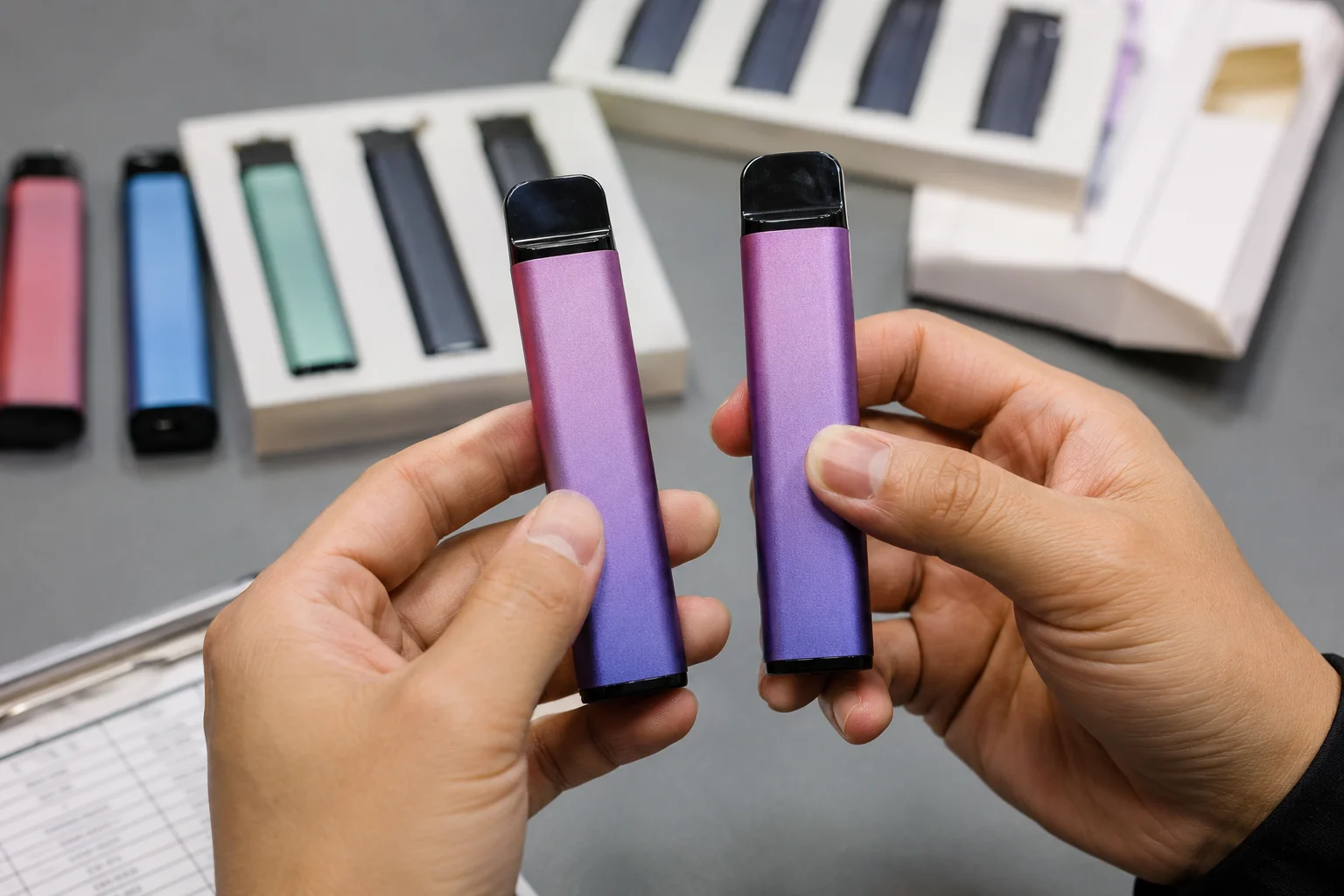
I've been in the export business for over 15 years, and I've seen countless importers get burned by inconsistent quality. A good deal on your first order means nothing if the second order is a batch of garbage. The difference between a thriving vape business and a failing one often comes down to one thing: reliability. Your customers need to get the same great experience, every single time. So, let’s talk about how to make sure that happens. We're going to break down a checklist that will protect your investment and your reputation.
Why Does Batch Consistency Matter in Branded Vape Wholesale?
Thinking inconsistent vapes are just a small problem? Think again. Every bad unit you sell erodes customer trust and chips away at your brand’s future. It's a quiet but deadly business threat.
Batch consistency is vital because it protects your reputation, minimizes expensive returns, and builds the customer loyalty needed for long-term profit. In a market flooded with fakes[^2], delivering a reliable, predictable product is your single greatest advantage.

Let me be direct. The biggest difference between a professional supplier and a shady workshop is consistency. I often get questions from new buyers who found a "great deal" online, with prices that seem too good to be true. For example, in France, the market is flooded with fake JNR vapes selling for 2 euros. The real factory price is over 4 euros.[^3] How is that possible? It’s simple: they are selling you garbage.
A supplier who sends you one good batch and one bad batch is either incompetent or dishonest. They might be mixing in fakes or cutting corners to increase their profit on your second order. This is a massive risk. Your business isn't built on one-time sales; it's built on repeat customers. If a customer gets a bad vape, they don't blame the factory in China. They blame you.[^4] That single bad experience can lose you a customer for life. Consistent quality means faster sales, happier customers, and quicker cash flow. That's the real secret to making money in this business.
How to Check Whether the Appearance, Color, and Finish Match Across Batches?
Does a small difference in color really matter? Absolutely. When a regular customer gets a vape that looks or feels 'off,' their first thought is, "Is this a fake?" Don't let visual flaws create doubt.
To check appearance, you must compare new batches against a "golden sample." Carefully check for any differences in color, texture, print quality, and physical finish. Even small changes can signal a switch in materials or a lower-quality production run.
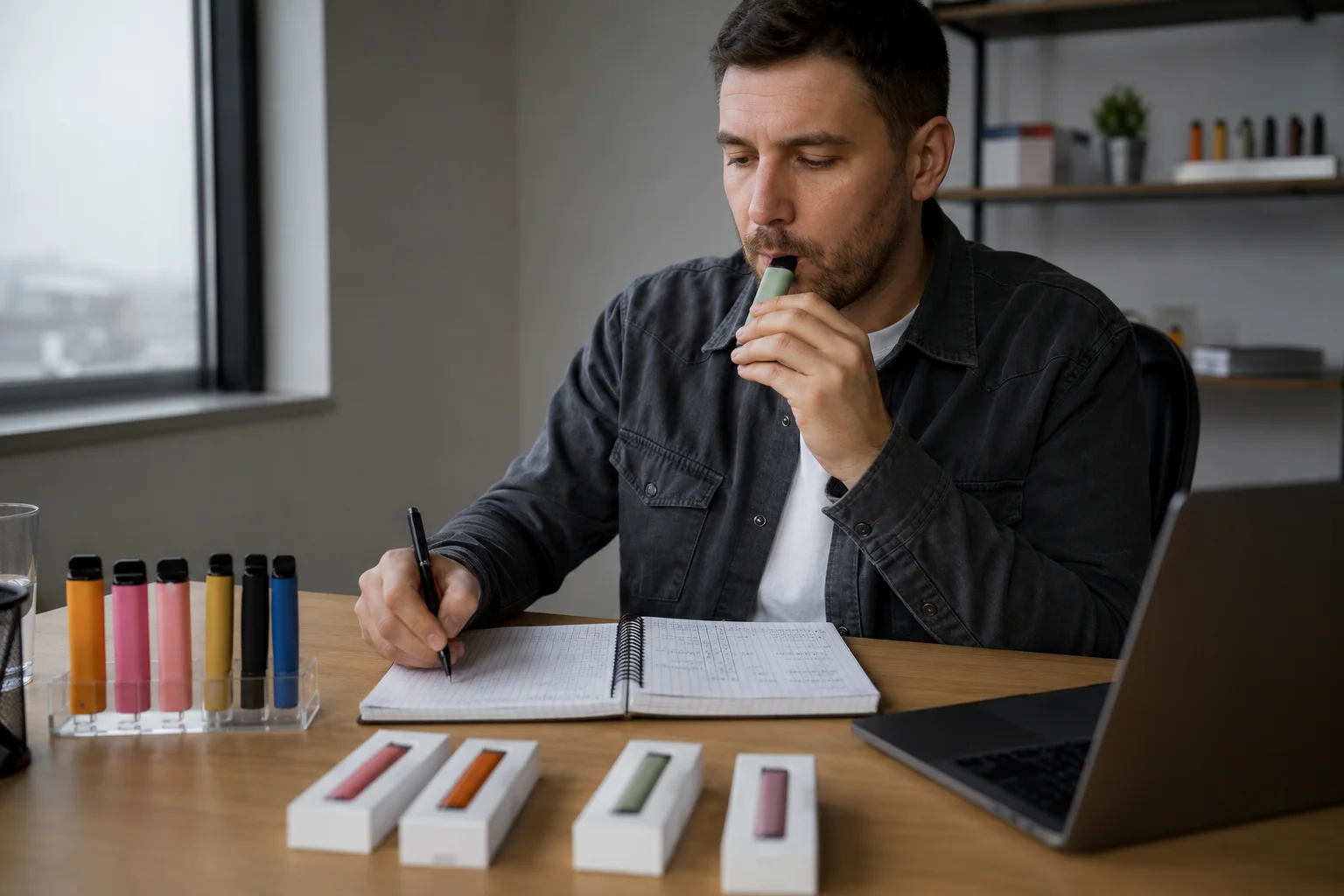
The first thing you should do is establish a "golden sample." This is a perfect reference unit from a batch you know was good. Every new shipment should be compared directly against it. Don't rely on memory or photos. Physical comparison is key.
When you're inspecting a new batch, you're not just looking for obvious defects. You are looking for subtle changes that signal a problem. A supplier might switch to a cheaper plastic, a less durable paint, or a faster, sloppier assembly process to save a few cents. These changes show up in the final product. A lighter-than-usual device is a huge red flag—it often means they used a smaller, cheaper battery.[^5] We see this all the time with fakes; they feel light and cheap because they are.
Here’s a simple checklist to use:
| Feature | Check Point | Why It's a Red Flag |
|---|---|---|
| Color | Does it exactly match the golden sample? | A different shade can mean cheaper paint or plastic. |
| Finish | Is it matte, glossy, or textured as expected? | A change in finish signals a different manufacturing process. |
| Weight & Feel | Does it feel as solid as the original? | Lighter vapes often have cheaper parts or smaller batteries. |
| Seams & Gaps | Are the plastic seams tight and even? | Poor assembly can lead to leaks and durability issues. |
How to Compare Packaging, Labels, Barcodes, and Anti-Counterfeit Marks?
You assume the box is just a box, but you'd be wrong. A blurry logo, a typo, or a fake QR code can make your entire shipment look like a cheap counterfeit to customers who know what to look for.
Scrutinize every detail on the packaging. Compare barcodes and warning labels against official versions. Most importantly, verify anti-counterfeit QR codes by going to the official brand website and typing in the code manually. Never trust a link from a QR scan.
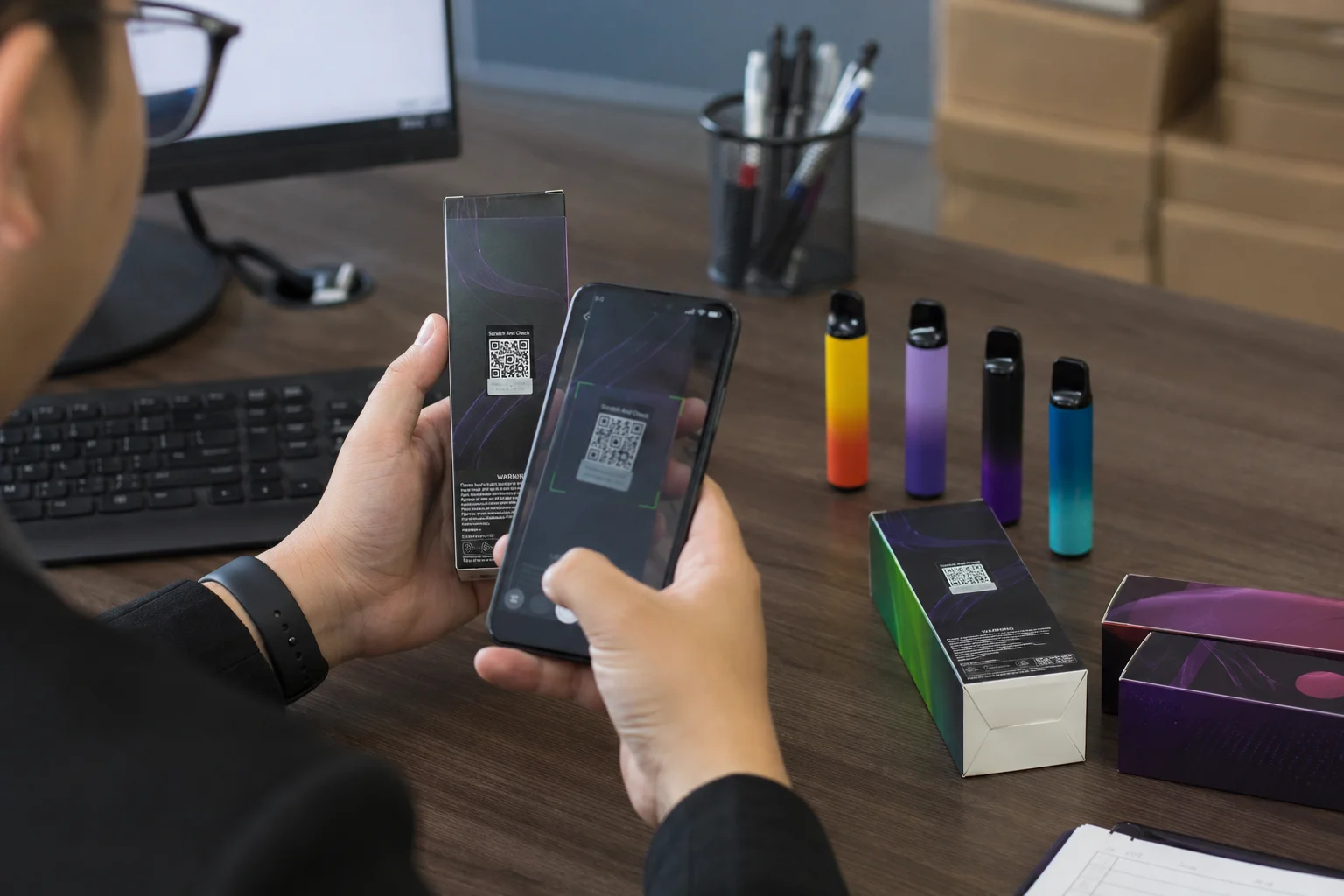
This is one of the biggest traps for new buyers. Many fakes now have QR codes that seem to work. You scan it, and it takes you to a webpage that says "Genuine Product!" The problem? It's a fake website created by the scammer.[^6] The only way to be sure is to open your web browser, go to the official brand website (like elfbar.com), find their verification page, and manually type in the security code from the packaging. If the supplier is legitimate, they'll pass this test. If they're not, this is where they get caught.
Beyond the QR code, the packaging itself tells a story. Legitimate brands invest in high-quality, consistent printing. Counterfeiters cut corners. When we train our new staff, we have them compare genuine and fake packaging side-by-side. The differences are obvious once you know what to look for.
Here’s what to check on the packaging:
| Packaging Element | What to Check | Common Fake/Bad Batch Issues |
|---|---|---|
| Logo & Font | Is the font correct? Is the logo printing sharp? | Blurry printing, wrong fonts, and obvious spelling mistakes. |
| Barcode (UPC/EAN) | Does it scan correctly? Is it unique for each box? | Using the same duplicated barcode for an entire batch. |
| Anti-Counterfeit Code | Can it be verified on the OFFICIAL brand website? | Links to a fake site, shows as "already verified," or is invalid. |
| Warning Labels | Are they correct and compliant for your target market? | Missing, incorrect, or poorly translated warning labels. |
How to Verify Flavor, Nicotine Strength, Puff Performance, and Airflow?
The vape looks and feels right, but it tastes weak, or it gives a harsh, burnt hit. One bad puff is all it takes for a customer to decide your products are trash and never buy from you again.
This requires hands-on testing of multiple units from a new batch. Check if the flavor is as strong and accurate as previous orders, if the nicotine hit feels correct, and if the puff count seems reasonable before the flavor goes bad or tastes burnt.
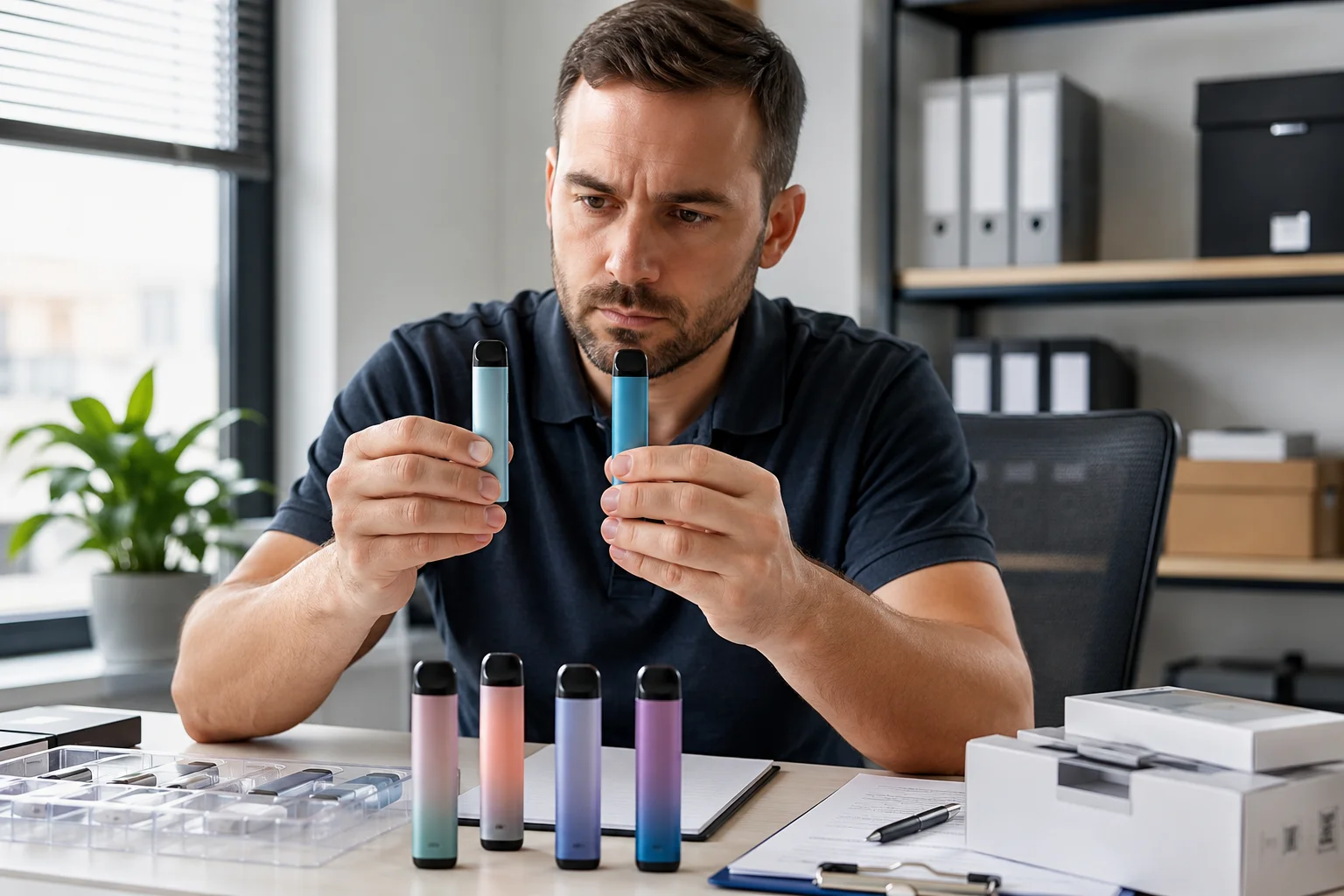
You have to test the product yourself. You can't just trust the spec sheet. I recommend pulling at least 5-10 units from a new batch and testing them over a day or two. The most important test is the "first puff vs. last puff" experience. A cheap, low-quality vape might taste okay for the first 50 puffs, but then the flavor disappears or you get that dreaded burnt taste (what we call "糊芯" or "burnt core")[^7]. This happens because the coil gives out before the e-liquid is gone.
This is a direct result of using cheap materials. Good brands use high-quality e-liquid and properly matched coils to ensure the flavor is stable from start to finish. Fake and low-quality products use mystery e-liquid from unknown sources, so you get inconsistent flavor. One batch of "Blue Razz Ice" might taste great, while the next tastes like chemicals. You should also check the airflow. Is it too tight or too loose compared to your golden sample? All these small details add up to the total customer experience.
How to Inspect Battery Capacity, Charging Port, Coil, and E-Liquid Volume?
A rechargeable vape that dies 10 minutes after you unplug it is worse than useless. It's a broken promise to your customer. You can't afford to sell products with hidden hardware flaws that will sink your business.
This is where you have to look under the hood. Check if the charging port is secure. Test the battery life against the claims. If you're brave, a teardown of one sample can reveal the real coil quality and true e-liquid volume.
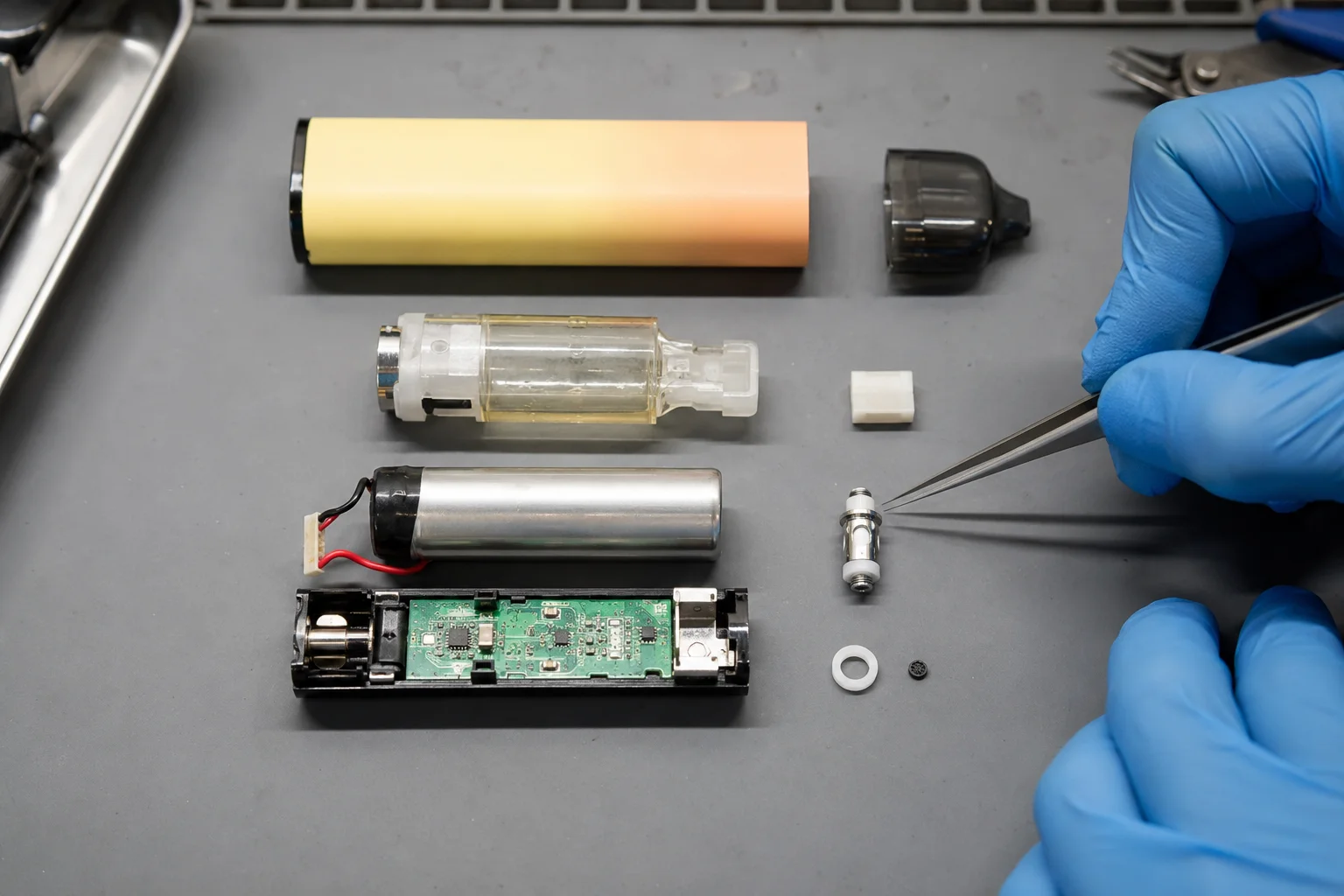
I want to let you in on a secret that cheap manufacturers don't want you to know. One of the easiest ways they save money is by using cheap batteries. High-quality vapes use lithium batteries, which are reliable and perform well. Very cheap vapes use manganese or cobalt batteries.[^8] These are terrible. They have a short life, they don't hold a charge, and they often stop working completely in cold weather.[^9] If your customers complain their vapes are "dead on arrival" in the winter, it's almost certainly a bad battery.
Another big lie is the puff count. I see products advertised with 30,000, 50,000, or even 300,000 puffs! This is pure fantasy. The device is too small to hold that much e-liquid or a battery that could support it. A simple rule of thumb is that 1ml of e-liquid gives you about 200-300 puffs.[^10] So a vape with 10ml of liquid has, at most, 3000 real puffs. Professionals don't look at the puff number on the box; they look at the milliliters of e-liquid. That's the real measure of a vape's lifespan.
How to Ask for Batch Numbers, Production Dates, and Test Records?
You're flying blind if you don't have the data. If a customer reports a problem, how can you trace it back to the source? Without production records, you can't hold your supplier accountable or protect your business from future issues.
A professional supplier must be able to provide batch numbers, production dates, and quality control (QC) reports for every shipment. This documentation is essential for traceability and proves your supplier has a formal quality management process.

When we work with a new buyer, one of the first things we do is show them our process. We explain that every production run has a unique batch number. This is critical. If a problem is discovered, we can immediately isolate all the products from that specific batch. If your supplier tells you they don't use batch numbers, run away. That's the sign of a disorganized, amateur workshop, not a professional factory.
You should also ask for their internal QC reports. These documents show the results of tests they perform at the factory, like battery capacity tests, resistance checks, and leak tests. Now, do you have to trust these reports 100%? Maybe not. But a supplier who has them and is willing to share them is showing you they have a process. A supplier who claims they don't have any records is telling you everything you need to know about their lack of quality control. This simple request is a powerful tool to separate the professional suppliers from the pretenders.
How to Use Samples and Pre-Shipment Inspection Before Every Bulk Order?
You approved the first sample, so the full bulk order should be exactly the same, right? This is a dangerously expensive assumption that has cost importers millions of dollars. The perfect sample you approved is not always what you get in the bulk shipment.
Never skip a pre-shipment inspection (PSI), especially for large orders from China. Always get samples from the actual production batch sent to you for final approval before the full shipment leaves the factory. This is your last, best chance to catch problems.
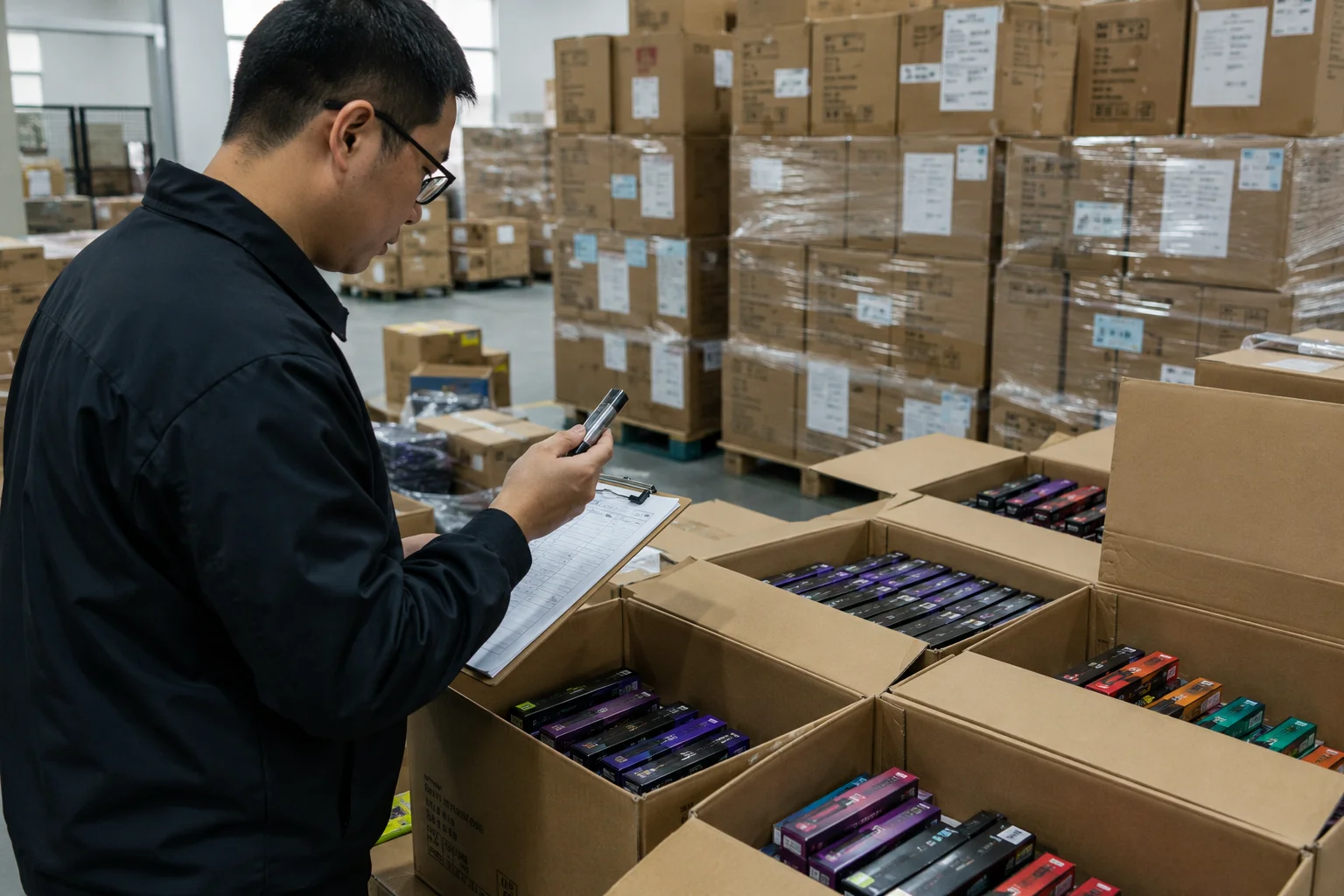
There's a huge difference between a "pre-production sample" and a "production sample." The first sample is designed to win your business. It's often handmade or specially selected. The production samples, taken from your actual bulk order, show you the real quality you're about to receive.
For any large order, I strongly recommend using a third-party pre-shipment inspection service in China. For a few hundred dollars, they will send an inspector to the factory.[^11] They will pull random units from your finished order and check them against your quality checklist. They can check the appearance, test the function, verify the packaging, and send you a detailed report with photos and videos. This is the cheapest insurance policy you will ever buy. It gives you the power to reject the shipment and demand corrections before you've sent the final payment. For our clients placing smaller orders from our European warehouses, this isn't necessary, but for anyone ordering a full container from China, it is absolutely essential.
How to Track Customer Feedback to Identify Batch Quality Problems Early?
The shipment has arrived and you're selling it in your store. You think the job is done, but it's really just beginning. Ignoring what your customers are saying is like trying to fly a plane with no instruments—you're heading for a crash.
Your customers are your final, and most important, quality control inspectors. You must set up a simple system to track complaints, returns, and online feedback. A sudden spike in a specific issue is a direct signal of a bad batch.[^12]

You don't need a complicated system. A simple spreadsheet is enough. Track the date, the customer complaint, and the product's batch number if possible. Look for patterns. Are you suddenly getting a lot of complaints about one specific flavor? Are many customers saying their vape "died fast"?
This data is gold. It helps you identify exactly what the problem is.
- "Died fast" points to a battery issue.
- "Tastes burnt" points to a coil or wicking issue.
- "Leaked in the box" points to a sealing or assembly defect.
When you have this specific information, you can go back to your supplier with a strong claim. Instead of saying, "Your product is bad," you can say, "We have seen a 15% failure rate in batch #XYZ123 due to battery issues, and here is the documentation." A good supplier will take this seriously and work with you on a solution, like offering credit or replacements. A bad supplier will make excuses. This feedback loop not only helps you get compensated but also forces your supplier to fix their problems.
Conclusion
Checking batch consistency is not just a tedious task; it's a core business strategy. It protects your money, defends your reputation, and ensures you can build a sustainable, profitable vape business for the long term.
[^1]: "Shopping for others: how does inconsistency in online reviews affect ...", https://pmc.ncbi.nlm.nih.gov/articles/PMC12231527/. Research in quality management demonstrates that product inconsistency leads to customer dissatisfaction, erodes brand trust, and incurs significant costs related to returns, warranty claims, and lost future sales, often referred to as the 'Cost of Poor Quality'. Evidence role: general_support; source type: education. Supports: The claim that product inconsistency harms reputation and profits.. [^2]: "HHS, CBP Seize $86.5 Million Worth of Illegal E-Cigarettes in ... - FDA", https://www.fda.gov/news-events/press-announcements/hhs-cbp-seize-865-million-worth-illegal-e-cigarettes-largest-ever-operation. Reports from public health and law enforcement agencies confirm a large and growing global market for illicit and counterfeit e-cigarettes, which often fail to meet regulatory standards for safety and quality. Evidence role: statistic; source type: government. Supports: The claim that the vape market has a significant counterfeit problem.. [^3]: "JNR Vape Official Store | Falcon X Plus, Flux Pro & Whale | EU ...", https://jnrvapor.co/. News reports or publications from French authorities on consumer protection or customs have documented the seizure and sale of counterfeit disposable vapes, with prices that are often less than half the cost of legitimate products. Evidence role: case_reference; source type: other. Supports: The claim that counterfeit vapes are sold at prices significantly below the legitimate factory cost in specific markets like France.. Scope note: The source may not mention the exact brand or prices, but can confirm the general pricing dynamic of counterfeit vapes in the French market. [^4]: "Consumers blame both manufacturer and retailer when products fail ...", https://mendoza.nd.edu/news/consumers-blame-when-products-fail/. Studies in consumer behavior show that when a product fails, consumers tend to attribute blame to the most accessible entity in the supply chain, which is typically the retailer from whom they purchased the item, rather than an unknown manufacturer. Evidence role: general_support; source type: paper. Supports: The idea that consumers primarily blame the retailer for product failures.. [^5]: "Disposable vape teardown notes and observations - Facebook", https://www.facebook.com/groups/ElectronicParts/posts/2515242528665067/. Teardown analyses of disposable e-cigarettes reveal that a primary way counterfeit or low-quality manufacturers reduce costs is by using smaller batteries with lower capacity, which also results in a noticeably lighter device. Evidence role: mechanism; source type: research. Supports: The claim that lighter weight in a vape can be an indicator of a smaller or cheaper battery.. [^6]: "Scam alert: QR code on an unexpected package | Consumer Advice", https://consumer.ftc.gov/consumer-alerts/2025/01/scam-alert-qr-code-unexpected-package. Brand protection and cybersecurity experts have documented the tactic of 'phishing' verification, where QR codes on counterfeit goods direct users to a fraudulent website designed to mimic the real brand's authentication page and falsely confirm the product as genuine. Evidence role: mechanism; source type: other. Supports: The claim that counterfeiters use fake websites to mimic genuine product verification.. [^7]: "Does 'Dry Hit' vaping of vitamin E acetate contribute to EVALI ... - PMC", https://pmc.ncbi.nlm.nih.gov/articles/PMC7470376/. A 'burnt hit' or 'dry puff' occurs when the device's wick is not sufficiently saturated with e-liquid, causing the heating coil to overheat and burn the wick material itself, which can be a result of poor design or the e-liquid running out. Evidence role: mechanism; source type: research. Supports: The technical reason for a 'burnt taste' in vapes.. [^8]: "E-Cigarette Battery Explosions: Review of the Acute ... - PMC", https://pmc.ncbi.nlm.nih.gov/articles/PMC6783228/. Analysis of e-cigarette hardware shows a variety of battery chemistries in use. While premium devices typically use lithium-ion polymer batteries for their energy density and stability, some low-cost or counterfeit products may use cheaper alternatives like lithium-manganese oxide or other chemistries with different performance trade-offs. Evidence role: mechanism; source type: paper. Supports: The claim that cheaper vapes may use battery chemistries with inferior performance characteristics compared to lithium-ion.. Scope note: The source may not frame it as 'cheap' vs 'high-quality' but will describe the different performance characteristics of various battery chemistries used in these devices. [^9]: "Evaluation of the low temperature performance of lithium ... - HERO", https://hero.epa.gov/reference/3715254/. The performance of all batteries degrades in low temperatures, as the cold slows the electrochemical reactions that generate power. Certain battery chemistries are more susceptible than others, experiencing a significant voltage drop that can cause a device to shut down. Evidence role: mechanism; source type: education. Supports: The claim that some battery types perform poorly in cold weather.. [^10]: "How to Calculate How Many Puffs in E-Liquid - Vape Superstore", https://www.vapesuperstore.co.uk/blogs/news/how-to-calculate-how-many-puffs-in-e-liquid. While puff count is highly dependent on user puffing duration and device power, industry analysis and user testing suggest that 1ml of e-liquid typically yields between 100 and 300 puffs, making advertised puff counts that deviate wildly from this ratio suspect. Evidence role: statistic; source type: research. Supports: The general ratio of e-liquid volume to puff count.. Scope note: The source will likely emphasize the high variability of this number based on user behavior and device settings. [^11]: "Pre-Shipment Inspection China | Final Random Inspection Services", https://proqc.com/china/inspection-and-audit-services/pre-shipment-inspections/. Third-party quality control services operating in major manufacturing hubs like China typically price pre-shipment inspections on a per-inspector, per-day basis, with standard rates often falling in the range of $250-$350 USD. Evidence role: general_support; source type: other. Supports: The typical cost of a pre-shipment inspection.. Scope note: The exact cost can vary based on the provider, location, and complexity of the inspection. [^12]: "Early Warning Services, LLC", https://www.consumerfinance.gov/consumer-tools/credit-reports-and-scores/consumer-reporting-companies/companies-list/early-warning-services-llc/. In quality management, monitoring customer feedback is a key component of post-market surveillance. A statistically significant increase in reports of a specific failure mode is a primary indicator used to trigger an investigation into a potential batch-related manufacturing or material defect. Evidence role: mechanism; source type: education. Supports: The claim that a spike in a specific complaint signals a batch issue..