
Quick Answer
A margin waterfall helps me move from the supplier price to the realistic retailer price by adding every relevant cost, risk, and channel margin. It shows the importer’s landed cost, the wholesaler’s required return, the retailer’s operating margin, and the final selling price. I can then compare purchasing options without confusing a low unit price with genuine profitability.

A supplier quote can look attractive until freight, customs, warehousing, defects, delayed delivery, and tied-up cash enter the calculation. I regularly see buyers compare factory prices while overlooking the costs that determine whether a product will actually move profitably. A margin waterfall gives each cost and profit layer a clear place.
How Do I Build a Margin Waterfall from Import Cost to Retailer Price?
A margin waterfall starts with the product purchase price and adds the costs required to place the product in the buyer’s market. It then adds the profit or gross-margin requirement of each channel participant, such as the importer, wholesaler, and retailer. Every duty, tax, fee, and market price should be verified for the specific country, product, and date.

The challenge is not creating a spreadsheet. The challenge is deciding what belongs in the spreadsheet. If I leave out cash-flow pressure or after-sales exposure, the result may show a theoretical margin that disappears after the first shipment.
What Does the Margin Waterfall Show?
I use the margin waterfall as a step-by-step commercial model:
- Supplier or factory price
- Export packing and origin handling
- International freight
- Insurance, when required
- Customs clearance and destination handling
- Import duties and other applicable charges
- Taxes that represent a real business cost
- Delivery to the importer’s warehouse
- Warehousing and local fulfillment
- Expected defect and replacement cost
- Financing and cash-flow cost
- Importer or distributor margin
- Wholesaler margin
- Retailer margin
- Final selling price
This list is not universal. A buyer may recover some taxes, include freight in a separate charge, use a third-party logistics provider, or sell directly to retailers. I therefore treat the list as a framework rather than a fixed quotation.
A simple version looks like this:
Landed cost = product cost + logistics + customs-related costs + handling + expected operating risks[2]
The commercial selling price then depends on the margin method.
For a markup calculation:
Selling price = cost × (1 + markup percentage)
For a gross-margin calculation:
Selling price = cost ÷ (1 − target gross-margin percentage)[3]
These formulas produce different results. A 30% markup on a cost of €10 creates a price of €13. A 30% gross margin requires a price of about €14.29 because the margin is calculated from the selling price, not the cost. I always confirm which definition a buyer or sales team is using.
Why Should I Start with Landed Cost?
The factory price is only the first step. A product bought for a low unit price can become expensive when the order requires urgent freight, long clearance, extra storage, or large safety stock.
I normally separate costs into three groups:
| Cost group | Examples | Why it matters |
|---|---|---|
| Direct purchase costs | Product price, packaging, customization, tooling allocation | These costs are visible in the quotation |
| Import and operating costs | Freight, clearance, duties, warehouse handling, local delivery | These costs determine the real landed cost |
| Risk and cash-flow costs | Defects, replacements, delays, unsold stock, financing | These costs often remain hidden until after purchase |
For electronic cigarettes, atomizers, 510 batteries, CBD batteries, vaporizers, grinders, glass pipes, and similar products, the correct treatment can vary by destination and product category. Duties, taxes, environmental charges, documentation, and market restrictions may differ between countries and between product types. I do not treat one country’s calculation as a universal rule.
I also ask whether a charge applies per unit, per shipment, by weight, by value, or by service event. A small shipment may have a high logistics cost per unit because fixed fees are spread across fewer products.[4] A large shipment may reduce the unit cost but increase inventory exposure.
How Do I Calculate Each Import Cost Layer?
1. Product cost
I begin with the supplier’s confirmed price and clarify what that price includes. I check the product version, packaging, accessories, language requirements, labeling, branding, and inspection arrangements. A quote for a standard item may not cover a custom box, a private label, or a special battery configuration.
I also separate:
- Product price
- Sample and testing cost
- Artwork and packaging cost
- Mold or tooling allocation
- Inspection cost
- Payment-related charges
- Any minimum-order requirement
A buyer should not compare two supplier prices until the specifications and commercial terms are comparable.
2. Freight and delivery
I add the estimated transport cost from the supplier’s location to the buyer’s intended destination. I ask whether the quote includes only international freight or also includes origin handling, destination handling, clearance, and final delivery.
I record the following details:
- Shipment method
- Chargeable weight or volume
- Expected transit time
- Seasonal capacity risk
- Delivery destination
- Insurance responsibility
- Customs clearance responsibility
- Local delivery responsibility
A buyer should verify current freight rates before placing an order. Freight prices change with route, fuel, capacity, season, carrier, and shipment size.
3. Customs, duties, and taxes
I keep customs duties, import taxes, VAT, excise, and other government charges as separate lines. This distinction helps the buyer understand which costs are recoverable, which costs affect cash flow, and which costs become part of the product’s commercial cost.[5]
I do not publish a universal duty rate or tax figure because the result may depend on:
- Importing country
- Product classification
- Country of origin
- Declared customs value
- Trade treatment
- Product composition
- Applicable local rules
- Date of importation
The buyer should confirm these points with a qualified customs broker, tax professional, or relevant authority. Supplier documents can support the process, but they do not replace independent verification.
4. Warehousing and local delivery
I allocate warehouse receiving, storage, picking, packing, and local delivery costs to the units sold. A buyer who holds several product categories may use an average allocation, but I recommend testing whether fast-moving and slow-moving products create different costs.
For example, a small importer may keep stock in its own warehouse and mainly incur labor and space costs. Another importer may use a third-party warehouse and pay receiving, storage, order handling, and delivery fees. Both buyers should include those costs, even though their invoices look different.
5. Quality and after-sales exposure
I treat product quality as a financial issue as well as a technical issue.[7] A defect can create several costs:
- Replacement product
- Return freight
- Customer service labor
- Credit notes
- Repacking
- Lost future orders
- Negative impact on the buyer’s reputation
I do not invent a defect rate for a product. Instead, I recommend using verified historical data where available, or creating a conservative planning allowance that the buyer clearly labels as an estimate.
I also check who handles after-sales service. A one-stop supplier arrangement may reduce the buyer’s administrative burden when one supplier coordinates product issues across several brands or product categories. However, the buyer should still confirm the written terms, response process, replacement conditions, and exclusions.
6. Financing and cash-flow cost
A large order can offer a lower unit price while creating a serious cash-flow burden. The buyer may pay before production, wait for shipment, hold safety stock, and then wait again for downstream customers to pay.
I include the financial effect when:
- The payment period is long
- The buyer uses working-capital financing
- The order has a long production lead time
- The product is trend-sensitive
- The buyer must maintain a large minimum order
- The shipment may be delayed
- The inventory turnover is uncertain
The exact calculation depends on the buyer’s financing arrangement. Even when the buyer does not pay formal interest, capital tied up in slow stock has an opportunity cost.[6]
How Do I Add Importer, Wholesaler, and Retailer Margins?
After I calculate the landed cost, I build separate layers for each channel role. I do not apply one universal markup to the entire chain because each participant has a different cost structure and risk.
| Channel role | Main responsibilities | Margin questions |
|---|---|---|
| Importer | Sourcing, payment, import, compliance coordination, inventory risk | Does the return cover capital and import exposure? |
| Distributor or wholesaler | Warehousing, sales coverage, local delivery, account service | Does the price support sales and fulfillment costs? |
| Retailer | Store, staff, rent, payment fees, shrinkage, consumer service | Does the final price support the retail operation? |
| Consumer market | Product use and demand | Will the market accept the final price? |
I calculate each layer in the correct order. If an importer sells to a wholesaler, the importer’s selling price becomes the wholesaler’s acquisition cost. The wholesaler then adds its operating cost and required gross margin. The retailer uses that wholesale price as its own cost base.
A simplified example can demonstrate the method without acting as a quotation:
| Waterfall layer | Illustrative amount |
|---|---|
| Supplier product price | €4.00 |
| Freight and origin costs | €0.45 |
| Clearance and destination handling | €0.30 |
| Verified duties and non-recoverable charges | €0.55 |
| Warehouse and local delivery allocation | €0.25 |
| Quality and after-sales allowance | €0.15 |
| Estimated landed and operating cost | €5.70 |
| Importer selling price | Based on required return |
| Wholesaler selling price | Based on wholesale cost and required return |
| Retailer selling price | Based on retail cost and required gross margin |
The figures above are only an illustration. They are not a freight quote, duty estimate, retail recommendation, or guaranteed profit calculation.
If the importer requires a 25% gross margin, the importer’s selling price is not €5.70 × 1.25. It is:
€5.70 ÷ (1 − 0.25) = €7.60
If the wholesaler then requires a 20% gross margin:
€7.60 ÷ (1 − 0.20) = €9.50
If the retailer requires a 35% gross margin:
€9.50 ÷ (1 − 0.35) ≈ €14.62
This result shows why the final price can become much higher than the original supplier price. It also helps me test whether the product is commercially suitable before a buyer commits to inventory.
What Is the Difference Between Markup and Gross Margin?
I explain this difference early because pricing conversations often become confused at this point.
- Markup measures profit as a percentage of cost.
- Gross margin measures profit as a percentage of selling price.
| Cost | 20% markup | 20% gross margin |
|---|---|---|
| €10.00 | €12.00 | €12.50 |
| €20.00 | €24.00 | €25.00 |
| €50.00 | €60.00 | €62.50 |
The difference becomes important when an importer, wholesaler, or retailer sets a target price. A buyer may say, “I need 30%,” but I need to ask whether that means a 30% markup or a 30% gross margin.
I also distinguish gross margin from net profit. Gross margin does not automatically cover rent, salaries, sales commissions, payment processing, damaged stock, marketing, or corporate overhead.[8] A retailer may need a specific gross margin to produce an acceptable net result, but the required percentage varies by business model and market.
How Do I Include Risk in the Margin Waterfall?
I add risk as a measurable planning layer instead of treating it as an informal warning. The risk allowance should reflect the buyer’s actual situation and available evidence.
Important risks include:
- Customs examination or delivery interruption
- Product documentation gaps
- Changing market rules
- Quality claims
- Packaging or labeling rework
- Unsold trend-driven inventory
- Currency movement
- Supplier delay
- Overstock caused by a large minimum order
- Customer payment delays
I do not claim that any supplier or shipping model can remove every risk. I ask how the risk is allocated, documented, and managed.
For example, a buyer can compare two purchasing models:
| Factor | Overseas-warehouse replenishment | Direct import from China |
|---|---|---|
| Minimum order | Often lower, depending on stock availability | Usually higher for commercial shipment efficiency |
| Delivery speed | Faster within the covered region | Longer and more variable |
| Unit price | May be higher | May be lower at sufficient volume |
| Customs exposure for each local order | May be reduced for the buyer, subject to the actual arrangement | Buyer usually manages the import process |
| Inventory commitment | Smaller and more flexible | Larger upfront commitment |
| Best fit | Small and mid-sized buyers testing demand | Larger importers with stable volume |
| Main question | Is the speed and lower commitment worth the unit premium? | Does the volume justify the capital and inventory risk? |
This comparison does not mean an overseas warehouse is always better. It means I compare the total commercial result rather than looking only at unit price.
When Should I Use Overseas-Warehouse Fulfillment?
For a small or mid-sized European buyer, an overseas warehouse can support faster replenishment and lower initial commitment when the required products are already available in the relevant warehouse network. In the business context I work with, European stock is held in locations including Germany, Austria, Poland, and Belgium, with delivery arranged through carriers such as DHL, DPD, UPS, or FedEx. Actual availability, delivery time, destination, product eligibility, and commercial terms must be confirmed for each order.
This model can suit a buyer who wants to:
- Test a new product with lower inventory exposure
- Replenish a fast-moving item quickly
- Avoid waiting for a full China shipment
- Reduce the cash tied up in a large first order
- Serve local shops with smaller quantities
- Respond to a seasonal or fast-changing market
A stated minimum order of 50 units per model may be available for some overseas-stock products, but I treat this as an order-specific commercial condition, not a universal promise.
I still include the warehouse price, local freight, taxes where applicable, and any handling fees in the margin waterfall. Faster delivery can improve cash conversion, but it does not automatically create a higher margin.
When Does Direct Import from China Make More Sense?
Direct importing may make commercial sense for a larger importer, distributor, or wholesaler that has stable demand, warehouse capacity, and sufficient working capital. The buyer may obtain stronger unit economics at higher volume and may have more options for packaging, branding, product development, and order planning.
I ask the buyer to test these conditions:
- Can the buyer sell the expected volume within the product’s practical market life?
- Can the buyer fund the deposit, production, freight, duties, and stock-holding period?
- Can the buyer manage customs and documentation with qualified support?
- Can the buyer absorb a delayed shipment?
- Does the buyer need private-label, OEM, or ODM customization?
- Does the lower unit cost remain lower after all landed costs?
- Does the buyer have a clear after-sales process?
A factory-direct model may support OEM or ODM work, including custom packaging and new product development. If a product does not already exist, mold development may be possible when the buyer’s requirements and project conditions support it. The buyer should request a written development scope, tooling arrangement, sample approval process, production timeline, and quality-control plan.
How Can I Use the Waterfall to Evaluate a Supplier?
I use the margin waterfall as a supplier-selection tool, not only as a pricing tool. A supplier should provide enough information for the buyer to test the commercial assumptions.
I request:
- A detailed product quotation
- Product specifications and version confirmation
- Packaging and carton information
- Production lead time
- Minimum order quantity
- Sample and approval process
- Quality-inspection arrangement
- Defect and replacement policy
- Shipping options
- Warehouse availability, if offered
- Payment terms
- Documentation relevant to the destination market
- Written terms for delivery, claims, and responsibility
I also ask whether the supplier is a factory, a distributor, an agent, or a combination of these roles. In my business context, Shenzhen Kingfuji Tech. Co., Ltd. operates as a factory and trading-integrated supplier, with its own brand activity, a stated 5,000-square-meter factory, OEM/ODM capability, and regular new-product development. Buyers should verify these details through appropriate commercial documents, factory communication, samples, and due diligence.
The buyer should not rely on a general statement such as “good quality.” I prefer measurable questions:
- What inspection standard applies?
- Who performs the inspection?
- What happens when a batch fails?
- How quickly does the supplier respond to a claim?
- Which parts of the product are covered?
- Who pays for replacement or return handling?
- Does the agreement cover private-label products?
A supplier’s service process can reduce administrative work when the buyer purchases multiple brands or categories from one source. However, the buyer should verify the actual scope of the one-stop service and after-sales arrangement in writing.
How Do I Stress-Test the Final Retailer Price?
I create at least three scenarios:
- Base case: expected freight, normal delivery, planned defect allowance
- Conservative case: higher logistics cost, slower turnover, additional handling
- Upside case: better volume, stable demand, efficient replenishment
I then test whether the final price remains acceptable to the market. I do not assume that a required margin can simply be passed to the consumer. If the final price becomes too high, the buyer has several options:
- Negotiate product specifications or packaging
- Increase order volume only when demand supports it
- Use a faster replenishment model with a different unit cost
- Reduce unnecessary handling steps
- Select a different product
- Sell through a different channel
- Improve product education and merchandising
- Use private-label positioning where appropriate
- Recheck whether every cost is correctly classified
For products sold through vape shops, smoke shops, convenience stores, gas stations, and regional distributors, channel requirements may differ. A retailer may need more support, smaller case quantities, or faster replenishment than a large wholesaler. I therefore build separate waterfalls for separate customer types instead of using one average price.
What Should I Check Before Publishing or Using the Model?

I review the model before using it in a quotation or purchase decision. My checklist includes:
- I confirmed the product specification.
- I separated markup from gross margin.
- I used current, destination-specific freight information.
- I verified customs and tax assumptions with qualified professionals.
- I identified recoverable and non-recoverable taxes.
- I included warehouse and local delivery costs.
- I added a clearly labeled quality allowance.
- I considered delivery delays and inventory turnover.
- I separated importer, wholesaler, and retailer economics.
- I tested small-batch and direct-import options.
- I checked payment terms and cash-flow exposure.
- I documented assumptions and their validity dates.
- I avoided presenting an illustration as a guaranteed profit.
I also recommend application-specific professional evaluation. Product classification, labeling, market access, customs, tax treatment, and regulatory obligations can require advice from qualified specialists in the destination market. A commercial spreadsheet cannot replace that evaluation.
Frequently Asked Questions
What is a margin waterfall?
A margin waterfall is a pricing model that shows how a product’s cost develops from supplier price to final retail price.[1] It includes landed costs, operating expenses, risk allowances, and the required margin of each channel participant. The model helps buyers identify where profit is created or lost.
Is a factory price the same as landed cost?
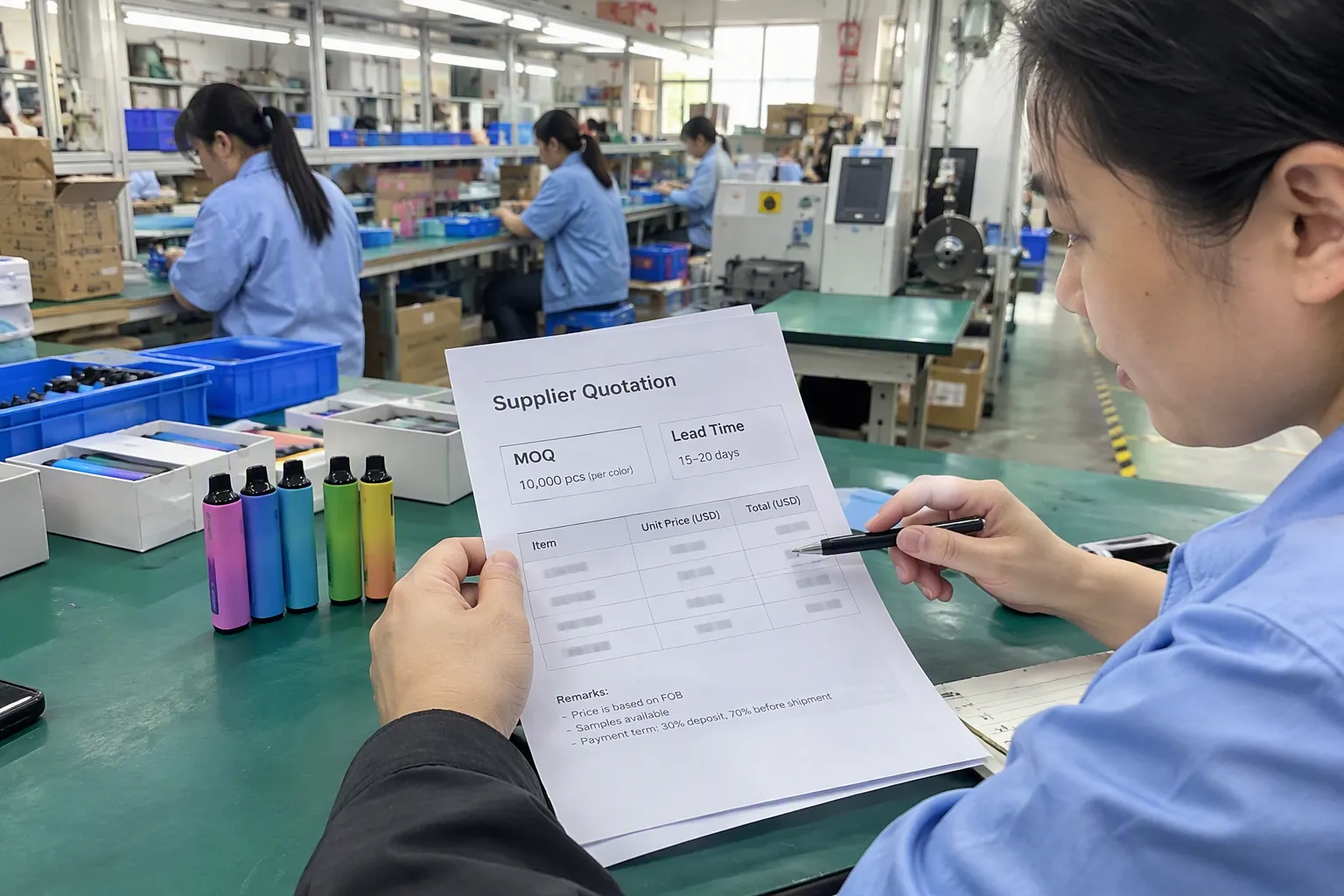
No. A factory price normally covers only the agreed product cost and selected packaging or production items. Landed cost may also include freight, origin handling, customs clearance, duties, taxes, destination handling, warehousing, local delivery, defects, and other costs. The exact components require transaction-specific verification.
Should I use markup or gross margin?
I use whichever measure the business has defined clearly, but I do not treat them as interchangeable. Markup is calculated from cost, while gross margin is calculated from selling price. A 30% markup produces a different price from a 30% gross margin, so every pricing discussion should state the formula.
Is overseas-warehouse fulfillment cheaper than direct importing?
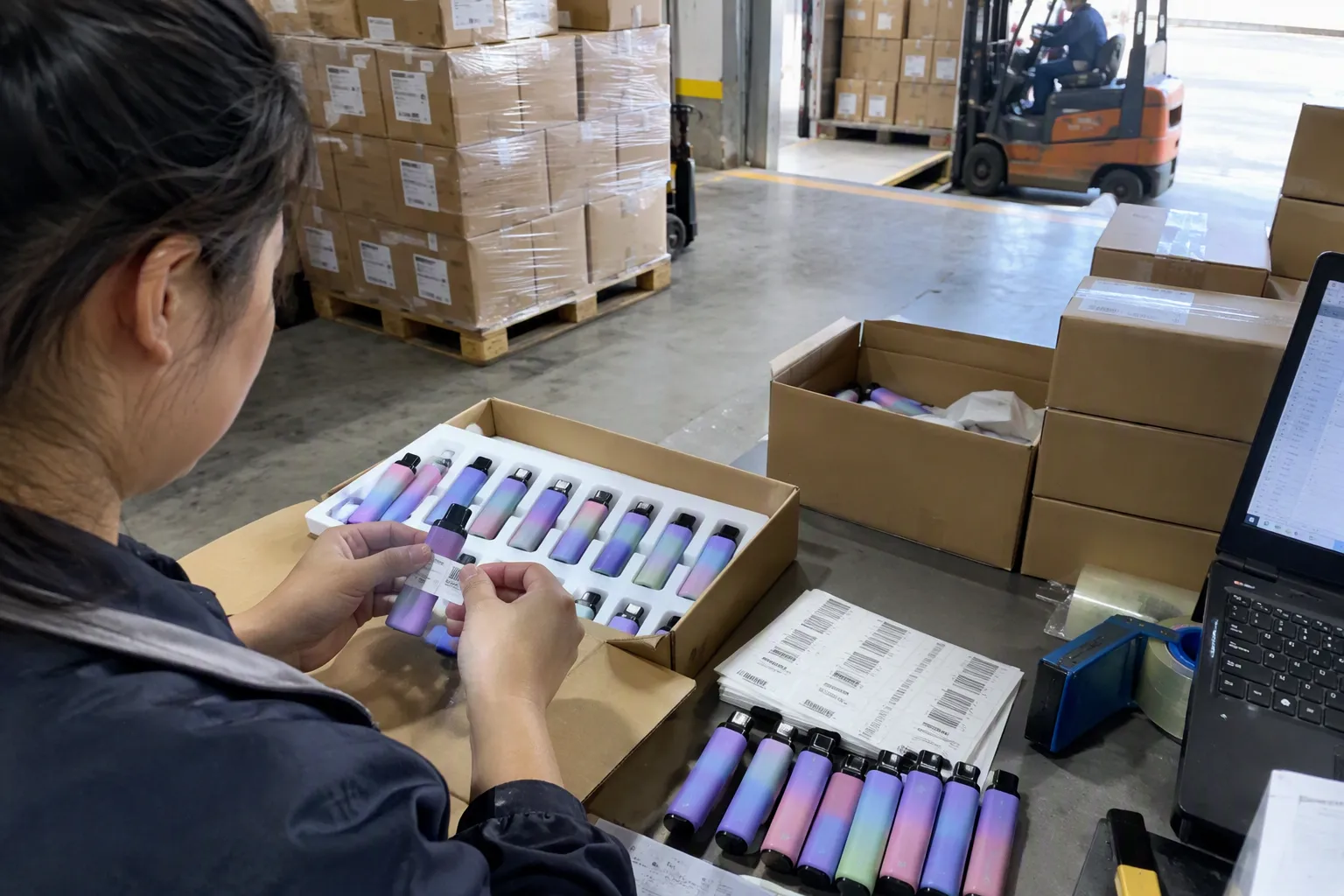
Not necessarily. Overseas-warehouse fulfillment may reduce minimum order size, delivery time, and inventory exposure, but its unit price may be higher. Direct importing may provide stronger unit economics at sufficient volume, but it can require more capital, longer planning, and greater inventory and import responsibility.
Can a margin waterfall guarantee profit?
No. A margin waterfall improves decision quality, but it cannot guarantee sales, stable costs, regulatory approval, or profit. Buyers should update freight, customs, tax, demand, defect, and inventory assumptions and obtain qualified professional advice for country- and product-specific decisions.
Conclusion
A margin waterfall helps me evaluate the complete commercial path from supplier price to retailer price. I start with landed cost, separate importer, wholesaler, and retailer economics, and include risk, delivery, after-sales, inventory, and cash-flow effects. I then compare overseas-warehouse replenishment with direct China importing according to volume and business capacity, not unit price alone. For a practical product and sourcing review, contact Kingfuji at info@kingvapecig.com or +86 13928420527.
Sources
- [PDF] REGULATIONS & SYLLABUS Of Master of Business Administration ...", Management-accounting treatments of waterfall pricing models describe the sequential build-up from an initial cost base through operating charges and channel margins to a final selling price
- [PDF] Export - Step 4", Accounting and supply-chain references generally define landed cost as the purchase cost of imported goods plus directly attributable transportation, duties, insurance, handling, and related acquisition charges
- 5.1.2 Gross profit margin | OpenLearn - The Open University", Standard managerial-accounting treatments derive the target-margin price as cost divided by one minus the desired gross-margin rate, because gross margin is measured against selling price
- (PDF) Principle of Transportation Cost Fixation", Transportation-cost models commonly show that fixed shipment and handling charges are allocated across the units carried, causing average logistics cost per unit to decline as shipment volume increases
- Value Added Tax in the Extractive Industries in - IMF eLibrary", Tax authorities generally permit qualifying registered businesses to recover certain import VAT or input taxes, while duties, excise, and non-recoverable taxes may remain commercial costs
- Estimating the opportunity cost of capital for inventory investments", Working-capital research treats inventory investment as capital committed to operations and recognizes an opportunity cost when those funds cannot be used for alternative productive or financial purposes
- Cost of Poor Quality (COPQ): Definition & Examples", Quality-management literature classifies nonconformance costs as including rework, returns, warranty service, replacement, inspection, and related customer or administrative costs
- Gross Profit vs. Net Profit Explained Simply", Financial-accounting treatments distinguish gross profit, calculated after cost of sales, from operating and net profit, which reflect additional operating, financing, tax, and other expenses