
Quick Answer
Seasonal foot traffic changes vape inventory needs in ways that are easy to misread. More tourists or holiday shoppers may increase store visits, but they do not guarantee equal demand for every SKU[1]. I help buyers connect local customer profiles, replenishment speed, cash flow, and supply routes before they commit to seasonal stock.
Seasonal foot traffic changes vape inventory needs by affecting sales timing, product mix, replenishment urgency, and acceptable inventory risk[2]. Buyers should not increase every SKU in proportion to visitor growth. Instead, they should deepen stock on proven fast-moving products, test uncertain products in smaller quantities, and select overseas warehouse or China import supply according to demand confidence, order size, lead time, and cash-flow tolerance.
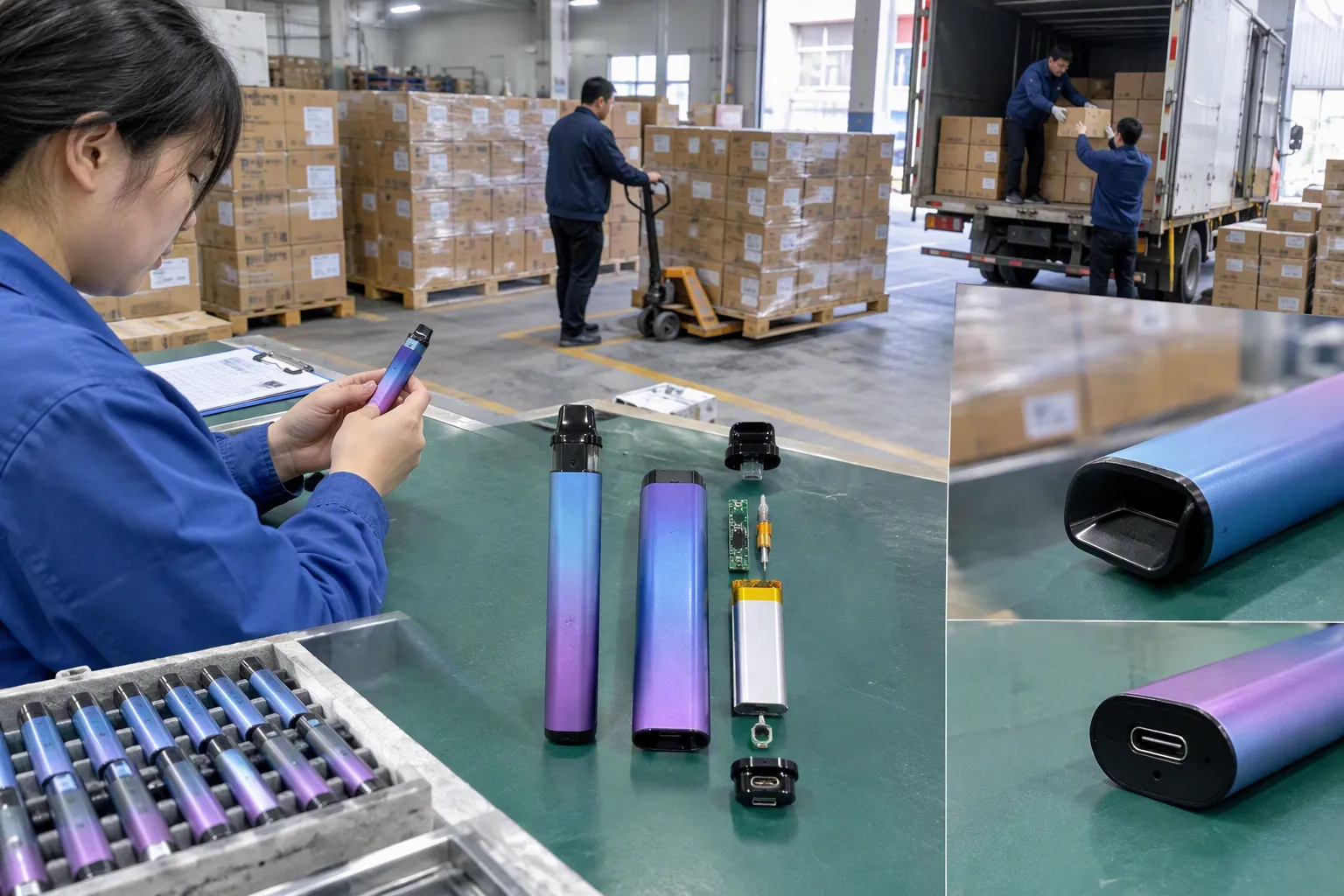
Seasonal planning becomes more important when a store serves tourists, temporary workers, holiday shoppers, or customers who buy quickly from convenience stores and gas stations. The correct question is not simply, “How many more visitors will arrive?” The better question is, “Which customers will arrive, what will they buy, and how quickly can I replenish the products that actually move?”
How Does Seasonal Foot Traffic Change Vape Inventory Needs?
Seasonal traffic can create a short selling window, but a large purchase can create a longer cash-flow problem. I have found that importers, wholesalers, vape shops, smoke shops, convenience stores, and gas stations often need different stock plans even when they operate in the same city.
The practical answer is to divide products by sales confidence and replenishment difficulty[3]. Buyers can hold deeper stock for proven products, use smaller quantities for uncertain products, and reserve bulk importing or OEM/ODM development for demand that has already been validated. This approach makes vape inventory needs more precise and reduces avoidable dead stock.
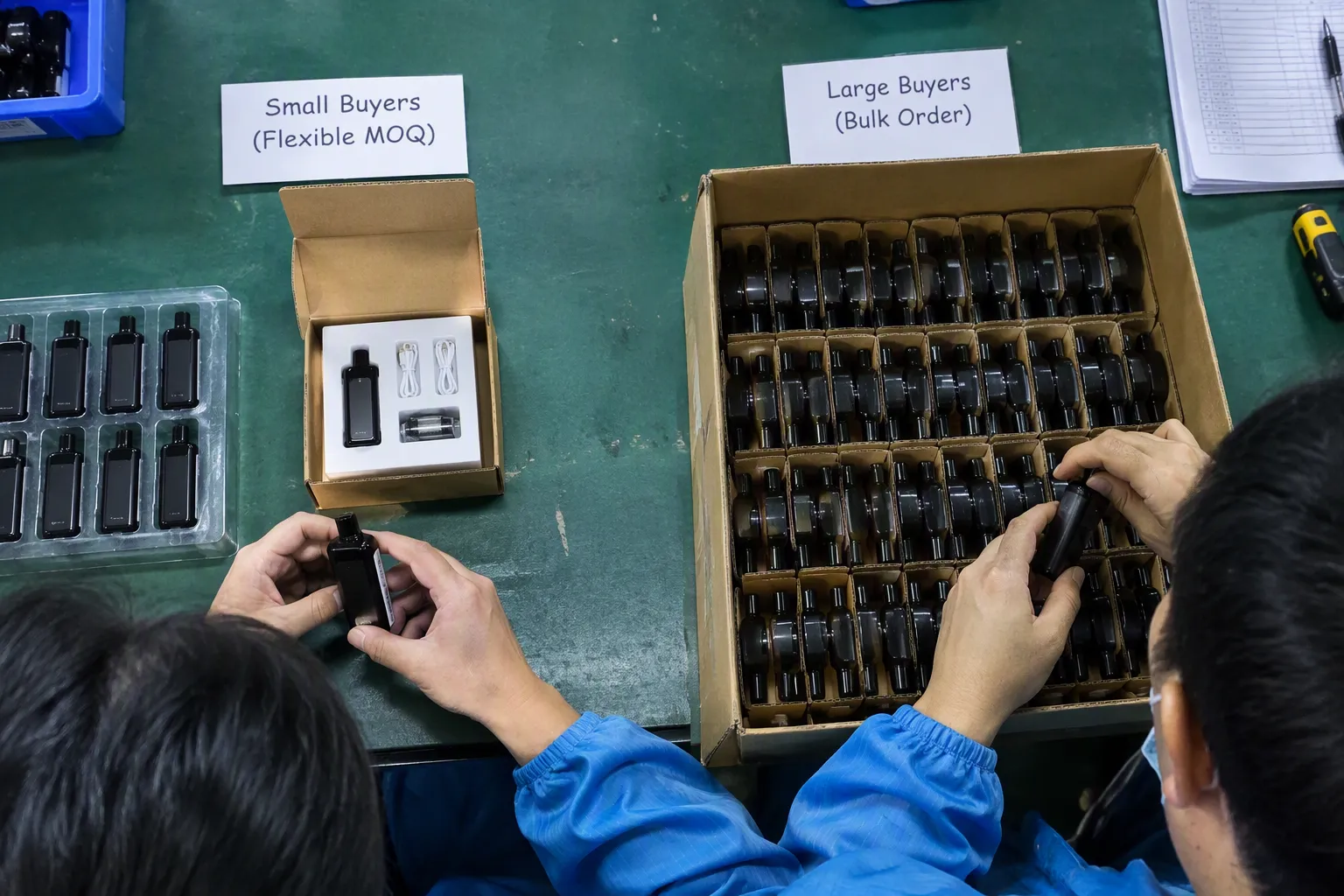
Separate Visitor Growth From Product Demand
A tourist destination may have more people during a holiday period, but those visitors may not have the same preferences as local regular customers[4]. A vape shop may sell a broader product range than a gas station. A smoke shop may focus on accessories, while a convenience store may depend on simple, quick-purchase items.
I recommend that buyers examine these differences before increasing purchase quantities:
- Customer profile: local residents, tourists, commuters, or wholesale trade customers
- Purchase purpose: planned replenishment, emergency replacement, trial purchase, or impulse purchase
- Price sensitivity: budget, mid-range, or premium buyers
- Product knowledge: experienced users may ask for specific devices, while occasional buyers may need clearer product guidance
- Sales channel: vape shop, smoke shop, gas station, convenience store, online business, or regional wholesaler
- Replenishment pattern: daily, weekly, monthly, or only when an import shipment arrives
A buyer who serves tourists may need products that are easy to explain and quick to sell. A specialist vape shop may need more variety because customers compare features, formats, and accessories. I do not treat these two stores as having the same seasonal demand simply because both are located in a busy area.
Use a Staged Seasonal Inventory Strategy
A staged strategy limits the risk of making one large seasonal bet[6]. I usually suggest that buyers divide the season into three planning stages.
Stage one: Confirm the baseline
The buyer should review recent sales by SKU, not only total revenue[5]. Useful questions include:
- Which products sold consistently before the expected traffic increase?
- Which products generated repeat orders?
- Which products created after-sales questions or returns?
- Which products remained in stock for too long?
- Which products had reliable supplier availability?
The buyer should also separate products that sell because of normal local demand from products that may benefit from seasonal visitors. That distinction helps prevent an ordinary product from being mistaken for a seasonal opportunity.
Stage two: Build an initial buffer
The buyer can add a reasonable stock buffer to proven products while keeping uncertain products at a lower level. The exact quantity depends on historical sales, expected selling days, storage capacity, supplier lead time, and working capital[7].
For example, a retailer may decide to hold deeper stock in established disposable vape or accessory lines but test a new vaporizer, atomizer, 510 battery, CBD battery, grinder, or glass pipe with a smaller initial order. The right decision depends on local demand and applicable product rules. It should not be based only on a supplier’s recommendation.
Stage three: Replenish according to evidence
After the season begins, the buyer should compare actual sales with the initial plan. A simple weekly review can cover:
| Indicator | What it tells the buyer |
|---|---|
| Units sold by SKU | Which products are moving |
| Days of stock remaining | Whether replenishment is urgent |
| Repeat customer requests | Whether demand may continue |
| Return or defect reports | Whether the product is creating operational cost |
| Gross margin after delivery | Whether the item is commercially useful |
| Cash tied up in stock | Whether the purchase is restricting growth |
This process helps the buyer respond to real demand instead of relying on assumptions about visitor numbers.
Match the Supply Route to the Purchase Decision
Supply route is part of inventory planning. I work with customers who have very different purchasing needs. Some small wholesalers and retail-oriented buyers want fast, low-MOQ replenishment because they cannot safely tie up substantial cash before the season. Larger importers and distributors may prefer China shipments because larger quantities can provide stronger unit economics, a wider selection, and OEM/ODM options.
Neither route is automatically better.
When an overseas warehouse may fit better
An overseas warehouse can be useful when the buyer needs:
- A smaller starting quantity
- Faster replenishment
- Lower upfront inventory exposure
- Easier testing of a new product
- Shorter delivery distance to the final market
- Less dependence on a single long international shipment
Our European warehouse network includes locations in Germany, Austria, Poland, and Belgium. We offer selected brand products from stock, with stated delivery of approximately one to five working days in the European Union, depending on product availability, destination, and shipping conditions. The stated minimum order can be as low as 50 units per model for applicable stock.
This option may suit a small or medium-sized wholesaler, vape shop, smoke shop, convenience store, or gas station that wants to sell through inventory before committing more capital. The buyer should still confirm current warehouse stock, delivery terms, product legality, and destination requirements before placing an order.
When importing from China may fit better
Direct China supply may be more suitable when the buyer has:
- Validated demand
- Larger and more predictable volume
- Sufficient storage capacity
- A longer planning horizon
- A need for broader product selection
- Interest in private-label, OEM, or ODM development
- A purchasing team that can manage import documentation and compliance checks
Shenzhen is a major electronics and vape manufacturing and supply-chain center. My company, Shenzhen Kingfuji Tech. CO., Ltd., was established there in 2011. We operate as a factory and trading business with a stated 5,000-square-meter facility, OEM/ODM experience, and a stated maximum production capacity of up to 5 million units per month. We also continue to introduce approximately five to ten new products each month according to our business plan.
These capabilities can help larger buyers explore custom packaging, customer-specific products, or new product development. They do not remove the buyer’s responsibility to verify specifications, market requirements, labeling, testing documents, age restrictions, and import rules.
Treat Delivery and After-Sales Service as Inventory Costs
A low unit price does not always create the lowest total purchasing cost[8]. If goods arrive after the main selling period, the buyer may lose the opportunity to sell them. If a quality issue requires repeated customer service, the apparent margin may also become less attractive.
I encourage buyers to evaluate the full commercial cost:
- Product price
- Freight and insurance
- Customs and import charges
- Delivery time
- Storage cost
- Payment timing
- Defect and return handling
- Replacement or refund arrangements
- Cost of unsold seasonal stock
- Lost sales caused by late replenishment
Our business model provides one point of contact for products purchased through us. We coordinate after-sales support rather than requiring the buyer to contact multiple brands and factories separately. Our stated service arrangements may include delivery-to-door support, video verification, compensation arrangements for certain customs incidents, and handling of after-sales defects. Buyers should confirm the exact terms in writing for each order, destination, and product.
This point matters to a buyer like a regional wholesaler. A defect does not affect only one unit. It can affect the wholesaler’s relationship with the vape shop, smoke shop, or convenience store that purchased the goods. A clear after-sales process can reduce the time spent identifying the original factory and negotiating separate solutions.
Plan for Product Education and Compliance
Seasonal customers may make faster purchasing decisions, but speed should not remove basic product information. A store may experience avoidable complaints when staff or end users do not understand how a product works, which accessories are compatible, or what limitations apply.
Before stocking a product, I recommend that buyers confirm:
- Product specifications and included components
- Charging or operating instructions
- Compatibility with related devices or accessories
- Packaging and labeling requirements
- Applicable age restrictions
- Advertising and point-of-sale limitations
- Import and customs documentation
- Local rules for nicotine, CBD, THC, or other regulated products
- Whether the product is permitted in the destination market
These requirements vary by country, state, region, and product category. Buyers should verify them with qualified local advisers, customs professionals, and compliance specialists. I can help organize supplier information and product documentation, but I do not replace local legal or regulatory evaluation.
Clear product information also protects the buyer’s reputation. When a customer purchases a grinder, glass pipe, atomizer, 510 battery, vaporizer, or disposable vape, the retailer needs to explain the product accurately and responsibly. A fast-selling item that creates repeated confusion may not be a good seasonal product.
Build Different Plans for Different Buyer Sizes
I do not recommend one purchasing model for every B2B customer. A small retailer and a national distributor usually have different risks, storage needs, and bargaining positions.
| Buyer type | Main concern | More suitable starting approach |
|---|---|---|
| Small vape or smoke shop | Cash flow and limited storage | Low-MOQ warehouse stock and fast replenishment |
| Convenience store or gas station | Simple assortment and reliable availability | Focused range of proven products after local review |
| Regional wholesaler | Replenishment for multiple retail accounts | Mixed inventory with demand tracking by customer |
| Large importer | Unit cost and shipment efficiency | Validated bulk imports from China |
| Brand owner or established distributor | Differentiation and margin | OEM/ODM after market and compliance validation |
| Tourist-area retailer | Short selling window | Staged stock plan with a clear exit strategy |
A small customer may prefer to buy only what can be sold quickly. A large importer may accept a longer lead time because the order supports several warehouses or a broader distribution network. A private-label buyer may accept additional development time because the goal is not only seasonal sales but also longer-term brand value.
I often explain this distinction during purchasing discussions: the best supply route is the one that fits the buyer’s risk, not the one with the lowest headline price.
Use Seasonal Planning to Protect Cash Flow
Seasonal inventory can create revenue opportunities, but it can also absorb cash at exactly the time when the business needs flexibility. Buyers may need funds for freight, rent, payroll, marketing, taxes, and replenishment. A large order that looks profitable on paper can become uncomfortable if sales are slower than expected.
A buyer can protect cash flow by using several practical controls:
- Set a maximum seasonal purchasing budget.
- Separate core stock from experimental stock.
- Avoid ordering every new product in large volume.
- Set a reorder point for proven items.
- Set a stop-buying point for slow-moving items.
- Negotiate clear delivery and after-sales terms.
- Compare delivered cost rather than factory price alone.
- Review whether the product can still sell after the season.
- Use smaller warehouse orders when demand remains uncertain.
- Use bulk imports only when the sales plan supports the quantity.
Our European warehouse option can help some smaller buyers reduce the need for a large advance import. At the same time, direct manufacturing and China-based supply can support larger orders, broader product ranges, and OEM/ODM programs when the buyer has enough demand confidence.
I also allow customers to use their own long-term freight forwarder when that is more convenient. In that situation, we can deliver the goods to the buyer’s nominated forwarder, while the customer manages the international shipment through its existing logistics relationship.
How Can Buyers Prepare Vape Inventory Needs Before a Busy Season?
Buyers often prepare too late because they focus on the expected traffic increase instead of the full purchasing cycle. A better process begins several weeks or months before the relevant period, depending on product availability, customization, shipping route, and destination requirements.
I suggest using a written seasonal purchasing checklist:
-
Define the selling period.
Identify the weeks when traffic may increase and the date when stock must be available. -
Map the customer profile.
Separate tourists, local residents, wholesale customers, commuters, and specialist users. -
Review historical SKU performance.
Measure units sold, margin, returns, and replenishment frequency. -
Classify products by confidence.
Use categories such as proven, developing, experimental, and unsuitable. -
Confirm compliance requirements.
Check current rules for the destination market before making a purchase. -
Choose the supply route.
Compare warehouse stock, direct China import, and custom production. -
Calculate the cash requirement.
Include product, freight, duties, storage, payment terms, and possible after-sales cost. -
Set replenishment triggers.
Decide when to reorder and who will approve the order. -
Create an after-sales process.
Record defects, customer complaints, replacement requests, and supplier responses. -
Review the plan during the season.
Adjust quantities according to actual sales rather than predicted foot traffic.
This method gives the buyer a more realistic view of seasonal vape inventory needs. It also makes supplier conversations more productive because the buyer can provide target quantities, delivery deadlines, product categories, and risk limits.
Frequently Asked Questions
Should I increase every vape SKU before tourist season?
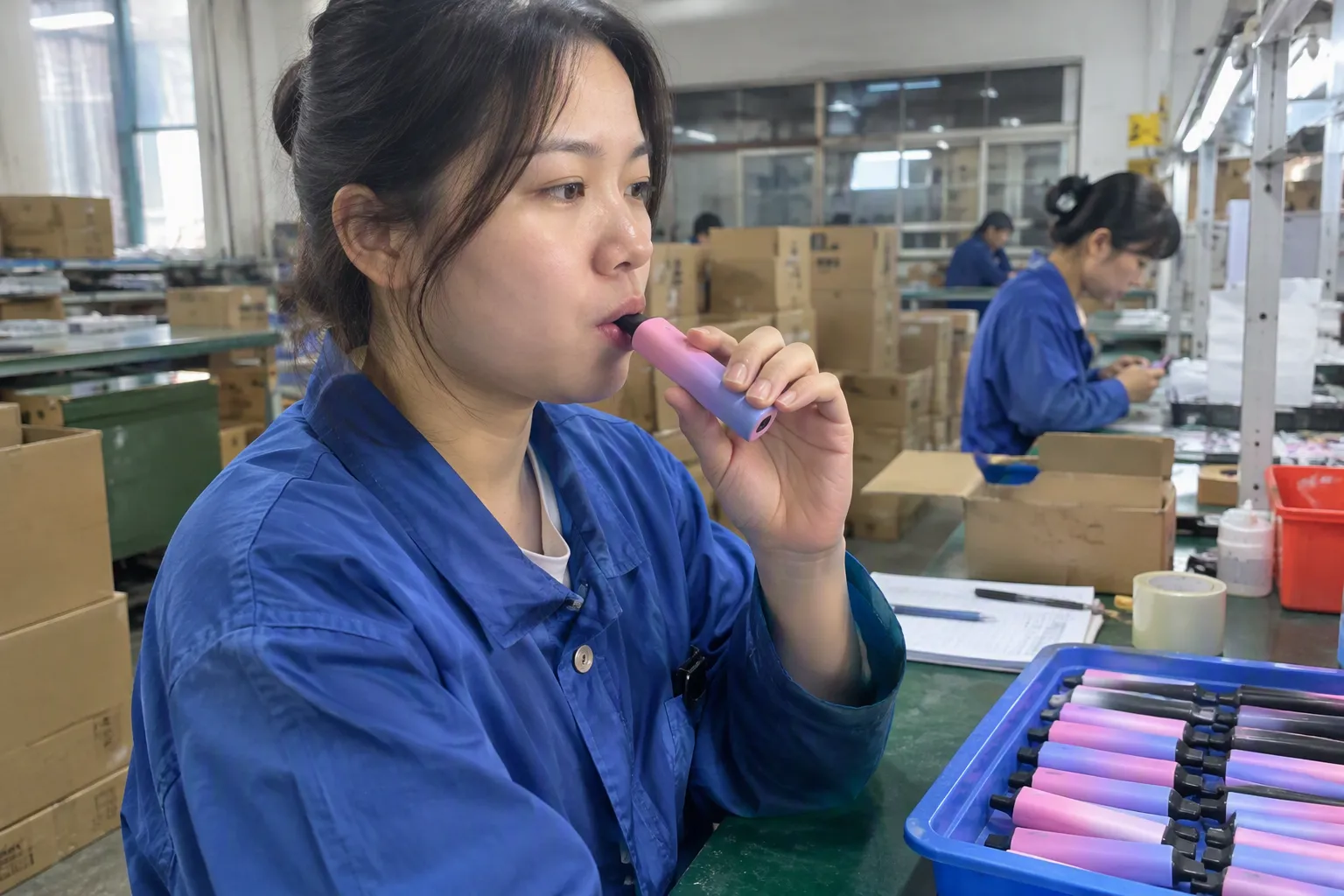
No. Higher foot traffic does not mean that every product will sell at the same rate. You should identify the products that already match your customers, then increase stock selectively. You can test uncertain products in smaller quantities and use faster replenishment where available.
Is an overseas warehouse better than importing from China?
Neither option is always better. An overseas warehouse may suit smaller, urgent, or lower-risk purchases. Direct China importing may suit larger, validated orders that need better unit economics, broader selection, or OEM/ODM development. You should compare total delivered cost, timing, compliance, and cash-flow impact.
What should a wholesaler check before placing a seasonal order?
A wholesaler should check product demand, customer profile, MOQ, delivery time, warehouse availability, import requirements, documentation, after-sales terms, and the possibility of unsold stock. The wholesaler should also confirm whether the supplier can support replenishment if the initial products sell faster than expected.
Can small European buyers order vape products with a low MOQ?
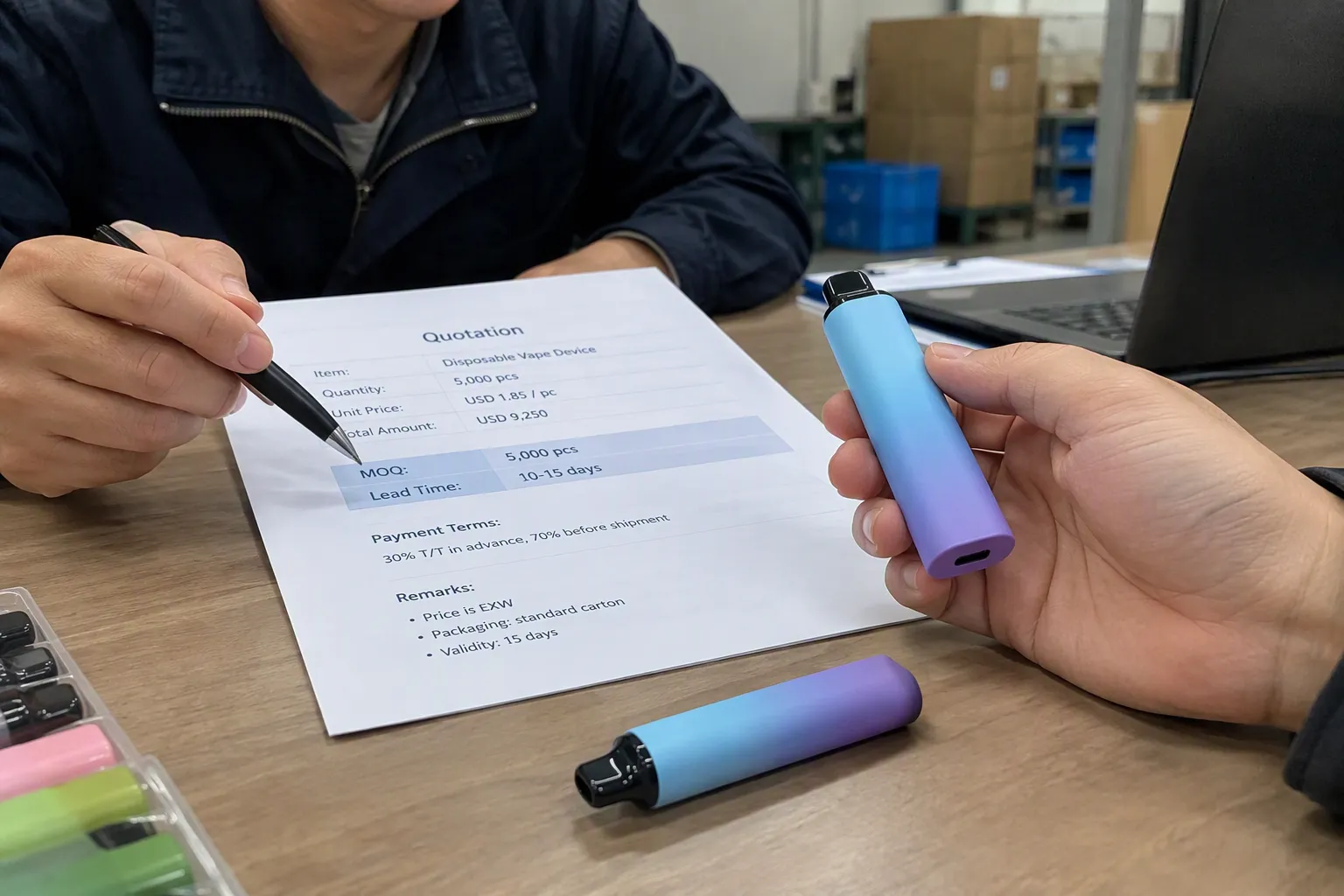
Selected products in our European warehouse may be available with a stated minimum order as low as 50 units per model. Buyers should confirm current stock, exact MOQ, delivery terms, destination, and applicable market requirements before ordering.
Can large importers develop their own vape or smoking-accessory products?
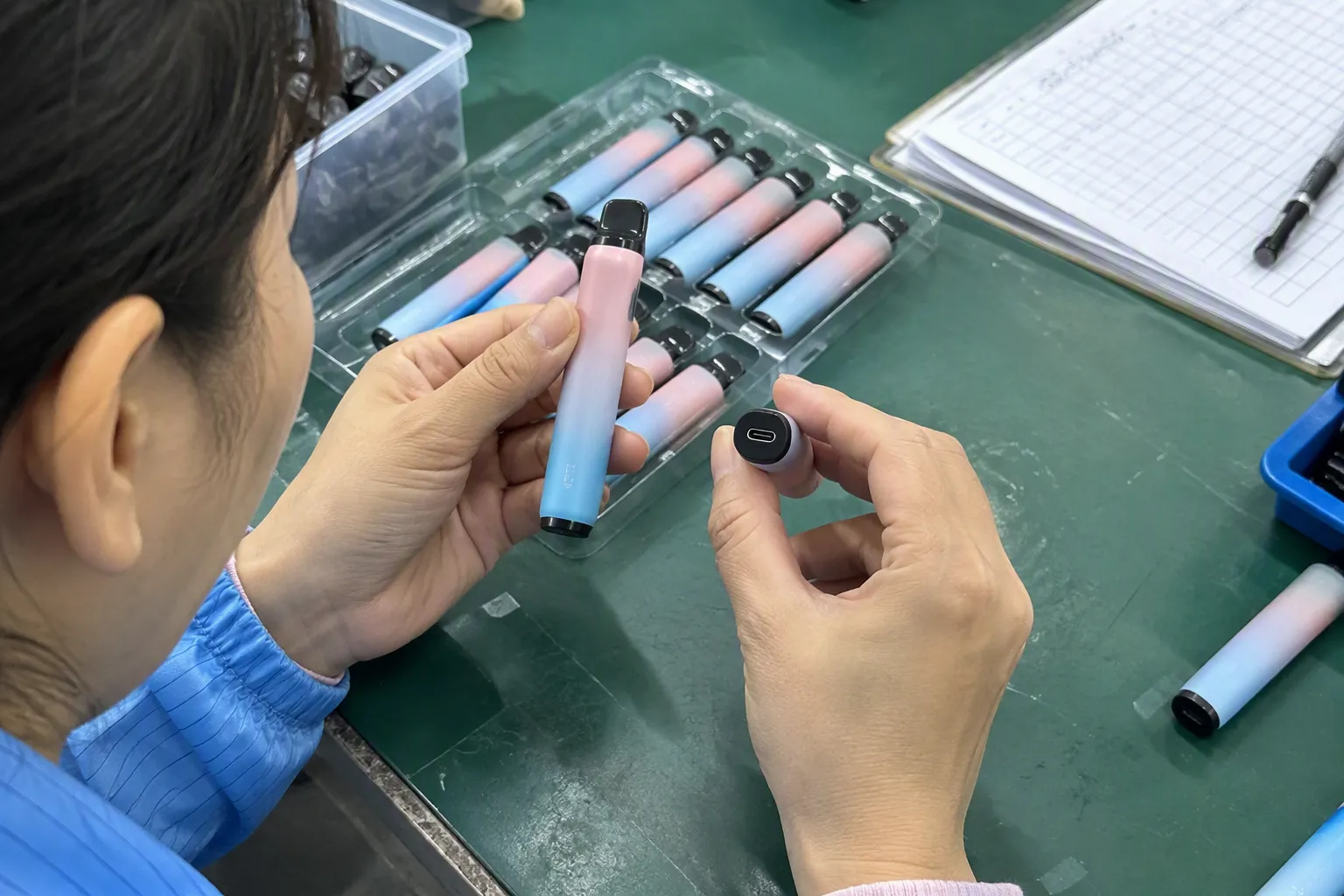
Yes, OEM/ODM may be appropriate for buyers with validated demand and a clear product plan. Our company has a factory, an OEM/ODM team, and experience supporting customer-branded projects. Buyers still need to define specifications and verify all required testing, labeling, compliance, and import documentation for the target market.
Conclusion
Seasonal foot traffic changes vape inventory needs, but it does not justify a proportional increase across every product. I recommend separating visitor growth from actual product demand, using staged purchasing, and matching the supply route to order size, urgency, demand confidence, and cash-flow tolerance. Smaller buyers can consider low-MOQ European warehouse replenishment, while larger importers may benefit from validated China imports and OEM/ODM options. Contact Shenzhen Kingfuji Tech. CO., Ltd. at info@kingvapecig.com or +86 13928420527 to discuss a practical seasonal sourcing plan.
Sources
- Revisiting factors influencing consumer travel for purchasing ...", Retail-demand research indicates that changes in customer traffic do not necessarily translate into proportional sales increases across all products because purchasing varies by customer characteristics, shopping purpose, and assortment
- A practical approach to replenishment optimization with ... - PMC", Inventory-management literature describes seasonality as a factor that changes demand timing and uncertainty, thereby influencing assortment, replenishment policies, safety-stock requirements, and exposure to excess inventory
- Successful Inventory Management Strategies in the Office ...", Inventory-classification studies support differentiating stocking policies according to demand importance or variability and replenishment constraints rather than applying one order rule to every SKU
- Study on Tourism Consumer Behavior and ... - PMC", Tourism-consumption research finds that visitors and residents may differ in shopping motives, product preferences, and purchase contexts, which can produce different retail demand profiles
- Assortment Planning In Retail: Guide To Smarter Inventory", Retail forecasting research treats item-level sales histories as necessary for identifying SKU-specific demand patterns and informing assortment and replenishment decisions beyond aggregate revenue measures
- Inventory Management for Supply Chains with Uncertainty", Operations-management research indicates that sequential ordering can preserve information and purchasing flexibility under uncertain demand, potentially reducing overstock exposure compared with a single irrevocable commitment
- Operations research models and methods for safety stock ...", Inventory models generally determine replenishment quantities from expected demand and horizon while incorporating lead time, holding or storage constraints, service objectives, and the financial cost of carrying stock
- [PDF] A Supply Chain Strategy for the Aviation Industry - ScholarWorks", Procurement literature distinguishes purchase price from total acquisition cost, which may include transportation, duties, inventory carrying costs, quality failures, and after-sales expenses