
Quick Answer
Vape screens can create avoidable customer disputes when buyers treat battery, e-liquid, and puff figures as exact promises. A retailer may hear that a device showed remaining battery but stopped working soon after, or that the puff count did not match a user’s expectation. I help buyers reduce these problems by treating screen information as practical guidance, checking product documentation, and agreeing on a clear after-sales process before stock arrives. **Vape screens are best treated as decision-support indicators rather than precision measuring instruments.
Battery percentages, e-liquid bars, and puff numbers can help users understand a device’s general status, but they may not predict exact remaining use.[1] Wholesalers and retailers should confirm what each display means, explain it clearly to customers, and evaluate repeated abnormal behavior through the supplier’s after-sales process.**
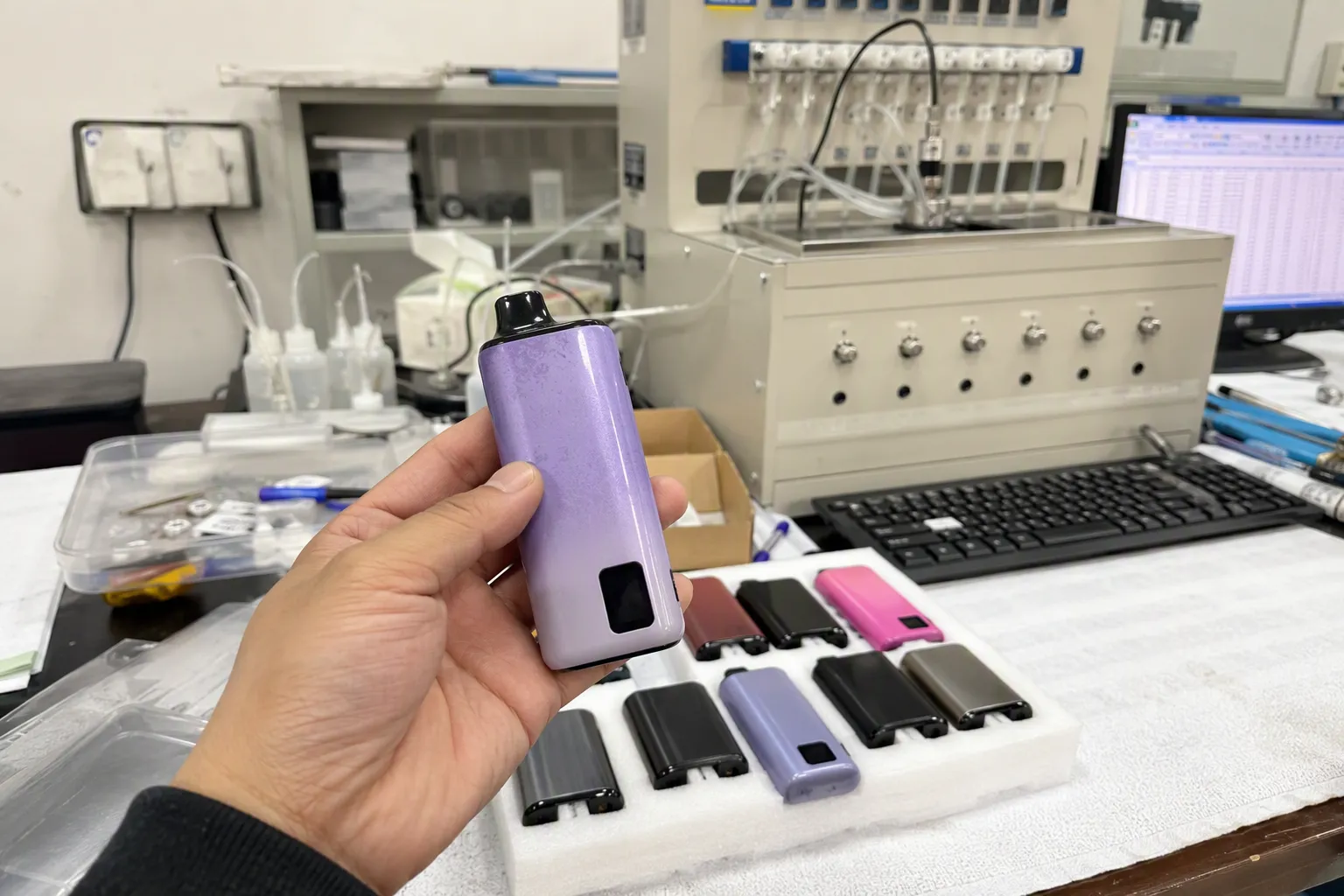
When I discuss screen-related complaints with wholesalers, vape-shop owners, and importers, I focus on the customer’s real question: what did the user reasonably expect the display to tell them? That question is more useful than simply calling a screen “accurate” or “inaccurate.” The answer affects product selection, retail communication, return rates, and customer trust.
Should Vape Screens Be Evaluated as Decision-Support Indicators?
Vape screens should be evaluated as decision-support indicators because they help users make everyday choices, such as when to recharge or replace a device, without necessarily providing exact remaining battery time, liquid volume, or future puff count. Buyers should assess whether the screen changes consistently, whether its meaning is explained in product materials, and whether the supplier has a workable process for genuine abnormal-use complaints.
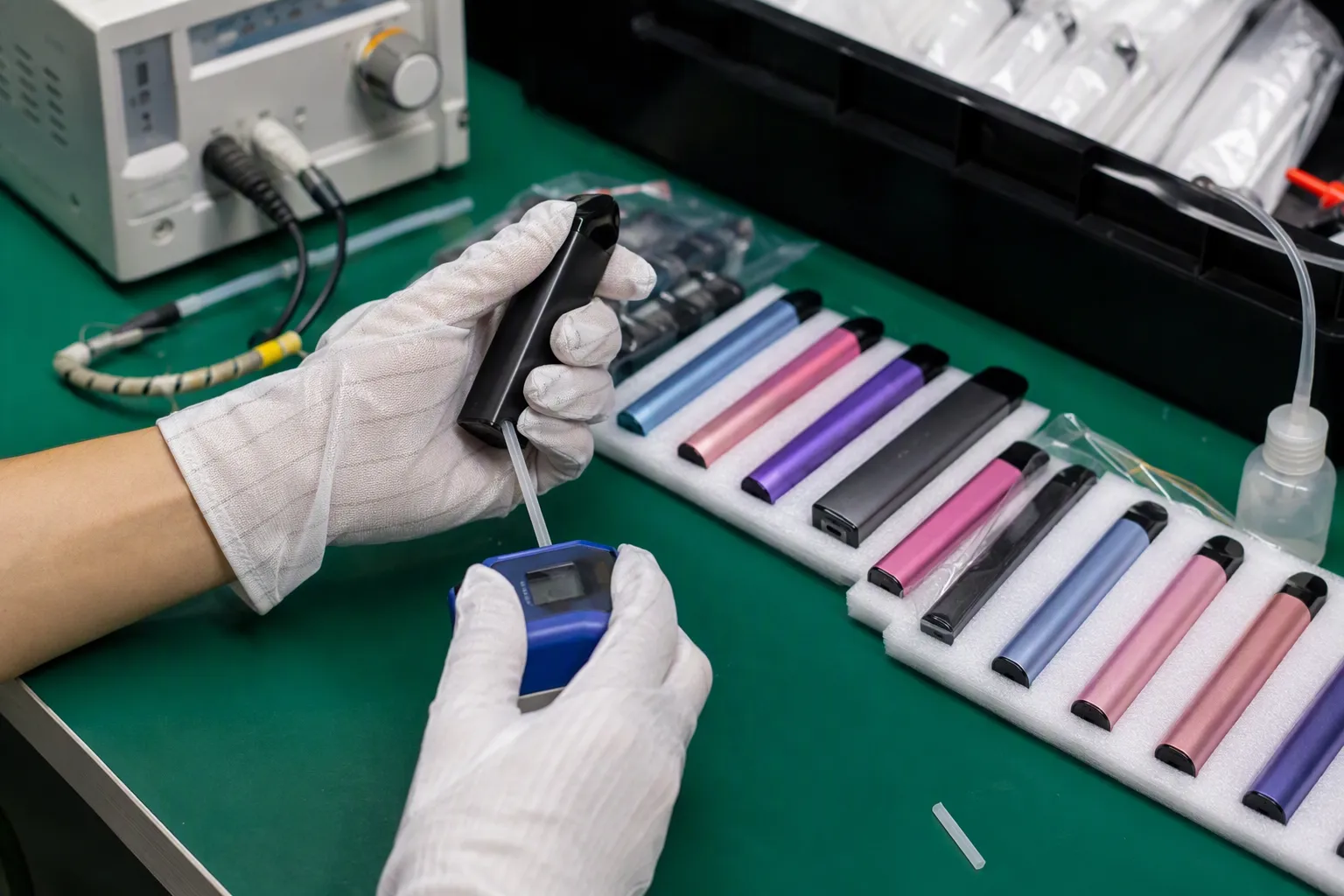
A screen can look like a simple product feature, but it can become a serious after-sales issue. A buyer may choose a device because the display appears premium, detailed, and easy to sell. Then the retailer may face questions from end users who expect every percentage or puff figure to operate like a laboratory measurement.
I do not advise buyers to assume that all vape screens are inaccurate. I also do not advise them to assume that every number is a guarantee. In my practical after-sales work, I have seen that the better approach is to understand the display’s role, set reasonable expectations, and review any repeated problem based on normal use and the applicable product support process.
What Does a Battery Percentage Actually Tell the User?
A battery percentage usually gives the user a general indication of remaining charge. It can help a retailer explain whether a rechargeable device may need charging soon. However, a displayed percentage does not automatically promise that the remaining usage time will decrease in a perfectly linear way.[2]
For example, an end user may say:
“The screen still showed battery remaining, but the device stopped working shortly after.”
That statement deserves attention, but the screen reading alone does not prove the reason.[7] I would first encourage the buyer or retailer to review practical points such as:
- Whether the device was charged according to the product instructions
- Whether the charging cable and power source worked normally
- Whether the display changed during charging
- Whether the device showed the same behavior repeatedly
- Whether the user experienced impaired normal use
- Whether there were visible signs of damage, leakage, or abnormal charging behavior
- Whether the product is still within the agreed after-sales period
Battery performance can feel different to users depending on their usage pattern, the device’s operating condition, and how the display responds under use.[3] I do not treat a remaining battery icon as a direct diagnosis of battery safety, charging safety, or internal device failure.
For wholesale purchasing, I recommend that buyers ask a simple but important question before placing an order:
Is the battery display intended as a broad charging reminder, a percentage-based status display, or another type of user indicator?
The answer should come from verified brand or product documentation where available. A supplier should not create unsupported promises about exact runtime, exact charging cycles, or model-specific battery behavior.
Why Can E-Liquid Information Create Different Expectations?

E-liquid displays can be useful selling features, especially for retailers serving adult customers who want a more visible device status. Yet e-liquid information can also create misunderstandings if the user assumes that a bar, percentage, or icon represents an exact measurable amount remaining in every situation.
Some devices show a simple liquid-level icon. Others may show a percentage or visual bar. The product materials may describe the display differently from model to model. Therefore, I recommend that wholesalers verify the display type for the exact product version they plan to stock.
A buyer should not rely only on product photos. Product photos may show a screen layout, but they may not explain what every number means. Before purchasing, I suggest reviewing:
| Buyer question | Why it matters | What to request |
|---|---|---|
| What type of e-liquid display does the device use? | Buyers need to describe the feature correctly to retailers and users. | Product manual, brand description, or confirmed product specifications |
| Is the display presented as an estimate or an exact measurement? | This affects sales language and customer expectations. | Written explanation from the brand or supplier |
| Does the screen behavior differ by model or version? | Similar-looking devices may use different display logic. | Model number and version confirmation |
| What happens if a customer reports inconsistent readings? | Retailers need a clear response instead of an argument at the counter. | After-sales procedure and evidence requirements |
| Are there instructions for storage, transport, or use? | Incorrect handling can complicate complaint review. | Product instructions and packaging information |
In my view, the best retail explanation is simple: the e-liquid display helps the user monitor general device status, but it should not be presented as a guaranteed exact remaining quantity[4] unless verified documentation specifically supports that claim.
This protects both the retailer and the customer. It also prevents sales staff from making promises that the product packaging or brand materials do not make.
Are Puff Counts a Product Promise?
Puff information is often attractive in a sales conversation because customers naturally want to compare devices. However, I advise wholesale buyers to avoid presenting a screen puff count as a personal guarantee that every user will receive the same number of uses.[6]
A puff counter can indicate device use, but the practical meaning of that count must be understood in context. Different users may take different puff lengths and use a device differently.[5] The product’s stated puff information, if provided by the brand, should be reviewed together with the official product description, applicable market requirements, and the supplier’s documentation.
I do not recommend phrases such as:
- “Every customer will get exactly this many puffs.”
- “The screen guarantees the remaining number of puffs.”
- “If the display changes unexpectedly once, the device is definitely defective.”
- “The puff count proves the product has a specific amount of e-liquid left.”
These statements can create unnecessary disputes because they go beyond what the screen alone can establish.
Instead, retailers can use more responsible language:
- “The screen shows a usage indicator designed to help monitor the device.”
- “The displayed puff figure should be understood together with the product instructions.”
- “If you experience repeated abnormal behavior during normal use, please bring the device back with the packaging and purchase information.”
- “We will review the issue under the applicable after-sales process.”
This language does not dismiss a customer’s concern. It gives the customer a clear path while avoiding an unsupported technical conclusion.
How I Review Display-Related After-Sales Questions
As a vape supplier and after-sales contact, I have directly received questions about battery remaining, e-liquid indicators, and puff information. In many cases, the first report does not include enough information to determine whether the issue relates to normal display behavior, charging, use conditions, damage, or a possible product problem.
For that reason, I prefer a structured review rather than an immediate judgment.
Step 1: Confirm the Product and Order Details
The first task is to identify the exact device. Buyers should keep records that connect stock to the correct model, batch information where available, and purchase date.
Useful information may include:
- Product name and model
- Order or invoice reference
- Product photos and packaging photos
- A short video showing the screen and device behavior
- Details of charging behavior, if applicable
- A description of how the device was used
- Whether the issue happened once or repeatedly
This information helps avoid confusion when a distributor carries several similar products with different screen layouts.
Step 2: Check Normal Use and Charging Behavior
When a customer says that the device showed remaining battery but stopped operating, I do not assume that the percentage itself explains the problem. I first ask whether the device was charged normally and whether the screen changed during charging.
A retailer may ask the end user to check the instructions before returning the product. The retailer should also avoid asking the customer to take unsafe actions, open the device, modify it, or use unapproved charging equipment.[8]
The practical goal is not to turn the retailer into an engineer. The goal is to collect clear evidence and identify whether the issue affects normal use consistently.
Step 3: Look for Repeatability and Impact on Use
A single unusual display reading may not provide enough information. A repeated pattern is more useful for after-sales review.
For example, a stronger complaint file may show that:
- The device repeatedly stops functioning during normal use
- The device does not charge as expected under the stated product instructions
- The screen remains unchanged despite normal charging attempts
- The display behaves inconsistently across repeated use
- The customer’s normal use is materially impaired
Even then, I would not say that a screen reading by itself determines replacement eligibility. The final handling should follow the supplier’s agreed policy, the product instructions, the evidence provided, and the relevant commercial agreement.
Step 4: Handle Legitimate Claims Consistently
For wholesalers, the real commercial risk is not only the number of defective units. It is the time spent managing unclear complaints across stores, sales staff, warehouses, and end customers.
A consistent process can reduce unnecessary friction:
| Stage | Retailer action | Wholesale benefit |
|---|---|---|
| Customer report | Record product, issue, and purchase details | Reduces vague claims |
| Initial check | Review normal-use and charging instructions | Avoids premature conclusions |
| Evidence collection | Request photos or short video where appropriate | Supports supplier review |
| Supplier review | Submit complete information through the agreed channel | Speeds up a decision |
| Resolution | Follow the documented after-sales outcome | Protects customer trust and margins |
This is especially important for wholesalers supplying multiple vape shops, smoke shops, convenience stores, gas stations, and local distributors. A small communication gap can become many repeated counter-level arguments.
What Should Buyers Confirm Before Ordering Devices With Vape Screens?
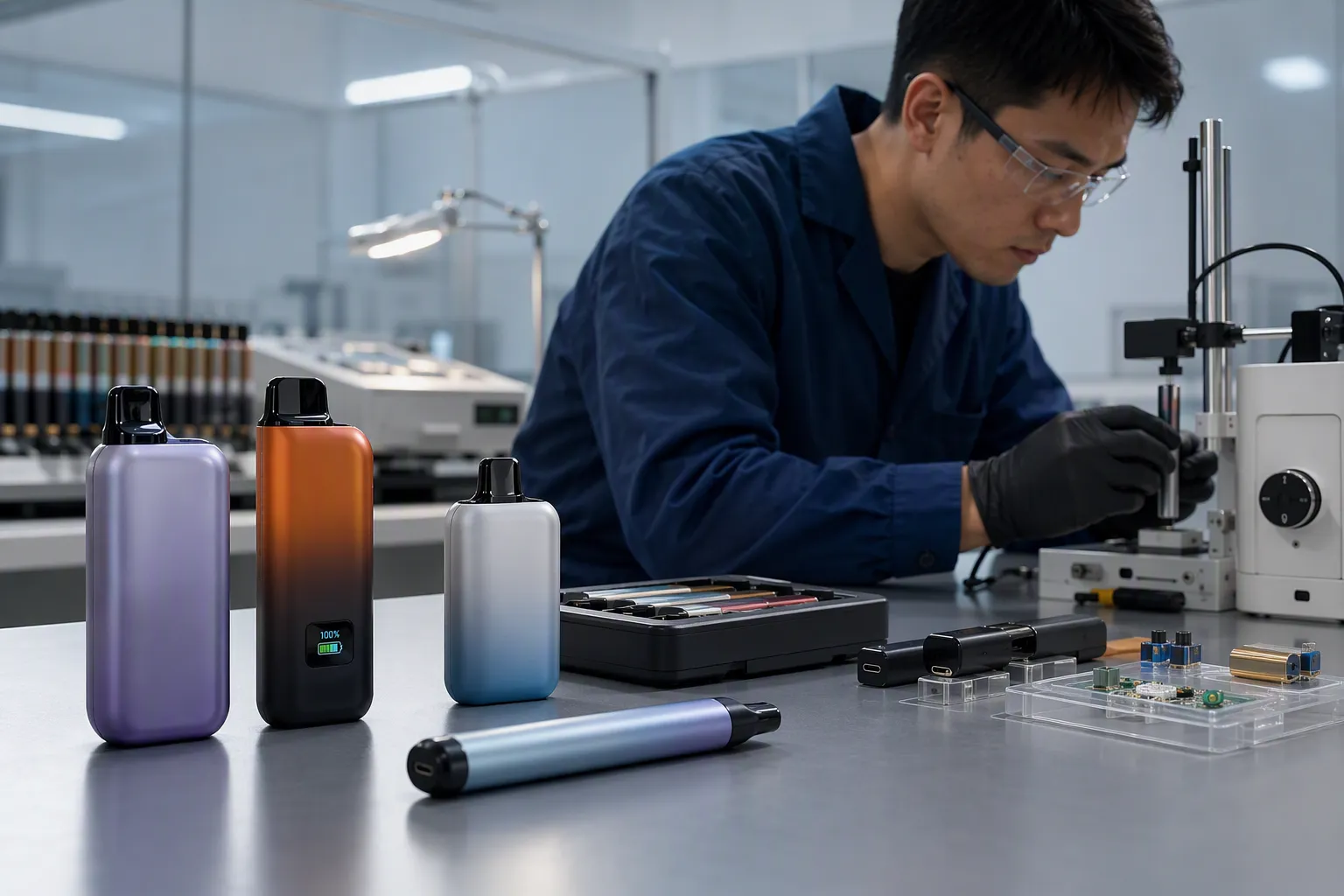
For many B2B buyers, a screen is not just a feature. It is part of the product’s sales story. Therefore, I advise buyers to evaluate vape screens during supplier selection, not only after customers start reporting problems.
Confirm the Display Type Before You Buy
The buyer should ask for clear confirmation of what the device screen displays. This may include:
- Battery icon, bars, or percentage
- E-liquid icon, bars, or percentage
- Puff counter or other usage information
- Charging status
- Operating mode or power setting, where applicable
- Warning icons or alerts
The buyer should request product information for the exact model, rather than assuming that one version works like another version from the same brand or product family.
Review the Sales Materials Your Retailers Will Use
A retailer’s sales staff often rely on packaging, product cards, website descriptions, and short messages from the distributor. If those materials describe vape screens too aggressively, customer expectations can become unrealistic.
I recommend checking whether the product materials:
- Explain the display in plain language
- Avoid unsupported precision claims
- Match the actual model being supplied
- Include relevant charging or use instructions
- Give the retailer a reasonable way to explain complaints
- Can be shared with resellers without creating misleading promises
For importers and larger distributors, this review should be part of the pre-order approval process. For smaller buyers, it can still be done before adding a product to a shop’s regular range.
Ask About After-Sales Handling in Advance
A low purchase price can lose its value if display-related claims become difficult to manage. Before ordering, buyers should ask how the supplier handles reported issues and what evidence is needed for review.
Important questions include:
- Who will be the after-sales contact?
- What photos or videos are normally required?
- How should retailers separate a repeated issue from a one-time customer report?
- What time period applies to the agreed after-sales process?
- How are confirmed product problems handled?
- Does the supplier support consolidated claim handling for wholesale orders?
- Can the supplier provide product explanations that the retailer can use responsibly?
At Shenzhen Kingfuji Tech. Co., Ltd., I aim to help customers centralize product sourcing and after-sales communication rather than forcing them to contact multiple brands and factories for every issue. However, buyers should still confirm the specific after-sales terms for each product and order before purchasing.
How Can Different Buyers Use This Approach?
Different B2B customers have different operating models, but the same screen-expectation problem can appear across markets.
A small retailer or local wholesaler may need fast replenishment with limited cash tied up in inventory. For these buyers, European warehouse availability can be relevant for selected products, subject to current stock and applicable terms. A lower minimum order quantity can help them test products, train staff, and evaluate return patterns before making a larger commitment.
A larger importer, distributor, or chain supplier may focus more on unit cost, supply continuity, private-label opportunities, and consistent after-sales procedures. These buyers may prefer larger direct-from-China orders, where product selection, OEM/ODM discussion, packaging requirements, and quality-control expectations can be addressed before production.
In both cases, I recommend the same principle: do not buy a screen feature only because it looks attractive. Buy it because the feature can be explained, supported, and managed commercially.
Frequently Asked Questions
Are vape screens accurate enough for retailers to advertise battery life?
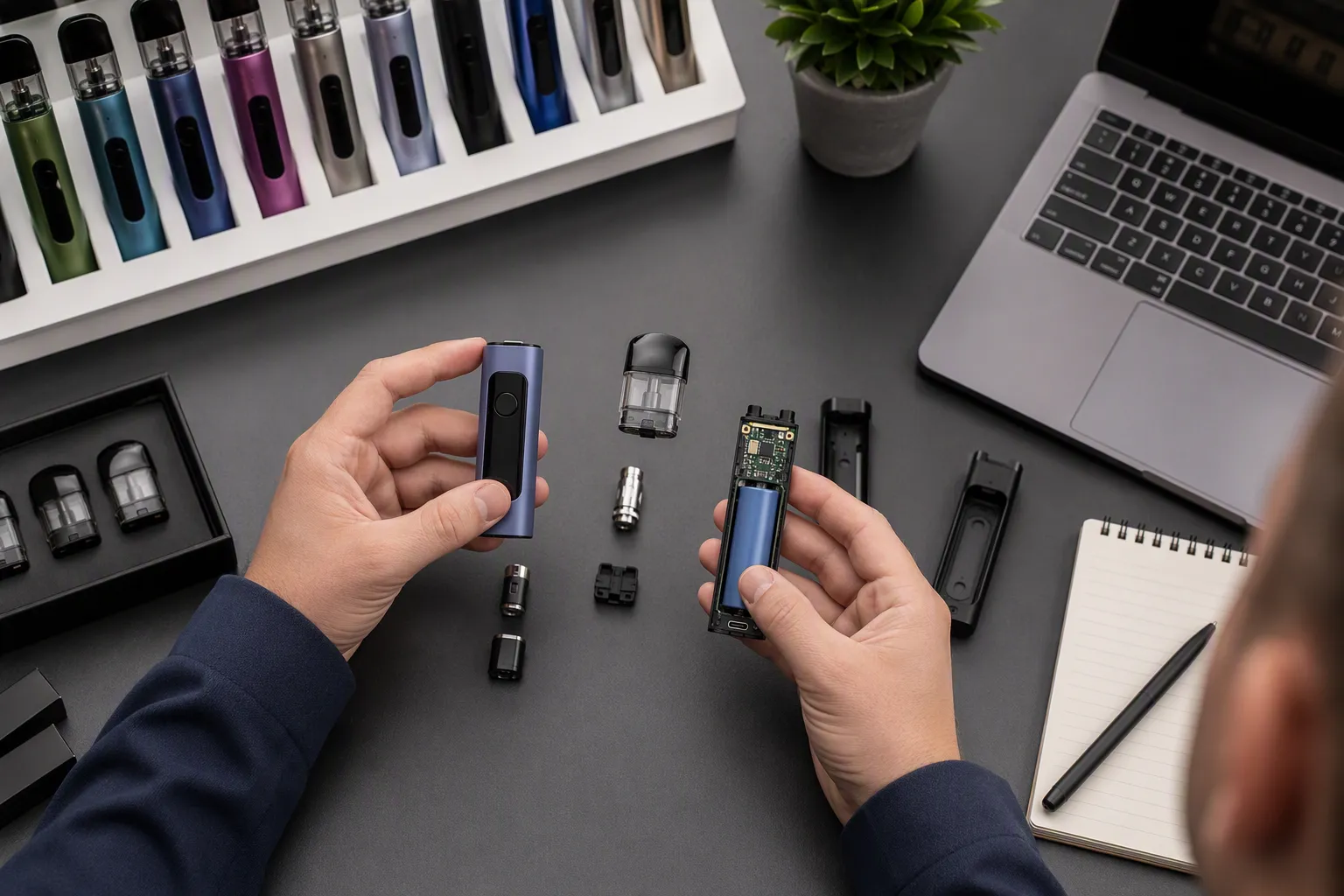
Vape screens can help retailers describe general battery status, but I do not recommend advertising a displayed percentage as an exact promise of remaining use time. Retailers should use verified product documentation, avoid unsupported runtime claims, and explain that usage patterns can affect how customers experience remaining battery.
Can a puff counter prove that a disposable vape is defective?
A puff counter alone does not prove that a device is defective. I recommend reviewing the full situation, including the product model, normal use, repeated behavior, packaging, and any available video evidence. A replacement decision should follow the applicable supplier or brand after-sales process.
What should a vape shop do when a customer says the battery screen was wrong?
The shop should record the product details, ask about charging and normal use, and check whether the issue repeats. If normal use is affected, the shop should collect clear photos or a short video and submit the information through its agreed supplier after-sales channel.
Should wholesalers test vape screens before placing a large order?
Yes. I recommend that wholesalers review the exact display type, product instructions, sales materials, and complaint-handling process before making a larger commitment. A sample evaluation can help buyers train retail staff and identify whether the display feature suits their customer base.
Do battery, e-liquid, and puff displays work the same on every vape model?
No buyer should assume that vape screens work the same across every model. Screen layouts and display meanings can differ by product and version. Buyers should request verified specifications or product documentation for the exact item they plan to purchase and sell.
Conclusion
Vape screens can add useful value for adult-market retailers when buyers treat them as clear status indicators rather than exact product promises. Battery, e-liquid, and puff information should be evaluated alongside product documentation, normal-use expectations, retailer training, and a reliable after-sales process. I recommend that wholesalers and importers confirm screen functions before ordering, avoid unsupported claims, and prepare a consistent response for customer questions. If you need help sourcing vape products with clear product information, centralized after-sales support, or OEM/ODM options, contact Shenzhen Kingfuji Tech. Co., Ltd. at info@kingvapecig.com.
Sources
- [PDF] Integrating Renewable Energy into the Transmission and ...", Battery state-of-charge indications are estimates rather than direct measurements of remaining runtime, and their practical interpretation depends on load, temperature, aging, and use conditions; similarly, puff-related outcomes vary with puffing behavior
- [PDF] Battery Energy Storage System Evaluation Method", Lithium-ion battery runtime is not a simple linear function of a displayed state of charge because available capacity and terminal behavior vary with discharge load, temperature, and battery condition
- [PDF] Estimation of the critical external heat leading to the failure of lithium ...", Research on lithium-ion cells shows that usable capacity and runtime depend on operating temperature, discharge current, and cell aging, which can alter a user’s experience of remaining charge
- Photometric Monitoring of Electronic Cigarette Puff Topography", Liquid-level information on an electronic device depends on the sensor or estimation method used and should not be interpreted as an exact volumetric measurement unless the manufacturer provides model-specific validation
- Puffing Topography: A Tool to Evaluate Vaping Behavior and ...", E-cigarette puff-topography studies report substantial between-user variation in puff duration, volume, flow rate, and frequency, all of which can affect consumption per puff
- Puffing Topography: A Tool to Evaluate Vaping Behavior and ...", Experimental e-cigarette research indicates that aerosol production and liquid consumption per puff vary with puffing regimen and device operating conditions; consequently, a puff figure is not necessarily identical across users
- [PDF] Integration of Xantrex HY-100 Hybrid Inverter with an AC Induction ...", Battery-management literature distinguishes state-of-charge estimation from fault diagnosis: a reported charge state alone does not establish whether a loss of operation arose from the cell, charging system, protection controls, connections, or another device component
- [PDF] Premarket Tobacco Product Applications for Electronic Nicotine ...", Public-safety guidance for lithium-ion-powered e-cigarettes emphasizes following manufacturer charging instructions and avoiding damaged, altered, or improperly charged devices because battery failures can present fire and injury hazards