
Mouthpiece fit and seal design can create expensive after-sales problems when a vape device looks fine in a sample stage but develops liquid traces, loose mouthpieces, difficult insertion, or uncomfortable airflow after distribution. These issues can lead to returns, retailer complaints, and lost customer trust. We help buyers evaluate the full interface system before they commit to stock or mass production.
Quick Answer
Mouthpiece fit and seal design affect leakage and comfort because the mouthpiece is part of the device’s complete airflow and liquid-containment system[^1]. A stable fit, correctly positioned seal, controlled tolerance, and consistent assembly can help reduce interface-related liquid escape and condensation buildup while supporting a comfortable draw. Buyers should evaluate these factors together across production batches, transport conditions, and real after-sales scenarios—not only on a single sample.
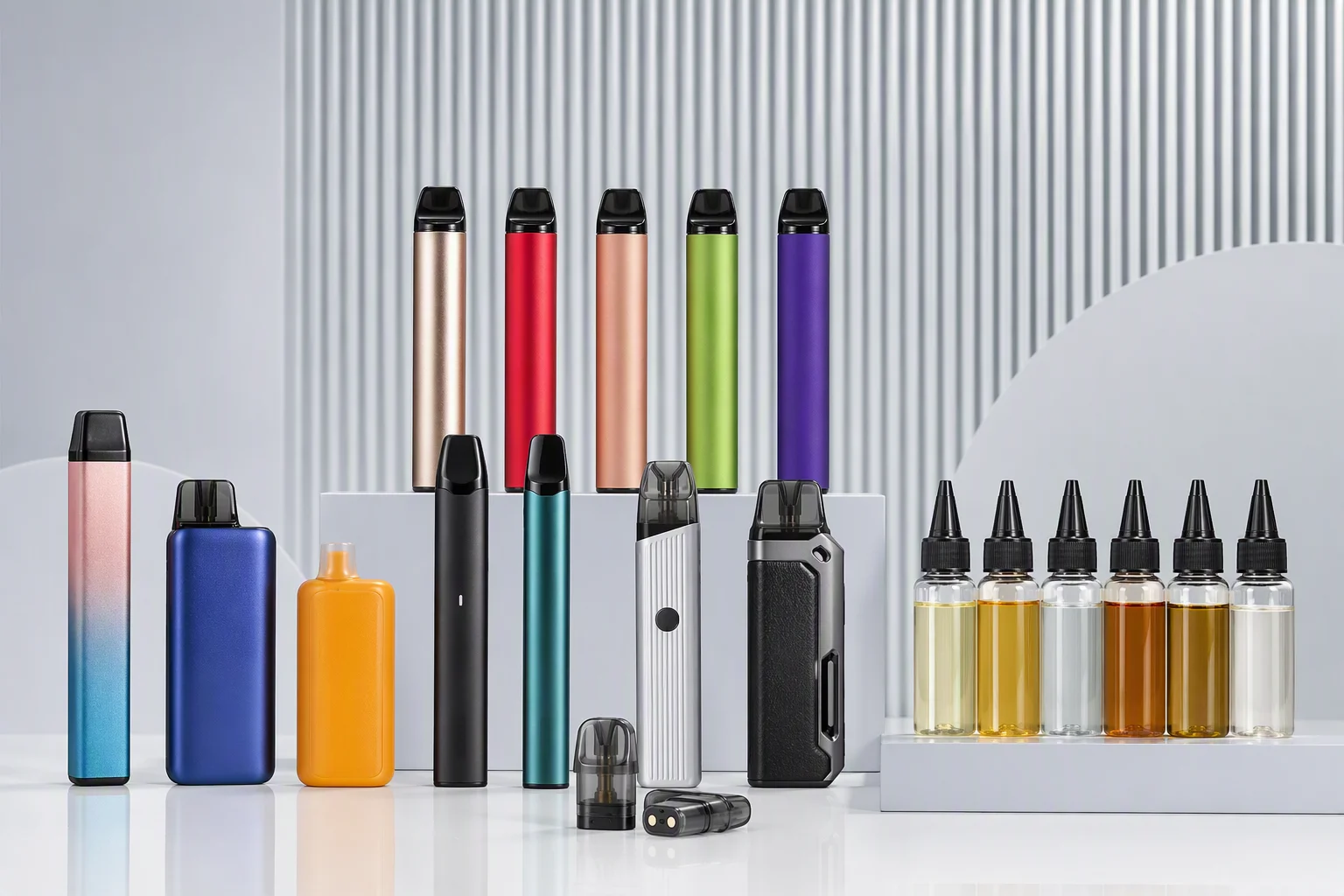
A mouthpiece may look like a small component, but it can influence how customers judge the whole device. In our development, production, and quality-feedback handling work, we review mouthpiece interfaces as a practical B2B risk point: one that can affect product reputation, replacement costs, and retailer confidence.
Mouthpiece Leakage and Comfort Are Not Separate Product Attributes
When buyers evaluate a vape device, they may focus on the tank, coil, battery, or outer appearance first. That is understandable. However, a mouthpiece issue can still create liquid-related complaints even when the main tank and heating components appear normal.
Mouthpiece leakage and comfort are connected because both depend on the same interface system: the fit between parts, seal location, airflow path, assembly force, and dimensional consistency. A mouthpiece that feels secure but is too tight may affect user comfort or airflow. A mouthpiece that is easy to remove but has too much clearance may increase interface-related leakage risk.
In practice, we do not treat every visible liquid trace around a mouthpiece as the same failure. A buyer should distinguish among several possibilities:
- Potential interface leakage, where e-liquid may escape through a gap or incomplete sealing path.
- Condensation accumulation, where vapor cools and forms droplets in or near the mouthpiece channel.
- Transport-related movement, where pressure changes, vibration, or temperature exposure may affect liquid distribution[^6].
- Use-related factors, including draw style, storage position, repeated mouthpiece removal, or improper handling.
- Assembly variation, where one batch or one production shift may differ from the approved reference sample.
This distinction matters for importers and wholesalers. If a retailer reports “leakage,” the commercial question is not only whether liquid is visible. The buyer also needs to know where the liquid appears, how often the complaint occurs, whether it is batch-specific, and whether the issue affects resale confidence.
The Mouthpiece Is Part of the Sealing Path
Many buyers treat the mouthpiece as a separate cosmetic part. We see it differently. The mouthpiece can be part of the functional connection between the user, airflow channel, and internal liquid-management structure.
Depending on the device structure, the interface may involve:
- A press-fit connection
- One or more sealing rings
- A molded plastic or silicone contact surface
- A top cap or cartridge connection
- An airflow channel with defined internal clearances
- A locking or anti-rotation feature
Each element needs to work with the others. A well-designed seal cannot fully compensate for poor dimensional control in the mating parts.[^8] Likewise, a very tight fit may not solve leakage if the airflow path or assembly process creates a separate issue.
From a procurement perspective, this means a mouthpiece should not be approved only by appearance. Buyers should ask for a structured review of the interface and the expected production controls.
How Does Mouthpiece Fit and Seal Design Influence Leakage Risk?
A small mismatch in mouthpiece fit and seal design can become a larger complaint after thousands of units are assembled, packed, shipped, stored, and used. The risk is not limited to whether a mouthpiece stays in place. It also includes whether the sealing path remains stable under normal commercial handling.
Mouthpiece fit and seal design influence leakage risk by controlling the gaps, contact pressure, alignment, and airflow behavior around the mouthpiece interface. A balanced interface can support consistent sealing, while excessive looseness, poor alignment, inconsistent seal placement, or uncontrolled tolerance variation can increase the chance of liquid traces, condensation complaints, or unstable assembly.
For B2B buyers, the key word is consistency. A sample that performs acceptably does not automatically prove that every production unit will perform the same way.
Why Sample Approval Is Not Enough
We have handled product-development discussions where a customer approves a clean, well-fitted sample and then expects the same result across every carton. That expectation is understandable, but production reality requires a broader review.
Mass production can introduce variation through:
- Mold wear or mold adjustment[^7]
- Material batch differences
- Changes in sealing-ring hardness or dimensions[^2]
- Inconsistent assembly force[^9]
- Incomplete seating of a mouthpiece or seal
- Variation in airflow channel alignment
- Packing pressure during transportation
- Temperature changes during storage and shipping
A buyer should therefore ask not only, “Does this sample leak?” but also, “How is this interface controlled during production?”
Useful Questions for Supplier Evaluation
When we discuss a mouthpiece interface with a buyer, we recommend asking practical questions such as:
-
Where is the sealing point located?
Buyers should understand whether the seal sits near the upper interface, inside the mouthpiece channel, around a cartridge connection, or in another part of the structure. -
What dimensions are controlled during production?
A supplier should be able to explain which fit-critical dimensions receive attention during incoming material checks, assembly checks, or final inspection. -
How is assembly depth checked?
A mouthpiece that is not fully seated may feel acceptable at first but create a different airflow or sealing condition. -
What happens after repeated insertion and removal?
This should be evaluated based on the intended product design and use case. Buyers should not assume that one simple fit test represents all use patterns. -
How are complaints traced back to batches?
Traceability, packaging identification, and clear after-sales communication can reduce the workload when an issue needs investigation.
We do not present one seal ring, one interference measurement, or one mouthpiece shape as a universal answer. Different vape structures require different engineering decisions. However, buyers can reduce procurement risk by requiring the supplier to explain how the full interface is designed and controlled.
Can a Tighter Mouthpiece Fit Reduce Leakage and Improve Comfort?
A loose mouthpiece can make users feel that a device is low quality. Buyers may then assume that a tighter fit is always better. However, excessive tightness can create another set of problems, including hard removal, uncomfortable use, material stress, poor assembly efficiency, or altered airflow behavior[^3].
A tighter mouthpiece fit may improve stability in some designs, but it does not automatically reduce leakage or improve comfort. The best result usually comes from balanced fit and seal design: enough retention to keep the mouthpiece stable, enough sealing contact to support the interface, and enough consistency to avoid excessive insertion force, distortion, or uncomfortable draw behavior.
The commercial risk comes from trying to solve a complex issue with one simple adjustment. If a factory makes the fit tighter without reviewing the mating parts, seal geometry, airflow path, and assembly process, the result may shift the problem instead of solving it.
Fit, Force, and User Perception
End users do not experience dimensions on a drawing. They experience the finished product through touch, draw resistance[^4], lip contact, and day-to-day handling.
A mouthpiece can influence perceived quality when it:
- Moves or rotates unexpectedly
- Feels difficult to remove or reinstall
- Has sharp edges or uncomfortable lip contact
- Changes the draw feeling because of restricted airflow
- Collects visible condensation near the opening
- Feels uneven from unit to unit
For a distributor, these details matter because a retailer may not describe the root cause precisely. A retailer may simply say, “Customers do not like this model,” or “This product has a leakage problem.” The underlying issue could involve fit, assembly, airflow, condensation, or customer use. The buyer needs a supplier that can help review the complaint methodically rather than make assumptions.
A Buyer-Focused Comparison
| Buyer Evaluation Point | Overly Loose Interface | Overly Tight Interface | Balanced, Controlled Interface |
|---|---|---|---|
| Mouthpiece stability | May feel unstable or detached | Usually stable, but may stress parts | Stable during normal handling |
| Seal consistency | May be affected by gaps or poor contact | May be affected by distortion or uneven pressure | Designed for consistent contact |
| Insertion/removal | Easy, but may feel low quality | Difficult or inconsistent | Predictable and practical |
| Airflow feel | May vary if alignment changes | May feel restricted in some structures | Evaluated with intended draw behavior |
| After-sales exposure | Loose-fit and liquid-trace complaints may occur | Force, comfort, breakage, or airflow complaints may occur | Lower risk when production control is maintained |
This table is not a universal engineering specification. It is a procurement framework. Buyers should use it to guide discussions with qualified product-development and quality teams before confirming a large order.

How Does Mouthpiece Fit and Seal Design Affect User Comfort?
Comfort complaints are easy to underestimate because they can sound subjective. Yet for vape brands, importers, and smoke-shop wholesalers, subjective user feedback quickly becomes a commercial issue. If customers dislike the draw, lip feel, or moisture buildup, repeat orders can slow down.
Mouthpiece fit and seal design affect comfort by influencing lip contact, draw resistance, mouthpiece stability, airflow smoothness, and condensation management. A comfortable mouthpiece is not defined only by its outer shape or diameter. It also depends on whether the mouthpiece stays correctly positioned and supports the device’s intended airflow behavior during normal use.
In our quality-feedback handling, we review comfort as part of functional performance rather than a purely cosmetic topic. A smooth outer shape may still create a poor experience if the draw is inconsistent or if condensation becomes noticeable around the mouthpiece.
Comfort Includes More Than Shape
A buyer evaluating a mouthpiece should consider several user-facing factors:
- Lip-contact area: The edge should feel appropriate for the intended product category and user positioning.
- Mouthpiece height and angle: These can influence how naturally a user holds the device.
- Airflow resistance: The mouthpiece interface should work with the device’s designed airflow path rather than unintentionally restricting it.
- Fit stability: A moving mouthpiece can feel unreliable, even if it does not immediately create a functional failure.
- Condensation behavior: Visible moisture can be interpreted as leakage by users, even when the root cause may be vapor condensation.
- Surface finish and flash control: Rough edges, molding flash, or inconsistent finishing can affect perceived quality.[^10]
We recommend that brand buyers review samples with the expected target market in mind. A product intended for quick-turn convenience-store sales may need a different balance of simplicity, durability, and price than a premium branded device intended for specialist vape retail.
Why Comfort Affects Commercial Performance
Comfort has a direct connection to your downstream business:
If end users find a mouthpiece awkward, loose, wet, or difficult to use, retailers receive the complaint first. The retailer then contacts the wholesaler, and the wholesaler asks the importer or brand owner for a solution.
This chain creates cost at every level. It can involve replacement requests, staff time, shipping, credit notes, and lost shelf space. Therefore, buyers should include mouthpiece comfort in pre-purchase evaluation rather than waiting for market feedback.
What Should Buyers Check Before Approving Mouthpiece Fit and Seal Design?
Buyers often face pressure to move quickly when a new vape trend appears. Fast decisions can be profitable, but they can also create avoidable after-sales exposure if the supplier, sample, and production plan are not reviewed carefully.
Before approving mouthpiece fit and seal design, buyers should check the complete interface system: mouthpiece retention, seal position, airflow path, assembly consistency, visual finishing, transport packaging, and the supplier’s process for handling quality feedback. The goal is not to promise zero leakage, but to identify manageable risk before stock reaches retailers or end users.
We suggest building a simple approval process for each new model, especially when the order quantity is large or when the product will carry your own brand.
A Practical Pre-Purchase Checklist
Before confirming an order, buyers can ask their supplier to support review of the following areas:
-
Sample-to-production alignment
Confirm that the approved sample represents the intended production materials, assembly method, and key components as closely as possible. -
Interface visual inspection
Check for uneven gaps, incomplete seating, loose mouthpieces, scratches, flash, or inconsistent alignment. -
Fit consistency across multiple units
Do not inspect only one unit. Review a reasonable selection of samples from available production or pilot-stage units where possible. -
Seal placement and assembly process
Ask how seals are installed, how correct seating is verified, and how assembly variation is addressed. -
Airflow and draw consistency
Review whether the mouthpiece connection changes the intended draw feeling between units. -
Transport and storage considerations
Discuss how the product is packed and what conditions may be relevant during shipment. International shipping can expose goods to vibration, temperature changes, and extended storage periods. -
Complaint-handling process
Confirm what information the supplier needs if you receive a complaint: photos, videos, batch code, quantity affected, usage details, and shipping history.
For buyers working with our team, we can support one-stop sourcing across vape products and related smoking accessories, while also helping customers discuss product requirements and new-product development. For small and medium buyers in Europe, our overseas warehouse options can support lower-volume purchases on selected available items. For larger importers, wholesalers, and brand owners, we can also discuss China-based bulk purchasing and OEM/ODM projects based on the product requirements and order conditions.
How Do We Review Mouthpiece-Related Quality Feedback?
A mouthpiece-related complaint can become difficult when a buyer has to coordinate among multiple factories, brands, freight partners, and after-sales contacts. This is one reason many wholesalers prefer a supplier that can help organize communication and review evidence in one place.
When we review mouthpiece-related quality feedback, we look at the reported symptom, the product batch, the interface condition, available photos or videos, shipping history, and likely use conditions. We do not assume every liquid trace is a tank failure or a mouthpiece failure. We use the available information to identify whether further production, assembly, or application-specific evaluation is needed.
We have seen how quickly a small complaint can become a reputation issue when it is not handled clearly. A wholesaler may receive a message from a vape shop with only one photo and the word “leaking.” That is not enough information for a reliable conclusion, but it is enough to create concern.
Information That Helps a Meaningful Review
We normally encourage buyers to collect:
- Clear photos of the mouthpiece, cartridge, and surrounding areas
- Short video showing fit, movement, or liquid appearance where possible
- Product batch or packaging identification
- Quantity purchased and quantity reportedly affected
- Whether products were opened, used, stored upright, or transported further
- Whether the issue appears before use, after use, or after repeated mouthpiece handling
- Whether the complaint is isolated or repeated across retailers
This approach protects the buyer’s time. It also helps avoid an unhelpful situation where every visible droplet is labeled as the same defect.
We aim to provide a reliable, buyer-oriented service model. For applicable orders, we can coordinate after-sales communication through one contact point instead of asking customers to chase several factories or brands. Specific remedies should always be confirmed according to the agreed product, order, evidence, and commercial terms. Buyers should verify all product specifications and application suitability before purchase.
Frequently Asked Questions
Can a mouthpiece cause a vape to leak?
A mouthpiece interface can be one potential source of liquid escape, condensation buildup, or perceived leakage. However, visible liquid can also relate to airflow, internal structure, transport, storage, or user behavior. Buyers should review the location, batch, and conditions before assigning a cause.
Is a tighter mouthpiece seal always better?
No. A tighter seal is not automatically better. Excessive interference can make assembly difficult, distort contact areas, affect airflow feel, or reduce user comfort. Buyers should look for balanced retention, stable sealing contact, and consistent production control.
How can wholesalers reduce mouthpiece-related returns?
Wholesalers can reduce risk by approving multiple samples, reviewing fit consistency, asking about seal placement and assembly controls, checking packaging, and maintaining batch records. They should also collect clear evidence when complaints occur instead of relying on general descriptions.
Does condensation around a mouthpiece mean the product is defective?
Not necessarily. Condensation can occur when vapor cools in the airflow path, and it may be mistaken for leakage.[^5] A supplier or qualified technical team should review the product structure, amount of liquid, usage conditions, and complaint pattern before making a determination.
What should brand buyers ask an OEM/ODM supplier about mouthpieces?
Brand buyers should ask about mouthpiece material, fit-critical dimensions, seal location, assembly method, airflow design, quality checks, sample-to-production consistency, packaging, and after-sales support. They should also request application-specific evaluation when developing a new product.
Conclusion
Mouthpiece fit and seal design should be evaluated as part of one complete interface system, not as separate questions about leakage or comfort. A stable fit, balanced seal, controlled airflow path, and consistent assembly can help buyers reduce avoidable returns, retailer complaints, and after-sales workload. We recommend that importers, wholesalers, and brand owners review production consistency—not only a clean sample—before committing to a large purchase. Contact KingVape to discuss vape product sourcing, OEM/ODM development, quality-review requirements, and practical supply options for your market.
[^1]: "Inhalation Toxicology of Vaping Products and Implications for ... - PMC", https://pmc.ncbi.nlm.nih.gov/articles/PMC7278963/. Technical reviews of electronic-cigarette construction describe the mouthpiece as part of the aerosol outlet and airflow pathway connected to the liquid-containing atomizer or cartridge assembly. Evidence role: mechanism; source type: paper. Supports: Technical descriptions of e-cigarette architecture showing that the mouthpiece connects to the aerosol/airflow path and is associated with the liquid-containing cartridge or reservoir assembly.. Scope note: The precise sealing function depends on the particular device architecture. [^2]: "Failure Modes and Influencing Factors of Rubber O-Ring Seals in ...", https://pmc.ncbi.nlm.nih.gov/articles/PMC12656242/. Elastomer-seal engineering research shows that material hardness, dimensions, and compression influence contact pressure and therefore the ability of a seal to resist fluid leakage. Evidence role: mechanism; source type: research. Supports: Evidence that elastomer seal hardness, cross-sectional dimensions, and compression influence contact pressure and the ability to maintain a seal.. Scope note: This principle does not identify the appropriate hardness or dimensions for any particular mouthpiece design. [^3]: "The influence of mouth opening on pharyngeal pressure loss and its ...", https://pmc.ncbi.nlm.nih.gov/articles/PMC9868155/. Press-fit analyses show that increasing interference generally raises insertion and extraction forces and may increase stresses or deformation in the joined parts; changes to an airflow passage can also alter pressure drop. Evidence role: mechanism; source type: paper. Supports: Engineering research on interference and press fits showing that increased interference raises insertion/removal forces and can increase stresses or deformation; airflow research can address geometry-related resistance.. Scope note: The combined effect on comfort and airflow is design-specific and requires testing with the finished device. [^4]: "Variability among electronic cigarettes in the pressure drop ...", https://pubmed.ncbi.nlm.nih.gov/21994335/. Fluid-mechanics studies of inhalation and flow channels show that passage geometry and cross-sectional restrictions affect pressure drop, which corresponds to the resistance experienced during a draw. Evidence role: mechanism; source type: paper. Supports: Fluid-dynamics evidence that airflow-path dimensions, geometry, and surface conditions influence pressure drop and inhalation resistance.. Scope note: A measured pressure drop is not a complete measure of subjective comfort. [^5]: "A simple, cost-effective, method for creating electronic cigarette vapor ...", https://pmc.ncbi.nlm.nih.gov/articles/PMC12341675/. E-cigarette aerosol studies indicate that condensate may accumulate in internal airflow passages; consequently, visible liquid near the mouthpiece is not alone sufficient to establish a reservoir or interface leak. Evidence role: general_support; source type: paper. Supports: Evidence that e-cigarette aerosol can condense in internal air passages and that observed liquid around the mouth-end may not necessarily originate from a reservoir-seal failure.. Scope note: Inspection of the liquid source, device condition, and use history is still required to distinguish condensation from leakage in an individual case. [^6]: "49 CFR Part 178 Subpart M -- Testing of Non-bulk Packagings and ...", https://www.ecfr.gov/current/title-49/subtitle-B/chapter-I/subchapter-C/part-178/subpart-M. Transport-packaging research recognizes temperature changes, pressure differentials, and vibration as conditions that can affect liquid-filled products and test the integrity of their closures and seals. Evidence role: general_support; source type: research. Supports: Research on liquid-filled products and transport testing showing that temperature variation, pressure differentials, and mechanical vibration can alter liquid behavior and challenge package or closure integrity.. Scope note: General transport-testing evidence does not by itself establish the failure rate of a specific vape device. [^7]: "[PDF] Feature Based Variation Modeling of Preliminary Injection Molded ...", https://dspace.mit.edu/bitstreams/b59e832c-789d-4c06-b41c-996105b0c53b/download. Injection-molding literature documents that tool wear and changes in tooling or process conditions can affect part dimensions and dimensional repeatability over production runs. Evidence role: mechanism; source type: paper. Supports: Manufacturing research showing that mold wear and process or tooling adjustments can affect the dimensions and consistency of injection-molded components.. Scope note: The magnitude of variation depends on mold material, polymer, process settings, maintenance, and production volume. [^8]: "9+ How to Measure NPT Fittings (Quick Guide)", https://bigblue.atlantisuniversity.edu/how-to-measure-npt-fittings/. Mechanical-sealing guidance explains that reliable sealing requires controlled mating geometry and appropriate seal compression; variation in the adjoining parts can reduce contact uniformity and promote leakage paths. Evidence role: mechanism; source type: education. Supports: Engineering guidance explaining that seal effectiveness depends on the geometry, surface condition, compression, and tolerances of both sealing and mating components.. Scope note: The relevant tolerance limits and seal-compression requirements are material- and design-specific. [^9]: "[PDF] Advancements in Mechanical Sealing - API 682 Fourth Edition", https://oaktrust.library.tamu.edu/bitstream/handle/1969.1/162546/TutorialP02.pdf?sequence=1&isAllowed=y. Research on press-fit and assembly processes indicates that insertion-force variation can affect seating behavior, component deformation, and the consistency of assembled joints. Evidence role: mechanism; source type: paper. Supports: Manufacturing evidence that variation in insertion or assembly force can change seating depth, component deformation, or joint consistency in press-fit and sealed assemblies.. Scope note: Whether such variation produces leakage must be verified for the specific components, materials, and assembly process. [^10]: "Materials' tactile testing and characterisation for consumer products ...", https://www.academia.edu/16404033/Materials_tactile_testing_and_characterisation_for_consumer_products_affective_packaging_design. Research on product perception finds that visible and tactile surface characteristics, such as roughness, sharpness, and finishing defects, can influence users' judgments of product quality. Evidence role: general_support; source type: research. Supports: Human-factors and consumer research showing that tactile and visual surface characteristics, including roughness and defects, influence perceived quality.. Scope note: Perceived quality is subjective and can also be influenced by branding, price, and prior expectations.