
Draw-to-draw consistency can become a costly issue when customers report that the same vape model feels weak, harsh, burnt, or noticeably different from one puff to the next. A buyer who reacts to one complaint may reject good stock, while a buyer who ignores a pattern may face returns and damaged store relationships. A controlled screening process helps distinguish normal variation from a repeatable quality risk.
Quick Answer
To measure draw-to-draw consistency across the same vape model, I use a controlled, repeatable sampling process rather than judging one puff or one device. I compare random units from different cartons or batches under similar use conditions, repeat the same draw sequence, record observable differences, and calculate whether abnormal symptoms appear as isolated events or as a recurring pattern that may justify re-testing, supplier escalation, or a quality claim.
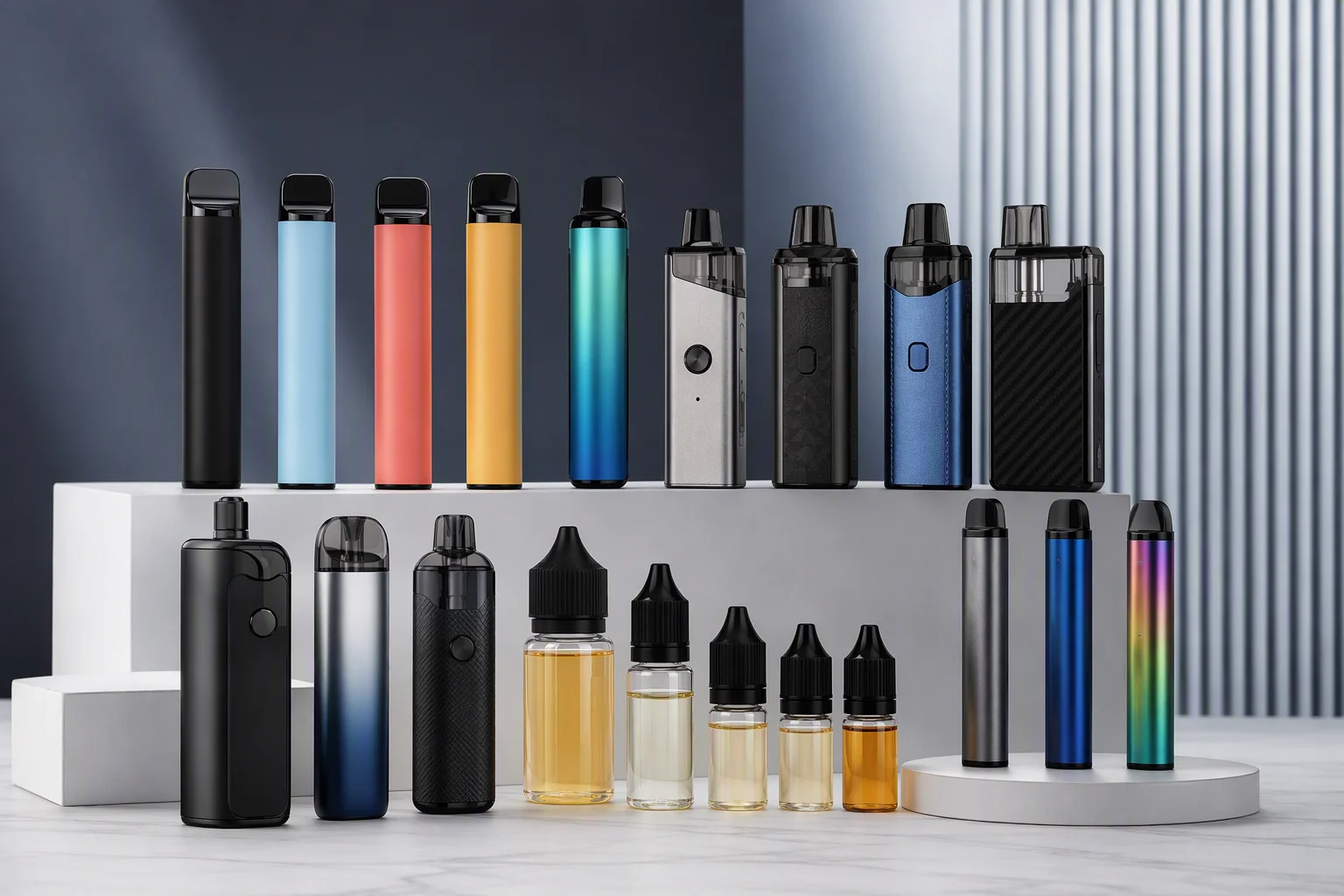
A practical vape inspection is not a laboratory certification, and manual puff testing cannot confirm every technical performance metric. However, it can help importers, wholesalers, and chain buyers make better purchasing decisions before they accept inventory, replenish a model, or release stock to local stores.
In my experience working with incoming inspection records, batch checks, and customer after-sales feedback, the most useful question is rarely, “Did one puff feel different?” The better question is, “Does this model show a repeatable abnormal pattern that may create return, reputation, or replenishment risk?”
Draw-to-draw consistency is not whether every puff feels perfectly identical
A buyer may expect every puff from the same model to feel exactly the same because the packaging, specifications, and device appearance are identical. That expectation can create confusion. If every small sensation difference is treated as a defect, a buyer may waste time and misjudge stock. A more useful standard is to identify whether variation is normal or whether it appears repeatedly enough to affect customer experience.
Draw-to-draw consistency means that a vape model performs within a reasonably repeatable range when tested under controlled conditions. It does not mean every puff must feel perfectly identical. Buyers should look for repeated symptoms—such as recurring weak output, unstable flavor, harshness, burnt sensation, or difficult airflow—across multiple draws and multiple sample devices before treating the issue as a batch-level concern.
Normal variation versus abnormal variation
Subjective use is affected by several factors.[^1] A user may take a longer draw, inhale more strongly, wait less time between puffs, or test a device at a different stage of charge or liquid consumption.[^2] These differences can change what the user feels.
For that reason, I recommend separating normal individual variation from an abnormal repeatable pattern.
Normal variation may include:
- A minor perceived difference between a short puff and a long puff.
- A slight flavor change after repeated use.
- A different sensation when the device is near the end of its stated usage life.
- A change caused by leaving too little time between puffs.
- A difference between two users with different inhalation habits.
A more concerning pattern may include:
- Repeated weak vapor or output during similar draws.
- Frequent harsh or burnt sensation under normal use conditions.
- Flavor that repeatedly drops out and returns.
- Airflow that is noticeably tighter or looser on multiple units.
- A device that performs normally for several puffs and then becomes unstable repeatedly.
- Similar complaints from several cartons, stores, or end users.
The distinction matters commercially. A single customer may report a weak puff because of individual use conditions. However, if several customers return the same model with the same complaint, the risk becomes different. That pattern may affect store confidence, reorder decisions, and the cash tied up in inventory.
Why one puff does not prove a defect
I have seen buyers make decisions too quickly after testing one device. They may take one unusually hard puff, experience a harsh sensation, and conclude that an entire shipment is defective. That is not a reliable procurement method.
For example, an inconsistent experience could possibly relate to device condition, resistance variation, airflow behavior, charging state, liquid movement, puff interval, or another factor. But these are only possibilities without verified evidence. A supplier, manufacturer, or qualified testing party would need proper records, further testing, teardown review, or formal technical analysis before confirming a root cause.
As a buyer, your immediate job is simpler: screen the commercial risk before deciding whether to accept, hold, reorder, or escalate the stock.
How can buyers control a draw-to-draw consistency test?
A buyer cannot control every condition in a real-world vaping experience. However, a buyer can control enough variables to make comparisons more meaningful. Without basic controls, a test becomes a collection of impressions rather than usable quality evidence.
To assess draw-to-draw consistency, buyers should keep the device state, puff duration, draw strength, puff interval, and test sequence as consistent as practical. The goal is not to imitate laboratory instrumentation. The goal is to reduce avoidable differences so that repeated symptoms across units are easier to identify and document.

Establish a simple test condition
A practical warehouse or incoming-inspection screen should be simple enough that staff can repeat it. If a process is too complicated, it will be skipped during busy receiving periods.
I suggest documenting the following before the test begins:
-
Product identification
Record the model, flavor, stated specification, batch or production code if available, carton number, and delivery date. -
Device state
Identify whether the device is newly opened, partially used, charged, or near the end of use. For rechargeable models, use a consistent charging condition where practical. -
Puff style
Use a similar draw duration and intensity for each comparison. A practical internal guideline could be a moderate draw of approximately 2 to 3 seconds[^3], but the exact standard should fit the device type and your team’s process. -
Puff interval
Allow a similar interval between draws. For example, a buyer may use a 20- to 30-second interval for a simple screening sequence.[^4] The key point is consistency, not a universal number. -
Test sequence
Test each device using the same sequence, such as five controlled draws, a short pause, and five more draws. This helps reveal whether an issue occurs only after repeated use.
Use observable descriptions, not vague opinions
A quality record becomes more useful when staff describe what they observe clearly. Instead of writing “bad,” write a specific symptom.
Useful descriptions include:
- Vapor output appeared stable, weaker, or fluctuating.
- Airflow felt normal, tight, loose, or intermittently blocked.
- Flavor remained stable, weakened, became harsh, or showed a burnt sensation.
- The device activated normally, activated late, or showed intermittent activation.
- The abnormal sensation appeared on puff 1, puff 4, or after repeated draws.
- The same symptom appeared on one unit, several units, or most tested units.
This type of record makes supplier communication easier. It also helps you compare incoming stock with previous orders. If you only say that a product “feels different,” neither your purchasing team nor the supplier has enough information to investigate properly.
How should you sample vape units for draw-to-draw consistency?
Testing one device from one carton may feel fast, but it gives weak evidence.[^9] Buyers need a sample that reflects the shipment as fairly as possible. Random sampling across cartons helps reveal whether a complaint is isolated or spread across inventory.[^8]
For draw-to-draw consistency screening, buyers should select random units from more than one carton, test several devices per sample group, and compare the proportion of units showing the same symptom. A practical screening decision should consider both the number of affected units and whether the issue repeats in the same way across the shipment.
A practical sampling approach for wholesalers
The right sample size depends on order quantity, product value, known risk, supplier history, and the cost of a field failure.[^10] A small wholesaler receiving a low-volume replenishment order may use a smaller screen than an importer receiving multiple pallets.
The following approach is not a laboratory standard. It is a practical purchasing and receiving framework.
| Shipment situation | Practical sampling focus | What the buyer should look for | Recommended action |
|---|---|---|---|
| Small replenishment order | Select units from several cartons where possible | Isolated abnormal device versus repeated symptom | Re-test before accepting or escalating |
| New model or new supplier | Use a broader sample across cartons and flavors | Consistency across units, packaging, activation, airflow, and flavor behavior | Hold replenishment until results are reviewed |
| Large import order | Sample across carton positions, batch codes, and pallet areas | Whether one carton or batch differs from others | Separate affected stock and document the pattern |
| Customer complaint after delivery | Test retained samples or stock from the same shipment | Whether the reported symptom can be repeated | Collect evidence before issuing a wider recall or claim |
Why carton position and batch separation matter
A shipment may contain products packed at different times, stored in different carton locations, or supplied under more than one production reference. If a buyer tests only the outer carton nearest the warehouse door, the result may not represent the full delivery.
I recommend that buyers separate samples by:
- Carton number or carton position.
- Production batch code, when available.
- Flavor or specification variation.
- Warehouse location.
- Delivery date.
- Supplier order reference.
For example, if five devices from one carton show unstable flavor but five devices from another carton are stable, the next step is not to claim that the entire shipment failed. The buyer should expand the sample around the affected carton or batch and record whether the issue continues.
This approach protects both sides. It protects the buyer from accepting a repeatable problem without evidence. It also protects the supplier from a broad conclusion based on one unit or one user experience.
What should a draw-to-draw consistency record include?
A buyer may identify a possible issue but still struggle to obtain a useful supplier response because the report is incomplete. Photos of outer packaging alone rarely explain a performance complaint. A simple, consistent inspection record can reduce back-and-forth communication.
A useful draw-to-draw consistency record should identify the product, sample source, test conditions, number of tested devices, observable symptoms, and the proportion of affected units. Buyers should record facts first and avoid stating unverified technical root causes such as battery, coil, airflow, or e-liquid failure without supporting evidence.
Keep the record short enough to use
Your receiving team does not need a complicated quality manual for every shipment. A one-page form or shared spreadsheet can be enough if the information is clear.
I would include these fields:
- Product name and model.
- Flavor, color, resistance, capacity, or other relevant version.
- Purchase order number.
- Carton number and batch code, if available.
- Date received and date tested.
- Number of units tested.
- Approximate puff duration and interval.
- Device condition during testing.
- Individual observation for each unit.
- Number of affected units.
- Photo or video reference, when helpful.
- Proposed action: accept, monitor, hold, re-test, or escalate.
Record patterns, not assumptions
A good quality report may say:
“Three of 12 randomly selected units showed noticeably weak output during repeated moderate draws. The symptom appeared after the fourth to sixth draw. Nine units remained stable under the same internal screening sequence. The affected units came from two cartons with the same batch reference.”
That report is useful because it explains the scope and pattern.
A weak report may say:
“The coil is defective and the whole order has a battery problem.”
That statement may not be supported by the evidence. The buyer may suspect a technical issue, but a formal root-cause conclusion requires more than field-level testing.
When I review after-sales feedback, I find that the most productive cases begin with careful observations. A supplier can compare retained samples, production records, device components, and complaint rates more effectively when the buyer’s evidence is specific.
When should a buyer escalate a draw-to-draw consistency issue?
Buyers need to avoid two costly extremes. One extreme is escalating every isolated complaint as a shipment-wide failure. The other extreme is waiting too long while returns increase and local customers lose confidence. A clear escalation threshold helps purchasing teams act consistently.
A buyer should escalate a draw-to-draw consistency issue when the same abnormal symptom repeats across multiple randomly selected units, cartons, or customer reports under comparable conditions. The buyer should preserve samples, document the pattern, request supplier re-testing, and decide whether to hold affected stock based on the commercial risk and evidence available.

A sensible escalation path
I recommend a staged process:
-
Re-test the original observation
Confirm that the same symptom happens again under similar conditions. -
Expand the sample
Test additional units from different cartons or batch references. -
Separate unaffected and potentially affected stock
Do not mix stock if a pattern appears concentrated in one carton group. -
Preserve physical evidence
Keep affected samples, packaging, carton labels, and relevant videos.[^7] -
Send a factual supplier report
Share the number tested, number affected, symptoms, conditions, photos, and videos. -
Request a defined response
Ask whether the supplier can re-test retained samples, check production records, review the batch, or propose a claim-handling process. -
Make a commercial decision
Decide whether to accept, monitor, sell with caution, hold, return, replace, or adjust the next order based on verified information and your local market risk.
Consider the cost of the pattern
The same defect rate can have different business consequences. A small issue in a low-volume trial order may be manageable. The same issue in a fast-moving product sold through chain stores can create substantial return costs and reputational damage.
Buyers should consider:
- The number of affected units.
- The severity of the customer experience.
- Whether the model is sold under your own brand.
- Whether stores are already receiving complaints.
- The expected cost of returns, credits, and replacement shipping.
- The supplier’s evidence and response time.
- Whether a replacement order may create further cash-flow pressure.
For brand owners and larger distributors, this process is especially important. Your customer may not distinguish between a factory issue, a logistics issue, or an importer issue. They will remember the brand or wholesaler that supplied the product.
How can supplier selection reduce draw-to-draw consistency risk?
Draw-to-draw consistency screening is most useful when it is part of a broader supplier evaluation process. Buyers should not rely only on product photos, a low quotation, or a popular model name. They should assess whether a supplier can provide traceability, repeatable communication, sample support, and practical after-sales cooperation.
To reduce draw-to-draw consistency risk, buyers should evaluate suppliers on sample quality, batch traceability, production communication, complaint handling, and their willingness to review evidence. A low initial purchase price may lose its advantage if inconsistent inventory creates returns, delayed replenishment, or damaged relationships with stores.
Questions I would ask before placing a larger order
Before a larger import order, buyers can ask:
- Can the supplier identify production batches or carton references?
- Can the supplier provide pre-shipment inspection information where available?
- What is the process for reporting performance complaints?
- What evidence does the supplier need to review a claim?
- Can the supplier provide retained samples or conduct a re-test?
- How are replacement, credit, or after-sales cases handled?
- Can the supplier support OEM or ODM requirements with documented approval steps?
- What happens if a product issue affects a portion of the shipment?
At Shenzhen Kingfuji Tech. Co., Ltd., I work with buyers who may need either fast small-volume replenishment or larger direct-import purchasing. Smaller European wholesale customers may prefer available overseas stock for quicker delivery and lower initial quantity requirements. Larger importers, distributors, and brand owners may prefer direct China purchasing, broader product selection, and OEM/ODM development options.
However, no purchasing route removes the need for buyer-side inspection. I encourage customers to use a clear receiving process because it helps both sides identify issues early. It also helps prevent a small complaint from becoming a larger dispute after stock has already moved through multiple stores.
For application-specific quality decisions, particularly where a major claim, product recall, or technical failure investigation is involved, buyers should seek qualified professional evaluation. Practical screening can guide a business decision, but it cannot replace formal engineering analysis or laboratory testing.
Frequently Asked Questions
How many vape devices should I test for draw-to-draw consistency?
The sample size should reflect your shipment size, product value, supplier history, and return risk. Buyers should test more than one unit and select samples from different cartons or batches where possible. A single device is usually not enough to judge a shipment.
Is a burnt puff proof that a vape batch is defective?
No. One burnt sensation is an observation, not proof that an entire batch is defective. Buyers should repeat the test under similar conditions, check additional units, document the symptom, and look for a repeatable pattern before escalating the issue.
Can manual puff testing identify a battery or coil defect?
Manual puff testing can identify observable symptoms, such as weak output, harshness, unstable flavor, or irregular airflow. It cannot confirm the root cause without further evidence. Battery, coil, airflow-path, and e-liquid explanations require supplier investigation, teardown, or formal testing.[^5]
What should I send a supplier when reporting inconsistent vape performance?
Send the product model, flavor or version, carton and batch references, number of units tested, number affected, test conditions, clear symptom descriptions, and photos or videos where relevant. Keep affected samples and packaging until the supplier completes its review.
Should I stop selling stock after several customer complaints?
You should first assess whether the complaints show the same repeatable symptom and come from the same batch, carton group, or delivery. If the pattern is credible and the commercial risk is high, you may need to isolate affected stock while you re-test and request supplier review.
Conclusion
Draw-to-draw consistency is not a promise that every puff will feel perfectly identical. It is a practical measure of whether a vape model performs within a repeatable range and whether abnormal symptoms appear often enough to create return, reputation, or inventory risk. I recommend controlled test conditions, random sampling across cartons, factual inspection records, and evidence-based supplier escalation. If you are sourcing vape products, OEM projects, or wholesale replenishment stock, contact KingVape to discuss a purchasing and quality-control process that fits your market, order size, and delivery plan.
[^1]: "Puffing Topography: A Tool to Evaluate Vaping Behavior and ... - PMC", https://pmc.ncbi.nlm.nih.gov/articles/PMC12958158/. Experimental studies of electronic-cigarette puff topography report that puff duration, flow rate, and puff interval can alter aerosol generation and exposure, supporting the need to control use conditions when comparing perceived performance. Evidence role: mechanism; source type: paper. Supports: Studies of e-cigarette puff topography and emissions showing that puff duration, flow rate, and inter-puff interval can affect aerosol generation and user exposure.. Scope note: Such studies address aerosol and exposure metrics; they do not directly validate subjective quality judgments for every device model. [^2]: "Effects of user puff topography, device voltage, and liquid nicotine ...", https://pubmed.ncbi.nlm.nih.gov/25187061/. Laboratory research indicates that e-cigarette aerosol output and composition are influenced by puffing conditions and device operating parameters, including puff duration and power-related conditions. Evidence role: mechanism; source type: paper. Supports: Research examining how puffing parameters, electrical power, and liquid supply influence e-cigarette aerosol production and composition.. Scope note: The evidence may not measure perceived harshness or flavor directly, and effects differ by device design and liquid formulation. [^3]: "Puffing Topography: A Tool to Evaluate Vaping Behavior and ... - PMC", https://pmc.ncbi.nlm.nih.gov/articles/PMC12958158/. Published e-cigarette testing protocols and puff-topography studies commonly specify controlled puff durations, with several protocols using durations in the approximately 2- to 4-second range. Evidence role: general_support; source type: institution. Supports: Standardized e-cigarette aerosol-testing protocols and observational studies that use or report puff durations near this range.. Scope note: A standardized machine-puff duration is not evidence that one duration represents all users or is optimal for all device types. [^4]: "Puffing Topography: A Tool to Evaluate Vaping Behavior and ...", https://pmc.ncbi.nlm.nih.gov/articles/PMC12958158/. Standardized laboratory methods for e-cigarette aerosol assessment specify fixed inter-puff intervals, and some widely used protocols employ intervals of approximately 30 seconds to improve measurement repeatability. Evidence role: general_support; source type: institution. Supports: Published e-cigarette emissions-testing protocols that define an inter-puff interval, including protocols using intervals around 30 seconds.. Scope note: Laboratory intervals are designed for standardized measurement and should not be interpreted as typical consumer behavior or a universal quality-control threshold. [^5]: "Effects of Manufacturing Variation in Electronic Cigarette Coil ... - PMC", https://pmc.ncbi.nlm.nih.gov/articles/PMC8074776/. E-cigarette performance studies generally use controlled electrical, aerosol-collection, and analytical methods to assess component and operating-condition effects, illustrating why subjective field observations alone cannot establish a specific component-level cause. Evidence role: mechanism; source type: paper. Supports: Technical studies using controlled apparatus to evaluate the relationships among e-cigarette components, operating conditions, and aerosol emissions.. Scope note: Laboratory methods can characterize selected mechanisms but may not reproduce all real-world usage conditions or every failure mode. [^6]: "Guidance for Industry", https://www.fda.gov/media/71023/download. Quality-system guidance treats a complaint as an observation requiring evaluation and investigation; root-cause conclusions require documented evidence rather than attribution from a single reported event. Evidence role: general_support; source type: government. Supports: Quality-system guidance distinguishing complaint observations from documented investigation and root-cause determination.. Scope note: Medical-device quality-system guidance is not device-specific to vapes, but the investigation principle is broadly applicable to product-quality complaints. [^7]: "Q7A Good Manufacturing Practice Guidance for Active ...", https://www.fda.gov/regulatory-information/search-fda-guidance-documents/q7a-good-manufacturing-practice-guidance-active-pharmaceutical-ingredients. Complaint-investigation and traceability guidance emphasizes retaining identifying records and relevant evidence so that affected product can be linked to the relevant lot and evaluated during an investigation. Evidence role: general_support; source type: government. Supports: Complaint-handling and traceability guidance emphasizing retention of records, identification data, and relevant evidence for investigation.. Scope note: Specific retention duties depend on the product category, jurisdiction, contractual terms, and applicable regulatory system. [^8]: "6.2.1. What is Acceptance Sampling? - Information Technology Laboratory", https://www.itl.nist.gov/div898/handbook/pmc/section2/pmc21.htm. Acceptance-sampling guidance uses randomly selected units from a lot to estimate whether nonconformities are isolated or sufficiently prevalent to warrant a lot-level decision. Evidence role: general_support; source type: government. Supports: Acceptance-sampling guidance explaining why randomly selected units are used to make inferences about a production lot or shipment.. Scope note: Sampling plans quantify uncertainty and do not guarantee detection of every defect, especially when defects are rare or unevenly distributed. [^9]: "What kinds of Lot Acceptance Sampling Plans (LASPs) are ...", https://www.itl.nist.gov/div898/handbook/pmc/section2/pmc22.htm. Statistical quality-control guidance explains that conclusions about a lot depend on a defined, representative sample; a single observation provides very limited information about the prevalence of a condition in the full lot. Evidence role: general_support; source type: government. Supports: Statistical quality-control guidance on the limited inferential value of very small samples and the use of defined acceptance-sampling plans.. Scope note: The appropriate sample size depends on the lot size, acceptable risk, defect definition, and chosen sampling plan. [^10]: "Risk Management Framework for Information Systems and ...", https://nvlpubs.nist.gov/nistpubs/SpecialPublications/NIST.SP.800-37r2.pdf. Quality-control frameworks select sampling plans according to lot characteristics, inspection severity, and the risks associated with accepting or rejecting nonconforming product. Evidence role: general_support; source type: institution. Supports: Quality-management and acceptance-sampling frameworks in which inspection levels and sampling plans are selected according to lot characteristics and the consequences of nonconformity.. Scope note: Commercial factors such as product value and supplier relationship are management inputs rather than variables prescribed identically by every sampling standard.