
Quick Answer
A vape refill mechanism can look simple during a supplier presentation, yet it can create expensive problems after products reach UK retailers and end users. Leakage claims, unclear filling instructions, inconsistent batches, and return handling can quickly reduce margin.[1] I recommend evaluating the refill system as a full risk-control decision, not just a convenience feature. **A vape refill mechanism for the UK market should be assessed for seal reliability, repeated opening performance, airflow interaction, tank pressure behaviour, production consistency, and likely user error.
The best option is not automatically the easiest port to open; it is the design that helps importers, wholesalers, and distributors reduce leakage complaints, returns, retailer support work, and reputational risk across the supply chain.**
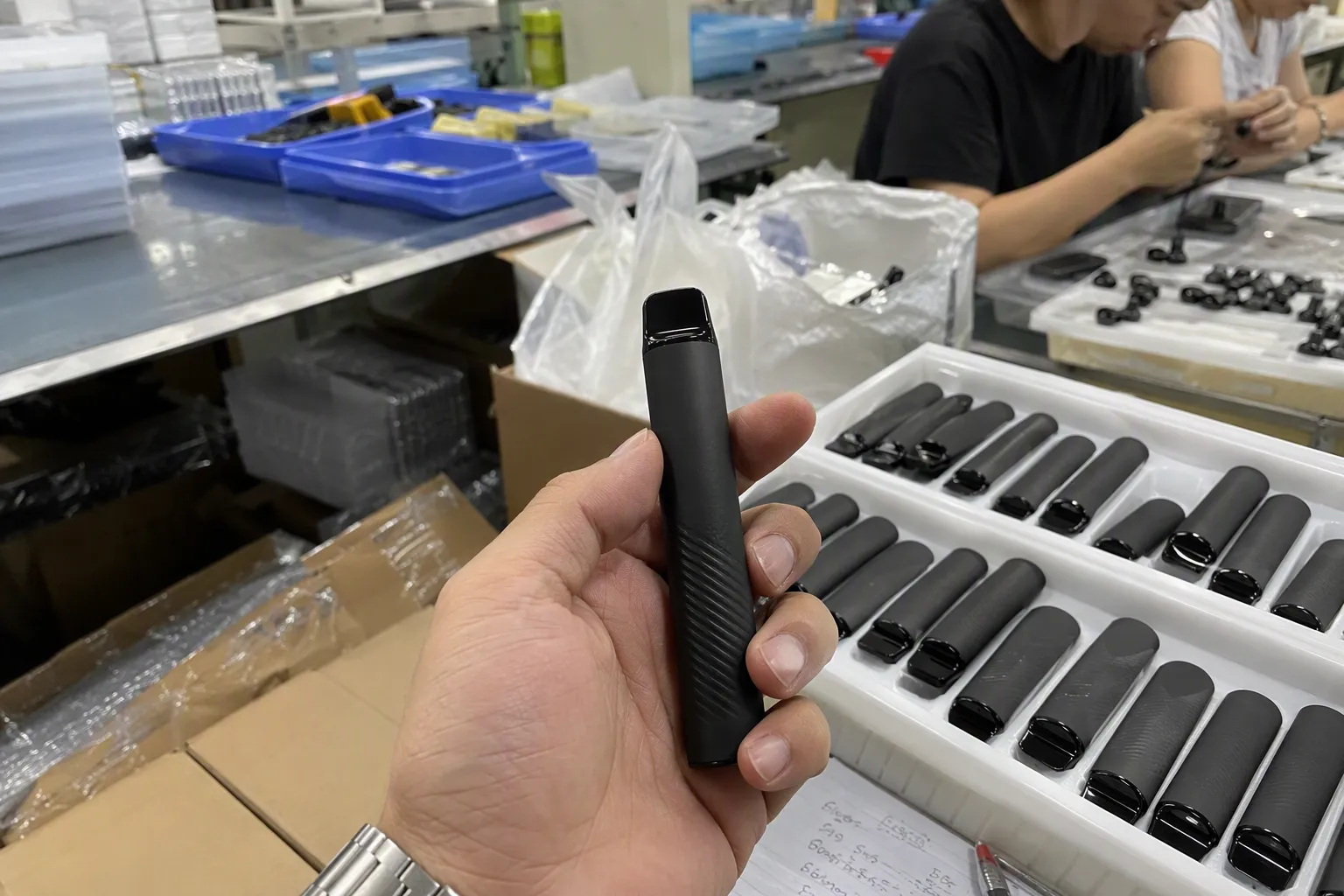
When I review refillable vape products during development and sampling, I do not look at the filling port in isolation. I look at the complete structure around it: the seal interface, cap fit, airflow path, tank shape, assembly tolerance, and how an ordinary end user may handle the product after several refills.
For UK Importers, Wholesalers, and Distributors, Why Should a Vape Refill Mechanism Not Be Judged by Ease of Filling Alone
A refill port may feel smooth and convenient during the first sample test, but that does not automatically mean it will remain reliable through transport, storage, repeated refilling, and everyday customer use.[2] If the mechanism performs inconsistently, the downstream cost often lands with the importer, wholesaler, retailer, or distributor.
UK buyers should judge a vape refill mechanism by its ability to control real channel risk over time. This means checking how the system seals after repeated use, how it behaves when pressure changes, whether components fit consistently in production, and whether retailers can explain the filling process clearly. A simple-looking refill mechanism can still create complaints if the full system is poorly controlled.
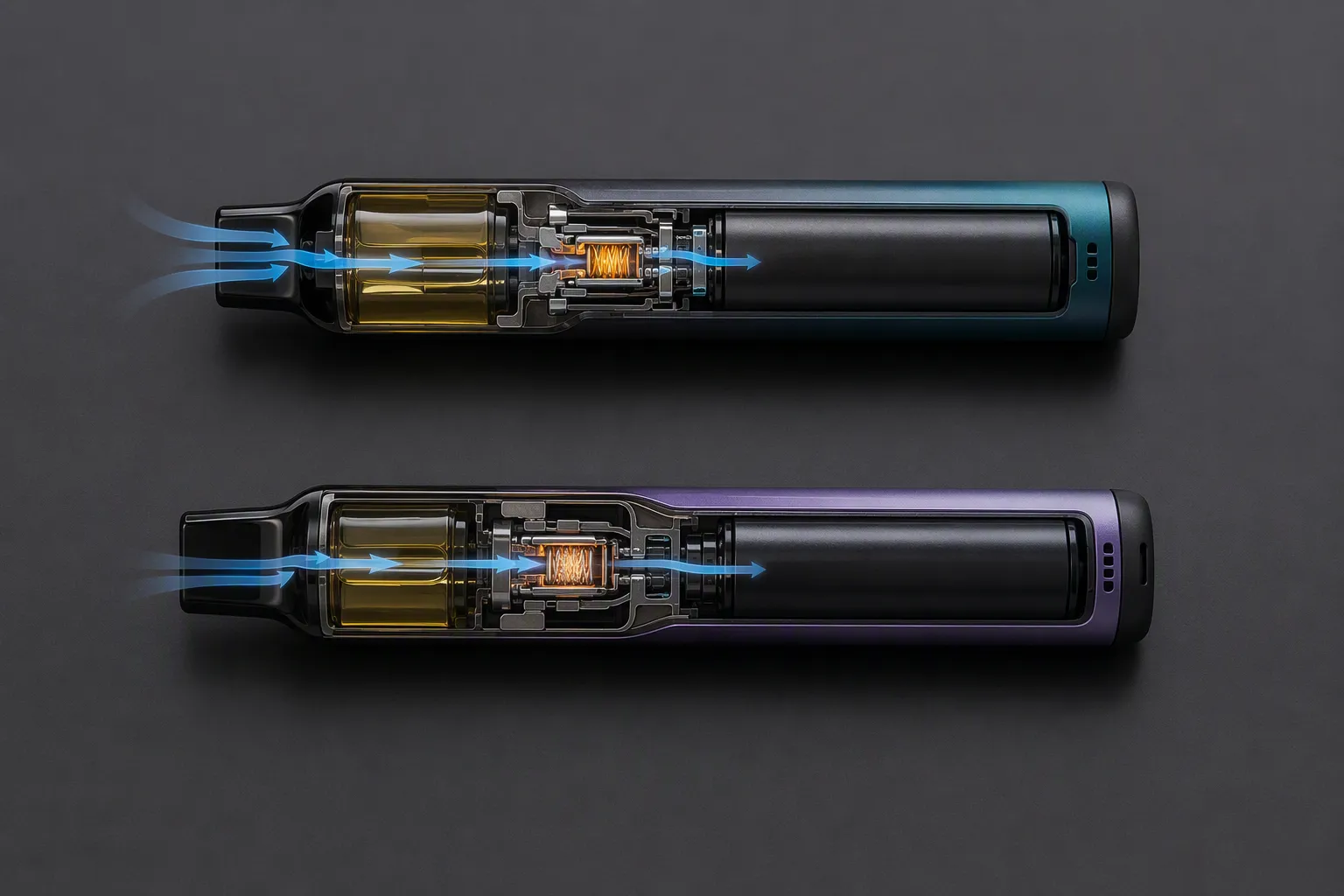
A refill port is only one part of the system
Many buyers begin by comparing visible features:
- Top-fill versus side-fill
- Silicone plug versus sliding cap
- Screw cap versus press-fit cover
- Internal refill opening versus external opening
- Small refill hole versus wider filling channel
These details matter, but they do not independently determine whether a vape refill mechanism will perform well. A top-fill design is not automatically better than a side-fill design. A silicone plug is not automatically more secure than a sliding cover. Each option depends on the complete product structure and the quality of the manufacturing process.
In my product-development work, I look at the refill mechanism as a group of connected interfaces. If one area is weak, another area may not compensate for it.
For example, a refill opening may seal firmly when the product is first assembled. However, if the plug material is not suitable for repeated opening and closing, or if the plug does not sit evenly after repeated use, the product may become more vulnerable to seepage.[3] The same issue can happen with a cap that feels premium in a first sample but gradually develops looseness after repeated handling.
A buyer should therefore ask a supplier a more useful question:
“What happens to this vape refill mechanism after repeated real-world opening, filling, closing, transport, and storage?”
That question moves the discussion away from marketing language and toward the risks that affect sales channels.
How refill design connects to leakage complaints
Leakage is rarely caused by only one visible feature.[4] In practice, a leakage complaint may involve several connected factors:
| Evaluation area | What a buyer should examine | Potential downstream impact |
|---|---|---|
| Refill-port seal | Plug, gasket, cap edge, seating position, contact pressure | Seepage around the refill opening |
| Airflow path | Air inlet location, airflow channel, internal pressure movement | Condensation, flooding, or liquid movement |
| Tank structure | Tank wall fit, internal volume, joint design | Liquid leakage during storage or use |
| Assembly tolerance | Consistency of component fit during production | One batch may perform differently from another |
| User handling | Filling angle, overfilling, cap closure, storage position | Retailer questions and avoidable complaints |
| [Transport conditions | Temperature changes, vibration, pressure changes | Leakage claims before retail sale](https://www.ecfr.gov/current/title-49/subtitle-B/chapter-I/subchapter-C/part-173)[5] |
A buyer may receive a sample that performs well because the sample was carefully assembled, tested by experienced people, and used under controlled conditions. Mass production can introduce a different level of variation. That does not mean every mass-produced item will have problems. It means the buyer should ask how the supplier controls variation before making a purchasing decision.
I recommend that UK importers and wholesalers avoid relying only on a statement such as “this design does not leak.” No refillable vape can reasonably be treated as universally leak-proof across every liquid type, storage condition, user habit, and production batch.[6] The stronger commercial question is whether the supplier can explain the structural risks, the quality checks, and the limits of the design.
Evaluate the seal interface, not only the cap style
The seal interface is one of the first areas I review when assessing a vape refill mechanism. A cap may look secure from the outside, but the important issue is whether it creates stable and repeatable contact where the refill opening is sealed.
A buyer can ask suppliers to explain:
-
Which part creates the seal?
Is it a silicone plug, a gasket, a compression surface, a cap edge, or a combination of parts? -
How does the sealing part return to position after opening?
A component may move slightly during use. The design should help it return to a stable closing position. -
What happens if the user does not close it perfectly?
End users do not always follow ideal instructions. A robust design should consider ordinary handling rather than assuming perfect use. -
How is the seal checked during production?
Buyers should ask whether the supplier uses defined inspection points, assembly checks, or other quality-control procedures. -
Has the refill mechanism changed during development?
Iteration is not necessarily a negative sign. In many cases, design changes show that a supplier identified a weakness and improved the structure. What matters is whether the supplier can explain what changed and why.
In my experience, a useful supplier conversation includes the words “seal fit,” “repeat use,” “assembly tolerance,” and “production consistency.” These topics show whether the supplier understands the commercial consequences of a refill system rather than only its appearance.
Repeated-use performance matters more than a first refill
A common purchasing mistake is to fill a sample once, see that it works, and treat the evaluation as complete. A vape refill mechanism should be assessed over repeated opening and closing because the first refill does not show the full picture.
Repeated use can affect:
- The shape and position of a silicone plug
- The fit between a cap and the refill opening
- The stability of a sliding or rotating cover
- The user’s ability to close the mechanism consistently
- The wear on small connection points
- The chance of liquid residue affecting closure
I do not present development observations as universal laboratory conclusions. Different brands, liquids, capacities, structures, and user habits can produce different outcomes. However, repeated-use evaluation remains a practical purchasing discipline because it helps buyers identify obvious weaknesses before the product reaches retail channels.
A simple internal sample plan can include several people opening, filling, closing, carrying, and storing the product in different normal positions. The purpose is not to create a scientific certification test. The purpose is to identify practical questions before a large order is placed.
For example, a buyer may ask the following during sample evaluation:
- Does the refill opening remain easy to access after repeated use?
- Does the cap or plug sit flush after it is closed?
- Is there visible liquid residue around the refill area?
- Does the user need excessive force to open or close the port?
- Can the refill process be explained clearly to a retailer?
- Does the system appear sensitive to overfilling?
- Does the vape remain clean around the mouthpiece and airflow area after handling?
These questions help buyers assess whether a refillable product is likely to create extra after-sales work. A design that looks attractive but requires a long retailer explanation can be less commercially useful than a simpler design with more predictable handling.
Airflow and pressure behaviour affect refill-system risk
The vape refill mechanism is connected to airflow and internal pressure behaviour. This point is easy to miss because the refill port and airflow inlet may sit in different parts of the product.
When a user opens a refill port, fills liquid, closes the port, inhales, stores the device, or moves it between different temperatures, the pressure balance inside the tank can change.[7] The product’s airflow path, coil area, liquid channels, tank design, and seals can all influence how liquid moves.
This does not mean that every pressure change will cause a problem. It means buyers should avoid evaluating the refill port as a separate accessory. A refill system may appear secure, while the wider tank and airflow structure still creates conditions that contribute to flooding, seepage, or condensation.
A supplier should be able to discuss the product structure in practical language. Buyers do not need an overly technical answer, but they should expect a clear explanation of how the system is designed to work.
Useful questions include:
- Where is the airflow inlet located in relation to the tank?
- Does the refill process require a specific filling angle?
- Is there a recommended fill level?
- Does the product need a settling period after filling?
- What user actions are most likely to create avoidable issues?
- Is the refill port designed to reduce accidental opening during carrying?
- What product instructions should retailers provide to customers?
These questions are especially important for UK distributors supplying vape shops, convenience stores, smoke shops, and other retail channels. Retail staff may not have time to explain a complicated filling process repeatedly. If a product needs detailed handling instructions, that requirement should be reflected in the buyer’s onboarding materials, packaging review, and retailer training plan.
Separate sample performance from mass-production reliability
A strong sample is useful, but it is not a full guarantee of mass-production consistency.[8] This is one of the most important principles when evaluating a vape refill mechanism for wholesale or import.
A sample may have been assembled with extra care. Production orders involve many more units, more components, more assembly steps, and more opportunities for small variation. A tiny difference in the size, softness, placement, or fit of a sealing component may not be obvious during a quick inspection, but it can affect the end user’s experience.
I recommend separating the evaluation into two stages.
Stage one: Sample-level structure review
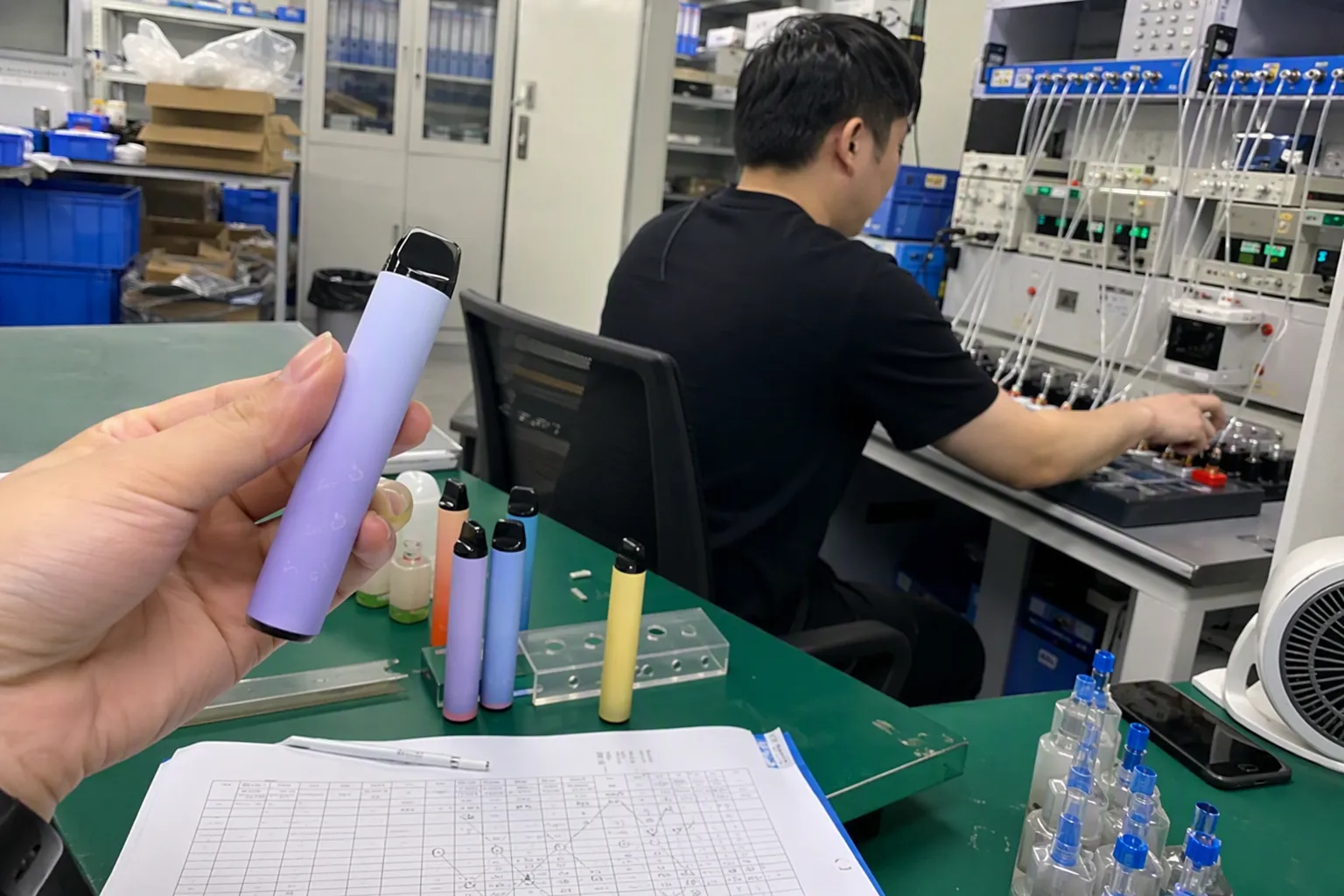
At the sample stage, buyers can focus on product design and usability:
- Is the refill port accessible?
- Is the filling process understandable?
- Does the cap or plug feel stable?
- Are the seal contact areas visibly clean and aligned?
- Does the product appear easy to close correctly?
- Does the mechanism support the intended retail position?
This stage helps the buyer decide whether the basic design is appropriate for the target market.
Stage two: Production-level consistency review
Before a larger order, buyers should discuss how the supplier manages consistency:
| Buyer question | Why it matters |
|---|---|
| What critical parts affect refill sealing? | It identifies where production variation may create risk. |
| How are those parts checked before assembly? | It shows whether the supplier has a defined control point. |
| What is checked after assembly? | It helps buyers understand final inspection coverage. |
| Have there been design iterations on the refill structure? | It reveals whether known issues were addressed. |
| Can the supplier provide production samples or pre-shipment samples? | It gives buyers another checkpoint before stock is released. |
| How are complaints handled if a batch issue is identified? | It clarifies downstream support expectations. |
A supplier does not need to disclose every internal manufacturing detail for a buyer to receive a useful answer. However, the supplier should be able to explain the key quality-control logic in a transparent way.
For larger importers and distributors, I recommend documenting the agreed sample version, material details where relevant, packaging expectations, and inspection points. This creates a clearer reference if the buyer later compares production stock against the approved sample.
Consider the commercial cost of retailer explanations and returns
A vape refill mechanism affects more than the product itself. It can affect staff training, retail confidence, return rates, and the time required to manage complaints.
For a wholesaler, a low-margin product can become unprofitable if staff must repeatedly answer questions such as:
- “How do I open this refill port?”
- “Why is there liquid around the cap?”
- “Should I fill it to the top?”
- “Why is the device gurgling after filling?”
- “Is this product faulty?”
- “Can I return this unit?”
Not every question means there is a manufacturing defect. Some issues can result from incorrect filling, unsuitable liquid, overfilling, poor closure, storage conditions, or normal condensation. However, the buyer still carries the commercial burden when retailers or end users are unhappy.
That is why I suggest evaluating a refillable vape through a channel-risk lens. Ask which design creates the lowest practical support burden for your own route to market.
A small UK distributor supplying independent vape shops may prioritise:
- Easy staff explanation
- Straightforward filling instructions
- Low minimum order risk
- Faster replenishment
- Clear after-sales communication
A larger importer supplying national retail channels may place more emphasis on:
- Batch consistency
- Packaging and instruction review
- Documentation control
- Pre-shipment inspection standards
- Agreed complaint-handling procedures
- Stable supply planning
The right vape refill mechanism can differ between these business models. The best commercial choice is the one that supports the buyer’s channel, price point, customer knowledge level, and after-sales capability.
Build a practical supplier evaluation checklist
I recommend using a written checklist rather than relying on a sales conversation alone. A checklist makes it easier to compare several products or suppliers using the same criteria.
Vape refill mechanism sourcing checklist
| Evaluation point | What to verify | Buyer benefit |
|---|---|---|
| Refill-port location | Access, visibility, filling angle, user reach | Fewer retailer questions |
| Opening method | Plug, cap, slider, or other mechanism | Better usability comparison |
| Seal interface | Contact surfaces, closure feel, repeated positioning | Better leakage-risk assessment |
| Repeated use | Open, fill, close, and store samples repeatedly | Identifies obvious durability concerns |
| Airflow interaction | Relationship between airflow, tank, and refill operation | More complete product understanding |
| Assembly consistency | Supplier explanation of critical fit and inspection points | Reduces batch-risk uncertainty |
| Packaging instructions | Clear filling, closing, storage, and warning information | Supports retailer communication |
| Sample approval | Version control and documented approval | Helps avoid specification confusion |
| Complaint process | Defined communication and after-sales procedure | Protects channel relationships |
| Compliance review | Current UK rules and product-specific documentation | Supports responsible procurement |
For UK market decisions, buyers should also verify current regulatory obligations independently using official sources and product-specific documents. Refill design alone does not determine whether a product meets UK requirements. Product capacity, nicotine content, packaging, labelling, notifications, safety expectations, and other factors may be relevant depending on the product category and route to market.
I always recommend that importers and distributors obtain qualified professional advice for application-specific compliance, legal, customs, and product-safety decisions. A supplier’s statement should not replace the buyer’s own verification process.
Choose the mechanism that protects your margin
The most impressive refill design is not always the best choice for a wholesale business. A complicated mechanism may look innovative but create more training requirements. A very simple design may be easier to explain but may require closer review of sealing and assembly control.
The commercial goal is not to find a refill mechanism with the strongest marketing name. The goal is to source a product that supports predictable sales, manageable after-sales service, and retailer confidence.
When I work through refill-structure evaluation, I focus on the questions that matter after the shipment has arrived:
- Will the product be easy for retailers to demonstrate?
- Will the closure remain understandable after repeated use?
- Does the mechanism appear suitable for the intended customer?
- Has the supplier explained the structural risk points honestly?
- Can the buyer compare the approved sample with production stock?
- Is there a clear process if quality concerns appear?
- Does the product fit the buyer’s compliance and documentation process?
A vape refill mechanism should be treated as part of the buyer’s broader supplier-selection decision. The structure, quality-control approach, product instructions, and after-sales plan all work together. When these elements are evaluated early, UK importers and distributors can reduce avoidable surprises later.
Frequently Asked Questions
What is the most reliable vape refill mechanism?
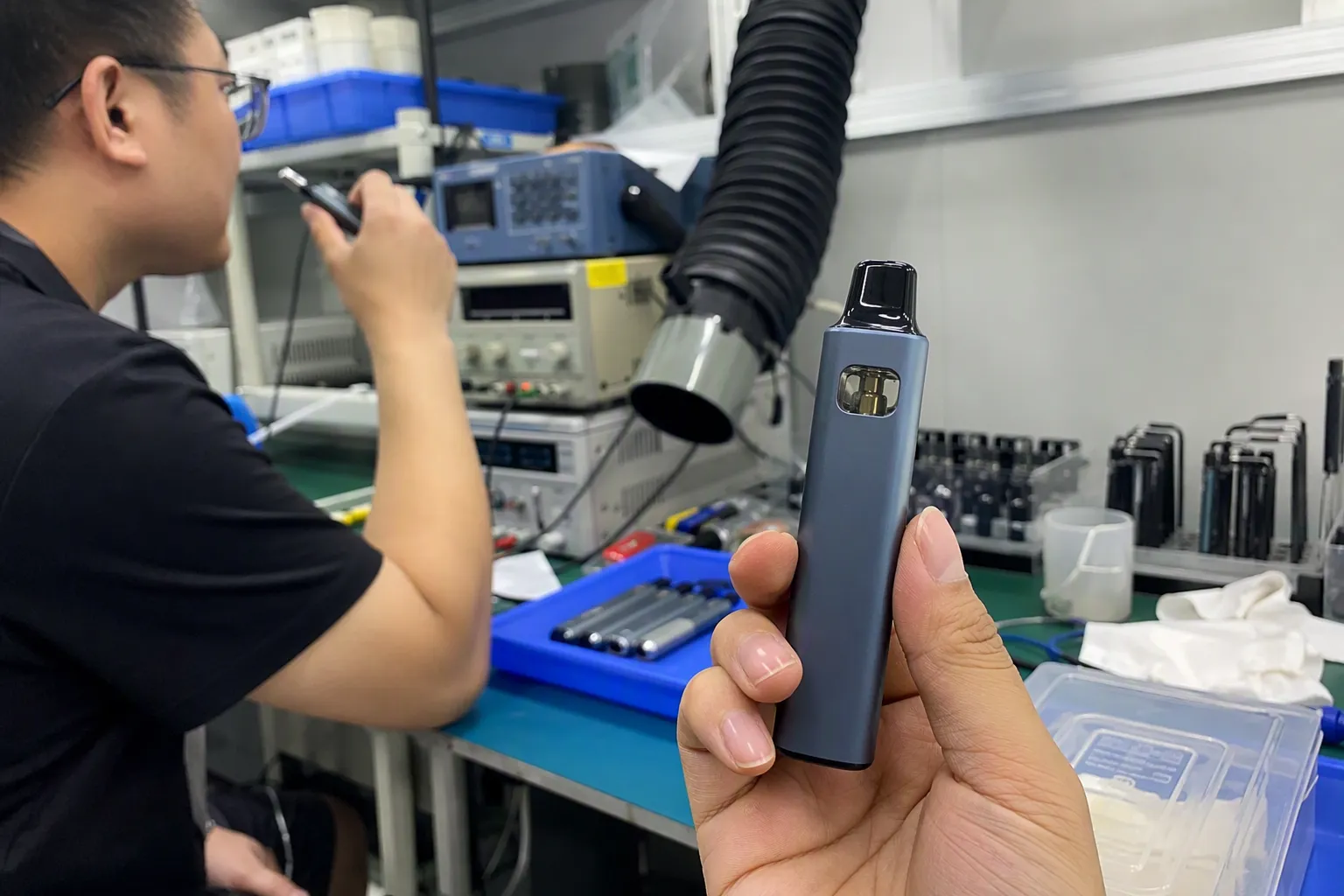
There is no single vape refill mechanism that is universally the most reliable. Port location and cap style alone do not decide performance. Buyers should assess the seal interface, airflow design, tank structure, repeated-use behaviour, assembly consistency, and the supplier’s quality-control process.
Should I choose a top-fill or side-fill refillable vape?
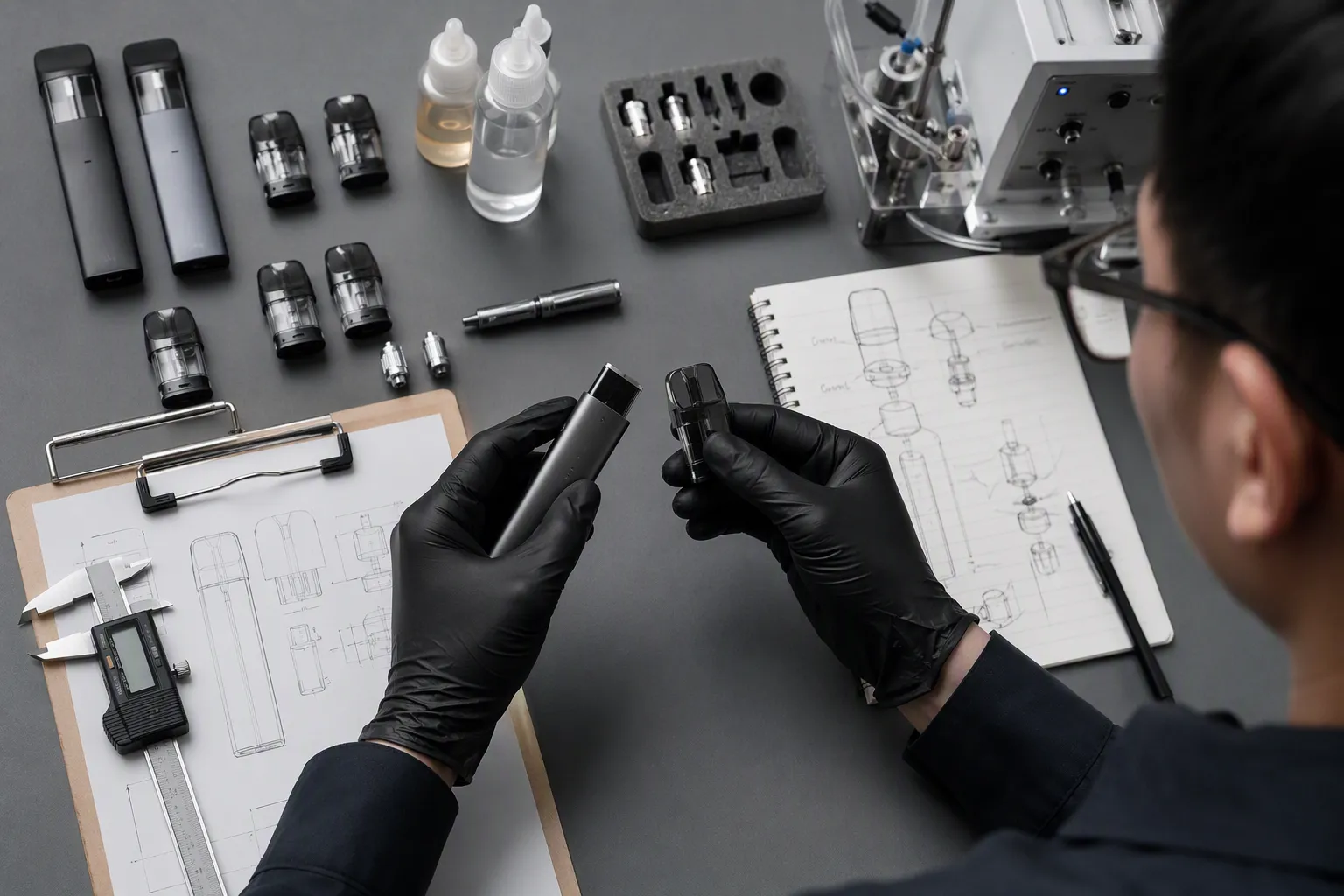
I recommend comparing top-fill and side-fill products based on the complete design rather than the port position alone. A top-fill system may be convenient for some users, while a side-fill system may suit another structure. Buyers should test access, closure, repeated use, and likely retailer support needs.
How can UK wholesalers reduce vape leakage complaints?
UK wholesalers can reduce avoidable complaints by approving samples carefully, testing repeated filling and closure, reviewing instructions, asking suppliers about production controls, and setting clear after-sales procedures. Buyers should also distinguish between possible manufacturing issues, normal condensation, storage conditions, and incorrect filling behaviour.
Does a refill mechanism determine UK vape compliance?
No. A vape refill mechanism does not independently determine UK compliance. Buyers should verify current official requirements and product-specific documentation covering the relevant product category, packaging, labelling, capacity, nicotine-related rules where applicable, notifications, and other obligations before placing products on the market.
What should I ask a vape supplier before placing a larger order?
Buyers should ask about seal design, repeated-use testing, assembly control points, product iteration, approved sample version, production inspection, packaging instructions, complaint handling, and available product documentation. These questions help buyers assess both product suitability and supplier transparency.
Conclusion
A vape refill mechanism is not just a feature for filling e-liquid. For UK importers, wholesalers, and distributors, it is a potential source of leakage claims, retailer questions, returns, and reputation risk. I recommend evaluating the full system: sealing surfaces, airflow interaction, repeated-use performance, assembly consistency, instructions, and supplier quality controls. If you are sourcing refillable vape products for the UK market, contact our team to discuss sample evaluation, OEM/ODM requirements, production planning, and practical supplier-selection support.
Sources
- Reducing the Costs of Poor Quality: A Manufacturing Case ...", Product returns and quality-related customer-service activity can generate direct handling costs and reduce retail profitability, particularly where defect rates or support demand are persistent
- Extended Digital Thread", Reliability engineering distinguishes an initial functional test from evidence of performance over intended use conditions, including repeated operation and relevant environmental exposure
- Analysis of O-Ring Seal Failure under Static Conditions ... - PMC", Elastomeric sealing performance depends on maintaining adequate contact pressure and geometry; cyclic deformation, wear, or compression set can reduce sealing effectiveness and increase leakage susceptibility
- NIST Handbook 105-3 Specifications and Tolerances for", Leakage in sealed fluid systems is commonly treated as a systems-level failure mode involving interactions among sealing interfaces, manufacturing variation, operating pressure, environmental conditions, and use
- 49 CFR Part 173 -- Shippers—General Requirements for ...", Transport distribution can expose liquid-containing packages to vibration and environmental changes that may stress closure systems and increase the likelihood of leakage where sealing robustness is inadequate
- Smart Manufacturing Operations Planning and Control ...", Reliability and quality assurance are evaluated against specified conditions and sampling plans; they do not ordinarily establish failure-free performance across every possible use condition and production variation
- What is Fluid Mechanics?", In a partially filled enclosed container, filling operations, gas displacement, and temperature changes can alter the pressure of the headspace and affect fluid movement through available channels
- 6.2.1. What is Acceptance Sampling?", Sampling inspection provides evidence about production quality within defined confidence and acceptance limits, but it cannot guarantee that all units in a production run are identical to an approved sample