Quick Answer
Hero and Supporting Products can determine whether a vape shop assortment feels useful or becomes a collection of slow-moving SKUs. Many buyers focus on the headline device, disposable vape, or vaporizer, but that choice alone does not solve the customer’s complete task. I help buyers connect the main product with compatible accessories, alternatives, service planning, and a safer replenishment model.
Hero and Supporting Products work together when the Hero product attracts attention and the Supporting products help customers use, replace, compare, or continue buying from that category. A practical assortment connects devices with compatible accessories, consumables, alternatives, and service planning.[1] Buyers should also evaluate quality records, after-sales handling, delivery time, customs exposure, MOQ, and cash-flow risk before placing an order.
A balanced assortment is therefore more than a product list. I look at the customer’s task first, then the role of every related SKU. This approach helps a small vape shop test a category with less exposure[2], while it gives a wholesaler or importer a clearer basis for volume purchasing, private label development, and replenishment planning.
How Can Hero Supporting Products Work Together in a Vape Shop?
A Hero product usually creates the main reason for a customer to ask about a category. Supporting products make that category easier to use, compare, maintain, replace, and reorder. I recommend that buyers define the commercial role of each Supporting product before they add it to the assortment.
A Hero product may be a disposable vape, a rechargeable device, a 510 battery, a vaporizer, an atomizer, or another product that receives most of the customer’s attention. Supporting products may include compatible batteries, chargers, replacement parts, glass accessories, cases, grinders, glass pipes, or alternative products. The correct combination depends on the customer task, local rules, and the shop’s operating model.
When I discuss assortment planning with importers, wholesalers, and vape shop buyers, I often start with four questions:
- What does the customer need to do with the Hero product?
- Which product helps the customer complete that task?
- Which item creates a reasonable replacement or alternative path?
- Which purchasing and service risks could affect the buyer’s cash flow?
Start with the customer’s task
A product headline can attract attention, but the customer often needs a complete use case. A person choosing a rechargeable device may also need a compatible charging solution, an appropriate replacement option, and clear usage information. A customer buying an atomizer may need compatible parts or a suitable alternative if the preferred item becomes unavailable.
I do not treat every accessory as automatically valuable. I ask whether the item solves a real problem for the end customer or the retailer. This distinction prevents a shop from buying unrelated SKUs simply because they appear in a catalogue.
| Customer task | Possible Hero product | Supporting product role | Buyer’s evaluation point |
|---|---|---|---|
| Start using a device | Disposable vape or rechargeable device | Alternative format, compatible accessory, usage information | Ease of explanation and local compliance |
| Continue using a compatible system | Device or 510 battery | Replacement, charger, atomizer, or related component | Compatibility and after-sales handling |
| Compare price or format | Main device | Entry-level or alternative product | Clear positioning without confusing customers |
| Maintain a broader smoking-accessories category | Glass pipe, grinder, or vaporizer | Related accessories and substitutes | Product condition, packaging, and replenishment |
| Respond to a shortage | Preferred product | Substitute with a similar customer task | Availability, price structure, and product differences |
I have seen why this task-based method matters in procurement conversations. Buyers often want several brands and categories in one order because they do not want to contact many suppliers, compare many invoices, or coordinate separate after-sales processes. A one-stop purchase can reduce administrative work[3], but it still requires disciplined SKU selection.
Give every Supporting product a commercial role
I normally place Supporting products into four practical roles.
1. Entry or traffic products.
These products may give customers a lower-commitment way to explore a category. The buyer should still check quality, packaging, legal requirements, and the cost of holding several price points.
2. Higher-value options.
These products may serve customers who want a different feature set, format, design, or use case. I avoid promising a margin result because the outcome depends on the market, competition, taxes, channel, and retail execution.
3. Repeat-purchase or replacement items.
These products can support continued use when the customer needs another unit, a replacement part, or a related consumable. The buyer should confirm actual compatibility and expected replacement patterns instead of assuming repeat demand.
4. Substitutes.
A substitute can reduce dependence on one product when supply becomes uncertain. It should not be presented as identical unless the technical and commercial characteristics have been properly verified.
This role-based structure is more useful than a long SKU list. It also helps a buyer decide what to test first. A small retailer may select one Hero product and a limited number of Supporting products. A larger importer may evaluate several product families, but it should still understand the purpose of each family.
Evaluate compatibility and customer explanation
Compatibility is one of the most important purchasing questions.[4] A Supporting product that does not work with the Hero product can create returns, complaints, and loss of trust.[5] I recommend that buyers confirm:
- Product model and version
- Connector or interface information
- Battery and charging requirements
- Replacement-part compatibility
- Packaging and product labeling
- Instructions supplied with the product
- Any differences between samples and production units
I also encourage buyers to prepare simple product guidance for their retail customers. The guidance should explain what the product is designed for, what it is compatible with, and what the customer should check before use. The shop team should not guess when a technical question affects safe operation or product suitability. Qualified professionals should review application-specific questions.
Treat quality control as an assortment issue
A buyer may evaluate the Hero product carefully but pay less attention to its Supporting products. That creates a weak point in the customer experience. One defective charger, incompatible component, damaged glass item, or poorly packed accessory can affect the customer’s view of the whole purchase.[6]
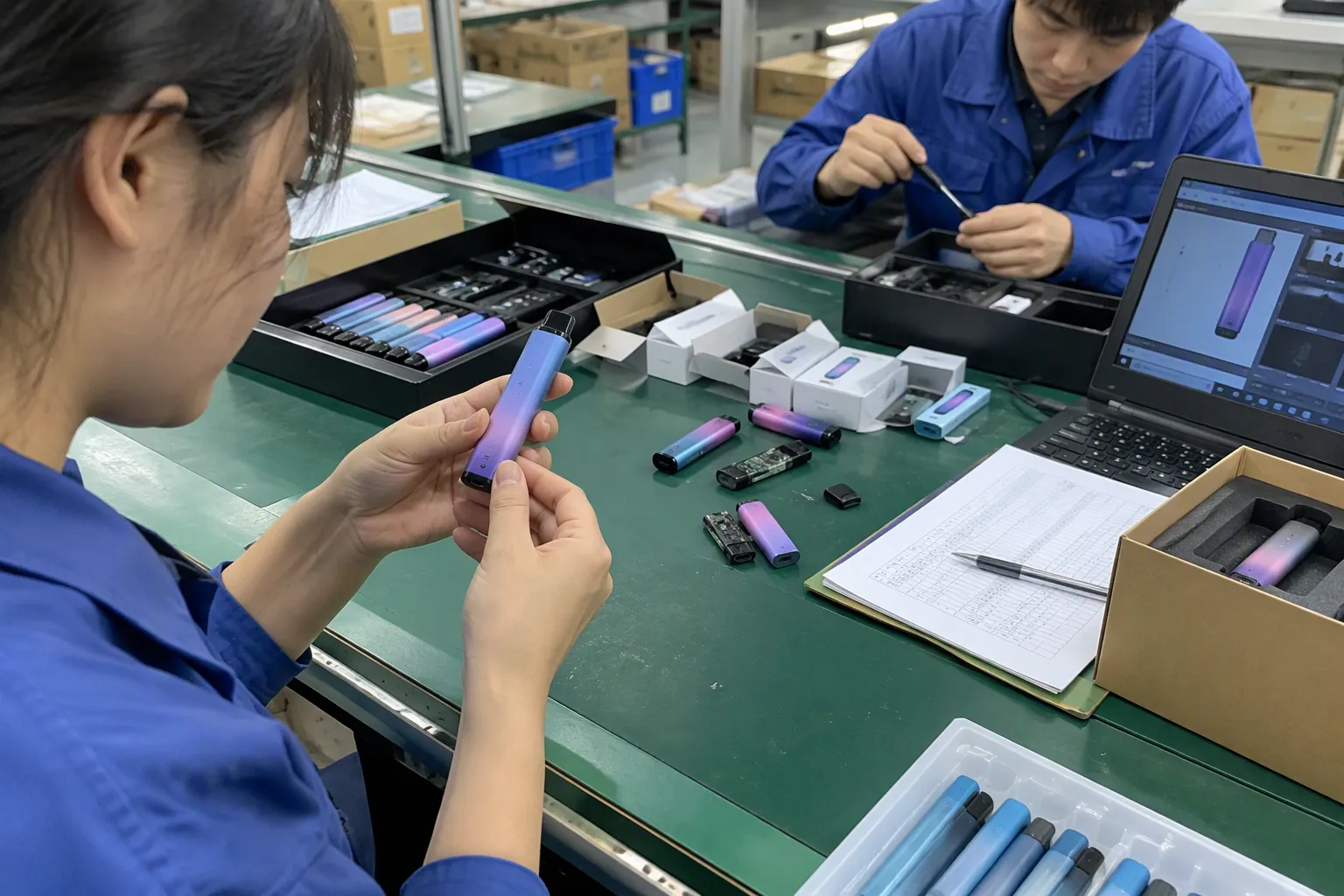
At Shenzhen Kingfuji Tech. CO., Ltd., I work from a Shenzhen-based sourcing and manufacturing context. Our company was established in 2011, operates with its own factory, and has OEM/ODM experience across electronic cigarettes and traditional smoking accessories. I present this as business context, not as a substitute for independent testing or buyer inspection.
Before a larger order, I suggest that buyers create a written quality-control checklist covering:
- Appearance and workmanship
- Functional checks appropriate to the product
- Packaging and labeling
- Quantity and model accuracy
- Carton protection
- Sample-to-production consistency
- Defect reporting and replacement procedures
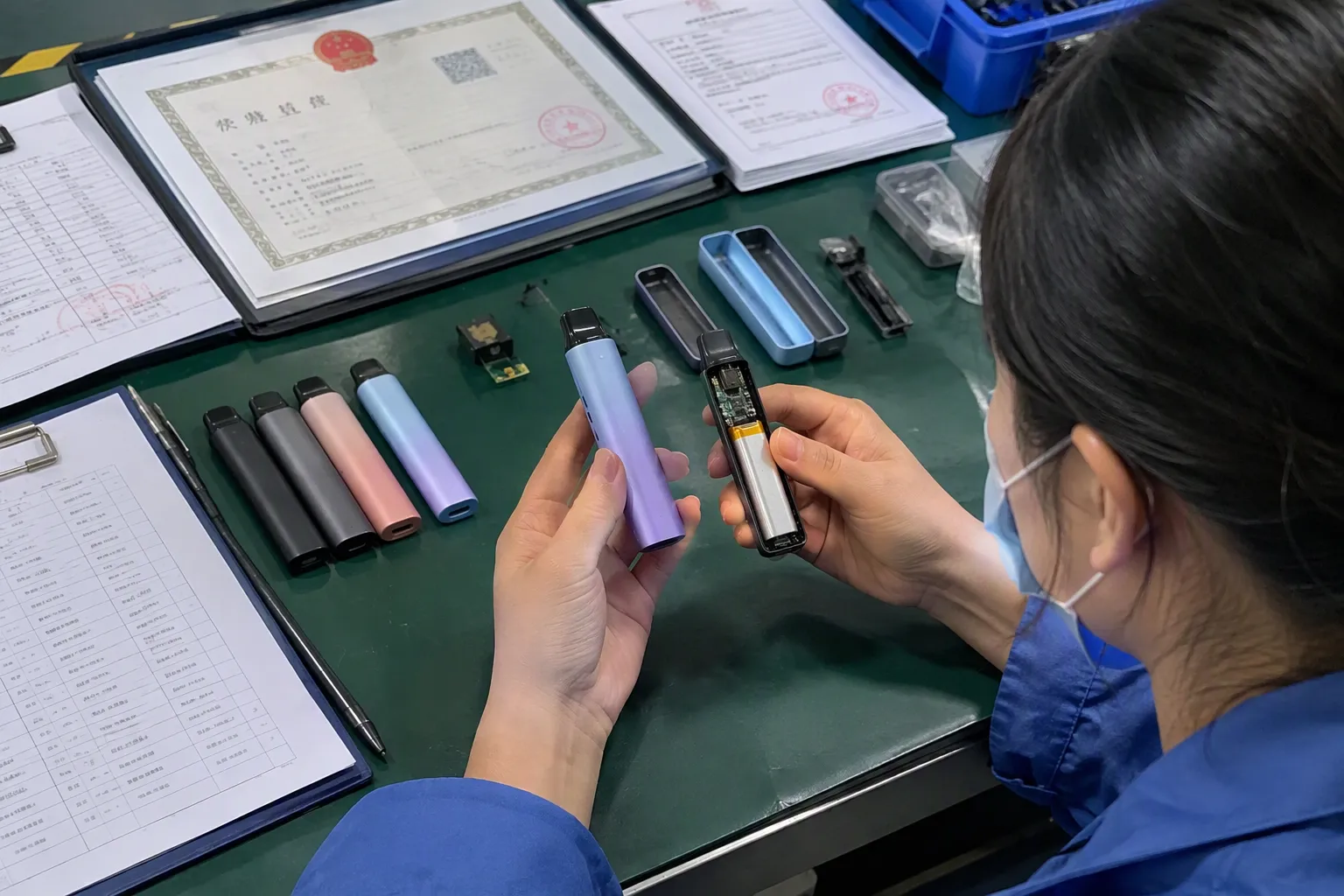
Buyers should request and verify relevant compliance documents for their destination market. A document should be checked for scope, issuer, product model, date, and applicability.[8] It should not be treated as proof of every performance or safety characteristic.
Plan for service before the order
Defects are a direct commercial concern for vape shops and wholesalers.[7] A shop can lose time handling complaints, while a wholesaler may need to support many downstream retailers. I therefore recommend that buyers agree on the after-sales process before payment.
The buyer should ask:
- Who receives the complaint?
- What evidence is required?
- How will the supplier identify the affected batch or model?
- What happens to confirmed defective products?
- Who pays the relevant replacement or handling cost?
- How quickly will the parties communicate?
- Does the process apply to every brand in a mixed order?
Our one-stop model is designed to give customers one after-sales contact for products purchased through us. I describe this as a service arrangement offered by our company, not as a guarantee that every issue disappears. Buyers should still review the written terms and keep records of order quantities, product models, inspection results, and complaint evidence.
Match the assortment to the purchasing model
The same Hero and Supporting Products strategy does not fit every buyer. A small vape shop usually has less storage space and less cash available for testing. A national importer or regional wholesaler may need container-scale purchasing, a broader brand range, and private label options.
I generally see two practical paths:
| Buyer type | Suitable starting approach | Main benefit | Main risk to control |
|---|---|---|---|
| Small shop or small wholesaler | Low-MOQ test order and fast replenishment | Lower initial inventory exposure | Higher unit cost or limited selection |
| Regional retailer | Focused assortment with selected alternatives | Easier stock and staff management | Overstock across too many categories |
| Importer or distributor | Larger China purchase after validation | Better volume planning and OEM/ODM options | Cash tied up in inventory and shipping |
| Private-label buyer | OEM/ODM development after product direction is clear | Brand differentiation | Development time, compliance, and forecast risk |
For smaller European customers, our overseas warehouses in Germany, Austria, Poland, and Belgium may provide a faster replenishment option for available products. We offer shipment through services such as DHL, DPD, UPS, and FedEx, with stated delivery expectations that can vary by destination, stock status, and carrier conditions. Buyers should confirm current availability and delivery terms before ordering. The stated low MOQ can be as little as 50 units per model for eligible warehouse stock, but this does not apply automatically to every product.
For larger buyers, direct China purchasing may provide more choice and volume flexibility. Our factory has a 5,000-square-meter operating space, a stated maximum capacity of up to 5 million units per month, and a product development rhythm of approximately 5–10 new models per month. These figures describe our stated business capability. They do not predict a buyer’s sales, inventory turnover, or project outcome.
Use one-stop purchasing without losing control
One-stop purchasing can reduce the number of supplier conversations and combine different brands, disposable vapes, atomizers, 510 batteries, CBD batteries, grinders, glass pipes, vaporizers, and related products in one purchasing process. That convenience matters to buyers who would otherwise coordinate separate quotes, payments, shipments, and warranty contacts.
However, one-stop buying should not mean one large uncontrolled order. I recommend that the buyer divide the order into clear groups:
- Hero products for the main customer task
- Supporting products with a defined role
- Test products for uncertain demand
- Replacement or service stock
- Seasonal or trend-sensitive items
- Products requiring additional compliance review
This structure makes the order easier to inspect and evaluate. It also helps the buyer decide which products to reorder and which products to stop purchasing.
Consider customs, delivery, and cash flow together
A low unit price does not always create a low procurement cost. Delivery delays, customs exposure, damaged cartons, and slow-moving inventory can have a larger effect on the buyer’s working capital. I have discussed these concerns with buyers who want fast-moving products but also need to avoid tying up cash in uncertain stock.
A buyer should compare the complete purchasing picture:
- Product cost
- Packaging and inspection cost
- Freight and delivery cost
- Import duties and local taxes
- Customs and documentation requirements
- Expected lead time
- Minimum order quantity
- Storage cost
- Defect and replacement process
- Cash tied up before the products are sold
Direct shipping from China can suit larger planned purchases, but the buyer should allow for production, consolidation, transit, and customs variables. Overseas-warehouse purchasing can suit smaller, faster tests when the required stock is already available. Neither model removes the buyer’s responsibility to check local import, product, advertising, age-control, and other applicable requirements.
Expand to OEM/ODM only after learning from the assortment
OEM/ODM can become a logical next step for an importer or wholesaler that understands its customer group and has a clear product direction. It can allow a buyer to develop a product with its own branding, packaging, or selected specifications. It can also introduce additional development, documentation, quality-control, and forecast responsibilities.
I do not recommend starting with a large private-label project simply because a product looks popular. The buyer should first clarify:
- Target market and permitted product category
- Customer task and expected use case
- Product specifications
- Packaging and labeling requirements
- Forecast volume
- Target launch timing
- Sample approval process
- Production quality standard
- After-sales responsibility
- Destination-market documentation
Our team can help source products that are not already in a catalogue and can discuss mold development when the project conditions are suitable. I still ask the buyer to validate demand, legal requirements, technical details, and financial exposure before approving development.
What I would check before finalizing an assortment
I use a simple decision sequence when I help a buyer review a new assortment:
-
Define the Hero product.
I identify the main customer task and the reason the product belongs in the shop. -
Add only necessary Supporting products.
I connect each item to use, replacement, comparison, replenishment, or supply continuity. -
Check compatibility and documents.
I request the relevant specifications, samples, labels, and compliance records for review. -
Choose a test quantity.
I match MOQ and order size to the buyer’s storage, cash flow, and ability to sell the products. -
Confirm logistics.
I compare direct China shipment with available overseas stock and the buyer’s own freight arrangements. -
Agree on after-sales.
I make the complaint and replacement process clear before payment. -
Review results without overclaiming.
I ask which products moved, which caused questions, and which created service work. I use those observations to improve the next order.
This process keeps the assortment connected to the buyer’s actual business. It also gives small and large customers different ways to manage risk.
Frequently Asked Questions
What is a Hero product in a vape shop assortment?
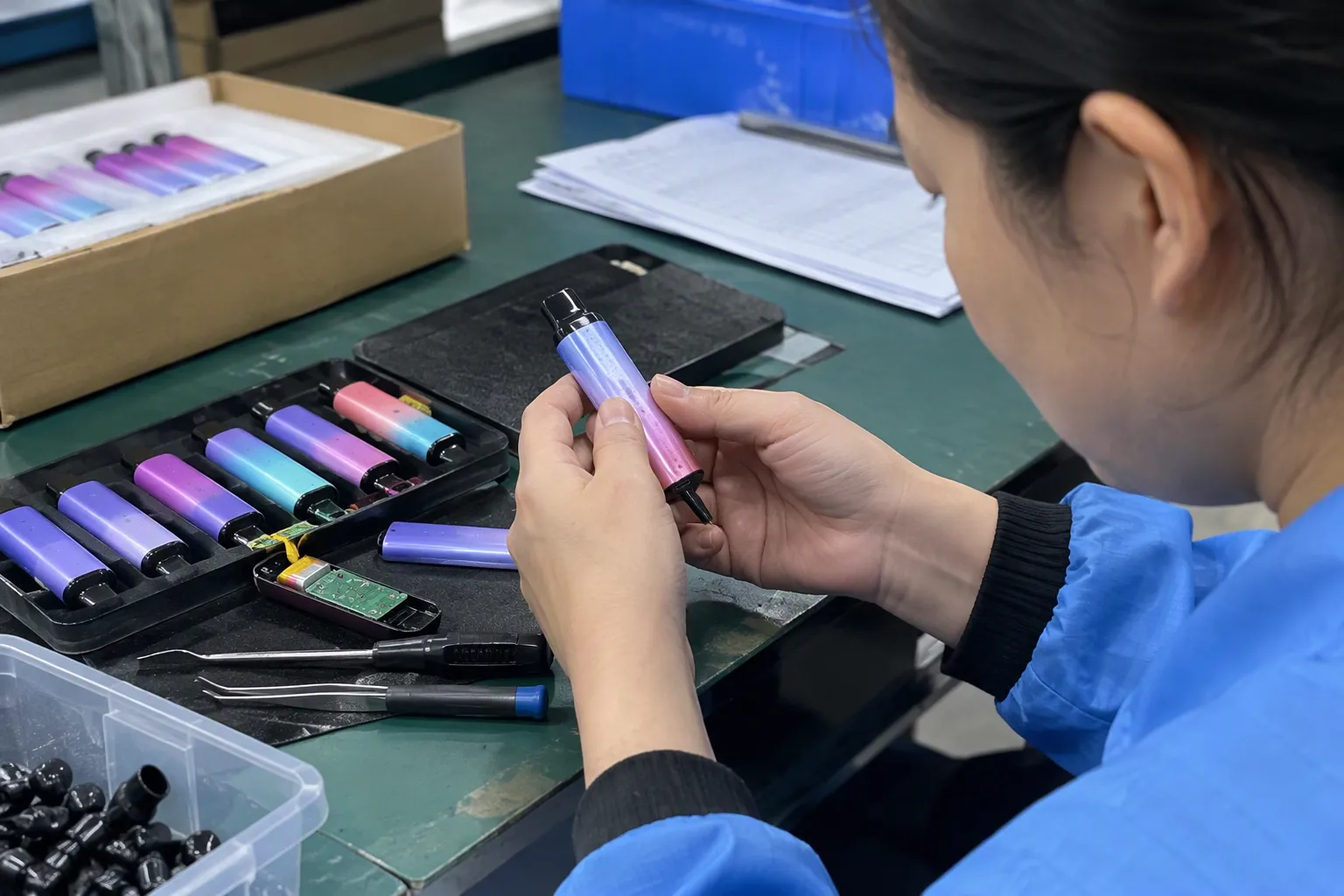
A Hero product is the main product that attracts attention or organizes a category. It may be a disposable vape, rechargeable device, 510 battery, atomizer, vaporizer, or another core item. The term does not mean guaranteed sales. The buyer should define its role according to customer demand, compliance, supply, and store strategy.
What are Supporting products in a vape shop?
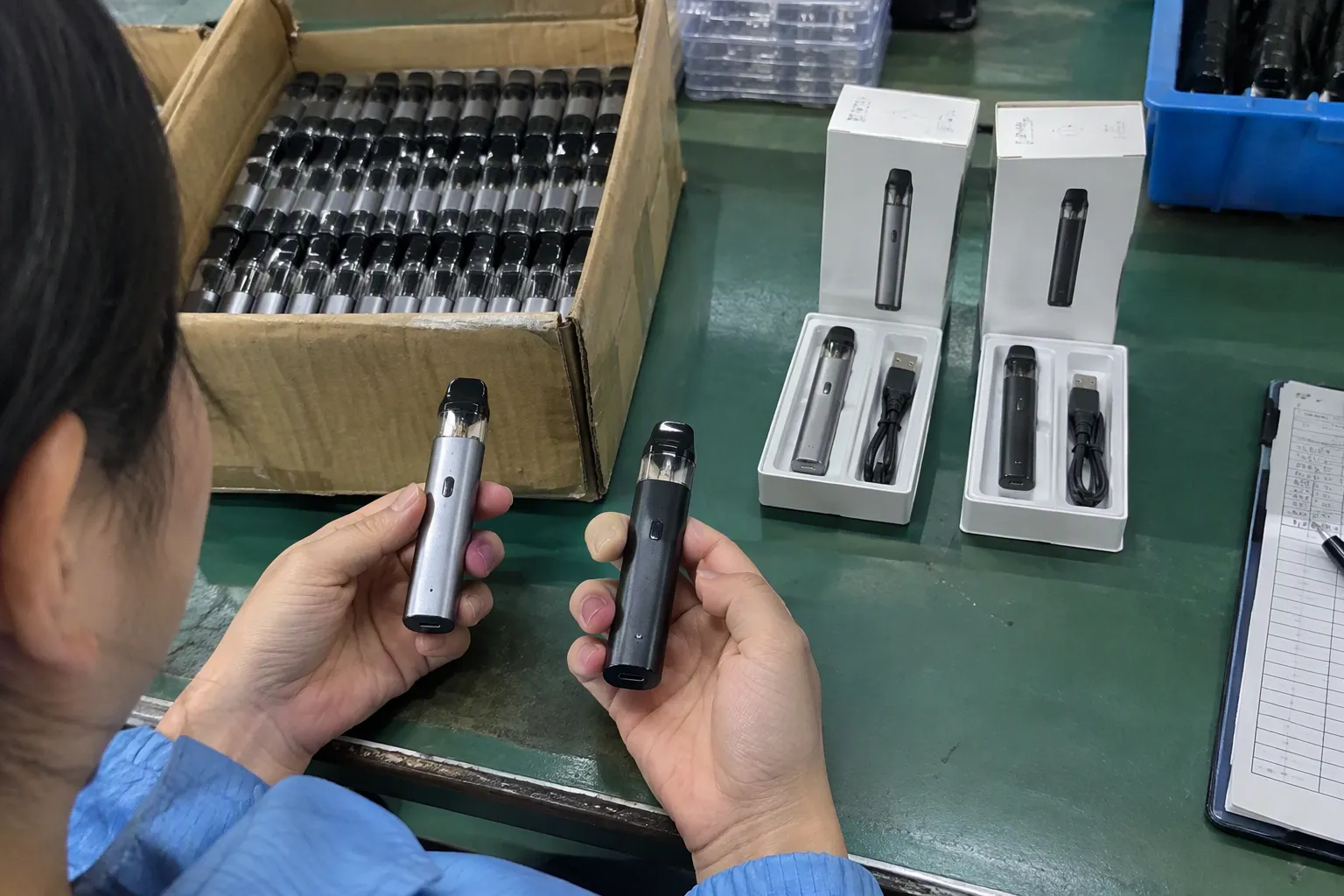
Supporting products are items that help customers use, replace, compare, or continue buying within a product category. They may include compatible accessories, replacement parts, alternative formats, or related smoking accessories. Each Supporting product should have a clear customer or operational purpose before the buyer adds it to stock.
Should a small vape shop buy directly from China?
A small vape shop should compare direct China purchasing with local or overseas-warehouse supply. A lower MOQ, available stock, and faster delivery may reduce initial inventory exposure, while direct importing may offer broader choice at larger volumes. The buyer should also review customs, local compliance, cash flow, and after-sales obligations.
When should a wholesaler consider OEM/ODM?
A wholesaler should consider OEM/ODM after it has a clear product direction, target market, forecast, and compliance plan. Private-label development can support differentiation, but it also requires sample approval, packaging review, production control, documentation, and after-sales planning. A qualified professional should review application-specific and destination-market requirements.
How can a buyer reduce after-sales problems in a mixed-brand order?
The buyer can reduce confusion by recording each product model, agreeing on inspection requirements, checking compatibility, and confirming one clear complaint process before payment. A supplier that coordinates multiple brands may simplify communication, but the buyer should still review written service terms and maintain complete order and defect records.
Conclusion
Hero and Supporting Products should be planned as one commercial system rather than as unrelated SKUs. I help buyers connect the main product with useful accessories, alternatives, replacements, quality checks, delivery planning, and after-sales control. Smaller shops can consider eligible low-MOQ overseas-warehouse stock, while larger importers and wholesalers can evaluate direct China purchasing and OEM/ODM after validating the product direction. For a practical assortment review, contact Kingfuji Tech. at info@kingvapecig.com or +86 13928420527.
Sources
- Retail Assortment Planning in the Presence of Consumer ...", Research on retail assortment planning supports evaluating products as related items within a category rather than as isolated stock-keeping units, particularly when complementary products contribute to the customer’s purchase task
- Successful Inventory Management Strategies in the Office ...", Studies of inventory management under uncertain demand describe staged purchasing and limited initial commitments as mechanisms for reducing the amount of capital exposed before demand is observed
- Transaction Cost Theory: Past Progress, Current ...", Procurement research identifies supplier consolidation as a potential way to reduce duplicated coordination, ordering, and transaction activities when the consolidated supplier can meet the required specifications
- Battery Safety", Government safety guidance on rechargeable electrical products treats compatibility between devices, batteries, chargers, and connectors as relevant to correct operation and risk control
- Recover From Failure: Examining the Impact of Service ... - PMC", Service-failure research indicates that products that fail to meet expected functional requirements can increase complaint and return behavior and can negatively affect customer evaluations of the seller
- Consumers blame both manufacturer and retailer when ...", Research on service and product-attribute spillover finds that salient failures in one part of an offering can influence customers’ evaluations of the wider purchase or provider
- ESSAYS ON PRODUCT RETURNS IN A CLOSED-LOOP ...", Quality-management and reverse-logistics literature documents that defective products can generate return handling, replacement, inspection, communication, and inventory costs for sellers and distribution partners
- Certificates of Compliance", Official product-compliance guidance requires conformity documentation to correspond to the relevant product, applicable requirements, responsible issuer, and period of validity or applicability