Quick Answer
Vape distribution rights can affect whether I can legally and commercially resell a brand, yet many buyers confuse product supply with authorization. If I only check price, stock, or a supplier’s factory relationship, I may pay for rights that do not cover my country, sales channel, or business model. I reduce this risk by checking the authorization chain, scope, validity, and independent confirmation before payment.
To verify vape distribution rights, I should confirm who owns or controls the brand, whether the supplier is authorized to appoint distributors, and whether the written authorization covers my products, territory, channels, and contract period. I should also contact the brand owner through an independently sourced official channel. A supplier’s inventory, invoice, factory relationship, or agency claim alone does not prove that it can grant distribution rights.
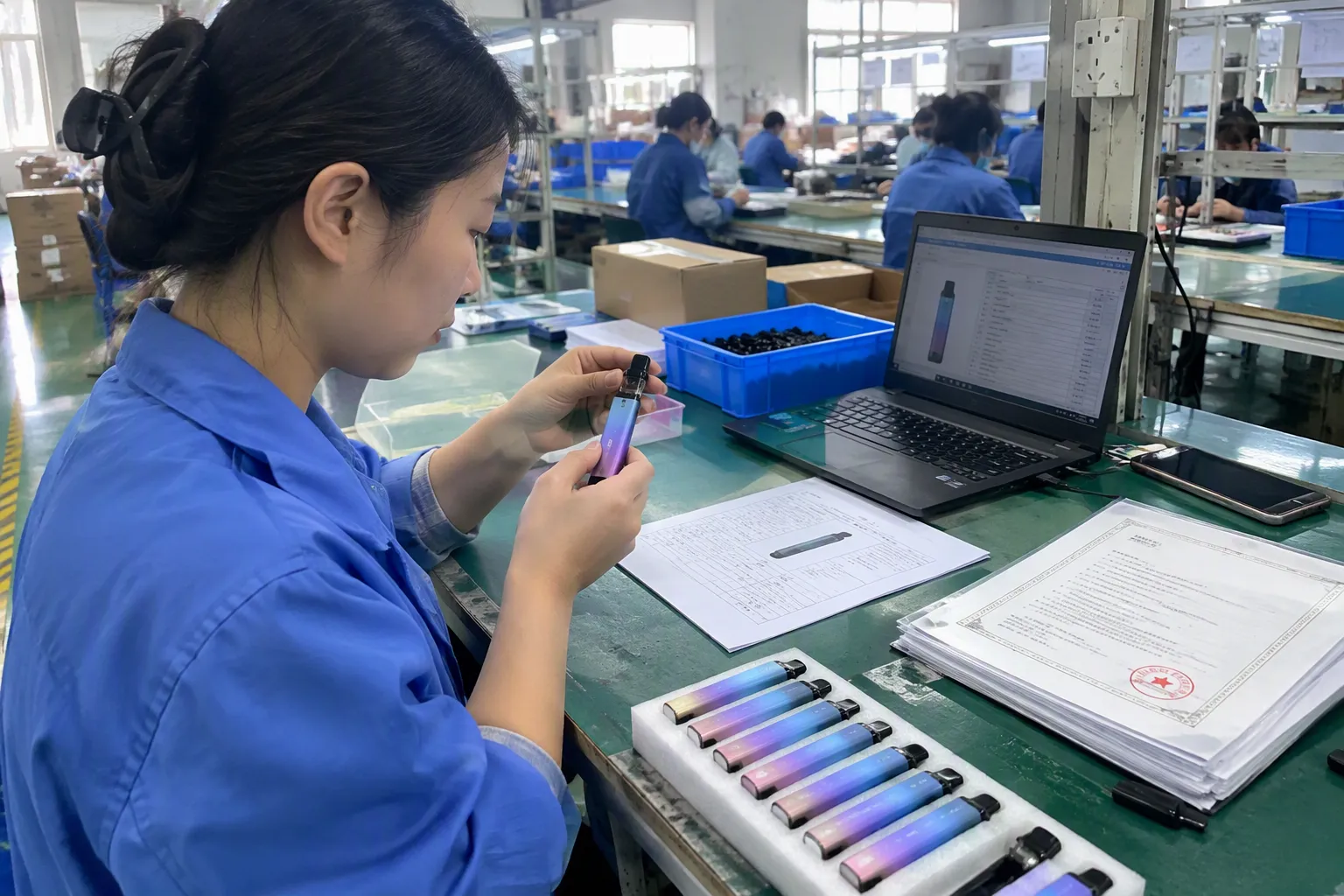
I have handled buyer questions about brand supply qualifications, agency relationships, and distribution negotiations for many years. In my experience, the most important question is not simply, “Can this supplier sell me the products?” The better question is, “Can this supplier authorize the exact business activity I plan to conduct?”
That difference matters to European and American vape shops, smoke shops, convenience stores, regional wholesalers, and larger importers. Each buyer may need a different level of commercial permission. I explain the verification process below so that buyers can compare suppliers more carefully before they place a deposit or build a market around a brand.
How Do I Verify That a Supplier Can Actually Grant Vape Distribution Rights?
A supplier can usually grant vape distribution rights only when the supplier has documented authority from the brand owner or another properly authorized entity[1] to appoint distributors in a defined territory and through defined sales channels. I verify the authorization chain, written scope, validity period, and independent confirmation before treating the offer as reliable.

I Start by Separating Supply Rights From Distribution Rights
A supplier may have products in stock, issue commercial invoices, or purchase directly from a factory. Those facts can show that the supplier has a supply relationship. They do not automatically show that the supplier can grant vape distribution rights.
I use the following distinction:
| Commercial relationship | What it may allow | What it does not automatically prove |
|---|---|---|
| Retail supplier | Selling products to a shop or reseller | The right to appoint other distributors |
| Wholesaler | Reselling products in a trade channel | Territory protection or brand representation |
| Factory customer | Purchasing products from a manufacturer | Control of trademarks or distribution policy |
| First-level agent | Purchasing through a direct brand or factory relationship | Authority to grant exclusive regional rights |
| Authorized distributor | Reselling within a defined scope | Authority to expand the scope beyond the document |
| Brand owner or appointed rights holder | Granting defined commercial permissions | That every product, country, or channel is covered |
I have seen buyers focus on a supplier’s attractive price or warehouse stock because those details feel practical. They are practical, but they answer a different question. They show that the supplier may be able to deliver products. They do not answer whether the supplier can authorize my resale model.
I Check Who Is Actually Authorizing the Rights
I ask the supplier to identify the entity that owns the brand or controls the relevant commercial rights. The authorizing entity might be a brand owner, manufacturer, trademark holder, or another company with documented authority. I do not assume that the factory producing a product automatically owns every brand sold on that product.
I compare the names on:
- The brand website or official business information
- The proposed authorization letter
- The supplier’s business license or company information
- The product packaging and trademark details
- The sales contract or distribution agreement
- The commercial invoice, where relevant
A name mismatch does not automatically mean that the offer is invalid. Companies may use different operating entities, regional subsidiaries, or authorized trading companies. However, I ask the supplier to explain the relationship and provide supporting documents. I treat an unclear chain as an unresolved commercial risk.
I also remember that an authorization letter can look professional without granting useful rights. A logo, stamp, signature, or formal layout may support authenticity, but the wording and issuing authority matter more than appearance.[2]
I Treat Distribution Rights as a Defined Business Scope
I do not accept vague phrases such as “global distributor,” “exclusive partner,” or “official agent” without asking what those phrases mean in the written agreement. A useful authorization should define the business scope in terms that I can compare with my actual sales plan.[3]
At minimum, I look for:
-
Authorizing entity
The document should identify the company granting the rights. -
Authorized company
The document should identify the supplier or distributor receiving the authority. -
Brand and product range
The document should specify the brand, product families, models, or SKU range. -
Territory
The document should state whether the rights cover one country, several countries, a region, or a global market. -
Sales channels
The document should clarify wholesale, retail, online sales, physical stores, marketplaces, trade shows, or other channels. -
Term and validity period
I check the start date, end date, renewal process, and conditions for termination. -
Exclusive or non-exclusive status
I ask whether other distributors, wholesalers, or agents can sell in the same territory.[5] -
Appointment authority
I check whether the supplier may appoint sub-distributors, retailers, or regional partners. -
Brand-use permission
If I plan to use logos, product images, advertising material, or brand names, I ask whether those uses are permitted. -
Performance conditions
Some arrangements require minimum purchases, marketing activity, payment terms, or other conditions before rights become active.
This list helps me avoid a common misunderstanding. A supplier may be authorized to distribute a product in one country but not another.[4] It may be allowed to sell to wholesalers but not to appoint an exclusive regional distributor. It may be able to supply a product but have no permission for online marketplace sales.
I Match the Authorization to My Business Model
A small European retailer and a large American importer may both ask about distribution rights, but they may not need the same permission.
A vape shop might need to confirm that it can purchase and resell a particular product in its local market. A regional wholesaler may need permission to supply multiple stores. A larger importer may need broader territory, brand-support obligations, online sales rights, and the ability to appoint sub-distributors.
I write down my intended activity before I negotiate. My questions may include:
- Which country will receive the products?
- Will I sell to shops, wholesalers, or end users?
- Will I sell online?
- Will I use the brand’s name in advertising?
- Will I import directly or purchase from a local warehouse?
- Will I supply other businesses outside my home country?
- Do I need exclusivity?
- Do I need permission to appoint local resellers?
- Will I purchase one product line or several product families?
When I compare the answers with the authorization document, I can see whether the proposed rights are commercially useful. This is more valuable than simply asking whether the supplier is “authorized.”
I Use Independent Verification Before Payment
I do not rely only on a document forwarded by the supplier. I ask the brand owner or authorizing entity to confirm the relationship through an official contact channel that I locate independently.
For example, I may use:
- The contact address published on the brand’s official website
- A verified company telephone number
- An official business email with a matching domain
- A known trade representative whose contact details I confirm separately
- A direct meeting with the brand owner or authorized management team
I avoid treating a forwarded email, screenshot, messaging-app statement, or product photo as independent confirmation. Those materials may be useful during a preliminary conversation, but I want the authorizing party to confirm the important points directly.
I ask the confirming party to verify:
- Whether the supplier is currently authorized
- Which products are included
- Which territories are included
- Which sales channels are included
- Whether the supplier can appoint distributors
- Whether the proposed rights are exclusive or non-exclusive
- Whether the authorization is still valid
I keep a written record of the confirmation. I also compare the confirmation with the proposed contract. If the brand owner confirms only non-exclusive supply rights but the supplier promises countrywide exclusivity, I stop and ask for clarification before proceeding.
I Check Whether the Rights Are Current
Authorization is not always permanent. A supplier may have held rights in the past but no longer hold them. A brand may change its distribution structure, appoint a new partner, or limit a previous territory.
I check the date and renewal conditions. I ask whether the rights continue after the proposed purchase, whether they depend on minimum order quantities, and whether they can be terminated without notice.
I also ask what happens if the supplier’s relationship with the brand ends. A distribution agreement should explain, where appropriate, whether I can sell existing stock, continue using brand materials, or receive support for open orders. I do not assume that my rights automatically survive a change in the supplier’s authorization.
I Review Exclusivity Carefully
Exclusivity is one of the most misunderstood parts of vape distribution rights. A supplier may use “exclusive” to describe an internal sales arrangement, while I may understand it as protection from all competing sellers in a country.
I ask:
- Is the exclusivity granted by the brand owner or only promised by the supplier?
- Does it cover the entire country or a limited region?
- Does it cover online sales?
- Does it cover marketplaces and social-commerce channels?
- Are existing accounts protected?
- Can the brand sell directly to major customers?
- Can another authorized importer sell a different product range?
- Does exclusivity depend on monthly or annual purchase targets?
I prefer precise language over marketing terms. If the contract does not explain what the supplier cannot permit other parties to do, the word “exclusive” may not give me meaningful protection.
I also recognize that exclusivity does not solve every business problem. It cannot guarantee customer demand, prevent all parallel imports[6], or replace local review of trademark, import, product, and sales requirements. I ask a qualified professional to review important exclusivity arrangements, especially when I plan a large investment.
I Separate Brand Authorization From Product Compliance
Even valid distribution rights do not automatically prove that a product is suitable for every market. Authorization concerns the commercial relationship. Product compliance may involve separate questions about labeling, ingredients, packaging, age restrictions, advertising, import procedures, taxes, and local sales rules.[7]
I do not tell buyers that authorization verification eliminates customs or regulatory risk. It does not. I treat these as separate workstreams:
| Verification area | Main question |
|---|---|
| Brand authority | Can this party grant the proposed commercial rights? |
| Contract scope | Does the agreement cover my territory and channels? |
| Product quality | Does the product meet the agreed specification? |
| Local compliance | Can I legally import, market, and sell the product? |
| Logistics | Can the supplier deliver through my preferred route? |
| After-sales support | Who handles defects, shortages, and claims? |
| Commercial viability | Can I sell the product at a sustainable margin? |
I recommend current local-law and professional review for country-specific vaping, trademark, import, tax, and sales questions. I do not use a supplier’s general statement about compliance as a substitute for an importer’s own obligations.[8]
I Ask How the Supplier Will Support the Relationship
A buyer needs more than a document. I ask how the supplier will support the territory and channel after payment. The answer may include product updates, order handling, after-sales service, marketing materials, and communication with the brand owner.
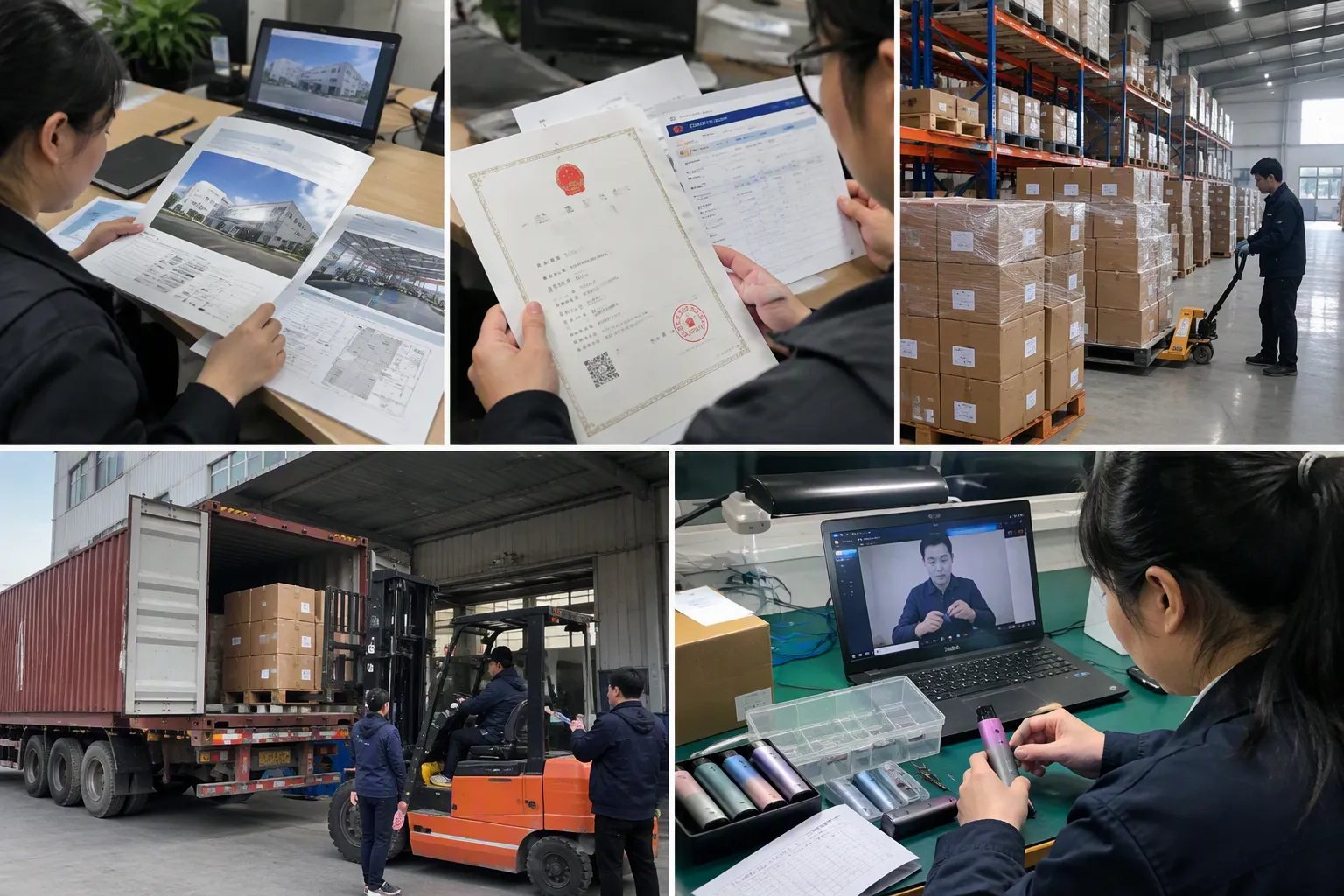
At Shenzhen Kingfuji Tech. CO., Ltd., I work with buyers who want a single purchasing contact for electronic cigarettes, disposable vapes, atomizers, 510 batteries, CBD batteries, vaporizers, grinders, glass pipes, and other related products. Since our company was established in Shenzhen in 2011, I have handled questions about agency levels, factory relationships, and brand supply qualifications.
Our business includes brand agency and one-stop supply, as well as our own factory and OEM/ODM development capability. We maintain a 5,000-square-meter factory and continue to introduce approximately 5–10 new products each month according to the business information supplied to me. Our stated maximum production capacity is up to 5 million units per month. These facts describe our supply and manufacturing capabilities; they do not mean that every product automatically carries the same distribution authority.
When a buyer asks about a specific brand, I explain the relationship instead of using one general claim for every product. I identify whether the product comes through a brand agency, a factory supply relationship, a first-level agency arrangement, or an OEM/ODM project. I encourage the buyer to verify the exact commercial rights in writing.
I Choose the Supply Route That Fits My Order Size
I also match logistics and purchasing structure to my business size. A small or medium European buyer may prefer stock from an overseas warehouse, while a larger importer may prefer direct shipment from China for a broader product range or stronger volume pricing.
Our business context includes overseas warehouses in Germany, Austria, Poland, and Belgium, with delivery through DHL, DPD, UPS, or FedEx. The stated delivery range to many EU destinations is approximately 1–5 working days, and the minimum order quantity can be as low as 50 units per model for available warehouse stock. I still ask for current stock, destination, product availability, and delivery conditions before relying on a quotation.
This route may help a small buyer reduce inventory exposure and avoid waiting for a China shipment. It does not remove the buyer’s responsibility to check whether the products can legally be sold in the destination market.
A larger importer, distributor, or wholesaler may instead choose a China shipment. That route can provide more product selection, volume pricing, and OEM/ODM options. It may also require more planning for production, freight, customs, documentation, and working capital. I compare the total landed cost rather than looking only at the factory or wholesale price.
I Use a Practical Verification Sequence
I use this sequence when I evaluate a supplier’s claim:
-
Define my intended business activity.
I write down the country, products, channels, customer types, and desired exclusivity. -
Request the authorization documents.
I ask for the relevant agreement or letter, not only a verbal explanation. -
Identify the authorizing entity.
I confirm who owns or controls the brand rights. -
Check the document scope.
I look for products, territory, channels, term, exclusivity, and appointment powers. -
Compare company names and dates.
I ask about any mismatch or expired information. -
Verify independently.
I contact the brand owner or authorizing entity through an independently sourced channel. -
Review the purchase agreement.
I check what the supplier actually promises and what happens if the authorization changes. -
Assess local requirements.
I obtain current local legal, trademark, import, and regulatory advice where needed. -
Start with a controlled order when appropriate.
I avoid committing excessive working capital before the relationship is tested. -
Keep records.
I save documents, confirmations, quotations, product lists, and written answers.
This process does not guarantee commercial success. It gives me a clearer basis for deciding whether the proposed rights match my plan.
I Watch for Unresolved Warning Signs
I do not automatically accuse a supplier of wrongdoing when information is incomplete. However, I treat the following issues as reasons to pause:
- The supplier refuses to identify the authorizing entity.
- The supplier promises global exclusivity without a defined territory.
- The document has no validity period.
- The product list is missing or inconsistent.
- The supplier says a factory relationship is “the same as” brand authorization.
- The supplier discourages direct confirmation with the brand owner.
- The supplier offers rights that are much broader than the document.
- The supplier asks for payment before answering basic scope questions.
- The contract discusses product supply but says nothing about distribution rights.
- The supplier cannot explain what happens after its own authorization ends.
I do not use one warning sign as final proof. I use the complete pattern to decide whether I need more evidence, a revised contract, professional review, or a different supplier.
Frequently Asked Questions
Does a factory relationship prove that a supplier can grant vape distribution rights?
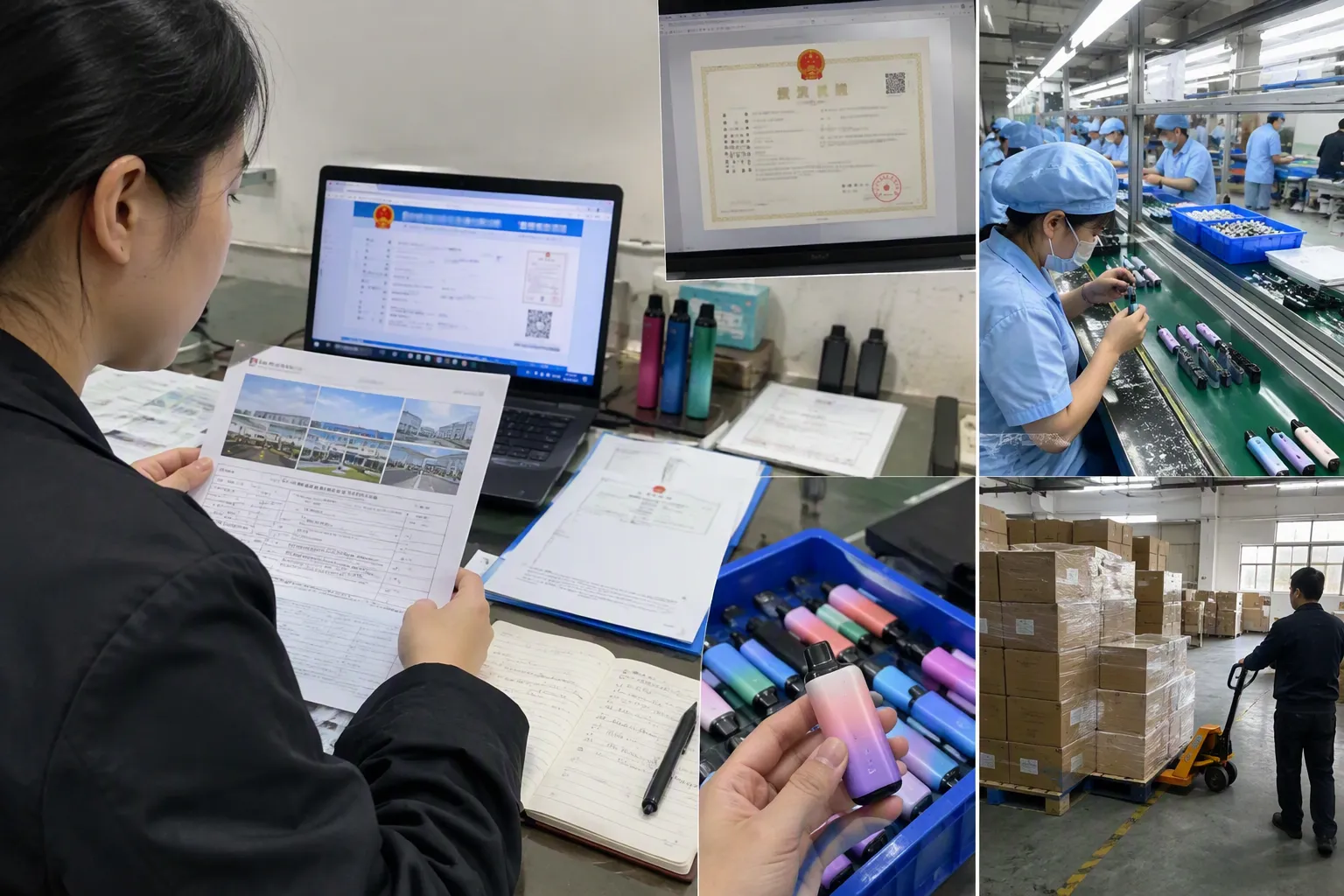
No. A factory may manufacture products or sell them to a trading company without giving that company authority to appoint distributors. I ask for written evidence showing who controls the brand and whether the supplier can grant rights in my territory and sales channels.
Is a first-level agent automatically allowed to offer exclusive distribution rights?
No. A first-level agent may have a direct purchasing relationship, but its authority depends on the agreement with the brand owner or authorizing entity. I check whether the agent can appoint sub-distributors and whether exclusivity is expressly granted for my territory.
What should a distribution authorization document include?
I look for the authorizing entity, authorized company, brand, products, territory, sales channels, validity period, exclusivity status, appointment powers, and conditions. I also compare the document with the purchase contract and confirm important points independently with the brand owner.
Can a small vape shop obtain the same rights as a large importer?
Not necessarily. A small shop may only need permission to purchase and resell through a local channel. A large importer may need broader territory, online rights, wholesale permissions, or sub-distributor authority. I match the requested scope to the actual business model.
Does verified distribution authority remove import or compliance risk?
No. Verification can clarify the commercial relationship, but it does not replace local review of vaping laws, trademarks, product rules, import procedures, tax obligations, labeling, or advertising restrictions. I recommend qualified professional evaluation for application-specific and country-specific decisions.
Conclusion
I verify vape distribution rights by separating the ability to supply products from the ability to appoint distributors. I check the authorization chain, product range, territory, sales channels, validity period, exclusivity, and independent confirmation before I pay. I also match the rights to my actual business model and review local compliance separately. At Kingfuji, I can help buyers compare brand agency, factory supply, first-level agency, warehouse supply, and OEM/ODM options, while encouraging clear documentation. Contact King at info@kingvapecig.com or +86 13928420527 to discuss your product list, target market, order size, and required distribution scope.
Sources
- [PDF] Exchanging Value - Negotiating Technology Licensing Agreements", A distribution agreement generally grants only the rights stated by the rights holder or authorized contracting party; authority to appoint sub-distributors or grant broader territorial rights must be established by the governing agreement or other valid authorization
- [PDF] Onfido Security Document Examination Train-the-Trainer activities", Document-verification guidance commonly treats provenance, issuer identity, and consistency of substantive information as more probative than seals, logos, formatting, or other visual indicators considered in isolation
- Untitled - Unidroit", Model distribution agreements and institutional guidance commonly define the products, territory, sales channels, duration, and exclusivity or appointment permissions that delimit a distributor's contractual scope
- 2 Rights Clearance: from idea to distribution - WIPO", Distribution and trademark-license agreements may allocate rights by geographic territory, so authorization to sell in one jurisdiction does not by itself establish authority to distribute in another
- Exclusive Dealing or Requirements Contracts", An exclusive distribution arrangement generally reserves a defined territory, customer group, or channel for one distributor subject to its contractual terms, whereas a non-exclusive arrangement permits the rights holder to appoint additional distributors
- Research Handbook on Intellectual Property Exhaustion and ...", Parallel-import rules can permit the resale of genuine goods placed on a market with the rights holder's consent, meaning that a contractual exclusivity arrangement does not necessarily eliminate all competing cross-border supply
- Tobacco: E-cigarettes - World Health Organization (WHO)", Regulatory frameworks for electronic cigarettes and related nicotine products commonly address product composition, packaging and labeling, marketing, age-related sales restrictions, importation, and other market-entry requirements separately from commercial authorization
- Tips for New Importers and Exporters", Product-safety and customs frameworks commonly assign importers independent duties to verify applicable requirements and maintain or provide required documentation, rather than treating a supplier's general assurance as conclusive compliance evidence