Your customers are tired of seeing the same sales pages. They don't know who to trust in a market full of fakes. The best way to stand out is to build a page that proves your authenticity first.
A brand page that prioritizes authenticity builds trust by providing real proof, not just sales talk. It shows company details, real product photos, and clear wholesale terms. This helps buyers feel safe before they even contact you, reducing their risk and attracting serious partners.
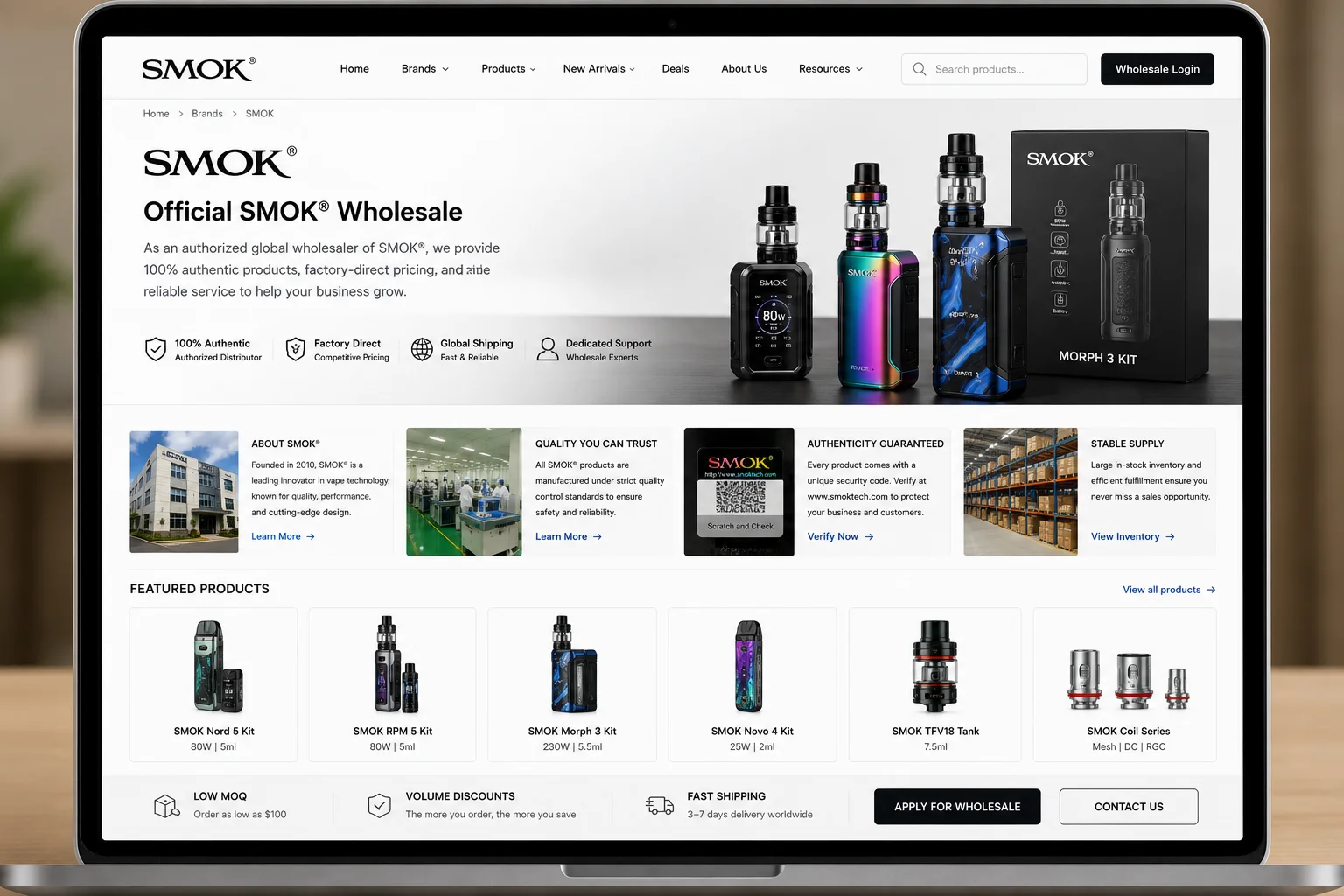
You're a B2B buyer. You've probably seen hundreds of websites from Chinese suppliers. They all promise "high quality" and "low price." But after a while, they all start to look the same. You're left wondering, "Who is real? Who can I actually trust with my money?" This is the biggest hurdle in international trade[^1]. It's not about language or distance; it's about trust. A page that just screams "SALE! SALE! SALE!" does nothing to solve this problem. In fact, it often makes it worse. Buyers today are smart. They know that a real partnership starts with transparency, not a flashy discount banner.[^2] Let's explore how you can build a page that creates real confidence and attracts the right kind of long-term customers.
Why Do Buyers Distrust Pages That Only Push Sales?
You see a page with crazy low prices and "BUY NOW!" everywhere. It feels like a scam, making you worry about losing your money. To avoid this, you need to understand what makes buyers suspicious.
Buyers distrust sales-only pages because they feel rushed and lack proof. These pages often use suspiciously low prices and high-pressure tactics, which are major red flags for scams or counterfeit goods[^3]. Experienced importers know that real business is about partnership, not a one-time trick.
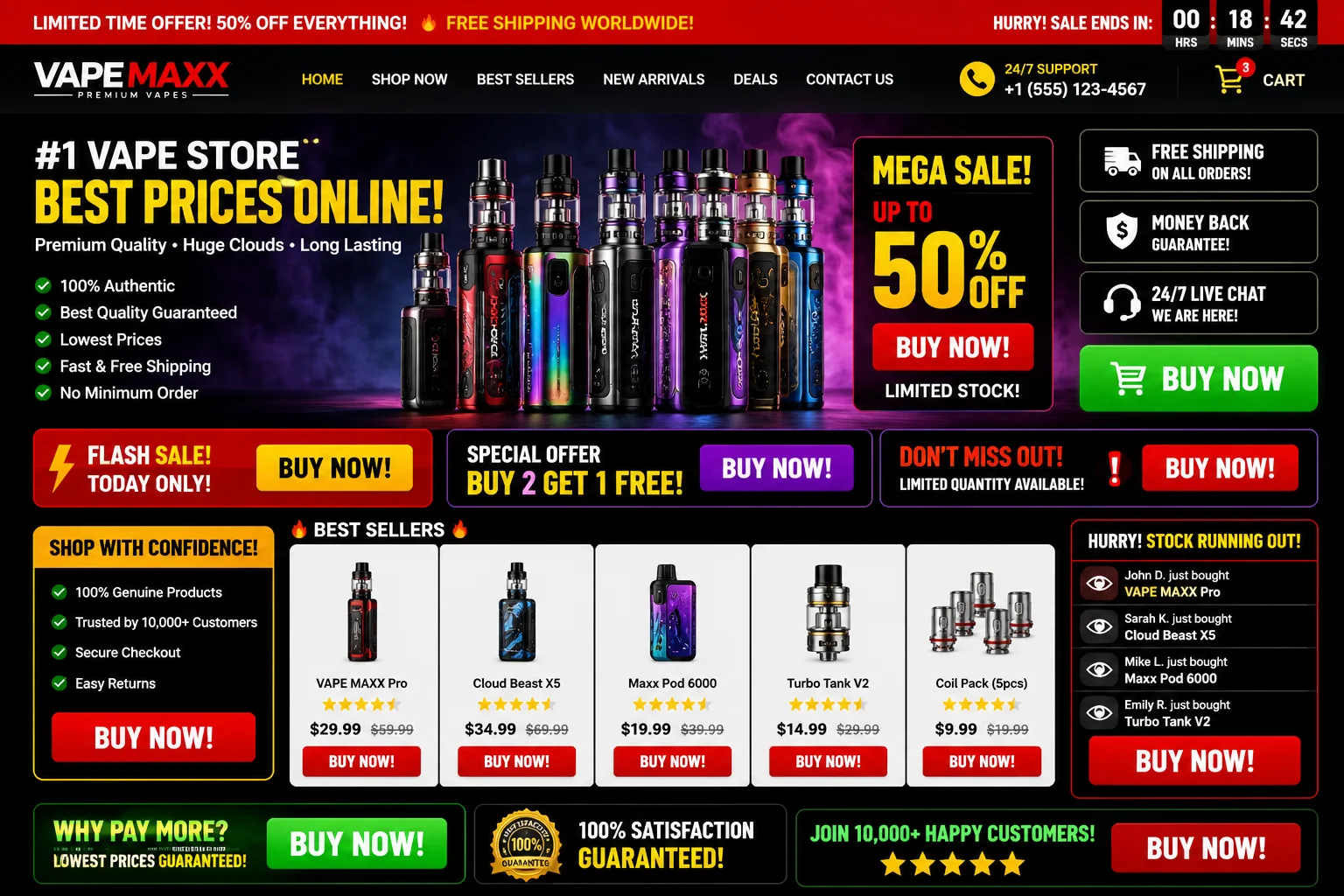
Over my 15 years in this business, I've heard too many horror stories. A buyer from France recently told me he found a supplier selling JNR vapes for 2 euros a piece. He was excited. He thought he found a secret source. The original factory price is over 4 euros, so how could this be possible? The seller kept pushing him to pay quickly before the "special price" expired. He paid 2,000 euros and then... silence. The seller disappeared. His money was gone. This is a classic scam. Pages that only push sales often follow this pattern. They focus on urgency and a price that's too good to be true because they don't have a real product or a real company to show you. They want your money before you have time to think. A real business, on the other hand, wants a long-term relationship. We know that a successful deal is one where you receive good products, sell them, and come back for more.
| Red Flags on a "Sales-First" Page | Green Flags on an "Authenticity-First" Page |
|---|---|
| Prices are way below the market average | Prices are reasonable and transparent |
| "Limited Time Offer!" everywhere | Focuses on product quality and company values |
| No real company information | Clear "About Us" page with company history |
| Uses generic stock photos | Shows real warehouse and product photos |
| Pushes for immediate payment | Offers consultation and sample orders |
What Does “Authenticity-First” Mean on a Brand Page?
"Authenticity" can sound like a vague marketing buzzword. If you don't know what it means in practice, you can't build it. The solution is to focus on real, tangible elements that prove you are who you say you are.
"Authenticity-first" means your page is designed to prove you are a legitimate, long-term partner before you ask for a sale. It involves showing your real company, your real products, and your real processes. It's about being open, honest, and transparent in every detail.
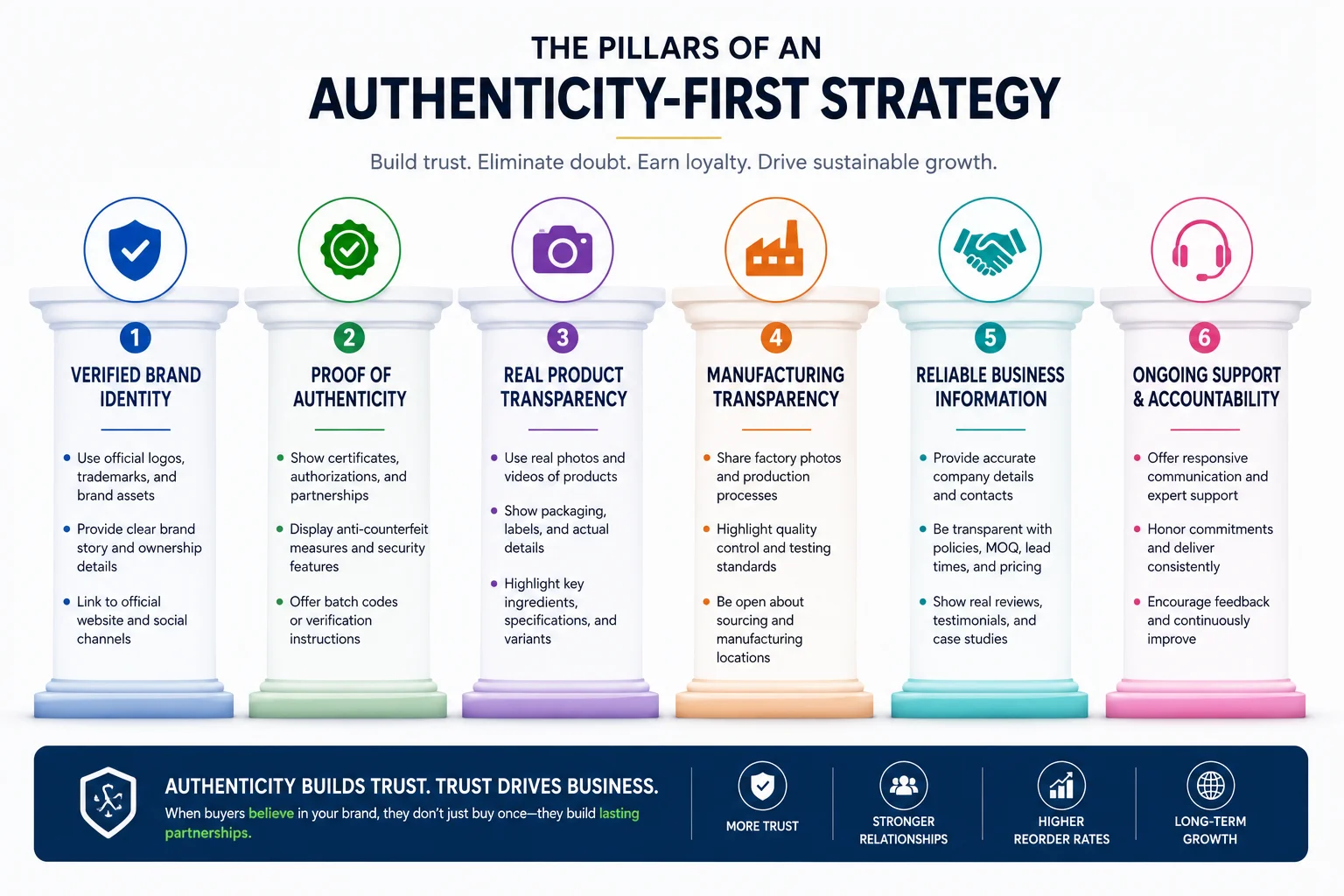
Being "authenticity-first" isn't about writing a nice story. It's about providing evidence. It breaks down into three core parts. First, Company Legitimacy. This means you show your registered business name, your address, and maybe even a picture of your office. You prove that you are a real legal entity. Second, Product Genuineness. You provide proof that your products are original and high-quality. You show certifications, explain how to spot fakes, and are honest about the components you use. Third, Process Transparency. You clearly explain your business terms. What is your MOQ? What are the shipping options? What are the risks? Being authentic means you treat your buyer like a partner. You give them all the information they need to make a good business decision, even if it means telling them something difficult, like their country has a high risk of customs seizure. A page that only wants a sale would never do that.
| The Sales-First Approach | The Authenticity-First Approach |
|---|---|
| Hides behind a generic brand name | Proudly displays the registered company name |
| "Our products are the best!" | "Here's how our products are made and how to verify them." |
| Vague terms, "Contact for price" | Clear MOQ, pricing tiers, and shipping details |
| Goal: Get the order today. | Goal: Build a partnership for the next five years. |
How Can Official Brand Information Reduce Buyer Doubt?
Buyers are scared of dealing with a ghost company. They worry the company on the invoice isn't the same one taking their money, leaving them with no one to hold accountable if something goes wrong.
Showing official brand information, like your company registration, real address, and matching bank account details, immediately reduces buyer doubt. It proves you are a real, accountable business, not a temporary scam. This allows buyers to verify you independently, building a solid foundation of trust.
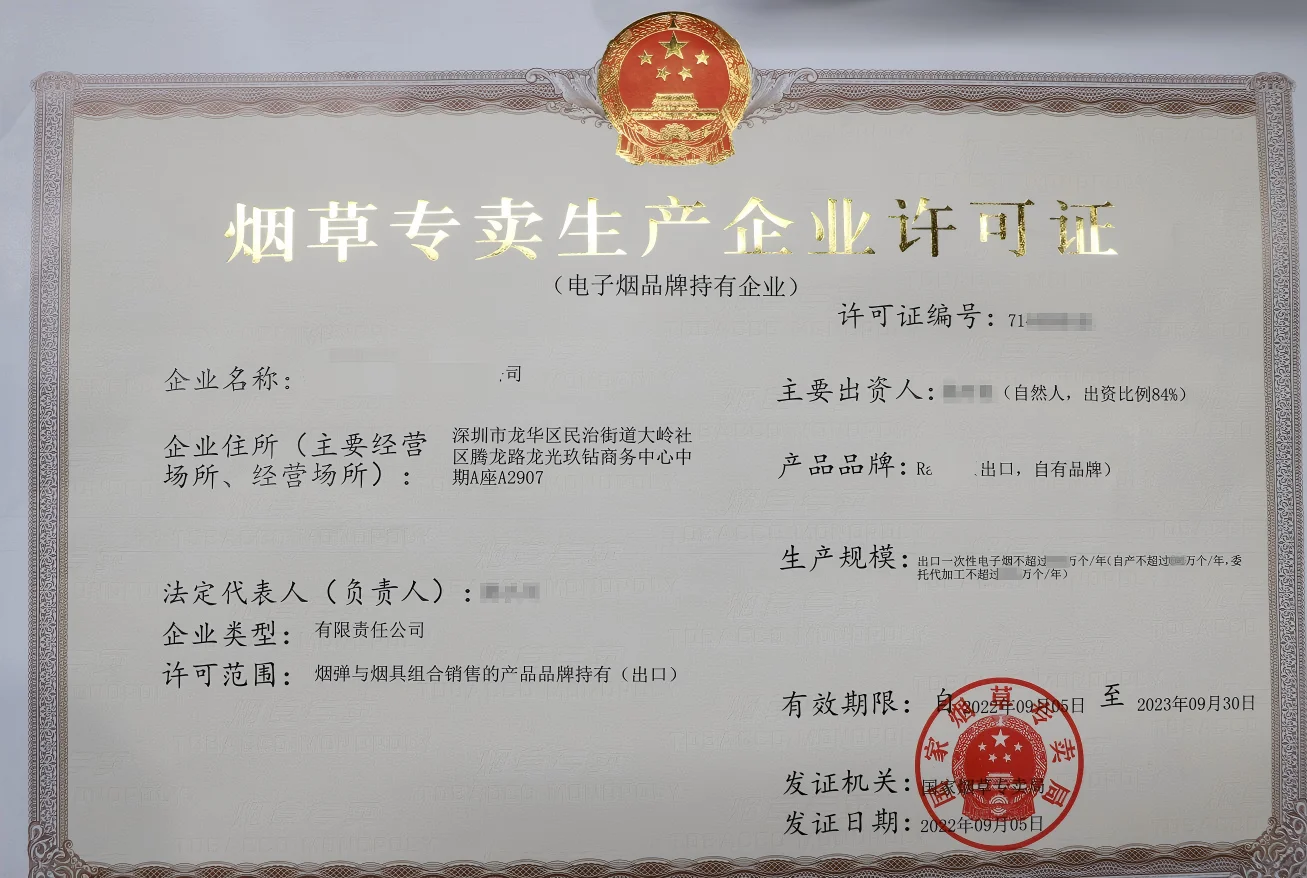
One of the biggest red flags I see scammers use is mismatched information[^4]. They'll send a Proforma Invoice (PI) with the logo of a famous B2B platform like Made-in-China.com, trying to trick new buyers into thinking the platform is backing the deal. Or worse, they'll use the name of a real, legitimate company on the PI, but the bank account for payment will be a personal account or belong to a completely different, unrelated company. If a buyer doesn't check this carefully, they send money to a ghost. When the goods never arrive, they realize the company on the invoice has no connection to the transaction. To fight this, we are extremely transparent. We show our company name clearly. The name on our PI is the same name on our bank account. We've even gone a step further. To make it easier and safer for our EU clients, we opened a corporate bank account in Germany. This allows them to pay locally, avoiding complex international transfer issues[^5] and proving we have a real, established presence. This level of transparency shows we are here for the long run. We aren't hiding.
Why Do Real Product Photos Matter More Than Generic Marketing Images?
Every supplier website has perfect, glossy product photos. But buyers know these can be easily downloaded from the official brand's website. They can't tell if you actually have the product or just stole the pictures.
Real product photos and videos, especially those taken in your warehouse or office, prove that you physically possess the stock. Unlike generic marketing images that anyone can use, real visuals show the actual condition of the goods, the packaging, and your operational scale. This builds immense confidence.[^6]
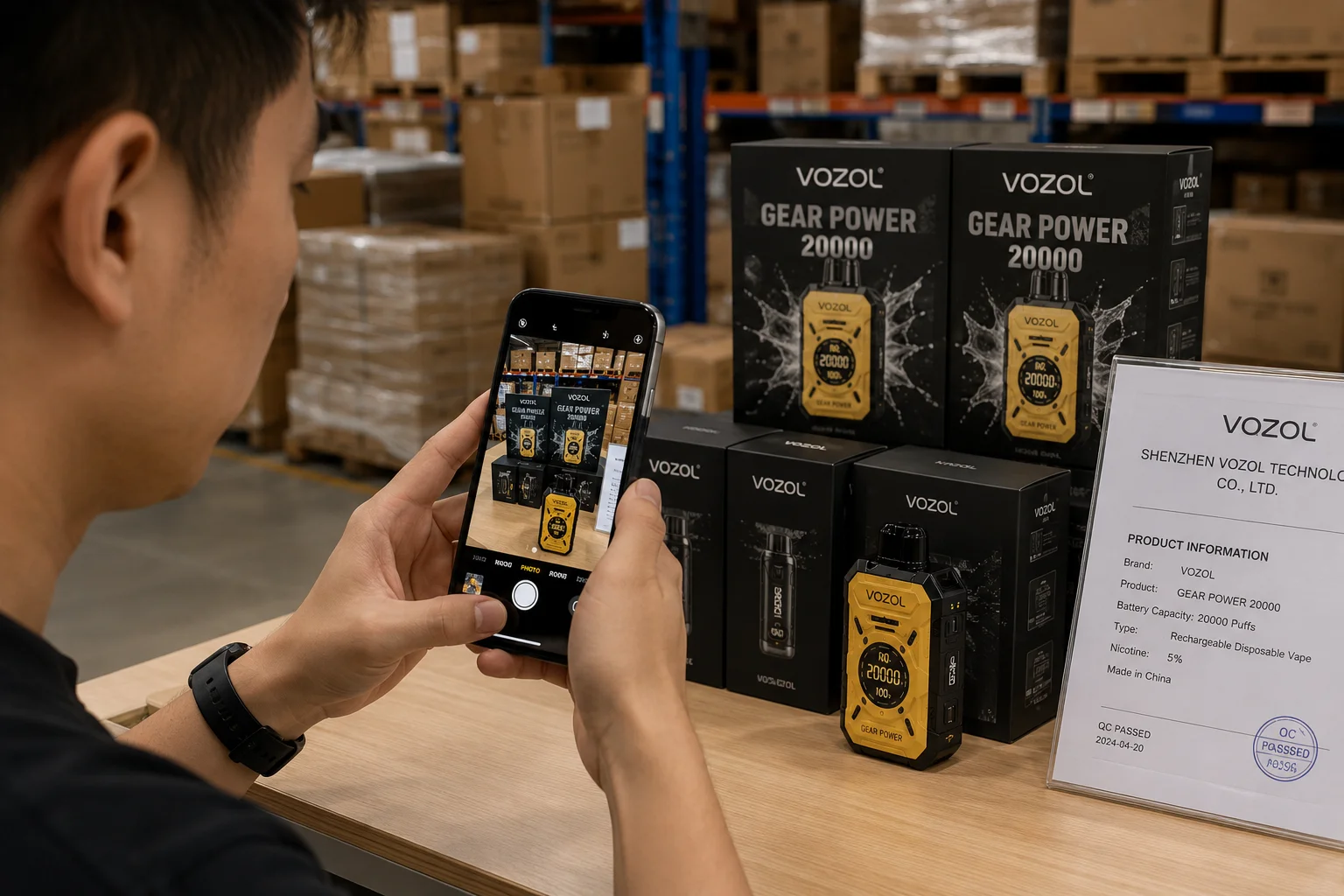
A picture is worth a thousand words, but a real video is worth a thousand stock photos. When a potential customer is serious, they often ask us, "Can you send a video of the products?" We do more than that. We'll take a video of the cartons in our warehouse, and on a piece of paper next to them, we'll write the customer's name and the current date. This simple act proves three things instantly: we have the product, we have it right now, and we are talking directly to them. You can't fake that. Generic marketing images are perfect. Too perfect. Real photos show a busy warehouse, stacked pallets, and staff packing boxes. It shows an actual operation. It also allows us to show the real product. For example, a fake product often feels light and flimsy. The printing on the box might be slightly blurry. While hard to see in a professional photo, these small defects are often visible in a quick, unedited video from a phone. It's this raw, unfiltered look into our business that tells customers we have nothing to hide.
How Should You Show Anti-Counterfeit and Quality Proof?
Buyers are terrified of receiving a batch of fakes. This fear is real, especially since scammers are getting smarter. Now, even the QR codes on counterfeit products can look real, leading to a fake verification website.[^7]
To show proof, you must educate your buyers on the official verification process. Don't just say "scan the QR code." Guide them to the brand's official website to enter the security code manually. Back this up by sharing quality proof, like explaining the difference in components.
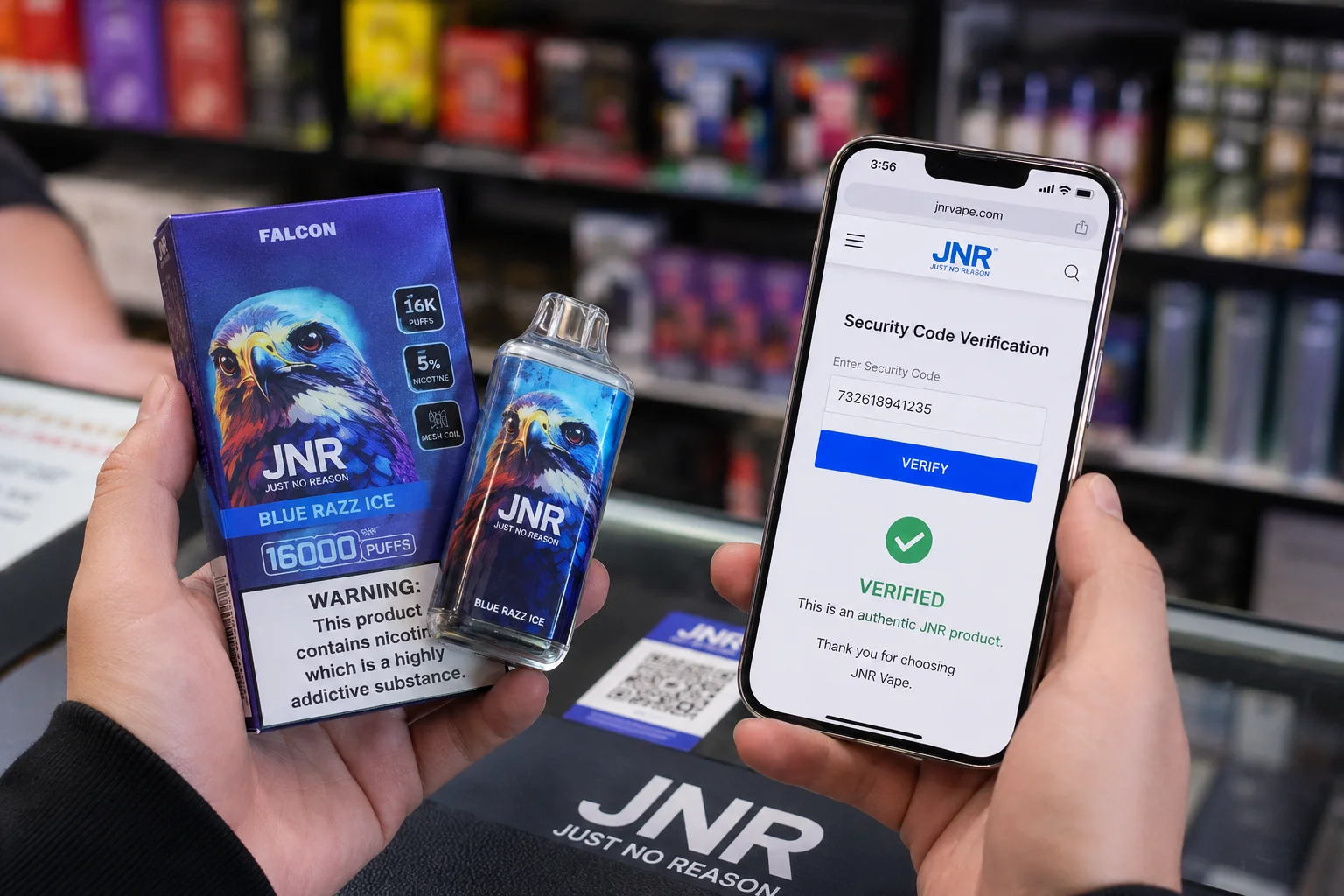
The QR code scam is a perfect example of why education is key. A fake vape can have a QR code that, when scanned, takes you to a website that looks official and says "Congratulations, your product is genuine!" But it's a fake website built by the scammer. I always tell our clients: do not trust the QR code's link. Instead, open your browser, go to the official brand website (like elfbar.com), find their verification page, and manually type in the code from the package. This is the only way to be 100% sure.
Beyond that, we prove quality by talking about what's inside. For electronics, the battery is everything. We explain that we use high-quality lithium batteries from reputable makers. Cheap fakes use terrible manganese batteries. Why does this matter? A cheap battery might die after just a few charge cycles, or worse, it might stop working completely in cold weather[^8]. I tell my clients, "You think you're saving money on a cheap product, but you're really buying customer complaints." This detailed knowledge shows we are experts, not just traders.
| How to Verify a Genuine Product | Common Tricks Used by Counterfeiters |
|---|---|
| Manually enter the security code on the official brand website. | Create a fake QR code that links to a fake verification site. |
| The product has a solid weight and high-quality feel. | The product feels light, cheap, and plasticky. |
| High-quality lithium battery ensures stable performance. | Uses cheap manganese batteries that fail quickly. |
| Packaging has crisp, clear printing and proper seals. | Printing is blurry, colors are off, and spelling mistakes exist. |
What Wholesale Details Build Confidence Before Contact?
Buyers are busy. They hate wasting time sending emails just to ask basic questions like "What's your MOQ?". When this information is missing from a website, they don't just get annoyed; they get suspicious. They assume you're hiding something or are too unprofessional to bother with.
Clearly stating wholesale details like MOQ (Minimum Order Quantity), lead times, shipping options, and payment terms builds immediate confidence. It shows you are an organized, experienced exporter who respects the buyer's time. This transparency allows them to qualify themselves before sending an email.
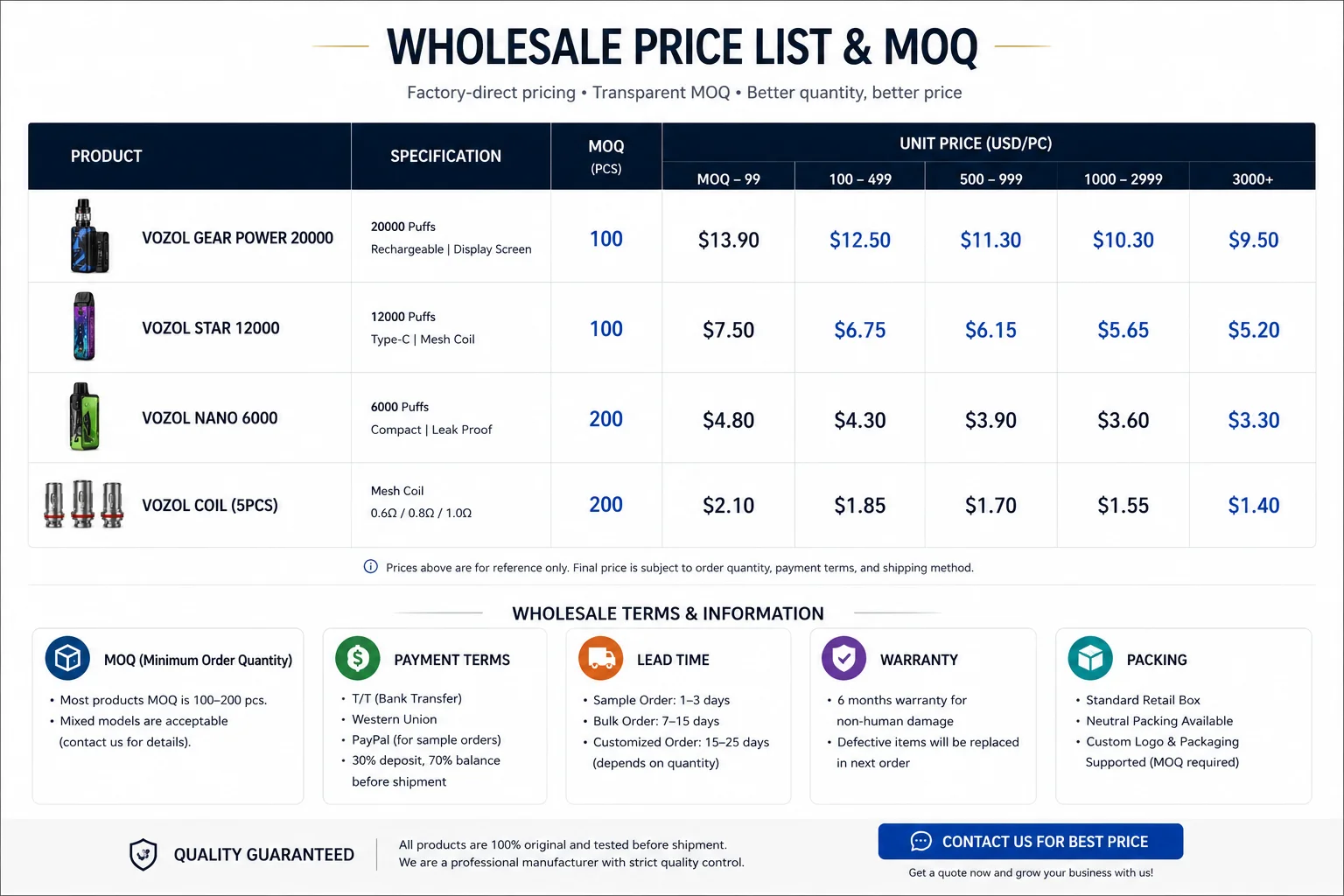
We serve different types of buyers, so we provide different solutions. We put this information right on our website. For new sellers or those who want to test the market, we offer our overseas warehouses in Germany and the US. From there, the MOQ is as low as 50 pieces. You can start your own small business for less than 400 euros. This offers a low-risk way to get started quickly. For larger, more experienced wholesalers who need better margins, we state that orders over 2,000 pieces can be shipped directly from China to get a more competitive price.
Most importantly, we are honest about the risks. For shipments from China, we always recommend full customs insurance. We also maintain a list of "secondary clearance" countries in the EU (like Denmark or Sweden) where packages can be inspected a second time and seized. We tell our clients about this risk upfront. An untrustworthy seller would say, "No problem!" just to get the order. We would rather be honest and find a safer solution, like shipping to a neighboring country. This honesty shows we care more about our client's success than a single sale.
How Can FAQs Remove Common Authenticity Concerns?
No matter where they are from, buyers have the same nagging questions and fears. If they can't find answers on your page, they will get frustrated and leave. They'll assume the worst and move on to a competitor who seems more transparent.
A well-crafted FAQ section can proactively address a buyer's biggest fears about authenticity, shipping, and quality. By answering questions like "How do I know your products are genuine?" you demonstrate expertise and transparency, resolving doubts before they become deal-breakers.
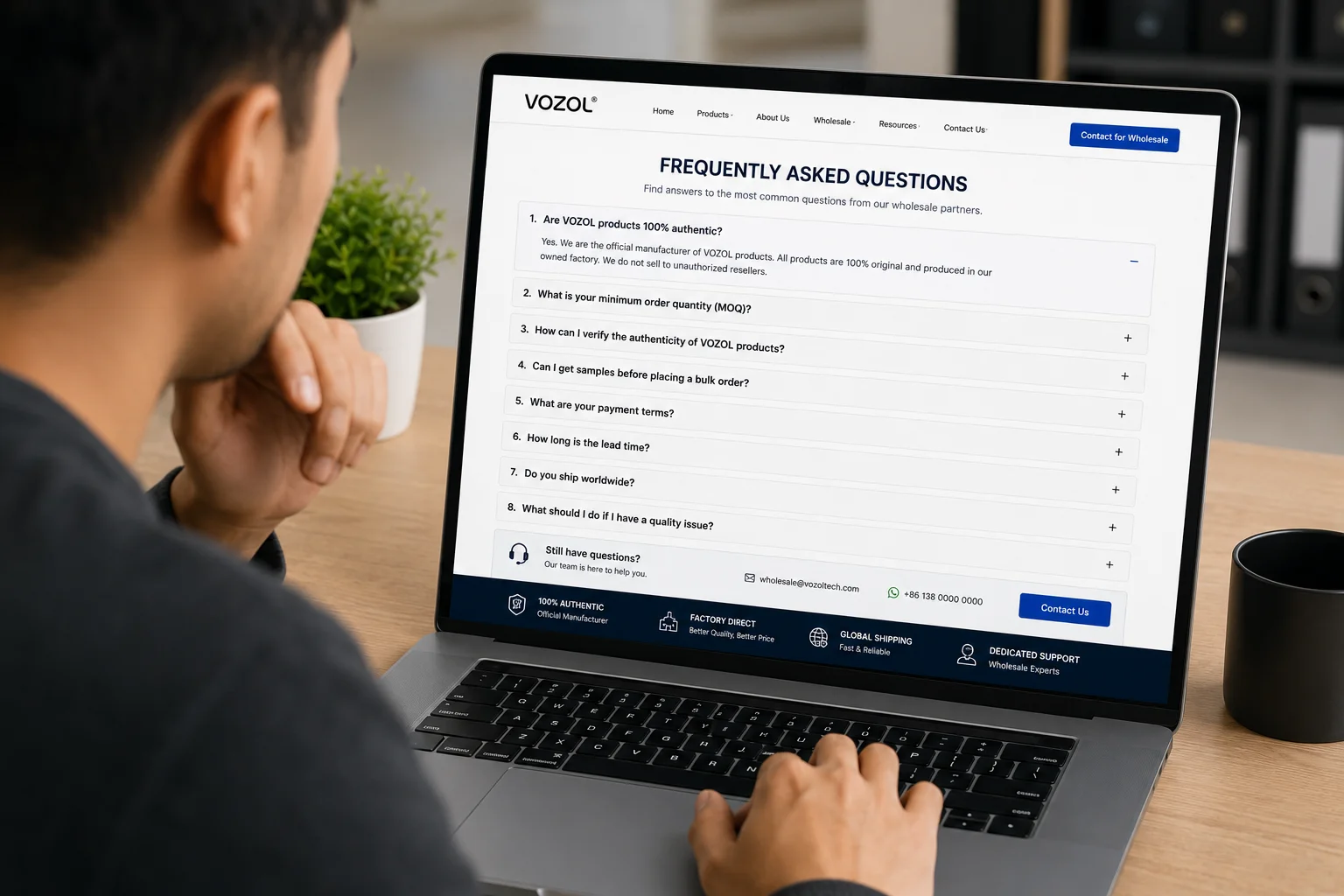
An FAQ page is one of the most powerful trust-building tools. It's a chance to have a conversation with your customer before you ever speak to them. We've designed ours to tackle the toughest questions head-on.
-
Q: Your price isn't the absolute lowest I've seen. Why? A: We explain that business is about capital turnover speed, not just low prices[^9]. A genuine product you sell in one week for a 20% profit is better than a cheap fake you struggle to sell for months, which ends up costing you money in returns and lost reputation. The cheapest materials, like bad batteries and oils, create a terrible user experience, and those customers will never come back.
-
Q: How do I know you're a real company and not a scammer? A: We use the FAQ to summarize our proofs: our registered German bank account for EU clients, our 15-year history, and our policy of providing real-time warehouse videos. We state clearly: a scammer wants your money fast. A partner wants you to succeed so you'll order again.
-
Q: What about those vapes with 300,000 puffs? Are they real? A: This is a common question. We are honest. We explain it's a marketing game. The real physical limit for a disposable vape is maybe 10,000 puffs based on its e-liquid capacity (around 50ml).[^10] Anything more is just a number on a box. We tell our customers to look at the ml, not the puff count. This insider knowledge shows we are experts who tell the truth, even if it's not what they want to hear.
Final Advice: Build Trust First, Then Ask for the Order
You've built a great, trustworthy page full of proof and helpful information. But you still need to get the sale. The key is to make your call-to-action an invitation to partner, not a demand to buy now.
The final step is to invite collaboration. After building trust by being transparent and helpful, your "call to action" should be less "Buy Now" and more "Let's Talk." Ask about their business needs, offer a small test order, and position yourself as a guide for their success.
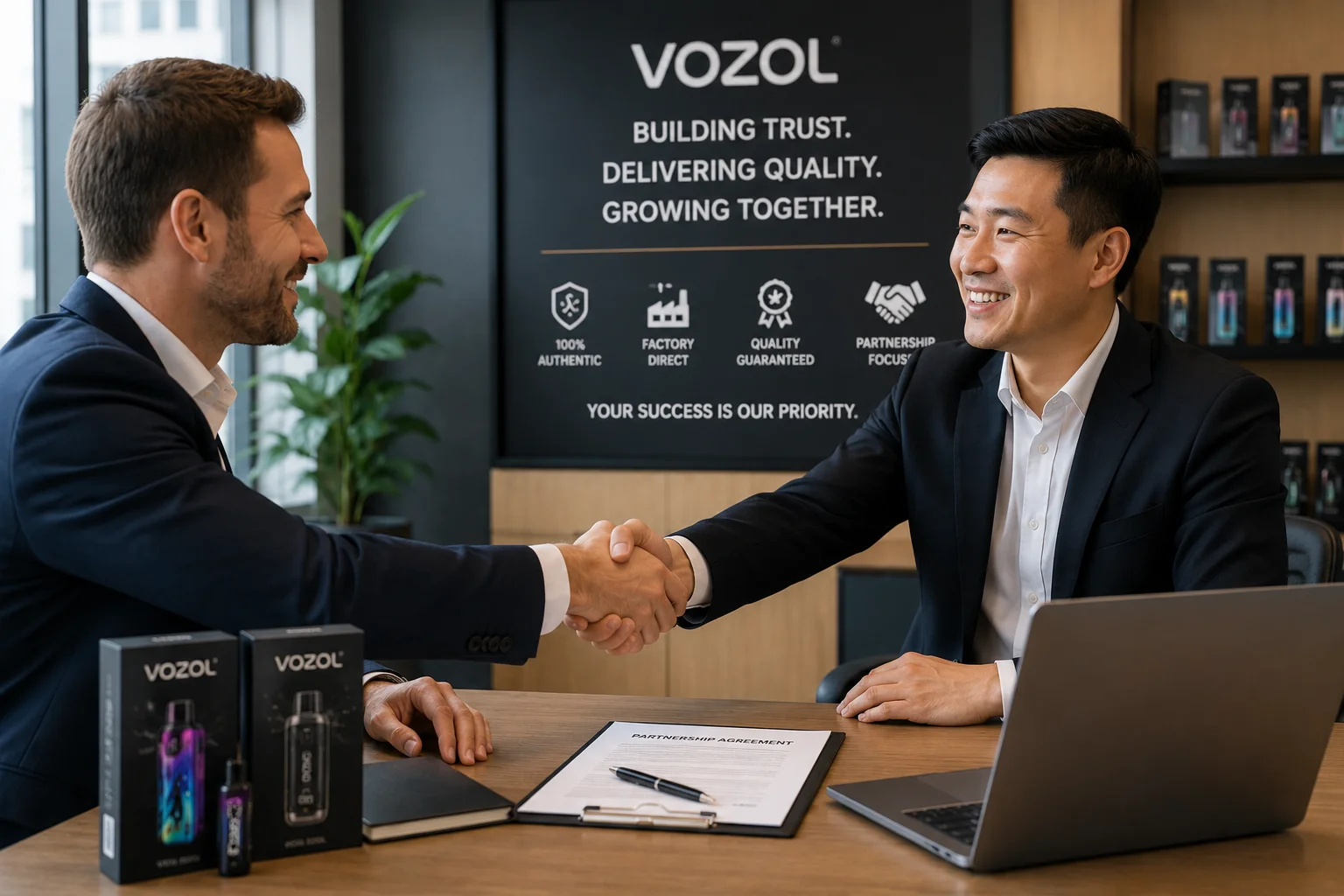
In my experience, especially when sourcing from China, the first transaction is not about the product. It's about buying trust[^11]. After you've spent your entire webpage proving you're a reliable partner, the worst thing you can do is end with a hard "BUY NOW" button. It undoes all the goodwill you've built. The relationship we want is a long-term one. We have clients who started with us by ordering 50 pieces and now order tens of thousands of units a month. That's how we've stayed in business for 15 years. We grow when our clients grow.
So, your final ask shouldn't be for their money. It should be for a conversation. Your call-to-action should be something like: "Let's discuss your market and find the right products for you," or "Ready to test the quality? Request a sample pack from our local warehouse." This approach changes the dynamic. You are no longer just a supplier; you are a strategic partner. You're invested in their success from day one. And that is the most authentic sales pitch of all.
Conclusion
An authenticity-first page proves you are a long-term partner, not a short-term seller. This trust is the foundation for a profitable, lasting business relationship. Build it first.
Avoid Counterfeit and Supply Risk
For bulk vape orders, supplier verification protects your business from counterfeits and quality issues. Reach out to our team for factory audits and QC.
Related reading: How to Build U.S.-Facing Educational Vape Pages Without Crossing Compliance Lines
[^1]: "Non‑tariff measures - OECD", https://www.oecd.org/en/publications/non-tariff-measures_0c23506e-en.html. Research on international trade often identifies a lack of trust between importers and exporters as a significant non-tariff barrier to commerce, which increases transaction costs and influences partner selection. Evidence role: general_support; source type: research. Supports: The source should discuss the significant role of trust, or a lack thereof, as a major non-tariff barrier in international trade, affecting transaction costs and partner selection.. Scope note: The source may not declare trust as the single 'biggest' hurdle but will likely rank it among the most critical factors for successful trade relationships. [^2]: "B2B Buyer Behavior in 2025: Why Verifiable Trust & Digital ...", https://vendict.com/blog/b2b-buyer-behavior-why-verifiable-trust-digital-transparency-are-the-real-dealbreakers. Recent market research and surveys of B2B purchasers indicate a growing preference for supplier transparency, with many buyers viewing it as a critical factor for establishing trust and building long-term relationships. Evidence role: expert_consensus; source type: research. Supports: The source should provide data or analysis showing that modern B2B buyers prioritize supplier transparency, often over short-term price incentives, when forming long-term partnerships.. [^3]: "Scams - FTC Consumer Advice", https://consumer.ftc.gov/scams. Consumer protection agencies, such as the U.S. Federal Trade Commission (FTC), frequently list high-pressure sales tactics and prices that seem 'too good to be true' as common warning signs of potential scams. Evidence role: expert_consensus; source type: government. Supports: The source should identify high-pressure sales tactics, such as creating false urgency or limited-time offers, as a common characteristic of online scams.. [^4]: "Business Email Compromise - FBI", https://www.fbi.gov/how-we-can-help-you/scams-and-safety/common-frauds-and-scams/business-email-compromise. Financial crime prevention networks warn that a common tactic in business email compromise and invoice fraud is to provide payment details where the beneficiary name on the bank account does not match the name of the supposed vendor. Evidence role: case_reference; source type: institution. Supports: The source should describe payment diversion fraud or invoice scams where perpetrators use a legitimate company's name but provide a different bank account for payment.. [^5]: "The problem with international wire transfers is far greater than just ...", https://www.reddit.com/r/Bitcoin/comments/8aoeu9/the_problem_with_international_wire_transfers_is/. International wire transfers can be subject to delays, high fees from correspondent banks, and compliance holds for anti-money laundering (AML) checks, all of which add complexity and cost compared to domestic payments. Evidence role: mechanism; source type: other. Supports: The source should detail the common challenges associated with international wire transfers, such as high intermediary bank fees, unpredictable settlement times, and increased compliance scrutiny.. Scope note: The source would likely be from a financial technology or banking publication rather than a scholarly paper. [^6]: "The role of octomodal mental imagery and social presence - PMC", https://pmc.ncbi.nlm.nih.gov/articles/PMC12040128/. Studies in e-commerce and marketing suggest that authentic visual cues, such as non-professional photos and videos showing products in a real environment, act as powerful trust signals that increase a buyer's confidence and the perceived credibility of the seller. Evidence role: general_support; source type: paper. Supports: The source should present findings that authentic, non-stock imagery and videos increase perceived trustworthiness and purchase intent in online commerce.. [^7]: "Scam alert: QR code on an unexpected package | Consumer Advice", https://consumer.ftc.gov/consumer-alerts/2025/01/scam-alert-qr-code-unexpected-package. Cybersecurity and brand protection experts have documented a rising trend in which counterfeiters place QR codes on fake goods that lead to convincing but fraudulent verification websites, a practice known as 'quishing' (QR code phishing). Evidence role: case_reference; source type: research. Supports: The source should document cases of 'quishing' (QR code phishing) where counterfeiters use QR codes on fake products to direct consumers to fraudulent websites designed to mimic official brand verification pages.. [^8]: "Leclanché cell - Wikipedia", https://en.wikipedia.org/wiki/Leclanch%C3%A9_cell. The electrochemical reactions in zinc-carbon and alkaline (zinc-manganese dioxide) batteries are highly dependent on temperature; their internal resistance increases and capacity drops sharply in cold conditions, unlike lithium-ion batteries which perform more reliably at lower temperatures. Evidence role: mechanism; source type: education. Supports: The source should explain the chemical and physical reasons why the performance of zinc-carbon or manganese-based batteries degrades significantly at low temperatures.. [^9]: "Inventory Turnover Ratio: What It Is, How It Works, and Formula", https://www.investopedia.com/terms/i/inventoryturnover.asp. A fundamental concept in business finance, inventory turnover measures how quickly a company sells its inventory. A high turnover rate is often more critical to overall profitability than a high gross margin, as it improves cash flow and return on investment. Evidence role: definition; source type: education. Supports: The source should define inventory turnover and explain how a faster turnover rate, even with lower margins per unit, can lead to higher overall profitability.. [^10]: "To Understand Vape Puff Count and Capacity - cavapers", https://cavapers.com/blogs/blogs-news/the-great-vape-puff-illusion-to-understand-vape-puff-count-and-capacity. Technical analyses indicate a direct correlation between e-liquid volume and maximum puff count, with typical consumption rates suggesting that advertised puff counts far in excess of 20,000 are physically implausible for standard disposable devices and should be viewed as marketing figures rather than a measure of actual performance. Evidence role: statistic; source type: other. Supports: The source should provide a technical breakdown showing the relationship between e-liquid volume, battery capacity, and achievable puff count.. Scope note: The source will likely be an industry publication or technical blog rather than a peer-reviewed paper, as this is a fast-moving consumer product space. [^11]: "The Importance of Relationship Building in China - PON", https://www.pon.harvard.edu/daily/international-negotiation-daily/negotiation-in-china-the-importance-of-guanxi/. Studies on international business with Chinese firms emphasize the importance of establishing trust and personal relationships (guanxi) as a prerequisite for successful commercial engagement, with initial transactions often serving as a test of reliability and integrity. Evidence role: historical_context; source type: paper. Supports: The source should discuss the central role of trust-building and interpersonal relationships (like guanxi) in forming successful business partnerships in China, often preceding significant transactions..