
Struggling to get B2B buyers? Your wholesale page gets traffic but no inquiries. You need a page that builds trust and answers real questions before they are even asked.
To create a wholesale page that converts, you must focus on the buyer, not just on SEO. You need to clearly show your value, prove your product's authenticity, present key wholesale details upfront, and answer common sourcing questions with complete transparency.
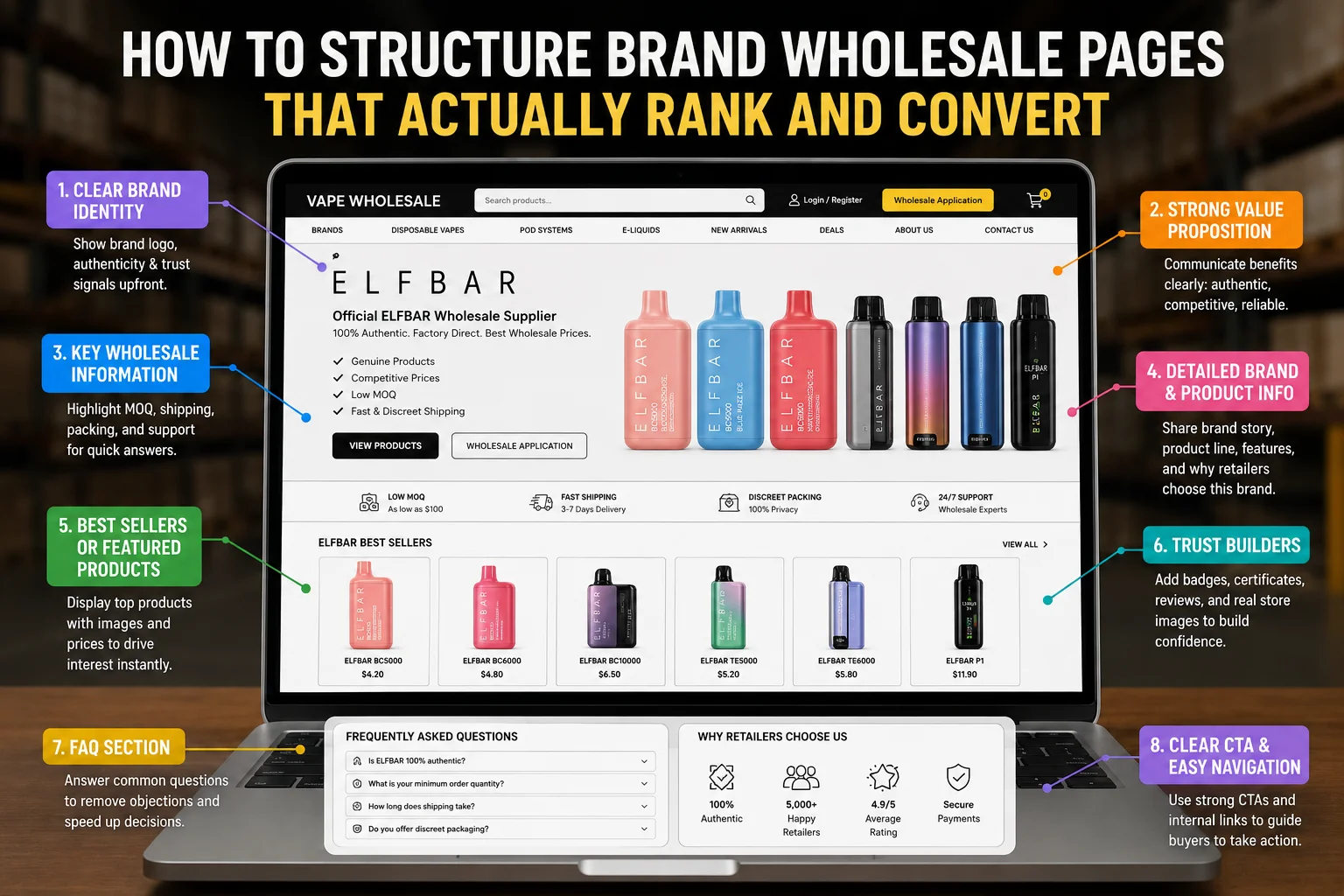
I've been in the export business for 15 years, and let me tell you, a website is just like a salesperson. If it only talks about itself and doesn't solve the customer's problem, the customer will walk away. A great wholesale page isn't just a catalog; it's a conversation. It needs to bring in traffic from search engines, sure, but more importantly, it has to turn that traffic into trusting partners. Let's break down how to build a page that does both.
Why Do Brand Pages Need Both SEO and Buyer Trust?
Your page ranks on Google, but buyers leave in seconds. The problem is a lack of trust. SEO brings them to your door, but it's trust that invites them inside.[^1]
A successful wholesale page must balance SEO keywords with genuine, helpful information that solves a buyer's real problems. It has to show that you understand their business, not just how to rank on a search engine.
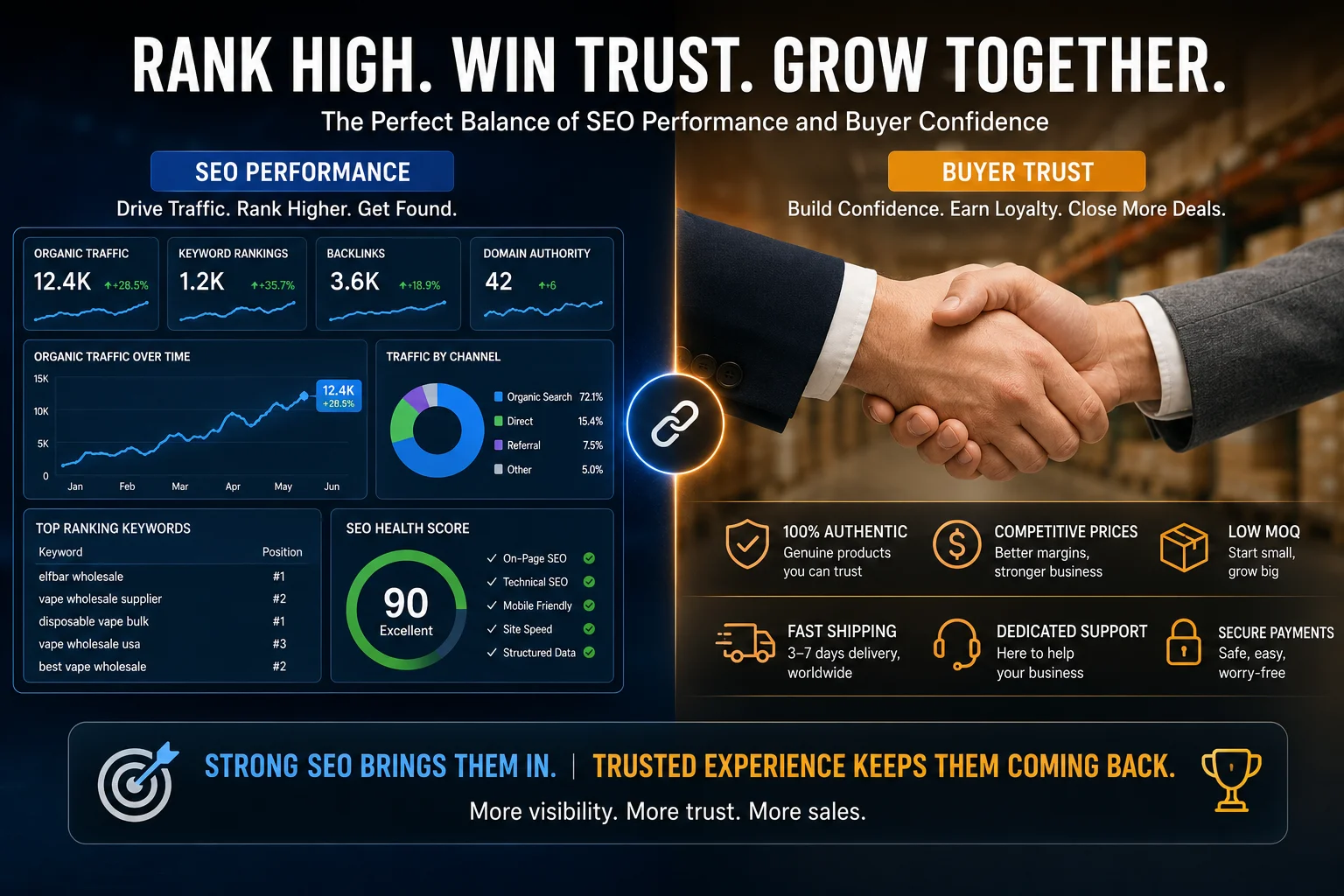
When I first started in this business, we thought getting to the top of Google was everything. We stuffed pages with keywords like "best 3C products" and "China wholesale supplier." We got clicks, but our inquiry rate was low. It took me a while, talking to hundreds of buyers from the US and Europe, to understand why.
They aren't just searching for keywords. They are searching for answers to unspoken questions:
- "Is this company legitimate?"
- "Are these products genuine or cheap fakes?"
- "Will I lose my money if I order from them?"
- "Do they understand the customs issues in my country?"
A page that only focuses on SEO never answers these questions. It feels robotic and untrustworthy. A great page uses its expertise to reduce the buyer's fear. For example, we don't just say we sell vapes. We explain why we carry brands like ELF BAR but not others that rely on exclusive national agents. This shows we know the market, which builds more trust than any keyword ever could.
What Should Appear Above the Fold?
A buyer gives your page about three seconds[^2] to convince them they are in the right place. Are you wasting that precious time with a generic banner and a vague headline?
Above the fold, you must have a powerful headline that solves a specific problem, a short paragraph that builds trust, and a clear, high-quality image of the product. This section must immediately tell the buyer: "I understand your problem, and I have the solution."
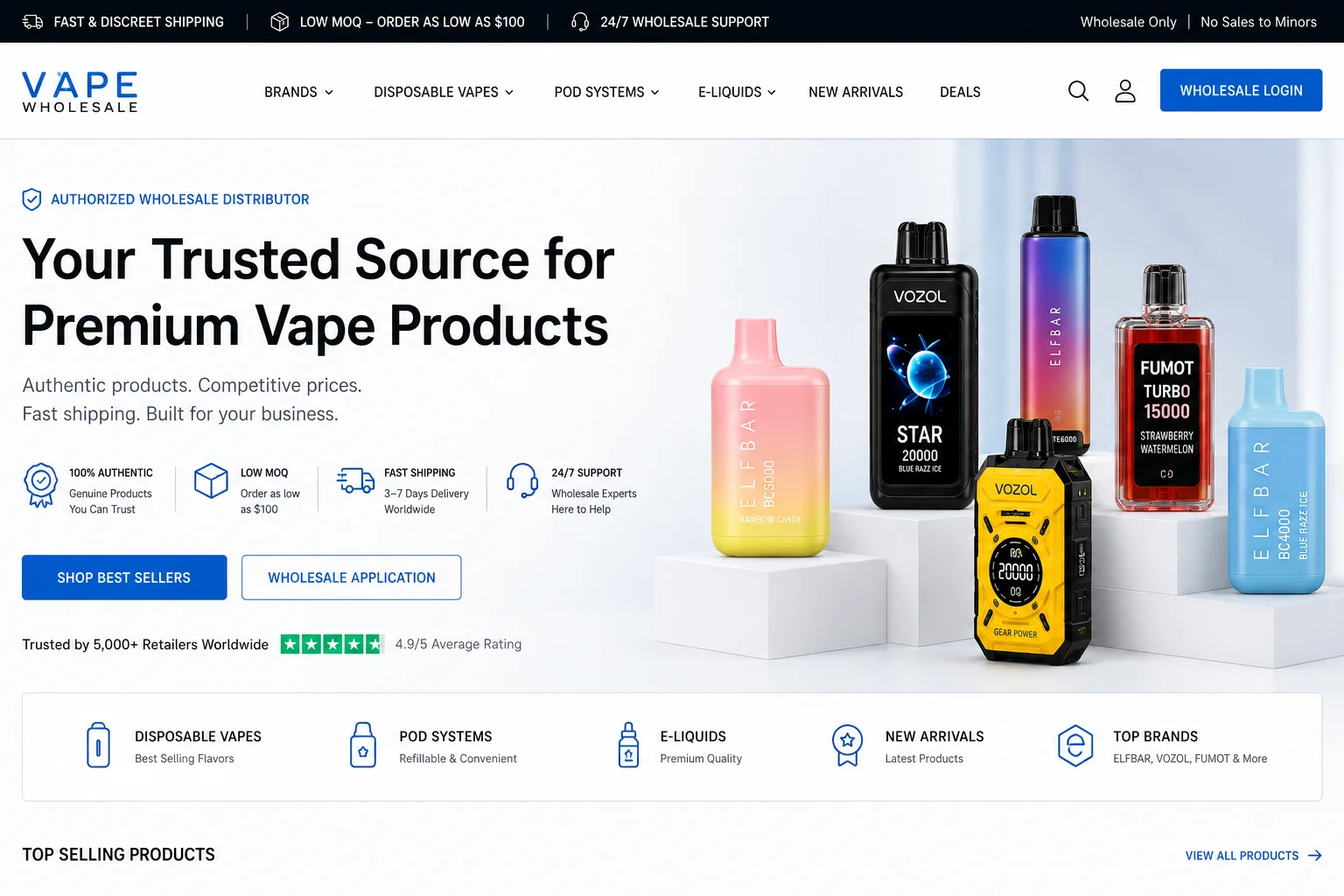
Think about your specific customer. What is their biggest headache? For the clients I talk to who are sourcing disposable vapes, their number one fear is getting stuck with fakes or waiting months for shipping. So, a generic headline like "High-Quality Electronics" is useless.
A much better headline would be: "Guaranteed Authentic Vapes, Shipped From Our EU Warehouse in 3-5 Days."
This headline does three things instantly:
- Addresses a Pain Point: It targets the fear of fake products ("Guaranteed Authentic").
- Offers a Solution: It solves the problem of long shipping times ("Shipped From Our EU Warehouse").
- Gives a Specific Benefit: It provides a clear, desirable timeline ("in 3-5 Days").
The goal of the "above the fold" section is not to sell the product. It's to sell the rest of the page. It needs to be strong enough to make the buyer stop scrolling and think, "Okay, these guys seem to get it. Let me read more."
How Should You Present the Brand and Product Line?
You list 100 different products, but buyers get confused and leave. A long, unorganized list doesn't show variety; it shows a lack of focus and just overwhelms your potential partner.
Group your products logically. But more importantly, explain why you chose to carry these specific brands and products. Tell a story about your selection process to show your expertise and build the buyer's confidence in your offerings.
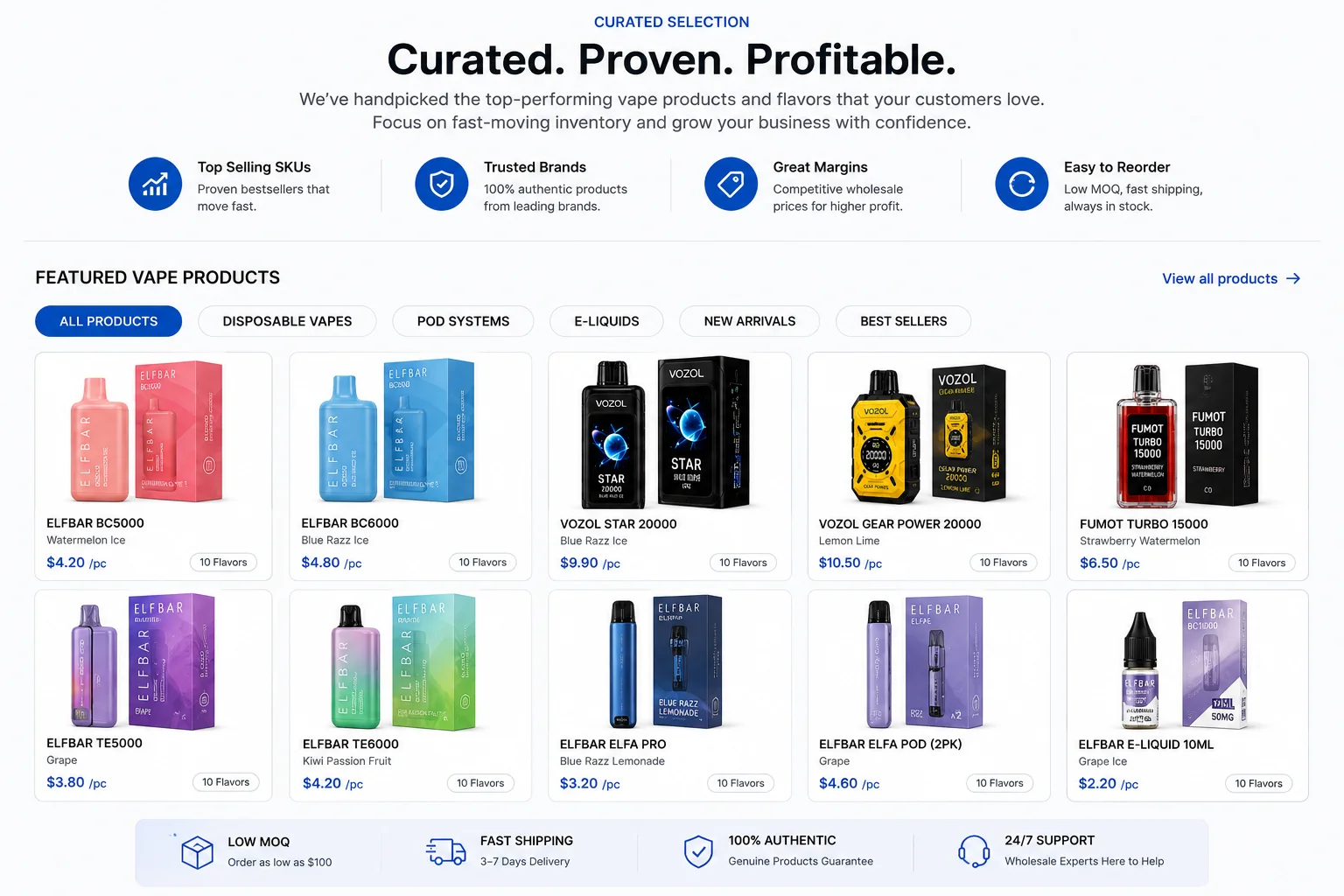
On our wholesale pages, we learned that less is often more. We don't just throw up a picture of every USB cable or TWS earphone we can source. We curate our selection. For example, with a hot market like disposable vapes, we are very intentional.
I often get asked, "Why don't you sell GEEK BAR or RAZZ BAR?" I tell them the truth. On our page, we explain it like this: "Brands like GEEK BAR operate on an exclusive national agent model.[^3] This means they only authorize one major distributor per country. Anyone else claiming to have a large, steady supply is a huge risk for you."
Then, we explain why we do carry brands like ELF BAR or FUMOT. We talk about their quality, our direct relationship with the factory, and the stable supply chain.
This approach does two critical things:
- It immediately builds trust through honesty.
- It positions us as market experts who guide our clients, not just as box-movers who will sell anything.
Your product presentation should show that you have done the homework for your buyer.
What Wholesale Details Must Buyers See Quickly?
Buyers are busy. They are hunting for three things: MOQ, price, and lead time. Are you forcing them to fill out a "contact us for a quote" form just to get this basic information?
Be radically transparent with your key wholesale details. You must clearly display the MOQ (Minimum Order Quantity), different price tiers, and lead times for various shipping options. Make it easy for them to decide if you are a good fit.
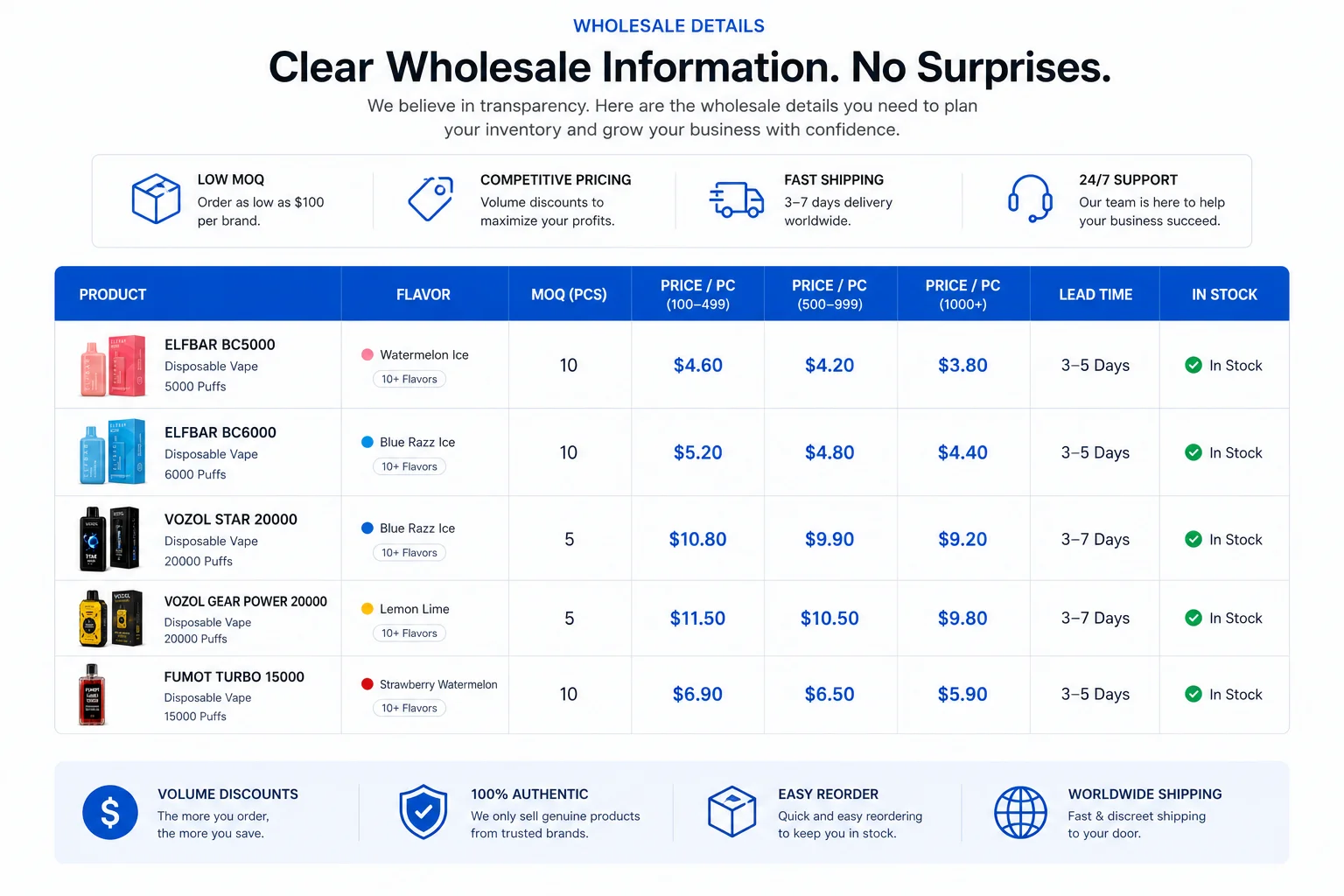
We learned that different buyers have different needs. A new seller starting out on social media can't handle a 2,000-unit MOQ.[^4] A large chain store needs the absolute best price and plans their orders months in advance. Hiding your terms helps nobody.
So, we present the options clearly on our page with a simple table. It's one of the most effective tools we have.
Sourcing Options for Our EU/US Clients
| Sourcing Option | Minimum Order (MOQ) | Lead Time | Best For... |
|---|---|---|---|
| Local Warehouse (EU/US) | 50 units | 1-5 business days | New sellers, testing new products, urgent restocking. |
| Direct from China Factory | 2,000+ units | 3-4 weeks (Air) | Experienced wholesalers, best pricing, bulk orders. |
By showing this upfront, we are telling the buyer: "We understand your business." A small seller sees the 50-unit MOQ and feels relieved. They know they can start small with a low investment of just a few hundred euros. An experienced wholesaler sees the "Direct from China" option and knows they can get the competitive pricing they need. This simple table filters out bad-fit clients and attracts the right ones, saving everyone a lot of time and emails.
How Can You Prove Authenticity and Product Quality?
The words "Guaranteed Original" on a website mean almost nothing. Buyers have been burned before, especially in the electronics market.[^5] How do you prove that your products are the real deal?
Use video, detailed photos, and clear, step-by-step instructions. Show your customers exactly how to verify authenticity themselves. Be honest about the differences in materials, like batteries and oils, to demonstrate your deep product knowledge and commitment to quality.
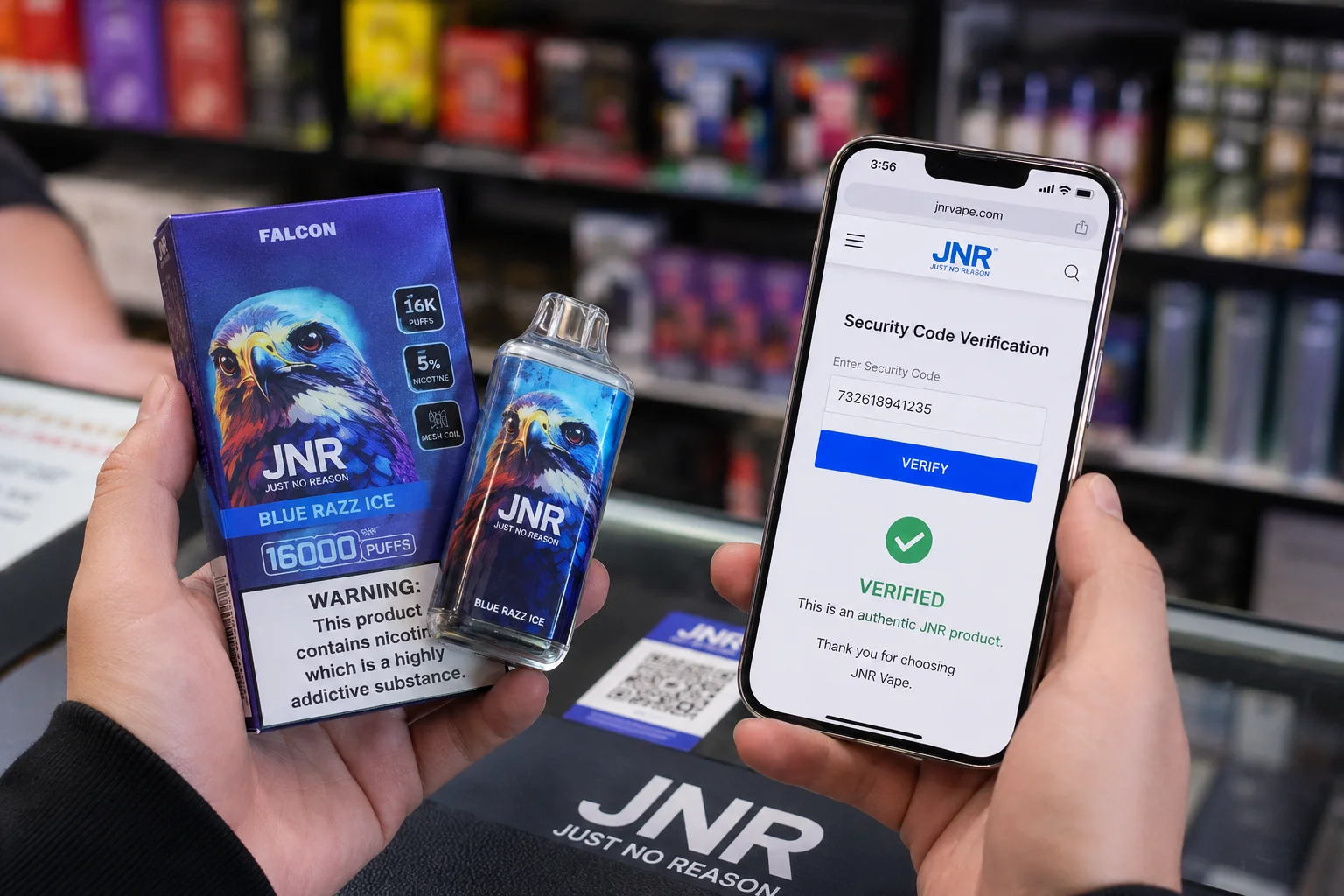
I'll never forget a new client from France who came to me after losing €2,000. He found a supplier selling JNR vapes for €2 a piece and thought he had found a goldmine. He paid, and the supplier disappeared. I had to gently explain to him that the real factory price for a genuine JNR is over €4. The unbelievable price itself was the biggest red flag.
To prevent this from happening to our clients, we prove our authenticity on the page itself:
- Expose the QR Code Trap: We have a section that says, "Warning: Fakes can have QR codes too!" We explain that fake codes often lead to a fake verification website[^6]. We instruct our buyers to always open the official brand website (e.g., elfbar.com) in their browser and manually type in the security code.
- Show, Don't Just Tell: We include videos of our actual warehouse stock. We show close-ups of the packaging, the security seals, and the quality of the printing.
- Educate on Components: We explain why fakes are cheap. We talk about the batteries. We use high-quality lithium-ion batteries that work in the cold and hold a charge. Fakes use cheap manganese batteries that die quickly and can be unreliable.[^7] This education shows we care about the product's performance, not just the sale.
What FAQs Help Remove Buyer Doubts?
A buyer has a tough question. They are worried about customs, or they are skeptical about your product claims. If they can't find an answer on your page, they won't email you. They will just leave.
Create a powerful FAQ section that addresses the most common and difficult questions head-on. Cover topics like shipping risks, customs insurance, product specifications, and what to do if there is a problem. Honesty about potential problems builds more trust than pretending they don't exist.
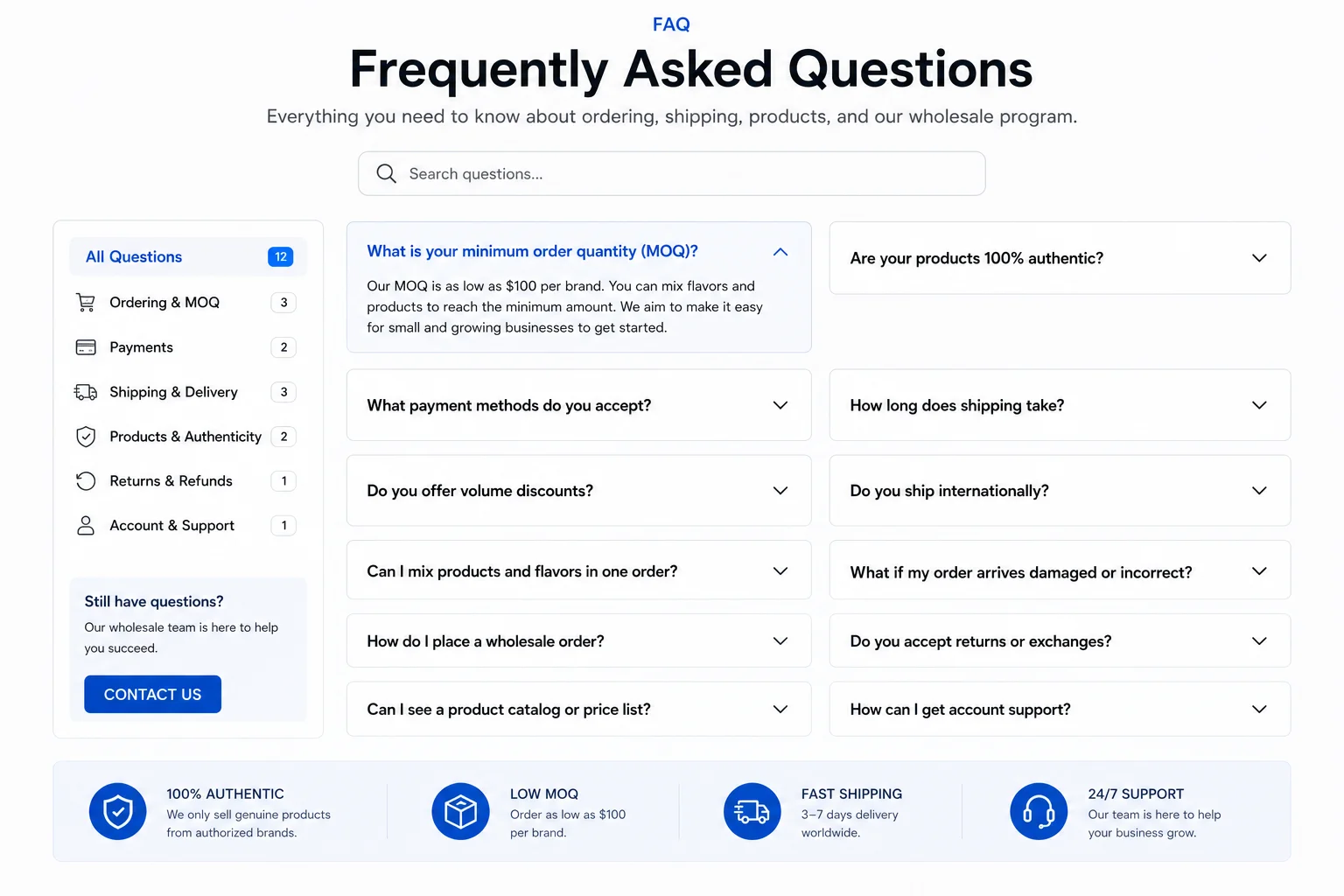
Your FAQ section is your chance to handle every objection before the buyer even thinks of it. We don't hide from the tough questions. We welcome them. Here are a few examples from our own page that have been incredibly effective.
-
Q: What happens if my shipment is seized by customs? A: We are very direct about this. For direct-from-China shipments, we explain that we offer full customs-seizure insurance[^8]. If the goods are seized at the first point of entry into the EU, we will reship the entire order at no cost to you. However, we are also honest about the risks of "secondary clearance" in certain EU countries (like Denmark, Sweden, Finland). We tell clients in those countries that the insurance does not cover this second check and advise them to ship to a neighboring country like Germany and arrange transport from there. This level of transparency is rare, and our clients appreciate it.
-
Q: I see vapes with 300,000 puffs. Is that real? A: We use this question to educate. We explain that puff count has become a meaningless marketing game[^9]. The real metric is the e-liquid volume. A good rule of thumb is 1ml of liquid equals about 200 puffs[^10]. The largest disposables hold maybe 50ml, so the maximum realistic puff count is around 10,000.[^11] We tell our clients to ignore the crazy numbers and focus on the ml. This shows we are experts and helps them make smarter buying decisions.
How Should You Add Internal Links and CTAs?
Your page is amazing, but what do you want the buyer to do next? If you don't give them a clear next step, they will do nothing. A page without a clear Call to Action (CTA) is a dead end.
Guide your buyer with clear, specific CTAs that match their needs. Instead of a generic "Contact Us," use targeted action-oriented buttons like "Shop Low-MOQ Warehouse Stock" or "Request a Quote for 2000+ Units." Make their next step obvious and easy.
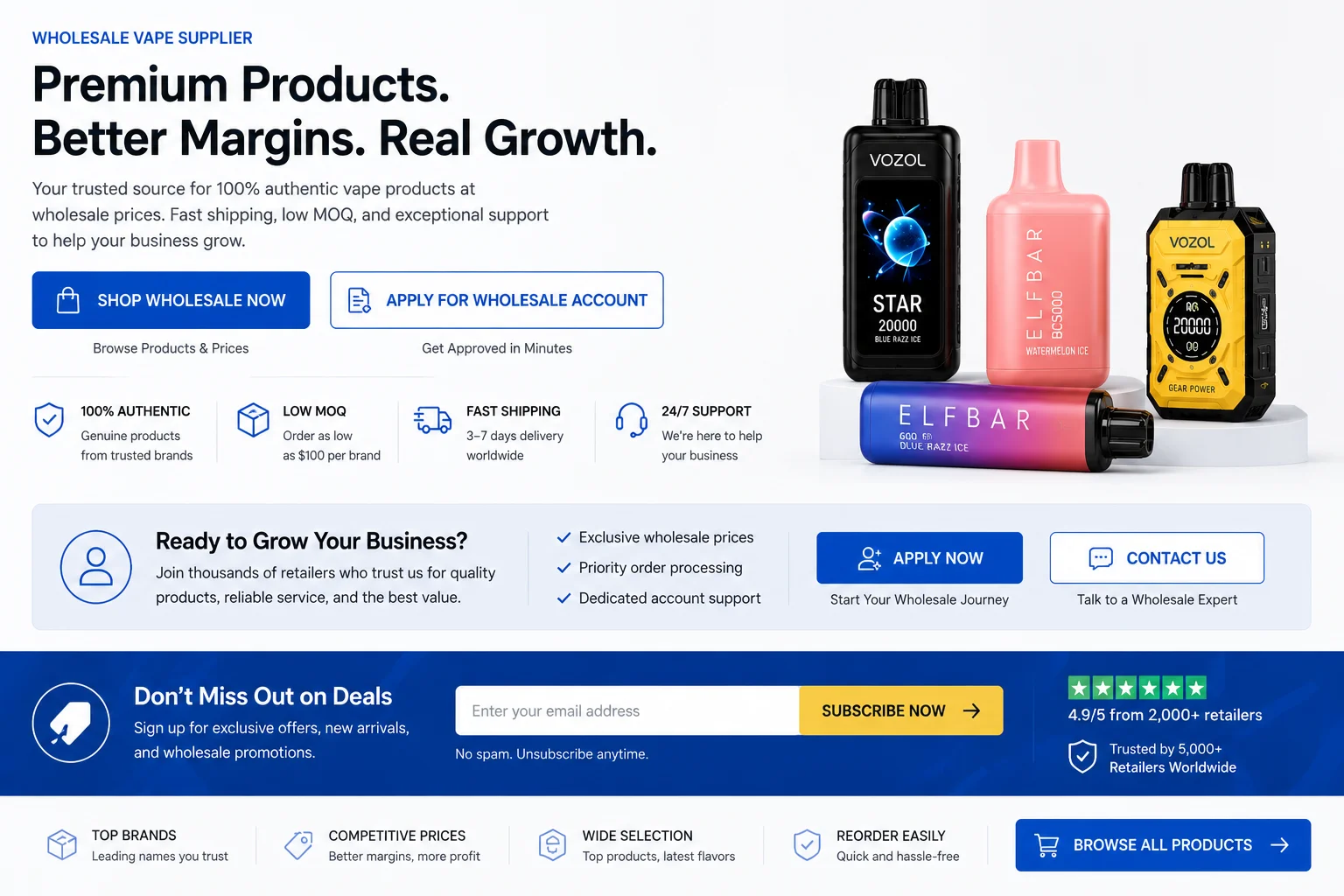
After we have educated the buyer and built trust, we need to make it simple for them to take action. The CTA should be the logical conclusion to the information they just read.
On our page, after we show the table comparing warehouse stock and factory-direct orders, we don't just leave it at that. We provide two distinct buttons:
[Shop Our EU/US Warehouse Now (Low MOQ)] [Get a Factory-Direct Quote (2000+ Units)]
These CTAs are effective because they are specific. The buyer self-selects the path that is right for them. We also add other helpful links, like a link to a blog post on "How to Identify Fake Vapes" or "Understanding Your Country's Import Regulations." We are always trying to provide value and guide the customer, not just push for a sale. Every click should take them to another helpful page that moves them closer to a confident purchase decision.
Conclusion
A successful wholesale page does two things: it uses SEO to attract buyers, but it uses trust, transparency, and genuine expertise to convert them into long-term partners. Build your page for real people with real business problems.
[^1]: "How to Increase Conversion Rate with Trust - Blazeo", https://www.blazeo.com/blog/increase-conversion-rate-with-trust/. Research in human-computer interaction and marketing consistently shows that trust is a key mediator of online purchasing decisions. While SEO generates traffic, factors that build trust—such as professional design, clear contact information, and social proof—are critical for conversion rate optimization (CRO). Evidence role: expert_consensus; source type: research. Supports: The claim that trust is a critical factor in converting website visitors into customers.. [^2]: "Media use, attention, mental health and academic performance ...", https://pmc.ncbi.nlm.nih.gov/articles/PMC8598050/. Research on web usability and user behavior indicates that users form a first impression of a website in a matter of seconds, influencing their decision to stay or leave. Evidence role: statistic; source type: research. Supports: The claim that web users make very quick judgments about a page, often within a few seconds.. Scope note: The exact time can vary based on the study, but the general finding of extremely rapid judgment is consistent. [^3]: "E-Cigarettes, Vapes, and other Electronic Nicotine Delivery Systems ...", https://www.fda.gov/tobacco-products/products-ingredients-components/e-cigarettes-vapes-and-other-electronic-nicotine-delivery-systems-ends. Industry analysis or official company statements can confirm the use of exclusive national agent distribution models by specific brands, which restricts the supply chain to authorized partners in each country. Evidence role: case_reference; source type: other. Supports: The claim that some brands in the vape industry utilize an exclusive distribution model where they partner with a single national agent per country.. Scope note: The specific distribution model is company-dependent and may change over time. [^4]: "Dealing with minimum order quantities as an e-commerce retailer", https://www.reddit.com/r/Entrepreneur/comments/5zjyxq/dealing_with_minimum_order_quantities_as_an/. Business resources for e-commerce startups often highlight that high Minimum Order Quantities (MOQs) from suppliers are a major challenge, as they require significant upfront capital investment and present inventory risk for businesses with unproven sales volumes. Evidence role: general_support; source type: education. Supports: The claim that high MOQs present a significant barrier to entry for new or small-scale online retailers.. [^5]: "Counterfeit and pirated goods - OECD", https://www.oecd.org/en/topics/counterfeit-and-pirated-goods.html. Reports from organizations like the OECD and various government agencies show that consumer electronics are among the most frequently counterfeited goods, representing a multi-billion dollar illicit market that erodes consumer trust. Evidence role: statistic; source type: government. Supports: The claim that the electronics market is heavily affected by counterfeit products, justifying buyer skepticism.. [^6]: "Scammers hide harmful links in QR codes to steal your information", https://consumer.ftc.gov/consumer-alerts/2023/12/scammers-hide-harmful-links-qr-codes-steal-your-information. Cybersecurity and brand protection firms have documented the tactic of counterfeiters using QR codes on packaging that lead to convincing but fraudulent websites designed to falsely 'verify' a fake product as authentic. Evidence role: mechanism; source type: research. Supports: The claim that counterfeiters create fake verification websites linked from fraudulent QR codes.. [^7]: "Lithium-ion Battery (LFP and NMC) | PNNL", https://www.pnnl.gov/projects/esgc-cost-performance/lithium-ion-battery. Technical comparisons of battery chemistries show that while manganese-based batteries are less expensive, lithium-ion batteries offer higher energy density, better performance in cold temperatures, and a more stable voltage output, making them superior for high-drain electronics. Evidence role: mechanism; source type: education. Supports: The claim that manganese batteries are a cheaper, lower-performance alternative to lithium-ion batteries.. [^8]: "Cargo Insurance | BETA - International Trade Administration", https://beta.trade.gov/article?id=Cargo-Insurance. Some specialized freight forwarders and insurance providers offer policies or service guarantees that cover the financial loss if a shipment is seized by customs, though coverage terms and availability can vary significantly by carrier, country, and product type. Evidence role: definition; source type: other. Supports: The claim that insurance products exist to cover the risk of customs seizure.. Scope note: This type of insurance is not standard and may be offered as a bespoke service rather than a widely available product. [^9]: "Marketing claims on websites of brick-and-mortar vape shops ... - PMC", https://pmc.ncbi.nlm.nih.gov/articles/PMC9241445/. Investigative reports and analyses from consumer advocacy groups have found significant discrepancies between the advertised puff counts on disposable vapes and the actual performance observed in testing, suggesting the numbers are often used as a marketing tool rather than a precise metric. Evidence role: expert_consensus; source type: other. Supports: The claim that advertised puff counts on vapes are unreliable.. [^10]: "Factors that influence decision-making among youth who vape and ...", https://pmc.ncbi.nlm.nih.gov/articles/PMC10382621/. While there is no universal standard, industry estimations and user reports often suggest a range for puffs per milliliter of e-liquid. The actual number is highly dependent on factors such as the device's power settings, coil resistance, and the user's puff duration. Evidence role: general_support; source type: research. Supports: The claim that there is a general ratio for converting e-liquid volume to puff count.. Scope note: This is a 'rule of thumb' and not a precise scientific measurement, as puff counts vary widely based on user habits and device characteristics. [^11]: "Emerging Electronic Cigarette Policies in European Member States ...", https://pmc.ncbi.nlm.nih.gov/articles/PMC8025686/. Regulations in major markets, such as the European Union's Tobacco Products Directive (TPD), place legal limits on the amount of e-liquid in a single disposable device (e.g., 2ml). In markets without such restrictions, larger devices exist, but the puff count remains directly proportional to the e-liquid volume. Evidence role: general_support; source type: government. Supports: The claim that e-liquid capacity is the true determinant of puff count and is often legally restricted.. Scope note: The maximum legal volume varies significantly by jurisdiction, with many markets allowing much larger capacities than the EU.