
Quick Answer
Store-level vape sales data can look simple at first: find the top-selling SKU and order more. However, that approach can leave wholesalers holding products that had one short local spike but never produced stable reorders. I focus on repeatable sell-through, replenishment patterns, and store context so buyers can make safer inventory decisions.
The most useful store-level vape sales data for a wholesaler is evidence that a product sells consistently and needs repeat replenishment in comparable stores. A simple SKU ranking or one large initial order is not enough. Wholesalers should compare sales velocity, reorder frequency, unsold stock, store type, location, and customer demand before increasing an upstream purchase.
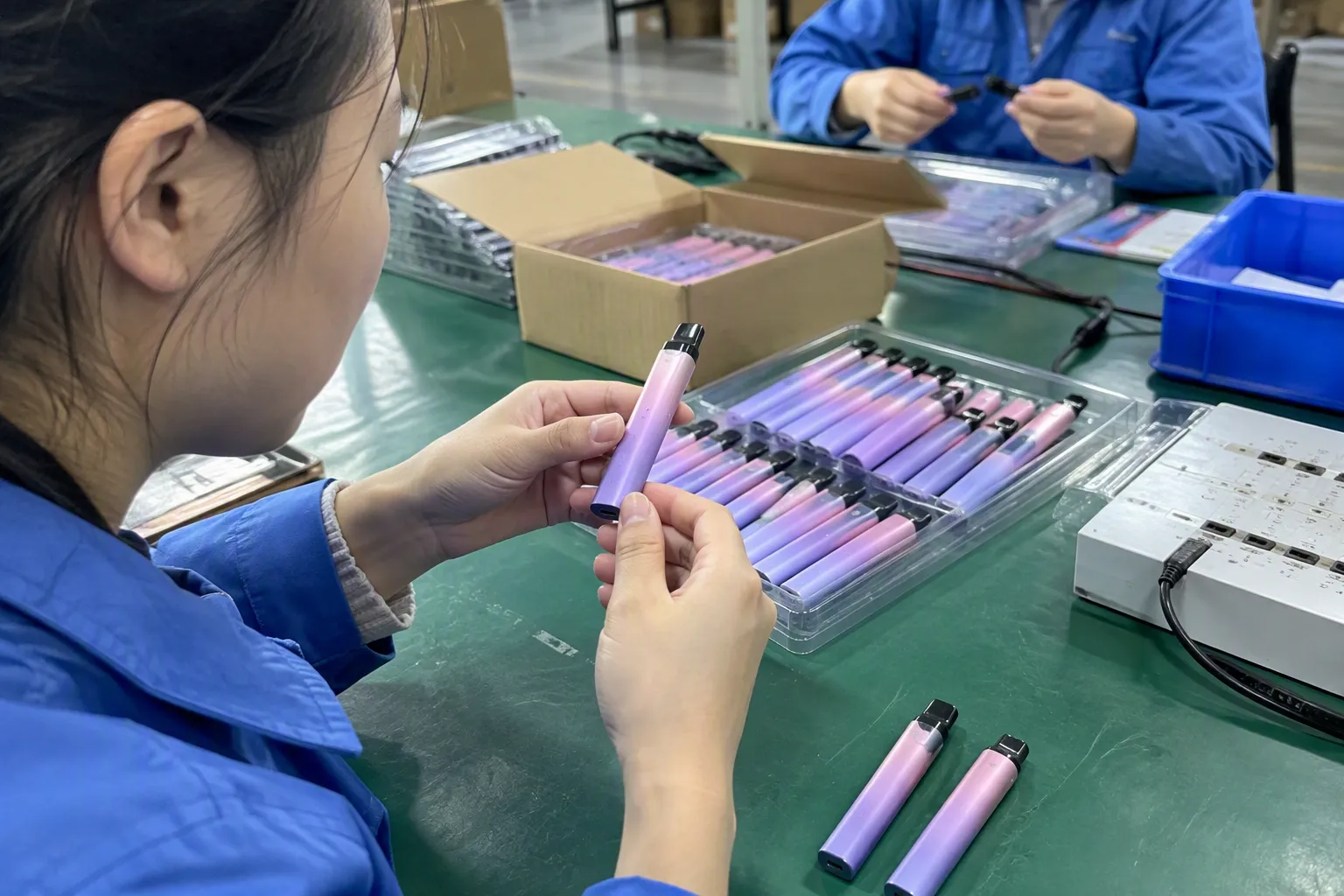
I regularly speak with wholesalers, importers, vape shop buyers, smoke shop owners, and convenience-store suppliers about products that are selling, products that are being reordered, and products that are still sitting in storage. These conversations show why store-level vape sales data needs context before it becomes a purchasing decision.
Most useful store-level vape sales data is not a simple SKU sales ranking
A SKU sales ranking can be useful, but it can also be misleading when wholesalers use it alone. A product may rank highly because one store made a large opening purchase, ran a short promotion, or served a very specific local customer group.[1] That does not automatically mean the SKU will perform across your customer base.
The most useful store-level vape sales data shows whether a SKU has steady sales and repeated replenishment in similar stores. Wholesalers should look beyond total units sold and ask whether the product keeps moving after the first order, whether customers ask for it again, and whether comparable stores reorder it without heavy discounting.
A sales ranking shows volume, but not always quality of demand
A ranking normally answers one question: which SKU sold the most units during a specific period? That is useful, but it does not answer several questions that matter more to a wholesaler:
- Did the SKU sell steadily or only during one short period?
- Was the product reordered after the first delivery?
- Did the store discount the product to clear it?
- Did customers specifically request the SKU?
- Did the same SKU work in more than one comparable store?
- Did the store buyer increase, maintain, or reduce the next order?
- Is remaining inventory still taking up shelf space or warehouse cash?
I treat store-level vape sales data as a practical decision tool, not as a prediction machine. It cannot guarantee demand in every city, store, or customer segment. Still, it can help wholesalers avoid making a large inventory decision based on a single exciting number.
A high cumulative sales number can hide a weak replenishment story. For example, a retailer may buy a large quantity of a new disposable vape because the product has attractive packaging, a new flavor format, or strong attention on social media. The initial shipment may create a high unit total. But if that retailer does not reorder, or if the second order becomes much smaller, the original sales ranking does not tell the full story.
In contrast, a less dramatic SKU may sell at a stable pace every week. It may not be the loudest product in a monthly ranking, but stores may keep asking for it because it creates dependable turnover. For a wholesaler managing cash flow, warehouse space, and reorder timing, that stable product can be more valuable than a short-lived hot seller.
I usually pay close attention when a buyer says, “Please keep this one available,” or “My stores need another carton.” That type of replenishment conversation often matters more than a one-time order quantity.
Why repeat replenishment matters more than a strong first order
Repeat replenishment is one of the clearest practical signals in store-level vape sales data. It suggests that the product moved through the store and that the buyer believes another order has a reasonable chance of selling again.
This does not mean every reorder proves long-term demand. A buyer may reorder because they are testing a wider flavor range, filling an empty shelf, or responding to a temporary customer request. However, repeat orders are still stronger evidence than supplier shipment volume alone.
Supplier order volume does not automatically prove end-consumer demand.[2] A wholesaler can place a large upstream order and still have products sitting in storage. Likewise, a retailer can purchase a product once and decide not to buy it again. I separate these two situations carefully:
| Signal | What it may indicate | What it does not prove |
|---|---|---|
| Large first order | Buyer interest, launch activity, or confidence | Stable end-user demand |
| High SKU ranking | Strong sales during one period | Repeatable sales in other store types |
| Repeat store reorder | Ongoing movement and buyer confidence | Universal demand in every market |
| Customer requests | Real interest from local shoppers | Broad demand across regions |
| Low remaining stock | Product may be moving well | Whether the store plans to reorder |
| Slow-moving inventory | A possible SKU, price, or store-fit problem | That the product will fail everywhere |
I recommend asking store customers simple, direct questions instead of relying only on a spreadsheet:
- Which products are you reordering most often?
- Which SKUs are customers asking for by name or product type?
- Which products sold only during the first week or launch period?
- Which items are still sitting after the initial order?
- Which products are selling without strong discounting?
- Which items are being replaced by another similar product?
- Which products fit your regular customers, not only occasional buyers?
These questions create a more useful picture than a basic “top 10 SKU” list. They also help wholesalers understand whether a product has become part of a store’s normal replenishment cycle.
Sales consistency protects working capital
Wholesalers often make inventory decisions under pressure. A store buyer wants a new product quickly. A competitor has started offering a similar item. A factory or supplier may have limited stock. A product may look like a market opportunity, and nobody wants to miss it.
However, inventory that does not move can become expensive very quickly. It ties up purchasing funds, occupies warehouse space, and can force discounts later.[3] This is why I believe wholesalers should use store-level vape sales data to protect cash flow, not simply to chase high-volume headlines.
A consistent SKU supports better planning because it gives the buyer more confidence about:
- Reorder timing
- Stock allocation by customer type
- Quantity planning
- Warehouse space
- Product assortment decisions
- Supplier purchasing schedules
- Slow-stock reduction plans
A short-term hot SKU can still be worth testing. The key is to treat it as a test, not as a proven core item. This distinction is important for wholesalers supplying independent vape shops, smoke shops, gas stations, convenience stores, and regional retail chains.
Segment store-level vape sales data by store type
The same vape SKU can perform very differently depending on where it is sold.[4] A vape shop customer may compare product formats, flavors, device features, and brand familiarity. A convenience-store customer may make a quicker purchase decision. A gas station may have limited display space. A smoke shop may carry a wider mix of vaping products, grinders, glass pipes, accessories, and other adult-oriented merchandise.
For this reason, I do not treat all store-level vape sales data as directly comparable.
A product that sells well in a specialist vape shop may not fit a convenience-store shelf. A fast-selling convenience-store product may not satisfy customers at a premium vape retailer. A tourist-area smoke shop may have different demand from a neighborhood shop serving regular local customers.
Wholesalers should segment store feedback before deciding what to reorder.
| Store context | Useful questions for the wholesaler | Common inventory risk |
|---|---|---|
| Vape shop | Does the SKU earn repeat interest from experienced users? | Too many similar options competing for the same buyer |
| Smoke shop | Does the product fit the wider accessory and vape assortment? | Assortment becomes too broad and slow-moving |
| Convenience store | Is the product easy for staff to sell and restock? | Shelf space is limited and slow items are removed quickly |
| Gas station | Does the SKU move consistently in a fast transaction environment? | Impulse demand may be local and temporary |
| Tourist-area store | Does demand continue outside peak travel periods? | Seasonal sales can create misleading rankings |
| Regional wholesaler | Are multiple downstream stores reordering? | One large customer can distort the demand picture |
When I hear that a product is “selling very well,” I usually want to know where it is selling, to whom, and whether it is being reordered. Those details turn a general statement into usable purchasing information.
Location and customer mix can change the meaning of a winner
Store type is only one part of the picture. Location and customer mix also matter.
A product may perform differently in:
- City-center stores and suburban stores
- Tourist areas and residential neighborhoods
- Markets with many experienced vape consumers and markets with more occasional buyers
- Stores serving local regular customers and stores serving passing traffic
- Areas with different product preferences and price expectations
- Regions with different regulatory requirements or product restrictions
Wholesalers should also ensure that products, packaging, labeling, nicotine strength, ingredients, and marketing practices are suitable for the destination market.[5] Buyers should verify the current local legal and compliance requirements with qualified professionals or relevant authorities before importing, distributing, or selling vaping products.
I do not position store-level vape sales data as legal advice or as a universal market forecast. I see it as one important part of responsible replenishment planning. A product can show good sell-through and still be unsuitable for a particular market if it does not meet local rules or buyer requirements.
Look for practical signals from downstream stores
Many independent stores do not have detailed POS reporting that is clean, complete, and easy to compare.[6] That does not mean a wholesaler has no useful information. Practical buyer feedback can still be valuable when it is collected consistently.
I encourage wholesalers to build a simple feedback routine with their downstream customers. The goal is not to burden store owners with complicated reporting. The goal is to collect the signals that help make better SKU decisions.
Useful store-level feedback can include:
- “This product needs regular replenishment.”
- “Customers ask for this flavor or format.”
- “This item sold at launch but slowed down.”
- “This SKU is sitting in the display.”
- “We are replacing this item with another option.”
- “This product works in one location but not in our other store.”
- “We need a smaller reorder quantity until demand is clearer.”
- “We can sell this product, but only at a lower price.”
- “Customers are returning because they do not understand how to use it.”
The last point is especially important. A product can appear to have a quality problem when the real issue is unclear product selection, poor staff explanation, unsuitable customer fit, or incorrect use. Wholesalers should not assume every complaint has the same cause. They should gather the product details, lot information where available, handling history, and store feedback, then work with the appropriate supplier or manufacturer through a documented after-sales process.
For buyers, a supplier’s after-sales support should be evaluated before a large purchase. I recommend asking how claims are handled, what evidence is required, what time frame applies, and whether the supplier can coordinate support across multiple product brands. Buyers should verify all commercial terms in writing.
Build a three-layer SKU decision system
The best use of store-level vape sales data is not simply choosing “winners” and “losers.” I recommend using it to place each SKU into a practical inventory layer.
1. Proven core sellers
Core sellers are products with repeatable movement and regular replenishment in comparable stores. They are not always the newest or most exciting products. Their value comes from predictability.
A core SKU should generally show several signs:
- More than one reorder signal
- Stable sales over more than one review period
- Suitable performance in similar store types
- Limited unsold inventory relative to normal demand
- A clear reason why buyers continue to stock it
- A reliable supply path and manageable lead time
Wholesalers can use these items to support normal stock planning. The goal is not to overstock them blindly. The goal is to avoid preventable stockouts while maintaining sensible inventory control.
2. Controlled test products
Test products include emerging devices, new formats, different flavor profiles, updated packaging, or products that are receiving early interest but do not yet have a proven replenishment history.
I believe a controlled test is safer than an immediate large purchase. A wholesaler can place a limited quantity with selected stores that match the intended customer profile. Then the wholesaler can collect feedback before expanding the order.
A controlled test should answer practical questions:
- Does the product sell after the first display period?
- Do customers ask for it again?
- Do store buyers request replenishment?
- Which store formats respond best?
- Is the product replacing another SKU or adding new demand?
- Does the item create avoidable after-sales issues?
- Is the selling price acceptable for the local customer base?
This approach helps wholesalers participate in new-product opportunities while reducing the risk of a large inventory commitment.
3. Slow-moving or reduction candidates
A slow-moving SKU does not always need to be stopped immediately. First, a wholesaler should understand why it is slow.
Possible reasons include:
- The SKU does not match the store’s customer base.
- The store ordered too many units at launch.
- The product is competing with too many similar items.
- Staff do not understand the product well enough to explain it.
- The price does not fit local expectations.
- The product is not displayed clearly.
- Demand was seasonal, temporary, or location-specific.
- Another product has replaced it.
After reviewing these factors, the wholesaler can choose to reduce the SKU, move it to a better-matched store type, avoid reordering it, or clear remaining stock through a carefully managed promotion where permitted.
The important point is that a slow-moving item should not continue receiving large replenishment orders simply because it once appeared in a strong sales ranking.
Use comparable stores before scaling an order

A wholesaler should compare like with like.[8] If a product performs in three urban vape shops with similar customer profiles, that is more useful than comparing it with one gas station, one tourist smoke shop, and one suburban convenience store.
I suggest creating simple store groups, such as:
- Specialist vape shops
- Smoke shops with broad accessory assortments
- Convenience stores with limited vape shelf space
- Gas stations with high transaction traffic
- Tourist-oriented retail stores
- Regional chain stores
- Independent neighborhood stores
Then review store-level vape sales data within each group. This makes it easier to see whether the SKU has repeatable demand in a specific channel.
For example, a wholesaler might find that a product receives reorders from vape shops but not from gas stations. That does not mean the product is bad. It means the product may need different allocation, different sales support, or a different customer target.
This is also useful for importers and distributors who sell across several countries or regions. A product that works for one group of stores should be tested carefully before being treated as a broader market winner.
Match purchasing routes to the level of demand confidence
Wholesalers do not all need the same purchasing method. Smaller buyers often need speed, low minimum order quantities, and less cash tied up in inventory. Larger importers and distributors may need stronger unit pricing, deeper inventory, custom branding, or OEM/ODM development options.
At Shenzhen Kingfuji Tech. Co., Ltd., I work with buyers who need different supply approaches. Some customers want a mixed order of established brands and related vape or smoking-accessory products. Some need help sourcing products that are not currently in a standard catalogue. Some larger customers explore OEM or ODM projects when their product requirements, order planning, and commercial conditions are suitable.
For smaller and medium-sized European buyers, our overseas warehouse options can support lower-MOQ purchasing for selected stocked products, with delivery across EU markets through available logistics services. Buyers should confirm current stock, destination coverage, shipping terms, product eligibility, and delivery expectations before ordering.
For larger importers, wholesalers, and distributors, direct purchasing from China may provide a different route for volume planning, pricing discussions, mixed-category sourcing, or custom product development. However, buyers should evaluate lead times, import requirements, compliance responsibilities, payment terms, logistics arrangements, and inventory risk before committing to a larger order.
The best route depends on the confidence level shown by your store-level vape sales data:
| Demand confidence | Suitable purchasing approach | Main objective |
|---|---|---|
| Early interest only | Small controlled test order | Learn without tying up too much capital |
| Repeat demand in selected stores | Targeted replenishment | Keep proven channels supplied |
| Stable demand across comparable stores | Planned stock order | Improve availability and purchasing efficiency |
| Broad, sustained demand with clear requirements | Larger import or OEM/ODM discussion | Build a more structured product program |
Avoid common mistakes when reading store-level vape sales data

I have seen several patterns create unnecessary inventory risk. These mistakes are common because buyers often need to make decisions quickly.
Mistake 1: Treating one top-selling store as the whole market
One store can be a useful signal. It is not automatically a market-wide conclusion. A successful store may have a unique location, customer mix, owner recommendation style, or promotional activity.
A better approach is to ask whether the same SKU is being reordered by comparable stores.
Mistake 2: Confusing initial orders with sell-through
A large store order can reflect optimism, a new product launch, or a buyer’s desire to avoid stockouts. It does not necessarily show that end consumers purchased the product.
A better approach is to track what happens after the first order.
Mistake 3: Ignoring slow stock because the SKU was once popular
A product may have been strong several months ago and then lost momentum. Holding onto the old story can delay necessary inventory action.
A better approach is to review current replenishment signals and remaining stock.
Mistake 4: Ordering deeper because upstream supply is available
Supplier availability is useful, but it is not demand evidence. Wholesalers should not let a factory promotion, supplier stock position, or large shipment opportunity replace downstream sell-through analysis.
A better approach is to match upstream orders to confirmed sales patterns and realistic testing plans.
Mistake 5: Forgetting that store staff influence sales
In many stores, staff recommendations affect which products customers try.[7] A SKU may fail because staff do not understand the product, do not see its value, or do not know which customers it suits.
A better approach is to provide simple product information and collect feedback about customer questions, not only sales totals.
Frequently Asked Questions About Store-Level Vape Sales Data
What is the most important store-level vape sales data for a wholesaler?
The most important signal is repeatable sell-through shown by regular replenishment in comparable stores. Total units sold can be useful, but wholesalers should also review sales consistency, unsold stock, customer requests, reorder frequency, and store type before increasing inventory.
Is a top-selling vape SKU always safe to reorder in larger quantities?
No. A top-selling SKU may reflect a short promotion, a large initial purchase, local customer preferences, or seasonal demand. I recommend checking whether the item continues to sell and whether similar stores reorder it before placing a larger upstream order.
How should wholesalers collect store-level vape sales data without advanced POS systems?
Wholesalers can use a simple recurring feedback process. Ask stores which items need replenishment, which products customers request, which SKUs are still sitting, and which products are being reduced or replaced. Consistent qualitative feedback can support better purchasing decisions.
Why should vape wholesalers separate data by store type?
Different store formats serve different customers and have different shelf-space limits, price expectations, and product assortments. A SKU that performs in a vape shop may not perform in a gas station or convenience store. Segmentation helps wholesalers avoid applying the wrong demand signal to the wrong channel.
How can I test a new vape SKU without creating excess inventory?
Start with a controlled quantity and place it with stores that match the intended customer profile. Review replenishment requests, customer feedback, remaining inventory, and after-sales issues before expanding the order. This reduces risk while allowing you to evaluate emerging products.
Conclusion
The best store-level vape sales data is not a simple list of the highest-selling SKUs. I believe wholesalers make stronger inventory decisions when they focus on consistent sales velocity, repeat replenishment, comparable store types, customer requests, and slow-moving stock. This approach helps protect cash flow while keeping proven products available. If you need support sourcing vape products, building a mixed-category order, testing new items, or planning replenishment for your market, contact me at info@kingvapecig.com to discuss a practical supply option.
Sources
- Prices and Promotions in U.S. Retail Markets", Retail-sales research finds that promotions and distribution-related conditions can produce temporary changes in measured sales, so sales observed in a limited period may not represent persistent underlying demand
- Understanding Sell-Through Rate | The Supply Chain Source", Supply-chain terminology distinguishes sell-in or supplier shipments from sell-through to final customers; goods shipped into a channel may remain in retailer or wholesaler inventory rather than reflecting completed consumer sales
- Inventory Carrying Cost: How to Calculate, Reduce & ...", Inventory-management guidance identifies capital tied up in stock, storage and handling expenses, and risks of obsolescence or markdowns as costs associated with excess inventory
- Consumer Shopping and Spending across Retail Formats*", Retailing research recognizes that store format, local market characteristics, assortment, and shopping mission can affect customer purchasing behavior and product sales
- E-Cigarettes, Vapes, and other Electronic Nicotine Delivery ...", Official electronic-cigarette regulatory frameworks may impose requirements concerning nicotine content, ingredients, product notification, packaging and labeling, and restrictions on advertising or promotion
- What Is Point of Sale Data & Why It Matters", Research on small-retailer technology adoption reports that limited resources, fragmented systems, and uneven analytical capacity can constrain the completeness and comparability of retail sales data
- Humans or AI: How the Source of Recommendations ...", Consumer and retailing studies indicate that salesperson expertise and recommendations can influence customer evaluations and purchase decisions, particularly where shoppers seek product information
- The future of physical retail: 5 actions to elevate customer ...", Retail-sales analysis accounts for differences in store and market characteristics because pooling dissimilar outlets can obscure meaningful variation in product performance