Quick Answer
An authenticity claim can look reassuring on a vape wholesale website, but buyers still face real risks when product origin, brand rights, and shipment sources are unclear. A single factory photo or company certificate may create confidence without proving the exact product being offered. I recommend matching every claim with a specific, reviewable record.
An authenticity claim on a vape wholesale website should be supported by records that match the exact product and claim being made. Company registration can help verify who the seller is[1], while factory information can support manufacturing identity. However, own-brand goods, OEM/ODM products, and third-party branded products each require different evidence chains. Buyers should ask what the claim means, what product it covers, and which record can verify it.
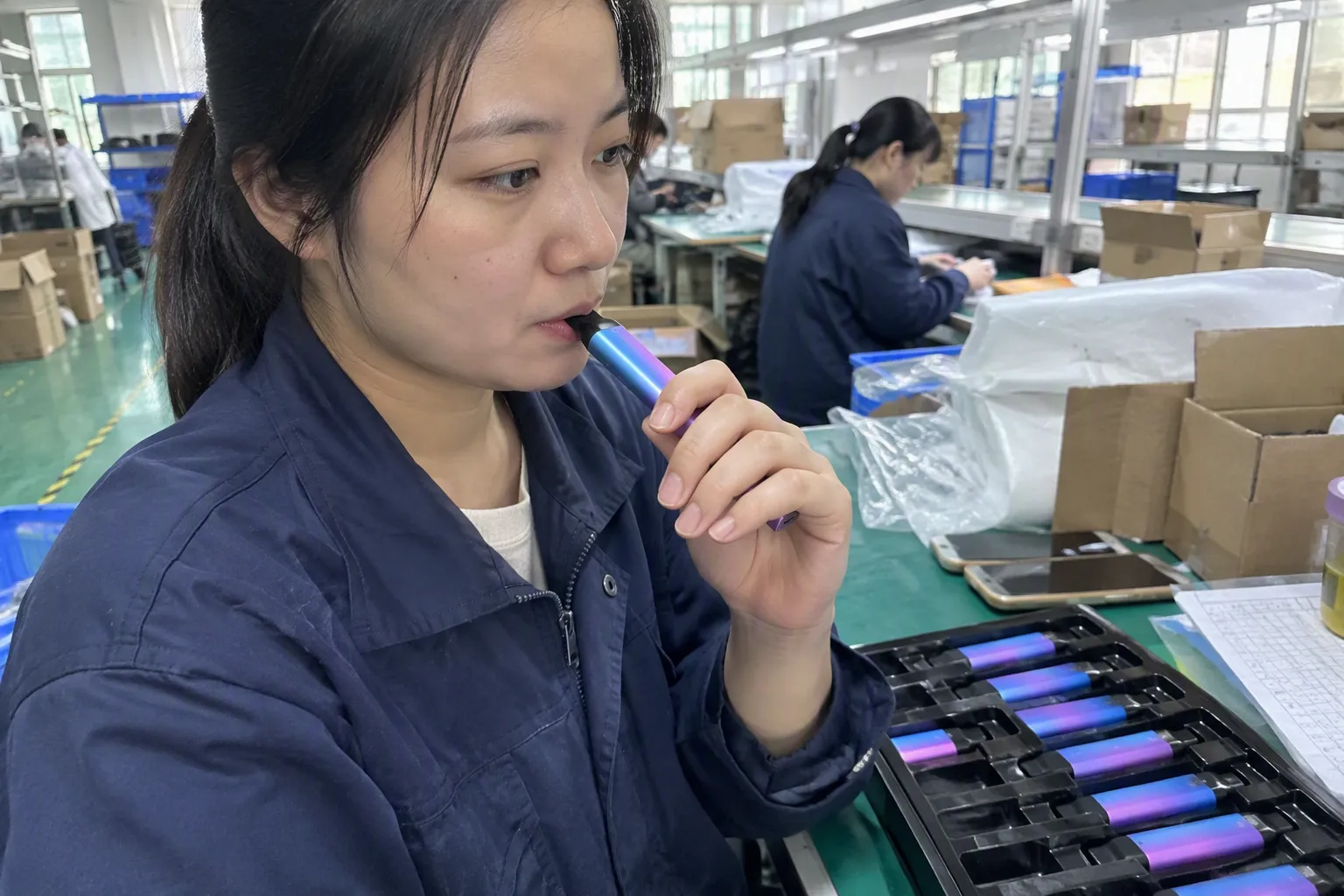
When I speak with vape wholesalers, smoke shop suppliers, and importers, I often see the same issue: buyers want a quick answer to a complicated question. They want to know whether goods are genuine, traceable, and safe to purchase from a commercial point of view. The practical answer starts with records, scope, and careful supplier evaluation.
Why Is an Authenticity Claim Not a Marketing Label or Company Registration Proof?
An authenticity claim becomes weak when it is used as a general marketing label without explaining what it covers. Buyers can lose money when they assume one business document proves every brand, product, and shipment on a website. I believe the solution is simple: separate each claim and request records that directly support it.
A company registration record can verify the legal identity of a seller, but it does not prove that every vape product on its website is authentic, authorized, or sourced from the stated manufacturer. A credible authenticity claim should identify the product type, the scope of the claim, the supporting records, and the limits of those records.
The First Question: What Exactly Is Being Claimed?
In my work with international buyers, I have handled many requests for factory verification and own-brand verification. These requests are reasonable. A buyer may be preparing a large import order, launching a local retail program, or supplying vape shops and convenience stores that expect reliable product information.
However, “authentic” can mean several different things in a wholesale conversation. If the meaning is not defined, a buyer and seller may believe they are discussing the same issue while actually discussing different risks.
For example, an authenticity claim may refer to:
- The seller being a real registered company
- The seller operating a factory
- The product being made under the seller’s own brand
- The seller having the right to supply a third-party brand
- The goods coming through an identifiable supply chain
- The ordered batch matching the website listing
- The packaging, model, flavor, capacity, or configuration matching the agreed order
- The shipment being traceable to a specific invoice or purchase order
Each point needs different records.
A company registration document may support the first point. Factory photos, production-line images, and manufacturing information may support the second point. Brand ownership documents may help support the third point. Purchase records, supply authorization, or brand-side verification processes may be relevant to the fourth point.
None of these documents should be stretched beyond what they can reasonably prove.
A useful sourcing question is not “Are your products authentic?”
A more useful question is: “What does this authenticity claim cover, and which record verifies this specific product?”
This approach helps buyers avoid two common mistakes:
- Treating a real company as proof that every item it sells is genuine
- Treating a genuine product photo as proof of the source of the actual shipment
A legitimate business can sell products from many supply channels. A factory can manufacture its own products and also trade other brands. A distributor can supply genuine goods for one market while having no rights for another destination.[6] The records need to match the actual commercial situation.
What Company Registration Can Establish—and What It Cannot
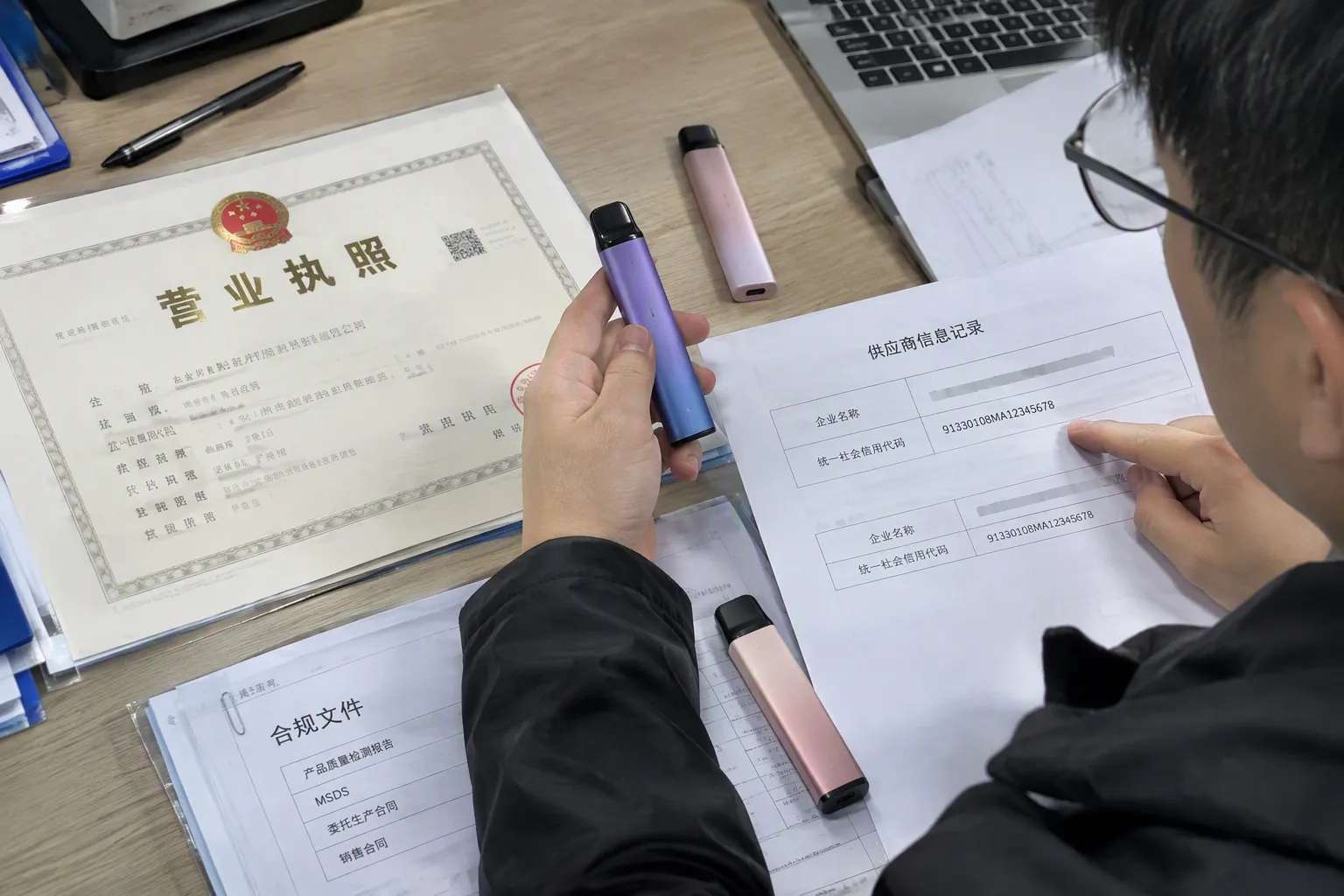
Company registration is usually one of the first records a buyer requests. This is a sensible starting point. It helps establish whether the supplier is an identifiable legal entity rather than an anonymous online listing.
For a B2B vape buyer, a company registration record may help confirm:
| What the record may support | Why it matters to a buyer |
|---|---|
| Legal company name | Helps buyers match invoices, contracts, and payment details |
| Registered address | Provides a basic identity reference for supplier due diligence |
| Registration status | Helps show whether the business exists as a registered entity |
| Business scope | May indicate whether trading, manufacturing, or related activities are listed |
| Company identification number | Helps buyers keep supplier records organized |
| Date of establishment | Gives context, although age alone does not prove reliability |
At Shenzhen Kingfuji Tech. Co., Ltd., our company was established in Shenzhen in 2011. Shenzhen is a major global center for vape manufacturing, related accessories, supply-chain services, and export logistics.[2] This location can be useful for buyers because it supports access to a broad product ecosystem, but location itself is not proof that every listed product is authentic.
That distinction matters.
A company registration document does not automatically prove:
- That the seller owns every brand shown on its website
- That the seller is an authorized distributor for every third-party brand
- That every product image represents current available stock
- That a product was produced by that registered company
- That a shipment will match the website listing
- That a product has destination-market compliance approval
- That goods will clear customs in a specific country
- That trademarks are cleared for a buyer’s intended market
I encourage buyers to view company registration as an identity record, not a universal product-authentication record.
Factory Identity Records: Valuable, but Limited
Factory identity is important for buyers who are considering own-brand products, OEM projects, ODM development, or recurring bulk purchases. A buyer may need confidence that the supplier has practical production capability and a stable operating base.
In our case, we operate our own brand and factory. Our business information includes a 5,000-square-meter factory and stated maximum production capacity of up to 5 million units per month. We also maintain a new-product rhythm of approximately 5–10 new items per month, according to our business plan and product development activity.
These points can help buyers assess whether a supplier may be capable of supporting a project. They do not prove that every item on a wholesale website was manufactured in that factory.
A useful factory identity review can include:
- Factory address information
- Factory exterior and interior photos
- Production-area photos or videos
- Basic production equipment information
- Product assembly or packaging images
- Quality-control process descriptions
- Own-brand packaging samples
- Production capacity statements
- Video verification of facilities, where appropriate
- Sample order review before a large purchase order
I prefer to be clear about what these materials mean. Factory photos can show that facilities exist. Production videos can show that certain processes take place. Packaging images can show how a supplier presents its own brand. Capacity statements can help buyers plan purchasing schedules.
But these materials cannot, by themselves, prove the origin of every third-party branded device, atomizer, grinder, glass pipe, or vape accessory listed online.
For buyers, the important point is this: factory identity supports a manufacturing capability claim, not a blanket authenticity claim for all website products.[3]
Separate the Evidence Chain by Product Type
The biggest sourcing mistake I see is using one proof standard for all products. In the vape and smoking-accessories industry, a supplier may offer several product categories under different commercial models.
At our company, buyers may source our own-brand products, discuss OEM/ODM projects, or purchase a broad selection of products through one-stop procurement. These categories should not be presented with the same authenticity language because they involve different supply relationships.
1. Own-Brand Vape Products
For own-brand products, buyers need records that connect the brand, product, and seller.
Potential supporting materials can include:
- Brand name and product catalog
- Product packaging showing the brand identity
- Product specification sheets
- Product photos and videos
- Factory or production materials connected to the brand
- Brand-related marketing materials
- Batch or order references where available
- Purchase invoice and shipment documentation for the buyer’s order
For an own-brand product, the central question is usually: “Is this seller the brand owner or the party responsible for this brand’s production and supply?”
The supplier should define the relationship clearly. If the supplier owns the brand, the supplier should say that. If the supplier manufactures for its own brand, the supplier should explain that scope. If another company owns the brand, the supplier should not imply ownership.
Buyers should also remember that own-brand evidence does not automatically establish legal clearance in every destination market. Trademark use, labeling rules, nicotine rules, packaging requirements, and import conditions can vary by country and region.[4] A qualified local professional should review application-specific requirements before a buyer places a major order.
2. OEM and ODM Vape Projects
OEM and ODM work requires a different evidence chain because the buyer’s brand may be the main product identity.
For an OEM project, a buyer may provide branding, packaging, artwork, or product requirements.[5] For an ODM project, the supplier may provide an existing product platform that the buyer adapts with selected options. The final evidence should focus on the agreed project, not just the supplier’s general factory identity.
Useful OEM/ODM records may include:
- Product requirement sheet
- Quotation with model and configuration details
- Artwork confirmation
- Packaging approval
- Sample confirmation
- Purchase order
- Production schedule
- Quality-control agreement or inspection plan
- Product photos before shipment
- Carton marks and shipping marks
- Commercial invoice and packing list
For buyers building a local brand, these records are commercially important. They create a chain from the initial product discussion to the approved sample and final shipment.
In my experience, buyers should pay special attention to version control. A simple product name can hide major differences in battery type, coil resistance, device capacity, packaging, color, accessories, or target-market labeling. The purchase order should identify the final approved version as clearly as possible.
A buyer should not rely only on a website product page for an OEM or ODM project. The buyer should maintain a written approval trail.
3. Third-Party Branded Goods
Third-party branded goods require the most careful language. A supplier may have genuine stock, but the buyer still needs to understand where the products come from and what the supplier can reasonably document.
For third-party branded vape products, potential records may include:
- Supplier invoice or purchase documentation
- Distributor relationship information, if available
- Brand authorization or channel documentation, if applicable
- Product serial-number or verification process, if the brand provides one
- Batch, carton, or packaging details
- Current product photos or videos
- Commercial invoice matching the buyer’s order
- Shipment records connected to the ordered goods
The exact documents available will depend on the brand, supply channel, product category, and commercial arrangement. A buyer should not assume that a seller’s company registration proves brand authorization. Likewise, a supplier should avoid claiming “100% authentic” unless the product scope, source record, and verification method are stated clearly.
For example, a more disciplined statement would be:
“This listing is supplied as third-party branded stock. Before payment, we can identify the available model, packaging version, quantity, and the records available for this batch. Buyers should review whether the documentation meets their own market, brand, and import requirements.”
That wording is less dramatic than a broad marketing promise, but it is more useful for a professional buyer.
Build an Evidence-Matching Framework Before You Pay
A strong authenticity claim should work like a traceability promise. The buyer should be able to connect the product listing to a real supplier, a defined product, a source explanation, and an order record.
I suggest using a simple four-step framework.
Step 1: Define the Product Precisely
A buyer should identify the product before asking for proof. This sounds obvious, but vague product descriptions create avoidable confusion.
The buyer should confirm:
- Brand name
- Model name or model number
- Product category
- Packaging version
- Color or flavor options, where applicable
- Quantity
- Intended destination market
- Whether the product is own-brand, OEM/ODM, or third-party branded
- Whether the buyer requires stock from China or a European warehouse
This matters because records that support one model may not support another model. A product line can change packaging, hardware, capacity, or market positioning over time.
Step 2: Match the Claim to the Record
The next step is to request evidence that matches the actual claim.
| Buyer question | Appropriate type of supporting record | What the record does not prove by itself |
|---|---|---|
| Is this supplier a real company? | Company registration information | Product origin or brand authorization |
| Does this supplier have a factory? | Factory materials, production information, video review | That all listed products are factory-made by the supplier |
| Is this the supplier’s own brand? | Brand materials, packaging, product catalog, manufacturing connection | Destination-market legality or trademark clearance everywhere |
| Is this an OEM order? | Artwork approval, sample approval, purchase order, production records | That the buyer can use any brand name without legal review |
| Is this third-party branded stock? | Source documentation, stock photos, available channel records, order documents | That the goods are approved for every market |
| Will my shipment match the order? | PI, invoice, packing list, pre-shipment photos or video | Customs release or end-market compliance |
This table helps buyers avoid asking one document to do five different jobs.
Step 3: Confirm the Order-to-Shipment Trail
A genuine-looking website listing is not enough. Buyers should confirm that the physical goods being prepared are connected to the exact order they approved.
For repeat customers and larger orders, I recommend maintaining a practical paper trail:
- Quotation or proforma invoice with product details
- Buyer confirmation of model, quantity, and packaging
- Payment reference linked to the approved order
- Production or stock confirmation, where appropriate
- Photos or videos before shipment when commercially practical
- Packing list and commercial invoice
- Shipping documents or handover information
This process does not guarantee that customs will release goods or that a product meets every rule in a destination country.[7] It does, however, make the commercial transaction easier to review.
Our business provides one-stop delivery-to-door service for many customers, and we can also deliver goods to a buyer’s own freight forwarder. The selected shipping arrangement should be documented clearly because shipping responsibility, customs process, timing, and risk allocation can differ by route and destination.
For buyers who need faster turnover in Europe, our European warehouse model may be relevant. We maintain stock in European warehouse locations, including Germany, Austria, Poland, and Belgium, according to available inventory. Small and medium buyers may be able to start with a MOQ of 50 units per model, while qualified larger importers and distributors may evaluate bulk procurement from China for stronger scale pricing and OEM/ODM options.
Buyers should still ask which warehouse holds the stock, what exact model is available, and what supporting documents can be provided for that order.
Step 4: Record the Limits of the Claim
A responsible supplier should explain what records cannot prove. This is not a weakness. It is a sign that the supplier understands the difference between commercial documentation and legal conclusions.
For example, authenticity records do not automatically guarantee:
- Customs clearance
- Product compliance in the buyer’s country
- Tobacco, nicotine, CBD, or THC regulatory approval
- Trademark clearance in a destination market
- Retail sales permission
- Advertising permission
- Age-restriction compliance
- Future product availability
- Protection against improper storage or use after delivery
Vape buyers should conduct qualified legal, regulatory, technical, and market-specific evaluation before importing or distributing products.[8] This is especially important when products involve nicotine, cannabinoids, batteries, charging systems, or country-specific labeling rules.
How Should a Vape Wholesale Website Present an Authenticity Claim?
A professional vape wholesale website should avoid broad, unsupported wording. Instead, it should make it easy for buyers to understand the source and scope of each product category.
I recommend that a website use clear sections such as:
- Our Own Brand
- OEM/ODM Services
- Third-Party Brand Supply
- Company and Factory Verification
- Product Verification Process
- Available Records by Product Type
- European Warehouse Stock
- China Bulk Import Programs
Each section should tell buyers what they can request and what the records are intended to support.
For example:
| Website statement | Better supporting explanation |
|---|---|
| “Factory Direct” | State which products are made by the factory and which are sourced through trading relationships |
| “Authentic Products” | State whether the claim applies to own-brand goods, a specific third-party brand, or a defined batch |
| “Original Brand” | Explain the supplier’s relationship to the brand and available verification records |
| “Fast EU Delivery” | State that delivery timing depends on stock location, destination, carrier, and order confirmation |
| “Quality Guaranteed” | Explain the agreed after-sales process, inspection scope, and product-specific terms |
This format is more useful for importers than general promotional language.
I have found that serious buyers usually appreciate direct explanations. A buyer with a warehouse, retail network, or cash-and-carry operation does not need vague reassurance. That buyer needs practical information to protect cash flow, reduce after-sales disputes, and make purchasing decisions with fewer surprises.
A Practical Buyer Checklist for Each Authenticity Claim
Before placing an order, I suggest that buyers use this checklist.
Supplier identity
- Is the company name consistent across the website, invoice, bank details, and shipping documents?
- Can the supplier provide company registration information for review?
- Does the supplier explain whether it is a manufacturer, own-brand operator, distributor, trader, or a combination?
Product identity
- Is the product model clearly identified?
- Does the quotation match the website listing?
- Are product photos current and relevant to the exact item?
- Is the packaging version confirmed?
Source and brand relationship
- Is the product own-brand, OEM/ODM, or third-party branded?
- What records are available for this type of product?
- Does the supplier avoid making claims that the records cannot support?
- Does the buyer understand the limits of the available evidence?
Order and shipment control
- Is there a written quotation or proforma invoice?
- Are quantities, specifications, and prices confirmed?
- Can the supplier provide reasonable pre-shipment confirmation?
- Are packing and shipping records connected to the buyer’s order?
- Does the buyer understand the delivery method and its commercial terms?
Market review
- Has the buyer checked applicable import, product, tax, labeling, and sales requirements?
- Has the buyer reviewed trademark and brand-use issues where relevant?
- Has the buyer consulted qualified local professionals for application-specific decisions?
This checklist will not eliminate all risk. No document package can do that. However, it can help buyers distinguish between a supplier who offers traceable commercial information and a supplier who relies only on broad claims.
Frequently Asked Questions
Does company registration prove a vape product is authentic?
No. Company registration can help verify that a seller is a registered business entity. It does not prove that a specific vape product is genuine, authorized by a brand owner, manufactured by that company, or suitable for sale in the buyer’s destination market.
What records should support an own-brand vape authenticity claim?
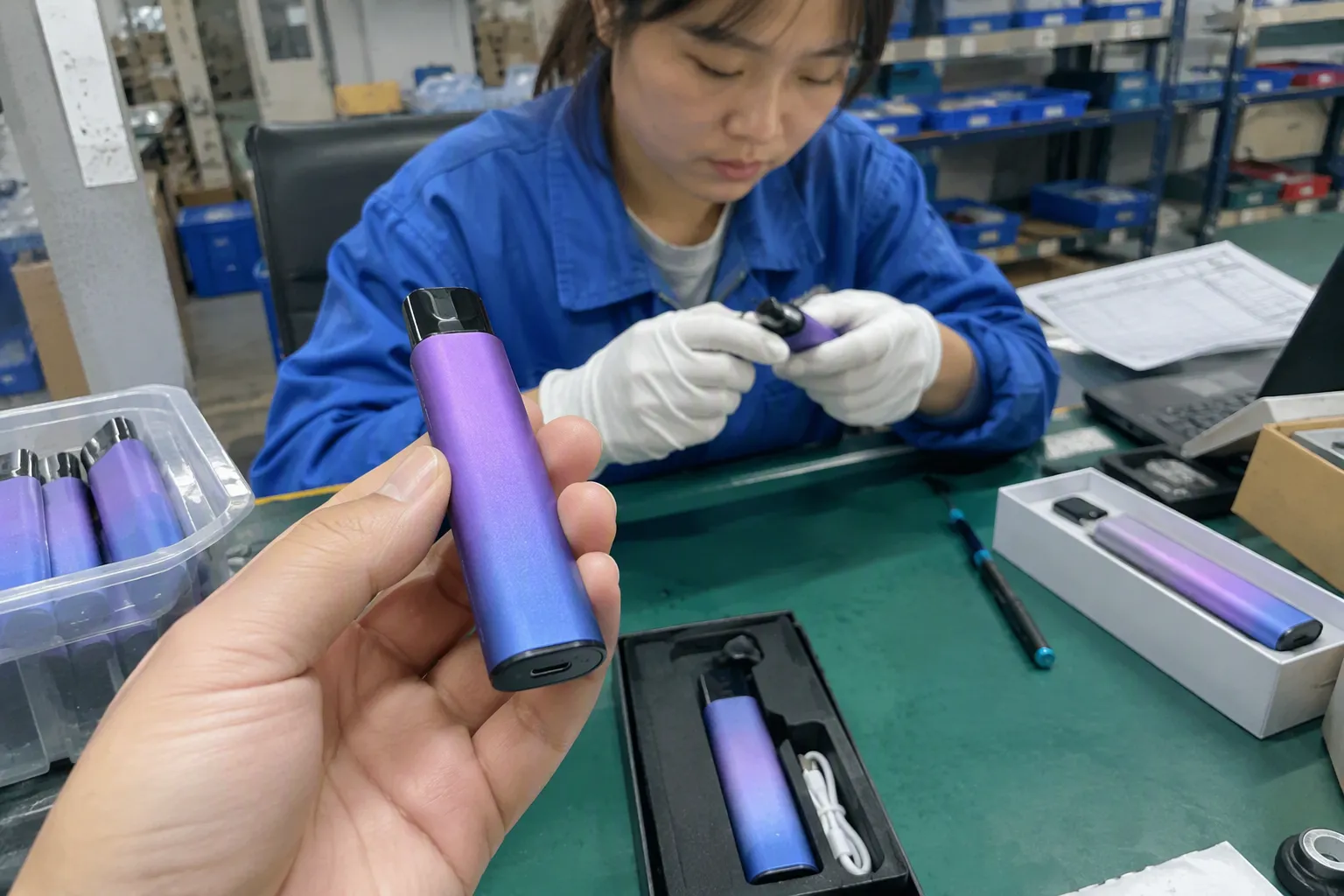
An own-brand authenticity claim may be supported by brand materials, product packaging, product catalogs, factory or production information, and order documents. Buyers should confirm that these records connect the seller, the brand, and the exact product being purchased.
How should buyers verify OEM or ODM vape orders?
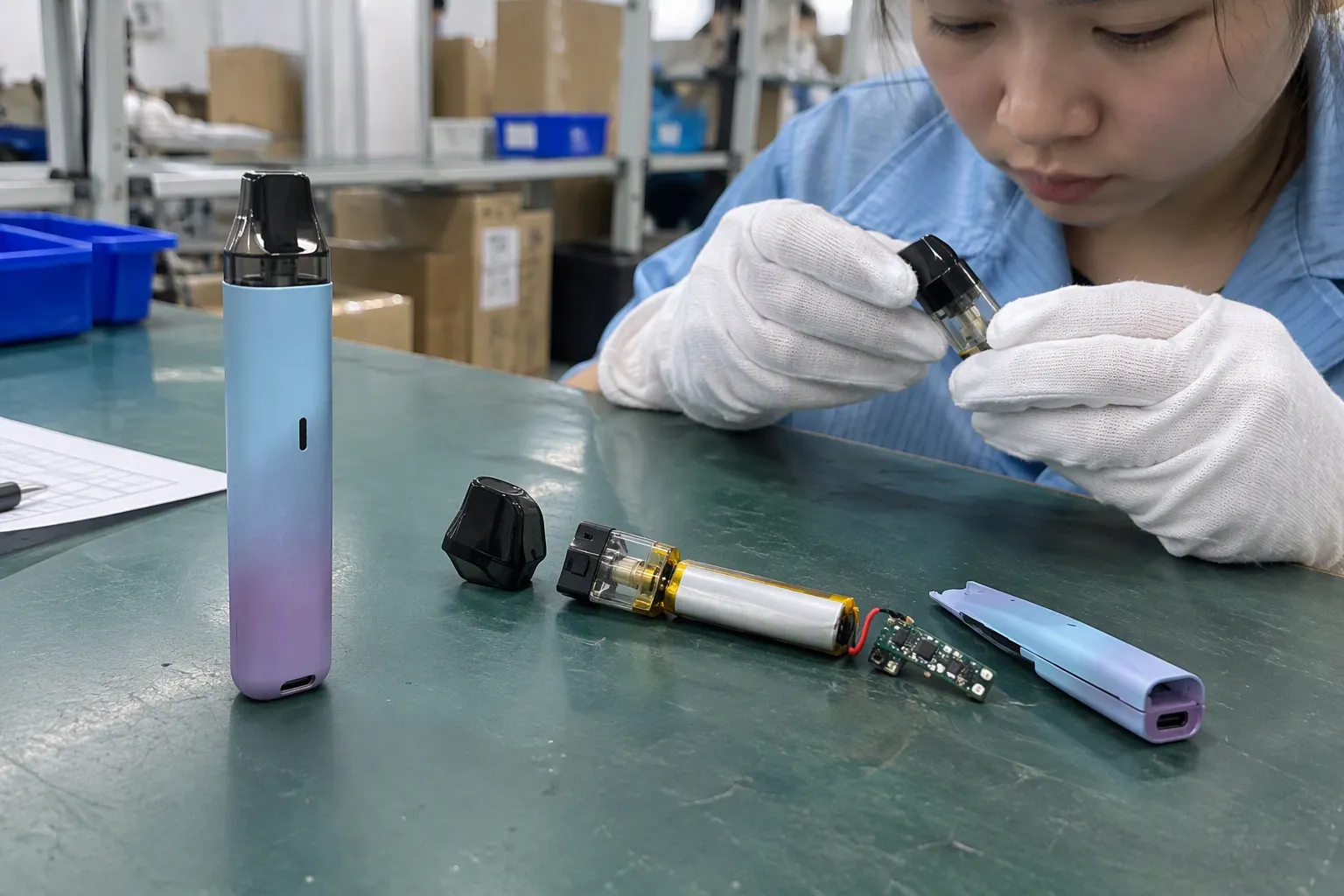
Buyers should focus on the project record trail. This can include product specifications, artwork approval, sample confirmation, purchase orders, packaging approval, production details, and pre-shipment confirmation. These records help connect the approved design to the goods being shipped.
Can a supplier prove third-party branded vape products with factory photos?
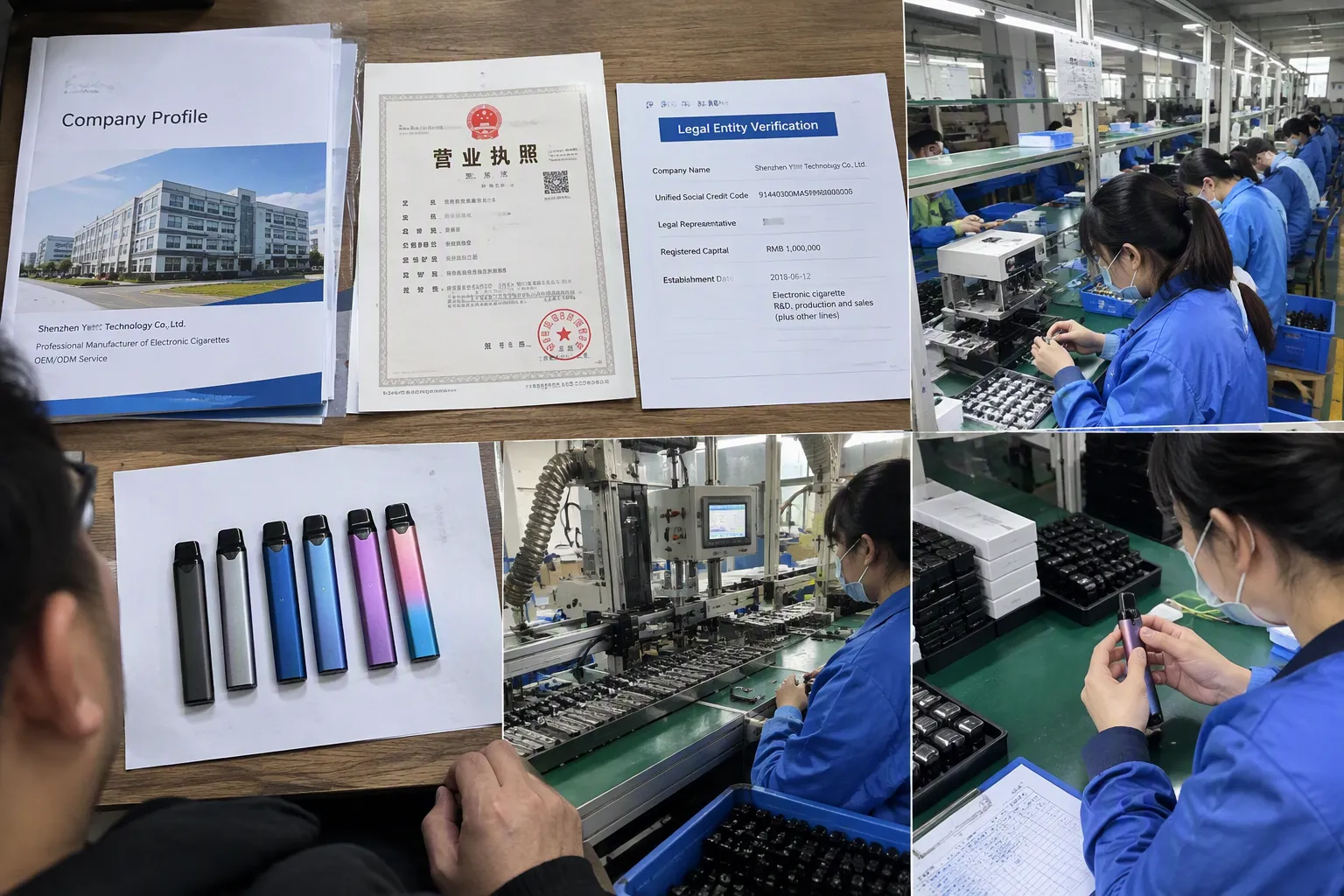
No. Factory photos may support a supplier’s manufacturing identity, but they do not prove the authenticity or authorization status of third-party branded goods. Buyers should ask for records related to the specific brand, available batch, source channel, and sales order.
Does an authenticity claim guarantee customs clearance or legal compliance?
No. Authenticity records do not guarantee customs release, trademark clearance, regulatory approval, or legal sale in any country. Buyers should independently assess destination-market requirements and seek qualified professional advice when needed.
Conclusion
Every authenticity claim on a vape wholesale website should be treated as a traceability question, not a marketing promise. Company registration can support supplier identity. Factory records can support manufacturing capability. Own-brand, OEM/ODM, and third-party branded products need separate evidence chains. I encourage buyers to ask what the claim covers, which record supports it, and where that record’s value stops. If you need a practical sourcing discussion for own-brand products, OEM/ODM development, third-party supply, or European warehouse stock, contact King at info@kingvapecig.com.
Avoid Counterfeit and Supply Risk
For bulk vape orders, supplier verification protects your business from counterfeits and quality issues. Reach out to our team for factory audits and QC.
Related reading: What Makes a Vape Wholesale Website Trustworthy to B2B Buyers?
Sources
- Launch your business - Small Business Administration", Official business registries record identifying information for incorporated entities, including registered names and registration details, and can therefore support basic verification of a counterparty's legal identity
- Health Communication through Chinese Media on E-Cigarette", Research on the electronic-cigarette supply chain describes Shenzhen and the Pearl River Delta as a significant manufacturing and export cluster for e-cigarette devices, components, and related businesses
- OECD Due Diligence Guidance for Responsible Business ...", Supply-chain due-diligence frameworks distinguish supplier capability assessment from product-level traceability, requiring evidence that links the specific goods and transaction to the relevant supply chain
- Emerging Electronic Cigarette Policies in European Member ...", WHO and national regulatory authorities document substantial cross-jurisdictional variation in rules governing electronic nicotine-delivery products, including restrictions on nicotine, labeling, packaging, marketing, and sale
- OEM vs ODM Manufacturing: Key Differences Explained", Standard definitions distinguish original equipment manufacturing, in which goods are produced for another firm's branding or specifications, from original design manufacturing, in which the manufacturer provides an existing product design for adaptation
- Entering Foreign Markets", International intellectual-property guidance explains that trademark rights are territorial and that national or regional exhaustion rules may affect whether genuine branded goods can be imported and resold in a particular market
- Importing into the United States A Guide for Commercial ...", Customs guidance states that imported goods remain subject to admissibility review and applicable legal requirements; invoices, packing lists, and transport records do not themselves guarantee release
- Guidance Related to Tobacco Products", Public-health and market-regulation authorities identify electronic-cigarette products as subject to jurisdiction-specific requirements on product safety, nicotine content, labeling, notification, and market placement, requiring importers and distributors to assess applicable rules