Quick Answer
Manufacturer and importer details on vape labels can look like a small artwork task, but unclear information can create larger problems later. A buyer may approve packaging quickly, only to face questions about accountability, batch traceability, relabeling, or after-sales handling after stock has already been produced or shipped. I recommend treating label review as an early supply-chain control step.
Manufacturer and importer details on vape labels should be checked against the real supply chain before production begins. Buyers should confirm who is the manufacturer, brand owner, importer, and any destination-market responsible entity; make sure names, addresses, contact details, product identity, and batch information match supporting documents; and assign final artwork approval clearly. A name and “Made in China” alone do not prove compliance or market saleability.[1]
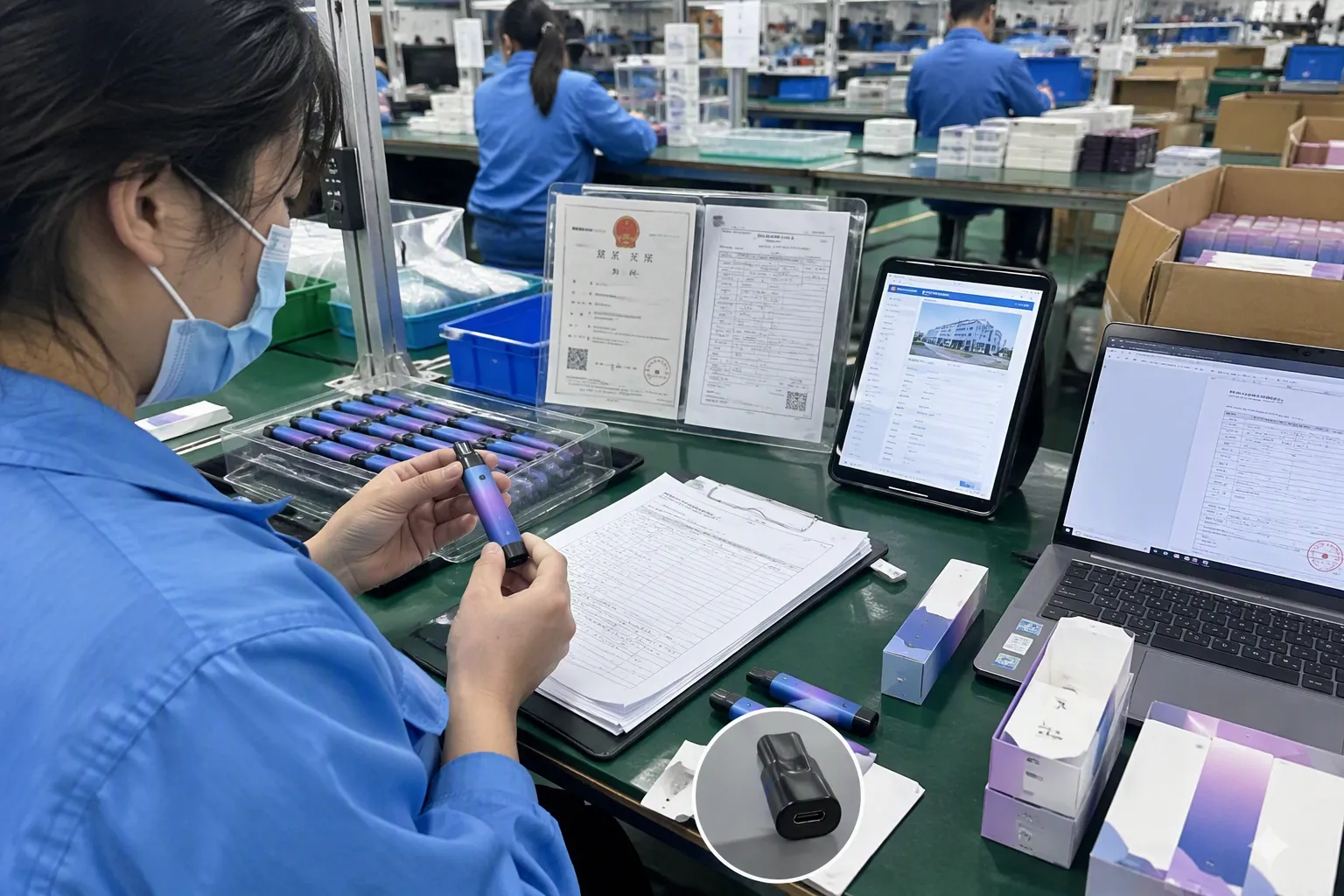
From my factory-side work in Shenzhen, I have seen that packaging decisions affect much more than appearance. They influence how easily a buyer can trace stock, manage a complaint, communicate with a distributor, and explain who is responsible when a product question arises. A careful review before mass production is usually much easier than correcting finished inventory.
Checking manufacturer and importer details on a vape label is not a box-ticking exercise
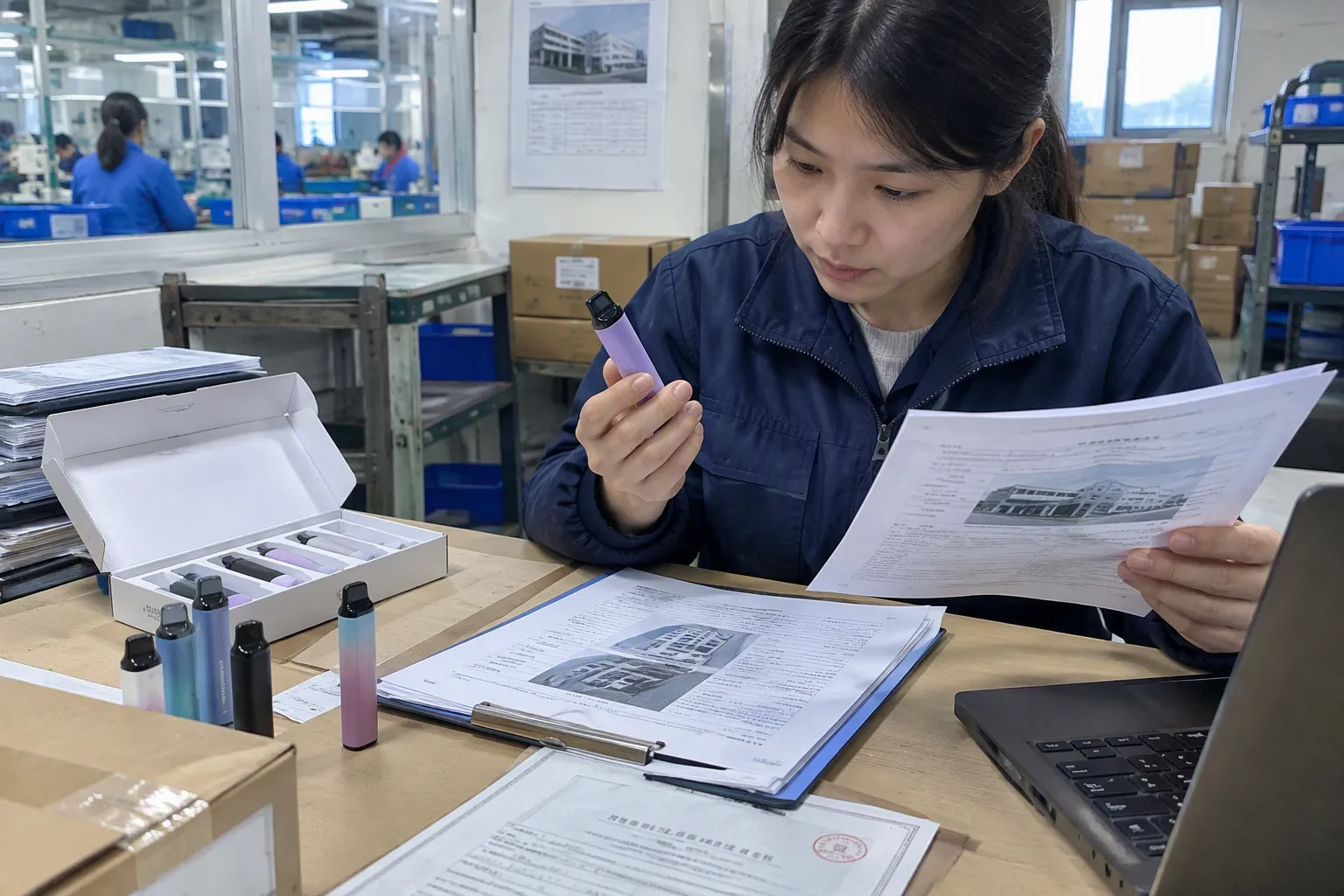
When manufacturer and importer details on vape labels are handled as a last-minute checklist, buyers can end up with packaging that does not match the commercial reality of the order. This can create confusion between the factory, the private-label owner, the importer, and the local distributor. I believe the practical solution is to confirm roles and information before final artwork approval.
Checking manufacturer and importer details on a vape label is a traceability and responsibility review, not simply a design approval. Importers should verify which company made the product, which company owns the brand, which entity imports or places it into the destination market, and whether the printed information matches the product, batch records, invoices, and available supporting documents.
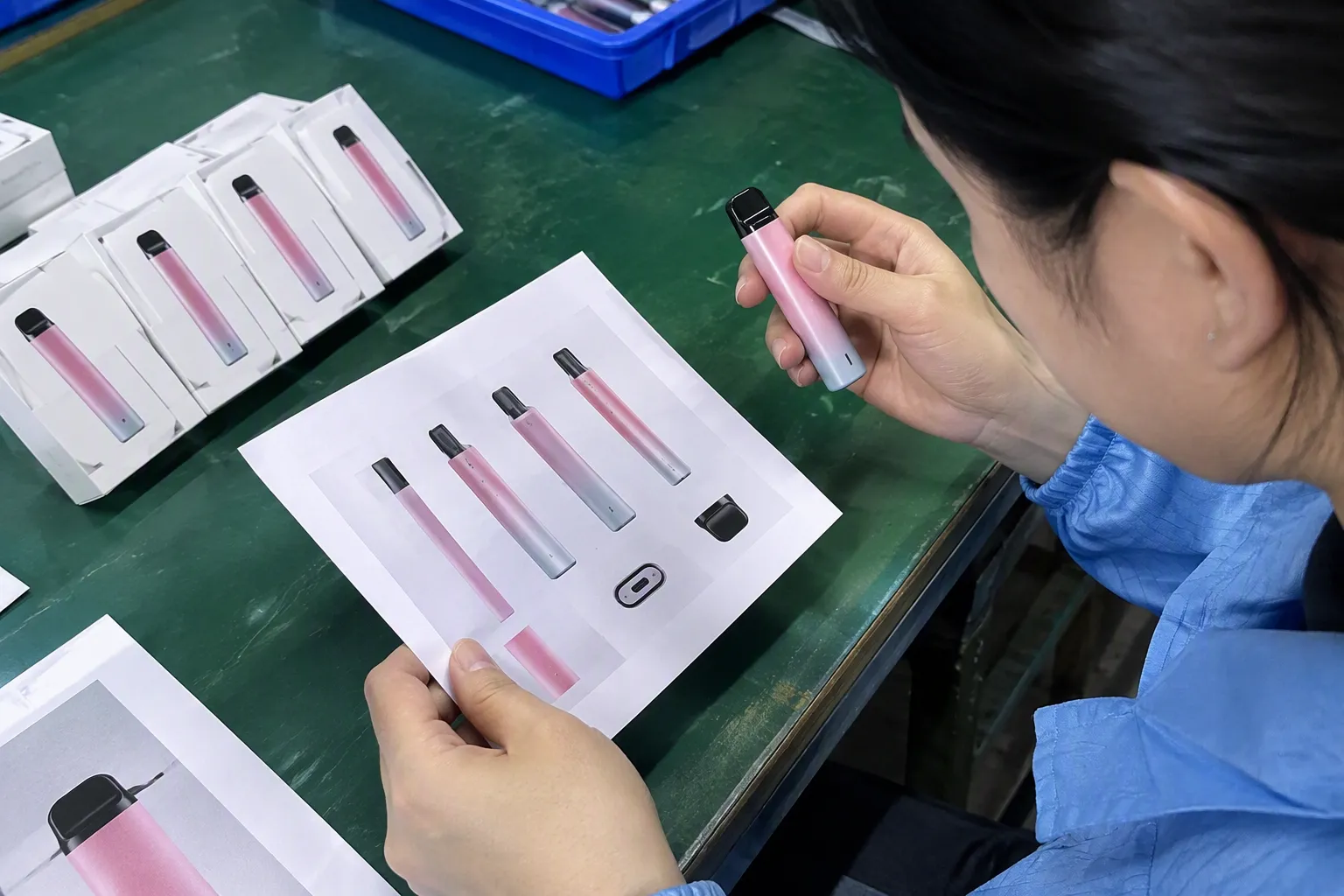
Why a factory name is not the whole answer
A vape label may include a factory name, a company address, a brand name, and a country-of-origin statement. Those details can be useful, but they do not automatically answer every traceability or responsibility question that an EU or UK buyer may have.
For example, a Shenzhen manufacturer may produce a disposable vape under a customer’s private label. In that situation, several businesses may be involved:
- The manufacturer physically produces or assembles the product.
- The brand owner controls the brand identity, logo, packaging direction, and market positioning.
- The importer brings goods into a particular destination market.
- A local responsible entity, where applicable, may have a specific role under destination-market rules.
- A wholesaler may buy from the importer and distribute to vape shops, smoke shops, convenience stores, or other retailers.
- A logistics provider may handle transport but may not be responsible for product information.
These roles can overlap in some supply chains, but buyers should not assume that they always do.[2] One company can perform more than one role, yet that should be documented clearly rather than guessed from the packaging.
In our OEM and ODM coordination work, I encourage customers to ask a basic question before discussing print files:
“Which entity is responsible for each stage of this product’s route from factory to local market?”
That question can prevent expensive misunderstandings. A buyer who understands the chain can make better choices about artwork, carton markings, batch control, after-sales communication, and document storage.
Start with the actual commercial structure
Before approving a vape box, pouch, device label, or outer carton, I recommend mapping the commercial structure in plain language. This does not need to be a long legal document at the beginning. It can start as a simple internal confirmation between the buyer, brand owner, factory, and importer.
A practical role map may look like this:
| Supply-chain role | Questions a buyer should ask | Why it matters |
|---|---|---|
| Manufacturer | Which factory produces the product? Is the factory name shown accurately where needed? | Supports production traceability and supplier accountability. |
| Brand owner | Who owns the brand name and approves brand artwork? | Reduces trademark, artwork, and customer-service confusion. |
| Importer | Which entity imports goods into the destination market? | Clarifies the commercial party receiving and placing stock locally. |
| Distributor or wholesaler | Who sells the goods onward to local shops? | Helps define practical after-sales and stock-control processes. |
| Responsible entity, if applicable | Does the destination market require a particular local entity or contact arrangement? | Requirements vary by market and should be checked locally. |
| Freight partner | Who handles transport, customs documents, and delivery? | Keeps shipping responsibility separate from product-role responsibility. |
This map is especially important for private-label vape projects. A buyer may own a local brand but source finished products from China. Another buyer may import a known brand through an authorized distribution arrangement. A third buyer may purchase smaller quantities from a European warehouse for faster replenishment. Each model can involve different information needs.
At Shenzhen Kingfuji Tech. Co., Ltd., we work with both types of buyers. Some smaller wholesalers and local vape businesses need low-quantity stock from European warehouse inventory. Some larger importers prefer direct container or bulk shipments from China because they want stronger unit-cost control, custom packaging, or OEM/ODM development. In both cases, I believe buyers should clarify the real supply chain before finalizing labels.
Check whether every printed detail tells the same story
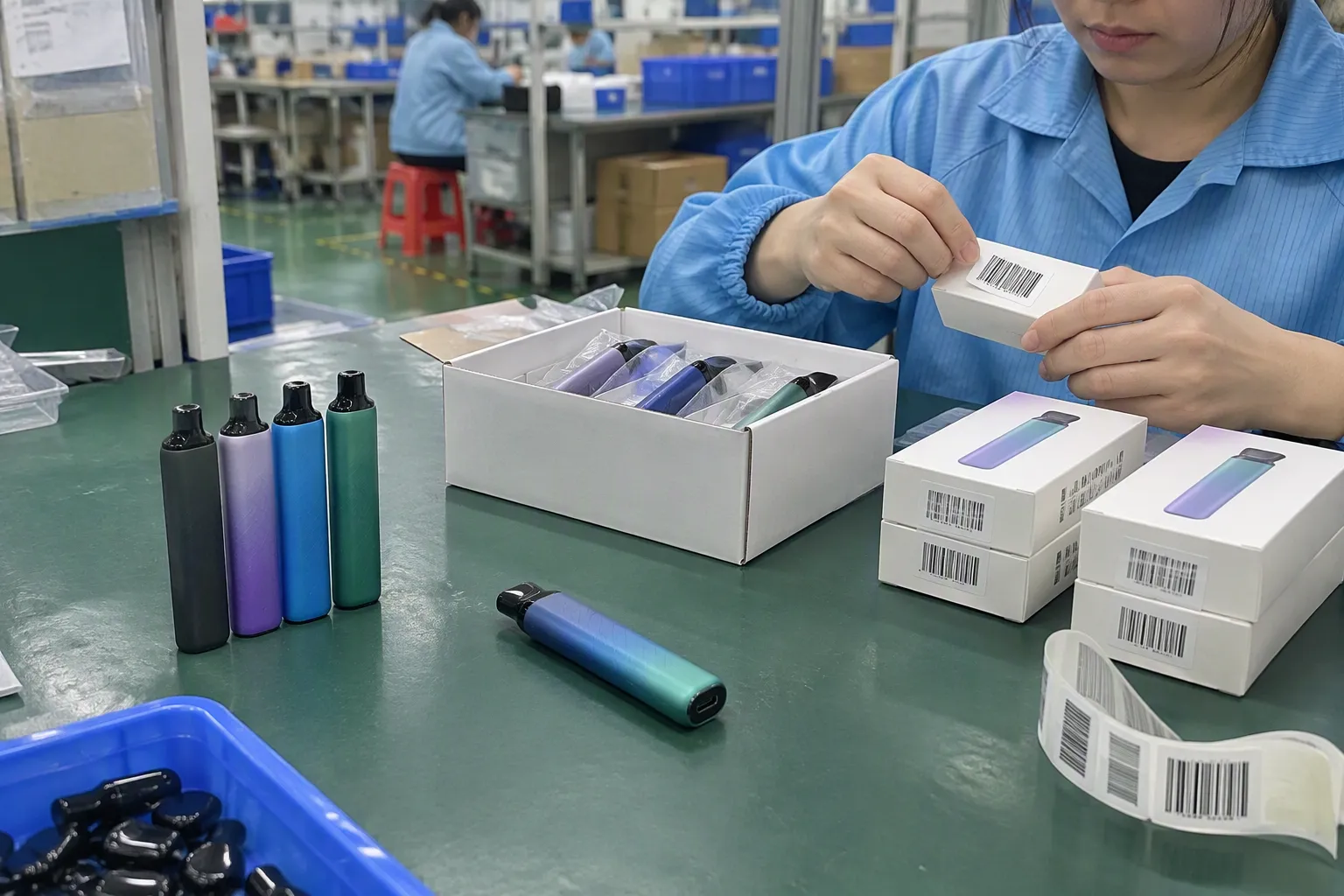
The most useful label review is not about checking one name in isolation. It is about comparing the label with the commercial and production records behind it.
When I coordinate packaging confirmation for an own-brand or OEM/ODM project, I focus on whether the main information is consistent. If a carton says one brand owner, an invoice shows another company, and batch information cannot be connected to production records, the buyer may have a traceability problem even if each individual document looks complete on its own.
I recommend comparing the label against the following materials:
-
Approved purchase order
The product model, flavor or variant, quantity, brand name, and destination should be clear. -
Final packaging artwork
The artwork should show the exact information that the buyer has approved for production. -
Proforma invoice and commercial invoice
Company names and product descriptions should not contradict the agreed transaction structure. -
Packing list and carton marks
Outer-carton information should help the buyer identify the correct stock, quantity, and shipment. -
Batch or production reference records
The batch code or lot reference should connect to a practical internal production and quality-control record.[3] -
Product documents supplied for the order
Buyers should check that product identity and model references align with the goods and packaging. -
Brand authorization or ownership records, where relevant
A buyer using a private label should ensure that brand usage and artwork approval are controlled by the appropriate party.
This is not a substitute for legal or regulatory advice. It is a practical supplier-evaluation process. Qualified local compliance professionals should verify market-specific label wording, language requirements, responsible-party requirements, notifications, product obligations, and any other destination-market conditions before the buyer places goods on sale.
Product identity and traceability should be practical, not decorative
A product identifier has value only if it helps the buyer find the actual stock and its related records. A batch number that appears on a box but cannot be connected to a production date, product version, or shipment record may not help much when an after-sales issue occurs.
For importers, traceability becomes important when they need to answer straightforward questions:
- Which shipment did this product come from?
- Which production batch is involved?
- Which customer received the affected stock?
- Does the issue concern one flavor, one device version, or all goods?
- Can the factory review the relevant production information?
- Does the retailer have the same batch reference as the importer’s warehouse records?
I recommend that buyers ask suppliers how batch information is managed before they approve labels. The answer should be practical. A supplier should be able to explain, in clear terms, how it connects a code on packaging to internal records.
In our own manufacturing and OEM/ODM communication, we treat batch and packaging alignment as part of pre-shipment coordination. The exact format may vary by product and customer arrangement, but the principle is consistent: the information shown on the finished goods should be usable for stock identification and after-sales discussion.
A useful pre-production label review checklist
I find that buyers get better results when they divide label approval into commercial, production, and destination-market checks.
Commercial checks
These questions help confirm that the packaging reflects the agreed business arrangement:
- Is the correct brand name shown?
- Has the brand owner approved the logo, trademark use, and visual identity?
- Is the company information supplied by the buyer complete and current?
- Does the importer information reflect the company actually receiving and managing the goods?
- Are the factory and brand roles described accurately rather than mixed together?
- Does the product name match the purchase order and invoice description?
Production and quality-control checks
These questions help the factory produce consistent stock and help the buyer identify it later:
- Is the model name or device version clearly identified?
- Is there a workable batch, lot, or production reference?
- Does the packaging version match the approved artwork file?
- Are flavor names, colors, and product variants clear enough to prevent warehouse mistakes?
- Are inner-box and outer-carton markings aligned with the order?
- Has the buyer approved the final proof before mass printing begins?
Destination-market checks
These checks should be completed with qualified local compliance support where needed:
- Does the relevant market require specific language or local contact information?
- Does the market distinguish between manufacturer, importer, distributor, and responsible entity?
- Are there destination-specific product, packaging, warning, notification, or labeling obligations?
- Is the planned product category treated differently in the EU, the UK, the United States, or another market?
- Does the buyer need local professional review before confirming final wording?
I do not advise buyers to copy label text from another country’s product and assume it will work everywhere. EU and UK requirements are not automatically the same[4], and neither should be treated as a universal rule for the United States, the Middle East, Southeast Asia, or other markets.
Who should approve the final artwork?
Artwork approval should have a named owner. This sounds simple, but it is one of the most common areas where responsibility becomes unclear.
A factory can prepare a layout based on information supplied by the customer. A graphic designer can place that information onto packaging. A sourcing agent can relay messages. However, the party that understands the destination market and controls the brand should clearly confirm the final content before mass production.
For OEM and ODM buyers, I recommend assigning responsibility in writing before production begins.
| Item | Party that commonly provides it | Party that should confirm it |
|---|---|---|
| Brand name and logo | Brand owner | Brand owner |
| Product model and variant | Factory and buyer | Buyer / brand owner |
| Factory information | Manufacturer | Manufacturer and buyer |
| Importer details | Importer or buyer | Importer / buyer |
| Local market wording | Buyer with local advisers | Buyer / responsible local party |
| Batch-code method | Manufacturer | Manufacturer and buyer |
| Final print artwork | Designer or factory artwork team | Named final approver |
| Destination-market suitability | Buyer with qualified local professionals | Buyer / local responsible party |
The table does not assign universal legal obligations. It simply shows a safer working process. The buyer should adapt it to the actual transaction and destination market.
In my experience, the most reliable workflow is to create a final artwork confirmation record. That record can include the artwork version number, approval date, approved company details, product reference, and the name of the person authorized to approve printing. This gives all parties a clear reference if questions arise later.
Avoid the “we will fix it after arrival” approach
Relabeling after arrival can be slow and costly.[5] It can also create inventory-control problems, especially when products are already mixed across warehouses, retailers, or sales channels. The buyer may need new packaging materials, local labor, storage space, and a way to separate stock by version.
The risk becomes greater for businesses that depend on fast turnover. A local wholesaler may want to receive stock quickly, sell to shops, and reinvest cash into the next fast-moving product. A delayed artwork decision or unclear importer detail can interrupt that cycle.
This is why I encourage buyers to treat packaging approval as a purchasing decision, not a graphic-design decision alone.
For a smaller buyer using our European warehouse options, the order may be lower in quantity and faster to dispatch within Europe. The buyer should still understand what product information is already on the stock and whether it suits the intended sales arrangement. For larger buyers importing direct from China, the stakes can be higher because quantities, custom packaging costs, freight planning, and lead times are often more substantial.
A careful pre-production review can help reduce the chance of:
- Stock that cannot be easily identified by batch or variant
- Conflicting company information across packaging and invoices
- Delays caused by late artwork changes
- Disputes over who should handle an after-sales issue
- Unclear communication with retailers or local distributors
- Costly replacement of printed boxes, labels, or cartons
- Confusion between the factory, the brand owner, and the importer
How I support buyers without replacing local compliance advice
Our role as a factory and supply-chain partner is practical. We can coordinate product information, packaging files, production references, carton markings, and shipment communication based on the agreed order. We can also work with buyers on OEM/ODM projects, including custom branding and product development when the project conditions are suitable.
However, I do not present factory communication as a replacement for local regulatory or legal review. A factory may provide accurate manufacturing information, but the importer and relevant local parties need to verify destination-market requirements with qualified professionals.
For buyers evaluating suppliers, I suggest asking these direct questions:
- Can the supplier explain who produces the goods and how the product is identified?
- Can the supplier align product names, variants, packaging versions, and batch references?
- Does the supplier have a clear artwork approval process before mass production?
- Can the supplier distinguish factory information from importer or brand-owner information?
- Will the supplier communicate openly if the buyer’s requested artwork conflicts with production reality?
- Can the supplier support after-sales discussions with traceable order and batch references?
- Does the supplier understand that local-market obligations remain the buyer’s and local adviser’s responsibility?
A supplier does not need to make unrealistic promises to be useful. In fact, I believe a reliable partner should be clear about what the factory can confirm, what the buyer must supply, and what needs destination-market verification.
Frequently Asked Questions
Does “Made in China” identify the manufacturer on a vape label?
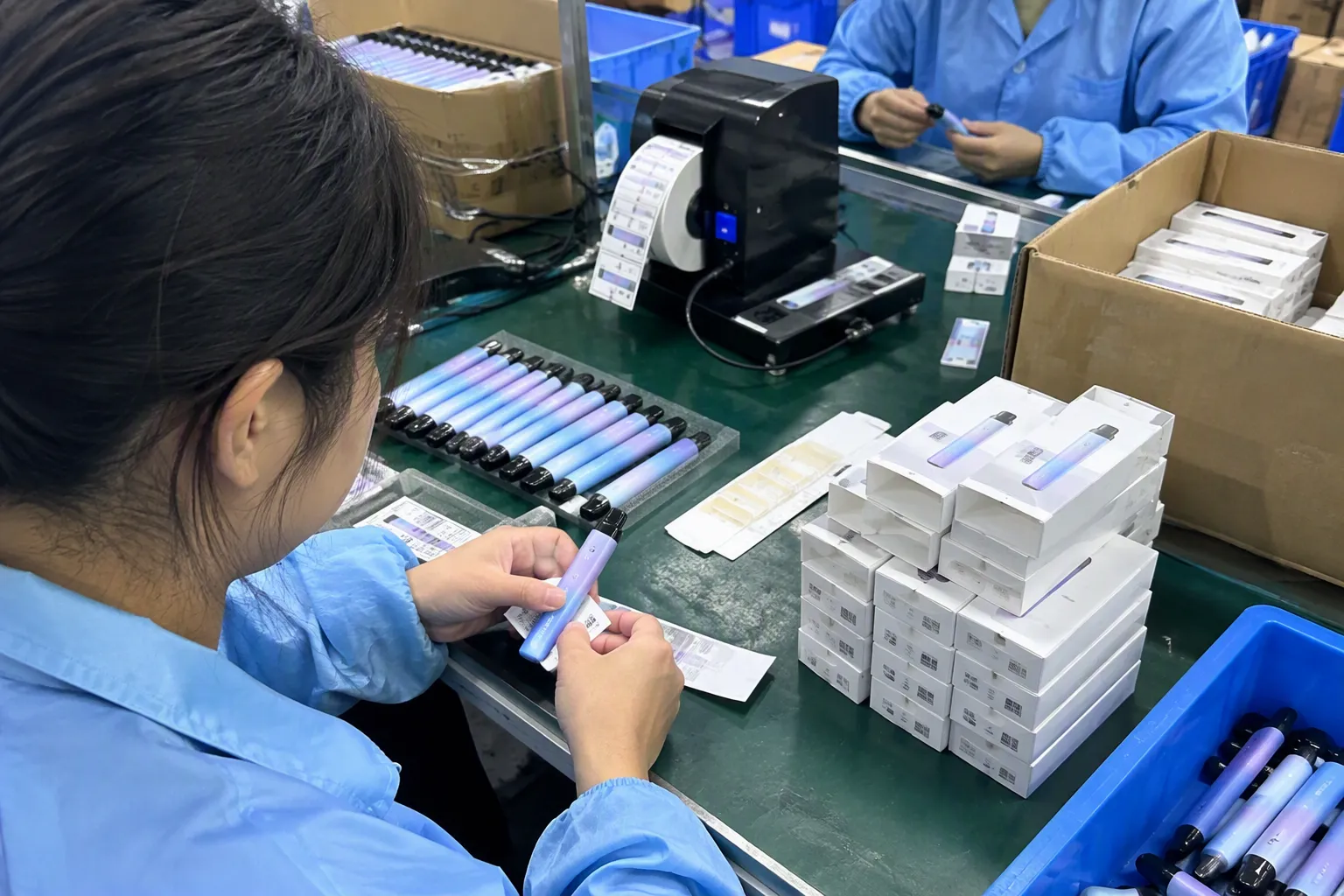
No. “Made in China” generally indicates country of origin, but it does not by itself identify the factory, brand owner, importer, or destination-market responsible entity.[6] Buyers should check the full supply-chain information and compare it with purchase, production, and shipment records.
Can the manufacturer, brand owner, and importer be the same company?
They can be the same company in some business models, but buyers should not assume this. In many OEM and private-label projects, the factory produces the goods, the customer owns the brand, and another entity imports the products. Each role should be clarified before artwork approval.
What should I check before approving private-label vape packaging?

I recommend checking product identity, brand ownership, company details, importer information, batch traceability, packaging version, carton markings, and final artwork approval responsibility. You should also have qualified local compliance professionals verify destination-market wording, language, and other obligations before production starts.
Can a factory guarantee that my vape label is compliant in every country?

No responsible factory should make that promise. Markets can have different rules, language requirements, and responsibilities for importers or local entities.[7] A factory can provide manufacturing and product information, while the importer should verify market-specific obligations with qualified local compliance professionals.
Why is batch information important for vape importers?
Batch information can help an importer connect finished products to production and shipment records.[8] This supports stock control, retailer communication, and after-sales investigation if an issue occurs. Buyers should confirm that the batch reference is practical and can be matched to the supplier’s records.
Conclusion
Manufacturer and importer details on vape labels should be treated as part of supplier selection, production control, and traceability planning. I recommend that EU and UK vape buyers identify each party’s role, align label information with real order and batch records, and assign final artwork approval before mass production. A factory name or country-of-origin statement is not enough on its own. If you are sourcing stock, launching a private label, or planning an OEM/ODM vape project, contact me at Shenzhen Kingfuji Tech. Co., Ltd. so we can discuss a clearer production and packaging workflow for your order.
Stay Compliant When Importing Vape Products
Compliance varies by market. Our team helps importers vet suppliers and document manufacturer and importer details. Talk to our compliance-aware sourcing team.
Related reading: How Regulation Changes SEO Opportunity in Vape Wholesale: A Compliance-Aware Guide for B2B Suppliers
Sources
- Labeling and Warning Statements for Tobacco Products", Official product-regulation guidance describes market-access and labeling obligations for electronic cigarettes that extend beyond a manufacturer name or country-of-origin statement
- OECD Supply Chain Resilience Review: Navigating Risks", Official product-safety guidance treats manufacturer, importer, and distributor as distinct functions, although a business may perform multiple functions in a supply chain
- Traceability Lot Code", Quality-management guidance explains that batch or lot identification supports traceability by linking finished products to relevant production and control records
- The Tobacco and Related Products Regulations 2016", UK and EU authorities publish separate regulatory frameworks for electronic cigarettes, so compliance assessment should use the rules applicable to the intended market
- Marking of Country of Origin on U.S. Imports", Supply-chain studies report that packaging and labeling rework can add handling, labor, inventory, and lead-time burdens after goods have entered distribution
- Rules of Origin: Substantial Transformation", Customs guidance characterizes a “Made in” statement as country-of-origin marking rather than as identification of every manufacturer, importer, brand owner, or responsible operator
- Exposure to and perceptions of health warning labels ... - PMC", International and national regulatory materials show that electronic-cigarette labeling, language, notification, and economic-operator obligations are jurisdiction-specific
- FSMA Final Rule on Requirements for Additional Traceability Records", Regulatory traceability guidance recognizes lot or batch identifiers as a means of linking products to manufacturing and distribution records during investigations or corrective actions