
Quick Answer
vape import documents can create serious problems when a commercial invoice, packing list, or shipment record does not match the actual goods. I have seen order details need correction before dispatch because small differences in product names, quantities, brands, or packaging can create larger questions later. A careful supplier–importer review helps reduce avoidable delays and clarification requests.
U.S.
For U.S. vape imports, buyers should give special attention to the commercial invoice, packing list, bill of lading or airway bill, product descriptions, HS classification, declared value, brand information, importer details, and applicable regulatory evidence. These documents should describe the same shipment consistently.[1] FDA-related and tobacco-product requirements may also apply, but the U.S. importer, customs broker, and qualified regulatory adviser should confirm the current requirements for each product and shipment.

A document review should begin before the goods leave China. I normally treat this as a coordination task rather than a paperwork task. The supplier, U.S. buyer, freight provider, and customs broker each see a different part of the shipment. The safest process connects those views before dispatch, when corrections are still practical.
Which Customs Documents Need Special Review for U.S. Vape Imports?
Many U.S. vape import documents deserve review, but the commercial invoice, packing list, transport document, product declaration, importer information, and applicable regulatory materials usually require the closest attention. The buyer should check both document availability and factual accuracy. A document that contains vague or incorrect information can still create import risk.

Why Does Cross-Document Consistency Matter?
The first question I ask is simple: Do all shipment documents describe the same goods in the same way? A customs broker may compare information across documents during entry preparation or when authorities request clarification.[2] Differences do not automatically mean that a shipment will be rejected, but they may create additional questions.
I have worked with customers who asked us to prepare an order using a product name from an older quotation, while the final packaging used a different commercial name. I have also seen quantity changes after a buyer added several cartons near the shipping date. When those changes are not carried through every document, the paperwork becomes harder to review.
The following documents should normally be compared:
| Document | Information to compare | Why the buyer should review it |
|---|---|---|
| Commercial invoice | Seller, buyer, product description, brand, quantity, unit price, total value, currency, delivery terms | The invoice supports the commercial description and declared value[3] |
| Packing list | Carton count, package quantity, net weight, gross weight, dimensions, item breakdown | The list should help the broker and logistics provider identify the physical shipment |
| Bill of lading or airway bill | Shipper, consignee, notify party, destination, package count, weight, transport details | The transport record should correspond with the shipment and parties |
| Purchase order | SKU, brand, quantity, agreed price, packaging, buyer details | The order provides a useful reference when checking the final documents |
| Product or regulatory materials | Product identity, responsible parties, applicable evidence, product category | These materials may require case-specific review by the importer or adviser |
A buyer should not assume that identical wording is required in every line. Transport documents often use shorter descriptions because of space or system limitations. However, the core identity should remain understandable. If the invoice says “disposable vapor products,” while the packing list says “electronic accessories,” the difference may need explanation.
What Should the Commercial Invoice Show?
The commercial invoice is one of the most important U.S. vape import documents because it gives the shipment’s commercial context. I recommend that buyers ask the supplier to prepare a clear draft invoice early enough for review. The invoice should identify the transaction without relying on internal factory codes that a broker cannot understand.
A buyer and supplier should check items such as:
- Full legal names and addresses of the seller and buyer
- Importer or consignee information, where applicable
- Clear product descriptions
- Brand and model information where relevant
- Quantity and unit of measure
- Unit price and total value
- Currency
- Country of origin
- Delivery or trade terms used for the transaction
- Invoice number and date
- Shipping marks or references that help connect the invoice to the cartons
The product description should be specific enough to identify the goods. “Electronic goods” is usually less useful than a description that states the product category and relevant characteristics. The exact description should reflect the actual product. I would not recommend adding technical or regulatory language merely to make the invoice appear more complete.
The declared value also deserves careful review. The buyer should ensure that the commercial value, currency, quantities, and agreed transaction terms are accurate. A low or inconsistent value may create questions[4], while an incorrect currency or unit count can affect the broker’s entry work. The buyer should ask a customs broker how valuation rules apply to the specific transaction rather than relying on a supplier’s general assumption.
Why Does the Packing List Matter?
The packing list connects the paperwork with the physical cartons.[5] It should allow the logistics provider, importer, and broker to understand how the goods are packed. I find this document especially useful when an order contains several brands, models, flavors, battery types, or packaging formats.
A practical packing list may include:
- Carton numbers or shipping marks
- SKU or product reference
- Product description
- Quantity per carton
- Total quantity
- Number of cartons
- Net weight and gross weight
- Carton dimensions
- Packaging notes where they affect identification
The packing list should not contradict the invoice. If the invoice shows 10,000 units but the packing list shows 9,800 units, the buyer should resolve the difference before dispatch. If the order contains free samples, replacement items, or promotional units, the documents should represent them accurately instead of leaving unexplained differences.
Weights and dimensions also deserve practical attention. I do not treat a small measurement change as proof of noncompliance, because packaging can change during production. However, a major difference between the packing list and the freight booking may result in rechecking, repacking, or additional communication with the logistics provider.
What Should Buyers Check on the Bill of Lading or Airway Bill?
The bill of lading or airway bill records the transport movement.[6] It is not a substitute for the commercial invoice or packing list, but it should still match the main shipment facts.
I ask buyers to review:
- Shipper name
- Consignee name
- Notify party
- Origin and destination
- Package count
- Weight
- Shipment reference
- Product description used by the carrier
- Freight terms or instructions, where relevant
The consignee and notify-party fields deserve particular care. A buyer may use a customs broker, warehouse, importer of record, or third-party logistics provider. Those arrangements should be confirmed by the U.S. importer and broker before the transport document is finalized.
A carrier’s short description may not contain every product detail. That does not necessarily make it wrong. The buyer should focus on whether the description is materially misleading and whether it can be reconciled with the invoice and packing list. I do not issue customs rulings, so I treat the broker’s instructions as essential when a shipment description is difficult to phrase.
Are Product Descriptions and HS Codes Easy to Review?
Product descriptions and HS classifications require more judgment than many buyers expect.[7] A product name used for marketing may not be the right description for customs purposes. A model may also contain several components, such as a battery, atomizer, cartridge, or charging accessory, and the classification may depend on the actual product and applicable rules.
I recommend that buyers separate three questions:
- What is the product commercially called?
- What is physically included in the shipment?
- How should the product be classified for the relevant customs entry?
The supplier can provide product information, specifications, photographs, packaging details, and component descriptions. The U.S. importer or customs broker should confirm the appropriate declaration approach and HS classification.[8] I would not present a supplier’s suggested code as an official classification decision.
The buyer should also review whether the invoice description matches the actual shipment. For example, a shipment of complete disposable devices should not be described as empty accessories. A shipment of batteries should not be described in a way that hides the battery content. The correct description depends on the goods, but accuracy should remain the starting point.
What Brand and Product Identity Information Requires Attention?
Brand information can become important when a U.S. buyer imports branded vape products or products made under a private label. The documents should identify the commercial identity accurately and consistently. A buyer should compare the purchase order, packaging, invoice, packing list, product photographs, and transport instructions.
The following situations deserve a specific review:
- A brand name on the packaging differs from the name on the invoice
- The buyer uses a private-label name while the factory uses an internal model name
- Several brands appear in one shipment
- The order includes both branded and unbranded products
- A product has changed packaging but not its internal SKU
- The buyer has authorization or other brand-related documents that the broker may need to understand
I do not assume that a brand document is required for every shipment, and I do not claim that a brand authorization guarantees entry. The U.S. importer should ask the broker or qualified adviser what evidence may be relevant to the specific products and transaction.
How Should Importer and Consignee Information Be Checked?
The U.S. importer should confirm the correct legal entity, address, tax information, and broker instructions before shipment. The supplier may prepare documents from information provided in an email or purchase order, but the importer remains the party best positioned to confirm its own entry details.
I recommend using a written confirmation that identifies:
- Importer of record
- Consignee
- Delivery address
- Customs broker
- Notify party
- Required entry references
- Contact person for document questions
- Any special instructions from the broker
This process matters for small buyers as well as large distributors. A regional vape wholesaler may use a warehouse address, while a national importer may use a separate customs or logistics address. The supplier should not guess when two addresses appear in the order.
Which Regulatory Materials Should Be Reviewed Separately?
Trade documents show what was bought, shipped, and valued. Regulatory materials address whether the product may be imported, marketed, or distributed under the requirements that apply to that product and business arrangement. I keep these categories separate because one invoice cannot prove regulatory compliance.
Depending on the product and circumstances, the U.S. importer may need to review matters involving:
- FDA-related tobacco-product requirements
- Product authorization or marketing status
- Importer information
- Product ingredients or constituent information
- Labeling and packaging
- Battery or transport-related documentation
- State or local requirements
- Brand or intellectual-property considerations
- Product-specific restrictions or agency requests
These requirements can vary according to product type, intended use, brand, importer role, shipment method, and current U.S. rules. I do not present a universal FDA checklist or a guaranteed clearance formula. The importer should confirm current requirements with its customs broker, the relevant agency, and a qualified regulatory adviser when necessary.
A supplier can support the review by providing accurate product information. We can help customers organize order details, packaging information, commercial documents, and available product materials before shipping. However, I do not issue official U.S. regulatory decisions. The U.S. importer must decide what evidence it needs for its own compliance responsibilities.
How Can Document Errors Affect a Wholesale Business?
A document discrepancy can create more than a customs question. It can affect the buyer’s inventory plan, cash flow, sales schedule, and relationship with downstream customers.
Possible commercial effects include:
- A broker requests clarification before completing entry work
- The buyer must send corrected documents
- The logistics provider waits for revised instructions
- Delivery takes longer than the buyer planned
- Inventory arrives after a seasonal or promotional sales period
- Working capital remains tied up in goods and freight
- Store customers receive late or incomplete replenishment
- The buyer’s team spends time coordinating several parties
- A repeated documentation issue damages supplier confidence
I do not describe these outcomes as inevitable. A discrepancy may be corrected quickly, and the final result depends on the facts and decisions of the authorities, broker, carrier, and importer. Still, the risk is practical enough that I prefer to find inconsistencies before loading.
This point matters to the two buyer profiles I understand well. A smaller importer or regional wholesaler often wants low minimum quantities, quick replenishment, and predictable cash flow. A larger distributor may need stable product identity across several warehouses, brands, and purchase orders. Both buyers benefit when the supplier uses a controlled document review instead of preparing paperwork at the last minute.
What Does a Practical Pre-Shipment Review Look Like?
I recommend a four-party review whenever the shipment is commercially important or product details are complex.
Step 1: Confirm the order.
The buyer and supplier should confirm the final SKU list, brands, models, quantities, packaging, unit prices, and delivery instructions. The team should record any substitutions or added items.
Step 2: Prepare draft documents.
The supplier should prepare the commercial invoice and packing list using the final order information. The logistics provider can provide draft transport details when available.
Step 3: Compare the documents.
The supplier and buyer should compare product descriptions, quantities, carton counts, weights, addresses, brands, and shipment references. The team should explain any difference instead of assuming that it is harmless.
Step 4: Send the documents to the broker.
The U.S. importer should share the draft documents with its customs broker before dispatch when possible. The broker can identify questions involving entry details, valuation, classification, or other requirements.
Step 5: Correct the final version.
The supplier should update the documents after receiving confirmed instructions. The buyer should retain the final versions and the related purchase records.
I find that this process is especially valuable when customers combine products from different brands or include OEM and ODM goods. Our company operates from Shenzhen and supports electronic cigarettes, disposable vapes, atomizers, 510 batteries, CBD batteries, vaporizers, grinders, glass pipes, and related smoking accessories. That range makes product-by-product accuracy important. I do not treat every category as having the same documentation or regulatory requirements.
What Should a Buyer Request From a Chinese Supplier?
A U.S. buyer should request information that helps identify and verify the actual products. The buyer does not need to accept vague descriptions simply because they appear on a supplier’s standard template.
A useful supplier document request may include:
- Final commercial invoice draft
- Final packing list draft
- Product list with SKU and model references
- Product photographs or packaging photographs
- Quantity and carton breakdown
- Country-of-origin information
- Available product specifications
- Battery or transport information, when applicable
- Brand or private-label details
- Contact information for the person coordinating documents
- Any materials that the importer’s broker specifically requests
The buyer should also ask how the supplier handles changes. For example, I want the customer to tell us when the buyer changes a brand, adds a flavor, changes packaging, or uses a different consignee. Those changes can affect more than the price quotation. They may require a new document review.
At Shenzhen Kingfuji Tech. Co., Ltd., I coordinate with customers and logistics partners during order preparation so that the paperwork reflects the final shipment. My role is to support commercial accuracy and communication. I do not replace the buyer’s customs broker, attorney, or regulatory adviser.
Should Small and Large Importers Use the Same Process?
Small and large importers should use the same basic accuracy principle, but their logistics arrangements may differ. A small buyer may order a limited quantity from an overseas warehouse and need a fast replenishment process. A larger importer may ship larger volumes directly from China and use formal broker procedures, purchase orders, and internal compliance reviews.
The process can be adapted as follows:
| Buyer type | Practical document priority | Supplier coordination focus |
|---|---|---|
| Small wholesaler or shop group | Correct product identity, quantity, invoice value, consignee, delivery details | Fast confirmation and low-error replenishment |
| Regional importer | Multi-brand packing list, carton details, broker instructions, brand accuracy | Avoiding confusion across several SKUs |
| Large distributor | Purchase-order control, classification review, regulatory evidence, importer records | Formal approval before release and shipment |
| OEM/ODM buyer | Private-label identity, packaging, specifications, agreed product description | Keeping production, packaging, and documents aligned |
Our European overseas warehouses can support certain European orders with lower minimum quantities, but that arrangement does not remove the need for the U.S. importer to confirm its own U.S. import requirements. A buyer should evaluate the actual shipping route, seller, consignee, and transaction documents for each order.
Frequently Asked Questions
Is a commercial invoice enough for a U.S. vape import?

No. A commercial invoice is important, but it is only one part of the shipment record. The importer may also need a packing list, bill of lading or airway bill, accurate product information, importer details, and applicable regulatory materials. A customs broker should confirm the requirements for the specific goods and transaction.
Does a packing list need to match the commercial invoice exactly?
The packing list and invoice should match on the core facts, including product identity, quantity, brands, and shipment references. Packaging details such as carton count, dimensions, and weights may appear mainly on the packing list. Any difference should be explainable and corrected when necessary before dispatch.
Can a Chinese supplier choose the HS code for the buyer?
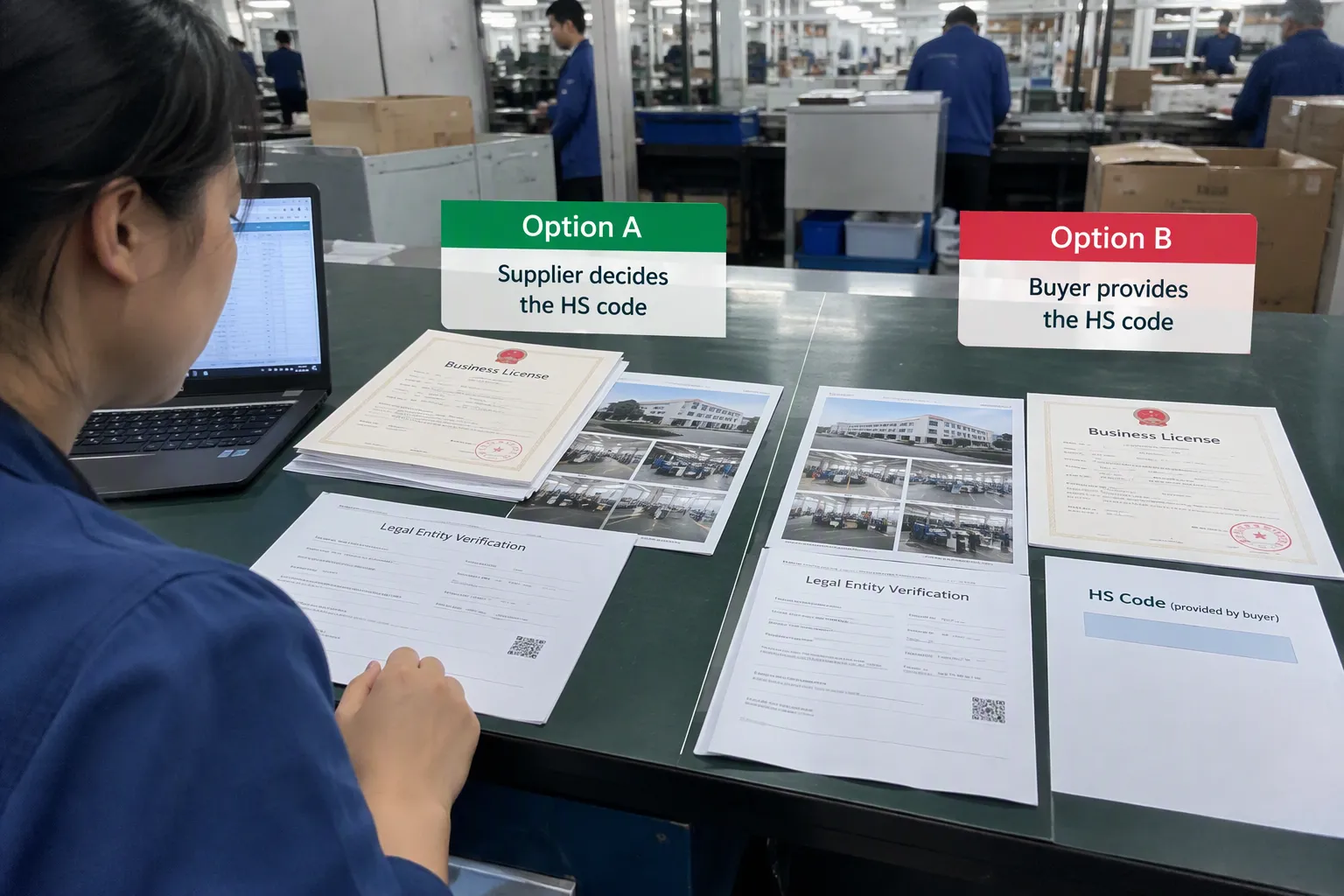
A supplier can provide product information and may suggest a possible classification based on experience. However, the U.S. importer or its customs broker should confirm the appropriate HS classification for the actual goods. A supplier’s suggestion should not be treated as an official customs ruling.
Do all vape products require the same FDA-related documents?
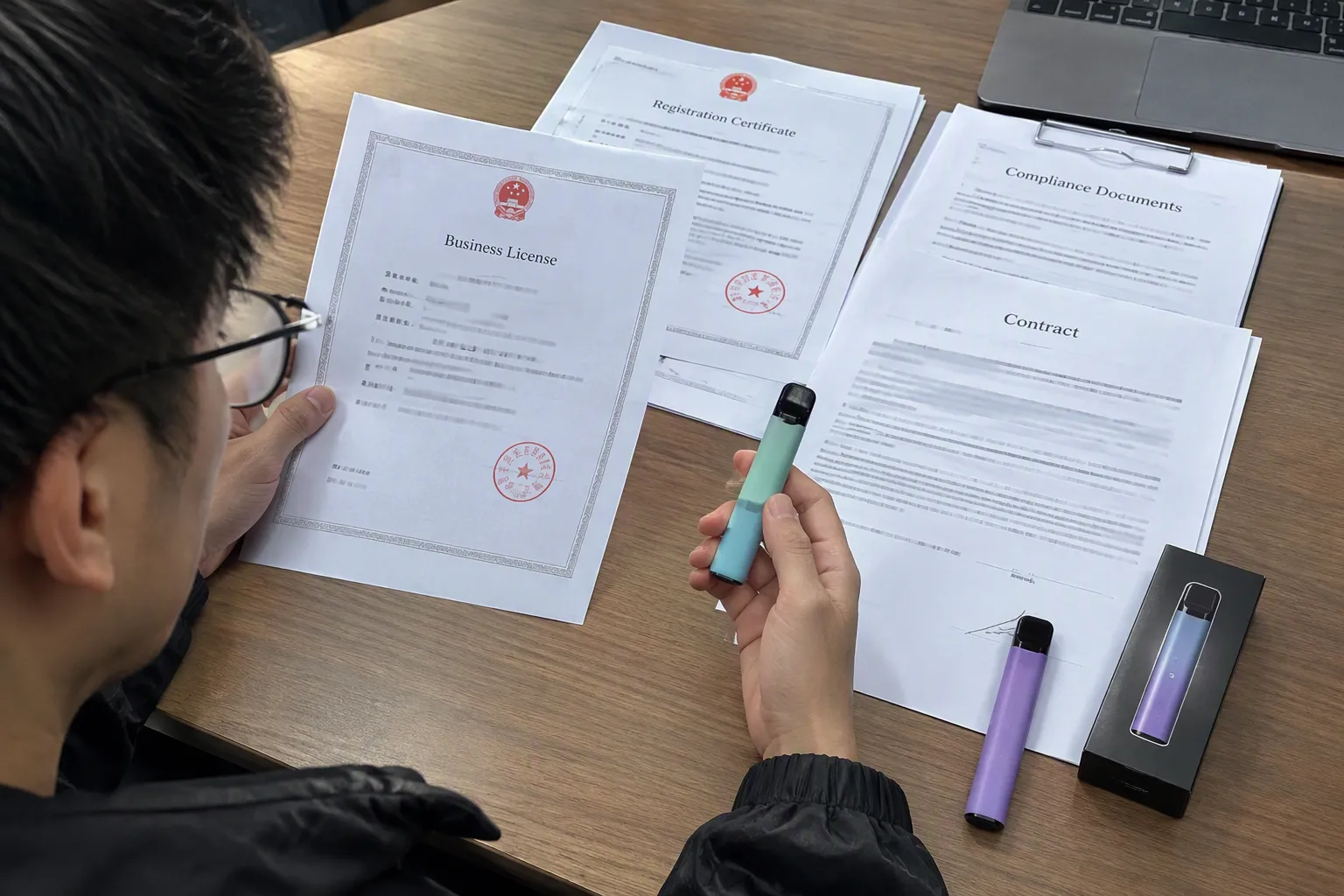
No. Requirements may differ according to product type, brand, importer role, intended use, and current U.S. rules. The importer should verify FDA-related and tobacco-product requirements with its customs broker, the relevant agency, or a qualified regulatory adviser before placing or releasing an order.
What should I do if the supplier finds an error before shipment?
The buyer should ask the supplier to pause final dispatch documents and identify the exact difference. The buyer should then share the corrected draft with the U.S. customs broker or compliance adviser. The supplier should update the invoice, packing list, transport instructions, or other affected records before the shipment moves.
Conclusion
U.S. vape import documents require more than a basic invoice prepared at the last minute. I recommend checking the commercial invoice, packing list, transport document, product description, quantity, value, brand, importer information, classification, and applicable regulatory evidence as one connected record. Suppliers can support this process through accurate preparation and communication, but the U.S. importer and customs broker must confirm current customs and regulatory requirements. Before releasing your next order, ask your supplier for draft documents early and arrange a joint pre-shipment review with your broker.
Sources
- [PDF] Importing into the United States A Guide for Commercial Importers", U.S. Customs and Border Protection guidance identifies commercial and shipment records as important sources of information for preparing and reviewing import entries, supporting the use of consistent descriptions across related documents
- Tips for New Importers and Exporters", U.S. import-entry procedures require brokers and importers to submit and maintain information supporting the declared transaction, providing a basis for comparing related shipment records when questions arise
- What value should be on the commercial invoice submitted to U.S. ...", U.S. customs guidance treats the commercial invoice as a principal document containing transaction details, merchandise descriptions, and value information used in import processing
- CROSS Ruling - U.S. Customs and Border Protection", Customs valuation rules require importers to provide supportable value information and permit further inquiry or alternative valuation methods when the declared transaction value is not adequately substantiated
- Examples of Unacceptable vs Acceptable Cargo Descriptions", International trade documentation guidance describes the packing list as a package-level record used to identify contents, quantities, weights, and dimensions alongside other shipping documents
- [PDF] FAL.5-Circ.42-Rev.4 - International Maritime Organization", International transport documentation sources define bills of lading and air waybills as records of carriage that identify the shipment, relevant parties, routing, and transport conditions
- Binding Ruling Program - help.CBP.gov", Harmonized System classification is determined under interpretive rules and the objective characteristics of the imported goods, rather than solely by a commercial or marketing name
- Tips for New Importers and Exporters", U.S. customs guidance places responsibility for the accuracy of entry information on the importer of record while recognizing that a licensed customs broker may assist with classification and entry preparation