
Quick Answer
A reusable vape can look like an easy answer when buyers want new products, better inventory control, or less dependence on one category. However, a trend alone does not protect your cash flow. I help B2B buyers evaluate channel fit, trial quantities, supply support, and compliance before they commit to a larger product mix.
The reusable vape shift should be managed as a staged product-mix decision, not as a guaranteed replacement for disposables. I recommend starting with local channel research and a limited trial order, then reviewing sell-through, customer questions, replenishment needs, and after-sales requirements. Smaller buyers may use confirmed overseas stock where available, while larger importers can consider bulk purchasing or OEM/ODM after demand is validated.
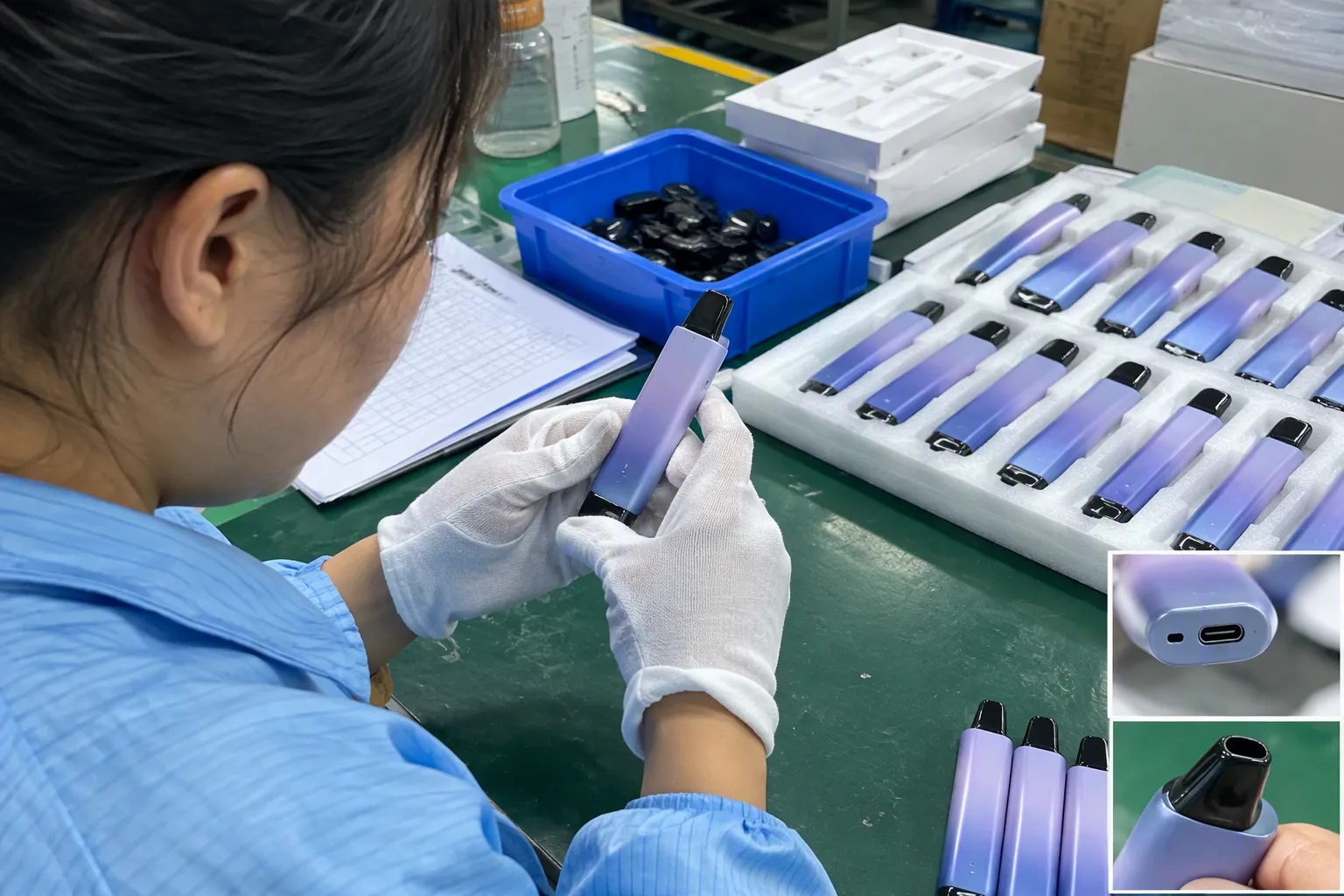
I have worked with importers, wholesalers, vape shops, smoke shops, convenience stores, gas stations, and regional distributors in Europe and North America. I have seen buyers adjust their product mix after trials, add replenishment items, and later explore OEM/ODM. The practical question is not simply whether reusable vapes are trending. The better question is whether they fit your customers, your cash flow, and your operating model.
Reusable Vape Shift: How Should I Plan the Product Mix
When I speak with B2B buyers, I often hear the same concern: they want to respond quickly to market changes without filling a warehouse with products that move slowly. A reusable vape can create this risk if I evaluate the device alone instead of evaluating the complete selling system.
I recommend planning a reusable vape product mix in three stages: validate the sales channel, test a limited range with a controlled quantity, and expand only after reviewing actual customer response. The mix should include suitable devices and, where relevant, compatible consumables, accessories, instructions, replacement support, and a clear replenishment plan.
Start with the channel, not the catalogue
I do not treat one product mix as suitable for every country or business. A vape shop may explain product use in detail, while a convenience store or gas station may need simpler packaging, clear instructions, and fast-moving price points. A regional wholesaler may need several levels of product positioning because its own customers have different budgets and sales habits.
Before I suggest a product, I ask questions such as:
- Which countries and regions will receive the products?
- Will the products go to specialist vape shops, smoke shops, convenience stores, gas stations, or mixed retail stores?
- Do customers already understand reusable systems?
- Will the buyer sell devices directly, or will the buyer also supply compatible consumables?
- What retail price range does the channel normally accept?
- Does the buyer need small replenishment orders or full-container purchasing?
- Which local taxes, product rules, packaging requirements, and sales restrictions apply?
These questions protect the buyer from making a catalogue-led decision. A product can be attractive in a quotation but unsuitable for a channel where customers expect a different format, price, or level of assistance.
Evaluate the complete selling system
A reusable vape is not always a single-item sale.[1] Depending on the design and local market, the buyer may need to plan for compatible cartridges, pods, coils, charging accessories, replacement components, or usage information. I do not assume that every device requires the same support. I confirm the actual product design and the destination requirements before making a recommendation.
The product-mix review should cover:
| Area | Buyer question | Why it matters |
|---|---|---|
| Device | Does the format match the target channel? | It affects customer understanding and shelf positioning. |
| Compatible items | Are consumables or accessories needed? | A device may be difficult to sell without a dependable supporting range. |
| Packaging | Is information clear for the intended market? | Clear information can reduce avoidable customer questions. |
| Supply | Can the supplier replenish the tested SKU? | A trial is less useful if the product cannot be supplied later. |
| After-sales | Who handles verified product issues? | A single support contact can reduce administrative work. |
| Compliance | Has the buyer checked destination rules? | Requirements vary by country, product, and sales channel.[2] |
I also separate product evaluation from technical or regulatory certification. I can provide available product documents and supplier information, but I do not treat a document as universal approval for every market. I ask buyers to have qualified local professionals verify regulations, taxes, labeling, certifications, battery requirements, and sales restrictions before import or sale.
Use a staged purchasing plan
I usually recommend three purchasing stages.
Stage one is a controlled trial. I select a limited number of suitable SKUs and a quantity that allows the buyer to observe customer response without creating unnecessary inventory exposure. The exact quantity depends on the channel, destination, available stock, and supplier confirmation.
Stage two is replenishment. I review which items receive repeat interest, which products create customer questions, and which products fit the buyer’s normal order cycle. Replenishment should follow observed demand rather than excitement around a launch.
Stage three is scaling. I consider larger imports, wider distribution, or private-label development only after the buyer has stronger evidence that the opportunity fits the market.
This process helps protect working capital. It also gives the buyer time to improve product descriptions, staff guidance, retail packaging, and customer support.
Match the purchase route to the buyer’s size
I work with different types of B2B buyers, so I do not offer one procurement route to everyone.
| Buyer situation | Practical route to evaluate | Main benefit |
|---|---|---|
| Small regional reseller | Confirmed overseas stock and a lower applicable MOQ | Faster testing with less upfront inventory exposure |
| Vape shop or smoke shop group | Small trial across selected stores | Better comparison between local customer groups |
| Convenience or gas-station supplier | Focused range with simple product information | Easier staff handling and shelf management |
| Regional wholesaler | Replenishment after trial data | Better control of repeat inventory |
| Large importer | Bulk shipment from China after validation | Potential purchasing efficiency and wider selection |
| Established distributor | OEM/ODM after a proven product opportunity | More control over branding and differentiation |
I have access to a Shenzhen supply network and a company structure that combines factory production, product sourcing, brand distribution, and logistics coordination. Shenzhen is a major electronics and vape manufacturing center[6], and our company has operated there since 2011. Our own factory is described internally as approximately 5,000 square meters, with stated maximum capacity of up to 5 million units per month. I present these figures as company information, not as a guarantee for every order or product.
For smaller European buyers, I can check available stock in our European warehouse network, including locations associated with Germany, Austria, Poland, and Belgium. When stock is confirmed, shipments may be arranged through carriers such as DHL, DPD, UPS, or FedEx. Delivery timing, destination coverage, product availability, taxes, and applicable restrictions must be confirmed for each order. I do not assume that every reusable vape or every destination qualifies for the same service.
For larger importers and distributors, I can discuss China-based bulk purchasing, OEM/ODM, product development, and consolidated procurement. The correct route depends on demand evidence, forecast accuracy, product documents, and the buyer’s import responsibilities.
Build the supplier relationship around risk control
Many buyers want to sell quickly, avoid after-sales disputes, and keep cash moving. I understand this because buyers such as regional wholesalers and immigrant-owned import businesses often manage several categories at once. They may supply local shops, operate warehouses, and make purchasing decisions under constant pressure from changing market conditions.
I help by combining products where practical, rather than forcing the buyer to contact many unrelated suppliers. Our business includes electronic cigarettes, ecigs, vapes, disposable vapes, atomizers, 510 batteries, CBD batteries, vaporizers, grinders, glass pipes, and other smoking accessories. We also represent a wide range of brands and maintain regular-stock products where confirmed.
This one-stop model can create value in several ways:
- The buyer can reduce the time spent comparing separate quotations.
- The buyer can coordinate product selection, packing, shipping, and after-sales through one contact.
- The buyer can combine different categories in a purchasing plan where logistics and order conditions allow.
- The buyer can ask for alternative products when the initial catalogue does not fit the target market.
- The buyer can discuss mould development when the market lacks a suitable existing product and the project conditions are realistic.
I also provide video verification when arranged and discuss delivery-to-door services or delivery to the buyer’s own freight forwarder. I can explain available compensation or after-sales arrangements for a specific order, but I do not present customs reimbursement, delivery time, or defect compensation as unconditional promises. The written order terms should always define the actual coverage.
When should I consider OEM or ODM?
I do not recommend custom development simply because a buyer wants a unique product. OEM/ODM requires time, communication, design decisions, sampling, packaging work, compliance review, and a realistic order plan.[5] A customized product can support differentiation, but it cannot replace evidence that customers will buy the category.
I normally separate the decision into three levels:
- Existing product test: The buyer tests an available product with standard specifications and packaging.
- Proven SKU scale-up: The buyer increases purchasing after reviewing local sell-through and repeat demand.
- Customized project: The buyer explores branding, packaging, design changes, or new mould development based on a clearer opportunity.
Our factory and development team have experience supporting OEM/ODM projects, and I work with buyers that have developed products under their own brands. However, I still ask the buyer to define the target market, expected quantity, product requirements, and compliance responsibilities before I discuss a project in detail.
I also continue to review new products. Our stated development rhythm is approximately five to ten new products each month, but I do not treat every new launch as a guaranteed market winner. I prefer to help buyers compare the product with their actual channel, existing inventory, and local purchasing habits.
What should I measure after the trial?
I do not rely only on the first order. I ask the buyer to track practical signals that support the next purchasing decision:
- How quickly the trial inventory moves.
- Which SKUs attract repeat requests.
- Which products create the most usage questions.
- Whether customers ask for compatible items.
- Whether stores can explain the product correctly.
- Whether the price fits the channel.
- Whether replenishment can arrive before stock runs out.
- Whether after-sales cases are manageable.
- Whether local rules allow continued sale and import.
- Whether the product creates useful margin after freight, tax, and operating costs.
I avoid inventing conversion rates, failure rates, or sales forecasts. Every market behaves differently. A Spanish tourist city, a US regional wholesale territory, and a mixed convenience-store channel may require different products and different levels of support.
My own experience is strongest in procurement staging, supply-chain coordination, product-mix planning, and the choice between overseas stock, China bulk import, and customization. For battery safety, product-life testing, laboratory performance, and application-specific technical decisions, I recommend qualified professional evaluation and review of the relevant documents.
How Can I Protect Cash Flow During the Reusable Vape Shift?
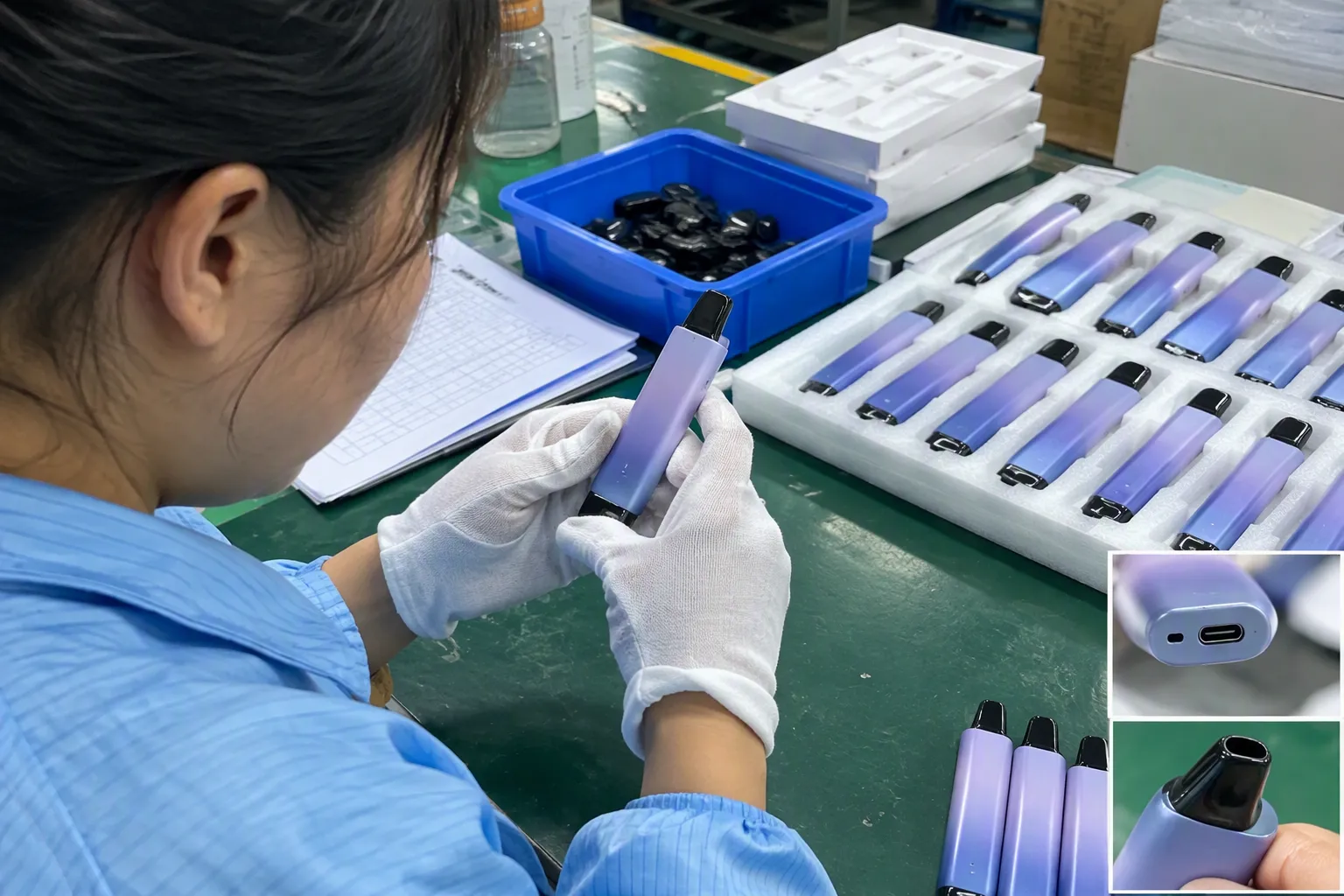
A buyer can lose money even when a product eventually sells. Excess inventory, delayed delivery, unclear replenishment, customs problems, and slow after-sales handling can all tie up working capital. I therefore treat cash-flow protection as part of product selection, not as a separate logistics issue.
I protect cash flow by matching order size and shipping method to evidence of demand.[3] I use a limited trial for uncertain products, confirmed overseas stock where appropriate for smaller orders, and China-based bulk import or OEM/ODM only after the buyer has stronger demand visibility and a workable compliance plan.
Use inventory in proportion to uncertainty
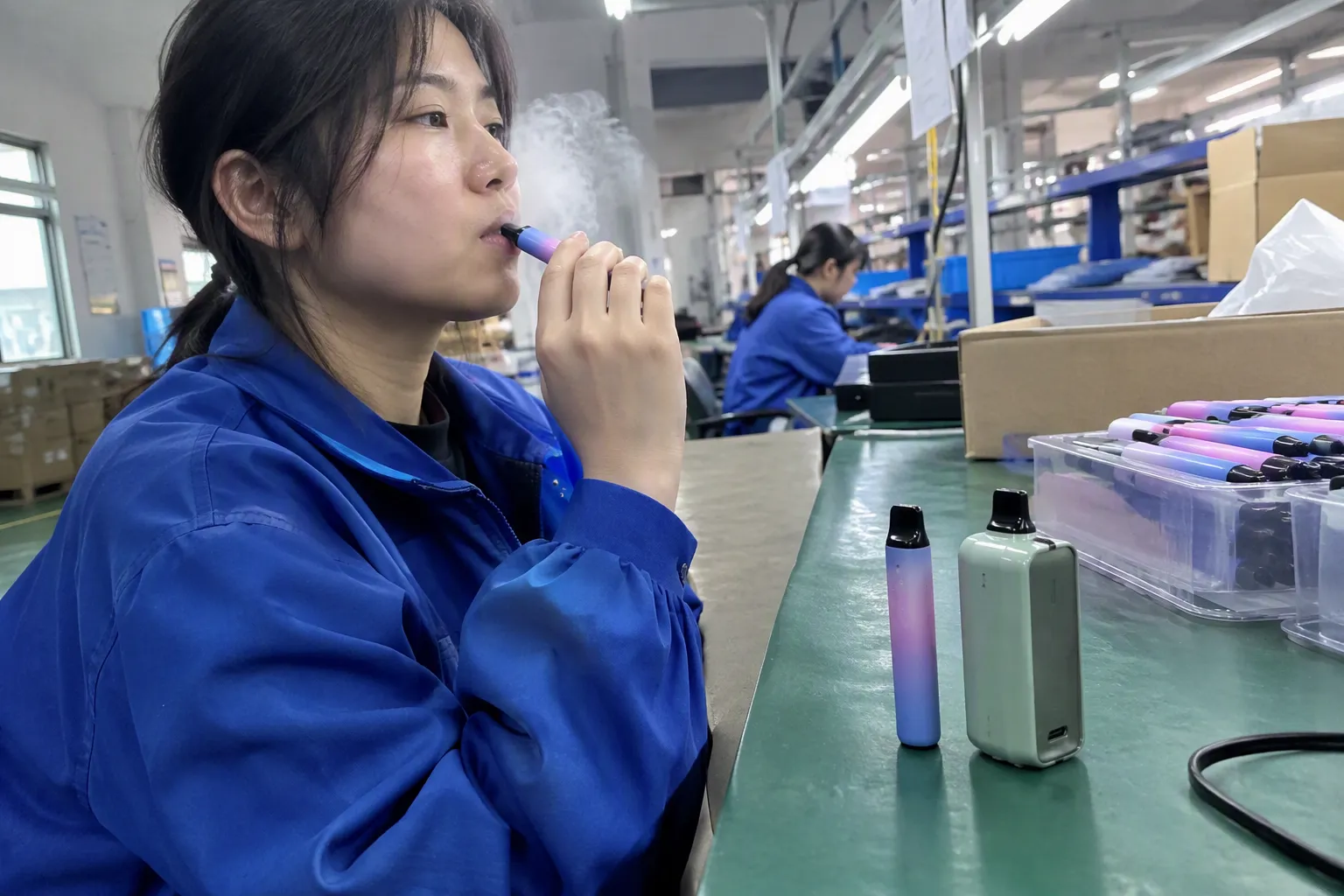
I often see buyers attracted to new products because they want to be early. Being early can help, but it also increases uncertainty. I encourage buyers to separate a product’s novelty from its purchasing quantity.
A buyer can create a simple decision table:
| Trial result | Next action |
|---|---|
| Limited customer interest | Stop or revise the product mix |
| Interest but many questions | Improve training, packaging, or product explanation |
| Regular sales with no clear repeat pattern | Continue controlled replenishment |
| Repeat demand from several accounts | Consider a larger import |
| Proven demand and clear branding opportunity | Review OEM/ODM feasibility |
This approach does not guarantee profit. It gives the buyer a clearer basis for the next decision.
Compare overseas stock with China import
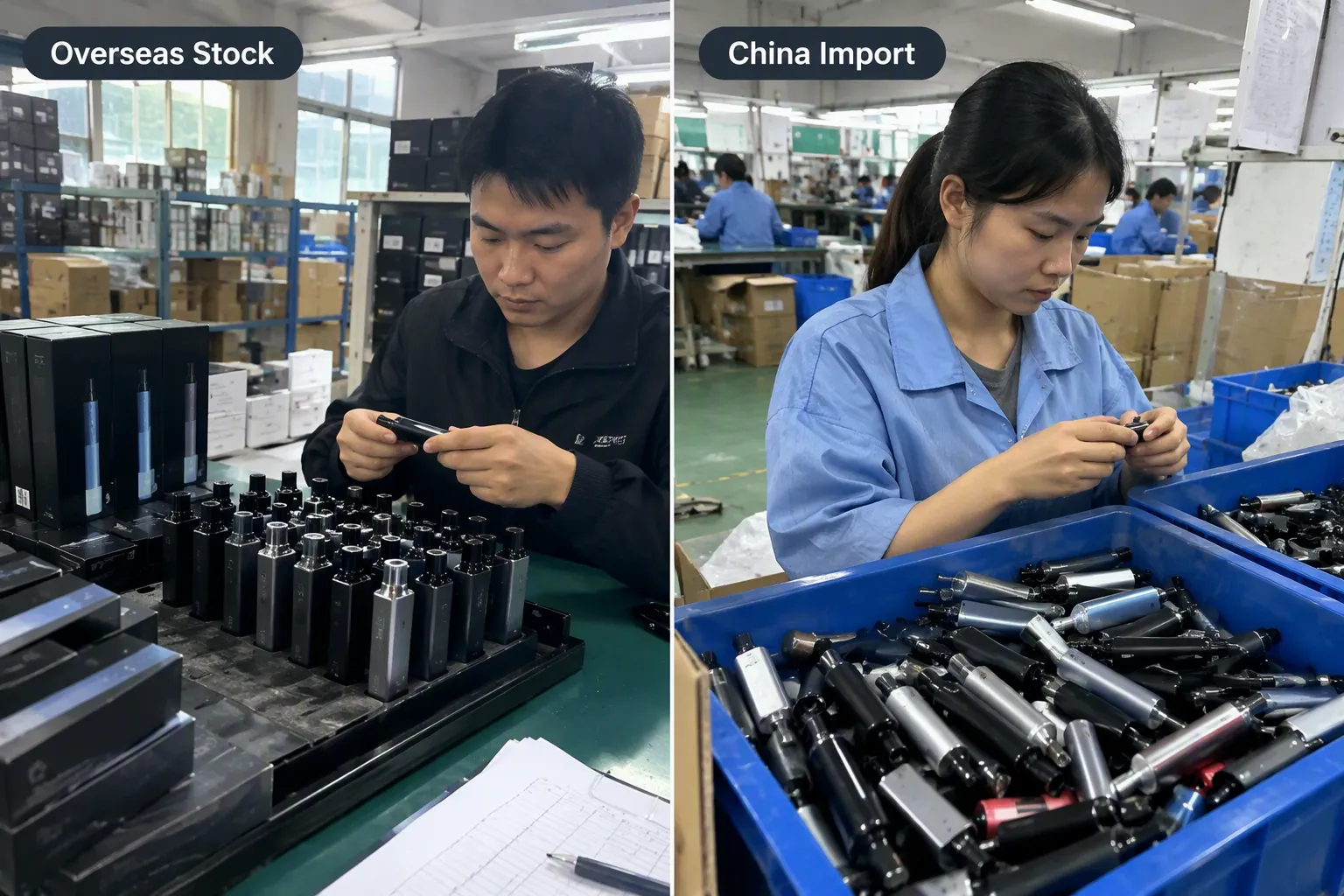
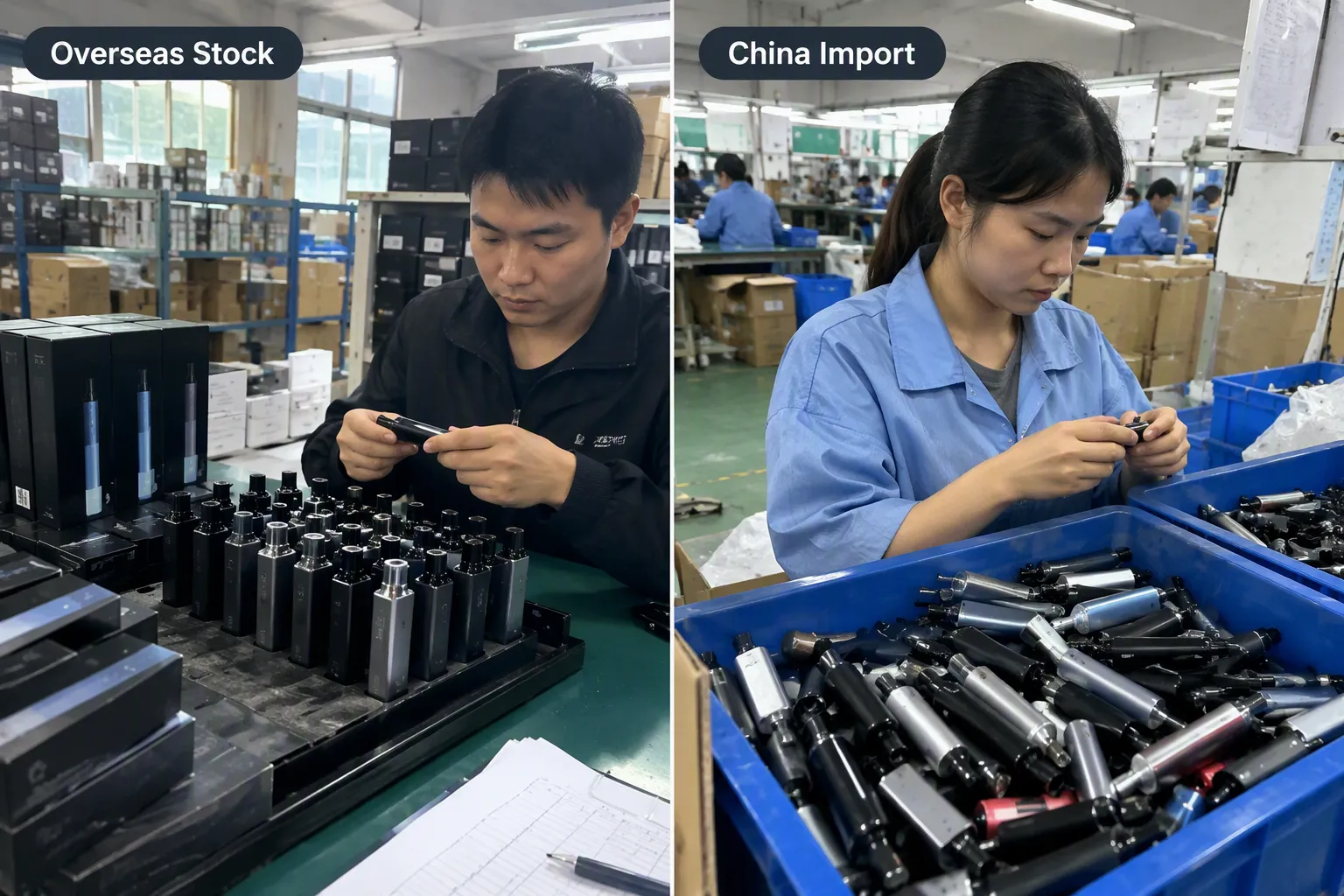
I operate a European overseas warehouse network and can check available brand inventory for European buyers. Where the required product is confirmed in stock, a buyer may avoid the longer lead time and customs uncertainty associated with direct China shipping. The applicable MOQ can be as low as 50 units for some available products, but I confirm the product, quantity, and destination before quoting.
This model can suit:
- Smaller wholesalers.
- Vape and smoke shops.
- Regional resellers.
- Buyers testing several brands.
- Businesses that value faster replenishment over the lowest possible unit cost.
Larger buyers may prefer China-based import because it can support broader product selection and purchasing efficiency at scale. However, the buyer must consider freight, customs, taxes, import documents, storage, and cash tied up during transit.
I do not claim that overseas stock is available for every product. I also do not promise a universal one-to-five-working-day delivery period. I confirm actual inventory, carrier conditions, destination rules, and order details before I make a delivery statement.
Plan for after-sales before the first order
A buyer’s reputation can suffer when a product problem is passed between a brand, factory, freight agent, and importer. My company provides unified after-sales coordination for products purchased through us, which can reduce the need for the buyer to contact several factories separately.
I recommend that buyers confirm:
- The definition of a defective product.
- The evidence required for a claim.
- The reporting period.
- Replacement, credit, or refund procedures.
- Responsibility for shipping affected goods.
- The process for customer misuse or unclear usage.
- The documents supplied with the product.
- The person responsible for final approval.
I can discuss free replacement or compensation arrangements for a specific order, including situations involving verified defects or shipping problems, but the buyer should rely on written commercial terms. This protects both sides and prevents different expectations after delivery.
When Should I Move from Testing to Bulk Import or OEM/ODM?
The most expensive mistake is often moving to customization before the sales system is ready. A buyer may spend time on branding and mould development while the real issue is channel fit, customer education, price positioning, or replenishment.
I recommend moving from testing to bulk import when the buyer has evidence of repeat demand, a suitable sales channel, manageable after-sales requirements, and a verified compliance route. I recommend OEM/ODM only when customization solves a defined market need and the buyer can support the required development and purchasing plan.
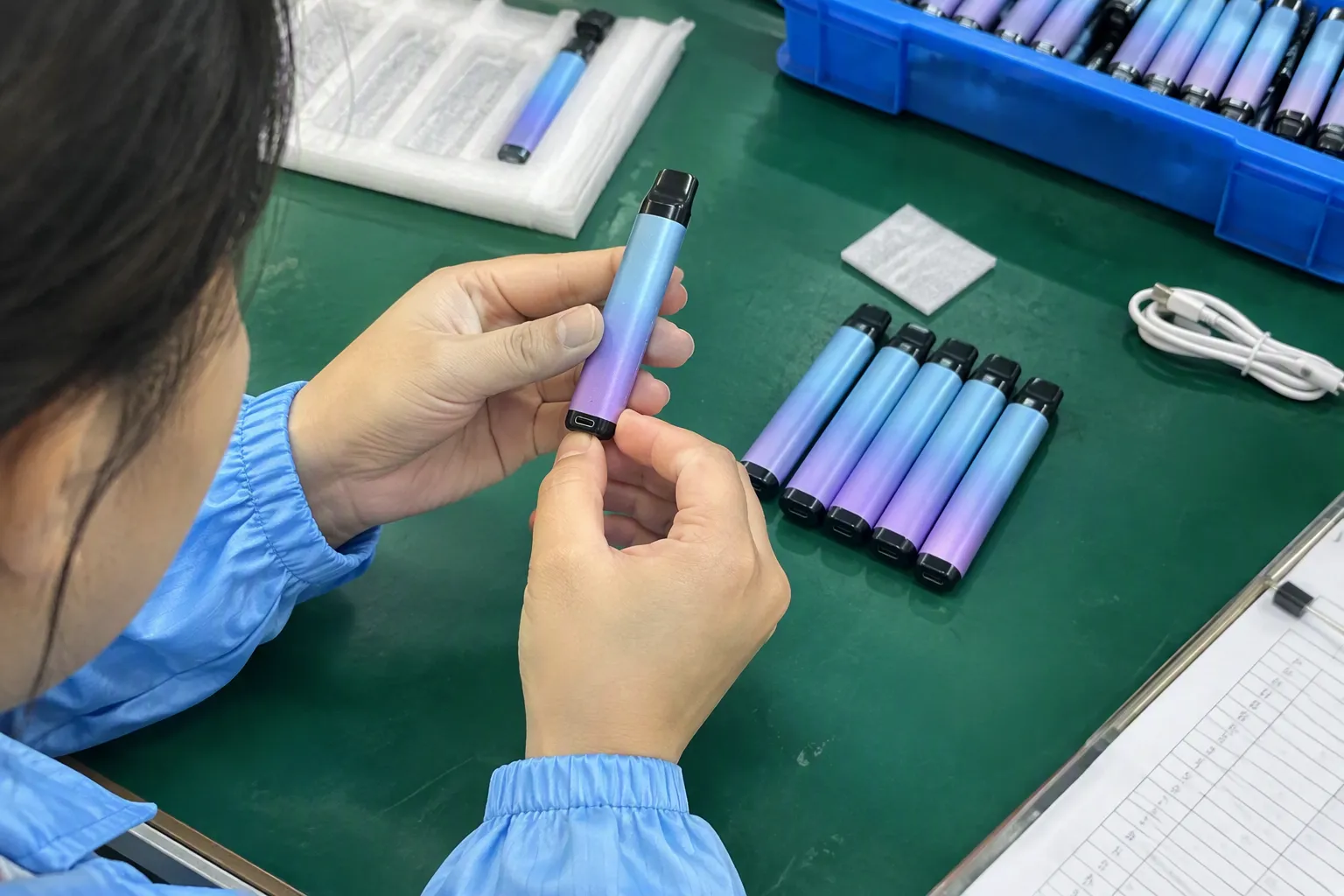
Bulk import is a supply decision, not just a price decision
Bulk purchasing may provide access to more product choices and stronger factory coordination.[4] It can also create larger inventory exposure. I ask buyers to review the full landed-cost picture:
- Product price.
- Packaging and printing.
- Freight.
- Customs duties and taxes.
- Warehousing.
- Local delivery.
- Compliance work.
- Payment timing.
- Possible after-sales costs.
- Expected inventory turnover.
A lower unit quotation does not automatically create a better business result. If the product moves slowly or the buyer cannot replenish the right supporting items, the apparent saving may not help.
OEM/ODM should answer a real customer need
A buyer may consider OEM/ODM for several reasons:
- The buyer wants to build a recognizable local brand.
- The buyer needs packaging suited to a particular channel.
- The buyer has repeat customers asking for a consistent private-label range.
- The buyer wants to combine a product with its existing distribution network.
- The buyer has identified a product gap that standard catalogues do not solve.
I can help explore existing product customization, packaging, and new product development. I can also discuss mould development when the buyer’s conditions support it. I do not present a custom product as automatically safer, more durable, more profitable, or more popular. The buyer still needs to validate the market and review all destination requirements.
Use supplier breadth to simplify procurement
I have built my company around a one-stop supply approach. We work with brand products and our own factory capabilities. We can source products that are not currently listed, compare cost-effective alternatives, and discuss development opportunities.
For buyers like regional wholesalers and importers, this may reduce the operational burden of managing many separate suppliers. The buyer can purchase vape products and related smoking accessories through a coordinated relationship, subject to product availability and order conditions.
I also maintain contact with buyers that have changed their product mix after trials and replenishment. I treat those patterns as observations from customer communication, not as market-wide proof. I use them to ask better procurement questions rather than to promise a fixed result.
Verify compliance in every target market
I never recommend assuming that a product approved or sold in one market can automatically be imported into another. European and North American markets can differ by country, state, province, product category, tax treatment, packaging rule, battery requirement, and sales restriction.[7]
Before ordering, I ask buyers to verify:
- Whether the product category may be imported and sold.
- Whether the product needs notification, registration, testing, or certification.
- Which labels, warnings, languages, and packaging rules apply.
- Whether the intended nicotine or non-nicotine configuration is permitted.
- Whether local age restrictions and retail rules affect the channel.
- Whether the buyer or supplier carries each compliance responsibility.
- Whether transport rules apply to batteries or related components[8].
I can provide available documents and supplier information. I recommend that the importer and a qualified local compliance professional review the final position before commercial sale.
Frequently Asked Questions
Is a reusable vape automatically more profitable than a disposable vape?
No. I do not make that claim. Profit depends on local demand, selling price, taxes, product cost, accessories, replenishment, after-sales, and inventory speed. I recommend comparing the complete product system and testing demand before making a profitability decision.
Should a small buyer import reusable vapes directly from China?
Not always. I suggest that smaller buyers first check confirmed overseas stock and applicable lower MOQs where available. Direct China import may become more suitable after demand is clearer. The buyer should compare landed cost, delivery time, customs requirements, and cash-flow exposure.
When should I add compatible accessories or consumables?
I add them when the actual product design and customer usage require them. I first confirm compatibility, supply continuity, local rules, and customer understanding. A complete product mix can make selling easier, but unnecessary items can also create excess inventory.
Can Kingfuji develop a private-label reusable vape?
I can discuss OEM/ODM, packaging customization, and new product development through our factory and development team. I recommend starting with a defined market need and a tested product opportunity. The buyer should confirm quantity, design, compliance, timeline, and commercial terms before proceeding.
Can I receive reusable vapes from a European overseas warehouse?
I can check available stock and destination coverage for specific products. Some products may be available with lower quantities, including quantities of 50 units per model in applicable cases. I confirm actual inventory, delivery conditions, taxes, and restrictions for each order rather than treating warehouse service as universal.
Conclusion
The reusable vape shift is best managed as a measured procurement process. I help buyers begin with channel fit, test a limited range, review customer response, and then choose between replenishment, bulk import, or OEM/ODM. Smaller businesses may benefit from confirmed European stock and lower applicable MOQs, while larger importers can evaluate China-based supply and customization after demand is established. I also coordinate product sourcing, logistics, and after-sales through one contact. Contact Kingfuji at info@kingvapecig.com or +86 13928420527 to discuss your target market, product mix, and next purchasing stage.
Sources
- Electronic cigarettes: where to from here? - PMC", Technical reviews of electronic nicotine-delivery systems describe reusable devices as configurations comprising components such as batteries, heating elements, reservoirs, cartridges, or pods, supporting the need to assess compatible consumables and accessories by device design
- [PDF] MPOWER 2025 Country Profile - World Health Organization (WHO)", Regulatory guidance from national and international authorities indicates that electronic-cigarette obligations vary by jurisdiction and may depend on product composition, packaging, notification status, and the channel or conditions of sale
- Supply Chain Management and Demand Uncertainty", Inventory-management research generally finds that purchasing decisions made under demand uncertainty affect holding costs, stockout risk, and working-capital requirements, providing a rationale for scaling order quantities as demand evidence improves
- Stock Replenishment (FMR Part 101-27 Subpart 101-27.1)", Research on economic order quantities and procurement scale describes a trade-off between lower ordering or unit costs and greater inventory-holding exposure as order size increases
- [PDF] CHIPS for America's Research & Development Programs | NIST", Established product-development frameworks treat requirements definition, design iteration, prototyping, validation, production planning, and regulatory or quality review as interdependent stages of commercialization
- A History of the Electronics Industry in Shenzhen, China", Economic and industrial-cluster sources identify Shenzhen as a major electronics-manufacturing hub and may document the city's role in electronic-cigarette production and supply chains
- A systematic review for the impacts of global approaches to ...", Comparative regulatory materials show that vaping-product controls differ across European and North American jurisdictions, including rules on product notification, nicotine content, labeling, taxation, age of sale, and retail distribution
- [PDF] midanpirg/22 & rasg-mid/12-wp/27 - ICAO", International air-transport guidance classifies electronic cigarettes and many lithium-battery configurations as items subject to specific carriage, packaging, and handling conditions