
Quick Answer
A vape shop product range can become a hidden cash-flow problem when slow-moving items occupy shelf space and purchasing capital. I often see buyers chase the newest product while older stock remains unsold. That pressure can reduce replenishment flexibility, increase markdown risk, and create customer-service problems.[1] A controlled range reset gives the shop a more practical way to protect cash flow.
A vape shop should reset its product range when inventory turnover slows, excess stock restricts cash flow, customer demand changes, or quality and after-sales risks become difficult to manage.[2] The reset should not mean replacing every product. A shop should review sales by SKU, retain products that fit its customers, reduce slow-moving stock, and test new items in controlled quantities before making a larger purchase.
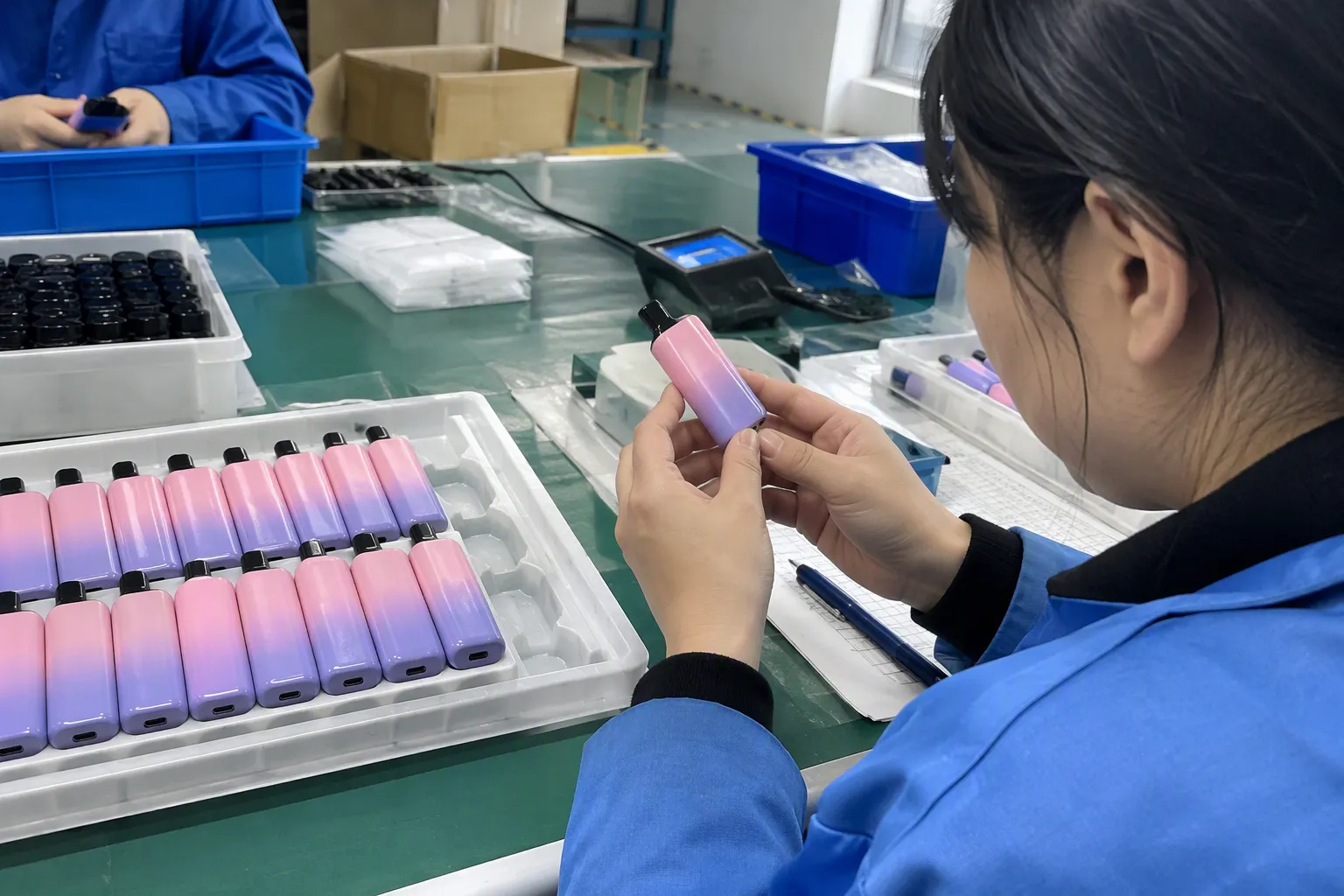
A product reset is not simply a response to social media excitement or a supplier’s new catalogue. It is a purchasing decision based on the shop’s actual customers, selling environment, available cash, and ability to replenish or resolve problems. I use this practical framework when discussing product decisions with importers, wholesalers, vape shops, smoke shops, convenience stores, and gas stations.
When Should a Vape Shop Reset Its Product Range?
Many shop owners wait until shelves look outdated or sales fall sharply. That approach can be expensive because the business may already have too much money tied up in stock. I believe a range review should begin earlier, when inventory movement, cash flow, or product suitability starts to weaken.
A vape shop should consider a product range reset when several products remain unsold for too long, replenishment becomes difficult, customer requests change, or the total risk of keeping an item exceeds its expected value. The first signal should be inventory turnover, not novelty.[3] A new product should be tested only after the shop understands its likely demand and purchasing exposure.
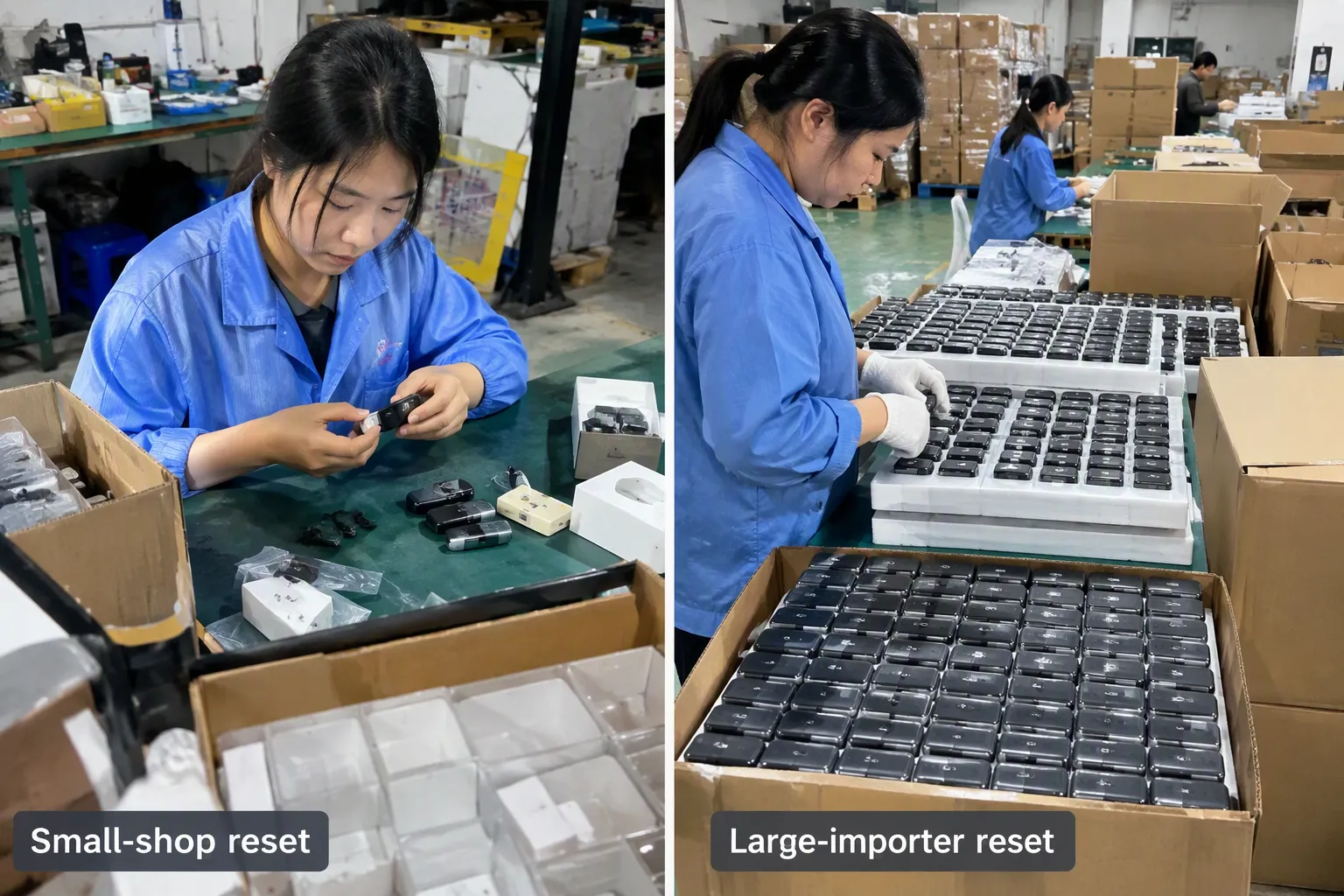
Why does slow inventory turnover matter?
A product can have an attractive purchase price and still be a poor commercial choice. If it sits in a storage room for months, the shop loses the opportunity to use that money for faster-moving products, rent, wages, marketing, or ordinary operating costs.
I have seen this issue in different forms. A buyer may purchase a large quantity because the unit cost appears lower. The product may even have a good margin on paper. However, if customers do not ask for it regularly, the shop may need to discount it, bundle it, or leave it untouched. The original margin then becomes less important than the actual cash recovery.[4]
I recommend reviewing each product through four basic questions:
- How quickly does it sell?
- How much cash does it tie up?
- How easy is it to replenish or replace?
- What happens if the product has quality or after-sales problems?
The shop does not need a complicated financial system to begin. A simple spreadsheet can show:
| Review item | Practical question |
|---|---|
| Units sold | How many units moved during the chosen review period? |
| Stock remaining | How many units are still available? |
| Days in stock | How long has the current stock been held? |
| Cash committed | How much purchasing capital is still tied up? |
| Customer requests | Are customers actively asking for this item? |
| Reorder flexibility | Can the shop buy a smaller quantity next time? |
| Service risk | Can defects, returns, or customer questions be handled properly? |
I would avoid using one fixed reset timetable for every shop. A busy specialist vape shop, a convenience store, and a gas station may have very different sales patterns.[5] A product that moves well in one location may move slowly in another because the customer profile, price level, local competition, or product knowledge is different.
What are the clearest warning signs?
A single weak week does not always justify removing a product. I look for repeated signals. The stronger the pattern, the more seriously I would consider reducing or replacing the item.
Common warning signs include:
- The same products remain in stock through several purchasing cycles.
- Staff repeatedly recommend discounts because customers do not choose the products naturally.
- A new purchase is delayed because too much cash is locked in old stock.
- Customers ask for different features, formats, or price points.
- The shop carries many similar items that compete with each other.
- The supplier cannot provide clear product information or dependable after-sales support.
- The product requires explanations that staff cannot confidently provide.
- Packaging, specifications, or compliance documents need verification before sale.
- The item sells only when a customer receives an unusually large discount.
- The shop keeps buying based on supplier enthusiasm instead of its own sales records.
These signs do not automatically prove that a product is bad. They show that the product may not fit the shop’s current situation. That distinction matters. A product can be well made and still be wrong for a particular store.
How should I separate products into action groups?
I find it easier to make decisions when products are placed into action groups instead of being judged only as “good” or “bad.”
1. Retain and replenish
These products have consistent movement and fit the shop’s customers. The shop can keep them as part of its core range, while still checking quality, availability, and local selling requirements.
2. Retain but reduce the purchase quantity
These products sell, but not quickly enough to justify a large order. A smaller replenishment quantity may protect availability without tying up too much money.
3. Test again with a different position
Some products may have potential but lack visibility, clear explanation, or the right price position. The shop can test a different display, staff explanation, bundle, or customer segment before removing them.
4. Reduce or clear
These products have weak movement, high stock exposure, or poor fit with the shop. The buyer may use a controlled clearance plan and avoid repeating the same purchase.
5. Replace carefully
Replacement makes sense when customer demand has changed or when a product creates repeated quality, service, or documentation concerns. I would still test the replacement rather than immediately buying a large quantity.
This method helps the shop avoid two common mistakes. The first mistake is keeping every product because money has already been spent. The second mistake is removing too many products at once and creating new gaps in the range.
Should customer demand or supplier claims guide the decision?
Customer demand should carry more weight than a supplier’s claim that an item is “hot.” Supplier information can help a buyer discover products, but it cannot replace the shop’s own sales context.
When I discuss new items with buyers, I ask them to define the expected customer before discussing quantity. For example:
- Is the product aimed at existing adult customers or a new customer group?
- Does the store serve local residents, tourists, commuters, or wholesale buyers?
- Does the shop compete mainly on convenience, product choice, price, or service?
- Can staff explain the product clearly and responsibly?
- Does the product fit the store’s current price structure?
- Can the buyer sell through the first order before needing to purchase again?
A shop near a tourist area may have different purchasing needs from a suburban specialist store. A convenience store may require a smaller, simpler selection than a large vape retailer. A smoke shop may also sell atomizers, batteries, grinders, glass pipes, vaporizers, and other related products, but the right mix still depends on customer demand and local requirements.
I do not treat product variety as a benefit by itself. More SKUs can increase choice, but they can also create duplicate stock, confusing displays, and slower cash recovery.[6] A focused range can be easier for staff to manage and easier for customers to understand.
How should a shop test a new product?
I recommend treating a new product as a controlled commercial test. The purpose is not to prove that the product will succeed. The purpose is to collect enough information to decide whether a larger order is justified.[7]
Before placing an initial order, I would record:
- The target customer
- The expected retail or wholesale price
- The planned test quantity
- The expected selling period
- The maximum acceptable unsold stock
- The replenishment lead time
- The process for handling defects or returns
- The documents that need local verification
The shop can then monitor simple results:
| Test measure | What it helps show |
|---|---|
| Sell-through rate | Whether the initial quantity is moving |
| Time to first sale | Whether customers notice or request the item |
| Repeat demand | Whether one sale leads to further demand |
| Customer questions | Whether product education is adequate |
| Return or defect reports | Whether service exposure is increasing |
| Cash recovered | Whether the test supports working capital |
| Reorder interest | Whether a larger purchase is commercially sensible |
I would not use a high initial quantity simply because the supplier offers a lower unit price.[8] A lower unit price can be useful, but only if the product sells within a reasonable period and the shop can manage the remaining risk.
For smaller European buyers, an overseas warehouse can sometimes support a lower-quantity test. Shenzhen Kingfuji Tech. Co., Ltd. states that it maintains stock in European warehouses, including locations in Germany, Austria, Poland, and Belgium, with delivery through services such as DHL, DPD, UPS, and FedEx. The business context indicates delivery may take approximately 1–5 working days within the European Union and that some products can be ordered from 50 units per model. Buyers should confirm current stock, delivery terms, applicable taxes, and local compliance before ordering.
This type of arrangement may help a small or medium-sized shop test stock without committing immediately to a larger shipment from China. It does not remove demand risk. It simply gives the buyer more flexibility if the inventory is available and the commercial terms are suitable.
What is the difference between a small-shop reset and a large-importer reset?
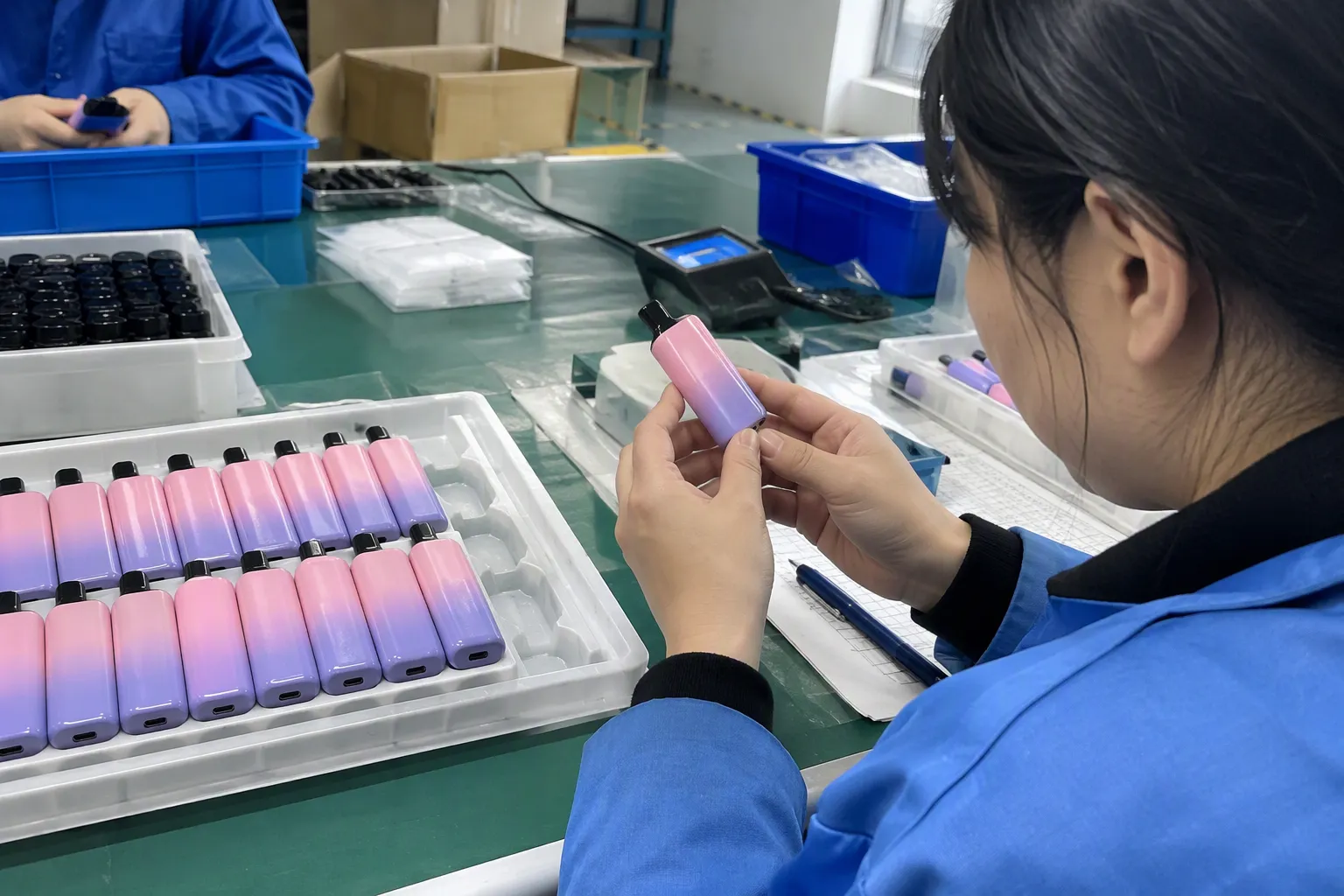
A smaller shop usually needs flexibility first. It may prefer lower minimum quantities, quick replenishment, and less cash tied up in a single product. A larger importer or regional wholesaler may need better factory pricing, private-label development, larger production capacity, and a more formal quality-control process.
| Buyer situation | Main priority | More suitable approach |
|---|---|---|
| Small vape shop | Cash protection and quick testing | Smaller order, available stock, short replenishment |
| Smoke shop with mixed products | Balanced range and simple management | Keep proven core products and test selected accessories |
| Convenience store or gas station | Easy-to-understand products and practical turnover | Limit duplicate SKUs and focus on local demand |
| Regional wholesaler | Reliable supply and broader volume planning | Forecast demand, compare suppliers, negotiate production terms |
| Importer or distributor | Cost structure, branding, documentation, and capacity | Consider domestic bulk import and OEM/ODM after validation |
For larger orders from China, the buyer should evaluate more than the quoted price. The review should include production schedule, packaging, inspection arrangements, shipping plan, payment terms, defect handling, and the documents needed for the destination market.
Shenzhen Kingfuji Tech. Co., Ltd. describes itself as a factory and trading company with a 5,000-square-meter facility, stated maximum capacity of up to 5 million units per month, and OEM/ODM experience. The company also reports launching approximately 5–10 new products each month. These are supplier-provided business details, so I recommend that buyers verify capacity, product specifications, samples, quality procedures, and documentation during procurement.
A buyer should also decide whether a private-label project is appropriate. OEM or ODM can support differentiation and potentially improve long-term positioning, but it also creates more responsibility. The buyer may need to manage artwork, packaging approval, minimum quantities, product testing, market requirements, and remaining inventory if the design does not sell as expected.
How does total commercial risk change the decision?
I believe product selection should be based on total commercial risk rather than purchase price alone. A product with a low unit cost can become expensive if it moves slowly, generates returns, requires repeated explanations, or creates a difficult supplier dispute.
I use a simple risk view:
Commercial outcome = sales movement + cash recovery – inventory exposure – service exposure – supply uncertainty.
This is not a formal accounting formula. It is a way to keep the discussion practical.
A buyer should consider the following risks:
Inventory risk
The shop may not sell the stock before customer preferences change. This risk increases when the order is large, the product is trend-dependent, or the supplier requires a high minimum order.
Cash-flow risk
The shop may have enough total margin on paper but not enough available cash for rent, payroll, replenishment, or shipping. Fast turnover can matter more than the highest theoretical margin.
Quality risk
A product with inconsistent quality can create returns, negative reviews, staff time, and lost customer trust. The buyer should request samples, inspect production where appropriate, and establish a clear defect-handling process.
After-sales risk
The buyer should know who handles defective products and how claims are documented. A one-stop supplier can simplify communication because the buyer does not need to contact several factories separately. However, the buyer should still confirm the actual written terms before payment.
Compliance and documentation risk
Rules vary by country and product category. Buyers should verify current requirements with qualified local advisers, customs professionals, and relevant authorities. Supplier statements, certificates, test reports, and declarations should be treated as documents to review, not as automatic proof that a product may be sold everywhere.
Logistics risk
Shipping from China may offer production access and price advantages, but the buyer needs to consider lead time, customs procedures, seasonal congestion, and destination-country requirements. An overseas warehouse may reduce some delivery uncertainty for available stock, but it does not replace the buyer’s responsibility to verify the transaction and product status.
How can a supplier support a safer range reset?
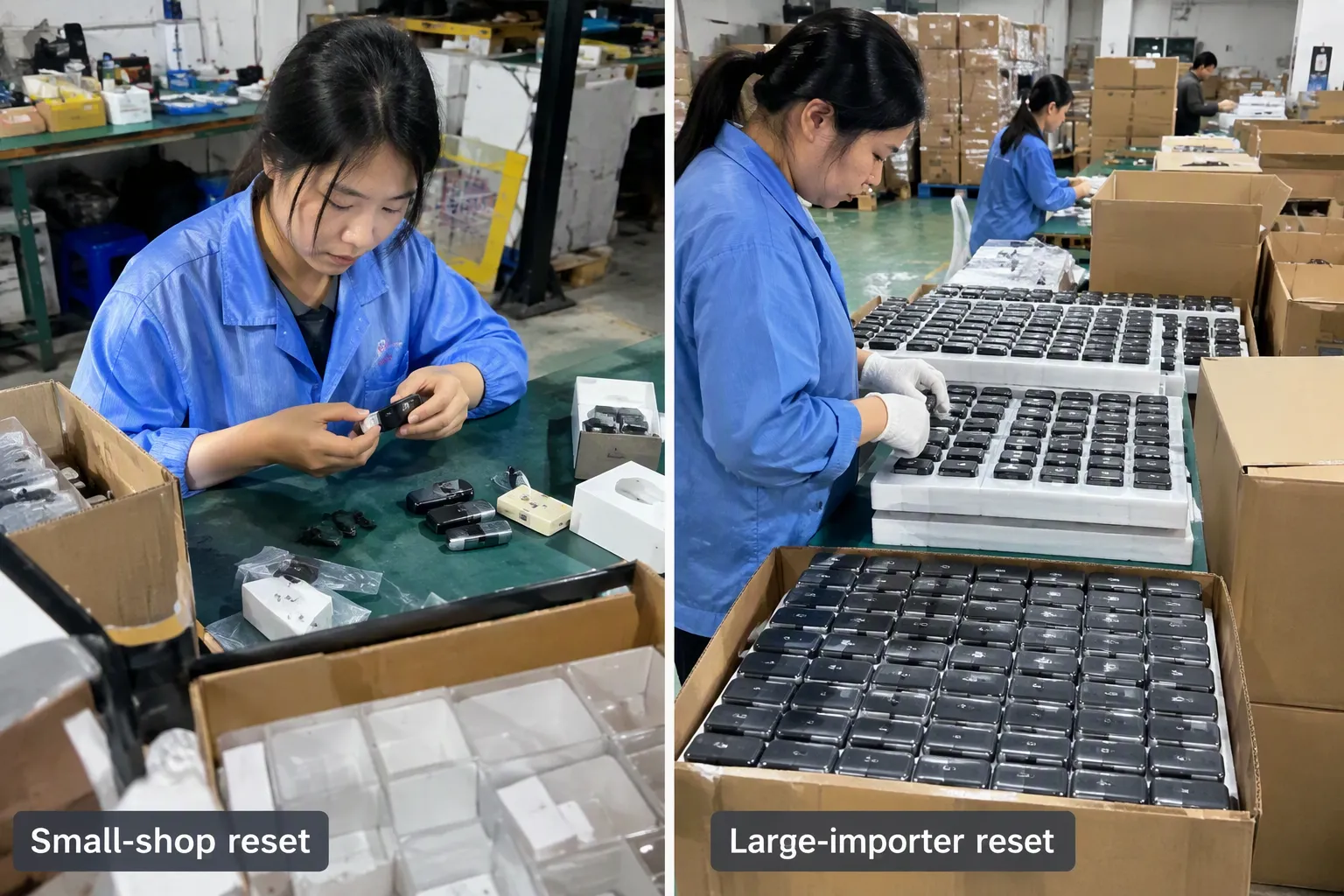
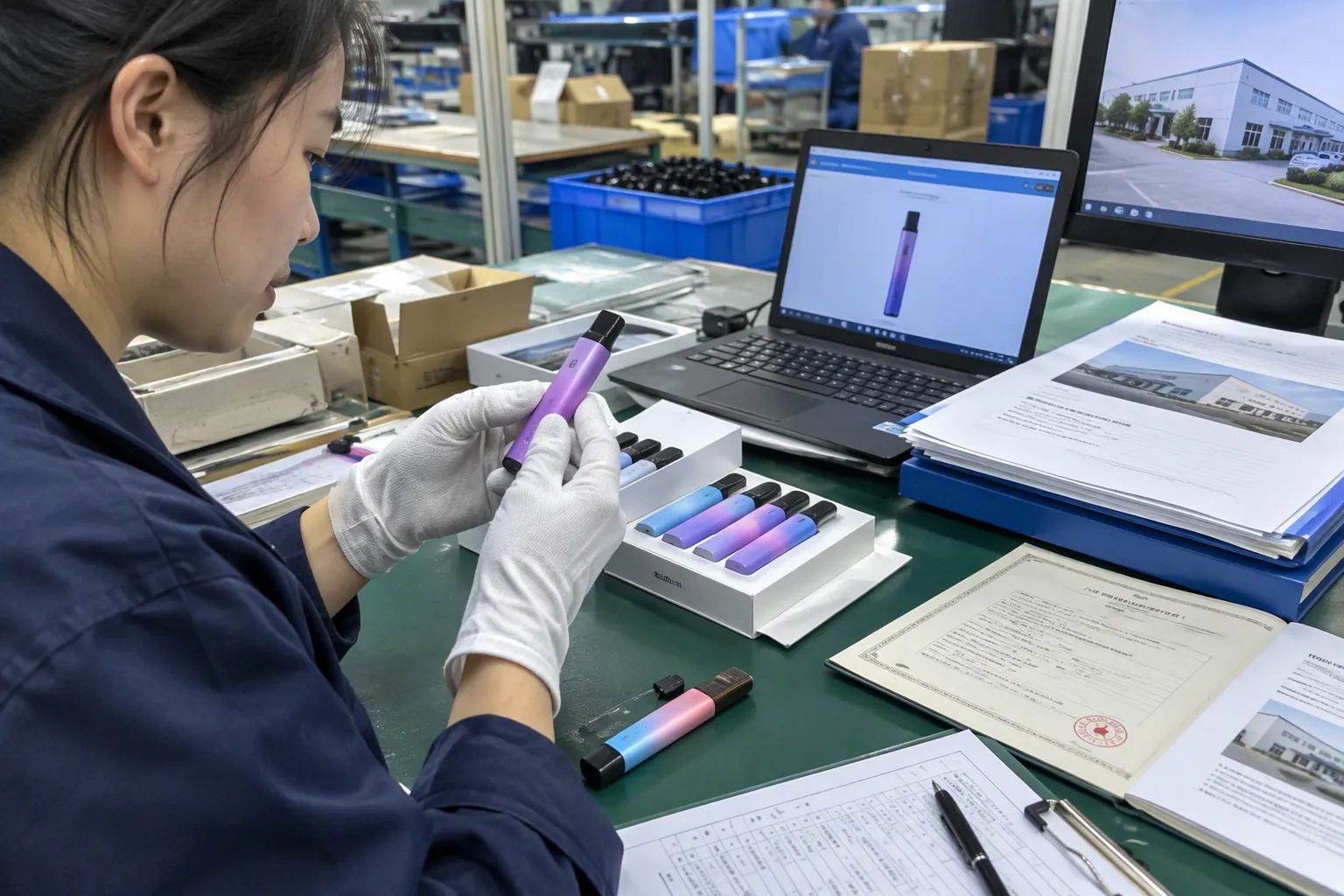
A supplier should help the buyer make a decision, not simply send a catalogue. I try to structure product discussions around the buyer’s selling scenario.
Useful supplier support can include:
- Clear product specifications and packaging information
- Samples before a larger commitment
- Realistic production and dispatch schedules
- Transparent minimum order quantities
- Available-stock information
- A written process for defective products and after-sales claims
- Support with product selection based on the buyer’s channel
- OEM/ODM discussion for buyers with proven demand
- Consolidated purchasing across relevant product categories
- One delivery plan for multiple approved products
Shenzhen Kingfuji Tech. Co., Ltd. operates from Shenzhen, Guangdong, a major electronics manufacturing and supply-chain center. The company supplies electronic cigarettes, disposable vapes, atomizers, 510 batteries, CBD batteries, vaporizers, grinders, glass pipes, and related products. It also represents multiple brands and states that it can help locate products outside its regular catalogue or develop a new product when the buyer’s conditions support mold development.
For a buyer, the value of a one-stop arrangement is not simply convenience. It may reduce the time spent requesting quotations from different suppliers, coordinating several shipments, and handling separate after-sales conversations. The buyer should still compare the overall terms, because one supplier is not automatically the best supplier for every item.
In my view, a good purchasing conversation should end with a clear decision:
- Which products will remain core items?
- Which items will be reduced?
- Which products need a controlled test?
- What quantity is acceptable for the first order?
- What documents must be verified?
- What happens if the goods arrive late or contain defects?
- When will the buyer review the test results?
That process helps replace excitement with evidence. It also gives the shop a better chance of protecting its working capital while responding to changing demand.
What should a vape shop do after the reset?
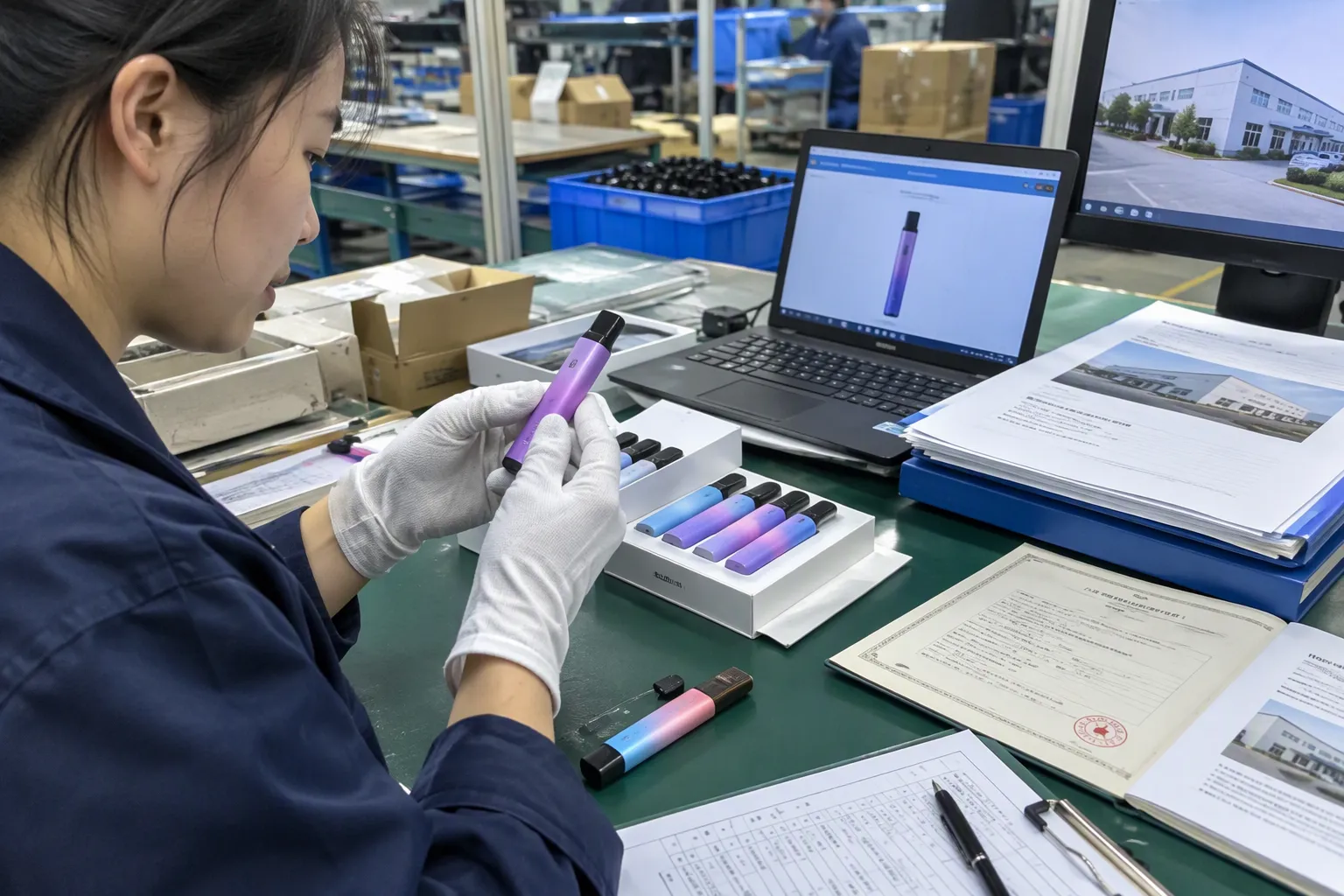
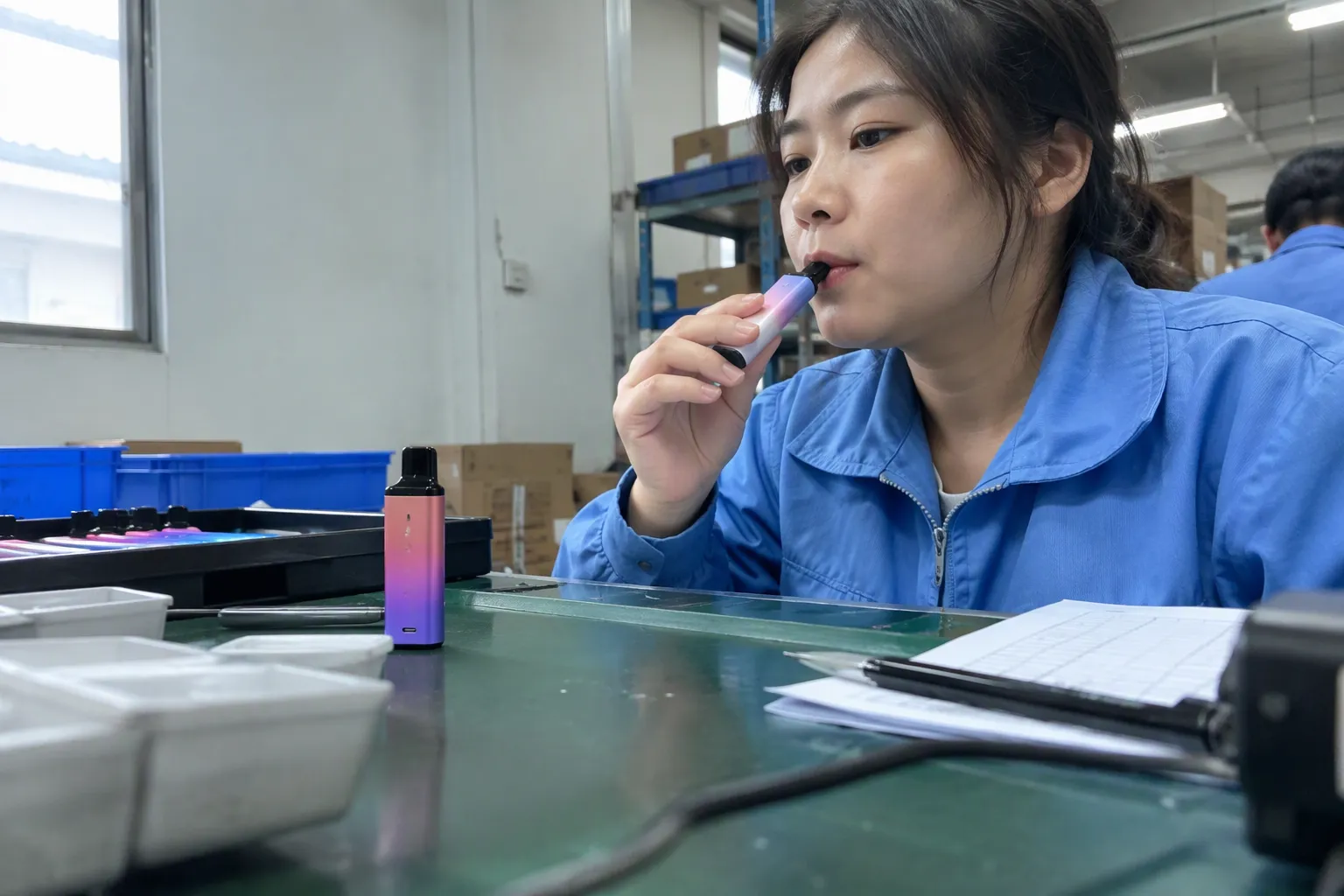
A reset is not complete when the buyer places a new order. The shop should monitor what happens after the products arrive. Staff need basic product information, customers need clear explanations, and the purchasing team needs to record actual movement.
I recommend a short review after the test period. The timing should depend on the product and sales volume, rather than a universal rule. The review can ask:
- Did the product sell to the intended customer?
- Did the actual price match the planned price?
- Did customers understand the product?
- Did the item create returns or repeated complaints?
- Did the product sell quickly enough to justify replenishment?
- Did the shop have enough remaining cash for normal operations?
- Should the next order be larger, smaller, unchanged, or cancelled?
The shop should avoid reacting to one unusually strong or weak day. A single sale does not prove demand, and one complaint does not always prove systemic quality failure. I prefer to look for a pattern and record the reason behind each decision.
A practical range reset can follow this sequence:
- Export or record sales by SKU.
- Mark products by movement and cash exposure.
- Identify duplicate or overlapping products.
- Review customer requests and staff feedback.
- Check supplier support, documents, and replenishment terms.
- Clear or reduce unsuitable stock.
- Select a small number of products for testing.
- Set an order limit before purchasing.
- Review actual results.
- Update the range based on evidence.
This process works for small stores and can also support larger purchasing teams. The scale changes, but the principle remains the same: the range should serve the buyer’s real sales situation.
I also encourage buyers to separate product decisions from regulatory decisions. A product may appear commercially suitable but still require additional review before import or sale. Country-specific rules can change, and product categories may be treated differently in different markets. A qualified professional should evaluate application-specific compliance questions.
Frequently Asked Questions
How often should a vape shop review its product range?
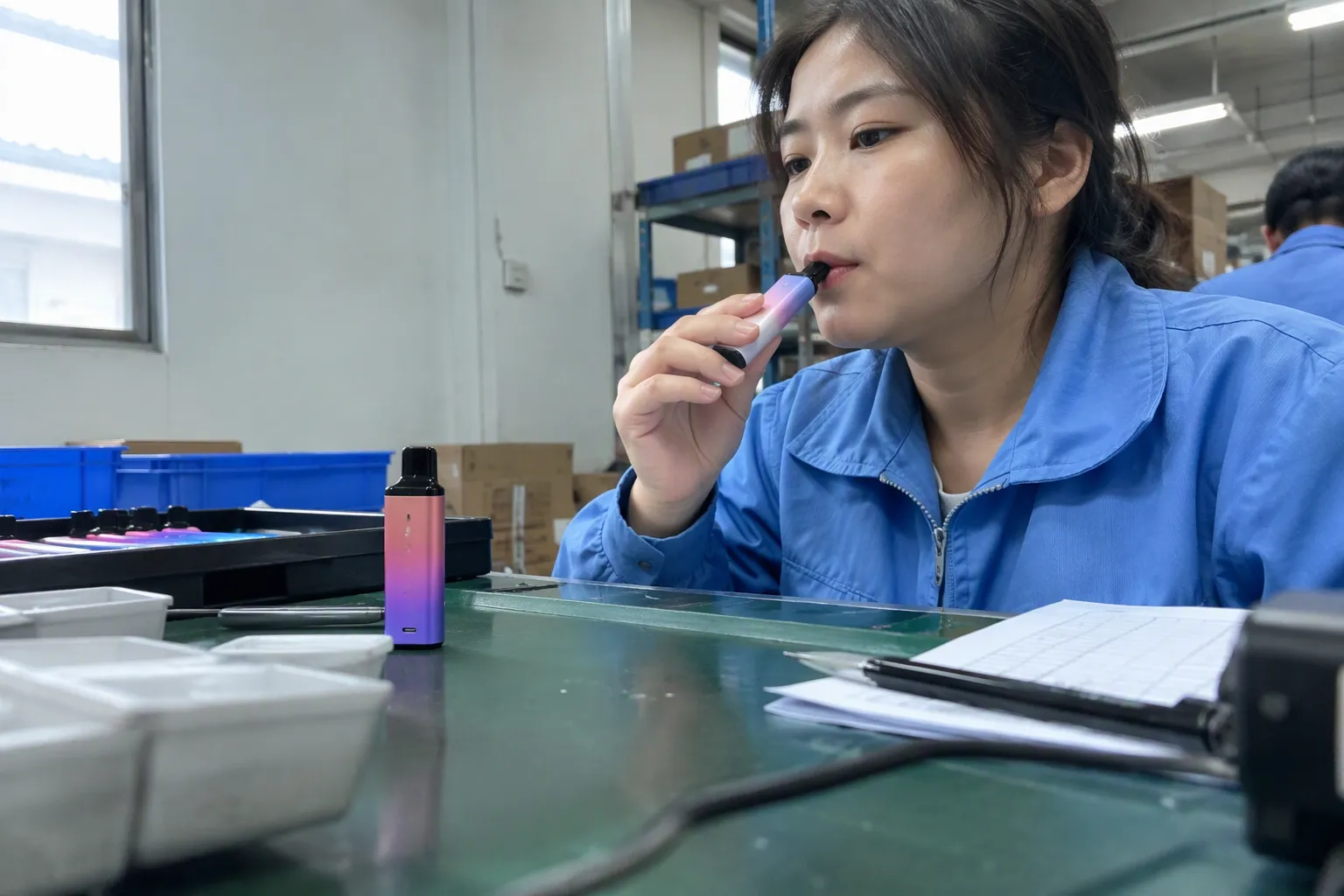
A vape shop should review its range whenever turnover slows, excess stock increases, customer requests change, or purchasing capital becomes restricted. I do not recommend one fixed review cycle for every store. A shop should use its sales frequency, product category, customer profile, and cash-flow needs to decide how often to review.
Should a vape shop remove every slow-moving product?
No. A slow-moving product may still serve an important customer request or complete a useful product category. I recommend checking its cash exposure, age, customer demand, and service risk first. The shop may reduce the order quantity, improve its presentation, or test a different sales approach before removing it completely.
Is a newly launched vape product worth buying in bulk?
A newly launched product should normally be treated as a controlled test rather than an automatic bulk purchase. I would compare expected demand, minimum order quantity, replenishment flexibility, supplier support, and available cash. A lower unit price does not justify a large order if the shop cannot sell through the stock.
Can an overseas warehouse help a small vape shop test products?
An overseas warehouse may help a small buyer access available stock with a lower order quantity and shorter delivery time. However, the buyer should confirm current inventory, shipping terms, taxes, product documentation, and local selling requirements. Warehouse availability can reduce logistical exposure, but it cannot guarantee that a product will sell.
What should importers check before placing a large OEM or ODM order?
Importers should verify samples, specifications, packaging, production capacity, quality-control procedures, lead time, payment terms, defect handling, and destination-market documentation. Buyers should also confirm whether the planned quantity matches realistic demand. A qualified local professional should review country-specific compliance before commercial import or sale.
Conclusion
A successful vape shop product range should support turnover, cash flow, customer fit, and manageable after-sales risk. I recommend using inventory movement as the first reset signal, testing new products in controlled quantities, and judging suppliers by total commercial support rather than price alone. Small and mid-sized buyers may benefit from flexible available stock, while larger importers may consider bulk purchasing or OEM/ODM after demand is validated. Shenzhen Kingfuji Tech. Co., Ltd. supports product sourcing, factory production, brand supply, overseas warehouse options, and consolidated purchasing. Contact King at info@kingvapecig.com or +86 13928420527 to discuss your current range and purchasing scenario.
Sources
- Retail Inventory Control Strategies - ScholarWorks", Research on retail inventory management describes slow-moving stock as a source of holding costs and constrained working capital, with potential effects on replenishment and markdown decisions
- Demand-estimation---assortment-optimization. ...", Retail assortment and inventory-planning literature identifies sales movement, demand changes, inventory exposure, and service considerations as relevant inputs to range-review decisions
- Working Capital Ratios by Sector (US)", Inventory-turnover analysis is commonly used to assess the rate at which stock is sold and replenished and to inform purchasing and working-capital decisions
- Cash Flow vs. Profit: What's the Difference?", Working-capital research distinguishes accounting profitability from liquidity by showing that unsold inventory remains a use of cash until it is converted into sales proceeds
- product variety, across-market demand - EliScholar", Retail-demand studies report that purchasing patterns vary across store formats, geographic settings, and customer segments, supporting context-sensitive assortment and review decisions
- The Effect of Product Variety and Inventory Levels on Retail ...", Assortment research identifies a trade-off in which greater product variety can improve perceived choice while increasing inventory complexity and the risk of overlapping or less productive items
- Sales forecasting for retail stores using hybrid neural networks ...", Research on staged product introduction and demand learning indicates that limited initial commitments can generate market information before firms expand inventory exposure
- The effects of quantity discounts on supply chain performance", Inventory-ordering models treat purchase-price discounts as only one component of the decision, alongside holding costs, expected demand, ordering constraints, and overstock risk