
Quick Answer
A vape pen and e-cig can look similar on a supplier’s catalog page, yet they may have very different structures, refill methods, batteries, and sales uses. That confusion can lead to the wrong purchase, customer complaints, or slow-moving stock. I help buyers reduce that risk by confirming the actual product configuration before an order is placed.
A vape pen is usually a pen-shaped vaping product, while e-cig is commonly used as a broader term for many electronic cigarette formats.[1] However, these names are not universal technical standards[2]. Buyers should confirm whether they are sourcing a disposable device, pod system, rechargeable all-in-one product, or battery with a cartridge, tank, or atomizer before ordering.

In my work with wholesale buyers, importers, vape shops, and smoke shops, I often see product names create more confusion than clarity. A buyer may ask for a “vape pen,” while the supplier understands a 510 battery[4], a disposable vape, or a refillable all-in-one device. The name is only the starting point. The structure is what matters.
“Vape pen” and “e-cig” are not two universally fixed, mutually exclusive product categories
When a buyer relies only on the phrase vape pen and e-cig, the order can become unclear. Product photos may look alike, but the devices can use different batteries, charging ports, cartridge systems, capacities, and operating methods.[6] I recommend that buyers treat product names as market language, not as complete purchasing specifications.
A vape pen usually refers to a slim, pen-like product shape. An e-cig usually refers to the wider category of electronic cigarette products. Still, neither name reliably tells a buyer every technical or commercial detail. The practical solution is to identify the device structure, intended use, specifications, compatibility, and target market before confirming the order.
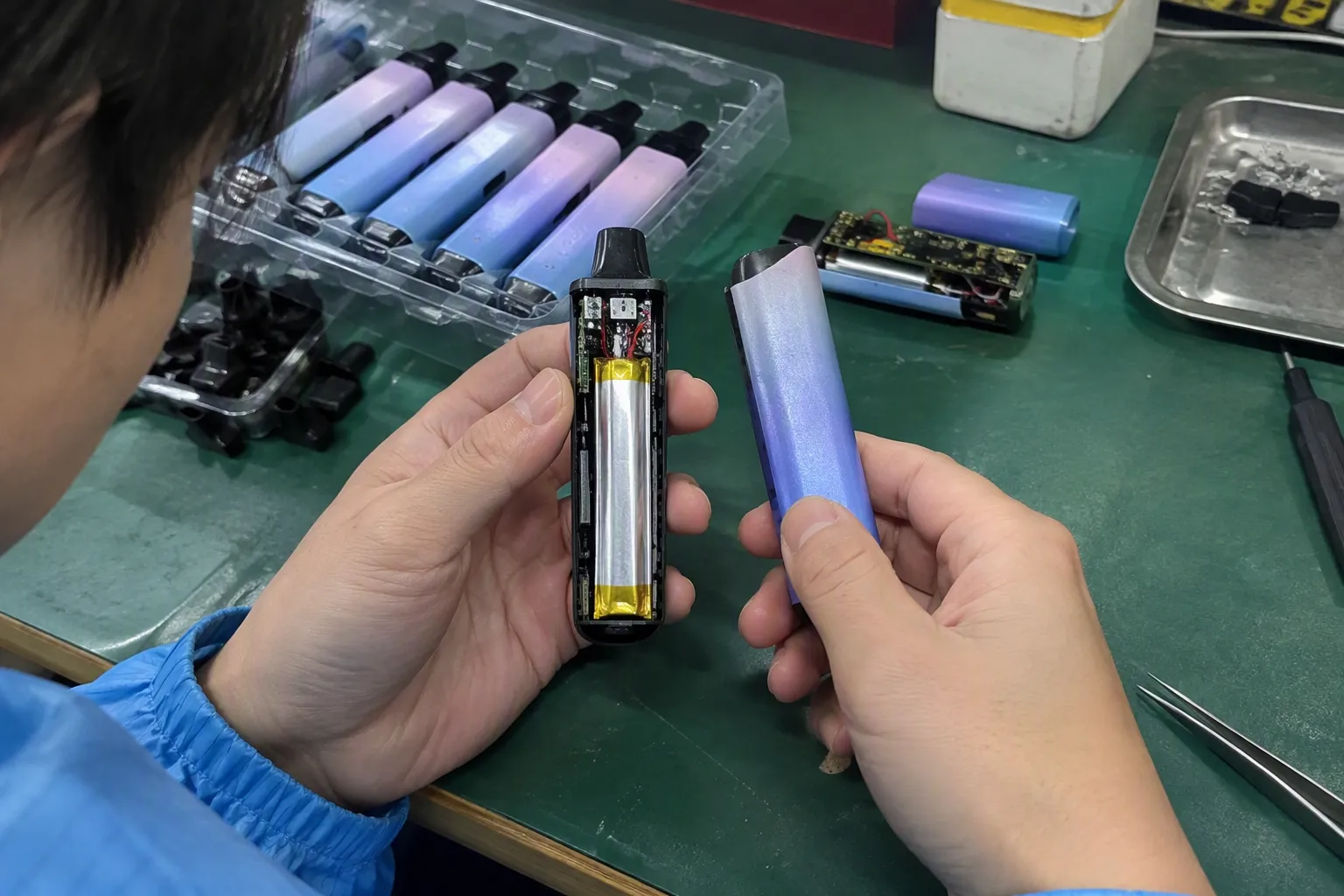
Why do product names create sourcing mistakes?
I have seen many inquiries where buyers use the same name for completely different products. This is understandable because vaping terminology changes across countries, sales channels, brands, and customer groups[3]. A retail customer may call almost any slim vape device a vape pen. A wholesale buyer may use e-cig to describe disposable products, pod systems, or even 510-thread batteries.
The issue is not that one name is always correct and the other is always wrong. The issue is that a name alone does not define the product you will receive.
For example, the phrase “vape pen” may describe:
- A slim disposable vape
- A rechargeable all-in-one vape
- A 510-thread CBD battery
- A button-operated battery for an atomizer or cartridge
- A refillable pen-style vaporizer
- A pen-shaped device with a replaceable pod
- A compact device designed for a specific proprietary cartridge
Likewise, “e-cig” may describe:
- Disposable electronic cigarettes
- Rechargeable pod devices
- Open-system vape devices
- Closed-pod products
- Battery-and-tank combinations
- Mod devices
- Pen-style vaporizers
- Some products that buyers may classify under broader tobacco, vapor, or smoking-accessory categories in their own market
This naming overlap matters because a buyer may request “100 vape pens” but expect 100 complete ready-to-sell devices. The supplier may instead quote 100 batteries only. Another buyer may ask for “e-cig cartridges,” but the supplier may need to know whether the buyer means prefilled pods, empty cartridges, 510 cartridges, replacement tanks, or disposable units.
I always encourage buyers to move from a product name to a full product description before they compare prices.
A complete request is much easier to quote and verify. It also reduces misunderstandings between the purchasing team, supplier, warehouse staff, and retail customers.
What structure am I actually sourcing?
For a wholesale buyer, this is the most useful question. Rather than asking only, “Is this a vape pen or e-cig?”, I suggest asking, “What is the product structure, and what does the package include?”
The following table shows common product structures that may be described with overlapping market terms.
| Product structure | Typical description | What buyers should confirm | Common purchasing risk |
|---|---|---|---|
| Disposable vape | Complete device intended for sale as one unit | Capacity, battery, charging status, activation method, packaging, labeling | Assuming all disposables have the same format or market acceptance |
| Rechargeable all-in-one | Complete device with an integrated battery and internal liquid system | Charging port, battery capacity, refillability, coil design, package contents | Confusing rechargeable products with refillable products |
| Pod system | Battery device plus replaceable pod or cartridge | Pod compatibility, refillable or prefilled format, coil resistance, replacement-pod availability | Ordering batteries without enough compatible pods |
| 510 battery | Battery commonly used with compatible threaded cartridges | Thread type, voltage range, button or auto-draw function, charging method | Assuming every cartridge fits or performs the same way |
| Tank or atomizer system | Battery/mod paired with a tank, atomizer, or coil system | Thread connection, coil compatibility, spare parts, filling method | Missing replacement coils or ordering incompatible components |
| OEM/ODM device | Product developed or customized for a buyer’s brand or market | Tooling, specifications, packaging, artwork, testing documents, production schedule | Starting branding work before technical specifications are confirmed |
The table does not create official definitions. It gives buyers a practical way to avoid vague ordering language.
Disposable products are complete units, but details still vary
A disposable product is often easier for a retailer to display because the device is generally supplied as a complete retail item. However, “disposable” does not answer every sourcing question. Buyers should still check whether the unit is rechargeable, draw-activated, button-operated, display-equipped, adjustable, or designed for a specific puff range stated by the supplier.
A buyer should also confirm the product’s actual retail configuration:
- Is the product supplied as an individual unit, box, or display carton?
- Does the unit include a charging cable?
- Is the device rechargeable?
- Is the product prefilled, empty, or intended for a particular market configuration?
- What language, warnings, labels, and packaging details are required in the destination market?
- What supporting documents can the supplier provide for the buyer’s review?
- What after-sales process applies if there is a verified product issue?
I do not recommend treating a puff-count claim, capacity statement, or product image as a complete specification. Buyers should request the current product specification and confirm that it matches the purchase order.
Rechargeable does not always mean refillable
This is one of the most common points of confusion. A buyer may see a USB-C charging port and assume the device can be refilled.[5] In many cases, a product may be rechargeable but not designed to be refilled by the consumer. In other cases, a device may be refillable but use a replaceable coil or cartridge.
That distinction affects the sales conversation at store level. It also affects what accessories a wholesaler needs to stock.
For example, a shop may need to explain whether the customer should purchase:
- A complete replacement device
- A replacement pod
- A replacement cartridge
- A replacement coil
- A compatible 510 battery
- A charging cable
- A separate tank or atomizer
If the buyer does not confirm this structure in advance, the store may receive customer questions that the sales staff cannot answer clearly. That can create avoidable returns, damaged reputation, and slow inventory movement.
Why is appearance alone not enough when buying a vape pen and e-cig?
A slim, cylindrical device may look like a standard vape pen. However, the shape does not confirm battery capacity, voltage setting, charging method, cartridge compatibility, or whether the item is a complete product or only one component.
For wholesale procurement, appearance should be reviewed together with the functional specification. I recommend that buyers use product photos to begin the discussion, then use written specifications to complete it.
The key specifications to confirm before placing an order
In product development, production, and order confirmation, I focus on the details that directly affect what a buyer can sell, support, and reorder. These details are especially important when the buyer is purchasing for multiple retail stores, regional distribution, or a private-label project.
Here is a practical specification checklist.
| Specification area | Questions to ask before ordering | Why it matters |
|---|---|---|
| Product type | Is this a disposable, pod system, battery, cartridge, atomizer, or complete kit? | Prevents buyers from ordering the wrong product category |
| Battery | What is the battery capacity? Is it integrated or removable? | Affects product format, charging, and customer expectations |
| Activation method | Is the device draw-activated, button-operated, or both? | Changes user experience and store explanation |
| Charging | Does it use USB-C, Micro-USB, a screw-on charger, or another method? | Determines accessory needs and after-sales questions |
| Connection | Does the product use 510 threading, a proprietary pod connection, or another interface? | Determines compatibility with cartridges or atomizers |
| Cartridge or pod | Is it empty, prefilled, refillable, replaceable, or fixed? | Affects replenishment orders and customer use |
| Coil or heating component | Is the coil integrated, replaceable, or part of the cartridge? | Determines replacement-part requirements |
| Capacity | What is the stated liquid capacity, pod capacity, or tank capacity? | Must be checked against target-market requirements |
| Packaging | What are the retail box, master carton, barcode, warning, and language requirements? | Supports store display and compliance review |
| Branding | Is the product standard stock, white label, OEM, or ODM? | Determines timeline, MOQ, cost, and approval process |
I advise buyers to keep this checklist with every order. It is especially useful when several people are involved, such as a company owner, buyer, warehouse manager, freight forwarder, and local sales team.
How should a buyer compare a vape pen and e-cig quote?
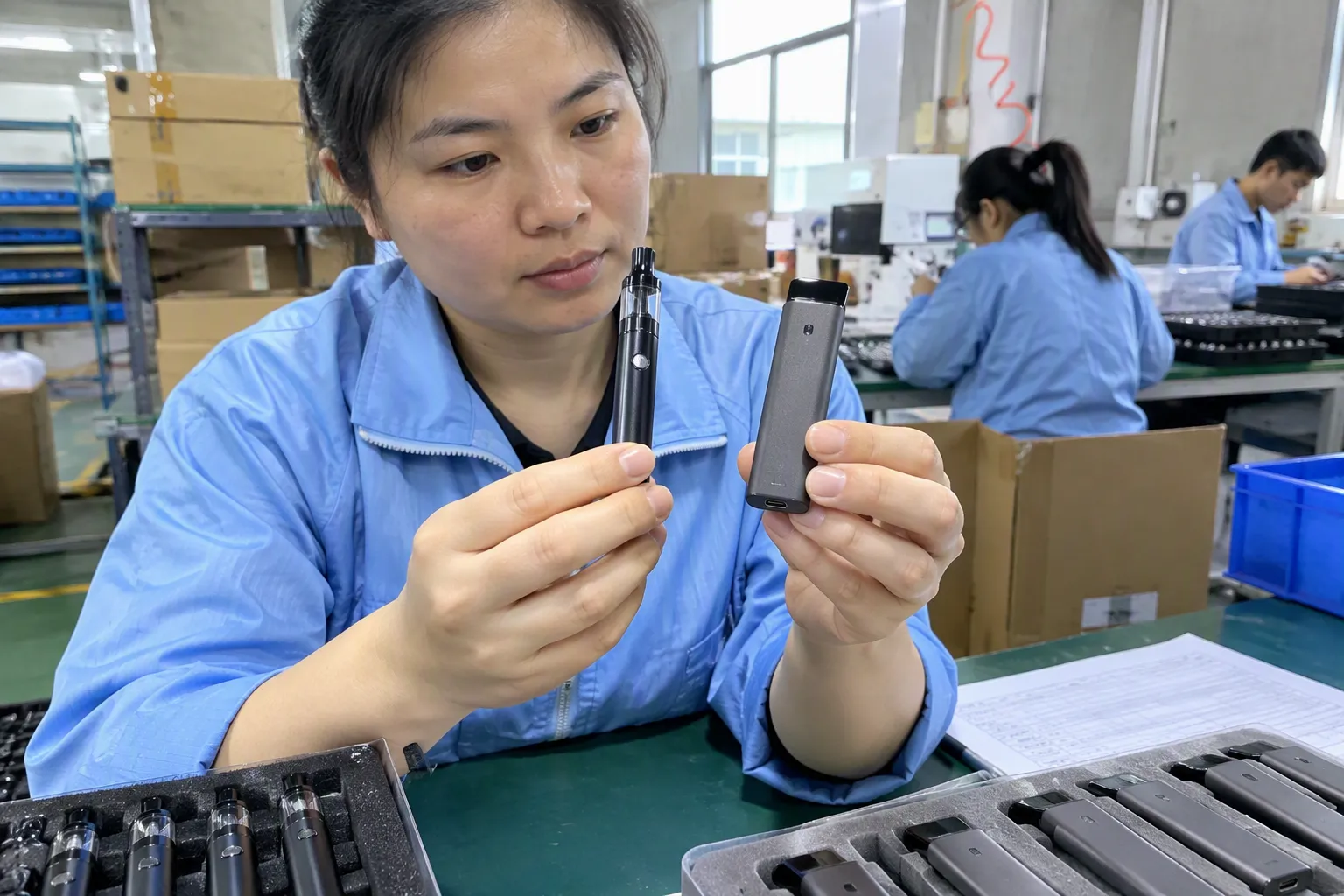
A low unit price is not always a low total purchasing cost. A cheaper product can become more expensive if it does not match the buyer’s target channel, if the accessories are missing, or if the retailer needs to carry several extra components that were not planned.
When I review an inquiry, I look at more than the product name. I consider the buyer’s sales model.
For example, a small vape shop may prefer a ready-to-sell product with simple retail packaging and low minimum order quantities. A regional distributor may need a broader product mix, stable restocking, and clear carton information. A larger importer may focus on factory pricing, repeat production, branded packaging, and long-term product planning.
The buying priorities can differ significantly.
| Buyer type | Typical priority | Suitable sourcing discussion |
|---|---|---|
| Small retailer | Fast restocking, low investment, easy-to-sell formats | Ready stock, mixed product selection, practical retail packaging |
| Vape shop or smoke shop chain | Stable popular products, staff training clarity, replacement items | Product structure, compatibility, display plans, reorder availability |
| Wholesaler | Margin, range depth, dependable supply, after-sales coordination | Carton quantities, product mix, stock planning, support process |
| Importer/distributor | Price structure, volume capacity, compliance review, market fit | Direct import options, specifications, packaging review, factory capability |
| Private-label buyer | Brand differentiation, product consistency, commercial control | OEM/ODM development, packaging, samples, approval stages, production planning |
In my business, I work with buyers who range from smaller European customers that need flexible quantities and quick access to available stock, to larger importers and distributors that need direct China sourcing, stronger price structure, and OEM/ODM options.
For smaller buyers, our European warehouse availability can help reduce the need for large upfront inventory in some cases. We have stock in several European locations, including Germany, Austria, Poland, and Belgium, according to current product availability. This option can suit buyers who need faster local delivery and smaller starting quantities. Buyers should still confirm current stock, shipping coverage, product eligibility, and local requirements before purchasing.
For medium and larger buyers, direct sourcing from China can offer more flexibility for container planning, product selection, packaging choices, and OEM/ODM projects. Shenzhen is a major supply center for vaping products, related accessories, packaging, components, and logistics services. That supply depth can help buyers compare options efficiently, but it also makes specification control more important.
What should I confirm for standard stock versus OEM/ODM?
A standard-stock order and an OEM/ODM project should not be handled in the same way.
With standard stock, the buyer usually wants speed, lower complexity, and a product that can be purchased without waiting for a new development cycle. The buyer should still confirm the exact model, color, packaging, quantities, batch details where relevant, and current availability.
With OEM or ODM, the buyer needs more planning. A custom project may involve branding, packaging, color, device configuration, flavor selection where legally appropriate, artwork, tooling, sampling, and production approvals. Each decision can affect lead time, minimum order quantity, cost, and final market fit.
I recommend that an OEM/ODM buyer follows a staged process:
-
Define the commercial goal.
The buyer should decide whether the aim is price competition, brand recognition, a unique product format, or a specific retail channel. -
Confirm the base product structure.
The buyer should first choose the type of device: disposable, pod system, battery, cartridge, vaporizer, or another format. -
Confirm technical specifications.
The buyer should document battery type, charging method, capacity, connection type, packaging, and accessories. -
Review samples carefully.
The buyer should inspect the sample against the written specification, not only against a product photo or chat description. -
Approve branding and packaging.
The buyer should check brand spelling, artwork, warnings, language, barcodes, and local requirements with qualified local professionals where needed. -
Confirm production and shipping terms.
The buyer should clarify order quantity, production schedule, inspection process, delivery method, and responsibility for documents. -
Plan after-sales handling.
The buyer should understand how verified defects, missing items, or shipping issues will be handled.
I operate my own factory and brand business, with OEM/ODM experience and ongoing new-product development. However, I do not advise buyers to choose a custom project simply because it sounds more exclusive. A private-label project should fit the buyer’s sales volume, cash flow, market knowledge, and ability to manage inventory.
How do local compliance and labeling affect the purchase decision?
A product can be technically available from a supplier but still require careful review before it can be sold in a specific market. Requirements may differ by country, state, region, sales channel, product type, nicotine content, packaging language, labeling, age restrictions, import rules, tax rules, registrations, and other local conditions.[7]
I cannot treat a product name such as vape pen or e-cig as proof that a product is permitted in every destination. Buyers should verify current requirements with qualified local legal, compliance, customs, or regulatory professionals before ordering, importing, advertising, or selling any vaping-related product.
A practical compliance review should include:
- Current import requirements in the destination country
- Current product-category rules for the intended sales channel
- Packaging and warning-label requirements
- Language requirements
- Product capacity or nicotine-related restrictions where applicable[8]
- Age-verification and retail-sale obligations
- Trademark and intellectual-property review for branded products
- Customs classification and shipping-document requirements
- Any local registration, notification, tax, or licensing obligations
Rules can change. A buyer should request current information rather than relying on old market experience, a previous order, or an online listing.
What is my practical pre-order checklist?
Before I confirm an order with a buyer, I encourage the buyer to answer the following questions in writing. This process is simple, but it can prevent major mistakes.
Product structure
- What exactly am I buying: a complete device, battery, pod, cartridge, atomizer, tank, coil, or accessory?
- Is the item disposable, rechargeable, refillable, replaceable, or fixed?
- Does the buyer need a complete kit or replacement components?
Compatibility
- Is the product based on 510 threading, a proprietary connection, or another format?
- Which cartridges, pods, coils, chargers, or tanks work with it?
- Are compatible replacement products available for future orders?
Commercial fit
- Will the product be sold in a vape shop, smoke shop, convenience store, gas station, online store, or wholesale warehouse?
- Does the buyer need fast turnover, a premium display product, a budget product, or a branded project?
- What quantity can the buyer realistically sell before needing to reorder?
Supply model
- Is standard stock enough?
- Does the buyer need mixed products from several brands?
- Does the buyer need European warehouse delivery for faster replenishment?
- Does the buyer need direct China import for a larger order?
- Does the buyer need OEM or ODM development?
Compliance review
- Has the buyer verified current local rules?
- Does the packaging need specific warnings or languages?
- Does the buyer need documents from the supplier for professional review?
- Has the buyer checked whether the product can be imported and sold through the intended channel?
This checklist shifts the discussion away from vague naming and toward a purchasing decision that is easier to control.
Frequently Asked Questions About Vape Pen and E-Cig Sourcing
Is a vape pen the same as an e-cig?
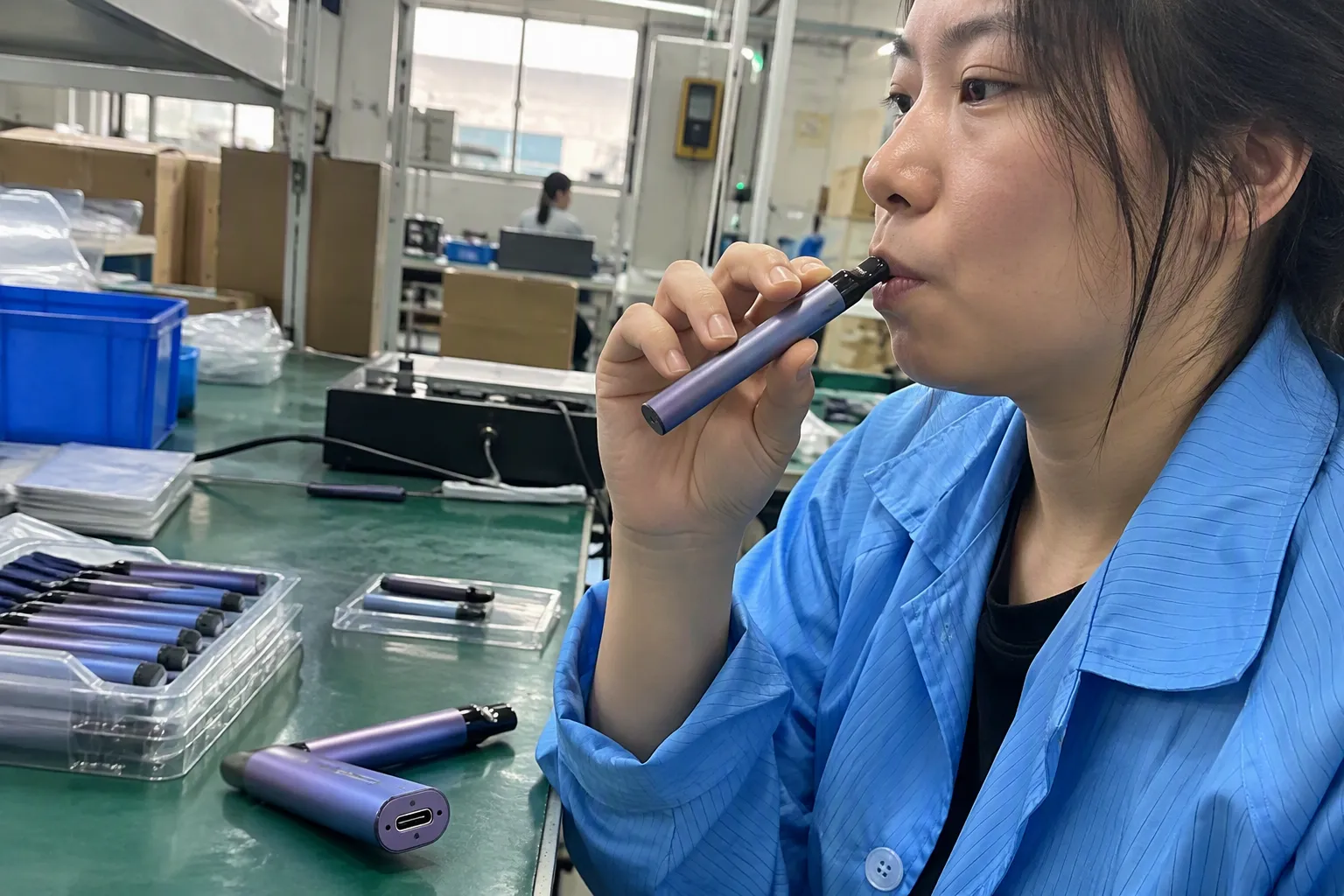
Not always. A vape pen usually describes a pen-shaped device, while e-cig is often a broader market term. The exact meaning can vary between suppliers and countries. I recommend confirming the product structure, battery, cartridge or pod system, charging method, and package contents before ordering.
Can I use the term “vape pen” in my wholesale product listing?
You can use the term if it accurately reflects the product’s shape and your market’s common language. However, I suggest adding clear details such as “510 battery,” “disposable device,” “pod system,” or “rechargeable all-in-one” so customers understand what they are buying.
Does every vape pen use a 510 cartridge?
No. Some vape pens use 510-thread cartridges, but many products use proprietary pods, integrated tanks, fixed cartridges, or other connections. A buyer should never assume compatibility based only on the product’s pen-like appearance or the phrase “vape pen.”
Should I choose European warehouse stock or direct import from China?
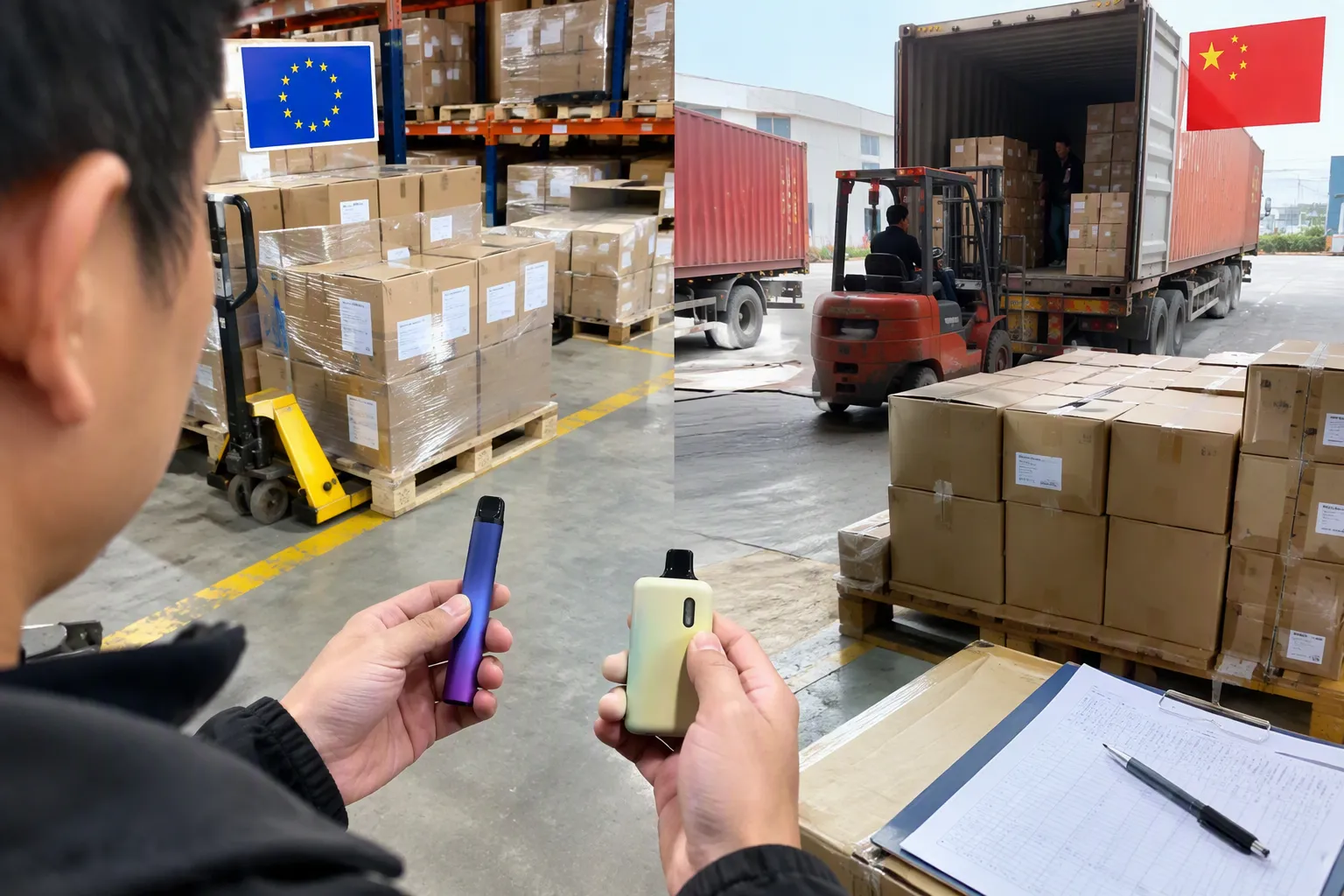
The choice depends on your order size, cash flow, stock needs, and sales speed. European warehouse stock can suit smaller buyers who need quicker replenishment and lower starting quantities. Direct China import can be more suitable for larger orders, broader sourcing, and OEM/ODM projects.
What should I send a supplier before requesting a quote?
I recommend sending product photos or links, the required structure, quantity, destination country, target sales channel, preferred packaging, branding needs, and any compatibility requirements. The more specific the request is, the easier it is to receive an accurate quote and avoid ordering the wrong format.
Conclusion: Choosing the Right Vape Pen and E-Cig for Your Market
The difference between a vape pen and e-cig is usually less important than the product structure behind the name. A vape pen may be a slim battery, disposable device, or refillable format, while e-cig can describe a much wider range of products. I recommend that every buyer confirm specifications, compatibility, packaging, supply model, and local compliance requirements before placing an order. If you need help sourcing standard stock, comparing formats, or planning an OEM/ODM project, contact Shenzhen Kingfuji Tech. CO., Ltd. at info@kingvapecig.com.
Sources
- About E-Cigarettes (Vapes) | Smoking and Tobacco Use - CDC", Public-health authorities define e-cigarettes as electronic devices that heat a liquid or other substance to produce an aerosol, encompassing multiple device designs; “vape pen” is commonly used for a slim, pen-like form factor within this broader category
- 'E-cigarette smoking' is a misleading term: a critical review of ...", Reviews of e-cigarette research note that device terminology and classifications have varied across studies, markets, and regulatory settings, limiting the precision of labels such as “vape pen” when used alone
- Smoke and Vapor: Exploring the Terminology Landscape ...", Studies of e-cigarette communication and classification report inconsistent use of product labels among consumers and across research and regulatory contexts, supporting the need for device-specific descriptions
- Thermography of cannabis extract vaporization cartridge heating ...", Technical and research descriptions of vaping hardware identify 510 threading as a widely used battery-to-atomizer connection, although compatibility also depends on device dimensions, electrical characteristics, and manufacturer design
- Disposable E-Cigarette Use and Subsequent Use Patterns in ...", Regulatory product definitions distinguish rechargeability from refillability: a device may permit battery charging while retaining a sealed or non-refillable liquid reservoir
- Trends in use of e-cigarette device types and heated tobacco ...", Public-health guidance describes e-cigarettes as a heterogeneous product class that includes disposable, pod-based, tank-based, and other devices with differing components and operating features
- Regulating nicotine and tobacco products", International regulatory reviews show that jurisdictions regulate electronic nicotine-delivery systems in different ways, including through product standards, nicotine limits, packaging and warning requirements, age-related sales controls, taxation, and authorization or notification mechanisms
- Emerging Electronic Cigarette Policies in European Member ...", Under the European Union Tobacco Products Directive framework, consumer e-cigarette products are subject to specified limits for nicotine concentration and the capacity of tanks and refill containers