
I watched a kiosk owner in Spain stare at his phone. He had a list of ten hot-selling disposable vapes his customers were begging for. He could not order a single one. Every supplier demanded full cartons. His working capital was locked. That day, he sold nothing new.
Small retailers and kiosks need a vape supplier who protects their cash flow first, not one who just pushes the lowest unit price. The right supplier lets them buy small, reorder fast from local stock, and avoid inventory that sits dead on the shelf.
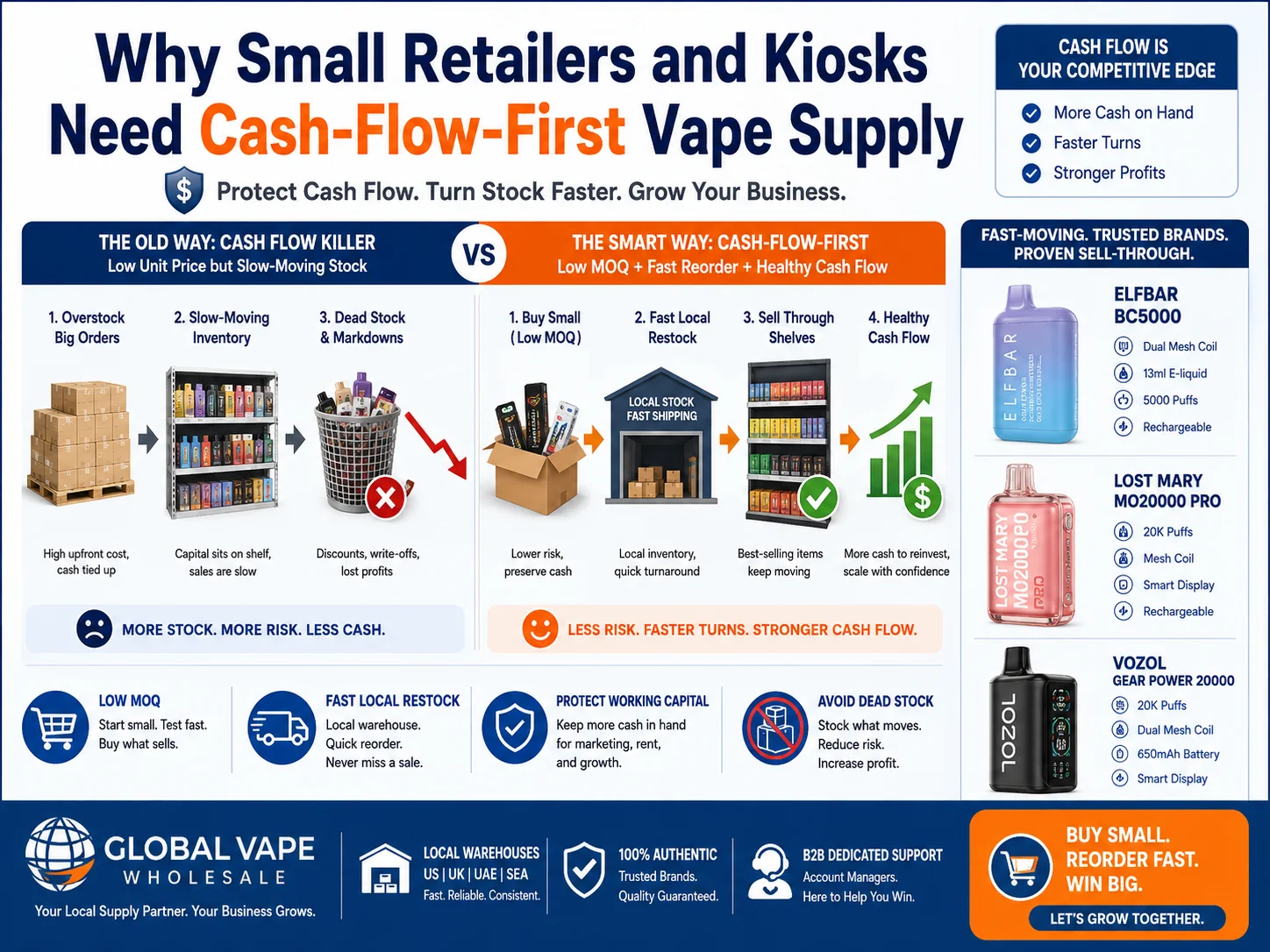
That Spanish kiosk owner taught me something I have never forgotten. He did not need a cheaper product. He needed a supply partner who understood that a product’s real cost is not the price per piece. The real cost is the cash it ties up.[^1] Cash that cannot buy another product that actually moves. I started changing how my factory, Shenzhen Kingfuji Tech, serves small buyers because of conversations exactly like that one.
Quick Answer: What Do Kiosks and Smaller Retailers Need from a Vape Supplier?
A kiosk owner in Germany once told me his only rule for a new supplier. The supplier must let him sleep at night without worrying about wasted money.
Kiosks and small retailers need a vape supplier offering tiny minimum order quantities, fast restocks from nearby warehouses, and a product range that turns cash quickly. The goal is low inventory risk, not just low prices.
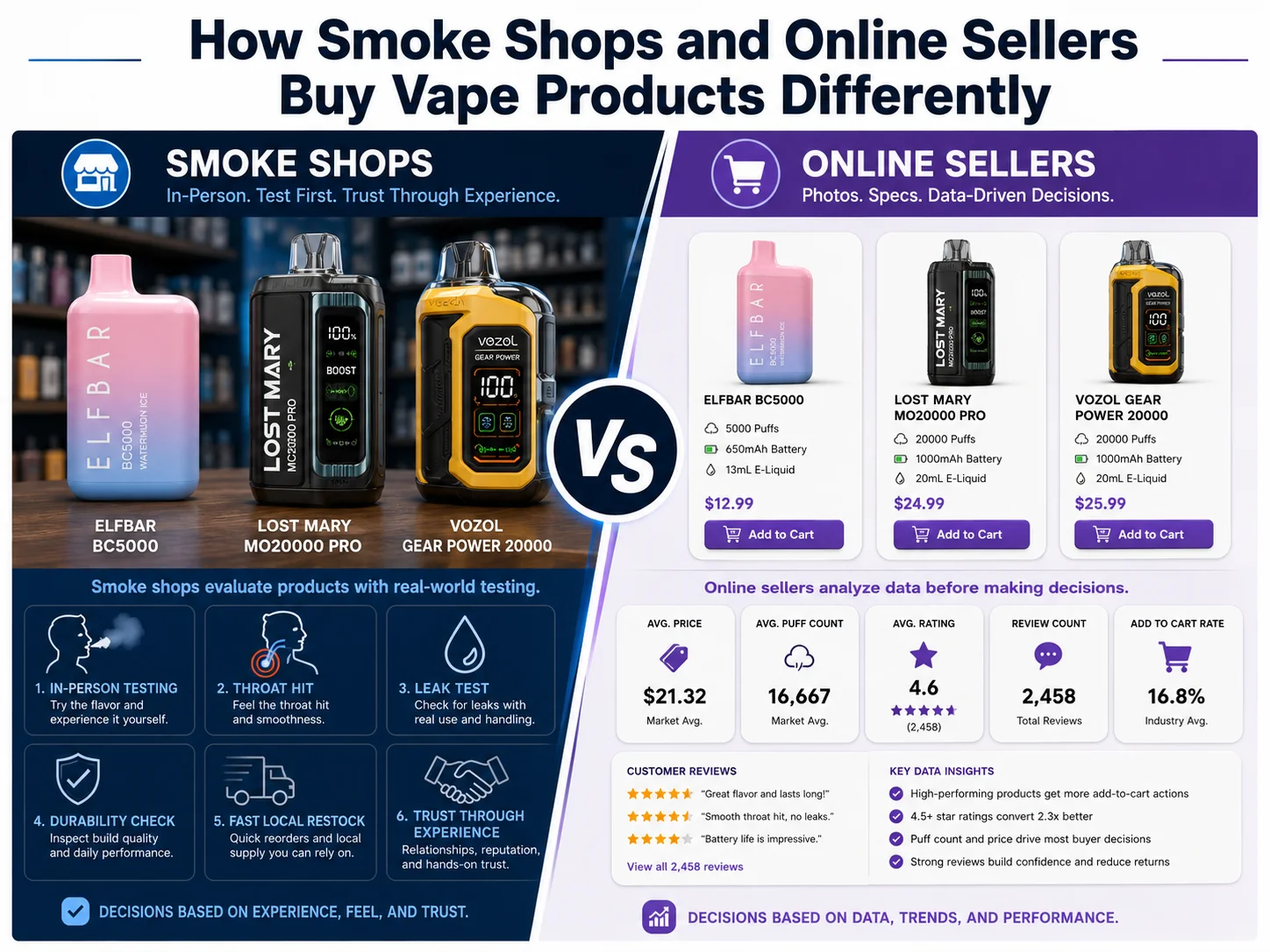
He was not being dramatic. His stress came from a simple math problem. A single carton of a new flavor costs him a few hundred euros. If the flavor flops, that capital is gone for months. Multiply that by five flavors, and his entire profit margin disappears into a pile of unsold stock. A supplier who forces that choice is not a partner. A supplier who removes that choice by offering low MOQ from a European warehouse is the only kind worth calling back. That is the core answer. Everything else is noise.
How Kiosks and Small Retailers Buy Vape Products Differently from Larger Wholesalers
I have sent containers to large wholesalers in the US Midwest. I have also shipped 50-piece orders to a small vape shop in Austria. The two processes look nothing alike.
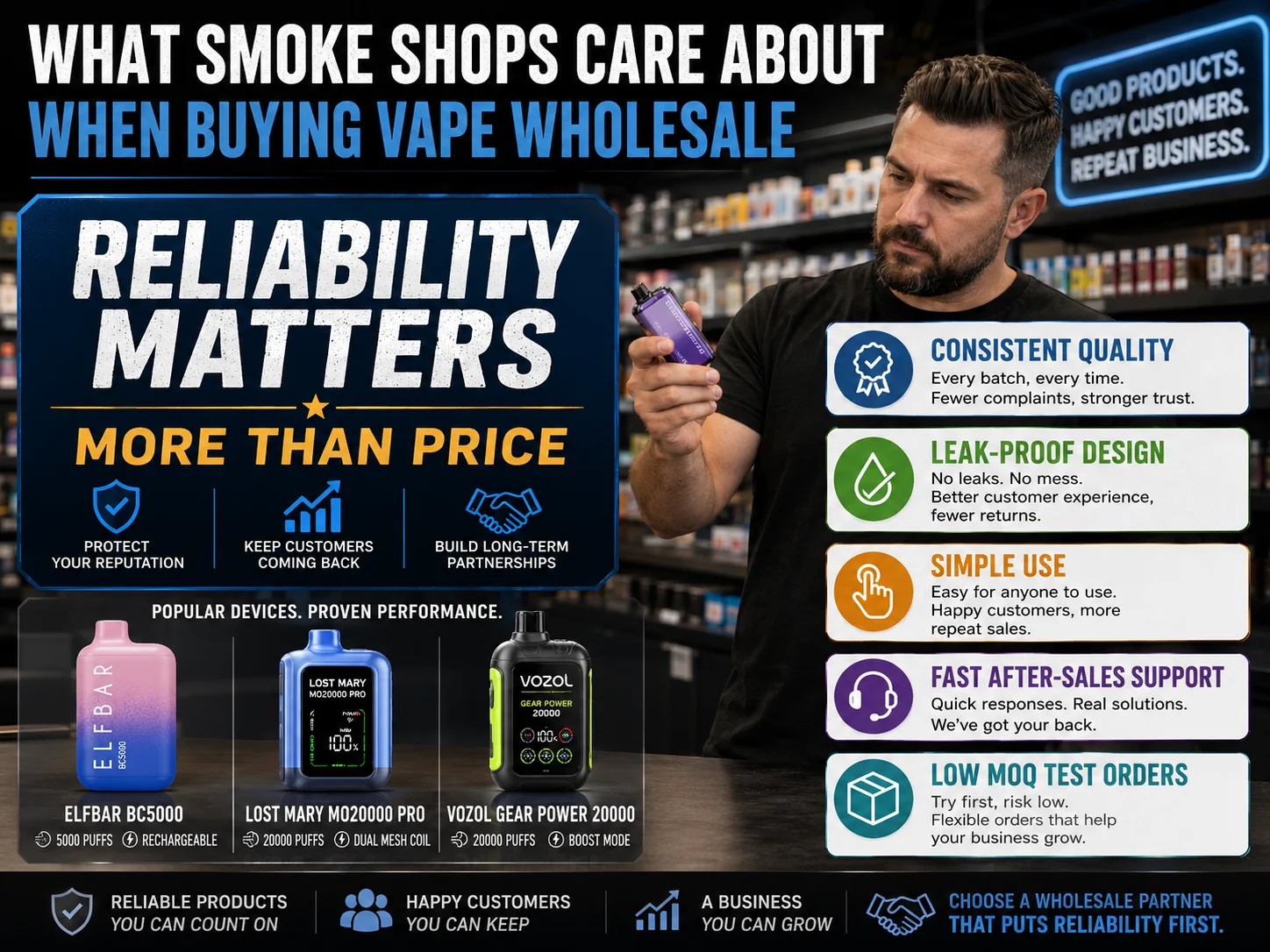
A large wholesaler has a warehouse, a logistics team, and the capital to absorb mistakes. A kiosk owner has a display case and a credit card. When I speak with a wholesale distributor, the conversation is about ocean freight and duties. When I speak with a kiosk owner, the conversation is about what sold yesterday and whether they can get more by Thursday. The mistake many suppliers make is treating the kiosk like a miniature importer. We do not do that. Our EU warehouses exist for the kiosk owner. The factory in Shenzhen exists for the importer. Both channels feed from the same product knowledge. But the buying experience is entirely separate. One is about planning a season. The other is about surviving the weekend.
Comparison Table: Kiosks vs Small Retailers vs Smoke Shops vs Online Sellers
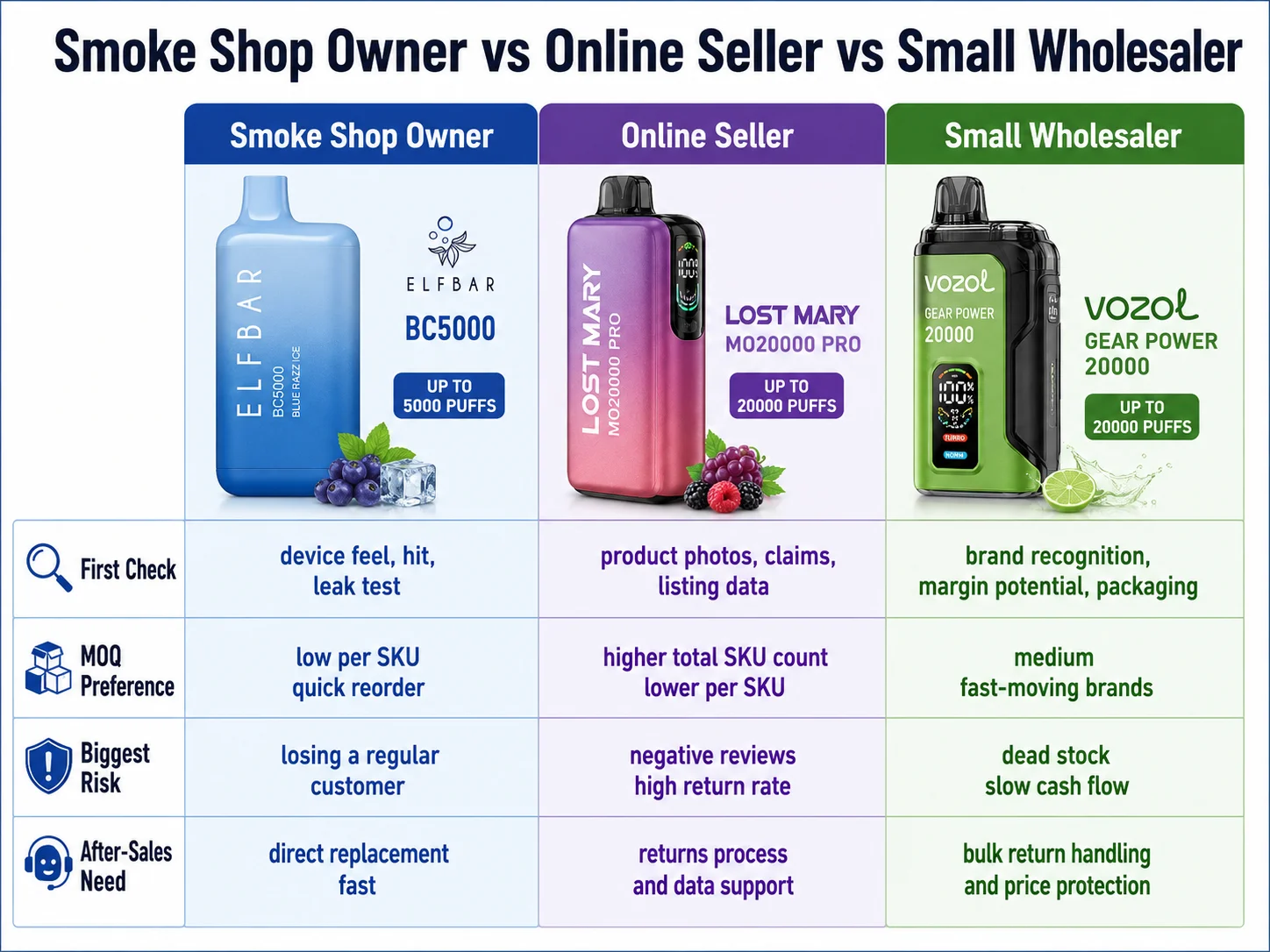
Each retail type holds a different amount of cash and a different appetite for risk. I see this clear pattern in my daily conversations.
| Channel | Typical Order Size | Main Need | Cash Flow Risk |
|---|---|---|---|
| Kiosk | 30-100 pieces total | Fast movers, zero dead stock | Very High |
| Small Convenience Retailer | 50-200 pieces per order | Consistent refills, simple range | High |
| Dedicated Smoke Shop | 100-500 pieces mixed | Variety, new flavors, brand names | Medium |
| Online Seller | 50-300 pieces per order | Deep stock on few winning SKUs | Medium |
Kiosks operate on a razor-thin margin of cash.[^3] They cannot absorb one bad product. A small convenience retailer might survive a slow mover, but only if the hit is small. A dedicated smoke shop needs variety to stay relevant. An online seller needs to go deep on one winning product to keep shipping costs low. A supplier who recommends the same package to all four is failing three of them. When a new kiosk buyer reaches out to me, I do not start with a catalog. I start by asking how many display slots they have. Their answer tells me the exact quantity they should buy. Not the quantity I want to sell them.
What Product Range Works Better for Smaller Retail Channels?
I once sent 30 different flavored vapes to a small shop in Belgium. The owner called me two weeks later, confused. Half the products sold out instantly. The other half collected dust. He was out of stock on his winners and stuck with his losers.
A narrow, fast-selling product range works better for smaller retail. We see better results when we guide kiosks to stock only the top 5-10 proven flavors and devices, rather than experimenting with dozens of slow-moving options.
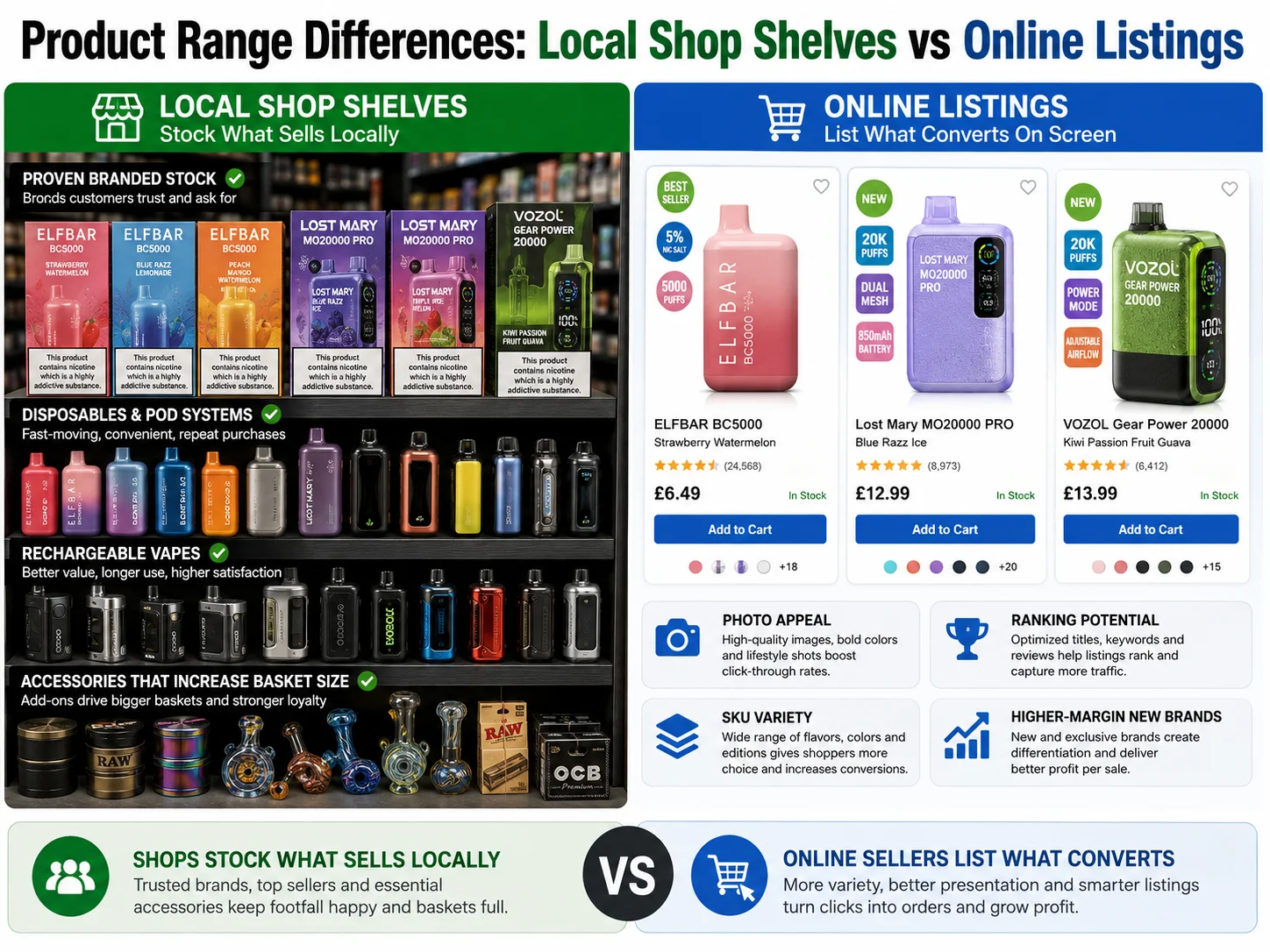
Variety feels safe. It is not safe for a small retailer. Variety fragments the buying power of their customer base.[^4] A customer walks up, sees one random brand they do not recognize, and walks away. That same customer sees three strong, familiar brands and buys immediately.[^5] My advice is always the same. Find the three to five SKUs that move every week. Guard those with your life. Keep a small, steady stock of them. Add a new product only when you can afford to lose the money. Treat every new SKU as a bet, not an investment. Our EU warehouse lets a retailer test a new flavor with 50 pieces, not 500. They can be bold because the cost of failure is tiny.
Why Low MOQ, Fast Reorders, and Stable Stock Matter More Than Too Many SKUs
A buyer in Spain argued with me. He wanted a massive catalog. I told him a massive catalog would not save him when his best-seller went out of stock for three weeks.
Low minimum orders and fast reorders matter more than a giant product list because a stockout of a top seller loses real daily revenue.[^6] A stable supply of 5 best-sellers generates more profit than a shaky supply of 50 average products.[^7]
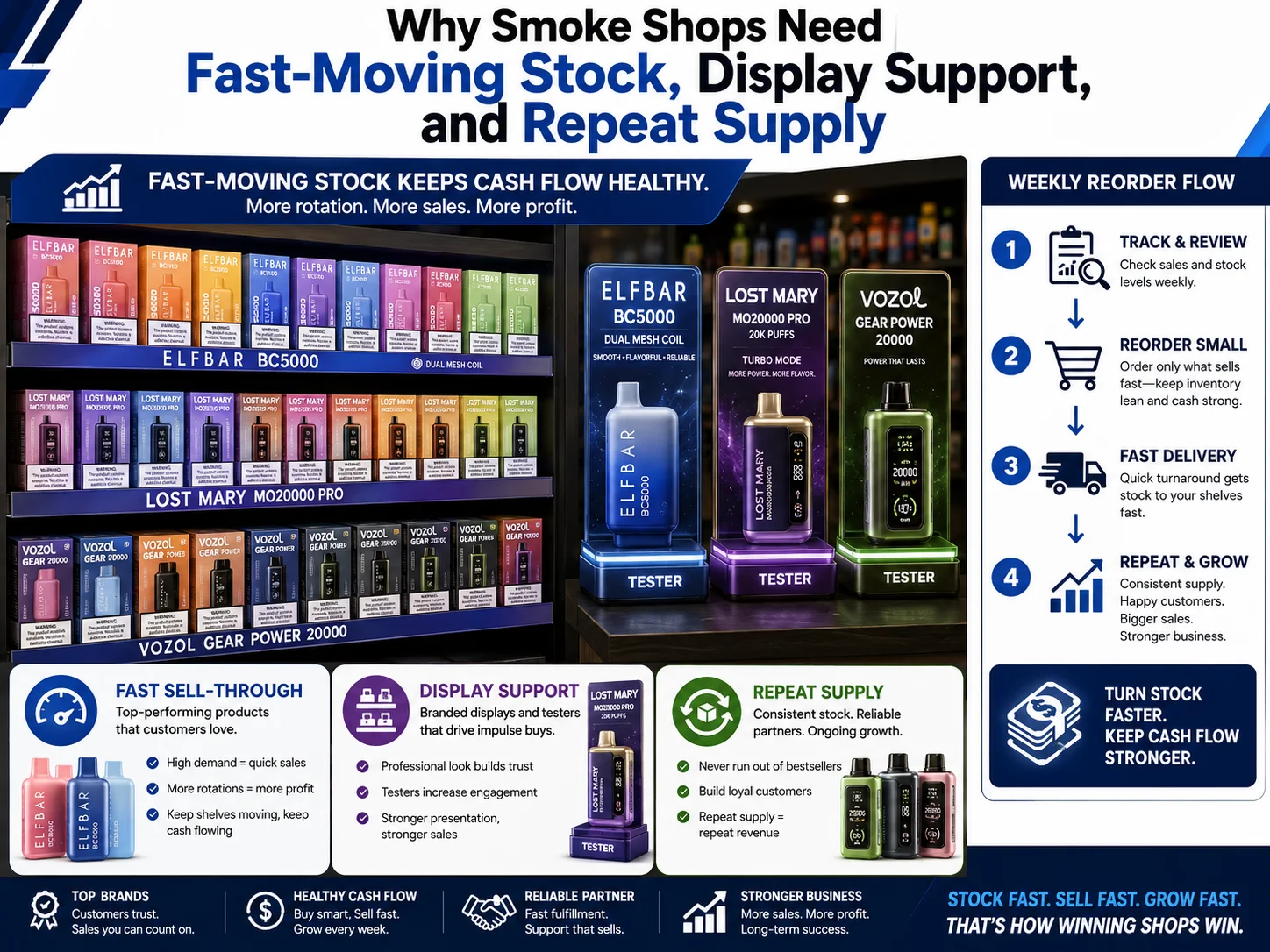
The economics are cruel. When a kiosk’s number one product is gone, that customer does not usually buy the number two product. That customer walks away.[^8] That sale is lost forever. So the supplier’s most important job is not to provide endless choice. The most important job is to prevent the stockout on the few items that pay the rent. Our German warehouse keeps a safety stock of top-performing SKUs for precisely this reason. A small retailer can place a reorder on Monday and have the product on their shelf by Wednesday. That speed is how they keep their regulars from walking to the next kiosk down the street. A deep catalog is a luxury. Fast, stable stock on core products is a utility. Small retailers need a utility supplier.
What Trust Signals Help Small Buyers Choose a Vape Wholesale Supplier?
I remember an email from a first-time buyer in the US. He wrote, “I have been burned before. How do I know you will not do the same?” His question was not about price. It was about proof.
Small buyers look for trust signals like real-time warehouse stock photos, video verification of goods, a clear policy on customs seizure, and a stated guarantee for defective products.[^9] They need to see the safety net before they wire the money.
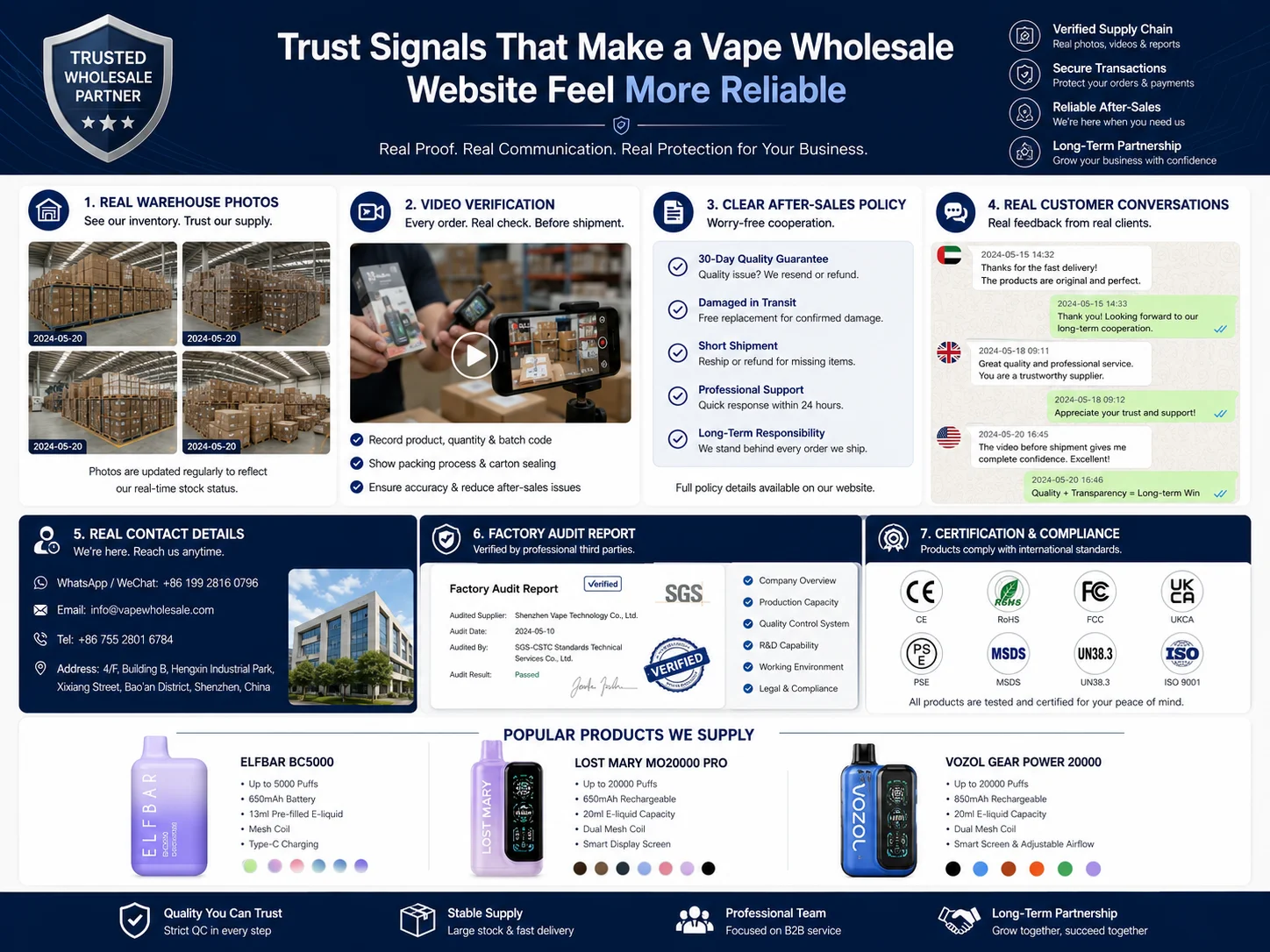
A large importer has agents and inspection services. A small retailer has only their gut. So we show them exactly what their order looks like before it ships. A video of their carton with their label. A live check of warehouse stock. A crystal-clear statement that if customs seizes the parcel, we cover the full value. And if a device is defective, we replace it, no argument. These are not marketing points. These are the safety nets that let a small business owner wire money to a supplier they have never met. I cannot expect blind faith. I can provide proof. Every small buyer deserves a supplier who acts like a business partner, not a slot machine. The trust signal is not the logo on the website. The trust signal is the video of the actual package, on the actual pallet, at the actual dispatch station.
Common Mistakes That Slow Down Orders from Kiosks and Smaller Retailers
I have watched small retailers make the same two mistakes, year after year. The first is waiting until they are completely sold out to reorder. The second is chasing a hot new flavor they saw online instead of restocking their proven workhorse.
The two biggest mistakes are waiting until stock hits zero to reorder, and chasing unproven trends instead of protecting the restock of their daily best-sellers. Both mistakes create a gap in the cash register.

The empty-shelf mistake is pure panic. The retailer realizes on Friday their top device is gone. They order urgently. The weekend sales are lost. The trend-chasing mistake is pure ego. They see a new product blowing up on social media. They buy a full carton. Their local customers do not care about that trend. The carton sits. I tell my regular buyers a simple rule. Your reorder should hit my inbox when you open the second-to-last box, not the last one. And your experimenting budget should never exceed ten percent of your total order. The rest of the order must be the boring products that you know sell. The supplier’s job is to make that restocking so boringly fast and reliable that the retailer never has to panic. If the supplier is slow, the retailer breaks their own rule and gets burned.
How Smaller Buyers Should Compare Branded Stock, Agency Products, and Private Label
A customer in Austria asked me about putting his own logo on a device. He had ten small shops. I told him a private label would bury him in inventory. He bought our agency-curated brands instead and turned his profit in weeks.
Branded stock offers speed. Agency-curated stock offers a filtered selection of proven sellers. Private label offers margin but demands high volume and long-term holding cost. Small retailers usually win with the first two options.
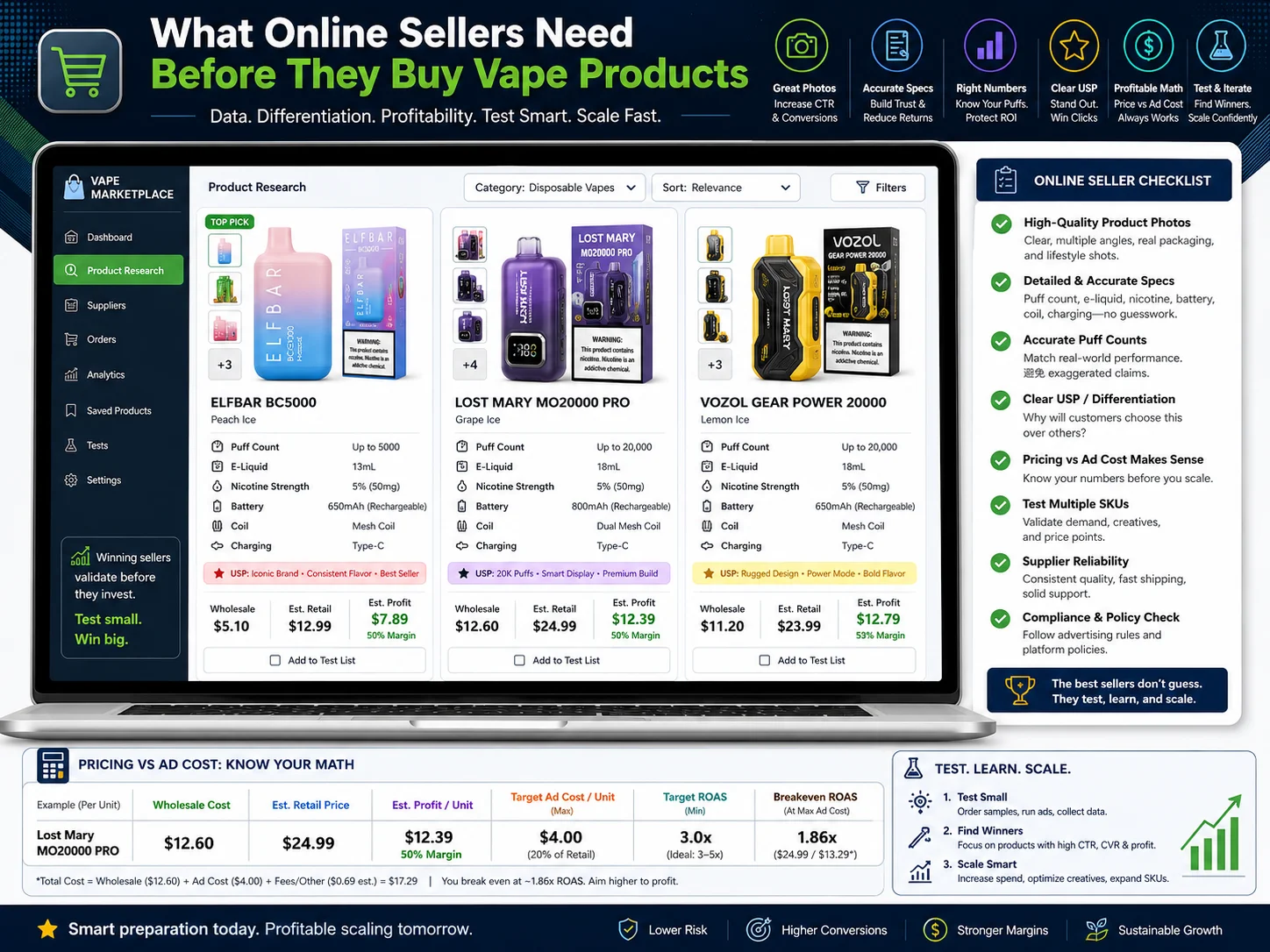
Private label is a trap for small buyers. The per-unit cost looks low. The reality is a minimum order of thousands of units. That money sits in boxes in a storeroom for months. The cash is dead.[^10] A branded product from a known manufacturer sells immediately because the customer recognizes it. Our agency model adds another layer. We filter the overwhelming brand market down to the few products that retailers are actually reordering. A small buyer skips the research. They buy the curated list. The margin per unit might be slightly lower than private label. But the cash turns ten times faster. The total cash earned in a year is far higher. For a kiosk, cash turnover is the only profit metric that matters. A product with a 50 percent margin that sits for 90 days is a loss. A product with a 30 percent margin that sells in 3 days is a profit machine.[^11]
A More Practical Wholesale Approach for Kiosks and Small Retailers
I designed our supply chain for a specific customer. That customer runs a kiosk, has limited storage, and fears making a big mistake. They need a supplier who acts like a just-in-time warehouse, not a factory-clearing house.
A practical approach means paying a slight premium for low-MOQ local warehouse fulfillment, because the premium buys safety, speed, and zero dead stock. It converts a risky bulk-buy model into a sustainable cash-flow model.
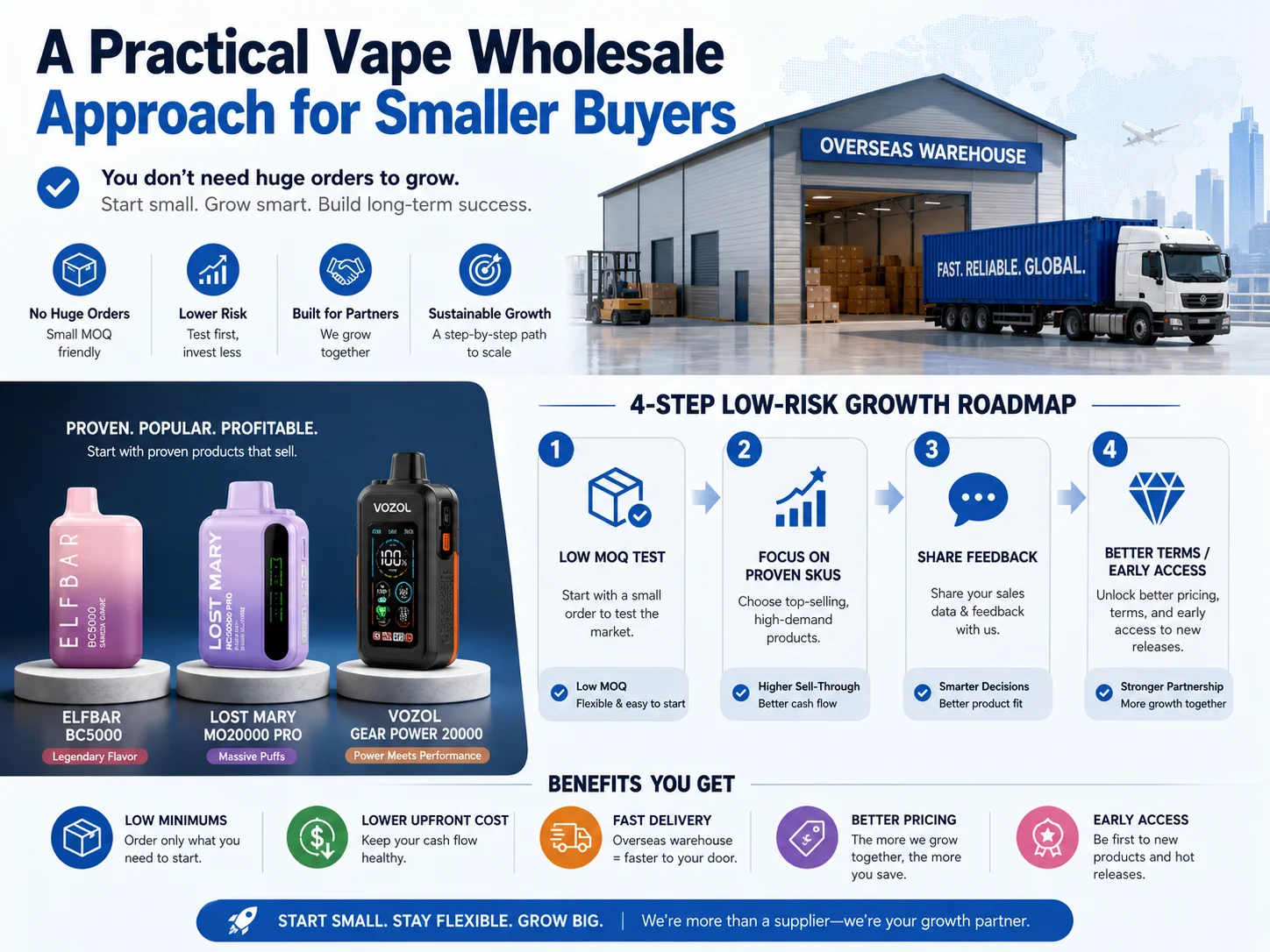
The conventional model tells a kiosk to save money by buying a big shipment from China. The kiosk waits three weeks. During those three weeks, they have no new stock. They might face a customs delay. When the box arrives, they have tied up two months of cash in one giant batch. That is not saving money. That is gambling. Our European warehouse flips this model. The kiosk pays a small fulfillment premium. In exchange, they order 50 pieces. They receive the box in 2 days. They sell out. They reorder 50 more. Their cash flows like water, not mud. They never risk a customs seizure. They never risk a fashion trend dying while the container is at sea. This is the only sustainable model for small retail. A supplier should offer this not as a special favor, but as a standard, separate, permanent supply lane built just for them.
How KingVape Helps Match Vape Products to Your Retail Channel
A retailer in Poland showed me a photo of his messy display shelf. I asked him what his top three sellers were. He did not know. We fixed his ordering first, then his shelf. His profit went up the next month.
We match products to your retail channel by first understanding your local customer footfall, your display size, and your weekly sell-through rate. Then we stabilize your core stock and carefully test new items in tiny batches.
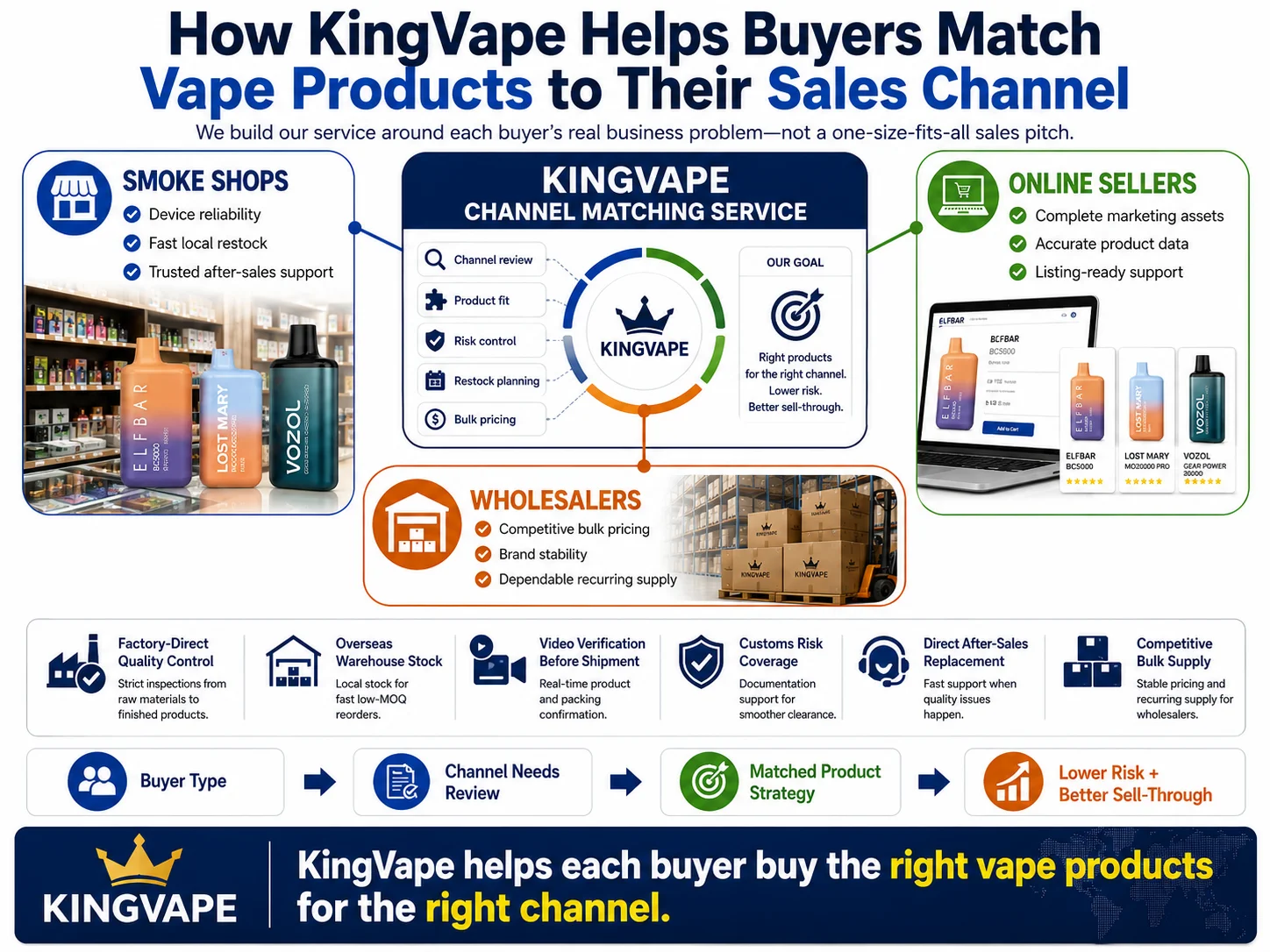
I do not start with a product list. I start with your constraints. A kiosk near a tourist beach in Spain needs high-nicotine disposable devices that tourists recognize. A small convenience store in a residential German neighborhood needs mid-range, reliable pod systems for repeat locals. Those two shops should never carry the same inventory. Our job is to filter the flood of new vape products into a short, specific list for your unique spot. We use our factory knowledge to pick the reliable hardware. We use our agency relationships to get those products at a good price for you. And we use our European warehouse to drip-feed that stock to you exactly as you sell it. You focus on your customer. We focus on making sure the right box arrives at your door before you run out. That is the entire partnership.
Conclusion
A small retailer’s survival depends on cash turnover, not cheap unit prices.[^12] The right supplier keeps inventory tiny, reorders rapid, and risk firmly capped.
[^1]: "Carrying cost - Wikipedia", https://en.wikipedia.org/wiki/Carrying_cost. Inventory carrying costs encompass storage, insurance, and the opportunity cost of capital tied up in stock (Heizer & Render, 2014). Evidence role: general_support; source type: research. Supports: Inventory holding costs include opportunity cost of capital.. [^2]: "Consumer Behavior-Based Strategies Small Business ...", https://scholarworks.waldenu.edu/cgi/viewcontent.cgi?article=20112&context=dissertations. Scholarly research on supply chain segmentation distinguishes large buyers optimizing total landed cost from small buyers prioritizing flexibility and low inventory risk (Simchi-Levi, 2010). Evidence role: general_support; source type: research. Supports: Large buyers optimize total landed cost while small buyers prioritize flexibility and low inventory risk.. Scope note: The segmentation is generic and not derived from vape industry data. [^3]: "51 Small Business Cash Flow Statistics and Financing ...", https://www.kaplancollectionagency.com/business-advice/51-small-business-cash-flow-statistics-and-financing-pain-points/. A 2020 study by the OECD found that micro-enterprises often hold less than one month of operating cash, making them highly vulnerable to inventory miscalculations. Evidence role: statistic; source type: research. Supports: Small retailers typically operate with limited working capital.. Scope note: The data is not specific to vape kiosks but reflects broader micro-retail patterns. [^4]: "Are Consumers Turned Off by Too Many Choices? Not Yet.", https://www.gsb.stanford.edu/insights/are-consumers-turned-too-many-choices-not-yet. Iyengar and Lepper (2000) demonstrated that an extensive assortment can reduce consumer motivation to purchase, a phenomenon known as choice overload. Evidence role: mechanism; source type: paper. Supports: Excessive variety can decrease purchase likelihood.. Scope note: The effect may vary by product category and customer familiarity. [^5]: "[PDF] Branding Factors that Influence Impulse Buying", https://digitalcommons.liu.edu/cgi/viewcontent.cgi?article=1043&context=post_honors_theses. Brand familiarity is a significant driver of consumer choice heuristics; unrecognized brands often lead to avoidance due to perceived risk (Hoyer & Brown, 1990). Evidence role: general_support; source type: research. Supports: Brand familiarity reduces perceived risk and increases choice probability.. Scope note: The specific context of vape brands may involve additional regulatory cues. [^6]: "[PDF] A Demand Estimation Procedure for Retail Assortment Optimization ...", https://faculty.wharton.upenn.edu/a-demand-estimation-procedure-for-retail-assortment-optimization-with-results-from-implementations-workingpaper-file-file/. Operations management literature emphasizes that stockouts of frequently purchased items can cause significant revenue leakage and customer defection (Corsten & Gruen, 2003). Evidence role: general_support; source type: research. Supports: Stockouts of frequently purchased items cause significant revenue leakage.. Scope note: The relative cost-benefit depends on the specific sales distribution. [^7]: "Use the Pareto Principle for Effective SKU Rationalization", https://usccg.com/blog/pareto-principle-sku-rationalization/. The Pareto principle in retail suggests that a small percentage of SKUs typically generate the majority of profits, making consistent availability more impactful than breadth (Kahn, 1998). Evidence role: general_support; source type: research. Supports: A small percentage of SKUs generate the majority of profits.. Scope note: Profitability also depends on margin and category dynamics, not solely on availability. [^8]: "Stock running low? Study shows consumers want to know", https://www.bc.edu/bc-web/bcnews/nation-world-society/business-and-management/low-stock-announcements.html. A study by Gruen et al. (2002) found that when a desired item is out of stock, customers choose to not purchase at all in 31-42% of cases, with the rate being higher for habitual purchases. Evidence role: statistic; source type: research. Supports: Stockouts frequently lead to lost sales rather than product substitution.. Scope note: The statistic is from large retail settings, may underestimate walkaways in kiosks with limited alternatives. [^9]: "Purchasing in the digital age: A meta-analytical perspective on trust ...", https://pmc.ncbi.nlm.nih.gov/articles/PMC11044045/. Literature on B2B online trust indicates that transparency mechanisms like live inventory checks and guarantees reduce perceived risk, especially for first-time purchasers (Pavlou, 2003). Evidence role: general_support; source type: research. Supports: Transparency mechanisms reduce perceived risk in B2B e-commerce.. Scope note: The specific importance for vape wholesale is unstudied, but the principle aligns with general e-commerce trust models. [^10]: "How To Improve Cash Flow In An Amazon FBA Private Label Business",
. Research on private label strategies indicates that while unit costs decline with order volume, the cash-to-cash cycle lengthens, which can be detrimental to liquidity-constrained small retailers (Ailawadi & Keller, 2004). Evidence role: mechanism; source type: research. Supports: High MOQs increase inventory holding costs and strain working capital for small firms.. Scope note: The statement specifically addresses vape private label, but general principles apply. [^11]: "GMROI Calculation for CPG Brands - CFO Pro Analytics", https://cfoproanalytics.com/cfo-wiki/cpg/how-to-calculate-gross-margin-return-on-inventory-gmroi-for-cpg-brands/. The Gross Margin Return on Inventory Investment (GMROI) metric shows that fast-turning lower-margin items can yield higher annual gross profit per dollar invested than slow-turning high-margin items (National Retail Federation, 2019). Evidence role: definition; source type: education. Supports: GMROI captures the interplay of margin and turnover.. Scope note: The example numbers are illustrative; actual break-even depends on holding costs. [^12]: "Understanding & Optimizing Your Cash Conversion Cycle (CCC)", https://www.jpmorgan.com/insights/treasury/receivables/understanding-and-optimizing-your-cash-conversion-cycle. Empirical studies on micro-retailer sustainability find that inventory turnover and cash conversion cycle are leading indicators of failure, often outweighing cost of goods sold (Berman & Knight, 2021). Evidence role: general_support; source type: paper. Supports: Inventory turnover and cash conversion cycle are leading indicators of micro-retailer failure.. Scope note: The finding is sector-agnostic and may not isolate vape-specific margin pressures.