
Quick Answer
A UK reusable vape retailer FAQ should answer more than basic product questions because customers often buy reusable devices with disposable-vape expectations. That gap can create mismatched purchases, avoidable returns, staff pressure, and unhappy customers. A practical FAQ helps your team explain ownership, consumables, charging, maintenance, and support before the sale.
A useful UK reusable vape retailer FAQ should explain what the customer is buying, what needs replacing over time, how the device is charged and maintained, which accessories are compatible, and when a problem needs proper after-sales support. It should help retail staff guide a purchase rather than simply repeat product specifications. UK retailers should verify any current legal, nicotine, age-restriction, product-notification, and safety information through authoritative UK sources before publishing customer-facing guidance.[1]
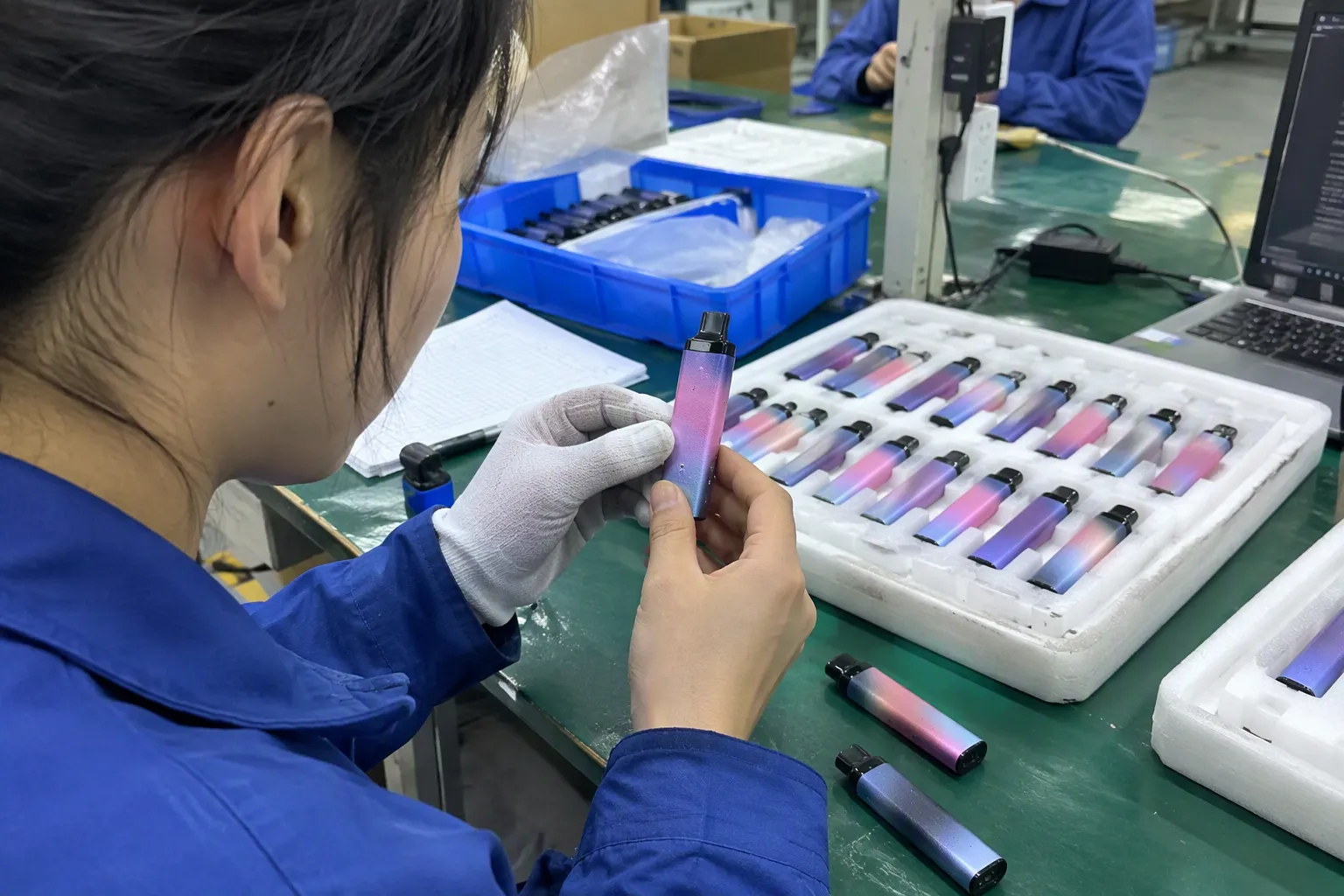
I work in vape product development, manufacturing, quality-control coordination, and pre- and post-sales communication from Shenzhen. I am not a UK retail operator or UK regulatory adviser. However, in recurring customer-service conversations, I repeatedly see that clear buying guidance can reduce confusion about reusable devices before it becomes an after-sales issue.
Why Is a UK Reusable Vape Retailer FAQ Not a Specification Sheet?
A UK reusable vape retailer FAQ can fail when it lists battery capacity, pod size, resistance, or charging type but does not explain what those details mean in daily use. Customers may then choose based on colour, price, or a familiar-looking device, only to discover later that they need consumables, charging access, or basic maintenance habits.
A UK reusable vape retailer FAQ is a decision tool, not a specification sheet. It should translate product details into practical ownership questions: who the device suits, what must be purchased with it, how often parts may need replacing, what upkeep is expected, and what support route applies if a fault cannot be resolved through normal checks.
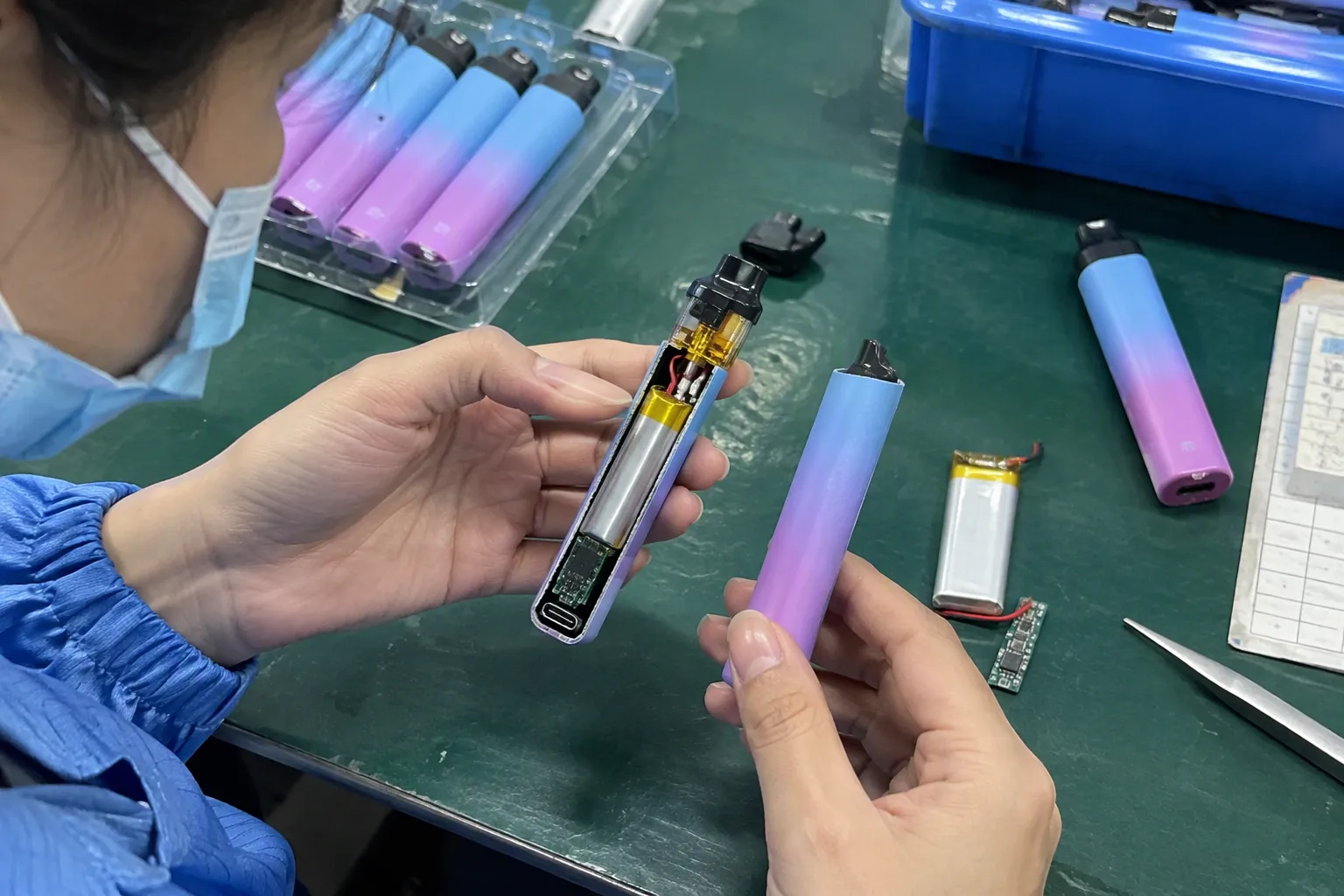
A product specification sheet has a role. Buyers need it when comparing products, checking compatibility, planning shelf space, and reviewing a supplier’s stated configuration. Yet it does not always help a shop employee answer a customer standing at the counter asking, “What else do I need with this?” or “Will this work like the device I used before?”
That difference matters. A reusable device is not one product in the same way that a fully self-contained disposable device may appear to be. It is usually a small system with several ownership steps.
Define “Reusable” Before You Use the Word
The word reusable can create the wrong expectation if it is left unexplained. In most cases, the device body may be used repeatedly, but other components are consumable, rechargeable, replaceable, or limited by compatibility.
Depending on the product design, the customer may need to understand:
- The device battery is rechargeable but has a practical service life.
- A pod, cartridge, coil, atomiser, or tank section may need replacement.
- Some devices use prefilled compatible pods, while others may use refillable systems.
- A refillable device may require suitable e-liquid and careful filling.
- A coil or pod can eventually produce reduced flavour, poor vapour performance, leaking, or a burnt taste if it is worn, damaged, incorrectly used, or incompatible.[2]
- A charging cable may not always be included in every retail pack.
- Different products that look similar may not share the same pod, coil, magnetic connection, or charger arrangement.[3]
A UK reusable vape retailer FAQ should not imply that every reusable device works in the same way. It should state the exact product category clearly.
For example, a retailer may separate FAQs into simple language:
| Device type | What the customer reuses | What may need replacement | Main staff explanation |
|---|---|---|---|
| Closed-pod device | Battery device | Brand- and model-specific pods | Confirm the correct compatible pod range |
| Refillable pod device | Battery device and refillable pod body, depending on design | Pods and/or coils | Explain filling, compatible e-liquid, and replacement parts |
| Tank or atomiser device | Battery device and tank body | Coils, seals, glass parts where applicable | Explain assembly, coil changes, and maintenance |
| 510 battery system | Battery body | Compatible cartridges or atomisers | Confirm thread, voltage range where relevant, and cartridge suitability |
This does not mean staff need to teach a technical course during every sale. It means staff should have a short, consistent way to explain ongoing use.
“This device is reusable, but the pod is a consumable part. Please make sure you take the correct replacement pods today, and ask us if you are unsure which version fits.”
That one sentence can be more useful than a long list of technical numbers.
Turn Specifications Into Customer Outcomes
In manufacturing discussions, I often see technical details presented as if they explain the full buying decision. They do not. A customer usually needs to know what a detail changes in practical terms.
For example:
- USB-C charging means the customer needs access to a suitable charging source and should follow the manufacturer’s charging instructions.
- A compatible pod family means the retailer should make the matching pods easy to identify and stock them alongside the device.
- A refillable pod means the customer may need advice on filling, closing the pod correctly, allowing the consumable to saturate where the manufacturer instructs, and cleaning small amounts of liquid from contact points.
- A replaceable coil means the customer needs to know that flavour and performance can change over time, and that the device is not necessarily faulty when a consumable part reaches the end of its usable life.
- A compact battery may suit convenience-focused users but may require more frequent charging than a larger device. Retailers should avoid turning this into an unverified performance promise.
A helpful UK reusable vape retailer FAQ should replace vague wording such as “long-lasting” with clear ownership guidance. “Long-lasting” can mean different things to different people. A customer may interpret it as battery life, pod life, device durability, or the duration of a particular use pattern. A retailer can avoid misunderstanding by explaining what is rechargeable and what is consumable.
Build the FAQ Around Retail Decisions
The best FAQ questions are usually the questions that stop a poor purchase before it happens. They support the customer, but they also help the shop protect staff time and reduce avoidable after-sales friction.
A practical UK reusable vape retailer FAQ can include these buying-stage questions:
-
Who is this device best suited for?
Explain whether it is designed for customers who prefer a simple closed-pod format, customers comfortable with refilling, or customers who already understand coils and tanks. -
What must I buy with the device?
List compatible pods, coils, replacement cartridges, suitable charging equipment if needed, and other necessary accessories. -
Can I use the pod or coil from another device?
Give a direct answer. Similar size or appearance does not confirm compatibility. -
Does this product require refilling?
State whether the customer needs prefilled pods, refillable pods, a compatible cartridge, or another consumable. -
What should I do before first use?
Refer customers to the manufacturer’s supplied instructions and point out the few actions that matter most for that product, such as charging, fitting a pod, filling where applicable, and checking the connection. -
What should I return to the shop for?
Explain when a customer should stop trying quick fixes and request formal support.
This FAQ approach supports staff training. It also improves purchasing decisions for independent vape shops, wholesalers, smoke shops, convenience retailers, and importers supplying those stores.
Stock the Device as a System, Not as a Single SKU
A reusable device can become difficult to sell if the matching consumables are not available.[4] The device may be competitively priced, visually appealing, and easy to display. However, the purchase becomes less attractive if the buyer cannot also obtain the pod, coil, refillable cartridge, or other compatible item they need.
From a procurement perspective, retailers should assess reusable-vape lines as product systems.
| Stocking question | Why it matters to the retailer | What to ask a supplier |
|---|---|---|
| Are replacement pods or coils available? | The customer may need them soon after the first purchase | Which consumables match this exact model? |
| Is the product family stable? | Frequent changes can leave customers with hard-to-find parts | Is the model current, and how is supply continuity managed? |
| Are pack identifiers clear? | Clear labelling can reduce accidental mismatches | How are model, pod version, and resistance identified? |
| Can staff explain the range quickly? | Confusing product families increase counter time | Is there a simple compatibility guide? |
| Are replacement parts stocked separately? | A missing accessory can make a device unusable | Which accessories should be ordered with the first device shipment? |
| Is there a defined support process? | Retailers need an escalation path for genuine faults | What evidence is needed for a quality claim? |
I recommend that buyers avoid treating accessory stock as an optional add-on. A reusable-vape range often needs a basic “starter bundle” plan.
For a closed-pod range, that may include:
- Device units in selected colours or finishes
- Compatible replacement pods
- Shelf labels showing the correct pod family
- A simple staff compatibility chart
- Manufacturer instructions or approved product information
- A defined route for product issues
For refillable pod devices, the stock plan may also need:
- Replacement pods
- Replacement coils, if applicable
- Suitable accessories based on the specific product range
- Clear guidance on filling and routine care
- A method for staff to identify the exact replacement part
This approach is especially important for businesses that want fast stock rotation. A low-priced device with weak consumable availability may create repeat customer disappointment. A well-supported device system can create a more reliable repeat-purchase relationship, provided the retailer selects suitable products and manages stock responsibly.
Help Customers Move Beyond Disposable-Vape Habits
Many customers may be familiar with a simple, self-contained purchasing experience.[5] A reusable product can require a different routine. The customer may need to charge a device, replace a pod, refill a component, keep contact points clean, or identify the correct replacement item.
That does not make reusable devices difficult. It means a retailer should set expectations honestly.
A clear UK reusable vape retailer FAQ can explain this transition without making exaggerated promises:
| Common customer expectation | Better reusable-device explanation |
|---|---|
| “I only want one item.” | “This device may need replacement pods, coils, or refill supplies, depending on the model.” |
| “It should work forever.” | “The battery device is reusable, but some parts are consumables and will need replacing.” |
| “Any pod that looks similar should fit.” | “Please use only the compatible pod or coil specified for this device.” |
| “If flavour changes, the device is broken.” | “A change in performance can sometimes relate to a consumable, setup, charging, or maintenance issue. We can help check the correct next step.” |
| “I do not need instructions.” | “The supplied instructions are important because different devices have different filling, charging, and replacement procedures.” |
A retailer does not need to diagnose every issue at the counter. In fact, trying to solve every problem through informal guesses can create more confusion. The better approach is to give staff a simple first-check process and a clear escalation point.
For example, staff may ask:
- Is this the correct pod, coil, or cartridge for the device?
- Has the customer followed the product instructions for setup and use?
- Does the device show visible damage, liquid contamination, or connection issues?
- Is the charging method consistent with the manufacturer’s instructions?
- Is the issue likely linked to a consumable part, or does it require formal support?
The FAQ should make clear that a retailer cannot guarantee that every leak, burnt taste, charging issue, or fault can be prevented. Product performance can be affected by handling, consumable condition, storage, compatibility, manufacturing defects, and other factors.[6] Still, better pre-sale guidance can reduce the number of preventable mismatches.
Separate Quick Checks From Formal Support
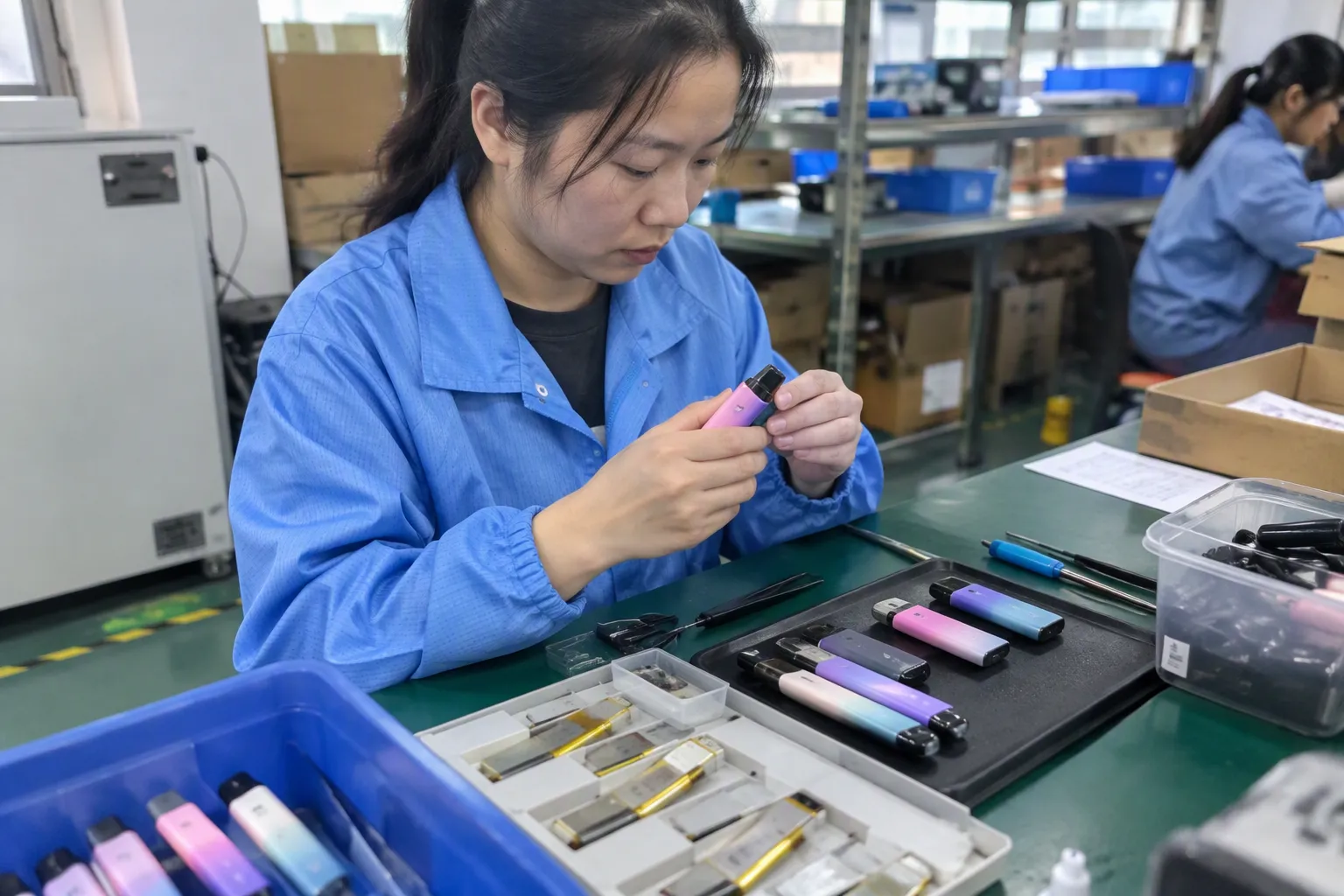
A well-written UK reusable vape retailer FAQ should protect both the customer and the retailer by explaining when staff can offer basic guidance and when the issue needs formal assessment.
This distinction is important. A customer may describe a fault, but the underlying cause may not be clear without checking the exact product, consumable, usage history, and manufacturer instructions. Retail staff should avoid making unsupported technical conclusions.
A simple support framework can look like this:
Step 1: Confirm the exact product
Ask for the device name, version, pod or coil type, and where possible the packaging or proof of purchase. Many support conversations become difficult because the customer does not know which replacement component they bought.
Step 2: Check compatibility
Confirm whether the pod, coil, cartridge, cable, or accessory is designed for that exact device. Compatibility is a common source of problems across many vape and smoking-accessory categories.
Step 3: Refer to the manufacturer’s instructions
The retailer should use the approved instructions for basic setup, charging, filling, and maintenance guidance. The FAQ should not replace the product manual.
Step 4: Identify whether the issue is consumable-related
Pods, coils, atomisers, seals, and cartridges may have limited service lives.[7] If the product design uses consumable parts, the retailer should explain that replacement may be part of normal ownership, while still handling any genuine defect through the proper process.
Step 5: Escalate where appropriate
A device with suspected fault, damage, repeated abnormal behaviour, or an unresolved charging issue should move into the retailer’s formal after-sales process. Retailers should follow their own documented policy and applicable requirements. They should also contact the supplier or manufacturer with clear evidence where needed.
For B2B buyers, the supplier selection question is not only “What is the unit price?” It is also “How clear is the product information, compatibility structure, replacement-part supply, and after-sales process?”
Use FAQ Content to Improve Staff Confidence
A UK reusable vape retailer FAQ should be written so that a new staff member can use it. If the content only makes sense to a product manager, it will not help at the counter.
I suggest creating two versions from the same source information:
-
A customer-facing FAQ
This version uses plain language and short answers. It focuses on ownership, compatibility, basic care, and support routes. -
An internal staff guide
This version includes product codes, compatible SKU lists, supplier contacts, warranty-process steps, and approved wording for common questions.
The customer-facing version can answer:
- Is this device reusable?
- Which pod or replacement part fits it?
- Does it need charging?
- Does it need refilling?
- What should I buy with it today?
- What should I do if it does not work as expected?
The internal version can answer:
- Which exact replacement SKU matches each device?
- What stock level should we keep for pods or coils?
- Which issues can staff troubleshoot using manufacturer instructions?
- What evidence should be collected for a supplier claim?
- Which products should not be recommended as substitutes?
This structure reduces the risk that staff improvise. It also makes it easier for a retailer to maintain consistency across several locations, a warehouse counter, a small vape shop, or a mixed convenience and smoke-shop environment.
Ask Better Questions When Sourcing Reusable Devices
Retailers and wholesalers should use the same practical thinking when evaluating suppliers. A good-looking device is not enough if the supply chain cannot support consumables, packaging clarity, product information, and after-sales communication.
When I speak with importers and distributors, I encourage them to assess a reusable range with questions such as:
- What exactly is reusable, and what is consumable?
- Which replacement parts are required for ongoing use?
- Are the compatible consumables available in stable supply?
- Can the supplier provide a clear compatibility list?
- Is product packaging clear enough for staff and customers to identify the correct model?
- What pre-sale product information is available?
- What documents can be provided for buyers to review where required?
- How does the supplier handle confirmed quality issues?
- What evidence is required for an after-sales claim?
- Can the supplier support OEM or ODM development if the buyer needs a differentiated product range?
At Shenzhen Kingfuji Tech. Co., Ltd., I support buyers who need either a flexible small-order route or larger import planning. Our European warehouse network can be useful for eligible customers who need lower starting quantities and faster EU delivery options. Larger importers, wholesalers, and distributors may instead evaluate direct China sourcing for stronger volume pricing and OEM/ODM possibilities.
However, every buyer should assess product suitability, market requirements, transport arrangements, and compliance obligations independently. Certifications, test reports, declarations, and other product documents should always be reviewed and verified for the buyer’s specific market and product configuration. A document is not a substitute for qualified professional advice or the buyer’s own compliance process.
The strongest commercial value comes from matching the product system to the customer’s sales model. A small shop may value low-risk access to ready stock and compatible accessories. A larger distributor may value factory capacity, product customisation, packaging development, and a planned consumable supply programme. In both cases, the reusable device should be treated as an ongoing-use product, not as a one-time box sale.
Frequently Asked Questions
What should a UK reusable vape retailer FAQ explain first?
A UK reusable vape retailer FAQ should first explain what is reusable and what is replaceable. Customers should understand whether they need pods, coils, cartridges, refill supplies, charging equipment, or other compatible accessories before they complete the purchase.
Should a reusable-vape FAQ include technical specifications?
A reusable-vape FAQ can include selected specifications, but it should explain their practical meaning. For example, charging type, pod compatibility, and refill method are usually more helpful than a long list of numbers without context. The product manual should remain the main technical reference.
How can retailers reduce mismatched pod or coil purchases?
Retailers can reduce mismatches by using clear shelf labels, keeping compatibility charts near the display, training staff to confirm the exact device model, and avoiding assumptions based on similar appearance.[8] A UK reusable vape retailer FAQ should tell customers to use the specified compatible consumable.
Can an FAQ prevent all reusable vape after-sales issues?
No. An FAQ cannot prevent every product fault, leak, charging concern, damaged component, or consumable issue. It can reduce avoidable confusion by setting realistic expectations, explaining basic care, and giving customers a clear route for formal support when a quick check is not enough.
What should a retailer ask a reusable-vape supplier?
A retailer should ask about compatible consumables, product information, pack identification, supply continuity, quality-control processes, after-sales procedures, and documents available for review. Buyers should also verify current UK requirements through authoritative sources and qualified advisers where needed.
Conclusion
A strong UK reusable vape retailer FAQ helps customers make a better decision before they buy. It explains that reusable devices involve ongoing ownership: charging, compatible pods or coils, replacement cycles, basic upkeep, and a clear support path. This approach can help retailers reduce mismatched purchases and give staff more confidence during customer conversations. If you are sourcing reusable vape devices, compatible accessories, or OEM/ODM product options, contact me at Shenzhen Kingfuji Tech. Co., Ltd. to discuss a practical product-and-supply plan for your business.
Sources
- E-cigarette and vape advice for retailers / producers", UK government and MHRA guidance describe the regulatory controls that apply to nicotine vaping products, including notification and age-of-sale requirements, which retailers should verify against the current rules before issuing customer-facing information
- One Acute Exposure to E-Cigarette Smoke Using Various ...", Studies of e-cigarette operation indicate that inadequate liquid supply to the heating wick and altered operating conditions can produce dry-puff or burnt sensory effects and change aerosol generation
- Youth and Young Adult Use of Pod-Based Electronic ... - PMC", Electrical-safety guidance advises users to follow manufacturer instructions and use suitable charging equipment, since apparent physical similarity does not demonstrate that accessories or power arrangements are compatible
- Prevalence of disposable pod use and consumer preference ...", Research on e-cigarette product systems describes pods, cartridges, coils, and e-liquid as recurring inputs for many devices, making availability of the specified consumables relevant to continued use
- Tobacco: E-cigarettes", UK government guidance defines disposable vapes by their single-use design, distinguishing products that cannot be both recharged and refilled from reusable vaping devices
- Tobacco: E-cigarettes", Public-health and product-safety literature notes that the operation and risks of electronic nicotine-delivery products can vary with product design, component quality, handling, and storage conditions
- Effects of Manufacturing Variation in Electronic Cigarette Coil ...", Technical descriptions of electronic-cigarette systems identify cartridges, pods, atomisers, and heating coils as components that may be replaced during normal use, depending on the device design
- The Impact of Interpretive Packaged Food Labels on ... - PMC", Consumer-information research finds that clear and usable product information can improve decision-making; applied to replacement components, explicit model and compatibility information can help reduce selection errors