
A **vape device wattage range** can look impressive on a product sheet, but a high maximum does not tell you whether the device suits your customers. In our product-selection conversations, we sometimes see buyers focus on a wide range before defining who will use the device. A better evaluation starts with customer needs, then checks whether the specification supports them.
## Quick Answer
– **Define the users and use cases** the device is intended to serve before comparing wattage figures.
– Ask the supplier to explain what customer needs the stated range is designed to address.
– Review the full product documentation, not just a headline maximum or range.
– Treat unsupported performance claims as questions to verify—not as proof for or against a device.
– Pay for a broader range only when it matters to your target market and purchasing plan.
**A vape device wattage range is practical when it matches the operating needs of the customers you intend to serve and the supplier can explain the specification in the context of the product. A wider range or higher maximum alone does not establish better performance or stronger product-market fit.**
The central purchasing question is not whether a specification looks large on paper. It is whether the range helps your customers choose and use the device for its intended purpose. The sections below offer a straightforward way to connect the number to your customers, supplier documentation, and commercial decision.
## Is a wattage range practical only when it serves users’ likely needs?
A wide range can attract attention during product selection, especially when buyers compare device listings side by side. But the number by itself may not reveal whether a device is a good fit. Buyers need to understand the intended users and use cases before deciding whether the range adds value.
**A wattage range is practical when it supports the likely needs of the target users. Buyers should identify who the device is for, ask what use cases the range is meant to serve, and review the product’s documentation before treating the specification as a meaningful advantage.**
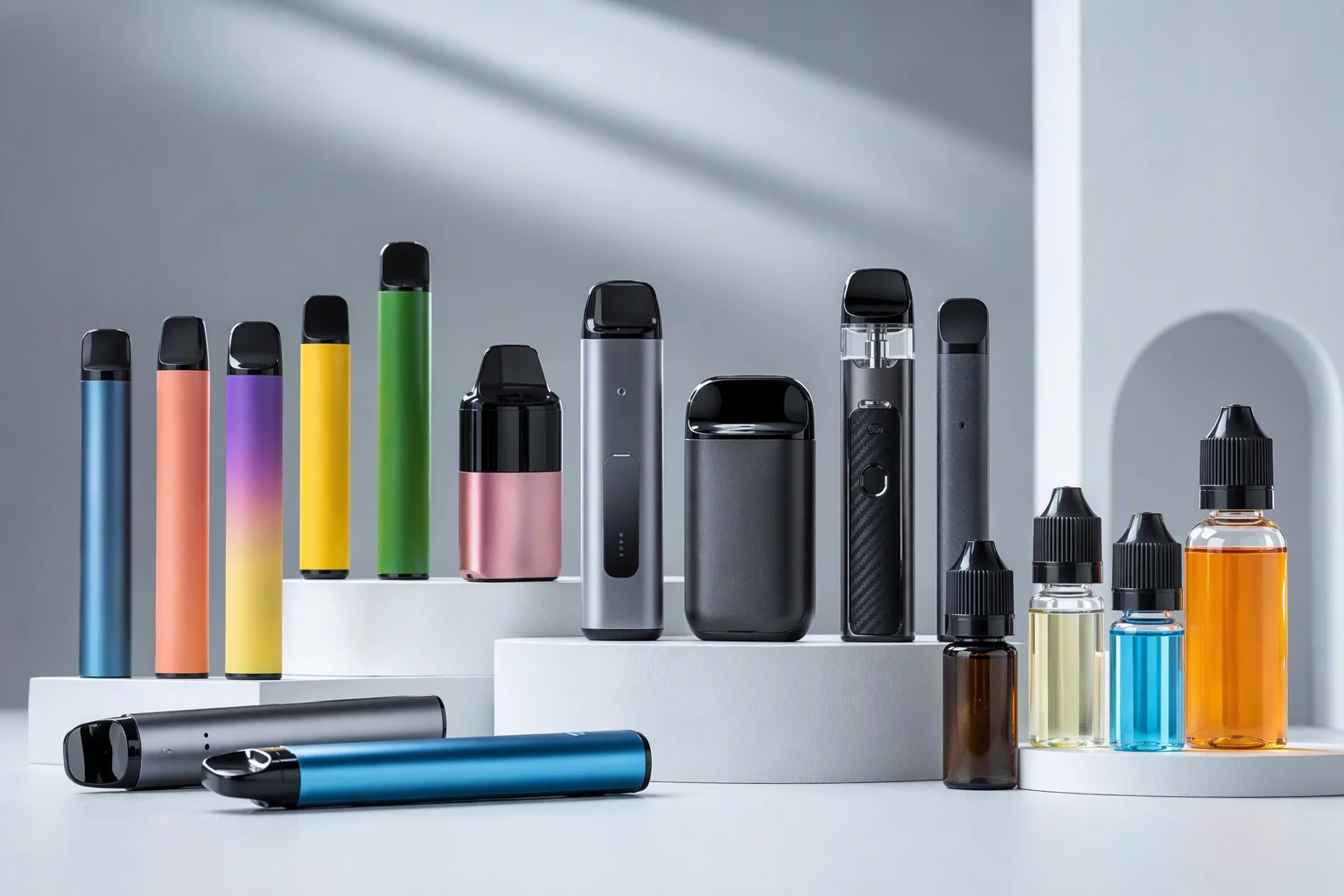
### Start with a customer question, not a number
When we speak with importers, wholesalers, and distributors about product selection, one recurring pattern is that a wider stated range can receive more attention than the customers who will eventually use the device. That observation comes from selection and pre-sales conversations. It is not a claim based on our own laboratory testing or measured device output.
A more useful starting question is: **“What power range will this product’s intended users actually use?”** The answer depends on the product and its intended market. It may also depend on what buyers expect from the device and how they will position it in their catalogue. [We should not assume that every customer wants the same features or that the largest number will matter to every market.](https://pmc.ncbi.nlm.nih.gov/articles/PMC5854347/)[3]
A range becomes commercially relevant when the supplier can explain how it relates to the intended user and product purpose. If the explanation is unclear, that is a reason to ask for more information. It is not, by itself, proof that the device performs poorly.
### Translate the specification into buyer value
For a distributor, a specification has value when it helps support a clear product offer. It could help distinguish a device in a particular category, or it might not affect the customers’ decision at all. Buyers can check this by comparing the specification with feedback from their sales teams, customer enquiries, and the needs of the outlets they supply.
| Buyer’s question | What it helps clarify |
|—|—|
| Who is the intended user? | Whether the product is aimed at a defined customer group |
| What use cases does the supplier describe? | Whether the stated range has a clear purpose |
| What documentation supports the specification? | Whether the listing is consistent with product information |
| Will the range matter to my customers? | Whether it is a commercial selling point for this market |
| Does the range justify a price difference? | Whether the added cost is connected to customer value |
This approach keeps the discussion grounded. Buyers do not need to dismiss a wide range. They need to understand what it means for the product they are considering and for the customers they serve.
## How should buyers connect a vape device wattage range to their market?
[A specification can have different value in different sales channels.](https://cob.news.niu.edu/2020/12/23/study-on-c-store-buying-behavior-conducted-by-marketing-faculty/)[4] A vape shop, a smoke shop, a convenience retailer, and a wholesale distributor may serve different customer groups. If buyers skip this context, they risk selecting a feature because it looks attractive on a product sheet rather than because it supports a clear market need.
**Before assessing a vape device wattage range, define the customer group, sales channel, and intended role of the product in your range. Then ask whether the supplier’s stated use cases match those commercial conditions. This helps you compare products on relevance, not on maximum figures alone.**

### Define the role of the product
A buyer may be sourcing a product for an established category, testing a new segment, or adding a device that complements other products. Each situation calls for a different evaluation. [For an established category, buyers can use existing customer enquiries and sales-team feedback to identify which product details come up most often.](https://online.hbs.edu/blog/post/voice-of-customer)[8] For a new segment, buyers may need clearer supplier explanations and a cautious initial purchasing plan.
The same question applies across markets: **What job should this product do in my catalogue?** A product intended to fill a specific customer need should be assessed against that need. A product intended to broaden choice may need to be compared with the other products already available to the buyer’s customers.
1. **The customer type:** Which retailers or end users will the product serve?
2. **The sales channel:** Will it be sold through specialist shops, general retail, or wholesale?
3. **The product’s role:** Does it fill a gap, replace an existing item, or offer another choice?
4. **The customer questions:** What information do staff need to explain the product accurately?
5. **The commercial case:** Does the specification support a real buying reason?
### Consider different buyer sizes and buying models
[Smaller resellers and larger importers may assess the same specification differently because their purchasing situations differ.](https://www.academia.edu/129194851/Supplier_evaluation_and_Selection_A_review)[5] [A smaller business may value an accessible order quantity and a quick way to test demand.](https://pmc.ncbi.nlm.nih.gov/articles/PMC12754351/)[6] [A larger importer may need more documentation, a broader supplier review, and a decision about whether a product is suitable for a larger order or an OEM/ODM project.](https://finance.princeton.edu/buying-paying/buy-supplies-and-equipment/international-suppliers-import-guidance)[7]
| Buyer type | What may matter most | How to assess the wattage range |
|—|—|—|
| Small retailer or reseller | Lower commitment and product availability | Check whether the specification makes sense for the intended customers before buying |
| Wholesaler | Clear product positioning and consistent supplier information | Ask for a use-case explanation and current product documents |
| Importer or distributor | Repeat-order suitability and sourcing clarity | Compare the specification with the product’s role, documentation, and planned market |
| OEM/ODM buyer | Product brief and defined target customer | Clarify the intended user and required specification before development discussions |
The goal is not to assume what each type of customer wants. It is to make the specification part of a wider fit assessment. If the intended market cannot be described clearly, the buyer may need to do more customer research before treating the wattage range as a reason to purchase.
## What product information should support a vape device wattage range?
A range shown on a listing is only one part of a product’s information. Buyers need to check whether the number appears consistently across the materials they receive and whether the supplier can explain its intended meaning. A concise, documented explanation is more useful than a sales claim that simply calls the range “powerful” or “wide.”
**Review the product listing, specification sheet, manual, and supplier explanation together. Check that the wattage information is consistent and that the supplier identifies the intended use or user group. If important details are missing or unclear, request clarification before making a purchasing decision.**
### Check for consistency across documents
The first task is simple: compare the product information available to you. If a listing states one range and a specification sheet or manual shows another, ask the supplier to clarify which information is current and which document applies to the specific product version you are considering.
– **Product listing:** Does it state the range clearly?
– **Specification sheet:** Does it show the same information as the listing?
– **Manual or user information:** Does it describe the product and its intended use?
– **Product version:** Do the documents match the model or version under discussion?
– **Supplier explanation:** Can the supplier explain what the range is intended to mean for the buyer’s market?
This is a documentation check, not a technical validation. We do not treat a consistent set of documents as proof that a device delivers a measured output or performs in a particular way. Buyers who need that level of assurance should request suitable evidence and arrange qualified evaluation for their application.
The watt is a unit of power in the International System of Units. Buyers who want a reference for the unit itself can consult the [National Institute of Standards and Technology’s overview of SI units](https://www.nist.gov/pml/owm/metric-si/si-units). That reference explains the unit; it does not verify any specific vape product or the truth of a product listing.
### Separate stated specifications from performance claims
A stated range and a statement about how a device performs are not the same thing. A supplier may provide a number, then make additional claims about what that number means. Buyers should identify which parts are documented specifications and which parts are claims that need further support.
For example, a phrase such as “the widest range” does not tell a buyer which users the product is for. [A claim that a range creates a particular experience may also require evidence beyond the number itself.](https://pmc.ncbi.nlm.nih.gov/articles/PMC10665025/)[2] Buyers can request the supplier’s supporting product information and ask which materials substantiate each claim.
The [Federal Trade Commission’s guidance on advertising substantiation](https://www.ftc.gov/legal-library/browse/ftc-policy-statement-regarding-advertising-substantiation) is a useful reference for the general principle that objective advertising claims should have a reasonable basis. It is not product-specific testing guidance, and it does not establish whether a particular device meets a technical requirement. Buyers should review the rules that apply to their market and product, and consult qualified professionals where needed.
A clear process is to record what the supplier has stated, what documents support it, and what questions remain. That gives procurement teams a better basis for comparison and reduces the chance of treating a headline specification as proof of broader claims.
## What should buyers ask a supplier about a vape device wattage range?
A supplier should be able to explain the product information in a way that helps buyers assess customer fit. If the answer focuses only on the maximum number, buyers can ask more specific questions about the intended users, the product documents, and the rationale for the stated range.
**Ask the supplier who the range is intended to serve, which product documents support the specification, and whether the information applies to the exact model under review. Then compare the response with your market requirements. Clear answers help you evaluate fit; an incomplete answer signals that you need more information.**
### Use questions that invite specific answers
A useful supplier conversation should move beyond “Is this a good range?” That question can prompt a general sales response. More specific questions encourage a clearer explanation of what the specification is supposed to mean.
1. **Which user group is this product intended for?**
2. **What use cases is the stated range intended to support?**
3. **Which current documents show the wattage information?**
4. **Does the range apply to the exact model and version in this quotation?**
5. **Can you explain why this range is relevant to the product’s intended market?**
6. **What claims about performance are documented, and what evidence supports them?**
7. **Are there product-specific instructions or limitations buyers should review?**
8. **Can you provide updated documents if the product or its specifications change?**
These questions are not a checklist for proving that a device is technically suitable. They help procurement teams understand the supplier’s position and identify what information is missing. If the product will be used in a specialized or regulated application, buyers should have qualified professionals evaluate the relevant requirements.
### Interpret answers carefully
A direct answer should connect the specification to the product, the intended user, and available documentation. A supplier may not have every answer immediately. In that case, buyers can ask for the response in writing or request the relevant document before proceeding.
A vague answer should be treated as an open question. It does not automatically establish poor product quality. Likewise, a confident answer does not automatically establish that a claim is proven. Buyers should distinguish between a supplier’s explanation, a product document, and independent evaluation.
| Supplier response | Buyer’s next step |
|—|—|
| Gives a clear intended-use explanation and matching documents | Compare the information with your customer requirements |
| Repeats the maximum number without explaining its purpose | Ask which users or use cases the range is meant to serve |
| Provides conflicting figures in different materials | Request clarification and current model-specific documents |
| Makes broad performance claims without supporting information | Ask what evidence supports the claims |
| Cannot confirm which product version the documents cover | Pause comparison until the version is clear |
In our pre-sales conversations, we find that reframing the question often improves the discussion. Instead of asking whether a range is impressive, ask how it serves the intended users. That shift keeps the conversation focused on what a buyer needs to know, without assuming that a wide range is either beneficial or harmful.
## Does a wider vape device wattage range justify a higher price?
A wider range may be presented as a product advantage, but buyers should not assume that it deserves a price premium. The commercial question is whether the feature matters to the customers who will buy the device and whether the supplier can explain the difference between the options clearly.
**A wider vape device wattage range justifies a higher price only if it creates relevant value for the target market and the difference is supported by clear product information. Compare the price with customer needs, documentation, and the product’s role in your range—not with the headline maximum alone.**
### Compare the product proposition, not one number
A product decision often involves several factors at once. Buyers may consider the intended user, product information, supplier responsiveness, available purchasing terms, and the role the item will play in a catalogue. The wattage range belongs in that assessment, but it should not replace it.
| Comparison point | Why it matters |
|—|—|
| Intended customer | A feature has value when it relates to the people the buyer serves |
| Product documents | Buyers need clear information to explain the offer and make comparisons |
| Price difference | A higher price should have a commercial reason the buyer can identify |
| Supplier clarity | Clear, consistent answers support a more informed decision |
| Product range fit | The device should complement the buyer’s existing offer or fill a defined gap |
A useful internal exercise is to remove the maximum figure from the comparison for a moment. Ask whether the product still has a clear reason to be considered. Then add the specification back and decide whether it changes the product’s relevance to the customer. This approach can help buyers notice when a number is driving a decision more strongly than the actual market need.
### Use customer evidence where available
Buyers do not need to guess what customers value. They can review sales-team questions, retailer feedback, enquiries, and purchasing patterns from their own business. This evidence may not answer every technical question, but it can show whether a specification is likely to help explain or position the product.
If the buyer is entering a new market, the available evidence may be limited. The buyer can then reduce uncertainty by asking suppliers for clearer product information, discussing the intended market with relevant partners, or choosing a lower-commitment purchasing approach where available. The decision should still follow local requirements and the buyer’s own procurement controls.
The same principle applies when comparing two products with different stated ranges. Buyers should not automatically assume that one is better because its range is broader. They should ask what customer need the difference addresses, whether the supplier documents that distinction, and whether the price difference makes sense for the planned channel.
A measured decision protects the buyer from paying extra for a feature that does not affect the customer’s choice. It also prevents the opposite mistake: dismissing a product feature before understanding how it fits the intended use.
## How can importers assess the wattage range before placing an order?
A clear procurement process helps importers compare products and record what they know. Buyers can define their requirements, review documents, ask suppliers focused questions, and identify unresolved issues before they commit to an order. This is especially useful when multiple products look similar on a catalogue page.
**Before ordering, write down the target customer and the product’s role, compare the stated range with current product documents, and ask the supplier to clarify any gaps. Record the supplier’s answers and review the commercial terms separately. For application-specific technical decisions, seek qualified evaluation rather than relying on a sales listing.**
### Follow a repeatable review
1. **Describe the target customer.** Note the type of retailer or end user you plan to serve.
2. **Define the product’s role.** State whether it fills a gap, expands a category, or serves a particular demand.
3. **Record the specification.** Capture the stated range and the document or listing where it appears.
4. **Check consistency.** Compare the listing, specification sheet, manual, and supplier explanation.
5. **Ask use-case questions.** Request an explanation of the intended users and purpose of the range.
6. **Separate claims from evidence.** Mark what is documented and what still requires support.
7. **Compare commercial fit.** Consider price, order terms, and how the product fits your sales channel.
8. **Escalate technical questions.** Use qualified product or compliance professionals when your application requires a technical assessment.
This sequence helps teams avoid turning a single specification into a shortcut for the whole purchasing decision. It also creates a record that can be revisited if a supplier updates the product information or offers a different version.
### Connect device selection to sourcing choices

The best sourcing route depends on the buyer’s order size, product plan, and customer base. Smaller resellers may prefer to test demand with lower quantities when stock and commercial terms allow. Larger importers and distributors may need to compare bulk sourcing, private-label opportunities, and the supplier’s ability to provide the product information they require.
At KingVape, we support product sourcing across vape and smoking-accessory categories, and we discuss OEM/ODM options with importers and distributors. Buyers can review our current product range at [KingVape](https://www.kingvapecig.com) and contact our team at **info@kingvapecig.com** or **WhatsApp: +86 13928420527** to discuss a product brief or sourcing question.
For eligible products stocked in our European overseas warehouses, our stated minimum order quantity is **50 units per product**. Available stock and delivery arrangements should be confirmed for the specific order. Larger buyers can discuss importing from China and OEM/ODM possibilities based on their requirements. In either case, buyers should assess wattage information in the context of the target users—not treat a sourcing option as a substitute for product evaluation.
## Frequently Asked Questions
### Does a higher maximum wattage mean a vape device is better?
No. [A higher maximum does not by itself establish better performance or a better match for a buyer’s customers.](https://pmc.ncbi.nlm.nih.gov/articles/PMC10665025/)[1] Buyers should ask what user needs the specification is intended to serve, review the product documents, and compare the answer with their market requirements.
### Is a wider wattage range always more useful?
No. A wider range may be relevant for some product propositions, but it is not automatically useful to every customer. Buyers should find out what use cases the supplier associates with the range and decide whether those use cases matter to their target market.
### What should I do if a supplier cannot explain the stated range?
Ask for current, model-specific product documents and a written explanation of the intended users or use cases. If the information remains unclear, record the unanswered questions and compare other options. An unclear explanation is a reason to seek clarification, not proof by itself that the device performs poorly.
### Can a product listing verify a device’s wattage range?
A listing can state a specification, but buyers should check whether the same information appears in the relevant product documents and applies to the exact model being considered. A listing alone does not independently verify measured output or establish application-specific suitability.
### Should I pay more for a device with a broader range?
Only if the difference is relevant to your customers and the price premium makes commercial sense. Compare the product’s intended users, available documentation, supplier explanation, and role in your catalogue. Do not use the maximum figure as the only reason to pay more.
## Conclusion
A practical **vape device wattage range** is one that makes sense for the intended users and is supported by clear product information. Buyers can start with their customer needs, ask suppliers what use cases the range serves, check that documents agree, and weigh the specification against the product’s price and place in their catalogue. KingVape helps importers, wholesalers, and distributors assess sourcing options, including stocked products and OEM/ODM discussions. Contact our team at **info@kingvapecig.com** or **WhatsApp: +86 13928420527** to discuss your product requirements.
—
### Sources
1. [Understanding the influence of atomizing power on electronic …”, Laboratory studies of electronic cigarettes report that measured output and aerosol characteristics vary with device design and operating conditions, so a maximum wattage rating alone does not establish performance across products](https://pmc.ncbi.nlm.nih.gov/articles/PMC10665025/)
2. [Understanding the influence of atomizing power on electronic …”, Research on electronic-cigarette aerosol generation identifies device configuration and operating conditions as relevant factors, indicating that a stated power range alone does not document a particular user experience](https://pmc.ncbi.nlm.nih.gov/articles/PMC10665025/)
3. [A systematic review of consumer preference for e-cigarette …”, Consumer studies of vaping products report variation in the attributes and product types preferred by participants, supporting the view that a single specification need not have equal relevance across customer groups](https://pmc.ncbi.nlm.nih.gov/articles/PMC5854347/)
4. [Study on C-store buying behavior conducted by Marketing …”, Studies comparing retail channels document differences in customer behavior and product-selection contexts, providing general support for assessing a specification in relation to its intended channel](https://cob.news.niu.edu/2020/12/23/study-on-c-store-buying-behavior-conducted-by-marketing-faculty/)
5. [(PDF) Supplier evaluation and Selection. A review”, Research on firm procurement describes differences in purchasing resources and processes across businesses, offering context for why buyers may weigh the same product information differently](https://www.academia.edu/129194851/Supplier_evaluation_and_Selection_A_review)
6. [Innovations in Inventory Management to Improve the … – PMC”, Studies of small-business inventory management describe how demand uncertainty and resource constraints can shape order quantities and stock decisions](https://pmc.ncbi.nlm.nih.gov/articles/PMC12754351/)
7. [International Suppliers & Import Guidance”, International procurement guidance describes supplier assessment and documented requirements as elements of sourcing decisions, providing context for review processes associated with larger or customized orders](https://finance.princeton.edu/buying-paying/buy-supplies-and-equipment/international-suppliers-import-guidance)
8. [Voice of the Customer: Strategies to Listen & Act Effectively”, Market-research methods literature treats customer feedback and frontline observations as sources for identifying recurring needs and questions](https://online.hbs.edu/blog/post/voice-of-customer)
**Related reading:** [Verify Supplier Actually Grant Vape Distribution](https://kingvapecig.com/how-to-verify-that-a-supplier-can-actually-grant-vape-distribution-rights)
**Related reading:** [European Vape Market Regulations Country Differences](https://kingvapecig.com/european-vape-market-regulations-country-differences-and-bestselling-products-a-practical-guide-for-wholesalers-in-2026)
**Related reading:** [Vape Market Regulations State Laws Brand](https://kingvapecig.com/u-s-vape-market-regulations-state-laws-and-brand-trends-a-practical-guide-for-wholesalers-in-2026)
—
Looking for a reliable supplier? [Request a quote](https://kingvapecig.com/contact/) or contact us with your drawing, target market, and volume — our export team will reply with a like-for-like quotation.