Worried about your first big vape order from China? Scams and quality issues can sink your business before it starts. Let's make sure that doesn't happen.
To reduce risk, start by thoroughly verifying your supplier's business registration and export history. Then, order samples, use secure payment terms like a 30% deposit, put all details in a written contract, and arrange a pre-shipment inspection before paying the balance. This protects your investment.
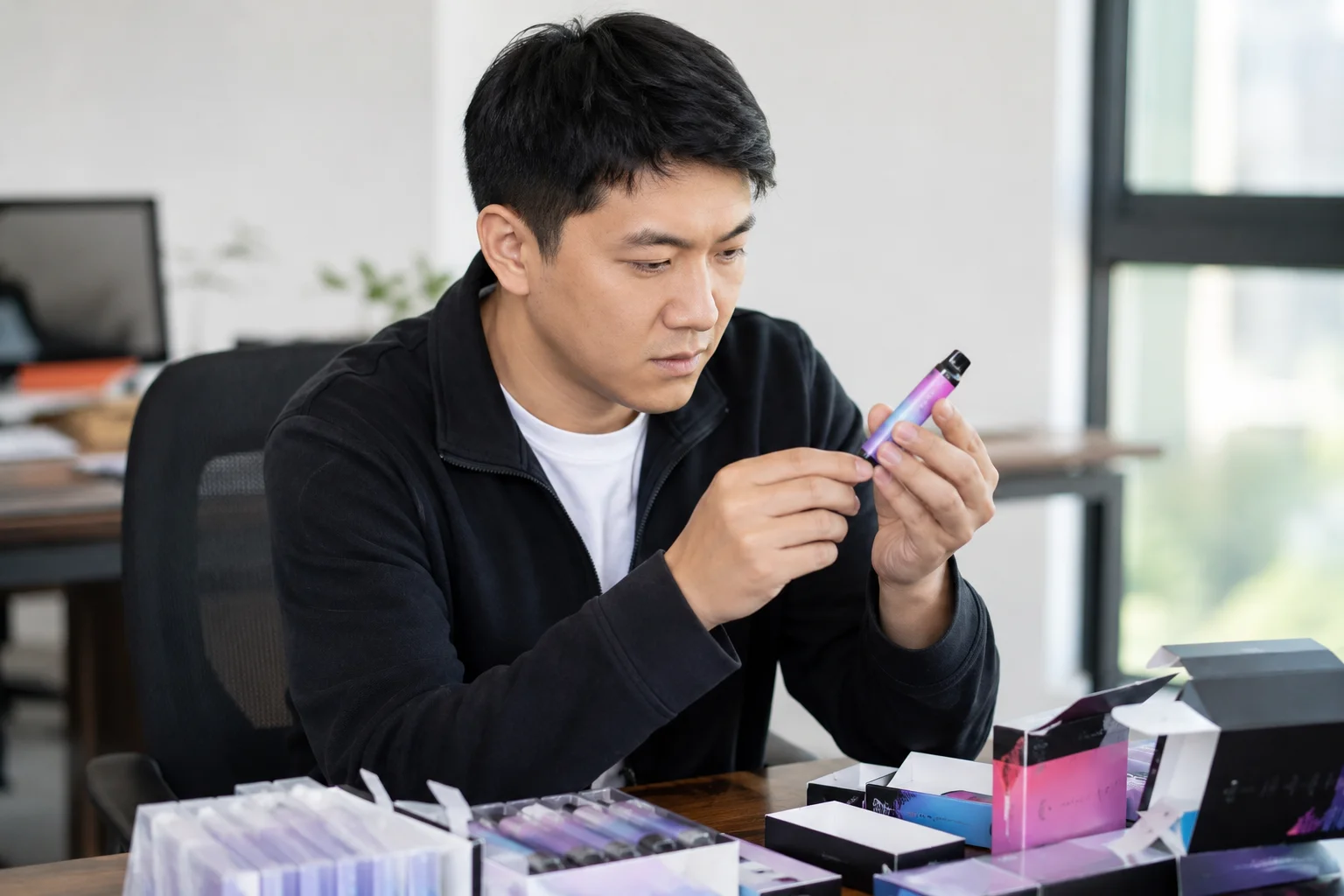
I’ve been exporting electronics from Shenzhen for over 15 years. In that time, I’ve seen many enthusiastic entrepreneurs lose thousands of dollars on their first import order. They usually make the same few, predictable mistakes. The good news is, these mistakes are easy to avoid if you know what to look for. Your first order sets the tone for your entire business relationship with a supplier. Getting it right is not just about avoiding a loss; it's about building a foundation for growth. Let's break down the process step-by-step so you can place your first order with confidence.
Why the First Vape Order Carries the Highest Risk?
You found a supplier with amazing prices. But what if they disappear after you pay? This uncertainty makes the first order the most stressful part of importing vapes.
First orders are riskiest because there is no established trust. You face potential scams, poor product quality, shipping delays, and unclear after-sales support. Every unknown is a financial threat until you have a proven, positive track record with the supplier.
When we get a message from a new buyer, I can often feel their hesitation. It’s completely normal. The first transaction is a leap of faith for both sides, but the buyer carries almost all the financial risk[^1]. A new, unproven supplier relationship is full of unknowns. Are they a real factory, a trading company, or just a guy in an apartment? Will the product you receive be the same as the sample they sent? What happens if half the shipment is defective? These questions are what keep importers up at night. I always tell new buyers to think of the first order as an investment in information, not just an investment in inventory. The goal is to learn if this supplier is a reliable partner for the long term. Here are the most common pitfalls I've seen:
| Risk Type | What It Looks Like | How It Hurts Your Business |
|---|---|---|
| Supplier Fraud | The "company" takes your deposit and their website/contact vanishes. | Total loss of funds, no product, and a major setback. |
| Product Mismatch | You ordered authentic, high-quality vapes but receive cheap clones. | Unsellable inventory and damage to your brand's reputation. |
| Quality Instability | Samples were perfect, but the bulk order has high leak rates or dead batteries. | Customer complaints, returns, and loss of future sales. |
| After-Sales Ghosting | The supplier is very responsive until you report a problem, then they disappear. | You are stuck with the cost of defective goods and angry customers. |
How Can You Verify a Vape Supplier Before Discussing Payment?
You’re excited to talk prices and MOQs. But hold on. A great price from a fake company is worthless. Verifying the supplier first saves you time and protects your wallet.
Before negotiating, verify their business license, years of operation, and physical address. Ask for their export history, client cases, and brand authorizations. A quick video call to see their office or warehouse builds immense trust and weeds out scammers.
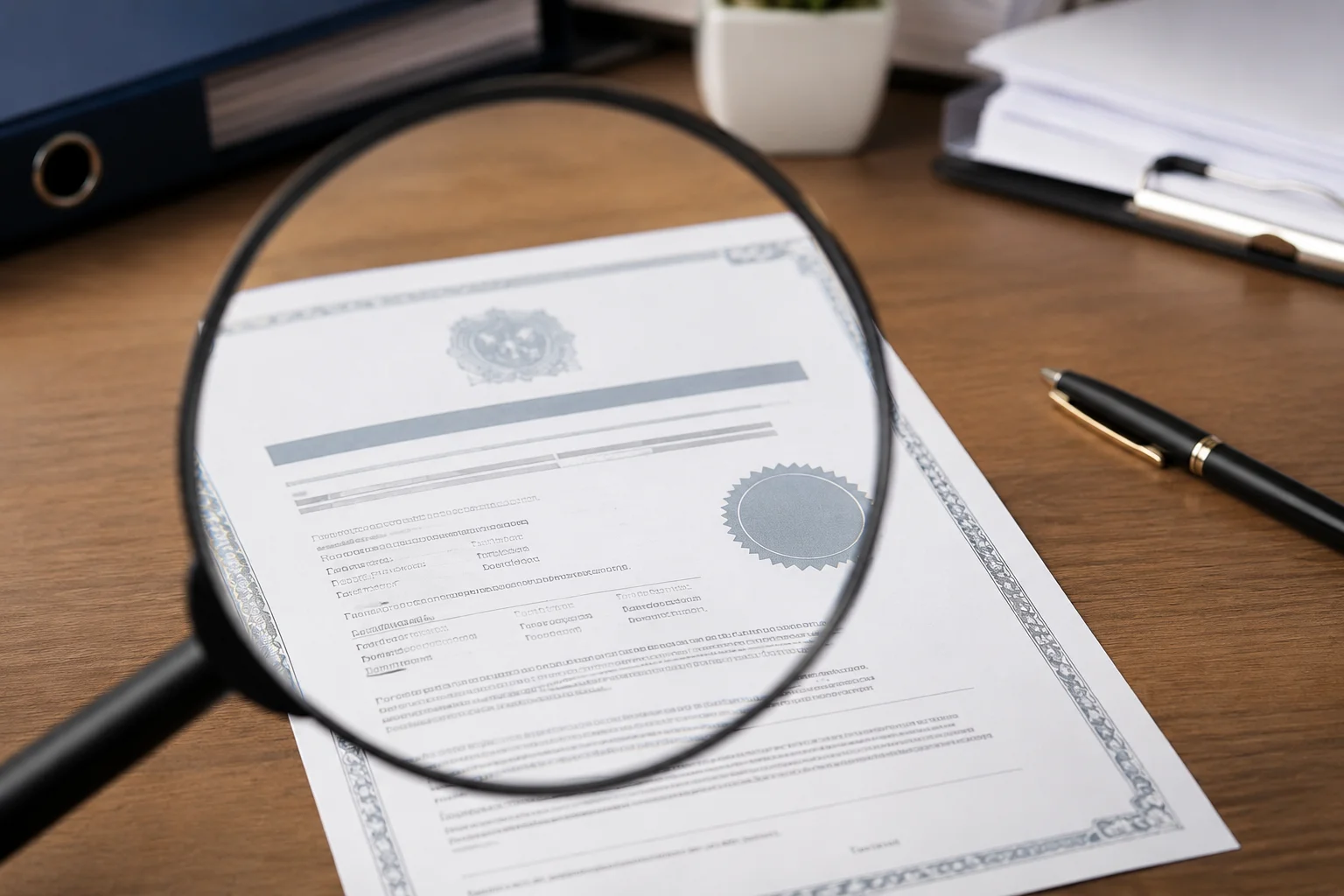
A common question we get is, "How do I know you are a real company?" It's a great question, and you should ask it of every potential supplier. A legitimate company will be happy to prove it. Don't be shy about asking for documentation. We're used to it. The first thing to check is their business license. It shows their registered name, address, and scope of business. Next, ask how long they've been exporting vapes. Experience matters, especially with customs and international shipping regulations.
But documents can be faked. The best tool you have is a live video call. I always encourage this with new clients. Ask them to give you a quick tour of their office, show you their team, or walk through their warehouse. Can they show you existing stock? If they make excuses or refuse, it's a huge red flag. A five-minute video call can tell you more than a dozen emails. It confirms they have a physical operation and aren't just a middleman working from a coffee shop. This simple step filters out 90% of potential scammers immediately[^2].
How Do You Confirm Product Authenticity, Specifications, and Compliance?
You think you've ordered "the blue one." But which blue? Which nicotine strength? Which packaging version? Ambiguity leads to expensive mistakes when ordering vapes.
Get every detail in writing before paying. Confirm the brand, model, exact flavor name, nicotine content, e-liquid capacity, batch codes, and anti-counterfeit codes. Also, ensure the packaging has the correct warnings and labels for your target market.
"I need 1,000 units of the Energy vape." This is a typical first request. My first reply is always a list of questions. Which brand? What nicotine percentage, 2% or 5%? Do you need the TPD version for Europe[^3] or the standard international version? A client in Germany once received a shipment of vapes with English-only warnings, making them illegal to sell. A simple check of the packaging details could have prevented that entire loss.
Don't assume the supplier knows what you need. You are the expert on your market's regulations. Create a spec sheet for every single SKU you order. This isn't just for you; it protects the supplier from misunderstandings too.
Your checklist should include:
- Brand and Model: e.g., Elf Bar 600
- Flavor: Be specific. "Blue Razz Lemonade," not just "Blue."
- Nicotine: Specify percentage (e.g., 2%) or mg/ml (e.g., 20mg/ml).
- Compliance: Do you need TPD (Europe), CRC (Canada)[^4], or other local compliance?
- Packaging: Language, warning labels, tax stamps.
- Authenticity: How will you verify? Ask if you can check the security codes on their website.
Getting this right prevents you from ending up with a pallet of products you can't legally sell.
Why Should You Start with Samples or a Small Trial Vape Order?
Committing to 10,000 vapes without testing them is like buying a car without a test drive. The risk of getting a "lemon" is incredibly high, and the consequences are costly.
Always start with samples to test the product and a small trial order to test the market. Samples let you check flavor consistency, leak rates, and battery life. A trial order shows you if your actual customers will buy it.
When a new buyer wants to place a huge first order, I actually advise them to start smaller. It might sound like I'm turning down business, but I'm building trust for a long-term relationship. A successful trial order is the best sales tool there is. First, get samples. Don't just look at them; use them. For a week. Does the flavor stay consistent from the first puff to the last? Does it leak in your pocket? Does the battery die before the e-liquid is gone?
But even perfect samples don't guarantee sales. Your personal taste might not match your customers' tastes. That's why a small trial order of 100 to 500 units is the critical next step. This isn't just about testing the product quality in a larger batch; it's about testing your market. Do they sell quickly? What feedback do you get from early buyers? This real-world data is priceless. It tells you which flavors to double down on and which ones to drop before you invest five or six figures in inventory.
How Can You Use Safer Payment Terms for the First Wholesale Order?
The supplier is asking for 100% of the payment upfront. Your gut tells you this is risky, and you're right. How you pay is just as important as what you pay.
Avoid paying 100% upfront on your first order. A standard, safe approach is a 30% deposit to start production and the remaining 70% after a pre-shipment inspection[^5]. Always pay to a registered company bank account, never a personal one.

In my 15 years of experience, the biggest and most painful losses I've seen have come from payment issues. The number one rule is this: never, ever pay a large sum to a personal bank account. Scammers love to use personal accounts because they are untraceable. A legitimate export business will always have a corporate bank account that matches the company name on their business license.[^6]
For the first order, a fair and common payment structure is a 30/70 split via Telegraphic Transfer (T/T). You pay a 30% deposit, which allows the supplier to buy materials and start production. This shows you are a serious buyer. You pay the final 70% balance only after the goods are produced and have passed your inspection, but before they are shipped out. This arrangement protects both parties. You won't pay in full for goods you haven't verified, and the supplier won't release the goods until they are paid in full. If your supplier insists on 100% upfront for a large order, and you don't have a trusted relationship yet, it's wise to be cautious and consider finding another partner.
Why Must You Put Every Product and Order Detail in Writing?
You agreed on the price and flavors over a chat message. The supplier seems to understand. But verbal agreements and chat logs cause chaos. If it's not in the contract, it doesn't exist.
Your Proforma Invoice (PI) or Purchase Contract is your most important document.[^7] It must clearly list every single detail: SKUs, quantities, prices, flavor ratios, packaging requirements, delivery time, and the policy for handling defective products. This prevents disputes.
I can't stress this enough: a casual chat is not a contract. A successful order lives and dies by the details in the Proforma Invoice (PI) or sales contract. This document is the single source of truth for your order. When a client sends a payment, I always double-check that the PI is confirmed and signed. It protects them as much as it protects us. Any confusion later can be solved by looking at the PI.
What should be in it? Everything. Don't leave anything to interpretation. Imagine someone who knows nothing about your deal has to pack the order. Can they do it perfectly just by reading the PI?
Key elements to include:
- Detailed Product List: Use specific SKUs, product names, flavors, and nicotine strengths.
- Quantity & Price: Per unit and total.
- Flavor Assortment: "1000 units total: 300 Blue Razz, 300 Watermelon Ice, 400 Mango."
- Packaging & Version: "TPD English/German packaging, latest batch."
- Lead Time: "Production to be completed within 15 working days of deposit."
- Defective Policy (RMA): What is the process and compensation for faulty units?
- Substitution Rules: If a flavor is out of stock, can they substitute it? Or must they ask first?
This piece of paper is your best friend if any problems arise.
Why Arrange a Pre-Shipment Inspection Before Paying the Balance?
The supplier sent you photos of finished boxes. Everything looks great. But how do you know what's inside those boxes? You must verify before you pay the final balance.
An inspection is your last chance to catch problems before the vapes leave China. Check quantities, pull random samples to test functionality, check appearances, and verify anti-counterfeit codes. You can hire an agent or ask your supplier for a live video inspection.
Before you send that final 70% payment, you need proof that your order is correct and meets your quality standards. This is what a pre-shipment inspection is for. It’s a standard step in professional importing.[^8] For our clients, we are happy to accommodate inspections because it builds confidence. If a supplier resists or makes excuses, consider it a major warning sign. They may be hiding something.
There are a few ways to do this:
- Hire a Third-Party Inspector: Companies like QIMA or V-Trust have inspectors all over China.[^9] They can go to the factory for a day and give you a detailed, unbiased report with photos and videos. It costs a few hundred dollars but can save you thousands.
- Ask for a Video Inspection: If the order is smaller, you can ask your sales contact to do a live video call with you. Have them open random cartons, show you the products, count a few boxes, and test a few units on camera.
- Your Agent in China: If you have a trusted contact in China, they can perform the inspection for you.
During the inspection, you need to check for quantity, quality, and packaging accuracy. Is the flavor mix correct? Do the security codes work? This is your final leverage point. Once you pay the balance and the goods ship, fixing problems becomes much harder.
How Do You Control Shipping, Customs, and After-Sales Risk?
Your vapes have shipped! The job is done, right? Not yet. Getting your products from the factory to your warehouse involves navigating a minefield of logistics and regulations.
Clearly define shipping terms (Incoterms), customs declaration responsibility, and liability for seized goods in your contract. Also, establish a clear after-sales policy for handling defects, leaks, and wrong items, including a timeframe for resolution.

For vape products, shipping and customs are the highest-risk stages after production.[^10] Regulations are strict and change often. One of our customers in Europe almost had a shipment destroyed because the paperwork didn't correctly declare the nicotine concentration. We sorted it out, but it highlighted the importance of clear communication.
Before you even place an order, you need to discuss these points:
- Shipping Channel: Vapes are sensitive goods. They can't just be shipped with any courier.[^11] Your supplier should use experienced freight forwarders with dedicated vape shipping lines.
- Responsibility (Incoterms): Who is responsible if the goods are lost, damaged, or seized? Terms like FOB, EXW, or DDP define this.[^12] DDP (Delivered Duty Paid) is often preferred by new importers, as the supplier handles everything to your door, but it's more expensive.
- Customs Declaration: Who prepares the documents? You must provide the supplier with your market's specific requirements.
- After-Sales Support: What is the warranty? If you receive a batch with a 10% defect rate, how will they compensate you? Will they send replacements with your next order? Offer a credit? This needs to be agreed upon in writing.
A good supplier acts as a partner, helping you navigate these challenges. An unproven one might just wave goodbye once the truck leaves their factory.
Conclusion
Placing your first vape order doesn't have to be a gamble. By verifying your supplier, starting small, using safe payments, and documenting everything, you can confidently manage your risk.
[^1]: "Methods of Payment - International Trade Administration", https://www.trade.gov/methods-payment. A source from an international trade organization or business school could explain how common payment terms, such as advance payment, place the majority of the financial risk on the importer until a trust-based relationship is established. Evidence role: general_support; source type: institution. Supports: The claim that buyers often bear a disproportionate amount of financial risk, especially in initial transactions with unvetted suppliers.. Scope note: The distribution of risk can be altered through negotiated payment terms, letters of credit, or other trade finance instruments. [^2]: "Exploring the puzzle of trade discrepancies in international trade ...", https://blogs.worldbank.org/en/developmenttalk/exploring-puzzle-trade-discrepancies-international-trade-statistics. While a specific percentage is difficult to verify, research on business-to-business e-commerce fraud indicates that scammers often rely on anonymity and are unwilling or unable to provide live verification of their operations, making video calls an effective screening tool. Evidence role: general_support; source type: research. Supports: The claim that simple, direct verification methods like video calls are highly effective at deterring or exposing fraudulent sellers.. Scope note: This is a qualitative claim about effectiveness; the source is unlikely to provide the exact '90%' figure, which is likely anecdotal. [^3]: "Emerging Electronic Cigarette Policies in European Member States ...", https://pmc.ncbi.nlm.nih.gov/articles/PMC8025686/. A source from the European Commission or a national health authority can confirm that the EU's Tobacco Products Directive (2014/40/EU) establishes safety, quality, and packaging rules for e-cigarettes, including restrictions on nicotine strength and e-liquid volume. Evidence role: definition; source type: government. Supports: The claim that vape products sold in Europe must comply with the Tobacco Products Directive (TPD).. [^4]: "Is Canadian federal legislation effective in preventing youth access ...", https://pmc.ncbi.nlm.nih.gov/articles/PMC7327845/. A source from Health Canada can confirm that the Vaping Products Labelling and Packaging Regulations (VPLPR) under the Tobacco and Vaping Products Act require vaping substances to be sold in child-resistant containers (CRC). Evidence role: definition; source type: government. Supports: The claim that vape products sold in Canada require CRC (Child-Resistant Container) compliance.. [^5]: "Methods of Payment - International Trade Administration", https://www.trade.gov/methods-payment. Publications from international trade associations or export-import banks often describe the 30/70 Telegraphic Transfer (T/T) as a widely used payment method that mitigates risk for both parties, where the deposit covers initial production costs and the final payment is contingent on verification of the finished goods. Evidence role: general_support; source type: institution. Supports: The claim that a 30/70 payment structure (30% deposit, 70% after inspection/before shipment) is a common industry practice for balancing risk between importer and exporter.. Scope note: While common, this is not a formal standard, and terms are always subject to negotiation between the buyer and seller. [^6]: "Appendix F – Money Laundering and Terrorist Financing Red Flags", https://bsaaml.ffiec.gov/manual/Appendices/07. A source from a trade commission or financial crime enforcement network could explain that using corporate bank accounts is a standard legal and financial practice for legitimate businesses, and that requests for payment to personal accounts are a major red flag for fraud and money laundering. Evidence role: general_support; source type: government. Supports: The claim that legitimate export businesses operate with corporate bank accounts, not personal ones.. [^7]: "Pro Forma Invoice - International Trade Administration", https://www.trade.gov/pro-forma-invoice. A source from an international trade body like the International Chamber of Commerce (ICC) can describe how a Proforma Invoice, once accepted, or a formal Purchase Contract, forms the basis of the commercial agreement, detailing all terms and serving as the primary reference document in case of disputes. Evidence role: definition; source type: institution. Supports: The claim that a Proforma Invoice or Purchase Contract is a critical document for defining the terms of an order and preventing disputes.. Scope note: The legal enforceability of a Proforma Invoice can vary by jurisdiction compared to a formal sales contract. [^8]: "Trade Guide: WTO PSI", https://www.trade.gov/trade-guide-wto-psi. Research papers on supply chain management or quality control, as well as guides from international trade organizations, identify pre-shipment inspection as a critical step for importers to verify product quality, quantity, and specifications before finalizing payment and authorizing shipment. Evidence role: general_support; source type: research. Supports: The claim that pre-shipment inspection (PSI) is a standard practice in professional importing.. [^9]: "Third-Party Building Inspection Program | Loudoun County, VA", https://www.loudoun.gov/2647/Third-Party-Building-Inspection-Program. A source from a business journal or trade association can confirm the existence of a mature industry of third-party quality control and inspection agencies that operate throughout China, offering services like pre-shipment inspections to international buyers. Evidence role: general_support; source type: institution. Supports: The claim that independent, third-party inspection services are widely available for importers sourcing products from China.. Scope note: The article mentions specific company names as examples; this citation would support the general concept rather than endorsing those specific firms. [^10]: "Vapes and E-Cigarettes - ATF", https://www.atf.gov/alcohol-tobacco/vapes-and-e-cigarettes. Sources from postal services, international couriers, or government customs agencies often detail the specific, strict regulations for shipping vape products, which may be classified as dangerous goods due to batteries and liquids, and are subject to complex, country-specific excise taxes and flavor bans, increasing the risk of delays, fines, or seizure. Evidence role: general_support; source type: government. Supports: The claim that shipping and customs present high risks for vape products.. [^11]: "Vapes and E-Cigarettes - ATF", https://www.atf.gov/alcohol-tobacco/vapes-and-e-cigarettes. A source from the International Air Transport Association (IATA) can explain that electronic cigarettes containing lithium-ion batteries are classified as dangerous goods and are subject to strict regulations for air transport, justifying the need for specialized shipping channels and experienced freight forwarders. Evidence role: mechanism; source type: institution. Supports: The claim that vapes are considered sensitive or dangerous goods for shipping purposes.. Scope note: This supports the 'sensitive goods' aspect due to batteries; regulations on the e-liquid itself may vary separately. [^12]: "Know Your Incoterms - International Trade Administration", https://www.trade.gov/know-your-incoterms. A source from the International Chamber of Commerce (ICC), the organization that publishes the rules, can confirm that Incoterms are a set of globally recognized terms that define the specific responsibilities of sellers and buyers for the delivery of goods under sales contracts, including the transfer of risk, costs, and customs clearance obligations. Evidence role: definition; source type: institution. Supports: The claim that Incoterms define the responsibilities of buyers and sellers in international shipping..