
Quick Answer
To evaluate a vape brand before accepting exclusive distribution rights, I would verify market fit, regulatory readiness, production capacity, delivery reliability, after-sales support, and contractual territory protection. I would also calculate the downside of unsold inventory, delayed shipments, complaints, and cash-flow pressure. A strong margin or attractive design is not enough to justify exclusive commitment.
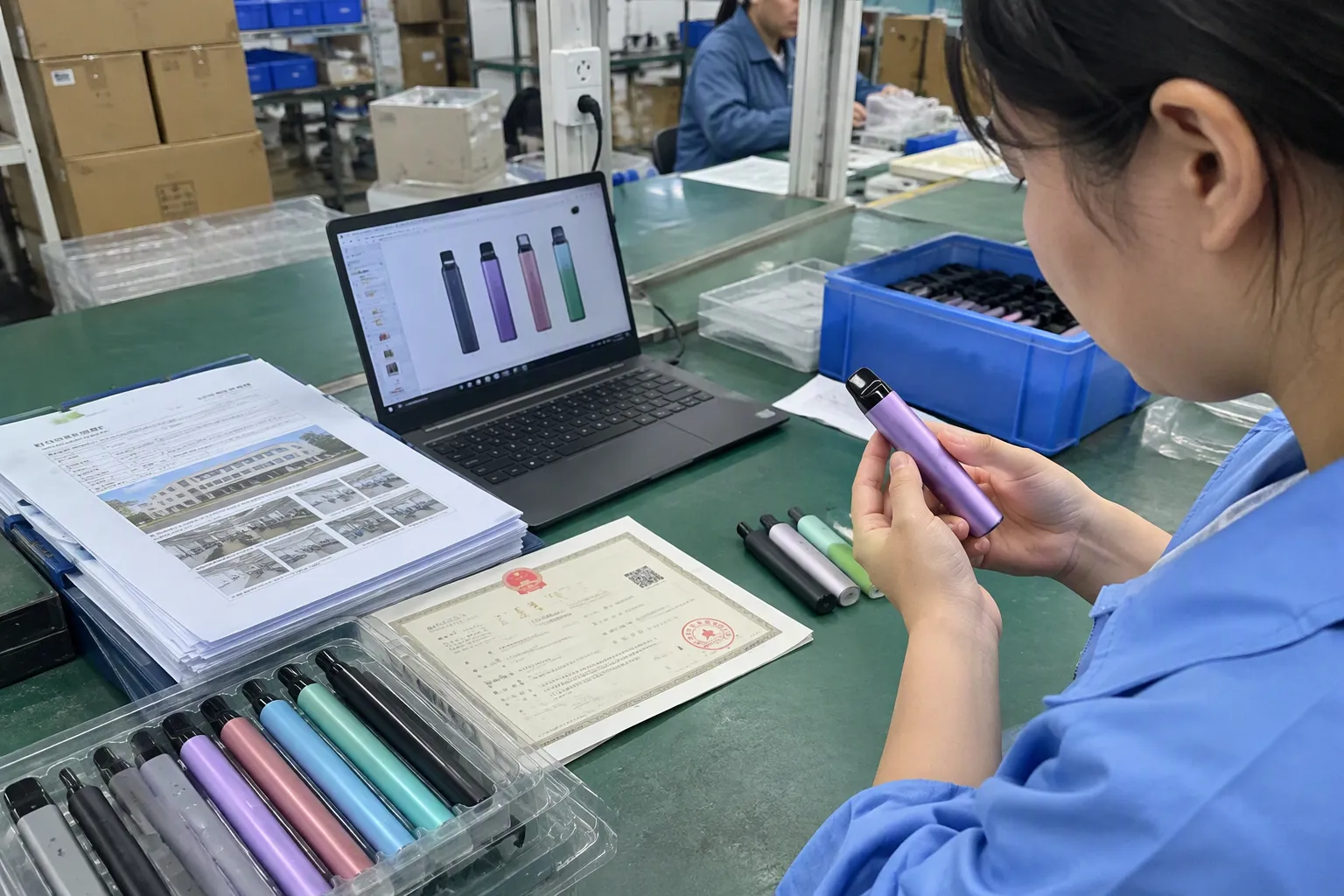
Many importers and regional wholesalers want to secure the next popular vape brand before competitors do. However, an exclusive agreement can also tie up cash, sales channels, warehouse space, and customer trust. I have seen buyers ask about these risks only after placing the first order. A structured evaluation helps them ask the right questions earlier.
The risk is simple: a brand may look successful but still fail to support a distributor after the first shipment. A buyer may receive attractive prices, strong promises, and a wide catalogue, then face slow replenishment, inconsistent production, unclear warranty handling, or competition from other sellers.
I evaluate a vape brand by separating the opportunity into six areas: market demand, product suitability, compliance readiness, supply continuity, distributor support, and enforceable exclusivity. I then compare the expected commercial return with the buyer’s worst-case exposure. The agreement should protect the distributor’s investment instead of relying only on verbal promises.
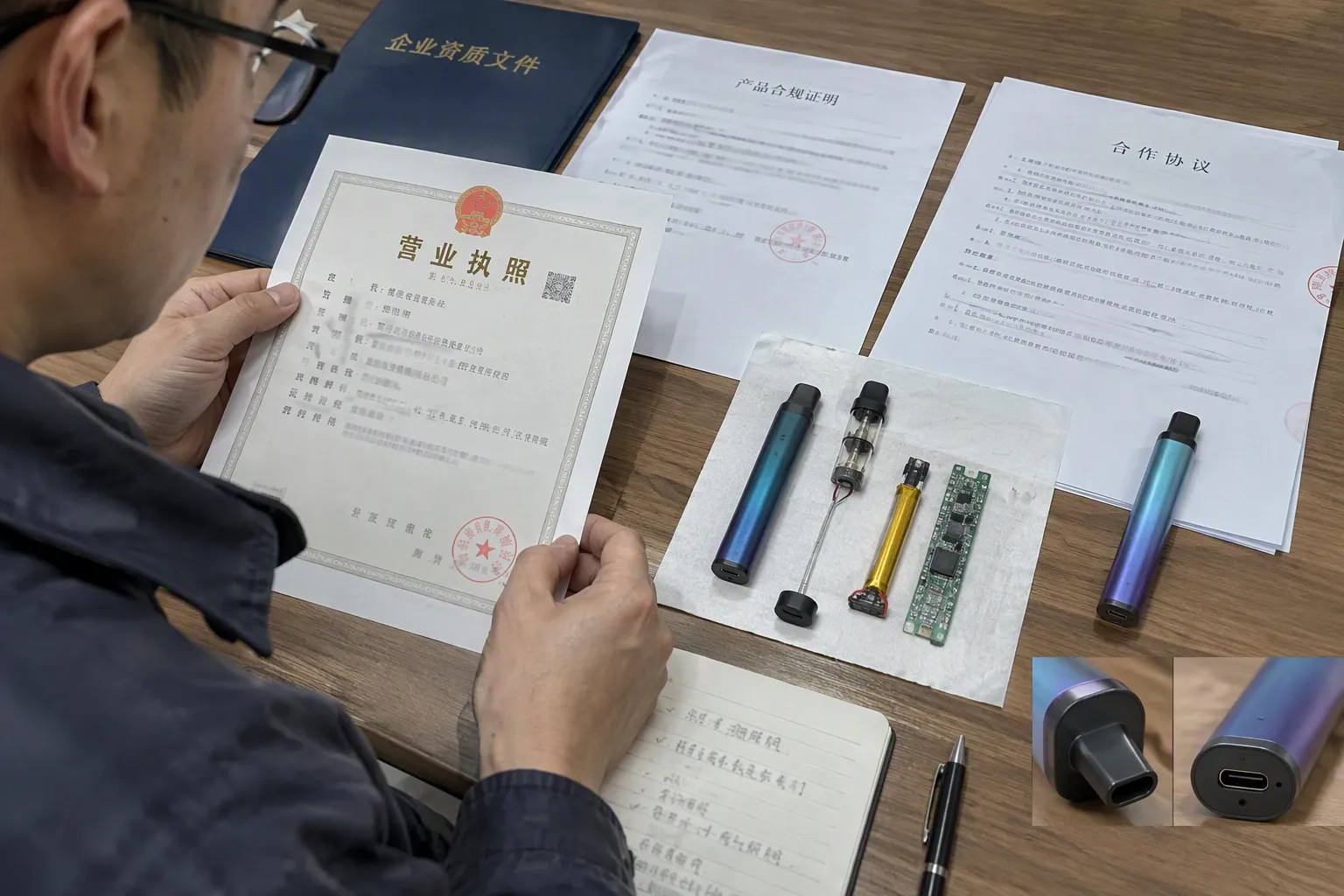
A distributor does not need to reject every new or unproven brand. New brands can offer useful opportunities when they have a clear product position and a realistic operating plan. However, I would not treat exclusivity as a reward for being an early buyer. I would treat it as a commercial risk-sharing arrangement.
- Initial inventory.
- Local warehousing.
- Sales staff and product training.
- Retailer introductions.
- Marketing materials.
- Demonstration stock.
- Customer service.
- Local compliance review.
- Working capital for replenishment.
- The reputation of the distributor’s own business.
The brand owner may also expect the distributor to meet minimum purchase targets or launch deadlines. Those conditions can be reasonable, but they should match the brand’s ability to supply products and support sales. If the buyer carries most of the risk while the brand keeps the freedom to appoint other sellers, the agreement is not balanced.
I would begin by defining exactly where and how the brand should sell. “The market” is too broad for a useful evaluation. A product may suit vape shops but not convenience stores. It may attract experienced users but not occasional buyers. A product that gains attention in one country may face a different price structure, legal position, or customer preference in another.
- Which country or territory will the distributor cover?
- Which channels will sell the products?
- Which customer group will buy them?
- What price level can the channel support?
- Is the goal fast turnover, premium positioning, repeat purchase, or brand building?
- What competing products already have shelf space?
- What evidence supports the expected demand?
A wholesaler supplying vape shops may value flavour range, product education, replacement availability, and rapid replenishment. A distributor supplying convenience stores or gas stations may need simple product selection, clear packaging, reliable barcodes, stable pricing, and uncomplicated staff training. A regional importer may need a more complete portfolio, private-label options, and predictable container or pallet planning.
The distributor should also distinguish between initial interest and repeat demand. A new product can receive attention because of its appearance, launch campaign, or novelty. That attention does not prove that retailers will reorder it. Before accepting exclusivity, I would ask the brand owner for documented information about its current sales channels, production history, product lifecycle, and reorder pattern. If the owner cannot provide appropriate evidence, I would use a smaller test order rather than a large exclusive commitment.
I would assess every proposed product against the distributor’s current customer base. The evaluation should cover more than design and wholesale price.
| Evaluation area | Questions for the distributor |
|---|---|
| Customer fit | Which stores or buyers are most likely to accept this product? |
| Price position | Can the product reach a workable retail and wholesale price after freight, duties, taxes, storage, and service costs? |
| Product use | Can retailers explain operation, charging, maintenance, and safe handling clearly? |
| Differentiation | Does the product offer a meaningful reason for a store to replace an existing item? |
| Replenishment | Can the brand maintain the variants that customers actually request? |
| Packaging | Does the packaging support the intended channel and local requirements? |
| Product lifecycle | Will the product remain available long enough to justify launch investment? |
| Service burden | How will the distributor handle faults, returns, and customer questions? |
I would be especially careful with a catalogue that contains many models but no clear priority products. A large catalogue can create choice, but it can also spread the distributor’s inventory across too many slow-moving items. I prefer to identify a small launch range, define the role of each item, and agree on a replenishment plan before expanding the range.
A product sample can show appearance and basic operation. It cannot prove that every future batch will perform in the same way.[3] This distinction matters when the distributor’s reputation is attached to the brand.
I would request representative samples from normal production, not only specially selected demonstration units. I would compare:
- Exterior finish and assembly.
- Packaging and labelling consistency.
- Battery or charging information supplied by the manufacturer.
- Device operation across samples.
- Compatibility claims where relevant.
- Performance consistency during reasonable evaluation.
- Fault reporting and replacement procedures.
- Batch identification and traceability documents.
I would not describe a supplier as reliable merely because it owns a factory or presents itself as a manufacturer. Factory ownership can help with control and development, but it does not automatically prove stable quality, suitable testing, or good after-sales service.[4]
A supplier should explain which quality-control stages it uses. The buyer can ask about incoming-material checks, production inspection, finished-product inspection, sample retention, and complaint analysis. The buyer should also ask whether quality records are available for the products under discussion. Any certification or test document should be checked for scope, validity, issuing organisation, and connection to the actual product. I would recommend independent technical or compliance review when the product or market requires it.
Regulatory evaluation must be local and product-specific.[5] Rules can differ between countries, product categories, nicotine levels, packaging formats, advertising channels, battery requirements, waste obligations, and import procedures.[1] I would never accept a general statement such as “the product is compliant everywhere.”
The distributor should identify the requirements that apply to the exact destination and product. These may include, depending on the market:
- Product registration or notification.
- Nicotine and ingredient restrictions.
- Packaging and warning requirements.
- Language requirements.
- Child-resistant or tamper-related requirements.
- Electrical and battery obligations.
- Waste, recycling, or producer-responsibility duties.
- Customs documentation.
- Marketing and age-restriction rules.
- Restrictions on flavours, claims, or online promotion.
The buyer should ask the brand owner to provide supporting documents rather than broad assurances. Those documents may include product specifications, ingredient information where relevant, test reports, declarations, packaging files, and supply-chain records. The buyer should have current local rules reviewed by a qualified compliance professional, lawyer, testing organisation, or regulatory adviser before importing or selling.
For European and American buyers, I would also avoid treating “EU” or “USA” as one simple regulatory market.[2] Requirements can differ by country, state, or product classification. A distributor that sells across several territories needs a compliance map for each intended destination.
A distributor may win retailer interest quickly, but the relationship can suffer if the next shipment arrives late or contains different products.[6] I would therefore evaluate supply continuity before accepting minimum purchase obligations.
- What is the normal production lead time?
- What is the lead time during peak periods?
- Which components create the greatest supply risk?
- Does the factory maintain regular stock of key parts?
- What is the planned monthly capacity for the selected products?
- How does the factory prioritise existing distributors?
- What happens when a model is discontinued?
- Can the brand give advance notice of product changes?
- How are urgent replenishment orders handled?
- Which shipping documents will the supplier provide?
- What happens if a shipment is delayed, inspected, or held by customs?
I would not use a supplier’s stated production capacity as a guaranteed delivery promise.[7] Capacity may refer to theoretical output, multiple product lines, or a different production schedule. The distributor should connect capacity to the exact models, quantities, packaging, and delivery dates in the agreement.
A practical test involves ordering a limited quantity and recording the complete process. I would measure communication speed, sample approval, production timing, packing accuracy, document preparation, and response to changes. This process will not eliminate risk, but it can reveal how the supplier operates before the buyer commits heavily.
After-sales service is a commercial issue, not merely a factory issue.[8] Retailers usually expect the wholesaler or distributor to provide an answer. If the distributor must negotiate separately with the factory for every complaint, the cost can grow quickly.
- What qualifies as a defect.
- How the buyer reports a problem.
- Which evidence is required.
- How quickly the brand responds.
- Whether replacement units, credit, refunds, or parts are available.
- Who pays relevant service or return costs.
- How the parties handle repeated faults.
- How the brand investigates a batch-level problem.
- What happens when the product has been discontinued.
- Whether the policy applies to all products or only selected models.
The policy should also define responsibilities between the brand, distributor, retailer, and end customer. For example, a product-use complaint may result from incorrect instructions, unsuitable charging equipment, storage conditions, shipping damage, or a manufacturing fault. The parties should agree on a practical investigation method rather than assigning blame after the problem occurs.
I would recommend that the distributor keep records of batch numbers, shipment quantities, reported faults, customer explanations, and resolutions. These records help identify patterns. They also give the distributor evidence when requesting corrective action or replacement stock.
From my supply-chain discussions with importers and wholesalers, I know that buyers often focus on the purchase price first and service workload later. I would calculate the expected cost of handling complaints, including staff time, replacement inventory, freight, retailer communication, and possible loss of trust. A low unit price may not remain attractive when the distributor carries an unclear service obligation.
The word “exclusive” has little value if the agreement does not define what it protects. I would ask the brand owner to put the commercial arrangement in writing before any launch investment.
| Contract topic | What should be defined |
|---|---|
| Territory | Countries, states, regions, or postal areas covered |
| Channels | Vape shops, wholesalers, online sales, convenience stores, marketplaces, and other channels |
| Product scope | Exact models, variants, accessories, and future products |
| Existing accounts | Customers or sellers that are excluded from the territory |
| Online rights | Website sales, marketplaces, social-commerce channels, and cross-border orders |
| Performance terms | Minimum purchases, sales targets, launch deadlines, and review periods |
| Brand obligations | Supply, marketing materials, training, documentation, and service support |
| Price policy | Wholesale pricing, price changes, promotions, and notice periods |
| Breach rules | Remedies if the brand appoints another seller or sells directly |
| Termination | Notice periods, stock handling, outstanding orders, and customer communication |
| Dispute process | Applicable law, jurisdiction, and escalation procedure |
I would pay close attention to online sales. A distributor may receive physical territory protection while the brand continues selling directly to customers in that territory through its website or third-party platforms. The contract should explain whether direct sales are prohibited, permitted under agreed terms, or assigned to the distributor.
I would also clarify whether exclusivity depends on minimum performance. Performance conditions are common, but they should be realistic and linked to supply availability. If the brand misses delivery commitments, changes product specifications, or fails to provide required documents, the distributor should not automatically lose protection for missing a sales target.
Verbal promises can support a relationship, but I would not treat them as sufficient market protection. A qualified legal professional should review the agreement before signature, especially when the distributor will invest substantial inventory or marketing resources.
Many exclusive distribution discussions begin with a margin calculation. I would begin with a risk calculation instead. The buyer needs to understand how much could be lost if the product sells slowly, arrives late, or becomes difficult to import.
- Product purchase cost.
- Freight and insurance.
- Customs duties, taxes, and clearance charges.
- Testing, registration, or professional review.
- Warehouse costs.
- Local delivery costs.
- Sales commissions.
- Marketing and launch materials.
- Retailer discounts and promotional allowances.
- Warranty replacements.
- Returns and disposal.
- Financing or cash-flow costs.
- Currency movement.
- Unsold inventory.
- Expected case: The product reaches the planned channel and sells at the expected pace.
- Slow case: Sales take longer and the distributor needs more working capital.
- Delay case: Replenishment arrives late and retailers move to alternatives.
- Complaint case: The distributor must replace a meaningful number of units.
- Regulatory case: The product requires relabelling, additional review, or temporary suspension.
- Termination case: The relationship ends while stock remains in the warehouse.
I would avoid inventing defect rates or sales forecasts when the buyer has no reliable evidence. The distributor can use its own historical data from comparable products, but it should label assumptions clearly. A small controlled launch may provide better information than a large forecast built on enthusiasm.
A smaller regional wholesaler may need a different arrangement from a large importer with several warehouses. I would not recommend the same purchasing model to both.
For a small or medium buyer, a trial arrangement can reduce exposure. The buyer may prefer:
- A limited territory at first.
- A short evaluation period.
- A modest minimum order.
- A small initial product range.
- Clear reorder access.
- A review before full exclusivity.
- Warehouse delivery from a nearby stock location when available.
For a larger importer or established distributor, direct bulk importing may offer better unit economics and more control over product selection. That buyer may also consider OEM or ODM development, provided it has the compliance, forecasting, quality, and after-sales resources to manage a private-label programme.
The purchasing route should match cash flow and sales speed. A buyer that needs fast replenishment for small orders may value an overseas warehouse. A buyer that can plan larger imports may prioritise factory pricing and production planning. Neither route is automatically better. The correct choice depends on volume, territory, product risk, and working-capital tolerance.
In my own work with importers and wholesalers, I often explain that one-stop sourcing can reduce the administrative burden of dealing with multiple brands and factories. However, convenience should not replace due diligence. A consolidated supplier should still provide product-level documents, clear service terms, and transparent responsibility for each brand and model.
The distributor should investigate the supplier behind the brand. I would review the company’s business history, manufacturing role, agency rights, product development capability, export process, and service structure.
- A brand owner.
- A factory.
- A first-tier brand agent.
- A trading company.
- A combination of manufacturing and distribution.
- A sourcing coordinator for several factories.
Each model can work, but the buyer should understand who controls production, who issues documents, who handles complaints, and who can approve product changes.
For example, Shenzhen Kingfuji Tech. Co., Ltd. describes its business as a combination of manufacturing and trade. The company was established in 2011 in Shenzhen and states that it operates a 5,000-square-metre factory, maintains OEM/ODM capabilities, and introduces approximately 5–10 new products each month. It also states a maximum monthly capacity of up to 5 million units. I would treat these as supplier-provided business details that buyers should verify directly, rather than as independent proof of suitability.
The same principle applies to brand agency claims, warehouse availability, delivery services, compensation policies, and after-sales promises. A buyer should request written terms and confirm which entity is responsible. The buyer should also clarify whether a warehouse holds the exact selected models and whether the stock is available for the intended destination.
A supplier that can combine several brands and product categories may help a wholesaler simplify procurement. The buyer may source electronic cigarettes, disposable vapes, atomizers, 510 batteries, CBD batteries, vaporizers, grinders, glass pipes, and related products through one purchasing relationship. However, each product still requires its own commercial and compliance assessment. A broad catalogue is useful only when the supplier can manage product information and service consistently.
I would use the following sequence before accepting exclusive distribution rights:
I would record the market, customer segment, channels, product range, target price, expected order size, and reason the brand may fit. I would separate verified information from assumptions.
I would collect product specifications, available test or compliance documents, packaging files, production information, warranty terms, company details, references where appropriate, and a draft distribution agreement.
I would evaluate samples, packaging, instructions, communication, sample fulfilment, production timing, and document accuracy. I would also ask a qualified professional to review market-specific obligations.
I would use a limited order or agreed pilot period where possible. I would track sell-through, retailer feedback, product questions, complaints, replenishment time, and the supplier’s response.
I would define territory, channels, online rights, performance terms, supply obligations, service rules, and breach remedies in writing.
I would compare the expected return with the slow-sales, delay, complaint, regulatory, and termination scenarios. I would then decide whether to proceed, renegotiate, test further, or decline.
This method may take more time than accepting a verbal offer. However, it gives the distributor a clearer basis for committing inventory and channel resources.
Is exclusive distribution always better than buying from several suppliers?
No. Exclusive distribution may provide stronger brand focus and territory protection, but it can also increase dependence on one supplier. A multi-supplier strategy may provide more product choice and reduce interruption risk. The right model depends on market demand, supply reliability, contract quality, and the distributor’s resources.
What documents should I request before accepting vape distribution rights?
I would request company information, product specifications, available test or compliance documents, packaging and labelling files, warranty terms, production and lead-time information, pricing, shipping terms, and a written distribution agreement. Local requirements should be reviewed with a qualified professional because documents differ by product and destination.
I would begin with a controlled product evaluation and, where commercially possible, a limited launch. I would track product quality, retailer response, sell-through, communication, delivery performance, replenishment, and complaint handling. The trial terms should explain whether the buyer has any future priority or territory rights.
The agreement should define the territory, channels, products, online rights, existing accounts, performance requirements, supply commitments, pricing rules, after-sales duties, breach consequences, termination procedures, and remaining-stock arrangements. A qualified lawyer should review the agreement before signature.
No. Factory ownership may support production control and product development, but it does not prove market fit, regulatory readiness, consistent quality, delivery performance, or effective after-sales support. I would evaluate the complete business system rather than relying on one company characteristic.
Can smaller European buyers use an overseas warehouse instead of importing directly?
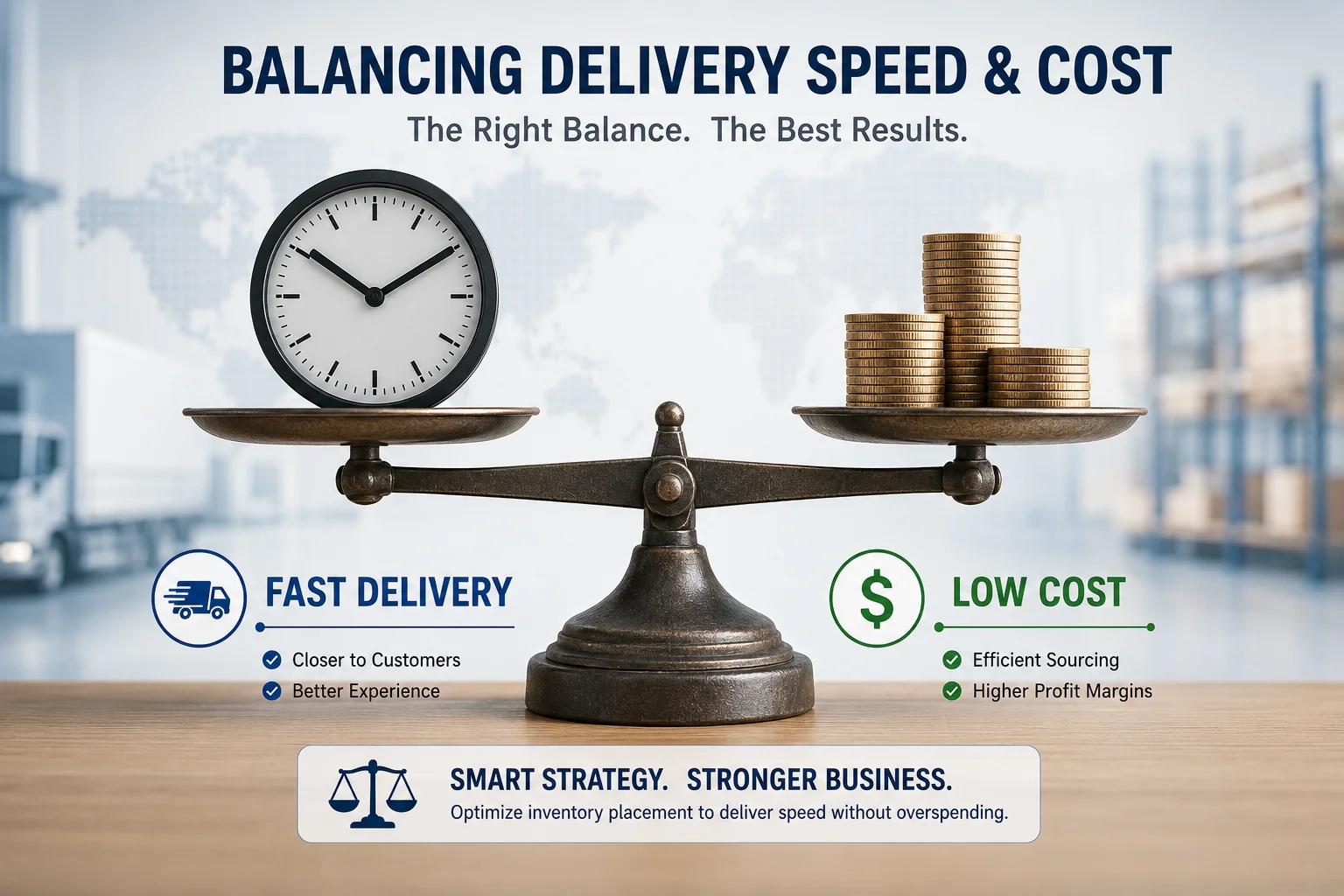
An overseas warehouse may help smaller buyers reduce order size, shorten delivery time, and avoid some of the operational burden associated with direct importing. However, the buyer still needs to verify product legality, documentation, stock status, tax treatment, and responsibility for after-sales service in the destination market.
To evaluate a vape brand before accepting exclusive distribution rights, I would look beyond design, popularity, factory ownership, and advertised margin. I would verify market fit, product consistency, local regulatory readiness, supply capacity, delivery performance, after-sales procedures, and written territory protection. I would also model the cost of slow sales, delays, complaints, and unsold stock before signing. At Shenzhen Kingfuji Tech. Co., Ltd., I support importers, wholesalers, and distributors with sourcing, OEM/ODM discussions, multi-brand procurement, and fulfilment options, but buyers should still complete their own commercial and professional checks. Contact King at info@kingvapecig.com or +86 13928420527 to discuss a structured sourcing or distribution evaluation.
Sources
- Tobacco: E-cigarettes", A comparative regulatory source supports the contextual point that electronic-cigarette requirements are jurisdiction-specific and may address multiple aspects of the product and its distribution
- E-Cigarettes Authorized by the FDA", Official regulatory materials document that electronic-cigarette obligations are not necessarily uniform across EU member states or across U.S. jurisdictions
- A perspective on Quality-by-Control (QbC) in pharmaceutical ...", Quality-control research explains that sample inspection provides limited information about a production process and cannot by itself guarantee uniform performance across all subsequent batches
- OECD Supply Chain Resilience Review", Supply-chain and quality-management research distinguishes manufacturing ownership from the separate capabilities required to control quality, validate products, and provide effective post-sale support
- Premarket Tobacco Product Applications for Electronic ...", Regulatory guidance establishes that compliance obligations are determined by the applicable jurisdiction and by the characteristics and legal classification of the product
- Examining collaborative buyer–supplier relationships ... - PMC", Empirical supply-chain research associates delivery reliability and consistent product quality with stronger buyer satisfaction and interorganizational relationship performance
- Number of Authorized Suppliers and Supplier Delivery ...", Operations research distinguishes nominal production capacity from effective output and delivery performance, indicating that a stated capacity figure alone does not establish a delivery commitment
- Product Performance Based Business Models: A Service ...", Research on service management treats post-sale support and warranty resolution as commercial factors that influence customer satisfaction, retention, and operating costs