
Pod systems are not simply devices that activate when a customer inhales. Pod systems combine a battery, control circuit, coil, e-liquid reservoir, airflow path, and activation method, and a poor match between these parts can create leakage, weak vapor, charging complaints, or unnecessary after-sales work. I help B2B buyers evaluate these relationships before they purchase or request OEM/ODM production.
Quick Answer
- Pod systems work by sending controlled battery power to a coil, which heats e-liquid and produces an aerosol that travels through the airflow path to the mouthpiece.[1]
- Buyers should evaluate battery capacity, power control, coil resistance, pod design, airflow, activation method, and e-liquid compatibility as one system.
- A specification such as “high mAh” or “low resistance” does not prove that a product is suitable for every user or market.
- Importers should verify supplier specifications, quality-control records, product samples, documentation, local regulations, transport requirements, warranty terms, and replacement arrangements.
- Small European buyers can consider low-MOQ stock from an overseas warehouse, while larger importers may benefit from bulk purchasing and OEM/ODM development from China.
The operating principle is straightforward, but procurement decisions are not. A buyer must connect technical design with the intended e-liquid, inhalation style, customer group, sales channel, and after-sales process. In the sections below, I will explain how the system works and how I would assess it before placing an order.
How Do Pod Systems Work as a Complete System?
Many buyers first describe pod systems as “inhale and the device works.” That description explains only the visible user action. It does not explain how power, sensing, heating, liquid delivery, and airflow interact. If one part is poorly matched, the final customer may experience a result that the product page did not predict.
The main operating stages
-
The battery stores electrical energy.
The battery supplies the energy required by the coil. Capacity is commonly expressed in milliampere-hours, or mAh, but capacity alone does not determine practical performance.[2] Power output, operating conditions, charging design, and user behavior also affect runtime. -
The control system manages activation.
A button-operated model activates when the user presses a button. An automatic model uses a draw sensor to detect airflow or pressure changes.[3] Some products combine both methods. The control board may also manage output limits, charging, short-circuit protection, over-discharge protection, and other functions.[4] Buyers should confirm which protections are actually included rather than assuming that every device has the same circuit design. -
The coil creates heat.
Electrical current passes through a resistive heating element.[5] The element becomes hot and transfers heat to e-liquid held in the wick or surrounding material. The coil resistance, applied power, coil geometry, and liquid supply affect the heating behavior. -
The wick or porous material supplies liquid.
The coil cannot work consistently if the liquid supply is too slow. If the liquid supply is interrupted, the coil may produce a dry or harsh result. If the liquid supply is excessive, the pod may gurgle, spit, or leak through the airflow channel. -
The airflow path carries the aerosol.
Air enters through designed openings, passes across or around the coil, and exits through the mouthpiece. Airflow influences draw resistance, perceived warmth, vapor volume, and the user’s overall experience.[6] A tight mouth-to-lung draw and a looser draw require different airflow decisions.
Why the chain matters to buyers
I often encourage buyers to stop reading specifications as isolated numbers. A 1,000 mAh battery may look attractive, but the buyer should ask how much power the device uses and whether the charging system suits the intended sales channel. A low-resistance coil may produce more vapor under the correct conditions, but it may not be suitable for a customer group that expects a tighter draw and lower consumption.
| Component | What it does | What the buyer should verify |
|---|---|---|
| Battery | Stores and supplies energy | Capacity, output behavior, charging method, protection features |
| Control board | Controls activation and power | Button or draw activation, cut-off, protection functions |
| Coil | Converts electrical energy into heat | Resistance, material, construction, replacement availability |
| Wick | Feeds e-liquid to the coil | Liquid compatibility and supply consistency |
| Pod reservoir | Holds e-liquid | Capacity, filling method, sealing, replacement arrangement |
| Airflow path | Controls the air reaching the coil | Draw style, adjustment range, condensation management |
| Mouthpiece | Delivers the aerosol to the user | Comfort, fit, cleanliness, and design consistency |
These relationships explain why a product sample should be tested with the intended consumable. A device that performs well with one pod or e-liquid formulation may not perform identically with another. I treat supplier specifications as an important starting point, not as a substitute for application-specific evaluation.
Which Pod System Specifications Affect the Buying Decision?
A specification sheet can make comparison easier, but it can also encourage buyers to choose products by headline numbers. Pod systems should be selected according to use case. The correct question is not “Which device has the biggest battery?” It is “Which combination of power, coil, airflow, capacity, and activation fits the users and channel I want to serve?”
Battery capacity and power
Battery capacity usually indicates how much electrical charge a battery can store. A larger capacity can support longer operation between charges, but the result depends on power consumption and usage frequency. A higher-output device can use energy more quickly than a lower-output device.
- Nominal battery capacity and test method.
- Rated output and whether output is regulated.
- Charging port and charging input.
- Approximate charging time under stated conditions.
- Cut-off and protection functions.
- Whether the battery is integrated or replaceable.
- Battery-related transport and safety documentation.
Coil resistance and power range
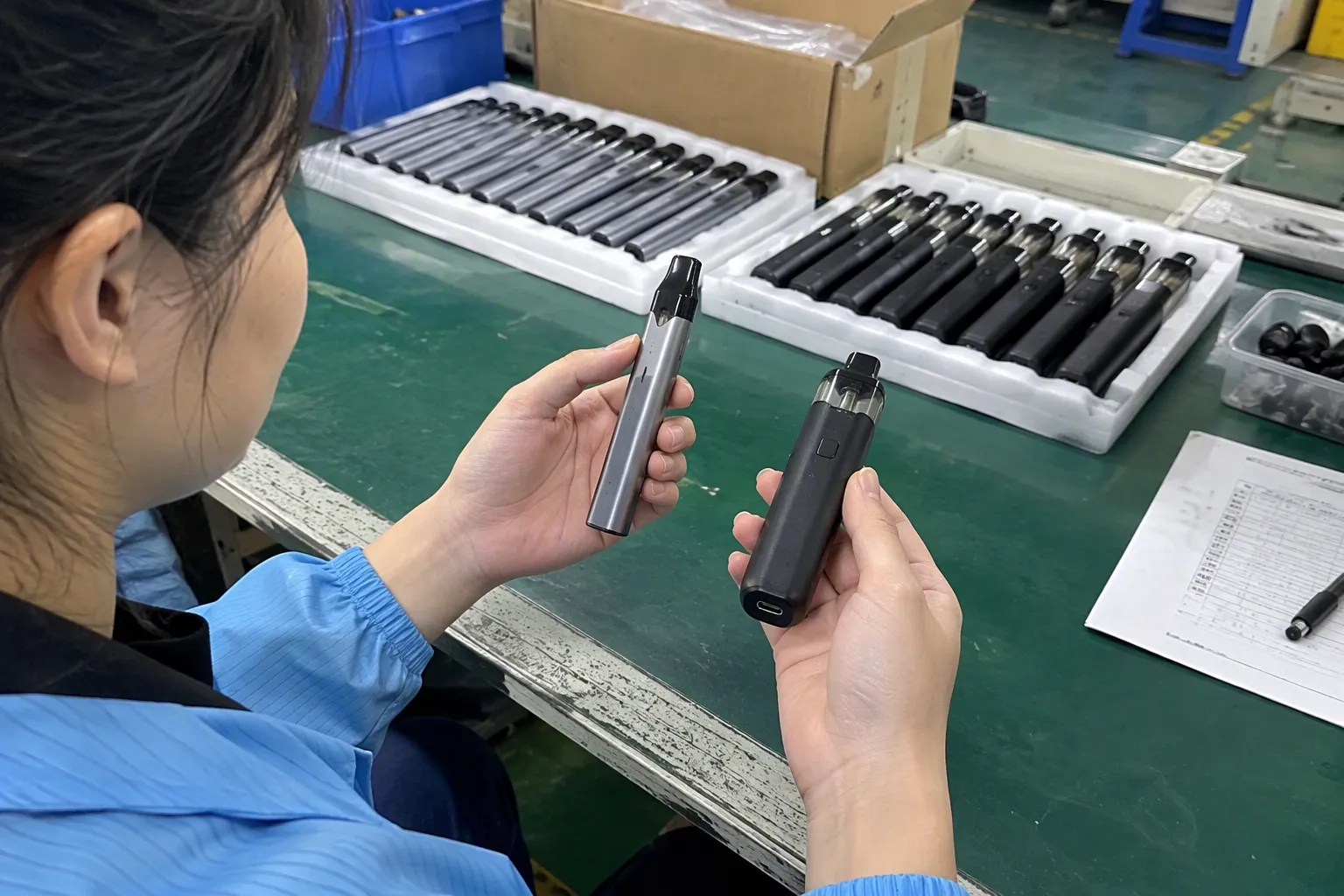
Resistance affects how the coil responds to electrical power. In general terms, a lower-resistance coil may operate at a higher power level, while a higher-resistance coil may suit a lower-power design. The actual outcome depends on the coil structure, airflow, e-liquid, wick, and control board.
Pod capacity and filling design
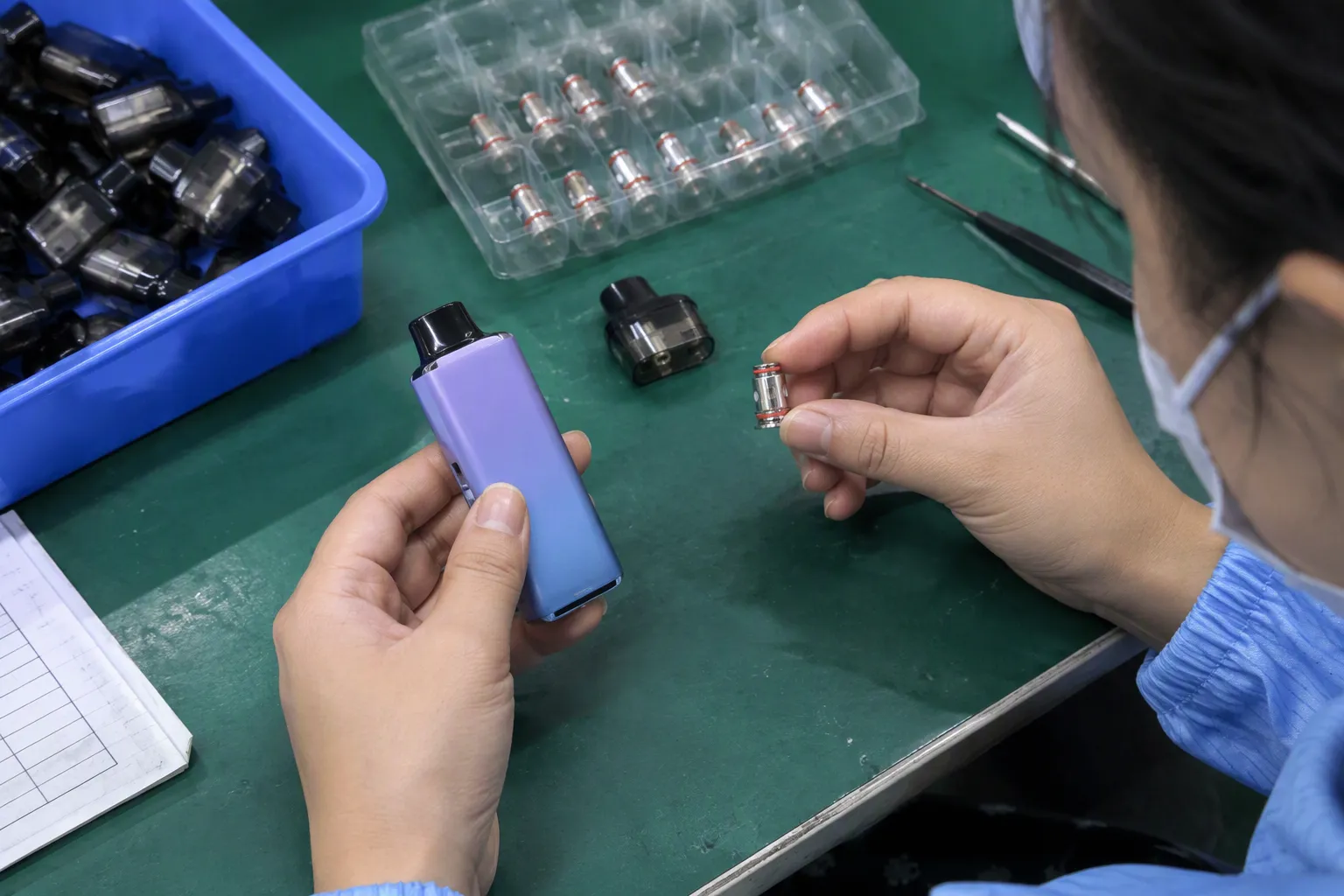
A larger pod capacity can reduce how often a user refills, but capacity may also affect product size, packaging, regulatory treatment, and transport considerations. A refillable pod requires a practical filling opening and a seal that can be checked during sample evaluation. A prefilled or closed pod requires a dependable replacement supply and clear SKU planning.
I recommend that buyers inspect the filling process personally during testing. The test should include opening, filling, closing, carrying, storing, and using the pod in the position expected during normal distribution. The buyer should record observations instead of relying on general claims such as “leak-proof.”
Draw activation and button activation
Automatic draw activation can make a device simple for customers who want a familiar inhalation action. Button activation can give the user more direct control. A dual-mode product may serve a broader group, but the additional functions can also create more instructions and more possible points of misunderstanding.
| Selection factor | Automatic draw activation | Button activation | Dual activation |
|---|---|---|---|
| User interaction | Simple inhalation action | Requires button use | Offers two methods |
| Procurement question | Sensor response and cut-off | Button durability and operation | Mode control and instructions |
| Potential channel fit | Customers seeking convenience | Experienced users or adjustable use | Broader positioning, if clearly explained |
| Verification need | False activation and sensitivity | Accidental activation and button feel | Function consistency and user guidance |
How Does E-Liquid Compatibility Affect Pod Systems?
E-liquid compatibility is one of the most important and most frequently overlooked issues in pod procurement. A pod, coil, and airflow design can be suitable for one type of liquid and less suitable for another. Buyers who change the liquid without testing the complete system may create complaints that appear to be device failures.
Viscosity and liquid delivery
E-liquid viscosity affects how quickly liquid moves through the wick and coil area.[7] A formulation that is relatively thick may require a liquid-delivery design that can supply it consistently.[8] A thinner formulation may move more easily through seals and airflow areas if the pod design is not properly matched.
Inhalation style
- Tighter mouth-to-lung use generally requires controlled airflow and a suitable lower-power coil configuration.
- Looser airflow may support a larger air volume and different vapor expectations.
- Frequent use places greater demands on battery runtime, liquid supply, charging, and replacement planning.
- Occasional use may make compact size and simple operation more important than maximum capacity.
Refillable, prefilled, and closed pod arrangements
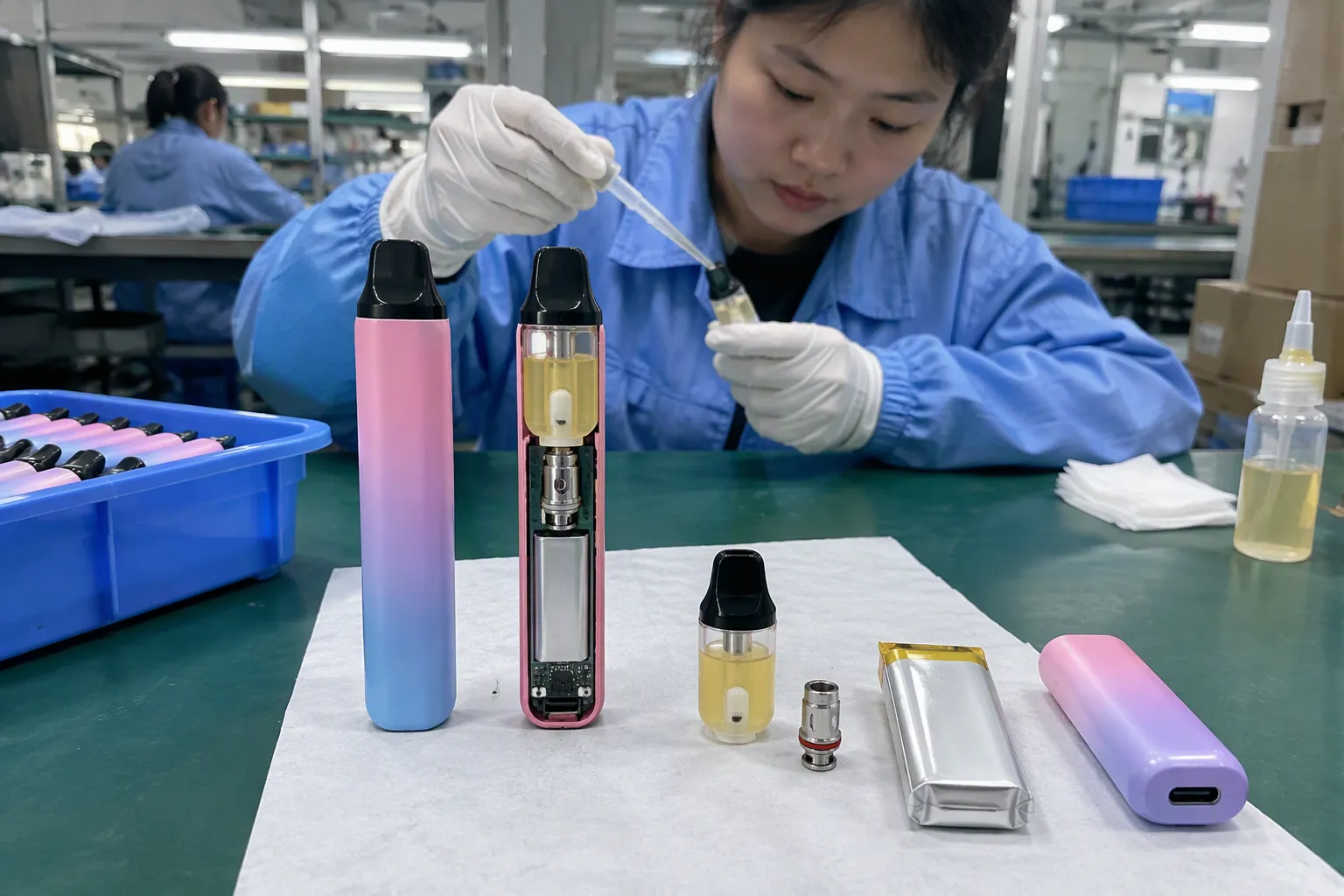
The commercial model affects procurement risk. A refillable pod may offer flexibility, but the buyer must provide clear filling instructions and plan replacement pod availability. A closed pod may simplify the customer experience, but the buyer depends on consistent supply of the matching pod format.
| Pod arrangement | Procurement advantages | Procurement risks to review |
|---|---|---|
| Refillable | Flexible liquid choices and reusable device | Filling errors, seal wear, compatibility complaints |
| Prefilled | Simple customer use and controlled liquid supply | Shelf-life, SKU planning, transport and regulatory review |
| Closed replacement pod | Easy replacement process | Dependence on matching pod supply and brand continuity |
| Replaceable coil pod | Potentially lower consumable cost | More user handling and greater instruction needs |
How compatibility reduces avoidable complaints
A customer may report “the pod is bad” when the real problem is unsuitable liquid, incorrect filling, long storage, an obstructed airflow path, or an incorrect replacement part. I do not assume that every complaint has the same cause. I prefer to collect the product batch, pod type, liquid details, storage conditions, charging behavior, and user instructions before deciding on a corrective action.
How Should Buyers Evaluate Pod System Quality Before Ordering?
Buyers should verify the product design, sample performance, production quality controls, documentation, packaging, replacement supply, warranty scope, and complaint process before committing to a commercial order. Certifications and test reports should be treated as documents to inspect and verify, not as automatic proof of suitability.
A practical pre-order checklist
1. Confirm the product identity
2. Review technical documents
- Product specification sheet.
- User instructions and warning information.
- Battery and charging information.
- Material or component information where relevant.
- Quality-control inspection records.
- Applicable test reports or declarations.
- Packaging and labeling information.
- Replacement pod or coil information.
3. Test the complete product
- Charging and operating the device.
- Testing the activation method repeatedly.
- Checking pod installation and removal.
- Filling or replacing the pod.
- Testing the intended e-liquid.
- Observing draw consistency.
- Inspecting condensation and leakage during storage.
- Checking the mouthpiece and packaging.
- Testing the product after transport simulation where possible.
4. Understand factory quality controls
My company, Shenzhen Kingfuji Tech. CO., Ltd., combines supply-chain sourcing with our own manufacturing and OEM/ODM capability. Our own facility is approximately 5,000 square meters, and our stated maximum production capacity is up to 5 million units per month. I present those figures as business information for buyers to verify during their own supplier assessment, not as a substitute for an audit.
Common quality questions
| Buyer concern | Useful verification question |
|---|---|
| Inconsistent activation | How does the production line test draw sensors or buttons? |
| Pod leakage | Which sealing points are inspected, and under what conditions? |
| Charging complaints | What charging and protection tests are performed? |
| Variation between batches | How does the factory control components and approved samples? |
| Replacement problems | Will replacement pods or coils remain available for the planned sales period? |
| Warranty disputes | What evidence does the supplier require, and what remedy is offered? |
Why after-sales planning belongs in quality evaluation
Quality is not only a factory issue. A buyer also needs a workable process for identifying and resolving problems. My business provides unified after-sales support for products purchased through us, so a buyer does not need to coordinate separately with several brands or factories. The exact compensation, replacement, and evidence process should still be written into the order agreement.
I can also support video verification of goods before shipment. I can arrange delivery to the buyer’s own freight forwarder when requested, or I can discuss door-to-door arrangements. Buyers should review these services in writing, including exclusions, evidence requirements, and the treatment of customs or transport events.
Which Pod Systems Fit Different B2B Sales Channels?
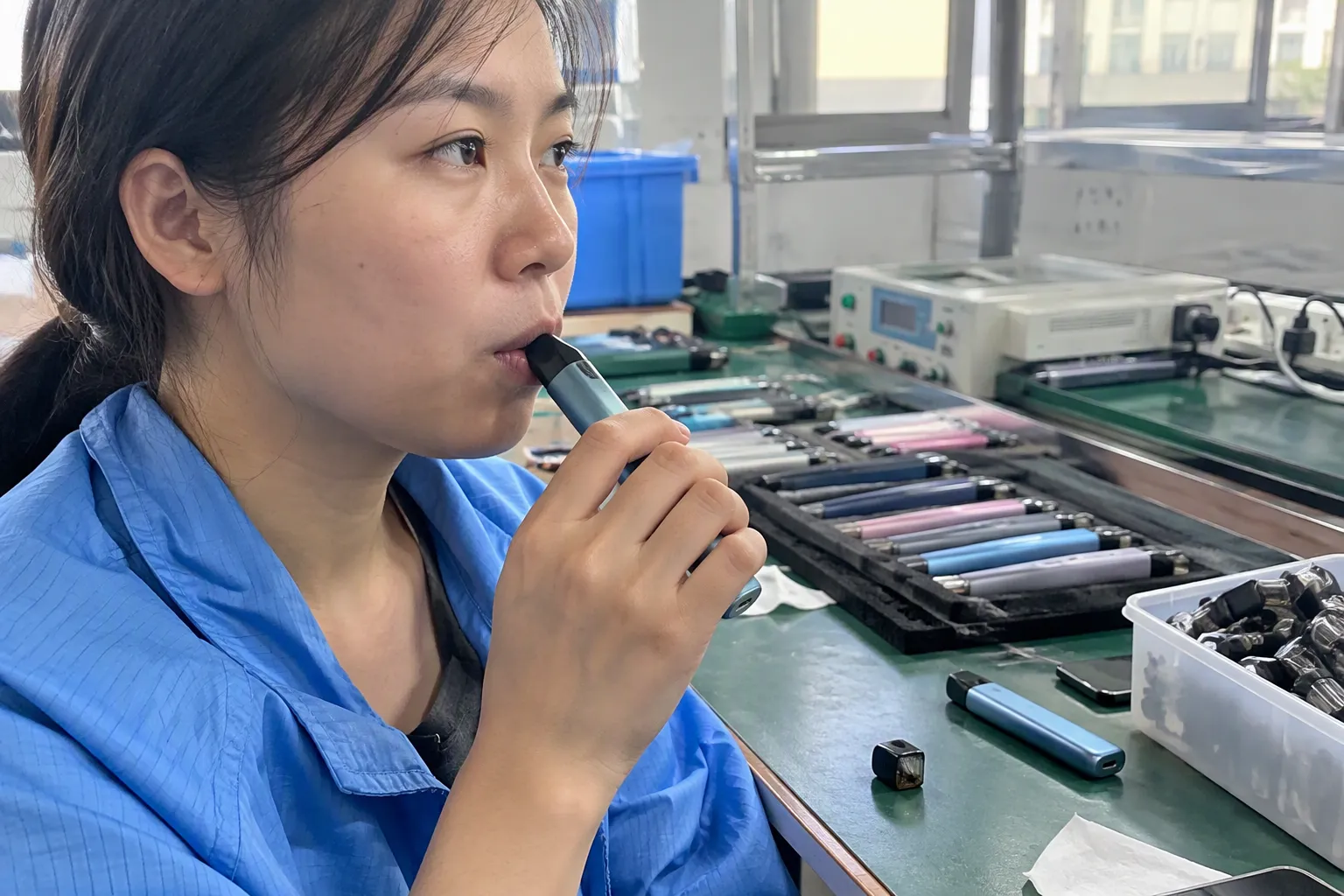
A pod system that fits a specialist vape shop may not be the right product for a convenience-store chain, gas-station distributor, or mixed general-goods wholesaler. Each channel has different customer knowledge, shelf space, purchasing frequency, instruction requirements, and tolerance for returns.
The best pod system depends on the buyer’s customer base, sales channel, order size, cash-flow needs, local compliance requirements, and ability to explain or support the product. Small buyers may prioritize low MOQ and quick delivery, while larger importers may prioritize unit economics, continuity, and customization.
Small and medium buyers
I operate European overseas warehouse arrangements with stock in locations including Germany, Austria, Poland, and Belgium. Available products can be shipped through services such as DHL, DPD, UPS, or FedEx, with stated delivery estimates of approximately one to five working days for eligible European orders. Actual availability, destination, carrier performance, and local requirements must be confirmed for each order.
Larger importers and distributors
- Private-label packaging.
- Brand-specific colors and finishes.
- Customized pod or battery configurations.
- Product development based on a new specification.
- Mold development when the commercial conditions support it.
- OEM/ODM production planning.
- Consolidated shipment across several product categories.
My company adds approximately five to ten new products each month according to our business plan and has experience supporting OEM/ODM projects. I still advise buyers to approve a golden sample, written specification, packaging artwork, inspection standard, and change-control process before mass production.
Comparing procurement routes
| Procurement route | Best fit | Main benefit | Main point to verify |
|---|---|---|---|
| European warehouse | Small and medium buyers needing speed | Lower MOQ and faster regional delivery | Stock, model availability, local compliance |
| Direct China shipment | Larger importers and distributors | Volume pricing and broader selection | Lead time, customs, documents, inspection |
| OEM/ODM | Buyers building a differentiated offer | Branding and product customization | Development cost, tooling, approval, continuity |
| Multi-brand sourcing | Buyers needing a broad catalogue | One purchasing contact for many categories | Brand authorization and warranty boundaries |
I provide a one-stop sourcing model across electronic cigarettes, pod systems, disposable products, atomizers, 510 batteries, CBD batteries, vaporizers, grinders, glass pipes, and related smoking accessories. Buyers should still assess whether each product category is legal and commercially appropriate in the destination market.
How Can One Supplier Reduce Procurement and Logistics Complexity?
A buyer who purchases several brands and product categories may spend substantial time comparing quotations, coordinating factories, checking documents, arranging freight, and handling separate after-sales cases. A one-stop supplier can reduce that coordination burden, but the buyer should evaluate the supplier’s actual process rather than relying on the phrase “one-stop service.”
A capable one-stop supplier can consolidate product selection, sourcing, quality communication, shipping coordination, and after-sales handling. Buyers should confirm inventory status, brand authorization, delivery terms, customs responsibilities, and the written remedy process before ordering.
One contact for multiple product needs
My business was established in Shenzhen in 2011. Shenzhen is a major electronics and vaping supply-chain location, and our work is based in this manufacturing and logistics environment. We represent and source a broad range of branded and unbranded vaping and smoking-related products. Many regular items are held in stock because accumulated customer demand supports recurring purchasing.
For a buyer, the practical value is not simply access to a large catalogue. The value is the ability to compare products through one commercial contact and consolidate suitable items into a purchasing plan. If a requested product is not in the current catalogue, I can help identify an alternative or discuss new product development. Mold development requires a separate feasibility and commercial assessment.
Delivery and customs risk
No supplier should treat these as identical. I can discuss door-to-door delivery and, where agreed, customs-related compensation arrangements. The specific terms must be documented for the destination, product, transport method, and order. A buyer should independently confirm import rules and use qualified customs or legal professionals for application-specific decisions.
For European buyers, warehouse dispatch may avoid some China-to-Europe transit delays, but it does not remove the need to comply with local product and sales rules. For buyers importing directly, I recommend planning for seasonal congestion, customs inspection, document review, and possible delivery variation.
External compliance resources
Regulatory requirements vary significantly. Buyers should consult authoritative sources, including the U.S. Food and Drug Administration tobacco product resources for the United States and the European Union Tobacco Products Directive for the relevant EU framework. Buyers should also check national implementation rules, because market requirements can differ between countries.
When Should Buyers Choose OEM or ODM Pod Systems?
Start with the commercial problem
- A private brand for local wholesale customers.
- A product format that fits a specific sales channel.
- A different battery or pod arrangement.
- Packaging that supports a clearer customer explanation.
- A consolidated product line with consistent accessories.
- A new product concept that is not currently available.
A practical OEM/ODM workflow
- Market brief: The buyer defines the target users, country, channel, price range, and expected volume.
- Technical brief: The buyer and supplier define battery, power, pod, coil, airflow, activation, charging, and packaging requirements.
- Sample stage: The buyer tests representative samples and records changes.
- Compliance review: The buyer verifies required documents and market obligations.
- Cost and tooling review: The parties confirm mold, development, packaging, MOQ, and payment terms.
- Golden sample approval: The buyer approves a reference sample for production comparison.
- Mass production: The supplier follows the agreed inspection standard.
- After-sales plan: Both sides define evidence, response time, replacement, credit, and responsibility.
Frequently Asked Questions
How do pod systems produce vapor?
Pod systems use battery power to heat a coil. The coil receives e-liquid through a wick or porous material, and the heated liquid becomes an aerosol. Air enters through the airflow path and carries the aerosol through the mouthpiece. The exact result depends on power, coil design, liquid, airflow, and user behavior.
Are higher-mAh pod systems always better?
No. A higher battery capacity may support longer use between charges, but it can also increase device size, charging requirements, and cost. Buyers should compare capacity with power consumption, intended usage frequency, charging design, product dimensions, and the expectations of the target customer.
Can every e-liquid be used in every pod system?
No. E-liquid viscosity, formulation, and usage conditions can affect wicking, draw quality, condensation, and leakage risk. Buyers should test the exact or commercially representative liquid with the intended pod and coil. Suppliers should provide compatibility guidance, but buyers should verify it through application testing.
What should a wholesaler check before ordering pod systems?
A wholesaler should check the exact model, battery and coil specifications, pod compatibility, activation method, charging design, documents, sample performance, packaging, quality controls, replacement supply, warranty terms, shipping plan, and local regulatory requirements. The wholesaler should also confirm whether the mass-production product will match the approved sample.
Is overseas warehouse stock suitable for every B2B buyer?
Overseas warehouse stock can suit small and medium buyers who value lower MOQ and faster delivery. Direct China shipment may suit larger importers seeking volume pricing or OEM/ODM production. Buyers should confirm stock, destination, delivery estimate, applicable documents, product eligibility, and commercial terms for every order.
Conclusion
Pod systems work through the interaction of battery power, control electronics, coil resistance, e-liquid delivery, pod construction, airflow, and activation. I encourage buyers to evaluate that complete system instead of selecting products by one attractive specification. Importers, wholesalers, vape shops, smoke shops, convenience-store distributors, and gas-station suppliers can choose between low-MOQ overseas stock, direct China purchasing, and OEM/ODM development according to their volume and cash-flow needs. I invite qualified B2B buyers to contact Shenzhen Kingfuji Tech. Co., Ltd. at KingVapeCig.com, email info@kingvapecig.com, or WhatsApp/mobile +86 13928420527 to discuss product selection, documentation, sourcing, warehouse stock, and a procurement plan suited to their market.
Sources
- Multisystem Toxicity of E-Cigarettes in Preclinical and Clinical ...", A technical review of electronic cigarettes describes devices as using electrically powered heating elements to generate an inhalable aerosol from an e-liquid formulation, with airflow carrying the aerosol toward the mouthpiece
- DOE-HDBK-1084-95; Primer on Lead-Acid Storage Batteries", Battery-engineering guidance explains that ampere-hour capacity must be interpreted together with voltage, discharge rate, load, and operating conditions; consequently, nominal mAh alone does not establish operating runtime
- Photometric Monitoring of Electronic Cigarette Puff Topography", Device-characterization literature identifies puff-activated electronic cigarettes as using pressure- or airflow-sensitive sensors to initiate heating during inhalation
- Electronic cigarette device-related hazards: a call for ... - PMC", Battery-safety guidance describes protection circuitry as a means of controlling charging and limiting hazardous conditions such as over-discharge, overcharge, and short circuits in lithium-ion systems
- Effects of Manufacturing Variation in Electronic Cigarette Coil ...", Research on electronic-cigarette operation describes the coil as a resistive heating element in which electrical energy is converted to heat, causing the e-liquid supplied to the coil to form an aerosol
- E-Cigarette Airflow Rate Modulates Toxicant Profiles and Can ...", Experimental studies of electronic-cigarette operation report that airflow conditions influence pressure drop and aerosol-generation characteristics, which can affect perceived draw and warmth
- Elemental composition of vaping and smoking aerosols - PMC", Studies of electronic-cigarette liquids indicate that viscosity and formulation affect liquid transport to the heating element and can therefore influence aerosol generation and operating behavior
- physiochemical characterization of reference e-liquid - PMC", Experimental research indicates that higher-viscosity e-liquid formulations can alter wicking and liquid replenishment at the coil, making liquid-delivery performance dependent on the formulation and device design