
Quick Answer
A retailer launch packet for a new vape product should solve a common problem from the first order: buyers receive attractive photos and a price, but staff still do not know how to explain, sell, support, or reorder the product. I use a practical packet to reduce confusion, prevent avoidable misuse[1], and help each buyer judge whether the product fits the local market. **A retailer launch packet should include the product identity, specifications, packaging, ordering terms, operating guidance, selling points, FAQs, support procedures, available documentation, and launch-ready images.
It should help retailers train staff, answer customer questions, manage after-sales issues[2], and choose the right supply route, whether that means low-MOQ overseas-warehouse fulfillment or larger OEM/ODM and direct-import orders.**
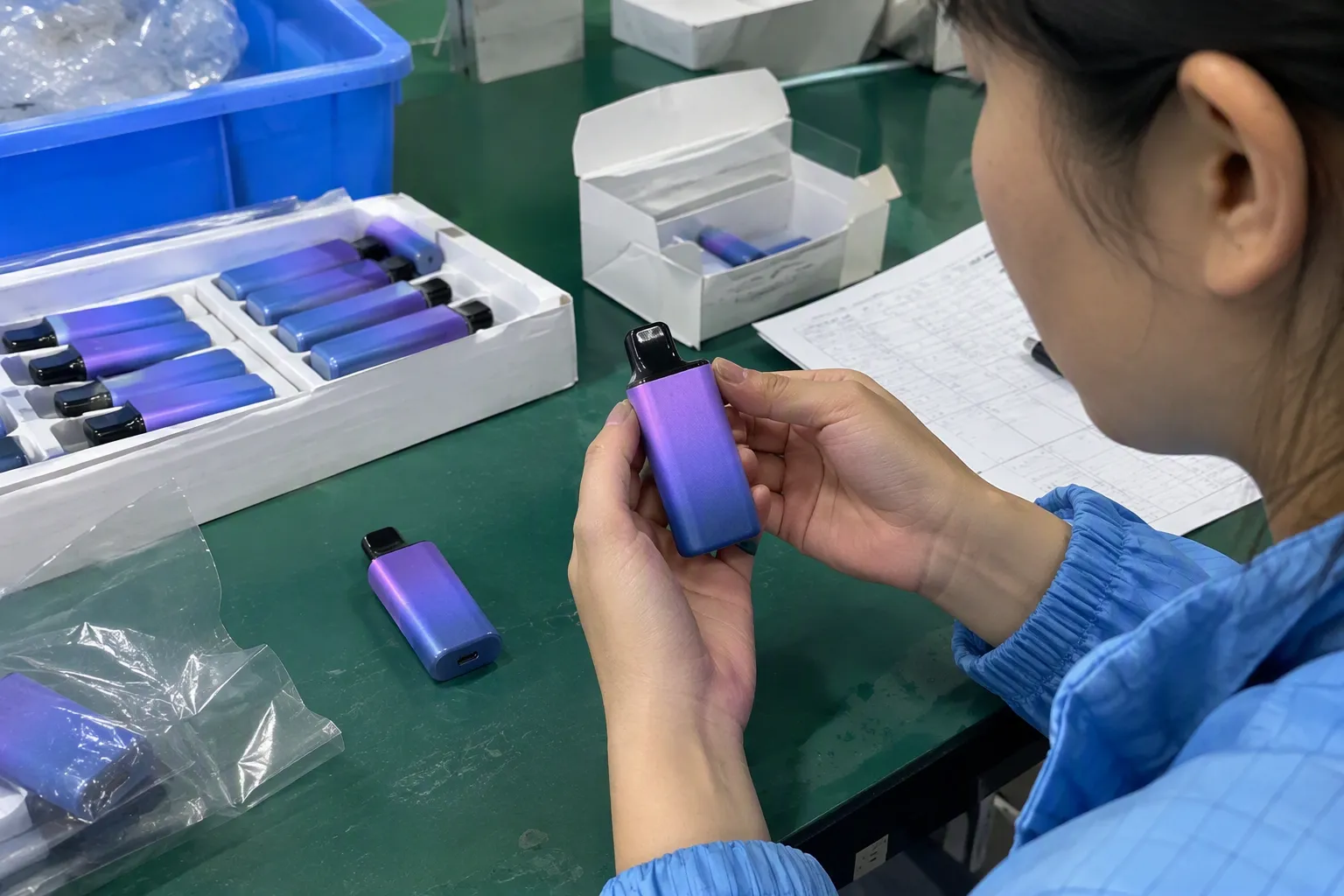
A launch packet is more than a digital brochure[3]. It is the handoff between the supplier, importer, retailer, sales team, and final customer. When that handoff is incomplete, the buyer may face slow-moving inventory, inconsistent explanations, unnecessary complaints[4], and uncertainty about the next order. I build the packet around those commercial risks rather than around promotional language alone.
What Should a Retailer Launch Packet Include for a Vape Product?
Many vape buyers need to move quickly, but speed can create avoidable mistakes. A shop may order a popular-looking product without understanding its configuration, customer fit, support process, or supply timing. A complete retailer launch packet gives the buyer enough practical information to make a controlled purchasing decision.
A strong retailer launch packet for a vape product should include product identity, technical and packaging information, ordering details, responsible usage guidance, sales tools, FAQs, after-sales procedures, and compliance documents for professional local review. It should also show whether the product is available through an overseas warehouse, direct factory supply, or an OEM/ODM program.
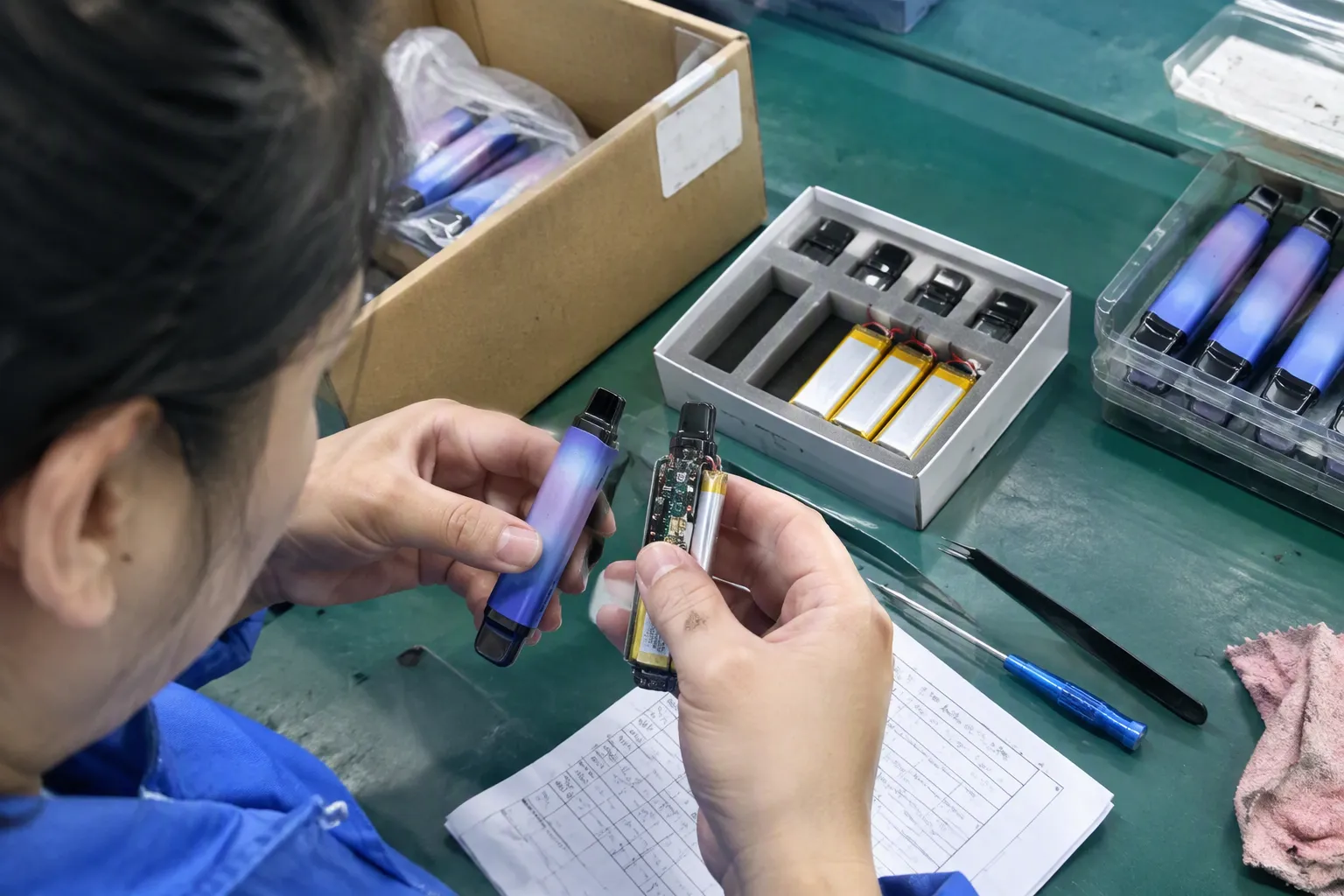
Why Product Identity Comes First
I start with a clear product identity because a vague product name creates problems throughout the order. A buyer should not need to ask several times whether two photos show the same configuration or whether a listed option is included in the standard unit.
The first page should identify:
- Product name and model
- Product category, such as disposable vape, vaporizer, atomizer, 510 battery, CBD battery, or related accessory
- Available colors, finishes, capacities, and configurations, if applicable
- What is included in each retail package
- Individual unit dimensions and master-carton information, where confirmed
- Packaging language and labeling options
- Product images from multiple useful angles
- SKU or internal reference number
- Version date for the packet
This information helps a retailer compare products and prevents the sales team from using the wrong specifications. It also helps a wholesaler prepare a product listing for its own customers.
A buyer should be able to answer five questions quickly:
- What exactly is this product?
- Which version am I ordering?
- What does the customer receive?
- Which options are available?
- What information still needs confirmation?
I avoid filling gaps with assumptions. If a specification depends on the selected version, I label it clearly. If a feature requires confirmation from the factory, I mark it as pending instead of presenting it as a confirmed fact.
What Purchasing Information Should Be Included?
A launch packet becomes commercially useful when it explains how the buyer can purchase and replenish the product. Product information without supply information leaves the importer exposed to stock gaps and cash-flow uncertainty.
The purchasing section should normally include:
| Purchasing point | Why the buyer needs it |
|---|---|
| MOQ by product or option | Helps the buyer calculate inventory risk |
| Sample availability | Supports initial evaluation before a larger order |
| Standard lead time | Helps the buyer plan stock and launch timing |
| Packaging or branding lead time | Prevents private-label schedule surprises |
| Available stock route | Shows whether the product can ship from an overseas warehouse or China |
| Reorder process | Makes replenishment easier after the first sale |
| Carton and shipping information | Supports freight and warehouse planning |
| Payment and order confirmation steps | Reduces misunderstandings before production |
| After-sales contact | Gives the buyer a clear support route |
Different buyers need different supply routes. A small vape shop, convenience-store group, or regional reseller may prefer low-MOQ stock from an overseas warehouse. In our European operation, we have warehouse locations in several European countries and can arrange delivery through services such as DHL, DPD, UPS, or FedEx, subject to the specific order and destination. The stated operating model supports fast European delivery, with some products available from 50 units per model. Buyers should confirm current stock, route, timing, and destination requirements before ordering.
A larger importer, wholesaler, or distributor may prefer direct shipment from China because volume purchasing can support stronger pricing[5] and more packaging or branding options. Our company has a 5,000-square-meter factory, OEM/ODM experience, and a stated production capacity of up to 5 million units per month. I present those figures as business information for buyer evaluation, not as a guarantee that every product or order will use the full capacity.
How Should the Packet Explain Product Use?
The packet should tell staff what the product is designed to do and how to explain it in simple language. This is especially important when customers are attracted by a trend or new feature but do not understand the product configuration.
The usage section may cover:
- Basic operation
- Charging or storage instructions where relevant
- Connection or compatibility information
- Handling limitations
- Packaging and seal information
- General care instructions
- Situations in which the product should not be used
- Important customer questions that staff should ask before recommending it
The packet should not encourage exaggerated promises. A retailer should not describe a product as “risk-free,” “guaranteed safe,” “legal everywhere,” or “the best” unless the relevant claim has been properly verified and is permitted in the target market.
I have seen how unclear product explanations can create avoidable after-sales conversations. A customer may use a device incorrectly, misunderstand a compatibility point, or expect a feature that belongs to another configuration. The retailer may then blame the supplier, while the supplier may believe the product was misused. Clear instructions do not eliminate every issue[6], but they create a more reliable starting point.
What Sales Tools Help Retail Staff?
Retail staff usually do not need a long engineering document during a customer conversation. They need short, accurate information that they can understand and repeat consistently.
A practical sales section should include:
- Three to five confirmed product advantages
- Suitable retail environments or customer profiles
- A short product description
- A comparison with other configurations in the same range
- Common customer questions and approved answers
- Packaging and display suggestions
- Product images for online or store listings
- A statement of what the product does not claim to provide
For example, a comparison table can help staff distinguish between a standard product, a private-label version, and a higher-volume supply program:
| Buyer requirement | Standard stocked product | Private-label project | Larger direct-import order |
|---|---|---|---|
| Main benefit | Faster initial availability | Brand differentiation | Volume and purchasing efficiency |
| Typical buyer | Retailer or small wholesaler | Importer or established distributor | Large importer or regional wholesaler |
| MOQ | Confirm by model and stock route | Confirm during project review | Confirm by product and packaging |
| Branding | Existing packaging | Buyer’s branding may be developed | Buyer’s branding and packaging options |
| Supply planning | Stock-based | Production schedule required | Production and freight planning required |
| Main risk to review | Stock availability | Artwork and approval timing | Cash tied up in larger inventory |
I keep the selling points tied to facts. A product can be visually attractive and commercially interesting, but those qualities do not prove demand, product quality, or legal eligibility. The buyer still needs to assess local customer preferences, pricing, channel fit, and market rules.
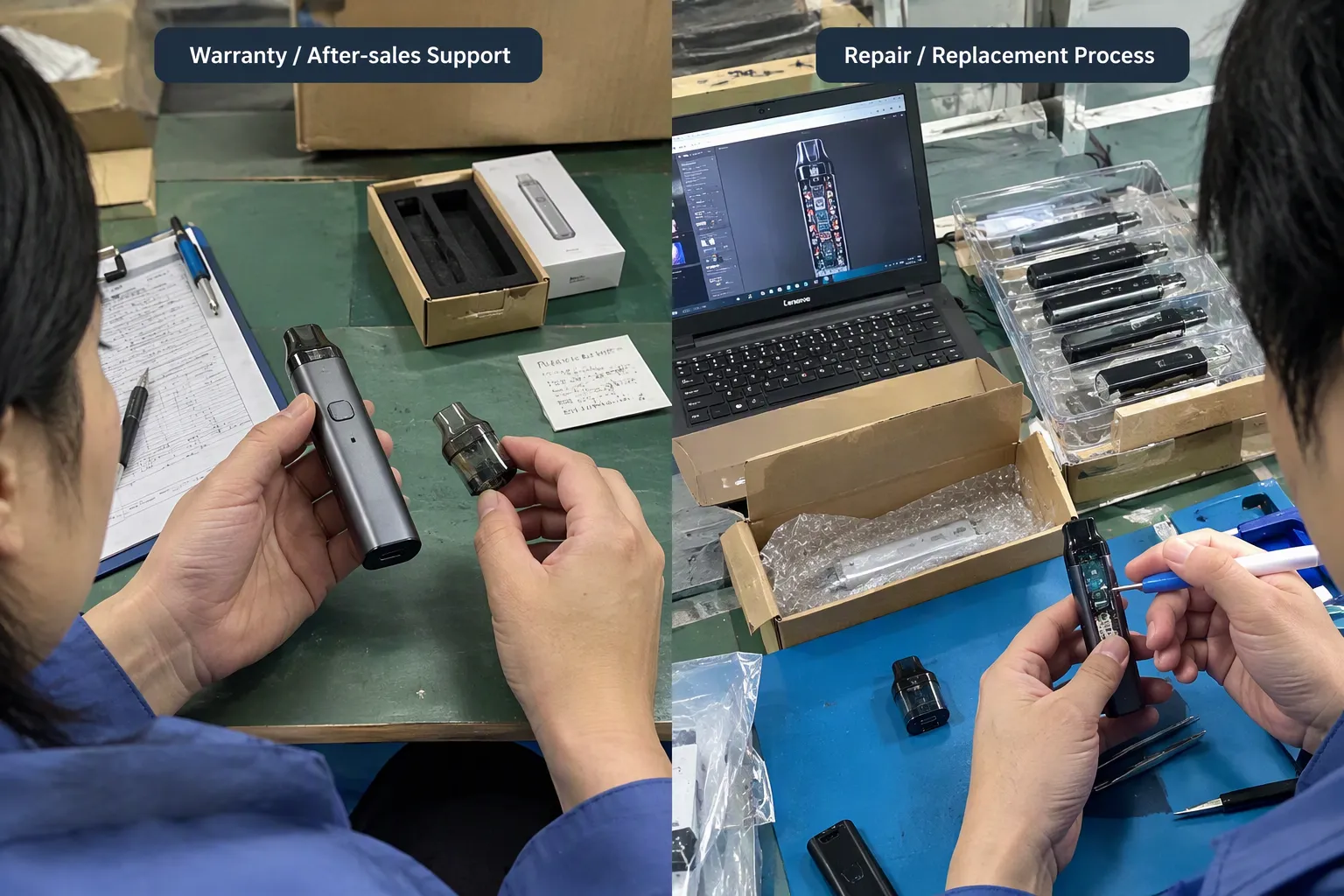
What After-Sales Information Belongs in the Packet?
After-sales support should be explained before the retailer places the order. This point matters to shops and wholesalers because a product problem can affect their reputation with their own customers[7].
The packet should state:
- How the buyer reports a suspected defect
- What information or photographs may be needed
- Which order and batch details should be retained
- How the supplier reviews the issue
- What replacement, credit, or other remedy may apply
- The expected communication process
- Which party communicates with the final customer
- Which cases may involve misuse, transport damage, or incomplete information
At Kingfuji, products purchased through us are handled through our after-sales service rather than requiring the buyer to contact several separate factories. Our business model also includes support for one-stop delivery and stated arrangements for certain customs and defective-goods situations. I still tell buyers to confirm the exact terms in the quotation, order confirmation, and commercial agreement. A general service promise should not replace written order-specific conditions.
A good packet can include a simple defect-reporting form with:
- Buyer name and order number
- Product model and quantity
- Date received
- Description of the issue
- Photographs or video where useful
- Quantity affected
- Storage or handling information when relevant
This process helps separate a product quality concern from a customer-use question[8]. It also gives the supplier better information for quality-control review.
How Should Compliance Documents Be Presented?
Compliance information belongs in the launch handoff, but it must be presented carefully. A document supplied by a manufacturer is not automatically proof that a product can be sold in every country or through every channel.
The packet should identify:
- Which documents are available
- The document title and date
- The product model or scope covered
- The issuing or testing organization, where shown
- Whether the document applies to the exact configuration
- Any limitations or missing information
- Which checks the importer must complete locally
The buyer should verify the current requirements of the destination market with a qualified local compliance professional or authority. Requirements can differ by country, product type, nicotine status, packaging, advertising channel, battery configuration, and retail environment. I do not present one country’s documentation as universal approval for another market.
This distinction protects both sides. The supplier can provide the documents and product information that it has confirmed. The importer remains able to perform the market-specific review required for its business.
A retailer launch packet supports compliance evaluation. It does not replace legal advice, laboratory review, importer responsibility, or professional product assessment.
How Can the Packet Support Different Buyer Sizes?
A strong launch packet should show a practical path from first test order to repeat purchasing. This is useful because not every buyer wants the same investment level.
For a small or medium retailer, the priority may be:
- Low MOQ
- Existing stock
- Fast delivery
- Simple product training
- Limited inventory exposure
- Clear replacement support
For a wholesaler or regional distributor, the priority may be:
- Stable replenishment
- Master-carton planning
- Consistent packaging
- Product range coordination
- Sales materials for downstream shops
- Reliable communication about new models
For an importer considering private label, the packet should lead to a separate OEM/ODM discussion covering:
- Product concept
- Target price
- Branding
- Artwork
- Packaging
- Sample approval
- Production schedule
- Quality-control checkpoints
- Documentation
- Shipping plan
- After-sales responsibilities
Our factory and supply network allow us to support both stocked products and OEM/ODM discussions. We also introduce approximately five to ten new products each month according to the business information provided. I would not tell a buyer to order every new model. I would help the buyer compare the product with its customer base, sales channel, available budget, and local requirements.
What Should the Final Launch Checklist Contain?
Before I send a packet, I check whether a buyer can use it without repeatedly requesting basic information. My final checklist includes:
- Product identity and exact configuration
- Confirmed specifications
- Packaging contents
- Product images and image-use permission
- Wholesale price or quotation reference
- MOQ and sample terms
- Lead time and available stock route
- Shipping options
- Usage and handling guidance
- Staff selling points
- Customer FAQs
- After-sales process
- Available compliance documents
- Local-verification notice
- Contact details and reorder procedure
- Version date and contact for corrections
The packet should also make unanswered questions visible. A clear “to be confirmed” note is more useful than a polished but inaccurate claim.
Frequently Asked Questions
What is a retailer launch packet for a vape product?
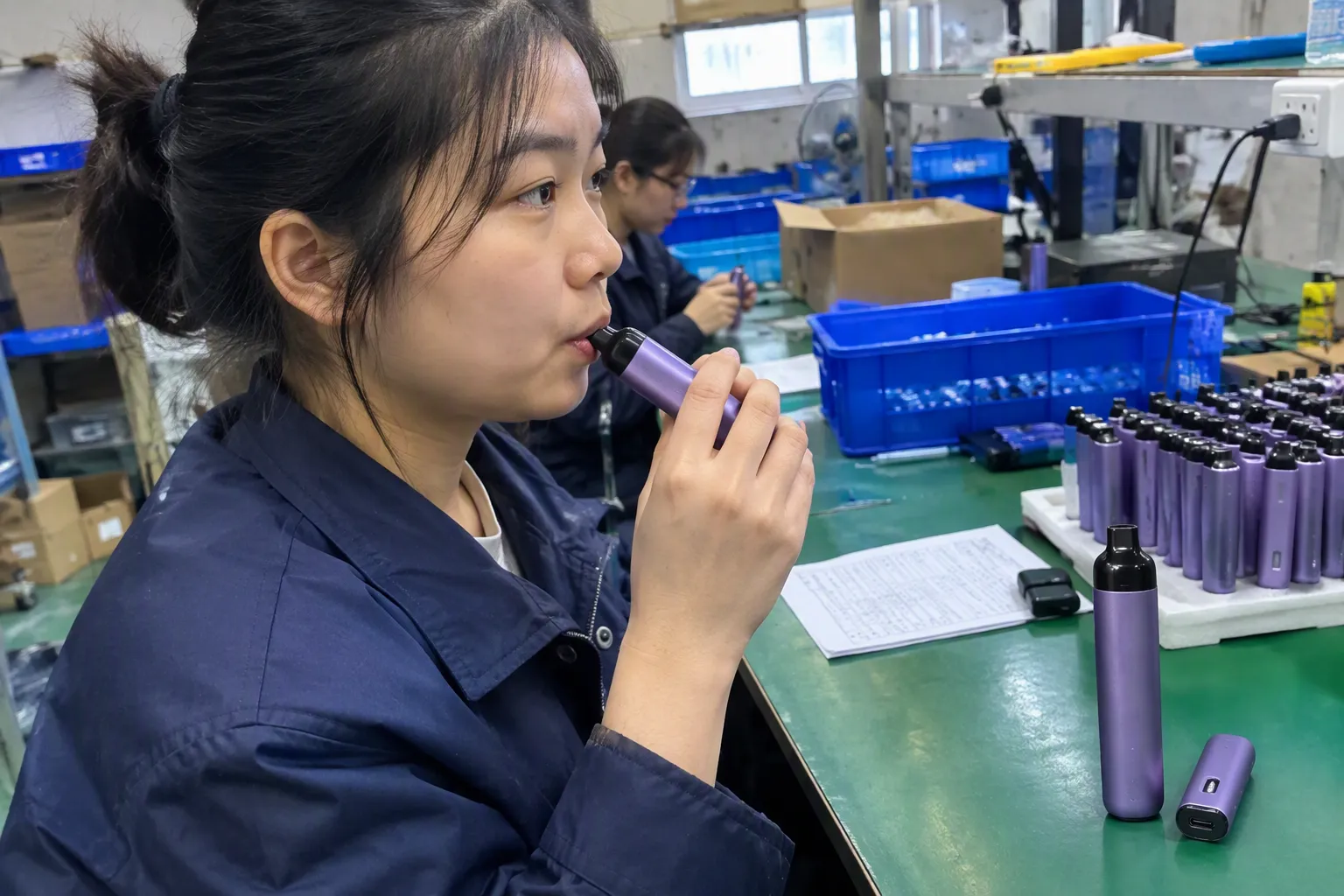
A retailer launch packet is a practical information set for introducing a new vape product to a store, wholesale channel, or distribution network. It normally combines product specifications, purchasing details, usage guidance, staff sales tools, FAQs, after-sales procedures, images, and documentation for local compliance review.
Should a launch packet include the wholesale price?
It should include either the confirmed wholesale price or a clear quotation reference. The packet should also explain MOQ, available stock, lead time, packaging options, and shipping route. Prices can change with quantity, branding, freight, and market conditions, so the buyer should confirm the current commercial terms before ordering.
Can a small retailer use an overseas warehouse for a new vape product?
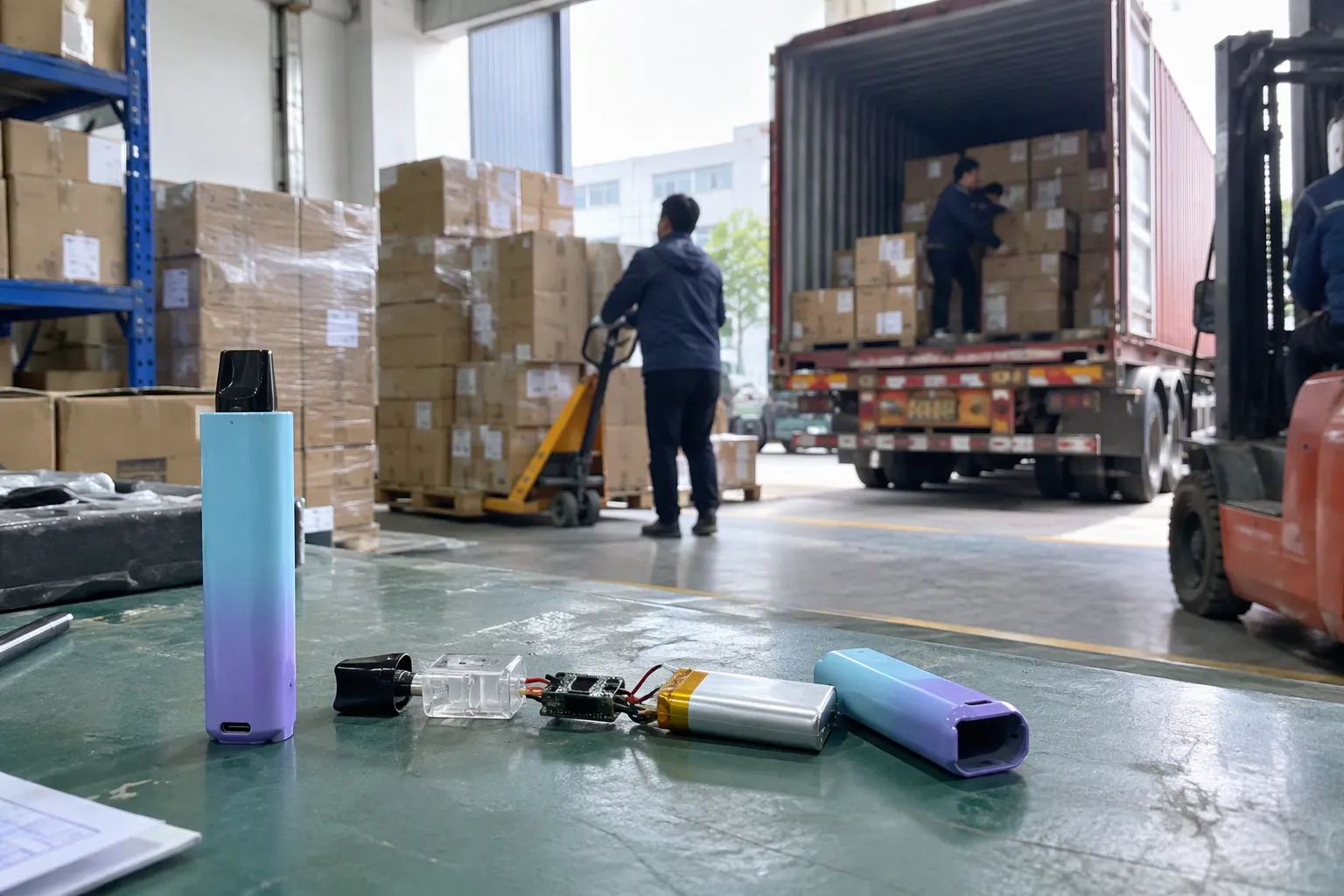
A small retailer may use an overseas warehouse when the desired model is in stock and the destination route is available. This option can reduce initial inventory investment and shorten delivery time. The buyer should confirm current stock, MOQ, delivery estimate, taxes, import responsibilities, and applicable local requirements before payment.
What information should staff receive about a new vape product?
Staff should receive a short product description, confirmed features, operating guidance, key limitations, compatibility information where relevant, customer FAQs, and clear instructions for escalating support questions. Staff should avoid medical, safety, legal, or performance claims that have not been verified for the target market.
Does a retailer launch packet prove that a vape product is legal to sell?
No. A launch packet can identify available documents and support the importer’s review, but it does not prove universal legal eligibility. The importer or retailer must verify current destination-market requirements with qualified local professionals and confirm that the documents apply to the exact product configuration.
Conclusion
A useful retailer launch packet helps a buyer do more than view a new product. It supports purchasing clarity, staff training, accurate customer communication, inventory planning, after-sales handling, and responsible compliance review. Small buyers may benefit from low-MOQ overseas-warehouse fulfillment, while larger importers and distributors may prefer direct supply or OEM/ODM development. At Shenzhen Kingfuji Tech. Co., Ltd., I support product sourcing, factory supply, new-product development, one-stop purchasing, and after-sales coordination for international B2B buyers. Contact King at info@kingvapecig.com or +86 13928420527 to discuss a launch packet and supply route for your market.
Sources
- Vaping Devices (Electronic Cigarettes) DrugFacts", Human-factors research indicates that clear, task-specific instructions can improve comprehension and reduce some user errors in consumer products; this provides contextual support for using a launch packet to address misuse but does not establish that every vape-related incident will be prevented
- Strategies to Teach Customer Service Skills - ScholarWorks", Studies of retail training and service knowledge management associate structured employee information with more consistent customer communication and service execution; the evidence supports the packet's proposed function but not a guaranteed commercial outcome
- Accessing information sharing and information quality in ...", Supply-chain research identifies accurate information exchange and documented handoffs as mechanisms that support coordination across organizational boundaries; this supports the packet's operational role without proving that a particular packet will improve performance
- Shopping for others: how does inconsistency in online reviews ...", Research on information quality and supply-chain coordination links incomplete or inaccurate information with coordination failures and poorer operational outcomes; this offers indirect support for the stated risks rather than direct evidence about vape launch packets
- Public Procurement, Trade and Industrial Policies", Research on economies of scale and procurement finds that higher production or order volumes can lower average unit costs when fixed costs and capacity are spread across more units; this is contextual support and does not prove a lower price for a particular vape order
- a systematic literature review of four communication dimensions", Risk-control research treats user instructions as one component of a broader safety system and recognizes that information alone cannot eliminate residual hazards or user error; this supports the article's qualified formulation
- Recover From Failure: Examining the Impact of Service ... - PMC", Research on service failure and product recalls associates unresolved product problems with lower consumer trust, satisfaction, and loyalty; this supports the reputational concern while not quantifying its effect for a particular retailer
- The problem with root cause analysis - PMC - NIH", Quality-management guidance supports standardized complaint records and evidence-based investigation as methods for distinguishing potential product defects from handling or use-related causes; this supports the process design but does not determine fault in an individual case