
Quick Answer
Device-to-pod reorder ratios can become a difficult decision for UK convenience stores after a major policy change. Too many devices may tie up cash, while too few compatible pods can cause missed repeat sales. I recommend treating the ratio as a controlled inventory test based on verified rules, customer behaviour, SKU compatibility, and actual sell-through.
UK convenience stores should not use one universal device-to-pod reorder ratio after the ban. They should begin with a limited, compliant assortment, track device sales, pod repurchases, stockouts, compatibility, and cash flow, then adjust each device platform and pod SKU according to real store data. Buyers should verify current UK requirements before ordering or replenishing any product.
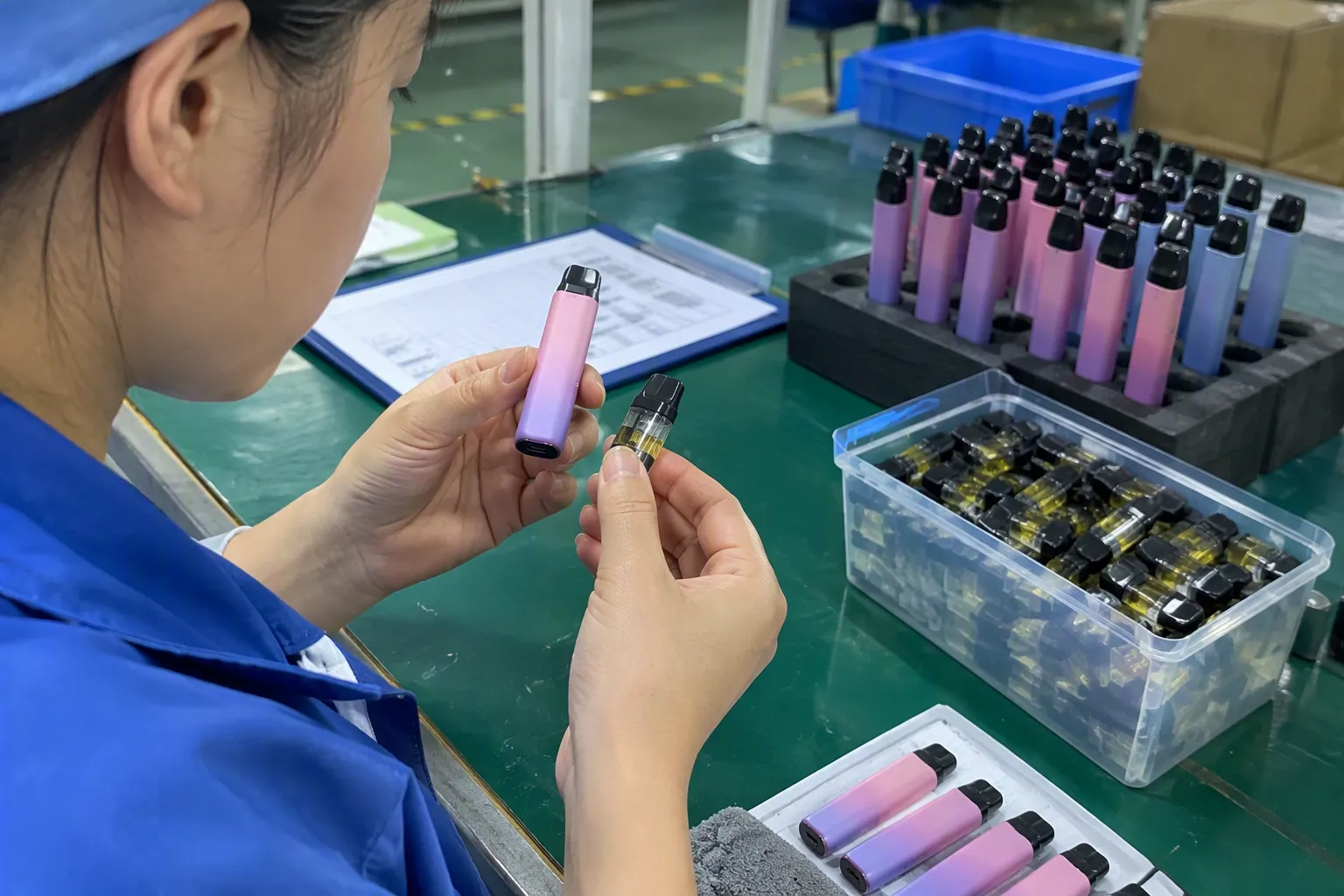
The important point is that this is not simply a calculation based on total units. A store is managing a customer journey. A device may support customer acquisition, while compatible pods create repeat purchasing. The correct purchasing structure depends on the store’s customer base, product range, available cash, sales speed, and ability to replenish reliably.
Why Should Convenience Stores Reconsider Device-to-Pod Reorder Ratios After the Ban?
A policy change can make yesterday’s purchasing logic unsuitable. A store may still have customer demand, but some products, formats, or supply routes may require a new compliance review. If the owner continues ordering by habit, slow-moving or unusable stock can consume working capital.
I recommend reviewing the device-to-pod reorder ratio after checking current UK government and regulatory guidance, then connecting each order to the store’s own sales evidence. A trial assortment is safer than assuming that one percentage works for every convenience store.[3]

A ban does not automatically create one inventory formula
I use the phrase “after the ban” because it appears in the purchasing question. However, I do not treat that phrase as a complete legal definition. UK rules can depend on the product type, date, packaging, nicotine status, marketing, retail conditions, and other requirements[1]. Store owners should confirm the current position through official UK sources and qualified advisers before making a commercial decision.
From a supply-chain perspective, the first question is not, “Should I buy 30% devices and 70% pods?” The better questions are:
- Which devices may be sold under the current rules?
- Which pods are legally and technically compatible?
- Which SKUs have sold through in this specific store?
- How often do customers return for replacement pods?
- How much cash can the store safely commit?
- How quickly can the supplier replenish the tested products?
- What happens if products arrive damaged, incompatible, delayed, or unsellable?
The device and the pod serve different commercial purposes
A device can attract a new customer or replace an existing device. A pod usually serves an ongoing consumption or replacement need.[2] This means the two products should not be managed as if they have identical demand cycles.
For example, a store with many new customers may sell devices faster during an initial launch. A store with an established customer base may sell fewer devices but require regular replacement pods. A business near tourist locations may experience different purchasing behaviour from a local neighbourhood shop.
I have discussed these issues with European importers, wholesalers, and retail buyers. Their questions often focus on compatibility, minimum order quantities, delivery timing, inventory turnover, and after-sales responsibility. Those conversations show why a total-unit ratio can hide the real risk. A buyer may have strong pod sales overall but still hold too many pods for the wrong device platform.
How Can a Store Set Device-to-Pod Reorder Ratios From Its Own Data?
A store can set a practical ratio by measuring device acquisition, pod repurchase, stockouts, returns, and inventory age for each compatible system. The store should begin with a small batch, record results for an agreed review period, and adjust purchasing by platform and SKU rather than by total product count.
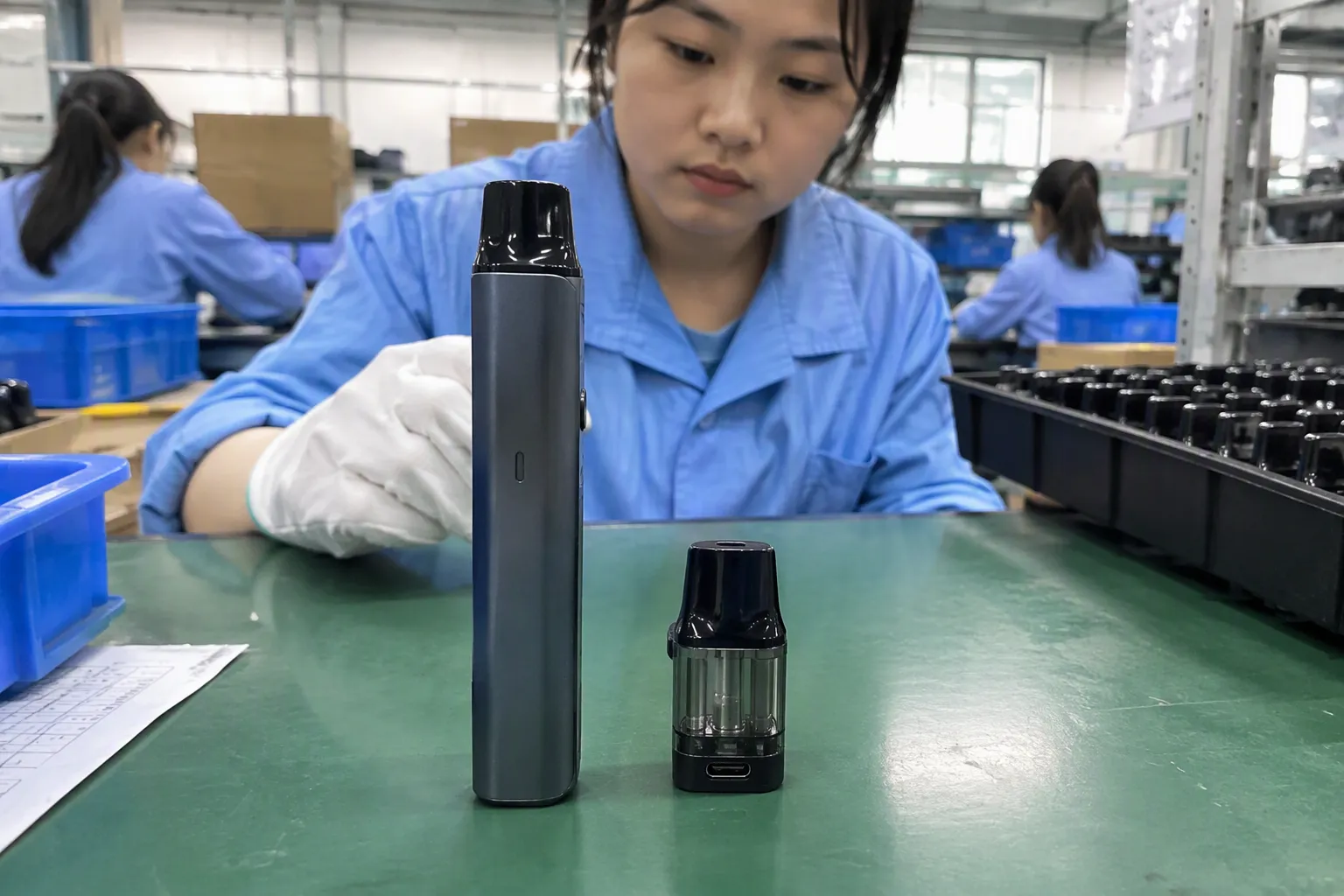
Start with a controlled test
I would begin with a limited selection rather than a broad catalogue. The store can select a small number of device platforms and only the pods that are verified as compatible and appropriate for the intended market.
The trial should record:
- Device units received
- Device units sold
- Pod units received
- Pod units sold
- Time required to sell each SKU
- Number of stockout days
- Returns and customer complaints
- Products remaining after the review period
- Cash committed to each product group
- Replenishment time from the supplier
The store does not need complicated software at the beginning. A spreadsheet can be enough if the team records the same information consistently. I would separate sales by device platform, pod variant, flavour where relevant, and product size or format.
Measure repurchase behaviour, not just first sales
A device sale does not automatically prove that the store will sell a particular volume of pods. The customer may return to the same shop, move to another product, stop using the system, or purchase replacement pods elsewhere.
A store can therefore monitor[4]:
- The number of devices sold during the test.
- The number of customers who return for compatible pods.
- The average time between pod purchases.
- The number of pods sold per active device customer.
- The percentage of customers who ask for a product that the store does not carry.
- The number of complaints caused by incorrect compatibility information.
This information produces a more useful view than a fixed percentage. The store may discover that one platform attracts many first-time buyers but has weak repeat sales.[7] Another platform may have fewer device sales but a stronger pod reorder pattern.
Use a simple reorder calculation
A basic replenishment calculation can help:
Reorder quantity = expected sales during supplier lead time + safety stock − usable stock on hand[5]
The store should calculate this separately for each pod SKU. “Usable stock” should exclude damaged, expired, non-compliant, returned, or technically incompatible units.[6]
The store can also use a device-to-pod relationship as a monitoring indicator:
Pod units sold per device sold = pod units sold ÷ device units sold
This is not a universal market benchmark. It is a store-specific measurement. The figure can change as the customer base matures, so I would review it regularly instead of treating the first result as permanent.
Example of a controlled test
Suppose a store tests two device platforms. The owner sells 20 units of Platform A and 12 units of Platform B during the review period. The shop then sells pods for both platforms, but Platform A pods move slowly while Platform B pods sell out twice.
The correct response is not automatically to buy more devices. The owner should check:
- Whether Platform B had better visibility in the shop.
- Whether Platform A pods had less customer interest.
- Whether customers understood the compatibility difference.
- Whether the supplier delivered the pod variants in the right quantity.
- Whether Platform B experienced a genuine repeat-purchase pattern or a short-term promotion effect.
This process protects the store from confusing one successful sales week with a long-term demand pattern.
Should Device-to-Pod Reorder Ratios Be Calculated by System and SKU?
Yes. Device-to-pod reorder ratios should be calculated by compatible device system and individual SKU wherever possible. Total pod volume can look healthy while particular pods remain unsold because customers use another platform, prefer another variant, or cannot find the correct replacement.

Compatibility is an inventory control issue
A pod can be physically present in the store but commercially useless if it does not fit the devices that local customers own. If staff give unclear advice, customers may purchase the wrong item and return it. The shop may then face a refund, a complaint, or a damaged relationship.
I recommend creating a simple compatibility table for staff and buyers:
| Device platform | Compatible pod SKU | Main customer variant | Average weekly sales | Stockout risk | Reorder status |
|---|---|---|---|---|---|
| Platform A | Pod A1 | Variant 1 | Store data | Low/medium/high | Review |
| Platform A | Pod A2 | Variant 2 | Store data | Low/medium/high | Review |
| Platform B | Pod B1 | Variant 1 | Store data | Low/medium/high | Review |
The table should use the store’s actual records. It should not use an assumed national average.
Avoid buying a large range too early
Many buyers are attracted to a wide catalogue because they want to offer choice. However, choice creates a purchasing and training burden. Each additional platform may require separate pods, separate explanations, and separate reorder decisions.
A focused range can make it easier to:
- Keep the correct replacement pods available.
- Train staff on compatibility.
- Identify slow-moving stock.
- Compare product performance.
- Reduce fragmented supplier orders.
- Protect cash during a period of changing regulation.
I have seen buyers begin with a broad purchasing request because they wanted to cover every possible customer. After discussing MOQ, delivery, and stock turnover, they reconsidered the order structure and concentrated on products with clearer customer demand. That is not a promise that every buyer will achieve the same result. It is a reminder that a wider range does not always create better availability.
Label stock by platform and variant
The store can reduce mistakes by using clear internal labels. A product record should include the device platform, pod model, variant, purchase date, supplier batch, and compliance documents received from the supplier.
Staff should know that visually similar products may not be interchangeable. The store should ask suppliers for product information and compatibility details in writing. Buyers should also verify that the documentation matches the exact product and market, rather than relying on a general catalogue statement.
How Can Smaller Purchase Batches Protect Convenience-Store Cash Flow?
Smaller purchase batches can reduce the amount of cash tied up in untested devices and pods. They work best when the supplier can offer practical MOQs, accurate product matching, reliable delivery, and clear after-sales procedures. Smaller orders do not guarantee profit, but they can limit exposure while the store learns its demand pattern.
Match the buying model to the store size
A small independent convenience store may not have the same purchasing capacity as a national chain or regional wholesaler. I would distinguish between two broad approaches:
| Buyer type | More suitable purchasing approach | Main priority |
|---|---|---|
| Independent store | Small trial batches and frequent review | Limit dead stock and protect cash |
| Small regional wholesaler | Selected systems with planned replenishment | Maintain availability across accounts |
| Large importer or distributor | Larger domestic import orders | Price structure, planning, compliance, and supply continuity |
| Private-label buyer | OEM/ODM evaluation with professional review | Product development, documentation, and repeat supply |
For smaller buyers, our European warehouse model may be relevant where the required products are available and permitted for the destination market. The business context includes warehouses in Germany, Austria, Poland, and Belgium, with delivery across the EU through services such as DHL, DPD, UPS, and FedEx. However, I would not present those arrangements as a solution for every UK order. UK buyers must check destination requirements, applicable taxes, customs treatment, and product legality before proceeding.
The supplied business context also states that European warehouse orders can have MOQs as low as 50 units per model for selected stocked products. Buyers should confirm current availability, exact MOQ, delivery time, and documentation for each order.
Larger buyers can use domestic import planning
A larger UK importer, distributor, or wholesaler may prefer to import from China when the product has demonstrated demand. Larger orders may provide a different cost structure and create options for OEM or ODM development.
Our company, Shenzhen Kingfuji Tech. Co., Ltd., was established in Shenzhen in 2011. The business context describes a 5,000-square-metre factory, monthly capacity of up to 5 million units, and a team that supports OEM and ODM projects. It also states that the company introduces approximately 5–10 new products each month.
Those capabilities may help a buyer evaluate supply options, but they do not remove the buyer’s responsibility to verify product specifications, compliance documents, testing, packaging, labelling, and suitability for the UK market. A factory scale or product catalogue should never replace application-specific and regulatory review.
Build a reorder trigger before stock becomes critical
A store should not wait until the shelf is empty to begin asking for replenishment. The owner can define a reorder point based on average daily sales, supplier lead time, and a safety allowance.
For example:
- Average sales: store’s measured daily pod sales.
- Lead time: confirmed time from order approval to delivery.
- Safety stock: a cautious buffer based on demand variability.
- Reorder point: expected lead-time sales plus safety stock.
The owner should reduce the safety stock when demand is uncertain or regulation is changing. The owner can increase it only after seeing stable sales and dependable replenishment. This approach is more controlled than ordering a large quantity simply because the unit price is lower.
How Should Stores Evaluate a Device and Pod Supplier?
A store should evaluate a supplier by product matching, documentation, delivery control, MOQ, communication, and after-sales handling. The buyer should ask how the supplier manages incompatible products, defective units, delayed orders, and changes in market requirements before placing a significant order.
Ask questions that connect to commercial risk
A useful supplier review can include the following questions:
- Can the supplier identify the exact compatible pod for each device?
- Can the supplier provide current product documents for buyer verification?
- Can the supplier explain the available MOQ by model and variant?
- Can the supplier separate stocked products from made-to-order products?
- What is the expected dispatch and delivery process?
- How does the supplier handle shortages or substitutions?
- What is the written process for defective or damaged goods?
- Can the supplier support one consolidated order across multiple brands or product types?
- Can the buyer receive product photos or video verification before dispatch?
- Can the supplier support a small trial before a larger commitment?
Our business model includes one-stop sourcing for electronic cigarettes, disposable vapes, atomizers, 510 batteries, CBD batteries, grinders, glass pipes, vaporizers, and related smoking accessories. It also includes brand distribution, product sourcing, new-product development, mould development where conditions are suitable, consolidated after-sales support, and delivery either to the customer’s door or to the customer’s nominated freight forwarder.
These services may reduce the buyer’s administrative workload. They do not guarantee sales, legal acceptance, or profitability. I would still advise every buyer to assess each product and order independently.
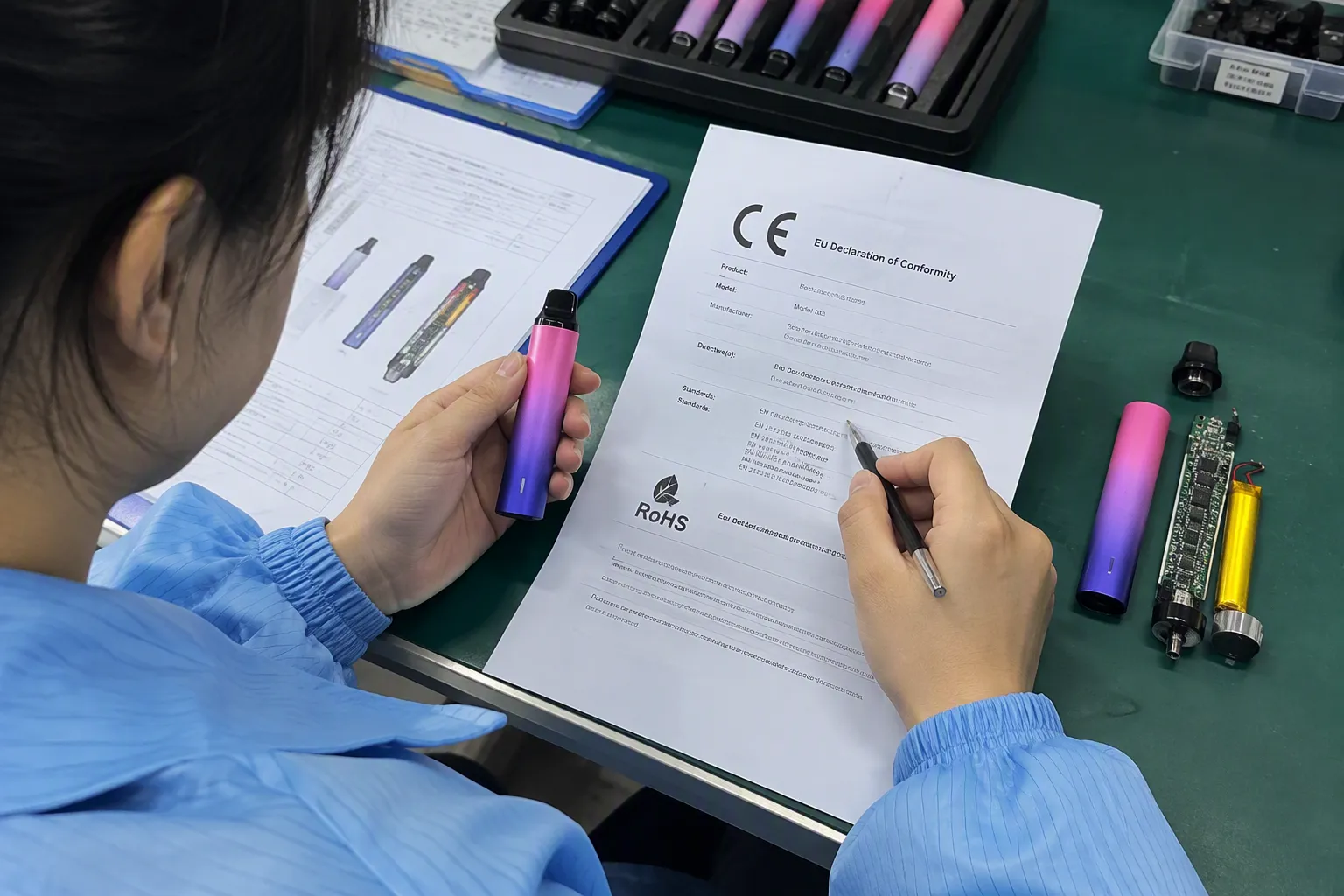
Treat certifications and documents as verification materials
Buyers should treat certifications, test reports, declarations, and other documents as materials to verify. The buyer should check:
- The issuing organisation.
- The product and model covered.
- The test date.
- The test standard.
- The named manufacturer.
- Whether the document applies to the exact version being purchased.
- Whether current UK rules require additional evidence.
A supplier should not be expected to provide legal interpretation for the buyer’s entire business. A qualified UK professional should evaluate application-specific compliance questions.
Consolidated after-sales can simplify purchasing
Many wholesalers and convenience-store buyers dislike managing separate after-sales conversations with multiple factories. A consolidated supplier arrangement can give the buyer one contact for the purchased products, provided the written terms are clear.
Our supplied business context states that products purchased through the company receive after-sales service from the company. It also describes free replacement or compensation arrangements for certain defective goods and customs-related situations. Buyers should request the precise conditions in writing, including exclusions, evidence requirements, timelines, shipping responsibility, and the definition of a qualifying claim.
A promise is useful only when the buyer understands how it operates in practice.
Frequently Asked Questions
What is the ideal device-to-pod reorder ratio for a UK convenience store?
There is no responsible universal ratio without store-specific evidence. The appropriate balance depends on device sales, customer repurchase behaviour, compatible SKU demand, stockout frequency, cash flow, and current UK requirements. A store should begin with a controlled test and calculate pod demand by device platform and SKU.
Should a store buy more pods than devices?
A store may eventually need more pod units than device units because pods can generate repeat purchases. However, the store should not assume this before measuring local demand. The store must first confirm which devices customers use, how frequently they repurchase pods, and whether the relevant products may currently be sold.
How often should a convenience store review its reorder ratio?
A store should review the ratio after its initial test period and whenever sales conditions, product availability, or regulatory requirements change. The review should consider sell-through, stockouts, dead stock, returns, customer requests, and supplier lead time rather than relying only on the number of units purchased.
Can a low MOQ reduce inventory risk?
A low MOQ can reduce the amount of cash committed to an untested product. It does not eliminate compliance risk, compatibility problems, poor demand, delivery delays, or product quality issues. The buyer should confirm the exact MOQ, stock position, documentation, and after-sales terms before ordering.
Should larger importers consider OEM or ODM products?
Larger importers may consider OEM or ODM after validating demand and completing professional product and compliance evaluations. OEM or ODM can support a buyer’s own brand and product strategy, but it also requires more planning for specifications, tooling, packaging, documentation, quality control, order quantity, and long-term supply.
Conclusion
Device-to-pod reorder ratios should reflect the store’s customer journey, not an unsupported industry percentage. I recommend starting with a controlled assortment, tracking device acquisition and pod repurchase by compatible system, and using small purchase batches to protect cash flow. Buyers should verify current UK requirements, product documents, delivery terms, and after-sales conditions before ordering. At Kingfuji, I help importers, wholesalers, and retailers review product matching, MOQs, sourcing, OEM/ODM options, delivery routes, and consolidated after-sales support. Contact me at info@kingvapecig.com or +86 13928420527 to discuss a data-led purchasing plan.
Sources
- E-cigarettes: regulations for consumer products - GOV.UK", UK government guidance and applicable regulations describe product-specific requirements for the manufacture, presentation, notification, and sale of regulated vaping products, rather than establishing a single rule applicable to every format
- Prevalence of disposable pod use and consumer preference ...", Studies of vaping-product use and purchasing can provide contextual support for distinguishing initial device acquisition from recurring purchases of consumable or replacement components
- [PDF] Dynamic Assortment with Demand Learning for Seasonal Consumer ...", Inventory-management research generally supports evaluating uncertain demand through observed sales and staged assortment decisions rather than relying solely on an unvalidated aggregate allocation
- [PDF] The Impact of Stockouts on Customer Loyalty to Lean Retailers", Research on repeat purchasing and retail demand estimation supports using observed repurchase behavior and unmet demand as inputs to replenishment decisions, rather than treating an initial sales ratio as a stable market parameter
- [PDF] Understanding safety stock and mastering its equations - MIT", Standard inventory-management methods calculate a replenishment trigger from expected demand during lead time and a safety-stock allowance, adjusted for inventory that is actually available for sale
- [PDF] Value of Visibility and RFID under Imperfect Inventory Information", Inventory-control practice distinguishes stock on hand from stock that is available for sale or fulfilment, with damaged, quarantined, obsolete, or otherwise unusable units excluded from the latter measure
- Adolescents' E-Cigarette Use: Increases in Frequency, Dependence ...", Consumer studies indicate that continued use, product preference, and switching behavior can vary across vaping-product types, providing contextual support for measuring repeat demand by device platform
- [PDF] Management Strategies and Processes for Improving Product Returns", Research on compatibility failures and product returns supports the view that mismatched components can increase return handling, reduce customer satisfaction, and leave inventory that cannot readily be sold to the intended users