Quick Answer
Auditing packaging copy for UK reusable vape products helps me identify product mismatches, missing information, uncontrolled artwork versions, and avoidable approval risks before printing. I compare the pack with the actual device, technical documents, customer brief, and current UK guidance[1]. This pre-audit does not replace legal advice, laboratory testing, or an official compliance assessment.
When I audit packaging copy for UK reusable vape products, I do not treat the work as simple proofreading. A package can look professional and still describe the wrong model, battery, capacity, charging method, or usage process. I use a practical product-to-packaging check so importers, wholesalers, and brands can reduce rework before artwork approval and printing.
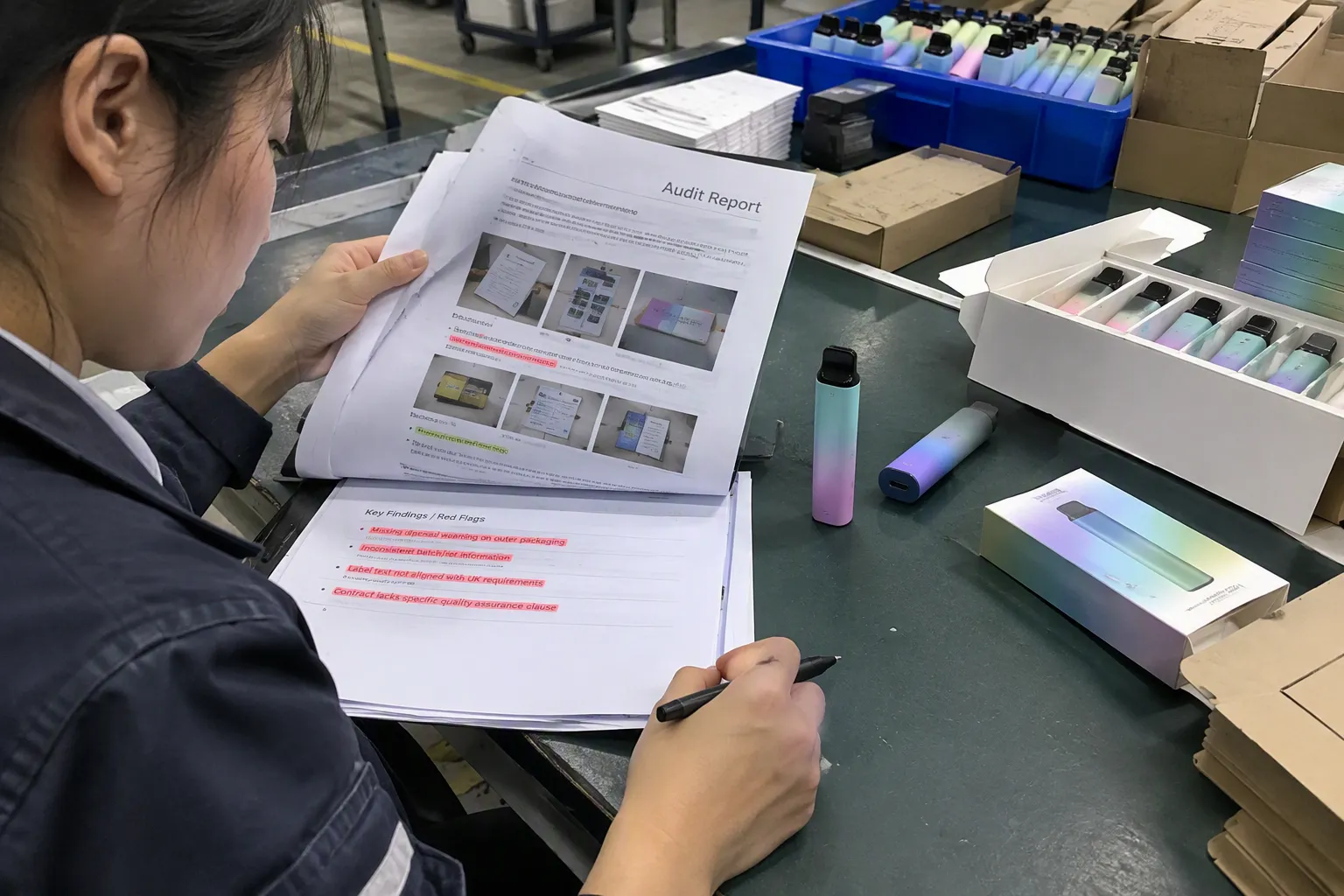
The main risk often appears before the goods leave the factory. A small wording error can affect customer review, stock approval, translation, artwork revision, or the buyer’s confidence in the supplier. I will explain the questions I use when reviewing packaging, while separating a commercial pre-audit from formal UK regulatory advice.
How Do I Audit Packaging Copy for UK Reusable Vape Products?
A useful audit starts by comparing four things: the physical product, the approved technical documents, the customer’s packaging brief, and the final artwork. I check the model identity, specifications, battery information, operation, warnings, contents, and version control. I then flag unclear or unsupported statements for customer and qualified local review.
Why Should I Treat Packaging Copy as a Procurement Risk?
A packaging error can create more than a design problem.[2] If a buyer discovers that the printed carton does not match the product, the shipment may need clarification, relabelling, rework, or replacement artwork. I therefore treat packaging copy as part of supplier quality control and purchasing risk management.
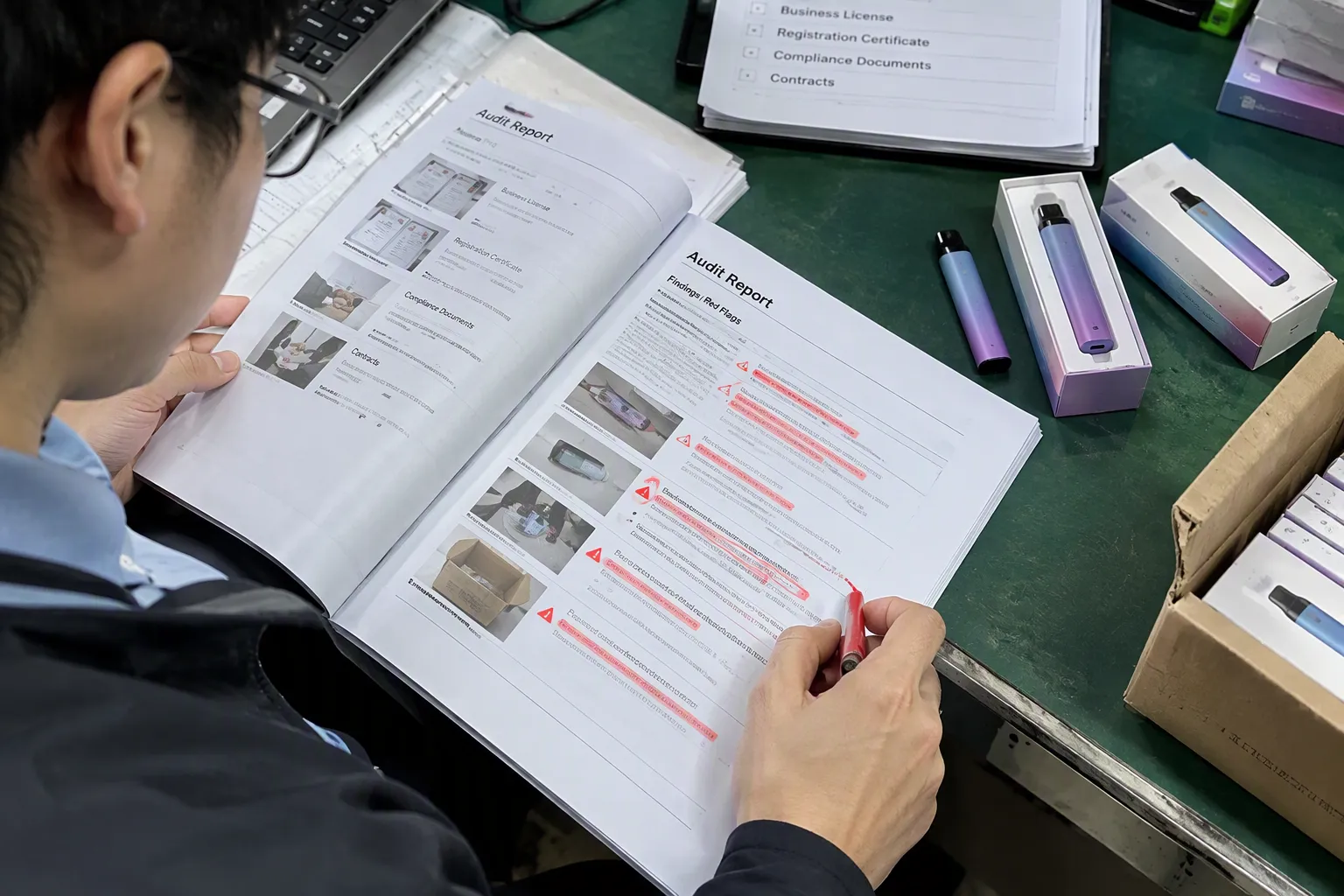
My product-to-packaging comparison
I begin with the product itself. I ask whether the packaging clearly identifies the exact item that the customer ordered. This step matters because reusable vape ranges often contain several visually similar models[3]. A shared carton template may contain wording that belongs to an earlier version or another device.
I normally compare the artwork against the following information:
| Checkpoint | What I compare | Why it matters |
|---|---|---|
| Product name | Artwork, purchase order, sample, and product list | Prevents the wrong model from being packed |
| Model number | Device marking, carton, master carton, and documents | Supports traceability |
| Product type | Reusable device, pod system, battery, or accessory | Avoids using copy for another category |
| Capacity | Printed figure and approved specification | Prevents unsupported or incorrect information |
| Battery | Battery type, rating, and charging details | Helps the buyer review technical accuracy |
| Contents | Carton copy and actual package contents | Reduces customer confusion |
| Instructions | Printed operating steps and actual operation | Helps prevent incorrect use |
| Brand | Customer brand, factory brand, and OEM brief | Controls private-label version errors |
| Artwork version | File name, revision date, and approval record | Prevents obsolete printing |
I do not assume that a similar product can use the same packaging. A disposable vape, a reusable vape, a 510 battery, and a vaporizer may share certain visual elements, but their operating instructions and technical descriptions can be different.[4] I also avoid reusing packaging from another market without a fresh review.
I check the basic identity first
I ask five simple questions:
- Does the package name the same product that appears on the purchase order?
- Does the model number match the sample approved by the buyer?
- Does the product image show the final shape, button layout, mouthpiece, and charging port?
- Does the colour or variant description match the packed item?
- Does the inner box, retail carton, and master carton use consistent identification?
These checks sound basic, but they can reveal version-control problems quickly. For example, a customer may approve a revised device with a different charging position while the artwork still shows the former version. The text may be grammatically perfect, but the customer could still receive misleading information.
I compare specifications with source documents
I use the supplier’s approved specification sheet, sample confirmation, purchase order, and any customer-approved product brief as the main comparison set. I do not add a number simply because it appears in an older catalogue or because it looks commercially attractive.
I check items such as:
- Battery capacity and battery description
- Charging interface and charging instructions
- Product dimensions, where the buyer has requested them
- E-liquid or cartridge capacity, where applicable
- Coil or atomizer information, where relevant
- Button or draw-activation method
- Indicator-light meaning
- Included cable, pod, cartridge, or other accessories
- Storage and basic handling instructions
- Applicable brand and model identification
I also check whether the wording describes a fact or makes a broader claim. “USB-C charging port” is a product feature that I can compare with the sample. A statement such as “fast charging,” “long-lasting,” or “safe for everyone” requires more careful support and review[5]. Marketing language should not create a promise that the product documents cannot substantiate.
How Do I Review Instructions and Warnings?
I read the instructions as if I were a first-time user who has never seen the device. I check whether the steps describe the actual operation in the correct order. I also ask whether the wording is clear enough for the intended customer and whether current UK requirements[6] or official guidance require additional information.
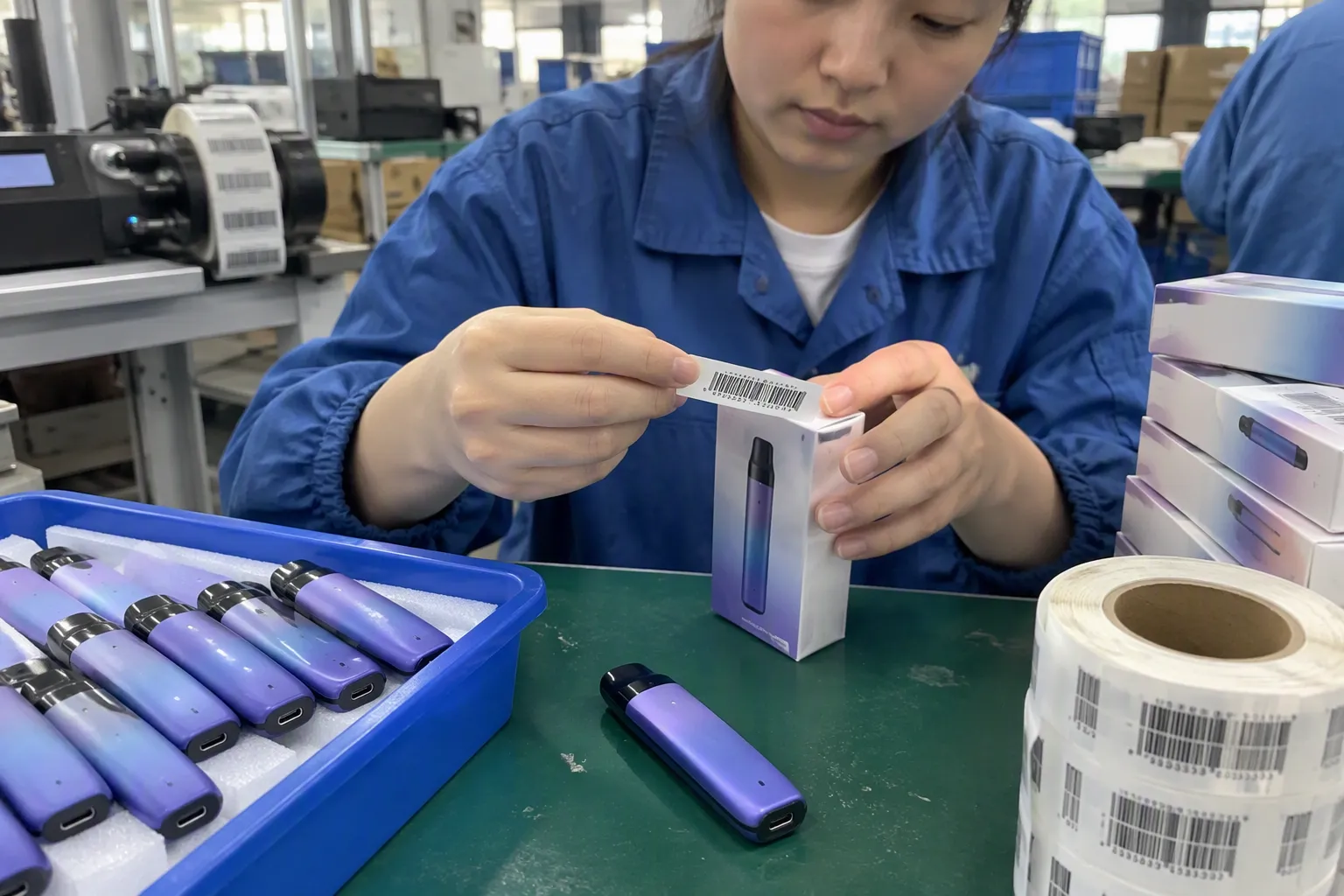
I test the logic of the instructions
I do not need to perform a laboratory test to identify an obvious instruction mismatch. I can compare the written steps with the physical product and approved operating information.
For example, I ask:
- Does the device activate by inhalation, button, or both?
- Does the package explain how to charge the product?
- Does the package explain how to install or replace the relevant component?
- Does the device require a pod, cartridge, tank, or separate battery?
- Does the package describe an indicator light that the device actually has?
- Does the sequence tell the user what to do before first use?
- Does the copy tell the user what not to do when the product is not designed for a particular action?
- Does the package distinguish the device from consumable contents?
I do not rewrite technical instructions from memory. I use the approved product information and ask the manufacturer or qualified reviewer to confirm uncertain points.
I separate practical checks from formal UK review
I can identify an empty warning panel, inconsistent instruction, or obvious product mismatch. I cannot use a packaging audit as a substitute for current legal interpretation. UK product and packaging expectations can depend on the product category, contents, intended market, claims, and current official guidance.
For that reason, I recommend that the importer, brand owner, or responsible local party verifies the final wording against current sources such as:
- UK government guidance
- Relevant official product and consumer-safety information
- Current requirements applicable to the product category
- Advice from a qualified UK compliance professional
- Appropriate technical, testing, or certification documentation
I treat certifications and test reports as documents that buyers should verify. I do not assume that a logo on artwork proves that the exact product, factory, model, or current production batch has been covered.[8]
I review warnings for clarity and placement
I check whether important safety information is readable, complete according to the approved review, and placed where the customer expects to find it. I also check font size, contrast, language quality, and whether the warning is hidden by folds, stickers, or other design elements.[7]
I do not claim that a visual check proves legal compliance. I use it to identify information that may need formal review before approval. A buyer may also need to confirm translation quality for the intended market and whether the packaging must carry specific disposal, nicotine, ingredient, age, or consumer information.
How Do I Control Artwork Versions Before Printing?
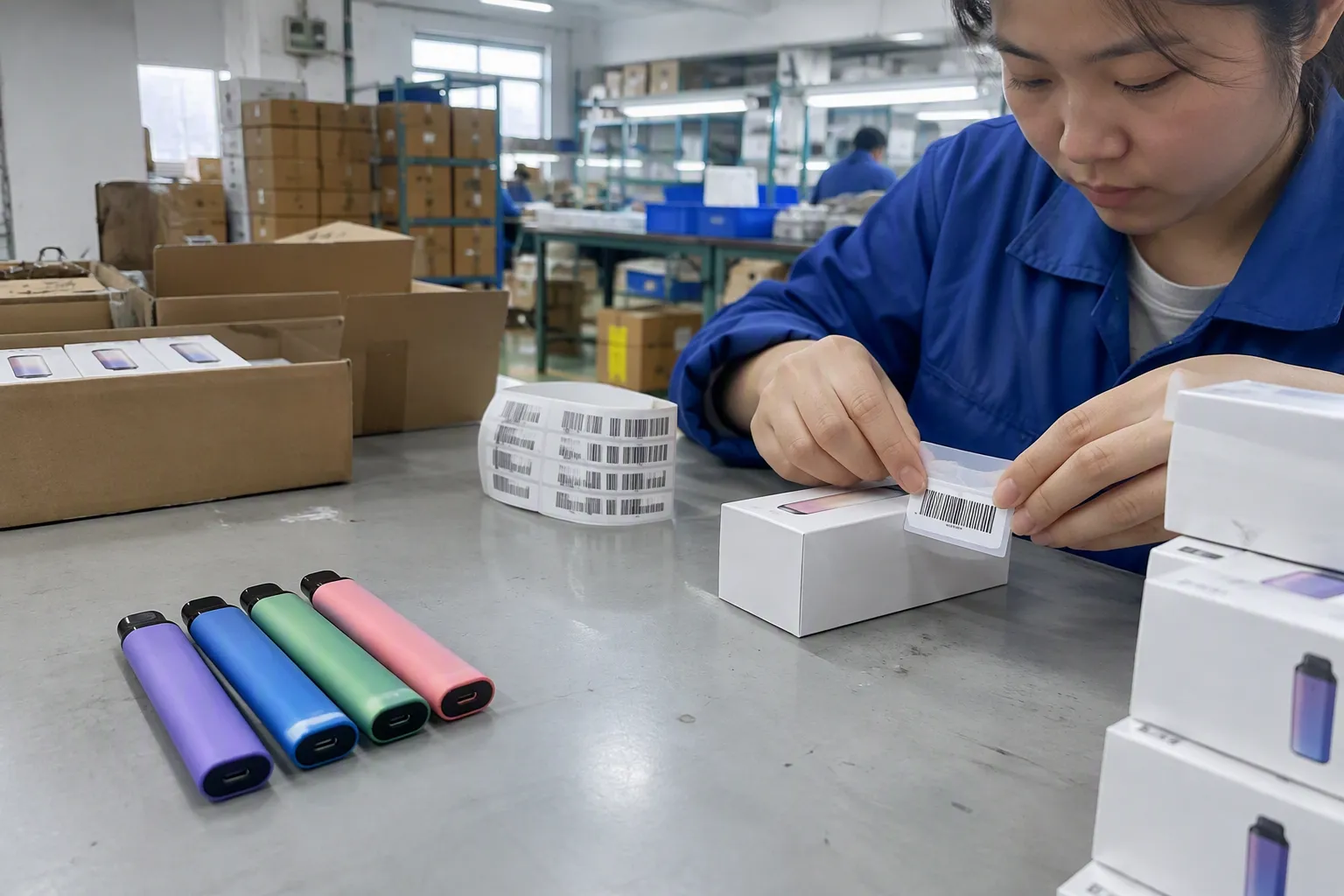
Version control is one of the most practical parts of packaging auditing. I connect each artwork file to one product, one customer brief, one approved specification, and one production order. I do not allow a file to move into printing simply because it has a familiar name such as “final artwork.”
I create a simple approval record
I recommend recording the following details:
| Record item | Example of the information to capture |
|---|---|
| Customer | Importer, wholesaler, or private-label brand |
| Product | Exact model and variant |
| Factory reference | Internal product code |
| Artwork file | Full file name and revision number |
| Revision date | Date of the latest change |
| Specification | Document number or approved version |
| Sample status | Approved, pending, or changed |
| Reviewer | Customer, factory, designer, or compliance adviser |
| Printing status | Not released, released, or cancelled |
| Notes | Open questions and required confirmation |
I use a clear naming system, such as Brand_Model_UK_Carton_Rev03, instead of relying on “new,” “latest,” or “final.” I also keep the approved PDF and the editable design file linked to the same revision record.
I check changes after sample approval
A packaging file can change after the buyer approves a sample. The customer may update the brand name, the factory may change a component, or the designer may move a warning to improve the layout. Each change should trigger a short recheck.
I ask:
- What changed?
- Did the physical product change?
- Did the specification change?
- Did the instruction or warning change?
- Did the customer approve the new version?
- Did the printer receive the correct file?
- Did the factory remove older files from the production folder?
I have found that this process is especially important for OEM and ODM projects. A customer may have several brands, models, colours, and packaging formats in production at the same time. Without disciplined version control, a correct design can still be used on the wrong order.
How Do I Audit OEM and ODM Vape Packaging?
OEM and ODM packaging requires a joint review because the buyer’s brand, the factory’s product, and the final market copy must remain consistent. I compare the customer’s brief with the production sample and the approved technical information before I confirm that the artwork is ready for printing.
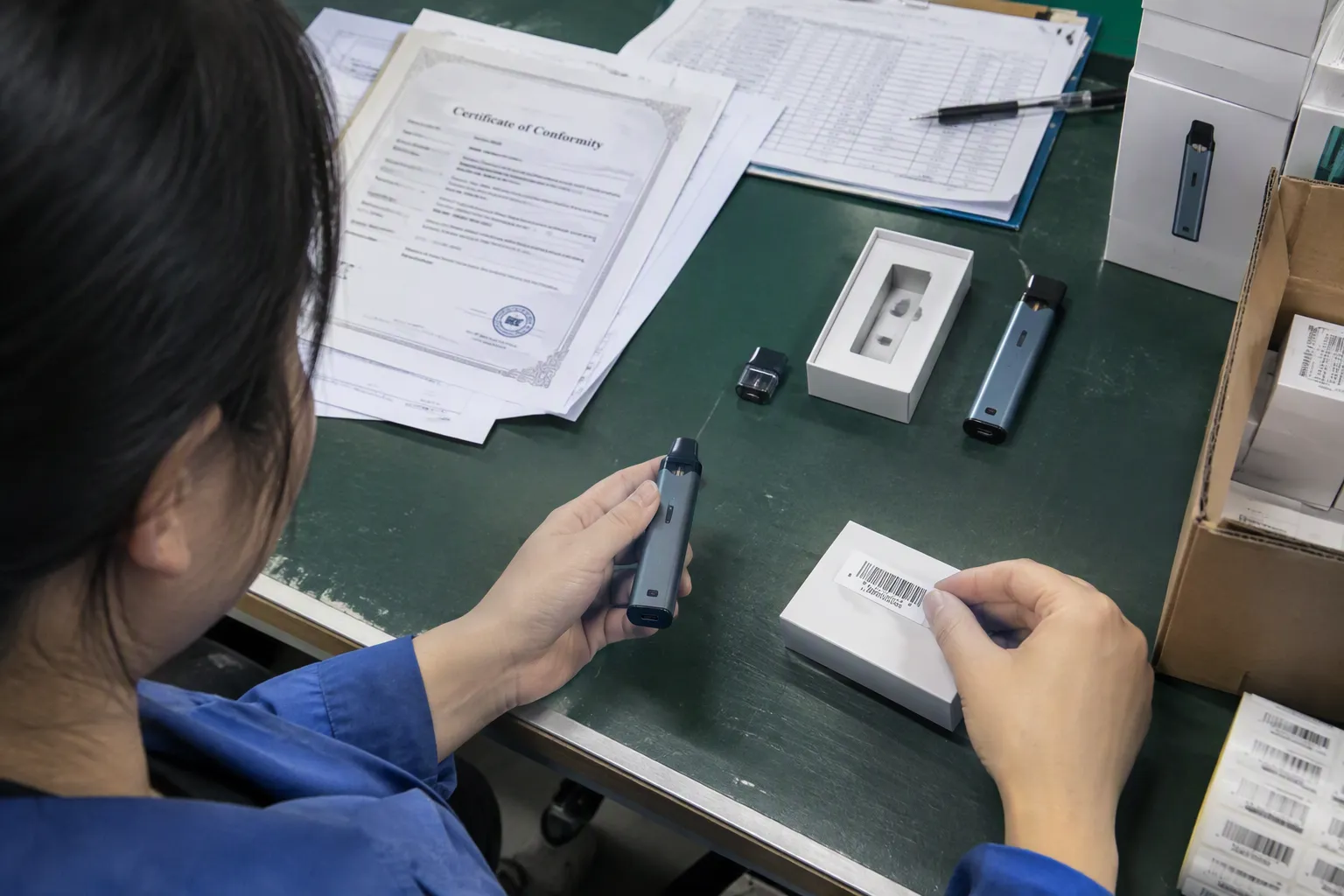
I identify responsibility at the beginning
I ask the buyer to confirm who supplies each part of the copy:
- Brand name and logo
- Product name
- Product description
- Technical specifications
- Instructions
- Warnings
- Importer or local business details, if required
- Language translations
- Disposal or consumer information
- Barcode and batch information
- Regulatory or certification references
I do not fill an information gap with a guess. I mark the field as pending and request the correct source. This approach may feel slower during artwork preparation, but it is safer than printing a large quantity with unsupported information.
I protect the customer’s commercial position
My goal is not only to avoid incorrect text. I also want the packaging to support the buyer’s sales and inventory plan. A wholesaler may need a clean, understandable carton that helps downstream shops identify the product quickly. A private-label brand may need consistent product naming across its website, invoice, carton, instruction leaflet, and master carton.
I therefore check whether:
- The product name is easy for the buyer’s staff to identify.
- The barcode belongs to the correct stock-keeping unit.
- The number of units per master carton is accurate.
- The brand wording is consistent across all packaging levels.
- The product image matches the actual colour and shape.
- The copy avoids claims that the brand cannot support.
- The package is suitable for the customer’s intended sales channel.
I do not promise that packaging alone will make a product sell quickly. I use clear packaging as one part of reducing confusion, returns, and avoidable approval delays.
What Should UK Importers Check Before Approving a Reusable Vape Package?
UK importers should compare the complete packaging set with the exact product and obtain a current formal review where necessary. They should not approve artwork based only on attractive design, a previous product file, or a supplier’s general statement that the packaging is acceptable.
I suggest that buyers complete this pre-print checklist:
Product and documents
- [ ] The model number matches the purchase order.
- [ ] The physical sample matches the product image.
- [ ] Capacity information matches the approved specification.
- [ ] Battery and charging information match the actual device.
- [ ] The package contents match the packed contents.
- [ ] The product category is described correctly.
- [ ] The customer has reviewed any claims about performance or safety.
- [ ] The latest technical documents are clearly identified.
Copy and instructions
- [ ] The operating steps match the actual product.
- [ ] Button, draw, charging, and indicator instructions are accurate.
- [ ] The wording does not belong to another model or market.
- [ ] Warnings and consumer information have received the required review.
- [ ] Translation has been checked by a suitable person.
- [ ] Unsupported claims have been removed or confirmed.
- [ ] The text remains readable at the final print size.
Artwork and logistics
- [ ] The brand and model are consistent across all packaging levels.
- [ ] Barcode and SKU information are correct.
- [ ] Master-carton quantities are correct.
- [ ] The artwork revision is recorded.
- [ ] The customer has approved the final print-ready file.
- [ ] The printer and factory have received the same version.
- [ ] Obsolete artwork has been withdrawn.
- [ ] A retained sample will be kept for future comparison.
How Can a Supplier Support a Safer Packaging Approval Process?
A supplier can support the buyer by providing accurate product information, controlled samples, responsive revision handling, and a clear record of what has been approved. I believe the supplier should make discrepancies visible instead of silently changing copy to meet a printing deadline.
At Shenzhen Kingfuji Tech. Co., Ltd., I work with electronic cigarettes, reusable vapes, atomizers, 510 batteries, CBD batteries, vaporizers, grinders, glass pipes, and related products. I also support OEM and ODM development through our own manufacturing team. That experience gives me a practical reason to compare packaging with the actual item rather than reviewing the artwork in isolation.
I can support buyers through a process that includes:
- Confirming the exact product model and customer brief.
- Comparing product samples with specifications.
- Reviewing packaging copy for obvious inconsistencies.
- Recording open questions for the buyer or qualified local adviser.
- Updating artwork after approved product changes.
- Checking the final production version against the released artwork.
- Coordinating after-sales communication through one supplier contact.
I do not present this work as a UK legal opinion, laboratory test, certification, or enforcement assessment. I ask buyers to obtain qualified local advice for application-specific decisions and to verify current official requirements before printing.
For smaller European customers, our overseas warehouse model may help reduce purchasing pressure. Depending on stock availability, buyers can order lower quantities from European inventory instead of importing a large shipment from China. Our stated minimum for some stocked items is 50 units per model, and delivery within the European Union may be arranged through services such as DHL, DPD, UPS, or FedEx. Buyers should confirm current stock, delivery time, product suitability, and local obligations for each order.
For larger importers, distributors, and wholesalers, I can discuss direct China supply, volume purchasing, private-label packaging, OEM, ODM, and new product development. Our own factory covers approximately 5,000 square metres and has a stated maximum capacity of up to 5 million units per month. Buyers should evaluate the exact product, documents, quality controls, and commercial terms for their own application rather than relying on general capacity figures.
Frequently Asked Questions
Is a packaging copy audit the same as a UK compliance assessment?
No. I use a packaging copy audit as a practical pre-print check. It compares the artwork with the product, specifications, customer brief, and available documents. It does not replace current official guidance, qualified UK legal or compliance advice, laboratory testing, certification review, or an enforcement assessment.
Can I reuse packaging artwork from a disposable vape?
I would not reuse it automatically. A reusable vape can have different charging, operating, component, capacity, and care instructions. I would compare the new product with every line of copy, image, warning, and specification, then obtain the appropriate current review before printing.
What documents should I compare with reusable vape packaging?
I normally compare the purchase order, approved product sample, technical specification, product photographs, instruction information, customer OEM or ODM brief, and the latest artwork revision. Buyers may also need to review current UK guidance and relevant technical or certification documents with a qualified adviser.
Who should approve the final packaging artwork?
The brand owner or importer should approve the commercial and market-facing artwork. The supplier should confirm that the product and manufacturing information are accurate. A qualified local compliance professional should review questions that require a definitive interpretation of current UK requirements.
Can Kingfuji provide private-label reusable vape packaging?
I can discuss private-label packaging and OEM or ODM development for suitable products. I first need the buyer’s target product, brand brief, market, specifications, order plan, and packaging requirements. I then coordinate product confirmation and artwork revisions before the buyer releases a file for printing.
Conclusion
I treat the audit packaging copy for UK reusable vape products process as a practical information-risk check before printing. I compare the artwork with the physical product, approved documents, customer brief, instructions, warnings, and production version. I also separate this work from formal legal or regulatory advice. When buyers use clear version control and resolve open questions early, they can reduce avoidable rework and approval delays. I invite UK importers, wholesalers, and vape brands to contact Shenzhen Kingfuji Tech. Co., Ltd. at info@kingvapecig.com or +86 13928420527 to discuss product sourcing, OEM/ODM packaging, and supply options.
Sources
- E-cigarettes: regulations for consumer products - GOV.UK", UK government guidance sets out the regulatory framework and information requirements relevant to electronic cigarettes and refill containers placed on the UK market
- The Top 3 Reasons for Label & Packaging Errors in Food ...", Quality-management literature identifies inaccurate labelling and documentation as nonconformities that can require corrective action, rework, or controlled disposition of affected products
- The Use of Tobacco Industry Vaping Products in the UK and ...", Studies of electronic-cigarette markets describe substantial variation in device forms, components, and product configurations, providing contextual support for distinguishing closely related models during documentation review
- Tobacco: E-cigarettes - World Health Organization (WHO)", Technical references distinguish disposable, refillable, cartridge-based, and battery components as different electronic-cigarette configurations with potentially different operating and maintenance instructions
- Types of claims: "Safe" - ASA | CAP", UK advertising and consumer-protection guidance requires objective product claims, including performance and safety representations, to be capable of substantiation and not to mislead consumers
- E-cigarettes: regulations for consumer products - GOV.UK", UK regulatory materials distinguish requirements for electronic cigarettes and refill containers according to their contents and regulatory classification, indicating that packaging obligations are product-specific
- Estimating the impact of label design on reducing the risk of ...", Human-factors research indicates that warning effectiveness depends partly on visual conspicuity, legibility, and placement where users are likely to notice the information
- Placing UKCA or CE marked products on the market in Great Britain", Conformity-assessment guidance requires the relevant product identification, technical documentation, and declaration or certificate scope to be verified rather than inferred solely from a mark displayed on packaging