Quick Answer
A supplier declaration for a UK reusable vape can look reassuring while leaving important questions unanswered. I know buyers often receive short statements such as “UK compliant” when they actually need product identification, traceability, and supporting evidence. I use a more practical approach: connect every declaration to the exact goods, supplier responsibility, and documents that a buyer must verify.
A useful supplier declaration for a UK reusable vape should identify the exact brand, model, version, reusable function, responsible supplier, covered goods, issue date, and supporting documents. It should not be treated as certification or a complete guarantee.[1] Buyers should match the declaration with the purchase order, shipped product, technical file, test records, and current UK requirements, then seek qualified professional or official confirmation where necessary.
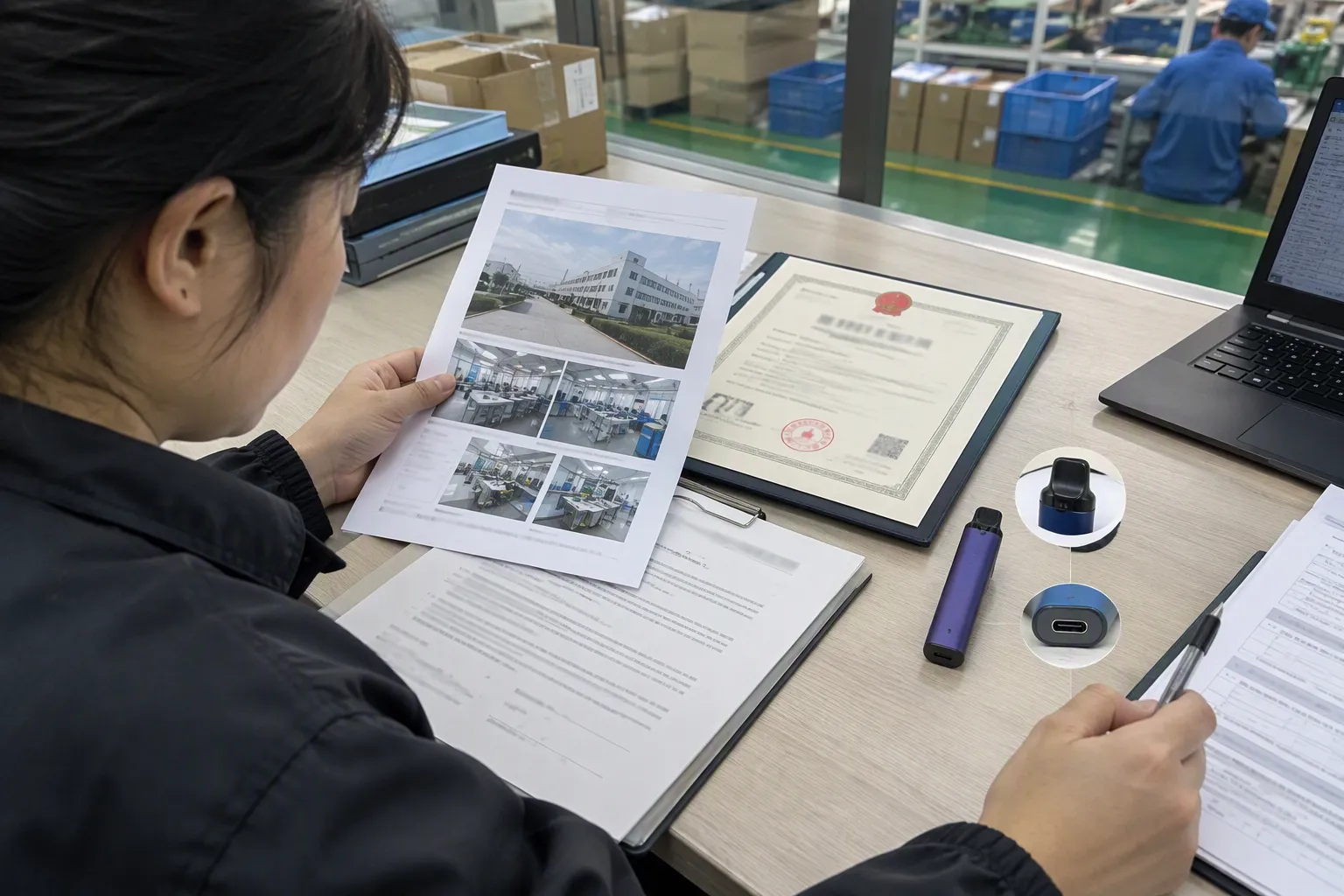
A declaration becomes valuable when it helps a buyer decide what to check next. It should reduce uncertainty rather than replace due diligence. In my experience supplying vape products and communicating specifications for export orders, the most useful documents are specific, traceable, and easy to compare with the physical product.
What Should a Supplier Declaration for a UK Reusable Vape Explain?
A supplier declaration for a UK reusable vape should explain exactly which product the supplier is discussing, who accepts responsibility for the statement, what characteristics or obligations are covered, and which records support the declaration. It should also show the document date and version so the buyer can compare it with the relevant purchase order and shipment.
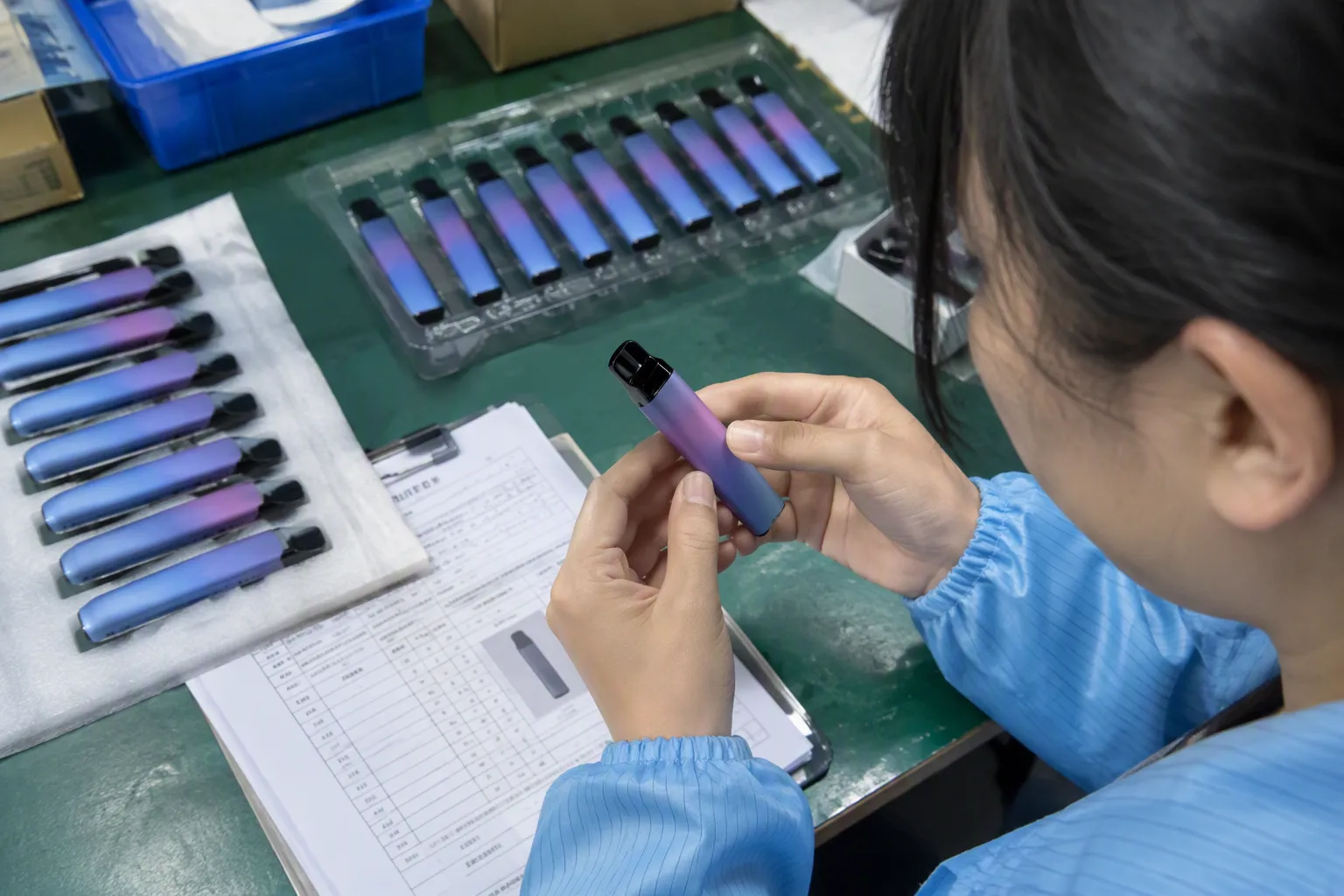
A vague declaration creates a procurement problem. A clear declaration creates a verification path. I recommend that buyers and suppliers review the following points before treating the document as useful evidence.
Why Does Product Identity Come First?
A general promise about a product category does not tell me whether the statement applies to the exact goods I am buying. Reusable vapes can differ by brand, model, battery configuration, charging method, tank or pod design, packaging, firmware, market version, and production revision.[2]
For that reason, I expect the declaration to identify the product with enough detail for a buyer to match it against the order. Useful identification may include:
- Brand and product name
- Model number or stock-keeping reference
- Product version or revision
- Product photographs or a clear physical description
- Reusable function and intended operating format
- Battery or charging configuration, where relevant
- Included accessories
- Packaging version
- Batch, lot, or production reference, where available
- The specific products or shipment covered by the statement
I do not treat a document as strong evidence simply because it uses formal language. I first ask whether I can connect it to the actual goods. If a supplier sends one declaration for an entire catalogue but does not identify the model or version[5], I still need to ask which products are included and which are excluded.
What Should the Supplier’s Responsibility Be?
A supplier declaration should name the business or responsible entity that makes the statement. It should include a company name, business address, contact details, document reference, authorized signatory, and issue date. The signer should have the authority to represent the supplier.[3]
This information matters because the declaration is not only about the product. It is also about accountability. A buyer should know whether the statement comes from:
- The manufacturer
- An exporter or trading company
- A brand owner
- An authorized distributor
- Another party in the supply chain
In my own business, Shenzhen Kingfuji Tech. CO., Ltd., I communicate with importers, wholesalers, vape shops, smoke shops, convenience-store suppliers, and other B2B buyers about product specifications and export documentation. I have learned that buyers often need to distinguish between a product manufacturer and a supplier that is only reselling stock.
That distinction does not automatically make one source reliable and another unreliable. It does affect what the supplier can reasonably confirm. A manufacturer may control production records, while a distributor may need to obtain evidence from the brand owner or factory. I encourage buyers to ask who created each supporting document and whether the named party has responsibility for the exact product.
What Scope Should the Declaration State?
The declaration should explain what the supplier is declaring and what it is not declaring. A phrase such as “this product is compliant” is too broad unless the document defines the scope.
A clearer declaration may address specific product characteristics, documentation, or supplier statements. It might refer to:
- The identified reusable vape model
- A named production version
- A specific packaging configuration
- A stated shipment or batch
- Particular technical characteristics
- Documents held by the supplier
- A defined market or intended supply route
The declaration should avoid implying that one statement covers every legal, technical, customs, labeling, environmental, or retail obligation.[6] Those requirements can depend on the product, transaction, business role, location, and current official rules.[4]
I advise buyers to ask:
“Which exact characteristics are covered by this declaration, and which matters remain for us to verify independently?”
That question turns broad compliance language into a procurement discussion. It also helps prevent a buyer from assuming that a supplier declaration is the same as a certificate, laboratory report, legal opinion, or official approval.
How Should Supporting Evidence Be Connected?
A declaration is more useful when it points to supporting records. However, I do not believe that a large document package automatically proves more than a small one. The important issue is whether the evidence matches the exact product and version.[7]
Relevant supporting material may include:
- Product specifications
- Technical drawings
- Battery or charger information
- Test records
- Quality-control records
- Packaging and labeling files
- Product photographs
- Batch or inspection records
- Manufacturer statements
- Product files maintained by the responsible business
- Other documents requested by the buyer’s professional adviser or relevant authority
A buyer should check the product name, model number, revision, manufacturer, dates, and key characteristics across the documents. I pay particular attention to inconsistencies. For example, a specification sheet may identify one model while a test record identifies another. A photograph may show packaging that differs from the shipment. A declaration may use a brand name that does not appear on the purchase order.
These differences do not always prove that a product is unsuitable. They do show that the buyer should stop and ask for clarification before listing, importing, or distributing the goods.
Which Procurement Questions Should Buyers Ask?
I recommend that buyers send direct questions instead of asking only, “Is this UK compliant?” The following questions usually produce more useful answers:
- Which exact brand, model, version, and shipment does the declaration cover?
- Who is the responsible supplier or manufacturer named in the document?
- What product characteristics or responsibilities does the declaration address?
- What does the declaration expressly exclude?
- Which supporting documents relate to this exact model and version?
- Do the product photos, packaging, specification, and shipped goods match?
- Has the product or packaging changed since the supporting documents were issued?
- What batch or production records can the supplier provide?
- Which additional UK-specific checks should the importer complete?
- Who will handle questions about defects, documentation gaps, or product changes after purchase?
I find that these questions help both sides. A serious supplier can identify missing information early. A buyer can see whether the supplier understands the product rather than repeating a marketing phrase.
How Do Reusable Functions Affect Verification?
The word “reusable” describes an important product characteristic, but it does not answer every procurement question. A reusable vape may use a rechargeable battery, a refillable liquid system, replaceable pods, or another design. The buyer should ask the supplier to describe the actual reusable function in clear technical terms.
I would normally confirm:
- How the device is recharged
- Whether the pod, tank, coil, or other component is replaceable
- Whether the product is intended for repeated use
- Which accessories are included
- Whether the packaging explains operation and safety information
- Whether the current product version differs from earlier samples
- How the supplier controls changes to components or packaging
I do not assume that a product description used in a catalogue is enough. The product listing, packaging, purchase order, declaration, and technical documents should use consistent terminology.[8] If the buyer sells to retailers, the buyer may also need clear product information for downstream distribution.
What Should Importers Check Before Placing an Order?
A declaration should be reviewed before the order becomes difficult to change. I suggest using a simple procurement file for each model. The file can contain the quotation, purchase order, product specification, declaration, photographs, supporting records, approved sample information, and communication about changes.
A practical pre-order process can look like this:
| Procurement stage | Buyer action | Supplier response to request |
|---|---|---|
| Product selection | Confirm brand, model, version, and reusable design | Provide a matching specification and product images |
| Document review | Compare names, model numbers, dates, and versions | Explain any difference or replacement document |
| Sample approval | Compare the sample with the proposed shipment | Confirm the approved version and packaging |
| Order placement | State product identity in the purchase order | Acknowledge the exact covered goods |
| Production | Request notice of material changes | Explain whether a new review is needed |
| Pre-shipment | Check packaging, quantities, and documentation | Provide final records available for the shipment |
| Import and listing | Obtain professional or official confirmation where required | Support reasonable document questions |
| After-sales | Record defects and documentation issues | Provide a defined contact and response process |
I use this type of process because product documentation can become disconnected from purchasing if nobody owns the comparison. A buyer may receive a sample, approve it, and later receive a slightly different production version. A traceable declaration helps identify what was actually reviewed.
How Can Quality Control Support the Declaration?
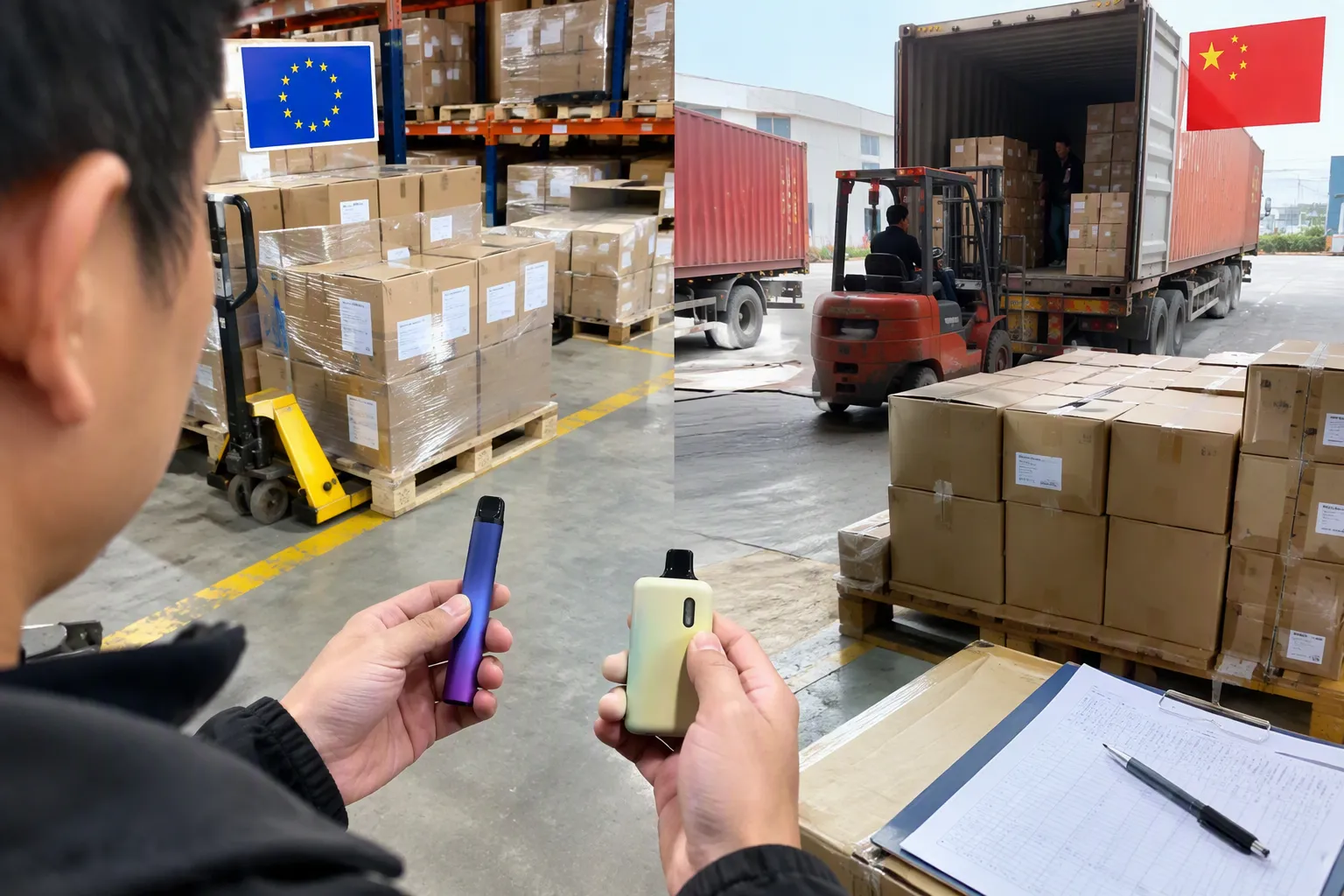
A declaration should not replace quality control. It should work alongside it. A buyer can ask how the supplier controls incoming components, assembly, charging performance, packaging, labeling, and finished-product inspection. The precise inspection method should match the product and the buyer’s risk assessment.
At Shenzhen Kingfuji Tech. CO., Ltd., I work from a supply-chain perspective that includes product communication, sourcing, factory coordination, and export support. The company was established in Shenzhen in 2011, and our own factory operates as part of a trade-and-manufacturing model. We offer electronic cigarettes, disposable vapes, atomizers, 510 batteries, CBD batteries, vaporizers, grinders, glass pipes, and related products. We also support OEM and ODM projects.
I do not present these capabilities as proof that any particular product meets a buyer’s legal obligations. Instead, they give buyers a practical route for asking who controls the product and how changes are handled. For example, a buyer may ask:
- Which factory produced the goods?
- Which approved sample does production follow?
- How are model changes recorded?
- Can the supplier identify the production batch?
- What happens if a defect is found after delivery?
- Will the supplier support a document review for the exact product?
Our business model also gives buyers one point of contact for products sourced from different brands and factories. That can simplify after-sales communication, but buyers should still know the original manufacturer, brand owner, and responsible party for each product.
What Should Smaller and Larger Buyers Consider?
The best verification process depends partly on order size and supply model. A small retailer or regional wholesaler may need low minimum order quantities and quick replenishment. A large importer may need deeper product files, private labeling, production planning, and a formal change-control process.
I support different purchasing routes because the cash-flow risk is different for each buyer:
- Small and medium buyers: European warehouse stock can offer lower minimum quantities, with some products available from warehouses in Germany, Austria, Poland, Belgium, and other European locations. The stated service model supports minimum orders as low as 50 units per model for selected stock and delivery across the EU in approximately 1–5 working days through carriers such as DHL, DPD, UPS, or FedEx. Buyers should confirm current stock, delivery terms, product availability, and applicable local requirements for each order.
- Larger importers and distributors: Direct shipment from China can support larger-volume purchasing, price discussions, and OEM or ODM projects. Buyers can discuss custom branding, product development, and mould development where the project conditions are suitable.
- Buyers with their own freight forwarder: We can deliver goods to the buyer’s nominated forwarder, allowing the buyer to manage the transport arrangement directly.
- Buyers seeking a managed service: We can discuss door-to-door delivery, document coordination, after-sales handling, and shipment support. Any compensation, customs, or after-sales terms should be written into the commercial agreement rather than assumed from a general statement.
The declaration should remain product-specific in every model. A low-MOQ warehouse order still needs clear identification. A large OEM order needs even stronger version control because packaging, branding, and components may change during development.
What Should Buyers Do When Documents Do Not Match?
A mismatch should trigger a question, not an automatic approval or rejection. I recommend recording the discrepancy and asking the supplier to explain it in writing.
Common examples include:
- The declaration shows a different model number from the invoice.
- The test record names an earlier product version.
- The packaging photograph does not match the approved artwork.
- The brand owner differs from the entity named in the declaration.
- The document date is old and the supplier cannot confirm whether the design changed.
- The shipment contains accessories that are not listed in the product file.
The buyer can then request one of three practical outcomes:
- A corrected declaration
- A written explanation linking the documents
- Additional professional or official verification before proceeding
I would not advise a buyer to solve a documentation gap by simply collecting more unrelated files. Ten documents for the wrong model are less useful than two documents that clearly match the correct version. The quality of the evidence depends on relevance, traceability, and consistency.
How Should Buyers Discuss UK-Specific Requirements?
I am a vape product supplier, not a UK legal or certification authority. I do not provide a complete legal determination through a supplier declaration. UK importers, wholesalers, and retailers should verify current requirements with the relevant official sources and qualified professionals before purchasing or selling a product.
That verification may need to consider the buyer’s role, the product’s design, packaging, labeling, electrical or battery characteristics, market route, and other applicable obligations. The buyer should also check whether requirements have changed since the supplier’s documents were issued.
I can support a buyer by providing product information and available supply-chain records. I cannot replace the buyer’s responsibility to complete appropriate due diligence. This distinction protects both parties. It prevents a commercial document from being misunderstood as legal advice or official approval.
A practical rule: Use the declaration to define what the supplier is saying. Use supporting documents to examine the evidence. Use qualified professional or official sources to confirm the UK requirements that apply to the buyer’s situation.
How Does Supplier Accountability Affect Commercial Risk?
Documentation matters because product problems create commercial costs. A retailer may face returns, delayed listings, customer complaints, damaged reputation, or blocked cash flow. An importer may also face customs questions, stock delays, relabeling work, or a dispute over which version was ordered.
I cannot promise risk-free importing, zero defects, or guaranteed customs outcomes. However, a structured supplier relationship can make problems easier to manage. I give buyers one contact for products purchased through our supply service, including after-sales communication. We can discuss replacement or compensation arrangements according to the written order and commercial terms.
Our supply model also includes brand distribution, regular stock sourcing, new product development, and OEM/ODM cooperation. We maintain a factory of approximately 5,000 square meters and report production capacity of up to 5 million units per month. Those figures describe our stated business capability, not proof that every product or project has the same specification or documentation status.
I prefer to discuss the buyer’s exact model, target market, order size, packaging, delivery route, and document needs before quoting. That approach helps the buyer evaluate the complete supply chain instead of choosing only by unit price.
Frequently Asked Questions
Is a supplier declaration the same as a UK certificate?
No. A supplier declaration is a statement made by a supplier about defined goods or characteristics. It is not automatically a certificate, laboratory report, legal opinion, or official approval. Buyers should identify the statement’s scope and independently verify which UK documents or assessments apply to their product and business role.
What product details should appear on a reusable vape declaration?
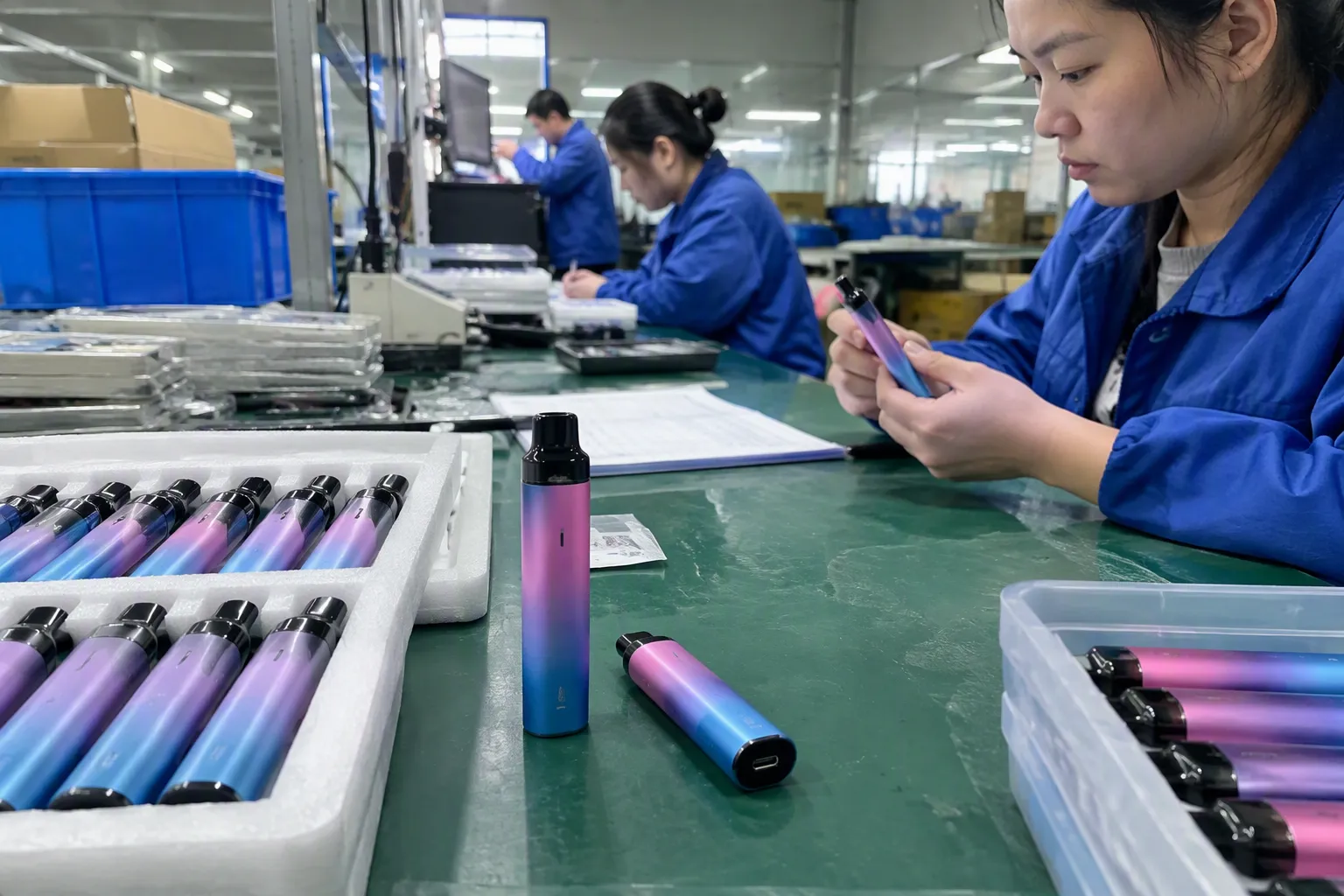
The declaration should normally identify the brand, product name, model number, version or revision, reusable function, responsible supplier, covered goods, issue date, and document reference. Supporting product photographs, specifications, batch references, or packaging information can make matching easier when those records are available.
Can one declaration cover several reusable vape models?
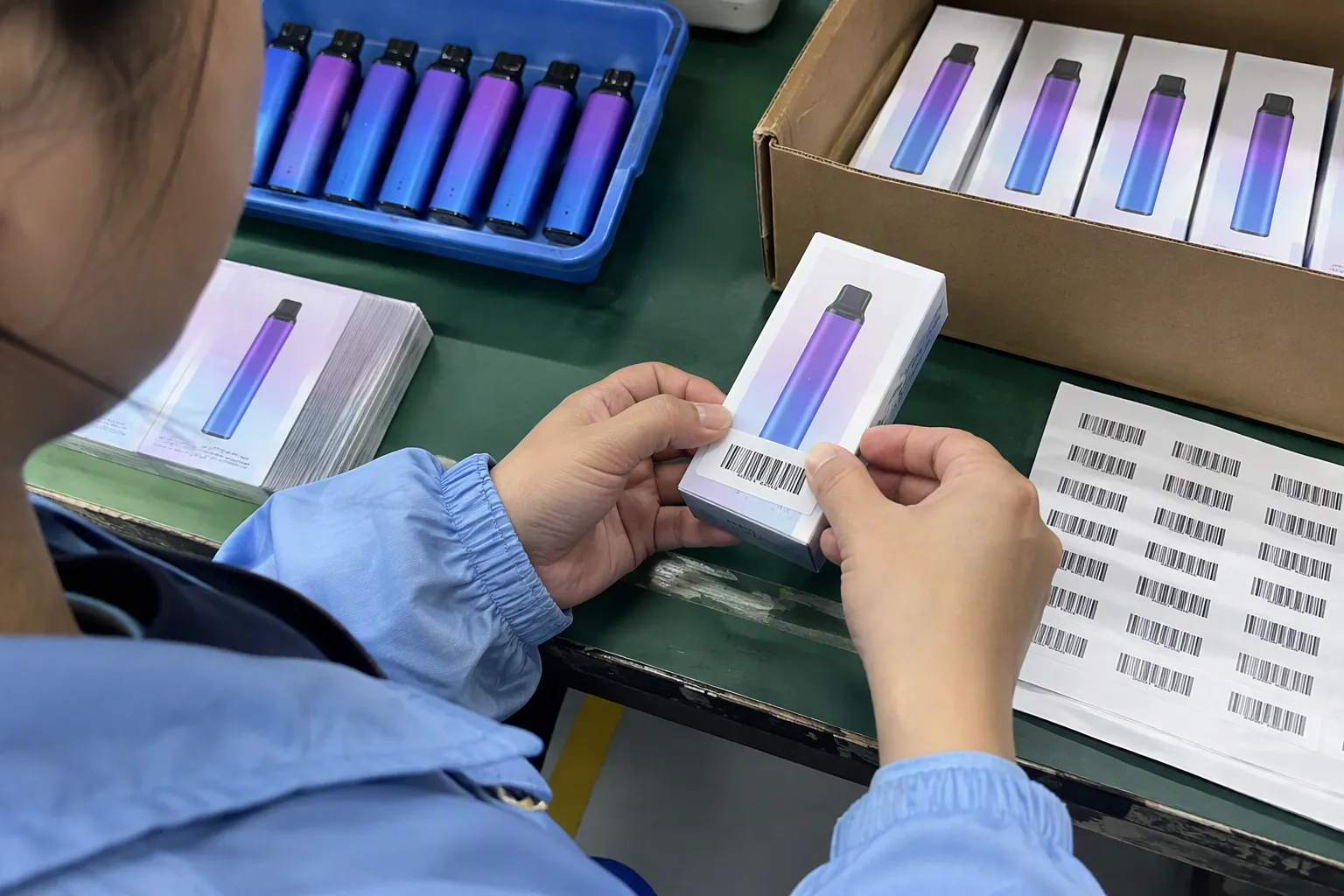
It can only be useful if the document clearly lists every covered model, version, and applicable scope. A generic catalogue statement is difficult to verify. I recommend asking the supplier to identify included and excluded products and to provide supporting evidence that matches each model rather than assuming that one document covers an entire product range.
What should I do if the declaration and product packaging do not match?
Pause the approval process and ask the supplier for a written explanation. Request a corrected declaration, a document that links the versions, or additional evidence. You should not rely on a statement that cannot be matched to the actual shipment. If the issue affects a UK requirement, seek qualified professional or official confirmation before importing or selling.
Can a supplier help with product documentation for OEM or ODM orders?
A supplier with manufacturing and product-development capability may help coordinate specifications, packaging, samples, production records, and available supporting documents. The buyer should agree on responsibilities before production begins. Custom branding or a new mould does not remove the need for product-specific verification and change control.
Conclusion
A reliable supplier declaration for a UK reusable vape should give a buyer a clear verification route. It should identify the exact model and version, name the responsible supplier, define the statement’s scope, connect claims to matching evidence, and show when the document was issued. I do not treat “UK compliant” as enough information. At Shenzhen Kingfuji Tech. Co., Ltd., I help importers, wholesalers, retailers, and OEM buyers coordinate product supply, documentation, delivery, and after-sales communication. Contact me at info@kingvapecig.com or +86 13928420527 to discuss the exact product and documents you need to review.
Sources
- Placing UKCA or CE marked products on the market in Great Britain", UK government conformity guidance distinguishes a declaration made by the responsible economic operator from independent certification and specifies that the declaration concerns defined products and applicable requirements rather than constituting a general guarantee
- Insights on electronic cigarette products from reviews on the Reddit ...", Technical reviews of electronic-cigarette systems describe substantial variation in rechargeable power sources, liquid reservoirs, replaceable components, charging arrangements, and electronic controls, supporting the need to identify a device by model and configuration
- Declaration of Conformity", Official conformity-assessment guidance generally requires the declaration to be issued on behalf of the responsible manufacturer or economic operator by an appropriately authorized representative, thereby linking the statement to an accountable entity
- Product safety law: advice for manufacturers and importers", UK product-regulation guidance allocates different obligations to manufacturers, importers, and distributors and applies those obligations according to the relevant product regime and market route
- Product safety law: advice for manufacturers and importers - GOV.UK", Product-safety guidance treats model, batch, serial, or equivalent identifiers as important links between goods, responsible businesses, and supporting records, which limits the evidentiary value of an unqualified catalogue statement
- UK standards and regulatory import requirements", UK official guidance separates product conformity and labeling duties from customs procedures, environmental responsibilities, and market-specific obligations, supporting the view that one commercial declaration cannot automatically establish compliance across all regimes
- Configuration Management Concepts Document - NIST", Configuration-management and product-assurance literature identifies version control and traceability as mechanisms for ensuring that test records and technical documents remain attributable to the specific configuration evaluated
- Traceability and labelling information for fisheries products - GOV.UK", Quality-management and product-safety guidance treats consistent product identification across specifications, labels, orders, and records as a control that reduces ambiguity and supports traceability