
## Quick Answer
vape import project** can prevent an expensive mistake before inventory is purchased. Many buyers ask only whether a product has a certificate or can pass customs. I have found that counsel needs a much wider fact pattern, covering the product, supplier, importer, documents, intended sales channels, and marketing plans.
A **legal-counsel brief for a U.S.
**A legal-counsel brief for a U.S. vape import project should contain a complete transaction summary, product and ingredient information, supplier and manufacturer details, importer-of-record arrangements, shipping plans, labels, packaging, intended states, sales channels, and marketing claims. Supplier documents can help a lawyer review the project, but they do not prove that a product is approved, legal to sell, or suitable for every U.S. market.**
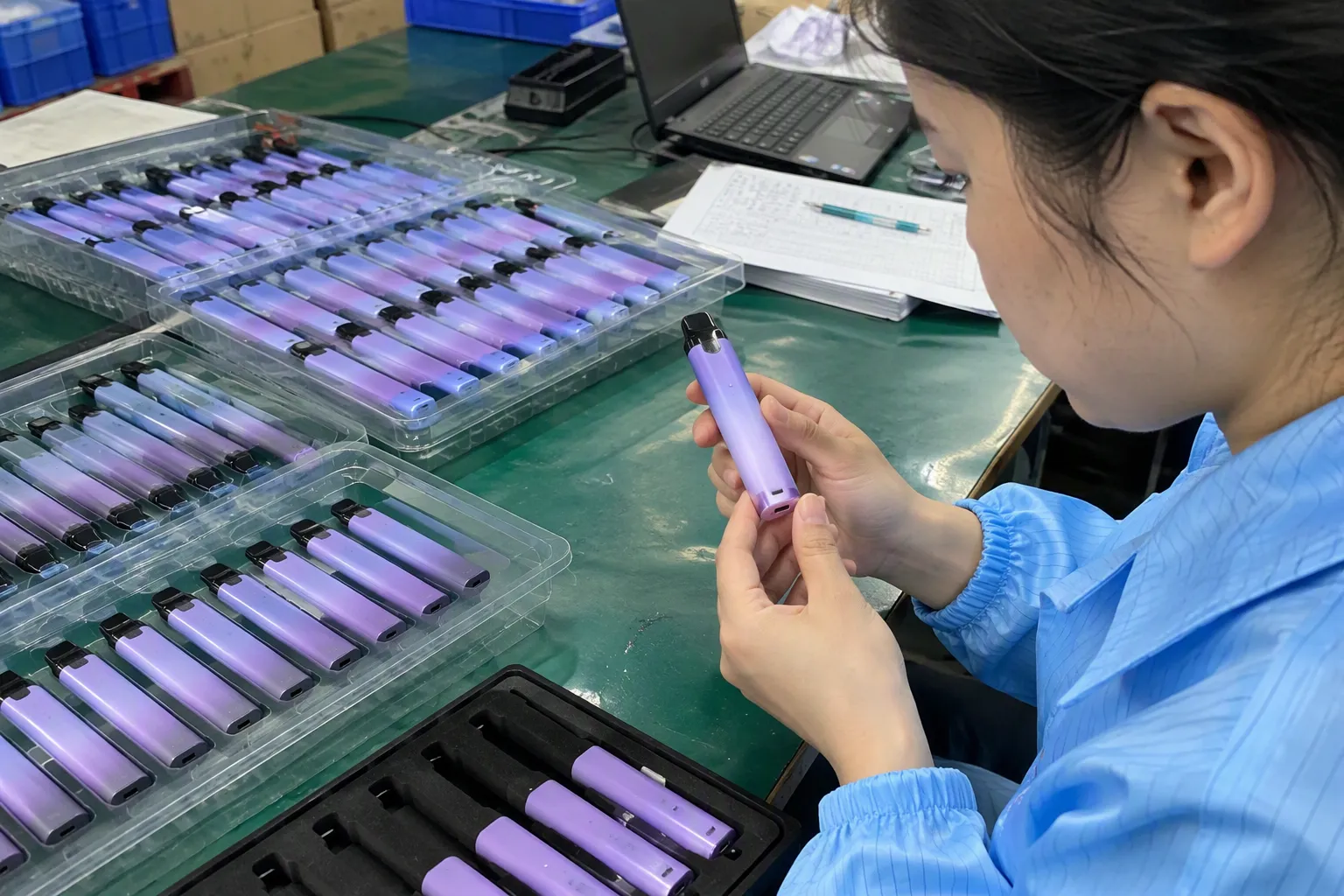
The purpose of the brief is not to turn a supplier into a lawyer or to create a legal conclusion. I use it as a fact package that helps qualified U.S. counsel identify the right questions early. That approach can reduce repeated document requests and expose problems before the buyer commits inventory, freight costs, working capital, or a national sales plan.
## What Should a Legal-Counsel Brief for a U.S. Vape Import Project Include?
Many importers begin with a product name, a unit price, and a target delivery date. That information is useful for purchasing, but it is not enough for legal review. I recommend building the brief around the complete transaction so counsel can see how the product will enter, move through, and reach the U.S. market.
**A useful legal-counsel brief should identify the product, contents, intended use, manufacturer, supplier, importer, ownership structure, shipping route, destination states, sales channels, labels, packaging, and marketing claims. It should also separate verified facts from open questions and clearly mark documents that require independent review.**
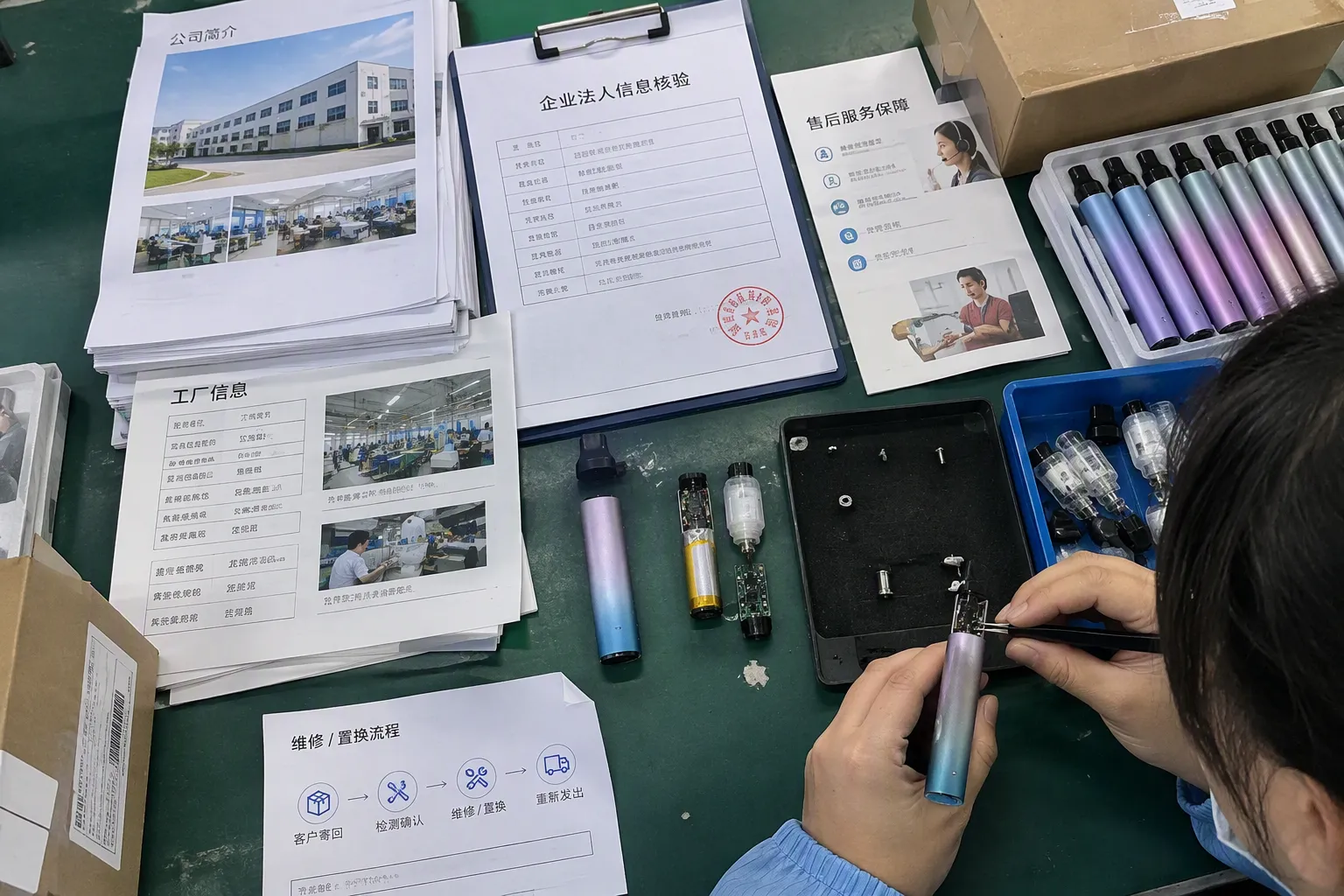
A product may be described as a disposable vape, cartridge, atomizer, 510 battery, CBD battery, vaporizer, or another related item. That description alone does not explain every fact that may affect legal analysis. Counsel needs to understand what the item contains, how it works, who will buy it, and what the buyer plans to say about it.
I normally start with a one-page transaction summary. I then attach supporting files in an organized folder. This format gives counsel a quick overview without replacing the detailed documents behind it.
– What is the exact product name and model?
– [Does the product contain nicotine, cannabis-related material, CBD, THC, e-liquid, or another substance?](https://www.fda.gov/tobacco-products/products-ingredients-components/e-cigarettes-vapes-and-other-electronic-nicotine-delivery-systems-ends)[3]
– Is the product empty, prefilled, refillable, or intended for use with a separate substance?
– Is the product branded by the manufacturer, sold under a private label, or supplied without a consumer brand?
– Who manufactures the product?
– Who sells the product to the U.S. buyer?
– Who owns the brand, artwork, molds, formulas, and packaging?
– [Who will act as importer of record?](https://www.cbp.gov/sites/default/files/documents/3530-002a_3.pdf)[5]
– Where will the goods enter the United States?
– Which states and cities are the intended destinations?
– Will the buyer sell to wholesalers, vape shops, smoke shops, convenience stores, gas stations, online customers, or other businesses?
– What product claims will appear on packaging, websites, sales sheets, or social media?
These details matter because the legal questions may change when the facts change. A product made for one intended use may create different questions from a product marketed for another use. [A product sold in one state may face different review requirements from the same product distributed nationally.](https://www.cdc.gov/statesystem/factsheets/ecigarette/ECigarette.html)[4] A private-label launch may also require additional attention to brand ownership, packaging responsibility, customer complaints, and supplier agreements.
I do not treat this process as a way to predict a legal result. I treat it as a way to make the facts visible.
The product section should be specific enough for counsel to understand the item without relying on a short marketing description. I recommend including a product data sheet for every model or SKU under review.
| Information area | Examples of useful information |
|—|—|
| Product identity | Model name, SKU, photos, dimensions, weight, and intended use |
| Product type | Disposable device, cartridge, atomizer, battery, vaporizer, glass pipe, grinder, or accessory |
| Contents | Ingredient information, liquid contents, concentration information if applicable, and whether the item is empty |
| Hardware | Battery type, charging method, materials, capacity, and operating instructions |
| Packaging | Unit packaging, master cartons, inserts, warnings, symbols, and languages |
| Brand status | Existing brand, private label, white label, or unbranded supply |
| Production details | Manufacturer name, factory address, production location, and supplier contact |
| Quality records | Internal inspection records, test reports, specifications, and batch information |
| Commercial documents | Quotation, purchase order, invoice, packing list, and applicable shipping documents |
I can provide verified product specifications, ingredient information, labels, packaging files, invoices, and export documents when those materials are available for the specific order. I need to be careful with the word “verified.” It means that I can identify the source of a document and connect it to the supplied product information. It does not mean that the document automatically proves U.S. legal compliance.
For example, a laboratory report may describe a sample tested under particular conditions. Counsel may still need to ask whether the sample matches the shipped product, whether the test scope covers the relevant concern, and whether the document is current. [A certificate may confirm a manufacturing or testing statement, but it may not answer whether the product can be marketed in a particular state.](https://www.fda.gov/tobacco-products/retail-sales-tobacco-products/selling-tobacco-products-retail-stores)[6]
Importers should identify each party instead of using the word “supplier” for everyone. In a normal transaction, the factory, export company, brand owner, trading company, freight provider, and U.S. importer may have different responsibilities.
1. **Manufacturer:** The entity that produces or assembles the product.
2. **Brand owner:** The entity that owns or controls the consumer-facing brand, if different.
3. **Supplier or exporter:** The entity that sells the goods and prepares commercial documents.
4. **U.S. buyer:** The company purchasing and receiving the goods.
5. **Importer of record:** The party responsible for the customs entry arrangement.
6. **Freight or customs provider:** The company supporting transportation or customs processing.
7. **Distributor or sales partner:** Any party that will resell or distribute the product.
8. **Private-label customer:** The business whose brand appears on the product, if applicable.
I work with Shenzhen Kingfuji Tech. CO., Ltd., a Shenzhen-based vape supply and export business established in 2011. The company operates as a factory and trading business, with its own brand capability, OEM/ODM experience, and a 5,000-square-meter facility. The stated production capacity can reach up to 5 million units per month, and the company introduces approximately 5–10 new products each month. These facts can help a buyer explain the supply relationship, but I would still attach order-specific records rather than asking counsel to rely only on a general company profile.
Counsel may want to review the actual sales contract, quality terms, private-label agreement, warranty language, and responsibility for defective goods. Those documents can be especially important when a buyer is launching a new brand or importing several product categories in one shipment.
I suggest arranging the brief in folders with clear file names. A lawyer should not have to search through dozens of unrelated files to locate the label for one SKU.
– **01—Project summary**
– **02—Product specifications**
– **03—Ingredients and contents**
– **04—Labels and packaging artwork**
– **05—Supplier and manufacturer information**
– **06—Quality and laboratory documents**
– **07—Commercial documents**
– **08—Shipping and customs information**
– **09—Sales channels and marketing materials**
– **10—Open questions and requested legal review**
The documents should correspond to the exact product and shipment where possible. I would not attach a test report for one model and assume it applies to every similar model. I would also identify the document date, issuing party, product reference, sample reference, and any limitation that appears on the document.
– Product photographs from several angles.
– Final packaging artwork rather than an early draft.
– Ingredient or contents information supplied for the relevant batch.
– User instructions and warning text.
– Carton markings and packing details.
– Commercial invoice and packing list drafts.
– Purchase order and quotation.
– Supplier and manufacturer addresses.
– Batch or lot identification procedures.
– Internal inspection records.
– Available test reports and specifications.
– Proposed website pages, product listings, brochures, and advertisements.
– Private-label artwork and brand authorization records.
– Proposed shipping route and destination information.
I present these materials as evidence for review. I do not present them as a legal opinion, market-access approval, sales permit, or guarantee of customs treatment.
Importers sometimes ask, “If the shipment enters the country, can I sell it?” I explain that [customs entry and commercial sale are separate questions](https://www.cbp.gov/trade/rulings/informed-compliance-publications/marking-country-origin-us-imports)[1]. A customs outcome does not automatically establish that a product may be sold or promoted throughout the United States.
– Product description used for the shipment.
– Quantity, value, and packaging.
– Country of manufacture.
– Proposed port or entry location.
– Importer-of-record arrangement.
– Freight provider and customs broker, if selected.
– Commercial invoice and packing list.
– Any available classification information.
– Shipping terms and delivery destination.
– Whether the shipment will move to a U.S. warehouse or another location.
– Intended states and cities.
– Intended customer types.
– Wholesale, retail, online, or business-to-business sales.
– Vape shop, smoke shop, convenience store, gas station, or other channels.
– Private-label or established-brand distribution.
– Website and marketplace listings.
– Packaging claims and product descriptions.
– Social media and advertising plans.
– [Age-control procedures where relevant](https://www.fda.gov/tobacco-products/retail-sales-tobacco-products/tobacco-21)[8].
– Promotional language, health language, wellness language, or performance claims.
I recommend that importers ask counsel to review both sections together. The product may be physically imported for one purpose but later sold through a different channel. A buyer may also begin with local wholesale distribution and later move toward online or multistate sales. The legal review should match the real business plan, not only the first shipment.
[A U.S. vape import project may involve federal, state, and local issues.](https://www.fda.gov/tobacco-products/retail-sales-tobacco-products/tobacco-21)[2] I cannot make a state-specific legal conclusion from a supplier-side product file. I can help the buyer prepare the factual material that allows U.S. counsel to conduct that review.
| Business stage | Information to provide |
|—|—|
| Import | Entry location and importer-of-record details |
| Storage | Warehouse state and city |
| Wholesale | States served and business customer types |
| Retail | Store locations and product categories |
| Online sales | Intended delivery states and platform |
| Private label | Brand owner, label owner, and sales territory |
| Expansion | States or channels planned for the next stage |
The buyer should not write “all fifty states” if the actual launch will begin in only two or three states. Counsel needs the current plan and any realistic expansion plan. If the buyer has not decided, the brief should say that the territory is unresolved.
I also recommend listing questions instead of hiding uncertainty. Examples include:
– Does the planned product category require additional review before sale?
– Does the intended packaging contain all information counsel expects to review?
– Do the proposed claims create a separate issue?
– Does the intended sales channel change the analysis?
– Does each destination state require separate confirmation?
– Does the private-label structure change responsibility between the buyer and supplier?
– What records should the importer retain for future questions?
This list does not answer the questions. It helps counsel see where the buyer needs advice.
Private-label products often require more than a logo change. The buyer may control the brand, packaging, product description, advertising, and customer relationship. Those facts should be visible in the brief.
– Brand owner and legal entity name.
– Trademark ownership or authorization information.
– Final artwork and packaging files.
– Written approval of product descriptions.
– Contractual responsibility for labels and claims.
– Product modification history.
– Formula or hardware changes.
– Approval process for future revisions.
– Defect, recall, and complaint procedures.
– Warranty and replacement responsibilities.
– Ownership of molds, tooling, and design files.
– Intended states and sales channels.
My company supports OEM/ODM projects and can assist with product development when a customer needs an item that is not already in the catalog. That support may include product sourcing, development, and, where the customer’s conditions are suitable, new mold development. I would still recommend that the buyer give counsel the actual design documents, commercial agreement, label files, and intended marketing plan for the specific project.
A private-label customer should avoid assuming that the factory carries every legal responsibility. The contract may divide responsibilities, but the buyer still needs qualified U.S. advice about its own import and sales plans.
Legal review is only one part of procurement planning. A buyer also needs to consider whether a compliance question could delay a purchase, shipment, stocking decision, or product launch.
I have spoken with buyers who want fast-moving products, low after-sales risk, and quick cash-flow rotation. Those goals are understandable, especially for small and medium-sized wholesalers. However, speed is less useful when the buyer commits a large order before identifying an unresolved issue.
1. **Initial fact review:** Send the product summary and core documents to counsel.
2. **Open-question review:** Ask counsel to identify missing information and unresolved issues.
3. **Sample or pilot stage:** Confirm the exact product, label, and packaging under consideration.
4. **Commercial decision:** Review the legal feedback before committing larger inventory.
5. **Shipment preparation:** Match the final documents to the actual goods.
6. **Post-arrival controls:** Retain records and monitor complaints, defects, and product changes.
For smaller European customers, our overseas warehouses in Germany, Austria, Poland, and Belgium can offer a different supply route for available products. The stated service supports low minimum quantities, including orders from 50 units per model for applicable stock, with delivery across the European Union through carriers such as DHL, DPD, UPS, and FedEx. That service is relevant to European procurement, not proof that a product is suitable for U.S. sale.
For U.S. buyers, the important point is simpler: a smaller initial order may reduce inventory exposure, but it does not replace legal review. A small shipment can still create import, labeling, sales, or marketing questions.
The buyer should ask focused questions based on the project facts. I recommend using a table like this:
| Topic | Question for counsel |
|—|—|
| Product scope | How should counsel classify or describe each product for this project? |
| Contents | What additional information is needed about ingredients or substances? |
| Import | What import and customs questions require confirmation? |
| Sales | Can the planned sales channels be used for the intended locations? |
| Labels | What label or packaging issues should be addressed before production? |
| Marketing | Do any product claims require revision or additional support? |
| Private label | What responsibilities should the brand owner accept in the contract? |
| Distribution | Does the wholesale plan require different state or local review? |
| Records | Which documents, complaints, and batch records should the buyer retain? |
| Changes | What must be reviewed again if the product, label, formula, or channel changes? |
I would also ask counsel to identify assumptions. For example, counsel may be reviewing the project on the assumption that the product contains no particular substance, that the label will remain unchanged, or that sales will occur only through identified business customers. The buyer should understand those assumptions before relying on the advice.
A strong brief does not pretend that every question has already been solved. It marks unknown facts clearly.
– **Confirmed:** Supported by a current document or written supplier statement.
– **Proposed:** Planned but not yet final, such as draft artwork or a proposed shipping route.
– **Open:** Not yet confirmed and requiring buyer, supplier, broker, laboratory, or legal review.
> **Confirmed:** The supplier has provided a product specification for Model A.
> **Proposed:** The buyer plans to sell through wholesale customers in selected states.
> **Open:** Counsel must review the proposed label, claims, and state-specific sales plan.
This format prevents a draft from being mistaken for a final fact. It also helps me identify what I need to request from the factory or customer.
When I prepare supplier-side materials, I can explain what the company has, what the document describes, and which information remains unavailable. I should not use words such as “approved,” “fully legal,” or “guaranteed to clear” unless a qualified authority has made that determination and the statement is accurate for the exact situation. In most supplier communications, those words create more risk than value.
I see several recurring mistakes in early discussions with buyers. These mistakes are not limited to first-time importers. Established wholesalers can also encounter them when they expand into a new product category or launch a private label.
A certificate may be useful, but counsel needs the underlying product facts, intended market, packaging, and claims. The certificate should be indexed and explained rather than treated as the complete answer.
A test report may apply only to a particular sample, model, batch, or test scope. The importer should provide the report’s identification details and ask whether further review is needed.
A customs event does not automatically answer every question about domestic sale, advertising, distribution, or state requirements.
[A product page, package slogan, sales sheet, or social media post can change how the project must be evaluated.](https://www.fda.gov/media/127853/download)[7] Counsel should see the language the buyer actually plans to use.
#### Mistake 5: Using a general company profile instead of order-specific evidence
A supplier’s factory profile can explain capabilities. It cannot replace the exact label, specification, invoice, product sample, and contract for the proposed shipment.
If the importer has not selected the final states, label, or sales channel, the brief should say so. Open facts are easier to manage when they are visible.
The best time to prepare the brief is before purchasing or shipping. After goods are produced, the buyer may have fewer practical options and more financial pressure.
### How Can a Supplier Support the Legal Review Without Giving Legal Advice?
I see my role as a documentation and supply-chain partner. I can help the buyer collect factual information and explain how the product is supplied. I cannot replace qualified U.S. counsel, a customs professional, a laboratory, or a regulatory authority.
– Preparing product specifications.
– Providing available ingredient or contents information.
– Sharing packaging and label files.
– Identifying the manufacturer and supplier roles.
– Preparing invoices, packing lists, and export documents.
– Explaining the proposed production and delivery schedule.
– Supporting OEM/ODM documentation for private-label projects.
– Providing video verification of goods where agreed.
– Coordinating one supplier contact for after-sales questions.
– Identifying available stock and applicable minimum order quantities.
– Supporting delivery to the buyer’s nominated freight forwarder.
Our business also offers one-stop sourcing across electronic cigarettes, disposable vapes, atomizers, 510 batteries, CBD batteries, vaporizers, grinders, glass pipes, and related products. That broad product range can simplify procurement for importers that would otherwise coordinate several factories. However, one-stop purchasing does not remove the need to review each product and destination plan.
We can also discuss delivery-to-door arrangements or delivery to a customer’s established freight forwarder. Any customs compensation, after-sales replacement, or service arrangement should be confirmed in writing for the specific order. Buyers should also obtain independent advice about the legal and commercial effect of those arrangements.
No. A certificate may provide useful evidence about a particular product, process, or test, but it does not automatically establish that the product can be imported, sold, or advertised in every U.S. state. Counsel should review the complete product, transaction, labeling, distribution, and marketing facts.
No. Customs entry and the right to sell or promote a product are separate issues. A brief should describe the import plan and the domestic sales plan separately so qualified U.S. counsel can review the questions that apply to each stage.
Yes. Preparing the brief before purchasing or shipping gives counsel a better opportunity to identify missing information and unresolved issues. Early review may also help the buyer avoid committing inventory, freight costs, or working capital before the commercial plan is sufficiently understood.
A private-label importer should provide the brand and trademark information, final or proposed packaging, labels, product specifications, contents information, manufacturer details, contracts, intended claims, sales channels, destination states, and responsibility for customer complaints or defective products.
A Chinese supplier can provide factual product and export information, but it should not present itself as U.S. legal counsel unless it is properly qualified to do so. I provide supplier-side documentation and practical supply-chain support. The buyer should obtain current advice from qualified U.S. counsel for application-specific decisions.
A well-prepared **legal-counsel brief for a U.S. vape import project** gives a lawyer the facts needed to evaluate the real transaction, rather than a product name or isolated certificate. I recommend including product details, contents, labels, supplier roles, importer information, shipping plans, intended states, sales channels, marketing claims, and clearly marked open questions. Supplier documents support review, but they do not create legal clearance. Before you purchase or ship, contact Kingfuji Tech. for organized product and export documentation at **info@kingvapecig.com** or **+86 13928420527**, then ask qualified U.S. counsel to review your specific plan.
—
### Sources
1. [Marking of Country of Origin on U.S. Imports”, U.S. customs and product-regulatory authorities distinguish acceptance of an import entry from compliance with the separate federal, state, and local requirements applicable to marketing and sale within the United States](https://www.cbp.gov/trade/rulings/informed-compliance-publications/marking-country-origin-us-imports.)
2. [Tobacco 21 – FDA”, Federal, state, and local authorities may impose distinct requirements on electronic nicotine-delivery products, including rules concerning authorization, taxation, licensing, retail distribution, and public use](https://www.fda.gov/tobacco-products/retail-sales-tobacco-products/tobacco-21.)
3. [E-Cigarettes, Vapes, and other Electronic Nicotine Delivery Systems …”, U.S. regulatory classifications generally depend in part on a product’s contents and intended use; nicotine- or tobacco-containing products and cannabis-related substances may therefore be governed by different statutory and administrative regimes](https://www.fda.gov/tobacco-products/products-ingredients-components/e-cigarettes-vapes-and-other-electronic-nicotine-delivery-systems-ends.)
4. [STATE System E-Cigarette Fact Sheet – CDC”, Comparative surveys of U.S. jurisdictions document substantial state-level variation in rules affecting electronic cigarettes, including sales conditions, taxation, licensing, and product restrictions](https://www.cdc.gov/statesystem/factsheets/ecigarette/ECigarette.html.)
5. [[PDF] S-01 CUSTOMS DIRECTIVE NO. 3530-002A DATE”, U.S. Customs and Border Protection identifies the importer of record as the party responsible for entry-related obligations, including exercising reasonable care and providing accurate information for customs purposes](https://www.cbp.gov/sites/default/files/documents/3530-002a_3.pdf.)
6. [Selling Tobacco Products in Retail Stores – FDA”, Regulatory documentation concerning manufacture, testing, or product registration should not be treated as a universal authorization to market a vape product, because market access may depend on separate federal and state requirements](https://www.fda.gov/tobacco-products/retail-sales-tobacco-products/selling-tobacco-products-retail-stores.)
7. [[PDF] Premarket Tobacco Product Applications for Electronic Nicotine …”, Regulatory authorities consider labeling and promotional representations when assessing a product’s intended use and the substantiation required for associated claims](https://www.fda.gov/media/127853/download.)
8. [Tobacco 21 – FDA”, U.S. federal law establishes a minimum legal sales age for covered tobacco products, including electronic nicotine-delivery systems, and requires retailers to apply age-verification procedures in relevant transactions](https://www.fda.gov/tobacco-products/retail-sales-tobacco-products/tobacco-21.)