
Quick Answer
EU warehouse vape stock can help a buyer replenish quickly, but reserving it before payment creates a commercial decision: the buyer may protect sales continuity while also tying up cash in uncertain inventory. When demand, quantity, price validity, and release terms are unclear, I believe a reservation can create more risk than value. A careful stock check and written confirmation usually provide the safer starting point.
A buyer should reserve EU warehouse vape stock before payment when the product is genuinely time-sensitive, the expected sales or replenishment need is reasonably clear, and the supplier has confirmed the exact quantity, reservation deadline, price validity, payment requirement, release conditions, warehouse location, and dispatch process. Buyers should compare the cost of missing stock with the cash-flow risk of holding inventory.

I regularly discuss warehouse availability, order coordination, and dispatch arrangements with European buyers. In these conversations, the real question is rarely only, “Can you hold this product?” The more useful question is, “What sales need justifies holding it, and what terms keep the buyer’s financial exposure under control?”
Buyers often ask for a reservation when a fast-moving SKU may become unavailable, when a shop needs urgent replenishment, or when a distributor is preparing a short-term promotion. However, an “in stock” listing does not automatically mean that unlimited units are available or that every unit can be held indefinitely. I recommend connecting the reservation request to a specific sales need, quantity, and deadline.
A buyer should consider reserving EU warehouse vape stock when the SKU is already selling, the replenishment date is important, and the supplier can clearly identify the stock being held. A reservation is less suitable when demand is only speculative, the buyer has not checked local market requirements, or the payment and release terms remain unclear.
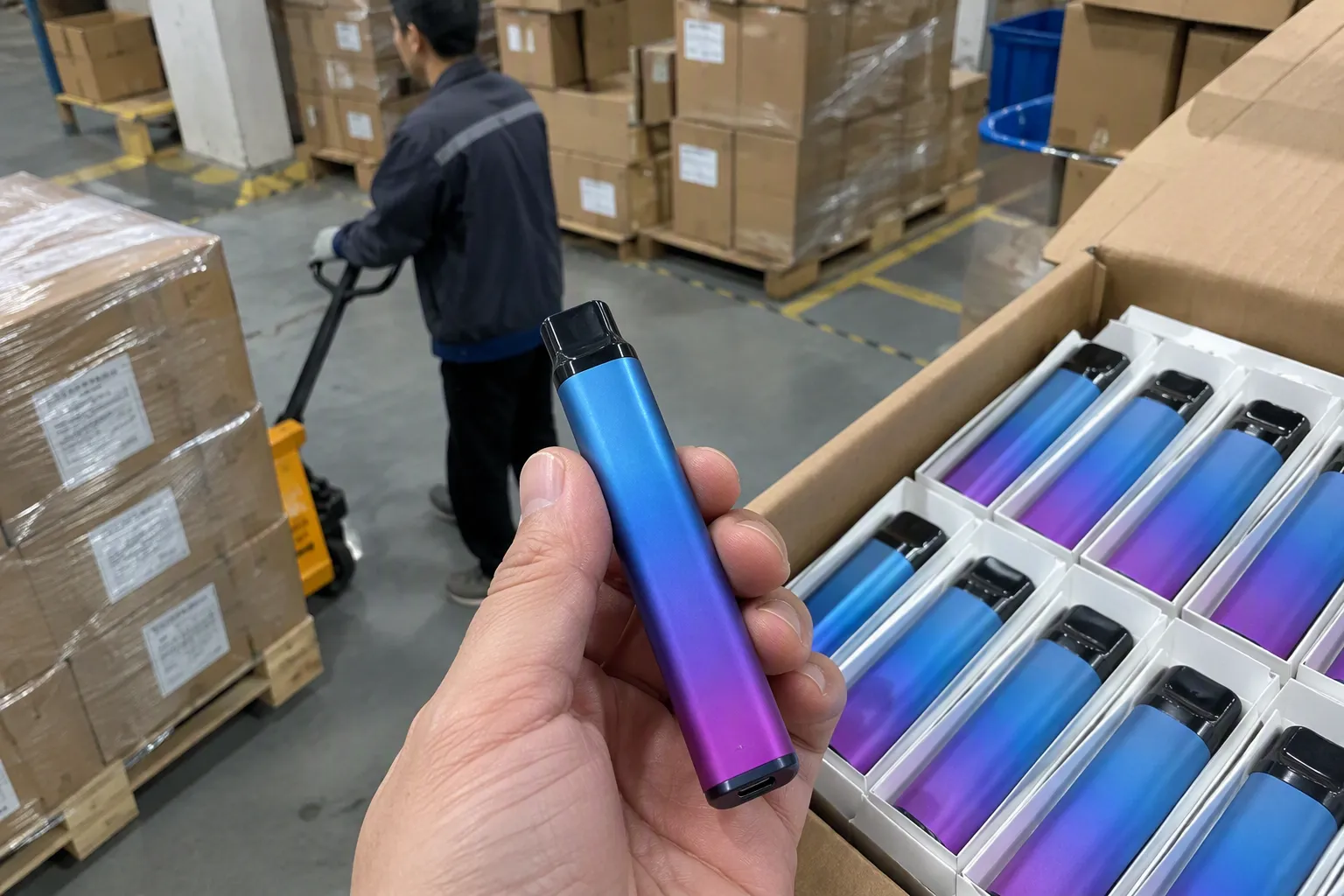
A possible stockout can cost a buyer sales, customer trust, and shelf space.[1] A rushed reservation can also lock working capital into products that sell more slowly than expected.[2] I encourage buyers to evaluate both sides instead of reacting automatically to fear.
- How quickly can the buyer sell the stock?
- How difficult will it be to replenish the same SKU?
- How much cash will remain committed until the stock is sold?
- What happens if the buyer changes or delays the order?
For a small European wholesaler, vape shop, smoke shop, convenience store, or gas station supplier, a low-MOQ EU warehouse order may support fast replenishment without the waiting time associated with a China shipment.[3] For a larger importer, the buyer may obtain better unit economics by planning a larger order from China, especially when the buyer needs private labeling, OEM development, or ODM customization.
I do not view either option as automatically superior. The right choice depends on the buyer’s sales cycle, cash position, customer commitments, and product plan.
A reservation may make sense when the buyer can connect the stock to a reasonably clear business requirement. Examples include:
- A wholesale customer has already requested a specific quantity.
- A vape shop has identified a gap in its regular replenishment stock.
- A distributor needs to maintain a core range across several nearby stores.
- A buyer has a planned promotion or seasonal sales period.
- A fast-moving product is available in limited warehouse quantity.
- A buyer needs a small quantity before committing to a larger China import.
- A buyer wants to reduce the delay between payment and local delivery.
The buyer does not need perfect sales forecasting. Small and mid-sized businesses often work with incomplete information. However, the buyer should know why the stock is needed and when it should move.
I often find that a simple estimate is more useful than a complicated forecast:[4]
Expected sales during the relevant period + safety quantity − current usable stock = possible reservation quantity.
The buyer should adjust this estimate for product type, customer demand, local competition, payment terms, and the possibility that the SKU may not sell at the expected speed.
Before any money changes hands, I recommend asking for an order-specific confirmation. The buyer should not rely only on a general website listing, a catalogue image, or a message saying “available.”
| Information to confirm | Why it matters |
|---|---|
| Exact product name and SKU | Different versions may have different packaging, specifications, or market suitability |
| Available sellable quantity | Listed stock may include units already allocated to other orders |
| Batch or production information | The buyer may need consistent product identification for internal records |
| Warehouse location | The dispatch route and delivery arrangement may depend on the location |
| Quantity being reserved | The buyer needs to know whether the full request or only part of it is held |
| Price validity | A quoted price may apply only to a particular order or period |
| Reservation deadline | The buyer needs a clear date or event for the hold to end |
| Payment requirement | The buyer must understand whether payment is needed to secure the allocation |
| Cancellation or release terms | The buyer needs to know what happens if the order is delayed or changed |
| Dispatch conditions | The buyer should confirm when the goods can leave after the required conditions are met |
| After-sales contact | The buyer should know who will handle confirmed product issues after delivery |
I treat these points as commercial details that must be confirmed for each order. I do not present one universal reservation period, fee, refund rule, or dispatch promise because those terms can vary by product, quantity, warehouse, and order arrangement.
No. “In stock” normally indicates that a supplier has identified inventory in a warehouse or supply system.[5] It does not automatically prove that every unit is unallocated, immediately sellable, held for one buyer, or available at a permanently fixed price.
The buyer should distinguish between several different situations:
- Visible stock: The supplier can identify units in a warehouse system.
- Available stock: The units are currently considered sellable and not already committed.
- Allocated stock: The supplier has assigned a stated quantity to the buyer.
- Reserved stock: The supplier has agreed to hold the stated quantity under defined terms.
- Dispatched stock: The goods have passed the required order checks and have been released for shipment.
These terms are not interchangeable.[6] I recommend that buyers ask the supplier to state which situation applies. A buyer can then avoid assuming that a catalogue quantity represents an exclusive allocation.
Small buyers usually value speed, low minimum order quantities, and controlled cash exposure. A buyer with one or a few shops may not want to import a large shipment from China simply to test a new SKU. The buyer may prefer a smaller warehouse order that can be delivered through an available European distribution route.
Our European warehouse arrangements are intended to support this type of purchasing decision. The company has warehouse locations in several European countries, including Germany, Austria, Poland, and Belgium.[7] Depending on the stock location, order details, and shipping arrangement, we can coordinate delivery through carriers such as DHL, DPD, UPS, or FedEx. The stated delivery planning for European warehouse orders can be as fast as 1–5 working days in suitable cases[8], but I ask buyers to confirm the actual dispatch and delivery expectation for each order.
- The minimum quantity for each SKU.
- Whether the requested quantity is physically available.
- Whether the stock matches the buyer’s intended market.
- Whether the buyer has enough local sales information.
- Whether the landed cost supports the planned margin.
- Whether the buyer has a process for product education and after-sales support.
- Whether local legal and regulatory requirements have been reviewed.
For some warehouse products, the available minimum may be as low as 50 units per model. That can reduce the initial inventory commitment, but a low MOQ does not remove the need to evaluate product suitability, documentation, packaging, customer demand, or local compliance. I recommend qualified professional advice for application-specific legal and regulatory decisions.
Larger importers and distributors often have a different calculation. They may need more units, better pricing, regular container planning, private-label packaging, or product development. For these buyers, EU warehouse stock may solve an immediate replenishment problem, while a China-based order may support the longer-term supply plan.
I operate within a Shenzhen supply chain environment that includes electronic cigarettes, disposable vapes, atomizers, 510 batteries, CBD batteries, vaporizers, grinders, glass pipes, and related smoking accessories. Shenzhen has a concentrated electronics and vape manufacturing ecosystem, which can make it practical for larger buyers to evaluate a wider product range and discuss OEM or ODM requirements.
My company, Shenzhen Kingfuji Tech. CO., Ltd., was established in 2011. We operate as a manufacturer and trading-integrated supplier, with our own brand and factory capabilities. The stated factory area is 5,000 square meters, and the maximum stated production capacity is up to 5 million units per month. We also maintain a product development process that introduces approximately 5–10 new products per month, subject to the specific product and development schedule.
Those capabilities may be relevant to a buyer that wants to move from warehouse testing to a larger supply programme. I still encourage each buyer to evaluate samples, packaging, specifications, quality-control records, commercial terms, and required documentation before making a larger commitment.
| Buyer priority | EU warehouse stock | China-based bulk order |
|---|---|---|
| Small trial quantity | Usually more suitable | May require a larger commitment |
| Rapid European replenishment | May be suitable when stock is available | Usually requires longer planning |
| Lowest possible unit cost at volume | May be less competitive than bulk production | May offer stronger volume economics |
| Private-label packaging | Depends on existing stock | More suitable for OEM/ODM planning |
| Product testing | Useful for a smaller market test | Better after demand is clearer |
| Immediate stock continuity | Useful if exact stock is allocated | Depends on production and shipping plan |
| Product customization | Limited by existing inventory | More flexible, subject to development terms |
| Customs exposure from China | Warehouse route may reduce China import steps for the buyer | Buyer must plan international import arrangements |
I do not recommend reserving EU stock simply because a larger China order feels complicated. I also do not recommend using warehouse stock as a substitute for a proper long-term supply plan. Many distributors need both: warehouse stock for short-term continuity and a planned factory order for future volume.
The buyer should look beyond the unit price. A reservation becomes more serious when it commits money before the buyer has confirmed the sales path.
- Product cost.
- Shipping and delivery cost.
- Taxes, duties, or other applicable charges.
- Payment timing.
- Expected selling period.
- Expected after-sales cost.
- Storage cost.
- Cost of slower-moving inventory.
- Cost of missing a better product opportunity.
For example, a buyer may reserve 50 units because the minimum quantity is manageable. That does not mean the decision is automatically low risk. If the buyer has several similar products already in stock, the new 50 units may compete for the same cash and shelf space. If the buyer has a confirmed wholesale request, the same 50 units may have a much clearer commercial purpose.
I prefer to ask buyers to separate sales risk from supplier risk:
- Sales risk concerns whether the market will buy the product at the expected speed and price.
- Supplier risk concerns whether the supplier will provide the agreed quantity, quality, timing, and after-sales handling.
- Logistics risk concerns whether the goods can move through the intended delivery route.
- Compliance risk concerns whether the product and its documentation are appropriate for the buyer’s market.
A warehouse reservation may reduce some delivery uncertainty, but it does not automatically eliminate the other risks.
A reservation should have boundaries. I recommend that the buyer and supplier record the following points in a quotation, proforma invoice, order confirmation, or another suitable written document:
- Reserved product and SKU
- Reserved quantity
- Warehouse location
- Unit price and price-validity period
- Reservation start date or confirmation time
- Reservation end date or release event
- Payment deadline, if applicable
- Any reservation fee, if applicable
- Whether the fee is refundable or credited
- Conditions for cancellation or quantity adjustment
- Conditions under which the supplier may release the stock
- Expected dispatch process after payment or confirmation
- Inspection or verification arrangements
- After-sales contact and handling process
The parties should not assume that a reservation is an unconditional long-term commitment. The supplier may need to release inventory if the buyer misses an agreed deadline, changes the quantity, or does not complete the required order process. The buyer should know this before requesting the hold.
I also recommend confirming whether the reservation applies to exact physical stock or only to a planned allocation. That distinction can matter when the buyer needs a specific batch, packaging version, colour, flavour, or product configuration.
How Do Product Quality and After-Sales Support Affect the Decision?
Fast dispatch is valuable only when the buyer receives suitable products and can manage customer issues properly. I have seen purchasing discussions focus heavily on speed while giving less attention to product checks and after-sales responsibilities. That approach can create problems after delivery.
- Sample approval before a larger order.
- Confirmation of the product version.
- Packaging and labelling review.
- Quantity and carton verification.
- Basic pre-shipment or warehouse verification where appropriate.
- Written communication about known product details.
- A clear process for reporting defective goods.
- Photo or video evidence when a product issue is claimed.
- Agreement on the remedy, replacement, credit, or reimbursement process.
Our business model provides centralized after-sales handling for products purchased through us, so the buyer does not need to communicate separately with every brand or factory. In suitable cases, the company also offers video verification, and the business context includes commitments related to certain customs-loss and after-sales situations. I do not describe these as automatic outcomes for every order. I ask buyers to confirm the exact scope, exclusions, evidence requirements, and commercial terms in writing before payment.
A buyer should also remember that a quality claim and a customer-use problem are not always the same. A retailer may need accurate product information so that the end user understands the product’s operation, charging process, storage, and intended use. Local product requirements and consumer rules can also differ. The buyer should arrange qualified local review where necessary.
EU warehouse stock may help a buyer avoid some of the waiting and uncertainty associated with arranging a shipment from China. The goods may already be positioned within Europe, and the buyer may be able to coordinate faster dispatch through a European carrier.
However, I do not tell buyers that a warehouse route removes every logistics or regulatory risk. The buyer should still confirm:
- The dispatch country.
- The delivery destination.
- The carrier and service level.
- Whether delivery is to the buyer’s address or the buyer’s own freight forwarder.
- Any documentation required for the transaction.
- The treatment of damaged, missing, or delayed parcels.
- Whether the products are suitable for the destination market.
- The buyer’s responsibilities after import or delivery.
Some customers prefer a full door-to-door service. Others have a long-standing freight forwarder and ask us to deliver the order to that forwarder. We can discuss either arrangement, but the responsibilities should be clear before the order is paid.
I also avoid using a delivery estimate as a guarantee. A 1–5 working day planning range may apply to certain European warehouse orders when the stock, destination, carrier, and order processing are suitable. The buyer should obtain the current estimate for the actual order, especially during peak periods or when the warehouse location differs.
A buyer may want to avoid a reservation when the request is based only on pressure or uncertainty. The following situations deserve extra caution:
- The buyer has no confirmed sales estimate.
- The product is completely new to the buyer’s customers.
- The buyer has not reviewed the product version or packaging.
- The supplier cannot confirm the exact quantity.
- The price is not valid for a stated period.
- The reservation deadline is unclear.
- The buyer does not understand the cancellation conditions.
- The buyer needs to borrow working capital for an uncertain purchase.
- The buyer has not considered local product requirements.
- The buyer is reserving several competing SKUs without a test plan.
- The buyer expects the supplier to hold stock indefinitely without written terms.
In these cases, I may suggest a smaller test order, a fresh stock check, a sample review, or a comparison between warehouse and China supply. A buyer does not need to make a large commitment merely because a product is described as hot or limited.
I recommend a simple process that gives both sides a clear record.
The buyer should explain the expected sales period, requested quantity, destination, and desired dispatch timing. The buyer does not need to provide confidential customer details, but the commercial purpose should be understandable.
The buyer should ask for the exact SKU, quantity, warehouse location, and stock status. I would treat a general catalogue entry as an invitation to check, not as a final allocation.
- Reserving warehouse stock.
- Buying a smaller available quantity.
- Waiting for replenishment.
- Ordering from China.
- Developing an OEM or ODM version.
- Testing another comparable SKU.
The supplier and buyer should confirm the price, payment deadline, reservation deadline, release terms, dispatch expectations, and after-sales process.
The buyer should review samples, product information, packaging, required documents, and local market considerations. A commercial reservation should not replace professional legal or technical evaluation.
The buyer should retain the written confirmation, invoice, payment record, product details, and agreed shipping information.
If the product sells well, the buyer should decide whether to repeat warehouse purchases or move to a larger China-based order. This step helps prevent short-term reservations from becoming an unplanned long-term supply strategy.
I work with different purchasing profiles, so I understand that a Spanish wholesaler supplying tourist-area shops may have a different need from a multi-state American distributor. The same pattern can appear across Europe and other markets: small and medium businesses want fast turnover, limited initial exposure, low after-sales problems, and dependable communication, while larger buyers want market information, new products, pricing leverage, and customized supply.
- Available EU warehouse SKUs.
- Low-MOQ options where applicable.
- Current stock allocation.
- Delivery to the buyer or nominated forwarder.
- Centralized after-sales communication.
- A possible test order before a larger commitment.
For a larger importer, distributor, or chain supplier, I can discuss:
- Bulk purchasing from China.
- Factory production planning.
- Product selection across multiple categories.
- OEM and ODM possibilities.
- Private-label development.
- Packaging and specification discussions.
- Warehouse stock as a bridge while the factory order is prepared.
The buyer’s benefit is not simply “more products.” The benefit is a clearer purchasing route. A buyer may combine multiple brands and categories through one supplier instead of repeatedly requesting prices from several factories. The buyer may also reduce coordination work by using one after-sales contact and one logistics discussion. These benefits still depend on the exact order terms and product requirements, so I encourage buyers to verify each point before payment.
Should I reserve EU warehouse vape stock for every fast-moving product?
No. I recommend reserving stock only when the expected sales need, quantity, timing, and commercial terms are reasonably clear. A buyer should compare the cost of a possible stockout with the cost of tying up cash in inventory that may sell slowly.
There is no universal period that applies to every product or order. The buyer should ask for a written reservation deadline and confirm what happens when that deadline passes. The terms may depend on quantity, product type, warehouse allocation, payment status, and other order conditions.
Is EU warehouse stock always safer than importing from China?
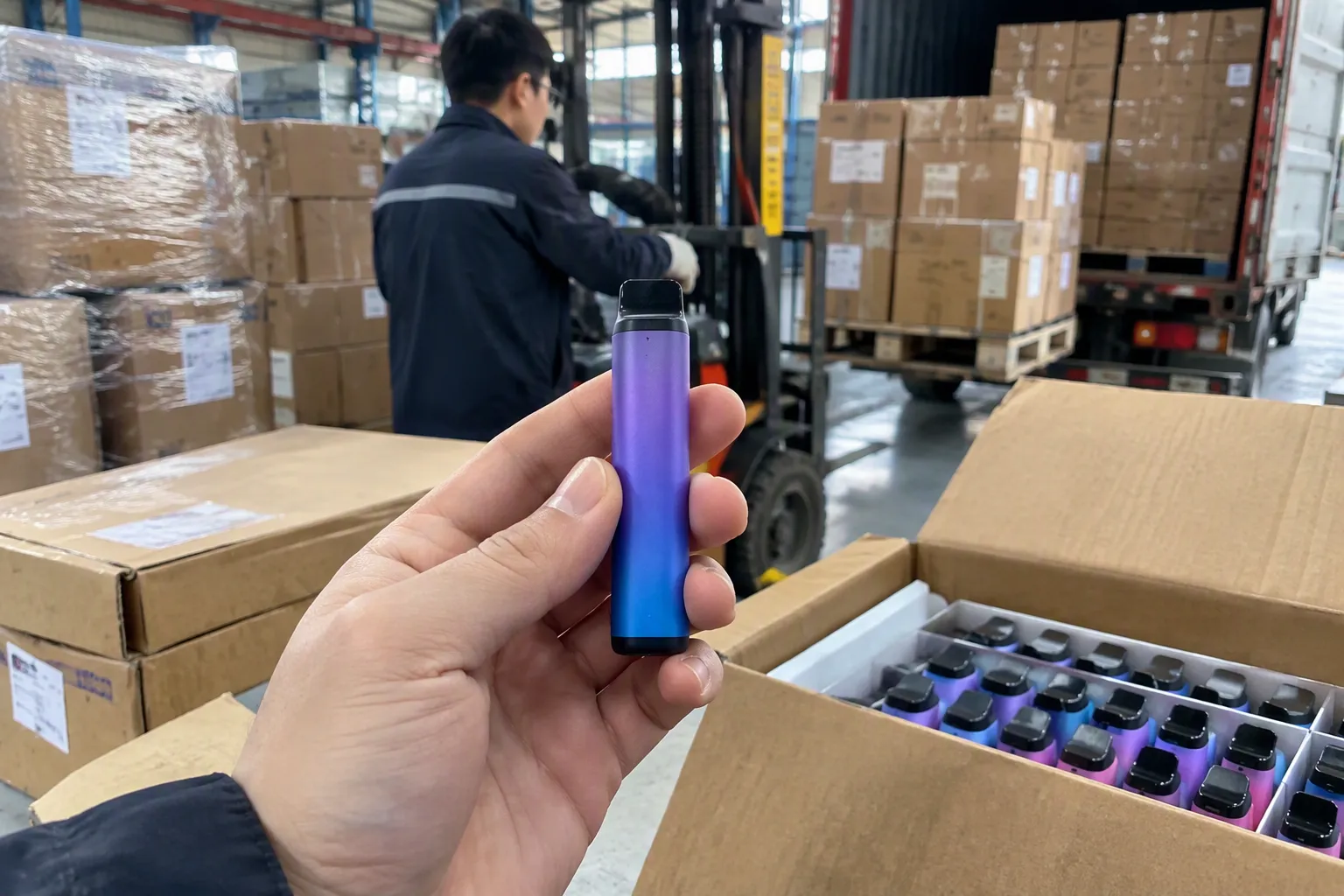
Not automatically. EU warehouse stock may support faster replenishment and a smaller initial order, while China supply may provide stronger volume pricing and OEM/ODM flexibility. The buyer should compare cash flow, product suitability, documentation, delivery arrangements, and the planned sales volume.
Can a small vape shop buy a low quantity from an EU warehouse?
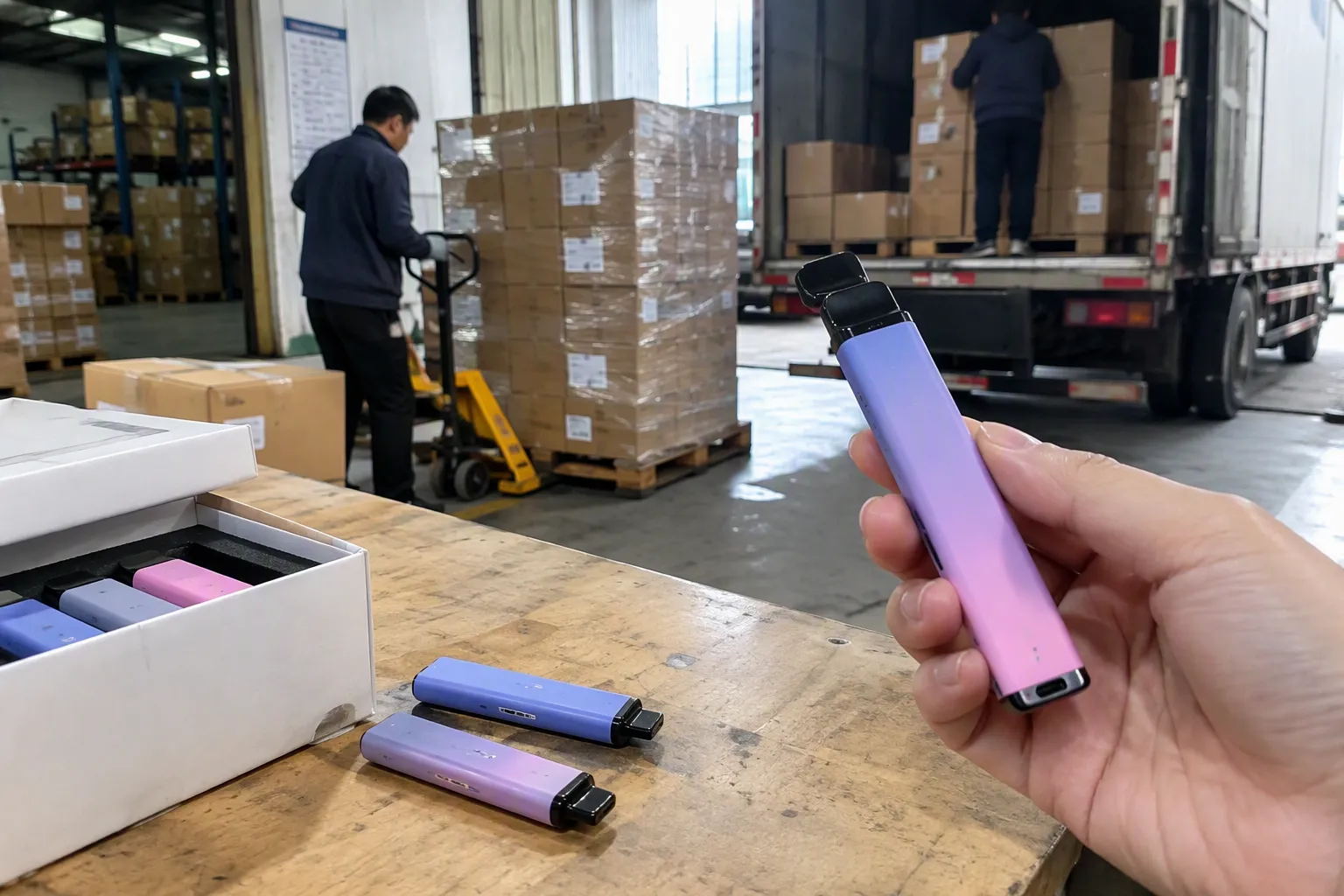
In some cases, yes. Our European warehouse model can support low-MOQ purchasing, with some products available from 50 units per model. The buyer must confirm the actual SKU, quantity, warehouse location, price, and dispatch terms because minimum quantities differ by product.
Does reserving stock remove compliance and after-sales responsibilities?
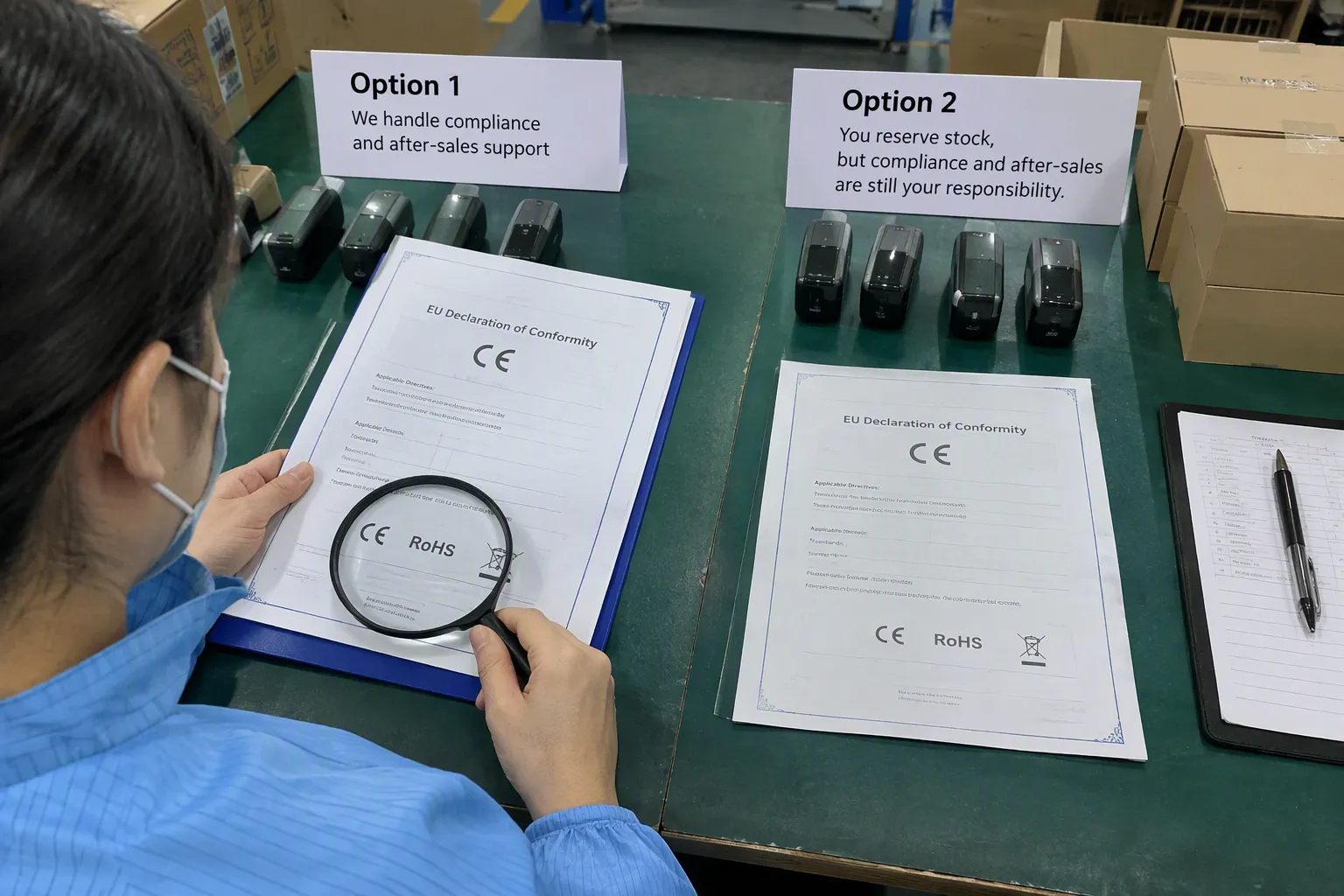
No. A reservation concerns commercial stock allocation. It does not replace the buyer’s responsibility to evaluate local market requirements, product suitability, customer information, and business obligations. I recommend qualified professional evaluation for application-specific regulatory decisions and written confirmation of after-sales terms.
EU warehouse vape stock can help European buyers protect sales continuity, test products with a smaller commitment, and replenish faster when the exact inventory is available. I recommend treating reservation as a risk-balancing decision rather than an automatic response to fear of a stockout. Before payment, I confirm the SKU, quantity, warehouse, price validity, deadline, release terms, dispatch process, and after-sales arrangement for each order. Contact Kingfuji Tech. at info@kingvapecig.com or +86 13928420527 to discuss current warehouse stock, bulk supply, OEM/ODM options, and the most suitable purchasing route for your business.
Sources
- The Impact of Stockouts on Customer Loyalty to Lean Retailers", Retail-stockout research links product unavailability with lost sales opportunities and adverse customer responses, supporting the general commercial rationale for preventing stockouts
- Inventories", Inventory-finance literature describes inventory holdings as a use of working capital and identifies storage, obsolescence, and financing costs as potential consequences of slow inventory turnover
- Dual sourcing inventory management with nonconsecutive ...", Supply-chain studies generally find that regional inventory can shorten replenishment lead times relative to overseas production and transport, while overseas sourcing may involve larger planned orders and longer logistics cycles
- A Comparative Study of Demand Forecasting Models ... - PMC", Demand-forecasting research indicates that simple forecasting methods can be competitive when data are limited or demand patterns are unstable, providing qualified support for a basic replenishment estimate
- Life Cycle Inventory Availability: Status and Prospects for ...", Inventory-management references distinguish physical on-hand stock from available, allocated, and reserved quantities, supporting the interpretation that a displayed stock status may represent system-recorded inventory rather than an exclusive buyer allocation
- Detail for CIP Code 52.0409", Inventory-control terminology commonly separates on-hand inventory from available, allocated, reserved, and fulfillment-stage quantities, supporting the article's warning that these operational states should not be treated as equivalent
- How to Consolidate Multiple Vape Brands into One Lower-Risk ...", A verifiable company record or logistics document would provide direct support for the stated warehouse locations in Germany, Austria, Poland, and Belgium
- Delivery time - DPD", European parcel-transit data may support that cross-border deliveries on selected routes can occur within several working days under standard conditions