
Flavor fade can create expensive problems for importers when a vape tastes strong during a quick sample check but becomes weak, dry, harsh, or unpleasant later in use. That gap can lead to customer complaints, returns, and batch disputes. I recommend a staged evaluation process that measures the usable customer experience, not only the opening impression.
Quick Answer
I evaluate flavor fade by testing multiple samples from an identified batch at defined use-stage checkpoints, rather than judging only the first few puffs or the labeled puff count. A gradual reduction in flavor intensity may be commercially acceptable, but burnt notes, dryness, off-flavors, or unexpected harshness should be documented and reviewed separately. This process helps importers decide whether a vape can provide an acceptable experience through its practical usable life while reducing return and reputation risk.
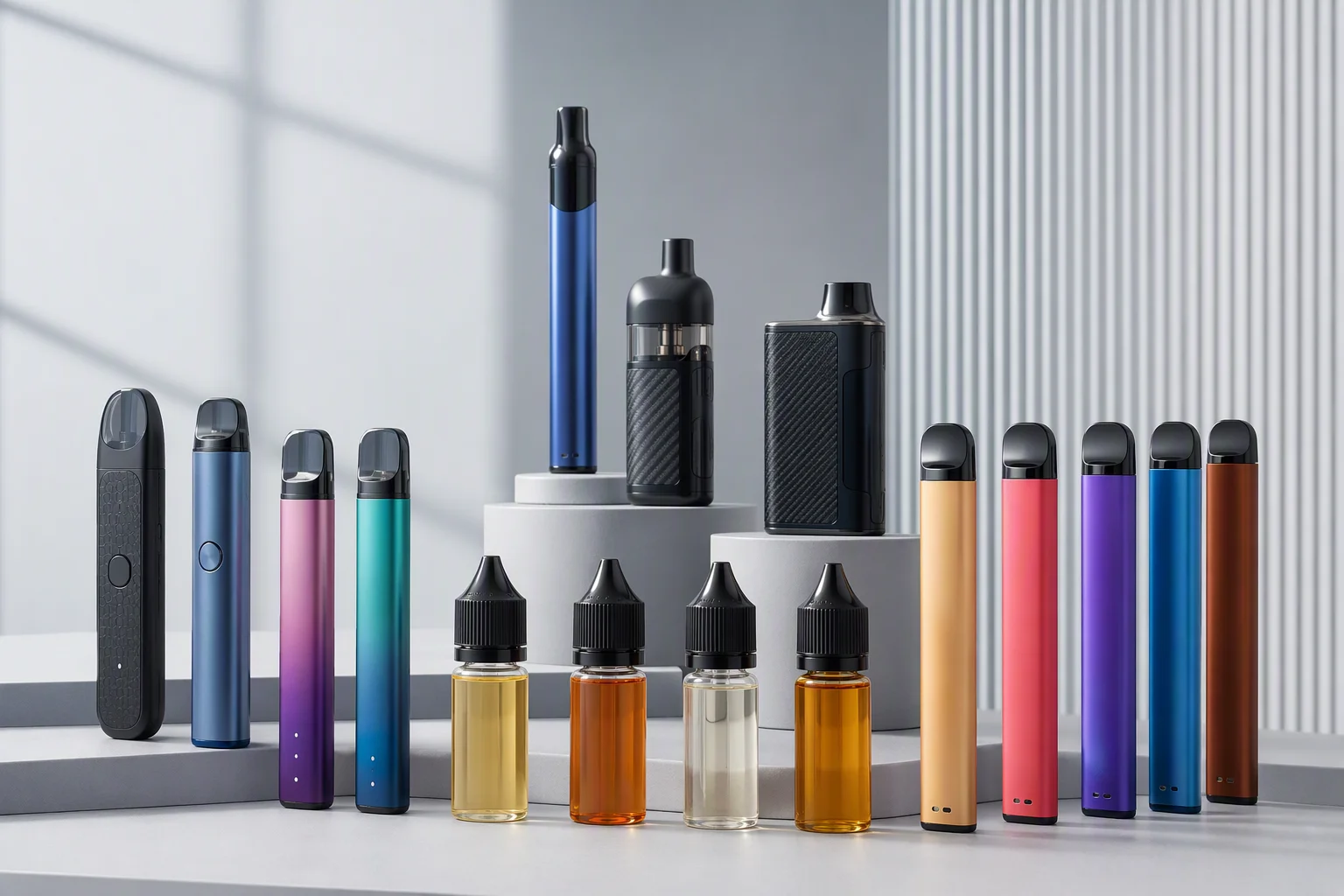
The first taste still matters, but it does not tell the full purchasing story. In my product-development and production work, I have seen that a product can perform well when newly opened while showing a different experience after substantial use. Buyers need a repeatable method that turns subjective feedback into useful acceptance evidence.
Should Flavor Fade Be Judged by the First Few Puffs or the Labeled Puff Count?
A quick opening test is easy, but it can create false confidence. Buyers may approve a sample because the first puffs are flavorful and smooth, then face complaints after the product reaches retailers. A puff-count label can also sound precise, even though actual use conditions vary.[^2] I believe buyers need to evaluate both the early and later stages.
I do not recommend judging flavor fade by the first few puffs alone or assuming that a labeled puff count guarantees identical flavor from beginning to end. Instead, I recommend that buyers test several units at planned stages of use and define what level of flavor change remains acceptable for their target market.

Why the First Few Puffs Are Not Enough
The opening experience answers a limited question: “Does this unit initially deliver an acceptable flavor?” That is important, but it is not the same as asking whether the product maintains an acceptable experience through normal use.
In practical product evaluation, the first few puffs may reflect:
- A fully saturated coil or wick condition after storage.
- A newly opened device with stable airflow.
- Freshly mixed flavor perception at the beginning of use.
- A tester’s first impression before sensory adaptation occurs.[^3]
- A single unit that may not represent a full production batch.
A buyer who approves a product only on opening puffs may miss later-stage concerns. These concerns can include softened flavor, reduced sweetness, lower clarity, dryness, harshness, or a burnt note. Each issue has a different commercial meaning.
For example, a mild and gradual reduction in flavor intensity may be acceptable if the product still tastes balanced and clean. Many customers understand that a device may not feel exactly the same at the end as it does when first opened. However, a sudden burnt taste or strong off-flavor may create a very different customer reaction. Retailers may treat that issue as a product failure, even when only part of the batch is affected.
I have found that wholesalers benefit when they define their own acceptance standard before they place a larger order. A discount retailer, premium vape shop chain, convenience-store distributor, and private-label brand owner may all have different tolerance levels. The right question is not whether flavor is “perfect.” The better question is whether the flavor performance is commercially suitable for the buyer’s price point, market positioning, and expected customer experience.
Why a Labeled Puff Count Is Not a Flavor Guarantee
A labeled puff count is usually a product reference point, not a promise that every puff will have identical intensity, sweetness, cooling effect, or flavor clarity. Actual usage can differ substantially among users.
The usable result may be influenced by:
- Puff duration and frequency.[^1]
- Airflow design and draw style.
- Battery output behavior during use.[^4]
- E-liquid formulation and flavor profile.
- Device storage conditions before sale.[^5]
- Production variation between batches.
- The point at which a user considers the flavor no longer acceptable.
A long, frequent draw pattern may produce a different result than short, spaced puffs. A cooling fruit flavor may appear to fade differently from a dessert-style flavor because users notice sweetness, cooling, throat sensation, and aroma in different ways. That is why I avoid making universal claims based on one person’s tasting result.
Instead, I ask buyers to document how they tested the units. When a customer later reports flavor fade, the record can show whether the concern involves gradual softening, abnormal deterioration, a specific flavor, a particular production batch, or a testing-condition difference.
I treat flavor evaluation as a purchasing and batch-risk decision. I do not treat one person’s taste preference as laboratory proof or a universal quality conclusion.
How Can Buyers Test Flavor Fade at Meaningful Use Stages?
Without a staged test plan, buyers often receive scattered comments such as “the flavor became weaker” or “it was fine at first.” Those comments may be honest, but they are difficult to compare, verify, or use in supplier discussions. A simple checkpoint system gives the buyer clearer evidence.
I recommend testing flavor fade at opening, early use, mid-use, late use, and the final commercially usable stage. Buyers should test more than one unit from the same batch[^10] and record observations using the same basic criteria at every checkpoint.
A Practical Staged Sampling Plan
I use a simple approach during sample review and quality discussion. The exact checkpoints can vary by device capacity and intended usage pattern, but the principle remains the same: compare the experience over time.
| Use Stage | What I Ask Testers to Check | What the Result May Mean |
|---|---|---|
| Opening / first puffs | Initial flavor clarity, sweetness, cooling, airflow, and smoothness | Confirms the first customer impression and whether the unit opens normally |
| Early use | Consistency after the device has been used beyond the opening stage | Identifies early instability that a quick test may miss |
| Mid-use | Flavor balance, vapor consistency, dryness, harshness, and off-notes | Helps assess whether the product remains commercially acceptable |
| Late use | Noticeable flavor fade, reduced sweetness, burnt notes, or changing airflow | Shows how the customer experience may change near the end of use |
| Final usable stage | Whether the unit still provides an acceptable experience before the user stops using it | Supports realistic buyer expectations and complaint-risk planning |
This is the only table I use in a basic purchasing review because it keeps the process simple enough for a warehouse team, buyer, or sales manager to follow. A more complex system is not always better. What matters is consistency.
Use Multiple Samples, Not One Device
I recommend testing a sample set rather than relying on a single device. A single sample can be unusually good or unusually poor. Buyers should agree internally on a sample quantity that fits the order value and risk level.
For a small trial order, a buyer may begin with several units across key flavors. For a larger import program, a buyer may want samples from more than one production batch or date. I cannot set one universal sample quantity because order size, product type, flavor range, and commercial exposure differ. However, I would not make a high-value purchasing decision from one unit alone.
When I work with a buyer on a new model, I also encourage the team to include people with different roles:
- Purchasing staff can compare the product with the agreed specification.
- Sales staff can consider whether the flavor profile suits local demand.
- Warehouse or quality staff can record model and batch details correctly.
- Experienced retail partners can provide practical feedback from the customer-facing side.
Each person may notice different things. The buyer should still avoid treating every preference difference as a defect. A tester may prefer a stronger cooling effect or less sweetness, while another tester may prefer the opposite. The useful review separates personal preference from clear performance concerns.
What Is Normal Flavor Softening, and What May Indicate a Problem?
Importers can lose time when they classify every later-stage flavor change as a defect. They can also create bigger problems when they dismiss clear warning signs as normal. The challenge is to use balanced language and clear categories during evaluation.
I consider gradual flavor softening different from abnormal flavor fade. A product may become less intense over use while remaining clean and acceptable. By contrast, a burnt note, persistent dryness, unusual harshness, or off-flavor should be recorded as a separate issue and reviewed with the supplier.

Gradual Softening May Be a Commercial Question
Flavor intensity can change as a device is used. In practical evaluation, a gradual reduction may be acceptable when:
- The flavor remains recognizable and balanced.
- The vape does not develop a burnt or chemical-like note.
- The user does not experience unusual dryness or harshness.
- The device remains usable for the buyer’s expected sales position.
- The change appears consistently across samples rather than as an isolated failure.
For example, a buyer may decide that a fruit flavor remains acceptable even if the sweetness feels lighter later in use. Another buyer may reject the same result because their retail customers expect a very strong flavor profile. Neither decision is automatically wrong. The decision depends on market expectations and the buyer’s own acceptance standard.
Warning Signs Need Separate Follow-Up
Some experiences should not be described simply as “normal flavor fade.” I recommend that buyers flag and document the following signs:
- Burnt notes: A scorched or burned taste may indicate that the wick, coil, liquid delivery, power behavior, or use condition needs further review.[^6]
- Dryness: A dry sensation may affect the customer experience and should be compared across samples.
- Off-flavors: A chemical-like, metallic, stale, or otherwise unusual note may require batch and storage review.[^7]
- Unexpected harshness: Harshness can have several possible causes, so buyers should record when it appeared and under what testing conditions.
- Sudden change: A sharp transition from acceptable flavor to poor flavor is different from slow softening.
- Inconsistent units: One unit may behave differently from another unit in the same sample group.
I recommend that buyers avoid diagnosing the root cause without evidence. A tasting observation is an important quality signal, but it is not automatically a technical conclusion. The correct next step may include checking the sample details, production date, storage history, model specification, and broader sample results.
How Should Importers Document Flavor Fade for Batch Control?
When flavor fade is not documented, supplier discussions often become unclear. A buyer may say, “The taste became bad,” while the supplier may ask which model, flavor, batch, or stage caused the concern. Without traceable records, both sides lose time and may struggle to identify the actual issue.
I recommend that every flavor fade evaluation include basic batch traceability[^9], defined checkpoints, sample quantity, and short observations. This turns a subjective customer-experience issue into a more useful purchasing and quality-control record.
The Minimum Record I Recommend
A buyer does not need a complicated laboratory-style report for routine commercial sampling. I suggest keeping a simple internal record with the following details:
- Product model and device specification.
- Flavor name.
- Batch number or production-date reference, where available.
- Sample quantity tested.
- Test date and tester name or tester code.
- Storage condition before testing, if known.
- Use-stage checkpoint.
- Brief flavor observation at each checkpoint.
- Notes on burnt taste, dryness, harshness, or off-flavor.
- Whether the result met the buyer’s internal acceptance standard.
A short note is often enough. For example:
“Mango Ice, batch reference XX. Three units tested. Strong and clean at opening. Flavor remained acceptable through mid-use. One unit developed dryness during late use. No burnt note observed in the other two units.”
That type of entry is more useful than a general complaint because it gives the buyer a foundation for follow-up. It also helps buyers compare later arrivals against approved samples.
Why Documentation Protects Commercial Relationships
I have seen that clear records can reduce avoidable disputes. They help the buyer explain concerns to a supplier. They also help the supplier identify whether the issue appears to relate to one flavor, model, batch, or use stage.
For distributors selling to vape shops, smoke shops, convenience stores, and regional wholesalers, documentation also supports better internal decisions. A buyer can identify which flavors have the most stable customer acceptance, which models require closer inspection, and which suppliers respond clearly to quality questions.
At KingVape, we work with international distributors and brand owners that may need both fast-moving stock products and custom OEM/ODM programs. For any product evaluation, I encourage buyers to retain approved samples and written acceptance notes before moving into larger-volume purchasing. This creates a more practical reference point for both sides.
How Can Supplier Selection Reduce Flavor Fade and Return Risk?
A low unit price can look attractive until returns, retailer complaints, and slow-moving stock reduce the real margin. Buyers need suppliers who can support traceable product discussions, clear sample evaluation, and realistic purchasing decisions instead of relying only on marketing claims.
I recommend that importers evaluate a vape supplier by looking at sampling discipline, batch communication, after-sales process, stock availability, and the supplier’s ability to support both small and large purchasing models. These factors can reduce flavor fade disputes and make quality follow-up more manageable.
Questions I Recommend Asking Before Ordering
Before placing an order, I suggest that buyers ask suppliers:
- Can the supplier identify the model, flavor, and relevant batch or production reference?
- Can the supplier provide samples that represent the intended order specification?
- Does the supplier understand the difference between normal flavor softening and abnormal burnt or off-flavor complaints?
- What information does the supplier need to investigate a quality concern?
- Can the supplier support after-sales communication through one contact point?
- Can the supplier offer stock options for smaller, faster orders and factory-scale options for larger programs?
- Can the supplier support private-label, OEM, or ODM development when the buyer’s volume and project conditions justify it?
For smaller European wholesalers and retailers, our overseas warehouse options can help reduce inventory pressure when suitable stock is available. Buyers can begin with lower quantities rather than committing immediately to a large import program. For larger importers, distributors, and brand owners, factory-direct purchasing may offer stronger price advantages and more room for OEM/ODM planning.
I would still advise every buyer to verify product documents, specifications, commercial terms, and any market-specific requirements independently. Product suitability depends on the intended market, customer group, and local rules.[^8] A qualified professional should review application-specific decisions where necessary.
Frequently Asked Questions
Does flavor fade always mean a vape is defective?
No. Flavor fade does not always mean a vape is defective. A gradual reduction in intensity may occur during use and may still be commercially acceptable. However, burnt taste, unusual dryness, harshness, or off-flavor should be documented separately and reviewed with the supplier.
How many vape samples should I test for flavor fade?
I recommend testing multiple units rather than relying on one device. The right quantity depends on order value, product range, and risk tolerance. Buyers should test enough samples to compare results across units, flavors, and, when possible, identified production batches.
Should I test flavor fade before placing a wholesale order?
Yes. I recommend staged testing before a wholesale order, especially for a new model, new flavor range, or new supplier relationship. The buyer should test opening, mid-use, and late-use performance and keep written observations as part of the purchasing approval process.
What details should I send a supplier when reporting flavor fade?
I recommend sending the model, flavor, batch or date reference, sample quantity, test date, use stage, and a short description of the issue. Buyers should state whether they noticed gradual softening, dryness, harshness, a burnt note, or an off-flavor.
Conclusion
Flavor fade is not a question that buyers should answer after the first few puffs or by reading a labeled puff count. I recommend staged sampling, multiple units, traceable batch records, and a clear distinction between gradual softening and abnormal flavor changes. This approach helps importers protect margin, reduce disputes, and select products that better fit their market. If you need stock vapes, factory-direct purchasing, or an OEM/ODM evaluation process, contact KingVape to discuss your sourcing requirements.
[^1]: "Puffing Topography: A Tool to Evaluate Vaping Behavior and ...", https://pmc.ncbi.nlm.nih.gov/articles/PMC12958158/. Laboratory studies of electronic cigarettes report that puff duration and interpuff interval can alter aerosol production, coil operating conditions, and e-liquid consumption, supporting their relevance to in-use performance. Evidence role: mechanism; source type: paper. Supports: Experimental evidence that puff duration and interpuff interval affect e-cigarette aerosol generation, temperature, and liquid consumption.. Scope note: Changes in aerosol-generation measures do not directly quantify flavor acceptability for every device, liquid, or user. [^2]: "Measurement of Electronic Cigarette Frequency of Use ... - PMC", https://pmc.ncbi.nlm.nih.gov/articles/PMC7171268/. Studies of electronic-cigarette puffing behavior show that aerosol yield and liquid consumption vary with parameters such as puff duration, flow rate, and interpuff interval; consequently, a stated puff count is a conditional product estimate rather than a uniform user outcome. Evidence role: general_support; source type: research. Supports: Evidence that e-cigarette puff yield and consumption depend on puffing behavior and testing conditions, rather than being fixed across all users.. Scope note: Such studies support variability in use-dependent yield but do not by themselves establish the accuracy of any particular product's labeled puff count. [^3]: "Influence of Sensory Properties in Moderating Eating Behaviors and ...", https://pmc.ncbi.nlm.nih.gov/articles/PMC8899294/. Sensory-science research describes adaptation as a reduction or alteration in perceived response during continued exposure to a stimulus, a mechanism that can affect repeated assessments of odor and flavor intensity. Evidence role: mechanism; source type: research. Supports: Research explaining sensory adaptation and its effects on perceived intensity during sustained or repeated chemosensory exposure.. Scope note: General sensory-adaptation evidence does not demonstrate the magnitude of adaptation in any specific vape-testing protocol. [^4]: "The Chemical Complexity of e-Cigarette Aerosols Compared With ...", https://pmc.ncbi.nlm.nih.gov/articles/PMC8514950/. Experimental e-cigarette research finds that applied power and voltage affect heating-coil temperature and aerosol output, indicating that electrical-output behavior can influence device performance during use. Evidence role: mechanism; source type: paper. Supports: Evidence that e-cigarette electrical power or voltage affects coil temperature and aerosol generation or composition.. Scope note: The relationship between power changes and perceived flavor is device- and formulation-specific and cannot be inferred solely from aerosol measurements. [^5]: "Stability of Flavoring Chemicals in e-Cigarette Liquids - PMC - NIH", https://pmc.ncbi.nlm.nih.gov/articles/PMC12019726/. Chemical analyses of e-liquids have found that constituents can change during storage and aging, with temperature and time among factors relevant to liquid stability and potential sensory characteristics. Evidence role: mechanism; source type: paper. Supports: Evidence on the effects of time, temperature, light, or storage conditions on e-liquid chemical stability.. Scope note: Chemical stability findings do not alone prove that a given stored device will exhibit a particular degree of flavor fade. [^6]: "One Acute Exposure to E-Cigarette Smoke Using Various ...", https://pmc.ncbi.nlm.nih.gov/articles/PMC9822672/. E-cigarette studies identify dry-puff and overheating conditions as states in which inadequate liquid supply and heating parameters can alter aerosol generation and produce an aversive burnt sensory experience. Evidence role: mechanism; source type: paper. Supports: Research linking dry-puff or overheating conditions to inadequate wick saturation, heating conditions, and altered aerosol production.. Scope note: A burnt-taste report is a diagnostic signal rather than proof of a single failure mechanism; inspection and controlled testing are needed to identify the cause in a particular unit. [^7]: "Stability of Flavoring Chemicals in e-Cigarette Liquids - PMC", https://pmc.ncbi.nlm.nih.gov/articles/PMC12019726/. Analytical studies show that e-liquid composition can vary among products and may change during aging or storage; therefore, batch identity and storage history are relevant contextual information when investigating unusual sensory reports. Evidence role: general_support; source type: paper. Supports: Evidence that e-liquid composition may vary across products or change during aging and storage, providing a basis for reviewing traceability and storage records after unusual sensory reports.. Scope note: These findings do not establish that any specific off-flavor was caused by storage or batch variation. [^8]: "Tobacco and electronic nicotine delivery systems regulation", https://pmc.ncbi.nlm.nih.gov/articles/PMC6546633/. Regulatory frameworks for electronic cigarettes are jurisdiction-specific and may impose requirements concerning product characteristics, notifications, labeling, marketing, and sales; suitability must therefore be assessed against the rules of the intended market. Evidence role: historical_context; source type: government. Supports: Authoritative regulatory information showing that e-cigarette requirements are set by jurisdiction and can include rules on product composition, packaging, notifications, and sale.. Scope note: A regulatory overview is not legal advice and does not establish compliance for a particular product, market, or customer group. [^9]: "UK Guideline of Good Pharmacovigilance Practices - GOV.UK", https://www.gov.uk/guidance/decentralised-manufacture-uk-guideline-of-good-pharmacovigilance-practices. Quality-management standards define traceability as the ability to identify and follow a product's history, application, or location, supporting the use of batch-linked records in investigation and control processes. Evidence role: general_support; source type: institution. Supports: Quality-management guidance describing traceability as the ability to identify and follow the history, application, or location of products and related records.. Scope note: Traceability improves the ability to investigate and compare records but does not itself determine product quality or establish causation. [^10]: "What kinds of Lot Acceptance Sampling Plans (LASPs) are there?", https://www.itl.nist.gov/div898/handbook/pmc/section2/pmc22.htm. Acceptance-sampling guidance explains that inspection of selected units is used to draw conclusions about a lot while accounting for unit-to-unit variation; a single tested unit provides limited evidence about batch-level performance. Evidence role: general_support; source type: government. Supports: Quality-control principles showing why samples are used to make inferences about lot or batch quality and why sampling plans address variability.. Scope note: General sampling principles do not prescribe a universal number of vape samples, which depends on the intended decision, risk, and lot characteristics.