
Low prices look attractive. Bad supply choices can lock cash, delay delivery, and damage trust. I have seen buyers lose more by chasing the cheapest offer.
Factory-direct vape supply can reduce cost, improve product verification, and speed up scale, but it is not always the safest option. The right choice depends on order size, compliance needs, delivery route, cash flow, and your ability to manage supplier risk.
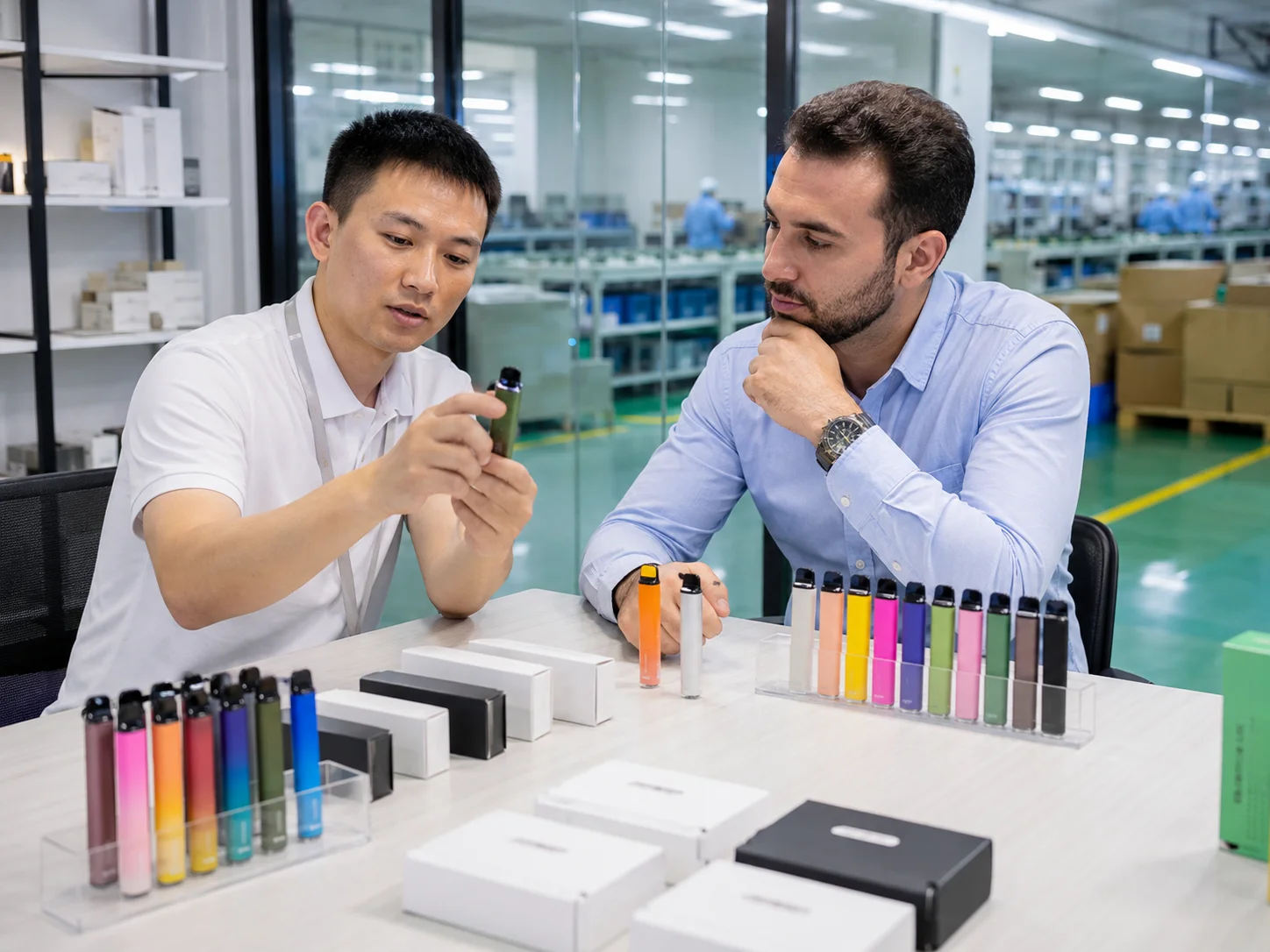
I have worked with international buyers from Shenzhen for many years. A common question I hear is simple: “Can I buy directly from the factory and get the best price?” My answer is never only yes or no. I first ask about their country, sales channel, order quantity, license status, product type, and risk level. Factory-direct supply is powerful, but it is not magic. It is a trade-off. You gain price and source access. You also take more responsibility for compliance, logistics, verification, and after-sales.
Understanding Factory-Direct Vape Supply?
Many buyers hear “factory-direct” and think it means cheaper, faster, and safer. That is not always true. A wrong direct deal can still become expensive.
Factory-direct vape supply means buying closer to the original source, brand holder, licensed manufacturer, or authorized distributor. It can cut middle layers, but buyers still need to verify product origin, legal status, payment safety, logistics route, and after-sales support.

When a client asks for the “best option,” my first question is always about their sales channel. A smoke shop owner, an online seller, and a national distributor do not need the same sourcing model. Small buyers often need speed and low MOQ more than the lowest unit price. Large buyers often need better cost and stronger stock control. Brand builders may need OEM, but OEM is not the right starting point for most new vape sellers.
In my daily work, I usually divide sourcing into three simple paths:
| Sourcing Path | Best For | Main Gain | Main Risk |
|---|---|---|---|
| Overseas warehouse stock | New sellers, small retailers, test orders | Fast delivery, low MOQ, low cash pressure | Higher unit price |
| China direct bulk order | Experienced wholesalers, larger buyers | Better price, more choice | Customs, longer lead time, larger cash exposure |
| OEM or private label | Mature brands with channels | Brand control, product identity | High MOQ, compliance cost, slow launch |
I see many new buyers skip the first step. They want to act like a large distributor on day one. This often creates pressure. If you have not proven demand, fast local stock may be smarter than a cheap container. In vape supply, the “best” model is the one your business can survive if something goes wrong.
Cost Advantages of Buying Directly from Manufacturers?
Cheap quotes can be dangerous. A low number on a price list does not mean real profit. Profit comes from safe delivery, fast resale, and repeat orders.
Buying directly from manufacturers can lower unit cost when order volume is high enough. The real saving appears after MOQ, freight, insurance, customs, testing, tax, warehousing, and time cost are included. Small buyers may save more through faster stock turnover.

I often tell new buyers that the cheapest product is not always the most profitable product. If a product is easy to sell and customers come back, your money turns faster. If a product is very cheap but slow to sell, your cash sits in boxes. That is not profit. That is trapped money.
Here is a simple way I explain it to e-commerce sellers:
| Option | Unit Price | Delivery Time | Cash Pressure | Turnover Speed | Real Use Case |
|---|---|---|---|---|---|
| Local or EU warehouse stock | Higher | 1–5 days | Low | Fast | Market test, small orders |
| China direct bulk | Lower | Often weeks | Medium to high | Medium | Stable demand, larger orders |
| OEM production | Depends | Longest | High | Slow at start | Mature brand plan |
If your order is below 2,000 pieces[^1], I usually suggest that you think hard before direct bulk import. You may save some unit cost, but you may add customs risk, delay, and stock pressure. If your order is above 2,000 pieces and you already know your market, direct supply may make more sense. You get more models, stronger price options, and better room for margin.
The real question is not “How cheap can I buy?” The real question is “How many times can my money turn this month without losing safety?”
Quality Control and Product Verification Benefits?
Many vape products look the same in photos. The box, color, and puff number can fool new buyers. The real difference appears after use.
Factory-direct or authorized supply can improve quality control because buyers can request product records, batch details, verification codes, test documents, stock videos, and after-sales terms. This helps reduce fake products, unstable batteries, bad e-liquid, leakage, and customer complaints.
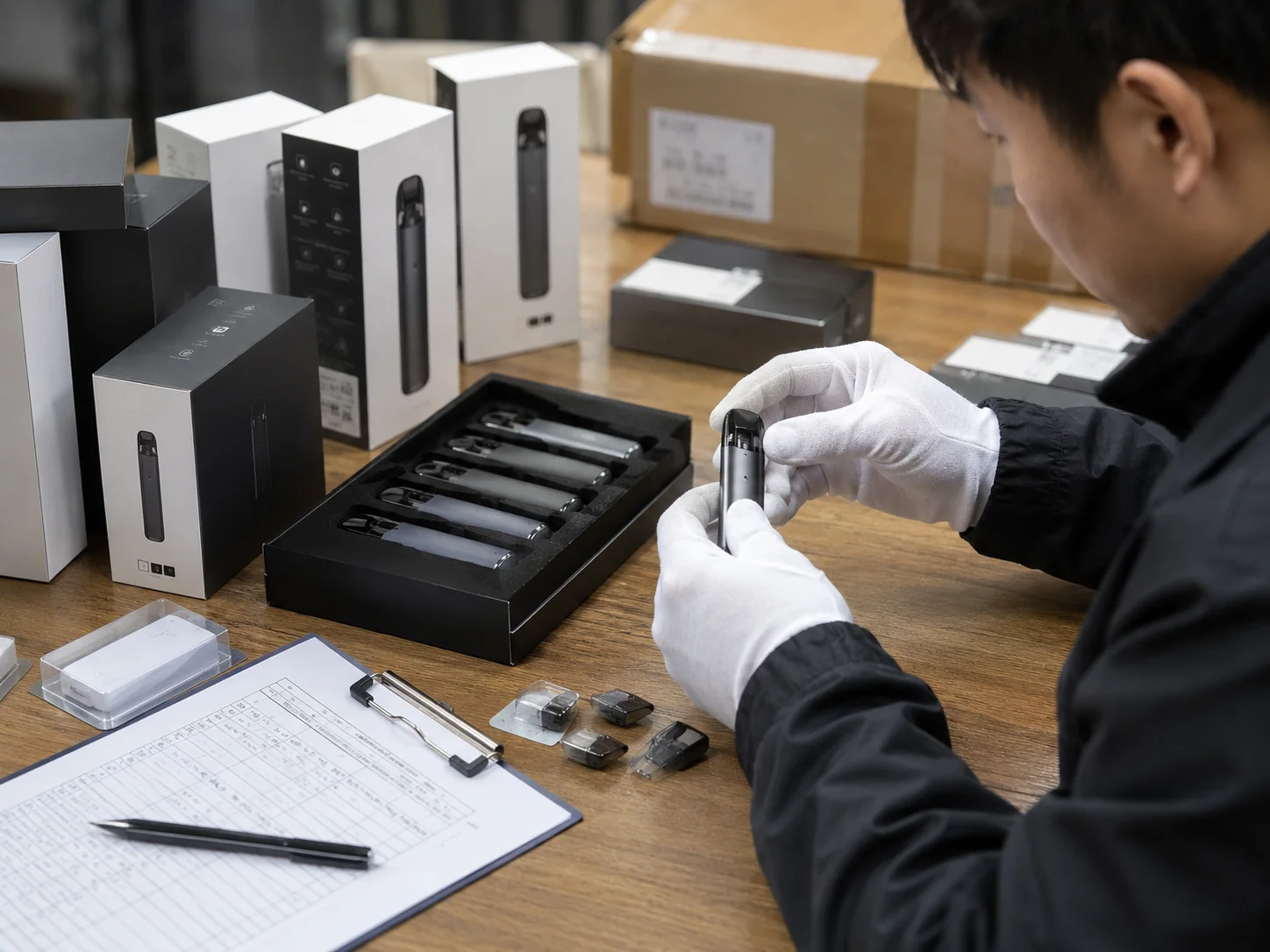
I have seen many buyers judge products only by package and puff count. That is risky. A disposable vape is not a simple plastic item. It has e-liquid, battery, coil, cotton, chip, airflow parts, seals, and packaging[^2]. If one part is poor, the whole user experience breaks.
I use this checklist when I discuss quality with buyers:
| Check Point | What I Look For | Why It Matters |
|---|---|---|
| Authenticity code | Check on official brand website | Fake sites can also show “genuine” |
| Battery performance | Stable charging and use time | Bad cells cause complaints and safety risk |
| E-liquid taste | Same flavor across samples | Poor oil hurts repeat sales |
| Leakage | Check after storage and transport | Leakage creates refunds |
| Weight and hand feel | Compare with known original | Fake units often feel light and cheap |
| Packaging | Print, warnings, batch code | Poor packaging signals risk |
| Supplier behavior | Professional questions, not payment pressure | Serious suppliers think long term |
One important point is the QR code. Some fake products also have codes. They may lead to a fake website that says the product is original[^3]. I always suggest buyers search the brand’s official website by themselves. Then they should enter the code manually on the real verification page.
I also like to ask for recent tracking numbers, warehouse videos, and customer feedback. These are not perfect proof, but they filter many weak suppliers. A serious supplier can usually explain stock, route, product version, and risk. A risky seller often says only: “Original, don’t worry, pay now.”
Common Misconceptions About Factory-Direct Vape Sourcing?
Many buyers believe direct sourcing removes all middlemen, so it must remove all risk. That idea sounds simple. It is also wrong.
The biggest myth is that factory-direct sourcing always means the lowest price and best safety. In reality, direct sourcing shifts more responsibility to the buyer. You must manage supplier checks, product legality, customs terms, payment safety, and after-sales planning.

A common question we get from first-time importers is: “Why is this supplier offering half your price?” My answer is direct. If the normal market price is much higher, the low quote needs a reason. It may be fake goods, poor battery, unknown e-liquid, no license, no after-sales, or even a scam.
I do not think every low-cost product is bad. Some products are built for low-budget markets. For example, some legal low-end brands can work when the market only accepts low retail prices. But buyers must know what they are buying. Low-end legal products and fake products are not the same thing.
| Myth | Reality |
|---|---|
| Factory-direct always means lowest price | Only true when volume and route support it |
| Bigger puff number means better product | Real e-liquid volume and coil life matter more[^4] |
| A QR code proves authenticity | The code must be checked on the official site |
| Famous brands are easy to source | Many large brands use exclusive agents[^5] |
| Fake products are okay if customers want cheap | Complaints, legal risk, and reputation loss[^6] can destroy profit |
I also see buyers chase famous brands like ELF BAR, Geek Bar, Lost Mary, VOZOL, RAZZ BAR, and others. These brands have strong market power. Some use national or regional agency systems. They may not sell freely to every small buyer. If you cannot get a famous model through a safe channel, it may be smarter to choose another reliable original product instead of chasing a fake offer.
How to Ensure Compliance with Vape Regulations?
Vape rules change fast. A product that sells online in one country may be illegal in another. Ignoring this can cost more than the whole order.
To ensure compliance, buyers should check local vape laws, product limits, nicotine rules, packaging warnings, age restrictions, tax stamps, import licenses, and approved manufacturer requirements before ordering. In the UK and EU, TPD rules matter[^7]. In the US, PMTA and state rules matter[^8].

I am not a lawyer, so I always tell buyers to confirm with local legal advisers or customs brokers. But from export work, I know one thing clearly. Compliance must come before payment. If you confirm it after production, it may already be too late.
For the UK and much of Europe, TPD rules are important. Product limits, tank or e-liquid volume, nicotine level, warning labels, and notification rules may apply. Some legal markets also require tax stamps[^9]. In that case, the buyer may need to register locally, apply for tax stamps, and send the correct stamp plan to the supplier before packaging.
For the US, buyers must consider federal and state rules. PMTA status, state flavor bans, age rules, tax rules, and retailer licenses can all matter. One state may allow something that another state restricts.
| Region | Key Compliance Points | Buyer Action |
|---|---|---|
| UK | TPD, packaging, nicotine limit, notification | Check product approval and labels |
| EU | TPD, local tax stamps, language warnings | Confirm country rules before order |
| US | PMTA, state laws, licenses, taxes | Work with legal counsel and approved channels |
| Other markets | Import license, customs rules, tax | Ask local broker before payment |
If a product cannot be sold legally in your channel, do not treat factory-direct sourcing as a shortcut. A long-term business needs legal footing. If you want to build a brand, this becomes even more important because your company information may appear on packaging.
Shipping, Customs, and Delivery Considerations?
Shipping is where many good deals become bad deals. A cheap product with a weak route can become a total loss.
Vape shipping requires careful planning because batteries[^10], nicotine products, customs rules, taxes, and local restrictions can affect delivery. Buyers should confirm shipping method, customs responsibility, insurance terms, documents, delivery time, and what happens if goods are held.
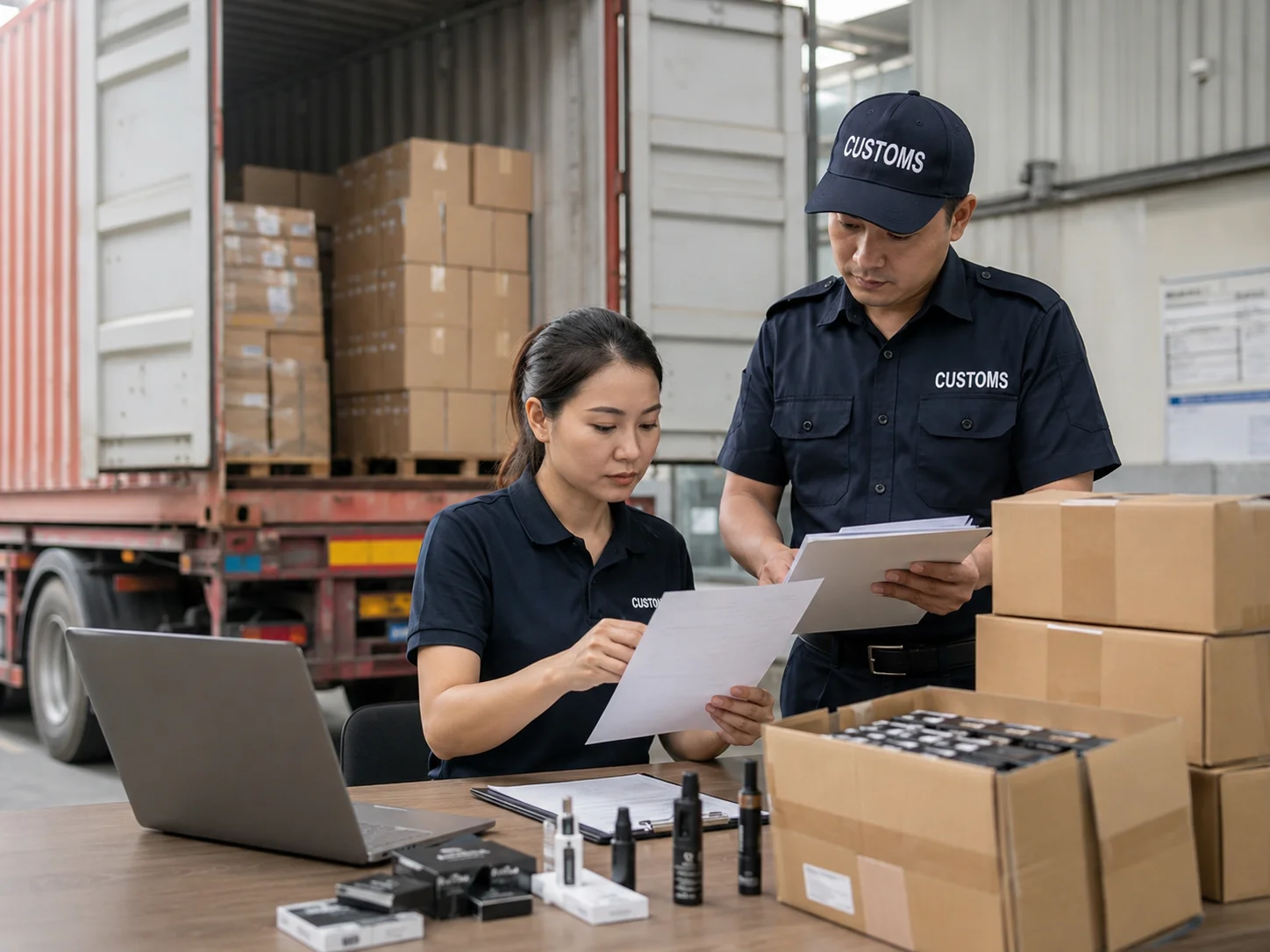
In my experience, logistics is not just “send it by air.” Vape products can involve battery rules, nicotine classification, customs checks, and local delivery limits. A reliable supplier should not hide these risks. They should explain them in simple words before you pay.
For small buyers, overseas warehouse stock can reduce stress. If stock is already in a compliant local warehouse and can be sold legally in that market, delivery can be fast. In Germany, for example, local delivery may take 1–2 days in many cases. Other EU destinations may take several working days. This speed helps small sellers test demand and turn cash faster.
For larger buyers, China direct shipping can reduce unit cost. But the buyer must understand the route, insurance, customs documents, and delivery responsibility. If cargo value is high, shipping insurance and customs terms should be written clearly. Do not accept vague promises.
| Buyer Type | Better Route | Reason |
|---|---|---|
| New seller under 200 pieces | Local or regional warehouse | Low risk, fast test |
| Small retailer under 2,000 pieces | Warehouse or mixed small batches | Faster turnover |
| Wholesaler over 2,000 pieces | China direct may work | Better price and range |
| Brand owner | Planned production and legal import | Needs documents and control |
I also warn buyers about countries or areas with stricter checks. If your market has special restrictions, do not try to solve it with hope. Ask a licensed customs broker. If the legal route is not possible, the business model may not be suitable.
Building Long-Term Relationships with Vape Manufacturers?
One-off deals feel easy. Long-term supply is harder. But stable supply is where real wholesale profit often begins.
Long-term manufacturer relationships help buyers get better stock priority, clearer product information, more stable quality, better after-sales support, and early notice about new models. The relationship works best when both sides communicate honestly about volume, market, compliance, and payment ability.

I always prefer long-term business. I do not like deals where the buyer only wants the lowest price and the supplier only wants fast payment. That relationship breaks quickly. Good B2B trade needs trust, but trust must be built by facts.
Here is what I think a healthy supplier relationship looks like:
| Good Signal | What It Means |
|---|---|
| Supplier asks about your country | They care about legal and logistics risk |
| Supplier explains product versions | They understand the market |
| Supplier suggests small test order | They care about repeat business |
| Supplier gives realistic delivery time | They do not sell dreams |
| Buyer shares sales feedback | Supplier can recommend better stock |
| Buyer pays on time | Supplier gives better support |
I have met many small buyers who later became strong customers. They did not start with huge orders. They started with small batches, sold carefully, listened to customer feedback, and reordered fast. That is a healthy path.
I also tell buyers not to judge only by brand name. Some top global brands are hard to access because they already have exclusive agents. If you cannot get stable stock from a famous brand, you may build better profit with another reliable original brand that has good taste, good battery, and stable supply. Customers care about brand, but they also care about experience. If the product tastes good and works well, many customers will accept a new option after trying it.
When Factory-Direct Sourcing Might Not Be the Best Option?
Direct sourcing sounds strong, but it can be too heavy for some buyers. Bigger responsibility is not always better.
Factory-direct sourcing may not be the best option when order volume is small, demand is untested, compliance is unclear, cash flow is limited, or the buyer lacks logistics experience. In these cases, local stock, authorized distributors, or smaller test orders may be safer.

I often see new sellers make the same mistake. They want OEM or direct bulk supply before they have stable customers. OEM especially looks attractive because it has your own logo and package. But in disposable vape, OEM needs real commitment. You may need MOQ by flavor, packaging design, production time, compliance review, and import planning. One flavor may need thousands of units[^11]. Ten flavors can quickly become a large order. Production can take weeks. Shipping can take more weeks. Cash is locked before you know which flavor sells.
Factory-direct may not fit you if:
| Situation | Better Choice |
|---|---|
| You are new to vape retail | Start with small warehouse stock |
| You do not know best-selling flavors | Test multiple models first |
| You have no local license | Fix compliance before sourcing |
| You cannot handle customs | Use authorized local channels |
| You need goods this week | Buy existing local stock |
| You want only famous brands at impossible prices | Re-check market reality |
| You cannot accept any risk | Do not start with regulated goods |
I also want to be clear about puff numbers. Many new buyers chase huge numbers on the package. Some products claim very high puff counts. But physical size, real e-liquid volume, battery, and coil life all limit real use[^12]. A professional buyer should look at real e-liquid amount, battery quality, coil stability, leakage rate, and customer feedback. A big number on the box does not create repeat sales. A stable experience does.
So factory-direct is not the goal. A profitable and legal supply system is the goal.
Conclusion
Factory-direct vape supply can help growth, but only when price, quality, compliance, shipping, and cash flow fit your real business stage.
[^1]: "Break-even point | U.S. Small Business Administration - SBA", https://www.sba.gov/business-guide/plan-your-business/calculate-your-startup-costs/break-even-point. A source explaining the components of total landed cost can support the principle that for smaller import volumes, fixed and variable costs associated with shipping, customs, and insurance can make domestic wholesale a more economical option. Evidence role: general_support; source type: education. Supports: The claim that for small order volumes, the total landed cost of direct importing (including freight, customs, and insurance) can negate the savings on unit price.. Scope note: The source would provide a general economic framework rather than validating the specific '2,000 piece' threshold, which is industry-dependent. [^2]: "Electronic cigarette - Wikipedia", https://en.wikipedia.org/wiki/Electronic_cigarette. A technical resource or encyclopedia entry that provides a diagram or description of the internal components of a typical disposable e-cigarette would confirm the device's composition. Evidence role: definition; source type: encyclopedia. Supports: The claim that disposable vapes are constructed from a specific set of functional components.. [^3]: "Combating Spoofed Robocalls with Caller ID Authentication", https://www.fcc.gov/call-authentication. A report from a brand protection service or a news article investigating counterfeit goods can provide evidence of criminals using fraudulent QR codes and spoofed websites to deceive consumers about product authenticity. Evidence role: case_reference; source type: other. Supports: The claim that counterfeiters use QR codes that link to fake verification websites.. [^4]: "Measurement of Electronic Cigarette Frequency of Use Among ...", https://pmc.ncbi.nlm.nih.gov/articles/PMC7171268/. A source from a product testing organization or research paper analyzing disposable e-cigarettes could support this by showing discrepancies between labeled puff counts and the actual number of puffs delivered in lab conditions. Evidence role: statistic; source type: research. Supports: The claim that advertised puff counts can be inconsistent with a device's actual yield, which is dependent on technical specifications.. Scope note: The findings may be specific to the brands and models tested. [^5]: "exclusive distribution agreement - SEC.gov", https://www.sec.gov/Archives/edgar/data/1762239/000159991620000036/ex10_1.htm. A business publication or market analysis report discussing the distribution strategies of major consumer goods companies, potentially with examples from the vape industry, can support the use of exclusive agency models. Evidence role: general_support; source type: other. Supports: The claim that prominent vape brands often rely on exclusive distributors for market access.. Scope note: The source may discuss this as a general strategy without naming specific vape brands that are not publicly disclosed. [^6]: "[PDF] The Counterfeit Conundrum: A Case Study to Examine the Best Way ...", https://digitalcommons.kennesaw.edu/cgi/viewcontent.cgi?article=1282&context=amj. A resource from a government intellectual property office or department of justice can outline the civil and criminal penalties associated with trafficking in counterfeit goods, supporting the claim of significant legal risk. Evidence role: general_support; source type: government. Supports: The claim that selling counterfeit goods carries severe legal and business risks.. [^7]: "20 years of tobacco control in the EU: are we moving towards a ...", https://www.who.int/europe/news/item/05-11-2025-20-years-of-tobacco-control-in-the-eu--are-we-moving-towards-a-tobacco-free-future. An official source, such as the European Commission's public health website or the UK Medicines and Healthcare products Regulatory Agency (MHRA), can confirm that the TPD and related national laws set the rules for e-cigarettes, including limits on nicotine strength and tank size. Evidence role: definition; source type: government. Supports: The claim that the TPD (and its UK implementation, the TRPR) governs vape products in the EU and UK.. [^8]: "Premarket Tobacco Product Applications - FDA", https://www.fda.gov/tobacco-products/market-and-distribute-tobacco-product/premarket-tobacco-product-applications. The U.S. Food and Drug Administration (FDA) website explains the Premarket Tobacco Product Application (PMTA) requirement, confirming that manufacturers must receive marketing authorization from the agency to legally sell new tobacco products. Evidence role: definition; source type: government. Supports: The claim that the PMTA process is the federal pathway for legally marketing vape products in the U.S.. [^9]: "STATE System Tax Stamp Fact Sheet - CDC", https://www.cdc.gov/statesystem/factsheets/taxstamp/TaxStamp.html. A document from a state's department of revenue or a report from a public policy organization can provide examples of jurisdictions that have implemented tax stamp requirements for vapor products as part of their tax collection and enforcement system. Evidence role: case_reference; source type: government. Supports: The claim that some jurisdictions use tax stamps as a method of collecting excise tax on vape products.. [^10]: "Transporting Lithium Batteries | PHMSA", https://www.phmsa.dot.gov/lithiumbatteries. The International Air Transport Association (IATA) provides regulations for shipping lithium batteries, classifying them as dangerous goods and outlining specific requirements for packaging, labeling, and handling, which supports the claim that they complicate logistics. Evidence role: mechanism; source type: institution. Supports: The claim that lithium batteries in vapes are subject to specific shipping regulations.. [^11]: "Economies of scale - Wikipedia", https://en.wikipedia.org/wiki/Economies_of_scale. A business or manufacturing guide explaining the concept of Minimum Order Quantity (MOQ) can support this by detailing how OEM production requires large batches to cover setup costs and achieve economies of scale, making it a significant commitment. Evidence role: general_support; source type: education. Supports: The claim that OEM production involves high minimum order quantities.. Scope note: The source would likely explain the general principle of MOQs rather than providing a specific number for the vape industry. [^12]: "E-cigarette use behaviors and device characteristics of daily ... - PMC", https://pmc.ncbi.nlm.nih.gov/articles/PMC7668279/. A technical analysis or research paper on e-cigarette design can support this by explaining how the device's total energy output (determined by battery capacity) and total aerosolizable liquid (e-liquid volume) create a finite limit on the number of puffs possible. Evidence role: mechanism; source type: paper. Supports: The claim that a vape's puff yield is a function of its physical components..