
Quick Answer
A new pod system can attract attention, but a poor stocking decision can tie up cash, create avoidable returns, and damage customer trust. I have seen buyers focus on appearance or unit price while overlooking replenishment, user education, documentation, and after-sales responsibility. I believe retailers should validate the complete commercial picture before placing a large order.
Before stocking a new pod system, retailers should confirm customer demand, product usability, technical documentation, applicable compliance requirements, supply continuity, minimum order quantities, delivery arrangements, and after-sales responsibility. A small, controlled test order can help a retailer evaluate sell-through and customer feedback before committing to larger inventory, bulk importing, or OEM/ODM development.
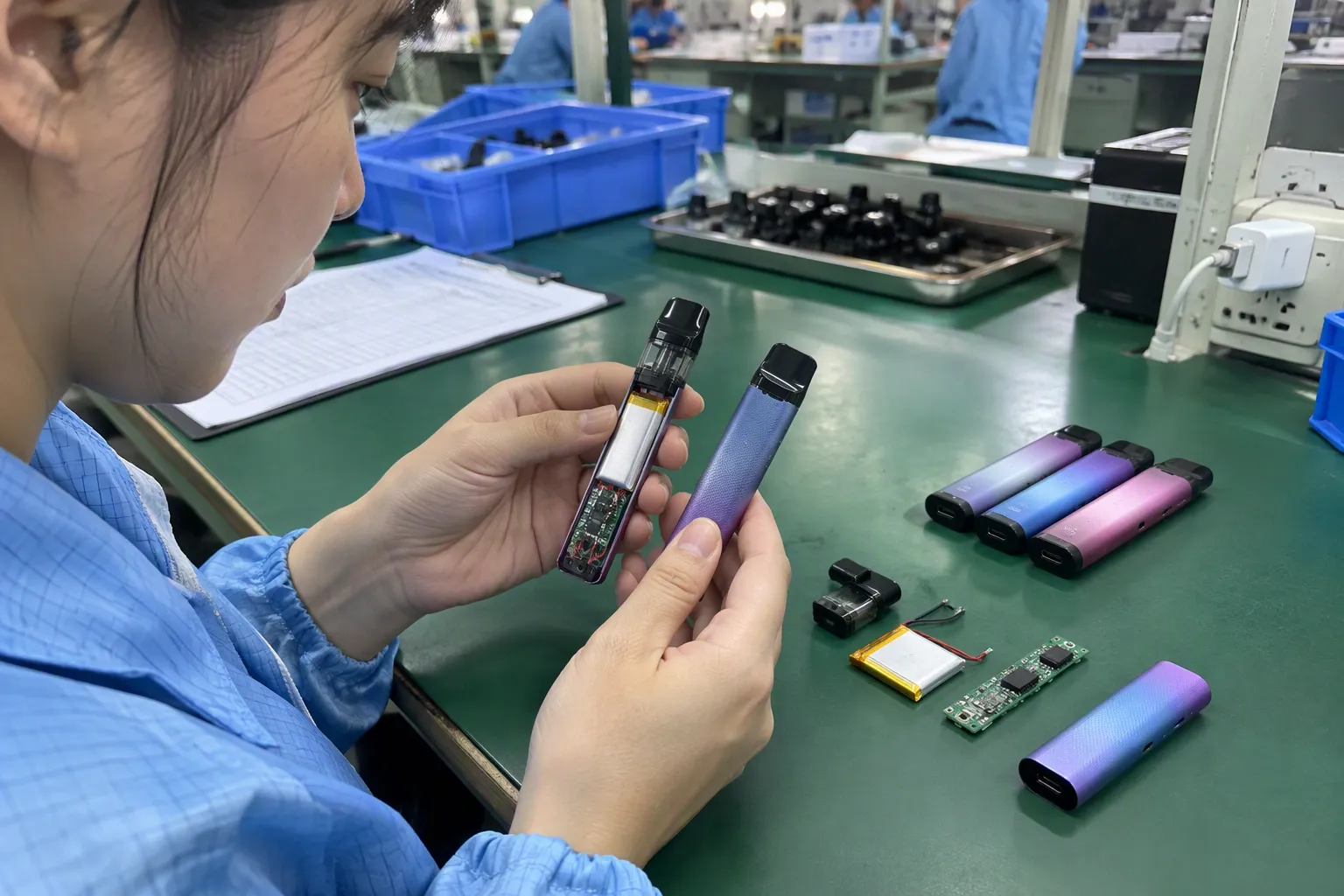
A product can look promising and still move slowly in a specific shop or region. The right evaluation process connects product features with real customer needs, staff explanations, cash flow, and replenishment risk. I will explain the questions I recommend buyers ask before they decide whether a new pod system deserves wider distribution.
What Do Retailers Need to Know Before Stocking a New Pod System?
Many retailers want to be first with a new product, especially when customers are asking for fresh designs or new product categories. However, market excitement does not automatically create repeat sales[1]. I recommend treating the first purchase as a commercial test, not as proof that the product will succeed.
Retailers should evaluate a new pod system through four connected areas: channel demand, user experience, supply reliability, and risk control. Buyers should understand who will purchase the product, how staff will explain it, whether the supplier can replenish it, and who will handle defects or customer complaints before they increase stock.
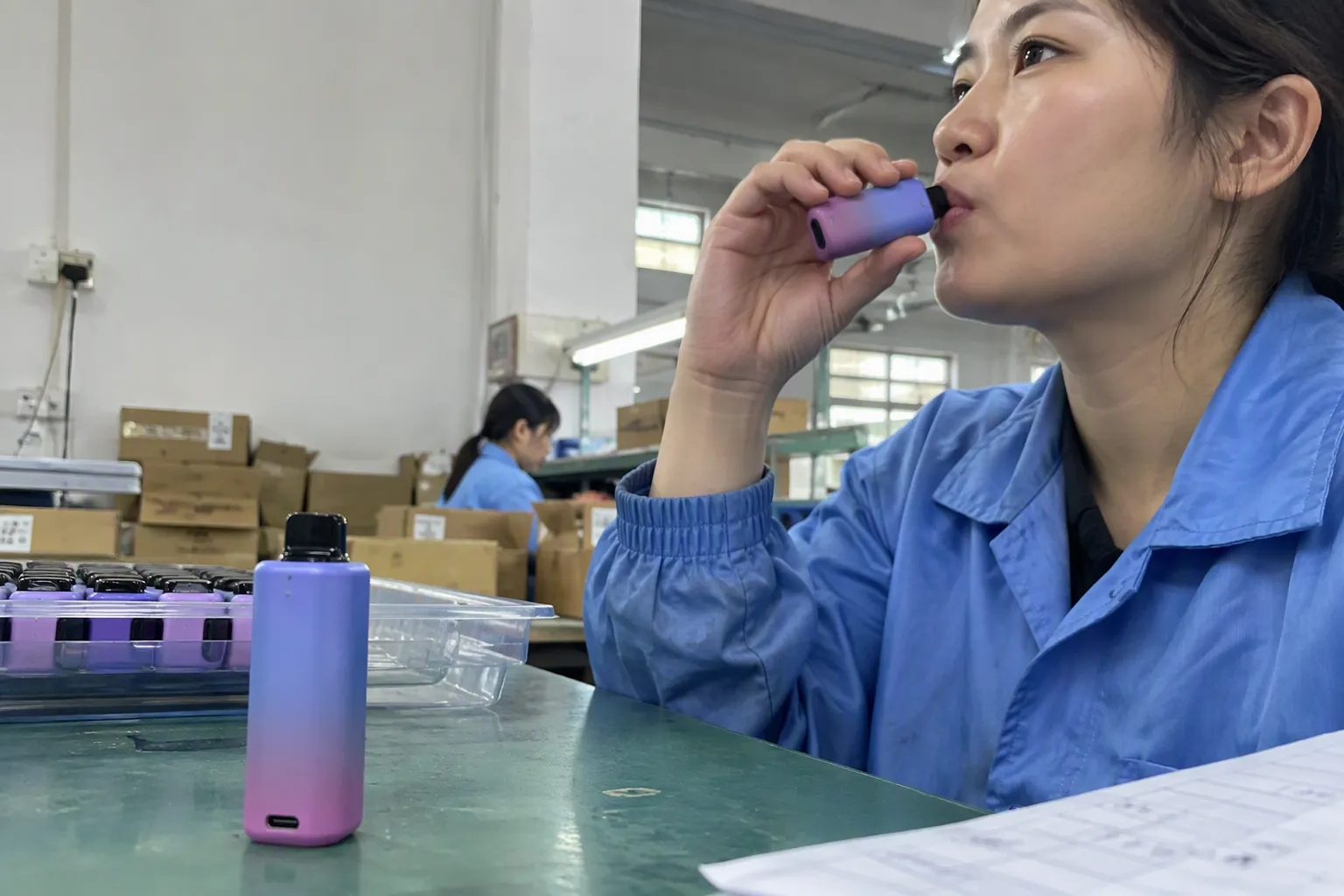
Start With the Sales Channel, Not the Product Hype
I work with importers, wholesalers, vape shops, smoke shops, convenience stores, gas stations, and other buyers. These businesses may purchase similar products, but they do not always serve the same customer. A product that fits a specialist vape shop may need more explanation in a convenience store. A design that appeals to an experienced user may not suit a customer who wants a simple purchase.
Before I recommend a large order, I ask buyers to define the intended channel:
- Will the product sell through a specialist shop or a general retail counter?
- Will the buyer sell directly to consumers or supply other stores?
- Does the customer base prefer simple operation or more adjustable features?
- Can store staff explain charging, pod replacement, filling, and basic operation?
- Does the product fit the price range that local customers already accept?
- Will the buyer sell one unit at a time, in multiple locations, or through a wholesale network?
I do not view “popular” as a complete sales forecast. I prefer the question, “Can this product move through my specific channel?”
A retailer can compare the product with current stock using a simple evaluation table:
| Evaluation point | Questions for the retailer | Why it matters |
|---|---|---|
| Customer fit | Who is most likely to buy it? | It clarifies positioning and staff training |
| Price position | Is it entry-level, mid-range, or premium? | It helps prevent unclear shelf placement |
| Product explanation | Can staff describe use in simple language? | Clear explanations can reduce misuse[2] |
| Repeat purchase | Will customers need replacement pods or related items? | It affects future sales and inventory planning |
| Stock risk | How many units can the retailer sell before reordering? | It protects cash flow |
| Supplier support | Who handles defects and product questions? | It limits operational confusion |
This process does not require a large research department. A buyer can start by reviewing sales records, asking store staff for feedback, and testing a limited quantity. The purpose is to replace assumptions with evidence from the buyer’s own channel.
Convert Specifications Into Customer Decisions
Product specifications have value only when they help a retailer make a better purchasing or selling decision. Battery capacity, charging method, pod construction, expected service life, liquid compatibility, and operating instructions should not remain as isolated numbers on a quotation sheet.
For example, a battery specification may affect charging expectations and customer convenience. Pod design may affect replacement sales, leakage complaints, filling instructions, or compatibility questions. The retailer should ask the supplier to explain the supporting test evidence and the limits of any performance statement.
I recommend that buyers review:
-
Battery and charging information
The buyer should confirm the stated capacity, charging interface, charging instructions, and any available test records. The buyer should also make sure that the product information matches the actual model and packaging. -
Pod and liquid compatibility
The retailer should confirm which liquids the product is designed to use and how the supplier defines compatibility. The retailer should not assume that every liquid, viscosity, or formulation will produce the same result.[3] -
Operating instructions
The instructions should cover activation, charging, pod installation, storage, cleaning where applicable, and troubleshooting. If the product is difficult to explain, staff may provide inconsistent guidance. -
Expected service life
The buyer should ask how the supplier defines lifespan. A statement about lifespan may depend on usage conditions, liquid, charging habits, and other factors.[4] The retailer should avoid turning a supplier estimate into an unconditional promise to the final customer. -
Packaging and labeling
The buyer should check whether the packaging, warnings, instructions, and product description meet the requirements of the intended market. Country and product-category rules can differ[5], so I recommend professional compliance review before commercial sale.
A specification comparison can help:
| Question | Evidence to request | Purchasing decision |
|---|---|---|
| How does the device charge? | Product specification and user instructions | Decide whether staff can explain charging clearly |
| What pod format does it use? | Product drawings, samples, or written confirmation | Plan replacement inventory |
| What liquids are suitable? | Supplier guidance and available test information | Reduce misuse and complaint risk |
| How is performance evaluated? | Test method, sample size, and test date | Judge whether the claim is meaningful |
| What happens when a product fails? | Written after-sales terms | Calculate the real cost of stocking |
| Can the model be replenished? | Production plan and current lead time | Decide whether it supports repeat sales |
I have found that buyers often ask about unit price first and technical details later. In practice, the cost of unclear instructions or incompatible replacement items can be greater than a small difference in purchase price.
Check Quality Control Before You Stock
A retailer does not need to perform factory-level testing alone, but the retailer does need to understand how quality is controlled. I recommend asking the supplier how incoming components, assembly, charging functions, pod fit, appearance, packaging, and finished goods are checked.
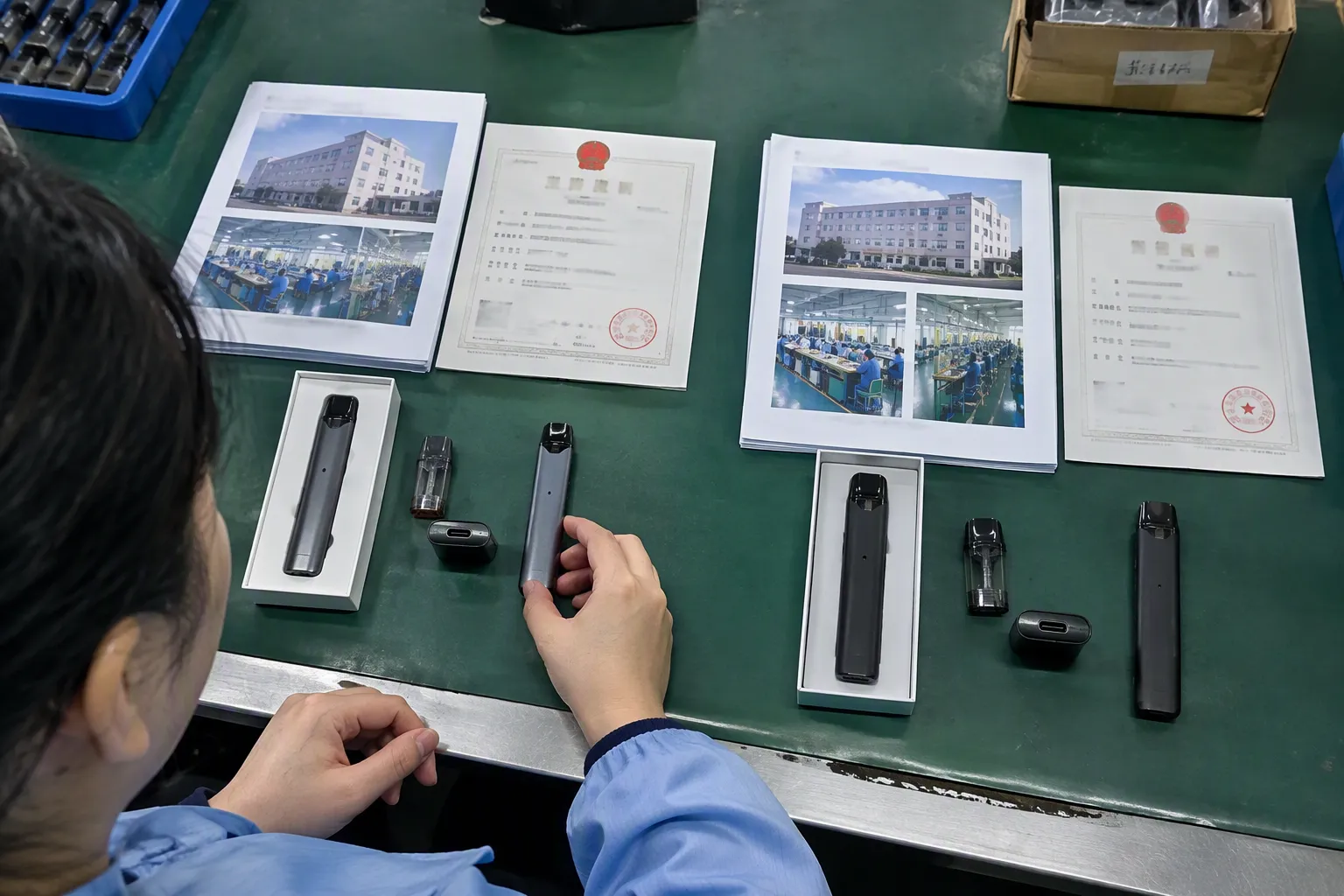
The buyer should request documentation that relates to the exact model under consideration. General company information may be useful, but it does not automatically prove that every product or production batch has the same characteristics.[6] Certifications, laboratory reports, declarations, and other documents should be reviewed and verified for scope, validity, issuing organization, and model coverage.
A practical quality discussion should include:
- The production site and responsible quality-control team.
- The inspection points used during assembly.
- The sampling or inspection method for finished goods.
- The process for recording and reviewing defects.
- The way batch information is identified.
- The procedure for handling products that do not meet agreed requirements.
- The packaging checks used before shipment.
- The documents supplied with the specific product.
I represent a business that combines distribution, factory manufacturing, and OEM/ODM support. Our own factory covers approximately 5,000 square meters and has a stated maximum production capacity of up to 5 million units per month. I present these figures as business information for buyers to verify, not as proof that every order will automatically receive the same capacity or quality outcome. Production timing depends on the product, order quantity, materials, schedule, and agreed specifications.
For larger orders, I encourage buyers to establish written quality criteria before production. These criteria can cover appearance, functions, packaging, labeling, sampling, and acceptable defect handling. A buyer may also choose an independent inspection provider for application-specific or shipment-specific verification.[7]
Treat Supply and Replenishment as Part of the Product
A product that sells well for two weeks but cannot be replenished can create a different problem. Retailers may lose momentum, customers may switch to another product, and wholesale buyers may become disappointed.[8] For this reason, I treat supplier availability as part of the product decision.
Before stocking a new pod system, I recommend confirming:
- Current inventory for the exact model and specification.
- Minimum order quantity for the first order.
- Minimum order quantity for repeat orders.
- Production lead time after stock is sold.
- Availability of replacement pods or related components.
- Packaging and branding lead times.
- Shipping route and estimated transit time.
- Whether the stated schedule can change during busy periods.
- The communication process for delays or shortages.
Our business supports different purchasing routes because buyers have different levels of demand and risk tolerance. Smaller retailers and short-cycle wholesalers may consider an applicable overseas warehouse when the required model is available. Our European warehouse network includes locations in Germany, Austria, Poland, and Belgium, and products may be sent through services such as DHL, DPD, UPS, or FedEx. Buyers must confirm current stock, destination, product model, delivery estimate, and commercial terms before ordering.
For some European orders, the available delivery window may be approximately one to five working days after dispatch from a suitable warehouse. That is not a permanent guarantee for every product, destination, or order. Warehouse stock, carrier conditions, holidays, customs procedures, and product restrictions can affect the actual result.
A lower-MOQ warehouse order can help a smaller buyer test demand without making a large investment. The buyer should still calculate the complete landed cost and confirm whether the route is appropriate for the product and destination.
Larger importers, distributors, and wholesalers may prefer to import in bulk from China. This route can provide more purchasing flexibility and may support OEM/ODM development, but it also requires more planning. The buyer should validate demand, documentation, quality requirements, production capacity, freight arrangements, and local sales requirements before committing to a large shipment.
Clarify After-Sales Responsibility Before the First Sale
After-sales service is one of the main concerns I hear from importers and retailers. A defective unit can create several costs at once: replacement stock, staff time, shipping, customer dissatisfaction, and damage to the retailer’s reputation. A supplier who gives unclear answers before the order may create even more confusion after delivery.
I recommend asking these questions in writing:
- What qualifies as a product defect?
- How should the buyer report a problem?
- What evidence is required, such as photos, videos, batch numbers, or samples?
- How quickly will the supplier review the report?
- Will the supplier replace products, issue credit, or use another agreed solution?
- Who pays the relevant shipping cost?
- Does the policy apply to all models and order sizes?
- What happens when the issue involves user misunderstanding rather than a manufacturing defect?
- How will repeated problems be investigated?
- Who is the single contact for products purchased from multiple brands?
Our distribution model gives customers one after-sales contact for products purchased through us. This arrangement can reduce the burden of contacting several factories or brands. However, the exact solution still depends on the product, evidence, agreed terms, and commercial circumstances. I do not describe after-sales support as a promise of zero defects or unconditional compensation.
I also recommend that retailers create a basic customer-support guide. The guide can include:
- The correct charging and operating instructions.
- Common user questions.
- Basic troubleshooting steps.
- Instructions for reporting a suspected defect.
- A clear distinction between product failure and incorrect use.
- A record of the batch or purchase date.
User education matters because a customer may report a product problem when the real issue is an installation mistake, unsuitable liquid, poor storage, or incomplete understanding of the operating instructions. Retailers should not assume the customer is at fault, but they should also avoid making technical conclusions without qualified evaluation.
Match the Purchasing Route to Business Size
I have worked with both smaller retail buyers and established importers. Their purchasing decisions should not follow the same pattern.
A smaller buyer often needs:
- Lower initial exposure.
- Fast replenishment.
- Small quantities.
- Flexible product testing.
- A simple logistics process.
- One supplier contact for product and after-sales questions.
A larger importer or distributor may need:
- Better unit economics at volume.
- Stable monthly supply.
- Multiple product categories.
- Custom packaging or branding.
- OEM/ODM development.
- Formal quality-control procedures.
- Forecasting and production planning.
Our company supplies a broad range of electronic-cigarette and traditional smoking-accessory products, including electronic cigarettes, disposable vapes, atomizers, 510 batteries, CBD batteries, grinders, glass pipes, and vaporizers. We also represent multiple brands and product categories, while our factory supports new product development and OEM/ODM projects. Buyers should evaluate whether a one-stop supplier actually improves purchasing efficiency for their business rather than adding unnecessary product complexity.
I usually see two practical routes.
Route One: Controlled Warehouse Testing
A retailer or small wholesaler can test a suitable product with a lower quantity from an overseas warehouse, subject to current availability and terms. This route may reduce the time between payment and receiving stock. It may also reduce the need to commit immediately to a large shipment from China.
The buyer should still confirm:
- The exact model and available quantity.
- The warehouse location.
- The final delivery address.
- The shipping method.
- The applicable product and sales requirements.
- The return or after-sales process.
- The date by which the stock can be dispatched.
Route Two: Bulk Import or OEM/ODM
An established importer can consider a larger order after validating the product. The buyer may also request custom branding, packaging, or a new design. OEM/ODM can create differentiation, but it requires more than a logo.
The project should define:
- Product requirements.
- Target customer and sales channel.
- Packaging and artwork.
- Sample approval.
- Quality standards.
- Testing and documentation.
- Minimum order quantity.
- Production schedule.
- Intellectual-property responsibilities.
- After-sales arrangements.
- Reorder expectations.
Our factory maintains a development program that introduces approximately five to ten new products each month. I share this as part of our operating context. Buyers should still assess whether a specific project has the right development resources, timeline, documentation, and production plan.
Use a Practical Test-Order Scorecard
A test order should produce information, not just inventory. I suggest that retailers agree on the evaluation period and success criteria before the stock arrives.
A simple scorecard can include:
| Area | Example question |
|---|---|
| Sell-through | How many units moved during the test period? |
| Customer fit | Which type of customer purchased the product? |
| Staff feedback | Could employees explain the product accurately? |
| Complaint rate | What issues did customers report? |
| Repeat demand | Did customers ask for the same model again? |
| Margin | Did the actual margin match the original estimate? |
| Replenishment | Could the supplier provide stock within the required window? |
| Support | How quickly did the supplier answer questions? |
I would not use one sales week as the only basis for a large commitment. Product movement can vary by location, season, promotion, customer type, and competing stock. The buyer should compare the test product with existing products and review both positive and negative feedback.
If the product does not move, the buyer should ask why. The cause may be price, packaging, staff explanation, product fit, poor shelf placement, limited replacement availability, or weak demand. A slow result does not always prove that the product is technically poor, but it does show that the commercial plan needs review.
Confirm Market Requirements and Documentation
Electronic-cigarette products can be subject to different requirements depending on the destination, product type, ingredients, labeling, advertising, packaging, and sales channel. I do not treat one country’s documents as universal approval for another country.
Before ordering, I recommend that buyers identify the requirements that apply to their intended market and obtain qualified local or legal advice where necessary. The supplier can provide available product information and documents, but the importer or seller may still have responsibilities in the destination market.
The buyer should verify:
- Product classification.
- Required technical or safety documentation.
- Labeling and packaging rules.
- Advertising and sales restrictions.
- Import requirements.
- Age-related sales controls where applicable.
- Requirements for liquids, batteries, or accessories.
- Whether documents cover the exact model and version.
A supplier’s certificate or report should be treated as a document to verify. The buyer should check the issuing body, date, scope, model, and test basis. A document that covers one product version may not cover another version with different components or packaging.
I recommend that buyers keep a compliance file for every stocked model. The file can contain the quotation, product specification, approved sample, packaging artwork, supplier documents, inspection records, shipment details, and after-sales communication. This record can help the buyer investigate complaints and make better reorder decisions.
Protect Cash Flow and Store Reputation
The commercial risk of a new pod system is not limited to the purchase price. The buyer also carries the cost of storage, freight, taxes or duties where applicable, staff time, returns, replacement stock, and money held in slow-moving inventory.
I suggest that buyers calculate:
Estimated total stock cost = product cost + logistics + applicable import costs + storage + inspection + expected support cost
The buyer should then compare that figure with a realistic selling price and expected sell-through. The calculation should use conservative assumptions. A high theoretical margin does not help if the product remains in the warehouse.
Store reputation also matters. A retailer may recover from one slow product, but repeated quality or supply problems can reduce trust. Buyers can reduce this risk by starting with a manageable quantity, documenting supplier terms, training staff, and monitoring complaints from the first shipment.
In my experience supporting buyers from Europe, the United States, and other markets, customers often value a reliable process more than a dramatic promise. They want to know who will answer a question, how quickly a product can be replenished, and what happens when a problem appears. These practical details directly affect their ability to keep selling.
Frequently Asked Questions
How many units should I order when testing a new pod system?
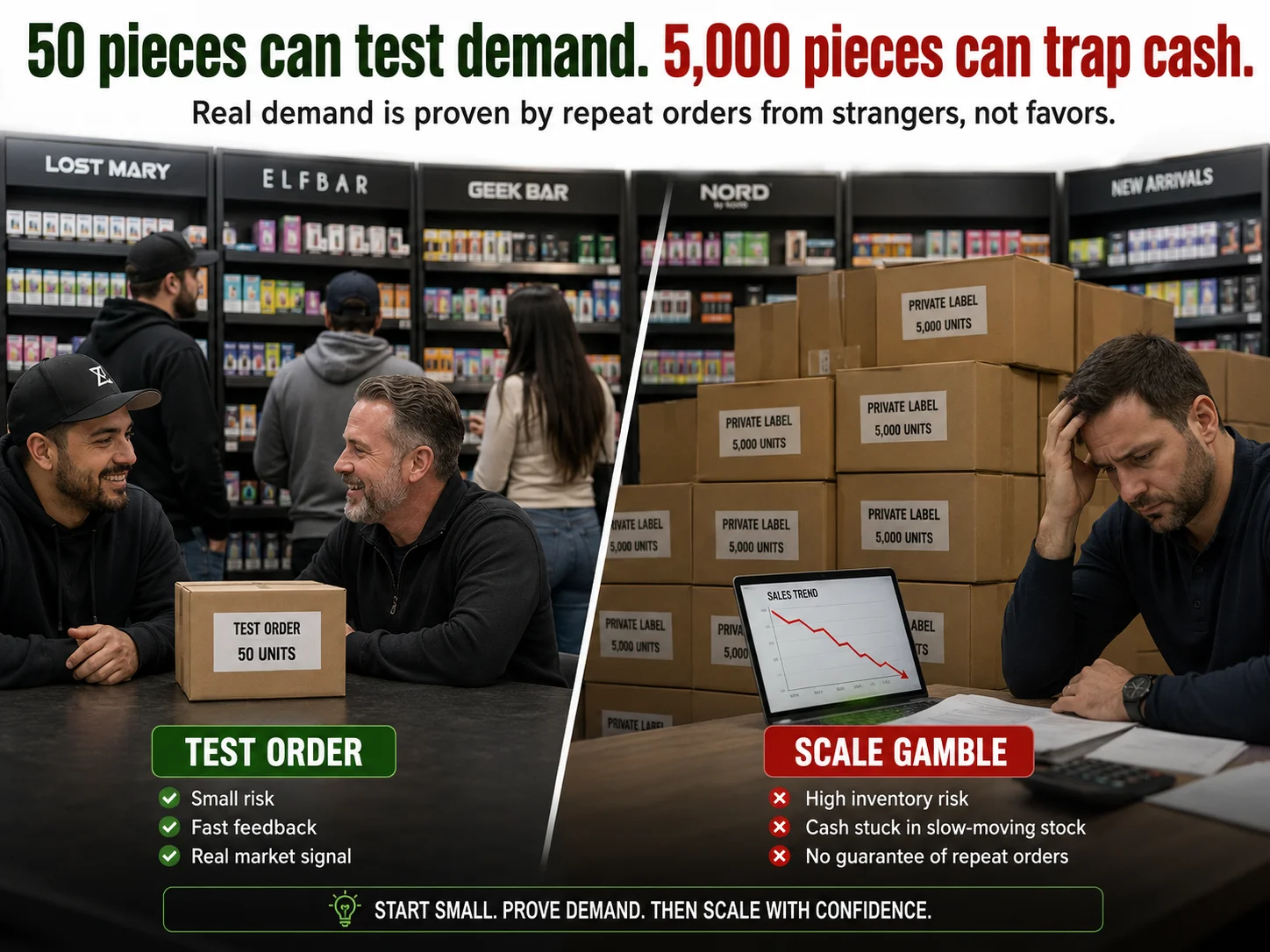
I recommend choosing a quantity that provides useful sales feedback without putting excessive cash into unproven stock. The right amount depends on your channel, store traffic, product price, and supplier terms. Smaller buyers can ask about available low-MOQ warehouse stock, while larger buyers can negotiate a controlled trial before bulk importing.
Should I choose a low price or a higher-quality new pod system?
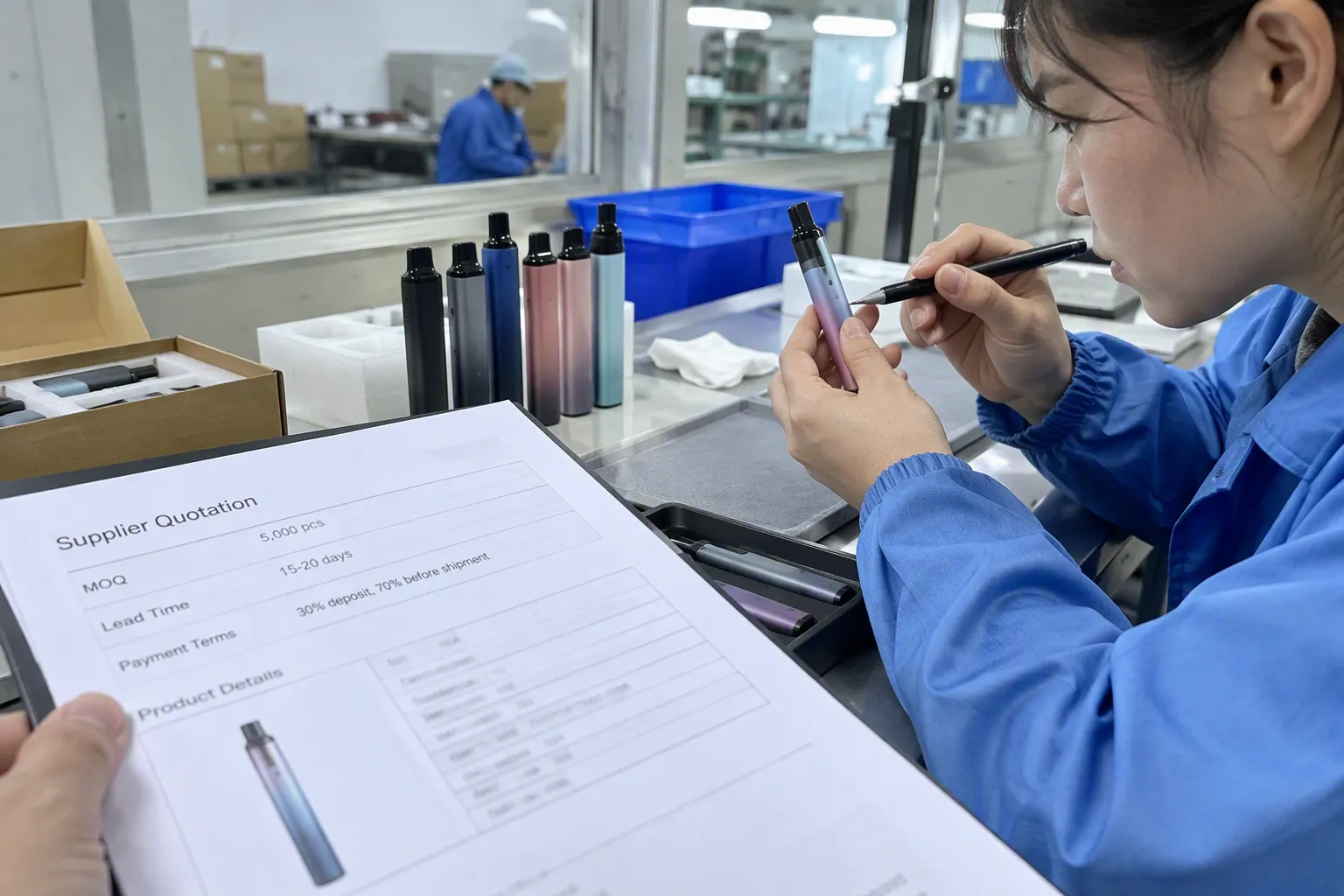
I would not make the decision from unit price alone. You should compare documented quality controls, product usability, expected customer fit, after-sales terms, replenishment reliability, and total landed cost. A cheaper product can become more expensive if it creates frequent returns, unclear complaints, or slow sales.
What documents should I request from a pod system supplier?
I recommend requesting the product specification, user instructions, packaging details, available test reports or certifications, quality-control information, and written after-sales terms. You should verify whether each document covers the exact model and intended market. Local compliance requirements should be confirmed with qualified professionals.
Is an overseas warehouse suitable for a small retailer?
An overseas warehouse may suit a small retailer that needs a lower starting quantity or faster local dispatch, subject to current stock and commercial conditions. You should confirm the model, warehouse location, delivery estimate, shipping terms, and after-sales process before payment. Warehouse availability is not permanent for every product.
When should I consider OEM or ODM development?
I would consider OEM or ODM after you have validated customer demand, product positioning, required documentation, quality expectations, and reorder potential. Custom development can support brand differentiation, but it normally requires clearer specifications, sample approval, production planning, and a suitable minimum order quantity.
Conclusion
A new pod system deserves a structured purchasing review before it reaches your shelves. I recommend connecting technical specifications with customer use, staff explanations, quality evidence, applicable market requirements, replenishment capacity, after-sales responsibility, and cash-flow risk. Smaller buyers may test suitable warehouse stock, while larger importers may consider bulk importing or OEM/ODM after validation. At Shenzhen Kingfuji Tech. CO., Ltd., I support brand distribution, factory manufacturing, OEM/ODM projects, product sourcing, logistics coordination, and unified after-sales communication. Contact King at info@kingvapecig.com or +86 13928420527 to discuss your target market and purchasing plan.
Sources
- Predicting customer loyalty in omnichannel retailing using ...", Research on new-product adoption indicates that early consumer trial or market attention does not, by itself, establish continued repeat purchasing or long-term demand
- Health Literacy–Related Safety Events: A Qualitative Study of ...", Human-factors research associates clear, comprehensible instructions with fewer user errors in products requiring multistep operation
- Generation of Electronic Cigarette Aerosol by a Third ... - PMC", Experimental studies of electronic-cigarette systems report that liquid composition and viscosity can influence wicking, aerosol generation, and device performance
- Effects of Manufacturing Variation in Electronic Cigarette Coil ...", Reliability studies indicate that rechargeable-battery aging and replaceable heating components are affected by operating conditions, charging history, and liquid composition
- Tobacco: E-cigarettes - World Health Organization (WHO)", Regulatory authorities document that requirements for electronic-cigarette products, including notification, labeling, ingredients, and sales conditions, vary across jurisdictions and product categories
- 6.2.1. What is Acceptance Sampling?", Quality-management guidance distinguishes general organizational information from product-specific conformity evidence and emphasizes defined scope, traceability, and documented inspection results
- Third-Party Quality Assurance: Practical Importer Guide", Conformity-assessment guidance recognizes independent inspection as a method for evaluating specified products, processes, or shipments against defined criteria
- The Impact of Stockouts on Customer Loyalty to Lean Retailers", Retail inventory research finds that stockouts can lead to substitution, postponed purchases, and lost sales when consumers cannot obtain their preferred product