
Struggling to pick between popular vape brands? You worry about choosing the wrong one, wasting money on slow-moving stock and missing out on what your customers really want.
The best way to compare vape brands for wholesale is to look beyond the unit price. You need to evaluate the brand's supply chain accessibility, its appeal to your specific customer base, and its potential for rapid sales turnover. A reliable brand you can restock quickly is often more profitable.
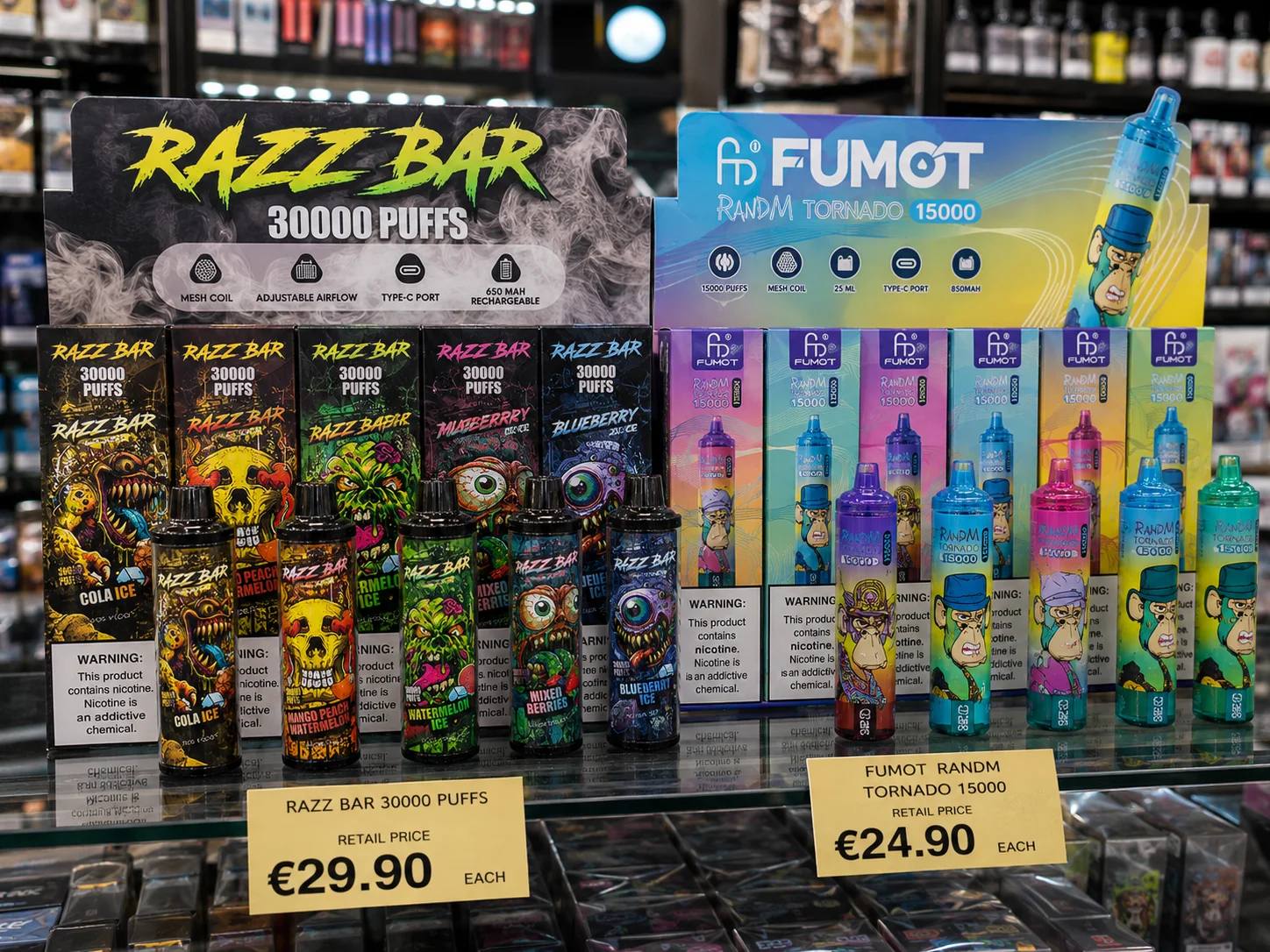
I've been in the export business from Shenzhen for over 15 years, and I've seen countless buyers make the same mistakes. They get fixated on finding the absolute lowest price, thinking that's the key to profit. But the real game, especially in a fast-moving market like disposable vapes, isn't about the margin on a single unit. It's about how many times you can sell your inventory and reinvest that money. Choosing a brand isn't just about the product; it's a strategic decision about your entire business model. Let's break down how to make the right choice, based on real-world experience.
Why is Choosing Between Vape Brands So Hard for Wholesalers?
See new vape brands popping up almost every day[^1]? It can feel overwhelming, and you know that making a bad choice means your cash gets tied up in dead stock.
Buyers compare brands to find the best fit for their customers, ensure a stable supply, and maximize their return on investment. The search isn't just about finding a cheap product; it's about finding a reliable partner and de-risking the business.
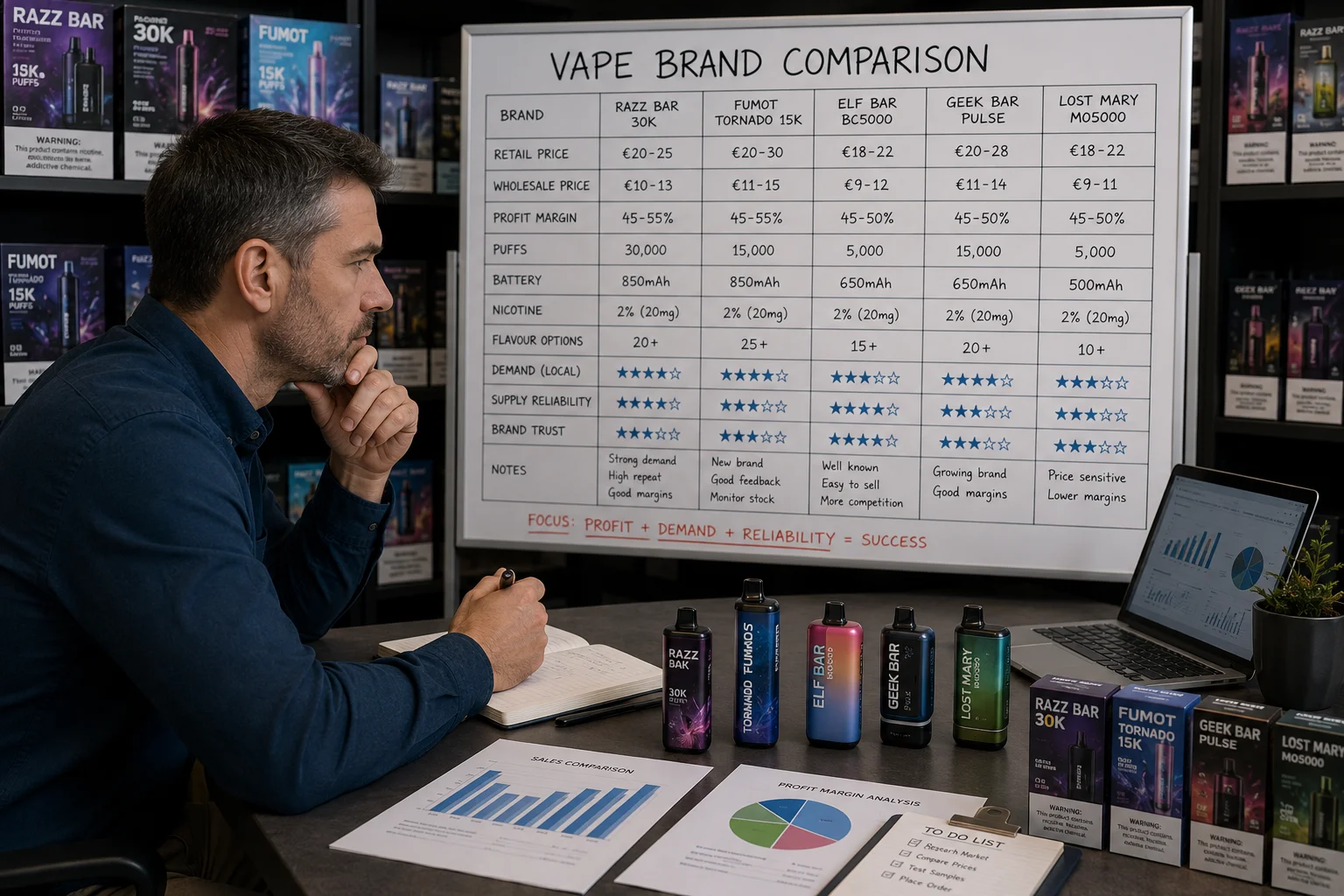
When you're trying to decide between brands like Razz Bar, Fumot, or any others, you're really trying to answer a few core business questions. It’s not just about which one has a cooler design. From my experience, wholesalers are trying to balance three key things.
The Real Factors Behind Your Decision
-
Profit Margin vs. Sales Velocity: A cheap product might offer a high margin on paper. But if it sells slowly, your money is stuck. A slightly more expensive product that flies off the shelves can make you far more money over the course of a year because you can turn your capital over and over again[^2]. This is the single biggest mistake I see new entrepreneurs make. They chase pennies on the unit price and ignore the speed of the sale.
-
Brand Recognition vs. Market Gap: Big names like ELF BAR are easy to sell[^3] because customers already know and trust them. But brands with exclusive agency models, like VOZOL, FUMOT, or RAZZ BAR, can be very difficult for smaller wholesalers to source directly. They often sign deals with a single national distributor who has to commit to massive monthly volumes, sometimes over a million units[^4]. So, if you're not that distributor, you're buying at a higher price from them, not from the factory. The question becomes: do you pay more for a known brand, or do you find a high-quality, accessible brand that fills a gap in your local market?
-
Supply Chain Stability: Can you actually get the product you need, when you need it? This is huge. A supplier who runs out of stock or has two-month lead times can kill your business momentum. This is why we invested heavily in our overseas warehouses in Germany and the US. We take on the risk of buying huge quantities—often 50,000 pieces per SKU—to ensure we have stock ready to go. For our clients, this means they can get products in 1-5 days, door-to-door.
Here’s a simple breakdown of what you're weighing up:
| Factor | High-Volume, Exclusive Brands (e.g., Fumot, Razz Bar) | Accessible, Quality Brands |
|---|---|---|
| Sourcing | Difficult for small players; must buy from a national agent. | Easier to source directly or from a stocked warehouse. |
| Price | Can be high if not buying huge volumes directly. | Competitive, especially from a high-volume supplier. |
| Risk | Risk of supply disruption if you're not the main agent. | Lower risk with a stocked warehouse model. |
| Best For | Large, established national distributors. | Small to medium wholesalers, retailers, and e-commerce sellers. |
How Can You Compare Brands Without Just Looking at the Price Tag?
Tempted by a super low price on a popular vape model? We've all been there. But you get that feeling in your gut that it's just too good to be true.
Compare brands by testing the real product quality (taste, battery, build), verifying its authenticity on the brand's official website, and evaluating your supplier's reliability. A genuine product from a trusted supplier is always the better, safer investment.
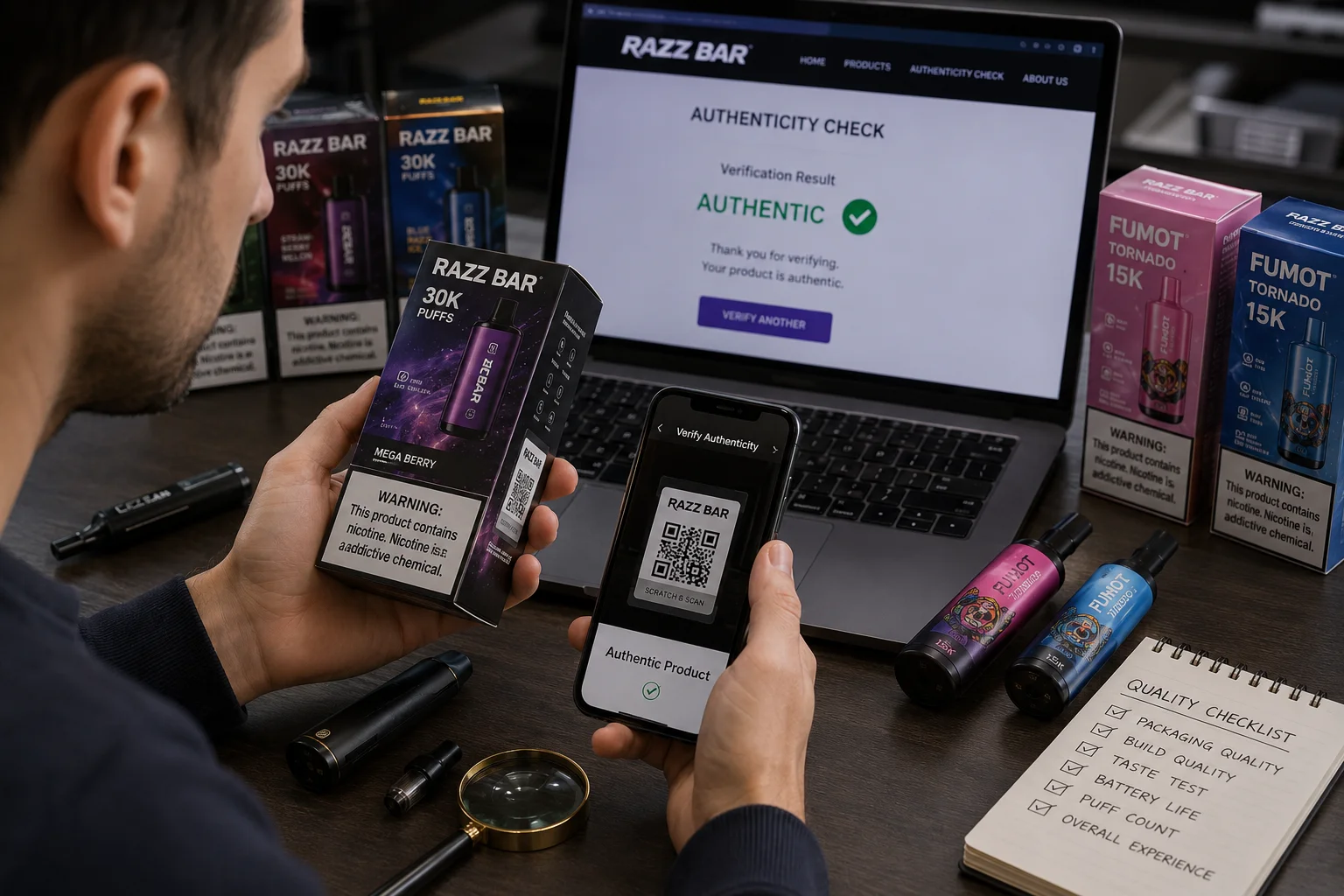
In some markets, like France with the JNR brand, fakes are so common that they might outnumber the real ones[^5]. A customer will come to us asking for a €2 price because that's what they see locally. But we know the original product costs more than €4 just to leave the factory. So what are they actually buying for €2? They're buying a pile of problems. Here's how you avoid that trap.
Step 1: Verify It's Real
Before you compare anything else, you must confirm you're looking at a genuine product. Counterfeiters have gotten smarter.
- The QR Code Trick: Many fakes now have QR codes that you can scan. The catch? It takes you to a fake website that they built[^6], which will, of course, tell you the product is "genuine."
- The Right Way: Never trust the website the QR code sends you to. Open your own browser, go to the brand's official website (like elfbar.com), find their verification page, and manually type in the security code from the box. This is the only way to be sure.
Step 2: Evaluate the Supplier's Professionalism
A supplier's behavior tells you everything.
- A Scammer or Fake Seller: Will give you a crazy low price and push you to pay immediately. They don't care about your business, your country's customs rules, or your success. They just want your money.
- A Real Partner: Will ask you about your market. They'll warn you about potential risks, like the secondary customs clearance issues in countries like Denmark, Sweden, or Estonia[^7]. They want to build a long-term business with you, which means they need you to receive your goods safely and be successful.
Step 3: Test the Product Beyond the First Puff
A fake can sometimes taste okay on the first puff. The problems show up later.
| Feature | Genuine Product | Counterfeit Product |
|---|---|---|
| E-Liquid | Consistent flavor, smooth delivery. | Inconsistent, harsh taste, unknown ingredients. |
| Battery | Uses a quality lithium battery, holds a charge. | Uses cheap manganese cells; dies quickly, won't work in the cold[^8]. |
| Build | Feels solid, good weight, clean seams. | Feels light and cheap, poor finish, prone to leaking. |
| Experience | Delivers the puff count it promises. | Fails long before the advertised puff count. |
I can't stress this enough: selling fakes, even unknowingly, destroys your reputation[^9]. The small amount you save on the purchase price will be eaten up by customer complaints, returns, and lost future sales.
Should You Stock Multiple Brands or Go All-In on One?
Deciding on your first inventory order is a stressful moment. If you go too wide, you spread your capital too thin. But if you go too narrow, you might miss out on sales.
For new or smaller sellers, it is much safer to start with one or two proven, fast-moving product lines from a reliable source. This minimizes your financial risk and lets you test the market before you start diversifying your inventory.
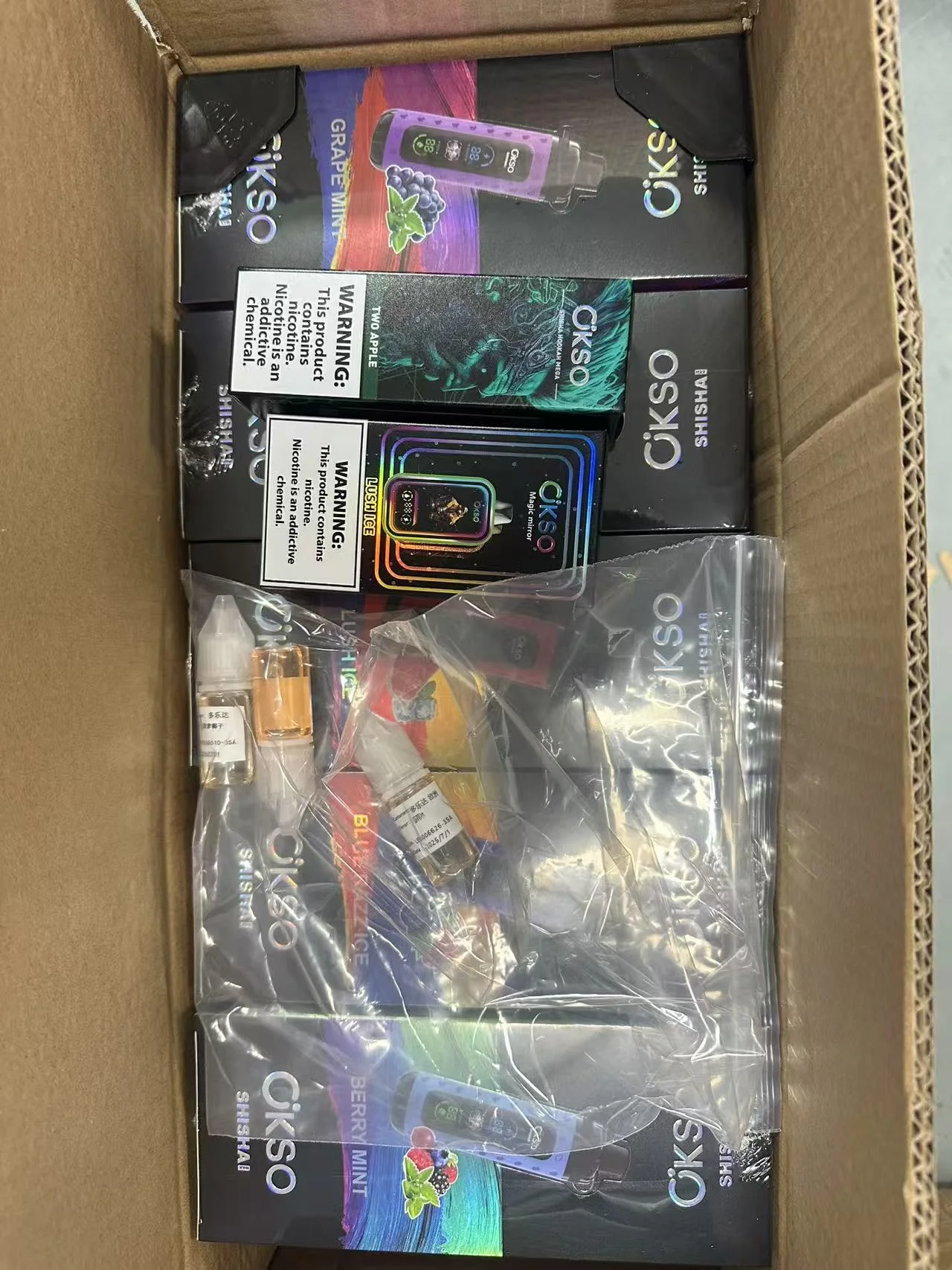
The goal of your first few orders isn't to become the biggest vape shop overnight. The goal is to get sales, generate cash flow, and learn what your customers actually want to buy. The "start small and focused" strategy is the key to achieving this without going broke.
The Power of Starting with a Low-Risk Order
I've seen so many small businesses grow into major players, and they all started this way. They didn't try to stock 20 different brands at once.
- Minimize Your Capital Outlay: We specifically set our overseas warehouse MOQ to just 50 units. This means you can get started for under €400. You're not betting your life savings; you're running a small, smart experiment.
- Maximize Your Capital Velocity: When you buy a small batch from our German warehouse, you can receive it in a few days. You sell it, get your money back plus a profit, and you can reinvest it immediately. Maybe you buy the same thing, or maybe you try a different flavor. The point is, your money is constantly working for you. It's not sitting in a box in a warehouse for months.
- Learn from Real Data: The best market research isn't a report; it's a sales receipt. By starting with a focused line, you get clear data. You'll learn which flavors sell out first and what puff count is most popular. This real-world information is invaluable and should guide all your future buying decisions.
When Is It Time to Mix in More Brands?
You should only start diversifying once you've achieved a stable, predictable sales cycle.
| You Should Start With One Line If... | You Can Start Mixing Brands If... |
|---|---|
| You are new to the vape business. | You have consistent monthly sales. |
| Your starting capital is limited. | You have healthy cash flow and can afford to stock more SKUs. |
| You are unsure what will sell in your market. | You have customer feedback asking for other products. |
| You want to minimize risk and learn quickly. | You've identified a clear gap that a new brand could fill. |
How Can You Place a Low-Risk Trial Order That Actually Works?
You're ready to place an order, but you're scared of getting stuck with a thousand units of a flavor nobody wants. That fear is completely valid.
Reduce your risk by placing a small trial order (50-100 units) from an overseas warehouse. This gives you incredibly fast delivery, a very low startup cost, and zero customs headaches, making it the perfect way to test products with real customers.
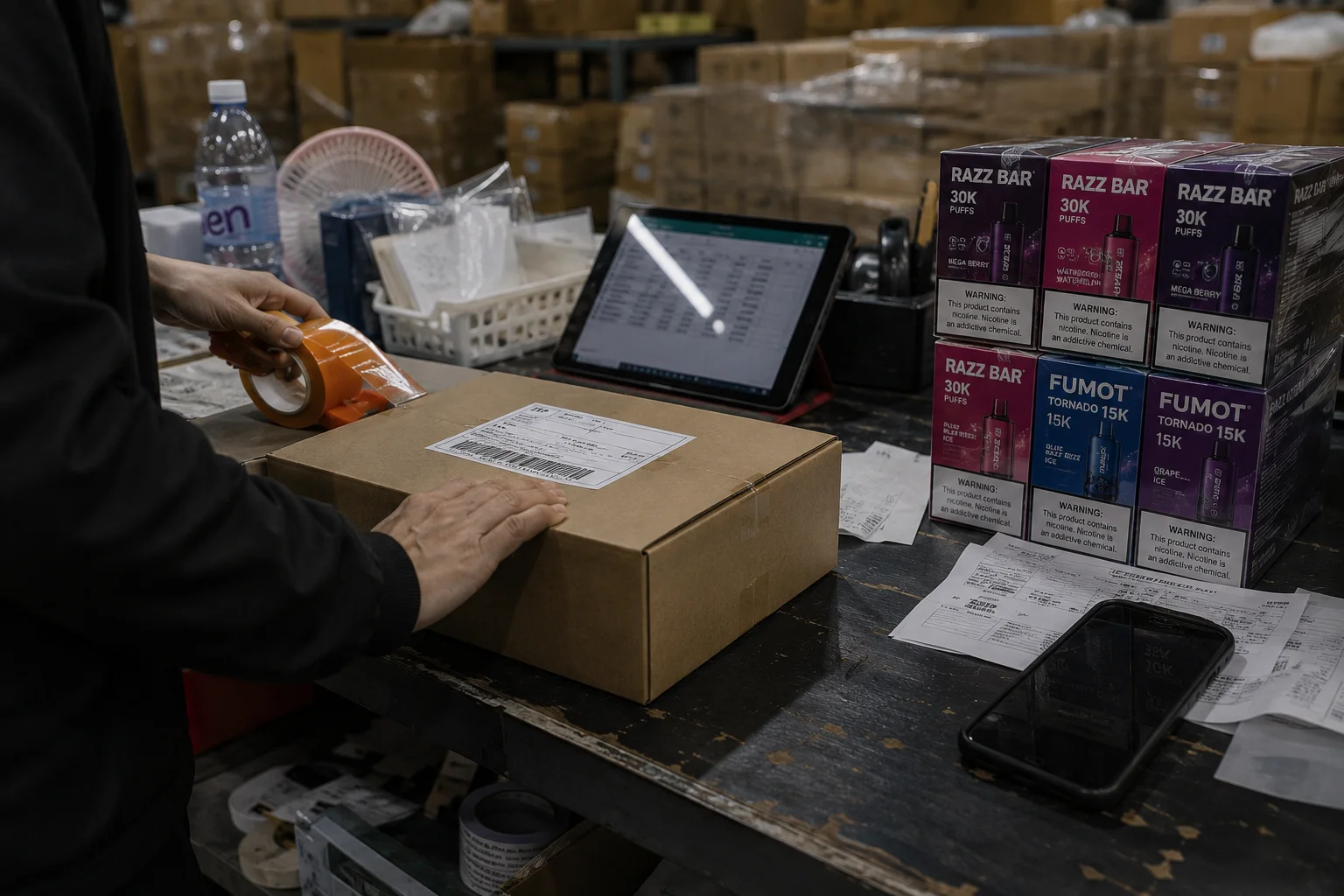
Building a smart trial order is a science. It’s about spending the least amount of money possible to get the most valuable information. Here’s the practical, step-by-step process we guide all our new clients through.
Step 1: Use the Right Sourcing Channel
Your sourcing method completely changes your risk profile. For anyone ordering fewer than 2,000 units, the choice is obvious.
- High-Risk Method: Ordering directly from China. You'll face a high MOQ, wait 3-4 weeks for production plus another 3-4 weeks for shipping[^10], and you bear all the risk of customs seizure[^11]. Your money is tied up for months before you can even make your first sale.
- Low-Risk Method: Ordering from our Germany or US warehouse. You can order as few as 50 pieces. The product arrives at your door in 1-5 days. There is no international shipping or customs risk for you to worry about. You can sell through your entire inventory and reorder before a shipment from China would have even left the port.
Step 2: Choose "Safe" Products for Your Test
A "safe" product isn't necessarily the cheapest one. A safe product is one that has a high probability of selling. This usually means choosing a well-known, high-quality brand that has consistent demand. Don't waste your trial order on an obscure brand nobody has heard of. Stick with proven winners for your initial test to establish a customer base and cash flow.
Step 3: Build Your Order Based on Broad Appeal
When you're selecting flavors for a small 50-unit order, don't pick ten different obscure ones. Choose the 5-7 most popular flavor profiles that have the broadest appeal: things like Mint, Blueberry Ice, Watermelon Ice, and other fruit-based classics[^12]. This increases the chance of a quick sell-through.
Let's compare the two approaches:
| High-Risk First Order | Low-Risk Trial Order | |
|---|---|---|
| Source | China Direct | Overseas Warehouse (e.g., Germany) |
| Quantity | 2,000+ units | 50-100 units |
| Investment | €8,000+ | < €400 |
| Lead Time | 6-8 weeks | 1-5 days |
| Customs Risk | All on you | Zero |
| Outcome | High chance of dead stock and lost capital. | Fast sales, quick learning, immediate cash flow. |
Conclusion
Choosing the right brand is about turnover and reliability, not just the price. Start small, test your market using an overseas warehouse, and build your business on what works.
[^1]: "The rise of e-cigarettes, pod mod devices, and JUUL among youth", https://pmc.ncbi.nlm.nih.gov/articles/PMC7183384/. Market analysis reports frequently highlight the rapid proliferation of new brands and product SKUs in the disposable vape sector, leading to a highly saturated and competitive landscape. Evidence role: statistic; source type: research. Supports: The claim that the vape market is crowded and seeing a rapid influx of new brands.. [^2]: "Inventory Turnover Ratio: What It Is, How It Works, and Formula", https://www.investopedia.com/terms/i/inventoryturnover.asp. This concept is known as inventory turnover, a key financial ratio that measures how many times a company has sold and replaced inventory during a given period. A higher turnover rate is often indicative of greater sales efficiency and profitability. Evidence role: definition; source type: education. Supports: The claim that rapidly turning over capital can be more important for overall profitability than the margin on a single unit.. [^3]: "E-cigarette Unit Sales by Product and Flavor Type, and Top-Selling ...", https://www.cdc.gov/mmwr/volumes/72/wr/mm7225a1.htm. Industry reports and market analyses consistently place brands like Elf Bar among the top sellers in the disposable vape category, indicating high levels of consumer awareness and market penetration. Evidence role: statistic; source type: research. Supports: The claim that certain brands have significant market presence and brand recognition.. [^4]: "EXCLUSIVE DISTRIBUTOR AGREEMENT - SEC.gov", https://www.sec.gov/Archives/edgar/data/1169394/000108503705001442/laseragt.htm. Exclusive or master distributor agreements in the fast-moving consumer goods (FMCG) sector, which includes vapes, often require distributors to commit to substantial minimum order quantities (MOQs) to maintain exclusivity in a given territory. Evidence role: general_support; source type: institution. Supports: The claim that exclusive distribution rights often hinge on commitments to purchase very large volumes of product.. Scope note: The source may discuss general FMCG practices rather than providing specific volume numbers for the vape industry. [^5]: "CBP, French Customs Seize Critical Counterfeit Electronic ...", https://www.cbp.gov/newsroom/national-media-release/cbp-french-customs-seize-critical-counterfeit-electronic-components. Reports from law enforcement, customs agencies, and news outlets have documented significant problems with counterfeit consumer goods, including electronics like vapes, in various European markets. Evidence role: case_reference; source type: other. Supports: The claim that specific markets can become saturated with counterfeit versions of popular products.. Scope note: Finding a source that specifically names the JNR brand in France and quantifies the scale of counterfeiting to this degree may be difficult. [^6]: "QR Code Hijacking - State of Michigan", https://www.michigan.gov/consumerprotection/protect-yourself/consumer-alerts/scams/qr-code-hijacking. Brand protection and cybersecurity experts have identified a tactic wherein counterfeiters place QR codes on fake products that direct users to a fraudulent website designed to mimic the legitimate brand's authentication page, thereby falsely 'verifying' the item. Evidence role: mechanism; source type: institution. Supports: The claim that counterfeiters use fraudulent QR codes that link to imitation verification websites.. [^7]: "Denmark - Import Requirements and Documentation", https://www.trade.gov/country-commercial-guides/denmark-import-requirements-and-documentation. Official guidance from national customs authorities and the European Commission outlines that while the EU is a single customs union, member states may apply specific national regulations and intensive checks, particularly for sensitive goods like tobacco and nicotine products. Evidence role: general_support; source type: government. Supports: The claim that certain countries may have additional or more stringent customs inspection protocols.. [^8]: "Safety and Quality Issues of Counterfeit Lithium-Ion Cells - PMC", https://pmc.ncbi.nlm.nih.gov/articles/PMC10262263/. Research on battery electrochemistry shows that cheaper cell types, such as alkaline or zinc-manganese dioxide, exhibit significantly reduced performance and capacity at low temperatures compared to lithium-ion based cells, which are more stable across a wider temperature range. Evidence role: mechanism; source type: paper. Supports: The claim that cheaper battery chemistries, like those based on manganese, have inferior performance in cold temperatures compared to lithium-ion cells.. [^9]: "Unpacking the effects of brand authenticity on consumer trust ... - PMC", https://pmc.ncbi.nlm.nih.gov/articles/PMC12827155/. Studies in marketing and business ethics demonstrate that the sale of counterfeit goods, whether intentional or not, can severely damage a retailer's reputation, erode customer trust, and lead to long-term loss of business. Evidence role: general_support; source type: research. Supports: The claim that selling counterfeit goods has a severe negative impact on a business's reputation.. [^10]: "Manufacturing Lead Time: How Long to Make Products in China", https://www.sourcy.ai/sourcing/lead-time. Logistics industry data indicates that ocean freight from major Chinese ports to Europe or the US typically takes 25-40 days. When combined with manufacturing lead times, which can range from two to six weeks for consumer electronics, total order-to-delivery cycles often exceed six weeks. Evidence role: statistic; source type: institution. Supports: The claim that total lead times for goods from China can be several weeks long.. [^11]: "Penalties Program", https://www.cbp.gov/trade/programs-administration/penalties. Under most standard international trade terms (Incoterms) like Free on Board (FOB) or Ex Works (EXW), the buyer is designated as the Importer of Record. This party is legally responsible for ensuring the goods comply with all import regulations and bears the financial risk of customs duties, delays, or seizure. Evidence role: definition; source type: government. Supports: The claim that the buyer/importer is legally responsible for customs clearance and associated risks.. [^12]: "Consumer Preferences for E-cigarette Flavor, Nicotine Strength, and ...", https://pubmed.ncbi.nlm.nih.gov/33245356/. Market research and consumer surveys consistently show that fruit- and mint-based flavors are the most popular choices among users of disposable vape products, significantly outselling tobacco or dessert profiles. Evidence role: statistic; source type: research. Supports: The claim that fruit and mint/menthol flavors are the most popular among consumers..